Tag Archives: life

Life for Relief and Development (LIFE) Launches Emergency Response for Families Displaced by Escalating Conflict in Lebanon

LIFE Expands Emergency Relief Efforts as Displacement Nears One Million Amid Worsening Humanitarian Crisis

According to Lebanese statistics for this month, more than 2,167 people have been killed, including 178 children and 262 women, in addition to over 7,061 injured, among them more than 600 injured children and 1,000 women, reflecting a clear and significant increase in the number of civilian casualties.

This escalation has led to the displacement of more than 1.2 million people within Lebanon, including approximately 370,000 displaced children, representing nearly 20% of the country’s population. Families have fled southern regions and the southern suburbs of, Mount Lebanon, and northern Lebanon, creating enormous pressure on cities and areas considered relatively safer, such as Beirut, Sidon, and Tripoli.

Displacement Crisis in Lebanon Leaves Over a Million Without Shelters

 Many displaced people are currently living in schools, shelters, and unprepared buildings amid a severe shortage of humanitarian assistance, while other families have taken refuge in improvised structures or even in vehicles due to the significant lack of available accommodation. Additionally, the most vulnerable groups, such as the elderly, people with disabilities, and refugees, face further difficulties in accessing shelter and assistance, in a context marked by attacks on civilian areas and residential homes, damage to infrastructure, and the shelling of ambulances and humanitarian aid facilities.

At the same time, the healthcare sector is under extreme pressure, with the risk that essential medicines and medical supplies—such as insulin, antibiotics, and surgical equipment—may soon run out due to the rising number of injured individuals and the growing demand for medical services. This is compounded by the shortage of fuel needed to operate electricity generators, a result of the chronic power crisis, which threatens hospitals’ ability to continue functioning, especially amid the severe shortage of life-saving medications.

The best meal Charity Initiative

On the living conditions front, the food crisis is worsening significantly, as hundreds of thousands of people face difficulties securing their basic needs due to rising prices, declining purchasing power, and the continued collapse of the local currency. Moreover, international aid has declined due to funding shortages, leading to increased poverty levels and food insecurity, along with water shortages and rising fuel prices, further intensifying the suffering of both residents and displaced populations.

Amid all these developments, the Lebanese economy continues to deteriorate, with rising unemployment rates and the suspension of numerous commercial and economic activities, pushing more families into poverty and increasing reliance on humanitarian aid. Meanwhile, international warnings are growing about the possibility of further deterioration in the coming months if military escalation continues and international support declines.

Life for Relief and Development has initiated an emergency response program in Lebanon, alongside its ongoing “Khair Wajbah” (Best Meal) campaign aimed at strengthening food security. The organization first began its humanitarian work in Lebanon in 2006, following the outbreak of war, when approximately a quarter of the population was displaced internally. During that period, and amid the widespread use of landmines and cluster munitions, Life concentrated its efforts on providing urgent relief and temporary shelter for affected families.

Education, Psychosocial Support, and Orphan Care

Samer Kassab, Coordinator of Life’s office in northern Lebanon, states:

“For emergency relief, Life distributed comprehensive food baskets—each containing around 20 kilograms of essential staples—to 525 families in southern Lebanon (Tyre), including displaced households in Palestinian camps, as well as another 525 families in Tripoli and Akkar. The team also organized a collective iftar for 200 families and delivered hot meals to 400 displaced households.

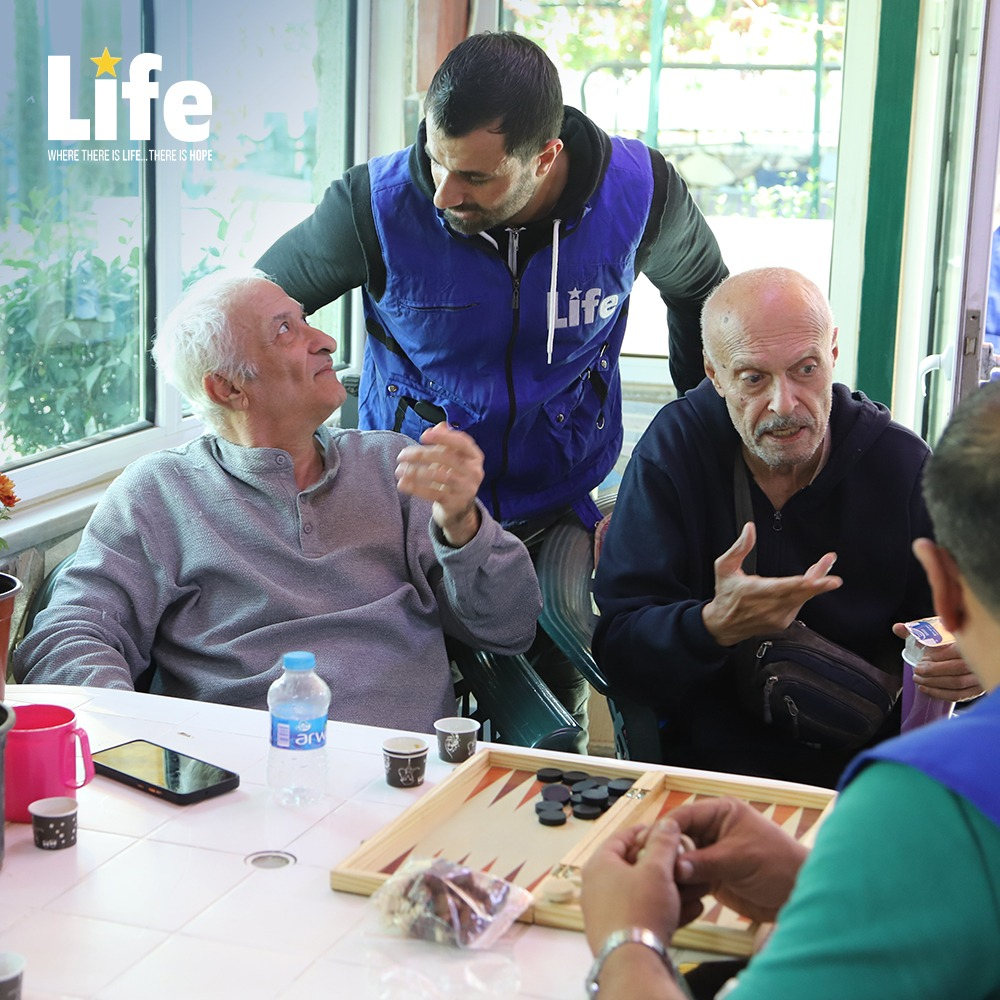
At the end of Ramadan and during Eid, the ‘Khair Wajbah’ initiative provided meals to 1,222 families across northern Lebanon. In parallel, Life organized an orphan-focused event where monthly financial support and Eid clothing were distributed, along with meals, gifts, sweets, and toys, contributing to both material relief and psychological well-being for children and their families.

Seasonal assistance programs were also implemented, including the distribution of winter clothing and essential supplies to vulnerable camp residents to ensure protection during harsh weather conditions.”

In addition, the organization has supported Lebanon’s education sector by facilitating the return of primary and middle school students to classrooms, rehabilitating damaged schools, and offering scholarships for university students—helping invest in long-term educational development for future generations.

Integrated Support for Vulnerable Populations

Engineer Mohammed Al-Sharif, Coordinator of Life’s Lebanon office, outlines recent humanitarian conditions:

“Our programs currently reach more than 103,000 displaced individuals across the country, 70% of whom are women and children. Over half of children under two years old are experiencing severe food deprivation, while nearly 80% of families require urgent humanitarian assistance.”

Approximately 1.17 million people are facing acute food insecurity, including 55,000 in emergency-level conditions. Camps and shelters continue to suffer from shortages of clean water, adequate nutrition, and sanitation services, significantly increasing the risk of disease outbreaks. The situation has further deteriorated due to expired medications, ongoing power outages, and fuel shortages.

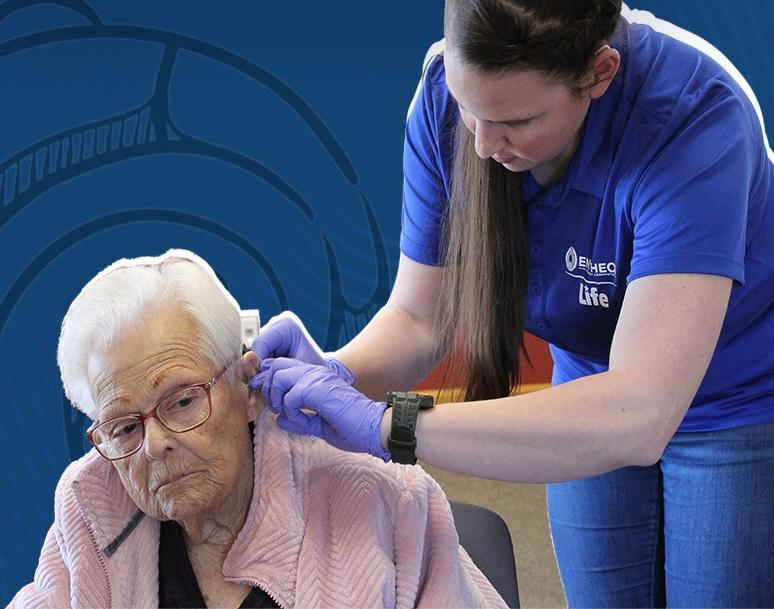
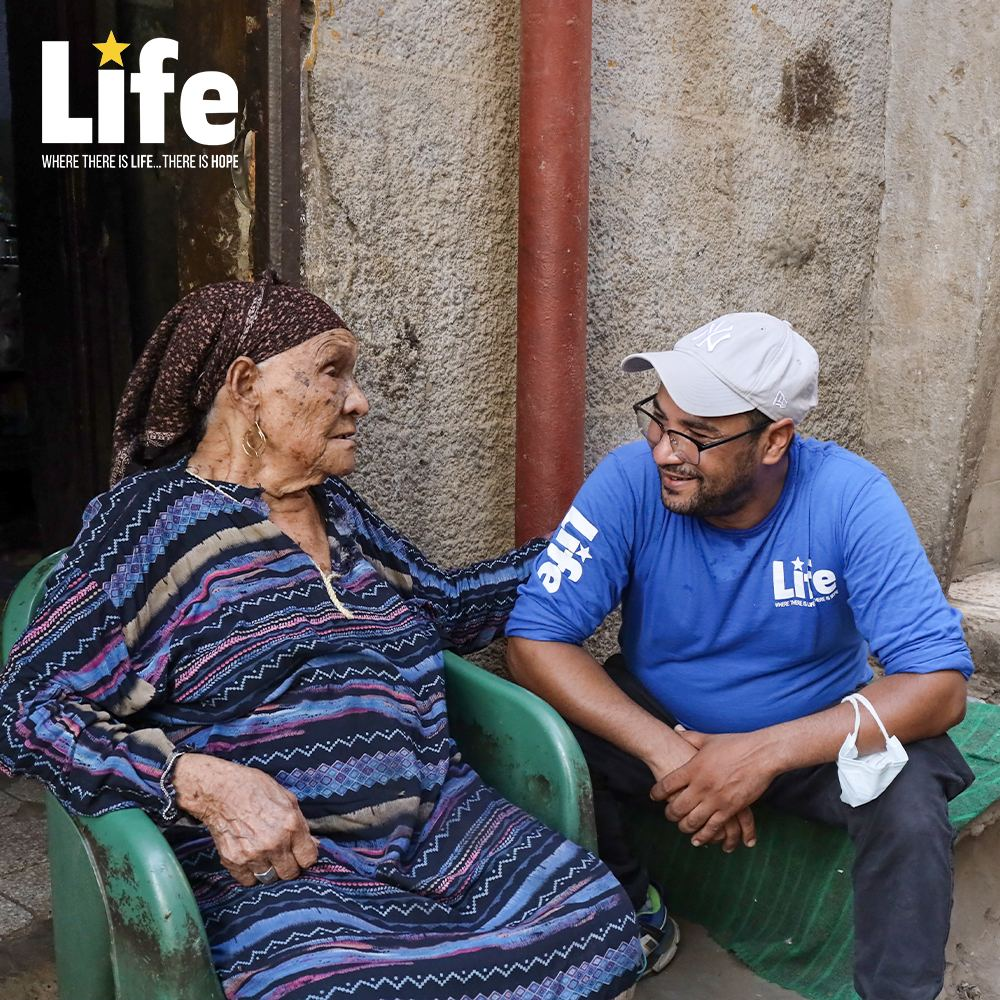
Over the past three years, Life has strengthened its healthcare response by supplying hospitals with medicines, medical equipment, ambulances, and emergency relief materials, while also implementing sustained programs for displaced communities and refugees. Special attention has also been directed toward elderly individuals and people with disabilities.

Strengthening the Health Sector: A Core Priority

He further adds:

“As part of this month’s emergency response, Life has assisted 2,400 families by distributing ready-to-eat food packages, hot meals, emergency shelter kits (including mattresses and blankets), multipurpose cash assistance, hygiene kits, dignity kits for women, and essential supplies for children such as milk and diapers. Access to mobile medical services has also been ensured.”

Over the past year, Life has provided comprehensive medical support to six major hospitals across Lebanon, supplying essential medications, medical equipment, operating room tools, and emergency response materials.

The organization has also delivered medical equipment to L’Ecoute NGO in the southern suburbs of Beirut, which serves people with disabilities, and to Arcenciel in Beirut, supporting marginalized communities. Additional equipment was supplied to medical laboratories and to the Asile Maronite des Vieillards center in Mount Lebanon.”

For the Silo, Tasneem Elridi.

For More Information:

linktr.ee/LIFEUSA
https://www.lifeusa.org/lebanon-emergency-relief

Featured image- Mohammad Yassine/L’Orient-Le Jour

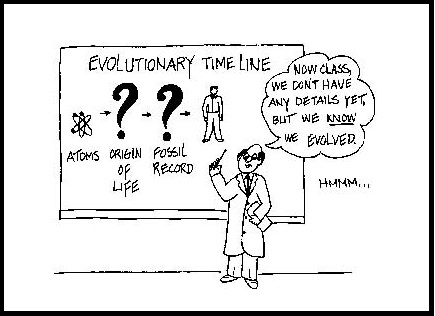
How Termites Challenge Darwinism Theory of Evolution

Modern science lacks a unifying, interdisciplinary theory of life. In other words, current theories are unable to explain why life is the way it is and not any other way.

Dr. David Grinspoon writes about Charley Lineweaver’s review of “Scientists Debate Gaia,” a collection of essays gathered from an American Geophysical Union conference and by the published by MIT press. Charles H. Lineweaver is a Senior Fellow at Australia National University’s Planetary Science Institute.

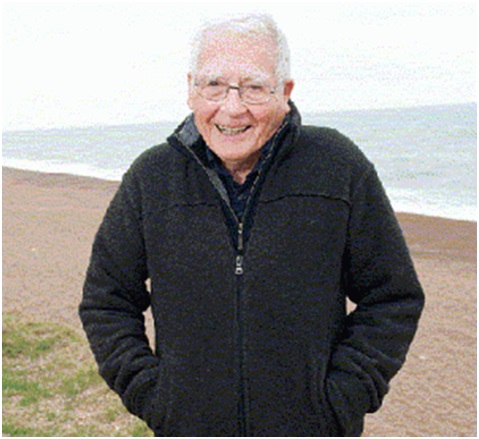
Gaia author James Lovelock

He explained that James Lovelock (shown) proposed the Gaia hypothesis, in which Earth is an organism or system capable of self-regulation. He wondered: Can the existence of life be recognized from the chemical composition of a planet’s atmosphere? What would the Earth be like now, if life had never evolved on it? Would there be oxygen in the air? Would the surface temperature be hot like Venus or cold like Mars? In the mid-60’s, NASA consulted James Lovelock to assist in developing instruments for the Viking spacecraft to detect life on Mars.

He concluded that it wasn’t necessary to send a spacecraft to Mars. All you needed was to determine the composition of the Martian atmosphere –- if life was there, the atmosphere should be in chemical disequilibrium as it is on Earth. Recent observations, have detected methane on Mars indicating life.

Determining what life is and how to recognize it is the Holy Grail of astrobiology. To make progress, we need to explore the Martian subsurface and analyze the atmospheres of the nearest terrestrial planets. Lovelock’s Gaian chemical equilibrium test for the presence of life is fundamental to these efforts. Both NASA and ESA are putting their astrobiological money into interferometric infrared spectroscopy to look for the traces of chemical disequilibrium in planetary atmospheres as the primary biomarker.

Don't be fooled by your perspective- we all live on a rotating ball traveling through space!
Don’t be fooled by your perspective- we all live on a rotating ball traveling through space!

Lovelock thought that terrestrial life didn’t just passively produce chemical disequilibrium. There seemed to be some element of control or regulation. In 1978, he published a book called “Gaia” that described how the entire biosphere behaves like a living creature suggesting our Earth is alive.

Gaian science and astrobiology have very similar programs. Astrobiologists look at the stars and ask “What has life done to the planets out there and how can we recognize it?” Gaian scientists have been looking at the Earth for decades asking “What has terrestrial life done to our planet and how can we recognize it?” Astrobiology and Gaian science often remain separate fields of inquiry. Astrobiology attracts mainly astronomers and biologists, while Gaian science attracts atmospheric chemists, geologists and concerned ecologists.

The thin Martian atmosphere is mainly composed of carbon dioxide. Planetary scientists have studied the atmosphere of Mars for any signs of gases such as methane that could be generated by life. In this collection, Gaian scientists believe that over the past four and a half billion years, the Sun’s luminosity has increased by about 30 percent, but the temperature of the Earth’s surface doesn’t seem to have followed in step. Lovelock hypothesized that the biosphere regulates the Earth’s surface temperature. There are two obvious ways to do this: Regulate the albedo (light reflected by the planet) and/or regulate the abundances of greenhouse gases in the atmosphere.

Creationist Cartoon

Lovelock invented the parable of Daisyworld to demonstrate that the biosphere could regulate the albedo. A nice Gaian extension of this idea is J. Scott Turner’s analysis of the thermo-regulation of termite colonies. So if a termite ecosystem can evolve to do it, why can’t a big one like the Earth? Thus, Gaia does what good scientific ideas are supposed to do. It extends and extrapolates a fundamental theory, from individuals to groups to ecosystems, up to the entire biosphere.

The central debate of this book is: How can Gaia (Earth) be selfish? How can it do anything “for” itself? Will it protect itself from human destruction of the environment by causing earthquakes, earth lights, an ice age, or a great flood?

Tyler Volk’s book “Gaia’s Body” “Gaia is Life in a Wasteworld of By-products.” He proposed that the atmosphere is one giant waste dump. Life produces wastes, and these wastes build up and affect the environment. They become intolerable for some forms of life, but then along come new forms of life who take advantage of these waste products. Volk’s point is that poop just happens. Thus the effects of the biosphere’s wastes are certainly “by” but not necessarily “for” the biosphere..

Volk suggests using cycling ratios to measure “by and for the biosphere” and to determine how beneficial for life something may be. A cycling ratio is the amount of an element cycling through the Earth and biosphere, divided by the amount that would be cycling through the Earth in the absence of life. Volk estimates the cycling ratio of carbon to be about 200 times more carbon flowing through the veins of Gaia than would be cycling through an Earth without life from plate tectonics and volcanism.

A collection of observations by the Earth Observing System flagship Terra were stitched together into a seamless true-color mosaic of every square kilometer (.386 square mile) of our planet.

Dorion Sagan and Jessica Hope Whiteside’s “Gradient Reduction Theory: Thermodynamics and the Purpose of Life” discussed the second law of thermodynamics as the purpose of life. Agnostics looking for purpose in their lives would do well to digest this chapter with Lovelock’s suggestion that agnostics worship Gaia to fill their religious vacuum. There is grandeur and universality in this thermodynamic view of life that can be applied to life anywhere in the universe.

I’d like to see Gaian scientists recognize that Gaia is part of a larger whole – that the Earth is not a closed system and that Gaia has a mother. We begin to wonder whether our Galaxy is a life form called Galactea. For the Silo, Jarrod Barker

“It is a must read for any life form that is even pretending to look for extraterrestrial life. /

– See more at: http://www.astrobio.net/ Note: It’s logical Mother Earth or Gaia feels totally threatened by environmental abuse from Earth’s humans and that those humans who are not loving to Mother Earth may be removed.

*Main image for this post courtesy of http://fourthdimension-celestialdreams.blogspot.ca

Supplemental-

Phylogenetic Analysis Forces Rethink of Termite Evolution | Okinawa Institute of Science and Technology OIST

Life For Relief And Development Ranks Third Globally Among Humanitarian Orgs

According to Charity Navigator  2025

Amid escalating crises in the Middle East and the developing world, Life for Relief and Development (LIFE) has been recognized as the third-best global humanitarian organization by Charity Navigator. The organization also secured fifth place for its humanitarian work in Palestine, and fifth place worldwide in the fight against poverty. These achievements earned LIFE a 100% rating, an endorsement from the U.S. Agency for International Development (USAID), as well as recognition by Impactful Ninja as one of the top humanitarian organizations in North America. LIFE was further honored with the Humanitarian Partnership Award for its collaborative initiatives.

Sustainable Programs and Comprehensive Seasonal Projects 

Vicki Roob, Administrative Director at LIFE, explained that the organization was founded more than 33 years ago in the United States and works across more than 60 countries through 14 international offices.

Over the years, LIFE has distributed more than $624 million usd/ $859 million cad in humanitarian aid, supporting programs in food security, clean water, temporary shelter, healthcare, education, community development, family assistance, refugee support, and emergency relief during wars and natural disasters. Currently, the organization supports more than 13,100 orphans worldwide, providing essential care, nutrition, housing, and education, while also organizing annual Global Orphan Festivals filled with games, gifts, and entertainment to ensure children feel valued and supported.

Tent Camps That Saved Thousands of Lives in Conflict Zones

According to Dr. Abdulwahab Alawneh, Regional Director for Jordan and Palestine, LIFE implemented its “LIFE Organized Camps” project in Gaza, establishing nine camps across the north, center, and south of the Strip. Built with fire-resistant and durable materials, these camps provided shelter for 46,000 displaced people, featuring easily dismantled tents to accommodate recurring displacement. Each tent was equipped with bedding and essentials, alongside medical facilities, solar panels serving 7,000 individuals, and protective insulation for 3,000 residents against extreme weather. Clay ovens benefited 3,500 people, while 23 sanitation units were constructed.so LIFE Assisted 1.3 million Displaced People in general in GAZA.

Adding: “we’ve been proactively preparing to facilitate the delivery of urgent relief—shelter, food, water, medicine, and personal necessities—into Gaza. Our team on the ground has already begun implementing LIFE’s ninth camp project after tents arrived and installation began. We are now working to shelter 15,000 newly displaced families still exposed to the cold as winter approaches.

These are waterproof, cold- and humidity-resistant tents that also provide insulation against heat in summer. Made from PVC material, they have protected more than 29,000 families from fires during nighttime bombings in past years.

Using all borders to Gaza

We faced tough challenges but managed them through our extensive experience. We are not newcomers to Gaza’s relief field. We worked through approval requirements for specific items—like tent specifications—while some organizations struggled to get their tents through the crossings. Tents vary in size and function: family tents, medical point tents, hospital tents, and educational tents.

We are now awaiting approval for mobile housing units. However, shelter items like mattresses and blankets have been entering through Egypt on LIFE’s trucks without obstacles, while food parcels are transported through Jordan.

“For food items previously restricted for NGOs, we purchase them at discounted rates from local traders and distribute them to those most in need. We spared no effort to reach them—using animals or walking long distances on foot when necessary.

We also supply water—each truck carries 15,000 liters per camp, enough for 500 families for a week—alongside baby formula, infant supplies, medical kits, and medicines. We ensure field monitoring of activities, including eight camps already constructed, and we share updates regularly on social media in multiple languages.”

Emergency Relief and Orphan Care at the Forefront

In the past year alone, LIFE allocated approximately $1.1 million usd/ $1.51 million cad in emergency relief to families displaced by conflicts and natural disasters, including earthquake survivors in Afghanistan, Morocco, Nepal, Syria, and Turkey; war-displaced populations in Gaza, Sudan, Syria, and Lebanon; wildfire victims in Bangladesh; flood-affected communities in Afghanistan and Libya; and cyclone-hit regions in Myanmar.

Additionally, $6.4 million usd/ $8.81 million cad was invested in healthcare programs and medical supplies, $4.5 million usd/ $6.2 million cad in educational projects, and $2.1 million usd/ $2.89 million cad in in-kind aid shipments. Orphan support remained a priority, with more than $3.8 million usd/ $5.23 million cad dedicated to orphan sponsorship, education, and healthcare.

Seasonal projects also played a significant role: nearly $1.7 million usd/ $2.34 million cad was spent on Ramadan and Eid initiatives, with more than 11 million meals distributed across 36 countries during Ramadan alone. Over 272,620 individuals in 38 countries benefited from Qurbani (sacrifice) distributions. LIFE also allocated $1.4 million usd/ $1.93 million cad toward emergency food relief and constructed 122 water wells worldwide.

For the Silo, Tasneem Elridi.

An Artist Life Means Putting Your Guts Out Into The World

The formula for a life well lived might look something like this: Dive in head first > fail > repeat.

Life is a series of cycles.

There is of course the broad cycle, we are born, we live, we age, we die. But within this scope are countless other cycles for every part and parcel of our time on the planet. The cycle of making mistakes, of continually pouring your guts out to the world and enduring the consequences, is one of the most important there is for artists. From this process you learn the most about who you are, and how you fit in the world. There will be plenty of moments when you are a total mismatch, when you throw yourself into the deep end and struggle to stay afloat. Under no circumstances should these moments be viewed as set-backs or failure.

Salvador Dali once said, “Have no fear of perfection, you’ll never reach it.” Take a minute to consider that.

Really let it sink in. Let your mind internalize this notion and let it unleash a wave of relief through your whole body. What fantastic news this is, no matter what you do, no matter how long you live, you, I, we, not one of us, will ever be perfect. So how can you take this beautiful knowledge and use it to your own advantage? Once you are free from the restraints of perfection, how can this inform the way you continue on your path?

By adopting the formula above and not letting go no matter what.

You probably know stories about how mistakes have changed history for the better over and over again. The accidental discovery of Penicillin because scientists noticed that the mold on some forgotten fruit killed bacteria. Or the invention of silly putty (perhaps not on par with life-saving antibiotics when it comes to historic moments, but a great boon to childhood all the same) quite by accident in a military lab as scientists tried to create an inexpensive substitute for rubber. But have you ever really stopped to consider what these stories mean to an artist? How they can be freeing examples of the importance of making mistakes?

There is likely not a person out there who truly believes that perfection is attainable, but we are told far too often that we ought to strive for it. This leads to untold restraint, dissatisfaction, and who knows how many missed opportunities for glorious screw ups. Do not let this trap take hold of you. Throw your best and worst, craziest and most tame ideas out there for all the world to see. Who cares if you land flat on your face, as long as you’re still able to pick yourself up there’s no harm done.

As an artist you will be the recipient of rejection letters and emails.

Stacks of them. Count on it. In every creative field, there are piles and piles of rejections to be gone through. Walt Disney was once fired for what his editor deemed a lack of imagination. Countless famous artists throughout history were rejected in their lifetimes, some only achieving posthumous success. Van Gogh, Manet, Turner, they all have in common that they faced painful rejection in their lifetimes. They also have in common that they didn’t give up their unique perspective on the world nor did they allow something as insignificant as rejection stand in the way of their forward momentum.

Collect your rejection letters. Create a special binder for them. Own them with pride knowing that you earned each and every one of them by putting a piece of yourself out into the world. Begin to think of rejection as a victory in itself because it means you tried. The moment you receive a rejection letter, consider that at that same moment, had you not tried, there would be nothing at all. Not trying isn’t really a way of avoiding rejection, it is simply a way of hiding from the world. You will never get anywhere at all if you don’t reveal yourself.

Artists are perhaps particularly vulnerable when it comes to the consequences of baring their souls to the world. Art is highly personal and the thought of making a mistake when the stakes are so intimately high can be enough to frighten even the boldest spirit. Rejection can feel like a very personal affront and can make it difficult to want to try again. It comes down to a choice really, to stay safe and make no progress, or let it all hang out and learn from every single mistake.

Just like with everything else in life, you will become accustomed to accepting rejection and mistakes as par for the course. There will come a day when you will leaf through your binder of rejection letters with a wisdom that can only be gained through the repeated process of failing. For the Silo, Brainard Carey.

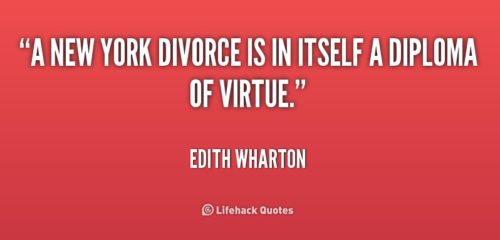
How To Embrace Your Post Divorce Future

The “D” word. Stressful right? When your divorce is finally final, how will you begin again?

The transition can be liberating for some, daunting for others. Mixed feelings – anger, relief, sadness, joy, fear and uncertainty – are common and may take time to sort out.

Meanwhile, the clock on your new life is ticking, and regardless of your emotions, it is time for a freedom-inspired relaunch, says Jacqueline Newman, a Manhattan-based divorce lawyer and author of Soon To Be Ex: A Guide to Your Perfect Divorce & Relaunch (www.Jacquelinenewman.com).

The divorce proceedings – all the time spent with your attorney and in court,  all the hours burned while considering highly emotional and financial factors, from the impact on your children to the division of assets – put a big part of your life on hold, not to mention a major strain on it.  And now with the difficult process over, Newman says, it is important to focus on creating a brand new you.

“The last umpteen months have been about your kids, your ex, and your divorce,” says Newman, “thus, a little ‘me’ time is in order. Here is an opportunity to be free from having to answer to anyone but yourself. So live your life to its fullest.”

Newman’s message is that divorce does not have to be the worst thing that could have happened to you.

There are silver linings as you begin to take control of what you can, and she offers three tips on how to relaunch after a divorce.

     •    Treat yourself.  Right out of the divorce gate, buy something meaningful for yourself. Lose the guilt your ex made you feel for spending on clothes or expensive shoes. Your gift could be something symbolic and therapeutic that fires a shot back at your ex. “I would absolutely recommend you buy yourself a divorce present of some kind,” Newman says. “You deserve it. One woman I represented was constantly mocked by her husband during their marriage for being flat-chested. It is easy to guess what she bought as soon as her cash payment cleared.” Sexy White Lingerie for Bride Women's Lingerie Lace | Etsy

   •      Embrace single hood. This does not mean you have to hug your first post-divorce dinner partner. It means embracing a new stage of discovery, with the different, interesting people you meet while dating becoming part of your growth.  Newman recommends online dating as a way to “relearn how to date.” Many newly divorced people feel insecure about dating, but Newman suggests learning about people outside your comfort zone. And rather than trying to focus on finding Mr. or Mrs. Right, Newman says, “Give yourself some time to look around and meet different types of people. You may learn something that can broaden your perspective on life. If you can start seeing relationships not as the goal but as opportunities for growth, then you can start being more accepting with the outcome of each relationship.”  Cougar dating advice 1.

   •      Expand your freedom.  Use your new windows of time to catch up with friends you have not seen. Newman recommends Facebook as an easy way to reconnect. On weekends when the ex has the kids, strengthen your friendship circle and broaden it. Explore and re-discover yourself. Pursue new hobbies or renew ones you did not have as much time for in marriage. Advance your career. “Your post-divorce life is offering you a chance to go after the promotion you have been dreaming about,” Newman says. “Cougars” on the prowl in Colorado nightclubs – The Denver Post

By doing the things you long wanted to do, you can find the new you. 

“You are free to be who you are without judgment from a spouse,” Newman says, “and to do whatever you want. Learn to love yourself.”  For the Silo, Cathy K. Hayes. 

Supplemental– Silo archives: break up jewelry


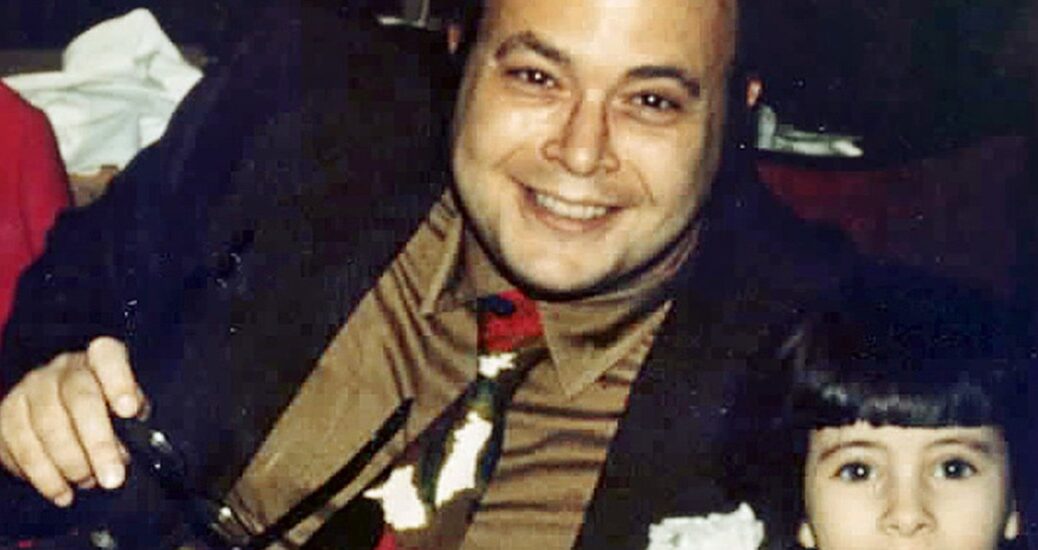
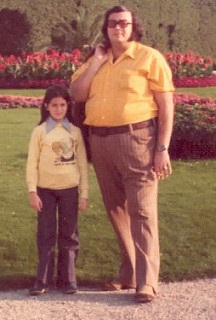
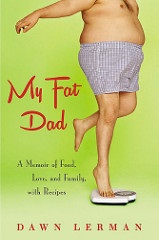
My Fat Dad- A Memoir Of Food, Love & Family

“Every story and every memory from my childhood is attached to food,” Dawn Lerman

Our relationship with food starts at a very young age: what and how we eat is often determined by our environment and our upbringing.

Our eating habits and snack tastes are cultivated by our family members’ relationships to food, for better or worse. Dawn knows this first hand. The author of the New York Times Well Blog series, “My Fat Dad,” shares her food journey and that of her father, a brilliant copywriter from the “Mad Men” era of advertising at Leo Burnett and McCann Erickson, in her book, MY FAT DAD: A Memoir of Food, Love, and Family, with Recipes (Berkeley; September 29, 2015; Trade paperback/$USD16.00).

Summer Snack Book Dawn And FatherDawn’s father was known for his witty ad campaigns; he was responsible for such iconic slogans as “Coke Is It,”

“This Bud’s for You,” and “Leggo My Eggo.” Unfortunately, he was not able to use the same problem-solving skills when it came to his weight. Dawn’s father was obese as she was growing up —450 pounds / 204.12 kilograms at his heaviest. His weight would go up and down like an elevator, depending on what fad diet he was on–or what ad campaign he was assigned to. He insisted Dawn, her mother and sister adapt to his saccharine-laced, freeze-dried food plans to help keep him on track. Dawn’s mother never cooked and she witnessed her mother eat only one real meal a day—a can of tuna over the kitchen sink—while she dashed from audition to audition pursuing an acting career.

“As far back as I can remember, there was an invisible wall that separated me from my dad, a distance that I could never completely penetrate, His closest relationship was with the bathroom scale – his first stop every morning and his last stop every evening. The scale controlled his moods, our days, what we were going to eat and basically ruled our family life.”

Snacks were a particular downfall of her father, especially when he was working on fast food marketing campaigns.

“My dad felt that in order to create a good slogan, you needed to believe in the products you were selling,” Dawn explains. “He was always the best customer for the food and drinks he advertised, testing them excessively—especially when Wells Rich & Green promoted him to head creative director for Pringles potato chips”

Listening to him crunch away canister after canister on the crispy snacks in the privacy of his room– trying to come up with the perfect slogan, Dawn knew she had to get inventive to help her dad get healthy while still staying inspired. At 9 years old Dawn had become the official chef for her family, turning her maternal grandmother Beauty’s Jewish weekly recipe cards into diet friendly meals and treats that would keep her dad motivated. It was her grandmother who instilled in Dawn a passion for cooking for oneself and others as she learned that the best food is prepared with the freshest ingredient.

One recipe Dawn developed during that time was her special homemade hot air popped corn coated in ranch seasoning. Upon trying it her father declared “Dawn now that you popped, you can’t stop!” That statement of delight was the kernel of an idea that took her dad around the world– filming highly attractive people on beaches and other fun places, joyfully indulging in Pringles potato crisps that exploded out of the can as the top popped off while the voice over announced…” Once You Pop, You Can’t Stop!”

My Fat Dad Summer Snack Book CoverDawnLermanThis spring and summer try these healthy and delicious snacks from My Fat Dad with no stopping required.

The potato chip recipe, derived from that long-ago hot air popped corn recipe, can be enjoyed throughout out the day as they are satiating and nutritious. Pair it with Dawn’s Hummus recipe, which is loaded with protein. The combo of complex carbs, protein and healthy fats –will fill you up without weighing you down. A win-win for both mood, energy, and weight control!

Recipes below from MY FAT DAD: A Memoir of Food, Love, Family, and Recipes By Dawn Lerman

Berkley Books/ first printing 2015

MY FAT DAD: A Memoir of Food, Love, and Family, with Recipes By Dawn Lerman  Berkeley / Trade Paperback/$16.00usd

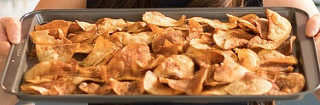
Dawns Potato Chip Recipe

Herb Infused Ranch Style Sweet Potato Chips with Coconut Oil

Yields: 4-6 servings

These sweet potato chips are crunchy, slightly salty, and have that wonderful ranch taste. They are a healthy take on traditional store bought chips. They are fried in coconut oil– which not only helps the chips to brown beautifully, but aids in speeding up your metabolism. They are a constant staple in my formerly fat dad– 450 pounds, now 210 pound –snacking regime.

4 large sweet potatoes, can also use white potato’s or beets

1/2 cup coconut oil

1 teaspoon of dried parsley

1 teaspoon of garlic salt

I teaspoon of onion powder

1 teaspoon of minced onion

Sea salt for seasoning

Fresh thyme for garnish

Pre heat oven to 375 degrees, scrub potatoes to remove dirt. Then slice into thin, even pieces. You can cut them by hand or use a slicing attachment on a food processor. Rinse your potato slices in cold water. Now soak the slices in cold water for 30 minutes.

Drain the potatoes and lay them on a paper towel or paper keeping them slightly moist. Dip in bowl with herb mixture –dried parsley, garlic salt, and onion powder. Make sure chips are coated.

In a skillet melt the coconut oil over medium heat. When the oil sizzles place them in the oil for about 1 min till they get slightly brown. Do not over crowd the pan. Best to do in small batches. Use a slotted spoon or spatula to remove your chips from the coconut oil. Drain the chips on a layer of paper towels, and repeat till all chips have been fried and blotted.

Then place all the cooked chips on a baking sheet and bake for 1 minute. Remove and serve warm. Sprinkle with sea salt and garnish with fresh thyme.

*NOTE: if you do not want to fry the chips you can take coated chips, lay them out on a baking sheet sprayed with coconut oil and bake for 20 minutes at 375 degrees until golden brown.

Sweet Potato Hummus

Yields: 6 servings

If you are looking for a light, healthy snack this sweet potato hummus is bursting with flavor, spice and color. Because of its high protein content, it will help control your appetite and mood. My dad named it the caviar of hummus—exclaiming, that it was almost illegal for something so nutritious to be this delicious. Pair this with my Potato Chip recipe for the perfect blending of protein and carbs.

1 large sweet potato (about 9 ounces)

1 (15-ounce) can chickpeas, drained and rinsed

5 tablespoons olive oil (plus additional, as needed, for thinning)

2 tablespoons tahini

2 tablespoons fresh lemon juice

2 garlic cloves, peeled

1 teaspoon ground coriander

1 teaspoon ground cumin

¼ teaspoon kosher salt

Pinch of nutmeg

Position the baking rack in the middle and heat the oven to 425 degrees. Wrap the sweet potato in foil and bake in a shallow baking pan until it can be easily pierced with a knife, about 45 minutes. Transfer to a cooling rack and allow the potato to cool completely.

Peel the skin off the sweet potato and transfer to a food processor fitted with a blade. Add the chickpeas, olive oil, tahini, lemon juice, garlic, coriander, cumin, salt, and nutmeg, and process until smooth. If the hummus is too thick, add a little extra olive oil or water and process until the desired consistency is reached.

MY FAT DAD is as much a coming of age memoir as it is a recipe collection from Dawn’s upbringing and culinary adventures in Manhattan. Her recipes include some of her grandmother’s favorite traditional Jewish dishes, to healthier interpretations and creations. Her father’s life-long struggle with food, along with her grandmother’s love of cooking fresh foods, led Dawn to become a well-respected nutritionist, NY Times blogger and chronicle her story in her best-selling book. Today her dad is a healthy 210 pounds and vegan.

“Dawn Lerman grew up Jewish in the 70’s. I grew up Italian. Might sound different, but for the most part, it’s the same. Especially when it comes to food. The philosophy was simple, food = love. My Fat Dad hilariously and poignantly captures that essence. Whether you’re Italian, Jewish, or anything else you can relate to how family, food, and the love of both affect how we grow up, and live our life. Mangia!”

—Ray Romano, Emmy award-winning actor

“The Manhattan nutritionist was raised by a diet junkie who tried every regimen under the sun and food — or the lack of it — ruled her life. My Fat Dad is about her eccentric upbringing and her constant state of hunger as Albert imposed his wacky ways on the whole family.” The New York Post

“My Fat Dad is an exploration of the many ways food shapes our connection to family. It also includes many delightful recipes.” Michel Martin, NPR, All Things Considered

“It is clear Lerman ‘s life is centered around the table and she gives readers a seat at hers” Baltimore Jewish Times

” ‘My Fat Dad’ is a memoir of food, love and starvation” New York Daily News

ABOUT DAWN LERMAN, MA, CHHC, LCAT

Dawn Lerman Nutritionist Blogger AuthorDawn Lerman is a Manhattan based nutritionist, bestselling author of My Fat Dad: A Memoir of Food, Love, and Family with Recipes, and a contributor to the New York Times Well Blog. She has been featured on NBC, NPR, Huff Post TV as well as several other news outlets. Her company Magnificent Mommies provides nutrition education to student, teachers and corporation. Dawn counsels clients on weight loss, diabetes, high blood pressure, and other diet-related conditions. She is a sought-after speaker and cooking teacher and lives in New York with her two children.

For more information about Dawn, go to www.DawnLerman.net .

Worth The Cost- Ultra Premium Champagne To Ring In The New Year

 Luxury Maurice Vendome Champagne Label1Miami, FL,  – Ultra-luxury wine and spirits purveyor Prodiguer Brands, which privately develops and markets many of the world’s finest, award-winning wines and spirits, offers a very special Champagne.  Maurice Vendôme is now exclusively available in the United States (and in select LCBO’s and liquor stores in Ontario and Canada).

This offering furthers the company’s extraordinary and revered portfolio of premium ultra-grade adult beverage brands specifically tailored for the global luxury market to meet evolving consumer desires and tastes. What better way to celebrate New Year’s Eve?

“This rare Grand Cru Réserve Blanc de Blancs champagne represents over 100 years of combined experience, expertise and leadership by our team and the Maurice Vendôme wine grower,” notes Prodiguer Brands’ Managing Partner, Noel Shu—a self-made millionaire, Sommelier and entrepreneur. ” Housed within the beautiful village of Oger in the Côte des Blancs region, Champagne Maurice Vendôme has ancestral ties dating back to the French Revolution. It’s an exquisite champagne that benefits from Oger’s rich soils that provide the perfect setting for luxury winemaking.”
Using 100% rated rare Grand Cru grapes and a limited annual production, Maurice Vendôme offers an exquisite experience of luxurious quality and exclusivity. The caliber and excellence of this rare Grand Cru Réserve Blanc de Blancs champagne is uncompromised, further entrenching Maurice Vendôme as “A Timeless Luxury.”

Champagne Chapuy in Oger

The art of Champagne is created usually with the combination of three different types of grapes – Chardonnay, Pinot Meunier and Pinot Noir. Champagne Maurice Vendôme uses exclusively 100% Chardonnay to create a unique Blanc de Blancs luxury cuvée. Each Chardonnay grape is delicately handpicked  from only the finest vineyards in Champagne country and then pressed to release their first juice, premiér taille.
Tasting Notes:

  • Colour: Straw yellow appearance
  • Nose: Intense white fruits, sweet on the nose, slightly floral
  • Palate: Creamy smooth refreshing palate, full delicate flavor
  • Finish: Charming fresh finish
  • Premiér taille of 100% Grand Cru Chardonnay
  • Hand-picked, sorted and pressed within 24 hours Liqueur de dosage: Chardonnay wine with melted cane sugar at 12 g/liter, this champagne then rests for a further four months after disgorgement, resulting in a luxury aroma, taste, body, and finish
  • Formats: 75cl and Magnum 1.5l – larger sizes by special order

A Prestigious Pedigree: Makers of the World’s Most Expensive Champagne Prodiguer Brands gained much notoriety for developing and facilitating the record-breaking sale of the most expensive single bottle of Champagne in the world—a limited edition bottle of Goût de Diamants, Taste of Diamonds, which sold for a staggering $1.8 million usd / $2.4 million cad.
Made from 100% Grand Cru grapes, all Goût de Diamants Champagne—available as a brut, a rosé, a Blanc de Blancs and a vintage—is produced at the 8-hectare, family-owned, Champagne Chapuy in Oger. Each standard bottle of Goût de Diamants is a chic collector’s item that’s adorned with a brilliant cut Swarovski crystal in the center of a diamond-shaped pewter design resembling the Superman logo.

Goût de Diamants bottle

The Swarovski crystals are pink on the rosé bottles and clear on the Blanc de Blancs and the brut, which is aged for a minimum of 40 months before release including four months post disgorgement.  In addition, borrowing design cues from Armand de Brignac, the back of each bottle also boasts a hand-engraved pewter label featuring details of the blend inside. For its part, the bespoke multi-million dollar bottle saw the diamond logo crafted from 18-carat solid white gold while the Swarovski crystal was upgraded to a 19-carat flawless white diamond. The 18-carat white gold front label meanwhile, was engraved with the client’s name.

A Voraciously Vetted Vodka  Also in the Prodiguer Brands’ preeminent portfolio is JULIET Immaculate Vodka, which is the world’s first “Immaculate”-graded vodka—ranking it above other premium, super-premium and even ultra-premium brands. Notably, this “Immaculate” rank was actually incepted by Prodiguer Brands, itself, as was required to aptly classify this caliber of vodka, and is a grade now recognized and accepted by industry professionals worldwide.

Upon its official launch in Monte Carlo, Monaco in 2014 during the prestigious, Formula One Grand Prix weekend at the exclusive Ermanno Palace Penthouse, this luxury vodka subsequently appeared at a multitude of A-list events in key regions around the world, including New York City, Barcelona, Paris, Sweden and London. At that time, the brand released a range of Collector’s Edition bottles featuring artwork from renowned New York City based artist, Sue Tsai, based around the F1 and the Brazil World Cup 2014.

Prodiguer Brands expressly separated JULIET from competitors by creating a vodka using a boutique production process to ensure the highest quality vodka that boasts seven distinct unique selling propositions. For one, the vodka weighs in at 43% alcohol volume (is 86 proof), and is only distilled a single time. As the vodka is handcrafted in small batches and great care is taken to prevent impurities from entering at any point in the process, the result is an impeccably pure vodka that does not need to be distilled multiple times. In addition, the vodka is gluten free as, by using high quality sugar beet that the brand ferments in-house, gluten is avoided entirely. The sweetness of the sugar beet also levels out the strong 43% alcohol volume, leaving pleasant smooth vanilla notes. Moreover, the vodka does not require any additional filtration as it is purified in copper pot stills during the distillation process and, packaging-wise, it uses wood top natural corks and tin foil capsules to exemplify the brand’s approach to using natural, non-toxic and renewable materials. JULIET Immaculate Vodka is 100% British, created at its own dedicated distillery based in the South of England, United Kingdom.

French Champagne Grapes
Expertise Aplenty:
About Noel Shu, Prodiguer Brands’ Managing Partner Internationally-regarded sommelier Noel Shu, Managing Partner for the ultra-luxe, award-winning wine and spirts purveyor Prodiguer Brands, is a self-made millionaire since his early 20s, entrepreneur and author of the upcoming title, “China Through a Glass of Wine.”  With impeccable panache and style, Shu, has already accomplished more than many do in an entire lifetime. Shu has personally designed and sold extraordinary multi-million dollar timepieces and necklaces to China’s elite through his ancillary, highly successful luxury jewelry business.  Always striving for growth and self-improvement and with a reverence for continuing education, despite his busy schedule Shu is currently pursuing an Ivy League Master’s degree at Columbia University. As a globally-minded business practitioner, Shu understands commerce on both sides of the Pacific and brings that expertise to bear with his various ventures, including the highly anticipated upcoming release of “Regale”—an exclusive wine brand expressly developed for the Chinese marketplace, which will be exported to the region in early 2016.  Shu may be reached at www.prodiguerbrands.com.
About Prodiguer Brands Prodiguer Brands privately creates and owns some of the world’s finest wines and spirits.  With a growing portfolio, Prodiguer Brands prides themselves in creating luxury brands for the global luxury market that meet new consumer desires and tastes.  In 2016 the company will be releasing one of the world’s finest red wine offerings in the U.S. market: the highly anticipated SIA Cabernet Sauvignon. Led by Shammi Shinh, the company is predicated on strong dedication, wise investment, and offering the best consumption experiences.

Shinh has been commissioned by the likes of Hugo Boss and Christian Louboutin to ideate and help create engagement opportunities in the luxury marketplace.

Learn more about Prodiguer Brands online at www.prodiguerbrands.com.

How Weight Loss Classes Can Benefit Your Holistic Wellness

Canadians are still bouncing back from the health impacts of years of isolation. A recent survey of over 1,000 citizens shows that almost one-third of them don’t exercise at all, despite the country’s health officials’ recommendation of at least 150 minutes per week of physical activity. After all, finding the motivation to go to the gym or do that morning run can be difficult when you only have yourself to be accountable for. This is why more people are opting to attend weight loss classes, helping them to stay consistent with their routine. But the effects of weight loss classes transcend merely the physical. Here are a few ways they can benefit your overall health:

Physical wellness

Weight loss workshops are as crucial as meal plans and gym sessions because they provide holistic guidance and tips to keep you on the right track, from changing your relationship with food, sharing stories about your unique challenges, and sourcing motivation to keep exercising, among other benefits. By searching “weight loss classes near me” online, you can evaluate which features work for you. In-person classes allow you to meet with coaches and like-minded peers. If those don’t fit your schedule, a bevy of virtual workshops can connect you to a coach who will help you work on your wellness goals with science-backed strategies and inspiration, even at a distance. Peer group virtual workshops can help you get out of a fitness rut by providing support and accountability. These build the foundation for a consistent fitness routine that ultimately benefits your body.

Mental wellness

Group workouts offer a unique balm to your mental health that working out alone may not. A group setting facilitates a more engaging and energizing environment that encourages you to have fun and even engage in some healthy competition. If you’ve had a difficult day, it can help you get “out of your head” instead of stewing in negative thoughts. In a previous post, we talked about how yoga can calm the mind, relieve stress, and reduce anxiety. These effects are further emphasized in group yoga, where shared energy and cohesiveness can bring a comforting sense of community, encouraging dynamic balance and mental clarity. In a study, 64 women with severe anxiety and post-traumatic stress disorder (PTSD) were asked to participate in a weekly 1-hour yoga class for ten weeks. By the end, 52% of participants no longer met the criteria for PTSD.

Social wellness

Mental health issues like depression and anxiety are inextricably tied to loneliness, which is why it’s concerning that over 40% of Canadians report feeling lonely some or all of the time. Excess weight may be another interconnected factor; among obese Canadian adults, 11% report being depressed or having a mood disorder compared to only 6.9% of normal-weight adults. For those who live alone or work from home, social interactions may not be as seamlessly integrated into their schedules, which is where group weight loss classes come in. They can help target the sedentary lifestyle commonly associated with loneliness, as well as provide a sense of belonging for people who need it. Participants often arrange social gatherings before or after classes, such as sharing meals or grocery shopping, to build camaraderie and keep one another on a healthy path for weight loss.

While weight loss may manifest most noticeably in your physical appearance, the team spirit offered by group weight loss classes carries mental and social benefits that can help you keep the weight off long-term. Having supportive figures you can lean on for advice and encouragement enables you to perceive weight management in a healthier, more positive light – and not something you must go through alone.

Window Cleaning Robot Cracks 400$ Price Mark

Cleaning is called a “chore” for a reason, it’s a pain to do and nobody likes doing it! Imagine if there were robots that could do ALL of the cleaning for you so that you can relax and spend more time living your life. Look no further than Ecovacs Robotics, an award-winning brand of home robotics.

When the DEEBOT D35 was brand new in 2015, it was the first robotic vacuum designed for kitchen and bare-floor cleaning that had “direct suction” vacuuming. Dual-sweeper side brushes allow cleaning along baseboards, which often collect the most dust and is hardly ever noticed. D35 also has smart technology that can detect obstacles such as furniture to keep from bumping into them, along with sensors to detect stairs, so it can remain safe from taking a tumble. Plus, it will automatically return to the charging station to re-energize after cleaning.

Also from Ecovacs Robotics is the WINBOT W730, the world’s first robotic window cleaner. WINBOT’s operation is very easy – users just power her on, securely place her on the window, and press start. WINBOT’s Pathfinder Technology automatically scans and calculates the size of windows and programs a custom path for speed and efficiency. Her internal vacuum pump and powerful suction motor create a double seal that is able to bear up to 26 pounds and a back-up battery and safety pod ensure that WINBOT will stay secure even if the power is disrupted.

The DEEBOT D35 is available for an affordable $199.99, and the WINBOT is priced out at $399.99 [US dollars].  Learn more about home cleaning robots at www.ecovacsrobotics.com.

A Musical Journey for Robots and their masters~ CLICK ME

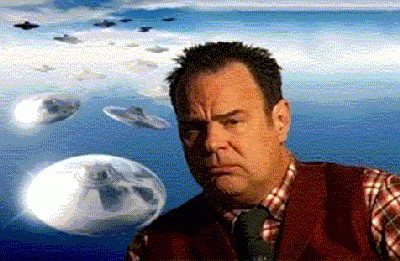
Canuck Star Dan Aykroyd Tells Why Alien Life Refuses To Make Contact

Of course we are seen as primitive compared to alien life. If we could use 20-30% of our brain, then perhaps we may impress them a bit, and break out of our selfish habits.

Hopefully, aliens will try to ignore our downfalls and instead focus on our positive aspects like love, passion, kindness towards others and so on. Humanity has potential.

Dan Aykroyd Talks About Aliens Viewing Humans as an Inferior Species

The New Zealand Harold states: “Actor Dan Aykroyd is convinced alien life forms refuse to make contact with the human race because we are seen as a “violent, depraved, disgusting species”. The Ghostbusters star is a keen student of extraterrestrial sightings and is adamant he has encountered UFOs on several occasions in the US.

He even insists he saw two suspicious objects in the sky as the horrors of the 2001 attack on the World Trade Center in New York were unfolding, and believes that sighting gives a clue as to why aliens have not made contact with humans.”

Aykroyd tells The Sunday Times Magazine, “(It’s) because we are a violent species. They don’t want anything to do with us. They watch us. There were two white orbs over (New) Jersey when the second tower went down on 9/11. They were on CNN for about two minutes… They never showed it again.”

“Can you imagine what was going through their advanced minds when they saw what happened on 9/11? These humans crashing our highest evolution in aviation into our highest evolution in architecture and metallurgy like kids wrecking toys in the sandbox. They are disgusted with us, and rightly so. Because we are a depraved, disgusting species.” The New Zealand Harold . UFO Sighting News.

For the Silo, George Flier via Flier’s Files #46-2014-  George A. Filer III New Jersey State Director MUFON Eastern Region Director

George A. Filer, III. I was a major in the U.S. Air Force and a navigator in various aircraft and tanker transport aircraft. He was an intelligence officer most of his career, and in that period, frequently briefed generals and congressmen on our capabilities and threats  to our forces.

Doctor Has Four Simple Tips For Optimal Living

Have you ever felt like you need an upgrade on your life?

Most of us have – and there’s a way to get it, says veteran physician Sanjay Jain.

“First, I tell people, ‘Don’t be afraid of making your life  clearer.’ but as we have paraphrased from Chinese philosopher Laozi, ‘The journey  of a thousand miles begins with the first step,’ ”. Many argue that life is not simple and, therefore, there are no easy  answers,  says Jain, whose specialties  include integrative medicine. He’s also an international speaker and author of  Optimal Living 360 – (www.sanjayjainmd.com).

“Lives are built from many small components which, when  viewed as an assembled whole, can appear overwhelmingly complex,” Jain says.
“But when we break them down and consider the pieces as we make decisions in our  lives, it’s much easier to see how small adjustments can result in a better  return on all of the investments we make – not only in health, but in  relationships, finances, and all the other essential aspects of our  lives.”

Jain offers four points to keep in mind as you start the  journey.

• Life is short, so live it to its fullest potential. Live it optimally. This is your life, so don’t waste its  most precious resource – time. No matter one’s spiritual leanings, economic and education status, health, intelligence level, etc. – one thing is true for all: Our time on Earth is finite. There will be a time for most of us when, perhaps after a frightening diagnosis from a doctor, we reflect deeply upon our time and consider the most important moments, and all the time that may have been squandered.

• Balance is key. Too much or too little of something, no matter how good, is actually not good. Balance is one of the easiest tenets to understand, but arguably the most difficult to maintain. Obviously, too much alcohol is bad; then again, there are some health benefits to moderately imbibing red wine. What about too much of a good thing; can a mother love her children too much? Yes, if she is an overprotective “helicopter parent.” The best antidote to overkill of anything is awareness; try to be aware of all measures in your life.

• Learn to tap your strengths and improve upon your weaknesses. Engaging your strengths at work and in your personal life is important. When we do what we’re good at and what comes easily, we feel self-confident and satisfied. Some people, however, are not in jobs that utilize their strengths, or they don’t put their talents to work at home because they’re mired in the prosaic work of living. It’s important to identify your strengths and find ways to engage them. It’s equally important to recognize our weaknesses and work on improving them (because we can!) This is essential for achieving balance.

• Life is about making the right choices. Integrative decision-making makes this easier. There are many different types of decision-making, including systematic, hierarchal, impulsive, decisive and flexible. Integrative decision-making can be used for problems large and small, and includes the following process: 1. Define the problem. 2. Frame the problem. 3. Develop all your options. 4. Analyze your options. 5. Make the decision. 6. Execute your decision. 7. Debrief yourself.

"Don’t be afraid of making your life clearer." Dr. Sanjay Jain
“Don’t be afraid of making your life
clearer.” Dr. Sanjay Jain

While experts may be the best consultants for compartmentalized areas of your life, only you know the other aspects that affect your well-being and can determine how a decision in one area will affect another area.  For the Silo, Ginny Grimsley

Supplemental– Who was Laozi?  http://www.britannica.com/EBchecked/topic/330163/Laozi

The Father of Taoism- http://oregonstate.edu/instruction/phl201/modules/Philosophers/LaoTzu/laotzu.html

Is It Time To Finally Outlaw Extreme Religious Shunning?

In an issue of The Watchtower magazine from a few years ago, no doubt was left as to how Jehovah’s Witnesses should treat family members who have been “disfellowshipped,” or ex-communicated, from the religion. “Really, what your beloved family member needs to see is  your resolute stance to put Jehovah above everything else – including the family  bond,” warns the magazine on page 16, before asserting, “Do not look for excuses to associate with a disfellowshipped family member, for example, through e-mail.”

Shunning.

Jehovah’s Witness is not the only religion that calls upon  its followers to ostracize anyone who leaves the faith. Described as  psychological torture by University of California-Davis Professor Almerindo E.  Ojeda, such social rejection is used in the United States by Anabaptists (the  Amish, Mennonites, Hutterites), Scientology, and the Baha’i Faith, among others.

Some contemporary evangelical Protestant churches have renewed the practice of  shunning, as in the case of a 71-year-old former Sunday school teacher who was  arrested on trespassing charges after questioning her pastor’s authority.

The practice can have devastating consequences.

In 2011, Eric Reeder was disfellowshipped from the Jehovah’s  Witnesses after sustaining injuries in a motorcycle accident that led to a blood  transfusion – a medical treatment prohibited by the religion.  His family subsequently shunned him in accordance with the faith’s rules.

Eric posted about his predicament in an online forum for  ex-Witnesses in August of that year, admitting, “The only thing I am really going to miss is my folks … my dad is a hardcore elder and has told me he will no longer be able to speak to me 100% of the time.”  In April 2012 he wrote that he was “still not used to my parents totally shunning me …” before adding, “It’s so hard … nobody should have to lose their parents twice.” By the end of September, Eric was found dead at age 51. He had killed himself.

Nobody can be certain what dark thoughts were swirling through Eric’s mind when he took his own life, or what finally drove him to such a desperate act. But we do know that in the preceding months, Eric was deeply tormented by the ostracism inflicted on him by members of his family.

While The Watchtower Society, the name of the legal entity used by Jehovah’s Witnesses, proudly publishes annual statistics related to its worldwide evangelism work, there are no official figures for those who are shunned, and no way to confirm how many of these former members, like Eric, feel desperate enough to take their own lives. However, one can find a great deal of anecdotal evidence on Internet forums frequented by Ex-Witnesses. One well-known researcher, Terri O’Sullivan, reported that being shunned worsens one’s mood within 60 seconds.

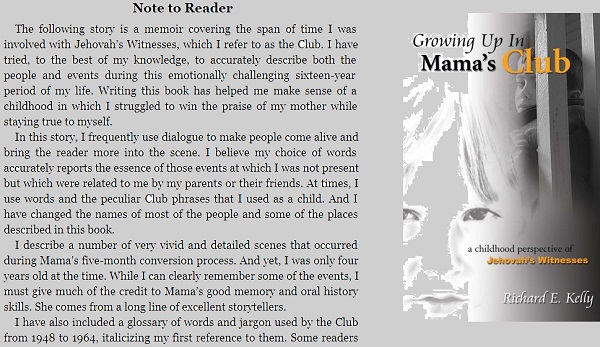
Ex- witness Richard E. Kelly is the Managing Director of AAWA and the author of Growing Up in Mama’s Club: A Childhood Perspective of Jehovah’s Witnesses.

In the absence of any popular or political impetus to address the issue of religion-incited shunning, I am proud to be part of an organization that dares to face it head on. Advocates for Awareness of Watchtower Abuses (AAWA) has been established to educate the world via its website (www.aawa.co) about some of Watchtower’s most shocking practices.

While these are often pardoned in the name of religious freedom, there are instances where governments have successfully sanctioned extreme shunning:

“The Jewish tradition frequently confronted this issue in the many Eastern European communities where the government outlawed the use of excommunication and shunning. Not surprisingly, when confronted with significant governmentally imposed sanctions against this practice, the Jewish authorities ceased using exclusion as a method of community formation or maintenance,” states an article by Michael J. Broyde, academic director of Emory University’s Law and Religion Program.

My colleagues and I believe that the shunning of relatives and friends represents mental and emotional abuse. Modern society must no longer allow Watchtower to promote this barbarous practice through printed word or otherwise.  For the Silo Richard E. Kelly.

Through Balance Everyone Has Potential To Shine

Life sometimes can seem off kilter as responsibilities mount and people plow all their physical and mental resources into what seems to be the most pressing crisis of the moment.

But Lumbie Mlambo says that’s a good time to take a step back. Everyone has the potential to shine in life’s darkest moments, but the key to achieving goals and an overall better existence is to maintain a balance so that one aspect of your life isn’t consumed by another.

While some people might say balance in life is an impossible goal, she disagrees and says when each of us find our equilibrium, we become more productive and a greater asset to our communities.

“There’s balance in everything we do, be it walking, talking, eating, sleeping, working or spending time with family,” says Mlambo, editor of Equanimity Magazine, an online publication that features inspiring stories of life and success.

“For example, look at how we try to deal with our work-life situation. We balance our workload so that we can still make room for other activities, to spend more time with our spouses or our children. We do that because we understand how important it is.”

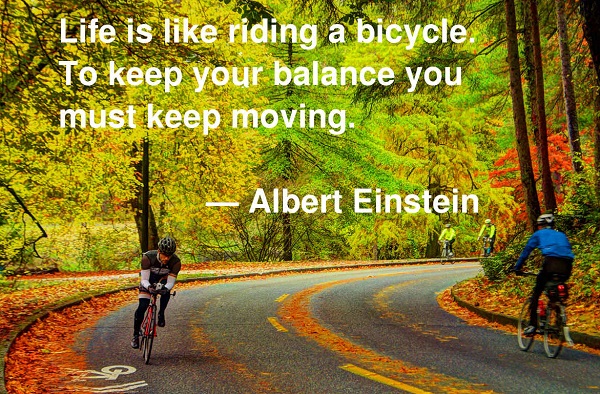
Einstein Life Balance Quote

She offers these reasons for why living a balanced life is essential.

•  The health factor. Staying balanced is a key to a healthier and successful life. Both mental health and physical health benefit, and as a result, so do our overall lives. “When we’re healthy, we’re able to care for ourselves and others in our community,” Mlambo says.

•  The empathy factor. When we find balance in life, we can better understand the importance of helping the underprivileged, says Mlambo, who grew up in a rural area in Zimbabwe. You begin to realize that someday you could be in their situation, which makes you a more empathetic person. “Your economic situation is like your health,” she says. “Nothing is guaranteed.”

•  The role-model factor. Sharing our stories – whether it’s a tale of success or even a tale of failure – is important because others can learn from us or be inspired by us as they too strive for a balanced life. “When you tell your story, it empowers, motivates and encourages people to not give up on their dreams and goals,” Mlambo says. “Maybe you think your story is just not that interesting or important. But for someone out there, it may be the spark that ignites them to great things.”

Mlambo always strove to find balance in her life. But she became even more passionate about it after she suffered a stroke in 2001 that left her partially paralyzed. She since has recovered, but says the event had a profound impact on her and she will always consider herself a stroke patient.

Audrey Hepburn Life Is About Others Too Quote

“Before the stroke, I thought my life was balanced in a way,” she says. “I mean, I ate healthy foods. I exercised seven days a week. But it was not balanced in the way I wanted. I had been too focused on myself. I realized that life was not just about me, but about others.”

Finding balance in life isn’t just a feel-good concept, Mlambo says. As people achieve balance, they realize they have the potential to rise above their circumstances. They can become more productive in their communities and that is good for everyone.

“Staying proactive and shifting the way we think can even help the economy to grow and can help create more jobs,” she says.

Certainly, maintaining a balanced life may be tougher than ever because technology allows work – emails, text messages, telephone calls – to intrude on people’s “off” hours. But that’s just all the more reason to make a concerted effort to strive for balance, Mlambo says.

She says it’s become popular in some circles to argue that a balanced life is a myth and can’t be achieved. But regardless of their views, she says, most people seem to be trying to bring balance to their lives, even if they don’t think of it that way.

“We eat healthy to stay balanced, we get enough sleep or rest to avoid stress, we juggle our daily activities to stay balanced,” Mlambo says. “To be successful in anything we do, we must have some sort of balance.” For the Silo, Lumbie Mlambo

Why Men Are Losing Battle Of The Sexes

Provocateur- aka "gold-digger"
“YOUNG WOMAN SCAMS LOVE STRUCK ELDERLY MAN OUT OF $200,000”  Headlines like this would be comical if they weren’t so sad – and numerous.

“Just Google and you’ll find all kinds of news stories about men who willingly give up their cash, their luxury cars, even an ex-wife’s diamond ring,” as in the Elk Grove case, says Charles D. Martin, author of “Provocateur,” (www.provocateurbook.com), a novel about smart, beautiful women and the power they wield over men.

Approximate net worth at time of marrying? $500,000,000 #kaching
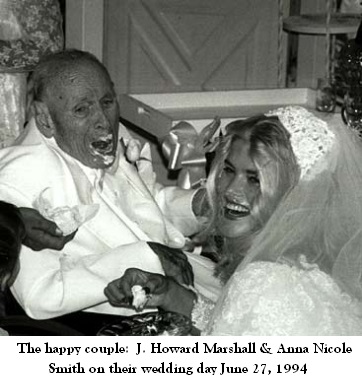
Approximate net worth at time of marrying? $500,000,000usd

“As men, we never like to admit that we may be outsmarted by a woman – but the truth is, it is happening all the time!” And it’s getting worse, for men.

“Women are far outpacing men in numbers of college degrees. They now outnumber men, earning almost 60 percent of college degrees,” Martin says. “And while that doesn’t necessarily make them ‘smarter’ than men, it sure does add to their advantage.” In addition women have other (obvious) advantages.

Taking the power back! Author Charles D. Martin

“In the presence of a sexy woman, men lose their ability to think or act rationally,” Martin says. “

That’s an enormous advantage for women! Men do not realize that it is women that are in charge of the mating process.” How can men level the playing field? Martin has some suggestions:

Recognize the predator –and the prey. If you are an older gentlemen, particularly one with some status or affluence and a young, attractive woman comes on to you be on guard. She probably has nefarious, not amorous, motives. Keep your pants zipped and your wallet stowed until you are totally persuaded that her affection for you is genuine.

Remember, they don’t have to be young to be dangerous. The woman arrested in the Elk Grove, Calif., case was 30 years old. There are also recent news stories about a 54-year-old woman stealing more than $85,000 from a 93-year-old man, promising him a “big payoff.” In another case, a 45-year-old woman had a 60-year-old man paying for her elective surgeries, limousines, even a $1,000 dog. She was arrested in December. “They may be moms or grandmoms, but they’re still women,” Martin says.

Even if you are happily married, you are still vulnerable.  Beware the “perfect storm,” which occurs as a man ages and tries to hang on to his virility, just as his high school sweetheart is also showing signs of wear. That makes him vulnerable to a younger female with ulterior motives. If a sexy woman comes on to you, get away fast.  These “Provocateurs” can get the best of you in a nanosecond.

About Charles D. Martin

Charles Martin runs a hedge fund, Mont Pelerin Capital, LLC, and serves on the investment committees of prominent universities. An established business writer, his first novel focuses on the intrigue that often exists between alpha females that take on – and conquer – dominant males. Martin lives with his wife in a coastal town south of Los Angeles.  For the Silo, Ginny Grimsley. 

Myths Surrounding The Scourge Of Excessive Sweating

As people go about their daily lives, there’s a common but hidden scourge: excessive sweating.  In fact, a national survey conducted by the International Hyperhidrosis Society (IHhS)—the scholars of sweat—shows multiple millions suffer from extreme, uncomfortable, embarrassing, debilitating, and emotionally-devastating sweating. This type of sweating is a serious medical condition known as hyperhidrosis and nearly 367 million people of all ages struggle with it on their hands, feet, face, underarms, or body.

Hyperhidrosis can be particularly devastating. While many attempt to hide their sweating problems and suffer in silence, the impacts are often hard to cover up. Dramatic sweating in the presence of peers at work, or in extracurricular or social environments, can cause severe embarrassment, stress, anxiety, and other emotional issues. Even when people are alone, away from potential judgements, hyperhidrosis often takes a heavy toll—adversely impacting one’s productivity in a myriad of ways.

Those with hyperhidrosis struggle with disproportionate and random sweating that may drench clothing, ruin papers, damage technology tools, make playing sports and musical instruments impossible, promote hiding and isolation behaviors, degrade self-esteem, and prompt bullying at any age—among kids and adults. The holistic effect on life—workplace, marital, social and otherwise—is thus profound. In fact, research published in Archives of Dermatological Research indicates that the majority of those with excessive sweating confirm the condition has negative impacts on their social life, well-being, and emotional as well as mental health.

Lisa J Pieretti, Executive Director of IHhS, notes, “Excessive sweating is a dermatological disorder that can cause an otherwise healthy person to produce up to five times more sweat than is normal or necessary. The pressures of dealing with a ‘sweating problem’ around peers can be catastrophic to self-esteem and more. Too often, people become anxious about attending work or school, socializing with friends, or being out in public in general. But when those with hyperhidrosis receive support, understanding, and appropriate treatment, their lives can be dramatically changed.”

To that point, IHhS co-founder Dr. David Pariser urges that, while hyperhidrosis is the number one dermatological disease in terms of negatively affecting a person’s quality-of-life, it’s also number one in having the most positive impact when treated. “When hyperhidrosis is caught early, a person’s life can be transformed for the better in a multitude of ways,” he says.

With that in mind, the first step toward providing solutions for those who sweat excessively is to bust some common myths and misconceptions with facts from the experts at the IHhS, including these:

Myth: Sweaty people are out-of-shape, nervous or have hygiene issues.

Truth: The average person has 2 to 4 million sweat glands. Sweat is essential to human survival and serves as the body’s coolant, protecting it from overheating. Many athletes actually sweat more than other people because their bodies have become very efficient at keeping cool. Meanwhile, people with hyperhidrosis (which causes overactive sweat glands) sweat excessively regardless of mood, weather, or activity level—often producing 4 or 5 times more sweat than is considered “normal”.

Myth: Those with hyperhidrosis don’t suffer with workplace-specific activities.

Truth: In a recent 2017 study, 63% of those with hyperhidrosis reported interference in the performance of tasks at work or school due to their condition.

Myth: To have hyperhidrosis, one must be dripping and saturated with sweat.

Truth: Excess sweating can range from severe dripping to moderate moisture. Symptoms of hyperhidrosis can manifest differently and personally. But, what is consistent is the impact on life depending on areas affected. This can include damaged clothing, paperwork and shoes; obvious, embarrassing sweat marks on clothing; unappealing cold wet hands; discomfort due to dripping sweat or constant dampness; and skin slipperiness that gets in the way of sports, music, and day-to-day tasks. Excess sweating of the armpits, hands, feet, face, chest, back, or groin can result in substantial impairment, including limitations at work, in social and physical activities, and during hobbies. Emotional and psychological distress is also common.

Myth: People will grow out of hyperhidrosis.

Truth: Contrary to popular belief, research shows that hyperhidrosis does not go away or decrease with age. In fact, in one recent IHhS study, 88% of respondents said their excessive sweating had gotten worse or stayed the same over time. This was consistent across all the different age groups, from youngsters to older adults.

image: wyldraven-deviantart.com

Myth: Hyperhidrosis is “just” a summer thing, or it’s at least worse during the hot summer months.
Truth:
Research from the IHhS also shows that profuse sweating is not simply dictated by the time of year. The majority of patients in one survey indicated that their sweating bothers them equally, no matter the season.

Myth: Kids and young adults are “resilient” and can deal with sweating a lot.
Truth:
Medical journal citations substantiate that young people are known to be significantly impacted by emotional sequelae accompanying dermatologic disease and that psychiatric issues inherently accompany dermatologic disease in children and adolescents. Studies further show that most patients with hyperhidrosis—characterized  by excessive, spontaneous sweating beyond physiologic, thermal, or stress-reaction body requirements—describe their lives as “bad” or “very bad” due to the disorder.

Myth: Antiperspirants are for underarms only.
Truth: Think outside the pits! You can glide, stick, spray, and roll-on nearly anywhere that sweating is a problem (think hands, feet, face, back, chest, and even groin.)  Be smart and talk to your dermatologist first before applying an antiperspirant to sensitive areas and test new products on small areas of skin first.

Myth: Like caffeine, antiperspirants are best used in the morning.
Truth: Pick a p.m. perk! Skip the bedtime espresso but do use your antiperspirant in the evening as well as in the morning. Sweat production is at its lowest at night, giving the active ingredients in antiperspirants a better chance to get into your pores and block perspiration when the sun comes up and you really get moving.

Myth: Excessive sweating is less debilitating than other skin conditions people have to deal with.
Truth:
According to Dr. Pariser, hyperhidrosis has the greatest impact of any dermatological disease. In fact, various investigations show the impact of hyperhidrosis on quality-of-life is equal or greater than that of in-patient psoriasis, severe acne, Darier disease, Hailey-Hailey disease, vitiligo, and chronic pruritus.

The extreme level of sweat production experienced with hyperhidrosis can disrupt all aspects of a person’s life, from academic performance, recreational activities and relationships, to self-image and overall emotional well-being. But it doesn’t have to be this way. There are helpful resources available to help people with hyperhidrosis to not just “know sweat,” but to also achieve a more comfortable and happier life.  For the Silo, Merilee Kern.

Branding and consumer product trends pundit Merilee Kern, MBA is a wellness industry veteran, health advocate and influential media voice. Her ground-breaking, award-winning “Kids Making Healthy Choices” Smartphone APP for children, parents/caregivers and educators (iTunes) is based on her award-winning, illustrated fictional children’s book, “Making Healthy Choices – A Story to Inspire Fit, Weight-Wise Kids” (Amazon). She may be reached online at www.TheLuxeList.com. Follow her on Twitter here: http://twitter.com/LuxeListEditor and Facebook here: www.Facebook.com/TheLuxeList.

Spiritual Counselor: Illness often comes with deeply felt stress

Illness From Stress
Sometimes, not knowing the truth about something of immediate importance can create some of the most intense stress, says former chronic pain sufferer Janet Komanchuk.

“The families of victims who’ve been missing for years or decades – identifying the body of their loved one, for example, can bring closure. For me, being diagnosed with fibromyalgia was also a relief – it meant that I had a name for my chronic pain,” says Komanchuk, whose pain was so intense over a period of several years that she had to retire as a schoolteacher.

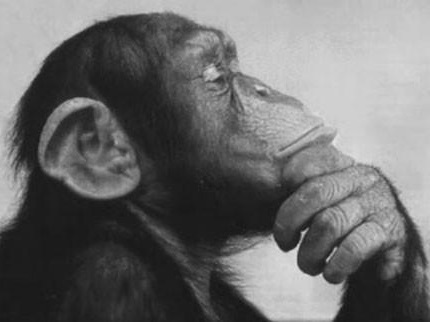
Studies of Monkey's may help solve causes of stress in humans- http://wabe.org/post/study-monkeys-may-help-solve-stress-humans
Studies of Monkey’s may help solve causes of stress in humans- http://wabe.org/post/study-monkeys-may-help-solve-stress-humans

“My diagnosis meant I wasn’t crazy, that the pain wasn’t ‘all in my head,’ as some had suggested. It meant that my flu-like symptoms,
accompanied by intense waves of pain, finally had form and dimension. I understood I was just one of many suffering with chronic pain that at last had a name.”

Fibromyalgia syndrome is a complex, chronic condition of widespread muscular pain and fatigue. It often includes sleep disturbances, impaired memory and concentration, depression and other debilitating symptoms. The syndrome is one of the most common chronic pain disorders, affecting nearly one in every 60 North Americans.

When medical leave, morphine patches, codeine and myriad pharmaceuticals brought no relief, I tried a different approach in combination
says Komanchuk, (www.jkomanchuk.com), who has since enjoyed more than 13 years of pain-free and prescription-free living after finding an alternative healing therapy that works for her. She now works as an educational writer and public relations assistant with Joy of Healing, the alternative healing modality that she says brought about her remission.

Is Yoga a 'healing therapy'? Forbes thinks it is and more- see Supplemental below CP
Is Yoga a ‘healing therapy’? Forbes thinks it is and more- see Supplemental below CP

“Through the years, I’ve learned a thing or two about dealing with the psychological trauma of illness.” Komanchuk shares tips to keep in mind for those suffering from an indeterminate condition.

•  Trust in yourself. “At times, the pain was so intense that I was certain my flesh was tearing away from my bones,” says Komanchuk, who was just like the more than 100 million Americans who suffer from chronic pain, which costs nearly $600 billion annually in medical treatments and lost productivity, according to the Institute of Medicine. Despite her unmistakable pain, the critical doubt from others as to what she was experiencing was disheartening, at times causing her to doubt herself.

“Trust in yourself, for you know what you’re feeling,” she says. “Don’t fall victim to the judgment and criticism of others who doubt your illness and the limitations it places on you or your activities.”

•  Don’t quit! Despite the immense scope of chronic pain, very little is spent on research to find better ways to manage pain. Komanchuk was faced with the prospect of spending the rest of her life in a nursing home.

“Yes, the pain was excruciating, debilitating and fatiguing, yet I still felt as though my life had the potential for vitality,” she says. “The idea of going to a nursing home – reasonable for some – felt like a kind of death to me.”

Convinced that there was hope for her in overcoming fibromyalgia, she persisted in her search for wellness answers.

•  Seriously consider alternatives. She was able to achieve what she thought was impossible – not just temporary relief, but permanent, lasting mind-body-spirit wellness. She had been to orthopedic surgeons, neurologists, rheumatologists, psychologists, underwent MRIs and took all manner of medications for her unbearable pain. In a narrow sense, it would seem as though she exhausted her options – until she looked beyond traditional Western medicine. Alternative treatment guided her to recognize the layers of stress throughout her life that she believes were a primary driver of her chronic pain.

“Every day, I am filled with gratitude for the fact that I am free of the torment from fibromyalgia that had plagued me throughout my
life,” she says. “I just wish I could give others a piece of the relief that I’ve found. All I can say is keep your eyes open, keep the hope alive and don’t give up!” For the Silo, Ginny Grimsley

Janet Komanchuk, www.jkomanchuk.com, is a retired schoolteacher who has experienced the miraculous remission of chronic, debilitating fibromyalgia, which was the result of many overlapping stressors and unresolved issues throughout her life. While weathering extreme fatigue and  pain, she’d tried everything from traditional Western medicine to alcohol  consumption and various holistic treatments. It wasn’t until she experienced the healing work of medium and healer Andrew Overlee, and his wife, Tamara, a  dedicated spiritual counselor and author, that she was able to regain her life.  She is now pain-free without any use of prescription medication. She is an  educational writer and public relations assistant with Joy of Healing, Inc., in  Valrico, Fla. USA
Janet Komanchuk, 

Supplemental- The Science of Yoga http://www.forbes.com/sites/alicegwalton/2011/06/16/penetrating-postures-the-science-of-yoga/

Out Of Work? You Could Be A Contestant On A Future Game Show

After perusing the many niches of reality TV — well-to-do housewives in multiple major cities, the rugged Alaska lifestyle, and working the dirtiest jobs known to man — employment strategist Richard B. Alman wonders why we haven’t seen a show about a popular and compelling subject: long-term unemployment and drop-outs. (Spoiler alert- Life imitates art, this has in fact become reality…read on)

It’s a numbers game

While unemployment rates ebb and flow, according to various Government agencies such as the Bureau of Labor Statistics in the United States or Statistics Canada here at home, there is no reliable data for the long-term unemployed – those who’ve been jobless for 27 weeks or more – and for the underemployed.

“Recent college grads, who are typically saddled with student debt, still struggle to find terra firma in the professional world, and there’s a large blind spot for older unemployed workers, who may have gone back to school or taken a lesser job for which they’re overqualified, or they’re still searching,” says Alman, principal of Recruiter Media, owner of www.RecruiterNetworks.com, the world’s largest owner/operator of career websites.

The 1990 arcade game Smash TV- set in 1999 and with a vague story arc. Officially, the plot of Smash TV revolves around a futuristic game show in which players compete for various prizes, as well as their lives. Urban legend has included references to 'out of work teens and college drop-outs' being some of the principle characters. CP

The 1990 arcade game Smash TV- set in 1999 and with a vague story arc. Officially, the plot of Smash TV revolves around a futuristic game show in which players compete for various prizes, as well as their lives. Urban legend has included references to ‘out of work teens and college drop-outs’ being some of the principle characters. 

“Drama, struggle, learning moments and, yes, hope – that’s what you’d get with an un- and underemployment-themed reality TV show.”

Life imitating art imitating life? The Running Man takes place in the year 2017- and pits ‘society discards against one another in a reality based TV show set in a dystopic future’.

Alman reviews how the first season might play out.

•  Week 1: Job-seekers are happy to have a gig. Since reality show participants are paid, all are happy for this opportunity. Newly graduated college students are grateful to have a place to crash for several weeks with Wi-Fi and other free amenities, and love interests begin to develop. Older professionals, however, will have mortgages and families; for them, the show is a business trip. Underemployed job-seekers tell their stories of working long hours in unfulfilling positions.

•  Week 2: Putting the reality into “reality TV.” “Un- and underemployment touches nearly everyone; we all know someone without enough work,” Alman says. While reality includes fortuitous wealth and fame for a few, it also includes tough times for many. The second week would feature job-seekers sticking to old methods of searching that have not worked in the past and continue to fail them.  

•  Week 3: The reveal – participants find out it’s a competition. While the cameras have sparked renewed vigor in their individual searches – a few participants may have even tried some wildly unconventional tactics – the group has had relatively little success. Producers reveal that it’s not just a reality show about job-seekers, it’s a competition. The group is separated into two teams. Participants from the winning team get legitimate interviews with Fortune 500 companies.

•  Week 4: Job-seekers gain important tips. No matter how much experience, talent, youth or beauty they have, job-seekers still make mistakes with their strategies. While a well-written cover letter, an impressive education and a great resume certainly help – they’re not everything. Professionals give participants tips for staying relevant in today’s market, including the importance of doing volunteer work, preferably in roles that match their talents and training.

“I really cannot overemphasize this tip enough. Volunteering is probably the best way for the long-term unemployed to demonstrate their abilities, initiative and effectiveness in a marketplace that hasn’t given you enough of a chance,” Alman says. “It builds new skills, introduces you to a new network of potential employers, and adds recent experience to your resume.”

•  Final week: All are on their way to gainful employment. After several weeks, most of the participants have made significant progress in landing career positions. While the winning team gains a great opportunity with a guaranteed, high-quality interview, there are no losers on this show. And, those who’ve made an excellent impression on the program are sure to gain additional opportunities.

For the Silo, Richard B. Alman

Supplemental-Following the theme of this story, you might like to consider the US game show “Paid Off”. Accordingly the contestants are graduates competing to have their student loans paid off.

WHY Meditation Is Science Approved Medicine

Ohm! There have been countless anecdotal claims about the benefits of practicing meditation since the Eastern tradition has become more popular in the West.

 Now, there’s plenty of Western-based scientific evidence to support them, says Dr. Matt Mumber, a radiation oncologist and co-director of a non-profit integrative oncology program. 

“Meditation is to the brain what physical activity is to the body. We’ve found meditation to be an important facet of health care, both for prevention and maintenance as well as in the treatment of disease, including cancer,” says Dr. Mumber, co-author with colleague and Yoga instructor Heather Reed of “Sustainable Wellness: An Integrative Approach to Transform Your Mind, Body, and Spirit,” (www.sustainablewellnessonline.com).

Mumber and Reed, who are co-facilitators of non-profit residential retreats for cancer patients, say one can experience sustainable wellness by developing a life practice grounded in the cultivation of awareness. This awareness is paying attention without attachment. The ability to be aware can be increased by a meditation tool called mindfulness.

“Life is a constant series of adjustments, matching your inner being with your outer doing,” Reed says. “One way to heighten your awareness is through practicing meditation.”

Mumber and Reed say there’s plenty of new evidence that the resulting sense of balance and peace is not just a psychological effect:

• Mindfulness meditation leads to increases in regional brain gray matter density: Recently published in Psychiatry Research: Neuroimaging, shows that measurable  changes in gray-matter density in parts of the brain associated with memory, sense of self, empathy, and stress occurred with study participants who meditated for 30 minutes a day for eight weeks.

• Meditation practitioners have longer attention spans: Published by the journal PloS Biology, a study analyzed people with three months of rigorous training and found that they gained a drastically improved attention span – not only longer, but less susceptible to internal or external distraction. They also showed improved memory and enhanced performance in several tasks, from driving a car to playing piano.

• Reduces stress and blood pressure: Presented to the American Heart Association by researchers at the at the Medical College of Wisconsin in Milwaukee and the Institute for Natural Medicine and Prevention, a study including 200 high-risk patients for heart attack found that meditation reduced their chances for heart attack by 50 percent.

Oncologist Matt Mumber co-author of Sustainable Wellness

“Studies involving people seeking to reduce stress and other problems in their lives via meditation will continue, as well as for those who want to enhance performance of various duties,” Mumber says.

“For those skeptical of the medical benefits of this Eastern practice, there’s now plenty of Western proof.” Matt Mumber, MD

Matt Mumber, MD, is a practicing board-certified radiation oncologist with the Harbin Clinic in Rome, Ga. He completed his radiation oncology residency at Wake Forest University Bowman Gray School of Medicine and graduated from the Associate Fellowship Program in Integrative Medicine at the University of Arizona. Dr. Mumber is past president of the Georgia Society of Clinical Oncology. He founded Cancer Navigators Inc, a non-profit organization offering cancer patients access to nurse navigation, social services and educational programs to support and augment the clinical care they receive. Dr. Mumber received the Hamilton Jordan Founders Award for involvement in statewide oncology activities and in 2008 he was named a Health Care Hero by Georgia Trend magazine. He serves on the editorial board for the journals Current Oncology and Journal of Oncology Practice and is on the board for the Society of Integrative Oncology. 


Yoga instructor Heather Reed of “Sustainable Wellness: An Integrative Approach to Transform Your Mind, Body, and Spirit

Heather Reed has been teaching Yoga since 1996. She expresses an integrative, adaptive approach and specializes in using Yoga and meditation techniques for people living with cancer, post-polio syndrome and other chronic illnesses. Heather received an Experienced Teacher Certification from Esther Myers Yoga Teacher Training Program and has had extensive training with senior staff of the Commonweal Cancer Help program and Dr. Dean Ornish’s Program for Reversing Heart Disease. She developed Yoga classes for cancer patients at The Wellness Community, Atlanta. Since 2008, she has been Yoga teacher and co-facilitator for the Residential Retreat Program for Cancer Navigators of Rome, Ga. For the Silo, Ginny Grimsley

Supplemental-  http://well.blogs.nytimes.com/2011/01/28/how-meditation-may-change-the-brain/

Creativity Espoused By Mainstream Media Is Sadly About Machine Creativity

Science!

[You may know him from the movies “What The Bleep Do We Know”  and “Down The Rabbit Hole” – Two great introductory documentaries on Quantum Physics you really owe it to yourself to see.  Let the Silo introduce you to a welcomed, new contributor-  Dr. Amit Goswami – Author, Speaker and Scientist. Ed.]

“I am very excited about one of my recent books- Quantum Creativity.  The main message of this book is this: If you are interested in creativity and in thinking quantum, you have the basics of what it takes to be creative, in fact, to be extraordinary in your creativity.

Quantum physics is the physics of possibilities. Quantum physics says reality is both possibility and actuality.

The objects of the universe are possibilities, quantum possibilities; they become objects of actuality in our experience when we observe because we have chosen actuality from the possibilities proffered.  This two-level complementary reality is an important aspect of our consciousness. The unmanifest, (psychologists call it the unconscious, spiritual traditions call it the transcendent) is the realm where consciousness processes possibilities (unconscious processing) but without awareness, without subject-object separation.

The manifest (psychologists call it the conscious, spiritual traditions call it the immanent) is the domain of actualities that consciousness processes with awareness, with subject-object split.

Quantum thinking consists of this two-level processing—both unconscious and conscious.  Quantum thinking understood in this way liberates you, anyone, from any assumed ordinariness.  With its help, anyone can be creative.

A stylish dude? We love the sun hat Dr G. :)

Creativity was difficult for people of the olden days because they had to pursue it blindly, they did not know how human creativity works; they assumed it is all mystery, all arts.  And today, lots of people shortchange their creativity because of their faulty mechanistic worldview.

The truth is, we cannot discuss the relevant issues of human creativity without a lot of make-belief within our current mechanistic worldview based on the metaphysics of scientific materialism—everything is matter moving in space-time and material interaction.

The science of creativity that the protagonists of a mechanistic worldview talk about, and which today you read about in the media, is about machine creativity.  To a large extent it is sophistry, about how determined machines can somehow appear to be creative.

It is self-evident that human creativity requires consciousness as a causal entity with free will, freedom to choose.

It is self-evident that human creativity requires the capacity to process meaning, that human creativity involves affects (agony and ecstasy), and that human creativity begins with intuition.

sophistry

Dealing with human creativity requires a worldview in which consciousness is causally potent, in which not only our physical experiences but also our experiences of thinking, feeling and intuition are validated. Quantum physics, properly interpreted, gives us that worldview. Engaging the two level complementary reality of quantum physics gives human creativity all its wonderful and mysterious attributes that material machines moving in a one-level space-time reality cannot possibly simulate.” For the Silo, Dr. Amit Goswami.
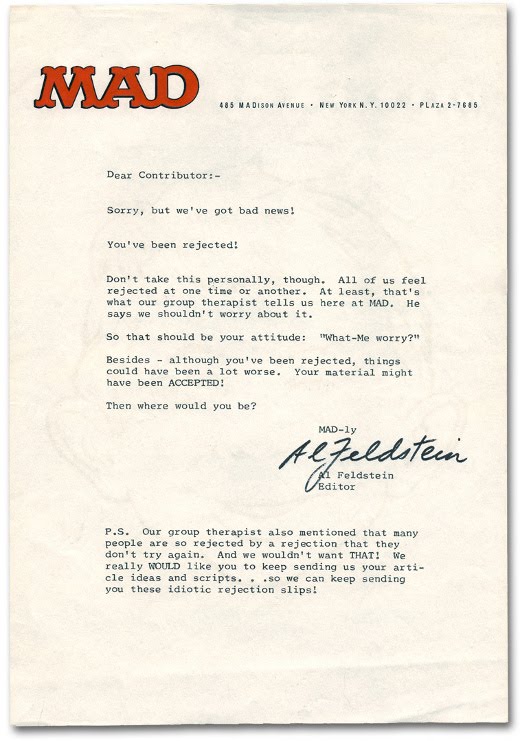
Mattress Sales in Toronto: How to Find the Best Deals  

A mattress is a vital component of comfort in your home.

A poor-quality mattress can cause body aches and affect your life. It’s, therefore, crucial to purchase the right mattress from a reputable store at a reasonable price. For the best mattress sale in Toronto, you need to consider some factors to help you make the right decision. If you’re looking for a deal on your next mattress or bed set, keep reading for tips on finding the best mattress sale in Toronto and get the most significant savings with no compromise on quality. 

  1. Identify a Reputable and Reliable Mattress Store 

When shopping for a mattress sale in Toronto, it’s essential to identify reliable and reputable retailers. If you have friends or family members who have recently gone through a mattress purchase, they can give you good advice about specific stores that they found reliable. Local blogs or online forums dedicated to mattress purchases can also be good resources when looking at different brands and retailers.  

Once you’ve identified some potential stores, it’s time to look into their sales policies. Most reputable retailers will offer sales periodically throughout the year—especially around major holidays like Black Friday and Christmas—so knowing how long those sales last is critical to ensure you get a good deal. A good mattress store in Toronto like the Queensway Mattress will provide overall satisfaction from good customer service to quality products and after-sales services. So, look out for any complaints about delivery times, damaged goods, or unsatisfactory services before finalizing your decision. 

  1. Try Out Before You Buy 

Getting out of bed and trying out a mattress is an excellent way to be sure you’re making an informed decision. You can check how it feels, whether it’s too soft or too firm, and see if you like how it looks. If you want to buy a new mattress, try one out before purchasing—you may even decide that you can get by with what you already have. Leave enough time for your test drive; going from store to store will likely take more than a few hours. 

Ask about return policies: Most stores won’t accept returns once you take off mattresses from their premises. Asking these questions up front can save you time and energy later on. Therefore, if you’re looking for a mattress sale in Toronto, it’s crucial to ensure they allow you to sleep on your new mattress before deciding whether it meets your needs. 

The Most Uncomfortable Bed in the World - Touch a Life | OpenSea
  1. Go for The Best Quality and Comfort 

You might assume that high-quality, comfortable mattresses are expensive, but that’s not always true. You can get quality mattresses from reliable stores at reasonable prices if you know how to shop around. However, you need to know your needs and requirements before shopping for a new mattress to avoid wasting money on a product that doesn’t suit your needs. 

For example, if you need a mattress that can help you relieve some pressure points on your body, then you can invest in a Latex or Memory foam mattress. If you have problems with allergies, then it is better to buy a hypoallergenic mattress from a reputable store. It’s good to match your needs with quality, comfort, and economical pricing to decide what type of mattress you should purchase. 

  1. Check The Warranty 

Before you finalize your deal on a mattress sale in Toronto, check to see what kind of warranty it comes with to be safe. If your mattress wears out within five years and doesn’t have a solid product warranty, you might pay a lot more than you bargained for in the first instance. It’s also worth asking about details like return policy and restocking fees: some businesses are notorious for charging steep return fees or simply refusing to accept used or damaged products. 

Buying mattresses supported by the most reliable warranties will keep you from paying extra money later. Also, ask how long those warranties last; sometimes, they expire just months after purchase. Dedicated warranty periods may range between 2 and 15 years. 

  1. Take Advantage of Free Delivery and Removal 

When buying a mattress, ask about free delivery and removal. If a retailer doesn’t offer such services or charges too much for them, you can probably find them elsewhere. The point of getting great deals on mattress sales is not to deal with additional hidden fees. Just be sure to factor in other costs, like transportation and set-up, when you do your comparison shopping. 

For example, if one store offers free shipping, but another delivers right to your door at no extra charge, you might pay more overall by Option 1. However, some people prefer picking out their mattress; they say they can test it out before purchasing. You can also benefit from some retailers offering a mattress sale in Toronto who let customers try out mattresses at home—so check around! 

  1. Look for Economical Pricing and Flexible Payment Methods 

Many of us choose to buy mattresses online since they tend to be less expensive. However, if you’re going to buy a mattress online, make sure you find one with an economical pricing structure and flexible payment options. You don’t want to spend even more money paying interest or other fees because you bought your mattress online; shop smart and get a good deal. 

You can also search for reputable stores that offer mattress sales in Toronto at monthly installments and no-interest financing plans. This way, you won’t have to pay all at once but will still get to enjoy your new mattress immediately after making your purchase. 

Conclusion 

Those who know how to find deals on mattress sales in Toronto are doing a service to themselves, whether they choose to purchase online or offline. There are so many choices that come with different prices, but if you know where to look and what questions to ask, you can get what you need at a price that won’t break your bank. A reputable mattress store in Toronto will have all of their products clearly labeled and will be able to answer any questions you may have about their products. You need not settle for less than what you want when purchasing mattresses; do your research, ask your questions, and use these tips as a guide when looking for a deal on a mattress sale in Toronto. 

Colouring In The Bible Is The Latest Trend In Journaling

An interesting new trend is on the rise—colouring in a Bible.

What was once frowned upon, is now encouraged. This new trend is called Bible journaling. Bible journaling is the act of doodling in one’s Bible, as a way to creatively express one’s faith. However, some people choose to illustrate outside their Bible; as for some, doodling on the Bible itself is still prohibited.

Over the past few years, the movement has grown significantly with many online groups, forums, Facebook communities, blogs, and church groups creating groups where people share their Bible journal artwork, offer techniques, and provide a supportive boost.

People even discuss where to get Bibles with the largest margins so that there is room for their designs, creating an interesting demand on publishers and retailers.

Complete Guide to Bible Journaling: Creative Techniques to Express Your Faith (Fox Chapel Publishing), by designer, inspirational speaker, and author of the best-selling Zenspirations® book series Joanne Fink, was created in response to this amazing trend.

The book features the works of top Bible journalers, offers drawing tips, the best tools to use, and even offers traceable vellum sheets to use on your own Bible. For the Silo, Elizabeth Martins.

Main image courtesy of biblejournallove.com


Dry Cleaning Clothes May Be Harmful To Your Health


Twitter Facebook YouTube
Why you shouldn’t dry clean your “Dry Clean Only” clothes


Spilled BBQ sauce on your favourite shirt this weekend? Dry cleaning may be your go-to, but did you know PERC, a toxic chemical that’s been phased out in several jurisdictions around the world, is the most commonly used solvent in Canada? Read two common misconceptions about “Dry Clean Only” clothing labels and tips on how you can clean your linen, silks, and cottons the greener, non-toxic way.
 
the algae
monster
is back!
Lake Erie is expected to experience a significant algae bloom this summer. Read our latest blog to learn more about what causes the blooms and what this summer’s algae forecast could mean for the lake and the people who rely on it.


You can also show your support for the lake by taking our Lake Erie Pledge.

 
Show us how
Life’s a Beach
for a chance
to win
Our Blue Flag program is once again hosting the Life’s a Beach Photo Contest. This summer, share with us your best photos of your favourite Canadian beach. You could win $1,000 for new camera gear! Visit blueflag.ca/photocontest to learn more. The deadline to enter is Sept. 1.
 
POST TO FACEBOOK


Learn some tips on how you can clean your linen, silks, and cottons the greener, non-toxic way

POST TO TWITTER


Learn some #tipsandtricks for cleaning your linen, silks, and cottons the greener #toxicfree way

 
OTHER CAMPAIGNS WE’RE WORKING ON AT ENVIRONMENTAL DEFENCE


Alberta’s toxic tailings ponds keep growing and the cleanup costs keep rising. Giving feels good (over-stuffed closets don’t.) This year, throw an ECHOage birthday for us. Our work is possible thanks to caring people like you. Please make a charitable gift today in support of our environment!
READ MORE
LEARN HOW
DONATE TODAY


AT ENVIRONMENTAL DEFENCE WE CHALLENGE AND INSPIRE
CHANGE IN GOVERNMENT, BUSINESS AND PEOPLE TO ENSURE A
GREENER, HEALTHIER AND MORE PROSPEROUS LIFE FOR ALL.
  Twitter Facebook Youtube  

Eight Ways To Make Time For Important Things

Dr. Alok Trividi

One of the most common lines that people love to use: “I wish I had more time.” Maybe it’s more time to spend with family or friends; more time to exercise and eat healthy; or more time to go back to school. Whatever it is, how do you make more time for those truly important things in your life?

Dr. Alok Trivedi, author of Chasing Success, says the reality is we all have the same 24 hours. The difference is some people know how to better manage it than others.  When it comes to making time for the important things, Dr. Trivedi recommends:

1. Minimize, minimize and minimize some more. There was a reason Marie Kondo’s novel about tidying up your space to become happy was so successful. There is truth in her message of eliminating the unnecessary and finding what you love in the process. Get rid of what does not bring you joy. This can be old items or even toxic relationships that no longer serve you. Less is really more.

2. Being busy does not bring you value. In North American culture, it can be all too easy to be running around completing task after task. Many people view this form of productivity as determining their worth in society. It’s wise to assess what in your life is bringing you value and maximize that rather than trying to do things that just don’t feel right and make you feel unworthy on the inside. Business is an excuse and distraction to overlook the things in which you may be afraid to focus your energy on.

3. Differentiate between efficiency and effectiveness. Your time is precious and needs to be allocated to the most important things. Utilize your time to be both effective and efficient. Being only effective can be a time-consuming action. While complementary, being only efficient can lead to sloppy results. When you are doing any task, approach it within a concept of both maximum efficiency and total effectiveness to reap the best results. In your personal life, this is achieved through being present and genuine in your interactions.

4. Single task and hold your focus. Many people find themselves casually checking a single email, and before long they snap into full-fledged work mode. Develop a schedule and follow it religiously. It may be hard to find your groove initially, but if you stick to it, little by little it will become a habit.

gif by- cami5x5 deviantart.com

5. Know what you hold important. It is a challenge to know how to dedicate your free time if you haven’t discovered what you love. Find the activities where your creativity flows and your heart sings. Only in these states are you going to find yourself in the states of joy that make you feel life is worth living.

6. Address problems at the root. When you have the time to dedicate to the important things, you don’t want work problems to keep popping up. If there is a problem at work, address it from the start. Don’t keep putting it off, because it will fester at inopportune times. This goes both ways. If you have a personal dilemma with a family member, don’t run from it by adopting workaholic ways. Confront your problems head on to solve them with best results. Shying away will only allow the problem to become worse in the shadows.

7. Getting and staying organized. When it is time to be with friends and family the last thing you want to do is housework. Dedicate an initial cleaning and mass organization of your space. After this initial step, take a little time each day to clear your space and organize everything into its given area. The clarity of your physical space lends to clarity of mind. Then, there is mental space to focus on what matters, and not be distracted by the mess around you.

8. Block out time just for you. You must become your top priority. Declare certain times of the day and week that are just for you. This time can be for you to indulge in your favorite pastimes, meditate, or even to do nothing. This time is yours to center yourself and think about what you are presently encountering in life.

Live in every moment, and focus on the present. For the Silo, Alex Smith.

Cutting Through The Madness Of Menopause

According to Nashville-based, Board Certified Plastic Surgeon and Founder of Ageless Solutions, Dr. Nicholas Sieveking, “menopause can surely be a crazy time in a woman’s life.  Not only does it signal the fact that she can no longer procreate, she will most likely suffer from some symptoms; physical, mental or both.  As the body is depleted of estrogen, bones lose calcium and become more brittle which can lead to osteoporosis, hormonal fluctuations prompt hot flashes and night sweats and vaginal dryness can become a problem.”

Aging And Menopause

And of course, as with anything, there are myths floating around about menopause from when it will hit to the best way to combat its symptoms. Here’s are some things I hear from patients which serve as a relatable rundown to help women navigate their way through what can be, a very confusing time.

  1. “I just had my last baby 4 years ago! I’m only 40! How can I be perimenopausal? “

While it’s been largely believed that menopause begins at 50, this just isn’t true.  The average age to begin menopause tends to be 52, but women can actually begin anywhere from their 30’s to 60’s.  Perimenopause, the shift leading up to menopause, can begin anywhere from a few months until a year before actual menopause starts. Symptoms include but aren’t limited to night sweats, trouble sleeping through the night, shorter or irregular periods, crashing fatigue, sore muscles, dizziness, changes in nails and hair. It’s important for women to keep a health log of any changes they notice in their bodies after age 35 and mention them to their doctors during checkups.

 Menopause Hot Pepper Metaphor

  1. “I’m not menopausal! I haven’t even had one hot flash.”

Hot flashes and menopause seem to go hand in hand. But they are not always the first sign. While most women experience hot flashes not every woman does so if they aren’t aware of the other emotional or mental changes they may solely focus on the physical changes.  The start of menopause can also be signaled by anxiety, depression, fuzzy or unclear thinking with inability to focus, low libido, forgetfulness, short temperedness or irritability. Pay attention to how you are feeling day to day. The more attuned you are to your body the sooner you’ll flag any changes.

  1. “Weight gain comes with the territory. Nothing I can do will change that.”

As estrogen is depleted, the body may experience hormonal imbalance.  The body often responds by trying to protect itself and a main way of doing that is storing fat.  But women don’t have to gain weight without a fight.  Some ways to keep a well-maintained weight are:

  • Look for high-fiber foods. They can help with constipation, which is often associated with menopause because lack of estrogen can decrease bowel activity.
  • Eat plenty of calcium and vitamin D-rich foods, like low-fat dairy products, green leafy vegetables, beans and fish. They help to keep bones strong.
  • Give soy a try. Soy contains estrogen.  While the jury is still out on whether soy can actually help, it can’t hurt.  Add it to your diet for a month or so and see if it has any effect.  Drink 1-2 cups of soy milk or eat a cup of edamame on a daily basis.
  • Women need 1,000 – 1,500 mg daily of calcium and 800 units of vitamin D daily.  It’s very hard to get that much through food alone.  Supplements are very helpful.
  • In addition to helping battle the bulge, walking, jogging and strength training can help stimulate bone growth and increase bone density. Balancing exercises can help with strength and will make you less likely to fall.  Falling during and after menopause increases chances of breaking a bone.
  1. “I can handle my liquor besides; red wine is good for me.”

Understand that during the onset of and stages of menopause, the body will not experience alcohol and caffeine as it always has. Alcohol, especially red wine, can trigger hot flashes. It can also diminish calcium absorption and inhibit live enzymes that activate vitamin D.  Caffeine increases calcium excretion and reduces how much of it the body can absorb. Both alcohol and caffeine are dehydrating stimulants that can make night sweats even worse.

  1. “I yelled at the dog and then I cried about it for an hour.”

Changes in progesterone and estrogen levels may cause mood swings.  Things seem to set you off. You may fee rage then sadness. Drops in progesterone may cause increased irritability and moodiness. Also, don’t underestimate the power of what menopause really means.  With childrearing days behind them, many women begin to think about the rest of their lives.  No doubt, these thoughts can trigger feelings of anxiety and depression.

  1. “I got my period when I was 16 so I won’t be menopausal until later.”

An older age at first period doesn’t automatically mean a later start to menopause. Actually, the opposite tends to be true.  If a girl gets her period on the later side, she may begin menopause on the earlier side.  However, predicting the age a woman will begin menopause is difficult. Pay attention to your body. After age 40 you’ll notice more and more changes and symptoms of menopause.

The process of menopause is a part of a woman’s life. Work closely with your doctor to create a plan that combines healthy foods, exercises, stress management and a commitment to enjoying life to its fullest. There is so much to look forward to. Having a positive outlook is the key to looking your best regardless of age and stage.

Dr. Nicholas Sieveking is a board certified plastic surgeon who completed his training in General Surgery and Plastic and Reconstructive Surgery at Stanford University. After Stanford, he received additional fellowship training in Aesthetic Surgery in Rio de Janeiro and São Paulo, Brazil. In addition to his plastic surgery board certification, Dr. Sieveking is also board certified with advanced fellowship training in Anti-Aging and Functional Medicine. This double board certification enables Dr. Sieveking to be the most complete anti-aging surgeon and physician to treat his patients age-related needs, from the inside to the outside. Dr. Sieveking’s comprehensive solo practice includes advanced cosmetic and reconstructive surgeries, state of the art cosmetic laser and skin care services, Bio-identical hormone replacement therapies, medically-supervised weight loss programs, and cutting edge laboratory testing for hormone, amino acid, vitamin and nutrient deficiencies as well as toxin analysis and food and chemical sensitivities testing.

Dr. Sieveking has operated and lectured around the world on topics of face lifts, breast surgery, and cleft lip and palate repair. He has authored a chapter on Rhinoplasty in one of the major training textbooks for plastic surgery residents. In 2012 and 2013, he was voted “Top Plastic Surgeon in Nashville” in two Readers Polls by the citizens of Nashville. For the Silo, Jennifer Cypen Kaplan

Change Your Life And Connect To Higher Realms

Aleya Dao was a successful alternative health practitioner undergoing a sound healing session herself when she had one of those extraordinary ascents into an entirely expanded level of cosmic consciousness. And what she discovered in those few minutes and the days and years afterward, was how ready her Higher Self, her Body Deva and an array of personal multidimensional Team members were to help her overcome her own perceived shortcomings, destructive habits and life’s speedbumps. She decided on change. The woman she is today is not the woman she was then–and she gives full credit to the Higher Realms for helping her evolve to the happy and fulfilled trailblazing spiritual teacher, healer and author that she has become.

In her astonishing and powerful book, Seven Cups of Consciousness: Change Your Life by Connecting to the Higher Realms (New World Library), Aleya offers a direct manual on how to engage with the higher dimensions to advance your own evolution–to create a life filled with happiness and purpose, always connected with a divine and perfect aspect of yourself, protected and guided by a loving angelic presence. She shows how this kind of life becomes possible when we learn to consciously connect at the spiritual level with higher dimensions. 


“When you explore your inner realms, along with the higher dimensions, your life will change in amazing ways,” writes Aleya, a sound healer, Doctor of Oriental Medicine, acupuncturist and spiritual guide for 20 years in the Southwest. She practiced in Telluride, CO, before moving to Santa Barbara, CA where she currently serves an international clientele. “The basic idea is that all your work is done at a level higher than your physical reality. There are aspects of you that exist in higher dimensions, at the spiritual level. I call these parts of you your energy self or your Higher Self.”

Seven Cups of Consciousness offers step-by-step practical guidance for reaching beyond one’s limited physical experience and energetically opening to the guidance and support of multidimensional resources.

Her book outlines specific processes built around “cups of consciousness” that are designed to give readers access to the energetic realm and the innumerable resources it contains. “The physical realm is only one of many. You are a multidimensional being expressing yourself in multiple dimensions,” writes Aleya. “You are never alone. Using your angelic resources can assist you in enormous ways.”

Just as a cup of coffee or tea helps you wake up in the morning, Aleya promises readers that sipping from the “cups of consciousness” she offers will help them awaken to higher levels of consciousness and energetic support:

  • First Cup – You Live in a Multidimensional Reality
  • Second Cup – You Are Never Alone
  • Third Cup – You Can Change Your Inner World
  • Fourth Cup – Your Challenges Can Help You Grow
  • Fifth Cup – Your Body Is a Nature Spirit
  • Sixth Cup – You Have Soul’s Wisdom
  • Seventh Cup – You Are Perfect
 
Aleya has created energetic practices designed to help readers release old patterns and gain access to a higher consciousness for each of the seven cups. Links to eleven powerful downloadable audio meditations that guide readers through these processes are also included.
  • Become acquainted with your own River of Light, adjacent to the front of your spinal cord
  • Dialogue with your Team to resolve old “stuff” that keeps you mired in lack, limitation, real world problems and broken romances
  • Communicate with your Body Deva, the nature spirit that is embodied as your physical self
  • Begin living a multidimensional life, so that you solve problems from a vantage point that you cannot by living a 2D existence
  • Enable your Higher Self, Team and Body Deva to support you in living a life that is fully expressed with joy, fulfillment, purpose, self-love and even romance!

 “The key lies in your ability to focus on your inner world, using your imagination and intent as a way to connect to other dimensions,” writes Aleya. “You will learn that your real power comes from within and from beyond. As you develop these tools, your consciousness will evolve, your challenges will transform, and a deep inner peace and empowerment will bloom.”

Connection Between Music And Math

I remember the first time I heard the statement “Did you know that listening to classical music enhances your mathematical abilities?”

I was both intrigued and excited, intrigued because I did not understand how music and math, two seemingly unrelated subject could possibly affect each other. I was also excited because I began to view classical music as some kind of magical potion that would transform my math skills from decent to extraordinary. When I had the opportunity to write this web paper for The Silo, I immediately jumped into the topic of music and math. The questions that I wish to answer throughout this paper are; does listening to music really help you do better in math? If so, which part of the brain is controlling the correlation between math and music? In addition, how does music stimulate the brain in a way that enhances mathematical abilities?

It turns out that there is much evidence that supports the positive effects of music on one’s ability to do math.

Most research shows that when children are trained in music at a young age, they tend to improve in their math skills. The surprising thing in this research is not that music as a whole is enhancing math skills. It is certain aspects of music that are affecting mathematics ability in a big way.

Studies done mostly in children of young age show that their academic performance increases after a certain period of music education and training. One particular study published in the journal ‘Nature’ showed that when groups of first graders were given music instruction that emphasized sequential skill development and musical games involving rhythm and pitch, after six months, the students scored significantly better in math than students in groups that received traditional music instruction. (1)

The result of this study posed another important question. How does this type of music that emphasized sequential skills, rhythm and pitch manage to improve children’s ability to do math? It turned out that there are two distinguished types of reasoning, spatial temporal (ST) reasoning and Language analytical (LA) reasoning. LA reasoning would be involved in solving equations and obtaining a quantitative result. ST reasoning would be is utilized in activities like chess when one needs to think ahead several moves.

The effect of music on math sometimes termed the Mozart effect.

The Mozart effect gain its name after the discovery that listening to Mozart’s compositions, which is very sequential, produces a short-termed enhancement of spatial-temporal reasoning. Some key reasoning features used in spatial temporal reasoning are:

1. The transformation and relating of mental images in space and time

2. Symmetries of the inherent cortical firing patterns used to compare physical and mental images and

3. Natural temporal sequences of those inherent cortical patterns (3).

The same people who conducted the Mozart effect experiment also suggested that spatial-temporal reasoning is crucial in math. The areas of math that require ST reasoning are geometry and certain aspects of calculus, which require transformations of images in space and time. In higher mathematics, the ability to write mathematical proofs is also associated with ST reasoning because proof writing is a task that requires intuitive sense of natural sequences and the ability to think ahead several steps.

As to the question, what part of the brain controls the correlation between math and music, there are also many resources that provide answers.

Dr. Gottfried Schlaug, found that certain regions of the brain such as the corpus callosum and the right motor cortex, were larger in musician who started their musical training before the age of 7 (2). As to what happens in that area of the brain when one listens to music, we turn to the experiment performed by Xiaodeng Leng and Gordon Shaw. Gordon and Leng developed a model of higher brain function, which is based on the trion model. The trion model is a highly structured mathematical realization of the Mountcastle organization principle, with the column as the basic neuronal network in mammalian cortex. The column comprises mini-columns called trions.

One particular columnar network of trions has a large repertoire of spatial-temporal firing patterns, which can be excited and used in memory and higher brain functions (3). Shaw and Leng performed an experiment in which they mapped the trion model of firing patterns in that particular column onto various pitches and instruments producing recognizable styles of music. This mapping of the trions gaves insight to relate the neuronal processes involved in music and abstract spatial-temporal reasoning (3).

It shows that the part of the cortex, which contains the repertoire of spatial-temporal firing patterns, can be excited by music and is utilized in higher brain functions such as spatial-temporal thinking in mathematics.

In conclusion, my research into math and music does seem to suggest that music truly enhances mathematics skills. Music targets one specific area of the brain to stimulate the use of spatial-temporal reasoning, which is useful in mathematical thinking. However, as to the question of whether or not music is the magical portion that will elevate anyone’s ability to do math, the answer unfortunately . . .would be no.

Just because most mathematicians are fond of music, doesn’t mean that all musicians are fond of mathematics. I found a letter posted on the web written by a fourteen-year-old overachiever to a mathematics professor. The student expresses his frustration that even though he is an excellent musician, math is one of his weakest subjects. In math, he is not making the grades that he needs to stay in a certain prestigious academic program (4).

This letter seems to suggest that listening to music, or being able to master a musical instrument does not automatically guarantee that one can perform well in math. In other words, there are many musicians who are good in music but not in math. Music is a lot more than notes conforming to mathematical patterns and formulas. Music is exhilarating because of the intricacies of the patterns that occurs. Whether or not these patterns resemble math has no relevance to many musicians. More often than not, musicians are inclined to practice music because of the wonders and awe that they feel for music even if they are not aware of the math that is in music. Cindy Zhan

WWW Resources (1)Making the case of music education (2)Music on the mind (3)Spatial-temporal versus language-analytical reasoning: the role of music training (4)Letter written by a young musician

This Is Your Brain On Music BookThis Is Your Brain on Music: The Science of a Human Obsession is a popular science book written by the McGill University neuroscientist Daniel J. Levitin, and first published by Dutton Penguin in the U.S. and Canada in 2006, and updated and released in paperback by Plume/Penguin in 2007. It has been translated into 18 languages and spent more than a year on The New York Times, The Globe and Mail, and other bestseller lists, and sold more than one million copies.

The Healthy Body Needs Shocking

Jenn Zerling author of Breaking the Chains of Obesity

Fitness plateaus – we’ve all hit them before and they are nearly impossible to break. Did you know that health journals may help you get past a plateau or move back toward unhealthy habits?

Logging food intake and exercising seems tedious; however, Jenn Zerling http://jzfitness.com , MS, CPT, the author of Breaking the Chains of Obesity, 107 Tools shares the importance of a health journal:

Make it simple.

Food diaries and activity points allow you to see common threads of repetition, which causes the body to become stagnant in weight loss. The body needs to be SHOCKED; therefore, switching up healthy foods and exercise programs will end stagnancy and help you get to your goal.

The lost ages: August – January

Don’t lose sight of fitness goals after the summer. Most North Americans gain between 5 to 15 pounds during fall and winter.  These are the most dreaded pounds to lose as they are more “vanity” weight.  Get into the same game of New Year, New You all year-round by logging food intake and activity points.

Demolishing the need to attempt weight loss from February through May: keep good track of the optimal behaviors needed during the “lost ages” time frame and you won’t worry about meeting your weight goals. Focus on common plateau causes including: Healthy hydration, Fiber: simple vs. complex carbs, Sedentary lifestyles: 9 to 5 work days should = three 10-minute bursts of fitness, Lifestyle and stress. For the Silo, Kelly Taylor.

How To Setup A Low Budget Home Gym

Back in college, I used to be very fit.

I swam three times a week, ran a few miles every other day and on weekends, I would bike with friends. There was not an ounce of fat in my body. But as years passed, I became too busy with work and eventually with raising a family that exercise became less important and I didn’t bother going to the gym. It came to a point when I saw myself in the mirror and hardly recognized my own body. In a span of 14 years, I gained over a hundred pounds. Plus Minus 100 Pounds Man ExampleI realized I needed to do something about it and fast. So I browsed the best online shopping sites looking for affordable gym equipment that I could just set up at home. I can’t go to a gym because, well…… Covid duh! Plus  I can only workout in the wee hours of the morning when everyone else in my home is still fast asleep.

Start Cheap

Many of my friends made the mistake of investing in equipment that cost over a thousand dollars and ended up not using them anyway. The truth of the matter is that it’s very possible to create a home gym for very little money. In doing so, you won’t be wasting money in case you find yourself not using your home gym and if you do decide to fully commit yourself to a healthy and active lifestyle then you can always upgrade your equipment and machines in the future.

The following are the most essential things you’ll need:

1. Private Space

It’s difficult to work out when you have screaming kids running around you. Ideally, pick a room with a door so that you can exercise uninterrupted.

2. Full-Length Mirror

Being able to see yourself working out is a great motivator and it’s also a good way to check your form and technique. You can buy a full-length mirror for around $20 – $30.

3. Weights

Every home gym should have a set of dumbbells. For women, start with 5, 10 and 15 lbs. Men should use heavier weights. Or you can get an adjustable dumbbell that will enable you to add or swap weights easily.

Okay some old school equip has seen it's day but don't dismiss all vintage gym gear!
Okay some old school equip has seen it’s day but don’t dismiss all vintage gym gear!

4. Stability Ball

Old school trainers would never recommend the use of a stability ball but it’s actually very popular among fitness experts today. With a stability ball, you can improve your core strength and balance. Besides, there are many exercises you can do with this ball – body bridges, squats, crunches, hamstring curls, and others.

5. Resistance Bands

These bands are very versatile despite looking plain and simple. You can strap it to a door, bench or table to do squats, chest presses, and lat pull-downs, to name a few.

6. Cardio

You can get a skipping rope so that you can do cardio exercises in your home gym. Or you can just go outside to run, jog or walk. Cardio exercises are essential to help your body burn fat faster. For the Silo, Dimitry Karloff.

Supplemental– Looking for some examples of cool home gyms on a budget?