Tag Archives: Food Insecurity

Life for Relief and Development (LIFE) Launches Emergency Response for Families Displaced by Escalating Conflict in Lebanon

LIFE Expands Emergency Relief Efforts as Displacement Nears One Million Amid Worsening Humanitarian Crisis

According to Lebanese statistics for this month, more than 2,167 people have been killed, including 178 children and 262 women, in addition to over 7,061 injured, among them more than 600 injured children and 1,000 women, reflecting a clear and significant increase in the number of civilian casualties.

This escalation has led to the displacement of more than 1.2 million people within Lebanon, including approximately 370,000 displaced children, representing nearly 20% of the country’s population. Families have fled southern regions and the southern suburbs of, Mount Lebanon, and northern Lebanon, creating enormous pressure on cities and areas considered relatively safer, such as Beirut, Sidon, and Tripoli.

Displacement Crisis in Lebanon Leaves Over a Million Without Shelters

 Many displaced people are currently living in schools, shelters, and unprepared buildings amid a severe shortage of humanitarian assistance, while other families have taken refuge in improvised structures or even in vehicles due to the significant lack of available accommodation. Additionally, the most vulnerable groups, such as the elderly, people with disabilities, and refugees, face further difficulties in accessing shelter and assistance, in a context marked by attacks on civilian areas and residential homes, damage to infrastructure, and the shelling of ambulances and humanitarian aid facilities.

At the same time, the healthcare sector is under extreme pressure, with the risk that essential medicines and medical supplies—such as insulin, antibiotics, and surgical equipment—may soon run out due to the rising number of injured individuals and the growing demand for medical services. This is compounded by the shortage of fuel needed to operate electricity generators, a result of the chronic power crisis, which threatens hospitals’ ability to continue functioning, especially amid the severe shortage of life-saving medications.

The best meal Charity Initiative

On the living conditions front, the food crisis is worsening significantly, as hundreds of thousands of people face difficulties securing their basic needs due to rising prices, declining purchasing power, and the continued collapse of the local currency. Moreover, international aid has declined due to funding shortages, leading to increased poverty levels and food insecurity, along with water shortages and rising fuel prices, further intensifying the suffering of both residents and displaced populations.

Amid all these developments, the Lebanese economy continues to deteriorate, with rising unemployment rates and the suspension of numerous commercial and economic activities, pushing more families into poverty and increasing reliance on humanitarian aid. Meanwhile, international warnings are growing about the possibility of further deterioration in the coming months if military escalation continues and international support declines.

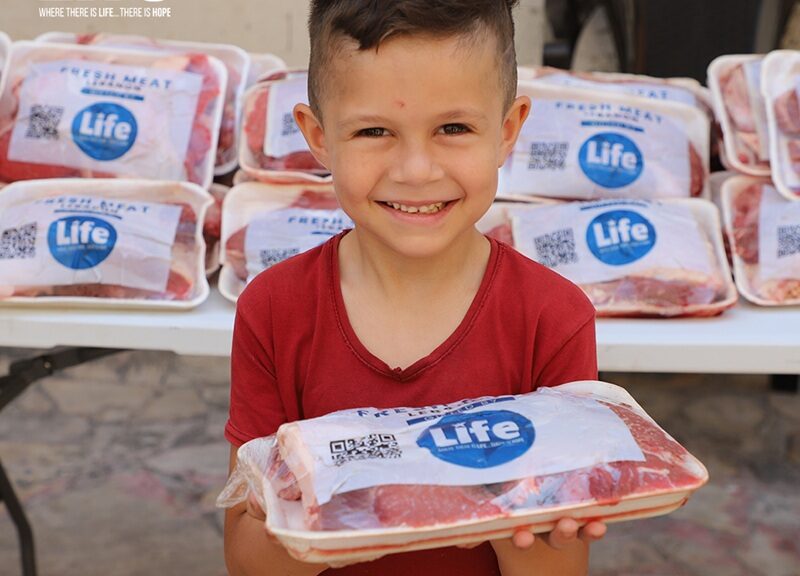
Life for Relief and Development has initiated an emergency response program in Lebanon, alongside its ongoing “Khair Wajbah” (Best Meal) campaign aimed at strengthening food security. The organization first began its humanitarian work in Lebanon in 2006, following the outbreak of war, when approximately a quarter of the population was displaced internally. During that period, and amid the widespread use of landmines and cluster munitions, Life concentrated its efforts on providing urgent relief and temporary shelter for affected families.

Education, Psychosocial Support, and Orphan Care

Samer Kassab, Coordinator of Life’s office in northern Lebanon, states:

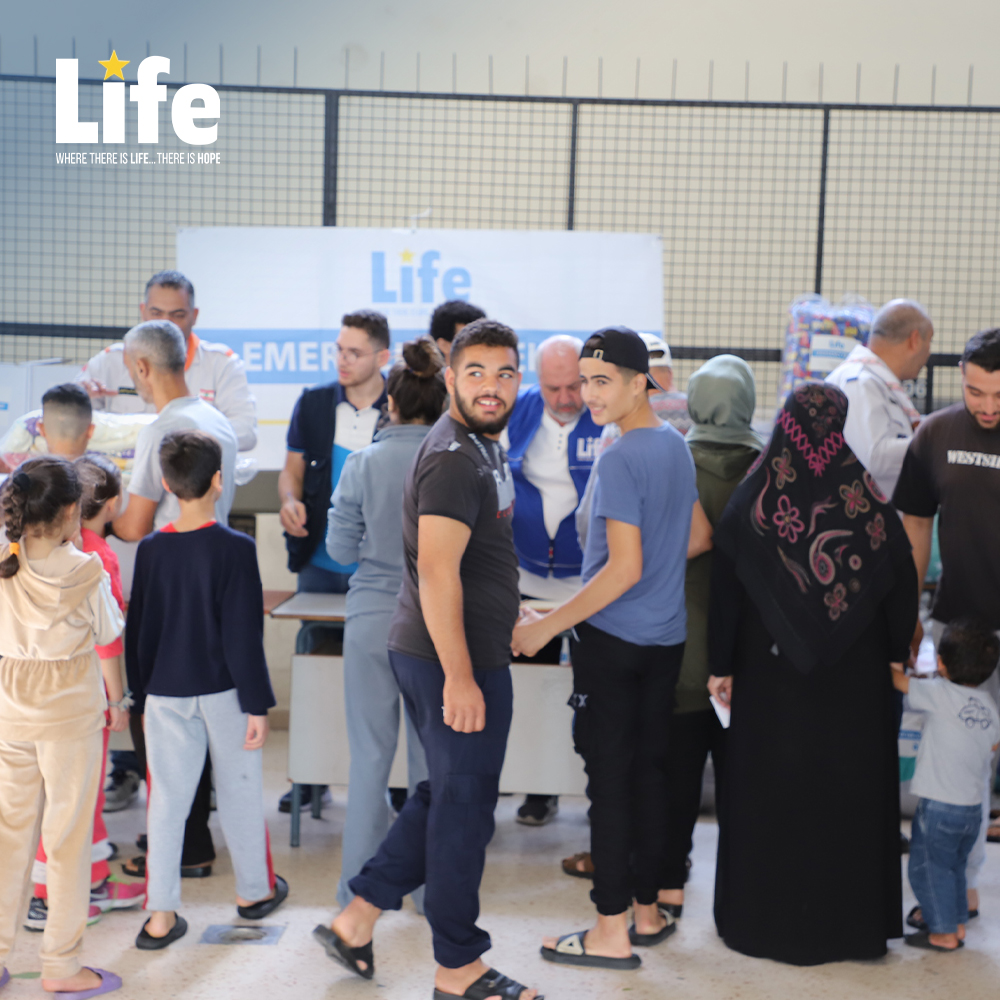
“For emergency relief, Life distributed comprehensive food baskets—each containing around 20 kilograms of essential staples—to 525 families in southern Lebanon (Tyre), including displaced households in Palestinian camps, as well as another 525 families in Tripoli and Akkar. The team also organized a collective iftar for 200 families and delivered hot meals to 400 displaced households.

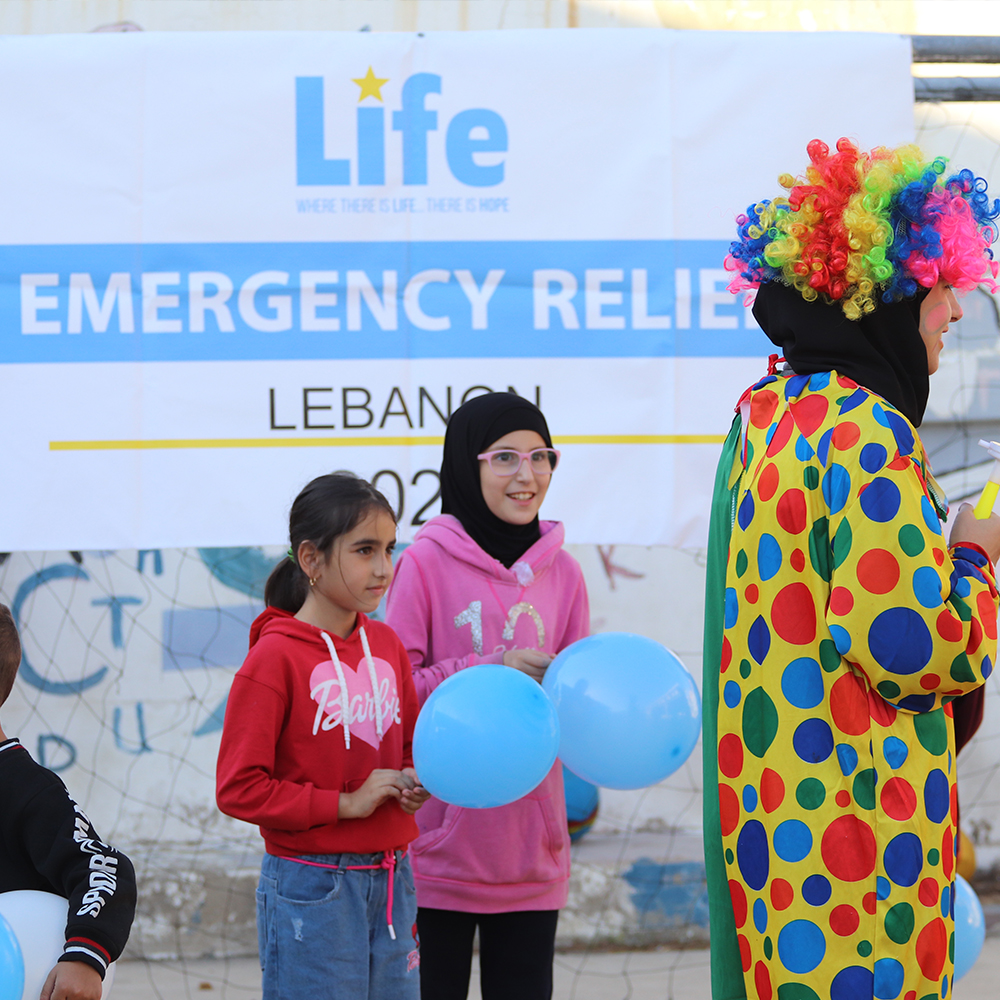
At the end of Ramadan and during Eid, the ‘Khair Wajbah’ initiative provided meals to 1,222 families across northern Lebanon. In parallel, Life organized an orphan-focused event where monthly financial support and Eid clothing were distributed, along with meals, gifts, sweets, and toys, contributing to both material relief and psychological well-being for children and their families.

Seasonal assistance programs were also implemented, including the distribution of winter clothing and essential supplies to vulnerable camp residents to ensure protection during harsh weather conditions.”

In addition, the organization has supported Lebanon’s education sector by facilitating the return of primary and middle school students to classrooms, rehabilitating damaged schools, and offering scholarships for university students—helping invest in long-term educational development for future generations.

Integrated Support for Vulnerable Populations

Engineer Mohammed Al-Sharif, Coordinator of Life’s Lebanon office, outlines recent humanitarian conditions:

“Our programs currently reach more than 103,000 displaced individuals across the country, 70% of whom are women and children. Over half of children under two years old are experiencing severe food deprivation, while nearly 80% of families require urgent humanitarian assistance.”

Approximately 1.17 million people are facing acute food insecurity, including 55,000 in emergency-level conditions. Camps and shelters continue to suffer from shortages of clean water, adequate nutrition, and sanitation services, significantly increasing the risk of disease outbreaks. The situation has further deteriorated due to expired medications, ongoing power outages, and fuel shortages.

Over the past three years, Life has strengthened its healthcare response by supplying hospitals with medicines, medical equipment, ambulances, and emergency relief materials, while also implementing sustained programs for displaced communities and refugees. Special attention has also been directed toward elderly individuals and people with disabilities.

Strengthening the Health Sector: A Core Priority

He further adds:

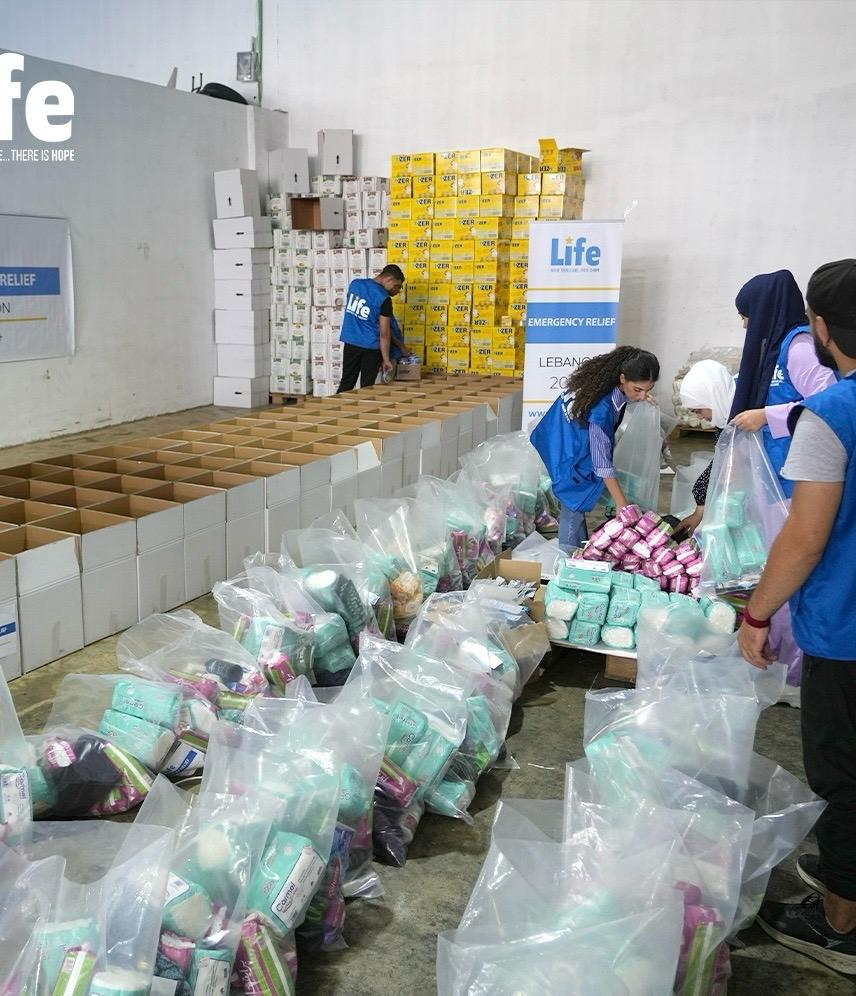
“As part of this month’s emergency response, Life has assisted 2,400 families by distributing ready-to-eat food packages, hot meals, emergency shelter kits (including mattresses and blankets), multipurpose cash assistance, hygiene kits, dignity kits for women, and essential supplies for children such as milk and diapers. Access to mobile medical services has also been ensured.”

Over the past year, Life has provided comprehensive medical support to six major hospitals across Lebanon, supplying essential medications, medical equipment, operating room tools, and emergency response materials.

The organization has also delivered medical equipment to L’Ecoute NGO in the southern suburbs of Beirut, which serves people with disabilities, and to Arcenciel in Beirut, supporting marginalized communities. Additional equipment was supplied to medical laboratories and to the Asile Maronite des Vieillards center in Mount Lebanon.”

For the Silo, Tasneem Elridi.

For More Information:

linktr.ee/LIFEUSA
https://www.lifeusa.org/lebanon-emergency-relief

Featured image- Mohammad Yassine/L’Orient-Le Jour

Burkina Faso is the world’s most neglected crisis

For the first time, Burkina Faso tops the list of the world’s most neglected displacement crises, according to a new report from the Norwegian Refugee Council (NRC). Redirection of aid and attention towards Ukraine has increased neglect of some of the world’s most vulnerable people.  

The annual list of neglected displacement crises is based on three criteria: lack of humanitarian funding, lack of media attention, and a lack of international political and diplomatic initiatives. The crisis in the Democratic Republic of Congo ranks second, having appeared first or second on the list every year since its inception seven years ago. Colombia, Sudan, and Venezuela follow in this grim ranking. 

“Tell the world we have suffered. We have suffered a lot. Our neighbours have suffered. Our friends have suffered. Our relatives have suffered. We lost many. Most of them killed. I am thanking God because none of my family was left there, and we are all in safety. I do not want to return, but I am asking God for peace, for peace in this place,” says Halimata (35). Together with her family, she fled fighting in the east of Burkina Faso and sought safety in Kaya.

“Neglect is a choice – that millions of displaced people are cast aside year after year without the support and resources they so desperately need is not inevitable,” said Jan Egeland, NRC’s Secretary General. 

“The powerful response to the suffering inflicted by the war in Ukraine demonstrated what the world can deliver for people in need. Political action for Ukrainians has been impactful and swift, borders kept open, funding plenty, and media coverage extensive. Those in power need to show the same humanity towards people affected by crises in places such as Burkina Faso and the Democratic Republic of the Congo.” 

More than five times more articles were written about the Ukrainian displacement crisis last year than about all the world’s ten most neglected crises in total. For every dollar raised per person in need in Ukraine in 2022, just 25 cents were raised per person in need across the world’s ten most neglected crises.  

The Democratic Republic of Congo continued to make the list this year. Patient* 43, lives with his 6 children in the town of Bule, Djugu Territory, Ituri Province, DR Congo. ‘We fled in February 2021. We’ve moved around a lot, and now we are trying to build a new home. During the war, we’ve never had enough to eat, and we have no money to buy medicines if the children get sick. We used to live in a beautiful village, and had a big house. Now, all we have is this shelter. When it rains a lot, the water will come through the roof’. *Name changed for security reasons.

The repeated warnings of increased disparity due to the reallocation of resources to the Ukraine response have now become reality. The redirection of a large amount of aid money towards Ukraine and towards hosting refugees in donor countries means that many crises have seen a drop in assistance, despite growing needs. Total aid to Africa, where we find seven out of the ten most neglected crises, was 34 billion USD in 2022, representing a drop of 7.4 per cent compared to 2021.  

The Ukraine crisis also contributed to an increase in food insecurity in many of the countries featured in the report, worsening already dire crises, and increasing the number of people in need. 

“The world has failed to support the most vulnerable, but this can be reversed. The lives of millions of people suffering in silence can improve, if funding and resources are allocated based on need, not geopolitical interest, and media headlines of the day,” said Egeland. “Last year the gap between what was needed and what was delivered in humanitarian assistance was 22 billion USD. This is a huge sum of money, but no more than Europeans spend on ice cream a year. We need donors to increase support and new donor countries to step up to share responsibility.” 

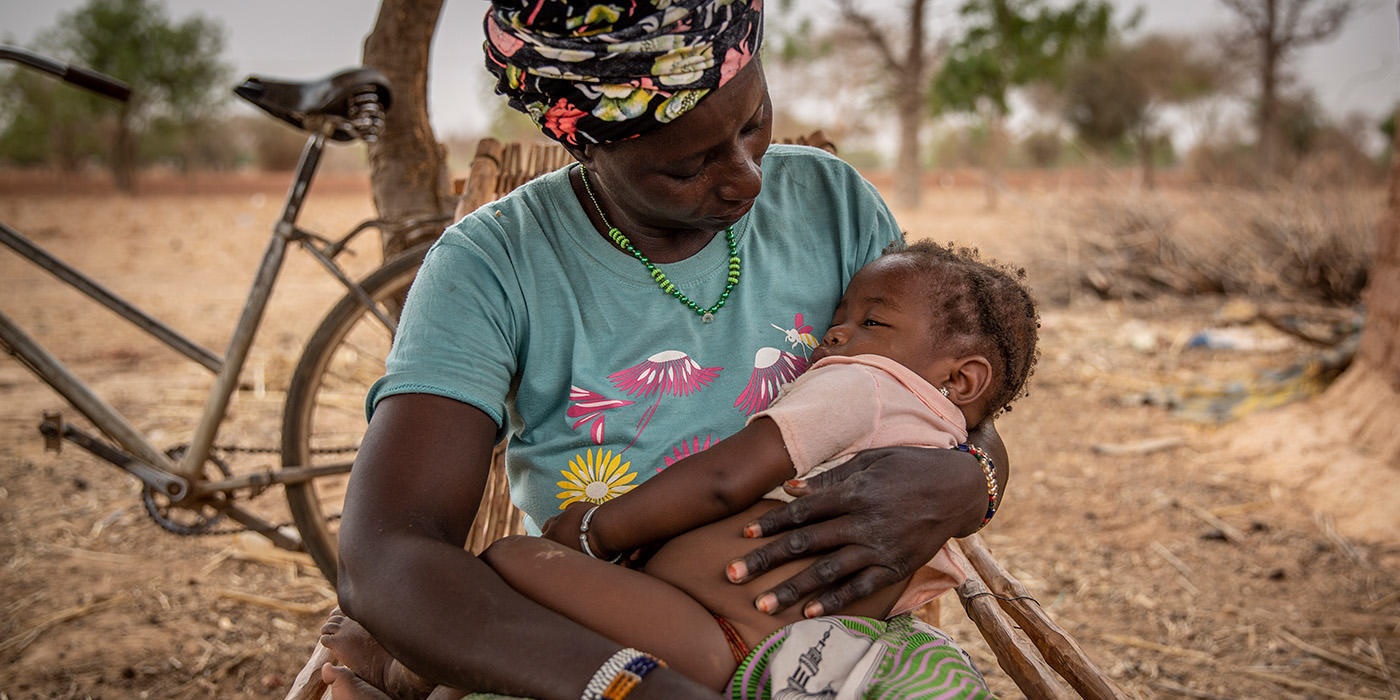
Burkina Faso’s decline since the crisis broke out five years ago has been swift and devastating. More than 2 million people have been forced to flee their homes, and nearly a quarter of the population now requires humanitarian aid. Across the country, 800,000 people are living in areas under blockade by armed groups where they have no access to even basic services. The situation is increasingly dire with some people forced to eat leaves to survive. 

Maïga Abibou is an Internally Displaced Person (IDP) from Wapassi in the North region of Burkina Faso. Because of rampant insecurity in Wapassi, she made her first move with her family to Naoubé, a village in the Center North. A few months later, she fled again with her family to Louda, a village located a few kilometers from Kaya. There, she has been living with dozens of other families out in the open for over a month while hoping to get shelters soon before the rainy season begins in Burkina Faso. “We want the world to know about our difficulties, about what is worrying us now. We fled from far away to come here. This is our second escape. We could not bring anything with us. We moved with our carts; we were in the bush and there were no vehicles,” Abibou said.

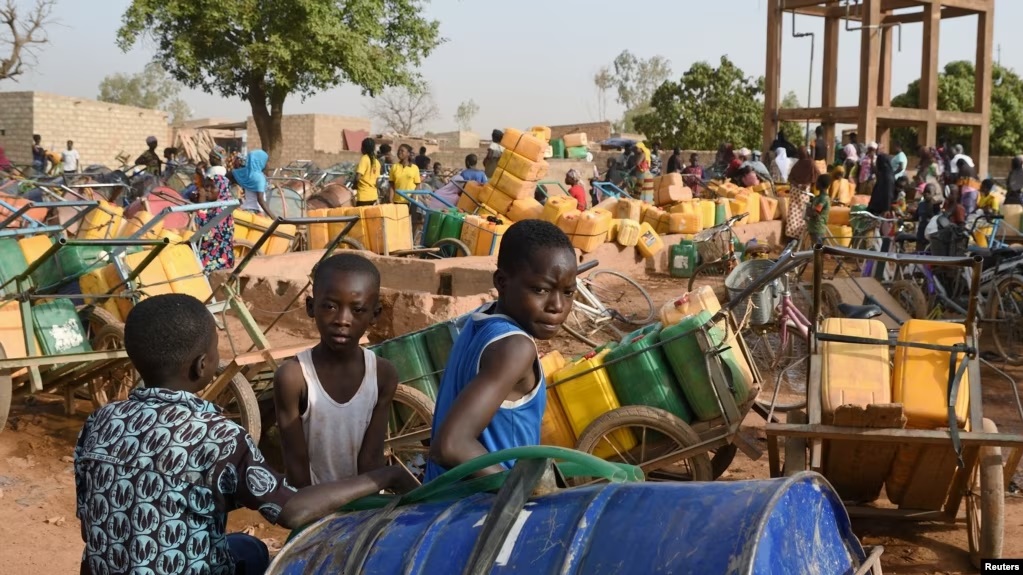
“We must do more to end the suffering in Burkina Faso before despair becomes entrenched and it is added to the growing list of protracted crises. That this crisis is already so deeply neglected shows a failure of the international system to react to newly emerging crises, as it also fails those lost in the shadows for decades. Ultimately, greater investment in diplomatic solutions is needed if we hope to pull crises off this list,” said Egeland.  For the Silo, Jessica Wanless. Featured image: FILE – Children wait for their turn to buy water from a privately-owned water tower, amid an outbreak of the coronavirus disease, in Taabtenga district of Ouagadougou, Burkina Faso, April 3, 2020.

Facts and figures:   

  • Each year, the Norwegian Refugee Council (NRC) publishes a list of the ten most neglected displacement crises in the world. The purpose is to focus on the plight of people whose suffering rarely makes international headlines, who receive no or inadequate assistance, and who never become the centre of attention for international diplomacy efforts. The report is available here
  • The neglected displacement crises list for 2022 analyses 39 displacement crises based on three criteria: lack of funding, lack of media attention, and lack of international political and diplomatic initiatives. Full details on the methodology can be found in the report. 
  • The full list in order this year is: Burkina Faso, DR Congo, Colombia, Sudan, Venezuela, Burundi, Cameroon, Mali, El Salvador, Ethiopia. 
  • Burkina Faso has appeared on this list for the previous four years. It ranked second on last year’s report, seventh in 2020, and third in 2019.  
  • DR Congo is a textbook example of a neglected crisis. It has topped the list three times (2021, 2020 and 2017). It previously ranked second on the list in 2019, 2018 and 2016. 
  • Colombia and El Salvador appear in this report for the first time this year. 
  • The total funding to the Burkina Faso humanitarian response plan was 339 million USD in 2022, of the 805 million USD requested – making the response just 42 per cent funded (OCHA). 
  • In 2022, 3.5 million people were in need of humanitarian assistance in Burkina Faso – by the end of the year this has skyrocketed to 4.9 million people. This is a 40% increase and nearly equal to 1 in 4 Burkinabè (OCHA). 
  • There are almost 2 million internally displaced people in Burkina Faso (IDMC). 
  • 800,000 people are living in 23 blockaded towns and cities in Burkina Faso, unable to access aid regularly. Half of them are in the city of Djibo (Access Working Group). 
  • The average humanitarian appeal was just over half funded in 2022, while the Ukraine appeal was almost 90% funded (OCHA).  
  • The gap between the total humanitarian appeals by the UN and partners and the money actually received amounted to 22 billion USD in 2022 (OCHA). 
  • Total aid to Africa was USD 34 billion in 2022 (overseas development assistance, including development aid and humanitarian), representing a drop of 7.4% compared to 2021 (OECD).  
  • Collectively the world’s most powerful donor countries used more of their aid on the reception of refugees at home than on overseas humanitarian assistance in 2022 (OECD).  
  • The European Ice Cream Market was estimated to be valued at $21.7 Billion in 2021 (Research and Markets). 
  • 212 USD was raised per person in need inside Ukraine, while 52 USD was raised per person in need across the world’s ten most neglected crises in 2022 (OCHA). 
  • In total, 375,000 articles were written in the English media about the world’s ten most neglected displacement crises last year, according to statistics from Meltwater. In comparison, 1.98 million articles were written in English about the displacement crises in Ukraine during the same period (Meltwater).  

Mark Canada 150 By Raising 150K Meals For Haiti Children With This UN App

CANADA – The United Nations World Food Programme (WFP) has launched the #ASK1TOASK1 campaign, asking all Canadians to join the challenge to raise 150,000 meals for children in Haiti through the ShareTheMeal app to mark Canada’s 150th anniversary.

Every day, countless children in Haiti turn up for school on an empty stomach, which makes it hard to focus on lessons. A daily school meal can mean not only better nutrition and health, but help the next generation reach its full potential. The #ASK1TOASK1 ShareTheMeal campaign will allow WFP to scale up their Home Grown School Meals programme in Haiti.

It costs just $4.55cdn, less than a bottle of maple syrup, to provide one week of nutritious meals to children in school through the ShareTheMeal app! The app allows users to share nutritious food with hungry children around the world by simply tapping on their smartphone and donating $0.65 or more.

“WFP’s ShareTheMeal app and the #ASK1TOASK1 campaign provides Canadians with an easy way to share meals with hungry children in Haiti,” said Robert Opp, a Canadian who is Director of Innovation and Change Management at WFP.
“Daily school meals allow children to focus on their studies rather than their stomachs, feeding their dreams for the future.”

Robert Opp

Haiti has been repeatedly affected by a series of devastating natural disasters over the last two decades. 2016 was the third consecutive year of El Nino-related drought, and the country was hit by the category 4 Hurricane Matthew, which left more than 800,000 people in need of urgent food assistance.

In Haiti, WFP is working together with the Government to produce a sustainable, nationally-owned, school feeding programme linked to local agricultural production. WFP procures local commodities such as rice, fresh fruit and vegetables from the local smallholder farmers, giving them a predictable market for their products and the children enjoy a healthy diversified school meal.

Join WFP Ambassador Against Hunger, George Stroumboulopoulos and other celebrities like World Champion Wrestler Andre Berto, Singer Dawn Richard and Canadian national Olympic Weightlifter Isabel Lahela who have all committed to help fundraise for the children in Haiti. To get involved, simply download the free app, join team #Canuck and once you have fed a child for a week share with your social media network, using the hashtag #ASK1TOASK1.

WFP’s award-winning app has engaged a new generation in supporting the fight against hunger. More than 850,000 people have downloaded the app and shared over 14 million meals with thousands of vulnerable children in Jordan, Syria, Lebanon, Malawi, Cameroon, South Sudan and Yemen.

image- worldvision.org.uk

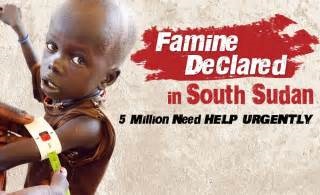
The ShareTheMeal community recently contributed to WFP’s famine response in South Sudan, where users shared 1 million meals with those people in dire need of food.

WFP is the world’s largest humanitarian agency fighting hunger worldwide, delivering food assistance in emergencies and working with communities to improve nutrition and build resilience. Each year, WFP assists some 80 million people in around 80 countries.

ShareTheMeal allows smartphone users to share their meals with hungry people via a free iOS and Android app. ShareTheMeal is an initiative of the World Food Programme Innovation Accelerator.

Download the app here.
For more information, please visit: https://sharethemeal.org/canuck.html

Follow us on Twitter @wfp_Canada and @ShareTheMealorg

For the Silo, Laura Mirarchi & Julie Marshall, WFP/Toronto.

Featured image- http://www.public-value.cbc.radio-canada.ca/story/1/

LE PAM ET SHARETHEMEAL LANCENT UNE CAMPAGNE POUR DISTRIBUER 150 000 REPAS À DES ENFANTS EN HAÏTI EN L’HONNEUR DU 150ÈME ANNIVERSAIRE DU CANADA

CANADA – Le Programme Alimentaire Mondial (PAM) des Nations Unies démarre aujourd’hui la campagne #ASK1TOASK1, qui propose aux Canadiens de participer à un challenge visant à distribuer 150 000 repas à des enfants en Haïti via l’application ShareTheMeal en l’honneur du 150ème anniversaire du Canada.

Chaque jour, de très nombreux enfants haïtiens vont à l’école le ventre vide, ce qui les empêche de se concentrer. En plus d’améliorer leur nutrition et leur santé, un repas scolaire quotidien peut permettre à la prochaine génération d’atteindre pleinement son potentiel. La campagne #Ask1toAsk1 de ShareTheMeal permettra au PAM d’étendre la portée de son programme “Home Grown School Meals”, qui fournit des repas scolaires produits localement.

Avec l’application ShareTheMeal, fournir une semaine de repas scolaires nourrissants à des enfants ne coûte que $4,55, soit moins qu’une bouteille de sirop d’érable ! L’application permet aux utilisateurs de partager de la nourriture saine avec des enfants dans le besoin en quelques clics sur leur smartphone, en faisant des dons de $0,65 ou plus.

Robert Opp, directeur canadien de l’Innovation et du Changement au PAM, dit que “ l’application ShareTheMeal et la campagne #ASK1TOASK1 offrent aux Canadiens un moyen simple de partager des repas avec des enfants dans le besoin en Haïti.”
“Des repas scolaires quotidiens permettent aux enfants de se concentrer sur leurs études et non sur leur estomac, alimentant leurs projets futurs”

Haïti a été touché par une série de graves catastrophes naturelles lors des deux dernières décennies. En 2016, le pays a connu pour la troisième année consécutive des sécheresses causées par El Nino, et a été touché par l’ouragan Matthew de catégorie 4. En conséquence, plus de 800 000 personnes ont un besoin urgent d’assistance alimentaire.
En Haïti, le PAM collabore avec le gouvernement pour mettre en place un programme de repas scolaires durable et public, qui s’appuie sur l’agriculture locale. Le PAM se fournit en produits locaux auprès d’agriculteurs haïtiens de petite taille. Ces achats de riz, fruits et légumes frais donnent accès aux producteurs à un marché stable et offrent aux enfants des repas sains et variés.

Rejoignez l’ambassadeur du PAM George Stroumboulopoulos et d’autres célébrités comme le Champion du monde de lutte Andre Berto, la chanteuse Dawn Richard et l’haltérophile Isabel Lahela, qui se sont engagés à aider à collecter des fonds pour les enfants en Haïti. Pour participer, vous n’avez qu’à télécharger gratuitement l’application, rejoindre l’équipe #Canuck et, après avoir partagé une semaine de repas avec un enfant, partager cela sur les réseaux sociaux en utilisant le hashtag #ASK1TOASK1.

ShareTheMeal, l’application du PAM, a gagné de nombreuses récompenses pour avoir impliqué la nouvelle génération dans la lutte contre la faim. Plus de 850 000 personnes ont téléchargé l’application et ont partagé plus de 14 millions de repas avec des milliers d’enfants vulnérables en Jordanie, en Syrie, au Malawi, au Cameroun, au Soudan du Sud et au Yémen.

La communauté ShareTheMeal a récemment participé à l’intervention du PAM au Soudan du Sud, partageant 1 million de repas avec des personnes ayant un besoin urgent d’assistance alimentaire.

Le PAM est la plus grande agence humanitaire de lutte contre la faim dans le monde, apportant une assistance alimentaire pour résoudre des situations d’urgence et travaillant avec les populations locales pour améliorer la nutrition et mettre en place un système alimentaire stable. Chaque année le PAM vient en aide à 80 millions de personnes dans 80 pays.

Grâce à l’application Android et iOS ShareTheMeal, les utilisateurs de smartphones peuvent partager leurs repas avec des personnes dans le besoin. ShareTheMeal est une initiative de l’accélérateur du Programme Alimentaire Mondial.

Téléchargez gratuitement l’application : http://ow.ly/IucL30cAl5h
Pour plus d’informations, rendez-vous ici : https://sharethemeal.org/canuck.html

Suivez-nous sur Twitter @wfp_Canada et @ShareTheMealorg