Tag Archives: decision making

The Global Innovation Era: The Convergence of Power, Intelligence, and Influence in the 21st Century

“The future is not inherited, it is engineered”.

Building Blocks of the Global Economy Are Changing

The architecture of the global economy is undergoing a profound structural redefinition. What once existed as parallel and independent industries—diplomacy, luxury, artificial intelligence, and space exploration—has begun to converge into a single, interdependent system of influence. This transformation represents more than technological progress; it signals the emergence of a new civilizational framework: the Global Innovation Era.

At its foundation, this era is defined by integration over isolation, ecosystems over sectors, and strategic alignment over fragmented competition. Power is no longer concentrated solely within governments or multinational corporations. Instead, it is distributed across highly interconnected global networks that span continents, disciplines, and spheres of influence.

A New Global Lattice

From Russia’s engineering depth to the United States’ leadership in technological innovation, from Australia’s research capabilities to Dubai’s infrastructural ambition, from Monaco’s concentration of capital and luxury to the Caribbean’s strategic positioning in global lifestyle and investment markets—a new global lattice is taking shape. This system is not accidental. It is being deliberately constructed by a new generation of leaders who understand that the future belongs to those capable of connecting what was never designed to be connected.


Redefining Diplomacy: From Statecraft to System Leadership

Diplomacy in the 21st century has evolved beyond traditional political negotiation into a multidimensional instrument of global coordination. It has become a form of system leadership—the deliberate construction of trust frameworks that enable cooperation across governments, industries, and cultures.

Today, diplomacy operates across multiple strategic layers:

  • Economic diplomacy shaping cross-border capital and investment flows
  • Technological diplomacy governing artificial intelligence, data ecosystems, and cybersecurity
  • Cultural diplomacy influencing global perception, identity, and soft power
  • Environmental diplomacy aligning international sustainability strategies
  • Educational diplomacy building intellectual capital and global talent pipelines

In this expanded capacity, diplomacy is no longer reactive—it is generative. It establishes the conditions necessary for innovation ecosystems to emerge, scale, and sustain. Without it, global integration fragments into inefficiency and instability.

Luxury as a Strategic Engine of Influence

Luxury is no longer simply a sector of consumption—it is a strategic engine of global influence. It operates as a high-level signaling system that defines aspiration, sets standards, and increasingly prototypes the future of human experience.

Across haute couture, fine jewelry, ultra-prime real estate, private aviation, yachting, and bespoke services, luxury functions as a controlled environment for innovation. Emerging technologies—particularly artificial intelligence—are first deployed in these high-value ecosystems, where personalization, precision, and exclusivity are paramount.

Luxury now serves as:

  • A driver of experiential and design innovation
  • A curator of global cultural capital
  • A bridge between heritage and technological advancement
  • A platform for integrating advanced technologies into human-centered environments

Its influence extends far beyond its economic footprint. By shaping perception, it indirectly shapes global demand, behavior, and market direction.


Artificial Intelligence: The Cognitive Infrastructure of the Global Economy

Artificial intelligence has become the defining infrastructure of modern civilization. It is not a supplementary tool—it is the cognitive layer upon which global systems are increasingly built.

AI is transforming:

  • Decision-making, shifting from reactive processes to predictive intelligence
  • Operations, transitioning from manual systems to autonomous networks
  • Value creation, moving from resource-based models to data-driven economies

Its applications are systemic:

  • Global supply chains that optimize themselves in real time
  • Financial ecosystems that anticipate volatility and opportunity
  • Creative industries enhanced by generative intelligence
  • Communication systems that eliminate linguistic and geographic barriers
  • Security frameworks capable of responding to complex, evolving threats

In this context, AI becomes the invisible architecture of the global innovation ecosystem—quietly orchestrating complexity at scale.


Space: The Expansion of Economic and Strategic Territory

Space is no longer a symbolic frontier—it is an active extension of the global economy. Its commercialization introduces a new dimension of infrastructure, connectivity, and geopolitical relevance.

This expansion includes:

  • Satellite networks enabling global communication and digital infrastructure
  • Earth observation technologies transforming environmental and resource management
  • The rise of space tourism as a new frontier in ultra-luxury markets
  • Advanced research in microgravity environments
  • Navigation, defense, and security systems with global strategic implications

Space represents the vertical expansion of economic activity—where technological ambition, geopolitical influence, and commercial opportunity intersect at the highest level.


The End of Silos: The Emergence of Integrated Global Ecosystems

The defining characteristic of the Global Innovation Era is not isolated advancement, but systemic integration.

A single initiative today may require:

  • Diplomatic coordination across multiple jurisdictions
  • AI-driven operational intelligence
  • Luxury-level experience design
  • Space-based infrastructure support

This convergence marks the نهاية (arabic: nihayat english: the end) of siloed thinking. The most significant breakthroughs no longer occur within industries—they occur at their intersections.

The result is a new paradigm: the ecosystem as the primary unit of value creation.

Within these ecosystems:

  • Investors, engineers, diplomats, and creatives operate within unified networks
  • Knowledge flows seamlessly across domains
  • Innovation accelerates through collaboration rather than competition

This is not incremental evolution. It is a fundamental reconfiguration of how the global economy functions.


The Rise of the Multidisciplinary Global Leader

At the center of this transformation is a new leadership archetype—one defined not by specialization alone, but by synthesis.

These leaders:

  • Build influence through global networks rather than hierarchical structures
  • Navigate fluidly between public and private sectors
  • Combine technological expertise with geopolitical awareness
  • Design ventures with immediate international scalability
  • Leverage digital infrastructure to operate without geographic limitation

They understand a critical reality: in a connected world, proximity is no longer physical—it is strategic.

Their advantage lies not in isolated knowledge, but in their ability to connect knowledge across systems.


Global Nodes of Influence

The emerging global ecosystem is anchored in interconnected regions, each contributing unique strategic value:

  • Russia contributes engineering excellence and scientific depth
  • The United States leads in technological innovation and capital markets
  • Australia connects research and sustainability with Asia-Pacific growth
  • Dubai exemplifies large-scale infrastructure and global business integration
  • Monaco represents concentrated financial power and luxury influence
  • The Caribbean offers strategic positioning in tourism, investment, and maritime economies

Together, these regions form a distributed but unified network. Their collaboration defines the speed, direction, and scale of global innovation.


Merit in the Age of Global Connectivity

One of the defining shifts of this era is the redefinition of opportunity. While structural barriers remain, access to global platforms, knowledge, and networks has expanded significantly.

However, access alone is no longer a differentiator. Execution is.

Success now requires:

  • Intellectual rigor
  • Strategic clarity
  • Adaptability in complex environments
  • Long-term discipline and resilience

Potential may be universal—but meaningful achievement remains highly selective.
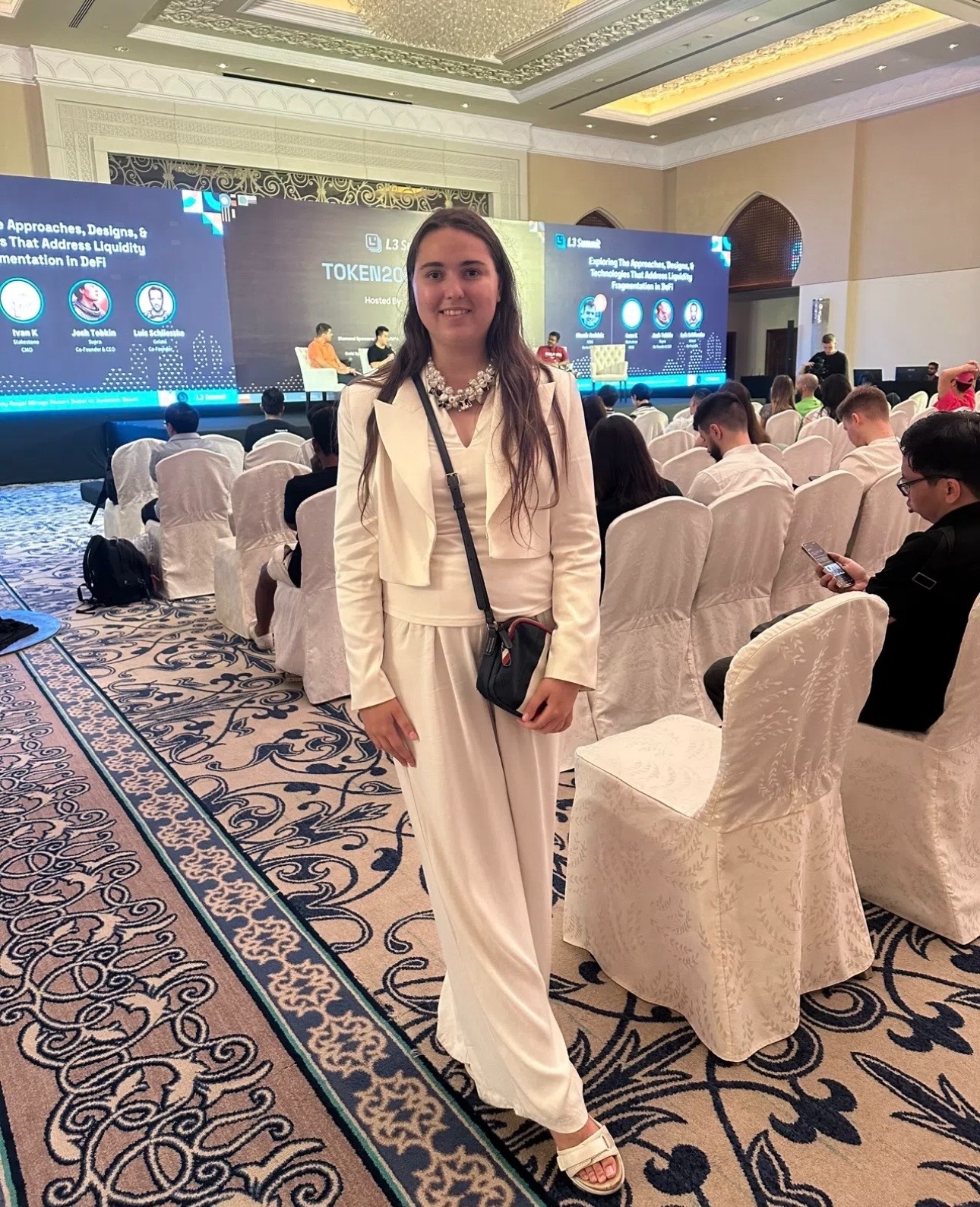

Founder Spotlight: Aleksandra Sokolova and the First Royal Global Ecosystem

At the forefront of this transformation stands Aleksandra Sokolova, founder of the Royal Global Ecosystem—the first integrated global platform of its kind.

This ecosystem represents a pioneering model that unites diplomacy, global luxury, artificial intelligence, space innovation, and international collaboration within a single strategic framework. It is not a conceptual alignment, but a structured, operational system designed to function across sectors and borders simultaneously.

Within this ecosystem:

  • Diplomacy enables trust, access, and international partnerships
  • Artificial intelligence drives efficiency, scalability, and intelligent systems
  • Luxury defines experience, positioning, and global influence
  • Space innovation expands infrastructure, connectivity, and future opportunity

The Royal Global Ecosystem establishes a new category of global architecture—one in which industries no longer operate independently, but as interconnected components of a larger system.

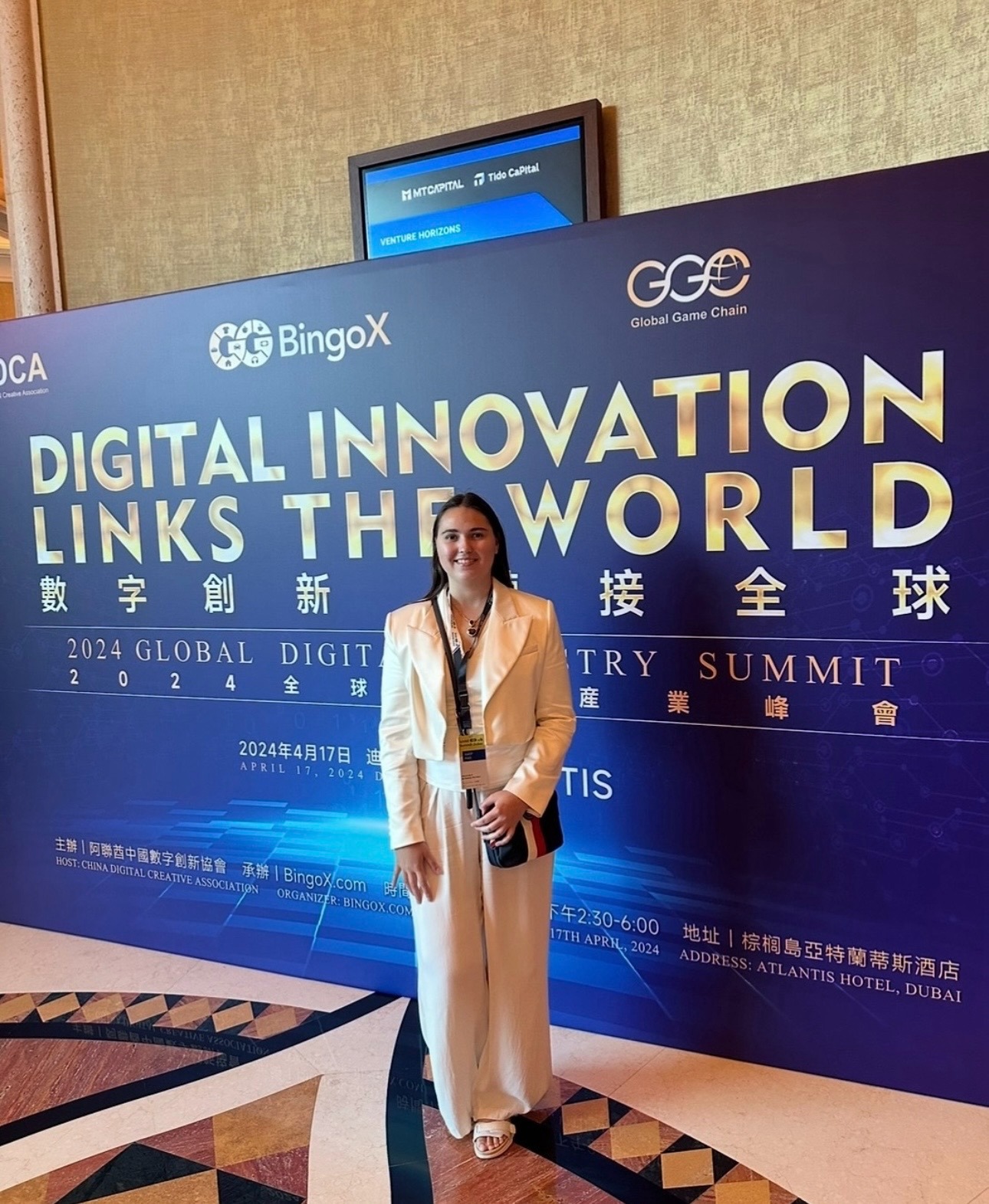
For the Silo, Aleksandra Sokolova.

Aleksandra Sokolova’s role reflects the emergence of a new class of leadership: system architects. These are individuals who do not simply operate within existing frameworks, but design entirely new ones.

Her work demonstrates a defining principle of the modern era: the future is not inherited—it is engineered.

Conclusion: The Age of Global System Architects

The world is entering an era defined by complexity, interdependence, and accelerated transformation. Linear strategies and isolated thinking are no longer sufficient.

What defines success now is the ability to:

  • Think systemically across industries
  • Operate globally across borders
  • Build integrated structures that connect people, technologies, and markets

The next chapter of global development will not be led by those who react to change—but by those who design the systems through which change occurs.

In the Global Innovation Era, the ultimate advantage belongs to the architects—those who see the entire system and possess the vision, discipline, and capability to build it.

Toronto Based AI Strategist: AI Is Rewriting Executive Decision Making

AI is fundamentally redefining leadership by providing new tools, frameworks, and systems that allow leaders not just to manage complexity, but to see, challenge, and reshape their organizations in ways never before possible. The competitive mandate for leaders is clear: harness AI not merely for efficiency, but as an engine for deeper self-awareness, structured dissent, and proactive sensing that unlocks true organizational agility and resilience.

Strategic Frameworks for Next-Gen AI Leadership

Forward-thinking leaders are moving beyond pilot projects and isolated automation to experiment with new, holistic approaches—many inspired by concepts like the Leadership Mirror, Red-Team Loop, and Organization Pulse Monitor. These paradigms operationalize AI in ways that directly address the perennial blind spots, biases, and inertia that often undermine executive decision-making.

George Yang- helping organizations and executives embrace AI.

The Leadership Mirror: Cultivating Radical Self-Awareness

The Leadership Mirror uses AI to continuously analyze leadership communication, decision rationale, and team interactions, surfacing insights that are often overlooked or difficult for humans to acknowledge. For example, Microsoft has begun leveraging AI tools to track who dominates meetings, which voices get systematically dismissed, and when evidence is overridden by intuition—creating dashboards that encourage leaders to confront uncomfortable patterns.

  • This approach helps leaders challenge their own narrative, improve inclusiveness, and drive more thoughtful debate.
  • With AI’s ability to process language in real time, leaders can receive feedback loops and “reflections” that support a culture of deliberate, transparent leadership.
  • The Leadership Mirror is also a vehicle for mitigating the “competence penalty,” where women and older workers face skepticism for using AI—even when it enhances productivity. By surfacing evidence of expertise and impact, it reduces bias and builds psychological safety.

There are different types of AI including less sophisticated models such as Generative AI. To decide whether to use generative artificial intelligence for a task, ask yourself whether it matters if the output is true and you have the expertise to verify the tool’s output. (Adapted from Aleksandr Tiulkanov‘s LinkedIn post)

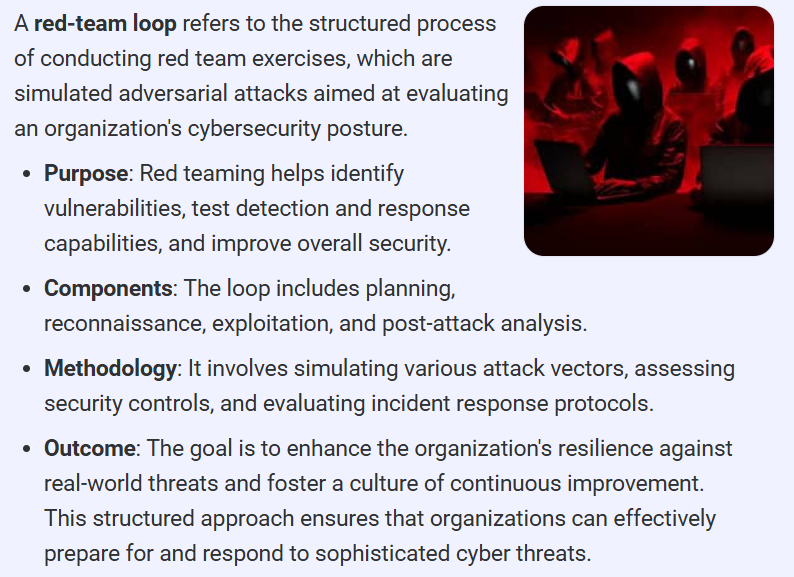
The Red-Team Loop: Embedding Structured Dissent

To counter groupthink and executive overconfidence, Red-Team Loop systems employ AI to automate adversarial reviews of strategy and operational decisions. Verizon, for instance, uses an AI framework that captures assumptions, risks, and anticipated outcomes for major decisions, then generates simulated critiques and alternative scenarios—sometimes challenging senior executives on blind spots they themselves hadn’t recognized.

  • By proactively “red-teaming” their own decisions, leaders foster a culture where dissent is routine, rational, and data-driven—not ad hoc or punitive.
  • The approach is especially valuable in M&A, crisis management, and product launches, where high-stakes, high-ambiguity decisions benefit from rigorous challenge.
  • Leading boards now expect Red-Team Loops as part of their fiduciary duty, recognizing that the cost of missed risks is measured not just in dollars, but reputation and long-term viability.

Organization Pulse Monitor: Proactive Sensing for Culture and Risk

The Organization Pulse Monitor uses AI to detect weak signals in organization culture, ethical risk, and operational friction long before traditional metrics or surveys would register them. Some organizations have begun linking AI-powered sentiment analysis of internal communications, workflow behaviors, and network interactions to predict where a culture may be straining, where compliance risks are emerging, or where silent dissent is brewing.

  • When Pulse Monitors flagged drops in engagement and early warning signs of burnout, one multinational fast-tracked well-being interventions, pre-empting attrition.
  • AI-driven pulse scans also help surface ethical risks—such as exclusionary behaviors or data privacy concerns—enabling leaders to respond immediately, not months later.

Actionable Strategies: Bringing AI Experiments to Leadership

How can senior leaders experiment and innovate with these systems while maximizing value and minimizing risk?

  • Map Adoption Hotspots and Blind Spots: Use mirror and pulse data to identify where AI is catalyzing positive behaviors—and where competence penalties or shadow AI usage may be undermining equity or performance. Target interventions accordingly.
  • Mobilize Role Model Leaders: Encourage respected senior leaders, particularly those from underrepresented demographics, to visibly experiment with and champion AI tools. Research shows that when these role models use AI openly, adoption gaps shrink, and psychological safety rises.
  • Redesign Evaluation and Disclosure Policies: Shift performance metrics from subjective ratings of proficiency to objective impact, cycle time, accuracy, and innovation. Blind reviews and private feedback mechanisms can reduce bias against AI users and drive fairer rewards.
  • Embed Structured Red-Teaming in Decision Flows: Institutionalize adversarial testing of key decisions, making AI-enabled dissent a standard step—not a threat or afterthought. Leaders should receive regular “contrarian” insights, not just consensus-building reports.

Common Pitfalls and Human Impact

Despite rising investment, less than one-third of US employers believe staff are equipped for critical thinking in the AI era, and only 16% of American workers use AI on the job despite widespread availability. The main barriers are not just technical, but social: competence penalties, fear of reputation loss, and resistance among influential skeptics.

  • Competence Penalty: AI users, especially women and older employees, may face a perception of diminished competence. This undermines adoption and can exacerbate workplace inequality.
  • Shadow AI and Hidden Risks: Employees sometimes use unauthorized tools to bypass bias, exposing the organization to compliance, reputational, and security risk.
  • Skill Gaps vs. Work Context: Traditional training falls short without tailored, role-specific feedback loops—AI tutors offer scalable, personal learning but must be embedded in daily workflow, not delivered in isolation.

Governance, Ethics, and Sustainable Change

Human-centered leadership isn’t optional—it’s a strategic imperative. Boards and executives must be proactive in:

  • Instituting transparent governance for all AI systems (mirrors, loops, monitors), with clear oversight on privacy, fairness, and impact.
  • Ensuring structured role-modeling and psychological safety—particularly for vulnerable groups confronting competence penalties.
  • Making change management a continuous process, with AI as both coach and sentinel, not just a dashboard.

The call to action for C-suite leaders is urgent and profound: treat responsible, experimental, and self-critical AI adoption as the core discipline of next-generation leadership. Not just for efficiency, but for building organizations where insight, challenge, and well-being are sustainably enabled. Those who master the trifecta of mirror, loop, and pulse will set the new standard for profitable, human-centered growth in the age of AI.

More about:

George Yang is a Toronto-based digital innovator and AI adoption strategist with over 15 years of experience in marketing and digital transformation. As Chair of the AI Working Group at the National Payroll Institute, he helps organizations translate AI strategy into measurable business outcomes. George is passionate about making AI adoption ethical, practical, and impactful, bridging the gap between innovation and implementation across industries. georgeyang.ca

Doctor Has Four Simple Tips For Optimal Living

Have you ever felt like you need an upgrade on your life?

Most of us have – and there’s a way to get it, says veteran physician Sanjay Jain.

“First, I tell people, ‘Don’t be afraid of making your life  clearer.’ but as we have paraphrased from Chinese philosopher Laozi, ‘The journey  of a thousand miles begins with the first step,’ ”. Many argue that life is not simple and, therefore, there are no easy  answers,  says Jain, whose specialties  include integrative medicine. He’s also an international speaker and author of  Optimal Living 360 – (www.sanjayjainmd.com).

“Lives are built from many small components which, when  viewed as an assembled whole, can appear overwhelmingly complex,” Jain says.
“But when we break them down and consider the pieces as we make decisions in our  lives, it’s much easier to see how small adjustments can result in a better  return on all of the investments we make – not only in health, but in  relationships, finances, and all the other essential aspects of our  lives.”

Jain offers four points to keep in mind as you start the  journey.

• Life is short, so live it to its fullest potential. Live it optimally. This is your life, so don’t waste its  most precious resource – time. No matter one’s spiritual leanings, economic and education status, health, intelligence level, etc. – one thing is true for all: Our time on Earth is finite. There will be a time for most of us when, perhaps after a frightening diagnosis from a doctor, we reflect deeply upon our time and consider the most important moments, and all the time that may have been squandered.

• Balance is key. Too much or too little of something, no matter how good, is actually not good. Balance is one of the easiest tenets to understand, but arguably the most difficult to maintain. Obviously, too much alcohol is bad; then again, there are some health benefits to moderately imbibing red wine. What about too much of a good thing; can a mother love her children too much? Yes, if she is an overprotective “helicopter parent.” The best antidote to overkill of anything is awareness; try to be aware of all measures in your life.

• Learn to tap your strengths and improve upon your weaknesses. Engaging your strengths at work and in your personal life is important. When we do what we’re good at and what comes easily, we feel self-confident and satisfied. Some people, however, are not in jobs that utilize their strengths, or they don’t put their talents to work at home because they’re mired in the prosaic work of living. It’s important to identify your strengths and find ways to engage them. It’s equally important to recognize our weaknesses and work on improving them (because we can!) This is essential for achieving balance.

• Life is about making the right choices. Integrative decision-making makes this easier. There are many different types of decision-making, including systematic, hierarchal, impulsive, decisive and flexible. Integrative decision-making can be used for problems large and small, and includes the following process: 1. Define the problem. 2. Frame the problem. 3. Develop all your options. 4. Analyze your options. 5. Make the decision. 6. Execute your decision. 7. Debrief yourself.

"Don’t be afraid of making your life clearer." Dr. Sanjay Jain
“Don’t be afraid of making your life
clearer.” Dr. Sanjay Jain

While experts may be the best consultants for compartmentalized areas of your life, only you know the other aspects that affect your well-being and can determine how a decision in one area will affect another area.  For the Silo, Ginny Grimsley

Supplemental– Who was Laozi?  http://www.britannica.com/EBchecked/topic/330163/Laozi

The Father of Taoism- http://oregonstate.edu/instruction/phl201/modules/Philosophers/LaoTzu/laotzu.html