Tag Archives: fight poverty

Life For Relief And Development Ranks Third Globally Among Humanitarian Orgs

According to Charity Navigator  2025

Amid escalating crises in the Middle East and the developing world, Life for Relief and Development (LIFE) has been recognized as the third-best global humanitarian organization by Charity Navigator. The organization also secured fifth place for its humanitarian work in Palestine, and fifth place worldwide in the fight against poverty. These achievements earned LIFE a 100% rating, an endorsement from the U.S. Agency for International Development (USAID), as well as recognition by Impactful Ninja as one of the top humanitarian organizations in North America. LIFE was further honored with the Humanitarian Partnership Award for its collaborative initiatives.

Sustainable Programs and Comprehensive Seasonal Projects 

Vicki Roob, Administrative Director at LIFE, explained that the organization was founded more than 33 years ago in the United States and works across more than 60 countries through 14 international offices.

Over the years, LIFE has distributed more than $624 million usd/ $859 million cad in humanitarian aid, supporting programs in food security, clean water, temporary shelter, healthcare, education, community development, family assistance, refugee support, and emergency relief during wars and natural disasters. Currently, the organization supports more than 13,100 orphans worldwide, providing essential care, nutrition, housing, and education, while also organizing annual Global Orphan Festivals filled with games, gifts, and entertainment to ensure children feel valued and supported.

Tent Camps That Saved Thousands of Lives in Conflict Zones

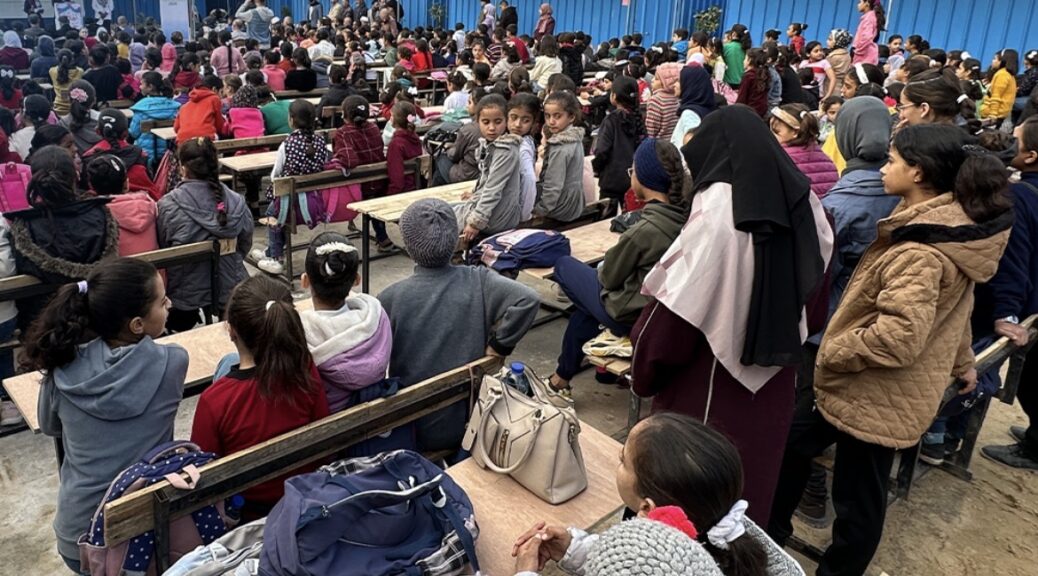
According to Dr. Abdulwahab Alawneh, Regional Director for Jordan and Palestine, LIFE implemented its “LIFE Organized Camps” project in Gaza, establishing nine camps across the north, center, and south of the Strip. Built with fire-resistant and durable materials, these camps provided shelter for 46,000 displaced people, featuring easily dismantled tents to accommodate recurring displacement. Each tent was equipped with bedding and essentials, alongside medical facilities, solar panels serving 7,000 individuals, and protective insulation for 3,000 residents against extreme weather. Clay ovens benefited 3,500 people, while 23 sanitation units were constructed.so LIFE Assisted 1.3 million Displaced People in general in GAZA.

Adding: “we’ve been proactively preparing to facilitate the delivery of urgent relief—shelter, food, water, medicine, and personal necessities—into Gaza. Our team on the ground has already begun implementing LIFE’s ninth camp project after tents arrived and installation began. We are now working to shelter 15,000 newly displaced families still exposed to the cold as winter approaches.

These are waterproof, cold- and humidity-resistant tents that also provide insulation against heat in summer. Made from PVC material, they have protected more than 29,000 families from fires during nighttime bombings in past years.

Using all borders to Gaza

We faced tough challenges but managed them through our extensive experience. We are not newcomers to Gaza’s relief field. We worked through approval requirements for specific items—like tent specifications—while some organizations struggled to get their tents through the crossings. Tents vary in size and function: family tents, medical point tents, hospital tents, and educational tents.

We are now awaiting approval for mobile housing units. However, shelter items like mattresses and blankets have been entering through Egypt on LIFE’s trucks without obstacles, while food parcels are transported through Jordan.

“For food items previously restricted for NGOs, we purchase them at discounted rates from local traders and distribute them to those most in need. We spared no effort to reach them—using animals or walking long distances on foot when necessary.

We also supply water—each truck carries 15,000 liters per camp, enough for 500 families for a week—alongside baby formula, infant supplies, medical kits, and medicines. We ensure field monitoring of activities, including eight camps already constructed, and we share updates regularly on social media in multiple languages.”

Emergency Relief and Orphan Care at the Forefront

In the past year alone, LIFE allocated approximately $1.1 million usd/ $1.51 million cad in emergency relief to families displaced by conflicts and natural disasters, including earthquake survivors in Afghanistan, Morocco, Nepal, Syria, and Turkey; war-displaced populations in Gaza, Sudan, Syria, and Lebanon; wildfire victims in Bangladesh; flood-affected communities in Afghanistan and Libya; and cyclone-hit regions in Myanmar.

Additionally, $6.4 million usd/ $8.81 million cad was invested in healthcare programs and medical supplies, $4.5 million usd/ $6.2 million cad in educational projects, and $2.1 million usd/ $2.89 million cad in in-kind aid shipments. Orphan support remained a priority, with more than $3.8 million usd/ $5.23 million cad dedicated to orphan sponsorship, education, and healthcare.

Seasonal projects also played a significant role: nearly $1.7 million usd/ $2.34 million cad was spent on Ramadan and Eid initiatives, with more than 11 million meals distributed across 36 countries during Ramadan alone. Over 272,620 individuals in 38 countries benefited from Qurbani (sacrifice) distributions. LIFE also allocated $1.4 million usd/ $1.93 million cad toward emergency food relief and constructed 122 water wells worldwide.

For the Silo, Tasneem Elridi.

Each November American Thanksgiving Includes Lots Of Giving Back

Most take part in the holiday’s rituals, including traveling to spend time with family and counting life’s blessings, and 19% also donate to charities  to help others eat well around the holiday, according to a recent poll. It is a time of year that many Americans volunteer at food banks, churches or service organizations in order to help prepare meals or provide ingredients to those without enough.

Volunteers with Operation Turkey, a national nonprofit based in Austin, Texas, cook and deliver thousands of Thanksgiving meals complete with turkey, stuffing, gravy, vegetables and a slice of pie.

After 25 years, the all-volunteer organization has expanded to about 20 cities and now operates in states beyond Texas, including North Carolina and Pennsylvania. “It’s inspiring and humbling watching our local community rally together to make a difference for their neighbors,” says Josh Ortiz , an Operation Turkey volunteer in Dallas. “It all matters and makes a difference.”

People serving Thanksgiving meals in a commercial kitchen (© Timothy Hiatt/Getty Images for Feeding America)
Volunteers serve food at a church in Chicago the day before an earlier Thanksgiving. (© Timothy Hiatt/Getty Images)

Exercising for a cause

Many Americans want to help others while also getting in a little exercise before the big meal. (The average American consumes 4,500 calories on Thanksgiving, according to the Calorie Control Council). Thus, turkey trots — events where people run or walk to raise money for charities — are held in cities and towns across the country. Turkey trots make Thanksgiving “the biggest U.S. running day of the year,” according to the website RunSignup.com.

How about Canadian Thanksgiving Calories?

Ohio Turkey Trot

The 5K Turkey Trot in Granville, Ohio, drew 1,900 runners in 2024  and raised $130,000 usd/ $183,300 cad for a local food bank. Michelann Scheetz, of St. Luke’s Church, which organizes the annual event, says a team of volunteers works to pull off the Thanksgiving Day tradition that started in 2005. America’s Trot for Hunger, held in Washington, is now in its 24th year and draws thousands.

Jessica McCrorie, who served as a teen ambassador for the national nonprofit Feeding America, said she saw Thanksgiving bring out her own and others’ spirit of generosity. While volunteering with Island Harvest, McCrorie helped the nonprofit in Melville, New York, collect 30 turkeys and hundreds of dollars in donations at a grocery store.

“I feel like people may have felt more generous and connected to the issue of hunger because the Thanksgiving holiday is a time for family and friends to come together and share a meal,” she told Feeding America .

Ontario Takes Historic Action To Raise Minimum Wage To $15 Hour By 2019

Fair Workplaces, Better Jobs- $15 Minimum Wage and Equal Pay for Part-Time and Full-Time Workers Part of Plan to Help People Get Ahead in a Changing Economy

May 30, 2017 10:20 A.M.

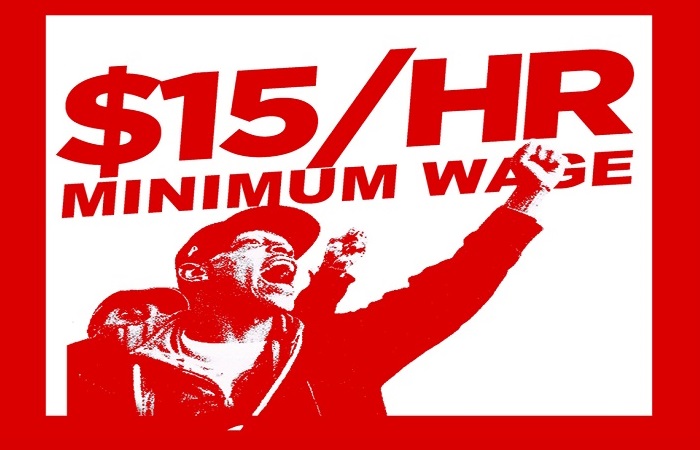
Ontario is taking historic action to create more opportunity and security for workers with a plan for Fair Workplaces and Better Jobs. This includes hiking the minimum wage, ensuring part-time workers are paid the same hourly wage as full-time workers, introducing paid sick days for every worker and stepping up enforcement of employment laws.

Over the past three years, Ontario’s economy has outperformed all G7 countries in terms of real GDP growth. While exports and business investments are increasing and the unemployment rate is at a 16-year low, the nature of work has changed. Many workers are struggling to support their families on part-time, contract or minimum-wage work. Government has a responsibility to address precarious employment and ensure Ontario workers are protected by updating the province’s labour and employment laws.

To help safeguard employees and create fairer and better workplaces, Premier Kathleen Wynne announced today that the government is moving forward with a landmark package of measures, including:

-Raising Ontario’s general minimum wage to $14 per hour on January 1, 2018, and then to $15 on January 1, 2019, followed by annual increases at the rate of inflation.
-Mandating equal pay for part-time, temporary, casual and seasonal employees doing the same job as full-time employees; and equal pay for temporary help agency employees doing the same job as permanent employees at the agencies’ client companies.
-Expanding personal emergency leave to include an across-the-board minimum of at least two paid days per year for all workers.
-Bringing Ontario’s vacation time into line with the national average by ensuring at least three weeks’ vacation after five years with a company.
-Making employee scheduling fairer, including requiring employees to be paid for three hours of work if their shift is cancelled within 48 hours of its scheduled start time.

The government will also propose measures to expand family leaves and make certain that employees are not mis-classified as independent contractors, ensuring they get the benefits they deserve. To enforce these changes, the province will hire up to 175 more employment standards officers and launch a program to educate both employees and small and medium-sized businesses about their rights and obligations under the Employment Standards Act.
QUOTES

” The economy has changed. Work has changed. It’s time our laws and protections for workers changed too. Too many families are struggling to get by on part-time or contract work and unstable employment. And no one working full time in Ontario should live in poverty. With these changes, every worker in Ontario will be treated fairly, paid a living wage and have the opportunities they deserve.”
– Kathleen Wynne
Premier of Ontario

” These changes will ensure every hard-working Ontarian has the chance to reach their full potential and share in Ontario’s prosperity. Fairness and decency must be the defining values of our workplaces.”
– Kevin Flynn
Minister of Labour
QUICK FACTS

Today’s announcement responds to the final report of the Changing Workplaces Review, conducted by Special Advisors C. Michael Mitchell and John C. Murray, over the course of two years. It is the first-ever independent review of the Employment Standards Act, 2000 and Labour Relations Act, 1995.
The report estimates that more than 30 per cent of Ontario workers were in precarious work in 2014. This type of employment makes it hard to earn a decent income and interferes with opportunities to enjoy decent working conditions and/or puts workers at risk.

In 2016, the median hourly wage was $13.00 for part-time workers and $24.73 for full-time workers. Over the past 30 years, part-time work has grown to represent nearly 20 per cent of total employment.
Currently, half of the workers in Ontario earning less than $15 per hour are between the ages of 25 and 64, and the majority are women.
More than a quarter of Ontario workers would receive a pay hike through the proposed increase to the minimum wage.
Studies show that a higher minimum wage results in less employee turnover, which increases business productivity.
Ontario is proposing a broad consultation process to gain feedback from a wide variety of stakeholders on the draft legislation it intends to introduce. To facilitate this consultation, it is proposing to send the legislation to committee after First Reading.
LEARN MORE

The Changing Workplaces Review — Final Report

Disponible en Français

Équité en milieu de travail, meilleurs emplois

Salaire minimum de 15 $ l’heure et parité salariale pour travail à temps partiel et à temps plein afin d’aider les gens à réussir au sein de l’économie en évolution

30 mai 2017 10h20

L’Ontario adopte des mesures historiques afin de créer plus de possibilités et de sécurité pour les travailleuses et travailleurs grâce à un plan pour l’équité en milieu de travail et de meilleurs emplois. Il s’agit notamment de hausser le salaire minimum, de veiller à ce que les travailleurs à temps partiel touchent le même taux horaire que les travailleurs à temps plein, de prévoir des congés de maladie payés pour tous les travailleurs et de renforcer la mise en application des lois régissant le travail.

Au cours des trois dernières années, le rendement de l’économie de l’Ontario a surpassé celui de tous les pays du G7 sur le plan de la croissance réelle du PIB. Certes, les exportations et les investissements des entreprises sont à la hausse et le taux de chômage est à son plus bas en 16 ans, mais nous constatons aussi que la nature du travail a changé. De nombreux travailleurs éprouvent de la difficulté à subvenir aux besoins de leur famille avec un emploi à temps partiel, contractuel ou au salaire minimum. Le gouvernement a la responsabilité d’agir face à la précarité de l’emploi et de veiller à ce que les travailleurs de l’Ontario soient protégés en actualisant les lois provinciales qui régissent le travail et l’emploi.

Pour contribuer à protéger les employés et créer des milieux de travail plus équitables et plus conviviaux, la première ministre Kathleen Wynne a annoncé aujourd’hui que le gouvernement va de l’avant avec un train de mesures inédites, dont les suivantes :

hausser le salaire minimum général en Ontario à 14 $ l’heure le 1er janvier 2018, puis à 15 $ le 1er janvier 2019, ce qui sera suivi par des hausses annuelles correspondant au taux d’inflation;
rendre obligatoire la parité salariale des employés à temps partiel, temporaires, occasionnels et saisonniers qui font le même travail que les employés à temps plein, et une paie égale pour les employés des agences de placement temporaire qui font le même travail que le personnel permanent de leurs entreprises clientes;
élargir le droit à des congés d’urgence personnelle pour inclure un minimum général d’au moins deux jours rémunérés par an pour tous les travailleurs;
faire correspondre la durée des vacances annuelles en Ontario à la durée moyenne nationale en accordant au moins trois semaines de vacances après 5 ans d’emploi avec le même employeur;
rendre plus équitable la planification des horaires de travail, ce qui comprend exiger que les employés soient payés pendant trois heures si leur quart de travail est annulé dans les 48 heures précédant l’heure de début planifiée.

Le gouvernement proposera aussi des mesures pour rendre plus équitable la planification des horaires du personnel, augmenter les congés familiaux et prévenir la classification erronée d’employés en tant qu’entrepreneurs indépendants, de manière à ce qu’ils obtiennent les avantages sociaux qu’ils méritent. Pour appliquer ces changements, la province embauchera jusqu’à 175 agentes et agents des normes d’emplois et lancera un programme de sensibilisation des employés et des petites et moyennes entreprises concernant leurs droits et obligations aux termes de la Loi de 2000 sur les normes d’emploi.

CITATIONS

« L’économie et le marché du travail d’emploi ont évolué. Il est temps d’adapter aussi nos lois et les mécanismes de protection de notre main-d’oeuvre. Trop de familles ont du mal à joindre les deux bouts avec du travail à temps partiel, contractuel ou instable. Aucun travailleur à temps plein en Ontario ne devrait vivre dans la pauvreté. Grâce à ces changements, les travailleuses et travailleurs de l’Ontario seront traités avec équité, toucheront un revenu décent et auront les possibilités qu’ils méritent.»
– Kathleen Wynne
première ministre de l’Ontario

« Ces changements feront en sorte que les Ontariennes et Ontariens qui ont du coeur à l’ouvrage puissent avoir la chance de réaliser tout leur potentiel et de partager la prospérité de l’Ontario. L’équité et la cordialité doivent être des valeurs définitoires de nos lieux de travail.»
– Kevin Flynn
ministre du Travail

FAITS EN BREF

L’annonce d’aujourd’hui va dans le sens du rapport final de l’Examen portant sur l’évolution des milieux de travail que les conseillers spéciaux C. Michael Mitchell et John C. Murray ont mené pendant une période de deux ans. Il s’agit du tout premier examen indépendant de la Loi de 2000 sur les normes d’emploi et de la Loi de 1995 sur les relations de travail.
Le rapport évalue que plus de 30 % des travailleurs ontariens avaient un emploi précaire en 2014. Ce genre d’emploi fait qu’il est difficile d’obtenir un revenu suffisant et compromet les chances de profiter de conditions de travail décentes, en plus de faire subir des risques aux travailleurs.
En 2016, le salaire horaire moyen était de 13 $ pour les travailleurs à temps partiel et de 24,73 $ pour les travailleurs à temps plein. Au cours des 30 dernières années, le travail à temps partiel a augmenté de sorte qu’il représente près de 20 % de tous les emplois.
À l’heure actuelle, la moitié des travailleurs en Ontario qui gagnent moins de 15 $ l’heure ont de 25 à 64 ans et la majorité de ces effectifs sont des femmes.
Plus du quart des travailleurs de l’Ontario recevraient une hausse salariale grâce à l’augmentation proposée du salaire minimum.
Des études démontrent qu’un salaire minimum plus élevé réduit le roulement du personnel, ce qui accroît la productivité des entreprises.
L’Ontario propose un vaste processus de consultation afin d’obtenir la rétroaction d’une grande variété d’intéressés concernant le projet de loi envisagé. Pour faciliter cette consultation, il est proposé de soumettre le projet de loi à un comité après la première lecture.

POUR EN SAVOIR DAVANTAGE

Examen portant sur l’évolution des milieux de travail — rapport final