Tag Archives: Turkey

‘Internation Day of Older Persons’ Focus Included Protecting Them In Conflict & Disaster Zones

Protecting Older People in Conflict and Disaster Zones is A Humanitarian Priority
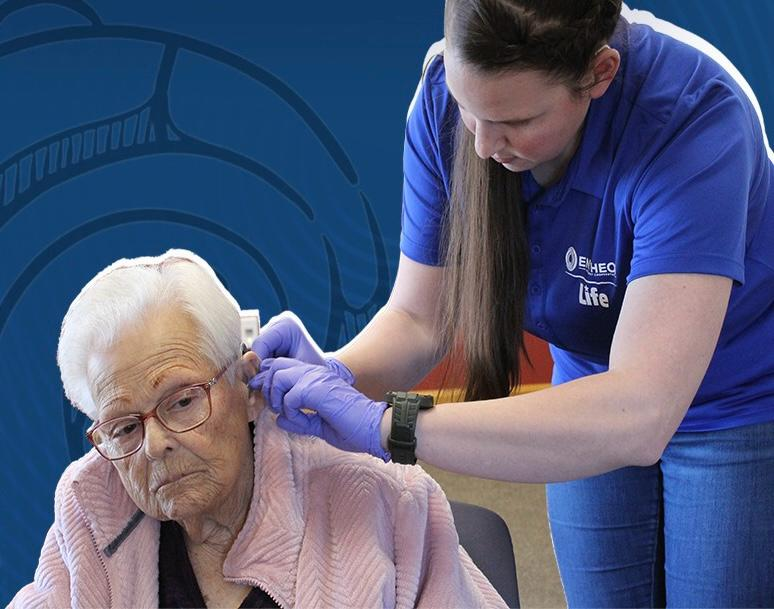
Growing older can bring challenges that become particularly difficult in communities affected by poverty, displacement, conflict, or natural disasters. Health problems such as impaired vision, hearing difficulties, mobility limitations, hypertension, diabetes, and heart disease may become harder to manage when medical services are disrupted or unavailable.

Yet the challenges faced by older people extend far beyond physical health. The loss of a spouse, separation from relatives, displacement, financial insecurity, and prolonged isolation can leave many elderly people without the social and emotional support they need. In humanitarian crises, these vulnerabilities can become even more pronounced, especially when older adults are simultaneously responsible for children or grandchildren.
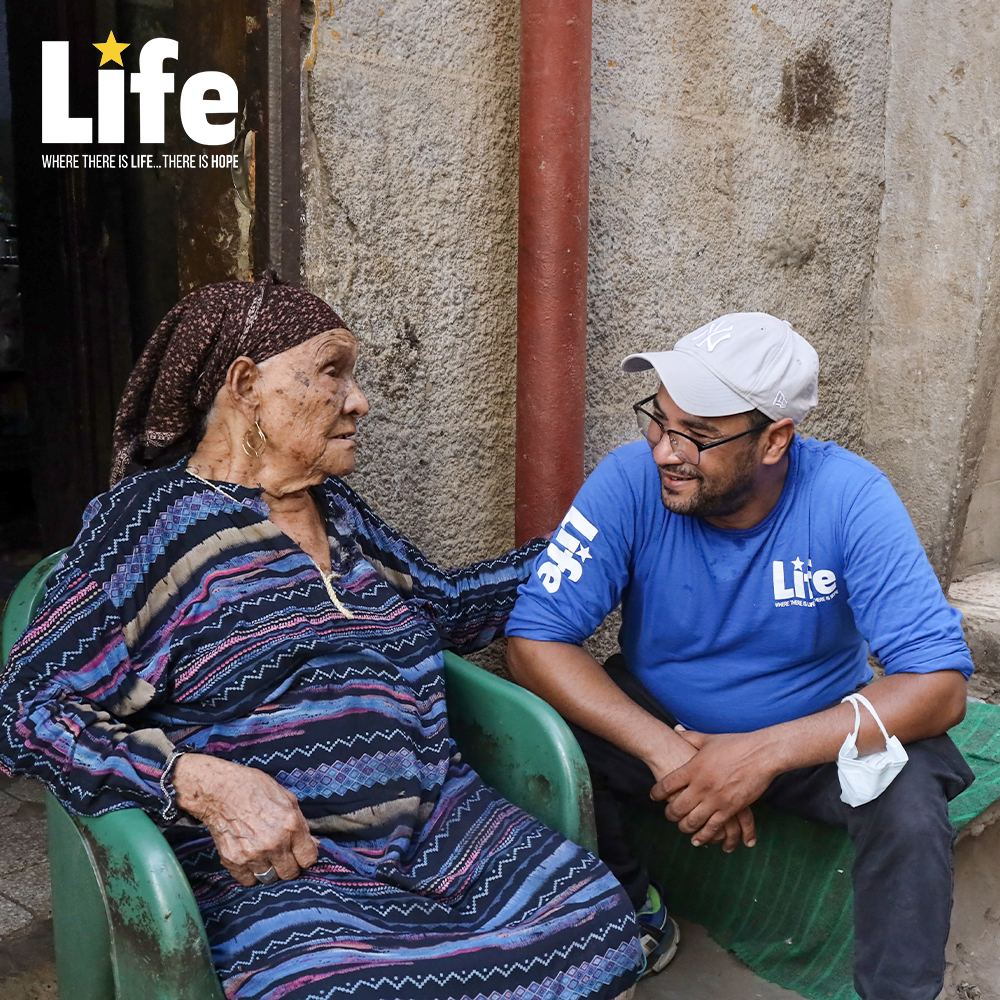
As the world marks the International Day of Older Persons, attention is increasingly turning to the need for humanitarian responses that do not overlook the elderly.

For Life for Relief and Development supporting older people is incorporated into a broader humanitarian approach that includes emergency assistance, healthcare, shelter, food security, water and sanitation, education, and community support.

We spoke with Sharon Leonard, Executive Administrator at “LIFE”, about the organization’s approach to elderly care and the experiences of older people living through conflict, displacement, poverty, and natural disasters. Against this backdrop, we spoke with her to discuss these issues.
Q: Why is support for older people an important part of humanitarian work, even during major emergencies?

Older people can sometimes become invisible during humanitarian emergencies because immediate attention naturally focuses on urgent injuries, displaced families, children, and other visible needs. But older adults are also directly affected by crises, and many have specific medical, financial, and social needs that cannot simply be postponed.

The demographic picture itself demonstrates why this issue deserves greater attention. UNFPA data indicate that people aged 60 and above already account for approximately 8% of the world’s population. The increase is particularly significant across Arab countries, where the elderly population is expected to grow from around 27 million in 2015 to approximately 50 million by 2030 and more than 80 million by 2045.

This demographic transition is taking place alongside wars, displacement, economic hardship, and other humanitarian challenges. Conflict can also weaken family structures and reduce the number of younger relatives available to care for aging parents and grandparents.

For these reasons, elderly care should not be considered an optional addition to humanitarian response. It needs to be incorporated into sustainable programs that recognize the rights, needs, and contributions of older people.

Q: LIFE operates in very different countries and communities. How can elderly care be adapted to such diverse environments?

There is no single model of elderly care that can be applied everywhere. The needs of an older person living independently in a community are different from those of someone displaced by conflict or living in a residential care facility.

Over the past 34 years, LIFE has worked across approximately 60 countries, and older people have been included in many areas of our humanitarian response. This may involve emergency assistance, support for refugees and internally displaced people, medical services, clean water projects, seasonal distributions, family assistance, education, and orphan sponsorship.

One particularly important situation involves grandparents who become the primary caregivers for orphaned grandchildren. They may already be struggling with age-related health problems and limited financial resources, yet suddenly have responsibility for an entire household.

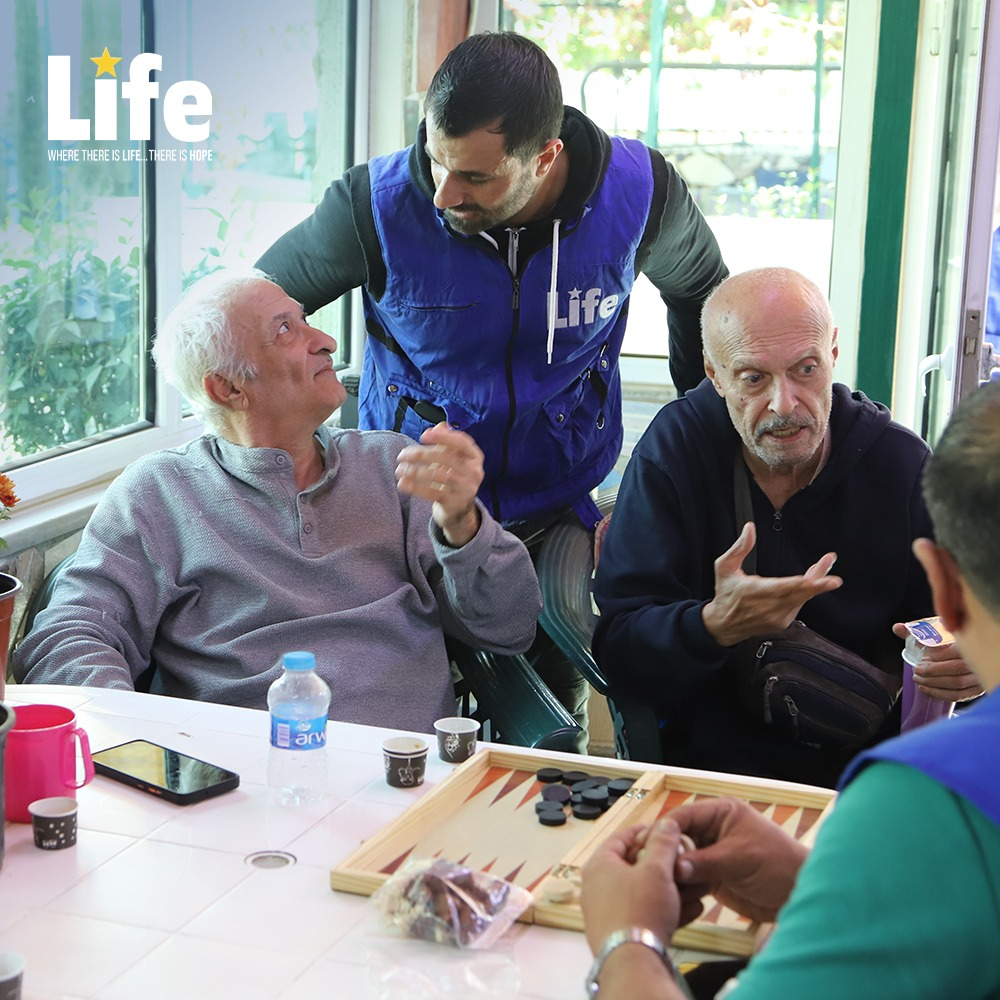
Where LIFE works directly with elderly residents in care facilities, we also try to address their social and emotional wellbeing. This can include nutritious meals, safe environments, opportunities to talk and share their experiences, recreational activities adapted to their abilities, and basic technology training that can help them remain connected with relatives.

Our objective is not simply to provide services. It is also to ensure that older people’s experience, knowledge, and dignity remain part of community life.

Q: Older people can be particularly vulnerable when they are forced to leave their homes. What assistance do they receive during displacement and emergencies?

Displacement can be extremely difficult for an elderly person, particularly when they have chronic illnesses, mobility limitations, or depend on regular medication.

LIFE teams have responded to emergencies in many different settings, including earthquakes in Morocco, Nepal, Indonesia, and Türkiye; floods in Bangladesh, Afghanistan, and Libya; and conflicts affecting communities in Myanmar, Sudan, Gaza, Syria, and Lebanon.

In these circumstances, our first concern is to help older people remain safe and maintain their dignity. Depending on the situation, assistance may include secure accommodation, medicines, medical examinations, continued treatment, nursing support, or mobile medical services for people who cannot easily reach healthcare facilities.

Food assistance is also important. We seek to provide balanced meals and, where appropriate, nutritional support. During colder months, blankets and warm clothing can make a significant difference, particularly for displaced families living in temporary accommodation.

Financial and household assistance may also be necessary when an older person is responsible for grandchildren or other dependents.

Every intervention is designed around the circumstances of the individual and the practical barriers they face.

Q: Physical assistance is visible, but how does LIFE respond to loneliness, grief, and other emotional challenges among older people?

The emotional consequences of displacement and loss can remain long after an immediate emergency has passed. Older people may lose spouses, children, homes, familiar communities, or their sense of independence. Some become isolated because they are unable to travel or communicate easily with relatives.

That is why humanitarian support should not stop with food, medicine, or shelter. Listening and human connection are also important.

Our programs can include opportunities for older people to speak with others, participate in group activities, and receive psychosocial support. These interactions can help reduce isolation and remind people that they have not been forgotten.

Recent work in the West Bank, for example, included assistance for older residents in Bethlehem, Beit Sahour, and Beit Jala. In Lebanon, LIFE has also supported older people with disabilities through specialized healthcare, recognizing that some elderly individuals may hesitate to ask for assistance even when their needs are significant.

In Gaza, the humanitarian situation is particularly severe. Older people living in displacement camps may be managing chronic medical conditions while simultaneously coping with bereavement, displacement, and the loss of family members. Emergency relief, medical assistance, and seasonal support therefore remain important components of our response.

Q: What do older people tell you about the meaning of this assistance?

For many elderly people, assistance is about much more than receiving supplies. It can restore a sense of security and independence at a time when so much of their lives has become uncertain.

I remember Abu Nasser, a 71-year-old man from Gaza, who became responsible for six grandchildren after losing his son and daughter-in-law. He described how the war had completely changed the responsibilities he carried in old age. Receiving food, personal-care items, and safe water reduced his fear that his grandchildren might have to put themselves in danger simply to meet the family’s basic needs.

Even basic facilities can have an important psychological effect. Having access to private bathrooms in a LIFE camp, for example, gave Abu Nasser and his wife a renewed feeling of privacy and dignity.

There was also Zahra, 75, from Mauritania, who explained that receiving food assistance meant she no longer had to face the humiliation of asking others for food.

In Afghanistan, Fatima, 73, survived devastating floods and was left deeply traumatized. Safe accommodation and medical assistance helped her begin recovering from the experience.

And in Türkiye, Aisha, 67, was displaced following the Kahramanmaraş earthquake. LIFE helped trace her family after displacement and provided shelter, medicine, clothing, and food while they worked toward rebuilding a more stable life.

These experiences demonstrate that dignity is often found in things that may appear very simple: safety, privacy, medicine, food, family connection, and the ability to live without constantly fearing what will happen next.

Q: Another challenge is that some elderly people become caregivers for children after conflict or disaster. How does LIFE respond when older people themselves are in need of care?

This is one of the most difficult situations we encounter. An older person may already need assistance yet suddenly become responsible for children because their parents have died, disappeared, or become unable to care for them.

In northern Syria, I remember Abu Amer, 78, who had spent years living in freezing tents with his grandchildren. When he received a home through a new LIFE housing project, he became emotional. His greatest concern had been protecting the children from the cold and providing them with a safe place to live.

Another example is Iman, 59, from Sudan, who fled the conflict with her pregnant daughter and grandchildren. After the family reached Egypt, LIFE provided shelter, food, medicines, and medical follow-up for her daughter during the pregnancy.

The same principle applies beyond conflict zones. In the Dominican Republic, Pedro, 71, watched his grandchildren return to school after LIFE rehabilitated their damaged school. His reaction reflected something important: humanitarian assistance can restore not only physical infrastructure, but also a family’s sense of stability and dignity.

These stories reinforce why elderly care should be incorporated into broader humanitarian and development planning. Older people are not simply recipients of assistance. In many communities, they are caregivers, decision-makers, sources of family stability, and custodians of experience and knowledge.

Q: What should humanitarian organizations do differently in the future when designing programs for older people?

The needs of older people should be considered from the beginning of humanitarian planning rather than added later as a separate issue.

That means identifying their medical needs, mobility limitations, living arrangements, financial circumstances, and family responsibilities when an emergency response is designed. It also means ensuring that shelters, distribution points, healthcare services, water facilities, and communication systems are accessible to elderly people.

Most importantly, we need to recognize their dignity and agency.

Humanitarian programs should help older people remain connected to their families and communities whenever possible. They should support those who are caring for grandchildren, provide access to appropriate healthcare, and create opportunities for older people to participate rather than treating them solely as vulnerable recipients.

As populations age around the world, elderly care will increasingly become part of sustainable humanitarian planning. Protecting older people means protecting families and communities as a whole.

For More Details: https://lifeusa.org/#social-media

For the Silo, Tasneem Elridi.

Call for Strengthening Humanitarian Partnerships and Developing Faster, More Sustainable Responses- LIFE

Life for Relief and Development at the Dubai International Humanitarian Aid & Development Conference:

The Dubai International Humanitarian Aid & Development Conference (DIHAD 2026) concluded its activities at the Dubai World Trade Centre under the theme “Humanity in Transition: Shaping the Future of Humanitarian Work.” The conference brought together numerous humanitarian institutions, relief organizations, government entities, and experts from around the world to discuss the growing challenges facing communities affected by wars, disasters, and escalating humanitarian crises, particularly in the Middle East.

The current edition of the conference was held at a time when the global humanitarian system is undergoing rapid transformations due to the increasing complexity of crises, growing humanitarian needs, and changing operational environments. This requires humanitarian institutions and organizations to rethink traditional response mechanisms and develop models that are more flexible, innovative, and sustainable.

21,000 Participants from 165 Countries

Life for Relief and Development was among the prominent participants. Khalil Meek, Chief Development and Resource Development Officer at the organization, emphasized that the conference focuses on anticipating the future of humanitarian action amid the increasing number of wars, conflicts, climate-related disasters, economic crises, displacement, technological developments, and funding gaps. The conference aims to exchange expertise, build partnerships, and develop practical and sustainable solutions to support the poorest and most vulnerable populations.

He added: “Life was among more than 21,000 participants and visitors from 165 countries, alongside more than 1,000 entities, partners, and organizations working in the humanitarian sector. There were also 320 speakers who participated in more than 260 sessions and workshops, alongside the International Red Cross and Red Crescent Movement, academic and research institutions, the private sector, charitable and donor organizations, financial institutions, development banks, and media outlets.”

The conference represents a platform that brings together decision-makers, experts, implementers, funders, and entities equipped with innovation and technology tools. This enables the development of more integrated responses to humanitarian crises and creates opportunities for humanitarian organizations to communicate, exchange expertise, and explore opportunities for cooperation and partnership.

“Life”: Being at the Heart of the Field and Responding Rapidly

Dr. Abdul Wahab Alawneh, Regional Director for the Middle East at Life, added that the future of humanitarian action, based on Life’s field experience and 33 years of work on the ground, requires continuous development.

He said: “We presented our proposals on the role of leadership, innovation, and partnerships in advancing humanitarian action and making it more adaptable to the rapid changes taking place around the world. We focused on how to turn ideas into practical realities, strengthen implementation and operational efficiency, measure results, and transform the ideas and commitments presented during the conference into practical solutions that create a genuine and sustainable impact on communities in need.”

“At a time when humanitarian organizations are increasingly required to develop tools to anticipate needs, prepare for crises at an early stage, improve resource management, and reach affected populations more quickly and efficiently, this is precisely what has distinguished Life over the past years through its presence at the heart of events from day one—whether in areas affected by earthquakes and floods, as occurred in Libya, Morocco, and Türkiye, or deep inside conflict zones, as in Gaza and Lebanon. Life has been able to reach remote civilian areas under bombardment where humanitarian assistance had not reached.”

The conference also discussed the importance of developing more proactive humanitarian models, so that responses are not limited to action after a disaster occurs, but also include advance preparedness, strengthening community resilience, and reducing future needs. This means moving from response to preparedness, from isolated efforts to partnerships, and from temporary solutions to sustainable impact.

More Effective Partnerships

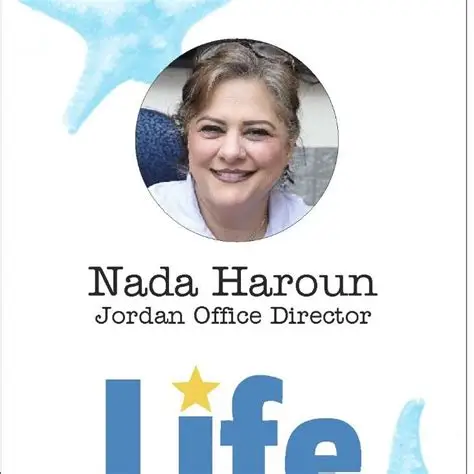
Nada Haroun, Director of Life’s office in Jordan, added:

“Our presence here is not merely attendance; it is a representation of a mission, a team, and work that we believe in and consider important. Advancing humanitarian action is no longer the responsibility of a single organization or country. Rather, it is a collective responsibility that requires continuous international cooperation, more effective partnerships, more sustainable funding, and responses that place people, their dignity, and their ability to build a safer future at the heart of humanitarian action.”

“Last year, Life received the Dubai Humanitarian Award for Most Effective Partnership for its shelter-camp project in the Gaza Strip. Therefore, this year, we established a new partnership with the Emirates Red Crescent, which will help strengthen the delivery of assistance and support to vulnerable and most-needy populations.”

Transparency: A Safe Bridge Between Donors and Those in Need

She continued:

“The conference addressed the issue of donation transparency by strengthening the regulation of charitable work, reinforcing donor trust, and ensuring that donations reach their intended beneficiaries through approved channels. These are also principles that have distinguished Life and contributed to its ranking third globally among leading humanitarian aid organizations and fifth among the best organizations working in Palestine and addressing poverty. This enabled Life to receive a 100% rating from Charity Navigator, in addition to being accredited by the United States Agency for International Development (USAID) and being selected among the top humanitarian organizations in the United States by Impactful Ninja, with expenditures reaching $666 million usd.”

These principles are becoming increasingly important as digital platforms expand their use for collecting donations and launching humanitarian campaigns. Transparency and verification of organizations managing donations have therefore become essential to protecting donors and ensuring that resources are directed to the beneficiaries who need them most.

For the Silo, Tasneem Elridi/LIFEUSA

US Sanctions To Disrupt Iran’s Weapons Procurement Networks and Shadow Fleet

Press release via Thomas “Tommy” Pigott, Principal Deputy Spokesperson

February, 2026. The United States is designating individuals and entities involved in multiple weapons procurement networks based in Iran, Türkiye, and the United Arab Emirates supporting the Iranian regime’s ballistic missile and advanced conventional weapons (ACW) development.  We are also sanctioning numerous shadow fleet vessels and their owners or operators that have collectively transported hundreds of millions of dollars’ worth of Iranian petroleum, petroleum products, and petrochemical products.           

The Iranian regime continues to mismanage its economy, with catastrophic consequences for its people, and prioritizes funding of foreign proxies and missiles over the basic needs of ordinary Iranians. Today, sanctions target the illicit funds that the regime uses to advance its malign and destabilizing ends.   

This action implements President Trump’s National Security Presidential Memorandum 2 by countering the Iranian regime’s aggressive development of missiles and other asymmetric and conventional weapons capabilities.  It also denies the Islamic Revolutionary Guard Corps access to assets and resources that sustain its destabilizing activities.  The nonproliferation designations today support the reimposition of United Nations restrictive measures and sanctions on Iran, which occurred as a direct result of the Iranian regime’s “significant non-performance” of its nuclear commitments. 

The United States will continue to use all available means to expose, disrupt, and counter the Iranian regime’s ability to procure revenue to develop its weapons programs and fund its destabilizing behavior. 

The Department of the Treasury’s action was taken pursuant to Executive Order (E.O.) 13382, which targets proliferators of weapons of mass destruction and their supporters, E.O. 13949, the Iran conventional arms authority, and E.O. 13902, which authorizes sanctions related to key sectors of Iran’s economy. For more information on today’s actions, please see the Department of the Treasury’s Press Release.

Supplemental-

Life For Relief And Development Ranks Third Globally Among Humanitarian Orgs

According to Charity Navigator  2025

Amid escalating crises in the Middle East and the developing world, Life for Relief and Development (LIFE) has been recognized as the third-best global humanitarian organization by Charity Navigator. The organization also secured fifth place for its humanitarian work in Palestine, and fifth place worldwide in the fight against poverty. These achievements earned LIFE a 100% rating, an endorsement from the U.S. Agency for International Development (USAID), as well as recognition by Impactful Ninja as one of the top humanitarian organizations in North America. LIFE was further honored with the Humanitarian Partnership Award for its collaborative initiatives.

Sustainable Programs and Comprehensive Seasonal Projects 

Vicki Roob, Administrative Director at LIFE, explained that the organization was founded more than 33 years ago in the United States and works across more than 60 countries through 14 international offices.

Over the years, LIFE has distributed more than $624 million usd/ $859 million cad in humanitarian aid, supporting programs in food security, clean water, temporary shelter, healthcare, education, community development, family assistance, refugee support, and emergency relief during wars and natural disasters. Currently, the organization supports more than 13,100 orphans worldwide, providing essential care, nutrition, housing, and education, while also organizing annual Global Orphan Festivals filled with games, gifts, and entertainment to ensure children feel valued and supported.

Tent Camps That Saved Thousands of Lives in Conflict Zones

According to Dr. Abdulwahab Alawneh, Regional Director for Jordan and Palestine, LIFE implemented its “LIFE Organized Camps” project in Gaza, establishing nine camps across the north, center, and south of the Strip. Built with fire-resistant and durable materials, these camps provided shelter for 46,000 displaced people, featuring easily dismantled tents to accommodate recurring displacement. Each tent was equipped with bedding and essentials, alongside medical facilities, solar panels serving 7,000 individuals, and protective insulation for 3,000 residents against extreme weather. Clay ovens benefited 3,500 people, while 23 sanitation units were constructed.so LIFE Assisted 1.3 million Displaced People in general in GAZA.

Adding: “we’ve been proactively preparing to facilitate the delivery of urgent relief—shelter, food, water, medicine, and personal necessities—into Gaza. Our team on the ground has already begun implementing LIFE’s ninth camp project after tents arrived and installation began. We are now working to shelter 15,000 newly displaced families still exposed to the cold as winter approaches.

These are waterproof, cold- and humidity-resistant tents that also provide insulation against heat in summer. Made from PVC material, they have protected more than 29,000 families from fires during nighttime bombings in past years.

Using all borders to Gaza

We faced tough challenges but managed them through our extensive experience. We are not newcomers to Gaza’s relief field. We worked through approval requirements for specific items—like tent specifications—while some organizations struggled to get their tents through the crossings. Tents vary in size and function: family tents, medical point tents, hospital tents, and educational tents.

We are now awaiting approval for mobile housing units. However, shelter items like mattresses and blankets have been entering through Egypt on LIFE’s trucks without obstacles, while food parcels are transported through Jordan.

“For food items previously restricted for NGOs, we purchase them at discounted rates from local traders and distribute them to those most in need. We spared no effort to reach them—using animals or walking long distances on foot when necessary.

We also supply water—each truck carries 15,000 liters per camp, enough for 500 families for a week—alongside baby formula, infant supplies, medical kits, and medicines. We ensure field monitoring of activities, including eight camps already constructed, and we share updates regularly on social media in multiple languages.”

Emergency Relief and Orphan Care at the Forefront

In the past year alone, LIFE allocated approximately $1.1 million usd/ $1.51 million cad in emergency relief to families displaced by conflicts and natural disasters, including earthquake survivors in Afghanistan, Morocco, Nepal, Syria, and Turkey; war-displaced populations in Gaza, Sudan, Syria, and Lebanon; wildfire victims in Bangladesh; flood-affected communities in Afghanistan and Libya; and cyclone-hit regions in Myanmar.

Additionally, $6.4 million usd/ $8.81 million cad was invested in healthcare programs and medical supplies, $4.5 million usd/ $6.2 million cad in educational projects, and $2.1 million usd/ $2.89 million cad in in-kind aid shipments. Orphan support remained a priority, with more than $3.8 million usd/ $5.23 million cad dedicated to orphan sponsorship, education, and healthcare.

Seasonal projects also played a significant role: nearly $1.7 million usd/ $2.34 million cad was spent on Ramadan and Eid initiatives, with more than 11 million meals distributed across 36 countries during Ramadan alone. Over 272,620 individuals in 38 countries benefited from Qurbani (sacrifice) distributions. LIFE also allocated $1.4 million usd/ $1.93 million cad toward emergency food relief and constructed 122 water wells worldwide.

For the Silo, Tasneem Elridi.

Yummy Turducken For American Thanksgiving Holiday Dinner

Turducken
The infamous Turducken- a bird eating paradise

“Turducken” – defined by the Urban Dictionary as: 1. (n) An American Thanksgiving holiday culinary grotesque: Consists of a chicken, stuffed into a duck, progressively stuffed into a turkey and baked.

Provides hours of entertainment in the form of waiting for the sucker to finish cooking and enough sandwich meat to last through The Apocalypse.

So who in their right mind would eat such a thing? Surprisingly… many. Believe it or not, this rather savage dish dates back to 18th century in which the wealthy English would make their traditional Yorkshire pies consisting of various meats baked in a crust. However, a Yorkshire pie seems meager in comparison to the barbaric turducken.

So how did the turducken come about? Well the answer to that remains a mystery.

Many have proclaimed that they are the inventors of the infamous dish yet little is found in the way of concrete evidence. During the 1800’s chef Grimond de La Reniere created the “roti sans pareil” (“roast without equal”) in which he stuffed 17 birds each within the other. Fast forward to the 1980’s, chef Paul Prudhomme claimed that he was the creator of what we know now as the turducken.

NFL’s Hohn Madden popularized the Turducken as an American Thanksgiving “eating grotesque”. Sometimes turkey just ‘ain’t enough’

Regardless, the idea of stuffing as many animals inside the other as possible has been around for quite some time. Now the question becomes why? I have never been acquainted with the turducken myself but I have come in to contact with those who have taken on the task of both making and devouring this triple decker bird. The consensus appears to be that despite the overwhelming thought of consuming three birds in one sitting, the savory taste is something like no other.

Now, let us step back for a moment and ponder this: why does a creation like the turduken receive praise while something like KFC’s Double Decker is criticized and made out to be the accomplice to the grim reaper? NFL commentator John Madden even endorsed the turducken and Herbert’s Specialty Meats located in New Orleans, has built a business on them! Thanksgiving and Christmas alone can have them shipping out thousands of turduckens to stores and homes all over the US.

Listen folks, whether you’re enjoying a juicy turkey, duck, hen, quail, pheasant, partridge or garden warbler – it doesn’t matter. After all, it’s the holidays! Relax, enjoy (or painfully endure, remember a few glasses of wine goes a long way) the time with family and enjoy some good home cookin’! Merry Christmas! For the Silo, Holly LaRue. 

Link to Turducken Recipe

In The Future Cyberwar Will Be Primary Theater For Superpowers

Cybersecurity expert explains how virtual wars are fought

With the Russia-Ukraine war in full swing, cybersecurity experts point to a cyber front that had been forming online long before Russian troops crossed the border. Even in the months leading up to the outbreak of war, Ukrainian websites were attacked and altered to display threatening messages about the coming invasion.

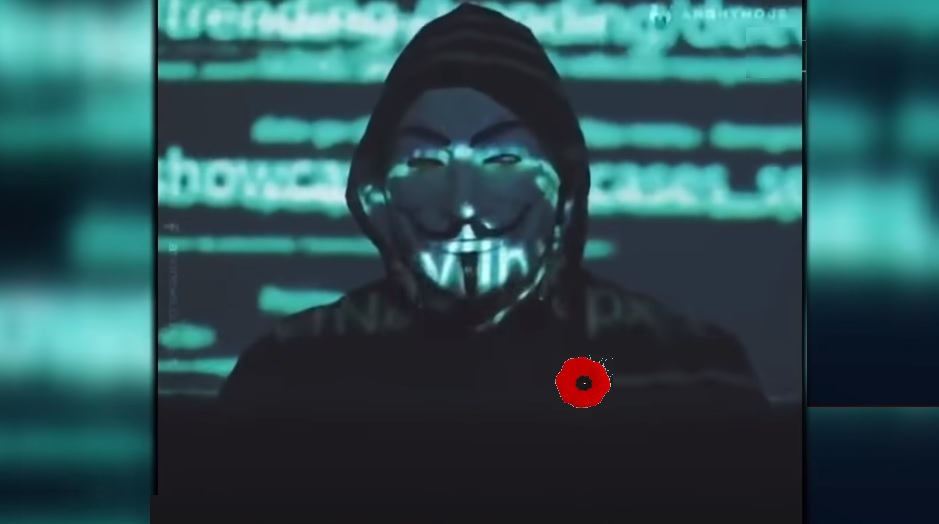
“In response to Russian warfare actions, the hacking collective Anonymous launched a series of attacks against Russia, with the country’s state media being the main target. So we can see cyber warfare in action with new types of malware flooding both countries, thousands of sites crashing under DDoS (distributed denial-of-service) attacks, and hacktivism thriving on both sides of barricades,” Daniel Markuson, a cybersecurity expert at NordVPN, says.

The methods of cyberwarfare

In the past decade, the amount of time people spend online has risen drastically. Research by NordVPN has shown that Americans spend around 21 years of their lives online. With our life so dependent on the internet, cyber wars can cause very real damage. Some of the goals online “soldiers” are trying to pursue include:

  • Sabotage and terrorism

The intent of many cyber warfare actions is to sabotage and cause indiscriminate damage. From taking a site offline with a DDoS attack to defacing webpages with political messages, cyber terrorists launch multiple operations every year. One event that had the most impact happened in Turkey when Iranian hackers managed to knock out the power grid for around twelve hours, affecting more than 40 million people.

  • Espionage

While cyber espionage also occurs between corporations, with competitors vying for patents and sensitive information, it’s an essential strategy for governments engaging in covert warfare. Chinese intelligence services are regularly named as the culprits in such operations, although they consistently deny the accusations.

  • Civilian activism (hacktivism)

The growing trend of hacktivism has seen civilian cyber activists take on governments and authorities around the world. One example of hacktivism is Anonymous, a group that has claimed responsibility for assaults on government agencies in the US. In 2022, Anonymous began a targeted cyber campaign against Russia after it invaded Ukraine in an attempt to disrupt government systems and combat Russian propaganda.

  • Propaganda and disinformation

In 2020, 81 countries were found to have used some form of social media manipulation. This type of manipulation was usually ordered by government agencies, political parties, or politicians. Such campaigns, which largely involve the spread of fake news, tended to focus on three key goals – distract or divert conversations away from important issues, increase polarization between religious, political, or social groups, and suppress fundamental human rights, such as the right to freedom of expression or freedom of information.

The future of cyber warfare

“Governments, corporations, and the public need to understand this emerging landscape and protect themselves by taking care of their physical security as well as cybersecurity. From the mass cyberattacks of 2008’s Russo-Georgian War to the cyber onslaught faced by Ukraine today, this is the new battleground for both civil and international conflicts,” Daniel Markuson says.

Markuson predicts that in the future, cyber war will become the primary theater of war for global superpowers. He also thinks that terrorist cells may focus their efforts on targeting civilian infrastructure and other high-risk networks: terrorists would be even harder to detect and could launch attacks anywhere in the world. Lastly, Markuson thinks that activism will become more virtual and allow citizens to hold large governmental authorities to account.

A regular person can’t do much to fight in a cyber war or to protect themselves from the consequences.

However, educating yourself, paying attention to the reliability of sources of information, and maintaining a critical attitude  to everything you read online could help  increase your awareness and feel less affected by propaganda.  For the Silo, Darija Grobova.

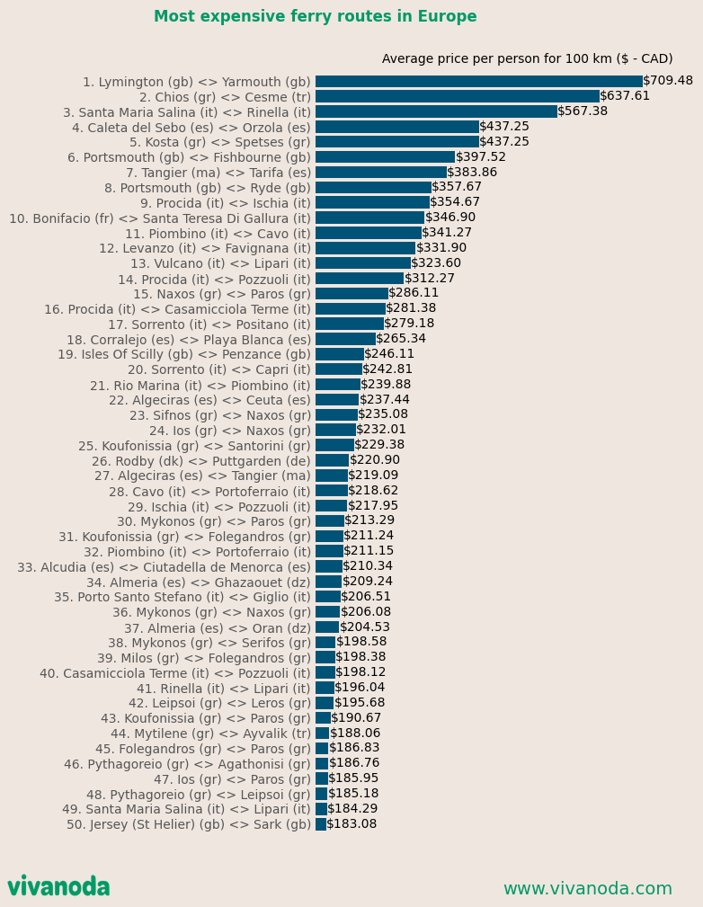
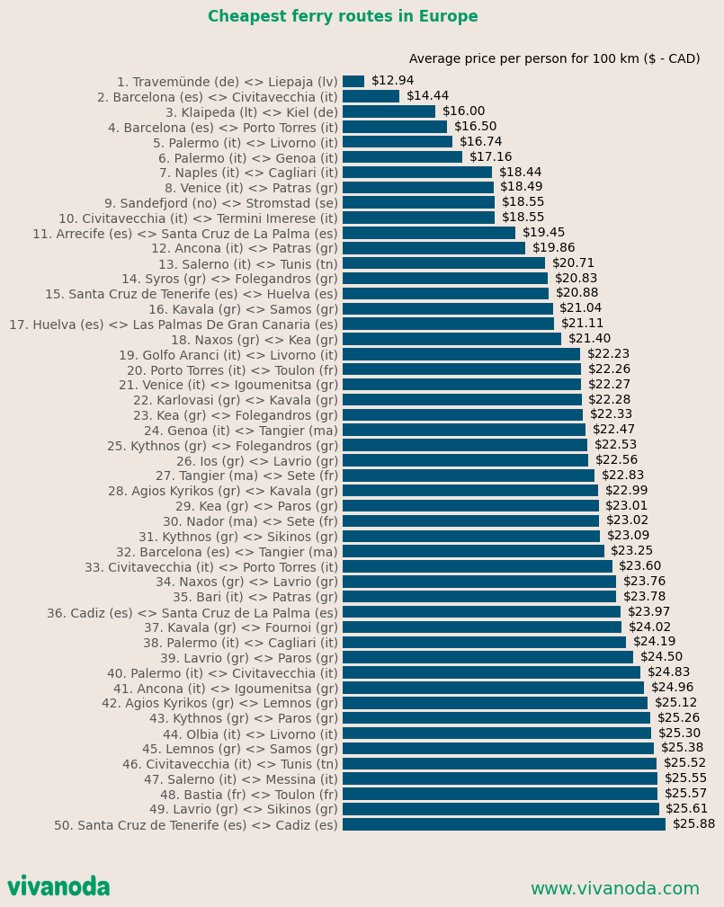
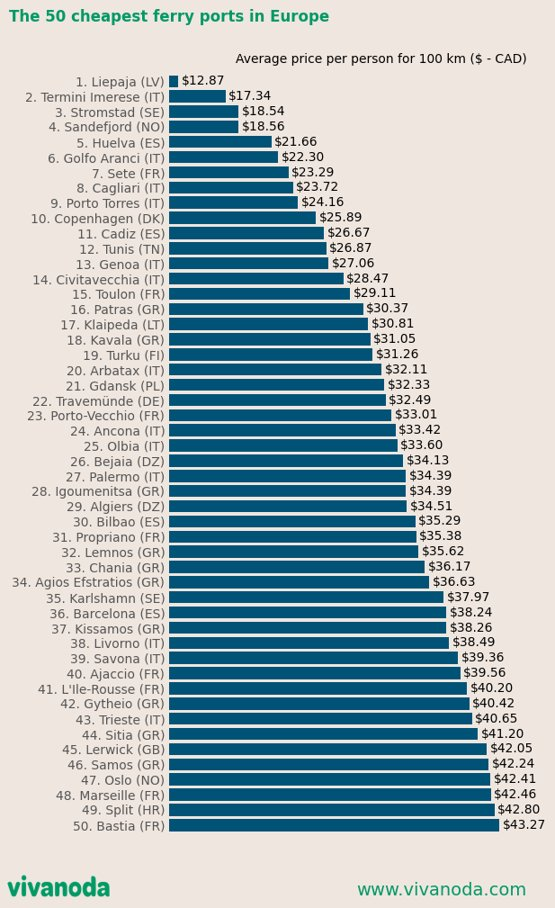
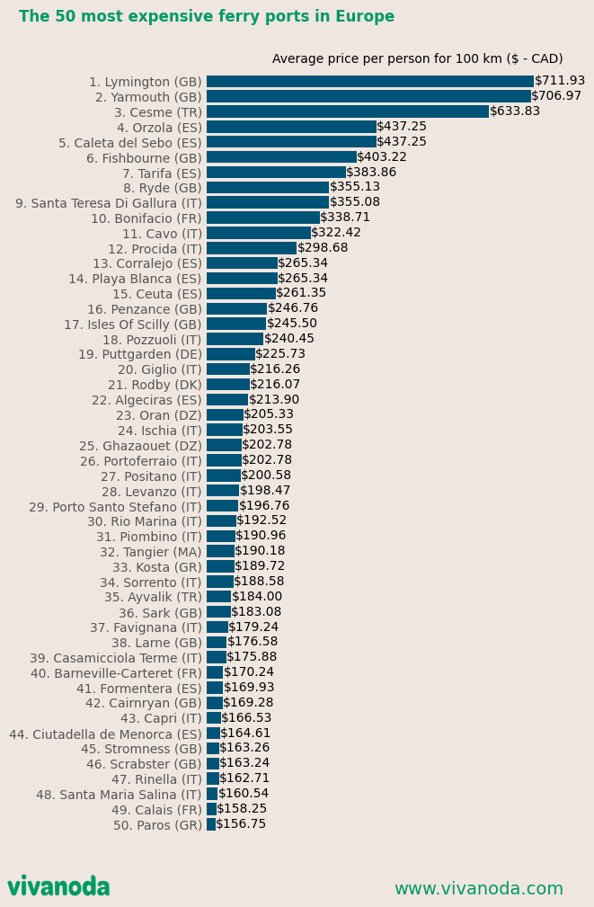
Ferry Travelling In Europe Is Very Popular For Summer- Here Are Costs

Far from the stress of crowded airports or stations, ferries allow you to travel in comfort while taking your time.

Our friends at Vivanoda, a web platform that enables all travelers to find ferry, bus, train and plane tickets, wanted to launch a major study into ferry prices in Europe in order to gain a better understanding of the variations in ferry ticket prices according to a number of criteria (destination country, distance, seasonality, etc.).

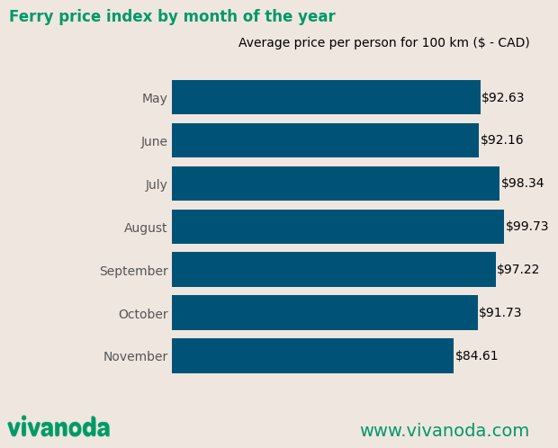
Fortunately for those of us interested in a Europe trip that includes ferrying, they have analyzed tens of thousands of ferry fares on hundreds of routes in Europe, as well as crossings to Turkey and the Maghreb countries (Morocco, Algeria, Tunisia), to get as exhaustive a picture as possible. If you enjoy comparing prices using graphs you are going to want to keep reading…

It’s not difficult to understand the appeal of Ferry travel- leisurely comfortable rides with great views.

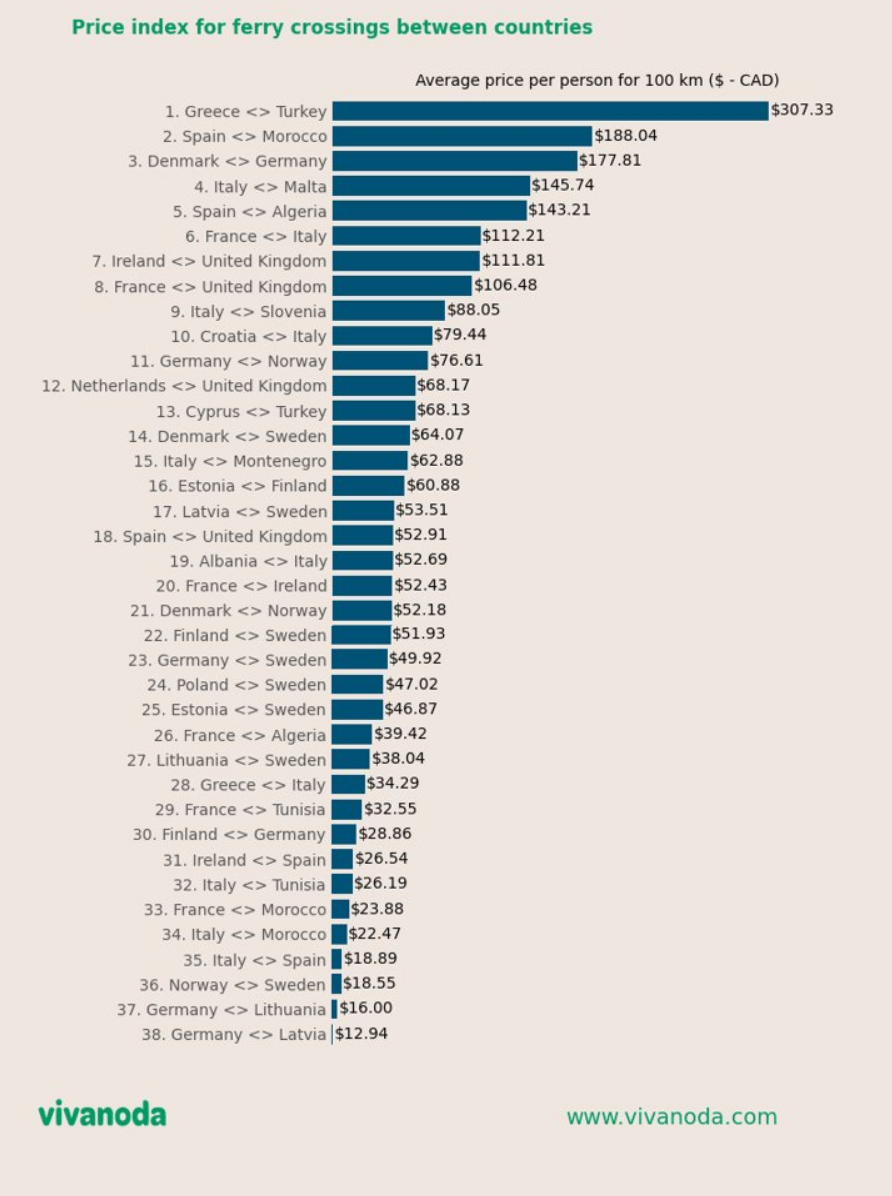
Here are the key points highlighted by this study at European level:

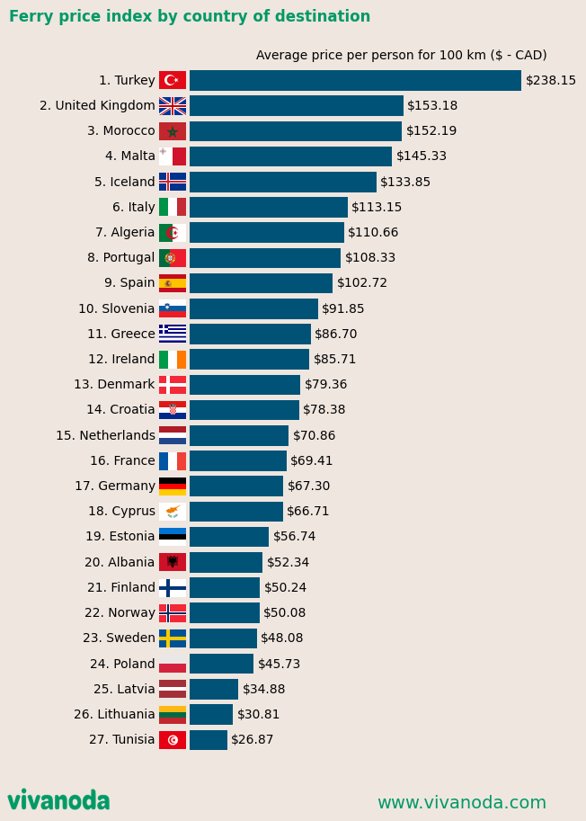
  • Ferry crossings to Tunisia, Lithuania, Latvia, Poland and Sweden have the lowest price index.
  • Conversely, ferry crossings to Turkey, the UK and Morocco have the highest price indexes.
  • Connections between Greece and Turkey and those between Morocco and Spain are proportionally the most expensive in Europe.
  • Connections between Germany and Lithuania or Latvia are the least expensive in relation to the distance travelled.
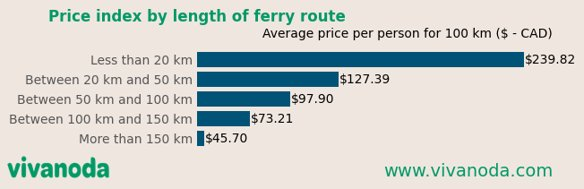
  • The shorter the crossing, the more expensive it is.
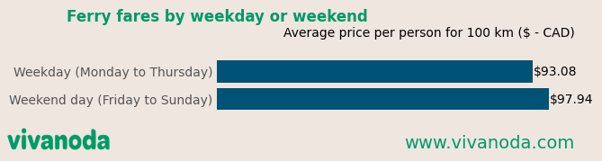
  • Across Europe, prices are higher on average from July to September. They are also slightly higher at weekends.
Ferry price index in Europe by country

For The Silo, Nicolas Pellier.

About Vivanoda
Vivanoda is a web platform that makes it easy to find ferry, train, bus and plane tickets for travel in Europe. Launched in 2013, the site has received awards from the European Commission, the International Union of Railways and the Groupama insurance group.

Boho Living In New Hotel Perched Above Turkey Aegean Sea

Bobo by The Stay Opens in Bodrum

Bringing refined bohemian living to Türkiye’s Aegean coast

Image: Bobo by The Stay

London, England – (June 2024) Bobo by The Stay, the newest of the Stay Hotels, has now opened in Bodrum, Turkey. Perched high above the sparkling Aegean Sea, Bobo offers guests ​​exclusive access to the turquoise waters of Cennet Bay, on the Turkish Riviera.

Bobo was designed by visionary architect Mahmut Anlar and his team at Geo ID.

The hotel, tailored for adults, opens with 24 exclusive rooms and suites, each with nature-inspired curved walls and floor-to-ceiling windows allowing breath-taking views of the surrounding coastline and centuries-old olive groves. The hotel’s layout ensures space and privacy for every guest.

True to its name, Bobo has been created to celebrate refined bohemian living, and offers a unique fusion of entertainment, gastronomy, and the arts. Guests can look forward to a vibrant array of cultural and artistic events, including pop-up comedy festivals, guest chefs, and sunset parties throughout the summer. For those who enjoy nightlife, the hotel offers a private nightclub for guests to let their hair down to the beat of international DJs.

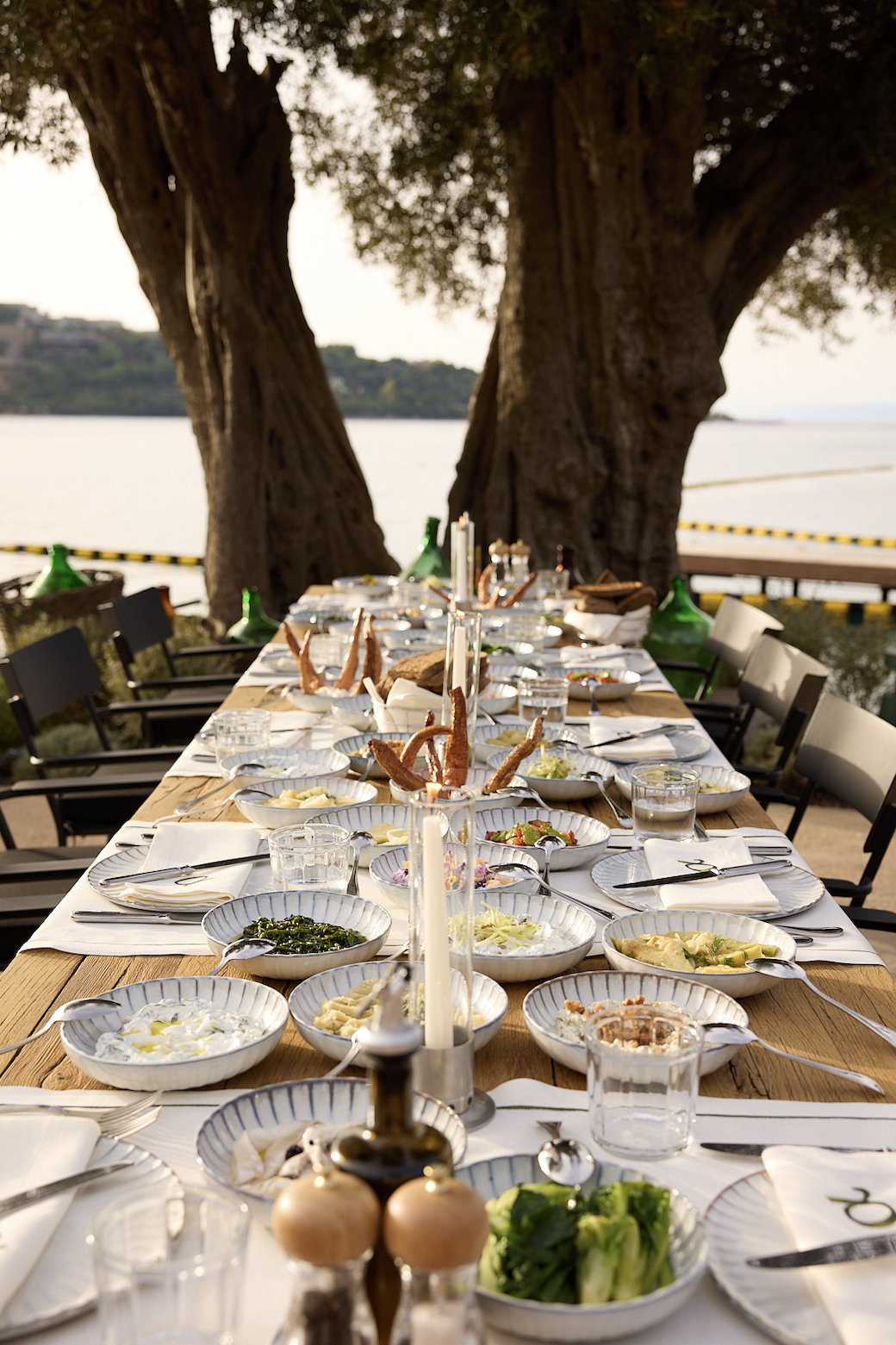
Image: Paraliaki Restaurant located in Bobo by The Stay

Bobo brings the flavours of Istanbul’s Bebek Hotel by the Stay to Bodrum, featuring locally sourced dishes, live music, and signature cocktails by the sea.

Dragon, famed for its stellar Cantonese and Szechuan cuisine in Istanbul, opens its second restaurant at Bobo, while the Greek-inspired Paraliaki restaurant creates menus focused on fresh seafood. As evening descends, guests are treated to an unforgettable dining experience. With dishes created to celebrate the region’s rich maritime heritage and seating on grass or sand, guests can unwind in a laid-back atmosphere that captures the essence of Bobo living.

The hotel’s private beach club, Bobo Beach, features sun loungers on a secluded stretch of Cennet Bay, creating a perfect spot for relaxing and sampling gourmet dishes by the sea. The hotel also offers an exclusive yacht catering service for those who are exploring the beautiful waters of Cennet Bay. In keeping with the relaxed coastal vibe, there’s an outside gym and holistic Stay Spa with saunas and rejuvenating ice baths overlooking the forested bay. The Bobo Store, a boutique housed in a domed tent, will offer beachwear, artisanal wares from local craftspeople, and Turkish brands that reflect the local Aegean culture.

About The Stay Hotels

The Stay Hotels group is a collection of design-focused, culturally connected properties across Türkiye, including four in Istanbul, one in Alaçatı on the Çeşme Peninsula, and the newest on the Bodrum Peninsula. Each hotel combines modern, stylish design with respect for local heritage, offering intimate stays with attentive service.

In Istanbul, guests can choose from The Stay Nisantasi Boulevard, an art-filled mansion in the Fashion Quarter; The Stay Nisantasi, a sleek retreat in the same area; The Stay Bosphorus, a revamped 19th-century waterside mansion; and the Bebek Hotel by the Stay, a glamorous hotel overlooking the Bosphorus. In Alaçatı, The Stay Warehouse is a beautifully restored former warehouse near the coast. With the opening of Bobo by The Stay, the Stay Hotels adds a coastal retreat with light-filled rooms, cultural events, and pop-up restaurants to its stable of hotels.

For Many European Countries, National Flower Is Second Only To Flag In Importance

Many non-native plants can happily survive in other regions of the world, which has given gardeners more choice than ever before. However, native flowers and plants can summarize the landscape of a nation, while communicating the identity of a country.

For many countries the national flower is second only to the national flag as the most important national symbol, while communicating the identity of a country.

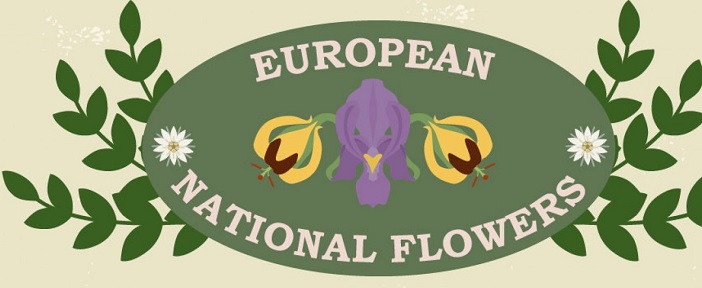
European National Flowers Infographic

Did you work on this visual? Claim credit here.

Intelligence Squared U.S. Begins Season Debating Saudi Arabia, Iran & Turkey – In NYC & Online September 12

Saudi Arabia and Iran are vying for regional dominance, as the latter pursues nuclear weapons. Turkey is cozying up to Russia and China. Instability, conflict, and proxy wars have engulfed Syria, Yemen, and beyond. How should the United States respond to changing power, proxy wars, terrorism, and human rights issues in the Middle East? On Thursday, September 12, America’s debate series Intelligence Squared U.S. launches their fall season with a debate not one, but three motions, all investigating 
“Shifting Power in the Middle East”:

Motion 1: Is Trump right on Saudi Arabia?
Motion 2: Is the world safer without the Iran Nuclear Deal?
Motion 3: Is Turkey an asset to NATO?

In this latest installment in Intelligence Squared U.S.’s new “Unresolved”
series, debaters must declare their “yes” or “no” stance on each separate motion, allowing for both sharp disagreements and unexpected
alliances. The debaters will be:
* Michael Doran, senior director on the National Security Council under
President Bush* Reuel Marc Gerecht, former CIA case officer* Bernard
Haykel, professor of Near Eastern Studies at Princeton* Brett McGurk, the State Department’s former Special Presidential Envoy for the Global
Coalition to Defeat ISIS* Barbara Slavin, the director of the Future of Iran Initiative

The debate will be held at NYC’s Symphony Space and stream live online, then air soon after as part of the syndicated public radio show and podcast “Intelligence Squared U.S.” On September 12, online viewers can tune in at IQ2US’s website: https://www.intelligencesquaredus.org/debates/unresolved-shifting-power-middle-east

 WHAT: Intelligence Squared U.S. Debates “Unresolved: Shifting Power in the Middle East”
WHEN: Thursday, September 12 / 7:00-8:45 PM EDT
WHERE: Peter Norton Symphony Space, 2537 Broadway, New York, NY
TICKETS: $40 ($12 for students w/ ID). To purchase, visit http://www.intelligencesquaredus.org/  

Debaters Bios: * Michael Doran, Senior Fellow, Hudson Institute
Michael Doran is a senior fellow at the Hudson Institute in Washington, D.C., where he specializes in Middle East security issues. Doran served as a senior director on the National Security Council under President Bush and was responsible for helping to devise and coordinate U.S. strategy on a variety of Middle East issues, including Arab-Israeli relations and U.S.
efforts to contain Iran and Syria. He also served in the Bush
administration as a senior adviser in the State Department and a deputy assistant secretary of defense in the Pentagon. 

* Reuel Marc Gerecht, Senior Fellow, The Foundation for Defense of
Democracies & Fmr. CIA Case OfficerReuel Marc Gerecht is a former
case officer for the CIA, where he served as a Middle Eastern targets
officer with the CIA’s directorate of operations. He is a senior fellow at the Foundation for Defense of Democracies, a non-partisan organization
centering on national security, where he focuses on Iran, sanctions,
terrorism, and the Middle East. He is the author of “Know Thine Enemy: A Spy’s Journey into Revolutionary Iran” and “The Islamic Paradox: Shiite Clerics, Sunni Fundamentalists, and the Coming of Arab Democracy,”
among others.  

* Bernard Haykel, Professor of Near Eastern Studies, Princeton University Bernard Haykel is a professor of Near Eastern Studies and the
director of the Institute for Transregional Study of the Contemporary
Middle East, North Africa and Central Asia at Princeton University. After working as a post-doctoral research fellow at Oxford University in
Islamic Studies, he joined New York University in 1998 as associate
professor before taking up his post at Princeton. He became a
Guggenheim fellow in 2010 and is co-editor of the book, “Saudi Arabia in Transition; Insights on Social, Political, Economic and Religious Change.” 

* Brett McGurk, Fmr. Special Presidential Envoy for the Global Coalition to Defeat ISISBrett McGurk served as Special Presidential Envoy for
the Global Coalition to Defeat ISIS at the U.S. Department of State, where he helped build and then lead the coalition of 75 countries and four
international organizations in the global campaign against ISIS. He served in senior positions in the Bush and Obama administrations and has led some of the most sensitive diplomatic missions in the Middle East over
the last decade. McGurk is currently the Frank E. and Arthur W. Payne
distinguished lecturer at the Freeman Spogli Institute and Center for
Security and Cooperation at Stanford University. 

* Barbara Slavin, Director, The Future of Iran Initiative, The Atlantic CouncilBarbara Slavin is the director of the Future of Iran Initiative and a nonresident senior fellow at the Atlantic Council. The author of
“Bitter Friends, Bosom Enemies: Iran, the US and the Twisted Path to
Confrontation,” she is a regular commentator on U.S. foreign policy and
Iran on NPR, PBS, and C-SPAN. Previously, Slavin served as a public policy scholar at the Woodrow Wilson International Center for Scholars. Slavin
is a career journalist, and currently writes as columnist for
Al-Monitor.com, a website devoted to news from and about the Middle
East.   

ABOUT INTELLIGENCE SQUARED U.S. DEBATES (IQ2US)
A non-partisan, non-profit organization, Intelligence Squared U.S. was
founded in 2006 to address a fundamental problem in America: the
extreme polarization of our nation and our politics. Their mission is to
restore critical thinking, facts, reason, and civility to American public
discourse. The award-winning debate series reaches over 30 million
American households through multi-platform distribution, including
radio, television, live streaming, podcasts, interactive digital content, and on-demand apps on Roku and Apple TV. With over 160 debates and
counting, Intelligence Squared U.S. has encouraged the public to “think
twice” on a wide range of provocative topics. Author and ABC News
correspondent John Donvan has moderated IQ2US since 2008.