Consumer Reports and the Insurance Institute for Highway Safety have released their newly updated 2026 rankings of the safest used vehicles for teen drivers, identifying dozens of models under $10,000 and $20,000 that deliver significantly better crash protection and safety technology without breaking the family budget. The report also reinforces a sobering reality: teen drivers have crash rates nearly four times higher than drivers age 20 and older, making vehicle choice one of the most important safety decisions parents will make.
Automotive retail analysts and car consumer advocates Ray and Zach Shefska help consumers go beyond the rankings, explaining which of Consumer Reports’ recommendations truly represent the best values in today’s used-car market, where buyers should negotiate aggressively, which popular models parents should avoid despite attractive prices, and how to determine whether spending a few thousand dollars more for advanced safety technologies like automatic emergency braking is actually worth it. They recommend that buyers always perform due deligence and research today’s used-car pricing, financing costs, depreciation trends, and try to understand how dealer tactics are affecting families shopping for a safe first vehicle.
Key Considerations For Parents Considering Buying are:
- The safest used cars parents can buy for under $20,000 usd/ $27,740 cad (exchange rate at time of posting)
- Why the cheapest used car often becomes the most expensive mistake
- Hidden dealer markups and fees first-time buyers should avoid
- Which safety features are non-negotiable for teen drivers
- The best negotiation strategies in today’s used-car market
- Whether buying new is beginning to make more financial sense than buying used
- How to tell whether a used car is actually priced fairly before you buy
- The online tools and data every used-car shopper should use before stepping into a dealership
- The pricing data, VIN history, and market trends smart buyers use to avoid overpaying
- Look online for a number of free resources that can help families compare used cars, spot bad deals, and negotiate with confidence
Top used cars for teens combine safety, affordability, and reliability, with models like the Mazda 3, Honda Civic, and Toyota Corolla leading the list.
Key Considerations for Teen Drivers
When choosing a used car for a teen, prioritize:
- Safety: Look for vehicles with strong crash-test ratings and features like automatic emergency braking (AEB) and stability control
caroutlay.com.
- Affordability: Cars under $20,000 are ideal, with some safe options available for under $8,000
CarGurus+1.
- Reliability: Low maintenance costs and proven durability help reduce long-term expenses.
- Insurance Costs: Avoid high-horsepower or luxury models to keep premiums manageable
Top Recommended Used Cars
- Mazda 3 (2014–2019)
- Available in sedan and hatchback styles
- Fun to drive with predictable handling
- Top Safety Pick+ ratings from IIHS
- Optional all-wheel drive for colder climates
Edmunds+2
- Honda Civic (2016–2021)
- Sedan, hatchback, and coupe options
- Reliable, fuel-efficient, and safe
- Affordable with strong aftermarket support for customization
- Excellent IIHS and Consumer Reports ratings
MotorTrend
- Toyota Corolla (2014–2019)
- Known for reliability and low maintenance costs
- Good crash-test scores and standard safety features
- Practical for daily commuting and long-term ownership
- Subaru Impreza (2015–2019)
- Standard all-wheel drive
- Strong safety ratings and solid reliability
- Available in sedan and hatchback versions, suitable for snowy regions
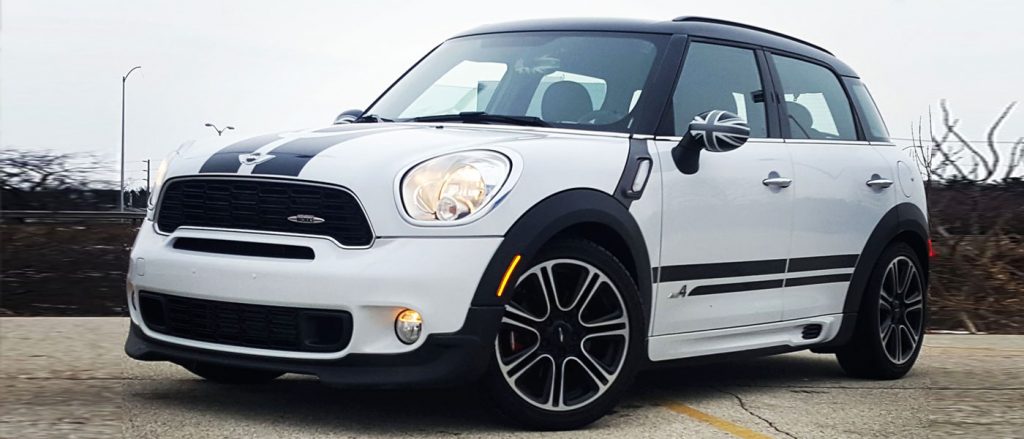
- Mini Countryman (2014–2017)
- Compact SUV with good crash ratings
- Affordable used options starting around $4,600
- Offers a fun driving experience while remaining practical
Budget-Friendly Options Under $8,000
For families on a tighter budget, consider:
- Older Toyota Corolla or Honda Civic models
- Mazda 3 from earlier model years
- Minivans like the Honda Odyssey or Toyota Sienna, which are surprisingly safe and practical for teens
Final Tips
- Check vehicle history reports and maintenance records before purchase.
- Prioritize moderate engine power to reduce accident risk and insurance costs.
- Consider sedans or hatchbacks over coupes or sports cars for better safety and practicality.
- Use online tools to estimate five-year ownership costs, including insurance, fuel, and maintenance
By focusing on safety, reliability, and affordability, these used cars provide a balanced choice for teen drivers while keeping long-term costs manageable.
With decades of combined experience analyzing vehicle pricing, dealership practices, and consumer buying behavior, Ray and Zach Shefska translate complex automotive data into practical advice that helps families purchase safer vehicles while avoiding costly mistakes. Their insights complement Consumer Reports’ safety testing with real-world market expertise, giving buyers the information they need to make smarter, more confident purchasing decisions.
For the Silo, Marsha Zorn and Stephanie Fisher.
Who Are CarEdge?
CarEdge is a leading car consumer advocacy platform dedicated to empowering car shoppers to make confident, informed and financially savvy decisions. With trusted resources that includes AI agent shoppers, a Car Dealer Transparency Index, and hundreds of guides and videos on YouTube, CarEdge is redefining transparency, fairness and value in the automotive industry.
Source: Consumer Reports


























































































































 If you could choose just one photo exhibit to see all year, it would have to be


 Over 15,000 photos later, Hurban Vortex sees the light of day. The ensemble of artistic, esthetic and human adventure are at the core of the triptych that represents his works: Origins corresponds to 2009 (present), the period of an oblivious, profligate, consumerism-driven world. Collapse takes us into 2011 (future)…Fukushima, with its worldwide impact. The glasses and gas masks worn by the humans represent the man-made destruction of a world as we had known it before and which will never be the same. And in Post we find ourselves in an urban landscape filled with waste and shattered ruins. But people are no longer wearing their blinders… Maybe there is hope after all that cities may disappear but humans are still around? Or does the urban jungle always win in the end? You decide, because it is your personal interpretation, after an intense dialogue with the image… exactly what Boris Wilensky wants.
 What the viewer sees, is how this artist sees the world – not in the literal but figurative sense. But he does not dictate, he suggests. He considers himself a storytelling portraitist first and foremost, and an urban photographer second. As you look at his large-size pictures (180 x 120 cm), the image in front of you transforms from a flat canvas to a three-dimensional scenography. You are drawn in, pulled onto a stage, you become part of the performance, an actor engaged in a dialogue. You are the person across from the man in the photo, but you also become him, turning outward to the viewer.
 The continuous movement – the vortex – pushes and pulls you as the borders between Human and Urban blur and become Hurban. There are violently cold and anonymous city landscapes, consisting of monochromatic and starkly geometric patterns, entirely unlike anything you find in nature. But the human element, superimposed, invariably bestows them with a strangely appealing aesthetic. For the Silo,


 International-renowned sommelier, Noel Shu, provides in-depth look at the modern Chinese wine industry and guides us through the misty vineyards and crowded wineries of China.
 About the Author



 Don’t be fooled- this might seem like a commercial but it’s a trailer 😉