To: Canadian gasoline buyers
From: G. Kent Fellows
Canadian retail gasoline prices have soared since the start of the Iran war – even though Canada ranks fourth globally in annual crude oil production, behind only the United States, Russia and Saudi Arabia.
If we have so much oil, why are our gas prices high?
Start with retail markets. In most of Canada, gasoline retailers are free to set prices. In doing so, they think of their costs, their competitors’ prices and how consumers will react. They’re less concerned about what they paid for the fuel they’re selling than what it will cost to replace it next time they order a gasoline shipment. So, when the wholesale price rises, they adjust their own prices quite quickly.
Rockets and Feathers
Conversely, when prices fall, they end up in a game of chicken with their competitors. The station that cuts prices first does sell more fuel but it makes less profit on each litre. Retailers balance the profit they make from more volume against their reduced margin. This leads to a phenomenon some economists call “rockets and feathers.” Prices rise fast and fall slowly.
As consumers it’s tempting to think we’re getting ripped off. But, over time, gas stations really aren’t big profit engines. They make a bit of money when wholesale prices fall, less when wholesale prices rise. Overall, they make enough to pay for their staff and inputs while getting a fair return on their investment.
Working backwards through the story, gas stations buy gas from a wholesaler. Sometimes they buy from the same brand (i.e., a Shell station buys its fuel from a Shell wholesaler) but often there’s no connection: Retailers buy the cheapest gas available. There are fewer wholesalers than retailers but the wholesale market is competitive, too. Gasoline is pretty much the same no matter who you buy it from so it’s hard for any single wholesaler to charge a higher price than its competitors. Wholesalers, like retailers, set prices based on their competition and the replacement cost of their inventory. More rockets and feathers.
To summarize: Retail prices spike with wholesale prices, and wholesale prices spike with crude oil prices.
And why are Canadian crude oil prices rising when we are half a world away from Iran? Because global oil markets are linked and Canadian producers prefer more profit to less. When a Canadian producer markets its crude, it looks for the highest bidder. If it can sell to an export partner for a higher price, it will. Canadian refineries therefore need to match that price to buy oil for domestic use.
This is a feature, not a bug.
Canada and the United States are the only two major oil-producing nations with competitive crude oil markets. All other producing nations co-ordinate production through state-owned enterprises. Canadian oil companies, though large in absolute terms, are small relative to their international rivals. This makes them price-takers.
A Canadian firm can’t simply decide to charge more, the way OPEC producers can. They’re too small to influence global markets. They’re also prohibited by law from colluding with each other to drive up prices. As a result, though Canadian producers may well benefit from rising global crude oil prices, they can’t cause them.
Canadian producers could offer lower prices to domestic refineries, but that’s against their own interests and would reduce their profits. Preferencing the domestic market with lower crude oil prices would also risk damaging our trade relationships.
A fundamental rule of economics is that prices and quantities are linked. As the quantity of globally available crude oil falls, prices rise for crude and gasoline alike. As gas prices go up, we consume less gasoline and by extension less crude oil. That’s how global market systems balance supply and demand.
If we artificially suppress prices for Canadian consumers (and only Canadian consumers) we end up consuming more gasoline domestically and exporting less oil. Drivers would benefit but the reduction in exports would lower our incomes, damage our terms of trade and hurt our reputation as a reliable trade partner.
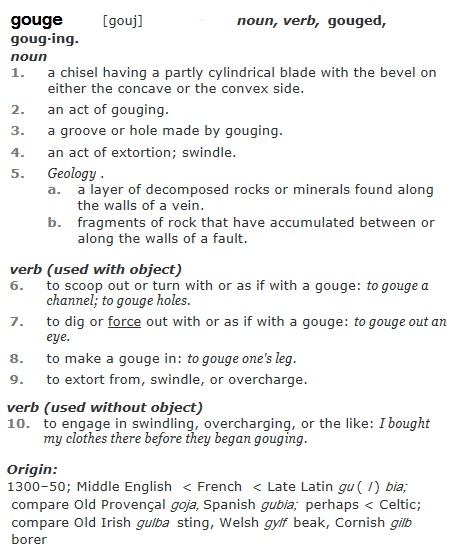
Yes, when world oil prices rise Canadian oil producers make higher profits. But they aren’t “gouging” consumers and this isn’t a federal or provincial policy failure. It’s the global market doing what it’s supposed to do. [A point to consider: last year the highest octane fuel available, 94 was selling for on average $2.00/L in Southern Ontario. Today that fuel sells for on average $2.12/L meaning an increase of 6% in cost. Yet the most common octane fuel: 87 has seen an increase of (avg. of $1.40/L vs today’s rate of $1.83/L) of 25%. Shouldn’t the % increases in fuel be the same? CP]
For the Silo, Kent Fellows.
Kent Fellows is assistant professor (Economics) and Associate Program Director of the Canadian Northern Corridor research program at The School of Public Policy, University of Calgary and fellow-in-residence at the C.D. Howe Institute.