Tag Archives: refinery

How The Fuel Price At Canada’s Gas Pumps Got So High

To: Canadian gasoline buyers  

From: G. Kent Fellows 

Canadian retail gasoline prices have soared since the start of the Iran war – even though Canada ranks fourth globally in annual crude oil production, behind only the United States, Russia and Saudi Arabia. 

If we have so much oil, why are our gas prices high? 

Start with retail markets. In most of Canada, gasoline retailers are free to set prices. In doing so, they think of their costs, their competitors’ prices and how consumers will react. They’re less concerned about what they paid for the fuel they’re selling than what it will cost to replace it next time they order a gasoline shipment. So, when the wholesale price rises, they adjust their own prices quite quickly. 

Rockets and Feathers

Conversely, when prices fall, they end up in a game of chicken with their competitors. The station that cuts prices first does sell more fuel but it makes less profit on each litre. Retailers balance the profit they make from more volume against their reduced margin. This leads to a phenomenon some economists call “rockets and feathers.” Prices rise fast and fall slowly. 

As consumers it’s tempting to think we’re getting ripped off. But, over time, gas stations really aren’t big profit engines. They make a bit of money when wholesale prices fall, less when wholesale prices rise. Overall, they make enough to pay for their staff and inputs while getting a fair return on their investment. 

Working backwards through the story, gas stations buy gas from a wholesaler. Sometimes they buy from the same brand (i.e., a Shell station buys its fuel from a Shell wholesaler) but often there’s no connection: Retailers buy the cheapest gas available. There are fewer wholesalers than retailers but the wholesale market is competitive, too. Gasoline is pretty much the same no matter who you buy it from so it’s hard for any single wholesaler to charge a higher price than its competitors. Wholesalers, like retailers, set prices based on their competition and the replacement cost of their inventory. More rockets and feathers. 

To summarize: Retail prices spike with wholesale prices, and wholesale prices spike with crude oil prices. 

And why are Canadian crude oil prices rising when we are half a world away from Iran? Because global oil markets are linked and Canadian producers prefer more profit to less. When a Canadian producer markets its crude, it looks for the highest bidder. If it can sell to an export partner for a higher price, it will. Canadian refineries therefore need to match that price to buy oil for domestic use. 

This is a feature, not a bug. 

Canada and the United States are the only two major oil-producing nations with competitive crude oil markets. All other producing nations co-ordinate production through state-owned enterprises. Canadian oil companies, though large in absolute terms, are small relative to their international rivals. This makes them price-takers. 

A Canadian firm can’t simply decide to charge more, the way OPEC producers can. They’re too small to influence global markets. They’re also prohibited by law from colluding with each other to drive up prices. As a result, though Canadian producers may well benefit from rising global crude oil prices, they can’t cause them. 

Canadian producers could offer lower prices to domestic refineries, but that’s against their own interests and would reduce their profits. Preferencing the domestic market with lower crude oil prices would also risk damaging our trade relationships. 

A fundamental rule of economics is that prices and quantities are linked. As the quantity of globally available crude oil falls, prices rise for crude and gasoline alike. As gas prices go up, we consume less gasoline and by extension less crude oil. That’s how global market systems balance supply and demand. 

If we artificially suppress prices for Canadian consumers (and only Canadian consumers) we end up consuming more gasoline domestically and exporting less oil. Drivers would benefit but the reduction in exports would lower our incomes, damage our terms of trade and hurt our reputation as a reliable trade partner. 

Yes, when world oil prices rise Canadian oil producers make higher profits. But they aren’t “gouging” consumers and this isn’t a federal or provincial policy failure. It’s the global market doing what it’s supposed to do.  [A point to consider: last year the highest octane fuel available, 94 was selling for on average $2.00/L in Southern Ontario. Today that fuel sells for on average $2.12/L meaning an increase of 6% in cost. Yet the most common octane fuel: 87 has seen an increase of (avg. of $1.40/L vs today’s rate of $1.83/L) of 25%. Shouldn’t the % increases in fuel be the same? CP]

For the Silo, Kent Fellows.

Kent Fellows is assistant professor (Economics) and Associate Program Director of the Canadian Northern Corridor research program at The School of Public Policy, University of Calgary and fellow-in-residence at the C.D. Howe Institute. 
2022 And NOT Another Year Closer To Private company Asteroid Mining

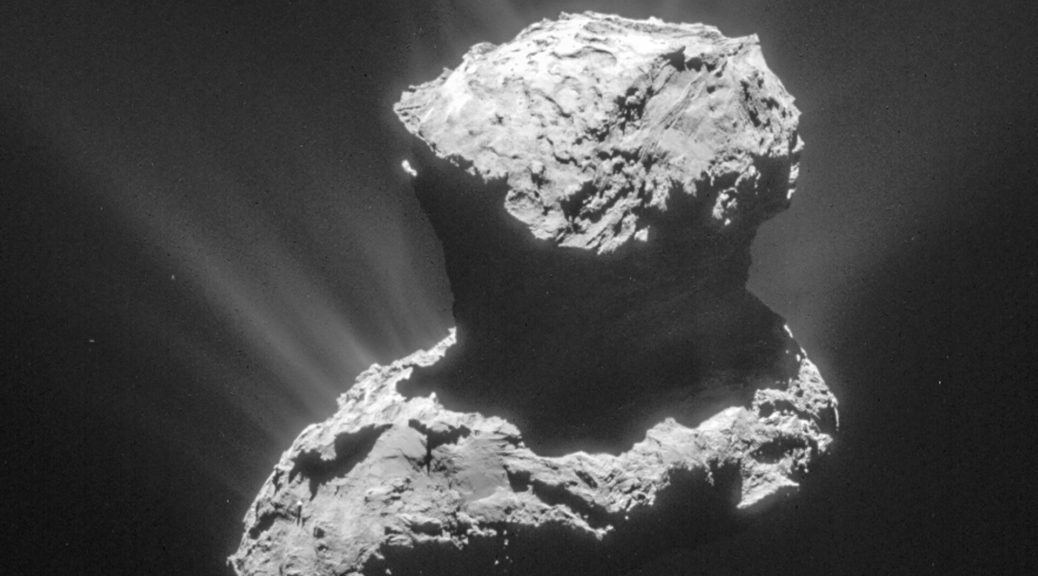
It’s been eight years since an historic landing took place between an European Space Agency drone and a comet.(which looked suspiciously a lot like an asteroid to us!)

At that time a report from Deep Space Industries laid out their business plans up to 2020 and what they had committed to  sounded more like science fiction than fact.

But it wasn’t and they’d already secured investors.

A 2019 announcement from NASA stating that it would be the National Space Administration in the lead instead ( NASA will soon begin hunting a nickel laden asteroid ) spoke volumes about not only the possibility of asteroid prospecting- but also to its inevitability in the private sector.

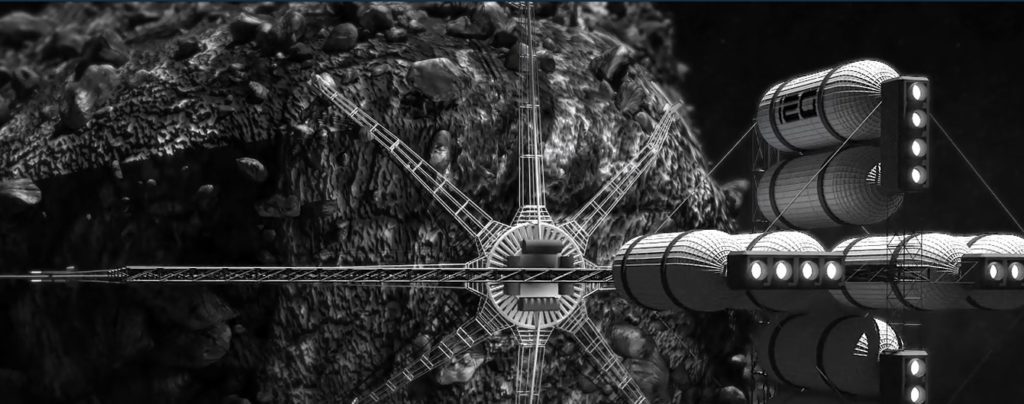
DSI concept of “coming soon” asteroid mining.

And yet, things have changed…..again.

In early 2020 Deep Space Industries (along with the only other asteroid mining company, Planetary Resources) were purchased by Bradford Space Group and ConsenSys Group respectively and all plans for private asteroid mining were shelved indefinitely. Deep Space Industries is now focused on developing space propulsion systems and ConsenSys is now focused on developing blockchain  security applications for space technology. 

What could have been- Deep Space Industries ambitious plan before the take over

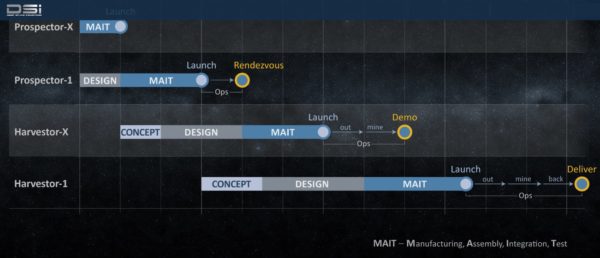
Their plan was to send an entire fleet of prospector spaceships to Near-Earth asteroids in order to harvest them for precious metals and other undisclosed resources. (space rubies anyone?). Starting in 2015, Deep Space Industries were to begin their operation by sending three small spacecraft called FireFlies to selected asteroids near earth for sample taking and photo reconnaissance. One year later, bigger craft called DragonFlies were to leave on four year missions to retrieve asteroid samples and bring them back to Earth. An ambitious project to be sure and not surprisingly, the timeline had been regularly pushed back.

dsi timeline mission planning

This press release from DSI said a precursor mission was scheduled to launch in 2017: “Recently, Deep Space Industries and its partner, the government of Luxembourg, announced plans to build and fly Prospector-X™, an experimental mission to low-Earth orbit that will test key technologies needed for low-cost exploration spacecraft. This precursor mission is scheduled to launch in 2017. Then, before the end of this decade, Prospector-1 will travel beyond Earth’s orbit to begin the first space mining exploration mission.”

daniel faber ceo deep space industries

Valuable materials exist in abundance in space and have strong economic potential. Using their tested indicators as investment attractors, Deep Space will move towards securing a commercial space operation and start into the next phase of its business plan. This involves concentrating firstly on processing rocket fuel from asteroid-harvested water.

This fuel, harvested and processed in space will save millions of dollars, since existing communications satellites will no longer be ‘thrown away’ when their fuel supply has been used up. (Satellites that can longer ‘move’ and stay in orbit by using their rocket engines are left to slowly fall towards earth and burn up in the atmosphere ).

Deep Space Industries past-CEO David Gump estimated that a satellite ‘refueled’ and saved from burn up is worth up to $8,000,000 per month. Those figures start to add up when you factor in the number of satellites in use and being launched every year. Another plan during this phase of their business operations is to return precious group metals such as platinum and gold back to earth.

After all, if you’re splitting up asteroids and discover metal commodities, why not bring it back down to earth?

Deep Space believed that other metals harvested from asteroids also have an in-orbit value. They are developing the Microgravity Foundry- a type of 3D printer that will be used to fabricate and machine metal parts in space from pure asteroid metal such as high strength nickel parts.

Deep Space cgi mockup of their planned 3D space printer.

Since this factory will operate in space and in zero gravity and produce parts in space, the idea of permanent space development and human habitation is economically feasible. Stephen Covey co-founder of Deep Space Industries and inventor of the Microgravity Foundry process: “What’s cool about the [3D] printer is that it can take its own parts, grind them up, and recycle them into new parts.”

Stephen Covey- inventor of the Microgravity Foundry process

Deep Space Industries past-CEO David Gump: “Using resources harvested in space is the only way to afford permanent space development. More than 900 new asteroids that pass near Earth are discovered every year. They can be like the Iron Range of Minnesota was for the Detroit car industry last century- a key resource located near where it is needed. In this case, metals and fuel from asteroids can expand the in-space industries of this century. That is our strategy.” Company estimates place a value of 1 ton of raw asteroid material at a worth of $1,000,000 [usd] in orbit.

Buy outs over the last few years have all but ended the dream and it will be the various space agencies such as NASA and ESA that will fulfill Deep Space Industries abandoned plan. For the Silo, Jarrod Barker.

Supplemental: http://www.businessinsider.com/deep-space-industries-asteroid-mining-plans-2013-1#ixzz2Io8Qg8uc

Updates: Deep Space Industries aligns with Luxembourg Government, applauds space commercialization policy.

Mexican commercial space company MXSpace partners with Deep Space Industries.

NASA hunting nickel 16 Psyche asteroid worth quadrillions of dollars.