A 5 MINUTE READ from our friends at ShareAmerica.

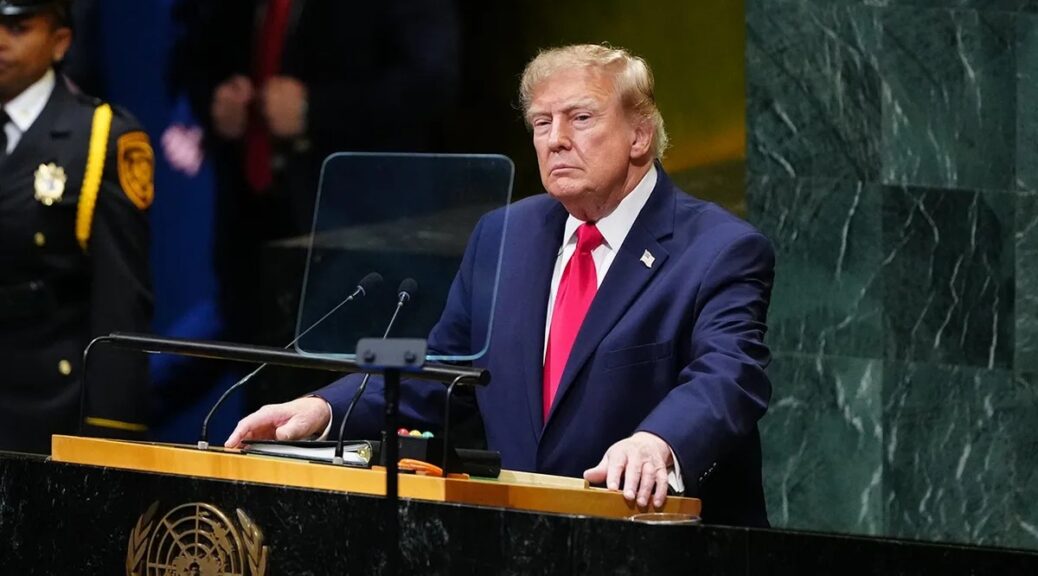
Heralding America’s “golden age” — as his administration has brought more jobs, lower poverty rates and less crime to the United States — President Trump encouraged world leaders to join him in building “a future for our people that is brighter, more hopeful and more magnificent than ever before.”
Speaking at the U.N. General Assembly yesterday September 22, Trump listed peace deals he has brokered. “While others have spoken of peace, I have made peace,” he said. He cited thank-you letters from leaders in Pakistan, Azerbaijan, Armenia, Cambodia and Rwanda.
Recalling the upcoming anniversary of the October 7 massacre in which Hamas killed 1,200 innocent civilians in Israel, Trump noted his administration’s work to free the hostages and called out Iran’s celebration of the massacre. To applause, Trump said that the Islamic Republic of Iran, “the bully of the Middle East … will never have a nuclear weapon.”
Shifting to the Western Hemisphere, the president said, “Our actions in Venezuela are proof that the United States will no longer permit threats to America to gain a foothold.” He commended the January 3 removal of Venezuela’s criminal leader, Nicolás Maduro, and subsequent release of political prisoners.
Today, he said, “we’re working closely with the leaders of Venezuela to forge a much better future for the Venezuelan people” and mentioned the recent U.S.-Venezuela deal to bring 65 billion barrels of oil to market.
After noting his administration’s designation of drug cartels as Foreign Terrorist Organizations, successful strikes on “drug boats” and successful mission with Venezuela to kill the leader of Tren de Aragua, Trump said the U.S. still faces threats from the hemisphere. He cited Cuban communist influence over U.S. groups and threats from Mexican drug cartels. “Communism will never be coming to America, but freedom will be coming to Cuba,” he said. “And safety and security will be coming to Mexico.”
‘A safer future’
While in New York, the president signed an agreement with Denmark and the people of Greenland to improve security in the Arctic for the United States, North America and Europe. The agreement enables the U.S. to review foreign military investments in Greenland for security risks. “This deal also protects Europe, in addition to America, and … very much enhances NATO,” Trump said, while commending NATO nations for increasing defense spending.
Noting the U.N.’s “great potential,” Trump said it must rein in globalist agendas that threaten the sovereignty of member nations.
He praised the defeat of the U.N.’s maritime agency proposal to charge shippers a carbon tax. “There is no global government, and while I’m president, there will be no global taxes.”
Trump vowed that the U.S. will remain at the forefront of artificial intelligence (AI) innovation and suggested that “super intelligence,” or SI, would be a better name for the promising technology. Cautioning against slowing the pace of SI development, he said, “I’m not going to stifle growth of something that will be bigger than the industrial revolution … or the internet itself.”
“We’re reasserting American power,” Trump said, “including American military power where necessary in our region and around the world to create a safer future for all of us.”
 If you could choose just one photo exhibit to see all year, it would have to be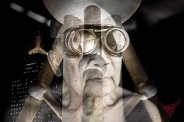
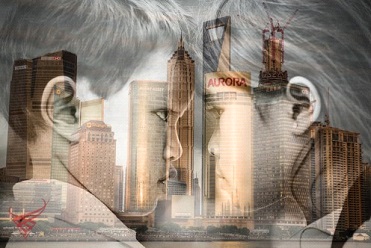
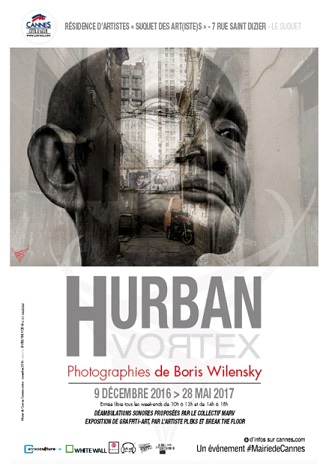
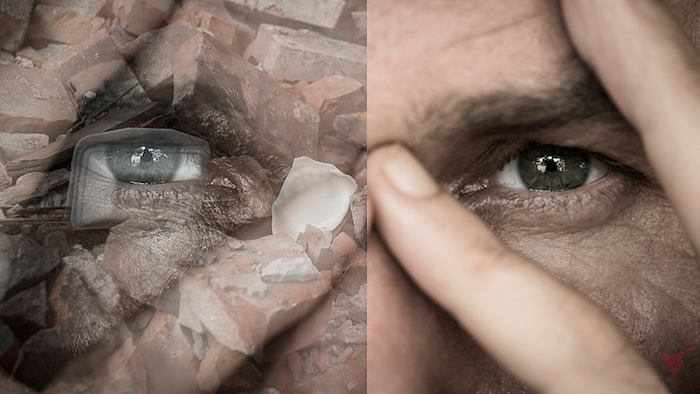
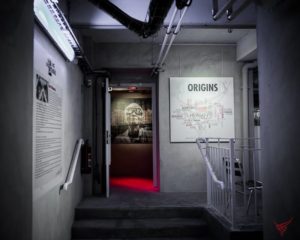 Over 15,000 photos later, Hurban Vortex sees the light of day. The ensemble of artistic, esthetic and human adventure are at the core of the triptych that represents his works: Origins corresponds to 2009 (present), the period of an oblivious, profligate, consumerism-driven world. Collapse takes us into 2011 (future)…Fukushima, with its worldwide impact. The glasses and gas masks worn by the humans represent the man-made destruction of a world as we had known it before and which will never be the same. And in Post we find ourselves in an urban landscape filled with waste and shattered ruins. But people are no longer wearing their blinders… Maybe there is hope after all that cities may disappear but humans are still around? Or does the urban jungle always win in the end? You decide, because it is your personal interpretation, after an intense dialogue with the image… exactly what Boris Wilensky wants.
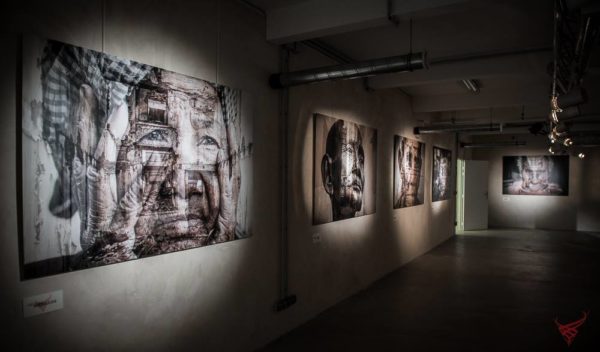 What the viewer sees, is how this artist sees the world – not in the literal but figurative sense. But he does not dictate, he suggests. He considers himself a storytelling portraitist first and foremost, and an urban photographer second. As you look at his large-size pictures (180 x 120 cm), the image in front of you transforms from a flat canvas to a three-dimensional scenography. You are drawn in, pulled onto a stage, you become part of the performance, an actor engaged in a dialogue. You are the person across from the man in the photo, but you also become him, turning outward to the viewer.
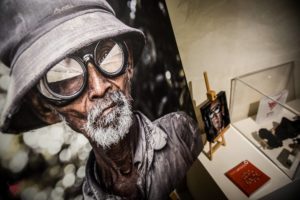 The continuous movement – the vortex – pushes and pulls you as the borders between Human and Urban blur and become Hurban. There are violently cold and anonymous city landscapes, consisting of monochromatic and starkly geometric patterns, entirely unlike anything you find in nature. But the human element, superimposed, invariably bestows them with a strangely appealing aesthetic. For the Silo,