
Tag Archives: Carolina Hurricanes

True Stories Of A Summer Traveling Trophy- The Stanley Cup

It has held champagne, breakfast cereal and even babies. It has been hoisted, hugged and almost kidnapped. It travels all over and has a team of chaperones to assure its safety.

It’s the Stanley Cup, the trophy awarded to the National Hockey League championship team each year.

This year, the Carolina Hurricanes, based in Raleigh, North Carolina, have won the coveted Cup, and the team is beginning a summer of passing the trophy from player to player. Unlike other national professional sports trophies, which are newly made and awarded to a new championship team to keep, there’s just one Stanley Cup. The champions in ice hockey only borrow the Stanley Cup for awhile, before it heads back to a vault in the Hockey Hall of Fame in Toronto.

Each Champion Player Spends A Day With The Cup- Sometimes With WIld Results

The players revere their brief turns to hold the Stanley Cup — the oldest trophy  awarded to North American pro athletes. After the Cup was donated to Canada in 1892 by Sir Frederick Arthur Stanley, a British earl serving in Canada whose children loved ice hockey, the National Hockey League acquired it in 1910 to establish it as the award for League champions.

Man holding up the Stanley Cup in front of the Gateway Arch St. Louis (Courtesy of the Florida Panthers)
Florida Panthers Matthew Tkachuk poses in front of the Gateway Arch in St. Louis, Missouri, during his time with the Stanley Cup in 2025. (Courtesy of the Florida Panthers)

A sterling tradition

Today, each winning player has his name stamped on one of the five rings that make up the barrel of the Cup. When there is no more room for players’ names, a ring is removed and sent to storage, and another one replaces it.

No matter what mishaps or age-related stresses befall the silver-and-nickel trophy year after year, “they don’t create a new one,” says Hockey Hall of Fame official Kevin Shea, author of 21 books about hockey, including Travels with Stanley.

“It’s got its dents and scratches. It’s a real living thing,” Shea says.

If you watched the final playoff game in the championship, just after the final buzzer sounds, you would have seen Hurricanes players skating jubilantly around the rink, some carrying the massive and heavy — it’s 35 pounds (16 kilograms)! — Stanley Cup over their heads.

Soon the real fun begins.

A decades long tradition, which became official in 1995, dictates that each player and team staff member will get one day to have the Cup all to himself, celebrating in whatever way is special to him (without damaging the iconic trophy, of course).

In earlier years, the winners have come up with some sterling ways to make the most of their day with the Cup.

(State Dept./B. Insley)

The ‘Keeper of the Cup’

From one tradition grew another. Today, there is a “Keeper of the Cup” who, along with some deputies, keeps an eye on the trophy through all of this. They move with the trophy during a roughly 100-day period when players and staff members each have their day with it.

That all got started, according to the New York Rangers’ Neil Smith, when “one person took it, and the top came off. … And for some reason, somebody thought it would be wise to have an auto body guy weld it back on.”

“It wasn’t me,” Smith quips.

Phil Pritchard posing beside Stanley Cup (© Mark Blinch/Reuters)
Keeper of the Cup Phil Pritchard (© Mark Blinch/Reuters)

Since then, the keeper of the Cup — Phil Pritchard, vice president of the Hockey Hall of Fame — accompanies it wherever it goes.

Pritchard and his helpers clean and polish the Stanley Cup at the end of each day before awarding it to the next player.

Players get it from 6 a.m. to midnight, with veteran players getting first dibs on the schedule. It’s a special honor, notes Shea of the Hockey Hall of Fame, since ice hockey players, out of superstition, won’t touch the Cup unless and until they win the championship.

How the Cup will enter the daily lives of 47 Hurricanes players and staff is yet to be seen. But it will connect them to champions from teams decades ago. That is what makes the tradition so inspiring, Smith says.

“Ice hockey teaches you things you can’t get anywhere else. … Great values of sharing, of being in a group,” Smith says. And the Stanley Cup, every summer, joins the group.

For the SIlo, Susan Milligan /freelance writer.
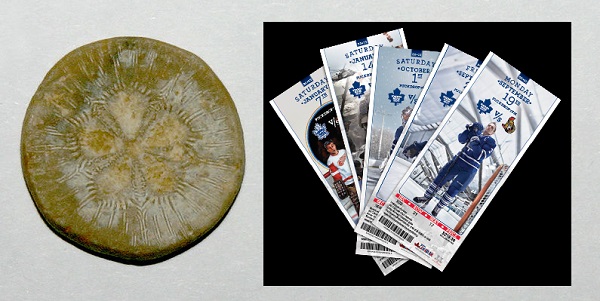
Soaring Sports Game Ticket Prices Are Nothing New

Dr. Eric Dolansky- Goodman School of Business at Brock University: Consumers are happier about price increases when they know they're coming and why they're happening.
Dr. Eric Dolansky- Goodman School of Business at Brock University: “Consumers are happier about price increases when they know they’re coming and why they’re happening.”

For years, hotels and airlines, car rental agencies and energy companies have been using a phenomena known as dynamic pricing to set costs for their consumers. This real-time pricing results in fluctuations depending on a variety of factors, but is often associated with supply and demand – and it is becoming more and more prevalent in the sports world.

This economic practice has been studied by Dr. Eric Dolansky, an assistant professor at the Goodman School of Business at Brock University. Specifically, Dr. Dolansky has examined sequences of pricing and the effect it has on consumer habits. While many consumers grumble about dynamic pricing causing hikes in gas prices, that in part has to do with the unpredictability of the increases.

The situation with sports tickets is a bit different in the minds of consumers, argues Professor Dolansky. This type of dynamic pricing is tied to demand, so consumers expect the prices to increase as the nature of the competition increases, or the date of the event nears and the supply of available tickets dwindles. For example, seats in Section 121 at the Air Canada Centre on October 17 for a Toronto Maple Leafs game against the Carolina Hurricanes range from $193 to $223. But in the same section for the Leafs’ October 26 game versus the Pittsburgh Penguins, tickets range from $253 to $288.

It's not a new idea- from wanderstories.com: "In Roman times, the tickets were known as tessara - small clay discs, which were stamped with details of the locus, or seat number, gradus or row number, cuneus, or sector and entrance gate. For example: LOC X, meaning seat number 10, GRAD V - row number 5, CVN III - sector number 3. Tickets were free, but everyone had to have a ticket to attend. Tickets were distributed to organizations, institutions and groups, who in turn, distributed them to the Roman citizens. As the games were popular, there was also a black market, where tickets would be sold, with high prices for some of the most important games." CP
It’s not a new idea- from wanderstories.com: “In Roman times, the tickets were known as tessara – small clay discs, which were stamped with details of the locus, or seat number, gradus or row number, cuneus, or sector and entrance gate. For example: LOC X, meaning seat number 10, GRAD V – row number 5, CVN III – sector number 3. Tickets were free, but everyone had to have a ticket to attend. Tickets were distributed to organizations, institutions and groups, who in turn, distributed them to the Roman citizens. As the games were popular, there was also a black market, where tickets would be sold, with high prices for some of the most important games.”

Evidence Professor Dolansky has studied suggests when consumers are aware prices are going to rise from a particular point, and they have a basic understanding of the events that are driving the increase, they tend to believe it is more fair.  For the Silo, Stephen Murdoch

Supplemental- Conference keynote presentations by Dr. Dolansky

Clemente, S., Dolansky, E., Mantonakis, A. and White, K.  The Effects of Perceived Product-Association Incongruity on Consumption Experiences – Academy of Wine Business Research Conference, Niagara, Ontario, June, 2013.

Clemente, S., Dolansky, E., Mantonakis, A. and White, K.  The Effects of Perceived Product-Association Incongruity on Consumption Experiences – Society for Consumer Psychology, Las Vegas, Nevada, February, 2012.

Clemente, S., Dolansky, E., Mantonakis, A. and White, K.  The Effects of Perceived Product-Association Incongruity on Consumption Experiences – Association for Consumer Research, Vancouver, British Columbia, October, 2012.

Clemente, S., Dolansky, E., Mantonakis, A. and White, K.  The Effects of Perceived Product-Association Incongruity on Consumption Experiences – Southern Ontario Behavioural Decision Research, Waterloo, Ontario, May, 2012.

Old school sports tickets and events– Gladiatorial Combat http://wanderstories.com/wp-content/samples/book/Rome/Colosseum.html