For the past few years, AI in marketing meant competitive advantage, but new data shows that now it’s just becoming noise. The latest report on the state of AI in tech marketing, released by Callan Consulting, revealed that while AI is embedded in the majority of operations, it is also creating “copies of copies,” eroding quality and originality across the board.
Donatas Smailys, CEO of Billo, one of the largest creator marketing platforms, shares insight on why human creators are becoming premium again and what the next phase of this shift looks like for the industry. According to him, some brands, like Aerie, are already making “no AI” a campaign message to stand out.

AI Is Now Default in Marketing, New Data Shows: Brands Shift Back to Human Creators as ‘No AI’ Signals Grow
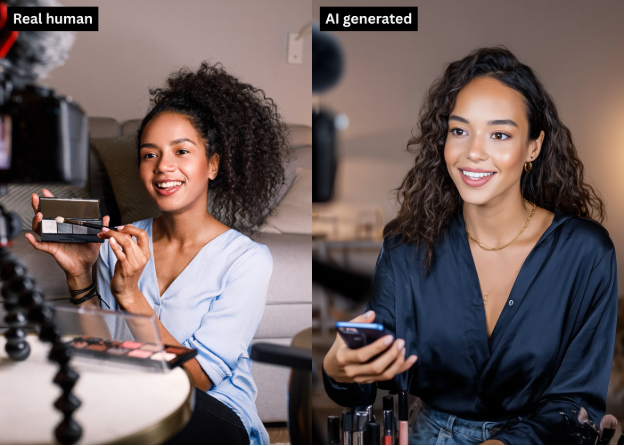
Real human creator vs. AI-generated avatar (Source: Canva, Midjourney)
May , 2026. A new report on the state of AI in technology marketing, released by Callan Consulting in April 2026, shows that artificial intelligence has moved beyond experimentation and is now embedded across most marketing operations.
The report identifies more than 70 distinct AI applications: from lead generation and personalization to sales forecasting, market intelligence, and content creation.
According to the findings, two-thirds of respondents, who were senior marketing specialists and organizations, say AI has a “strong” or “very strong” impact on their marketing teams, double the level reported a year earlier. At the same time, half of the organizations have already restructured their marketing functions around AI, integrating it into content, research, campaign execution, and analytics.
However, creator economy experts warn that rapid adoption may have come without fully considering long-term implications, and that the first signs of backlash are already visible.
“The ad industry became a playground for AI tools,” said Donatas Smailys, CEO and co-founder of Billo, one of the largest creator marketing platforms.
“Early adopters rushed to integrate everything, but we didn’t and approached it more cautiously. A year in, the backlash against AI content is the strongest it’s been. Stepping back might be the right move now.”
The report itself highlights a growing downside: overreliance on AI-generated content. Large volumes of similar outputs are already entering the market, increasing noise and reducing differentiation.
It warns that repeated reuse of AI-generated material risks creating “copies of copies,” gradually lowering content quality and originality across the ecosystem.
“AI is no longer a differentiator. Now everyone uses it, so the opposite is happening: human creators and real creativity are becoming premium,” added Smailys.
According to Smailys, the widespread use of AI-generated content has also shifted perception in advertising.
“When everyone started using AI visuals, advertising became ‘cheap.’ Even without labels, it’s often obvious what’s AI-generated, and it creates endless, low-quality content.”
Brands Positioning As Anti-AI?
Some brands have already begun responding to this shift by explicitly positioning themselves against AI-generated visuals.
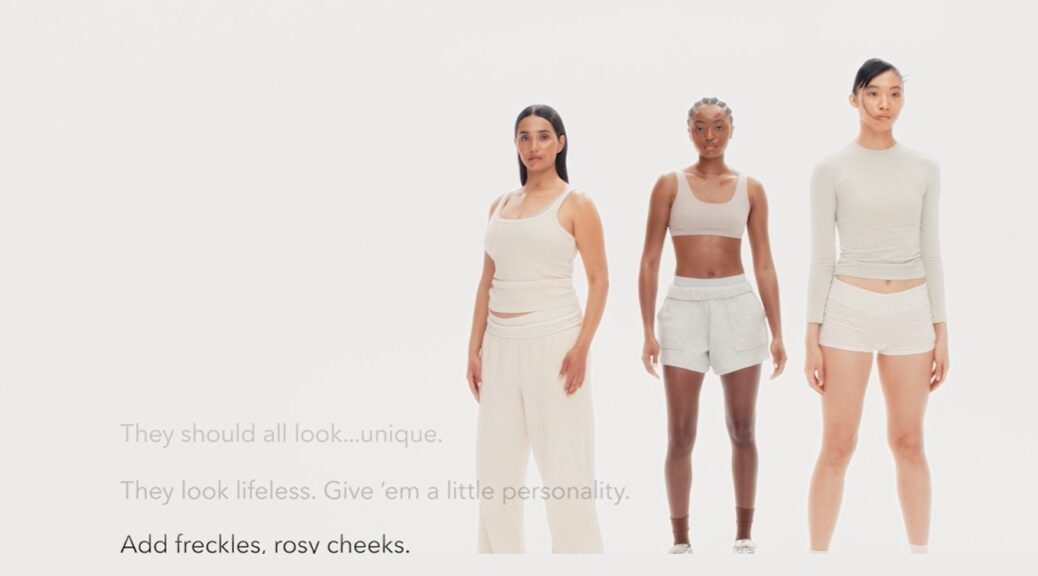
In a recent example, Aerie, a brand owned by American Eagle Outfitters, stated in a campaign that it would not use AI-generated bodies or people.
“When tools like Sora first appeared, AI content worked because it was unexpected,” said Smailys. “Once it became the norm, the impact faded. Human content is exclusive again. Brands that see this early are taking the lead.”
The report also points to structural challenges. While marketers report improvements in speed, output, and cost efficiency (in some cases up to 2-3x productivity gains), few are able to measure AI’s direct impact using standardized metrics.
According to Smailys, platform dynamics may play a key role in what comes next.
“Social media platforms that introduce clearer signals through detection, labeling, or prioritization can shift value back toward higher-quality, human-led content.”
He noted that Billo has maintained a focus on human creators despite broader experimentation with AI-generated avatars.
“Our data already shows it. The shift back to human-first content is happening,” he concluded.
The report concludes that while AI will continue to expand across marketing, its long-term effectiveness will depend on how organizations balance automation with human expertise, as differentiation increasingly shifts away from technology itself and toward how it is used.
For the Silo, Jarrod Barker.





 If you could choose just one photo exhibit to see all year, it would have to be
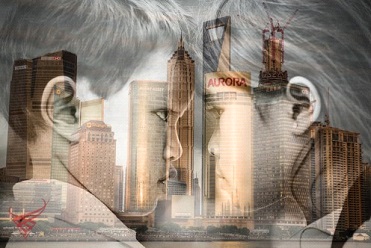
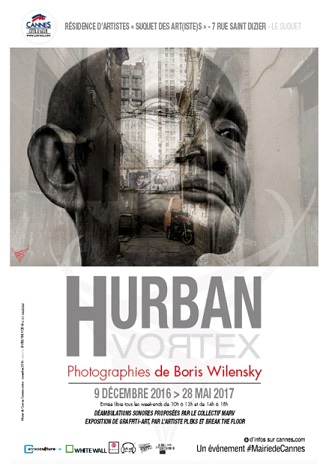
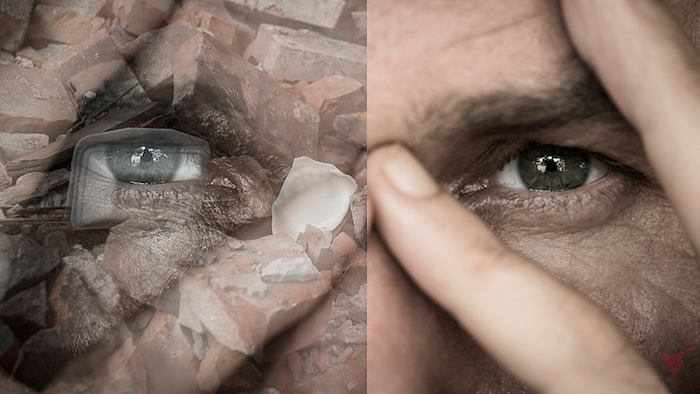
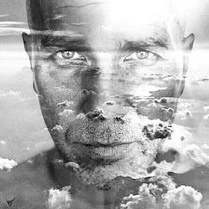
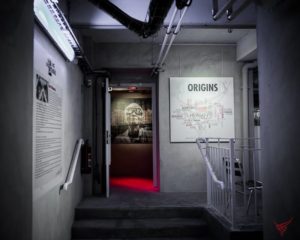 Over 15,000 photos later, Hurban Vortex sees the light of day. The ensemble of artistic, esthetic and human adventure are at the core of the triptych that represents his works: Origins corresponds to 2009 (present), the period of an oblivious, profligate, consumerism-driven world. Collapse takes us into 2011 (future)…Fukushima, with its worldwide impact. The glasses and gas masks worn by the humans represent the man-made destruction of a world as we had known it before and which will never be the same. And in Post we find ourselves in an urban landscape filled with waste and shattered ruins. But people are no longer wearing their blinders… Maybe there is hope after all that cities may disappear but humans are still around? Or does the urban jungle always win in the end? You decide, because it is your personal interpretation, after an intense dialogue with the image… exactly what Boris Wilensky wants.
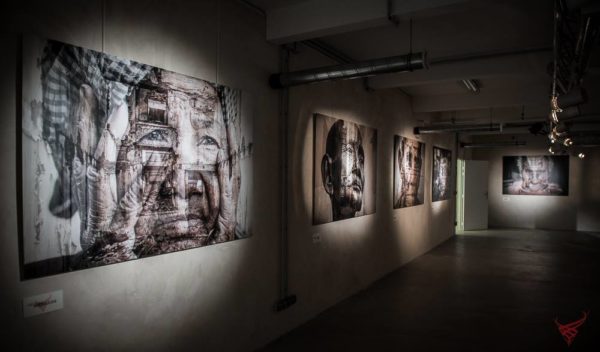 What the viewer sees, is how this artist sees the world – not in the literal but figurative sense. But he does not dictate, he suggests. He considers himself a storytelling portraitist first and foremost, and an urban photographer second. As you look at his large-size pictures (180 x 120 cm), the image in front of you transforms from a flat canvas to a three-dimensional scenography. You are drawn in, pulled onto a stage, you become part of the performance, an actor engaged in a dialogue. You are the person across from the man in the photo, but you also become him, turning outward to the viewer.
 The continuous movement – the vortex – pushes and pulls you as the borders between Human and Urban blur and become Hurban. There are violently cold and anonymous city landscapes, consisting of monochromatic and starkly geometric patterns, entirely unlike anything you find in nature. But the human element, superimposed, invariably bestows them with a strangely appealing aesthetic. For the Silo,