Natural gas is an important fuel used for heating and cooling in more than half of all North American homes. But methane, the key component in natural gas, is highly explosive and can become deadly when uncontrolled. Back in 2014, a natural gas explosion in two apartment buildings in New York killed eight people and injured 70 others.
Natural gas is composed primarily (95% or more) of methane, a colorless, odorless, non-toxic flammable gas. Methane is emitted from natural sources such as wetlands and also from industrial and agricultural processes.
Because methane is odorless, an additive known as mercaptan, or methanethiol, is added to natural gas to make the presence of methane detectable. Mercaptan additives contain sulfur, which is the reason natural gas smells like rotten eggs. Exposure to mercaptan can result in a variety of adverse health effects, including irritation of the eyes, skin and respiratory tract. Natural gas can also contain small amounts of potentially harmful volatile organic compounds (VOCs) such as ethane, propane, butane and even toxic compounds such as benzene and toluene.
Methane cannot be filtered. Mercaptan and VOCs can. Unfortunately, methane is not just dangerous – it’s also unfilterable. Adsorption and chemisorption, the two processes by which gas and odor air filters remove chemicals from the air, are ineffective against methane, which has an extremely low molecular weight. As a result, the only effective strategies for reducing indoor methane levels are source control/reduction and increased ventilation.
Mercaptan and VOCs, however, can be efficiently filtered with a high-performance air filtration system with a combination of high quality activated carbon and potassium permanganate – such as the IQAir HealthPro Plus or GC MultiGas (at right) room air purifier. The activated carbon provides adsorption of VOCs, and the potassium permanganate provides excellent chemisorption of mercaptan and many other VOCs, such as formaldehyde. The combination of these two filtration media is ideal.
The IQAir HealthPro Plus Air Purifier- made in Switzerland
Importance of monitoring methane levels.
Because methane is so highly explosive, high-performance air filtration to remove the odors associated with natural gas (mercaptan) is not recommended unless sufficient monitoring with a methane detector has determined that levels are safe. Methane detectors, also known as explosive gas detectors, can be purchased at hardware and home-supply stores.
This article is brought to you by The IQAir Group, friends of the Silo who develop innovative air quality solutions for indoor environments around the globe. IQAir is the exclusive educational partner of the American Lung Association for the air purifier industry.
Sometimes, not knowing the truth about something of immediate importance can create some of the most intense stress, says former chronic pain sufferer Janet Komanchuk.
“The families of victims who’ve been missing for years or decades – identifying the body of their loved one, for example, can bring closure. For me, being diagnosed with fibromyalgia was also a relief – it meant that I had a name for my chronic pain,” says Komanchuk, whose pain was so intense over a period of several years that she had to retire as a schoolteacher.
Studies of Monkey’s may help solve causes of stress in humans- http://wabe.org/post/study-monkeys-may-help-solve-stress-humans
“My diagnosis meant I wasn’t crazy, that the pain wasn’t ‘all in my head,’ as some had suggested. It meant that my flu-like symptoms,
accompanied by intense waves of pain, finally had form and dimension. I understood I was just one of many suffering with chronic pain that at last had a name.”
Fibromyalgia syndrome is a complex, chronic condition of widespread muscular pain and fatigue. It often includes sleep disturbances, impaired memory and concentration, depression and other debilitating symptoms. The syndrome is one of the most common chronic pain disorders, affecting nearly one in every 60 North Americans.
When medical leave, morphine patches, codeine and myriad pharmaceuticals brought no relief, I tried a different approach in combination
says Komanchuk, (www.jkomanchuk.com), who has since enjoyed more than 13 years of pain-free and prescription-free living after finding an alternative healing therapy that works for her. She now works as an educational writer and public relations assistant with Joy of Healing, the alternative healing modality that she says brought about her remission.
Is Yoga a ‘healing therapy’? Forbes thinks it is and more- see Supplemental below CP
“Through the years, I’ve learned a thing or two about dealing with the psychological trauma of illness.” Komanchuk shares tips to keep in mind for those suffering from an indeterminate condition.
• Trust in yourself. “At times, the pain was so intense that I was certain my flesh was tearing away from my bones,” says Komanchuk, who was just like the more than 100 million Americans who suffer from chronic pain, which costs nearly $600 billion annually in medical treatments and lost productivity, according to the Institute of Medicine. Despite her unmistakable pain, the critical doubt from others as to what she was experiencing was disheartening, at times causing her to doubt herself.
“Trust in yourself, for you know what you’re feeling,” she says. “Don’t fall victim to the judgment and criticism of others who doubt your illness and the limitations it places on you or your activities.”
• Don’t quit! Despite the immense scope of chronic pain, very little is spent on research to find better ways to manage pain. Komanchuk was faced with the prospect of spending the rest of her life in a nursing home.
“Yes, the pain was excruciating, debilitating and fatiguing, yet I still felt as though my life had the potential for vitality,” she says. “The idea of going to a nursing home – reasonable for some – felt like a kind of death to me.”
Convinced that there was hope for her in overcoming fibromyalgia, she persisted in her search for wellness answers.
• Seriously consider alternatives. She was able to achieve what she thought was impossible – not just temporary relief, but permanent, lasting mind-body-spirit wellness. She had been to orthopedic surgeons, neurologists, rheumatologists, psychologists, underwent MRIs and took all manner of medications for her unbearable pain. In a narrow sense, it would seem as though she exhausted her options – until she looked beyond traditional Western medicine. Alternative treatment guided her to recognize the layers of stress throughout her life that she believes were a primary driver of her chronic pain.
“Every day, I am filled with gratitude for the fact that I am free of the torment from fibromyalgia that had plagued me throughout my
life,” she says. “I just wish I could give others a piece of the relief that I’ve found. All I can say is keep your eyes open, keep the hope alive and don’t give up!” For the Silo, Ginny Grimsley
If you want to create healthier habits for yourself and your loved ones, it might be a good time to switch to organic foods. The benefits of this diet are numerous, and with the global expansion of the market, organic food has become readily available to all.
Ask yourself — what kind of food do I actually eat, and how is this food produced? You may not like the answer, but there is one simple solution to this problem — organic food. This type of diet may not look as appealing as GMO, but trust us when we say, it tastes the same, and it is not bad for your health.
Who Are the Leading Manufacturers of Organic Food?
If we look at the bigger picture of organic food production, the leading place belongs to Australia where organic farms occupy an area of 35.9 million ha, followed by Europe with 14.8 million ha, South America with 8 million ha, Asia with 6.1 million ha, North America with 3.2 million ha, and finally Africa with 2.1 million ha.
However, India has the most considerable number of registered organic producers – a whopping 835,000. Sounds like a big number? The organic industry is expanding every year and is expected to generate over $60 billion usd by the end of this year (2022).
The reason for this rapid growth is that more and more people in different countries are opting for this type of food.
If we look at the 2016 American market, we can see that organic food has reached a staggering $38.9 billion in organic food retail sales. These numbers are showing that the production (and consumption) of organic products is on the rise, which is actually great news!
What About the Consumers?
Many people are living a fast-paced lifestyle, and this means that they spend much time planning their meals or doing workouts. This type of unhealthy eating regime can have a detrimental effect on our health.
According to stats, 57% of children are well on their way to being obese due to the consumption of unhealthy foods and foods that contain empty calories.
Fortunately, this trend is declining as 51% of parents opt for healthier foods, and they are even willing to pay 3-4% more for organic food to create healthier eating habits for their young ones.
An increasing number of people are becoming aware of the hazardous effects of food additives and supplements that may cause numerous health disorders. According to a survey conducted in France, about 70,000 people who consumed organic foods had 25% fewer cancer diagnosis than the ones who consumed conventional food.
Considering these facts, organic food consumption is expected to increase in the coming years.
Quality-Price Ratio
The production of organic food requires compliance with certain regulations that vary from country to country. Organic food refers to foods that are not genetically modified, not treated with pesticides and growth factors, and that are grown on land that doesn’t contain chemical substances such as artificial fertilizers.
You must have wondered how organic production manages to sustain itself. The secret is in prevention. Organic producers put a lot of time, resources, and effort to create the end product we find in the markets. That reflects a lot on the price. Organic food is 7.5% more expensive on average than non-organic.
The reason for this is that, despite the thorough preventative measures, organic food is more affected by various diseases and pollutants. That said, producers could lose their entire annual organic food production and end up losing substantial amounts of money.
That said, organic food is more expensive than conventional. However, if you decided to go organic, there are ways you can buy this type of food at a more affordable price. Here’s how:
buy directly from the manufacturer
compare prices
buy seasonal food
obtain membership in a community-supported agricultural farm or CSA.
Bottom Line
All of this considered, conventional food may not be a cheaper option than organic food. Why? Because good health is invaluable. So if it means that we must spend a couple of extra bucks to get rid of lousy eating habits, we’d say, go for it! For the Silo, Tarun Reddy.
New Amsterdam Records releases are special and Surface Image, the album-length composition for solo piano with 40-channel 1-bit electronics, composed by Tristan Perich and performed by pianist Vicky Chow is no exception.
“Surface Image is a stunning marriage of Perich’s inspired electronic aesthetic and Chow’s nuanced yet fiercely virtuosic playing. The line between electric and organic is artistically blurred, as the simple hand-wired electronics fuse with the individual notes of the piano on the same, expansive plane. Recorded at EMPAC’s sound studio by producer Argeo Ascani and mix engineer Jeffrey Svatek.”
A look at the performance set-up in “Surface” by Tristan Perich for a piano performance by Vicky Chow
Curated by Alexis Lowry Murray, “Audible Spaces” presents three sound installations that encourage participants to explore the subtleties of listening. Tristan Perich, Zarouhie Abdalian, and [The User] have each created immersive environments using seemingly uniform sounds that dissolve into tonal, tactile, and temporal variations as participants engage with them. Perich’s Microtonal Wall (2011), on view in the Cohen Gallery at the Granoff Center, demonstrates the extraordinary complexity that can be generated using only the most basic electronic tools. Drone-like from a distance, this 25 ft long sound field of 1-bit noise dissolves into 1500 unique frequencies.
In Bullet Train, Brad Pitt stars as Ladybug, an unlucky assassin determined to do his job peacefully after one too many gigs gone off the rails. Fate, however, may have other plans, as Ladybug’s latest mission puts him on a collision course with lethal adversaries from around the globe—all with connected, yet conflicting, objectives—on the world’s fastest train.
The end of the line is just the beginning in this non-stop thrill-ride through modern-day Japan from David Leitch, the director of Deadpool 2. Available on Digital 09/27 and on 4k Ultra HD, Blu-Ray, and DVD 10/18.
The “heart-pounding wild ride” comes home
– Kristy Puchko, MASHABLE
4K ULTRA HD™, BLU-RAY™ AND DIGITAL
Outtakes & Bloopers
Catch What You Missed: Easter Eggs
All Aboard the Pain Train: Stunts
Mission Accomplished: Making of Bullet Train
Trained Professionals: The Cast
Select Stunt Previs
Audio Commentary with David Leitch, Kelly McCormick & Zak Olkewicz
DVD
Mission Accomplished: Making of Bullet Train
Trained Professionals: The Cast
CAST AND CREW
Directed By: David Leitch
Produced By: Kelly McCormick, David Leitch, Antoine Fuqua
Executive Producers: Brent O’Connor, Ryosuke Saegusa, Yuma Terada, Kat Samick
Cast: Brad Pitt, Joey King, Aaron Taylor-Johnson, Brian Tyree Henry, Andrew Koji, Hiroyuki Sanada, Michael Shannon, Benito A Martínez Ocasio, and Sandra Bullock
Based on the Book By: Kotaro Isaka
Screenplay By: Zak Olkewicz
SPECS
Run Time: Approx. 126 Mins.
Rating: R: Strong and bloody violence, pervasive language, and brief sexuality
4K UHD: 2160p Ultra High Definition / 2.39:1 • Audio: English Dolby Atmos (Dolby TrueHD 7.1 compatible), French (Doublé au Québec), Spanish 5.1 DTS-HD MA, English – Audio Description Track 5.1 Dolby Digital • Subtitles: English, English SDH, French, Spanish • Color
Blu-ray™: 1080p High Definition / 2.39:1 • Audio: English, French (Doublé au Québec) 5.1 DTS-HD MA, Spanish, English – Audio Description Track 5.1 Dolby Digital • Subtitles: English, English SDH, French, Spanish • Mastered in High Definition • Color
DVD: 2.39:1 Anamorphic Widescreen • Audio: English, French (Doublé au Québec), Spanish 5.1 Dolby Digital, English – Audio Description Track Dolby Surround • Subtitles: English, English SDH, French, Spanish • Color
ABOUT SONY PICTURES ENTERTAINMENT
Sony Pictures Entertainment (SPE) is a subsidiary of Tokyo-based Sony Group Corporation. SPE’s global operations encompass motion picture production, acquisition, and distribution; television production, acquisition, and distribution; television networks; digital content creation and distribution; operation of studio facilities; and development of new entertainment products, services and technologies. Sony Pictures Television operates dozens of wholly-owned or joint-venture production companies around the world. SPE’s Motion Picture Group production organizations include Columbia Pictures, Screen Gems, TriStar Pictures, 3000 Pictures, Sony Pictures Animation, Stage 6 Films, AFFIRM Films, Sony Pictures International Productions, and Sony Pictures Classics. For additional information, visit http://www.sonypictures.com/corp/divisions.html
God-like powers? The United States Federal Reserve essentially drives the entire world economy.
Money runs the world’s economy. It determines who rules nations, and it rules lives.
These are the three most significant properties attributed to the power of money, in addition to its basic function as a medium of exchange. But we can attribute several less significant properties, although similarly important, to the power of money. They include:
1. Money separates people of the same nation into classes, divisions and groups.
2. The pursuit of money and wealth can turn man against man, son against father, family against family and nation against nation.
3. Money’s devaluation of natural values makes Nature the object of buying and selling.
4. The ability of man to perform labor by placing a price on his head allows one man, or group of men, to enslave another individual or group of individuals.
5. The ability of money to corrupt tends to change man’s personality from social being to self-oriented individual.
6. The power of money drives people to produce services in order to pursue everyday life. This inflicts stress upon people, leading to a spiritual breakdown manifested in acts of crime and mental illnesses.
Bitcoin- electronic currency invented in the 21st century- poised to revolutionize what money is and can be? It’s value in US dollars in 2013 tripled in one year. CP
Amazingly enough, not many people in modern society are aware of the source of the power or money, including businessmen such as bankers, money market brokers and financiers, who consider themselves money experts.
Perhaps one of the reasons the origin of money’s power is one of the least discussed subjects among academics is the non-existence of prehistoric written records. The second reason is historians’ failure to unveil when and how currency converted from an ordinary medium of exchange into the dominant value of society by expanding its usage to include rendered labor compensation. Also, when and what societal changes elevated the abstract value of currency into an absolute ruling power over humans, including all natural values and treasuries of the Earth.
The blank page left by the theory of early civilization about the invention and rise of money invited independent thinkers to develop their own theories.
The records indicate that this enigma is hidden in the formation of the first state and government. Reforms enacted almost 4,000 years ago led to the breakup of the original communion society, creating conditions that enabled different classes of people to pursue independent ways of life.
From above… 2. The pursuit of money and wealth can turn man against man, son against father, family against family and nation against nation.
Regulating all natural values and treasuries, including human labor, through money, one individual was able to declare himself the king, and establish absolute ruling power over society by entrapping people within guarded wall.
This historic event advanced the abstract value of money from the ordinary medium of exchange to an absolute ruling power unparalleled in the real world. Some ancient spiritual leaders expressed a serious concern about the prudence of the proposed reforms. They warned that the enactment of these reforms would void the God-given dominant role of natural values within society at the expense of the abstract value of money. This would subsequently interrupt the relationship between man and nature, and change the original role of man upon the Earth from the guardian of nature to the biggest annihilator of nature.
But the followers of the philosophical doctrine of man’s uniqueness compared to other species dismissed such warnings. Promoting man’s spiritual virtue of freedom to make his own norms and laws instead of following the law of nature, they were delighted by the proposed reforms.
Ever since, the corruption, exploitation of one man over another and class warfare became the norms of the New World Order leadership.
The comparatively recent freedom movements that led to the French and Bolshevik revolutions failed to liberate people from the chains of money’s absolute power. Despite that, the idea of freedom lives on in people’s minds, inspiring liberators to wonder why the formation of a communist state failed to succeed.
The liberators failed to realize that the institution of state and government is the foundation that, by providing the conditions for money currency to function, imposes absolute ruling power over society. This means that the institution of state and government is not a suitable foundation for the establishment of a free, classless society.
Is the only way to liberate society from the absolute power of money a return to the system of farming communities and declaring abolition of money currency, which would ultimately lead to dismantling the institutions of state and government?
However, taking into account that man is biologically a mortal relative entity incapable of resisting temptation offered by the absolute power of money, the prospect for the abolition of money is not practically realistic. For the Silo, Michael Vladimirovich Trisho.
Featured image: imagesci.com
Michael Vladimirovich Trisho is the author of “How Did Humanity Become Enslaved to Money?” Born in Panchevo, currently part of Serbia, Trisho’s tendency to inquire about the mysteries of the world using reason and logic were evident at an early age. All his life, he wondered how humankind became entrapped by money and why people believe a money-based society is best. After immigrating to the United States, he continued to examine early history in search of answers about the monetary system and its relation to the institution of state. Examining archeological fossils and excavations focused only on a narrow part of early human experience and did not reveal important events that played a critical role in society’s development. Michael created his own reconstruction of events, the product of which is his debut novel.
Meal planning is such a time saver. Not only do those who care about their nutrition get to save time while planning meals, but they continue eating healthy, even on the busiest days. Are you already on a plant-based diet or just thinking about it? Whether you are just trying to implement vegan or vegetarian meal prep into your lifestyle, or you are looking for some new tips – this article will provide what you need. Here is how to get your plant-based diet on track via meal planning.
Think About Pro Guidance
Making changes to your diet isn’t easy, but it is always worth it because there is always a goal behind it. Do you want to build muscles? Lose weight? Have a more balanced diet? Experience a vegan pregnancy diet plan? Or just explore more intuitive eating?
Even if your reason is not listed here, you should know that the best way to get the result that you want is a plant-based nutritionist ; a person of this sort of expertise can help enhance toddler/child/adolescent nutrition, help you achieve your sports goals, and help you deal with many digestive problems. Not only that, but plant-based nutrition can help you organize your meal in such a way that you will have enough time to cook, eat peacefully, and easily achieve all of your other plans.
Sketch Out A Week Of Meals
This step may sound confusing and like a lot to chew on. But in reality, it’s very easy. All you have to do is choose a dinner for every day of the week. If possible, think about leftovers and use them for an extra meal. Once you plan your meals, you are ready for the next step – grocery planning. Make a specific grocery list of things that you will need. Not sure what you might need for a feel of a plant-based diet? Check the next step.
Chop Vegetables
One of the best things about a plant-based diet is that you get to eat a lot of vegetables. This is not only healthy but easy to prepare. Chopping vegetables is easy, plus vegetables are super easy to store and use whenever you want. Chop your vegetables in advance: fill your cups with onion, sliced mushrooms, and sliced cabbage… This will make everything much easier and faster to prepare.
Fast Tips On Meal Prep
● Stock your kitchen counter with beans, lentils, and whole grains ● Have olive oil ● Use oatmeal for breakfast ● Cook for two days ● Keep track of your recipes ● Drink water ● Start small ● Get organized ● Invest in high-quality containers ● Keep a variety of spices ● Always use your meal prep recipes to make a grocery list ● Use glass containers ● Freeze your food
Make new lifestyles more fun and delicious with new recipes. Start small, take it slow, and go step by step. Stay hydrated, hire a professional to help you navigate your new changes, and be persistent. Remember that it takes three weeks for something to become a habit, and three months for something to become a lifestyle. For the Silo, Bill Gordon.
September 15, 2022 – Taxpayers and citizens need greater fiscal transparency from Canada’s federal, provincial and territorial governments, says the latest report from the C.D. Howe Institute.
In “The Right to Know: Grading the Fiscal Transparency of Canada’s Senior Governments, 2022,” William B.P. Robson and Nicholas Dahir graded these governments’ budgets, estimates and financial statements on how well they let legislators and voters understand their fiscal plans and hold them to account for fulfilling them. The grades range from A to D. While some of the governments present helpful and timely budgets and financial statements, others fall badly short.
The authors underline that budgets, estimates and financial statements must let interested but non-expert users find and understand and act on key information.
“Taxpayers’ and citizens’ ability to monitor, influence and react to how legislators and officials manage public funds is fundamental to representative government,” say Robson and Dahir. “We need to check that legislators and government officials are acting in the interest of the people they represent, and we need to respond if we conclude that they are acting negligently or in their own interest. Financial reports are key tools for monitoring governments’ performance of their fiduciary duties.”
image: Prime Minister of Canada Justin Trudeau website. Link to Transparency PDF: https://pm.gc.ca/en/news/backgrounders/2015/11/27/open-and-accountable-government
While much of the financial information presented to legislators and the public by Canada’s governments has improved over time, the assigned grades reveal significant shortfalls. This year’s report card covers year-end financial statements for fiscal year 2020/21 and budgets and estimates for 2021/22. The results were as follows:
Manitoba, British Colombia and the Northwest Territories trailed the the class with grades of D;
The federal government got a D+ – which was actually an improvement from an F last year, when it failed to produce a budget;
Newfoundland and Labrador also got a D+;
Nova Scotia scored a C and Prince Edward Island scored a C+;
Quebec scored a B- and Ontario scored a B;
Nunavut, Saskatchewan, and New Brunswick each scored B+;
Alberta and Yukon topped the class with grades of A and A- respectively.
These governments tax, spend and borrow hundreds of billions of dollars, and the fiscal impact of the COVID-19 pandemic will make their financial position all the more important in the future. The authors conclude: “This annual report card hopes to encourage further progress and limit backsliding. Canadians can get more transparent financial reporting and better fiscal accountability from their governments, if they demand it.” For the Silo, Lauren Malyk.
For more than 60 years, the C.D. Howe Institute has researched and published on policy challenges and potential solutions aimed at improving the performance of Canada’s economy and raising Canadians’ living standards.
The summer may be winding down, but there are still a few weeks left to keep that air conditioner pumping fresh, cool air throughout your home and before you receive a professional furnace check-up for the winter months ahead.
Just like a furnace, with regular upkeep and maintenance, your air conditioner will enjoy a long and healthy lifespan. Your HVAC system is an integral component to your home because it not only provides comfort, but it also supplies high-quality and clean air for you and your family to enjoy.
It takes a lot to keep an entire high rise cool during a heatwave. Your home a/c unit requires regular attention too.
Without proper care, the system can become dirty and clogged which prevents clean air from flowing through your house, and even worse, a neglected system can become dangerous because of old wiring and electrical circuits.
Your digital thermostat has gone blank or it has lost power
Water is leaking from your indoor unit (please note: attic units can leak and cause water stains on the ceiling)
Always work with a trusted and professional heating and cooling service provider who offers 24-hour emergency repair. Commercial or residence, it’s important to work with experienced technicians who can advise you with integrity and sincerity on the right solutions for your needs.
There are also a few things you can double-check before you jump to any serious conclusions.
Check the Temperature
Does it feel abnormally hot or humid in your house? Always be sure to set the thermostat to Air Conditioning Mode. If you notice that it is set to that, and it’s still muggy and hot in the house, it might be time to give your maintenance technician a call.
Often air conditioners can have trouble maintaining service if it’s hotter than 33 degrees Celsius (91.4 degrees Fahrenheit). However, most units should be able to maintain your home’s cool air within a couple of degrees of your setting. If it’s not working when it’s above 33 degrees, there might be a problem.
Check with your maintenance and installation provider if you think the temperature is hotter than it should be just in case something is broken so that you can go back to feeling comfortable and content.
Change the Filters
Dirty air filters can cause great damage to your AC unit. You’d be surprised at how much dust and debris air filters catch, and when they’re not cleaned or changed, the collected debris can clog things up and cause wear and tear on the system’s parts.
This prevents clean, cool air from flowing through. It also means that the AC unit will not live a long, healthy life because the extreme wear and tear of the dirty parts will cause it to breakdown faster than it should.
Take a look at your filters and investigate how clean they look. If you’re unsure how to locate the filters or how to do this, consult your trusted heating and cooling service provider to know exactly what to do. The best companies offer DIY tips so that you’ll be able to tackle any small problems yourself in the future.
Keep in mind to always switch off the unit’s power entirely before you attempt any maintenance or repair work.
Feel the Air in Your Home
If you’ve already checked the temperature and taken a look at your filters, check the air coming out of the supply vents.
If you have an outdoor unit, make sure it’s running and that the thermostat is in Air Conditioner Mode. You should feel cold air.
If you find that there is considerably less air than usual coming out of the vents, or if you find the air to be warm, it’s possible that there is an issue. If there is no air coming out of the outdoor unit’s vents at all, this could also be a problem.
In these cases, your evaporator coils may be iced over. Be sure to cut off the unit so that it can thaw before a technician arrives.
Pay Attention to any Noises
If you notice any squeaks, grinding, or grating sounds coming from your AC unit, chances are there are problems to be attended to.
These types of noises usually occur when a belt has slipped out of place, parts need lubrication, or the motor bearings have broken.
It’s critical that this is maintained right away because prolonged avoidance can result in additional and costly damage. It’s possible that you need a replacement unit or simply have repairs made.
Air conditioner repair is important because it keeps the quality of air in your home clean and safe.
Always remember to work with a trusted maintenance and installation company who offers round-the-clock emergency support, and one who you can trust! For the Silo, Mila Urosevic.
“Libraries are our friends” said famed writer Neil Gaiman. Katharine Hepburn once asked “what in the world would we do without our libraries?” When last polled about a decade ago in 2011, Toronto was home to ninety-eight public libraries and two book mobiles; with approximately thirty thousand programs hours and more than 19 million in person visits.
Ghostbusters (1984) Dr. Egon Spengler: “print is dead”
Despite the seeming popularity of the time honored library, there have been very legitimate concerns about the decline of the library in our digitized world. The cynical pronouncement from the Annoyed Librarian blogger is that no one will even notice as libraries vanish because people will be “too busy renting ebooks from Amazon”.
What no Dewey!?? Something is being lost…cardboard catalogue placards…pile carpeting…the esoteric ‘quest’ of locating a physical book…the sensation of walking between the rows and aisles of paper books….
Is there a future for Libraries?
Books are being replaced with ebooks and the other popular resource, DVDs, are also rapidly being replaced by online movie providers. Publishing companies are not easily persuaded to turn over ebooks (as Libraries offer their use for free, and it’s easier to control the distribution of e-resources than print media which can be obtained anywhere), so although Libraries attempt to acquire as many ebooks as possible, this isn’t always easy.
A pile (!) of books. Heavy but hard to ignore. Physical media have a permanence and that permanence affords respect and care. Digital media not so much.
Other sources argue that if people believe the internet is making libraries obsolete, it’s because they haven’t been in a library recently.
The reality is that libraries, like so many public institutions, have adapted to new digitized world.
Book circulation may have declined, but the Library now offers a wider diversity of services. Libraries offer free wi-fi, public computers for personal use, an assortment of programs for all age groups, Library accounts accessible online, and even offer services such as income tax filing assistance and computer classes for seniors. For the Silo, Charity Blaine.
With new cases of coronavirus (COVID-19) still being reported every day across the globe, we are starkly reminded that handling or coming into close contact with wildlife, their body parts, and excreta poses a risk of spillover of the pathogens [viruses, bacteria, parasites, and fungi] they host and maintain in nature, and to which we humans might be susceptible.
The illnesses animals spread to humans are known as zoonotic diseases, or zoonoses.
It is estimated that, globally, about one billion cases of human illness and millions of deaths occur every year from zoonoses. Some 60 percent of emerging infectious diseases that are reported globally are zoonoses and of the more than 30 new human pathogens detected in the last three decades, 75 percent have originated in animals.
A wide variety of vertebrates are carriers of zoonotic agents. Rodents, the most abundant mammal, also represent an abundant source of zoonotic diseases, carrying at least 180 unique zoonotic pathogens[1]. Because of their size, the ability to fly and their unique immune system, bats represent an important virus reservoir, though presently they are known to carry only about a third of the zoonotic pathogens that rodents do.
While there are fewer species of primates when compared to rodents and bats, a great proportion are zoonotic hosts. The risk that pathogens can infect humans increases with species more closely related to us. For example, the spillover of HIV to humans occurred from chimpanzees and sooty mangabeys, most likely through butchering and consumption of their meat. To date, HIV-AIDS has infected 75 million people and caused 32 million deaths[2].
Graphic design: Sarah Markes/WCS.
The persistent lethal capacity of zoonotic pathogens can also reside in its evolutionary strategies. Plague is a bacterial, vector-born disease transmitted by fleas from rodents –its natural reservoir– to humans and subsequently also from humans to humans that has impacted the history of mankind through multiple pandemics causing tens of millions of deaths worldwide. The responsible bacterial agent has evolved virulence factors that have allowed it to repeatedly and successfully evade the immune system of the mammalian host[3].
“Coming into close contact with wildlife — including their body parts and excreta — poses a risk of spillover of the pathogens they host, to which we humans might be susceptible.”
Zoonoses may exist in various forms: The most common, endemic zoonoses, are widespread in developing countries affect many people and animals and are by comparison mostly neglected by the international community, epidemic zoonoses vary widely in their duration and distribution and emerging and re-emerging zoonoses may or may not have occurred previously in a given population, but are generally observed to expand in new species, populations or areas.
Emerging infectious diseases (EIDs) and particularly zoonotic ones are a significant and growing threat to global health, global economy and global security. Analyses of their trends suggest that their frequency and economic impact are on the rise.
The conditions of so-called “wet markets” are ideal for incubating new diseases and bolster their transmission. Photo credit: Elizabeth L. Bennett/WCS
Recent examples of such emerging or re-emerging zoonoses include Rift Valley fever, severe acute respiratory syndrome (SARS), pandemic influenza, Yellow fever, Avian Influenza, West Nile virus, the Middle East respiratory syndrome coronavirus (MERS), and most recently COVID-19.
However, our current knowledge of zoonotic diseases and spillover mechanisms is still at its infancy. It is estimated that less than 0.1% of all viruses that may pose a threat to global health are now known to have been transmitted from animals to humans[4].
More than 300,000 viruses are estimated to await discovery in mammals, many of them bearing zoonotic potential. In the U.S.-funded PREDICT program, researchers estimate that there are more than 1.6 million unknown viral species in mammals and birds, 700,000 of which could pose a disease risk to humans, based on years of information gathering.
“In wet markets across the globe, live and dead animals — including many wildlife species — are sold for human consumption.”
Facing such a vast, unknown and unpredictable universe of zoonotic agents, we firmly believe that limiting the chances of contact between human and wild animals is the most effective way to reduce the risk of emergence of new zoonotic diseases.
In “wet markets” across the globe, live and dead animals — including many wildlife species — are sold for human consumption. In close quarters, a mix of saliva, blood, urine and other bodily fluids brush up against vendors and consumers alike. The conditions of these markets are ideal for incubating new diseases and bolster their transmission. They form one of the most detrimental bridges created by man over the natural barriers that previously separated humans and wild animals.
Destruction of nature is increasingly putting humans in contact with pathogens for which they have no natural immunity. Photo credit: Nick Hawkins
For example, in 2016, two officials from the Department of Livestock and Fisheries in Lao PDR, Drs. Bounlom Douangngeun and Watthana Theppangna along with One Health experts authored a paper which documented that wild mammals from 12 taxonomic families and capable of hosting 36 different known zoonotic pathogens were traded in only seven markets[5]. It is a similar situation that has enabled the emergence of the previously unknown SARS in central Guangdong Province in November 2002 and now COVID-19 coronavirus in Wuhan, China.
“Ignoring the danger posed by wildlife markets is a massive global public health liability for a healthy world.”
The interface within these wet markets has been largely ignored as a public health topic, but COVID-19 coronavirus has brought this interface back to the forefront and reminded us that ignoring the danger posed by wildlife markets is a massive global public health liability for a healthy world.
As Dr. Christian Walzer emphasized recently this is a “global health priority that cannot be ignored.” It is important to continue calling for three solutions to prevent this complex global challenge: close live animal markets that sell wildlife; strengthen efforts to combat trafficking of wild animals within countries and across borders; and work to change dangerous wildlife consumption behaviors, especially in cities.
For the Silo, Stephen Sautner- Executive Director of Communications, Wildlife Conservation Society- Bronx Zoo
NOTES
[1] Cleaveland et al. 2001. Diseases of humans and their domestic mammals: pathogen characteristics, host rage and the risk of emergence. Phil Trans R Soc Lond B 356, 991–999
[2] Huet T, Cheynier R, Meyerhans A. et al. « Genetic organization of a chimpanzee lentivirus related to HIV-1 » Nature 1990, 345;356–9.
As the world mourns the passing of Queen Elizabeth II, we undoubtedly acknowledge the scope of her public service for over 70 years. She is one of the most recognized and famous people on the face of the earth.
My parents travelled to England when I was young and could (hope to) catch glimpses of the Royal Family, including the Queen, outside Buckingham Palace. My family, one could say, became Royal Watchers. Years later, I’d be hired by former MPP Toby Barrett UE who I quickly learned harbored profound respect for Queen Elizabeth II.
Shortly after officially becoming our longest reigning Monarch, Toby penned a newspaper column that began with: “Queen Elizabeth II is the only British Monarch in history properly trained to change a spark plug!” As Toby said at the time, the statement exemplified the character of our Queen.
Elizabeth learned to change a spark plug at 18 (during the Second World War) after joining the British Army Women’s Auxiliary Territorial Service. She served as an army truck mechanic and as an ambulance and army truck driver.
Elizabeth carried an incredible responsibility throughout her life, beginning at a young age. Upon taking the throne in 1952, she witnessed enormous social change. At 25, Elizabeth became Queen, and was officially crowned at her coronation two years later.
During her reign, Queen Elizabeth visited Canada more than any other country – 22 times. She must have had a special place in her heart for our country and its people, as she was known to refer to Canada as home. From the outpouring of sentiments, the feeling was indeed mutual.
On September 8th, the Queen’s children travelled to Balmoral, near Aberdeen, after physicians placed her under medical supervision. Later in the day Thursday, news spread that the Queen had passed away peacefully in the afternoon. A sad, solemn day.
Queen Elizabeth II officially made Liz Truss Britain’s prime minister two days before her passing. Truss would become the 15th prime minister to meet with the Queen. The meeting was at Balmoral Castle, in the Scottish countryside, where Boris Johnson first arrived to begin the power transfer. The first prime minister the Queen met with during her reign was Winston Churchill – a leader I often quote.
Last Thursday, Prime Minister Truss described Queen Elizabeth II as the rock on which modern Britain was built and continued by saying that she had “provided us with the stability and strength that we needed.” In times of adversity, the Queen has steadied nations with her strength and stoicism – the embodiment of a true leader.
Succession plans have long been in place, and the Queen’s son, Charles III, will become King. As an aside, I met Prince Charles and Camilla a few years back at a function in Toronto. It was a cheeky meeting and one I will never forget.
While we all come to grips with the passing of a lady who impacted our lives in ways, we did not realize, Britain is preparing to usher in a new era in the nation’s fascinating history. Britain, Canada and the Commonwealth will undoubtedly embrace the King and offer him loyalty and devotion, exactly as Her Majesty would have wished.
For the Silo, by Bobbi Ann Brady MPP Haldimand-Norfolk
Introducing Lindsay Nicholas New York, an empowering female RTW line, created out of necessity for power women, by none other than a power woman.
Nicholas, the designer, found a gap in the market for stylish pieces that were instantly put together and effortless to wear. Female executives and powerhouses’ closets craved comfort, while their lifestyles demanded convenience. Their careers dictate professionalism, but personalities insisted on creativity. Lindsay developed a priceless solution that could fit any career, any season and any woman who wants to wear confidence while she takes on the world, simultaneously paying attention to detail, cut and quality of fabric.
While having a career in marketing, Lindsay Nicholas traveled extensively and craved clothing that would take her from work-to-play, day-to-night, between coasts and hemispheres, all while offering effortless-cool style. Lindsay knew she wasn’t alone in requiring modern basics that live outside of the seasons to suit this global lifestyle. It was this, coupled with an obsession for fashion, which inspired her to begin Lindsay Nicholas New York.
Nicholas states, “I needed clothes that would take me from summer to winter by simply changing out a strappy sandal for a knee boot and adding a jacket to a sleeveless shell. I might also have work meetings all day, but also a weekend where I needed to stay over for the next week of work. I wanted clothes that were simple and created a palette for me to create super stylish outfits. I wanted to be that woman I would see in the airport lounge that just had it all going on. Incredible style that could go from the boardroom to being comfortable enough to travel in.
I created Lindsay Nicholas New York to address the wardrobe needs of the creative professional who, like me, insists on defining her own dress code.
We want to reinvigorate the definition of modern dress. Our pieces are meant to be loved and not thrown away at the end of the season. These are pieces that stay in your wardrobe year after year, and while the way you style them may change, the pieces themselves are timeless.”
Interestingly enough, Lindsay is also an image consultant, and purposely built the collection to be flattering and solve problems. Nicholas also has a team of mostly women at the company. Two of the signature pieces are The Perfect Dress, which comes in two lengths, so you can wear it right away. The other signature piece is the M.I.N.Y. Pants ™ shorts (MINY stands for Made in New York). They come in a Boxer Fit and a Trouser Fit (including a Skinny MINY, which is great for women with svelte thighs).
More about Lindsay Nicholas:
Lindsay Nicholas
Lindsay holds certificate degrees from Parsons School of Design in Fashion Design and the Fashion Institute of Technology in Image Consulting. Every piece she designs incorporates her understanding of quality fabrics, fit and construction. Lindsay is a former board member of the Association of Image Consultants International and also was the Executive Director of Marketing for The Shoppes at Marina Bay Sands in Singapore, one of the top luxury malls in the world. Lindsay’s appreciation for luxury craftsmanship is evident in her designs.
Her clothes aren’t fast-fashion; they are timeless pieces you’ll covet for years to come.
Now living between NYC and Melbourne, with regular stops in Singapore, Boston and Sydney, Lindsay still embodies the global lifestyle and her perspective certainly impacts not just logistics, but also her eye for design and ability to anticipate what women may be missing in their closets. She has a team of mostly women who are experts in their field and an all-female production team in NYC who bring her designs to life, with insightful input from a seasoned fit model.
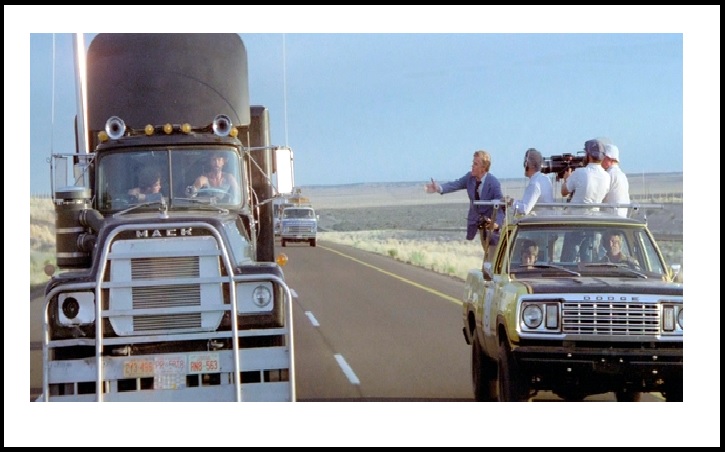
CONVOY (1978): Maybe because I knew that director Sam Peckinpah was pretty much reaching new depths of being an irresponsible drug-addled drunk during production, that I figured maybe it would show in this movie, and maybe that’s why I’ve avoided it for so long.
I mean, it’s one thing to have that kind of thing seep into your films about violent assholes defeated-by/defiant-at life, but it seems like something that would fuck up what should otherwise be a fun movie about truckers outrunning the law — based on a fuckin’ hit novelty song, of all things.
And yet, that’s not really the case here. It is a fun movie about truckers outrunning the law, with just the right amount of Peckinpah’s cynical boozy edge to make this stand-out from other similar joints playing at the drive-in around this time. Occasionally, I’d be surprised as I felt the edge poke me, and it was pretty sharp too, with its attitudes towards The Law and the dangers of being Black in America.
But they were welcome surprises.
Of the truckers, Franklyn Ajaye’s “Spider Mike” gets the worst of it from Johnny Pig, on account of his dark skin; Ajaye, by the way, is known mostly as a comedian, and he’s one of those dudes who I’m sure is living well, but I feel should be/should’ve been much bigger. I’m guessing he’s one of those “comedian’s comedian” types, in that he’s super-respected in his field, if not necessarily recognized by the general public.
I’m sure once he’s dead, he’ll become The Most Popular Comedian In The World on social media and everybody and their mother is going to go on about how great he was, the way everybody and their mother suddenly made Mr. Paul Mooney the most popular comedian in the world on social media after he died.
Kris Kristofferson’s “Rubber Duck” is very much a Peckinpah kind of protagonist, with his own code of conduct that might not make sense to others, but allows him to enter his house justified. He also goes shirtless for what seems like half the running time, which made me imagine if Matthew McConaughey ever considered starring in a remake somewhere along the way.
I don’t believe in heroes, but I suppose if I had to pick one, Mr. Kristofferson wouldn’t be a bad one to emulate: Rhodes Scholar, boxer, Army Ranger. He flew helicopters, swept floors, worked on an oil rig, and wrote some of the greatest goddamn songs in the history of music. He was also “Whistler” in the BLADE movies.
Ernest Borgnine plays such a bastard in this one, “Dirty Lyle” is his name, and he’s an oinker of the worst kind: A corrupt cop who shakes down the truckers unlucky enough to drive down his highway.
In real life, Borgnine revealed in an interview that his secret to long life was that he masturbated a lot; later, he said in another interview that he said that because the interviewer wouldn’t let up with that question, and he figured that answer would shut the dude up. In reality, he said, his long life was probably the result of becoming a vegetarian 35 years prior. Now that’s just disgusting and uncalled for, Ernie, you dirty old man.
Anyway, this was good times, man. I think this movie, SMOKEY AND THE BANDIT, and a six-pack of Coors will cure whatever ails ya.
It’s just so 70s in the best of ways, that old-school vibe with dudes talking to each other on the CB, taking showers together in their underwear. Maybe that’s why Ali MacGraw had short hair in this, to mix in easier with the rest of the dudes. #backyardmovienight For the Silo, E.F. Contentment.
Could You Lose Your Homeowner’s Insurance Because of Your Dog?
In many years, dog bites accounted for more than one-third of all homeowner’s insurance liability claims in the United States, according to the Insurance Information Institute and State Farm. In Canada numbers are not readily available but there is a strong chance we are not far behind.
“Those claims can be financially hard on the homeowners and tragic for the dogs, which is especially troublesome when you know that bites aren’t a ‘bad dog’ problem – they’re a human ignorance problem,” says Melissa Berryman, a dog bite specialist who designed and teaches a safety and liability class for dog owners. She’s the author of “People Training for Good Dogs: What Breeders Don’t Tell You and Trainers Don’t Teach”.
“In all of my years as an animal control officer, I’ve never come across an incident with a dog that was not preventable,” she says. If we look back a decade during an especially peak period, there were 360,000 nonfatal dog bite injuries treated in emergency rooms in the United States, according to the Centers for Disease control, with claims totaling into the hundreds of millions of dollars.
“Regardless of provocation, dog owners are largely held liable and see their insurance canceled or their premiums increased. To be reinstated premiums can go up and insurance companies often require them to get rid of the dog. And, often, that means the dog is euthanized.”
Here’s a look at some of the contents inside Melissa’s book. CP
Pet owners can prevent this common and unnecessary tragedy by understanding a dog’s perspective and acting accordingly.
She offers five tips to reduce dog bite incidents:
• Remember, dogs aren’t trying to protect a home when they react negatively to strangers or visitors: Dogs place no value on your home, car, or the valuables they might contain. When they’re in a home or car, they are trapped in an enclosed area and will respond to perceived threats with an automatic fight-or-flight response. It is the owner’s responsibility to train dogs to calmly signal someone’s approach and then to assert authority over the situation.
• Consider your dog’s “rank”: Dogs have superior/subordinate relationships similar to the military. Rank of family and guests dictates a dog’s behavior towards them. A high-ranking dog, a “general,” won’t tolerate insubordinate behavior from a perceived low ranking “private’’ child or guest. Bites often occur when human “privates” try to take food or toys away, hug or pull a “general” type dog by the collar off of furniture.
• Yelling can exacerbate a dog’s agitation: Your dog doesn’t know you’ve ordered pizza, so when the delivery person arrives, your dog is agitated by the threat at the door and starts barking. When you yell at your dog to stop barking, he interprets this as agitation on your part; he understands tone, not language. That only increases a dog’s anxiety and vulnerability. When the door opens, the dog bites because it thinks you and he are both feeling threatened and you’re both going to attack the threat. It’s best to happily reassure your dog when someone arrives and leave the greeting of guests to you, and not the dog.
• How you treat strangers influences how your dog treats them: Dogs respond to their owners’ behavior, which gives them signals about whether or not a situation is safe. When the dog’s owner meets a stranger and interacts formally with that stranger, as many of us do, dogs can view this as the behavior of foes, or as apprehension, such as that of prey. Owners holding leashes tightly unwittingly place their dog in the dangerous fight stance of the fight or flight response. It’s best to relax and act like a friend when meeting strangers, which will elicit a friendly response from a dog.
“Dogs react based on their pack positions, the handling ability of their owners and the situation and context,” she says. “People have the power to recognize this and redirect the interaction to that of friends.”
The cover of Melissa Berryman’s book.
By understanding and respecting how dogs’ instincts and natural behaviors differ from ours, dog owners can prevent bites and insurance headaches, Berryman says.
A Massachusetts animal control officer for nearly ten years, Melissa Berryman is a national dog bite consultant who founded the Dog Owner Education and Community Safety Council and works with communities ,rescue groups, dog owners and bite victims. For the Silo, Ginny Grimsley.
Paris, 30 August 2022 – At a meeting with UNESCO Director-General Audrey Azoulay at the Organization’s Headquarters, Oleksandr Tkachenko, Ukrainian Minister of Culture and Information, announced that his country will request the inscription of Odesa on UNESCO’s World Heritage List. For its part, the Organization will deploy new measures to protect Ukrainian cultural heritage, particularly in Odesa and L’viv.
Since the beginning of the war, UNESCO has been deploying emergency measures in Ukraine as part of its mandate for education, culture, science, information and communication.
The Organization has mobilized close to $7 million USD/ $9.17 million CAD to date, provided numerous in-kind grants and made its experts available to advise professionals on the ground.
A working meeting was held at UNESCO Headquarters on Tuesday between Ms Azoulay, UNESCO Director-General, Mr Tkachenko, Ukrainian Minister of Culture and Information, and Ernesto Ottone, UNESCO Assistant Director-General for Culture, to ensure the proper implementation of these actions in the field of culture. On this occasion, the Minister also expressed new needs which UNESCO is committed to meet.
Image via artreview.com Artist I. Levi modifies existing artwork to reflect changes to old works caused by wartime damage that have occurred since the Ukraine War began. Inga Levi, March 15, 2020: The Willow’s Catkins have Blossomed, Klaipėda/ The House Window in the Obolon District after a Direct Airstrike, Kyiv, 2022, pencil
Inscription of Odesa on the World Heritage List
Oleksandr Tkachenko announced Ukraine’s decision to submit t the nomination of the Historic Centre of Odesa for inscription on UNESCO’s World Heritage List. Nationally recognized and protected, this site is located only a few dozen kilometres from the front line and has already been struck by artillery fire. On 24 July 2022, part of the large glass roof and windows of Odesa’s Museum of Fine Arts, inaugurated in 1899, were destroyed.
At the request of Ukraine, UNESCO has already mobilized international experts to provide technical support to the country so that this nomination can be examined urgently by Member States sitting on the World Heritage Committee, with a view of inscribing it on the World Heritage List and on the List of World Heritage in Danger.
The World Heritage Committee will also be recommended to add UNESCO’s World Heritage sites of Kyiv and L’viv, which are also under threat, to the List of World Heritage in Danger.
Image via artreview.com Inga Levi, March 5, 2022: Lviv’s view from the New Building / People are Hiding under the Ruins of the Bridge from the Russian Aircraft and Artillery, Irpin, 2022, pencil
UNESCO completes its emergency measures on the ground
In parallel to these steps and in view of the new needs expressed by professionals in the field, the Director-General announced at this meeting that UNESCO would strengthen its support to the city of Odesa by providing:
Funding to repair the damage inflicted on the Odesa Museum of Fine Arts and the Odesa Museum of Modern Art since the beginning of the war, and to finance the hiring of additional staff dedicated to the protection of collections.
Support for the digitization of at least 1,000 works of art in Odesa as well as the documentary collection of the Odesa State Archives, through the provision of appropriate hardware.
New equipment to the Odesa Regional Administration for the in situ protection of cultural property: protective panels, sandbags, fire extinguishers, fireproof fabrics and gas masks will be delivered to the Department of Culture, Religion and Protection of Architectural Heritage. They will allow the recovery of public monuments and sculptures, which has been underway since the beginning of the war, to continue.
With a view to boosting the recovery of Ukraine’s cultural sector, the Director-General also offered the Organization’s support for the creation of a UNESCO Cultural Centre in L’viv, as requested by the city mayor. It would be a place for artists to meet and share experiences, and would host training programmes, various activities and events. A budget of $1.5 million usd/ $1.96 million cad has already been earmarked to finance its opening and operational costs over several months.
In addition, the Director-General of UNESCO decided to deploy a liaison officer in Kyiv to coordinate these actions. The officer will complement the team of local experts already working in the field. For the Silo, Clare O’Hagan/UNESCO.
Officially made from a piece of metal of a “Soyuz” space launcher and from the fabric of a space suit “Sokol”, this Raketa “Space Launcher” watch brings you very close to the experience of flying to space.
Officially made from a piece of metal of a “Soyuz” space launcher and from the fabric of a space suit “Sokol”, this Raketa 24-hour watch brings you very close to the experience of flying to space.
All of the incredible achievements of Soviet/Russian cosmonauts over the past 60 years would not have been possible without the famous Soyuz space launcher. Thanks to its simplicity and reliability, this iconic space rocket has made over 1.700 flights since it was first engineered in the 1960s, and remains to this day by far the most frequently used space launcher in the world.
This watch is a tribute to this iconic space launcher.
Its bezel is made from a metal piece of the space launcher “Soyuz-2.1a” which took off on 14 October 2020 and made a record breaking 3 hour flight from the Baikonur launch pad to the ISS!
The cosmonauts Sergey Ryzhikov and Sergey Kud-Sverchkov, who were sent to space by this space launcher, actively participated in the design and production of this watch. They both insisted that the only crucial complication needed in space is a 24-hour movement to enable them to distinguish day from night in the ISS (where they have 16 sunrises and sunsets every 24 hours).
To bring you even closer to the experience of flying in the Soyuz rocket, the cosmonauts also suggested making the strap from the fabric of the famous Russian space suit “Sokol” that is worn by all cosmonauts flying in the Soyuz rocket. This space suit, made from a very robust white nylon canvas with royal blue trim, has all the features necessary to keep the cosmonaut alive at all times during the space flight in the Soyuz.
While you are still on Earth, you can wear the watch with a leather strap (this additional strap is offered with the watch). Both the “space suit” strap & leather strap have a « quick-change » system so that you can easily change them depending on where you are: training on Earth or flying to Space!
This watch is officially designed and produced in collaboration with the Russian Space Agency “Roscosmos”.
Each watch is delivered with a certificate of Roscosmos certifying the true origin of the rocket metal and the space suit fabric. The collaboration between Roscosmos and Raketa made perfect sense:
The brand “Raketa” (which means “space rocket” in Russian) was specially created in tribute to the first ever manned spaceflight by the Russian cosmonaut Yuri Gagarin in 1961. Since then, the Raketa Watch Factory accompanied every step of the space conquest by engineering watches for Soviet/Russian cosmonauts.
The Raketa mechanical movement was developed in the 60s and is well known for its simple & robust engineering construction: exactly like the “Soyuz” rocket launcher also developed in the 60s, which, thanks to its simplicity & reliability, has become the most used space rocket in the world.
See you in space!
Description of the watch
The Raketa “Space Launcher” model is limited to:
300 pieces with white dials; and
300 pieces with blue aventurine dials (reminding the sparkling stars in space).
It has the following features:
The bezel is made from a metal piece of the actual “Soyuz-2.1a” launcher that took off on 14 October 2020 and made a record breaking 3 hour flight from the Baikonur launch pad to the ISS! The full name of the space rocket (as well as the cardinal marks) is engraved in Russian on the bezel.
The strap (with a “quick change” system) is made from the real fabric of the famous Russian “Sokol” space suit that is worn by all cosmonauts/astronauts who fly on the Soyuz rocket.
The second hand is represented by the Earth revolving around its axis.
The seconds’ scale (printed on the sapphire glass)emphasises on the countdown to launch (last 10 seconds).
The movement is beautifully decorated with constellations printed on the bridges of the movement and a special coating on the rotor.
A few design elements discreetly pay tribute to the first manned space flight by Yuri Gagarin:
The design of the hour & minute hands replicates the hands on the control panel of Gagarin’s spacecraft.
On the model with a white dial, the countdown printed on the sapphire glass is followed by the word “Poyekhali!” (Let’s go!) that Gagarin pronounced as he flew off.
Each watch is delivered with:
a complimentary leather strap (with a “quick change” system),
a brochure providing more detailed information,
the official insignia of this space mission; and
a certificate of Roscosmos (certifying the true origin of the rocket metal and the space suit fabric).
Price of the watches
The Raketa “Space Launcher” is offered in 2 versions:
with a white dial: its price is 1.458 Euros (without VAT);
dark blue aventurine dial: its price is 1.542 Euros (without VAT)
For the comfort of customers, Raketa watches are delivered worldwide free of charge by DHL within 2 to 5 days.
Specifications of the Raketa “Space Launcher” watch:
Factory:
Raketa Watch Factory (Saint-Petersburg)
Movement:
Raketa
Calibre:
2624A
Functions:
Automatic with 24 hours
Number of jewels:
24
Testing positions:
4
Average rate (s/d):
-10+20
Average running time (h):
40
Frequency/hour:
18.000 / 2.5Hz
Bi-directional automatic winding:
Yes
Stopper of self-winding unit activated during manual winding:
Yes
Decoration:
Print
Case:
Material:
Stainless steel
Rotating bezel:
Metal piece of the “Soyuz-2.1a” launcher
Size:
43 mm
Front glass:
Sapphire
Back glass:
Mineral
Crown:
Screwed-in crown
Water resistance:
20 АТМ
Hands:
Superluminova
Dial:
Version 1: white dial (with Superluminova);Version 2: dark blue aventurine stone dial (with Superluminova)
Strap/bracelet:
Material:
Fabric from “Sokol” space suit Genuine leather (additional strap)
Width:
22 mm
Sex:
Man
French version
RAKETA ”SPACE LAUNCHER”
Une montre qui vous propulsera dans l’espace !
Faites l’expérience de voler dans l’espace
Fabriquée à partir d’un morceau de métal d’un lanceur spatial “Soyouz” et d’un morceau de tissu du scaphandre spatial “Sokol”, cette montre Raketa 24 heures vous permet d’accéder au plus près de l’expérience de voler dans l’espace.
Sans le célèbre lanceur spatial “Soyouz”, aucun des exploits incroyables des cosmonautes soviétiques/russes des 60 dernières années n’aurait été possible. Grâce à sa simplicité et à sa fiabilité, cette fusée spatiale emblématique a effectué plus de 1.700 vols depuis sa conception dans les années “60” et reste à ce jour et de loin le lanceur le plus utilisé dans le monde.
Cette montre rend hommage à ce lanceur spatial emblématique. Sa lunette est confectionnée à partir d’une pièce de métal provenant du lanceur spatial “Soyouz-2.1a” qui a décollé le 14 octobre 2020 et a effectué un vol record de 3 heures depuis la base de lancement de Baïkonour jusqu’à la station “ISS”.
Les cosmonautes Sergey Ryzhikov et Sergey Koud-Skvertchkov, qui ont été envoyés dans l’espace avec ce lanceur spatial, ont activement participé à la conception et à la production de cette montre. Ils ont tous deux insisté sur le fait que la seule complication nécessaire était un mouvement 24 heures permettant de distinguer le jour de la nuit dans l’ISS (où ils voient 16 levers et couchers du soleil par 24 heures).
Pour vous rapprocher le plus près possible de l’expérience d’un vol dans la fusée Soyouz, les cosmonautes ont également suggéré de fabriquer le bracelet à partir du tissu du célèbre scaphandre spatial russe “Sokol” que portent tous les cosmonautes empruntant le vaisseau Soyouz. Ce scaphandre, fait en toile de nylon blanc très robuste avec des garnitures bleu roi, possède toutes les caractéristiques nécessaires pour assurer la survie du cosmonaute à tout moment du vol spatial dans le vaisseau Soyouz.
Tant que vous êtes encore sur terre, vous pouvez porter cette montre avec un bracelet en cuir (ce bracelet supplémentaire est offert avec la montre). Le bracelet “spatial” et le bracelet en cuir sont tous deux munis d’un système “quick change” qui vous permet de facilement les changer en fonction de là où vous êtes : à l’entrainement sur terre ou volant vers l’espace !
Cette montre est officiellement conçue et produite en collaboration avec l’agence spatiale russe “Roscosmos”. Chaque montre est livrée avec un certificat de Roscosmos certifiant l’origine du métal de la fusée et du tissu de scaphandre spatial. La collaboration entre Roscosmos et Raketa allait de soi :
La marque Raketa (qui signifie “fusée spatiale” en russe) a été spécialement fondée en hommage au premier vol spatial habité du cosmonaute russe Youri Gagarine en 1961. Depuis, la Manufacture horlogère Raketa a accompagné chaque étape de la conquête de l’espace en concevant des montres pour les cosmonautes soviétiques/russes.
Le mouvement mécanique Raketa a été développé dans les années “60” et est réputé pour sa construction à la fois simple et robuste, exactement de la même façon que le lanceur “Soyouz” qui, également développé dans les années “60”, est devenu, grâce à sa simplicité et à sa fiabilité, le lanceur le plus utilisé dans le monde.
Rendez-vous dans l’espace !
Description de la montre
Le modèle Raketa “Space launcher” est limité à :
300 pièces avec cadrans blancs, et
300 pièces avec cadrans en aventurine bleue (rappelant les étoiles scintillant dans l’espace).
Il présente les caractéristiques suivantes:
La lunette est fabriquée à partir d’un morceau de métal original provenant du lanceur “Soyouz-2.1a” qui a décollé le 14 octobre 2020 et a effectué un vol record de 3 heures depuis la base de lancement de Baïkonour jusqu’à l’ISS! Le nom complet du vaisseau spatial (de même que les points cardinaux) est gravé en russe sur la lunette.
Le bracelet (muni d’un système “quick change”) est fabriqué à partir du tissu original provenant du scaphandre spatial russe “Sokol” porté par tous les cosmonautes/astronautes empruntant le vaisseau Soyouz.
La graduation des secondes (imprimée sur le verre en saphir) met l’accent sur le compte à rebours avant le lancement (10 dernières secondes).
Le mouvement est magnifiquement décoré de constellations imprimées sur les ponts et d’un revêtement spécial sur la masse oscillante.
Quelques éléments rendent discrètement hommage au premier vol spatial habité de Youri Gagarine :
Le design des aiguilles des heures et des minutes reproduit les aiguilles du tableau de bord du vaisseau spatial de Gagarine.
Sur le modèle à cadran blanc, le compte à rebours imprimé sur le verre en saphir est suivi du mot “Poyekhali !” (C’est parti !) que Gagarine a prononcé en décollant.
Chaque montre est livrée avec :
un second bracelet en cuir (muni d’un système “quick change”),
une brochure fournissant des informations plus détaillées,
l’insigne officiel de cette mission spatiale et
un certificat de Roscosmos (certifiant l’origine du métal de fusée et du tissu du scaphandre spatial).
La montre “Space Launch” est proposée en deux versions :
Avec un cadran blanc au prix de 1.458 Euros (hors TVA)
Avec cadran en aventurine bleu au prix de 1.542 Euros (hors TVA)
Pour le confort des clients, les montres Raketa sont livrées dans le monde entier gratuitement par DHL en 2 à 5 jours.
Spécifications de la montre Raketa “Space Launcher”:
Manufacture :
Manufacture de montres Raketa (Saint-Pétersbourg)
Mouvement :
Raketa
Calibre:
2624А
Fonctions :
Automatique avec 24 heures
Nombre de rubis :
24
Positions de réglages :
4
Marche moyenne (s/j) :
-10+20
Réserve de marche moyenne (h) :
40
Fréquence/heure :
18.000 / 2.5Hz
Remontage automatique bidirectionnel :
Oui
Système de débrayage du module automatique lors du remontage manuel:
Oui
Décoration :
Décalque/revêtement
Boitier :
Matériau :
Acier inoxydable
Lunette rotative
Métal provenant du lanceur spatial “Soyouz-2.1a”
Diamètre :
43 mm
Glace côté cadran :
Sapphire
Glace arrière :
Minéral
Couronne :
Couronne vissée
Etanchéité :
20 АТМ
Aiguilles :
Superluminova
Cadran :
Version 1 : cadran blanc white (avec Superluminova);Version 2 : cadran en aventurine bleu foncé (avec Superluminova)
Bracelet :
Matériau :
Tissu du scaphandre “Sokol”Cuir véritable (bracelet supplémentaire)
Zurich, Switzerland- A report from a few years ago deserves a second look. That study demonstrated how leveraging mobile network data can estimate levels of carbon emissions and air pollution in cities, an approach that could substantially reduce the cost of implementing the Paris Agreement.
The study analyses mobility patterns derived from mobile network data to estimate the usage of different transport modes within a city and derive conclusions about the respective pollution they cause.
This innovative methodology allowed scientists to estimate the concentration of air pollutants in urban areas with up to 77% accuracy.
The method could provide a scale-able and cost effective way to help understand and combat greenhouse gas (GHG) emissions in cities worldwide.
Big data analytics company and ETH Zurich spin-off Teralytics, Telefónica NEXT and sustainability solution provider South Pole Group conducted the study in Nuremberg, Germany and revealed the analysis of mobile network data is an effective way to estimate CO2 and NOX emissions in urban areas at very low cost. To achieve this, Teralytics examined aggregated and anonymized data, which is generated when mobile devices communicate with Telefónica’s mobile communication cells during user calls, text messages or while using phones to browse the internet. Teralytics was able to refine this raw data into human mobility patterns to understand how the different modes of transport, for instance trains or cars, are frequented. Combining this information with data on the emissions of the different transport modes, the three entities were able to estimate air pollution and GHG emissions in the city.
As each form of transportation produces a unique amount of CO2 and NOX emissions, understanding urban mobility patterns is vital to understand the source of emissions. The study in Nuremberg used this information to estimate with up to 77 per cent accuracy the concentration of air pollutants in the city. These findings encourage further exploration of how big data can be used to understand and ultimately solve environmental issues such as air pollution in cities across the world. This is particularly interesting with regards to the lower cost of analyzing and interpreting data compared to the higher cost of production and maintenance of elaborate measuring stations. The novel approach could thus allow an ongoing analysis on a nationwide scale.
George Polzer
“While our contemporary urban lifestyles result in the generation of harmful greenhouse gasses, it also generates large amounts of behavioural data. Our mission at Teralytics is to use this data for the benefit of society,” says Georg Polzer, CEO of Teralytics. “Our findings from Nuremberg showed that this data can be used to give city planners insights into how human mobility contributes to pollution. This is a vital part to efficiently design and implement clean air and low carbon strategies. We are looking forward to further exploring this opportunity.”
Using a three-level process, the fully anonymized and aggregated data was first transformed into movement flows by the data scientists at Teralytics, identifying over 1.2 million transportation routes during the analyzed time period, as depicted in Figure 2. The sustainability solution expert South Pole Group then used an atmospheric model to estimate air pollution levels caused by the usage of the different modes of transportation, taking into account meteorological data and information on the respective traffic carriers’ emission levels from the German Federal Ministry for the Environment (BMUB). In the third step, the accuracy of the method was examined by comparing the findings with existing data from air pollution measuring stations. The values measured at these stations were found to correlate up to 77 per cent with those from the Teralytics’ calculations.
The results of this pilot study in Nuremberg constitute a sound basis to further develop the methodology.
Following its success, the consortium was able to secure financial support from Climate KIC’s Low Carbon City Lab (LoCaL), an initiative that brings together cities, business, academia and NGO’s to deliver high environmental and societal impact. With this backing, the research partnership will expand and improve the methodology, focusing on short travel routes and taking into account local emission factors like airports, large-scale events, and types of vehicles on the road (i.e. electric cars and SUVs). Moreover, the influence of factors such as traffic jams and red lights will be taken into account in order to make even more accurate estimations of the air pollution levels in a city.
“The results from this pilot study exceed our expectations,” says Maximilian Groth, responsible for Business Development & Partnerships at Teralytics. “We are confident that we will soon be able to scale this product to cities worldwide to support urban planners in making our air cleaner and achieving the goals of the Paris Agreement at the lowest possible cost.”
This research follows other successful studies on usage of mobile network data, including a smart data analysis for transport in Stuttgart by Teralytics, Telefónica Germany, and Fraunhofer IAO.
Renat Heuberger
“Approximately 70 per cent of global greenhouse gas emissions are generated in cities, meaning that they play a key role in climate protection. We see great potential in the use of continuously generated data, such as mobile network data, to measure and reduce pollution levels in cities.” States Renat Heuberger, CEO of South Pole Group.
Florian Marquart
Florian Marquart, Managing Director of Telefónica NEXT for Advanced Data Analytics: “The pilot project in Nuremberg has clearly shown the specific added value of anonymised mobile network data for the environment. This is data from people for people. We see great potential in the results and will start the next phase of our research. The goal is to develop a product that German cities, German states and the German federal government can use to better face the challenges of emissions pollution”. For the Silo, Ricky Sutton.
About Teralytics
Teralytics is the trusted data analytics partner for some of the largest telecom operators in North America, Europe and Asia. Using technology built for operators by data scientists, they have perfected the ingestion, modelling and transformation of raw signals from subscriber actions and movements on operator networks to deliver meaningful and actionable insights, that delivers new value to our mobile operator partners. By unlocking and processing a massive scale of device movement and consumer intelligence data from location and behavioral signals, they can analyze people, places and things and offer actual insights to help city planners, venue owners, retailers, NGOs and media companies make informed decisions, optimize operations and maximize ROI. Headquartered in Zurich, Teralytics has offices in New York, and Singapore.
With the imminent arrival of Autonomous Vehicles, many people have started worrying about the safety of this new technology, especially when an issue arises to do with choice.
In this piece, we’ll delve into the issue of the “Trolley Problem” and how AVs will deal with this and whether all manufacturers have the same stance.
Infographic courtesy of our friends at selectcarleasing.co.uk
The Canadian Honours Award System is a system in which citizens of Canada can be recognized for their exceptional achievements. The system comprises three levels: the Order of Canada, the Order of Military Merit, and the Order of Merit. Each level has its criteria for eligibility and its process for nomination and selection.
The Order of Canada is the highest level of the Canadian Honours Award System. It was established in 1967 to recognize outstanding achievement and service in various fields of human endeavor.
February 26, 1997, Geddy Lee, Alex Lifeson and Neil Peart were awarded the Order of Canada at Rideau Hall in Ottawa (the official residence of the Governor General of Canada).
Below is everything you need to know about the Canadian honors award system, from eligibility requirements to the nomination process.
The requirements
1- You must be a Canadian citizen or a permanent resident of Canada
When you are a citizen of another country, you are not eligible for the Order of Canada, but you may be eligible for one of our other awards.
2- You must have made a significant contribution to your community or Canada
Your contribution can be in any field, such as the arts, business, philanthropy, science, sports, or public service.
3- You must be nominated by someone else
You cannot nominate yourself. Nominations are reviewed by an independent advisory committee, which makes recommendations to the governor-general.
4- You must meet the criteria for the specific level of award you are being nominated for
The Order of Canada has three levels: Companion (CC), Officer (OC), and Member (CM). The criteria for each level are different.
How to be nominated
1- Talk to the people who know you best
Your nominator should be someone who knows you well and can attest to your achievements. They may be a colleague, friend, or family member.
2- Fill out the nomination form
The nomination form must be completed in full and signed by the nominator. It includes sections on your biography, achievements, and contributions.
3- Include letters of support
Your nominator should also include letters of support from two other people who know you well. These letters should speak to your character and accomplishments.
4- Submit your application
Applications can be submitted online or by mail. The deadline for submissions is June 30.
The current Governor General of Canada is Canada’s first indigenous G.G.
The Selection Process
1- Review by an independent advisory committee
All applications are reviewed by an independent advisory committee, which makes recommendations to the governor-general. The governor general then decides who will receive the award.
2- Notification of the decision
The Office of the Secretary to the Governor General will notify all nominees of the decision by mail or email.
3- Ceremony and presentation of the award
Award recipients are invited to a ceremony at Rideau Hall, where they will receive their insignia from the governor-general.
Recipients can also choose to have their award presented to them at a ceremony in their community.
Celine Dion was first an Officer of the Order of Canada. Awarded on: January 6, 1998 and then later made a Companion of the Order of Canada Awarded on: October 23, 2008
In conclusion, the Canadian Honours Award System is a way to recognize the exceptional achievements of Canadians. To be eligible, you must be a Canadian citizen or permanent resident, have made a significant contribution to your community or Canada, and be nominated by someone else.
Humans possess a great depth of capacity when it comes to altruism. Again and again, we demonstrate our tendency to reach out when others are in distress. Cultivating these instincts is one of the ways in which we connect with our own humanity. Studies have indicated that altruism is not entirely innate. Environment plays a key role in the development of the qualities of altruism. Practicing this trait strengthens not only our own individual ability to extend hope and help to our fellow species, it allows us to explore more deeply our own inner kindness.
“Every man must decide whether he will walk in the light of creative altruism or in the darkness of destructive selfishness.” –Martin Luther King, Jr.
Mark Guglielmo had just finished an exhibition at Villa Victoria Center for the Arts in Boston, Massachusetts when he decided to emphasize what he felt was a missing ingredient in today’s society- altruism. Guglielmo’s work tries to emphasize this message by piecing together photo collages to form a larger image. For another show, he used photos from his time spent in Cuba. To complement the work, Guglielmo conducted interviews which were then incorporated in the exhibition. The particulars of the work involved thousands of photographs. Guglielmo captured detailed images of every nuance of a person, place, or thing. From these, he painstakingly compiled what he refers to as “a 1000-D version of reality.”
A natural storyteller, Guglielmo says the audio portion of his work was important to transport people to Cuba. Guglielmo witnessed the changes to the island nation. He decided to record the perspective of the Cuban people when it came to the changes to their relationship with the U.S. Guglielmo kept his conversations informal and allowed Cuban residents to drive them in order to keep them safe from government targeting for speaking out.
The conversations revealed the daily lives of Cubans often in the context of wealthy western tourists vacationing in the shadow of extreme poverty. Political tensions between the U.S. and Cuba have interfered with plans to show the work there.
Bucanero en Playa Ancon | Buccaneer at Ancon Beach, Trinidad de Cuba, 2017, Photo-mosaic, 46 x 68 inches
Frank Juarez is the co-founder of the Randall Frank Contemporary Art Collection and project manager of the Randall Frank Artist Grant Program. Juarez says the Randall Frank collection began quite organically. Juarez and his high school and college friend Randall shared a lifelong affinity for art. When they wanted to work together, art was the common theme they shared. Together, they began a collection and strove to support artists from their area. In the early days, they worked under a tight budget, purchasing art quarterly and storing them in Randall’s home in Richmond, Virginia. The two began looking for opportunities to sponsor art events. Their first endeavor in this capacity was a mural project in Milwaukee’s Black Cat Alley. Randall Frank Contemporary Art Collection (RFCAC) hopes to one day create a public space where they can house their collected art and make it available to the public.
As they became more established, RFCAC decided the best, most direct way to support artists was through a grant program. RFCAC’s pilot program seeks to support artists in the Midwest and east coast regions of the U.S. The grant is presently privately funded. Juarez works in many capacities within the art world. He is a gallery director, curator, and educator. Randall works in the private sector as a chemist.
A Few Words to Keep in your Pocket: Soften your heart and open your mind to the possibilities of altruistic behavior.
For the Silo, Brainard Carey.
Featured image– Induction #1 by Tony Conrad (l) and Katrina by Rob Neilson (r) courtesy of Museum of Non-visible Art.
Unless trust is restored, the FBI’s Mar-a-Lago raid may begin the “collapse” of U.S. law enforcement, according to police expert Michael Letts.
Over the past few years, the FBI has acted politically often enough that many Americans now struggle to trust it, Letts said. He runs In-Vest USA, a nonprofit that provides bulletproof vests to police departments.
Without explanations, acts such as the Mar-a-Lago raid create distrust between local and federal law enforcement, he said. They also create civilian distrust for law enforcement in general.
“Mar-a-Lago is just another nail in the coffin,” he said.
U.S. law enforcement runs on trust, according to Letts. Without trust, the system collapses into “Third-World status,” where police serve power instead of enforcing the law.
“Then, you have coup d’états, you have overthrows, riots. And then, whatever power happens to win at that particular day tries to solidify. The forces that it controls run out and eliminate everybody that’s not on their bandwagon,” he said.
Lack of Transparency in Politically Sensitive Case
The FBI made several decisions at Mar-a-Lago that could catastrophically damage trust in law enforcement, Letts said.
First, the raid itself shouldn’t have happened, he said.
Presidents often take many documents with them when they leave the White House. Often, staff accidentally pack at least a few secret documents by mistake. Most of the time, the federal government doesn’t punish this mistake, according to Letts.
Trump’s predecessor, former President Barack Obama, turned over 30 million documents to the National Archives.
“More often than not, they look at and realize [the document] no longer needs to be classified anymore,” he said.
But the FBI raided Trump’s home for the documents.
The FBI also refused to let Trump’s lawyer observe the search. Without someone else present, law enforcement could potentially plant fake evidence or steal a suspect’s property, Letts said. This has led many to now wonder whether the FBI demanded secrecy for alleged misconduct.
“They should have never provided fodder to the American people to have these kinds of questions,” he said.
Finally, FBI and DOJ leaders have failed to provide the public with a clear explanation as to why the raid had to happen.
In-Vest USA CEO Michael Letts. (Image courtesy of In-Vest USA)
Although the government released the warrant and receipt for property taken, these things didn’t provide enough of an answer, Letts said.
Since then, reports have been spreading about an internal FBI and Department of Homeland Security bulletin, leaked in part by CNN, NBC, and CBS, of an increase in bomb threats made online to law enforcement and officials following the Mar-a-Lago raid.
If the government truly wants to calm the situation, it needs to provide a full explanation, according to Letts.
“We need straight and direct answers,” he said. “We need congressional leadership. It needs to be a bipartisan effort.”
Trust: Cornerstone of the American System
The distrust from the FBI raid doesn’t only affect politics, Letts said. It also affects the inner workings of law enforcement.
Law enforcement agencies have to cooperate to do their work, he said. Federal and state police often join forces for investigations.
In these investigations, trust is crucial, according to Letts. If the FBI and local police don’t trust each other, they can’t cooperate.
Even law enforcement on drug dealing will fall apart if the FBI and police don’t trust each other, he said. If the FBI targets conservative politicians today, it might target anyone tomorrow.
“Is there something else behind the scenes? You’re willing to lie on FISA reports to courts. Are you willing to lie about this?” he asked.
The FBI’s Mar-a-Lago raid will also cause the public to distrust state and local police, as most of the time, the public doesn’t see the difference between local police, state police, and federal law enforcement, according to Letts.
“If anybody’s wearing a badge—sheriff, deputy, city police—they all get mixed into the same boat,” he said. “And now they all get vilified.”
In the past few years, law enforcement’s trust foundations have been weakened from a number of events, Letts said. Some media outlets have villainized them for alleged racism, which the police deny, during deaths in custody, while some city councils have cut their budgets. Officers faced immense pressure from all angles during the COVID-19 pandemic. Many police officers have resigned; few are recruited.
“They’re having to pull extra shifts. They’re at the highest stress rates. I mean, look at their divorce rates. They have some of the lowest morale we’ve ever seen in history,” he said of the police.
At some point, the “thin blue line” will snap, according to Letts.
“Who will they call when somebody is banging on their door to try to break in?” he asked.
We hope you enjoy our coverage! As you are visiting us today, we’d like to ask you one question — How much do you think news media outlets actually impact your life? …Probably more than you realize. For the Silo/Epoch Times, Jackson Elliott.
Featured image: Protesters gather in front of the Federal Building in Los Angeles on Aug. 13, 2022, to voice anger over FBI’s Mar-a-Lago raid. (Linda Jiang/The Epoch Times)
Digital privacy expert explains why often accepting cookies poses cyber risks
According to new research commissioned by internet security company NordVPN, only 3.5% of Canadians never accept cookies. To make matters worse, a whopping 43% say they always accept cookies. While most HTTP cookies are safe, some can be used to track people without their consent. Even more, cookies can sometimes be spied upon or used to fake the identity of a user, to gain access to their account or use their identity to commit a crime.
“HTTP cookies are vital to the internet, but they are also a vulnerability to people’s privacy. As a necessary part of web browsing, cookies help web developers to provide more personal, convenient website visits. Because of cookies, websites remember you, your logins, shopping carts, and even more. But they can also be a treasure trove of private information for criminals to spy on,” says Daniel Markuson, a digital privacy expert at NordVPN.
What are cookies, and why are they a threat?
Also known as an HTTP cookie or browser cookie, a cookie is a piece of data that’s stored on your browser whenever you visit a website. When enabled, the website will remember your preferences and any small changes you made during your last visit.
Cookies are a normal and necessary part of the internet. Without them, you couldn’t log into a website or fill your online shopping cart. However, too many cookies can become a threat to both your security and privacy.
“People need to be aware that cookies follow you online. Even if you hide your IP address with a VPN, cookies can track what you do online and form a partial ID of who you are. Moreover, third parties can sell your cookies. Some sites earn revenue by serving third-party cookies. These aren’t functional – their purpose is to turn a profit from your data. Also, cookies are a vulnerability. With the wrong browser settings or when visiting the wrong website, cookies can introduce security vulnerabilities to your browsing experience,” says Daniel Markuson, a digital privacy expert.
68.5% of Canadians feel that their online data is used for targeted ads
Research shows that Canadians feel the consequences of collected cookies:
68.5% feel that their online data is used for targeted ads;
66% feel that it’s being sold to other companies.
Moreover, 57% and 53% respectively believe that their data is analyzed by websites for their internal use and that it’s used by social media platforms for people to find the most relevant information
“Canadians must be pretty aware of the constant pop-up requesting them to ‘Accept all cookies?’ while visiting online websites. It happens in order to comply with data privacy laws, which were designed to protect users’ personal information and force companies to state what kind of data is being collected and how it is being used,” says Daniel Markuson.
How to stop cookies from tracking you
There are plenty of tools and tips to make your online activity more private.
“First, navigate to your browser’s settings and choose to delete all the cookies stored in your browser. Most browsers also offer features to block unnecessary cookies automatically. Second, use incognito mode. While incognito mode does not equal privacy, this is exactly what it was made for — setting aside a single browsing session that won’t save cookies and your history.
On a related note concerning personal data- The Public Health Agency of Canada (PHAC) tracked 33 million Canadians via their mobile devices to “monitor lockdowns” during to coronavirus pandemic. Privacy advocates said they were concerned about the data tracking.
Finally, use a VPN. One of a VPN’s core features is to hide your IP address, which is critical if you want your online searches to stay private. You can also look at installing various types of tracker blocker programs. That means that third-party cookies won’t be able to gather data about people’s browsing habits and create a detailed profile on you.
Methodology: The survey was commissioned by NordVPN and conducted by the external company Cint on October 4-12, 2021. The survey’s target group was residents of France, the USA, Canada, Australia, Germany, Spain, the Netherlands, and Poland aged 18+ (nationally representative), and the sample was taken from national internet users. Quotas were placed on age, gender, and place of residence. 7800 people were surveyed in total, made up of 800 people from Spain and 1000 people from each of the remaining countries.
August, 2022 – Business investment in Canada is so weak that capital per member of the labour force is falling, and the implications for incomes and competitiveness are ominous. Governments, particularly the federal government, need to get serious about growth to get workers more of the tools they require to compete and thrive, according to a new report from the C.D. Howe Institute.
In “Decapitalization: Weak Business Investment Threatens Canadian Prosperity”, authors William B.P. Robson and Mawakina Bafale write that since 2015 Canada’s stock of capital per available worker has been declining and its rate of gross investment per worker has been well below that in the United States and other OECD countries.
Capital= Business “bread and butter”
They examine why Canada might be lagging as well as what action to take.
“Business investment and productivity are closely related: productivity growth inspires investment by creating opportunities, and investment drives productivity growth by equipping workers with more and better tools,” says Robson. “Investment per available worker lower in Canada than abroad tells us that businesses see less opportunity in Canada, and prefigures weaker growth in Canadian earnings and living standards than in other OECD countries.”
New investment per available worker in Canada, adjusted for purchasing power, was only slightly above 50 cents for every dollar of investment per available United States worker in 2021 – lower than at any point since the beginning of the 1990s. In addition, in 2022, OECD projections show that Canadian workers will likely enjoy only 73 cents of new capital for every dollar enjoyed by their counterparts in the OECD excluding the US, according to Robson and Bafale.
The authors’ calculations from OECD projections for 2022 show $20,400 of new capital per available worker this year for OECD countries excluding the United States, compared to $14,800 for Canada.
In other words, new capital per available worker in Canada will be more than one-quarter less than in those countries this year.
Declines in the stock of machinery and equipment (M&E) and intellectual property (IPP) per member of the workforce are particularly worrisome, the authors explain, because those types of capital may be particularly important for economy-wide productivity. “Whatever special messages the recent M&E and IPP numbers may convey, the message from stocks of business capital overall is clear: the average member of Canada’s labour force began 2022 with less capital to work with than she or he had in 2014,” says Bafale.
Robson and Bafale identify a few probable causes for Canada’s dismal investment performance. These include: weak business in the natural resource industries; restricted access to finance for small and mid-size firms; a loss in Canada’s competitive edge in business taxation, notably against the United States; an uncongenial environment for IP investment; regulatory uncertainly; unpredictable fiscal policy; and governments’ in-house spending and transfers to households that are steering resources into consumption and housing rather than non-residential investment.
Is business investment capital trajectory predetermined?
“The prospect that Canadians will find themselves increasingly relegated to lower value-added activities relative to workers in the United States and elsewhere, who are raising their productivity and earnings faster, should spur Canadian policymakers to action,” conclude Robson and Bafale. “The first step is to recognize that recent trends are a symptom of threats to Canada’s prosperity and competitiveness – that low business investment is a problem that governments can and should address.”
Supplemental- Are you a small Canadian business frustrated with the difficulties involved in accessing capital? For example, our experience has shown that the multitude of Business Development Corporations operate with autonomy but without accountability, poor vision and nepotism. Essentially, gleaning business plans and strategies before revealing ‘jump through these application hoops” which include personal finance and personal life details. It is sobering to discover that they also receive a hefty commission % for every applicant they ‘certify as successful’. Do you agree or have you had a more positive experience? We want to hear from you in the comments below.
Vaping, which is the act of using e-cigarettes, is more popular in young adults and it is feared to lure them into smoking. On the flip side, it is thought to help adults who are already smoking to quit. Confusing, right? Indeed, it is. All of this is attributed to the presence of nicotine in the vape juice. Apart from this, the use of e-cigarettes is also linked to some other effects like on user’s health.
Effects of E-Cigarettes on Youths
As hinted, vaping might lead youths into using tobacco products in the long run. First, the majority of the vaping juices on the market today contain strong nicotine, which causes addiction. Users claim that it has the best experience, but they do not know that it will affect them eventually.
Youths are also known to be experimental, and hence, they like to try different flavors at the same time. This introduces them to different types of nicotine levels and increases the chances of addiction. They also vape out of peer pressure and they may end up becoming chain vapers.
E-puffer electronic cigar.
Eventually, youths might be tempted to smoke tobacco in search of more satisfaction. After all, it is believed that tobacco satisfies nicotine addiction in a better way than vapes.
What Youths Should Do
Young people need a lot of information to understand vaping in the best way. From this, they can know the best e juice to consume to avoid possibilities of addiction. They should know that peer pressure can lead them to making poor decisions that will cost them later.
Young people should also know that vaping has tons of health effects that they can avoid if they vape responsibly or quit. This means using products from reputable sellers and reading the labels to ensure that they are buying the right thing, which is low or medium nicotine vape juices.
How E-Cigarettes Helps Adults Quit Smoking
You have probably heard that vaping can help you to quit smoking. Many adults who are already tired of cigarettes or have health issues caused by tobacco wish they could quit, but the addiction is heavy. According to research, such adults can try vaping and gradually reduce the nicotine levels. E-juice ranges from strong nicotine levels to low and even zero nicotine.
Studies are showing that addiction to tobacco starts to reduce when one starts to vape cautiously. Many adults have finally stopped tobacco use by switching to vaping then other therapies like the use of gummies.
Is Vaping Good or Bad?
From the above insights, one might wonder whether vaping is good or bad. The truth is that it has its pros and cons, and this boils down to how people use it. As seen, youths tend to abuse it and they end up getting addicted or trying tobacco products. On the other hand, adults take advantage of e-cigarettes to quit smoking.
E-puffer electronic pipe.
It is up to the users to make use of electronic cigarettes in the right way to enjoy the experience they give and also help them to quit tobacco. Whether you are a teen or an adult, you can achieve this. Good luck! For the Silo, Bailey Merton.
Within the global sector of cyber security, the two major areas that are constantly under attack are financial and governmental. Financial organizations that hold consumer data, in particular those that provide financial services to retail and commercial customers, including banks, investment companies, real estate firms, retail banking and insurance companies, are an obvious target for the simple fact that this is where the money is. At the end of the day, unless an attack is of a personal nature, in which the reputation of an individual or business is targeted, monetary assets are the endgame.
Now imagine a cyber threat the same as you would a burglar walking down the street. When a thief leaves their home, they do not necessarily know what they are going to target, unless they have done some reconnaissance and are after something specific. In most cases, however, the target itself is not premeditated. And a house which is more vulnerable and has less defences, will always be the first point of call. Given the choice between a house with an open window and lights out, and a house with attack dogs, security cameras and search lights, nine times out of ten a burglar will take the opportunity to infiltrate the house with the open window. Why? Because it is easier and quicker to break into this house successfully.
The same applies within the finance industry. If there is a vulnerability, it will be the first target. In response, banks and financial institutions require tailored and sophisticated security to support their systems and people, and to defend against an onslaught of complex and aggressive cyber-attacks. Not only must security compliance within the financial sector be tenfold, but it is essential that security precautions evolve, to mirror the growing threat landscape.
But as new cyber threats develop daily, this is easier said than done.
Anti-Fraud Systems
To uphold compliance, and elements such as GDPR, antifraud systems within the finance industry have developed significantly over the last few years to safeguard credentials. To do this a combination of key codes, two factor authentication, voice ID, behavioral analysis, one-time passcodes, protective messaging, and digital fingerprinting have been widely integrated.
In fact, if you look at the document, ‘Comparison of banking providers’ fraud controls’, from the Financial Conduct Authority (FCA), the majority of banks use a combination of these systems. With organisations including the Bank of Scotland, First Direct, Halifax and HSBC, using touch identification. An element that would seem almost impossible to recreate virtually.
But cyber criminals have a concerningly accurate knowledge of the internal workings of banking and banking systems. And, in 2019, an arena known on the dark web as Genesis Market was uncovered. Within Genesis Market, digital fingerprints, stolen from PC’s, were/are sold. And, with each fingerprint, a user’s digital identity provides the means to bypass security measures and gain access to accounts.
According to darknetstats, Genesis Market is accessible by invitation alone. Once in, not only are fingerprints available, but so are passwords, credit card information, cookies and more.
Admiral Kirk retina scan in progress. Star Trek 2: The Wrath of Khan
It is no wonder that retina scanners are developing in the biometrics/banking sphere.
Internal Threats
It can be argued that the reason why many cyber criminals know so much about the inner workings of financial organisations is because, at one point or another, many worked legitimately within the industry. Internal teams pose as much of a threat as external attacks. In every Bond film there is always an insider guy.
The Insider guy in 1995’s James Bond film GoldenEye. Alec Trevelyan (006), aka Janus.
But whether an attack is malicious or accidental, internal security breaches are regular occurrences. Which us why User Behavior Analytics is crucial to understand the actions within a team, and to highlight and stop unusual activity before the damage is done.
Another element that is important to recognize with regards to internal threats, is that many employees/insiders are completely unaware that they are a threat in the first place. Take, for instance, an employee working remotely. This employee may be sat at a local café where they decide to work on a company device. If this device was unknowingly hacked while using a different Wi-Fi, the user may be completely unaware that they are spreading malicious malware via their device throughout the company.
Ransomware
Say a crime group has gained access to personal accounts. The next logical step is to blackmail the victim/organization via ransomware. Unfortunately, as a public security breach would cause mass panic and many potential lawsuits, banks will often pay off cyber criminals into an anonymous cryptocurrency account, rather than lose client data. Crime groups know this.
Sometimes victims speak out, but this does not always end well.
Take Travelex, the currency exchange company, for instance. Following an attack by a Sodinokibi ransomware in January, $6 million usd was demanded in exchange for 5GB of personal data. Since the attack, Travelex has fallen into administration, with PwC saying that the ‘foreign exchange firm was acutely impacted by COVID and the recent cyber-attack.’
For financial organisations, ransomware can and will destroy a whole business. And, if they lock you out of an account, you are finished.
App Developments
Apps surrounding investment and finance have grown substantially in 2020. This, in part, is a good thing, as the ability to invest online is quick and easy, and accessible to all. But due to the demand, many of these apps were developed quickly and are underprepared for cyber-attacks.
For instance, many do not provide two-factor authentication, are not supported by the appropriate regulations, are not patched or maintained properly, and do not have contingency plans in place to mitigate the effects of a cyber-attack. As a result, personal information of app users is relatively easy to steal and sell. This can be done by creating duplicate fraudulent apps to trick the user. On these duplicate apps, the imagery and language of the genuine app is mirrored. And, once the personal information is supplied, both real and virtual money is then accessible. Thus, the circle of ransomware ensues.
COVID-19
Another element to take into consideration over the past two years and counting is, of course, COVID-19. According to an article by ComputerWeekly, ‘what has been referred to as an “unprecedented anomaly”, cyber criminals were and to some degree still are increasingly targeting the financial services sector during the Covid-19 coronavirus pandemic, with attacks on banks and other financial institutions spiking by 38% between February and March of 2020 to account for 52% of all attacks observed by VMware’s Carbon Black Cloud.’
COVID-19 has altered cyber security on a global scale and in every vertical.
Third-Party Risk
These days, few organisations work on their own. The majority use third parties, including vendors, partners, e-mail providers, service providers, web hosting, law firms, data management companies, subcontractors and so on. With regards to many of these, from IT systems to sensitive information shared with legal teams, these third parties could easily be a backdoor into your financial systems for attackers to infiltrate.
According to Ponemon Institute, ‘53% of organisations have experience one or more data breaches caused by a third party, costing an average of $7.5 million to remediate.’ For a large organisation, this can be crippling. And can wipe out a small organisation in a matter of minutes.
To manage third parties, financial organisations must have the ability to detect threats, and the capability to respond to them. Which requires the right combination of people, processes, and technologies.
But half the battle is locating vulnerabilities in the first place. Which is why cyber resiliency needs to be sharp, and why investing in the best managed security services is essential. From Firewall Management, to Decoy Deception and Honeypots, it is important to know what services will support an organisation best. This will depend on factors including location, company size, current security measures and more.
Considerations
Cyber threats will continue to grow into 2023. That much is clear.
Financial organizations have either already tackled a cyber-attack, will tackle one in the very near future, or may be a target of one currently, but are simply unaware of the fact.
Effective security comes down to three key elements. Processes, people and technology. Processes must run seamlessly alongside the organisation. Security experts must have the capability to detect, react and understand the context of a risk. And the technology must be superior, to keep up with cyber threats. All elements are equally as important, and you must have all three to ensure security.
In times like these security measures are more crucial than ever. Especially for those within finance. So that our life savings are secure, the security of our loved ones is maintained, and the livelihoods of those employed within the financial world continues. Contact SecurityHQ for a free consultation to learn more. For the Silo, Eleanor Barlow.
Our friends at ExpertFlyer sat with Environmental and Air Transportation Experts to Learn How Airlines are Reducing Their Carbon Footprint Today and Where They are Investing Resources for Tomorrow.
NEW YORK, 2022 /PRNewswire-PRWeb/ — When it comes to carbon emissions, no industry absorbs more attention or criticism than the air travel industry. Our friends at ExpertFlyer recently spoke with experts in the environmental and air transportation industries to get a sense of what is actually happening in the U.S. and Canada to address aircraft CO2 emissions now and for the future.
ExpertFlyer went One-on-One with Steve Creedy, editor and Asia-Pacific bureau chief for AirlineRatings.com, a one-stop airline safety and product rating review website, and Nancy Young who heads up environmental affairs for Airlines for America, a U.S. trade association and lobby group that represents North American airlines, to learn more about how and where airlines are investing their time and money on behalf of the environment.
When it comes to “going green,” Steve Creedy says that North American based airlines aren’t quite bringing their A-game yet, citing a 2017 Newsweek report ranking the top 500 global companies according to their green credentials. While the report may not reflect a stellar performance by U.S. airlines, three made the top half of the list – United (100), Delta (137), and Southwest (179) – and American came in at 284. Canadian airlines see similar data points.
“The rankings measured the companies against general principles such as transparency, objectivity, publicly available data and comparability with their industry peers,” Creedy explained. “That matched my less scientifically rigorous view that United and Delta seemed more active in this space than some others,” he added.
Biofuel made from municipal waste. Image: Smithsonian Magazine
For example, Creedy noted that United was the first airline to incorporate sustainable aviation fuel, such as waste oils from biological origin (biofuels), in regular operations on a continuous basis. This initiative marked a significant milestone in the industry by moving beyond test programs and demonstrations to the everyday use of low-carbon fuel in ongoing operations. “In 2015, United invested $30 million USD / $38,490,000 CAD in alternative aviation fuel development and signed an offtake agreement in 2019 with Boston’s World Energy for up to 10 million gallons of biofuel over two years.”
But the airline industry, in general, continues to make enormous investments in technology, including the purchase of new, more efficient aircrafts. “In the end, what we’re really striving for is fuel efficiency and ways to increase that efficiency, thus reducing carbon emissions and investing in newer, more efficient planes is certainly a great start,” said Nancy Young who shared some of the things airlines are doing now to reduce emissions. “The airline industry is the first to have a global market-based measure applied to itself and we are very proud of our work and unwavering commitment to that,” she added.
Creedy concurs and added that airlines are also investing significant research dollars in electric aircraft, which could be used for commercial air transport for short-haul routes in the next 10-15 years. He also noted that airlines are beginning to use electric ground vehicles and introducing recyclable flatware on board while reducing single-use plastics to address other environmental concerns.
While the airline industry itself has a goal to reduce CO2 emissions 50% by 2050 (relative to 2005 levels), the International Civil Aviation Organization (ICAO) is currently focused on short-term goals from 2020 and beyond, including its MRV plan (Measurement, Reporting, and Verification) requiring aircraft operators around the world (with international operations) to report fuel burn to their respective governments to help measure carbon emissions. Ms. Young says the plan, known as the Carbon Offsetting Reduction Scheme for International Aviation (CORSIA), is not mandatory until appropriate regulations can be implemented, but says that U.S. and soon Canadian airlines are voluntarily complying with its guidelines.
And when it comes to alternative fuels, the “Flux Capacitor,” made famous in the film, Back to the Future, doesn’t seem so far-fetched anymore. “We’re really excited about transitioning our liquid fuels to sustainable aviation fuels, which can come from a number of sources, including municipal solid waste,” Ms. Young said. “In fact, a couple of our members have agreements for future supply literally from garbage, but right now United Airlines is taking supply of alternative fuels from waste oils at LAX. We can take these biomaterials and process them to be equivalent to jet fuel and they can bring up to an 80% reduction in carbon dioxide,” she added.
“The airline industry is making incredible strides to reduce carbon emissions through investments in a variety of new technologies, investments in bio-fuel research, and commonsense practices such as the use of recycled papers and plastics on board flights,” says Chris Lopinto, president of ExpertFlyer.com. “I believe that the airline industry will follow in the footsteps of NASA in the sense that its sizeable investment in research will yield numerous products that will become commonplace among general consumers around the world, thus furthering the environmental initiative.“
The recently deceased don’t always ingratiate themselves with their survivors when it comes time to read the will.
“People want to control things from the grave, not just throw a bunch of money in a beneficiary’s lap,” says family wealth guru John Pankauski, author of the new book, “Pankauski’s Trustee’s Guide: 10 Steps to Family Trustee Excellence.”
It’s their money so that’s their right.
But family members aren’t always crazy about how the deceased divided up the money or, if the inheritance was put into a trust, the restrictions that are placed on how the money is spent.
And often ill feelings among family members can bubble to the surface when money is at stake.
Often, an inheritance isn’t doled out immediately. Instead, it’s placed in a trust with a trustee to oversee it, making decisions on when and how to distribute the money based on the terms of the trust.
In many situations, that works out fine. But in seriously dysfunctional families, that can make a bad situation borderline intolerable.
Pankauski says any number of factors can lead to family feuds or general disgruntlement over an inheritance. Here are just a few:
• Sense of entitlement. Many beneficiaries have a misplaced sense of entitlement to an inheritance. They just expect that mom or dad will leave them money or property. In their minds, it’s what they have coming to them. “The truth is, you can dispose of your property any way you want,” Pankauski says. “There is no right to an inheritance and just about anyone can be disinherited.”
So if people want to leave their money in a trust for a family pet, or bequeath everything to a neighbor, a mistress or a charity, they have every right to do so, assuming they are competent and know what they are doing. “It’s their money,” Pankauski says. “They can do with it as they wish.” Other than dealing with a spouse, there are almost no restrictions.
• The audacity of the trust. Family members often become frustrated and angry when they realize they inherited money, but it’s in a trust and there are strings attached. “The beneficiaries view trusts as handcuffs on their money,” Pankauski says. “A trust takes all those family members’ personal feelings and emotions, all that baggage, and adds money to create a financial stew into which the beneficiaries are thrown.”
Often, because beneficiaries don’t like it that a trustee gets to make decisions on when and how they get a portion of their inheritance, family members will seek counsel and try to “bust the trust.”
• An implied accusation of financial irresponsibility. At some point it may begin to dawn on beneficiaries that one reason the inheritance was placed in a trust is that the deceased didn’t view them as responsible with money. “That may seem insulting, but it doesn’t have to be,” Pankauski says. “Many would argue that most people are irresponsible with money, particularly a large sum of inherited money that appears out of the blue, much like winning a lottery.”
Sometimes at least a portion of the family animosity might be avoided by better planning when the will is being written and the trust created.
“When beneficiaries don’t get along,” Pankauski says, “it may make more sense to cut their financial ties by either creating multiple separate shares within the trust or creating separate trusts altogether.”

 In addition to the risk of explosion, the smell of natural gas can make many people ill. Hundreds of residents of Porter Ranch, near Los Angeles, were recently sickened by a natural gas leak from a nearby underground storage facility a mile away. The cause of their headaches, nausea and nosebleeds was mercaptan, the chemical added to natural gas that smells like rotten eggs.






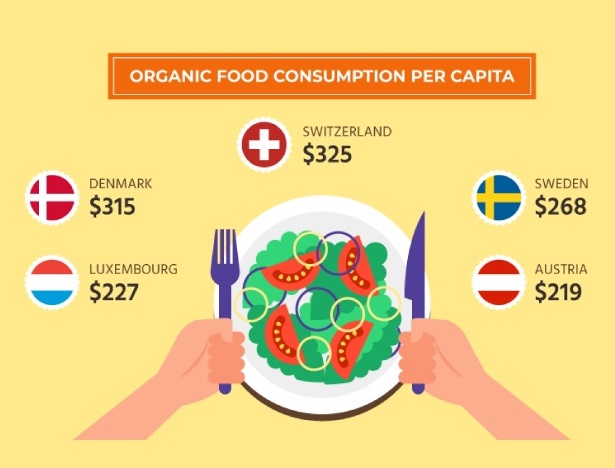
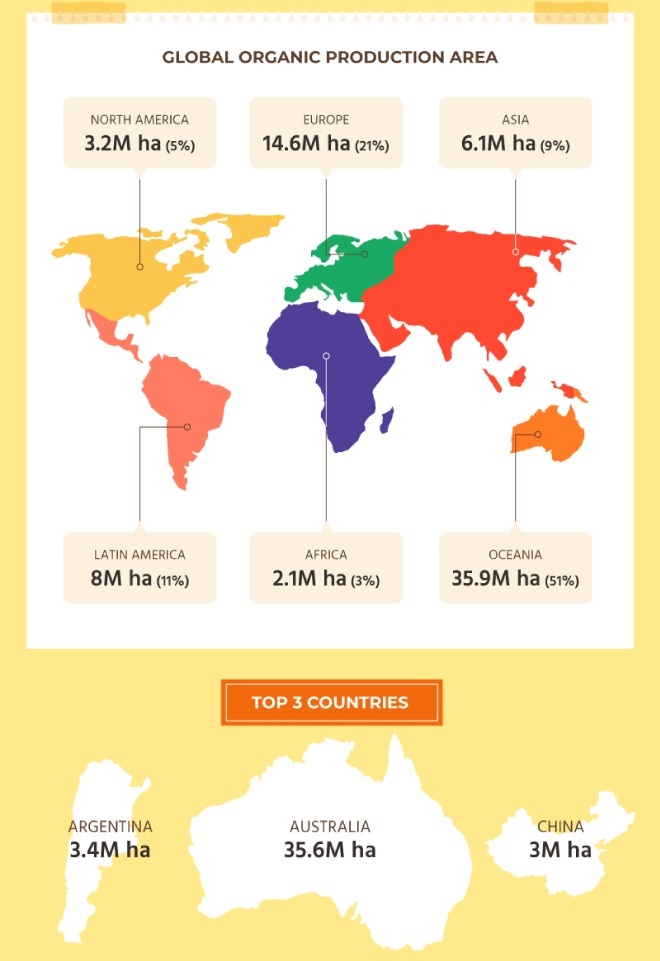


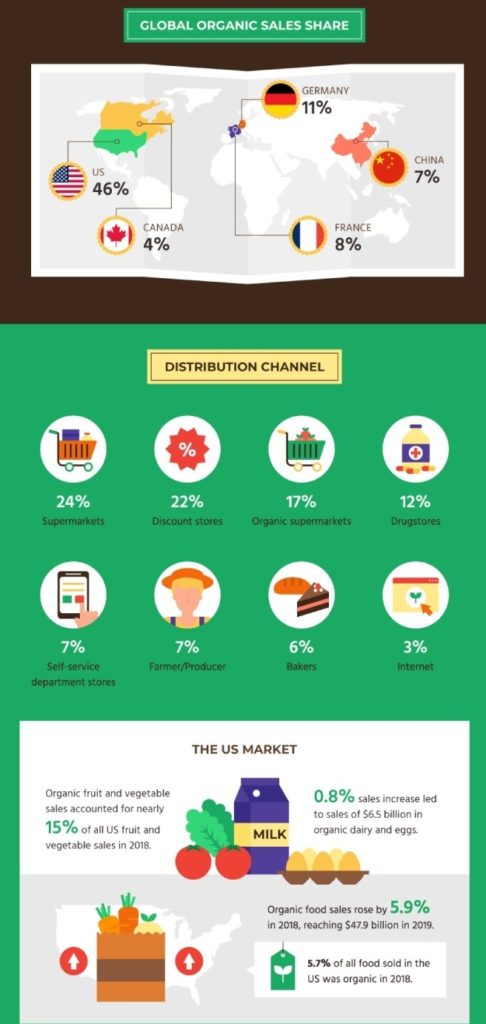

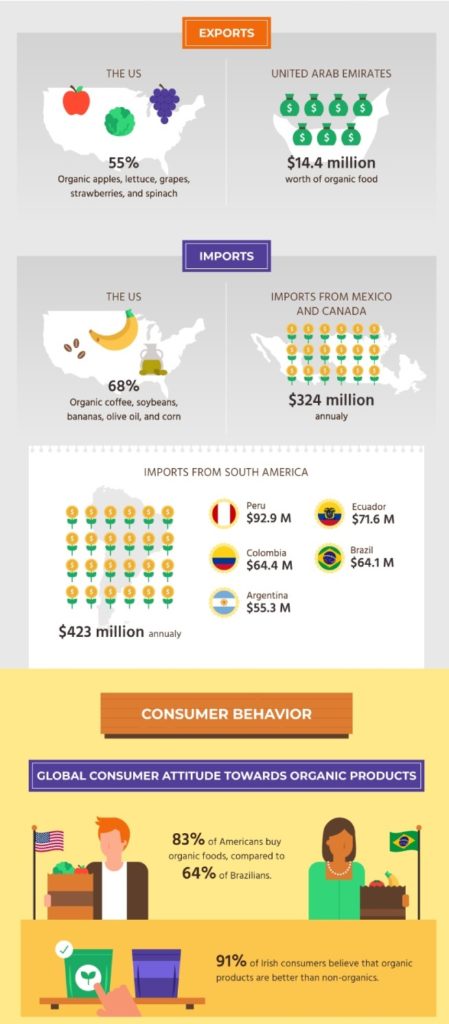
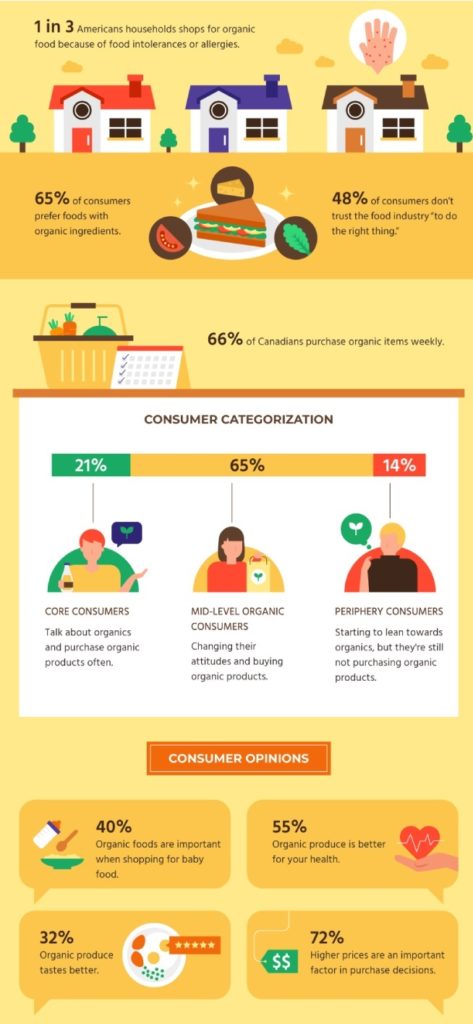


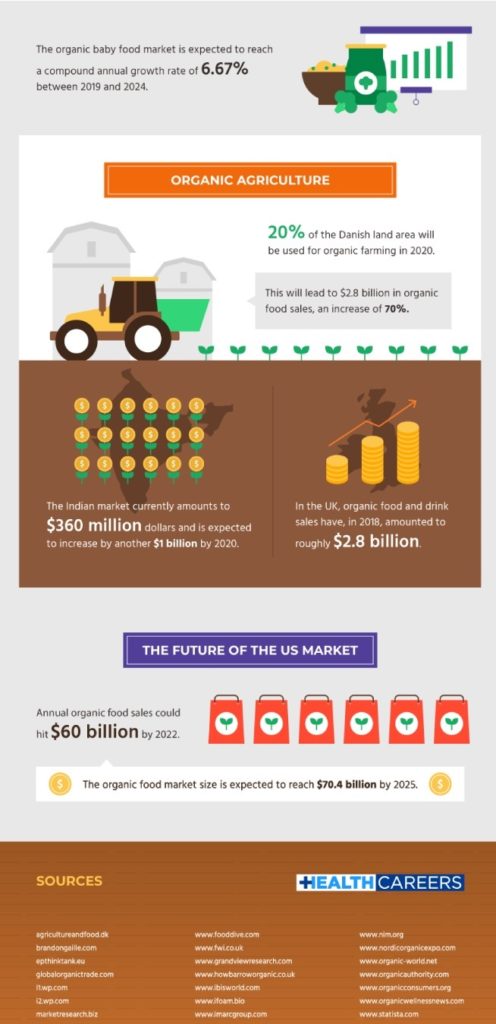


















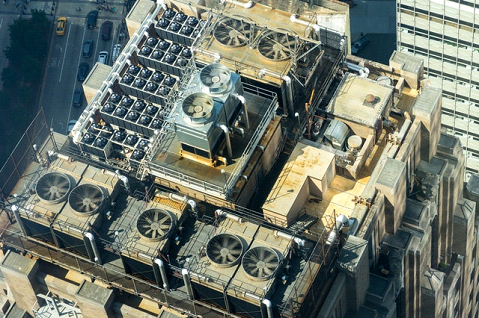





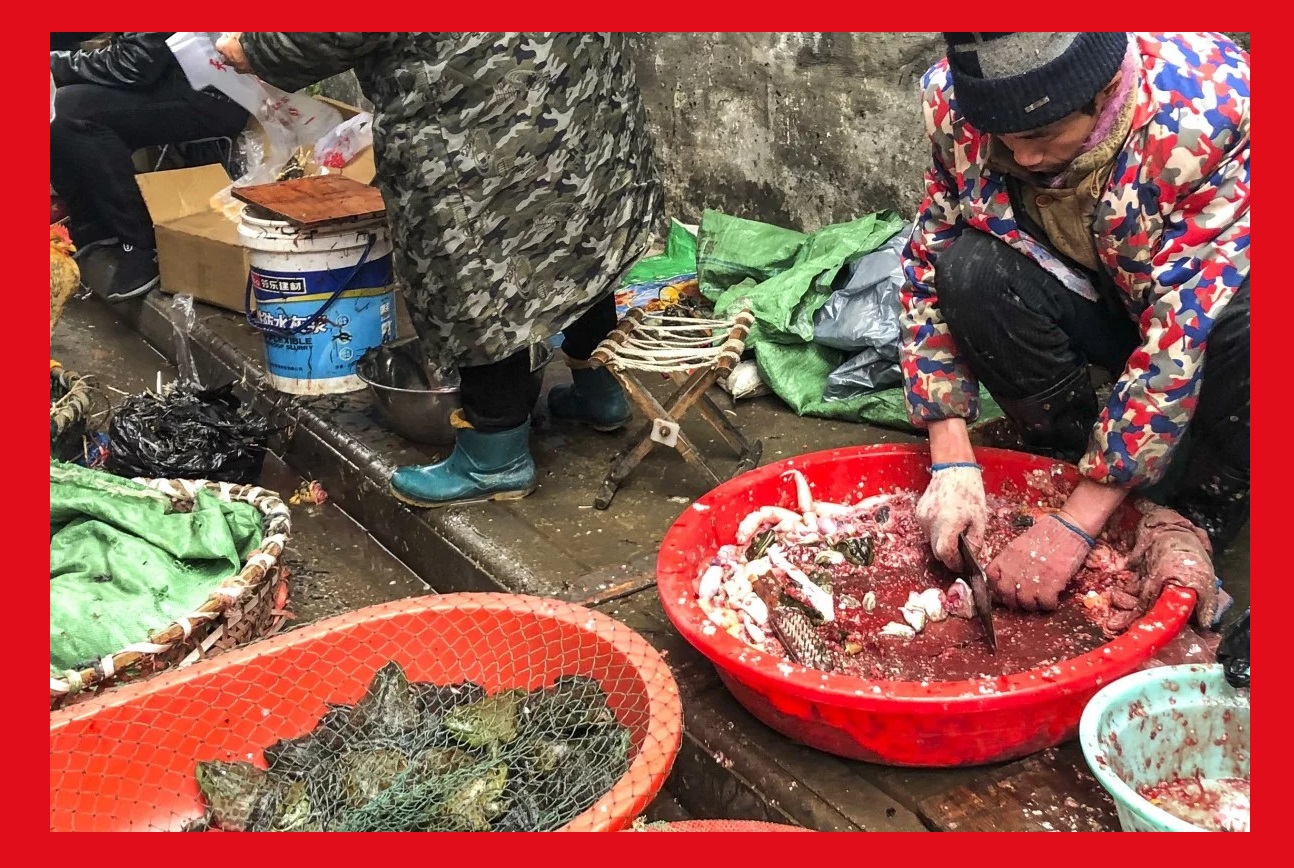
 Graphic design: Sarah Markes/WCS.
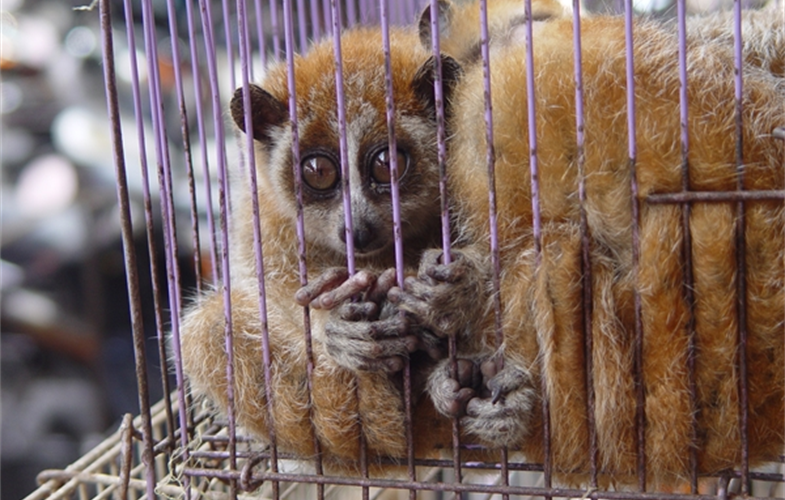 The conditions of so-called “wet markets” are ideal for incubating new diseases and bolster their transmission. Photo credit: Elizabeth L. Bennett/WCS