Jim Carrey’s prolific career includes marquee comedy roles such as The Riddler, The Mask and Ace Ventura and critically acclaimed dramas Eternal Sunshine of the Spotless Mind, for which he won two golden globes and eleven MTV awards.
In 2022, he announced that he was taking a break from acting and was considering retirement. The prolific star has relocated to his vacation property in Maui and put the Brentwood estate where he has lived for the last 30 years up for sale.
Now listed for $26.5 million USD/ $35.2 CAD, reduced from $28.9 million USD/ $38.4 million CAD, the sprawling ranch-style mansion is nestled behind huge hedges and private red-brick gates.
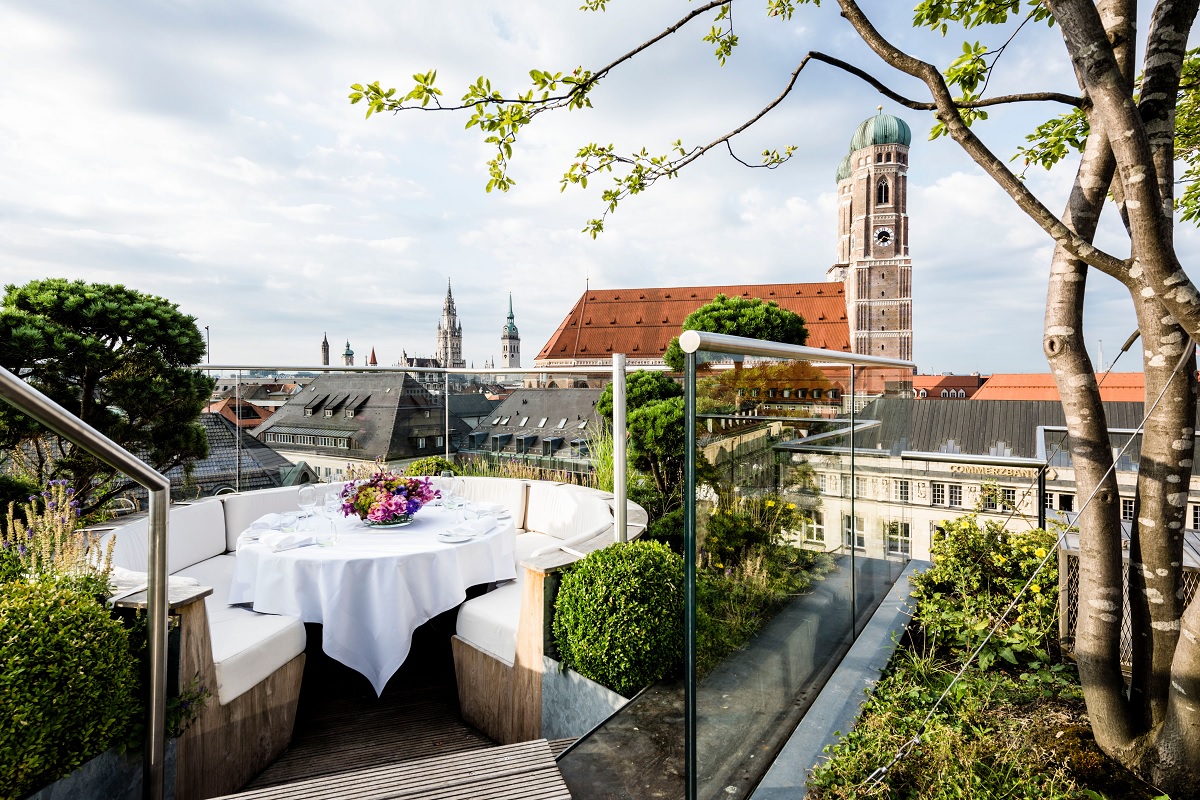
The 12,700-square-foot home features five bedrooms, six full bathrooms, and three half baths. The stylish residence’s pitched high-beam ceilings offer tons of airflow, while skylights let in plenty of natural light to bathe the bright white walls and Jim’s extensive art collection, including his own impressive creations. The living, dining, and family rooms flow together with hardwood and polished stone floors, fireplaces and ample windows with views of the lushly landscaped grounds. The well-appointed chef’s kitchen offers an indoor BBQ. A circular breakfast nook looks out onto flowering pear trees. Multiple sliding glass doors open onto a central courtyard that provides space for entertaining or lounging in the classic California indoor/outdoor living style.
Jim’s primary bedroom suite includes its own private patio, plus a stunning wood-paneled bathroom with a copper-hooded fireplace, leaded glass windows, and a soaking tub. An Art Deco-style home theater pays homage to the movie palaces of old, with mohair-covered sofas, burl wood columns, and a lavish marble bathroom. The spacious gym and home office are perfect for the modern remote-work lifestyle. The massive two-acre grounds are a rarity in LA and include a full-size tennis court, a waterfall swimming pool, a pool house with bar, a sauna/steam room, vegetable gardens, and numerous mature trees. Walking paths wind through the serene environment, leading to the yoga and meditation platform. Carrey called the home “a place of enchantment and inspiration” and hopes it will continue to be “a magical sanctuary” for its next occupant.
One of LA’s most sought-after neighborhoods, Brentwood is right next to the hustle and bustle of Santa Monica but retains a community feel. Known for its tree-lined streets, unique mansions, and one of the best farmer’s markets in Los Angeles, Brentwood is home to numerous celebrities, including Arnold Schwarzenegger, LeBron James, and Tobey Maguire. Options for entertainment include the world-class Getty Museum, the Brentwood Golf Club, and the upscale shops and restaurants on San Vicente Blvd.
The listing is held by Janelle Friedman of Sotheby’s International.
The 12,700-square-foot home features five bedrooms, six full bathrooms, and three half baths, plus tennis courts, a waterfall pool, and an enormous two-acre lot.
For the Silo, Bob Walsh.Photos: Daniel Dahler for Sotheby’s International Realty
Vasaro Swimwear, the biggest game-changing swimwear brand since Beach Bunny Swimwear’s emergence in 2004, took center stage at Miami Swim Week with its highly anticipated latest collection. Hosted by Planet Fashion, the event took place on June 10th at Hyde Beach, SLS South Beach, bringing a breath of fresh air to the Miami Heat with Vasaro Swimwear’s Deep-V bikini unveiling.
After showing two monokinis, the first bikini model strutted down the runway, then turned to walk back, but stopped and “noticed” all of the extra fabric in her lower back– “the diaper butt.” She pulled the fabric off, unveiling Deep-V Back for the first time. The Deep-V now has a provisional patent, and the designer showed bikini after bikini with the Deep-V Back.
At the end of the show, removable straps on the wraparound suits were the centerpiece. Three models stood at the end of the runway wearing the Vasaro monogram print in gold, black and red. They removed the straps and threw them into the crowd. No other bikini offers the option of removing the wraparound straps for tanning. They’re great for pictures and aesthetics, but terrible for tanning, so theirs are removable!
Vasaro Swimwear, designed by visionary molecular biologist Armani Sadeghi, has redefined the swimwear industry with its revolutionary use of curve illusion science. The collection, meticulously crafted with attention to detail, celebrates the beauty of curves while empowering women with flattering and confidence-boosting designs.
Armani identified a common problem faced by women – the unflattering results of tugging at bikini bottoms to achieve a high-waist look. With two years of dedicated research and development, Vasaro Swimwear resolved this issue, creating the perfect swimsuit that seamlessly combines functionality, style, and affordability.
The luxury swimwear collection draws inspiration from women’s lingerie. The designs featured Cinch Waist Technology, creating a unique combination that sits comfortably high on the waist, accentuating a woman’s curves with an alluring Deep-V back design.
Vasaro Swimwear focuses on curves and lines, creating the illusion of a smaller waist, longer legs, and accentuated hips. This innovative approach cleverly concealed potential problem areas while highlighting a woman’s best features. Through the skillful use of regular fabric and mesh, the collection presented captivating designs that delighted the eye.
Designer Armani Sadeghi expressed his passion for empowering women through fashion, stating, “I wanted to create designs that instill confidence in women, regardless of their shape or size. With my scientific background and deep love for fashion, I crafted a swimsuit that enhances the natural beauty of every woman.”
Miami Swim Week, the world’s largest swimwear fashion week, provided the perfect platform for Vasaro Swimwear to showcase its designs. The evening was filled with mesmerizing fashion shows, live performances, pop-up shops, and unforgettable after-parties. Attendees were captivated by the innovation and artistry showcased by Vasaro Swimwear. For the Silo, Kat Fleischmann.
To explore more about Vasaro Swimwear and their collection, visit [www.vasaro.com].
About Vasaro Swimwear:
Vasaro Swimwear is the biggest game-changing swimwear brand since Beach Bunny Swimwear’s emergence in 2004. Developed by visionary molecular biologist Armani Sadeghi, Vasaro Swimwear creates swimwear designs that empower women, celebrating their curves and enhancing their confidence. Through the use of curve illusion science, Vasaro Swimwear has disrupted the industry, offering innovative and flattering swimwear options.
(New York, June, 2023)—The Metropolitan Museum of Art announced today its upcoming summer and fall exhibitions along with new live arts performances and summer initiatives, including the return of the bike valet program, ongoing date night offerings, and more.
“The stories we tell at The Metropolitan Museum of Art are ever expanding,” said Max Hollein, Marina Kellen French Director of The Met. “Through groundbreaking exhibitions, compelling displays, and powerful performances and programs, this upcoming season is sure to delight, inspire, and engage audiences from near and far.”
Highlights of The Met’s summer exhibitions include: Grounded in Clay: The Spirit of Pueblo Pottery(opening July 14), a presentation of Pueblo Indian pottery and the first community-curated Native American exhibition in the history of The Met;Tree & Serpent: Early Buddhist Art in India, 200 BCE–400 CE (opening July 21), featuring never before publicly exhibited masterpieces that trace the aesthetic impact of the religion on Indian art; Art for the Millions: American Culture and Politics in the 1930s(opening September 7), surveying how artists searched for cultural identity during a decade of political and social upheaval in the United States; The Facade Commission: Nairy Baghramian, Scratching the Back(opening September 7), the fourth in a series of contemporary commissions for The Met’s facade and the artist’s first public installation in New York City; and Picasso: A Cubist Commission in Brooklyn (opening September 14), a focused exhibition dedicated to a captivating, but lesser-known chapter of the artist’s Cubist period. It will bring together for the first time six paintings linked to Picasso’s unrealized decorative commission for the Brooklyn residence of artist, collector, and critic Hamilton Easter Field (1873–1922).
Fall season highlights include: Manet/Degas (opening September 24), the first major exhibition examining one of the most significant artistic dialogues in the genesis of modern art; The Great Hall Commission: Jacolby Satterwhite, A Metta Prayer(opening October 2) an immersive multi-channel video installation and a series of performances that will transform the Museum’s iconic Great Hall; Vertigo of Color: Matisse, Derain, and the Origins of Fauvism (opening October 13), exploring how the artists manipulated and experimented with color to create a new artistic vocabulary; Proof: Maxime Du Camp’s Photographs of the Eastern Mediterranean (opening October 23), the first exhibition to focus on The Met’s rare collection of photographs made by Du Camp in advance of his landmark 1852 book, Egypte, Nubie, Palestine et Syrie; and Lineages: Korean Art at The Met(opening November 7), which will celebrate the 25th anniversary of the Museum’s Arts of Korea gallery with a collection of works tracing the history of Korean art.
Additionally, Africa & Byzantium (opening November 19), a major exhibition of nearly 200 works that explores the tradition of Byzantine art and culture in Africa from the 4th through the 15th century and beyond, will be presented at The Met Fifth Avenue through March 3, 2024, and feature many international loans being exhibited in the United States for the first time.
On November 20, 45 galleries dedicated to European Paintings, 1300–1800 will reopen, following the completion of an extensive skylights renovation project that began in 2018. The major reinstallation will highlight fresh narratives and dialogues among more than 700 works of art from the Museum’s world-famous holdings.
The 2023–24 season of MetLiveArts will include music, dance, and theatricalized culinary experiences that will invite deeper connections and make powerful observations about relevant cultural narratives as well as the Museum itself.
Upcoming public programs include Short Films for Short Nights, screenings of early video art accompanied by live music (July 7-9); the grand opening of the 81st Street Studio, a new children’s library and multipurpose active learning center (opening September 9); and the return of MetFest, the Museum’s community-wide block party (October 21).
The Museum also announced a continuing tradition of the summer season: the return of its popular bike valet program, which will be offered on Saturdays, Sundays, and select holidays through Labor Day (September 4). Guests visiting the Museum, regardless of transportation method, have the opportunity to experience The Met’s current blockbuster exhibition program, including Karl Lagerfeld: A Line of Beauty(through July 16), with extended viewing hours until 9 p.m. on Sundays, and Van Gogh’s Cypresses (through August 27).
Of course we are seen as primitive compared to alien life. If we could use 20-30% of our brain, then perhaps we may impress them a bit, and break out of our selfish habits.
Hopefully, aliens will try to ignore our downfalls and instead focus on our positive aspects like love, passion, kindness towards others and so on. Humanity has potential.
Dan Aykroyd Talks About Aliens Viewing Humans as an Inferior Species
The New Zealand Harold states: “Actor Dan Aykroyd is convinced alien life forms refuse to make contact with the human race because we are seen as a “violent, depraved, disgusting species”. The Ghostbusters star is a keen student of extraterrestrial sightings and is adamant he has encountered UFOs on several occasions in the US.
He even insists he saw two suspicious objects in the sky as the horrors of the 2001 attack on the World Trade Center in New York were unfolding, and believes that sighting gives a clue as to why aliens have not made contact with humans.”
Aykroyd tells The Sunday Times Magazine, “(It’s) because we are a violent species. They don’t want anything to do with us. They watch us. There were two white orbs over (New) Jersey when the second tower went down on 9/11. They were on CNN for about two minutes… They never showed it again.”
“Can you imagine what was going through their advanced minds when they saw what happened on 9/11? These humans crashing our highest evolution in aviation into our highest evolution in architecture and metallurgy like kids wrecking toys in the sandbox. They are disgusted with us, and rightly so. Because we are a depraved, disgusting species.” The New Zealand Harold . UFO Sighting News.
For the Silo, George Flier via Flier’s Files #46-2014- George A. Filer III New Jersey State Director MUFON Eastern Region Director
George A. Filer, III. I was a major in the U.S. Air Force and a navigator in various aircraft and tanker transport aircraft. He was an intelligence officer most of his career, and in that period, frequently briefed generals and congressmen on our capabilities and threats to our forces.
Due to longer lifespans, governments and employers must reshape approaches to retirement to ensure ageing populations can live fulfilling, healthy lives
New survey indicates shifting views on retirement and stark differences in how younger and older people see their future
World Economic Forum report provides new approaches to retirement that governments, employers and individuals can consider
New York, USA, June 2023 – Life expectancy increased from an average of 46 to 73 years between 1950 and 2019 and the United Nations forecasts further increases, estimating that global average life expectancy will reach about 81 years by 2100. Longer lifespans are causing individuals, governments and business leaders to rethink their approach to work and retirement.
Living Longer, Better: Understanding Longevity Literacy, a new World Economic Forum report, in collaboration with Mercer, a business of Marsh McLennan, explores how lengthening lifespans are reshaping how individuals view their working lives and retirement. The report offers recommendations for government and employers to ensure they are adequately supporting people in multiple stages of work and retirement.
The report highlights purpose and quality of life in addition to financial health and resilience – themes that are traditionally associated with retirement planning. It offers options that individuals can consider to ensure they are approaching work, learning and retirement in ways that best meet their needs.
“When it comes to longevity and living longer, healthier lives, everyone has a role on this critical topic,” said Haleh Nazeri, Longevity Lead, World Economic Forum. “How will business support an older workforce and one with growing caregiving needs, what will policymakers do to help all citizens reach retirement equity, and finally, what can individuals do at every life stage to ensure they are able to stay financially resilient in a longer life.”
“Employers are thinking more about the current age distributions within the areas of talent needed to operate their organizations and how to influence the trajectory of these distributions,” said Rich Nuzum, Executive Director, Investments & Global Chief Investment Strategist, Mercer. “To leverage longevity and fight the war for talent effectively, moving from individual roles to team-based roles can help employers take full advantage of the diverse strengths of teams that comprise a combination of older and younger workers.”
Views on Retirement A new survey, Pulse Poll, of almost 400 professionals indicates that women and men view retirement differently. Women, for example, are 55% more likely to say they don’t know if they have saved enough for retirement.
The poll also reveals differences in how younger and older populations view their retirement futures. Both women and those under 40 are more willing to reskill but worry about associated costs. Both groups are also more likely to feel isolated.
Further results from the Pulse Poll can be found below and in the report:
Health is a top concern with two thirds of respondents indicating they expect to have caring responsibilities
Days of “Bank of Mum and Dad” may be reversing; many younger people are likely to have to financially support older family members
Pulse Poll respondents over 40 target lower income replacement levels in retirement
People are generally unaware of how to achieve their target levels of retirement income
More men looking forward to retirement, while more women need to understand their financial situation
Women are 55% more likely to say they don’t know if they have saved enough
Younger people are eight times more likely to use social media for financial advice
44% of under-40s want to retire by 60
Women and younger people are more willing to reskill but are also worried about associated costs
The respondent profiles to the Pulse Poll were homogeneous and predominantly included those who had undertaken higher education, were in more senior positions, were likely to be in employment at major global organizations and with a high level of individual agency and financial literacy.
While there are some sample limitations, the survey suggests how the findings can help start a conversation about the challenges faced and can contribute to the development of solutions for the population this group of respondents represents.
Recommendations for Governments and Employers As people are living longer lives, business and government need to restructure their approach to later life planning. Failing to adopt a multi-stakeholder approach towards longevity will inevitably result in a significant portion of people retiring into poverty. Recommendations are cover three key areas of work and retirement including quality of life, purpose and financial resilience.
Government
Facilitate upskilling of older workers and clamp down on ageism
Provide incentives for employers to offer more robust leave policies for caregiving needs
Explore the wider use of default auto-enrollment and default investment strategies to increase and maximize savings
Establish safety nets such as minimum pension levels provided by government
Enact enabling legislation to make all jobs flexible for longer-life working if desired and to accommodate all life-stage needs
Offer digital skills training and equipment to ensure equitable access to opportunities for all
Employers
Implement programmes offering support such as carers’ leave, information and advice for those who have caregiver responsibilities
Understand what impact the company’s retirement plan design has on the trajectory of retirement-readiness and labour flow – check if people can actually afford to retire
Provide flex-work programmes for caregivers, such as job-shares; allow part-time workers to contribute to defined contribution plans; provide training programmes for workforce re-entry, similar to those for early-career employees
Implement and review financial wellness programmes to:
Cover specific life-stage needs that account for gender, cultural and ethnicity differences
Consider personalized models to show the impact of different working arrangements and retirement ages on pay and pension
Cater to low-income earners who are likely to need the most support saving and planning for retirement
Individuals can also reimagine what their longer lives might look like as the three-stage life of school, work and retirement makes way for a multi-stage life that could include lifelong learning, career breaks and new occupations in later life. This includes pursuing upskilling and reskilling opportunities, as well as prioritizing retirement and pension planning if possible.
Increasing longevity globally will require new innovations and solutions to address how people can stay financially resilient in a retirement that may be 20 years longer than their grandparents. With supportive actions from government and employers, individuals will have a chance to try new approaches to longer lives and reassess how they want to study, live, work, save and retire in ways that are different from what has been done in the past century. For the Silo, Madeleine Hillyer/World Economic Forum.
Paris, June, 2023 – UNESCO welcomes Australia’s decision to implement urgent new protection measures to safeguard the Great Barrier Reef recommended by UNESCO. The measures include a ban on fishing with gillnets. The Australian government formalized its commitments in a letter addressed to Audrey Azoulay, the Director General of UNESCO this week.
“The Great Barrier Reef is a fragile jewel of world heritage. For many years, UNESCO has not ceased alerting the world to the risk of this site losing its universal value forever. We have proposed several concrete measures which provide a roadmap for tackling the problem. I am delighted that the dialogue between our experts and the Australian authorities has now resulted in a set of formal commitments,” said Audrey Azoulay, UNESCO’s Director-General.
For many years, UNESCO has sounded the alarm on the Great Barrier Reef. In 2021, with regard to very worrying data on the reef’s poor state of conservation, experts at the Organization went as far as to recommend the site was inscribed on the List of World Heritage in Danger. This warning had global resonance.
The fruits of a long process of discussion In March 2022, a UNESCO-IUCN joint mission travelled to the Great Barrier Reef in order to examine the reef in even greater detail, and to dialogue with all the relevant actors: public sector decision-makers, scientists and non-government organizations (NGOs). In their report, the experts confirmed that due to the threats posed by pollution, over-fishing and the rise in sea temperatures, the outlook for the Great Barrier Reef was worrying. UNESCO and the IUCN also emphasized that the implementation of corrective measures could significantly improve the state of conservation of the reef, listing ten precisely-defined actions the Australian authorities should take. In July 2022, Audrey Azoulay, UNESCO’s Director-General, met with the new Australian Prime Minister, Anthony Albanese and recalled the urgency of taking action. A discussion between UNESCO experts and the Australian authorities followed, with the aim of establishing an implementation plan for the ten priority measures including costs and timetable. This process has just been completed. In a letter addressed to Audrey Azoulay, the Minister of the Environment, Tanya Plibersek announced that the urgent new measures for the protection of the Great Barrier Reef UNESCO had requested, would be carried out.
Key Measures In the letter the Australian government committed notably to: Create no-fishing zones in a third of the World Heritage site by the end of 2024, and to ban gill net fishing altogether by 2027; Reach water quality improvement targets by 2025, by significantly reducing pollutant discharges from farmers and industrialists, and restoring flora and fauna in drainage basins; Set successively more ambitious CO2 emissions reduction targets, in alignment with efforts to limit global temperature increase to 1.5°C. This comes in addition to the measures already announced by the Australian authorities in recent months. UNESCO will closely monitor the effective implementation of these measures. The state of conservation of the Great Barrier Reef will be examined again by the World Heritage Committee at its 45th extended session (September 10-25, Saudi Arabia).
Residents of the City of Lahti in Southern Finland live close to nature. More than one in two live less than 300 metres from a quiet area. In Lahti, an area is defined as quiet when there are mainly natural sounds and no traffic noise, for example. Quiet places in Lahti include the extensive outdoor areas of Salpausselkä ridge system, many parks, and protected natural areas. www.lahti.fi
Inspired by the country’s highly effective deposit system for beverage containers, the Finnish city is piloting an incentive-based system for recycling textiles. Finns recycle up to 97% of aluminum cans, will a small reward inspire them to sort and recycle their old fabrics?
The average European throws away 11kg of textiles every year*. Around the world, a truckload of textiles is landfilled or incinerated every single second. Separate collection of textile waste is set to be rolled out across the EU by 2025, but to change our bad textile habits, a lot of work is needed. Lahti’s textile deposit hopes to inspire a change in consumer behavior.
“As a pioneer in urban environmentalism, Lahti has set a goal of being a waste free city by 2050. The textile deposit is a great example of an everyday innovation that directly aims to minimize the amount of waste and showcases the potential of discarded textiles as a raw material for industries and design,” says Communications Director Veera Hämäläinen from the City of Lahti.
New Waste Act promotes circularity
Finland took a step towards a circular economy for textiles at the beginning of the year, as a new law requiring cities and municipalities to make separate collection bins for textile waste available to all Finns came into effect. The separate collection of textile waste makes it possible for discarded clothes and household textiles to be reused as recycled fiber.
“Our future depends on a circular economy, but it can’t just be the consumers’ responsibility to take care of recycling. With this pilot we want to ask what countries, cities and companies can do to help make recycling easier and more attractive to people. Deposits have worked well before, maybe there could be one for textiles in the future”, says Kimmo Rinne, Development Manager at Salpakierto, a municipal company that handles waste management in the Lahti Region.
The textile Deposit asks if an incentive can inspire locals to recycle
The pilot on a textile deposit aims to investigate if a citywide reward system can incentivise locals to recycle their textiles. At the pilot stage, Lahti residents can exchange a bagful of textiles for vouchers for local services, such as cafes or passes to a local pool. Initially, the pilot will run during the first weeks of June. Cities have a major role in making recycling easy for people. As a leading environmental city, Lahti wants to be in the forefront of leading the conversation on how cities can lead the change into a more sustainable lifestyle.
The City of Lahti is also launching a national design competition that aims to find new and creative uses for discarded textiles. The competition runs from now to 13 August 2023. With the design competition Lahti wants to promote innovation and entrepreneurship in the field of circular economy. The competition is organized in collaboration with the Sustainable Lahti Foundation, LAB University of Applied Sciences and Salpakierto.
The textiles collected in Lahti will be processed into recycled fiber at Finland’s largest textile processing facility in Paimio. In the spirit of circular economy, the recovered fiber can be used in the production of new products, such as thread, insulation materials and acoustic panels. For the Silo,Veera Hämäläinen.
Lahti Lahti tackles future challenges together with residents, companies and the educational sector. A sustainable future calls for action, which is why Lahti will achieve carbon neutrality by 2025. As the leading environmental city in Finland, we offer our citizens everyday life that is both smooth and sustainable.
As we all prep for the heat, we’re looking for all things mesh and breezy to stay cool.
Londre Bodywear just launched The Airy Mesh Dress with bell sleeves and a mock neck made sustainably from water bottles.
The fine mesh material comes in white, navy and black to pair over your favorite swim or to sport on the streets to beat the New York City or Toronto City heat! Pieces are currently available on LondreBodywear.com (Affiliated on ShareaSale) ranging from sizes XS-4XL priced at $118usd / 159$cad. For the Silo, Melissa Nicholls/Michele Marie.
For the first time, Burkina Faso tops the list of the world’s most neglected displacement crises, according to a new report from the Norwegian Refugee Council (NRC). Redirection of aid and attention towards Ukraine has increased neglect of some of the world’s most vulnerable people.
The annual list of neglected displacement crises is based on three criteria: lack of humanitarian funding, lack of media attention, and a lack of international political and diplomatic initiatives. The crisis in the Democratic Republic of Congo ranks second, having appeared first or second on the list every year since its inception seven years ago. Colombia, Sudan, and Venezuela follow in this grim ranking.
“Tell the world we have suffered. We have suffered a lot. Our neighbours have suffered. Our friends have suffered. Our relatives have suffered. We lost many. Most of them killed. I am thanking God because none of my family was left there, and we are all in safety. I do not want to return, but I am asking God for peace, for peace in this place,” says Halimata (35). Together with her family, she fled fighting in the east of Burkina Faso and sought safety in Kaya.
“Neglect is a choice – that millions of displaced people are cast aside year after year without the support and resources they so desperately need is not inevitable,” said Jan Egeland, NRC’s Secretary General.
“The powerful response to the suffering inflicted by the war in Ukraine demonstrated what the world can deliver for people in need. Political action for Ukrainians has been impactful and swift, borders kept open, funding plenty, and media coverage extensive. Those in power need to show the same humanity towards people affected by crises in places such as Burkina Faso and the Democratic Republic of the Congo.”
More than five times more articles were written about the Ukrainian displacement crisis last year than about all the world’s ten most neglected crises in total. For every dollar raised per person in need in Ukraine in 2022, just 25 cents were raised per person in need across the world’s ten most neglected crises.
The Democratic Republic of Congo continued to make the list this year. Patient* 43, lives with his 6 children in the town of Bule, Djugu Territory, Ituri Province, DR Congo.‘We fled in February 2021. We’ve moved around a lot, and now we are trying to build a new home. During the war, we’ve never had enough to eat, and we have no money to buy medicines if the children get sick. We used to live in a beautiful village, and had a big house. Now, all we have is this shelter. When it rains a lot, the water will come through the roof’. *Name changed for security reasons.
The repeated warnings of increased disparity due to the reallocation of resources to the Ukraine response have now become reality. The redirection of a large amount of aid money towards Ukraine and towards hosting refugees in donor countries means that many crises have seen a drop in assistance, despite growing needs. Total aid to Africa, where we find seven out of the ten most neglected crises, was 34 billion USD in 2022, representing a drop of 7.4 per cent compared to 2021.
The Ukraine crisis also contributed to an increase in food insecurity in many of the countries featured in the report, worsening already dire crises, and increasing the number of people in need.
“The world has failed to support the most vulnerable, but this can be reversed. The lives of millions of people suffering in silence can improve, if funding and resources are allocated based on need, not geopolitical interest, and media headlines of the day,” said Egeland. “Last year the gap between what was needed and what was delivered in humanitarian assistance was 22 billion USD. This is a huge sum of money, but no more than Europeans spend on ice cream a year. We need donors to increase support and new donor countries to step up to share responsibility.”
Burkina Faso’s decline since the crisis broke out five years ago has been swift and devastating. More than 2 million people have been forced to flee their homes, and nearly a quarter of the population now requires humanitarian aid. Across the country, 800,000 people are living in areas under blockade by armed groups where they have no access to even basic services. The situation is increasingly dire with some people forced to eat leaves to survive.
Maïga Abibou is an Internally Displaced Person (IDP) from Wapassi in the North region of Burkina Faso. Because of rampant insecurity in Wapassi, she made her first move with her family to Naoubé, a village in the Center North. A few months later, she fled again with her family to Louda, a village located a few kilometers from Kaya. There, she has been living with dozens of other families out in the open for over a month while hoping to get shelters soon before the rainy season begins in Burkina Faso. “We want the world to know about our difficulties, about what is worrying us now. We fled from far away to come here. This is our second escape. We could not bring anything with us. We moved with our carts; we were in the bush and there were no vehicles,” Abibou said.
“We must do more to end the suffering in Burkina Faso before despair becomes entrenched and it is added to the growing list of protracted crises. That this crisis is already so deeply neglected shows a failure of the international system to react to newly emerging crises, as it also fails those lost in the shadows for decades. Ultimately, greater investment in diplomatic solutions is needed if we hope to pull crises off this list,” said Egeland. For the Silo, Jessica Wanless. Featured image: FILE – Children wait for their turn to buy water from a privately-owned water tower, amid an outbreak of the coronavirus disease, in Taabtenga district of Ouagadougou, Burkina Faso, April 3, 2020.
Facts and figures:
Each year, the Norwegian Refugee Council (NRC) publishes a list of the ten most neglected displacement crises in the world. The purpose is to focus on the plight of people whose suffering rarely makes international headlines, who receive no or inadequate assistance, and who never become the centre of attention for international diplomacy efforts. The report is available here.
The neglected displacement crises list for 2022 analyses 39 displacement crises based on three criteria: lack of funding, lack of media attention, and lack of international political and diplomatic initiatives. Full details on the methodology can be found in the report.
The full list in order this year is: Burkina Faso, DR Congo, Colombia, Sudan, Venezuela, Burundi, Cameroon, Mali, El Salvador, Ethiopia.
Burkina Faso has appeared on this list for the previous four years. It ranked second on last year’s report, seventh in 2020, and third in 2019.
DR Congo is a textbook example of a neglected crisis. It has topped the list three times (2021, 2020 and 2017). It previously ranked second on the list in 2019, 2018 and 2016.
Colombia and El Salvador appear in this report for the first time this year.
The total funding to the Burkina Faso humanitarian response plan was 339 million USD in 2022, of the 805 million USD requested – making the response just 42 per cent funded (OCHA).
In 2022, 3.5 million people were in need of humanitarian assistance in Burkina Faso – by the end of the year this has skyrocketed to 4.9 million people. This is a 40% increase and nearly equal to 1 in 4 Burkinabè (OCHA).
There are almost 2 million internally displaced people in Burkina Faso (IDMC).
800,000 people are living in 23 blockaded towns and cities in Burkina Faso, unable to access aid regularly. Half of them are in the city of Djibo (Access Working Group).
The average humanitarian appeal was just over half funded in 2022, while the Ukraine appeal was almost 90% funded (OCHA).
The gap between the total humanitarian appeals by the UN and partners and the money actually received amounted to 22 billion USD in 2022 (OCHA).
Total aid to Africa was USD 34 billion in 2022 (overseas development assistance, including development aid and humanitarian), representing a drop of 7.4% compared to 2021 (OECD).
Collectively the world’s most powerful donor countries used more of their aid on the reception of refugees at home than on overseas humanitarian assistance in 2022 (OECD).
The European Ice Cream Market was estimated to be valued at $21.7 Billion in 2021 (Research and Markets).
212 USD was raised per person in need inside Ukraine, while 52 USD was raised per person in need across the world’s ten most neglected crises in 2022 (OCHA).
In total, 375,000 articles were written in the English media about the world’s ten most neglected displacement crises last year, according to statistics from Meltwater. In comparison, 1.98 million articles were written in English about the displacement crises in Ukraine during the same period (Meltwater).
As a Black man and a spiritual leader in the Linden community, I am concerned and am a personal victim about the disproportionate impact of prostate cancer on Black men. It is unacceptable that Black men are about twice as likely to get and die from prostate cancer than white men. While we still do not know definitively why this is the case, there are several factors that contribute to this reality.
Genetics may play a role. Studies have shown that prostate cancer in Black men has a different genetic profile, and it is a more aggressive form of the cancer. Additionally, Black men are underrepresented in clinical trials, which limits our ability to understand the disease’s impact and identify effective treatments. Lack of access to healthcare and inconsistent screening programs also contribute to the higher mortality rates among Black men.
But it’s not just genetics or lack of representation in clinical trials that cause this disparity. The cost of care, limited access to quality healthcare, and systemic racism create a barrier to care and early detection. Add to that the economic challenges faced by many Black men, such as the cost of cancer care and the inability to take time off work to recover from treatment, and it’s clear there is a multi-layered issue that must be addressed.
We cannot afford to remain silent on this issue. We must educate ourselves and our communities on prostate cancer risks and symptoms and the importance of timely screening. We must push for universal access to healthcare and encourage participation in clinical trials. And we must work to break down systemic barriers and create an equitable system of cancer care for all, regardless of race or ethnicity.
As a cancer patient myself, I understand how harrowing a prostate cancer diagnosis can be. However, it’s essential not to let the diagnosis define you and have faith that you can overcome any obstacle. Supporting each other and bringing awareness to life-saving prostate cancer screening is critical to reducing the disparities faced by Black men with prostate cancer. For the Silo, Imam Alfred
Imam Alfred Muhammed is working within the African American community on issues of leadership, peace, and interfaith outreach. Imam Alfred has inspired inner-city youth to self-actualization, promoted healthy family relationships, and improved economic development in the Linden community. He is now fighting stage 4A prostate cancer and has been forced to limit his engagements while spending more than $70,000 usd on alternative healthy treatments.
Before his conversion to Islam the Imam Alfred Muhammad was raised as a Christian in rural Virginia. His journey in religious leadership began in childhood as a Baptist preacher, but in 1960 the young minister Muhammad converted to the Nation of Islam. While in the NOI his desire was driven to become active in the 1960s Civil Rights Movement. Most notably, the Imam managed voter registration drives and worked closely with the lieutenants of Dr. Martin Luther King, Jr.
Last year, consumer spending on Father’s Day was expected to total $20 billion USD / $27 billion CAD, nearly on par with the previous year’s record-setting figure of $20.1 billion, according to the National Retail Federation’s annual consumer survey. With approximately 76 percent of North American adults expected to celebrate Father’s Day in 2022, this year’s dad-driven holiday will surely be another boon for retailers.
With so many options, what is worth gifting to the guys in your life? Here are some tried and true gift ideas that’ll duly deliver.
Dad can get where he needs to go in style this summer and beyond with the Atomi Alpha electric scooter.
This motorized ride offers impressive performance and is packed with smart technology—enabling users to effectively commute, while avoiding traffic jams and high gas prices. Invented to provide an eco-friendly and flexible mode of transportation, the Atomi Alpha can easily be carried around or securely locked. The minimalistic, yet stylish, e-scooter comes equipped with a powerful 650-watt rear motor that lets riders experience quick acceleration and torque.
With its lightweight, 10Ah 18650-power lithium battery, owners can enjoy the daily commute or a long journey with a range of up to 25 miles on a single charge. In addition, the Atomi Alpha features a nicely hidden rear suspension that maintains the electric scooter’s elegant look, but maintains enough durability to handle potholes and uneven terrain. The Atomi Alpha comes with industry-standard, nine-inch wheels made of puncture-proof tubeless tires, making sure that you will never get a flat. Atomi leads with safety first—featuring an LED front light, blinking brake tail light and indicator lights on both sides. The scooter also has four reflectors that make night riders even more visible. And when you’re ready to park your ride, the Atomi Alpha’s built-in combination lock pairs effortlessly with its app-locking function so you can feel secure that your adult scooter is safe and will be waiting to transport you to wherever life may take you next.
Not sure what to gift that adventurous dad this year?
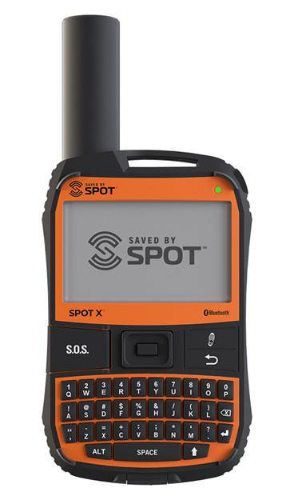
How about a guaranteed method of communication—no matter where life takes him. SPOT X is a two-way satellite messenger that connects to users’ smartphones via Bluetooth wireless technology when off the grid or beyond reliable cellular coverage.. Through the SPOT X app, users can then access contacts and communicate easily with family, friends or directly with Search and Rescue services in life-threatening situations. It even can be used as a standalone communication device, and has its own dedicated U.S. mobile number so others can message them directly at any time.
From backpacking, camping, fishing and hunting to snowmobiling, off-roading and cycling, SPOT devices support all off-the-grid adventuring, making them the ideal tracking and communications gear for recreational users. The company is a leader in satellite messaging and emergency notification technologies—having helped initiate more than 9,000 rescues worldwide. Its devices provide communication capabilities, even when users are out of cell range, and can initiate search and rescue with a single button. Plus, SPOT is committed to making its products and services affordable to ensure that its life- and money-saving technology is available to all who dare to venture into the unknown.
Keeping your busy household’s floors clean just got easier.
iRobot’s Roomba Combo j7+ Robot Vacuum and Mop is the reportedly world’s most advanced, and the first truly hands-free, two-in-one robot vacuum and mop with a fully retractable pad. While other two-in-one cleaning robots barely lift their mop pads and require users to run two separate mop and vacuum missions, the Roomba Combo j7+ performs both functions simultaneously—vacuuming hard floors and carpets while the automatic mop prevents wet carpet messes.
And, thanks to iRobot OS and the robot’s PrecisionVision Navigation system, customers don’t have to pick up before the cleaning begins. The Roomba Combo j7+ recognizes more than 80 common objects, which enables the robot to clean more specific places on command, such as around kitty litter boxes, toilet bowls, dishwashers and more. Pair the robot with your voice assistant and instruct it to clean specific rooms or by selected objects in your home, as the Roomba Combo j7+ understands approximately 600 voice commands—more than any other two-in-one robot on the market. Users can also customize their device’s cleaning jobs in the iRobot Home app by choosing what rooms should be vacuumed and mopped, vacuumed only or even adjust the amount of cleaning solution the mop should dispense.
Relief, relaxation and recovery have never been so conveniently accessible.
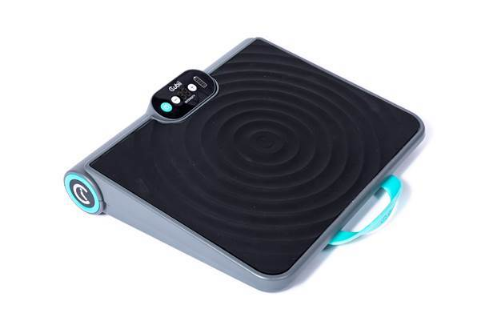
Cubii Revive’s whisper-quiet, portable and battery-operated footplate utilizes therapeutic vibrations to help relieve minor aches and pains while supporting muscle recovery—all from your favorite place to sit. The 14.6-inch by 16.9-inch device features a compact design, built-in handle and is compatible with all foot sizes to accommodate your natural sitting position wherever is most convenient for you. Its 10 levels of passive vibration intensity support lower body muscle recovery and pain relief for fully personalized recovery sessions with every use.
In addition, the ergonomic Cubii Revive also includes a backlit LCD monitor to display battery and intensity levels in any lighting and cordless functionality with a four-hour battery life. Cubii focuses on holistic solutions in its approach—offering customers new and innovative products to serve a diverse community. Whether taking that first step on your path to wellness or beating a personal record, the brand is here to cheer on your every move. And, with wellness at the forefront of Cubii’s vision, the company believes everyone should have an equal opportunity to be healthy. In fact, it reportedly regularly donates Cubii ellipticals to those who would benefit from using one, but might not be able to obtain one by their own means.
Gift them a Dream Controller constructed directly from their wildest imagination. These unique, quality devices are custom-tailored to customers’ preferences—featuring cosmetic and technological upgrades that are also intended to improve their overall performance. Dream Controller’s inventory includes hundreds of trendy, handcrafted designs developed using the hydro-dipping paint process. Even more, each item is professionally designed by graphic artists that carefully create each controller to perfection. Customers can choose from controllers that are compatible with Xbox One, Elite, Nintendo Switch and Oculus Quest 2 as well as themed AirPods and others.
Created by gamers, Dream Controller saw a need for state-of-the-art, modified controllers in the marketplace and wanted to back the company with stellar customer service and technical support. The range of customizable options seems to supersede that of its competitors, with Dream Controller customers having the option to create personalized gadgets designed to their specifications if they’d like to go beyond the many pre-made designs and templates already available. And, whether your old man is an expert or new to the community, a beautiful, distinctive and high-quality device from Dream Controller is sure to level-up their game in all areas.
Want to make that round of golf get even better? Provide an awesome soundtrack to play alongside dad and his pals. The G-ROK Wireless Golf Speaker from ROKFORM instantly mounts to a golf cart or any other metal surface with its super strong, MAGMAX magnetic technology. Its aluminum hook easily attaches to a golf bag and it’s compact enough to slip into one. This rugged iPX7 waterproof and dust-proof wireless speaker is perfect for taking on and off the course, rain or shine. The G-ROK Wireless Golf Speaker features dual eight-watt drivers to deliver a clear, crisp sound and just the right amount of bass for the course.
And, for those who’d like to listen to music without announcements or interruptions, the device’s optional SD card stores up to 5,000 songs, so music can be played with or without a phone. Its 24-hour battery life lasts up to six rounds before needing a charge; because who wants to charge their speaker after only two rounds? For the ultimate on-course experience, users can pair their portable golf speakers to create double the sound, which already amplifies across a resounding 30-foot range. ROKFORM’s user-friendly design allows customers to operate the device from their phone or speaker with easy buttons, so they can play, pause, control the volume, skip, answer calls and power the device on and off with ease.
Who says keeping it classy has to mean discomfort?
The xSuit 4.0 is the newest version of the brand’s highly popular xSuit—the suit known for extreme comfort, stretch and convenience. This recently released iteration is the most comfortable and stylish version yet, taking into account years of research and customer feedback. Among expanded stretch and other upgrades, the updates feature additional sizes and colors, including brand-new light blue and light gray versions. Utilizing advanced R&D and technology, the xSuit 4.0 is wrinkle, stain and odor-resistant—optimizing the convenience for wearers. It’s also fully machine washable, which eliminates the need for frequent dry cleaning and ironing. This makes it the ideal travel suit, whether sporting your xSuit 4.0 for business, weddings or other events. Due to its top quality construction, the garment is highly durable and lasts five times longer than average.
Even more, the men’s clothing brand’s versatile designs enable easy mixing and matching to give you a wide range of choices in outfits and styles. xSuit works with some of the world’s top manufacturing experts in fashion technology in order to make the most comfortable clothing that keeps customers looking their best all day long. The company’s products are engineered with innovative materials—bringing the highest quality and sustainable alternative to fast fashion to men around the globe.
Add some key staple items to Dad’s closet this year with Jachs New York’s blend of classic and modern take on clothing essentials.
Its Blue Reverse Slub Jogger, for instance, delivers effortless style with an upgrade on the brand’s knit piece. Jachs NY’s new reverse jogger features the coziest, softest fabric that feels as great as it looks. It’s designed with 63 percent polyester, 33 percent viscose and four percent spandex and includes a soft-brushed fleece backing—providing just the right amount of added stretch.
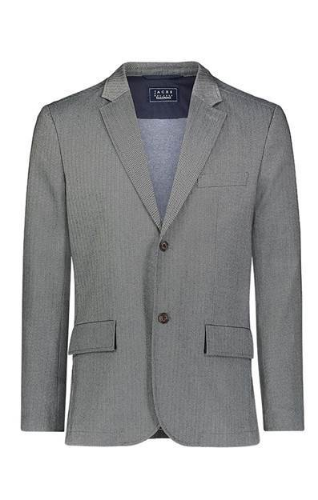
Another customer-favorite, Jachs NY’s Navy Striped Tri-blend Short Sleeve Henley, offers the classic, three-button sleeve Henley fit in a super soft and light-weight linen tri-blend fabric that is ideal for summer weather. For a more polished look, the Grey Rayon Blend Stretch Herringbone Blazer features the classic two-button frame, but is half-lined with rayon for extra softness, stretch, comfort and mobility. Jachs NY was founded in 2008 with a mission to make the perfect clothing for those who want to live their own American dream. From classic outerwear to everyday shirting, chinos and sweaters, the menswear company creates essentials needed for your daily life—and your daily adventures. Using time-tested techniques and vintage inspiration, its brand philosophy is simple: great style should be effortless.
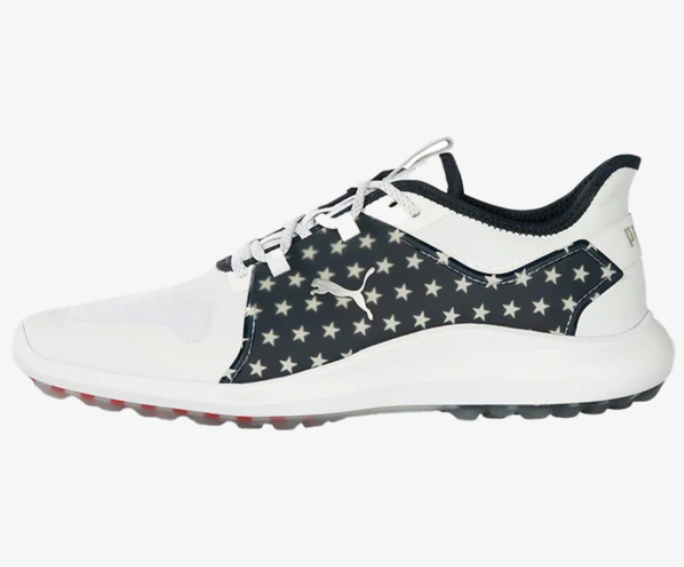
PUMA X IGNITE Spikeless Golf Shoes by Volition America
Level up the dad in your life’s game with better golf gear.
A collaboration with PUMA and Volition America, the IGNITE Fasten8 Spikeless Golf Shoes are a cool, America-inspired shoe featuring the stars and stripes on the footwear’s upper and outsole. They’ll provide the performance needed on the course … and the style while off of it. The innovative materials and progressive design include both PWRFrame and TPU overlays to create a breathable and waterproof outer, while the TPU PWRCAGE offers unparalleled support around the midfoot. The laces’ integrated webbing straps wrap the area for a secure fit. Plus, you can’t overlook the shoe’s ignite foam midsole that’s wrapped in SoleShield for added durability, unparalleled comfort and an energy return that can help you feel and play your best all day long. Volition America has made it its mission to disrupt the industry as America’s apparel brand—uniting Americans under a common goal to use the power of choice to affect positive change. With options ranging from shoes to apparel, the company has partnered with high-profile brands like Puma to give back to worthy causes.
As the demand for men’s jewelry booms, Craftd London has become a go-to brand across the globe.
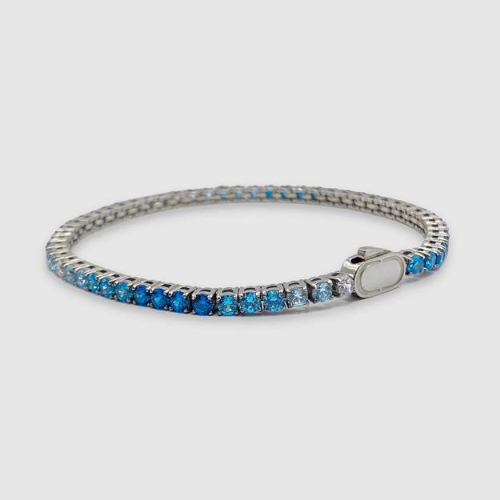
Each piece holds its own story and comes with a lifetime guarantee, no questions asked—making it literally a gift for life. Its best-selling Blue Tennis Chain was recently given the Blue Iced treatment and has leveled up wearers’ styling options with just the right amount of edge. The three-millimeter piece features AAA-grade Blue Cubic Zirconia, 316L stainless steel and rhodium, while also being water, heat and sweat-resistant. The Blue Tennis Chain is available in two sizes: 19.5-inches or 21.5-inches. But why stop at just one of these beauties, when you can gift dad a matching bracelet? Craftd London’s Blue Tennis Bracelet offers the same exceptional quality and specs as its necklace counterpart, including two size options to help customers find the right fit. For those who are looking for a touch of symbolism with their jewelry, Craftd London’s Silver Rose necklace illustrates the beauty and fragility of life in its simple, yet stunning, craftsmanship.
The 316L stainless steel and rhodium pendant comes with a chain that is water, heat and sweat resistant. The brand’s Compass Pendant also holds a message to the wearer, reminding people that a true leader crafts his own path. Give your loved one the gift of discovering new places and living a life of freedom with this 18-karat gold and 316L stainless steel chain and pendant. Like all of Craftd London’s products, the Compass Pendant is sweat proof, waterproof, hypoallergenic and tarnish resistant. Most importantly, it’s designed with its own meaning to make it personal for the wearer. “We all like to feel championed,” cofounder Alex Cannon says. “And with something that tells its own story, you can really give that personal touch.”
Who doesn’t love a new pair of sunglasses, especially from a world renowned designer brand?
The Versace VE2212 Sunglasses from SmartBuyGlassesmake a stylish Father’s Day gift that’s perfect for the summer season. He can look great and feel protected from the sun the next time he’s out and about. Versace’s seasonal collection offers a wide variety of colors to choose from, but these aviator shades are a perennial favorite—made super swaggy with its mix of gunmetal frames and grey-silver mirror lenses. The shades ate available in a variety of lenses to suit your lifestyle and vision needs, including prescriptive for distance, reading, progressive and more as well as blue light blockers and polarized. No matter the lens type, the Versace VE2212 Sunglasses can effortlessly complete any look. Plus, SmartBuyGlasses offers amazing prices and 100-day returns. The online store’s mission is to deliver great-quality, low-cost eyewear to its customers worldwide as fast as possible. Even more, when you shop online with SmartBuyGlasses, you’re shopping an exhaustive catalog of brands, types and designs boasting chic new trends and excellent-quality glasses.
Nolah’s Bamboo Sheet Set is made of a lightweight, satin-smooth and breathable bamboo material that is just as good for the environment as it is for your shut-eye. Bamboo sheets are a great option for hot sleepers and allergy sufferers, as bamboo wicks away excess moisture to help keep you dry and comfortably cool during the night. This material is also naturally antimicrobial and hypoallergenic, so your sheets will remain fresh and clean for much longer.
Independent testing showed a 99 percent E. coli and staph reduction and 90 percent Candida albicans (yeast) reduction on the bamboo fibers after 18 hours of incubation. In addition, the Bamboo Sheet Set is Forest Stewardship Council-certified and Oeko-Tex 100-certified—guaranteeing Nolah’s product contains no harmful chemicals, toxins or dyes. And, when it is time to give them a wash, Nolah’s bamboo sheets are highly durable and washing machine-friendly for a convenient clean every time. The sheets are available in twin, twin XL, full, queen, king, California king and split king sizes to accommodate more sleepers. Nolah prides itself on being a sleep technology company that is on a mission to improve your sleep and mattress shopping experience, with products ranging from top-notch mattresses to bed frames and bedding.
Help dad lavish his best friend in luxurious comfort with the Kingston Organic Pet Bed.
Taking luxe dog beds to a whole new level, this pet bed is made entirely of a plush mix of three unique shredded foams. This includes Essentia Mattress’ patented Beyond Latex organic foam combined with natural latex foams for maximum pressure relief, breathability and durability. The family pooch will nestle in and enjoy the soft, organic cotton cover that allows them to customize the adhesive-free Kingston to their liking by burrowing in the cozy blend of organic foams—the same natural, healthy and high-quality materials used to construct all Essentia products.
The company’s attention to detail ensures your pet keeps a fresh, comfortable sleep surface. The organic, SoftGrip cotton bottom helps stop the bed from sliding and makes it safe to use on all floors. Even more, the removable and washable Kingston’s organic cotton cover features food-grade waterproofing integrated into the inside backing, which helps protect the bed and facilitate easy cleaning. This product is available in three sizes—accommodating furry pals up to 110 pounds! Essentia Mattress’ options are packed with non-toxic, certified organic vegan technology.
Say goodbye to sweaty, messy coasters and hello to the Terra Stone Coasters by Brightly.
These natural and eco-friendly coasters are made with high-quality, diatomaceous earth—providing maximum moisture absorption and quick-drying action. The unique properties of diatomaceous earth make the Terra Stone Coasters perfect for use with cold drinks, which helps to prevent condensation and keep your home’s surfaces clean and dry. Plus, the natural composition of diatomaceous earth makes them an excellent choice for those looking for a more sustainable option for their decor, and wish to enjoy their purchases with a clear conscience.
Their unique properties and elegant design make them the perfect choice for those who value function and style in their home accessories. The package comes in a set of four. Brightly’s goal is to empower conscious consumers around the world—recognizing that small, daily actions add up to a huge impact on the world around us. Along with its products, the company educates more than three million individuals every day through inspiring short-form videos on social media, an award-winning podcast and thoroughly-researched, myth-busting articles. Brightly holds itself accountable, as well, and is Climate Neutral Certified. To do this, the brand must show that it is working to reduce greenhouse emissions throughout its operation and compensates for all of them every year.
No matter if you’re traveling around the block or around the world for business or pleasure, travel should always be a fabulous experience—never a hassle.
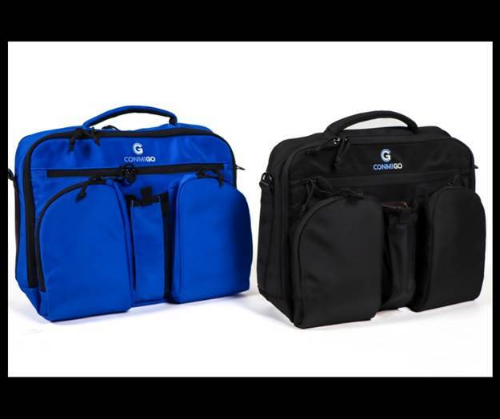
The main culprit for travel angst? Having the wrong gear. One great resolution is the The ULTI Messenger Bag by CONMIGO, which provides the luxury of being comfortable, joy of being organized and peace of mind of being safe—all in one bag. This re-designed carry-on is perfect when a backpack doesn’t meet your needs or style. It has enough panache for the boardroom and is rugged enough to handle whatever the road throws at it. Lightweight so you can stay nimble, the ULTI messenger bag’s crossbody design keeps your hands free, so you can hold on to what matters.
Plus, this functional travel and laptop bag features an abundance of secured pockets and compartments to help keep you organized and on point wherever you may be journeying to. Other ULTI bag highlights include a TSA-compliant, detachable portfolio for electronics, seat cushion and enhanced safety features. CONMIGO designers also crafted the gear with water-resistant, ballistic nylon and ensured its ability to comfortably fit under the seat when traveling in an aircraft. A donation from each sale of the ULTI travel bag is also made to the American Veterinary Medical Foundation.
Is dad embarrassed by the persistent odor in his car or is he tired of that suffocating artificial scent from common fresheners that require constant refills? Or, does it bother everyone else?
Well, if any of the above criteria resonates, the PURGGO’s Car Air Eco-Purifier and Freshener will make the perfect Father’s Day gift this year. It’s made with pure and sustainable natural bamboo charcoal, which absorbs and eliminates odor instead of masking it. Fragrance- and allergen-free, the PURGGO is all-natural, non-toxic and 100 percent asthma, pet- and allergy-friendly. All this product contains is pure, all-natural moso bamboo charcoal: one of the most renewable natural resources in the world. Bamboo charcoal has been used for thousands of years in Asia to purify the air, and PURGGO harvested this power—making it the longest lasting available product of its kind on the market worldwide. Plus, it lasts for more than 365 days and works continuously in the background. PURGGO’s mission is simple: to create an effective, safe and responsible product that the company would want to use itself, and is reflected in the design philosophy of the air freshener—from the materials used to the rounded corners and smooth textures that have its roots in Asian culture.
If dad likes to golf, give him the gift of an indoor putting green this Father’s Day.
Putt-A-Bout provides just that with their USA-made products that are top-sellers on Amazon—offering the perfect solution for short-game practice anywhere and anytime. Ideal for golfers of all skill levels, these portable mats can turn almost any floor space into a fun putting area that lets you hone your game, have some fun and enjoy some low-key competition. The company’s XL215 Putting Mat is large at 15 feet long and two feet wide.
It’s great for practicing both short and long putts with a realistic stimp speed. Its premium back that will eliminate folds and creases in the putting surface. Also portable, it’s easy to roll and store away or transport. Putt-A-Bout’s Par Three Golf Putting Green is another great gift option, as this kidney shaped practice putting green with three practice cup cutouts has a surface that always stays smooth. Built in sand trap cutouts catch missed shots. Putt-A-Bout designed its product to be easy to use, but also handily stored away when not being utilized. With its top-notch and lay-flat backing material, users can conveniently lay out the mat when ready to play and roll it back up for compact storage or transport on-the-go. Customers can also personalize their putting mat, which is available in five different sizes and perfect for both home and office use.
Do you want dad to have the best seat on the beach this summer season?
SUNFLOW’s Beach Bundle Chair offers four different positions and a host of innovative accessories for optimal seaside lounging. This chair is built with the highest quality, rust-resistant frame—necessary for wet environments—and is crafted with water-resistant fabric that can be hosed off without harming the material.
SUNFLOW’s Beach Bundle Chair includes removable straps in its design to help make the versatile recliner easy to carry, while also offering several fashion-forward color options to best meet its owners’ style. But, while the construction is impressive, this product really shines with its attachments. Its sun shade helps protect users from 98 percent of the sun’s rays, while the dry bag keeps valuables just that: dry, safe and sand-free during every beach excursion. Plus, the Beach Bundle’s drink holder provides the perfect spot for everything from a canned beverage, to a wine bottle. The chair’s added towel attachment keeps your towel safely stowed beside you without the fear of it falling down or flying away on a windy day. SUNFLOW’s Beach Bundle is the brainchild of fashion and product designer Leslie Hsu, with the mission of reinventing the beach chair by giving it the functional makeover it deserves. This is all part of the premium beach brand’s goal of filling every day at the water’s edge with smiles—helping to make your happy place even happier.
Give the father figure in your life the gift of high-quality, Australian cuts of meat with Herd & Grace’s Signature Steak Boxes, which will be delivered right to his doorstep.
Herd & Grace is a premium delivery service for steaks sourced from pastures located in Australia and Tasmania. The company’s environmentally-conscious, halal-certified steaks are featured in Michelin and AAA-rated fine dining steakhouses and eateries, and are now available to homes across the globe. Australian beef sets itself apart from the usual type found in the U.S. due to its high marbling scores, delicious taste, unmatched tenderness and unique flavor. For these reasons, Australian beef is a superior pick, thanks in part to the wide open spaces for livestock to roam and the cleanest air in the world—giving the cows a better quality of life and generating singular dining experiences. In an age where factory farming in America confines cattle to over-crowded feedlots, these Australian and Tasmanian farms and ranches offer at least an acre of land per cow. In addition to the elite flavor and silky tenderness, Australian steaks feature ethical, sustainably grazed pastures, which reduce topsoil erosion and decrease emissions of methane and greenhouse gasses—all while removing carbon dioxide from the atmosphere.
These Old World, sustainable processes help in the effort to combat climate change. Choose from a selection of Herd & Grace’s finely curated boxes, or customize your cuts utilizing the brand’s various subscription level options. I sampled the Herd & Grace BBQ Box boasting cuts you won’t find at the market. With highly coveted delicacies are normally reserved for the most upscale restaurants, one bite and you’ll understand why they are in such demand. It features 24-28 ounce Pure Black Tri-Tip Cut; two massive 28-32 ounce Cape Grim Tomahawk Steaks; and one 3-4 Pound Cut of Pure Black Picanha MB5+. This premium collection can be delivered directly to dad’s doorstep lickety split.
Customizable Cheese Boards and Platters from Lynn & Liana Designs (https://lynnliana.com/)
Lynn & Liana Designs offers Customizable Cheese Boards and Platters that will serve as art in your home, while also helping serve up delicious treats to guests.
Not only do the boards come in nine colors, but no two boards are alike. Lynn & Liana Designs uses eco-friendly resin to create stunning pieces that are unique to each board. These one-of-a-kind items are hand-poured and meticulously crafted—making for a beautiful charcuterie spread and great conversation items at dinner parties. Singer Meghan Trainor even shared her love for the cheese boards in her viral TikTok video, which garnered seven million views. The small Manitoba family business has grown tremendously since starting in 2018 from a garage set-up. Lynn & Liana Designs went from producing 100 boards in its first year to well over 100,000 boards in 2022 alone. Now available in 2,000-plus stores, 28-year-old founder Melissa Funk has done more than jump on the charcuterie board craze. She’s reinvented it by crafting elegant boards and platters that stand out and bring a piece of nature into people’s homes. Even more, a portion of the brand’s sales go toward the replanting of trees across North America.
Add to dad’s entertaining collection with The Entertainer’s Tray from Groovy Girl Gifts.
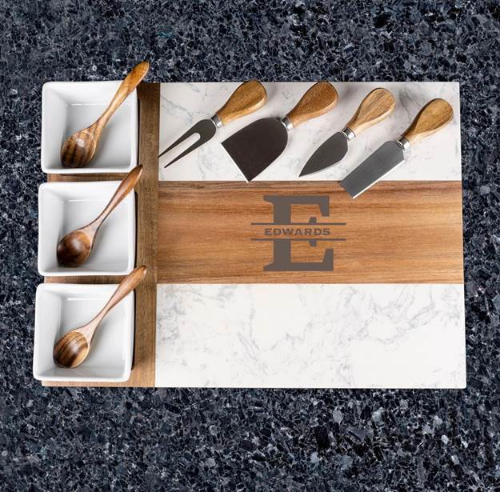
This stunning, charcuterie serving board, which can be personalized, brings a touch of class to the functionality of creating a stellar presentation for guests. Crafted from premium acacia wood, it features a sleek marble insert and is built to withstand regular use. Even more, the Entertainer’s Tray provides ample space for arranging a variety of cheeses, dips, cured meats, fruits, nuts or whatever tasty snacks strike your fancy. This item includes three dipping spoons, three bowls and four charcuterie utensils packaged nicely in a white box to round out the entire piece. Whether hosting a small gathering with friends, or putting together an elaborate spread for a special occasion, the durable board is sure to impress with its smooth, polished surface. Plus, it’s the perfect backdrop for showcasing dad’s personal style. The Entertainer’s Tray is also easy to clean and only requires a wipe down with a damp cloth after each use to maintain its appearance—making it the ultimate versatile, go-to set for all your hosting duties this summer.
A tasty and delightful gift worthy of those food-loving fathers, Cheese Brothers’ “World’s Cheesiest Dad” Gift Basket brings all the cheese, but in the best way possible.
This hand-picked gift collection combines the e-commerce company’s finest Wisconsin cheeses with classic mustard and award-winning artisan salami. Dad will love the smoked Gouda, which is cold-smoked with applewood and hickory at Cheese Brothers’ Wisconsin-based pack house. And, for lovers of the sharp variety, this basket has him covered with its eight-year-aged cheddar that’s sure to hit the spot. Other basket highlights include four, six-ounce blocks of Wisconsin-made cheese; two five-ounce blocks of aged cheddar; a jar of classic mustard or cherry lavender jam; artisan salami; white organic crackers and a “World’s Cheesiest Dad” sticker to tie it all together.
Cheese Brothers proudly honors its roots by following in the cheese-making traditions established by one of the founders’ great grandfathers when he immigrated to the U.S. from Switzerland in 1919. None of the business’s products are ever processed or artificial—sourcing milk from local family farms and utilizing only natural and simple seasonings to enhance its gourmet products. The eight-year-old company ships cheese and gift packages nationwide, so show your pops how much you care through their taste buds with Cheese Brothers’ uniquely cheesy basket. After all, the world’s best dad deserves the best.
The perfect after-dinner sip for dads on Father’s Day.
Bisquit & Dubouché’s X.O. is a silky, sumptuous cognac that’s incredibly rich, full-bodied and stunningly smooth. The X.O. expression is matured in French oak barrels for a minimum of 10 years—offering drinkers a symphony of woody flavors and smoky notes. The initial notes explored on the nose are enriched with aromatic hints of plum, mocha, cedar wood and licorice. Crafted using only the most prestigious Eaux-de-vie from the Grande and Petite Champagne crus, the premium beverage’s lingering finish and incredibly smooth taste are the satisfying results of the brand’s uniquely long distillation time. For the best tasting experience, Bisquit & Dubouché’s X.O. cognac is best enjoyed neat. The company was founded more than 200 years ago by Alexandre Bisquit and Adrien Dubouché, making its formal debut in the U.S. in February 2022 as an official sponsor of Frieze Los Angeles. The avant-garde cognac maison is known for its innovative cognac-making and the rebellious spirits of its founders. The unique distillation method relies on intuition over conventional techniques to create Bisquit & Dubouché’s distinctive taste of nuanced floral and fruity aromas.
Looking to add some flair to dad’s drinks this year?
Look no further than Siligrams’ Customizable Ice Cube Tray Molds. These durable, high-quality silicone molds provide a personal touch to any gift, party or occasion and can be customized with the text, monogram, a graphic or logo of your choice. Whether you’re looking to create ice cubes in the shape of dad’s favorite sports team logos, adding a unique touch to the home bar or giving a gift of monogrammed ice cubes, Siligrams’ molds are the perfect solution. American-made, the ice cube trays are easy to use and maintain, all while being safe for use in the dishwasher, freezer and oven. The Customizable Cylinder Ice Cube Tray can be customized with your unique text, monogram, or graphical design.
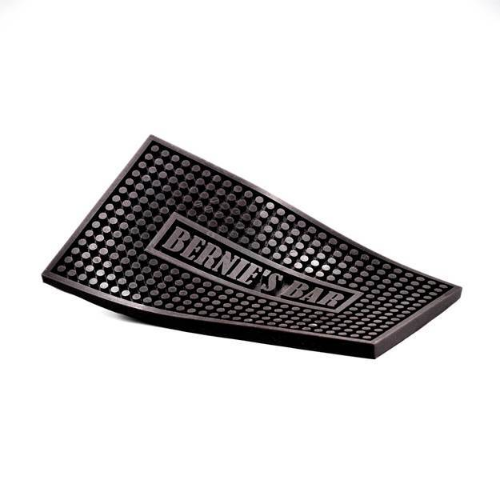
The ice cylinders measure 2.3 inches in diameter, making it a great fit in a standard rocks glass for spirit forward cocktails or in tumblers and thermoses for your soda and iced coffee. The Customizable Whiskey Ball Mold makes an iconic cocktail ice ball as a classy companion to your favorite spirits. The spherical shape maximizes the surface area to volume ratio, meaning you’ll get maximum chilling of your drink with minimum watering down. The ice balls are 2.3in diameter spheres, and can also be customized with your text, monogram, or logo! I also like Siligrams non-slip Customizable Silicone Bar Mat that keeps your glasses and bottles steady and collects spills to keep your bar area clean. It’s also easy to clean – just dump it into the sink and run it through the dishwasher. Use it as a drying mat or a coffee bar mat too! Plus, personalize it with your name, logo, or any design to make it truly your own.
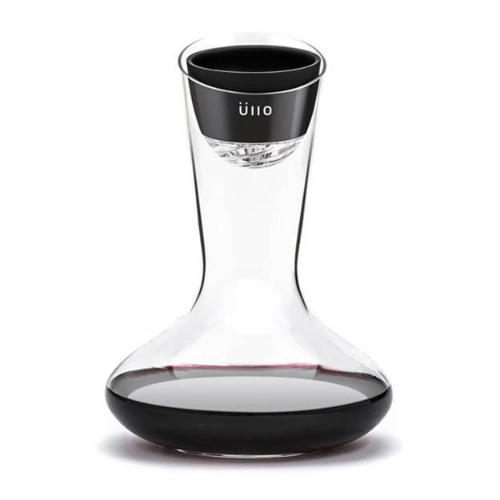
Gift the father figure in your life with the ultimate wine-drinking experience: all the delicious flavor of their favorite bottle of vino without the hangover. Üllo’s Original Wine Purifier + Decanter combines the purification power of Selective Sulfite filtration with the time-honored tradition of decanting to create a premier expression of red wine. The hand-blown Decanter, made from ultra-transparent and lead-free crystal, is the perfect fit for the Üllo Wine Purifier and lets your favorite red or white wine’s aromas and flavors come alive.
Üllo is the first and only wine purification brand to target just sulfites in the removal process—and none of the natural compounds that make every wine unique. Along with eliminating hangovers and irritation, sulfite-free wine also allows drinkers to enjoy any bottle without the stuffy nose, headaches or other common side effects of histamines. Plus, the easy-to-use Üllo Wine Purifier works with all Üllo wine filter replacements, rests on any wine glass and fits perfectly with Üllo’s decanters and carafe. Other features of this set include a purifier travel bag, soft-touch display base and six Selective Sulfite full-bottle filters. The kitchen gadget simplifies the clean-up process and disassembles easily, is dishwasher-safe and makes enjoying pure wine a delightful experience.
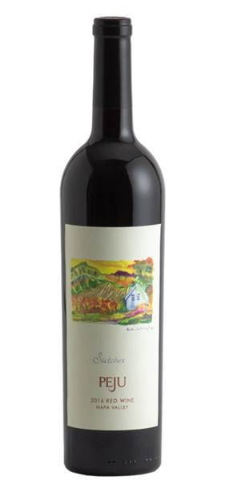
A bright and savory red wine that dad will love, PEJU Winery’s 2018 Sketches charms the senses with aromas of fig jam, vanilla and a hint of nutmeg. This Cabernet Sauvignon and Merlot blend begins with notes of savory black truffle, honeyed oak and pomegranate and finishes with notes of cocoa powder. PEJU Winery’s 2018 Sketches can be uncorked and enjoyed now, or put away in your wine fridge for another 8-10 years. The blend is harvested from PEJU Winery’s acclaimed Persephone Estate Vineyard in Napa Valley, California at nearly 1,000-feet elevation, producing fruit with rich, focused flavor and a precise sense of place as a strong foundation for its wines.
The story behind the 2018 Sketches bottle stems from owner Herta Peju’s lifelong love for artistic expression. From her early school years through college, she would draw all over her notebook as a tool to remember her lessons. Working closely with winemaker Sara Fowler, the two created a magnificent wine encompassing the beauty that Peju sees in everyday life. Each bottle of Sketches features a label with artwork by Peju, making it an excellent trophy for your cellar.
Cutting back on wine may be good for dad’s health, but that doesn’t mean his beverage selection needs to be limited, too.
The Non-Alcoholic Quartet Pack from Jøyus brings variety, the pleasure of a glass of wine and the non-alcoholic peace of mind together in four delicious bottles. One-hundred percent woman- and sober-owned, the brand’s product doesn’t have that overly sweet or grape-juice taste commonly associated with non-alcoholic wines. These delightfully dry and complex, alcohol-removed selections can have even the snootiest of vino snobs pouring a second and third glass.
Take its Cabernet Sauvignon, for instance. The blend delights the palate with its warmth and complexity, while the well-balanced tannins, notes of ripe dark berries, aged oak and undertones of vanilla will keep you coming back sip after sip. Jøyus’ pack also includes a Rose and Sparkling Rose that feature delicate notes of watermelon and peaches, or hints of blackberries, strawberries and California citrus, respectively. Drinkers can also expect the notes of crisp green apple, fragrant fall pear and ripe melon of the Sparkling White wine to help round out the set. Still unsure? Not only did Jøyus win two awards at The San Francisco International Wine Competition and another at the International Wine and Spirits in London, but there are only 15-30 calories per serving—a perfect, guilt-free treat for everyone, no matter where they are on their sober journey.
Add to his arsenal with La Tourangelle’s Truffle Infused Oils. The company’s White Truffle Infused Oil features complex notes of woods, earth and fruit that are characteristic of the Italian White Alba Truffle, while the Black Truffle Infused Oil highlights complex, earthy notes of damp forests and dried mushrooms that can be found in the French Périgord Truffle. Earthy, robust and distinctive, these truffle-infused oils are a perfect finishing drizzle atop a range of unique culinary creations. La Tourangelle is passionate about making high-quality ingredients that are good for the table, community and planet. Through regenerative farming, artisan production methods and nature-friendly packaging, the company aims to empower people to cook like they care.
Each natural product is crafted locally in California and France using traditional practices. From sourcing the best quality ingredients, to small batch production, La Tourangelle’s products are rooted in artisan know-how. La Tourangelle believes in making staples that are authentic, delicious and sustainable—all while spreading joy and well-being through food. As a family business, La Tourangelle brings expertise and craftsmanship techniques learned from previous generations to modern day oil-making, using traditional French practices to produce delicious artisan oils in California.
Upgrade your ice cream experience and say goodbye to meltdowns. Calicle’s smart and stylish Insulated Ice Cream Bowl Set keeps your favorite frozen treats at the perfect consistency from the first bite to the last, so you can savor every single spoonful. These vacuum, triple-insulated bowls keep your scoops from melting up to 200 percent longer than traditional bowls—even in warm weather. Perfect for barbecues, pool parties, beach days, picnics or at home on the couch, Calicle’s Insulated Ice Cream Bowl Set makes it easy to enjoy ice cream indoors or out, and includes lids for mess-free treats on-the-go while. And, the durable construction and grippy base make them safe for kids and glass-free zones. Not just for cold foods, they’ll keep hot foods hot longer as well.
This set comes with two 12-fluid ounce bowls in white frost or midnight black colors. In addition to providing reusable products to help reduce the waste produced by single-use items, Calicle also uses recyclable packaging materials. Plus, the brand believes it’s important to support organizations whose work is meaningful and donates two percent of its sales to support the Coral Reef Alliance. Whether you’re spoiling yourself or seeking a sweet gift, these bowls are guaranteed to bring a smile to anyone’s face. Make every spoonful count with the gift that keeps giving—scoop after scoop.
Help dad get a total body workout with a single, convenient fitness tool this summer: the HEROBOARD. This highly-functional, moving exercise platform offers users an incredibly smooth and stable experience, while being able to move evenly on all types of surfaces—forward, back and side to side. Designed for both beginners and advanced athletes, the HEROBOARD allows for a variety of exercises that target every part of the body and is the perfect piece of equipment to use at home, outside or at the gym. The easy-to-use HEROBOARD jumpstarts those that need that extra bit of encouragement and is even utilized by trainers and physical therapists to assist in their work with clients.
The platform ensures stability and doesn’t flip over when operated. It’s also angled by three degrees for a raised heel, which eases your form to protect your knees and helps in bringing the board back for eccentric exercises. Each HEROBOARD comes with a drawstring bag for portability, a poster with QR codes linking to instructional videos, a custom-shaped foam exercise pad and a resistance band that can be easily attached to the board’s hook to take your exercises to the next level. Plus, dad can access new and creative instructional workout videos each week from the company’s website or its various social media platforms.
Give dad the at-home pampering he deserves with Derm Dude’s quality selection of men’s grooming products.
The company’s EVERYTHING Trimmer is the absolute perfect tool for both the beard and body. The three-in-one trimmer includes 17 unique “easy spin” dial settings for beard, mustache and facial hair; stainless steel blades and guide combs with precision trimming for a nick-free beard, body and groin area; and an IPX7 high, waterproof-rating for convenient use in the shower. Derm Dude’s device also includes a 60-minute runtime; rechargeable, built-in battery with compact USB charger; and is small, lightweight and cordless for ease of use and convenience. The EVERYTHING Trimmer does it all—including every length option and style in-between. And, to keep dad’s beard nourished and itch-free, the brand’s Accelerator Beard Oil is formulated to moisturize, soften and condition facial hair in a single application.
The fast-absorbing and non-greasy Nutribeard Complex is formulated with natural Jojoba oil, Argon oil, vitamin E and other natural oils, which promote healthy beard growth when used over time. Derm Dude’s Accelerator Oil 3-Pack offers three scents that are sure to keep the user smelling and feeling good. The Sandalwoody scent has a slight, new leather hint while being warm, spicy, exotic, musky and, most importantly, woody. The Island Rum oil has notes of rum and coconut to create a warm and summery scent, while Morning Woodsy exudes a masculine, outdoorsy scent with notes of evergreen woods, cedarwood and mountain air.
Elevate dad’s oral care routine with MOON Oral Beauty’s LED Teeth Whitening Kit.
Equipped with the brand’s best-sellers, this set includes its LED Teeth Whitening Device, Kendall Jenner Teeth Whitening Pen and Dissolving Whitening Strips to help keep customers’ smiles healthy and bright. In fact, the LED device is reported to rapidly whiten teeth up to 12 shades in just two weeks or less, with just five minutes per use. Its lightweight, wireless design pairs with the Dissolving Whitening Strips to remove tough stains on the teeth’s surface for a no-mess application, with no rinsing required.
The device already comes with a two-week supply of Whitening Strips, a travel-friendly case and a charging base. Plus, this bundle includes an extra pack of strips. MOON’s Dissolving Strips are unique, as they whiten teeth up to seven shades lighter and dissolve completely in your mouth within 15 minutes. They are made with gentle, better-for-you ingredients that are perfect for sensitive teeth. Made with Elixir III, the pen features MOON’s proprietary antioxidant blend of lavender oil, strawberry fruit extract and honeysuckle flower extract, which is proven to instantly brighten and whiten teeth over time. It’s great for touch-ups to keep those pearly whites polished while on-the-go. Now, dad can easily throw it in a bag and have it on hand and ready to use when needed.
The “Kanuda Lumbar Nap” Sacral Still Point Pressure Pillow is a one-of-a-kind product that integrates physical therapy benefits into a pillow—ensuring proper neck alignment while sleeping on one side or the other. Its design mimics a physical therapy session at home by stimulating pressure points of the sacrum, stretching your lower back with its natural bending lumbar spine curvature. A few of the benefits of the Kanuda Lumbar Nap pillow include improvement of the craniosacral system function, tension relief in the lower back muscles, restoration of the spine’s natural lumbar curve to the correct posture and improvement in the range of motion in the hips. All the user needs to do is place the polyurethane foam pillow on the floor and lie down on their back so that the sacrum groove on the Kanuda Lumbar Nap is positioned directly underneath the user’s sacrum. For best results, it’s recommended to stay in this position for anywhere between 10-40 minutes daily. The South Korean company has been perfecting its product through ongoing research and development since 2005—helping to lead the way in customer satisfaction. Reportedly the first-ever pillow to incorporate physical therapy techniques to relieve neck pain and induce proper sleep positions, Kanuda helps keep your neck, spine and shoulders truly aligned in proper resting position.
For the Silo, by Merilee Kern.
Merilee Kern, MBA is an internationally-regarded brand strategist and analyst who reports on cultural shifts and trends as well as noteworthy industry change makers, movers, shakers and innovators across all categories, both B2C and B2B. This includes field experts and thought leaders, brands, products, services, destinations and events. Merilee is Founder, Executive Editor and Producer of “The Luxe List” as well as Host of the “Savvy Living” lifestyle TV show that airs in New York, Los Angeles, San Francisco, Miami, Atlanta and other major markets on CBS, FOX and other top networks; as well as the “Savvy Ventures” business TV show that airs nationally on FOX Business TV and Bloomberg TV. As a prolific lifestyle, travel, dining and leisure industry voice of authority and tastemaker, Merilee keeps her finger on the pulse of the marketplace in search of new and innovative must-haves and exemplary experiences at all price points, from the affordable to the extreme. Her work reaches multi-millions worldwide via broadcast TV (her own shows and copious others on which she appears) as well as a myriad of print and online publications. Connect with her at www.TheLuxeList.com and www.SavvyLiving.tv / Instagram www.Instagram.com/MerileeKern / Twitter www.Twitter.com/MerileeKern / Facebook www.Facebook.com/MerileeKernOfficial / LinkedIN www.LinkedIn.com/in/MerileeKern.
***Some or all of the accommodations(s), experience(s), item(s) and/or service(s) detailed above may have been provided at no cost or sponsored to accommodate if this is review editorial, but all opinions expressed are entirely those of Merilee Kern and have not been influenced in any way.***
Recently, H.S.H. Prince Albert II of Monaco visited Venturi Group’s Monegasque headquarters.
photos: Venturi/Bebert Welcomed by the Group’s President, Gildo Pastor, the Sovereign was invited to take a historic first look at the lunar rover “FLEX”, developed by Venturi Astrolab (USA) in collaboration with Venturi Lab (Switzerland) and Venturi (Monaco).
FLEX will be the largest and most advanced lunar vehicle ever made.
It will be landed on the surface of the Moon by American firm SpaceX in 2026. Fans of Canada’s robotic space arm Canadarm take note: the lunar rover includes its own ‘in house’ designed and built robotic arm.
Since 2000, the Venturi Group has specialized in the design and manufacture of high-performance electric vehicles. Whether through world records, expeditions on hostile terrain, the creation of the first electric sports car, the development of innovative vehicles or its involvement in the Formula E World Championship, the Venturi Group embodies and demonstrates all the capabilities of the electric vehicle on 2 or 4 wheels.
Since 2021, Venturi Lab is part of the Venturi Group. The company invents, studies, designs and manufactures mobility solutions capable of handling the extreme environmental conditions found on the Moon and Mars. In 2026, Venturi Astrolab’s FLEX rover – for which the Venturi Group will have designed and manufactured innovative technologies resulting from disruptive innovations – will be in operation on the Moon. For the Silo, Fabrice Brouwers/Venturi.
ABOUT VENTURI ASTROLAB, INC. Venturi Astrolab, Inc (Astrolab) is on a mission to advance humanity to the next horizon by designing, building and operating a fleet of versatile rovers for all planetary surface needs. Comprised of a highly specialised team of former NASA, SpaceX and JPL engineers, Astrolab is dedicated to providing adaptive mobility solutions essential to life beyond Earth.
The team has leading experience in terrestrial and planetary robotics, electric vehicles, human spaceflight and more. Astrolab’s extensive experience and strategic partnerships with a wide range of world-class institutions, including the electric vehicle pioneer Venturi Group, allow for the most reliable, flexible and cost-effective lunar and Mars mobility offerings. The company’s headquarters are located in Hawthorne, California.
The level of consumer choice in 2023 is perhaps the highest it has ever been. This is a good thing.
Not only does it allow consumers to find a brand or company that aligns with their views and can deliver a product or service that solves a problem, but it shows positive signs for growing businesses in the economy. But as good as consumer choice can be, it can also be intimidating, especially when we want quick answers and don’t want to have to wade through reams of information. Growing with the range of consumer choice are websites that help simplify these choices for the average consumer – review sites. So, what review sites can be found in Canada?
When choosing an individual for important work – such as lawyers – it is crucial to make the right decision. At sites such as Lawyers, Best Lawyers, and Lawyer Ratingz, the lawyers are filtered by the specific type of work they do (e.g. Mergers and Acquisitions or Derivatives Law) or from where they are located from Calgary to Nova Scotia and beyond.
Choosing a lawyer is possibly one of the most important decisions – and the wrong choice could lead to trouble – so these sites are particularly useful. Specific lawyer reviews are subject to confidentiality and the outcome of a case might not be down to the lawyer’s skills (or lack thereof), so many factors should be taken into account when it comes to looking at lawyer reviews.
Review Sites for Contractors
Similarly, choosing a contractor for building work can be a dicey business. Cowboy builders are infamous, so it’s important to find one that will conduct the work adequately, safely, in time, and within budget. Sites like HomeStars and Trusted Pros work through amalgamations of reviews by people who have had work done by particular contractors. Review sites for contractors focus on experiences of those who have hired them, and importantly, highlighting work that hasn’t been adequate. But as reviews are often subjective, it’s important to take each one with a pinch of salt.
Review Sites with Added Value
Review sites aren’t just about hiring an individual for a role. There are review sites that compare tech such as new phone releases, and review sites that compare streaming platforms. With the market for reviews also growing, it’s important for review sites to stand out from the crowd.
For example, Casino Hacks offers honest casino reviews that focus on the games available and special features of particular sites. The added bonus here is that the site uses live streams and video to review games and online casino experiences. This allows people to see what they might want to engage in. When looking for a review site, one that has visual representations could more easily show consumers information.
Review sites allow consumers to make choices across a wide variety of industries. Some reviews are tailored to value for money, such as telecoms and utilities reviews, while others such as insurance reviews or bank account reviews focus on added-value benefits. With so much consumer choice, review sites are useful to help create a shortlist for possible options and to remove some of the stress and hassle that comes with these choices.
Our planet is incredibly beautiful! On every continent, even on the tiniest island lost in the vast ocean, there are striking places, meeting which leaves a long-lasting memory. Gritty fjords and impregnable cliffs of northern cities, idyllic corners of tropical coasts, clouds on the tops of mountains and flowing rivers in deep canyons, man-made and natural monuments will bring even more positive emotions than generous casino offers. Everyone is sure to find their paradise on earth. And you don’t always have to go far away – often there are places of fabulous beauty right next to us, if you only look around.
Jaisalmer
The golden city of Jaisalmer is often ignored by travelers because of its remoteness. But once you visit this place, you will not be able to forget it. It is an exotic city in the great desert of Rajasthan. It has incredible architecture, craft shops and of course camel rides in the silent desert.
Amazon
The most full-flowing and one of the longest rivers on the planet was named one of the Seven Natural Wonders of the World in 2011. The Amazon and the rainforest along its course are populated by many rare plants, animals and fish, many of which are relict or endangered.
Fez
Morocco is an inexpensive version of an oriental fairy tale. And Fez is the second largest city, home to palaces, old markets, and quaint cafes serving Moroccan mint tea with local pastries.
Schloss Neuschwanstein
When the impregnable Neuschwanstein was built in the south of Germany in the 19th century, it immediately became a magnet for all those seeking peace and security. Its fabulous outline became the prototype of the palace built in Disneyland, where Sleeping Beauty lived, fell asleep and then met her love.
Windhoek
If you have always dreamed of seeing Africa’s “rusty” deserts and animals in their natural environment, now is the time. Unlike other parts of Africa, Namibia has many safaris. It is home to many African animals: giraffes, rhinos, cheetahs and elephants. It’s also a low-cost place.
Antarctica
Antarctica is an amazing continent. It’s the coldest, even though it’s at the South Pole. Relative to the World Ocean, Antarctica is elevated more than other continents, it has the lowest relative humidity, the strongest and longest wind blows and the most significant solar radiation. At first glance, this is a harsh land consisting solely of ice. But it is not! Here you can find algae, mushrooms and even flowers – isn’t it an occasion to see it all with your own eyes!
Mostar
Mostar is an ancient city and untouched section of the Ottoman Empire. The place is unique in that it coexists two different cultures (Europe and Asia), two religions (Islam and Christianity), and connects them by a medieval arch bridge (Star Most), the history of which is as unique as the city.
Montenegro
Travelers who decide to come to Montenegro will be greeted by massive mountains, ancient Roman villas, clear waters, and incredible scenery. In addition, there are chic Adriatic beaches in Budva, Becici and on the Island of Sveti Stefan. And also the famous spa resorts of the Bay of Kotor. For the Silo, Batya Gill. Featured image: Jaisalmer India Desert City
In today’s rapidly-evolved internet landscape, finding an effective domain name can be crucial to online success. Yet have you considered its immense power when choosing words? Linguistics – which studies language structure – is an indispensable asset when selecting domain names; in this article, we’ll look into how understanding its fundamentals can assist with building memorable and effective names for domain registrations. Let’s start this discussion with an example to highlight its significance!
Real-Life Story:
Sarah is passionate about sustainable living and has launched an eco-friendly store online. Sarah spends hours brainstorming possible domain names that reflect her ideals and those of her target market audience. Finally, after extensive research and studying linguistic principles, Sarah opted for “Greenovation.com.” This domain name captures both her brand’s essence and commitment to eco-consciousness instantly – her intuitive understanding of linguistics proved instrumental as this domain name resonated strongly with customers resulting in increased brand recognition and, ultimately, business success.
History & Foundation of Linguistics in Domain Names:
Its historical context must be investigated to understand linguistics impact on domain name selection. Early internet domain names were selected based on keyword availability or company names. However, as more domains crowded the online landscape, linguistic principles significantly distinguished one domain from its competition.
Linguistics encompasses numerous components that can substantially affect domain name selection, such as phonetics, semantics, and syntax. By understanding their function, you can craft memorable domain names that elicit positive emotions among your target audience and are easily pronounceable.
Domain names need to take into account language factors when creating domain names:
Phonology: Selecting domain names with appealing sounds and easy pronunciation will make them more memorable and accessible, like CrispClean.com, which features repeated “c” sounds that create a catchy rhythm while emphasizing cleanliness.
Semantics: Words have meanings, so selecting domain names that resonate with your brand’s values and offerings can increase its overall impact. For instance, specifying EcoGuru.com as the domain name conveys both environmentalism and expertise – creating instant trustworthiness associated with eco-friendly practices.
Syntax: The arrangement and order of words within a domain name can have an enormous effect on its readability and memorability, such as ShopQuickly.com, which utilizes simple syntax making it easily understandable and memorable.
Take advantage of the large choice at Squadhelp when looking for a domain name akin to exploring a linguistic treasure trove. From playful alliterations to clever word combinations, the linguistic aspect of domain names allows businesses to craft a distinctive online identity that resonates with their target audience.
Utilizing Linguistics in Domain Name Selection:
Building an impactful domain name takes careful thought and strategy. Here are a few helpful pointers:
Research Your Target Audience: Take steps to learn about and comprehend their language preferences, cultural nuances, and values to ensure your domain name resonates with them.
Focus on clarity and simplicity: Choose words that are easy for people to remember. Avoid complex or obscure terms which might mislead or confuse the audience.
Consider Emotional Appeal: Words can evoke strong emotional responses in people. Choose words that produce this desired emotional reaction in your target audience while aligning with your brand tone and messaging strategy.
Be distinctive and memorable: Separate yourself from the competition by choosing an eye-catching domain name that conveys the spirit and value proposition of your brand or value proposition.
Other considerations also play a part in domain name selection besides language considerations, including availability and compliance with your brand’s legal requirements. Furthermore, domain extensions like (.com.net.ca or org) could provide more relevant options that meet industry or target audience demands. For the Silo, Grant Polachek.
Conclusion:
In today’s digitally competitive landscape, harnessing linguistics as part of your domain name selection strategy can give your online presence a significant edge. Harnessing their power can give them a significant competitive advantage by understanding basic linguistic principles and considering historical context when selecting domain names for online ventures, harnessing their power can give them a significant competitive advantage. Words hold power that can impact perceptions and emotions and ultimately leave a lasting, impactful memory, so make wise selections when selecting names for online endeavors to maximize their full potential and achieve maximum returns from online ventures!
It is late and you are on your way home, but there is no open store to get something to eat – does this scenario sound familiar?
Or it’s maybe early in the morning and you just pulled an all-nighter and you can hear your stomach making noises… Or you may be out in the middle of the street after your work and you forget to eat, and you are starting to feel dizzy.
Is this something that you can relate to? If yes, you know that you need to think about your diet.
It is easy to forget to eat when you have a busy day, especially when you are on the run with no store or restaurant around.
This is why strategic snacking should be part of your daily routine. If anything, you should think of snacks as something that literally saves your life when you are super hungry.
Let’s see how you can also have a delicious and easy-to-carry snack with you no matter the time of the year.
Drink Your Snack
Snacks should be healthy.
Yes, this may be easier said than done, but with so many options on the market, you can actually have a healthy snack.
For example, you don’t have to buy industrial pretzels if you can carry an apple with you, right?
Still, if even bringing an apple puts you under a lot of stress, you should think about an even easier solution, such as a drinkable yogurt: this sort of snack is a great source of lean protein, usually packed with vitamins and minerals such as calcium and vitamin D, packed with numerous flavors from banana to peach.
The great thing about drinkable yogurt is that you can mix it with other ingredients such as oats or use it as a dressing for your fruit salad. Fast and healthy!
Cheese And Whole-grain Crackers
Cheese and whole-grain crackers are a great snack idea if you want something that is easy to pack but enables bigger bites.
This is something that you can bite throughout the day and even use as an addition to a salad.
Spread cheese across crackers and you will have a quick snack in no time.
Beef Jerky
You cannot pull an entire day without meat? If so, you should plan ahead and think about having a meaty snack on you, such as beef jerky.
This is something that is a mandatory part of every road trip, but it can serve while you are at work as well.
Beef jerky is packed with protein, and as such, it is one of the best food items to keep your hunger under control.
If possible, choose organic, and grass-fed beef jerky from a local store, and avoid shopping for beef jerky from the gas station.
Did you know there are even tasty vegetarian jerky options?
You’ve got many snack choices to choose from once you start dealing with preparation.
In no time, you will discover that there are many food items that you can carry with you easily, throughout the day and eat as you go.
A little prep will be needed, but it’s nothing you won’t be able to handle.
With driverless cars already on the streets, will there be similar AI breakthroughs in the future of parking?
In the ’60s, The Jetsons, a cartoon about a family living in the future, featured a flying car that folded down into a briefcase when not in use. It is unlikely that we will ever see that solution to parking become a reality, but many other sci-fi books and films have predicted self-driving vehicles, and we know they are coming because they kind of exist today.
Parking facilities in the future must make allowances for electric vehicles. (Photo by guteksk7/Shutterstock)
While brands like Tesla have pushed the boundaries of driver assistance to become a version of self-driving, including parking the vehicle automatically, currently the parking infrastructure has not really kept up.
But we know that cannot continue, and the reality is that as transport technology evolves, parking solutions will have to evolve as well. But what does that mean long term? Will we be able to arrive at a parking center, get out and leave the car to it, then call it back to us when we want to leave? That seems like the dream approach to parking, but what does it need to make it happen?
Parking tech
There are two parts to that kind of service, the technology in the car park itself, and the technology within the car. For such a seamless experience, the two will need to work together, in that the vehicle must be able to drive autonomously, but also receive information about parking locations and when it should return to the entrance, from the car park itself. Both sets of technology actually exist today, not as refined as required for a reliable autonomous parking experience, but that is only a matter of time and development. But is it the right answer?
Right now, parking systems know which cars are parked where within the car park, this data is used to establish remaining capacities and so on, and while not universal, there are cars that can go off and park themselves when needed. So that future service is nearer than we think, but in the meantime what does car parking look like? Some may say that the future is already here without needing self-driving cars.
In Japan and some cities in the US, lift-based parking solutions offer a similar experience today. You arrive at a parking garage; your vehicle is pulled into a cubicle which is then lifted away. When you want to return to your car, the system finds the right cubicle garage and then returns it to the entrance, so you can drive away.
There are advantages to this approach, without the need for ramps to drive up and down to reach the parking, more cars can be parked in a given space. Because no one actually enters the building where vehicles are stored, it is also incredibly secure too. These systems are being constantly refined, and in the future, it is likely such a garage could be completely automated. With the advantages of space and security, is that more likely to be the future of high-density parking? If we look at other factors, it may well be.
Cities are increasingly looking to decrease car numbers, opening up spaces instead for social areas, encouraging cycling and other more environmentally friendly approaches to transportation. This is unlikely to change even with the widespread adoption of electric cars, so parking will naturally require large hubs with high-density parking that allows easy access to walks, bikes or public transport to central areas. To get an idea for the future of parking, we can look at what technology best fits this scenario.
Robotic Solutions
It is likely that these robotic lift-type solutions that pack more vehicles into each parking area fit the needs of city designers better than any more traditional multi-story or underground system that requires ramps and so on, whether the cars are operated by drivers or park themselves. There are other things that are in favor of this approach too.
Architects are under pressure to soften the appearance of buildings in cities across the world, to create spaces that have more light and elegance. A more compact multi-story space, or an underground alternative with only one small entrance space is easier to disguise with cladding, color and other design tricks that much larger car parks that have ramps and so on.
There is also the matter of technology. While there are cars that can drive themselves in a limited way now, and numbers are only going to increase, they are not all cars, and may never be. Holden stopped making cars in 2020, but in 20 years’ time, there will still be Holden cars driving on the roads. Those cars can never use autonomous parking systems, but they can use the robotic systems that take your car away and bring it back via a crane lift. They can use them today, and they can use them in the future.
Machine learning to park
So, the dream of a car swooshing away into its own spot automatically could well be the future. However, it is more likely to be carried there by a machine rather than drive itself. But not all parking is in cities with integrated parking solutions ran by the local authorities. For parking elsewhere, things will develop alongside vehicle technology, and there is one area that must advance for the future of the automotive industry itself, never mind parking. That is electric car charging.
Right now, charging is a bit of a mess: different speeds depending on the charger installation, there is no real cohesive system and owners often have to wrestle with a number of different apps to access charging networks on the go. Then there are the mechanics of charging, a heavy cable that has to be plugged in, account information and payment input before the car can be charged. As with phones, wireless charging is the solution, it removes much of the hassle and fail points for a better experience. But what would that look like in cars?
The obvious answer is charging areas embedded into the road or parking space, with a vehicle stopping on top of it automatically charging. There are hurdles to this, it would mean an end to the various account systems currently used to access charge networks, and instead have something tied to the vehicle itself. However, this kind of solution offers easy and efficient charging without the hassle we have today.
This would also require new technology for parking. For instance, our robotic car parks could have a charge loop in each container or cubicle, so electric vehicles charge automatically once they are taken away for storage. Likewise, on-road parking at parking meters could include chargers under each space.
This makes the charging process so much less hassle but allows for electric car charging without having to install endless charge stations in streets, and avoiding all the cables that the current system will need. Given the sheer number of electric cars that will be in operation in just a decade or so, and one cable per car, you can see how much an alternative is required.
But while technology will continue to drive the parking experience, and in cities and communities the need for clean, open spaces will change where we park and what that parking looks like, there will still be areas where parking sits outside of these grand designs. At its heart, a parking space is somewhere to store a vehicle while you go off and do something, and that need is not going to change. Large robotic parking systems in cities may appear in numbers, but they are not going to be the norm in areas with a smaller traffic flow or specific needs.
What we may see, and it is happening now, is that entrepreneurs and visionaries can find ways to provide a more selective parking solution on a smaller scale, that caters to a very specific need in a specific location. Not only are these services essential and in high demand, but they can be a source of income for anyone who has access to suitable parking space. With more cars than ever on the roads, and with a shift to electric not changing that, the future of parking looks to be heading in multiple directions.
The centralized systems operated in cities and other large communities will follow an approach that minimizes the space required and seek to integrate such facilities into an overall plan for the area. However, in some areas where there is no overall control of parking operations, the idea that you can rent a parking spot from a single person makes sense. Some people have space, others need that space, and as more cars are used, that space is in ever higher demand. This article is an excerpt from the complete e-book Parking Made Easy by Daniel Battaglia.
Upon it’s release in 1982 Bladerunner polarized film critics and quickly divided the viewing audience. Critics had no cinematic basis on which to make a comparison and watchers were unsure what to make of it. There were a few forward thinkers who sensed its bold departure from the ordinary and they mainly focused on the mindblowing design of its imagined world. We can say the same about the Pontiac Aztek upon it’s release in 2001.
More than an exercise in design.
Bladerunner crammed a lot into a relatively short running time: a detective story (which really should used the phrase “bounty hunter adventure”), a love story (how could Deckard NOT fall for the gorgeous Rachel?) , a revenge story (Batty’s answer to the inevitable end of his four year life span was to murder his creator)and a number of subplots that are beyond the scope of this short article. As the years passed, re-cuts and re-releases proved the critics to be wrong. Bladerunner is Shakespearean.
Before becoming a leading Futurist and designer for Hollywood, Syd Mead was an automobile concept artist. Top: A taxi cab design by Mead for Bladerunner. Bottom: The 2001 Aztek GT in Aztek Yellow.
Aztek
When it was released, The 2001 Aztek GT didn’t win over automobile reviewers or the car-shopping public but in the last half decade perspectives have changed, online fan pages have sprung up and buying demand is on the rise.
When selling a house, one of the most challenging decisions is determining whether to accept the first offer and move on or wait for a better one to come along. According to Denis Smykalov, founder and broker of Wolsen Real Estate, there are several factors to consider when deciding whether to accept the first offer.
Mr. Smykalov believes that the quality of the offer goes beyond the price tag.
Denis Smykalov
A strong offer could entail fewer contingencies or a flexible closing date. If a buyer is pre-approved for a mortgage and is not asking for many contingencies, it may be in the seller’s best interest to accept the initial offer.
The current real estate market can also play a significant role in deciding whether to accept the first offer. It may be wise to accept a reasonable offer in a buyer’s market to avoid the property staying on the market for an extended period. On the other hand, in a seller’s market, where demand outpaces supply, sellers may receive offers that meet or exceed the asking price. If the buyer has strong financing, it could be a good idea to accept the first offer.
Speed is also a significant factor in determining whether to accept a first offer.
If the seller needs to move quickly or has already purchased another home, accepting the first offer might be the best option. In these cases, a bird in the hand is often worth two in the bush.
Feedback from a real estate agent is also essential in making a decision. A good agent understands the market and can advise whether the initial offer is competitive based on the current conditions.
Lastly, if the seller believes they have priced their home correctly and the first offer aligns with their expectations, it may be a good idea to accept it. Ultimately, only the seller can determine what offer price they are comfortable with. If the first offer meets that threshold, it could be a good time to make a deal.
It is essential to remember that each selling situation is unique, and these guidelines only provide a starting point. Sellers should always consult a real estate professional who understands their specific situation and the local market conditions.
In conclusion, accepting the first offer is a decision that requires careful consideration.
Denis Smykalov’s insights provide valuable guidance in determining whether the initial offer is the best option. With extensive experience in the industry, Mr. Smykalov’s expertise can help sellers make informed decisions when it comes to selling their home. For the Silo, Katherine Fleischman.
More about Denis:
Denis Smykalov built his career in the real estate industry over the last nine years by following his passion for being innovative, people and bringing the two together in the ideal environment. Achieving this goal so young, Smykalov decided to open an office in Sunny Isles Beach and became the owner of Wolsen Real Estate.
With business on the rise, at one point there were 65 agents. Now there are 25 agents, a marketing department, social media department sales department and 3 assistants that have successfully helped bring in almost 80 million dollars in sales this year. His most notable accomplishments with Wolsen Real Estate were two crypto transactions. One was a resale at Marina Blue for $465,000, pre-construction at Waldorf Astoria for over $2.5 million as well as a villa sale on Hibiscus Island for $19 million.
Valtech, a global business transformation agency, is proud to announce the launch of its interactive experience at C2 Montréal designed to raise awareness among attendees about digital sustainability and help them take informed action for a more sustainable future.
The Fairmont- Queen Elizabeth Hotel downtown Montreal where C2 will be held this year.
Digital sustainability is about taking action to reduce the environmental impacts of digital technologies. As a practice it aims to make digital products and services more energy efficient via sustainable design and development practices, as well as ethical approaches to data collection and usage.
Image via inhabitat.com
Valtech’s onsite, interactive experience at C2 Montréal next week will enable organizations and individuals to measure the carbon footprint of their websites and receive practical solutions to minimize their CO2 emissions. It will provide concrete examples to help participants better understand digital sustainability and effectively reduce their carbon footprint.
One of Valtech’s main objectives is to draw attention to the significant contribution digital technology makes to greenhouse gas emissions.
“We are all part of the solution to decarbonize the planet,” said Damien Lefebvre, Executive Vice President of North America at Valtech. “We can and must significantly reduce the energy consumption of digital assets. Our ambition at C2 Montréal is to raise awareness among all stakeholders operating in the digital space, as well as Environmental, Social, and Governance (ESG) officers at companies across industries.”
Damien Lefebvre
Valtech currently conducts digital carbon audits for interested clients. Those audits include industry-leading recommendations to improve site performance, increase customer loyalty, and reduce hosting costs, electricity consumption and carbon footprints.
If you are onsite at C2 Montréal, come try out the experience- the Valtech team will be located on the third floor of the Queen Elizabeth hotel. Tell ’em The Silo sent you.
Genelec 8381A point source main monitor delivers unrivaled power and precision
NATICK, MA, May 16, 2023 — As part of its 45th anniversary year, Genelec has unveiled the 8381A Smart Active Monitoring system, a flagship floor-standing Adaptive Point Source™ design that fuses exceptional precision and envelopment with unrivalled LF control, huge headroom and high-resolution imaging. Designed for high-end music recording, mastering and audiophile listening, the 8381A creates a free-standing full-range monitoring solution that can intelligently adapt to any acoustic environment.
For audio professionals, the 8381A produces accurate full-band mixes that translate consistently to other rooms and playback systems, while audiophiles will experience every detail and nuance of a musical performance, just as the creators intended it to be heard.
I first encountered Genelec powered monitors (more specifically monitor- more on this below) while on a scholarship at the Banff International Center for the Arts in Alberta, Canada. At that time (2010) I was unfamiliar with Genelec and had faith in the school’s choice of equipment: all the other available items were top notch.
Rosa Maria Robinson Bours
I settled on a single Genelec speaker as I was planning on a series of live mono recordings taking advantage of the talented classical guitar and voice cohorts such as Rosa Maria Robinson Bours. When the Genelec was delivered to my artist studio I was intrigued. It looked quite compact, it was black as soot and seemed to be as heavy as lead. After positioning and connecting the monitor I was blown away by the power, clarity and transparency for test playback and also while mixing and mastering tracks.
Let’s get back to the newest Genelec
As a member of “The Main Ones” range, the 8381A system is acoustically coaxial right down to bass frequencies, and draws on proven technology developed for Genelec’s patented and award-winning “The Ones” family of point source monitors and the W371A Adaptive Woofer System, which themselves can combine to create a free-standing full-range monitoring system. However, the 8381A raises the performance bar even higher by offering controlled directivity and uncolored response both on and off axis, with an ultra-wide frequency response spanning from 20 Hz to 35 kHz. Additionally, with almost 6 kW of amplifier power and a staggering maximum SPL of 126 dB – the highest figure ever achieved by a precision point source acoustic design – the 8381A offers the most sophisticated features and specification of any audio monitor currently available.
At the heart of the 8381A is a proprietary high SPL Minimum Diffraction Coaxial (MDC™) midrange/tweeter driver, which – combined with a powerful Genelec DSP engine – delivers extraordinary clarity, imaging and adaptability. This MDC driver shares a common acoustical axis with the 8381A’s four complementary 5-inch dome drivers, which are arranged as a midrange transduction system, and this unique array combines with a forward-facing 15-inch woofer to provide outstandingly stable directivity, control and coherence.
To further enhance and extend the 8381A’s low frequency reproduction, a pair of high-performance 15-inch woofers employ the LF adaptive technology originally developed in the W371A, offering high resolution and supreme levels of low-frequency control – despite the effects of room acoustics. This technology allows the 8381A to tailor performance carefully to the room, offering flatter, smoother in-room response at the listening location, with LF imaging coherent with the full audio range. This flat and neutral LF response minimizes acoustic notching, and reduces detrimental reflections and resonances by the walls, ceiling or floor of the room.
As part of Genelec’s Smart Active Monitoring family, the 8381A integrates tightly with Genelec’s GLM software, which can configure, calibrate and control entire Genelec smart monitoring systems. Based on experience from thousands of studios around the world, GLM minimizes the listening room’s influence on the sound, enabling the user to produce mixes that translate perfectly to other systems, whether the format is stereo, surround or high channel count immersive.
GLM also includes the ground-breaking GRADE room report feature, which gives the user a complete analysis of their room and monitoring system performance, providing specific observations and advice on any acoustical issues, helping users and studio designers alike to fine tune the room’s acoustic treatment, adjust monitor and listener positions, and optimize bass management.
Designed and manufactured to the highest standards of sustainability and environmental responsibility at Genelec’s headquarters in Iisalmi, Finland, the 8381A comes with a comprehensive SonicAdvisor™ system calibration and service package to jointly celebrate Genelec’s 45th anniversary, and the company’s total commitment to its customers and to sustainable development.
“The demand for high quality free-standing full-range monitoring systems has been clear from the exceptional response to The Ones and W371A combination,” comments Genelec Managing Director Siamäk Naghian. “It was also evident that there was a desire from customers for a free-standing system that could deliver even more headroom and increased low frequency extension. And while we continue to offer a wide range of soffit-mounting main monitors, we’re confident that the flexibility and mobility of a floor-standing adaptive system like the 8381A will provide the perfect solution for any discerning user seeking a truly next-generation sonic reference.” For the Silo, Jarrod Barker.
Vacationers booking holidays through Canadian websites are being charged hundreds of dollars more than overseas customers for exactly the same deals, research commissioned by cybersecurity company NordVPN reveals.
From luxury breaks and hotel stays to car hire, consumers are frequently being presented with wildly different prices depending on where they log on.
Using the American website for Hotels.com resulted in a staggering $805.55 saving for a 7-night stay, while hiring a vehicle through the Italian server resulted in a quote 25% cheaper than the Canadian site.
NordVPN’s researchers used its Virtual Private Networks (VPNs) to make it look to websites like they were not in Canada. They discovered savings across a range of well-known travel sites like Hertz,Expedia, Booking.com and Sixt, for a variety of countries, including Italy, Mexico and the US.
What is a VPN? A VPN disguises your IP address, while improving privacy and security. You select a country and NordVPN ensures that’s where websites think you are. VPN users are then able to see the differing content — and prices — shown to overseas consumers.
Using a VPN, a 7-night stay this August at The Gates Hotel South Beach in Miami, Florida, through Hotels.com revealed a $805 price difference for a family of four. The Canadian website quoted $3,086 and the American site $2,280 — less than a sixth as much. Visiting the website from Italy netted a 22% saving on a 7-night family stay at Venice’s Antony Palace Hotel in August — $376 off the Canadian price of $1,732.
For those visiting the French Riviera, an exclusive 7-night stay in Hotel Casarose in August would cost 16% less using the French version of Hotels.com website, lowering the price from $4,363 to $3,656.
Fans of the UK royal family planning to stay near Kensington Palace could save 13% by using the English Booking.com site, reducing a week’s stay in August at the Twenty Nevern Square Hotel from $4,260 to $3,715.
Going to Booking.com from a French server led to a $1073 lower price on a 7-night vacation at the Hôtel Alfred Sommier in Paris in August — bringing the cost down to $8,922. Meanwhile, using an Italian server to search the Rentalcars.com website for car hire in Rome quarter (25%) cheaper than the same company’s offer to Canada-based consumers.
Browsing for more summer hotel deals using the Mexico website of Expedia uncovered a 22% saving for a week break in Cancun at El Taj Oceanfront & Beachside Condo Hotel, leaving bookers $614 better off.
Looking at car hire deals from Hertz through the UK’s website, you could bag a 23% saving — $345 — on a 7-day hire of a Polestar at Edinburgh Airport in August, bringing the price down from $1,482 to $1,137. Using Sixt to book a rental from the Nice Airport in August, this time with Sixt brought up a 13% discount of $92 for hiring a Peugeot 208 for 7 days, making the French server price $650 versus $742.
Also, Sixt quoted a price that was 16% lower for a Jeep Grand Cherokee in Orlando, Florida via the US website for July — charging $867, a saving of $164.
Visiting Sixt from France delivered the 11% discount, with a 7-day hire of a Tesla Model Y from Paris Charles de Gaulle Airport offered for $1038, $122 less than the Canadian website’s quote of $1160.
The research was commissioned by NordVPN and conducted by an external company between March 10th and 31st, 2023. Simultaneous searches were made for identical products being sold by the same vendor using numerous country servers.
When conducting the research, there were cases when prices offered to consumers in different countries were similar. However, for illustration purposes, this article and table present the biggest differences in price.
Table: Cost of items booked through Canadian versus local websites
7 night stay in the (5 star) Hôtel Alfred Sommier, Paris, France in a two connecting double room.
August 14-21
March 30
$9,996 (inclusive of additional taxes)
$8,922.68
$1,073.32
11%
Source: NordVPN
Marijus Briedis, Chief Technology Officer at NordVPN, said: “In the internet age it’s never been easier to hunt for a vacation, and you can have all the elements — from car hire to hotel stays — arranged at the click of a mouse.
“For the unsuspecting consumer there’s a price to be paid for these advances. Online tracking used by travel websites means that they can tell what holiday we’re looking for before we do, while algorithms can adjust holiday prices to the spending power of different countries.
“Never assume you’re getting the same deal as everyone else. Your location, the number of visits you pay to a website, and how your search fits in with the school holiday schedule, can all influence the price you’re offered.
“The best way to fight back is to shop around with the same provider using a VPN and see if you can find hidden savings offered to customers overseas. As our research shows, it could save you thousands of dollars a trip.”
How to save on holiday bookings with a VPN
There’s no need to overpay for a holiday abroad. Using a VPN can save you a lot of money – and it’s easy to get started.
Make sure you choose a reliable VPN provider that takes your privacy and security seriously. Though looking for a free option may be tempting, it’s best to stay clear of free VPNs. Here’s how to save on holiday bookings with a VPN:
Get a VPN subscription. If you’re interested in NordVPN, you’ll find our subscription plans here.
Launch the app and enter your credentials to sign in.
Pick a server in a country of your choice, and connect to it.
Head to the provider websites and note down the prices.
Repeat this process with several server locations to find the best price. We also recommend clearing your browser’s cache before returning to the site so it doesn’t identify you as a returning user and impact the price you’re shown.
Even though this process might take a little longer than you’re used to, you’re likely to find some great deals to make it worthwhile. This method will work for finding cheaper flights, hotels, car rentals, and even general online shopping.
Have you ever felt like you need an upgrade on your life?
Most of us have – and there’s a way to get it, says veteran physician Sanjay Jain.
“First, I tell people, ‘Don’t be afraid of making your life clearer.’ but as we have paraphrased from Chinese philosopher Laozi, ‘The journey of a thousand miles begins with the first step,’ ”. Many argue that life is not simple and, therefore, there are no easy answers, says Jain, whose specialties include integrative medicine. He’s also an international speaker and author of Optimal Living 360 – (www.sanjayjainmd.com).
“Lives are built from many small components which, when viewed as an assembled whole, can appear overwhelmingly complex,” Jain says.
“But when we break them down and consider the pieces as we make decisions in our lives, it’s much easier to see how small adjustments can result in a better return on all of the investments we make – not only in health, but in relationships, finances, and all the other essential aspects of our lives.”
Jain offers four points to keep in mind as you start the journey.
• Life is short, so live it to its fullest potential. Live it optimally. This is your life, so don’t waste its most precious resource – time. No matter one’s spiritual leanings, economic and education status, health, intelligence level, etc. – one thing is true for all: Our time on Earth is finite. There will be a time for most of us when, perhaps after a frightening diagnosis from a doctor, we reflect deeply upon our time and consider the most important moments, and all the time that may have been squandered.
• Balance is key. Too much or too little of something, no matter how good, is actually not good. Balance is one of the easiest tenets to understand, but arguably the most difficult to maintain. Obviously, too much alcohol is bad; then again, there are some health benefits to moderately imbibing red wine. What about too much of a good thing; can a mother love her children too much? Yes, if she is an overprotective “helicopter parent.” The best antidote to overkill of anything is awareness; try to be aware of all measures in your life.
• Learn to tap your strengths and improve upon your weaknesses. Engaging your strengths at work and in your personal life is important. When we do what we’re good at and what comes easily, we feel self-confident and satisfied. Some people, however, are not in jobs that utilize their strengths, or they don’t put their talents to work at home because they’re mired in the prosaic work of living. It’s important to identify your strengths and find ways to engage them. It’s equally important to recognize our weaknesses and work on improving them (because we can!) This is essential for achieving balance.
• Life is about making the right choices. Integrative decision-making makes this easier. There are many different types of decision-making, including systematic, hierarchal, impulsive, decisive and flexible. Integrative decision-making can be used for problems large and small, and includes the following process: 1. Define the problem. 2. Frame the problem. 3. Develop all your options. 4. Analyze your options. 5. Make the decision. 6. Execute your decision. 7. Debrief yourself.
“Don’t be afraid of making your life clearer.” Dr. Sanjay Jain
While experts may be the best consultants for compartmentalized areas of your life, only you know the other aspects that affect your well-being and can determine how a decision in one area will affect another area. For the Silo, Ginny Grimsley
(May 12, 2023) Scientific evidence shows that yoga supports stress management, mental health, mindfulness, healthy eating, weight loss and quality sleep. This is according to the National Institutes of Health. On this edition of the Beth Linder-Moss Podcast, Beth specifically describes all those benefits and how to get started with Yoga.
Yoga is not just a form of exercise but a holistic approach to wellness that works on the mind, body, and spirit. From reducing stress and anxiety to building strength and flexibility, yoga offers numerous benefits for people of all ages and fitness levels.
According to Beth, yoga helps to calm the mind and reduce stress and anxiety. The practice of breathing exercises and meditation during yoga helps to quiet the mind, relax the body, and reduce cortisol levels. Cortisol is associated with higher stress levels. Studies have shown that regular yoga practice can also alleviate symptoms of depression, anxiety, and even PTSD.
Yoga can also help to improve focus, memory, and concentration. “Yoga helps to improve cognitive function, which leads to better decision-making, improved memory and concentration,” says Beth Linder-Moss.
Body Benefits of Yoga
The physical benefits of yoga are well known. Yoga helps to increase strength, flexibility, and balance. Practicing yoga regularly can help to tone muscles and improve overall body composition. Yoga also helps to reduce inflammation and improve digestion.
According to Beth, yoga is one of the best ways to stay fit and healthy, especially as we age. “Yoga is a low-impact exercise that can be practiced by people of all ages and fitness levels. The practice helps to maintain mobility and flexibility in the body, which is essential as we grow older.”
Spiritual Benefits of Yoga
Yoga is not just a physical practice but a spiritual one too. It helps to connect the mind, body, and spirit. Yoga philosophy talks about the interconnectedness of all things and encourages participants to live a life of compassion and kindness.
Beth believes practicing yoga can help to connect with our inner selves and find inner peace. “Yoga helps to inculcate a deep sense of awareness, concentration, and mindfulness. It helps to cultivate a sense of gratitude, compassion, and contentment,” she says.
Finally Beth says, “yoga is a practice that nourishes and sustains us, helping us to live better, healthier, and more fulfilling lives.”
According to the National Retail Federation, Mother’s Day shoppers are expected to spend an average of over $200 cad for the holiday. That’s a lot of retail-driven adoration. From food to flowers to frocks, well-intentioned gifters are indelibly on the hunt for that perfect present that’ll light up Mom’s face and warm her heart—not just on Mother’s Day but, optimally, all year through.
Towards this end, here’s an apt assortment of gift ideas priced under $100 that she can enjoy on the daily.
The Kennedy Tote from RuMe (pronounced “Room-ey”) is a stylish tote that’s great for the woman on-the-go. Available in 27 unique patterns and colors, these trendy bags are designed with extra-long vegan leather handles to ensure it’s comfortable to carry over your shoulder, and boast a durable polyester body sure to stand the test of time. The Kennedy Tote is the perfect size for Mom to fit everything from laptops and tablets, to library books, clothes and even those random toys and snacks that always seem to make their way into her bag. It’s bigger than the average purse, but not so big that it’s overwhelming.
The Kennedy Tote is handmade in the USA and all are made to order. With this, Mom can leave that boring canvas tote at home and rock some style-sense!
While Mom is out and about, give you an easy and attractive way to secure her Kennedy Tote or any other stylish handbag off the dirty floor—especially in restaurants, bathrooms, movie theaters and other public places. Clipa, which means “instant” in Romanian, is a decidedly fashionable, USA-made handbag hanger that goes on—not in—the bag for quick and easy use at any time. This strong, circular purse hanger is designed for heavy bags—it can actually hold up to 33 pounds! It’ll keep her handbag off the ground or floor, safe from germs and filth.
It works in seconds.
Simply open and place on the bag strap to have whenever needed. To use, just open one end and hang. When finished, just pull the strap and Clipa automatically closes and slides back onto the bag. The new Clipa2 is a lighter and sleeker model that works in more places including thicker countertops and tables. It’s ideal for bathroom stall doors and walls, shopping carts even rails. Also durable, it’s been tested to last for 10 years of daily use. Also fashion-adaptable, Clipa comes in a variety of colors, designs, and metals including matte and polished, hematite, gold, and silver. I’ve used a variety of handbag hangers and Clipa is by far the most versatile and durable.
photo: Heat Holders
Heat Holders Ladies Lounge Socks with Heart Grip(www.HeatHolders.com)– $19.99
This spring and summer, Mom will surely love staying warm and cozy with fashionable Heat Holders’ Lounge Socks—especially when ensconced in a chilly, air-conditioned environment. This short ankle length slipper-style sock with turn over cuffs is ideal for lounging around the home. Perfect to express your love for mom, they include cute heart shaped non-slip grippers on the bottom to provide better traction on hard indoor surfaces like wood or tile.
Thick and chunky with long pile cushioning, these thermal socks help keep feet fully comfortable and supported. The inside of each sock has been intensively brushed, which makes it not only feel sensationally soft but also traps warm air close to the skin keeping feet warmer for longer. Wrapped in a pretty ribbon that says “Just for you”, these socks (available in stripe or solid patterns) make a thoughtful gift she’ll use time and time again.
Perfect for those culinary Moms who love to impress and indulge, the new BELLA Ceramic Copper Titanium rotating Belgian waffle maker will surely be well-received. With it, Mom and the whole family can enjoy 1″ thick crisp and fluffy restaurant quality Belgian waffles at home in mere minutes. The true non-stick coating allows the use of any batter desired—so she can get super creative! This enduring appliance has a unique ceramic non-stick coating that is 8 times more durable and cooks up to 30% faster than standard non-stick coatings. This ultra-durable coating is actually reinforced with titanium for outstanding resilience and resistance to metal utensils, resisting scratches and scuffs.
It even has a healthy “eco-coating” that doesn’t contain lead or cadmium and is also PTFE and PFOA free.
Mom will also appreciate the space saving design with a folding handle that allows for convenient storage, along with the drip tray making cleaning a breeze.
Moms are constantly looking for ways to make cooking simpler. The CRUX Toaster Oven with Convection function is one easy way to improve and expedite her cooking efforts and is a practical gift she’s certain to appreciate. This device delivers faster, more even heating and also maintains enhanced temperature accuracy. In all, the highly uniform heating profile without hot-spots yields fantastic toasting results. And, the large 17-liter capacity holds up to six slices of bread or a 12” pizza.
Other notable features of the CRUX Toaster oven include 700-watt heating elements that preheat quickly and cook efficiently; bake, broil, bagel, toast and warm functions; 60-minute timer with stay-on and auto shut-off; and a grill rack with three positions to accommodate various size casseroles and baking pans. The unit also comes complete with a bake pan and external removable crumb tray. Whether she’s looking for convenience for breakfast, lunch or dinner—for herself or the whole family—or wanting to bake a quick late-night snack, she’ll love the ease and power of this appliance.
What more quintessential way to celebrate Mom than with a homemade brunch on Mother’s Day? And while you’re at it, go ahead and whip her up a tasty mixed elixir. One recipe idea is the Pompelmoncello Rosemary Mojito made with Everclear. This delicious cocktail mixes together grapefruit, rum and rosemary, creating a sweet and refreshing cocktail that’ll help her relax and enjoy her special day.
The Everclear spirit component is distilled from 100% selected grains, providing a neutral flavor profile along with a high proof—so do be mindful of the amount used. Because it’s flavor neutral, it has a unique ability to extract even the subtlest of flavors, providing home mixologists with a clean slate, a blank canvas and endless potential. For those who insist a mojito requires mint, this cocktail politely disagrees.
The flavors of grapefruit, rum and rosemary combine perfectly to help you forget everything you thought you knew about the Havana classic—and delight Mom in kind.
photo: Nonni’s Foods
Nonni’s Dark Chocolate Almond THINaddictives (www.Nonnis.com) – Starting at $4.49
Another delightful indulgence for Mom—particularly those who are health conscious and ever on-the-go—is the better-for-you Dark Chocolate Almond THINaddictives from Nonni’s artisan bakery. They’re thin, crunchy, and super addictive…but in the best way. THINaddictives are handmade quality from a cherished family recipe passed down from generation to generation with no two cookies alike. Averaging only 70 to 80 calories per pack, each almond thin is lightly drizzled with decadent dark chocolate and made with real ingredients such as California almonds, bananas and sweet cherries for a guilt-free anytime snack.
These crunchy delights come in three delectable flavors: Dark Chocolate Banana Almond, Dark Chocolate Cherry Almond and Double Dark Chocolate Almond. THINaddictives pair perfectly with hot or cold beverages like iced coffee or tea or are certainly delectable by themselves. With each pack individually wrapped, they’re awesome to take on-the-go. Find these tasty treats at retailers nationwide. For the Silo, Merilee Kern.
As the Executive Editor and Producer of “The Luxe List,” Merilee Kern is an internationally-regarded consumer product trends expert and hospitality industry voice of authority—a travel, dining, leisure and lifestyle expert who spotlights noteworthy marketplace innovations, change makers, movers and shakers. She reports on exemplary travel destinations and experiences, extraordinary events and newsworthy products and services across all categories. Reach her online, on Twitter on Facebook and on Instagram.
***Some or all of the accommodations(s), experience(s), item(s) and/or service(s) detailed above may have been provided or sponsored at no cost to accommodate this review, but all opinions expressed are entirely those of Merilee Kern and have not been influenced in any way.***
While choosing popular cities to travel, the obvious choices are always Rome, Berlin, Barcelona and London, but how about those ‘alternative’ cities you may have never thought of or come across? That is where Munich, Germany comes in.
Nestled in the heart of Munich, Hotel Bayerischer Hof is one of Germany’s most historically important hotels, renowned for its timeless elegance and world-renowned design partnerships.
The aura of royalty is imminent as soon as one steps foot into the hotel. The property’s renowned collaboration with Belgian designer Axel Vervoordt, a global tastemaker, is designed with full picturesque and captivating minimalist interiors.
The unveiling of the art dealer, curator, designer, and antiquary Vervoordt’s latest revamp has transformed a section of the hotel into an artistic wonder– harmoniously mixing old and new, creating a design aesthetic that is hugely influential in Germany. He counts royalty within his clientele, with a nod to celebrities like Kanye West, Robert De Niro, and Calvin Klein.
Vervoordt’s collaboration with Hotel Bayerischer Hof is nothing short of incredible.
The Penthouse Garden Suite, Atelier, Garden restaurant, Cinema Lounge, and Palaishalle all bear the designer’s characteristic artistic touch. The new wing embodies a captivating minimalist design that is both modern and timeless in the same beat. Vervoordt’s talent helps the property keep in step with the ever-changing expectations of the hotel industry and attracts discerning guests who appreciate design that cleverly combines the present and the past.
Founded by female entrepreneur and owner Innegrit Volkhardt, who is dubbed “one of the most renowned hoteliers in the world,” her family has owned the Hotel Bayerischer Hof for over four generations, so the blood runs deep. The hotel recently celebrated 125 years of ownership. Volkhardt, a true Bavarian local, has immaculately maintained the hotel’s legacy while successfully integrating new design collaborations like that of Vervoordt.
Tucked away within the elegant shopping district, the hotel is near the city’s must-see attractions, including the Marienplatz, Viktualienmarkt, and the Hofbrauhaus, a fun and traditional beer house with live music (apparently it’s where the Nazis used to meet).
One can even say that you don’t need to leave the hotel, with a full service spa, a tiki bar underground, a glorious dome-shaped bar and networking area, a ballroom, and best of all, dinner at The Garden. The restaurant offers fan favorites like a goat cheese, fig and cottage cheese salad, as well as filet mignon with a side of spinach and potatoes. A sweet finish with a trio of sorbets to cleanse the palate and keep it light.
Hotel Bayerischer Hof boasts over 300 luxurious rooms and suites that capture its deep history, blending luxury with design.
The collaborative designs of Axel Vervoordt have played an immensely significant role in helping the hotel innovate and evolve without losing the essence that has made it a Bavarian favorite for 125 years. If you’re looking to indulge in an unforgettable experience, Hotel Bayerischer Hof is undoubtedly one of the best options in Munich. For The Silo, Ellie Ross.
May 9, 2023 – Investor-state disputes are proliferating around the globe as business investors seek redress for government actions they deem unfair or contrary to investment agreements, according to report from the C.D. Howe Institute. In “Investor-State Disputes: The Record and the Reforms Needed for the Road Ahead,” author and C.D. Howe Institute Senior Fellow Lawrence L. Herman reviews the record of investor-state dispute settlement (ISDS) procedures, the criticisms directed at them, and the reforms required.
“Despite concerns and criticism, ISDS procedures in international investment agreements are an important development in global governance that should continue to be a part of our international fabric,” says Herman.
Herman examines both Canadian and global cases involving ISDSs, which give private parties the right to bring binding arbitration against governments under International Investment Agreements (IIAs). These rights can be invoked when investors allege a lack of fair and equitable treatment, discrimination or expropriation without adequate compensation contrary to a country’s treaty obligations.
“ISDS has become a significant feature for investments, particularly into developing countries in many parts of the world,” according to Herman.
“However, because of the rights given to private parties, these agreements have become increasingly controversial – especially in an era of increasingly expanding governmental measures on climate change, sustainability, human rights and other issues impacting foreign investors and their investments in one way or another.”
In response to these concerns, multilateral, regional and bilateral efforts are making continuing improvements to ISDS mechanisms when it comes to efficiency, transparency and aspects such as permanent appointments and a system of appeals.
“While some countries have embarked on a program of terminating their bilateral investment agreements, these agreements will continue to remain as a part of the international fabric in many parts of the globe,” says Herman. “They are an important development in global governance and, even if not perfect, they not going to disappear in spite of concerns and criticisms.”
Creating permanent rosters of tribunal members as well as adding an appellate review processes to existing IIAs would help improve ISDS procedures. Short of this, Herman says ongoing efforts could include: i) promoting model arbitration clauses to reduce legal uncertainty and enhance consistency and predictability of outcomes; ii) developing codes of conduct and best practices for adjudicators plus rules to ensure their independence; and iii) making sure appointments to tribunals are of highest quality. Governments should also publicly support the value of third-party arbitration as an objective and neutral process that leads to peaceful resolution of differences, he adds.
Ultimately, investment protection treaties are about risk mitigation with host states bound by treaty to respect obligations of fair and equitable treatment and other rule-of-law standards and providing investors with a degree of assurance, says Herman. “While there are legitimate questions about the process and whether and to what degree investment treaties accomplish these objectives, these suggestions can assist in providing ways forward,” he concludes.
There are some 2,500 international investment agreements (IIAs) in force around the world, whether as stand-alone treaties or incorporated into bilateral or regional free trade agreements (FTAs). They are a significant feature of the international business scene.
A main feature of these agreements is to allow foreign investors to invoke binding arbitration where it is alleged that the host governments have breached fair and equitable treatment and other treaty obligations towards the investors. This is known as Investor-State Dispute Settlement or “ISDS”.
The process gives foreign investors comfort that if things go wrong in host countries, they have recourse to neutral, third-party dispute resolution. It thus provides important elements of risk reduction for foreign investors and their investments, notably aiding the flow of capital from industrialized countries to the developing world.
There has been dramatic escalation of investor arbitration claims over the last two decades. This makes it timely and useful to review the situation, looking at the value of ISDS as well as the criticisms that have emerged over the years. The conclusion is that IIAs and the arbitration process are valuable parts of the corpus of international order and will remain an integral part of the international business scene for the foreseeable future. The issue facing governments, therefore, is how to respond to criticisms by improving, as opposed to abandoning, the ISDS process. This paper suggests some pragmatic ways forward.
A Canadian company, First Quantum Minerals, and the government of Panama are reported to have settled a long-standing tax dispute allowing the company to resume operations at the Cobre Panama mine in that country. Earlier reports were that if the dispute was not resolved by negotiation, the company would invoke arbitration rights under the Canada-Panama Free Trade Agreement.
Had the dispute proceeded, it would have been another example of hundreds of arbitrations that have proliferated around the globe, initiated under various international investment agreements (IIAs) that give private parties the right to bring binding arbitration against governments under Investor-State Dispute Settlement ( ISDS) procedures. Those rights can be invoked, for example, where investors allege lack of fair and equitable treatment, discrimination or expropriation without adequate compensation contrary to that country’s treaty obligations.
In addition to investment treaties, numerous free trade agreements incorporate separate investment dispute settlement provisions, including the former North American Free Trade Agreement (NAFTA); the Canada-EU trade agreement (CETA); the Trans-Pacific Partnership (CPTPP) Agreement; and bilateral free trade agreements, such as those between Canada and countries like Chile and South Korea, among others.
As a consequence, ISDS has become a significant feature of the ground rules for investments in many parts of the world, particularly those made into developing countries. Because of the rights given to private parties, these agreements have become increasingly controversial, especially in an era of expanding governmental measures on climate change, sustainability, human rights and more that impact foreign investors and their investments.
In light of these developments, it is useful to briefly update the ISDS record with regard to Canada, look at what lessons might emerge, both in the global and the Canadian context, and suggest some elements to monitor as we go forward.
Criticisms Of ISDS Agreements
As investor arbitrations have proliferated, so have the criticisms, making ISDS one of the more controversial aspects of global governance. Here are some of the main ones:
IIAs have given private companies broad rights to challenge host-country actions that can fall within legitimate fields of public regulation, especially now in an era of decarbonization and other national crises like COVID 19.
The process involves one-way litigation, with no corresponding right of host countries to bring arbitration cases against investors for disregarding laws, practices and standards of business conduct.
The growth of third-party financings of investor claims has stimulated, or at least encouraged, the initiation of ISDS cases.
Investment agreements bypass the customary international law norm that requires claimants to first exhaust local remedies before bringing an international claim against a host country.
The ISDS structure is defective because its ad hoc tribunals – put together to hear a particular case – make long-term, binding decisions affecting laws or policies enacted for the public interest.
Arbitrators’ decisions are final and binding with no avenue of appeal, whether on errors of fact or of law.
Because of its ad hoc nature, the system lacks institutional continuity. Public confidence in the system suffers.
Arbitrators are appointed from a small — if not closed – pool of international lawyers who are free to act for private interests as counsel in other cases, leading to appearances of conflict and adding to diminished public confidence in the process.7
There are answers to these critiques but the over-arching response, as alluded to above, is that resolving investor-state disputes based on legal norms within an accepted procedural framework remains a significant achievement in the progressive development of international law. As observed in one analysis,
“During the last decade a number of the shortcomings have indeed been addressed and remedied. It is reasonable to assume that this has been done – at least partially – based on the realisation that investment treaty arbitration is the most efficient and reliable dispute settlement mechanism for disputes between foreign investors and host States. There is simply no better, realistic alternative.”8
As already mentioned, ISDS in its various manifestations provides an important element of stability and risk insurance when investing in jurisdictions where legal rules may not be mature or respected, aiding the flow of capital to developing countries and thus presumably helping to meet the international community’s aid and development goals. The system may not be perfect, but efforts are afoot to improve it at many levels.
The author thanks Daniel Schwanen, Charles-Emmanuel Côté, Rick Ekstein, Ari Van Assche, Gus Van Harten and anonymous reviewers for comments on an earlier draft. The author retains responsibility for any errors and the views expressed.
GE reveal® LED bulb provides the energy savings of an LED with color enhanced, full spectrum light to make vivid colors and patterns pop while filtering out dull, yellow rays
Unlike some LED bulbs, GE’s reveal® LED has the familiar size and shape of an incandescent bulb
GE Lighting has combined two of its most innovative lighting technologies—reveal® and LED—into one bulb.
Ideal for enhancing décor and architectural accent features in the kitchen, dining and living room, GE reveal® LED technology filters out dull yellow rays and delivers crisp, white light.
Making reds appear redder and whites whiter, this color enhanced, full spectrum of light illuminates bold design elements—such as an exposed brick wall and high-impact fabrics.
“So often we just take the color of light for granted—you flip the switch, and you get light. But GE reveal® transforms a room and dramatically reveals finishes and furnishings in a way that traditional lighting cannot,” said Mary Beth Gotti, GE’s residential lighting design expert and manager of the GE Lighting Institute. “GE reveal® LED lighting brings energy savings and a fresh new look to a room, enhancing colors and removing the yellowish haze that we don’t even realize is there until it’s gone.”
GE reveal® LED lighting appeals to the energy-efficient lighting consumer looking to make a design statement. The GE reveal® LED bulb uses 80 percent less energy than the traditional incandescent and lasts 13.7 years based on three hours of operation per day. The LED bulb also has the familiar size and shape of an incandescent bulb and offers dimming controls to create an ambiance for entertaining or simple everyday living. GE reveal® LED lighting is now available in 40- and 60-watt replacements for general purpose use, such as table and floor lamps, as well as the BR-30 indoor floodlight for track and recessed lighting in the kitchen, bathroom, dining and living room.
You can find GE reveal® LED lighting on store shelves at major retailers such as Canadian Tire. For more information about GE reveal® LED light bulbs, visit GE Lighting’s website.