Tag Archives: wetlands

Engineering Water Futures in Mining: Engineering for Certainty across the Mine Water Treatment and Lifecycle

When it comes to mine water treatment, simple compliance is not an option, not anymore. Why? Because the operating environment has fundamentally changed. What used to be manageable within standard regulatory frameworks is now being reshaped by a convergence of high interest rates, increasingly aggressive ESG litigation, and the physical reality of water scarcity.
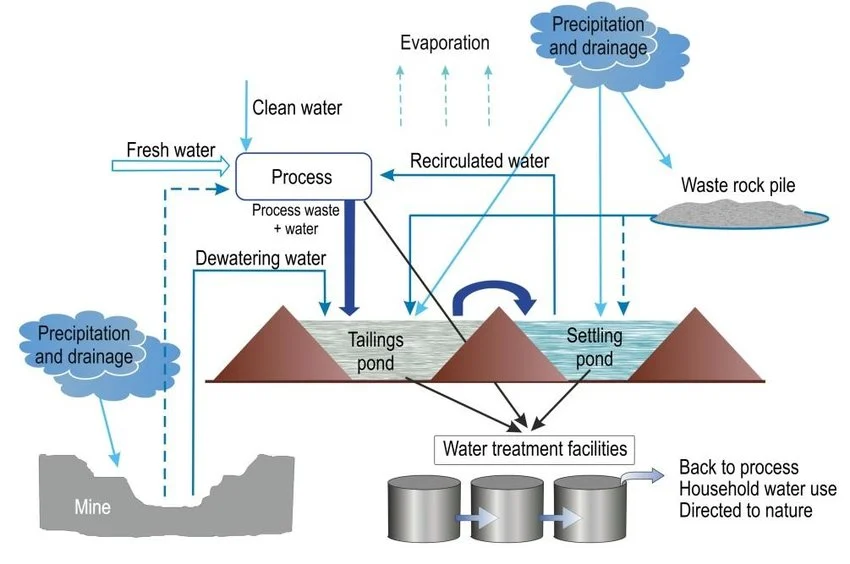
The industry is now running into hard limits that make traditional, linear approaches to water management untenable. You’re seeing the rise of zombie liabilities; long-term water obligations that persist well beyond mine closure, continuously drawing capital without any return. Alongside this sits the persistent handover gap, where the transition from active treatment systems to long-term closure solutions is under-designed, underfunded, or simply assumed to “hold.”

And then there’s the cost curve that doesn’t behave the way many expect. Removing the last fractions, those parts-per-billion levels of specific substances of concern, often requires disproportionate increases in energy, process complexity, and operational control. In certain contexts, that final level of treatment can rival, or even exceed, the cost intensity of earlier-stage operations.

Taken together, these pressures are forcing a shift. Mine water is no longer a compliance exercise, it’s a long-horizon technical and financial challenge that demands far more precision, foresight, and accountability than conventional models were built to handle.

  1. Geochemical Source Control: Designing against the Problem

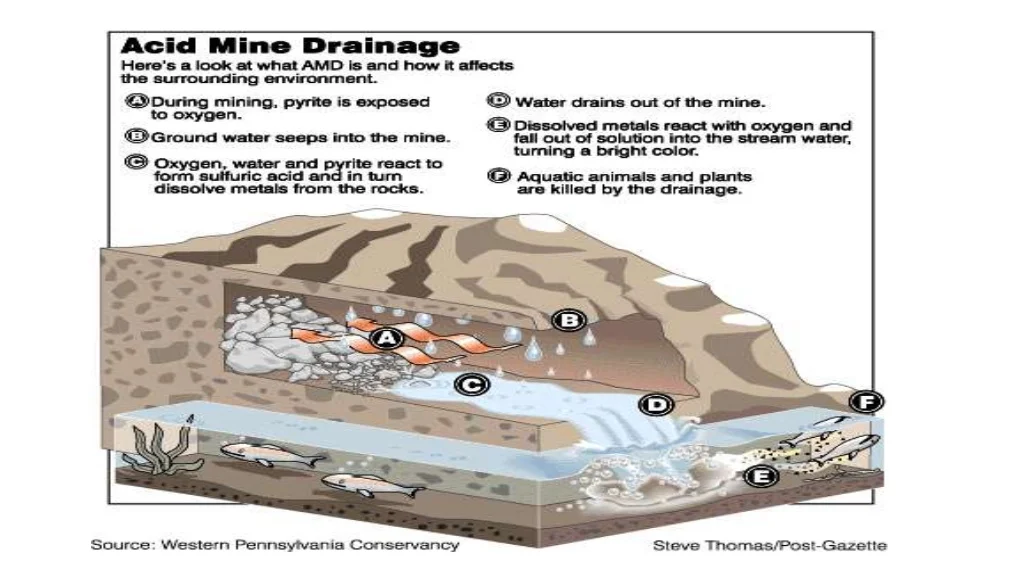
In the mine water treatment industry, experts in Mine Water Treatment Solutions understand the importance of source control, as it addresses the fundamental chemistry of mining before it becomes a liability. That is where aspects of Acid Mine Drainage (AMD) must be intercepted. Instead of treating the mine as a “source of dirty water,” experts treat the mine as a chemical reactor (prevention-based engineering) that can be controlled or deactivated by focusing on rock-air-water interface.
What this looks like in practice:

  • Oxygen limitation strategies: engineered covers or water saturation zones to suppress oxidation kinetics
  • Blended waste placement: pairing acid-generating material with neutralizing rock to stabilize pH evolution
  • Predictive modeling: tools like PHREEQC used not as academic exercises, but as decision frameworks for staging infrastructure

The value here isn’t just reduced treatment demand—it’s predictability. You’re not reacting to water quality spikes; you’re shaping them years in advance. That’s where disciplined engineering separates itself from reactive cost management.

  1. Selective Removal & Resource Recovery: Turning Liabilities into Process Streams

Bulk treatment is expensive because it ignores nuance. When everything is treated equally, everything costs more. The shift toward selective removal is really about precision, targeting what matters and extracting value where possible.
Consider the opportunities:

  • Metal recovery loops: SART systems pulling copper or gold from solution streams (which can be sold to smelter) where ion exchange resins are tuned for specific ions rather than broad removal. 
  • Salt valorization in brine systems: Fractional crystallization producing saleable sodium sulphate or gypsum. That reduces dependence on off-site hazardous disposal

This isn’t just clever chemistry—it’s strategic positioning. You’re moving from a cost center to a hybrid operation where treatment contributes to revenue. Investors notice that shift, because it fundamentally changes how water infrastructure is valued.

  1. Hybrid Treatment Pathways: Planning for Operational Reality and Closure

The lifecycle of a water mine design has to outlive the mine. Most failures in mine water don’t happen during operations. They happen in transition; the mine closes, flows change, chemistry shifts. And suddenly the system that worked yesterday is structurally wrong for today. That’s the real design problem. 

However, a resilient approach doesn’t rely on one technology, it layers capability across time:
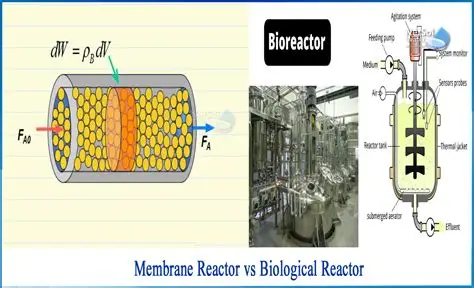
  • During operations: high-density sludge systems and membrane plants absorb variability, peak loads, and production-driven fluctuations
  • During closure: passive systems like wetlands or biochemical reactors take over once flows stabilize and intensity drops

But the real challenge isn’t choosing technologies. It’s designing the handover between them. Because if that transition is wrong, you don’t get closure, you get long-term operational debt disguised as environmental management.

  1. Water Quality Beyond Compliance: The Biological Dimension

Meeting discharge limits is no longer the finish line. Hitting regulatory numbers used to be the goal. It isn’t anymore. You can meet every limit on paper and still release water that quietly damages the ecosystem it enters.

That’s where things get more nuanced:

  • Whole Effluent Toxicity (WET) testing exposes what chemistry hides: It’s not about what’s in the water, it’s about what it does
  • Ionic balance matters more than concentration: Salinity, ionic ratios, small imbalances can ripple through entire ecosystems. Helps avoid high salinity or imbalances that disrupt aquatic life
  • Site-specific ecological alignment: One-size-fits-all discharge doesn’t work, water needs to fit where it’s going, not just pass a standard checklist. Tailoring treatment outputs to match receiving environments

For you as an operator, investor, or project decision-maker, this is bigger than compliance. It’s about avoiding legacy problems that don’t show up immediately, but hit hard when they do.
In essence, in mine water, nothing really disappears, it just shows up later, usually more expensive, and far less forgiving. The difference isn’t technology. It’s mindset. The operations that endure are the ones that stop thinking in phases and start thinking in consequences, because every shortcut taken today has a way of resurfacing when the system is least prepared to absorb it.
Purifiers Combat the Dangers of Methane and Additives found in Natural Gas

Natural gas is an important fuel used for heating and cooling in more than half of all North American homes. But methane, the key component in natural gas, is highly explosive and can become deadly when uncontrolled. Back in 2014, a natural gas explosion in two apartment buildings in New York killed eight people and injured 70 others.

LA Gas LeakIn addition to the risk of explosion, the smell of natural gas can make many people ill. Hundreds of residents of Porter Ranch, near Los Angeles, were recently sickened by a natural gas leak from a nearby underground storage facility a mile away. The cause of their headaches, nausea and nosebleeds was mercaptan, the chemical added to natural gas that smells like rotten eggs.

What is natural gas?

Natural gas is composed primarily (95% or more) of methane, a colorless, odorless, non-toxic flammable gas. Methane is emitted from natural sources such as wetlands and also from industrial and agricultural processes.

Because methane is odorless, an additive known as mercaptan, or methanethiol, is added to natural gas to make the presence of methane detectable. Mercaptan additives contain sulfur, which is the reason natural gas smells like rotten eggs. Exposure to mercaptan can result in a variety of adverse health effects, including irritation of the eyes, skin and respiratory tract. Natural gas can also contain small amounts of potentially harmful volatile organic compounds (VOCs) such as ethane, propane, butane and even toxic compounds such as benzene and toluene.

Methane cannot be filtered. Mercaptan and VOCs can. Unfortunately, methane is not just dangerous – it’s also unfilterable. Adsorption and chemisorption, the two processes by which gas and odor air filters remove chemicals from the air, are ineffective against methane, which has an extremely low molecular weight. As a result, the only effective strategies for reducing indoor methane levels are source control/reduction and increased ventilation.

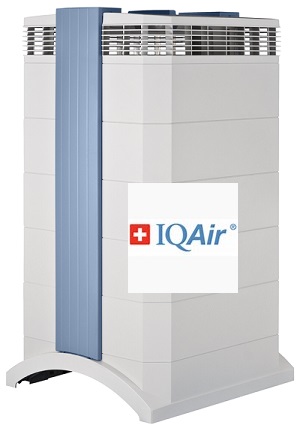
Mercaptan and VOCs, however, can be efficiently filtered with a high-performance air filtration system with a combination of high quality activated carbon and potassium permanganate – such as the IQAir HealthPro Plus or GC MultiGas (at right) room air purifier. The activated carbon provides adsorption of VOCs, and the potassium permanganate provides excellent chemisorption of mercaptan and many other VOCs, such as formaldehyde. The combination of these two filtration media is ideal.

The IQAir HealthPro Plus Air Purifier- made in Switzerland

Importance of monitoring methane levels.

Because methane is so highly explosive, high-performance air filtration to remove the odors associated with natural gas (mercaptan) is not recommended unless sufficient monitoring with a methane detector has determined that levels are safe. Methane detectors, also known as explosive gas detectors, can be purchased at hardware and home-supply stores.

This article is brought to you by The IQAir Group, friends of the Silo who develop innovative air quality solutions for indoor environments around the globe. IQAir is the exclusive educational partner of the American Lung Association for the air purifier industry.

Ask Ontario To Grow Greenbelt To Protect Vital Water Supplies

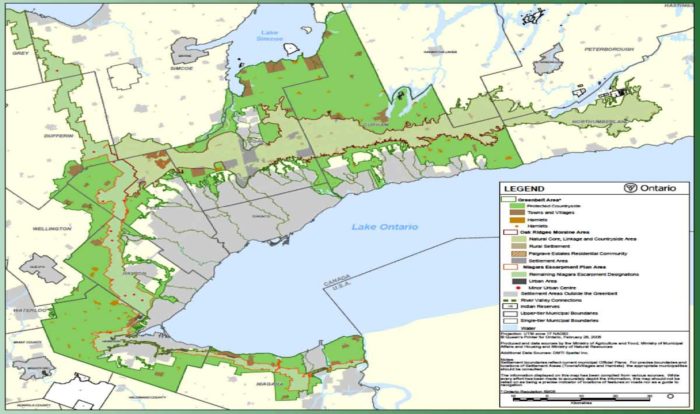
Dear Silo, I share with you and your readers both good news and not so good news. The Province has launched a consultation process on expanding the Greenbelt to protect critical water resources. Several hydrologically significant areas are included in the proposal, but vulnerable areas are missing.

Ontario Oak Ridge Greeenbelt Map

We need to get this right. Ask the Ontario government to expand their proposal and protect a “Bluebelt” of 1.5 million acres to ensure clean water supplies for future generations.

Over 1.25 million people in the region rely on groundwater for their drinking needs. And, our lakes and wetlands are home to numerous at-risk species of fish and wildlife. We urgently need features like moraines, wetlands and headwaters that filter and store water protected from development.

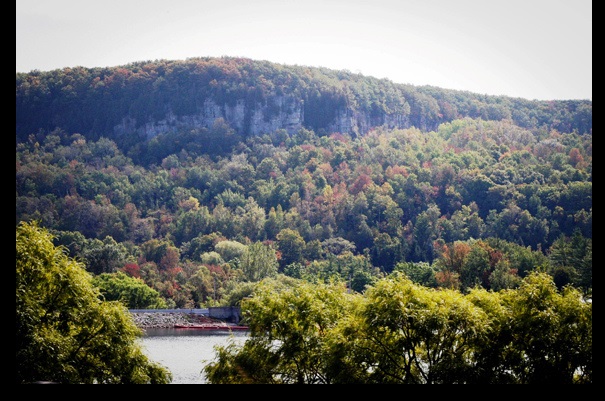
Oak Ridges Moraine Ontario
Oak Ridges Moraine Ontario, Canada

Photo credit: Shezamm

9 in 10 Ontarians support the Greenbelt’s protection of water, farmland and nature. You can be one of them.

Together we can grow the Greenbelt to protect our precious resources.

To learn more, you can read our latest blog.

Susan Lloyd Swail
Livable Communities, Senior Manager

Barrett: Ontario Invasive Species Act Still Needs More Work

When sea lamprey became entrenched in the Great Lakes, the impact on native fish was tremendous. Decades later, we are still battling lamprey, but Asian carp are waiting at the door with ramifications that will make lamprey look tame.

Fallout on ecosystems and native species is often severe, and sometimes irreversible. The damage Asian carp could do to our Great Lakes is unimaginable and the phragmites invasion is choking out wetlands across the province. Damage from invasive species is not just ecological, but also financial with estimates of $7.5 billion annually on forestry and farming.

When passed, the province’s new Invasive Species Act will make Ontario the first province to have such a law. Basically, the bill lays out how to help prevent invasive species, how to detect and respond rapidly to the presence of new invaders, and effectively manage those already established. The concept is admirable, but I do have a few concerns.

The bill has wide-ranging support from various stakeholders, but it is reactionary when in many cases a more proactive approach would be appropriate.

To start, the identification of invasive species will be done through a so-called black list. It requires harm from a species before it will be regulated. However this is reactive rather than preventative. To explain further, the approach to sea lamprey is reactive, whereas the present approach to Asian carp is preventative. It’s easier and less costly to deal with an invasive species before it’s established.

An approach that is frequently recommended, but not used in this bill, is the pathways approach. Using this approach, the regulation of invasive species is based on the risk of invasion via certain pathways so it can be regulated and the risks mitigated. One example is requiring the gutting of all Asian carp imported into Canada for food to make sure they are dead.

The bill does not outline a science-based approach to risk assessment and decision making. My concern is red tape to identify invasive species will hamper prevention efforts.

The act downloads the responsibility of implementation to landowners, but leaves little incentive for landowners to act. As a property owner, I have concerns the bill will be punitive and unfair.

The bill creates two classes of invasives – significant threat and moderate threat. Although there are tools to deal with moderate-threat invasives in provincial parks, there are no tools or authority for private landowners. I have seen this in my own battle against phragmites on our farm and the limited tool kit permissable.

Another concern is the act would create a heavy-handed regulatory scheme that will punish innocent persons who have the misfortune of having an invasive species on their land and download costs of dealing with it to the owner. I am also opposed to the warrantless entry provision for authorities to search property and buildings.

The penalties set out in the act are higher for corporations than individuals. While this concept seems sound, the government failed to take into account the fact many businesses and family farms are incorporated.

I have faith in the science personnel within the Ministry of Natural Resources and Forestry who provided the basis for the act. But I also believe there is a wealth of knowledge amongst anglers, hunters, naturalists, farmers and commercial fishermen and their associations that can be incorporated with more public consultation. Toby Barrett, MPP

SupplementalGreat Lakes Commerical Fisheries Michigan Fish Producers Conference

Bill 167 Ontario’s Invasive Species Act 2014

Grand River Conservation effort targets phragmites- invasive reeds via Roundup

Phragmites

Portions of the Snyder’s Flats Conservation Area will be closed to the public during the week of Sept. 29 while a herbicide is used to control an outbreak of phragmites, an invasive plant species.

Signs will be posted in the parking lot at the entrance to the property on Snyder’s Flats Road near Bloomingdale. The affected sections of the trail network within the conservation area will be marked as closed.

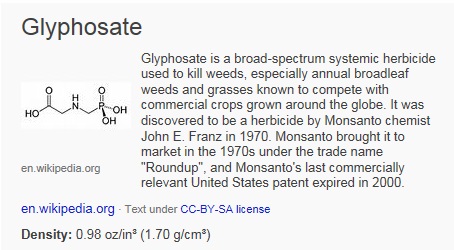
Staff of the Grand River Conservation Authority will be applying the herbicide glyphosate, which is better known by the trade name Roundup. The herbicide has been widely adopted by conservation organizations as a safe and effective way to remove invasive species.

What Is Roundup

The work is scheduled to be done on Monday, Sept. 29 and Tuesday, Sept. 30. The affected areas will be posted for a day after the herbicide is applied. There is a potential that the work could be delayed if there is heavy rain or high winds.

In most areas, the herbicide will be applied by hand to individual plants. Some larger outbreaks will be tackled with backpack-style sprayers.

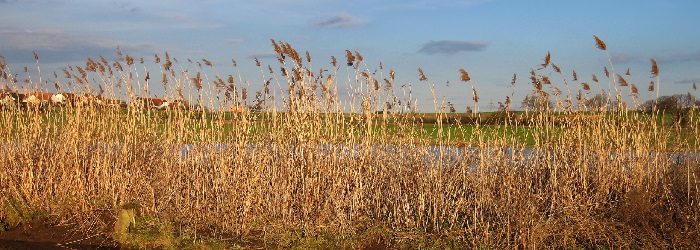
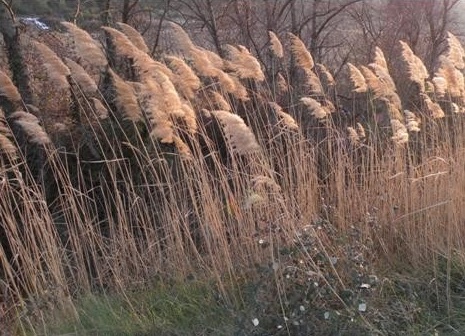
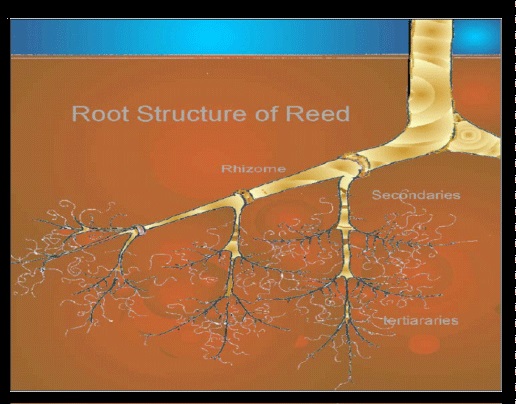
Phragmites australis, also known as European common reed, is a species that came to North America from Eurasia. According to Ontario’s Invading Species Awareness Program, the plant spreads quickly and out-competes native species for water and nutrients. It releases toxins from its roots into the soil to hinder the growth and kill surrounding plants.

Phragmites: tough hombres!

In taking over from native plants, it also reduces the habitat available to wetland wildlife species including birds, turtles and other amphibians and reptiles.

GRCA staff  hope that by reacting quickly to its presence they can keep it from spreading throughout Snyder’s Flats and to other properties.

The work at Snyder’s Flats is part of the GRCA’s long-term program to return the former gravel pit area to a natural state that is home to a wide variety of plant, bird and animal species.

Click to view on I-tunes