America’s Musical Journey follows singer/songwriter Aloe Blacc as he traces the roots of American music and explores the great musical cities- places like New Orleans, Chicago, Nashville, Miami, New York City and more- where such electrifying art forms as jazz, the blues, country, soul and rock and roll were born.
In America’s musical cities, every chord, every riff, every bang of a drum tells a story. In America’s Musical Journey these stories come together to create a soundtrack for the American experience—a soundtrack that showcases the nation’s diversity and its collision of cultures, culminating in a unique blend of sound, music and innovation unlike anywhere else in the world. Click here to read full PDF release.
Singer/songwriter Aloe Blacc tracing the roots of American music.
“There’s something exciting that happens when different cultures come together as they have in America. One of the things that happens is incredible creativity.”
Aloe Blacc- one of the stars of America’s Musical Journey- performing live this month at the U.S. Consulate in Toronto.
America’s Musical Journey is a MacGillivray Freeman Film produced in association with Brand USA and presented by Expedia.
Director: Greg MacGillivray
Producer: Shaun MacGillivray
Executive Producer: Tom Garzilli
Writer: Stephen Judson
Music By: Steve Wood
Editors: Stephen Judson, Jason Paul and Victoria McGinnis
Director of Cinematography: Brad Ohlund
Aerial Cinematographer: Ron Goodman
Production Manager: Meghan MacGillivray
Production Manager: Kathy Almon
Visual Effects: Alan Markowitz
Carroll County, MS – In Defense of Animals has unveiled brand-new, state-of-the-art facilities to care for the Deep South’s most abused animals at Hope Animal Sanctuary in Carroll County, Mississippi. The organization has rescued and rehabilitated animals in Mississippi since 1993, and this weekend it revealed a cutting-edge sanctuary that will support animals and the local community for many years to come. Members of the public joined canine, feline, and barnyard animal residents at a grand opening ceremony on Saturday, May 12, to celebrate and unveil the major face-lift.
“Hope Animal Sanctuary has rescued and rehabilitated thousands of Mississippi’s castoff animals in its 25 years, and these brand new facilities offer new hope to thousands more,” said In Defense of Animals President Dr. Marilyn Kroplick. “Animals find refuge at Hope Animal Sanctuary when they are beaten, blinded, burned, sick, starved, or simply forgotten, and now they will get the top-notch care they deserve in cutting-edge facilities. We are very proud of our quarter-century of work here in the Deep South and thank our generous supporters who have made it happen – their love and compassion is literally written on the bricks.”
Carroll County is a region devoid of animal shelters and other vital animal control services, making In Defense of Animals’ ongoing work beyond critical. The charity’s Hope Animal Sanctuary has rescued, provided refuge, and fought for justice for abused animals in rural Mississippi since 1993. It gives temporary sanctuary to dogs and cats, puppies and kittens, pigs, and horses. Last year, Hope Animal Sanctuary staff placed 700 dogs and cats in forever homes.
Dr. Kroplick cut the ribbon to reveal a new operations center that houses a calming cattery and state-of-the-art veterinary rooms, and will also serve as a welcome and education center for visitors. Traditional dog-kennels have been entirely reinvented as a groundbreaking community of 20 “tiny houses” that encircle the operations center to accommodate groups of rescued dogs and cats.
The cozy community homes are a breakthrough innovation that revolutionizes the way dogs and cats are sheltered. The tiny houses are thoughtfully designed for animals’ comfort first, allowing the occupants to live in a home-like setting while they wait for their loving new guardians. Specially developed to be warm in winter and cool in summer, each tiny house is nestled around a cul de sac and scenic walking path, complete with a covered porch perfect for afternoon napping. Each tiny house has a soft grassy dog run for furry friends to enjoy the play they have been deprived of for so long.
Veterinarians at Mississippi State Veterinary College gave the seal of approval to the novel renovation plans which were developed with a specialized animal sanctuary architect.
Dr. Kroplick paid tribute to several Mississippi animal advocates who have made animal rescue their life’s work.
“The animals and people of Mississippi are incredibly lucky to have animal angel Doll Stanley, a fearless campaigner who founded Hope Animal Sanctuary and has rescued literally thousands of animals during her 25 years service in Mississippi,” said Dr. Marilyn Kroplick. “We owe huge thanks to Stanley and also to Hope Animal Sanctuary’s Debbie Clark, Sharon Stone, and their fearless team who do the hard work, day in, day out, to get mistreated animals into loving homes. It is thanks to these folks’ unfaltering dedication to the animals we stand here today and our work will continue.”
The “Doll House” was unveiled in honor of Hope Animal Sanctuary founder and Mississippi Justice for Animals campaigner Doll Stanley. The founder of In Defense of Animals was also honored by the dedication of the “Dr. Katz Cattery” bearing his name.
In Defense of Animals also paid a touching tribute to the passionate animal advocates who helped rebuild Hope Animal Sanctuary. “We thank all the compassionate, generous In Defense of Animals supporters from around the world who have donated to make the Hope Animal Sanctuary rebuild happen. We especially pay tribute to the memory of Odette Grosz, New Orleans’ “grand dame of animal rights,” for this desperately-needed sanctuary rebuild would not have been possible had she not remembered the animals in her will.”
In Defense of Animals has invested $650,000 to construct the new buildings at Hope Animal Sanctuary that will allow the charity to continue to rescue and give shelter to thousands of homeless and abused animals for many years to come.
Hope Animal Sanctuary receives no government funding, so community residents and businesses are encouraged to support this vital community service by dedicating a memory lane pathway brick or sponsoring a dog run or dog house, all of which can be inscribed to recognize your commitment to serving the most abused animals in the Deep South.
Computer display in John Carpenter’s 1982 sci-fi classic The Thing,
Getting Into Hollywood Accidentally…When I conceived the idea of a computer and technology museum around 25 years ago I didn’t concern myself with things like revenue models and how the place would be funded. Instead, I just worried about getting the coolest (and oldest) pieces of technology I could in order to have the best displays possible and appeal to the widest range of people.
Fortunately, I still think like that. However, the reality of having to pay bills for storage and electricity and all of the other things that come with running a proper business (and make no mistake, a museum is a business) means that on top of having some of the greatest technology pieces in the world to look at I must find ways of making money along the way.
A couple of years ago a production company called me asking for some early computers to use in a documentary about the origins of the internet that was going to run on the Discovery Channel (or was it the History Channel?) The guy was such a quick talker that I never really got a chance to get concrete information on what the show was going to be called or when it was going to air. To this day, I still don’t know if it ever did.
Then the CBC called. They were looking for an older computer running DOS with WordPerfect, the de facto standard in word processing – in 1989. An upcoming episode of “The Fifth Estate” required a computer recreation from the 80’s and they wanted to know if I could help. I missed the initial call and by the time I had gotten back to them, they had located something locally. It was at this time, however, I started thinking differently about our collection.
Some time had passed, and then the television show “Design By Decade” called. They needed some pictures of machines from the 90’s (and yes, in terms of computers, these are now quite ancient) and then Wired magazine asked for pictures as well. People writing Wikipedia articles were asking for permission to use some of our unique photos of machines to enhance their submissions. I started to think that we were really onto something.
When I first heard about a remake of 1982’s “The Thing” I never knew I would have something to do with it. A production designer called about putting computers from that time period into the 2011 remake. The only unfortunate part, because of the nature of the film, was that they would require purchasing the computers, not just renting them. “I can’t very well rent them from you and potentially return them with fake blood on them now can I?” I recall her saying. I had to agree. In the end, none of our computers actually made it into the film but I did my part as a consultant and helped steer the production in the right direction.
Earlier this year (2012), someone from Cineflix Media called. I recognized the name from the American Pickers and Canadian Pickers shows I somehow ended up addicted to. They required a recreation of a 70’s something office with computers and related materials. Dubbed as the “world’s most heroic airborne combat missions” it seemed like the furthest subject matter from computers I could think of, but hey, everyone needs to have an office, right? Getting paid for renting out our equipment was a real bonus, plus we got to be part of something cool. Now I found myself thinking about what the television and movie houses might want and have started acquiring those machines. Typewriters and old cell phones are now filling the nooks and crannies of our storage units.
Most recently a Toronto production company called, producing a film called “Public Service”. A short film that will make its rounds in the film festivals next year, it stars Gil Bellows (“Ally McBeal”) and Sheila McCarthy (“Little Mosque on the Prairie”). The majority of the film takes place in a government office in the mid 70’s and required some hard to find computers. A large one that normally sits in storage because it’s too big for even us to display was used during filming. We are excited to see how it all turned out, but we now feel like we’re pros at renting our stuff out to production companies.
We are presently working on expanding our website to included film and television production rentals as part of our service offering. It has not only become a nice revenue stream for the museum but it’s also exciting being involved in television and film. From the CRT screen, to the LCD screen, to the Silver screen we go! For the Silo, Syd Bolton.
“Inflation”. From the 2013 show. Eclectic. Radical. Awesome.
The Niagara Artists Centre’s (NAC) 2014 STRUTT Wearable Art Show was outlandish, bizarre and like nothing you’d ever seen before. STRUTT took place on November 22, 2014 at the WS Tyler Factory in St. Catharines, ON. Doors opened at 8 p.m. for the first edition of the Niagara Exotic Bazaar and the runway show began at 9 p.m. The show showcased over 40 pieces of wearable art performed by acrobats, aerialists and break-dancers to a live musical score performed by Chiac hip-hopper sensations, Radio Radio. The runway show will also include the debut performance of the mini trip-hopera, Unstrung, featuring music by Paradise Animals,contemporary hip-hop dance troupe Bboyizm, and remarkable masks created by local artist, Clelia Scala. The event website is www.struttwearableartshow.ca.
“We pack a whack of WTF into this thing. We don’t care who you are, or where you’re from, you come to STRUTT and you’ll get your head spun,” says NAC’s Minister of Energy, Minds, and Resources, Stephen Remus. “The artists make fantastic work, the performers tear it up, and we turn the factory into a hedonist’s palace. I don’t think it can be doubted, STRUTT’s the single annual occasion where Niagara genuinely surprises itself.”
STRUTT was a surreal party scene where the absurd is commonplace. As Doug Herod of the St. Catharines Standard reflects, “STRUTT rocks! STRUTT is a wearable art show, but that description doesn’t do it justice. It’s music, it’s entertainment, it’s theatre — and a lot of fun.”
And a few more designs from last year.
In addition to the runway show, STRUTT included the Niagara Exotic Bazaar, a showcase of all that’s weird and wonderful and originating in Niagara, from wine to designer clothing to glassware. The Niagara Exotic Bazzar was sponsored by Shannon Passero and co-presented by NAC and the Garden City Food Co-op.
2018 Weed Index Study reveals the cost of marijuana and highlights the number of grow and head shops in 120 cities around the world:
With a total of 156, Los Angeles, USA has the most headshops.
Madrid, Spain has the largest amount of growshops, with a total of 68.
Tokyo, Japan has the most expensive cannabis, at 32.66 USD per gram, while Quito, Ecuador has the least expensive marijuana, at 1.34 USD per gram.
Based on the average US marijuana tax rates currently implemented, New York City could generate the highest potential tax revenue by legalising weed, with 156.40 million USD per year. New York City also has the highest consumption rate of cannabis, at 77.44 metric tons per year.
Berlin, Germany, 20/04/2018 – ABCD, a data-driven media campaign outlet, has released new data which reveals the number of marijuana head and growshops in 120 cities around the world. This research, which builds on the 2018 Cannabis Price Index released earlier this year, reveals which locations around the world are ready to embrace cannabis legalisation. The aim of the study is to illustrate the continuous need for legislative reform on cannabis use around the world, and to determine if there are any lessons to be learned from those cities at the forefront of marijuana legalization. By including extra data on the number of head and growshops in each city, this new research can be utilized to indicate which cities are prepared for an imminent cannabis reform, while also highlighting which cities are in opposition of marijuana legalisation.
The initial study began by selecting 120 cities across the world, including locations where cannabis is currently legal, illegal and partially legal, and where marijuana consumption data is available. Then, they looked into the price of weed per gram in each city. To calculate how much potential tax a city could make by legalising weed, ABCD investigated how much tax is paid on the most popular brand of cigarettes, as this offers the closest comparison. They then looked at what percentage marijuana is currently taxed in cities where it’s already legalised in the US.
ABCD decided to conduct the extra research in order to to further the discussion around the medical and recreational use of cannabis, and the potential industry and business opportunities that would follow legalisation. By identifying the number of headshops as well as growshops, this study serves as an indicator to a city’s existing cannabis infrastructure and willingness to accept such reform on a larger scale. As an indicating factor, the more head shops and grow shops a city has, the more positive their state’s and general public’s attitude towards the cannabis-related industry is likely to be.
The table below reveals a sample of the results for the 13 US cities featured in the study:
#
City
Legality
Price per gram, US$
Total possible tax collection, if taxed at cigarette level, mil US$
Total possible tax collection, if taxed at average US marijuana taxes, mil US$
Total consumption in metric tons
Headshops
Growshops
1
Washington, DC
Partial
18.08
47.51
20.96
6.18
20
8
2
Chicago
Partial
11.46
119.61
52.77
24.54
91
10
3
Philadelphia
Partial
11.30
68.37
30.16
14.22
41
3
4
Boston
Legal
11.01
28.59
12.61
6.10
49
4
5
New York
Partial
10.76
354.48
156.40
77.44
59
7
6
Dallas
Partial
10.03
51.01
22.5
11.95
80
6
7
Houston
Partial
10.03
89.13
39.32
20.89
125
14
8
Phoenix
Partial
9.35
58.26
25.71
14.65
72
9
9
Miami
Partial
9.27
16.24
7.16
4.12
67
25
10
San Francisco
Legal
9.27
30.94
13.65
7.85
61
3
11
Los Angeles
Legal
8.14
124.88
55.10
36.06
153
46
12
Denver
Legal
7.79
20.53
9.06
6.20
61
21
13
Seattle
Legal
7.58
20.59
9.08
6.39
46
10
The table below shows the top 10 most and least expensive cities for cannabis:
Top 10 Most Expensive Cities
Top 10 Least Expensive Cities
#
City
Country
Legality
Price per gram, US$
#
City
Country
Legality
Price per gram, US$
1
Tokyo
Japan
Illegal
32.66
1
Quito
Ecuador
Partial
1.34
2
Seoul
South Korea
Illegal
32.44
2
Bogota
Colombia
Partial
2.20
3
Kyoto
Japan
Illegal
29.65
3
Asuncion
Paraguay
Partial
2.22
4
Hong Kong
China
Illegal
27.48
4
Jakarta
Indonesia
Illegal
3.79
5
Bangkok
Thailand
Partial
24.81
5
Panama City
Panama
Illegal
3.85
6
Dublin
Ireland
Illegal
21.63
6
Johannesburg
South Africa
Illegal
4.01
7
Tallinn
Estonia
Partial
20.98
7
Montevideo
Uruguay
Legal
4.15
8
Shanghai
China
Illegal
20.82
8
Astana
Kazakhstan
Illegal
4.22
9
Beijing
China
Illegal
20.52
9
Antwerp
Belgium
Partial
4.29
10
Oslo
Norway
Partial
19.14
10
New Delhi
India
Partial
4.38
The table Below shows the top 10 cities with the most growshops:
#
City
Country
Legality
Growshops
1
Madrid
Spain
Partial
68
2
Buenos Aires
Argentina
Partial
48
3
Los Angeles
USA
Legal
46
4
Toronto
Canada
Partial
37
5
Melbourne
Australia
Partial
31
6
Miami
USA
Partial
25
7
London
UK
Illegal
23
8
Barcelona
Spain
Partial
23
9
Denver
USA
Legal
21
10
Berlin
Germany
Partial
20
The table Below shows the top 10 cities with the most headshops:
#
City
Country
Legality
Headshops
1
Los Angeles
USA
Legal
156
2
Houston
USA
Partial
125
3
Chicago
USA
Partial
91
4
Dallas
USA
Partial
80
5
Phoenix
USA
Partial
72
6
Miami
USA
Partial
67
7
San Francisco
USA
Legal
61
8
Denver
USA
Legal
61
9
New York
USA
Partial
59
10
Boston
USA
Legal
49
The table below shows the top 10 cities who could generate the most potential tax by legalising cannabis, if taxed at the same rate as the most popular cigarette brand:
#
City
Country
Legality
Price per gram, US$
% of cigarette tax
Possible tax revenue, mil US$
1
Cairo
Egypt
Illegal
16.15
73.13
384.87
2
New York
USA
Partial
10.76
42.54
354.48
3
London
UK
Illegal
9.20
82.16
237.35
4
Sydney
Australia
Partial
10.79
56.76
138.36
5
Karachi
Pakistan
Illegal
5.32
60.7
135.48
6
Melbourne
Australia
Partial
10.84
56.76
132.75
7
Moscow
Russia
Partial
11.84
47.63
128.97
8
Toronto
Canada
Partial
7.82
69.8
124.15
9
Chicago
USA
Partial
11.46
42.54
119.61
10
Berlin
Germany
Partial
13.53
72.9
114.77
N.B. % of cigarette tax refers to the tax percentage on the most popular brand. Possible tax revenue refers to the total possible tax collection per year, if taxed at cigarette level. For a full explanation of how the study was conducted, please see the methodology at the bottom of the press release.
The table below shows the top 10 cities who could generate the most potential tax by legalising cannabis, if taxed at the average US marijuana tax rate:
#
City
Country
Legality
Price per gram, US$
Possible tax revenue, mil US$
1
New York
USA
Partial
10.76
156.4
2
Cairo
Egypt
Illegal
16.15
98.78
3
London
UK
Illegal
9.20
54.22
4
Chicago
USA
Partial
11.46
52.77
5
Moscow
Russia
Partial
11.84
50.82
6
Sydney
Australia
Partial
10.79
45.75
7
Melbourne
Australia
Partial
10.84
43.9
8
Karachi
Pakistan
Illegal
5.32
41.89
9
Houston
USA
Partial
10.03
39.32
10
Toronto
Canada
Partial
7.82
33.38
N.B. Possible tax revenue refers to the total possible tax collection per year, if taxed at average US marijuana tax rate.
The table below shows the top 10 cities with the highest and lowest consumption of cannabis, per year:
Highest Consumers of Cannabis
Lowest Consumers of Cannabis
#
City
Country
Legality
Price per gram, US$
Total consumption, metric tons
#
City
Country
Legality
Price per gram, US$
Total consumption, metric tons
1
New York
USA
Partial
10.76
77.44
1
Singapore
Singapore
Illegal
14.01
0.02
2
Karachi
Pakistan
Illegal
5.32
41.95
2
Santo Domingo
Dominican Rep.
Illegal
6.93
0.16
3
New Delhi
India
Partial
4.38
38.26
3
Kyoto
Japan
Illegal
29.65
0.24
4
Los Angeles
USA
Legal
8.14
36.06
4
Thessaloniki
Greece
Partial
13.49
0.29
5
Cairo
Egypt
Illegal
16.15
32.59
5
Luxembourg City
Luxembourg
Partial
7.26
0.32
6
Mumbai
India
Partial
4.57
32.38
6
Panama City
Panama
Illegal
3.85
0.37
7
London
UK
Illegal
9.20
31.4
7
Reykjavik
Iceland
Illegal
15.92
0.44
8
Chicago
USA
Partial
11.46
24.54
8
Asuncion
Paraguay
Partial
2.22
0.46
9
Moscow
Russia
Partial
11.84
22.87
9
Colombo
Sri Lanka
Illegal
9.12
0.59
10
Toronto
Canada
Partial
7.82
22.75
10
Manila
Philippines
Illegal
5.24
0.6
N.B. Total consumption is calculated per annum.
Further findings:
Shanghai, China has a large population of 24.15 million, has however no headshops or growshops in the city, underlining a resistance against cannabis reform.
On average, the status of legality (e.g. Legal, Partial or Illegal) coincides with the amount of headshops and growshops found in each city. The favourable the laws, the better the cannabis infrastructure
New York City, USA has the highest consumption rate of cannabis, at 77.44 metric tons per year.
Boston, USA has the most expensive cannabis of all the cities where it’s legal, at 11.01 USD, while Montevideo, Uruguay has the least expensive at 4.15 USD.
While Tokyo, Japan has the most expensive cannabis of all cities where it’s illegal, at 32.66 USD, Jakarta, Indonesia has the least expensive at 3.79 USD, despite being classed as a Group 1 drug with harsh sentences such as life imprisonment and the death penalty.
For cities where cannabis is partially legal, Bangkok, Thailand has the most expensive at 24.81 USD, while Quito, Ecuador has the least expensive at 1.34 USD.
Bulgaria has the highest tax rates for the most popular brand of cigarettes, at 82.65%, while Paraguay has the lowest, with rates of 16%.
Cairo, Egypt would gain the most revenue in tax if they were to legalise cannabis and tax it as the same rate as cigarettes, at 384.87 million USD. Singapore, Singapore would gain the least, at 0.14 million USD, due in part to the city’s low consumption of marijuana at 0.02 metric tons per annum.
Based on the average US marijuana tax rates currently implemented, New York City could generate the highest potential tax revenue by legalising weed, with 156.4 million USD per year. Singapore, Singapore would gain the least, at 0.04 million USD.
The full results of the 2018 Cannabis Price Index:
#
City
Country
Legality
Price per gram, US$
Taxes of cigarettes, % of the most sold brand
Total possible tax collection, if taxed at cigarette level, mil US$
Total possible tax collection, if taxed at average US marijuana taxes, mil US$
Total Consumption in metric tons
1
Tokyo
Japan
Illegal
32.66
64.36
32.14
9.37
1.53
2
Seoul
South Korea
Illegal
32.44
61.99
31.61
9.57
1.57
3
Kyoto
Japan
Illegal
29.65
64.36
4.64
1.35
0.24
4
Hong Kong
China
Illegal
27.48
44.43
19.72
8.33
1.62
5
Bangkok
Thailand
Partial
24.81
73.13
99.11
25.44
5.46
6
Dublin
Ireland
Illegal
21.63
77.80
29.31
7.07
1.74
7
Tallinn
Estonia
Partial
20.98
77.24
22.13
5.38
1.37
8
Shanghai
China
Illegal
20.82
44.43
49.12
20.75
5.31
9
Beijing
China
Illegal
20.52
44.43
43.10
18.21
4.73
10
Oslo
Norway
Partial
19.14
68.83
19.28
5.26
1.46
11
Washington, DC
USA
Partial
18.08
42.54
47.51
20.96
6.18
12
Cairo
Egypt
Illegal
16.15
73.13
384.87
98.78
32.59
13
Reykjavik
Iceland
Illegal
15.92
56.40
3.97
1.32
0.44
14
Belfast
Ireland
Illegal
15.81
77.80
13.55
3.27
1.10
15
Minsk
Belarus
Illegal
15.80
51.15
9.08
3.33
1.12
16
Athens
Greece
Partial
14.95
79.95
7.42
1.74
0.62
17
Auckland
New Zealand
Partial
14.77
77.34
106.03
25.73
9.28
18
Munich
Germany
Partial
14.56
72.90
50.90
13.10
4.80
19
Helsinki
Finland
Partial
14.42
81.53
27.12
6.24
2.31
20
Singapore
Singapore
Illegal
14.01
66.23
0.14
0.04
0.02
21
Berlin
Germany
Partial
13.53
72.90
114.77
29.55
11.64
22
Stuttgart
Germany
Partial
13.50
72.90
20.20
5.20
2.05
23
Thessaloniki
Greece
Partial
13.49
79.95
3.17
0.75
0.29
24
Stockholm
Sweden
Illegal
13.20
68.84
15.06
4.11
1.66
25
Vienna
Austria
Partial
12.87
74.00
59.21
15.02
6.22
26
Copenhagen
Denmark
Partial
12.47
74.75
20.65
5.18
2.22
27
Moscow
Russia
Partial
11.84
47.63
128.97
50.82
22.87
28
Hamburg
Germany
Partial
11.64
72.90
50.16
12.92
5.91
29
Chicago
USA
Partial
11.46
42.54
119.61
52.77
24.54
30
Philadelphia
USA
Partial
11.30
42.54
68.37
30.16
14.22
31
Bucharest
Romania
Partial
11.18
75.41
17.23
4.29
2.04
32
Cologne
Germany
Partial
11.14
72.90
28.51
7.34
3.51
33
Geneva
Switzerland
Partial
11.12
61.20
5.90
1.81
0.87
34
Boston
USA
Legal
11.01
42.54
28.59
12.61
6.10
35
Adelaide
Australia
Partial
10.91
56.76
41.60
13.75
6.72
36
Istanbul
Turkey
Partial
10.87
82.13
21.79
4.98
2.44
37
Melbourne
Australia
Partial
10.84
56.76
132.75
43.90
21.58
38
Sydney
Australia
Partial
10.79
56.76
138.36
45.75
22.59
39
New York
USA
Partial
10.76
42.54
354.48
156.40
77.44
40
Düsseldorf
Germany
Partial
10.70
72.90
15.82
4.07
2.03
41
Brisbane
Australia
Partial
10.63
56.76
66.88
22.12
11.09
42
Hanover
Germany
Partial
10.51
72.90
13.46
3.47
1.76
43
Prague
Czech Rep.
Partial
10.47
77.42
63.95
15.50
7.89
44
Frankfurt
Germany
Partial
10.29
72.90
18.06
4.65
2.41
45
Wellington
New Zealand
Partial
10.11
77.34
19.53
4.74
2.50
46
Dallas
USA
Partial
10.03
42.54
51.01
22.50
11.95
47
Houston
USA
Partial
10.03
42.54
89.13
39.32
20.89
48
Vilnius
Lithuania
Illegal
10.00
75.76
5.20
1.29
0.69
49
Zurich
Switzerland
Partial
9.71
61.20
10.33
3.17
1.74
50
Montpellier
France
Illegal
9.70
80.30
12.21
2.85
1.57
51
Canberra
Australia
Partial
9.65
56.76
10.96
3.63
2.00
52
Zagreb
Croatia
Partial
9.43
75.26
24.35
6.07
3.43
53
Nice
France
Illegal
9.40
80.30
15.80
3.69
2.09
54
Phoenix
USA
Partial
9.35
42.54
58.26
25.71
14.65
55
Paris
France
Illegal
9.30
80.30
102.25
23.90
13.69
56
Miami
USA
Partial
9.27
42.54
16.24
7.16
4.12
57
San Francisco
USA
Legal
9.27
42.54
30.94
13.65
7.85
58
London
UK
Illegal
9.20
82.16
237.35
54.22
31.40
59
Colombo
Sri Lanka
Illegal
9.12
73.78
3.98
1.01
0.59
60
Riga
Latvia
Illegal
9.00
76.89
10.23
2.50
1.48
61
Bratislava
Slovakia
Illegal
8.92
81.54
7.24
1.67
1.00
62
Milan
Italy
Partial
8.85
75.68
46.06
11.42
6.88
63
Varna
Bulgaria
Illegal
8.83
82.65
4.84
1.10
0.66
64
Marseille
France
Illegal
8.69
80.30
36.23
8.47
5.19
65
Glasgow
UK
Illegal
8.65
82.16
15.21
3.47
2.14
66
Toulouse
France
Illegal
8.62
80.30
18.67
4.36
2.70
67
Birmingham
UK
Illegal
8.58
82.16
27.73
6.34
3.93
68
Kuala Lumpur
Malaysia
Illegal
8.54
55.36
6.61
2.24
1.40
69
Monterrey
Mexico
Partial
8.45
65.87
4.17
1.19
0.75
70
Edinburgh
UK
Illegal
8.41
82.16
12.22
2.79
1.77
71
Lisbon
Portugal
Partial
8.36
74.51
4.69
1.18
0.75
72
Strasbourg
France
Illegal
8.35
80.30
11.13
2.60
1.66
73
Warsaw
Poland
Partial
8.31
80.29
29.27
6.84
4.39
74
Lyon
France
Illegal
8.20
80.30
19.45
4.55
2.95
75
Los Angeles
USA
Legal
8.14
42.54
124.88
55.10
36.06
76
Liverpool
UK
Illegal
7.94
82.16
10.86
2.48
1.67
77
Amsterdam
Netherlands
Partial
7.89
73.40
20.94
5.35
3.61
78
Manchester
UK
Illegal
7.88
82.16
58.99
13.48
9.11
79
Rome
Italy
Partial
7.86
75.68
88.16
21.86
14.82
80
Toronto
Canada
Partial
7.82
69.80
124.15
33.38
22.75
81
Denver
USA
Legal
7.79
42.54
20.53
9.06
6.20
82
Naples
Italy
Partial
7.75
75.68
29.82
7.40
5.08
83
Leeds
UK
Illegal
7.67
82.16
16.93
3.87
2.69
84
Seattle
USA
Legal
7.58
42.54
20.59
9.08
6.39
85
Madrid
Spain
Partial
7.47
78.09
93.40
22.45
16.01
86
Calgary
Canada
Partial
7.30
69.80
52.23
14.05
10.25
87
Luxembourg City
Luxembourg
Partial
7.26
70.24
1.62
0.43
0.32
88
San Jose
Costa Rica
Partial
7.23
69.76
7.84
2.11
1.56
89
Buenos Aires
Argentina
Partial
7.13
69.84
25.32
6.81
5.09
90
Brussels
Belgium
Partial
7.09
75.92
15.50
3.83
2.88
91
Santo Domingo
Dominican Rep.
Illegal
6.93
58.87
0.67
0.21
0.16
92
Graz
Austria
Partial
6.84
74.00
4.81
1.22
0.95
93
Budapest
Hungary
Illegal
6.74
77.26
7.70
1.87
1.48
94
Sofia
Bulgaria
Illegal
6.66
82.65
12.83
2.91
2.33
95
Ottawa
Canada
Partial
6.62
69.80
35.43
9.53
7.67
96
Vancouver
Canada
Partial
6.40
69.80
23.44
6.30
5.25
97
Sao Paulo
Brazil
Partial
6.38
64.94
68.55
19.81
16.55
98
Rotterdam
Netherlands
Partial
6.33
73.40
12.75
3.26
2.74
99
Ljubljana
Slovenia
Partial
6.32
80.41
3.43
0.80
0.67
100
Barcelona
Spain
Partial
6.23
78.09
39.59
9.51
8.14
101
Montreal
Canada
Partial
6.15
69.80
60.52
16.27
14.10
102
Kiev
Ukraine
Partial
6.00
74.78
14.73
3.70
3.28
103
Abuja
Nigeria
Illegal
5.88
20.63
7.40
6.73
6.10
104
Lima
Peru
Partial
5.88
37.83
12.28
6.09
5.52
105
Mexico City
Mexico
Partial
5.87
65.87
22.58
6.43
5.84
106
Cape Town
South Africa
Illegal
5.82
48.80
2.47
0.95
0.87
107
Karachi
Pakistan
Illegal
5.32
60.70
135.48
41.89
41.95
108
Manila
Philippines
Illegal
5.24
74.27
2.32
0.59
0.60
109
Rio de Janeiro
Brazil
Partial
5.11
64.94
28.82
8.33
8.69
110
Mumbai
India
Partial
4.57
60.39
89.38
27.78
32.38
111
New Delhi
India
Partial
4.38
60.39
101.20
31.45
38.26
112
Antwerp
Belgium
Partial
4.29
75.92
4.10
1.01
1.26
113
Astana
Kazakhstan
Illegal
4.22
39.29
1.78
0.85
1.07
114
Montevideo
Uruguay
Legal
4.15
66.75
19.54
5.50
7.06
115
Johannesburg
South Africa
Illegal
4.01
48.80
3.76
1.45
1.92
116
Panama City
Panama
Illegal
3.85
56.52
0.81
0.27
0.37
117
Jakarta
Indonesia
Illegal
3.79
53.40
1.92
0.68
0.95
118
Asuncion
Paraguay
Partial
2.22
16.00
0.16
0.19
0.46
119
Bogota
Colombia
Partial
2.20
49.44
15.80
6.00
14.53
120
Quito
Ecuador
Partial
1.34
70.39
0.56
0.15
0.60
Methodology
Selection of the cities:
To select the cities for the study, Seedo first looked at the top and bottom cannabis consuming countries around the world. Then they analysed nations where marijuana is partially or completely legal, as well as illegal, and selected the final list of 120 cities in order to best offer a representative comparison of the global cannabis price.
Data:
Price per gram, US$ – Crowdsourced city-level surveys adjusted to World Drug Report 2017 of the United Nations Office on Drugs and Crime.
Taxes on Cigarettes, % of the most sold brand – Taxes as a percentage of the retail price of the most sold brand (total tax). Source: Appendix 2 of the WHO report on the global tobacco epidemic, 2015.
Annual possible tax collection is calculated in the following way:
Population: latest available local population data sources.
Annual Prevalence (percentage of population, having used weed in the year). Source: World Drug Report 2017 of the United Nations Office on Drugs and Crime
Average Consumption of weed per year in grams (people who consumed weed at least once in the previous year).
Estimation, with the assumption, that one use of weed on average means one joint.
One joint is assumed to have 0.66 grams of weed as in the paper of Mariani, Brooks, Haney and Levin (2010).
The distribution of use during the year is assumed to be the same as in Zhao and Harris (2004), where the yearly usage varies from once or twice a year to everyday.
Population: latest available local population data sources.
Annual Prevalence (percentage of population, having used weed in the year). Source: World Drug Report 2017 of the United Nations Office on Drugs and Crime
Average Consumption of weed per year in grams (people who consumed weed at least once in the previous year).
Estimation, with the assumption, that one use of weed on average means one joint.
One joint is assumed to have 0.66 grams of weed as in the paper of Mariani, Brooks, Haney and Levin (2010).
The distribution of use during the year is assumed to be the same as in Zhao and Harris (2004), where the yearly usage varies from once or twice a year to everyday.
US tax level – Average tax level in the states of US where weed is legal: Alaska, California, Colorado, Maine, Massachusetts, Nevada, Oregon and Washington. Includes retail sales taxes, state taxes, local taxes and excise taxes.
Growshops – Sourced via Google Maps Listings 2018
Headshops – Sourced via Google Maps Data Listings 2018
Legality
Legal, if possession and selling for recreational and medical use is legal.
Illegal, if possession and selling for recreational and medical use is illegal.
Partial, if
Possession of small amounts is decriminalised (criminal penalties lessened, fines and regulated permits may still apply)
OR medicinal use legal
OR possession is legal, selling illegal
OR scientific use legal
OR usage allowed in restricted areas (e.g. homes or coffee shops)
OR local laws may apply to legality (e.g. illegal at federal level, legal at state level)
First quote: Based on New York City Council’s free lunch initiative which began in September 2017, with 1.1 million public school children, at a cost of $1.75 per child per day.
Before you contemplate the pictures above lets flash-back to Friday 13th, 1984, when Chris Simons, a local biker, and a few of his buddies met in the “ZOO,” a local watering hole, to shoot the breeze and have a few cold ones. They agreed to meet every Fri. 13th and pass the idea on to friends. And so it began.
Friday the 13th in Port Dover,ON
Many local people, including the Municipal Council, feared the 1% of potentially violent bikers invading Norfolk County (as opposed to the 99% of peaceful riders), but as it grew into the biggest money making event the Kinsmen had ever seen, the need for some organization became evident.
The word went out to “LEAVE YOUR COLOURS AND ATTITUDES AT HOME,” otherwise the Council threatened to shut it down. The Kinsmen knew the bikers would continue to come and numbers would soar. The Coffin Bike and even Santa Claus were soon regular attendees as well as the Motor Maids (6000 strong nation-wide) and the Christian Riders.
HOG (Harley Owners Group) and BRO (Bikers Rights Organization) were present. By 1999 the OPP reported 12 outlaw biker clubs present in Port Dover, including Satan’s Choice, Hells Angels, Outlaws, Nomads, Para-Dice Riders, Red Devils, Piston Pushers, and even Banditos. Still, no violence erupted and over 100 police were brought in to maintain order.
As word spread Port Dover became THE place to be on Friday The 13th. Bikes were showing up from Quebec, Manitoba, Nova Scotia and B.C., as well as Americans from as far away as Florida. Even several Brits put their bike on a ship and came over.
Tim Hortons Drive-Thru soon was a walk-through. Yard Sales were common; seniors sold food to pay for a wheelchair-van. Pop, water and Freezies were sold from many local yards and eateries. Bars and beer gardens struggled to meet the demand in the summer months.
Big name bands were soon playing, like Steppenwolf, Colin James, Blue Rodeo, Dry County, Tragically Hip and local favourites. As the 20th century came to a close over 100,000 people were attending in the summer months.
As crowds swelled to over 150,000 in a town of 4,500, businesses placed “WELCOME BIKERS” signs in their storefronts and traffic backed up to Simcoe in the West and Cayuga in the East. Lodgings were booked-up for a year in advance and campgrounds swelled to full capacity quickly. Some businesses closed for the day like law offices, pharmacies, hardware stores and banks, though they stocked their debit machines full and went to work with the service clubs.
In 2009 The Port Dover Board of Trade, Kinsmen and the Lions partnered to run this massive event. The Kinsmen now handle bookings for 100 vendors in Powell Park and the Harbor Front, and run a 1,200 capacity beer garden. They monitor about 1200 campers in Kinsmen Park and Doverwood School, as well as selling souvenirs, including over 1,000 t-shirts. Shuttles are provided to haul campers to the action downtown.
Over the years the Kinsmen Club recruited many others to help, like Minor Softball and Hockey, Hard ball, Jr. Hockey, Figure Skating, Soccer, Maureen Dodds Art Foundation, Alzheimers, Big Brothers, High School Council (the Port Dover High School was closed a few years ago) Scouts K. of C., and the Harbor Museum. Other Kin Clubs came on board as did “Support our School.” At one point 26 other groups assisted the Kinsmen with everybody getting a share of the pie. It’s well known that bikers come back to visit Port Dover even when it’s not Fri. 13, as can be witnessed on any good weekend throughout the summer. The welcome mat is out so come visit us on Friday, September 13th, 2013 and every Friday the 13th to follow. For the Silo……Yours in Kin: Life Member Dave C.
The payments world has long been governed by the world’s great financial institutions. Banks and states have dominated the world’s spending habits, regulating transactions and payment methods.
The last decade has seen a shift away from the great institutions having total control over the financial landscape, and it’s been largely down to the digital revolution. Recent years have seen growing partnerships with the technology industry. Tech has sought more innovative ways for the financial industry to operate, and a greater freedom for consumers to spend their money.
Find current trends and what the future has in store for spending in this interesting infographic below from our friends at moneyguru.com. At the time of posting 1 British Pound = $1.42 US and $1.79 CDN.
Occasionally I will have a Maud Lewis painting displayed for sale in my shop, and it is sometimes interesting to get people’s reactions to a $6,000 painting that at first glance looks like their 12 year old niece painted it. “My goodness will you look at that,” and some covered up snickering, pretty well expresses their complete disbelief that something so simple could possibly be worth so much money.
Sometimes I give a brief description of the circumstances of her simple Nova Scotia life, and add fuel to the fire by informing them that while she was alive she sold paintings for 12 to 15 dollars from her tiny house by the side of the road. I then suggest it is probably simplest to think in terms of supply and demand. The supply of these paintings has stopped since her death in 1970, and there are many more people wanting them than there are paintings available. This of course skirts the main issue: how could anything like this be desirable in the first place? To find the answer you have to go a lot deeper.
Beauty is in the eye of the beholder, and for some people—I include myself in this group—great value is placed on anything that manages to capture, or in some way manifest, beauty. I do not mean “pretty picture” beauty here. I mean creations that celebrate existence, or connect to a greater truth. I mean something that has energy.
This energy can be found in the works of trained and untrained artists alike. The real value in truly great works of art is in experiencing them, and in doing so being educated and transformed by them. Understanding beauty is our salvation. Money really just confuses the issue. Put in relative terms: $4 million for a Tom Thompson and $6,000 for a Maud Lewis—the Lewis is still cheap. For the Silo, Phil Ross.
WASHINGTON, DC- In Defense of Animals welcomes the decision made by appropriations leaders in Congress in the United States to reject budget language that would have led to the mass slaughter of North America’s imperiled wild horses and burros and the reintroduction of equine slaughterhouses in the US.
“For the love of North America’s heritage, for the respect of wild horses and burros, we are thrilled that Congress has rejected this sick horse slaughter plans,” said Marilyn Kroplick M.D. President of In Defense of Animals. “In America, Congress has sent an important message that it will not have the blood of sentient beings on its hands. This is a victory for animal advocates and the majority of North Americans who want solutions, not slaughter.”
In its 2018 spending request, the Trump Administration asked to authorize the killing and sale to slaughter of tens of thousands of captive wild horses and burros and the destruction of up to 50,000 free-roaming equines the BLM claims are “excess” on public lands. Secretary of the Interior Ryan Zinke and his pro-slaughter allies actively pushed the killing plan, aiming to reduce the number of wild horses to 27,000, the same number that triggered the passage of the 1971 Wild Horses and Burros Act to prevent their extinction.
The Administration also proposed funding inspections for equine slaughter in the US, a step that would bring back the days of horse meat markets and threaten the US food supply with unregulated contaminants.
Advocates and animal welfare groups pushed back hard. Thousands of In Defense of Animals supporters and other advocates jammed Congressional phone lines with calls and sent tens of thousands of emails to maintain federal protections for these heritage animals. In Defense of Animals and nearly 100 civic organizations presented a Unified Statement (read full PDF click here) outlining principles and recommendations for humane, cost-effective, on-range management of America’s wild horses and burros.
In response to constituent pressures and the united voices of advocates, the Senate chose to keep protections in place. The language released today for the Omnibus spending bill for 2018 contains no language authorizing horse slaughter or wild equine killing. The Omnibus budget is scheduled to be put to a vote soon.
But the fight is far from over. The Trump Administration’s FY 2019 budget request again calls for Congress to approve “unlimited sales” and mass killing of wild horses and burros in holding facilities and on the range.
“The battle is won, but the fight is far from over,” said Kroplick. “We will never back down or stop fighting for wild horses to remain on public lands.” For the Silo, Charlotte Roe.
In Defense of Animals is an international animal protection organization with over 250,000 supporters and a 30-year history of fighting for animals, people and the environment through education, campaigns and hands-on rescue facilities in India, Africa, and rural Mississippi.
IN DEFENSE OF ANIMALS • 3010 KERNER BLVD. • SAN RAFAEL, CA 94901 • 415-448-0048
I used to watch more foreign films. In my idealistic twenties I guess. But lately I’ve gotten lazy, and when I sit down for a movie the last thing I want to do is read subtitles. I do make some exceptions however. This is fortunate, for there are some truly exceptional films out there not made in English. And really, after five or ten minutes I completely forget I’m reading anyway.
A few years ago, I caught two incredible French films on Netflix Canada that I still highly recommend. The first is 2010’s Les Emotifs Anonymes (Romantics Anonymous), a genuinely delightful romantic comedy that follows the formula to some extent, but also transcends it with the originality of its script and the utterly captivating performances of its leads.
The formula I’m referring to is this: two attractive people meet, there is instant chemistry, and then numerous obstacles appear to twist and turn the plot and thwart their progress in realizing their love. The difference here is that the male and female protagonists look like real people, and the principle obstacles at play are their near crippling anxiety disorders.
How refreshing it is to watch a female lead (the luminous Isabelle Carre) who is truly “pretty as a picture,” but with imperfect hair and very-little-to-no makeup, make sparks and then run away from a co-star (Benoit Poelvoorde), who looks like the quintessential everyman, and, simultaneously, like a quirky and charming French gentleman.
This is a laugh out loud comedy that may have you, by the end, falling in love with one or both of these marvelous, messed up characters and doing some deep, warm smiling in the process, something I value most highly.
The second film, Coco Avant Chanel (Coco Before Chanel), goes back to 2009 and stars French beauty Audrey Tautou (Amelie, Dirty Pretty Things) as the now iconic Gabrielle “Coco” Chanel.
In this outstanding bio-pic we watch Chanel transform from a smart but bitter young woman in late 19th century France who must overcome obstacles of her own—in this case gender and poverty, two major impediments to success and independence at that time—to realize her dream of something greater. We watch that dream, vague at first, take greater definition and clarity until Chanel is revealed as the creative and business genius whose name would become a household word and whose designs would literally revolutionize women’s fashion in the west.
Gone are the restrictive corsets http://www.marquise.de/en/themes/korsett/korsett.shtml and meringue-y feathers and frills; Chanel was inspired to make clothes for women that were simple, elegant, modern and, perhaps most revolutionary of all, comfortable to wear. Tautou herself, as Chanel, becomes more compelling and beautiful as her character gradually realizes her destiny. And I would be remiss not to mention another dynamite performance by Benoit Poelvoorde, whose demeanor is so different in this film that I didn’t even recognize him as the same actor. Of course he has a mustache here as well—devious disguise.
This story solidifies Chanel’s stature as the woman who changed the direction of western fashion and created couture. How many artists have such a profound effect on their culture, let alone in their own lifetimes? Chanel continued to work until her death in 1971. Both films can be found by searching their English names on Netflix or, if you’re lucky, at your local video store. For the Silo, Alan Gibson.
Disney’s acquisition of 21st Century Fox means that the House of Mouse now controls a huge amount of our most beloved films and television series.
Announced in December 2017 and expected to take until at least 2021 to complete, this $66.1 Billion USD deal (that included taking on a size-able debt portfolio from Fox) ranks among the largest mergers of its kind in history.
We’ve compared these media giants, looked at the potential impact of the deal on both their own employees and the end user and demonstrated how Disney is looking to leverage this deal to break into new markets.
Read on to see how the merger will affect everything from television and the cinema box office to streaming platforms and sports broadcasting this comprehensive infographic from our friends at abcfinancial.co.uk.
Farmland development throughout wind-powered Ontario has resulted in the hiring of many consulting archaeologists by developers of solar panels and wind turbine farms and the public continues to wonder why so much attention is given to archaeological sites several thousand years old that hold little or no cultural value to the people who live there today. One reason is simple to explain: developers closely follow the laws of the Ontario Heritage Act, which promotes the protection, and conservation of heritage sites before and after European Contact and therefore are bound to archaeology. The Heritage Act came into force in 1975 as a way to protect archaeological sites. Even architectural structures built over a century ago come under the protection of the Heritage act if deemed of historical significance.
This photo shows a ‘feature’- where stone flakes were recovered from a flintknapping moment about 7,000 years ago.
But other than the legal issues, what is all the fuss about these archaeological sites in Ontario rural municipalities? Well, a lot has to do with how little the public knows about the earliest people who began to inhabit the Great Lakes region over 10,000 years ago. Increased development has resulted in many archaeological sites being uncovered, which helps to answer questions such as: who were these early people? How did they survive? [Especially during a time of mammoths and glaciers CP] Where did they come from? How were they impacted by climatic changes? How long did they live on the landscape before being replaced by other groups of people? Which leads to another, penultimate question: How can these questions be answered?
Complying with the Heritage Act- solar and wind power developers are hiring more and more consultant archaeology firms to conduct studies of Ontario farmland. This picture taken on July 17, 2012 at an area East of Nanticoke, Ontario. photo: The Silo
Here is one way. Archaeologists working on a site discovered a location where an ancient person was breaking stone into smaller pieces for making stones tools. Archaeologists found a location below the ground surface where pieces of stone fell and remained for over 7,000 years. One of the first questions archaeologists tried to answer is was that person standing or sitting down at that particular location when they dropped the pieces of stone.
The best way to answer that question was to do “experimental archaeology”. In this case, stone tools left in a forest are observed to determine how natural processes move and cover artifacts over time. Some stone tools are ‘dropped’ or left while standing and others while sitting down on a log or other structure. The difference in posture and stance and the difference in the height of the drop affect the way the pieces of stone fall, land and how they orient themselves on the ground.
Click to view on I-tunes
This affects the way that they are weathered, covered and deposited. After a long period of experimenting and observation, it was determined that a person likely sat on a log while making their stone tools. The broken flakes of stone, covered and protected by forest debris, resulted in a well-preserved location where someone once sat down to made stone tools.
So the next time you come across a scatter of broken stone try to imagine who sat there as they made their stone tools and what the land once looked like long ago. For the Silo, Lorenz Bruechert. /Jarrod Barker.
Have you ever wondered what kind of vaping device fictional characters from the movies would use if they started vaping? Our friends at greyhaze.co.uk have and they sent us this infographic! Below is a selection of some of the most well-known fictional movie characters and how they imagine their vaping device would look. They’ve also added in a few special features that you could only find in the fictional world.
Are there any missing characters that you would like to see? Leave your comments at the end of the post below or upload us a video message using this handy recorder button- [vidrack align=”right”]
The usual route to home ownership tends to start with meeting a special someone. When you’re a couple and you want to begin a life together, it makes more sense to get a new home for yourself. You may plan to get a roomier home for the two of you, and especially if kids are part of your plan in the foreseeable future.
What if you’re single? That doesn’t mean that you can’t get a house in Montreal, or a condo in NDG (Notre-Dame-de-Grâce) or anywhere else in Canada. Here are some tips that can help if you’re single and determined to buy your own home:
Get your finances in order. This is the first and most important rule, as money will always be an issue for you especially since you don’t have a partner to share the expenses. It can be problematic to get a mortgage when you’re single since you’re less likely to repay a loan than two people together who both work for a living. So, pay off your credit card debts, raise your credit score, finish paying for your car, and have enough money to put down 20% of the house price as down payment.
Have lots of money in the bank. What if you lose your job right after moving into your own home? You’ll need money for all your expenses while you search for a new job. You need some money in your bank account that’s equal to three to six times your monthly wages. Keep in mind that as a homeowner you have to pay for your home’s upkeep along with home insurance and property taxes.
Make sure to account for all your possible expenses. First-time owners are often unpleasantly surprised when they encounter expenses that they don’t normally deal with when they were apartment tenants. Home ownership can be very costly, especially when you have to remodel your home. It’s also difficult to estimate what you’d have to spend, especially when you have a backyard to maintain.
See if a condo makes more sense for you. In general, a condo unit makes a lot more sense than an actual house if you’re still single. A condo will probably be located closer to where you work. It’ll also be located right in the middle of the city you’re in, so entertainment establishments are conveniently nearer. A condo building can have amenities that you’ll appreciate when they’re nearby, such as a gym or a salon. It also provides you with more social opportunities to meet new people so that you’re no longer single (if that’s what you want, of course).
Be conscious about security. Security is another reason why condos work best for singles as they usually have guards in the lobby to keep out strangers. If you’re living in your own house, you may want to put in a strong lock on your doors and perhaps on your gate. You should make friends with your neighbours, who can call the police when they see strangers in your home when you’re not there. A security camera tied into your smartphone can help as well, though a dog can also be useful.
Look for houses with a friend. Couples have the advantage of having someone to discuss their home options so that they’re more certain of their choices. If you’re looking for possible homes to buy, make sure you call a friend to come along. They can help you think logically so your emotions don’t get the best of you.
Of course, one “side effect” of having your own home when you’re single is that you generally become more attractive to potential partners. Just make sure you buy the right home when you can actually afford it, so you can actually enjoy your new status as a homeowner. For the Silo, Dimitry Karloff.
Social science experts agree — much of what we “say” is never actually spoken.
“Facial expressions and other body language account for more than half of our communication,” says Adam J. Scheiner, M.D.,
www.adamscheinermd.com, an international Oculoplastic surgeon who’s been featured on “The Dr. Oz Show” and “The Doctors.”
“When we look at someone, especially when we’re meeting for the first time, we quickly scan the eye and mouth areas of the other person’s face to make some quick judgments: Are they friendly or a potential threat? Are they trustworthy? We form first impressions within 7 seconds of meeting.”
Those first impressions can become misleading due to the normal aging process and damage caused by stress, diet and environmental factors, particularly sun exposure.
“I call them the three D’s of aging: Our skin begins to deteriorate; our faces deflate, making them narrower and wrinkled; and our eyelids and face descend, causing drooping and sagging,” Scheiner says. “All of these can affect what our face communicates to those around us.”
It’s bad enough to communicate something you don’t really feel, he says. It’s worse when people react to that communication so often, such as saying, “You look so tired,” that you actually begin to believe you are tired, he says.
He shares the three common “miscommunications”:
• “People say I look tired when I’m not.”
As we age, our eyelids can begin to droop and look heavy, Scheiner says. The lower eyelid region often develops fullness below the lower lashes due to changes in the fat around the eye and changes in the facial fat of the surrounding cheek region. A lower eyelid height, heaviness of the upper or lower eyelid, or an eyebrow falling into the upper eyelid space can also occur. Whatever the cause, having baggy, puffy eyes can make a person look tired, sleepy, old or sick.
• “People avoid me because they say I look stern, even angry. I’m neither!”
Whether through genetics or aging, eyebrows may lack or lose the arc that opens up the eye area and the entire face. A fairly straight eyebrow can convey a closed, unapproachable personality.
• “People think I’m sick or have no energy.”
The brain expects to see a smooth curve from the temple to the cheek through the jawline to the chin. Any break in the curve is read as a lack of vibrancy. Normal facial aging causes loss of youthful fullness due to facial fat changes. This can cause a break in the curve that translates as a lack of vibrancy. In addition, poorly injected facial fillers can cause unnatural results.
Cosmetic procedures shouldn’t aim to turn you into something you’re not, Scheiner says.
“For rejuvenation, you simply want your face to communicate how you really feel inside. When you accomplish that, it’s so natural, people
will say, ‘Wow, you look great!’ But they won’t be able to put their finger on why.” For the Silo, Ginny Grimsley.
Adam J. Scheiner, M.D. is world-renowned in laser eyelid and facial plastic surgery for his groundbreaking treatment for Festoons. He wrote the medical text on the condition and treated two complex causes of Festoons for the Dr. Oz and The Doctors TV shows.
Henning Larsen Architects lead a design team in establishing an overall sustainable solution for the renewal of buildings, courtyards, and streetscapes in a selected residential block of Skt. Kjelds Climate Resilient Neighborhood in Østerbro. The competition for Copenhagen Climate Resilient Neighborhood was won with a proposal that serves as a future “showcase” of holistic and sustainable approaches to urban renewal while opening possibilities for realizing the objectives of a sustainable and climate-friendly Copenhagen. In addition to Henning Larsen Architects, the winning team also included Henrik Larsen consulting engineers, TagTomat and V!GØR.
“Copenhagen Climate Resilient Neighborhood , as a flagship project, demonstrates how a holistic and innovative approach to renovation and rainwater management can create a better living environment and courtyard atmosphere in a typical residential block. The designated block in Skt. Kjelds neighborhood therefore became a climate-front runner, implementing new solutions that can inspire other blocks—not only in Copenhagen but also in the many northern European cities where blocks of courtyard buildings are a dominant type of housing,” says Signe Kongebro, architect and partner at Henning Larsen Architects.
The project reflects a holistic approach with focus on energy retrofitting, climate adaption, architecture and daylight. From start to finish, the execution of the project will be implemented in close dialogue with Copenhagen Municipality and especially the residents and the building owners in the block.
The project was based on four main strategic focus points: rainwater management; increasing recreational space by re-configuring parking and introducing green areas; strengthening of the neighborhood’s identity with community gathering points; and, optimization of existing buildings in terms of energy consumption, daylight and indoor climate.
Workshops kick-started the sustainable urban renewal process wherein the team, in close and innovation-driven dialogue with residents and the municipality, began the transformation from traditional residential block to a climate-resilient neighborhood. Throughout the project, physical prototypes, exhibitions, mock-ups, and other visual tools contributed to give the residents a realistic insight into the transformation of their block and keep the process alive and relevant. Connect with Henning Larsen Architects on Instagram and on Facebook.
It can be hard to choose the right exercise regime for you. On top of the time constraints of modern life, the sheer number of options is enough to confuse most of us.
Whether you’re a lone wolf, a team player or looking to become truly zen – this will set you on the right course to fulfilling your fitness needs.
Our friends at gapmedics.com have put together a quiz which identifies which style of exercise matches your personality.
Vegan Cardiologist Heather Shenkman hosts free Carnivores Anonymous 12-Step programs (the next one held on January 22 in Woodland Hills , Los Angeles) to achieve optimum health and tackle food addiction through plant-based eating. While Dr. Shenkman performs complex angioplasties to open up clogged coronary arteries, she prefers to help her patients reduce their risk of heart disease through a healthy lifestyle, including a plant-based diet and regular exercise, in addition to medication when appropriate.
“I am a strong believer in a plant-based diet for heart health,” said Dr. Shenkman. “Join me at Carnivores Anonymous to learn how a plant-based diet has fueled my athletic success, and why I recommend it for all my patients.”
Dr. Shenkman has followed a plant-based diet for thirteen years. She is also an avid athlete, having completed over a hundred events of various distances, from sprint triathlons to Ironman distance triathlons, marathons and ultra-marathons, and several hundred-mile century cycling events.
Carnivores Anonymous meetings brings together a fellowship of like-minded people who share their experience, strength, and hope with each other to recover from eating animal products including meat, dairy, fish, and eggs. The only requirement for membership is a desire to move toward a vegan diet.
“Carnivores Anonymous is a safe and supportive space that enables you to achieve your goals,” said Carnivores Anonymous Director, Marilyn Kroplick M.D. “We encourage everyone to come down to our meeting in Woodland Hills.”
Whether you are a carnivore, vegan, or somewhere in-between, join Carnivores Anonymous and explore food in a whole new way. For the Silo, Alyson Burton. Featured image- Carnivores Anonymous group meeting. photo by Fleur Dawes.
I am sure some of you may have heard this story before, a friend goes out for a walk in the forest and returns back later holding what appears to be an arrowhead. Conversations about the artifact are followed with curiosity to learn more. Questions are asked such as, who made the artifact? How old is it? What type of rock was used to make it? How was it used?
For most people, arrowhead is a popular name used to describe the artifact they have found. In archaeology, arrowheads are generally called projectile points, but we will call them points for now. However, names are given to different types of points based on how archaeologists think they were used. Depending on their weight, size, and shape points can be called a spear, dart, or arrow point. Spear points are normally heavy, large, measure between 8cm to 17cm in length, and most likely tipped the end of a long wooden shaft. Dart points tend to be thick in the middle, light in weight, usually measure from 4cm to 8cm in length, and tipped the end of a long narrow wooden shaft thrown with the help of a dart-thrower. Arrow points are almost always triangular in shape, very thin in the middle, very light in weight, measure 2cm to 4cm in length, and hafted to a short narrow wooden shaft fired from a bow.
So who made these artifacts?
In most cases, they are referred to as Indians. In fact the name Indian was given to the first people met by Europeans arriving in the New World because at first they thought they had landed in India. The name has stayed ever since. Aboriginal is a name used by anthropologists and archaeologists alike when discussing the first people to the New World. We now know Aboriginals lived a hunting-gathering life style whether they lived nomadic or sedentary life styles. We don’t know the original names of Aboriginal groups, but names have been given to their points to distinguish one type from another. Some example names like Hilo, Nettling, and Genesee have been created for specific types of points.
Just how old projectile points are is determined using a technique called radiocarbon dating when uncontaminated organic material is recovered next to a point.
Archaeologists have been able to determine when a point was made in a specific time period based on the results of radiocarbon dating methods, but these are approximate dates. In Canada, the oldest known points are called Clovis points dating up to 11,200 years ago. Similar points have been found in the Great Lakes region dating around 10, 600 years ago.
Most projectile points found in the Lake Erie region of Norfolk and Haldimand County are made from a sedimentary rock high in silica called chert giving the stone a glassy ring to it when two pieces are hit together. What is unique to this region is that almost all points found in Norfolk County were made from chert originating from Haldimand County. Aboriginals either made their points in Haldimand County or picked up chert as rectangular nodules and carried it in tumpline baskets into Norfolk County where stone tools were made, including points.
Chert was only one of several materials used to make these points. Other materials such as wood, bone, and antler were also used, but because they are organic materials most of these points have decomposed over time. There were some attempts to make points from metal such as natural copper, but after contact with Europeans arrow points began to be made from metal products traded with Aboriginals.
Most often projectile points were used to hunt animals because they could create a serious wound to an animal to slow it down, but they were also useful as other types of tools.
While points are sharply tapered, many are wide with rounded or curved cutting edges suggesting as use other than hunting animals. Many points were used every day as knives, scrapers, and even drills because the chert they were made from produced a very sharp edge. However, the one problem with all points is that they break frequently during use and need repairing on a regular basis. This would explain why many broken projectile points been found.
Why are so many projectile points different from one another?
Archaeologists suggest points were used to distinguish one group of people from another. The abundance of points also suggests many were made for the purpose of exchanging and bartering for other resources, especially if they were made from a chert that was considered exotic in colour or resistant to breakage. In fact, chert found along the Onondaga escarpment in Haldimand County and ends in southern New York State was widely transported and exchanged because it was resistant to breakage compared to other types of chert. Lastly, point styles may reflect a response by Aboriginals to adjust the shape or style of the point to changing environments and food resources.
So the next time you get a chance to visit a museum with Aboriginal artifacts with a friend who found a projectile point, or maybe you found a point yourself, think about the amount of history held within this one artifact. Remember, it was made by a person who once lived, breathed, and walked across the very same landscape you live on today. If you look closely at a projectile point imagine what stories it could tell you about the past. For the Silo, Lorenz Bruechert.
THE CASE OF ALAN TURING: THE EXTRAORDINARY AND TRAGIC STORY OF THE LEGENDARY CODEBREAKERAn intimate graphic novel biography of Alan Turing the heroic British codebreaker of World War II, a brilliant gay man living in an intolerant world.He was recruited by the British government to help decipher messages sent by Nazi Germany’s Enigma machines during World War II.
Turing’s work was instrumental in saving countless lives, millions in goods and merchandise, and is estimated to have shortened the war in Europe by four years.The specifics of Turing’s work at Hut 8 were only recently made available to the public—they were declassified in 2012. Authors Liberge and Delalande use this new information to create a graphic biography that is both scientifically rigorous, moving, and accessible. Story by Eric Liberge Illustrated by Arnaud Delalande Translated by David Homel
BECOMING UNBECOMINGby UNA This extraordinary graphic novel is part survivor memoir, part true crime story and a denunciation of sexual violence against women. As seen through the eyes of a twelve-year-old girl named Una, it takes place in northern England in 1977, as the Yorkshire Ripper, a serial killer of women, is on the loose and creating panic among the townspeople.
Becoming Unbecoming explores what it means to grow up a girl in a global rape culture where male violence largely goes unpunished and unquestioned. Through image and text, Una questions and challenges a media and broader society who allow a serial killer, Peter Sutcliffe, to become a “fascination,” while the women he murdered are barely remembered.
UNA (a pseudonym) is an artist, academic, and comics creator. Her self published graphic narratives have explored disability, psychosis, political activism, and violence against women and girls. Becoming Unbecoming, which took seven years to create, is her first book. She lives in the U.K. unacomics.com
AVAILABLE NOVEMBER 2016 ISBN 978-1-55152-647-8 6 x 9 | 280 pp | reinforced paper full-colour throughout $26.95 USD/CAN Published by Arsenal Pulp Press US sales & Distribution by Consortium www.cbsd.com Canadian sales by Ampersand Distribution in Canada by UTP
SUCH A LOVELY LITTLE WARSAIGON 1961-63Written and drawn by Marcelino TruongTranslated by David Homel
This riveting, beautifully produced graphic memoir tells the story of the early years of the Vietnam war as seen through the eyes of a young boy named Marco, the son of a Vietnamese diplomat and his French wife.
Marco’s father is called back to Saigon in 1961, where he becomes Prime Minister Ngo Dinh Diem’s personal interpreter. As the growing conflict between North and South intensifies, so too does turmoil within Marco’s family; his mother’s manic and depressive episodes (she suffers from bipolar disorder) escalate and increase. MARCELINO TRUONG is an illustrator, painter, and author. The son of a Vietnamese diplomat in 1957 in the Philippines, he and his family moved to America (where his father worked for the embassy), then to Vietnam at the outset of the war. He attended the French Lycée in London, then moved to Paris to earn degrees in law at the Paris Institute of Political Studies, and English literature at the Sorbonne.
ISBN 978-1-55152-650-9 9x 11 | 101 pp | paper over board | full-color throughout $23.95 USD/CAN Published by Arsenal Pulp Press US sales & Distribution by Consortium www.cbsd.com Canadian sales by Ampersand Distribution in Canada by UTP
Against a backdrop of horrific crimes and devastating natural disasters, 56 percent of Americans surveyed believe in the devil, 53 percent believe in hell and 43 percent believe in hell as “a place of suffering and punishment where people go after they die,” according to a poll of 1,218 Americans conducted over Memorial Day weekend back in 2013.
Image: dumc.my
The survey also found that Americans don’t hold God responsible for these tragedies with 86 percent believing natural disasters such as the Oklahoma tornado and Hurricane Sandy are a function of nature. Sixty-one percent believe recent terror and crime episodes, such as the London terrorist attack, the Cleveland kidnapping/imprisonments and the Sandy Hook massacre are caused by “the evil in people’s hearts” rather than “divine retribution.”
Equal numbers of respondents (38 percent) believe that people who commit violent criminal acts go to hell, as well as those who don’t ask God’s forgiveness for their sins before they die. More than 61 percent believe they’re going to heaven, while less than 2 percent believe they will go to hell.
Ominously subtitled- “What is to come” Ryden cuts right to the chase with a Premonition preface that begins: “All my life I’ve seen the spiritual realm. I see Angels, and Saints, and other supernatural Beings. I see the souls of dead people.”
Commissioned by the True Life in God Foundation (TLIG), www.tlig.com, established by international humanitarian Vassula Ryden (author of the bestseller Heaven is Real But So Is Hell; released in March 2013), the poll was conducted online from May 23-27, 2013 among 1,218 Americans age 18 and older with a margin of error of +/-2.9%. Respondents were equally split (50 percent) between male and female.
The new survey shows that while a majority of Americans still believe in hell (54 percent), the number is declining. A 2008 Pew Forum on Religion & Public Life / US Religious Landscape Survey showed that 59 percent of Americans believed in hell, and an earlier Pew study reported that 71percent believed in hell as of 2001.
Other key findings include:
• 62 percent believe in heaven and think they are going there.
• 44 percent believe in hell as “a place of suffering and punishment where some people go after they die;”
• The 56 percent overall belief in the existence of the devil and 53% belief in hell was consistent across all the four survey age groups;
• With regard to what causes evil in the world, i.e., the Boston Marathon bombings, Sandy Hook school shooting and 9/11, older respondents (45-60) say people are evil while younger respondents (18-29) say people are sick;
• 41 percent identify the devil as “Satan the fallen angel who rebelled against God and now tempts humans to do the same;”
• 47 percent believe heaven is “God’s dwelling place” while 44 percent believe heaven is “a spiritual dimension where good people go when they die.”
The True Life in God Foundation conducted the survey to help Americans explore the existence and causes of evil in the world. The foundation commissioned Survey Monkey, one of the leading polling companies in America, to survey a cross-section of Americans from every age group, region, ethnicity, religion and household income.
The survey follows the release of Heaven Is Real But So Is Hell , which hit No. 1 on Barnes & Noble online, as well as No. 1 in Christian Orthodoxy on Amazon.[ following its March 16, 2013 release CP] The book details Vassula Ryden’s spiritual journey in which she received visions of heaven, hell, demons and angels, and the battle between good and evil in the world.
Vassula cautions skeptics who scoff at the existence of the devil: “The devil’s most powerful tool is convincing us that he – and hell – do not exist. He works subtly and silently, feeding our doubts and inadequacies, sowing dissension and creating chaos and confusion in our lives. Evil is real, and we have to know how to respond to it.”
Crossroads(1986) Guitar duel between the Devil’s guitarist (Steve Vai) and Juilliard trained “Lightning Boy” (Ralph Macchio)
Vassula believes prayer, forgiveness, reconciliation and service to others are the main tools to overcome the forces of evil.
About True Life In God Foundation
Founded by International author and humanitarian Vassula Ryden, is an international non-profit organization that funds 25 Beth Myriam homes serving the poor in six countries. A Greek Orthodox Christian, Ryden has more than 1 million followers on social media, and has spoken to millions of people in 80 countries, including more than 500,000 in the Philippines alone. An internationally-acclaimed advocate for peace and unity, Ryden was twice awarded Bangladesh’s 2003 Gold Medal Peace Prize for her work in religious tolerance and aid to the poor. She has been endorsed by many government and religious leaders, and has met with leaders at the United Nations, the World Council of Churches and the Vatican, including Pope Francis and his two predecessors. Ryden advocates “unity in diversity” between Catholic, Protestant and Orthodox Christians, and reconciliation between all world religions. For more information visit: www.tlig.com. GG
One of Toronto based photographer Erin Riley’s series of photographs depicting roadside memorials in and around the GTA
Indeed, the prevalence of roadside memorials has increased significantly over the past several decades and there is little doubt that each of us has encountered them at some point. Roadside memorials are essentially visual manifestations of profound suffering and loss. They mark the site where a motor vehicle accident has occurred and the death that resulted from it (however , many memorials, especially in major cities, have little to do with motor vehicle accidents and more to do with cycling accidents, innocent bystanders or anything else that faithfully marks the site of passing).
In areas where large gravestones or plaques cannot be placed, for a variety of reasons, makeshift memorials take their place. These sites grow with each flower, ribbon or object and deplete with the wind, rain or snow; they are in a continuous state of flux. The organic quality of roadside memorials may directly reference the very epehemerality of life itself. Moreover, in their various forms and inclinations, they challenge Western society’s visual seperation of the living from the dead; therefore, as they subsist, roadside memorials carry the spectre of mortality into the public sphere, a space where even speaking of death remains taboo.
Post-mortem/momento mori photography during the Victorian age is a fascinating though dark and unsettling movement.
Roadside markers are a rural and urban feature- this marker is located on Front Road, near St. Williams, Ontario, Canada image: www.thesilo.ca
Encountering the idea of death may be one of the reasons why people take issue with the appearance of roadside memorials. For them, they represent a veritable “distraction” while driving, are considered “unsightly” or a “vandalism of public property”. For the families of the deceased, roadside memorials allow the opportunity to mourn their loved one(s) at the very place of their passing. The level of emotion generated by being near the actual site where a loved one has died is different from standing beside their final resting place in segregated communities of loss that are the modern cemetery.
Not only are roadside memorials, as markers of loss, important to the families and groups that maintained a relationship to the deceased, but they powerfully address the living by acting as memento mori (reminders of death). It is through them that one may better appreciate the present.
Toronto-based photographer Erin Riley’s series of photographs depicting roadside memorials in and around the Greater Toronto Area (GTA) specifically engages the publicization of loss and its visual manifestation. Riley’s images are strikingly beautiful and skillfully composed, yet they raise ethical questions precisely because they aestheticize markers of death sites by transforming them into visual objects to behold. This theme was explored in Jarrod Barker’s April 2010’s Umwelt at the Norfolk Arts Center with a central piece depicting a virtual gallery memorial in conjunction with projected audio/video loop of a recently deceased Deer- struck down by a motorist, the piece becoming essentially a rural memento mori.
Happening upon a recently struck deer- Artist Jarrod Barker aestheticized the site by placing a white linen ‘shroud’ over the victim. This would later become a central piece in the installation of Umwelt April 2010 photo: J. Barker
Another question concerns the identification of deceased individuals and whether or not their names should be made public through the vehicle of art. That being said, Riley’s photographs do provide an eloquent record of roadside memorials within the GTA and speak to their social and cultural value. Ask yourself: where do you stand on this issue?
It would seem that, for the families of the deceased, roadside memorials serve the purpose of exactly that: the memorializatin of a life. [ “even” an animal life CP ] They also serve a function for the living, reminding us that life is fleeting and that the dangers of the road are real. Ultimately, rather than causing drivers to collide, roadside memorials may force drivers to more aware of the consequences of speed, negligence and drunk driving. May roadside memorials continue to stand where lives have fallen. For the Silo, Matthew Ryan Smith.
Working abroad is an exciting and appealing prospect, but for the medical field there are differences that are worth considering. This infographic compares the top 5 countries in which to be a Doctor and looks at the cost of living as well as the quality of life to be found there.
It’s important to make a well-informed decision if you choose to work in another country and this infographic is a fun and helpful place to start. *quoted funds are in US dollars.
Brought to you by our friends at Gap Medics, the world’s leading provider of hospital work experience placements for school and university students.
On December 4, the New York Times ran an article about how Facebook just introduced a new app called Messenger Kids. According to Facebook, this app makes it easier for kids to safely video chat and message family and friends. Per their privacy policy, the app collects registration details from parents such as a child’s full name. It also collects the texts, audio and videos children send, as well as information about whom the child interacts with on the service, what features they use and how long the children use them. In launching this new app, Facebook has ignited a fierce debate about how young is too young for children to use mobile apps and how do parents deal with the creep of technology into family life.
One mother has stepped into the debate with an alternative. Janice Taylor created a website and application called Mazu, which teaches children and families how to use digital media responsibly and become positive digital citizens. She cautions parents and says they need to ask themselves, “do you trust Facebook as a medium to protect your children?”
Bing search engine results for “Facebook messenger kids”
“Facebook’s only goal is to monetize a new user base and beat SnapChat at it. Children should never be used as ammunition in the Social Media war for dominance.” Taylor explains.
Based on the concept that “It takes a village to raise a child,” Taylor takes the position that every adult has a role to play in the well-being of the child and society. Taylor created Mazu to build a healthy digital village for families that is founded in love and core values. “Traditional social media preys on our desires to be liked, to be validated, and to be rewarded. That’s why the ‘Like’ button is so addicting and why we at Mazu don’t have one.”
Since its inception in 2010, Mazu, with over 250,000 users and growing, has evolved and now, through partnerships with professional sports teams, has brought the ‘it takes a village’ mentality online. With a suite of family friendly apps, Mazu connects kids to their family, friends, and teams/ brands they love in a way that is safe, healthy and fun. To date they have raised more than $6 million from non-Silicon Valley companies.
A recent Reuters Facebook post about Facebook Messenger Kids
“We believe that parents matter in the digital lives of their children, that’s why our COPPA-certified apps are created with parents in mind. We believe in the power of family and staying connected,” says Taylor. “By building our products around a set of values and using the community to build each other up, we believe we can create better digital citizens.”
Janice Taylor is a social entrepreneur, mother, inspirational speaker, author, and online safety advocate. She has a Bachelor of Arts in Psychology with an Honors thesis that focused on self-esteem and self-efficacy among women. It was from this research that she sought to create a solution to the issue of social media addiction and how it was affecting women, children, and families. For the Silo, Trina Kaye. Have something to say about this article? Leave us a video comment by clicking record below or use the comment section at the bottom of this page to type us a response.
[vidrack align=”center” ext_id=”345″ desc=”Leave us a video comment by clicking the record button”]
This means establishing an online presence is more crucial than ever if you want to keep up with the competition, continue to expand your brand, and generate more annual revenue.
Luckily, we are here to show you how to start a successful eCommerce business, so that you can begin attracting, converting, and retaining loyal customers in no time.
1. Choose a Business Name
After deciding what you want to sell, you’ll need to choose a business name that will withstand the test of time. Make it easy to remember, relatable to your target audience, and personal – to give your business an edge against the competition.
2. Register a Domain Name and Build a Website
Typically, people aim to use their business name as their domain name. However, if that’s not possible, register a domain name that is at least compatible.
At the same time you are registering your domain name, you should be considering the platform you want to build your eCommerce site on. There are plenty of options including Shopify, which is an all-in-one solution, or other more customizable options such as WooCommerce (which is built on the WordPress CMS).
3. Find Products
You will need products to sell in your eCommerce shop. And sometimes, this can be a challenging process because startups can be expensive.
However, for those looking for an affordable way to get an eCommerce shop up and running, there is always the dropshipping method.
With dropshipping services you can find products you would like to include on your eCommerce shop and import them directly.
From there, customers purchase those products, you place an order with a third-party supplier, and they ship the item straight to your customer.
The dropshipping method is popular because it eliminates the need to stock and deliver inventory yourself.
4. Marketing & Retargeting
It is not enough to have an online presence. You need to invest some time into marketing your brand so your target audience learns you exist.
Here are some great ideas to get you started:
Create a “Coming Soon” page
Build landing pages leading site visitors down your sales funnel
Build an email list to stay in touch with customers
Publish consistent blog content to engage customers and build product interest
Utilize multiple social media platforms to interact with customers and share information
In addition, you will need to work on a concept called retargeting. This means finding ways to encourage those that visited your online shop, but didn’t buy anything¸ to come back and make a purchase after all.
According to Kissmetrics, the number one reason people abandon their shopping cart is unexpected shipping costs. Make sure to address all of the reasons people fail to finalize purchases and urge them to come back and try again.
Final Thoughts
In the end, starting an eCommerce shop is relatively easy to do. There are plenty of services and tools available to guide you through the process and make the startup process easier. As a result, you are able to focus on the important things, like getting customers to visit your shop and make purchases. For the Silo, Dimitry Karloff.
Nancy Talbot writes, “On Saturday night, July 12th, 2014, Robbert and I were on Skype and Robbert said he felt that three formations were coming all in one night in different villages—one in corn (maize) and two in “grain.” He told me he “saw” (in his mind’s eye) that one would come in Roosendaal, one in Etten Leur and the other near Zevenbergen in the next few days, and he also “saw” that when their locations were plotted on a Google map they would make a “perfect” triangle”.
Around midnight on July 15-16, Roy happened to be with Robbert when Robbert’s familiar “restlessness” forced him to ask his friend to once again drive him out to find what he was certain would be the three new formations. As they prepared to leave the house Robbert had a clear “vision” of a circle in a corn (maize) field near Etten Leur, and got the street name of “Ettense baan.” As they neared this area Robbert suddenly knew they musts turn left onto a narrow sandy road; when they turned both men started to feel very dizzy and Roy noticed that his mobile phone began acting “weird.” Robbert felt a “UFO was directly over Roy’s car,” almost immediately after which they found a maize field.
As they parked the car Robbert became aware of a “massive” presence of what he felt was a “master-society race” and got the impression that these were the beings he has felt were involved with previous circles in his are)—and felt an additional presence he describes as being “loving and divine guardian angels.” As the men began walking through the 2.5m-tall corn they both became so dizzy they thought they might lose consciousness.
Because the maize circle was deep inside the field and the stalks were high above both men’s heads Robbert says he was guided as if he “were a robot…go here…turn here…stop here,” and they did eventually find the new circle, with all of the corn stalks gently bent over and swirled around, with none broken.
Since he had never been to this field before he began to feel real anxiety as he and Roy stood for awhile on the edge of the circle—fearing that the farmer might come and be angry with them. Robbert also experienced an “electric-like energy” so intensely that his whole body began to shake—and “knew” he was being “once again told” to stay calm…that everything was OK. While still in the maize field Robbert got another “vision” and knew they had to now drive to Roosendaal. For more photos of this Etten Leur circle (#12 Dutch circles of 2014), see Robbert’s website, “graancirkelarchief”: http://www.robbertvandenbroeke.nl/graancirkelarchief
“Here’s the 2nd Dutch cc the night of July 16th” Nancy Talbott
The 2nd of the three new formations discovered the night of July 16th was in Roosendaal, not too far from where Roy & Robbert found the one in Rapeseed/Canola on March l7th, 2014.
As the men were leaving the maize circle at Etten-Leur Robbert again had a “vision” (he apparently literally sees, in his mind’s eye, not only what the new circle will look like, but the area—and often the exact field—where it will be), this time of a ring with 3 circles placed around it.
Once in the right area the men found a field of ripe barley and almost immediately found this 2nd formation, which indeed was made up of a ring with three circles placed around it—just as Robbert had “seen” in Etten Leur. Robbert also clearly saw an “aura” hanging over this circle as they approached it and felt a “welcome” sort of energy and an intense tingling on his arms, as if he had entered an electrostatic field of some sort, and got the impression that this formation was a “preparation” for something bigger.
“He told Roy he felt that this circle had just formed only minutes before.”
He also “saw” an area near Roosendaal where there was a “rotating energy” over this grain field. He told Roy he felt that this circle had just formed only minutes before. As they approached this formation both men became very dizzy again; his phone was also again acting strangely, When they then came to a grain field Robbert saw an “energy UFO” in this case one of a “classic” UFO shape sitting directly over this field, and then told Roy to stop. This circle has an incredible feature—the very thin inner ring is only 10 cm. wide–so thin that no adult human foot could possibly have created it.
They could both feel the intense energy which Robbert described as being both “strong” and “gentle,” and he felt he must go and stand in the center (being very careful not to squash the center standing tuft) for a few minutes. His sense was that he was supposed to function as an “acupuncture point” in this circle also. When they returned home just before 3 am Roy did plot the location of the three new formations on a Google map, and it does look as if the connecting lines form an isosceles triangle….just as Robbert had “seen” they would. For the Silo, Nancy Talbot.
The crime genre has always been a favorite of Hollywood filmmakers and cinema-goers. The juxtaposition of a glitzy, glamorous lifestyle with the ill-gotten gains that fund it makes for compelling heist stories.
Within this niche there are few things more thrilling than a well-executed heist. Regardless of whether you’re backing law enforcement or a charming crew of thieves, the excitement of the event itself is often worth building an entire film towards.
Following the twists and turns of a complicated robbery plot has proved popular enough with audiences to churn out countless variations on the theme with heists taking place everywhere from banks and jewellers to high roller casinos and sports stadiums.
Even if the attempt is ultimately unsuccessful, it’s great to be along for the ride. So, without further ado, here are five of some of the most criminally good heists in modern movies…can you think of any others? Leave us a video comment by clicking the record button or by using the comment section below. [vidrack align="center" ext_id="345" desc="some description"]




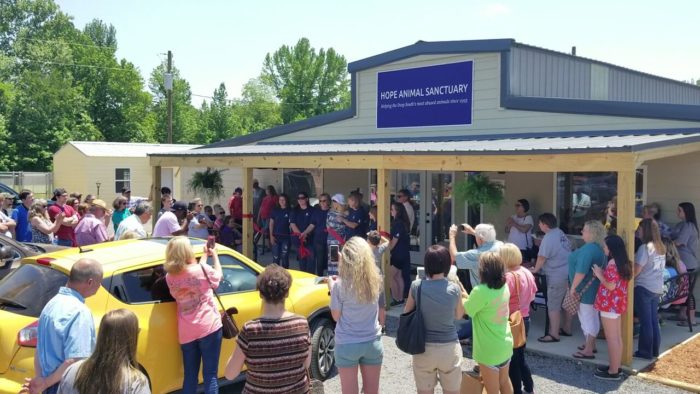







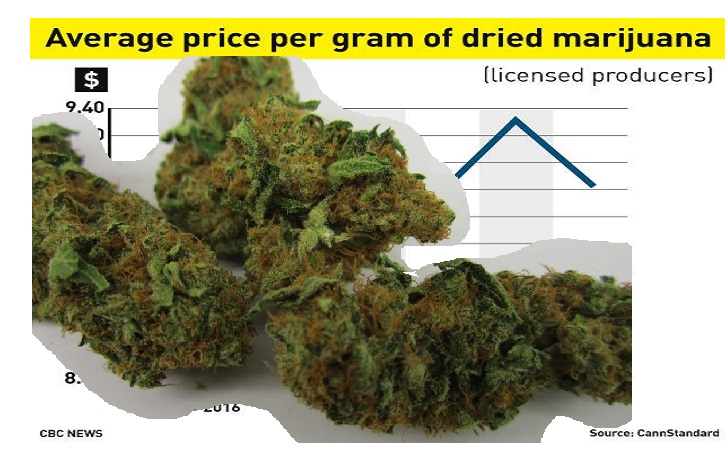
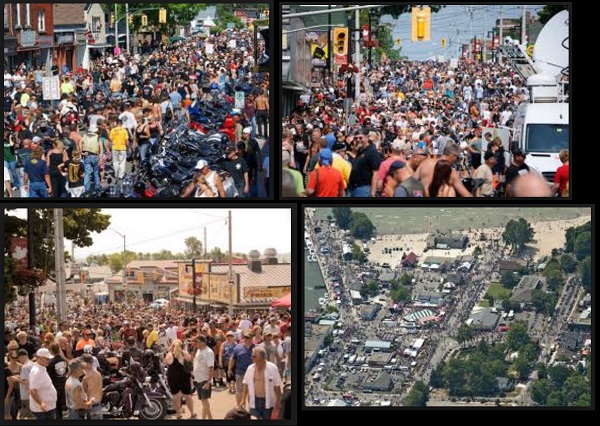







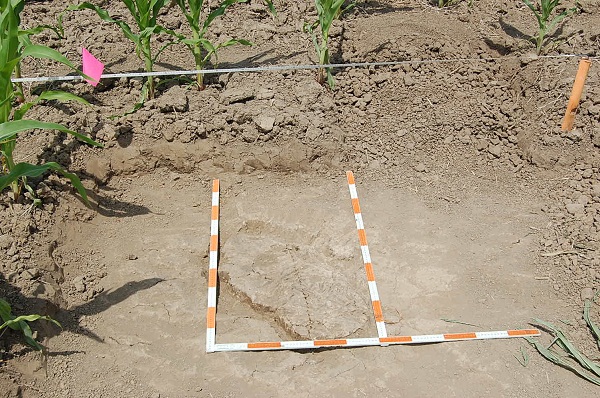
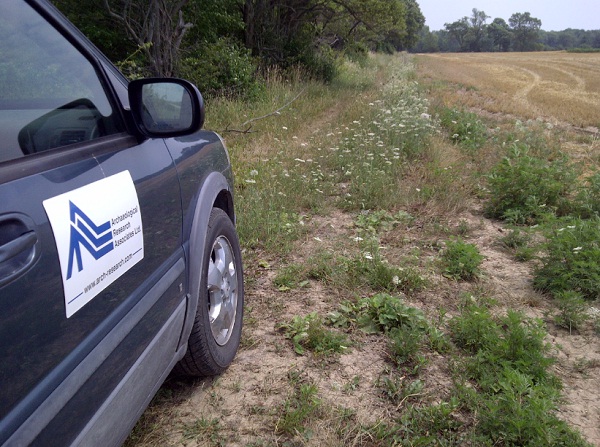








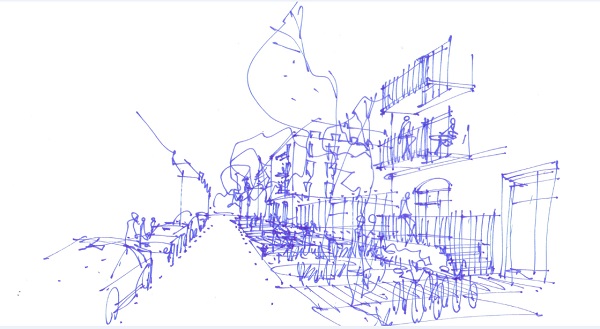

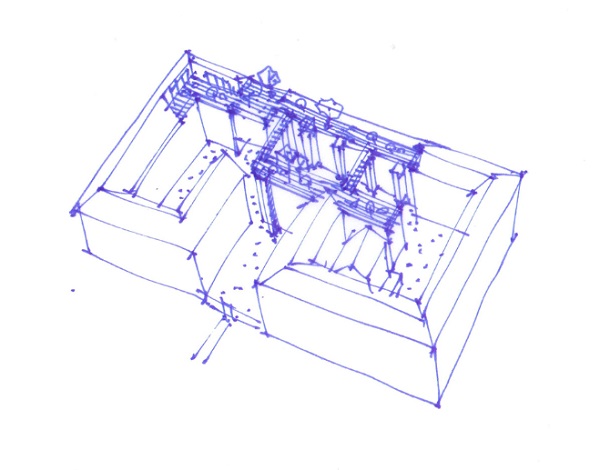

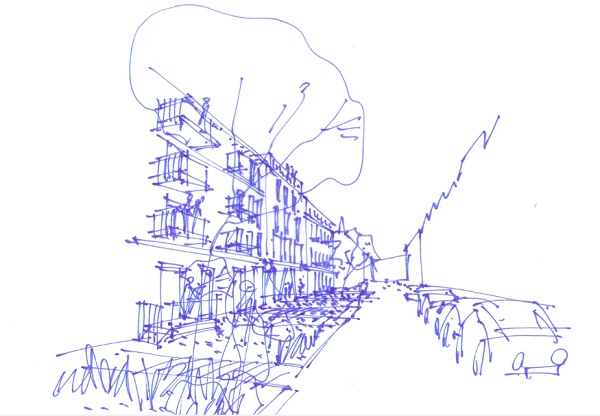

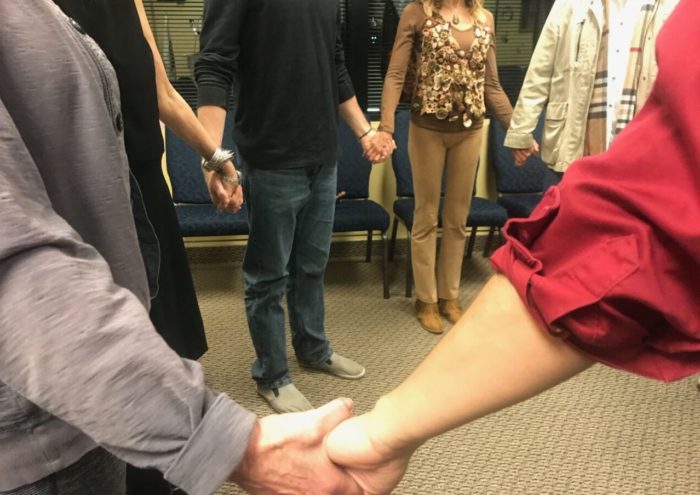
 “I am a strong believer in a plant-based diet for heart health,” said Dr. Shenkman. “Join me at Carnivores Anonymous to learn how a plant-based diet has fueled my athletic success, and why I recommend it for all my patients.”



 Turing’s work was instrumental in saving countless lives, millions in goods and merchandise, and is estimated to have shortened the war in Europe by four years.The specifics of Turing’s work at Hut 8 were only recently made available to the public—they were declassified in 2012. Authors Liberge and Delalande use this new information to create a graphic biography that is both scientifically rigorous, moving, and accessible. Story by Eric Liberge Illustrated by Arnaud Delalande Translated by David Homel