Tag Archives: earth

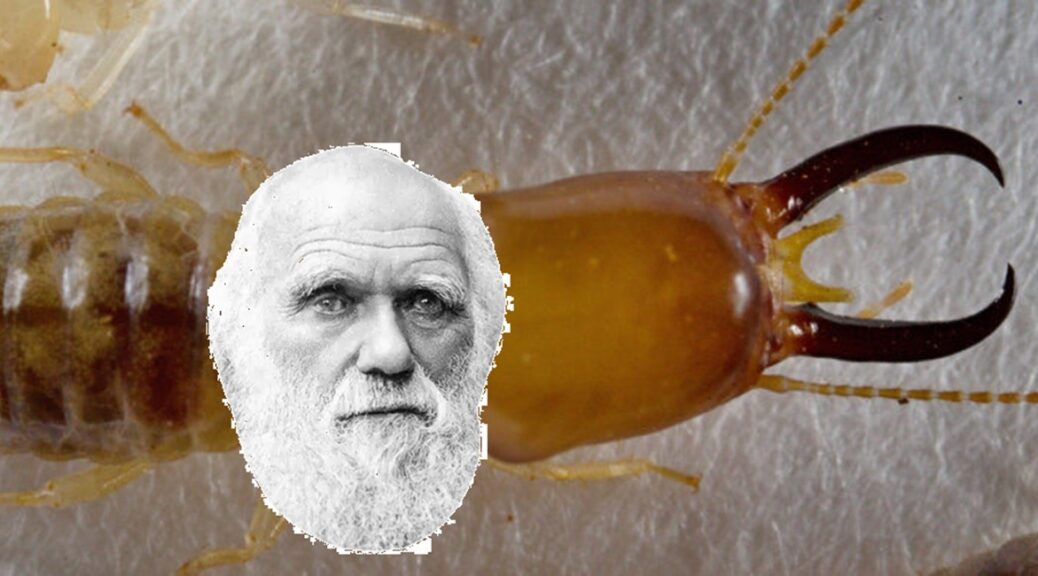
How Termites Challenge Darwinism Theory of Evolution

Modern science lacks a unifying, interdisciplinary theory of life. In other words, current theories are unable to explain why life is the way it is and not any other way.

Dr. David Grinspoon writes about Charley Lineweaver’s review of “Scientists Debate Gaia,” a collection of essays gathered from an American Geophysical Union conference and by the published by MIT press. Charles H. Lineweaver is a Senior Fellow at Australia National University’s Planetary Science Institute.
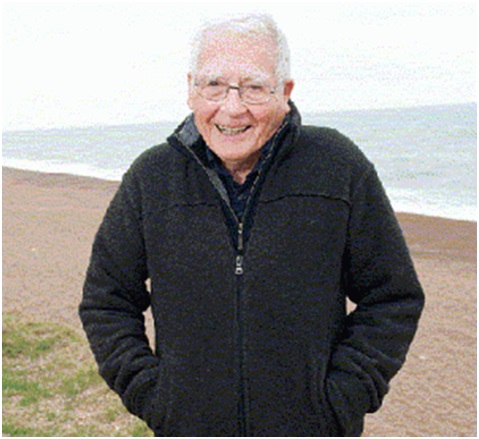
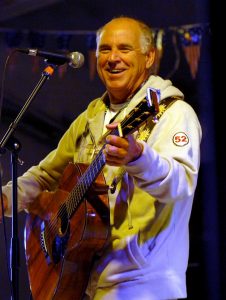
Gaia author James Lovelock

He explained that James Lovelock (shown) proposed the Gaia hypothesis, in which Earth is an organism or system capable of self-regulation. He wondered: Can the existence of life be recognized from the chemical composition of a planet’s atmosphere? What would the Earth be like now, if life had never evolved on it? Would there be oxygen in the air? Would the surface temperature be hot like Venus or cold like Mars? In the mid-60’s, NASA consulted James Lovelock to assist in developing instruments for the Viking spacecraft to detect life on Mars.

He concluded that it wasn’t necessary to send a spacecraft to Mars. All you needed was to determine the composition of the Martian atmosphere –- if life was there, the atmosphere should be in chemical disequilibrium as it is on Earth. Recent observations, have detected methane on Mars indicating life.

Determining what life is and how to recognize it is the Holy Grail of astrobiology. To make progress, we need to explore the Martian subsurface and analyze the atmospheres of the nearest terrestrial planets. Lovelock’s Gaian chemical equilibrium test for the presence of life is fundamental to these efforts. Both NASA and ESA are putting their astrobiological money into interferometric infrared spectroscopy to look for the traces of chemical disequilibrium in planetary atmospheres as the primary biomarker.

Don't be fooled by your perspective- we all live on a rotating ball traveling through space!
Don’t be fooled by your perspective- we all live on a rotating ball traveling through space!

Lovelock thought that terrestrial life didn’t just passively produce chemical disequilibrium. There seemed to be some element of control or regulation. In 1978, he published a book called “Gaia” that described how the entire biosphere behaves like a living creature suggesting our Earth is alive.

Gaian science and astrobiology have very similar programs. Astrobiologists look at the stars and ask “What has life done to the planets out there and how can we recognize it?” Gaian scientists have been looking at the Earth for decades asking “What has terrestrial life done to our planet and how can we recognize it?” Astrobiology and Gaian science often remain separate fields of inquiry. Astrobiology attracts mainly astronomers and biologists, while Gaian science attracts atmospheric chemists, geologists and concerned ecologists.

The thin Martian atmosphere is mainly composed of carbon dioxide. Planetary scientists have studied the atmosphere of Mars for any signs of gases such as methane that could be generated by life. In this collection, Gaian scientists believe that over the past four and a half billion years, the Sun’s luminosity has increased by about 30 percent, but the temperature of the Earth’s surface doesn’t seem to have followed in step. Lovelock hypothesized that the biosphere regulates the Earth’s surface temperature. There are two obvious ways to do this: Regulate the albedo (light reflected by the planet) and/or regulate the abundances of greenhouse gases in the atmosphere.
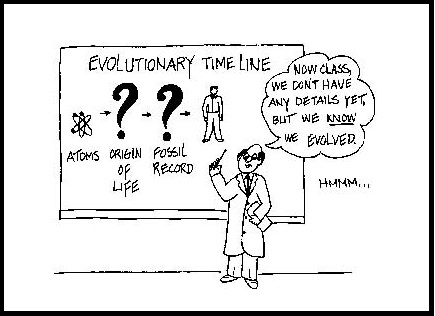
Creationist Cartoon

Lovelock invented the parable of Daisyworld to demonstrate that the biosphere could regulate the albedo. A nice Gaian extension of this idea is J. Scott Turner’s analysis of the thermo-regulation of termite colonies. So if a termite ecosystem can evolve to do it, why can’t a big one like the Earth? Thus, Gaia does what good scientific ideas are supposed to do. It extends and extrapolates a fundamental theory, from individuals to groups to ecosystems, up to the entire biosphere.

The central debate of this book is: How can Gaia (Earth) be selfish? How can it do anything “for” itself? Will it protect itself from human destruction of the environment by causing earthquakes, earth lights, an ice age, or a great flood?

Tyler Volk’s book “Gaia’s Body” “Gaia is Life in a Wasteworld of By-products.” He proposed that the atmosphere is one giant waste dump. Life produces wastes, and these wastes build up and affect the environment. They become intolerable for some forms of life, but then along come new forms of life who take advantage of these waste products. Volk’s point is that poop just happens. Thus the effects of the biosphere’s wastes are certainly “by” but not necessarily “for” the biosphere..

Volk suggests using cycling ratios to measure “by and for the biosphere” and to determine how beneficial for life something may be. A cycling ratio is the amount of an element cycling through the Earth and biosphere, divided by the amount that would be cycling through the Earth in the absence of life. Volk estimates the cycling ratio of carbon to be about 200 times more carbon flowing through the veins of Gaia than would be cycling through an Earth without life from plate tectonics and volcanism.

A collection of observations by the Earth Observing System flagship Terra were stitched together into a seamless true-color mosaic of every square kilometer (.386 square mile) of our planet.

Dorion Sagan and Jessica Hope Whiteside’s “Gradient Reduction Theory: Thermodynamics and the Purpose of Life” discussed the second law of thermodynamics as the purpose of life. Agnostics looking for purpose in their lives would do well to digest this chapter with Lovelock’s suggestion that agnostics worship Gaia to fill their religious vacuum. There is grandeur and universality in this thermodynamic view of life that can be applied to life anywhere in the universe.

I’d like to see Gaian scientists recognize that Gaia is part of a larger whole – that the Earth is not a closed system and that Gaia has a mother. We begin to wonder whether our Galaxy is a life form called Galactea. For the Silo, Jarrod Barker

“It is a must read for any life form that is even pretending to look for extraterrestrial life. /

– See more at: http://www.astrobio.net/ Note: It’s logical Mother Earth or Gaia feels totally threatened by environmental abuse from Earth’s humans and that those humans who are not loving to Mother Earth may be removed.

*Main image for this post courtesy of http://fourthdimension-celestialdreams.blogspot.ca

Supplemental-

Phylogenetic Analysis Forces Rethink of Termite Evolution | Okinawa Institute of Science and Technology OIST

44 Years Of Marine Protection With Jimmy Buffett Save the Manatee Club

Jimmy BuffettIt’s been 44 years since Save the Manatee Club was created by Jimmy Buffett, the renowned singer/songwriter, and former Florida Governor and U.S. Senator, Bob Graham, to raise public awareness about the threats to manatees and their aquatic habitat.  With support from you, we can continue to make a big difference.

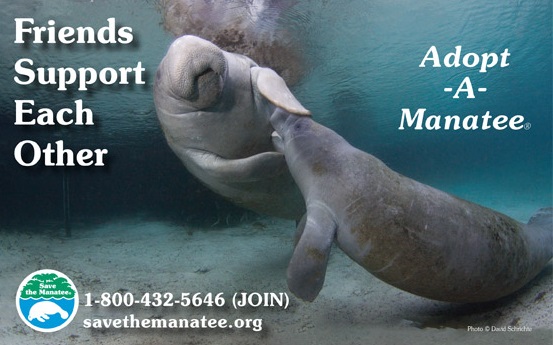
Even Florida Congressman Buchanan has been working hard to ensure that Manatees remain on the endangered species list-

———————————————————————————————————————————-

Buchanan Files Formal Protest to Manatee “Survival” Plan

Save The Manatee Club Ribbon

WASHINGTON – In a formal objection letter sent today to the U.S. Fish and Wildlife Service, Congressman Vern Buchanan, R-FL, urged the agency to withdraw its plan to strip the manatee of the highest protection afforded under the Endangered Species Act.

The public comment period on the agency’s proposal opened Jan. 7 and closes this Thursday.

Buchanan’s letter is a formal challenge to the proposed downgrading of the manatee from “endangered” to “threatened” under the Endangered Species Act (ESA).

Adopt A Manatee Club May2016The manatee has been listed as an endangered species since 1966.
Buchanan expressed his strong opposition, noting that the agency’s analysis is based on outdated information. Buchanan pointed to the FWS’s failure to take into account manatee deaths since 2012, as well as the unpredictable nature of threats facing these creatures. He noted that 16% of the Florida manatee population died in 2013 as a result of a massive bloom of red tide algae as well as a mysterious ailment that killed a number of manatees along the state’s east coast.

“I’m concerned that weakening protections will lead to a decline in the manatee population,” Buchanan said. “Manatees are iconic residents of Florida. We should be doing all we can to ensure the survival of these gentle giants.”

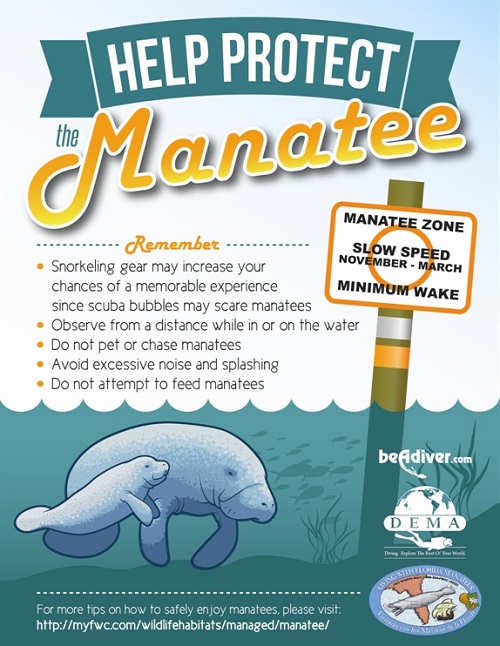
Help Protect Manatee Be A Diver Dot ComBuchanan has previously written to the Fish and Wildlife Service to emphasize that any push to weaken protections for the manatee would be “misguided and premature.” In 2014, following a three-year period in which 1,600 manatees died of cold weather or red tide, Buchanan called on FWS to maintain federal protections for manatees.


Manatees face a variety of threats to their existence, including watercraft collisions, habitat loss and red tide. Additionally, the warm water springs manatees depend on during the winter months for survival are disappearing.

Buchanan also noted that the FWS underestimates the negative consequences that a downlisting will have on importantprotections that have helped limit manatee deaths. Despite the agency’s assertion that a downlisting would not affect federal protections for the manatee, Buchanan noted the plan is “already exposing dangers” and that a move from endangered to threatened could cause a broader reassessment of state and local protections for the animals.
Just days after the proposed rule was announced, the Brevard County commissioners approved a resolution requesting that the Florida Legislature review slow-speed zones currently in place for boats and called for a reconsideration of the state’s Manatee Sanctuary Act, which established protections for manatees and their habitats in several counties, including Sarasota and Manatee.

“The manatee population has started to rebound because of the protections put in place by the Endangered Species Act,” Buchanan said. “But based on the data provided, it’s clear that we can’t assume that manatees are safe – so I’m urging caution.”

Full text of Buchanan’s letter below:

The Hon. Daniel Ashe
Director
U.S. Fish and Wildlife Service
Department of Interior
1849 C St. NW, Room 3359
Washington, D.C. 20240

Dear Director Ashe:

I write in strong opposition to the U.S. Fish and Wildlife Service’s (the Service) proposal to downlist the West Indian manatee under the Endangered Species Act (ESA) from endangered to threatened status. This decision is based on outdated information and underestimates the effect that a downlisting will have on protections that have helped limit manatee deaths. As a result, I urge you to withdraw this proposed rule.

Manatees are special for many Floridians. In addition to being the state’s official marine mammal an entire county – which I represent – is named after these gentle giants.

Just 25 years ago, there were barely over 1,000 manatees in the state of Florida. That number is now estimated to be around 6,000. The Service points to this as good news and rightfully credits the species’ listing as endangered under the ESA for this increase. The ESA has worked to help manatees overcome multiple threats to their existence. These challenges are not static, nor are they predictable. The Service should be taking a precautionary approach when it comes to the recovery of the manatee, and in light of the following concerns, the Service should withdraw its down listing proposal and retain the manatees’ endangered status.

The basis for the Service’s proposal to reduce the status of manatees is said to be an analysis of the population’s viability. It is cited in the proposal as “Runge, 2015.” However, the Service’s proposal acknowledges that this analysis contains outdated data and information. For example, adult survival rates are based on data only through the winter of 2008-2009 and, elsewhere, the most recent information cited in the report is from 2011-2012.

Since the years used in the analysis, manatees have suffered a catastrophic die-off in the Indian River Lagoon that the U.S. Geological Service Representatives have stated cost the lives of five percent of the manatees on the U.S. east coast. During that same time, toxic algae (red tide) killed a record number of manatees on the state’s west coast. According to the Florida Fish and Wildlife Research Institute, the statewide death toll of manatees was 803 as of 2013; or around 16 percent of the state’s entire population. Yet none of this information was considered in the Service’s outdated analysis.

In addition, in its analysis, the Service assumes that the current level of mortality in each category (e.g., watercraft collisions, cold stress, red tide, etc.) will stay approximately the same indefinitely. However, this is unlikely. The likelihood of deaths from both red tide events and from unknown pathogens has not been adequately analyzed when projecting the future for manatees. Additionally, as noted by the Service itself, there will be a continued loss of artificial sources of warm water in the winter and, as a result, manatees in the Southwest and Northeast regions of the state will show “long-term decline” as a result of the loss of these warm water winter refuges.
In its January 6, 2016 press release, the Service stated that “[t]he proposal to down list the manatee to threatened will not affect federal protections currently afforded by the ESA.” If all protections will remain the same, it is not apparent that a change in the listing status is necessary. In fact, down listing the manatee may open the door to future erosions of protections for these unique animals.

The Service cites the existence of federal and state laws such as the Marine Mammal Protection Act and Florida Manatee Sanctuary Act as sufficient in providing the animals with the protections they need. Yet there is no guarantee that such other laws will remain in place to protect the species even if manatees are downlisted under the ESA.

Approximately fifty manatee protection areas are set up by federal, local, and industry leaders and many of these areas or their protective restrictions can be altered or removed if a downlisting goes forward. For example, despite the Service stating in its proposal that on the east coast of Florida “watercraft-related mortality is the major threat to this population,” five days after the proposed reduction in protections, the Brevard County commissioners approved a resolution requesting that the Florida Legislature review slow-speed zones for boats to determine whether they are effective or still necessary. The resolution also called for reconsidering the need for the Manatee Sanctuary Act, stating that it has “become a hindrance to effective manatee management.”

Manatees are iconic residents of Florida. Their presence drives a robust tourist industry.

Their unhurried progress in my state’s waters is a reminder to us all to slow down and appreciate the world around us. Manatees deserve better than a premature determination that they have recovered when so many threats still face them and cloud our understanding of their future. I urge continued endangered status for manatees under the ESA, and ask you to immediately withdraw the Service’s proposal to downlist manatees to threatened status.

——————————————————————————————————————————————–

Save the Manatee Club is an international nonprofit organization.  Funds from our adoption program go toward emergency rescue response for sick and injured manatees, and for waterway signage, public awareness and education, research and more.  Read about our manatee conservation efforts at: savethemanatee.org/smcinfo.

Thank you!

For the Silo and the  manatees, Janice Nearing

Adopt-A-Manatee!  Go to www.savethemanatee.org/adoptpag.htm

Forest Bathing Beats Stress Improves Immune System

Stress is ever present in current society, both personal stress and workplace stress contribute to the well documented link, between stress and chronic conditions. 

Data available from Statistic Canada’s – National Population Health Survey, demonstrates that personal stress is predictive of the development of a chronic health condition over the next four years (Statistics Canada, 2003).  The long term impact of these chronic health conditions can result in significant activity limitation from heart attack, diabetes, migraine, or arthritis or back problems.  Even more daunting is the higher predictive value of death for individuals suffering from cancer, bronchitis/emphysema, heart disease or diabetes.

Issaquah Forest Bathing (Shinrin Yoku) – What is it? – Issaquah Adventures

The practice of forest bathing itself is not a new concept.

Prior to the industrial revolution being “in nature” was part of everyday life.   The Japanese term Shinrin-yoku  meaning “taking in the forest atmosphere or forest bathing” was officially coined by the Japanese Ministry of Agriculture, Forestry, and Fisheries in 1982. (Park et al. 2010)

This novel practice of bathing in nature, demonstrates a wide variety of health benefits from which individuals in modern society can stand to gain.  With the increasing amount of individuals living in urban settings the exposure to nature is diminishing.

Field studies performed in Japan measured salivary cortisol levels (more commonly known as “stress hormone”) in university individuals.

The students were divided into two groups, one to spend a day in a forest setting, the other in a city setting.   Lower levels of stress hormone, as well as lower blood pressure and pulse rate was found in individuals in forest location. (Park et al. 2010)

Not feeling ready to take the plunge into full force bathing? Forest sitting and contemplation of bathing can calm you.

Further evidence has been documented  to demonstrate  the reduction of stress resulting from forest bathing, through the improvement of immune function via exposure to the natural environment.  Given that immune function is key in the prevention of chronic diseases this evidence is exciting.   Natural killer cells (as they are ingeniously named) are cells within the immune system which kill tumors or virus infected cells, through the release of enzymes which break down the cells.   In research studies natural killer cells have been found to be elevated for seven days after the forest bathing trip (Qing, 2010).  This seven day window of improved immune function is great news for the weekend warrior in all of us.

Many of us who live in North America are blessed with exposure to forest just outside our doorsteps.  This being said it doesn’t mean we always take advantage of it: between commuting to work, family and social commitments,  going from the house to the car may be the norm.  For the Silo, Ashley Beeton. 

References

Park, B.J., Tsunetsugu, Y., Kasetani, T., Kagawa, T., & Miyazaki, Y. (2010) The physiological effects of Shinrin-yoku (taking in the forest atmosphere or forest bathing): evidence from field experiments in 24 forests across Japan.  Environ Health Prev Med,  15,18–26.

Statistics Canada. (2003) Stress and Well-being (No 82-003). Retrieved from http://www5.statcan.gc.ca/access_acces/alternative_alternatif.action?l=eng&loc=http://www.statcan.gc.ca/pub/82-003-x/2000003/article/5626-eng.pdf&t=Stress%20and%20well-being

Qing, Li. (2010) Effect of forest bathing trips on human immune function.  Environ Health Prev Med, 15,9–17.

Supervolcanoes: Earth’s Sleeping Giants

Have you ever heard of supervolcanoes? They’re like regular volcanoes but way, way bigger. Imagine a giant sleeping beneath the Earth’s surface, capable of waking up and changing the world as we know it. That’s what supervolcanoes are like. They’re fascinating, a little scary, but incredibly important to our planet. Let’s explore these giants and understand what makes them so special and powerful.

What Are Supervolcanoes?

Imagine a volcano so big that when it erupts, it changes the whole world. That’s what a supervolcano is! Unlike regular volcanoes that look like mountains, supervolcanoes are more like giant holes in the ground called calderas. They’re massive, and they can erupt with such force that they release thousands of times more lava and ash than any regular volcano. This isn’t just a small eruption; it’s like the Earth opening up, releasing its power in a way that can affect the entire planet. The amount of material that comes out of these eruptions can cover whole countries in ash and even change the climate across the globe!

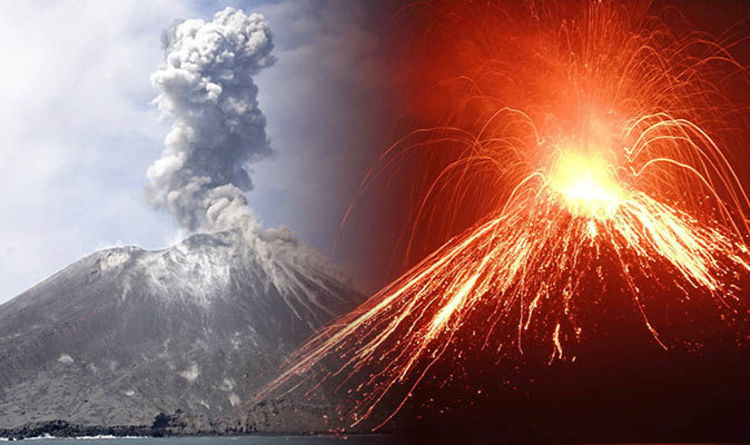
According to the Daily Star, Italy’s super volcano is ‘close to eruption’.

Where Are They?

You’ll find these sleeping giants hiding in plain sight in various parts of the world. One of the most famous supervolcanoes is Yellowstone, located in the United States. It’s a breathtakingly beautiful park now, but beneath its serene landscape lies a massive supervolcano. Other well-known supervolcanoes include Toba in Indonesia and Taupo in New Zealand. These sites are often tourist attractions, known for their stunning natural beauty. However, few visitors realize the immense power that lies dormant just below their feet. These supervolcanoes have been quiet for thousands of years, but their history tells us they have the power to reshape the Earth.

The Big Eruptions

The eruptions of supervolcanoes are not common, but when they do happen, they’re a force to be reckoned with. One of the most significant eruptions in human history was the eruption of Toba, which happened around 74,000 years ago. It was so enormous that it likely caused what scientists call a volcanic winter. This means that the eruption was so massive it threw so much ash and particles into the atmosphere that it blocked out sunlight, causing the Earth’s temperature to drop. Imagine a winter that lasts for years, all because of one volcanic eruption! This event was so impactful that it even left a mark on human evolution.

These eruptions are unpredictable, much like the thrilling unpredictability of playing new real money slots online at places like blog.tonybet.com. Each eruption is a reminder of the raw power of nature, capable of changing the course of history. When these supervolcanoes erupt, they unleash energy that is hard to comprehend, and their effects can be felt globally, affecting climate, landscapes, and even human life.

In 2018 Indonesia’s Krakateu erupted in an amazing display of power.

Studying Supervolcanoes

Studying supervolcanoes is like being a nature detective. Scientists are really interested in these huge volcanoes. They want to figure out how they work, what causes them to erupt, and when they might wake up again. This can be a tricky job because supervolcanoes don’t erupt very often, so there’s not a lot of times to see them in action.

To learn about these giant volcanoes, scientists look closely at the rocks and dirt around them. These aren’t just any rocks and dirt; they’re special clues left behind by the volcano. They can tell stories about what the supervolcano did a long, long time ago and what it might do in the future. 

These scientists also use cool tools and machines to help them in their work. They have special instruments that can ‘listen’ to the ground for rumbles and ‘look’ deep inside the Earth. They study maps and use computers to make guesses about what the supervolcano will do next.

By studying supervolcanoes, scientists learn not just about volcanoes, but also about the Earth itself. It’s like putting together a giant puzzle. Each piece they find helps them understand more about our amazing planet and how to keep people safe if a supervolcano decides to wake up. It’s a big job, but these volcano detectives are up for the challenge!

Can We Predict Eruptions?

Predicting when a supervolcano will erupt is a bit like trying to guess when a big storm will hit. It’s not easy! Scientists are like detectives looking for clues. They use special tools to keep an eye on the supervolcano. They watch for tiny earthquakes that shake the ground. They also look for changes in the shape of the land, which might mean something is moving under the ground. These tools help scientists see what’s happening deep inside the Earth.

Even with all this watching, scientists can’t say for sure when a supervolcano will erupt. They can’t mark a date on the calendar like we do for birthdays. But they can give us a heads-up if they think an eruption might be coming. It’s like being told there might be rain so you can bring an umbrella, just in case.

Living with Supervolcanoes

Living near a supervolcano might sound like living in a scary movie, but it’s not as frightening as you might think. People who live near these giants are not alone. They have scientists and the government looking out for them. Together, they make plans for what to do if the supervolcano starts rumbling. They think about safe places people can go and the best ways to get there.

These plans are like safety drills in school. They help everyone know what to do if something big happens. Knowing there’s a plan can make living near a supervolcano less scary. It’s about being ready and knowing how to stay safe, just like we learn to stop, drop, and roll in case of a fire.

The Role of Supervolcanoes in Nature

Supervolcanoes are not just about fiery eruptions. They are a big part of our planet. They help make the Earth look the way it does. When they erupt, they can change the land, making new mountains and valleys. The ash they send into the sky can fall back down and help plants grow. It’s like a giant, natural garden makeover.

These big volcanoes have been around for a very long time. They have seen dinosaurs come and go, and they have watched the Earth change in many ways. They tell us stories about our planet’s past and help us understand how the Earth works. They remind us that our planet is always changing and full of amazing natural wonders. So, supervolcanoes are not just about big eruptions; they are a key part of the Earth’s story, helping shape the world we live in today.

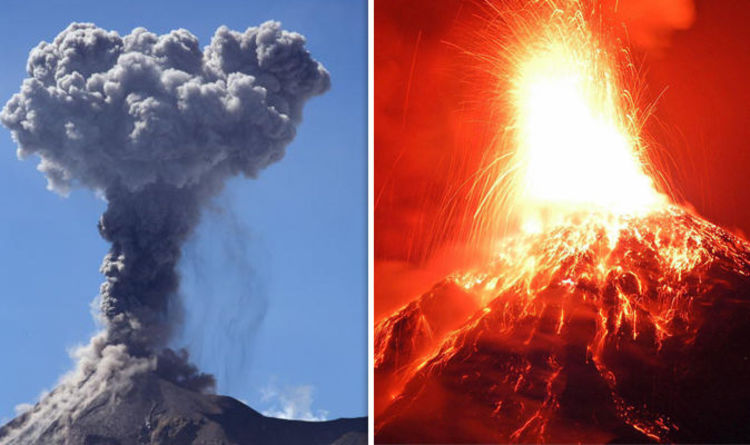
Guatemala volcano Volcan del Fuego

Supervolcanoes and the Climate

Have you ever thought about how supervolcanoes can change the weather around the whole world? It’s true! When supervolcanoes erupt, they send lots of tiny particles and gases high up into the sky. These particles can spread out and cover the sky like a giant umbrella, blocking some of the sunlight from reaching us down on Earth. When less sunlight gets through, it can make the temperature all over the world a bit cooler. This is like nature’s way of turning down the Earth’s thermostat! It’s amazing how something as big as a supervolcano eruption can reach up to the sky and affect the whole planet.

Learning from Supervolcanoes

Supervolcanoes are like giant, open books that teach us so much about the Earth. Scientists study them to learn about different things. They can tell us about the Earth’s history, like what the environment was like a long time ago. They also teach us about how the ground moves and shakes, which is really important to understand for keeping people safe from earthquakes and eruptions.

But that’s not all. By studying supervolcanoes, scientists can even learn things about other planets! This is because other planets might have volcanoes too, and learning about supervolcanoes on Earth can give scientists clues about what to look for in space. So, supervolcanoes aren’t just about lava and ash; they’re about discovering the secrets of our planet and even the mysteries of outer space!

Supervolcanoes: Sleeping Giants of the Earth

Supervolcanoes are like the sleeping giants of our planet. They’re huge and powerful, but they spend most of their time quietly resting. These giants remind us that the Earth is always changing and full of wonders. They are like natural teachers, showing us the incredible power of nature. Even though they can be a bit scary because of their power, they are also fascinating and important to learn about.

Supervolcanoes teach us to be prepared for nature’s surprises and to respect the Earth. They show us that even though we might think we know a lot about our planet, there’s always more to learn. Every time a supervolcano erupts, it’s like the Earth is telling us a story about its power and history. So, next time you hear about a supervolcano, remember that it’s a part of our Earth’s amazing story, and it’s something to be curious about, not just afraid of.

Conclusion: The Mighty Sleeping Giants

Supervolcanoes are one of Earth’s most amazing and powerful features. They remind us of the incredible forces that shape our planet. While they can be a bit scary because of their power, they’re also fascinating and important to understand. Just like the excitement of playing games at play new real money slots online, the story of supervolcanoes is filled with wonder and awe. They’re Earth’s sleeping giants, holding secrets of the past and keys to our planet’s future.

Ontario Strips 106 Species At Risk Of Protection

Ontario Government Strips 106 Species at Risk of all Provincial Recognition

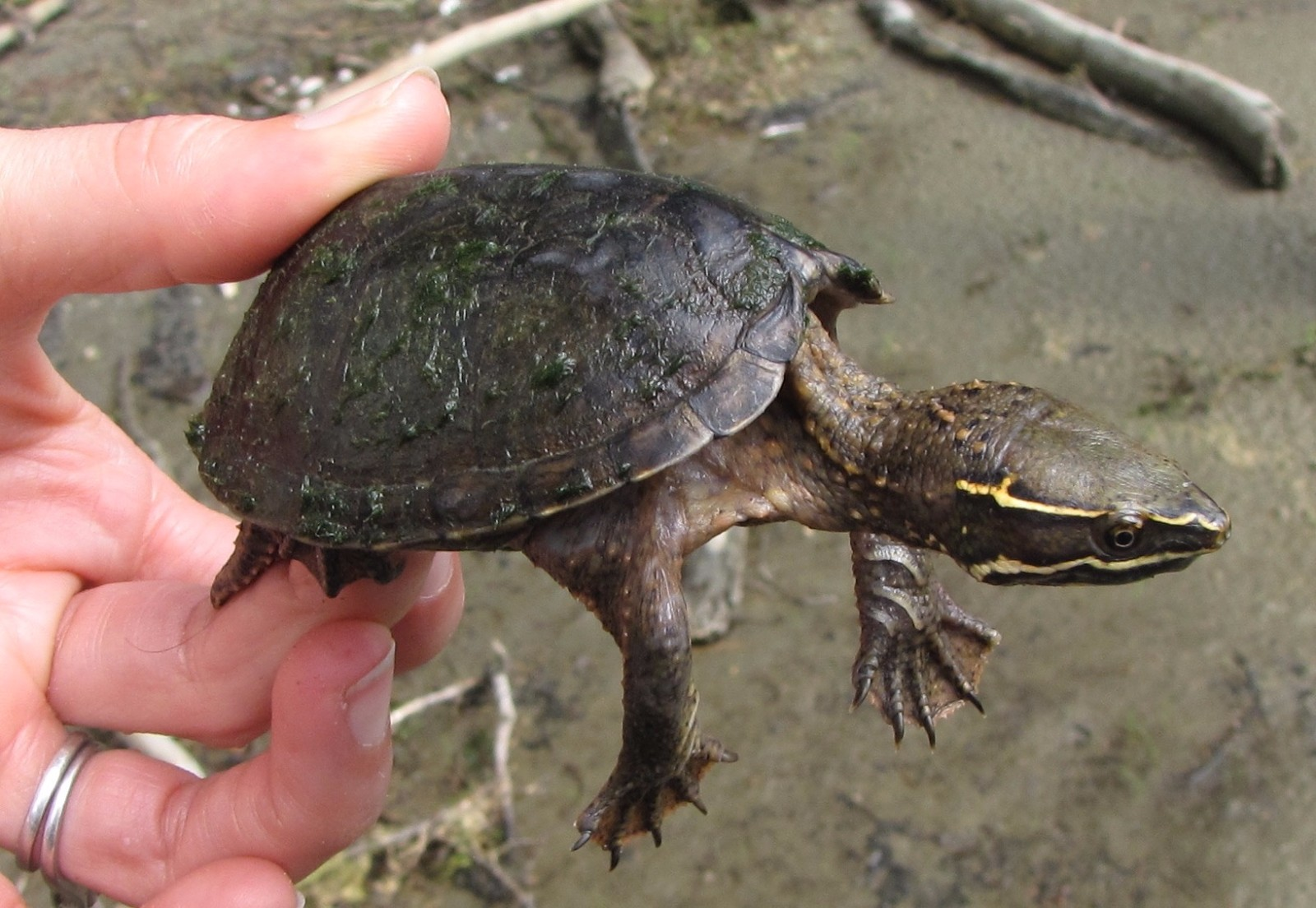
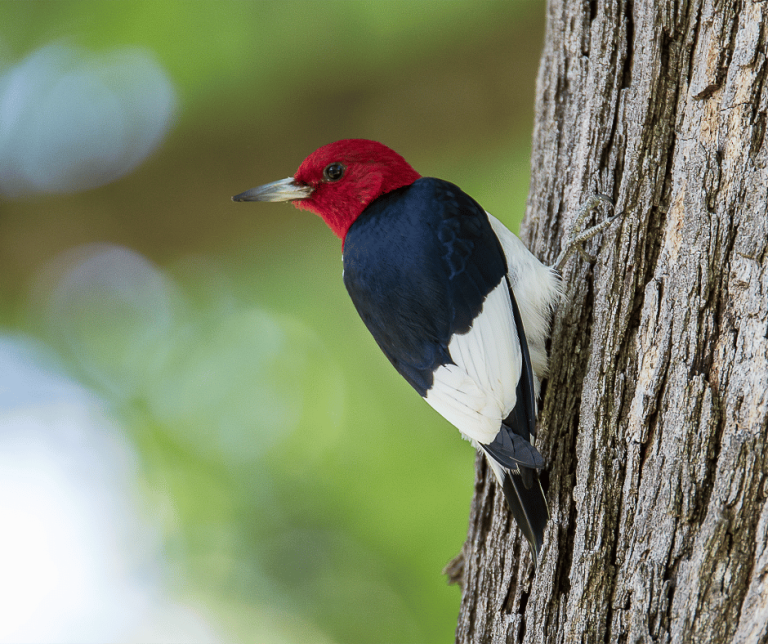
Late last week, it was announced that the Ontario government will cease to recognize more than 106 different species at risk, ranging from the Eastern Mole, Eastern Musk Turtle and Cougars, to the endangered Red Side Dace and Red-Headed Woodpecker. This is directly related to the passing of Bill 5 six months ago.

Do you disagree with this decision?


There’s still time to make comments on the amendments to the Species Conservation Act, 2025 on the Environmental Registry of Ontario. The commenting period is open until November 16.

Click here to tell Ontario how you feel.

Eastern Musk Turtle

Statement from Phil Pothen, Counsel and Ontario Environment Program Manager, and Rebecca Kolarich, Water Program Manager

Toronto | Traditional territories of the Mississaugas of the Credit, the Anishinaabeg, the Haudenosaunee, and the Wendat – Nearly 4 months after Progressive Conservative MPPs forced approval of a law that will repeal Ontario’s Endangered Species Act, the Ontario government is confirming experts’ gravest warnings about what it will mean for at-risk plants and wildlife.  The Ontario government has announced that once the law comes into force, it will cease even to recognize more than 106 different species at risk, ranging from the Eastern Mole, Eastern Musk Turtle and Cougars, to the endangered Redside Dace, and Red-headed Woodpecker.

This decision should light a fire under the federal government to strictly enforce the existing federal Species at Risk Act and existing habitat protection orders in Ontariobut also to expand and broaden federal protections and monitoring. Federal protections will now be the only real protection for many habitats. In particular, because the Ontario government will remove all provincial recognition of endangered and threatened birds and fish, the government of Canada should issue emergency protection orders that extend to all species and habitats previously protected provincial habitat regulations and the Ontario Species at Risk list. 

The  Ontario government also intends to remove all recognition of species that are currently recognized as being of  “special concern” and monitored due to their susceptibility to identified threats. This means that federal agencies will step up their monitoring of these species’ federal jurisdiction. 

Premier Ford has shown a pattern of constantly prioritizing his developer friends and unnecessary projects over wildlife and nature. The federal government must not do the same. Now more than ever, it is crucial that the federal government uphold and enforce the appropriate federal laws and deny the approval of permits that would allow harmful development projects to destroy critical habitat.  For the Silo, Tim Gray/Environmental Defence.

ABOUT ENVIRONMENTAL DEFENCE (environmentaldefence.ca): Environmental Defence is a leading Canadian environmental advocacy organization that works with government, industry and individuals to defend clean water, a safe climate and healthy communities.

How We Set In Motion Coffee Global Business

If you are like me- someone who has drunk much more than one coffee in your life, you might be interested in pondering this question: Why do you think the multi-billion-dollar global coffee industry can be a losing business for the growers, whose hands till the land from where coffee starts?

In fact, if you drink 2 cups of coffee a day for one year, you’ll be spending more than the annual income of the coffee farmer in a developing country. To help present to fellow North American coffee drinkers this huge disparity between the farmer and the other key players across the coffee value chain, take a look at the infographic below.

Considering that North America is the biggest coffee consumer in the world, we can make a big dent by supporting the fair trade advocacy that ensures farmers get paid properly. Take a look at the infographic again. It describes how coffee is made from the farm to the mill, to the roasting plant and all the way to the consumer. Here are some of its highlights that show the bigness of this industry:

– 100 M people depend on coffee for livelihood; 25 M of which are farmers

– The U.S. spent 18 B for coffee yearly, equivalent to Bosnia’s GDP

– Coffee is the second most globally traded commodity after petroleum

For the Silo, Alex Hillsberg Web Journalist


Here's How You Make Coffee A Billion Dollar Business

Supplemental- How North Americans can help the #fairtrade program

http://financesonline.com/cherry-to-cup-the-economics-of-coffee/

http://financesonline.com/why-fairtrade-should-matter-to-you/

Living With Popocatepetl Volcano On The Horizon

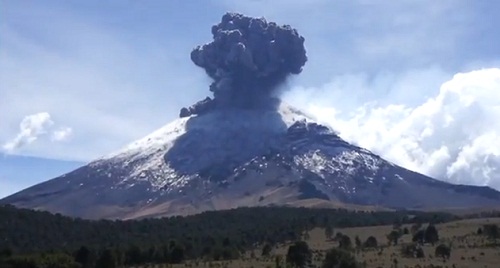
From youtube user 1AmazingWorld: “Popocatepetl is one of the most violent volcanoes in Mexico and North America’s 2nd-highest volcano. The name Popocatepetl comes from the Aztec-Nahuatl words popōca ‘it smokes’ and tepētl ‘mountain’, thus Smoking Mountain.”

Mexico City, Mexico- Popocatepetl tells a náhuatl* legend about a brave warrior forced to go to war. Before he leaves on his mission, he secures permission to marry a beautiful princess named Iztaccihuatl (sleeping woman). After three long months without any messages about her love, the princess receives news that the warrior has died. Because of the sadness the princess cries constantly and finally dies of a broken heart.

There are actually several versions of the Popocatepetl e Iztaccihuatl legend.

In one of these is that the girl was a princess, what the most beautiful being be sacrificed to the gods for good harvests, but the warrior loved her and would not allow the sacrifice, so must flee to avoid with it, but they fled the guards discovered them and an arrow struck the princess.
His beloved picked her up and kept running, once away, safe, laid her on the field, vowing to take care of her forever, he would wait until she awakened from sleep, to continue living their love. But it has been so long that the fields and the snow would have covered.

After a short period of time the warrior returns home and discovers that Iztaccihuatl is no longer alive.

He carries her body up to the mountain where he buries her and falls onto his knees besides her while he screams so loudly that the entire valley of Mexico can hear him. The Gods feel compassionate and cover them with branches and snow and finally turn them into mountains, one with the silhouette of a woman and the other into a volcano that occasionally wakes up. The volcano is the reincarnated warrior from our story, named Popocatepetl.

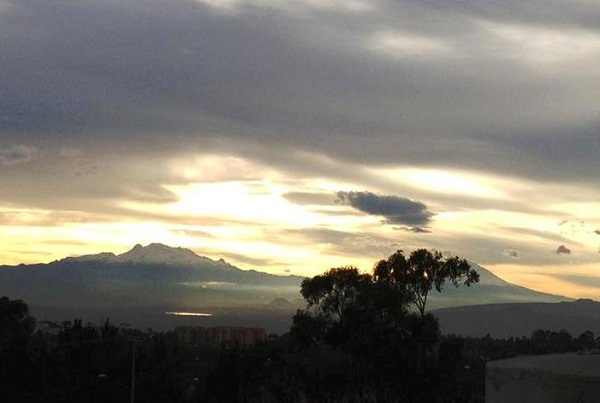
It is difficult to feel completely safe, when even from a far-away distance, the mountain and the volcano are still visible. The volcano is to the right, in the background just behind the tree. photo: R.M. Robinson Bours

This Mexican volcano has been awake for some weeks now.

My name is Rosa Maria and I live in Mexico City not very far away from Popocatepetl. How is life for me and others living so close to the screaming warrior? I feel like running away every time Popocatepetl wakes up but most people stick to their daily routine; the volcano hasn’t had a major eruption or explosion for more than 1200 years so everybody is used to living with the sleeping Popocatelpetl and our Mexican, authorities order evacuations only in case of imminent danger. What’s really bizarre here, is that I can only see the volcano once in a while because of the pollution in the city. I know it exists and the evidence sits around me, as volcano ashes fall all over the place and on a clear day is quite a spectacle to see these two white, snowy figures through the urban building landscape.

*One of many languages from Mesoamerica culture, from Uto-Aztecan language family, most Nahuatl people live in Central Mexico.

Dice una leyenda Nahuatl que un valiente guerrero quería casarse con una hermosa princesa llamada Iztaccihuatl (la mujer durmiente), para tener el permiso del padre tuvo que ir a la Guerra.
La princesa Iztaccihuatl quedó en espera de su regreso y después de tres largos meses de no saber nada de su amado recibió la noticia de su muerte. La princesa lloró tanto que murió de amor. Después de poco tiempo el guerrero regresó a casa descubriendo el destino de su amada, la tomó en sus brazos y la cargó al monte para enterrarla. El guerrero permaneció de rodillas junto a su amada y sus gritos de dolor eran tan fuertes que se escuchaban por todo el valle de México. Los dioses sintieron compasión por ellos y los cubrieron de ramas y de nieve para finalmente convertirlos en montañas, una con la silueta de una mujer y el otro un volcán que de vez en cuando despierta; el nombre del guerrero es Popocatepetl.

Este volcán lleva varias semanas despierto. ¿Cómo es la vida de los mexicanos que escuchan el grito del guerrero? La mayoría continúa su vida diaria; la última gran explosión fue hace más de 1200 años, todos están acostumbrados a vivir junto al gran volcán y las autoridades evacuan únicamente en caso de peligro. Cada vez que el Popocatepetl presenta actividad me dan ganas de salir corriendo y me pregunto qué alcancé tendría una explosión fuerte. Curiosamente solo de vez en cuando se ven los volcanes, imagino será la contaminación, aunque el volcán te recuerda su presencia con las cenizas que esparce por todo la ciudad. En un día claro es todo un espectáculo ver estas dos figuras nevadas a través del paisaje citadino.

For the Silo, Rosa Maria Robinson Bours in Mexico City. 

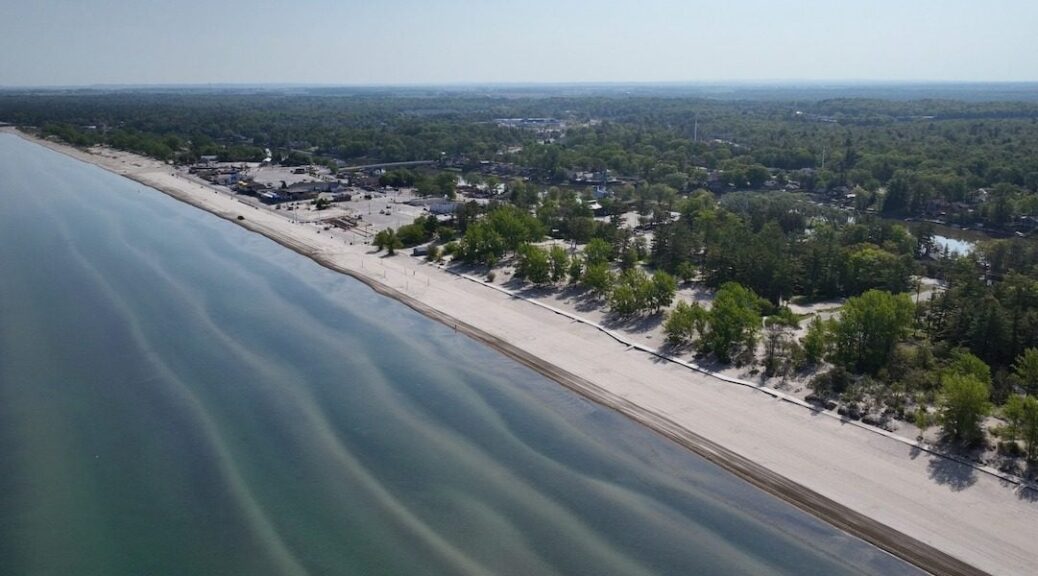
Ontario To Sell 60% of Wasaga Beach Provincial Park Beachfront for Development

This is just a first step- The law protecting other Provincial Parks is also in the government’s cross-hairs

Toronto, Ontario Canada | Traditional territories of the Mississaugas of the Credit, the Anishinaabeg, the Haudenosaunee, and the Wendat – The Ontario government is proposing to sell key parts of Ontario’s second most-visited Provincial Park (2023 data) for a development scheme.  The area on the chopping block includes roughly 60% of the Park’s celebrated Georgian Bay shoreline lands and critical habitat of the endangered piping plover.  These sensitive areas rely on the Provincial Park’s protections to safely coexist with beachgoers and other recreational users.

Possibly even more concerning, the government is targeting the Provincial Parks and Conservation Reserves Act (PPCRA) that protects all of Ontario Parks and Conservation Reserves.

The PPCRA currently requires that elected MPPs approve any significant removal of provincial park land.  Rather than simply complying with that requirement and obtaining that approval for Wasaga Beach Provincial Park, the government is proposing currently unspecified “legislative amendments” to the PPCRA itself. The government notice says the amendments are “to remove” land. Because of this, Environmental Defence is concerned that the Provincial government intends to weaken the process requirements for removing Park or Conservation Reserve lands seeing as the current law would not itself need to be changed if its process requirements, including a Legislative Assembly vote on the park area changes, are followed.

“Provincial Parks belong to the people of Ontario and are meant to be protected forever. It is appalling that the current government is trying to give away big parts of one of our most popular parks, and make changes to the legislation that protects all of our Provincial Parks ” said Tim Gray, Executive Director of Environmental Defence. “These beachfront lands on Georgian Bay are worth millions of dollars and are owned by the people of Ontario. They should never be a part of a tourism development”.

Background

Ecological values in the The Wasaga Beach Provincial Park lands to be lost include:

  • Known piping plover habitat, which is listed as endangered under both the federal Species at Risk Act and the provincial Endangered Species Act.
  • Mature sand dunes, which provide important ecological and stabilizing functions including providing a protective buffer against high water, wind and storm events for private or adjacent lands, which is an important role as the climate changes.
  • Significant vegetation communities and provincially significant wetlands.
  • “The Point” located in Beach Area 1 which is one of those targeted to be removed is designated as a provincially significant earth science Area of Natural and Scientific Interest (ANSI)

Transferring ownership of Wasaga Beach Provincial Park lands is not required to support beach-related tourism re-development plans in the Town of Wasaga Beach.  On the contrary, it is thanks to the active protection of the Recovery Program at Wasaga Beach Provincial Park that piping plovers and their habitat can coexist with a thriving beach destination.  

Hundreds of thousands of Ontarians enjoy the beaches each year, The Provincial Park and Conservation Reserves land disposition is regulated under Sections 9(3) and 9(4) of the Provincial Parks and Conservation Reserves Act. Section 9(4) specifies that “The Lieutenant Governor in Council may not order the disposition of an area of a provincial park or conservation reserve that is 50 hectares or more or 1 per cent or more of the total area of the provincial park or conservation reserve, unless,  

(a)  the Minister first reports on the proposed disposition to the Assembly;

(b)  the Minister tables the proposed new boundaries of the provincial park or conservation reserve with the Assembly; and

(c)  the Assembly endorses the proposed new boundaries of the provincial park or conservation reserve.  2006, c. 12, s. 9 (4).”

For the Silo, Tim Gray.

Resources

Provincial Parks and Conservation Reserves Act: https://www.ontario.ca/laws/statute/06p12#BK10

Wasaga Beach Provincial Park land removal and proposed amendments to Provincial Parks and Conservation Reserves Act, EBR posting: https://ero.ontario.ca/notice/025-0694

Wasaga Beach Provincial Park: Beach Management Secondary Plan:

https://www.ontario.ca/page/wasaga-beach-provincial-park-beach-management-secondary-plan

Wasaga Beach Provincial Park Management Plan: https://www.ontario.ca/page/wasaga-beach-provincial-park-management-plan

Federal Action Plan for the piping plover: https://www.registrelep-sararegistry.gc.ca/virtual_sara/files/plans/ap_piping_plover_circumcinctus_ontario_0511_e.pdf

This press release was re-issued to address the following issues: 

  • The ERO posting from the Province of Ontario includes a general map without calculations of the areas proposed for land disposition in the Wasaga Beach Provincial Park. EDC’s third party GIS consultant included the lakebed abutting the beaches in the original calculations found in EDC’s media statement. Those figures have now been corrected to recognize that under the current provincial proposal the lakebed would not be transferred to the Town of Wasaga Beach.
  • To clarify that the Provincial government has not yet released for review draft wording or a clear description of its proposed changes to the PPCRA and that it is EDC’s opinion that these changes will be focused on making this and future park land removals easier by weakening transparency and the necessity of a Legislative vote on future boundary changes.
  • The park land is to be sold for an undisclosed sum, not given away as described in our original release.

ABOUT ENVIRONMENTAL DEFENCE (environmentaldefence.ca): Environmental Defence is a leading Canadian environmental advocacy organization that works with government, industry and individuals to defend clean water, a safe climate and healthy communities.

Plants That Cure With Real Healing Powers

A fever, stomach pains or a simple case of the sniffles can send people rushing to the pharmacy for a drug to cure their symptoms.

But Mother Nature provides a number of medicinal plants with healing properties that also can nurse you back to health, a fact more North Americans are beginning to discover.

Doctor Sodhi -" More North Americans Realize The Effectiveness Of Remedies Found In Nature"

Doctor Sodhi -” more North Americans realize the effectiveness of remedies found in nature”

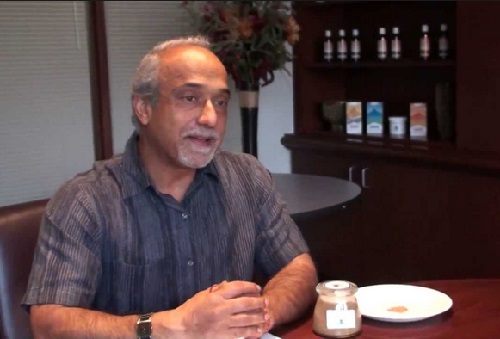
“The use of herbal medicine, although traditional in many Eastern cultures, had been only a minor fad in Western medicine until recent decades,” says Dr. Virender Sodhi, founder of the Ayurvedic and Naturopathic Medical Clinic , which provides complementary and alternative medicine.

That trend has been shifting as a growing body of studies and research has demonstrated the effects of traditional remedies on chronic diseases, such as diabetes and hypertension, says Sodhi, author of the new guide, “Ayurvedic Herbs: The Comprehensive Resource for Ayurvedic Healing Solutions.

That’s not necessarily news to ailing people in other parts of the world, such as Asia and Africa. For centuries, they have found relief through herbal medicines derived from shrubs, vines, trees and other plants, Sodhi says.

Here are four examples, a couple of which are recognizable by better known names and purposes.

American licorice is a native, perennial legume that grows in temperate climates of North America. Licorice, which grows in Europe and Asia, is the root of varieties of the Glycyrrhiza plant.


•  Glycyrrhiza glabra. Most people would recognize this plant by its more common name – licorice. It has been used for centuries in the traditional and folk medicines of Asia and Europe to treat ailments ranging from the common cold to liver disease, Sodhi says.

Most Americans likely encountered licorice as children because the sweet root of the plant is used to make candy. Licorice can cure more than a sweet tooth, though. It can protect people from the influenza virus. In cell line studies it was shown to reduce titer of the influenza virus by 90 percent and have strong immune modulation properties.

It’s an important ingredient in many herbal preparations, Sodhi said, especially for bronchial conditions. Because of its expectorant properties, powdered licorice has been used for centuries to treat coughs. Modern cough syrups often contain licorice extract.

Piper negrum

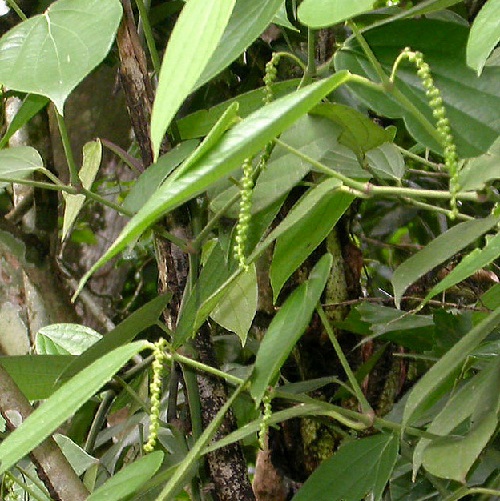
•  Piper nigrum. This flowering vine’s berries, when still unripe, are used to produce black pepper, but spicing up food isn’t its only talent. Piper nigrum has anti-inflammatory, anti-microbial and anti-spasmodic properties that make it ideal for treating digestive disorders, Sodhi says.

It doesn’t stop there. Drug resistance is a major concern in cancer patients. Piper nigrum can reverse multiple drug resistance many fold and significantly increase the apoptotic effect of many pharmaceutical drugs.

CLICK me to discover more about Frankincense

•  Boswellia serrate. Commonly known as Frankincense, this herb has powerful anti-inflammatory effects. Several patients with ulcerative colitis and Crohn’s colitis have gone in to remission using a Boswellia preparation.

In brain tumor patients it has reduced cerebral edema by 75 percent. Sodhi has mentioned case studies of many patients with rheumatoid arthritis, psoriatic arthritis, polymyalgia rheumatica and ulcerative colitis who went into remission.

Bael

  Bael. Commonly known as “golden apple”, this fruit-bearing tree indigenous to the hills and plains of central and southern India has numerous uses. The fruit promotes healthy digestion and is used medicinally to treat such conditions as diarrhea, dysentery and cholera. The leaves, roots and bark of Bael also have medicinal value.

They help relieve acute bronchitis, heart palpitations, intermittent fevers and many other ailments. Dr. Sodhi has observed 100 percent success in treating patients of clostridium difficile, who did not respond to standard medical protocol of metronidazole (Flagyl), Dificid (fidaxomicin), or vanconycin.


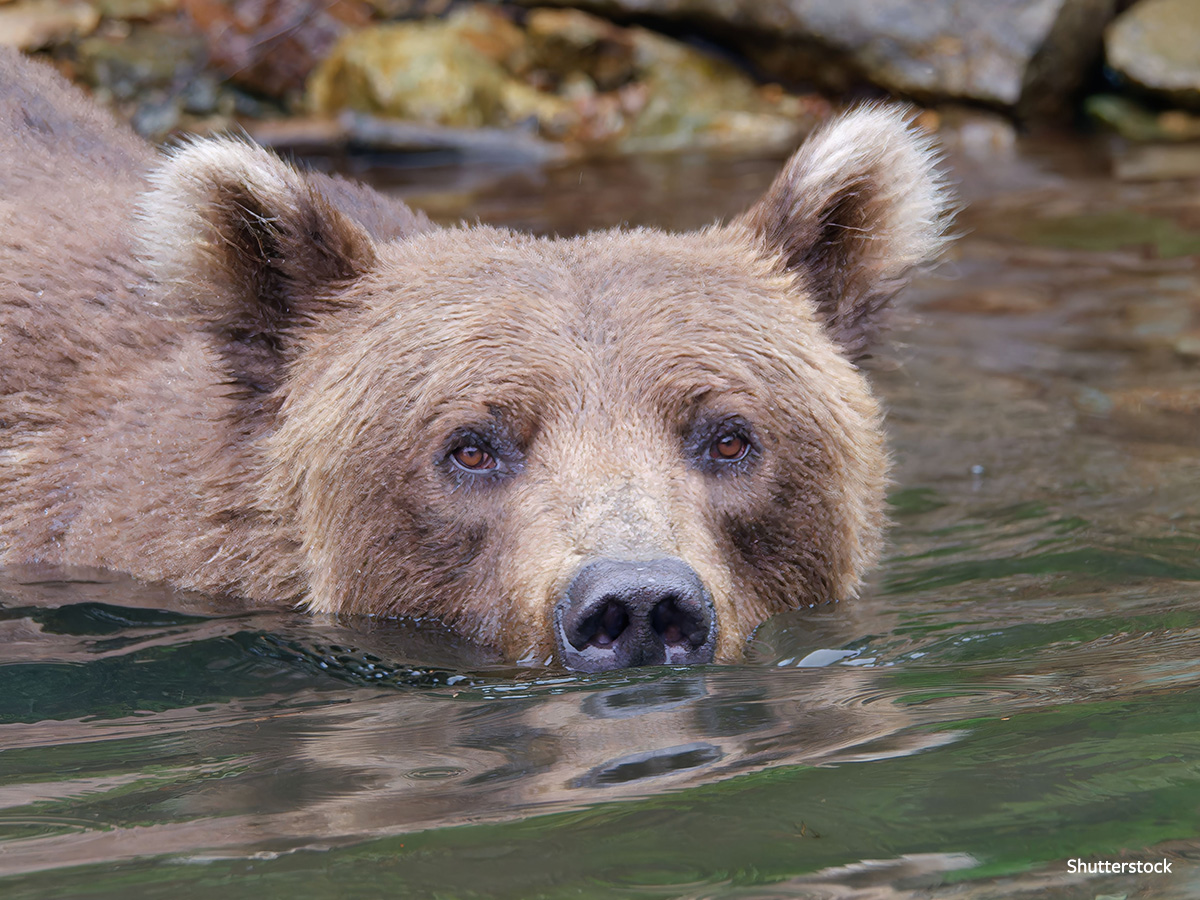
Last-Minute Win Spares Alaska’s Bears From Aerial Gunning- For Now

https://lh7-rt.googleusercontent.com/docsz/AD_4nXcaFCuAK3CEH6LnyifCImET2BDuU3n3ZEvuDFGdVBwtFe76IpYOuZyrDHLnTKziK8jd6L8llUsLEkveGzzXckaLcgJcl3Qxhhn6lXnIUrB-DvWYJy50w3PYfut5601c_DjbpVXIBQ?key=ArHp4kXIyrWLvYHpom9uYQ

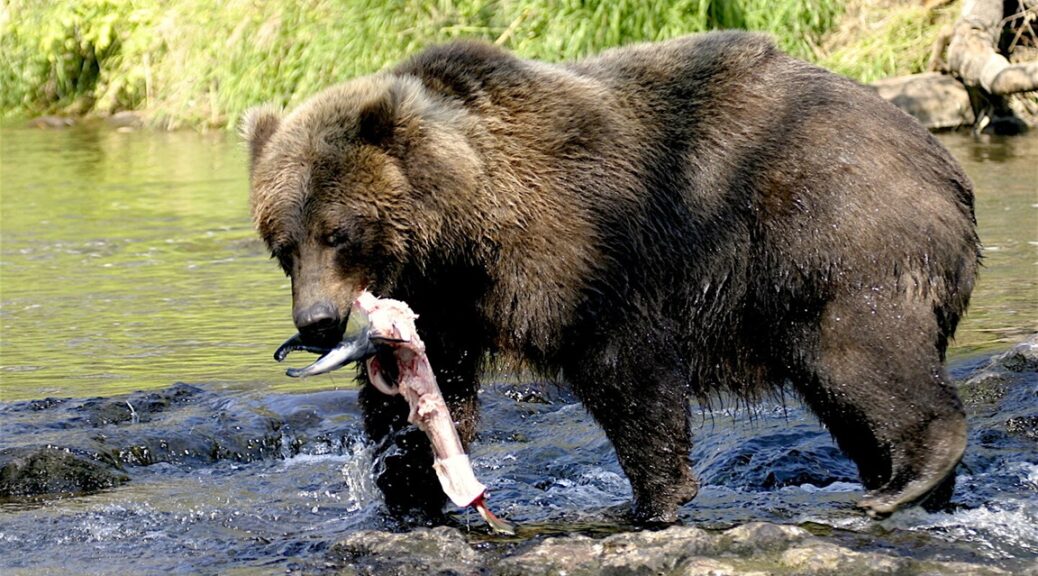
ANCHORAGE, Alaska (May, 2025) — In a major win for Alaska’s brown bears and their advocates, a US state court issued an injunction halting the controversial Mulchatna aerial gunning program just as the 2025 bear-killing season was set to begin. The ruling follows legal action by Alaska Wildlife Alliance, which argued the predator control program violates Alaska’s Constitution and due process. In Defense of Animals supporters flooded officials with over 7,000 messages urging them to abandon the program and protect Alaska’s bears.

Injunction

The injunction, granted just as the killing resumed resulting in the deaths of 11 bears, pauses aerial gunning in Units 17 and 18 of Western Alaska, where nearly 200 brown bears were killed under the program in 2023 and 2024. The court’s decision brings a wave of relief to advocates who have spent months pushing back against the scientifically unsupported and ecologically reckless killings.

“This is a crucial win for Alaska’s bears, and for everyone who believes in science-based, ethical wildlife management,” said Nicole Schmitt, Executive Director of Alaska Wildlife Alliance. “The court has again made it clear that the state cannot steamroll legal protections or ignore its own constitution in the name of predator control.”

Mulchatna Predator Control Program

The Mulchatna predator control program has faced mounting criticism for allowing indiscriminate killing of bears with no scientific basis, threatening not only individual bears but entire bear communities. Research shows older brown bears play key roles in teaching younger bears how to fish, forage, and survive — knowledge that’s lost when experienced bears are killed.

Local businesses and Alaska state senators were also urged to take a stand against the killings. Thousands of advocates pledged to boycott travel to Alaska until the aerial gunning program ends, and called on tourism organizations encouraging them to publicly oppose the practice and support ethical alternatives.

“This court decision gives Alaska’s brown bears a much-needed reprieve,” said Katie Nolan, Wild Animals Campaigner for In Defense of Animals. “Killing programs ignore the ecological importance of bears and the values of people who want to see them protected. It’s encouraging to see the courts recognize that what’s lawful also needs to be responsible.”

In Defense of Animals will continue to support Alaska Wildlife Alliance in its efforts to end the Mulchatna predator control program for good and ensure Alaska’s wild animals are treated with the respect they deserve. For the Silo, Lisa Levinson.

In Defense of Animals is a friend of The Silo and is an international animal protection organization with over 250,000 supporters and a history of defending animals, humans, and the environment, through education and campaigns as well as hands-on rescue facilities in India, South Korea, California, and rural Mississippi. www.idausa.org/wildanimals 

Make A Prairie And Say No To Land Without Life

image: www.ojibway.ca

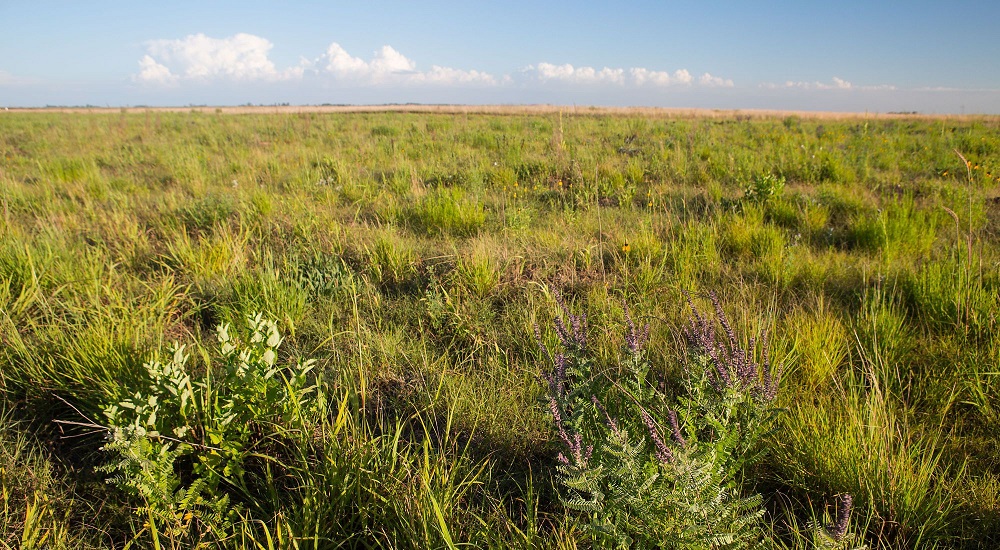
So make a prairie

It’s hard to believe it’s been almost fifteen years since I did some work recording for Statistics Canada. The job required door-to-door visits to all the homes in a designated area, interesting because I had a chance to see what people do in their yards. One residence in particular left a strong impression on me and it continues to resonate now in 2025 all these years later.

It was a beautiful home, probably 40 years old, on a fairly large estate.

The lawns were nicely manicured and the architectural evergreens were tastefully placed. It looked like a photo in a 1970’s Better Homes and Gardens.

This architectural sketch of a late 1970’s “Dream Green Home” at least shows a bit of “greenery” and a tree. image: public domain

But as I walked to the front door, I realized that there was no movement.

Nothing swayed in the afternoon breeze. There were no herbaceous plants, no flowers, and worse, no bees, no butterflies, no birds. This place had as little movement as my imaginary magazine photo. It struck me as being uninteresting and unnatural. Land without life.

In my experience we show ourselves at our best when we interact and connect with nature and even find a kind of fulfillment in it. This completion has been lost for many of us, but paradise can be regained at any time.

There are all kinds of small ways to re-connect and to bring restoration, not just to the land, but to ourselves as well. I encourage everyone to put in a garden of some kind. A vegetable garden is of course the most practical and immediately useful. Start small and easy if you have never had a garden before.

If the practicality of a vegetable garden isn’t appealing, then plant something in to nourish your soul.

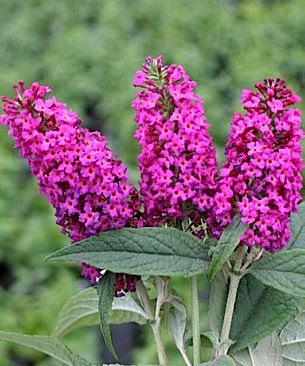
‘Miss Ruby’ Butterfly Bush-Buddleia image: www.green-living-made-easy.com
Rick’s home butterfly garden photo: M. Larmand

A couple of years ago I put in a no-maintenance garden specifically to attract hummingbirds. The thank-you’s come at dusk when increasing numbers of my little buddies do their end-of-day rounds. Scarlet runner beans, red monarda, salvia, tithonia, and crocosmia – they did the trick.

And copying the garden of a friend , I have also put in a small butterfly garden.

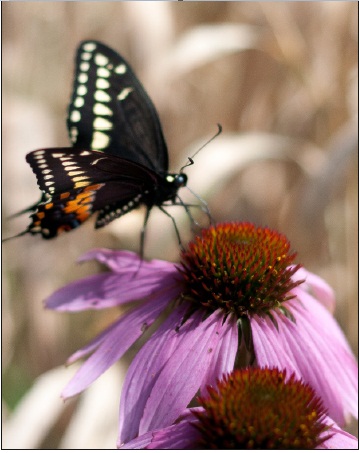
Milkweed, Echinacea, and butterfly bush (Buddleia) are good starter plants. I’m doing my small part to help save the monarch butterfly population. The nice thing about both these gardens is that they require almost no attention, just observation and enjoyment.

I’ve often thought about theme gardens. “There’s rosemary, that’s for remembrance…” Ophelia’s mad scene in Hamlet is a great starting point for a Shakespearean garden and a study of plant symbolism in literature. A biblical garden would also be an interesting exercise, though the plants themselves would be local approximations of Mediterranean species but the life lessons would be endless. Consider the lilies of the field. What about a cutting garden, a scented garden, a night garden?

Poets and painters have found inspiration in gardens. Like them, let nature take your breath away. Start small. To quote the American poet, Emily Dickinson:

To make a prairie it takes a clover and one bee.
One clover, and a bee.
And reverie.
The reverie alone will do,
If bees are few.

It doesn’t take much to make a prairie – or your own personal sanctuary.For the Silo, Rick Posavad.

Fossil Proves Canada At One Time Had 400 Day Long Year

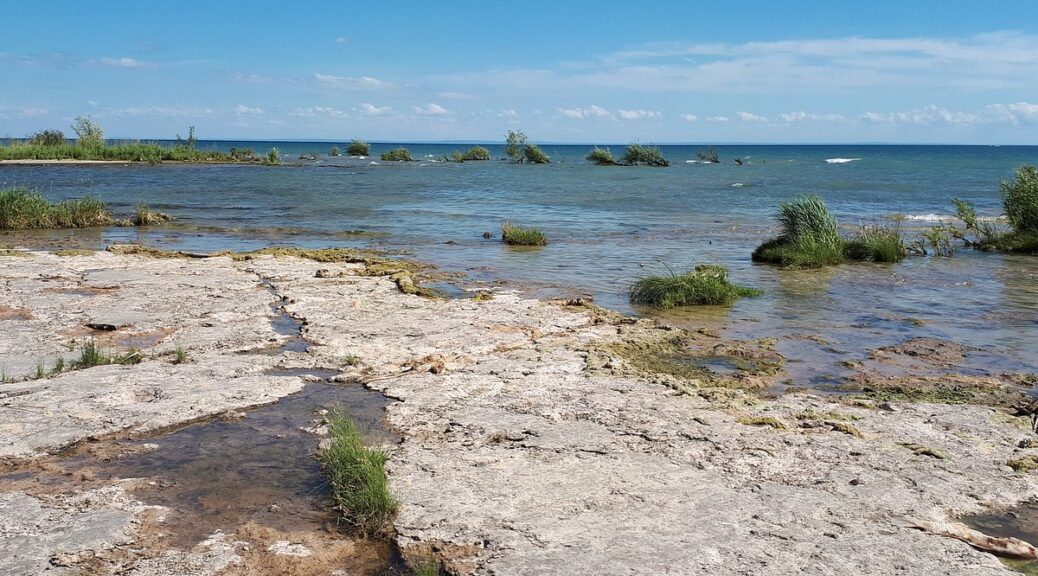
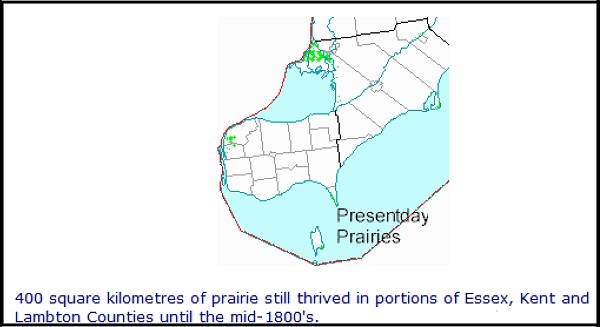
Haldimand and Norfolk Counties in Ontario, Canada have become an attractive area to explore for marine fossils.

The Great Lakes Basin, once inundated by a vast ancient, shallow sea that covered much of central North America, is today revealing an abundance of fossil corals, invertebrates, and marine organisms found within many limestone formations uncovered by glaciers and erosion.

Haldimand and Norfolk County have especially become an attractive area to explore for fossils of marine organisms by both scientists and amateur fossil collectors who can travel to local locations such as Rock Point Provincial Park near Dunnville, Ontario.

However, these fossils represent more than just evidence of unique life forms that once numbered in the tens of thousands of species co-existing in a marine ecosystem. They are scientific evidence of marine ecosystems in ecological transition, shifting continents, changing climates, and a record of our planets’ every day rotation around the sun.

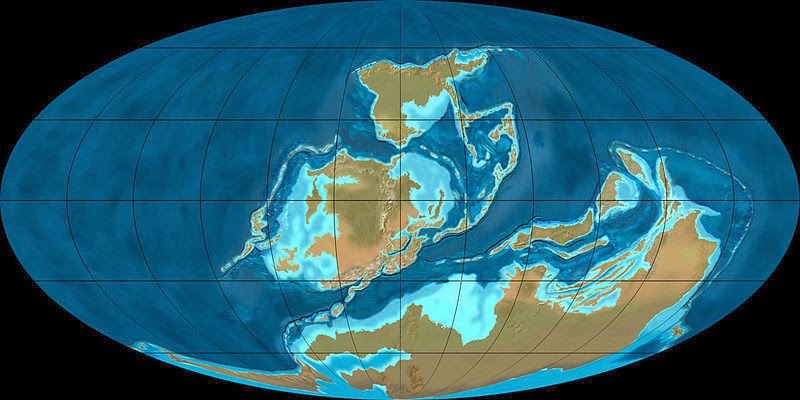
Many fossil corals found in Haldimand and Norfolk County date around 410 to 360 million years ago. It is a time geologically known as the “Devonian Period”, the “Devonian Reef” or the “Age of Fishes”. During this period, fishes of many different species became abundant in the fossil record. A partly submerged North America, or as yet to be formed Great Lakes Basin, was colliding with Europe close to the equator. Reef building environments began to develop and produce some of the largest reef complexes in the world.

The reef complexes were in large areas of shallow equatorial seas that existed between the continents.

Evidence of a saltwater sea supporting a vast coral reef system once covering southern Ontario over 400 million years ago in the form of fossilized coral deposits support the theory that a coral reef system existed for a very long time. It was in the basins of these former shallow seas that great quantities of rock salt, gypsum, and other types of minerals precipitated, and today, mining industries dig well below the lowest depths of Lake Erie to recover these minerals.

The “Heliophylum halli” is a fossil particular to the Great Lakes region and studies of its growth rings revealed 400 days in one Earth year when this coral was alive.

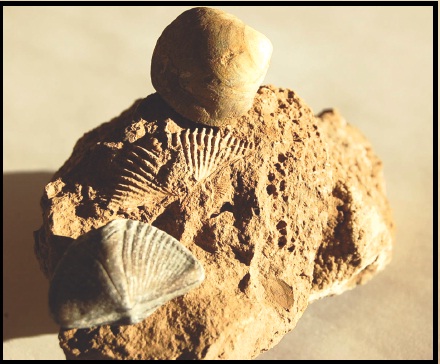
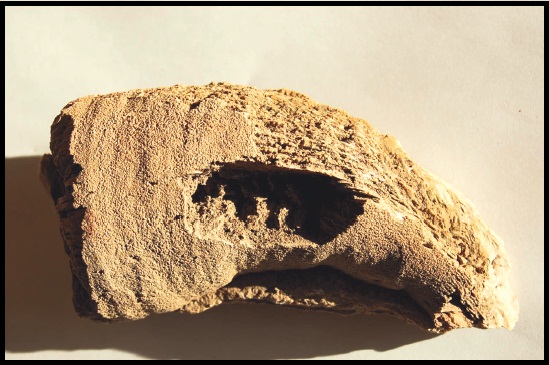
Exposure of reef basins varies and depends on how glaciers or water erosion has pushed or washed soil off bedrock. Under these conditions, a geologist’s field magnifying glass can help find very small fossils such as radiolarians and diatoms. Otherwise, larger fossils such as different varieties of bivalves (clams), trilobites, and even large fragments of fossilized coral are exposed. In some case, there are discoveries of fossilized marine organisms that are both rare and some times difficult to identify.

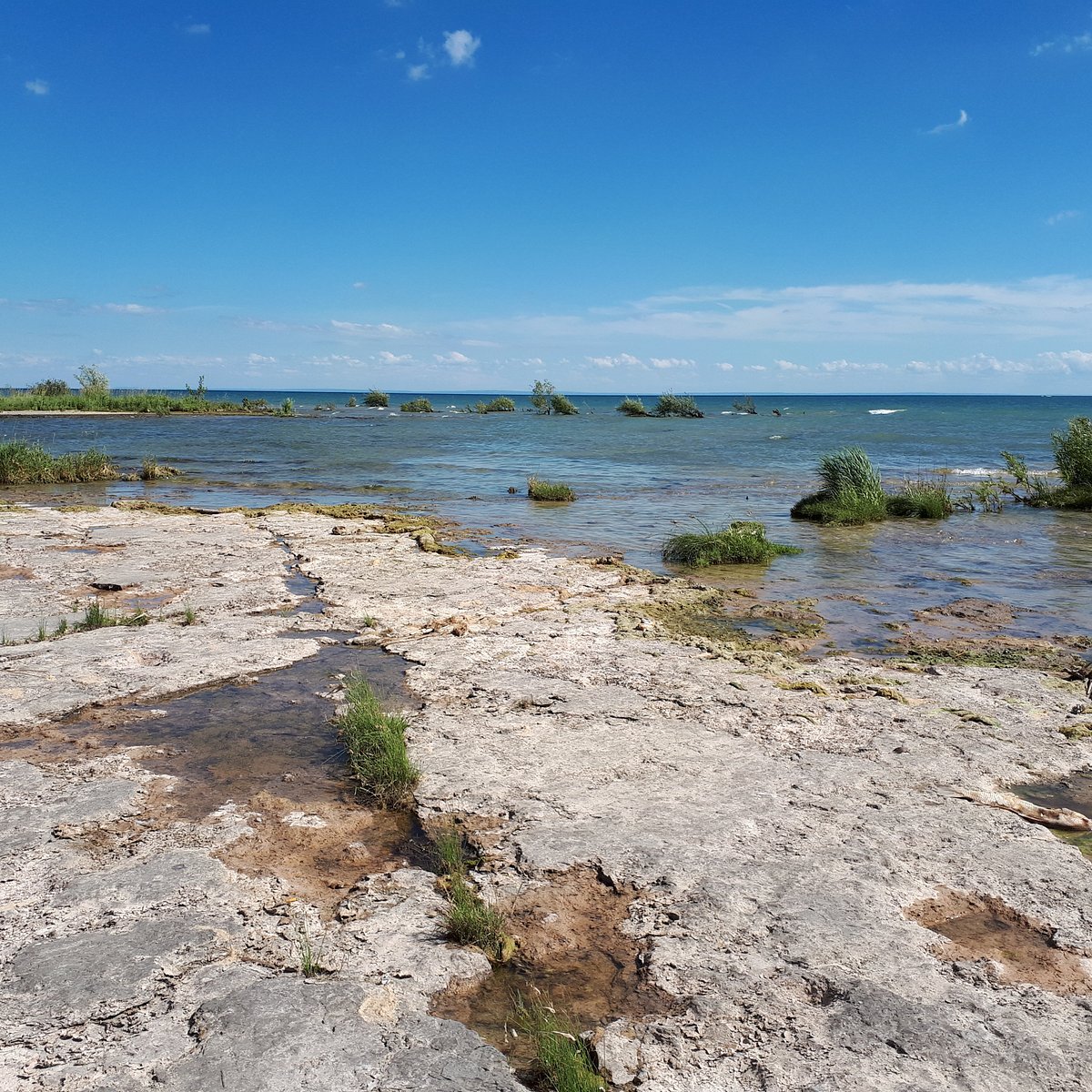
The fossilized remains of a Devonian Reef. Rock Point Provincial Park, Ontario.ROCK POINT PROVINCIAL PARK (Dunnville) - 2022 What to Know BEFORE You Go

Rock Point provincial park- exposed fossilized reef system holds an incredibly amount of fossils.

What ended these reef complexes and created one of the greatest mass extinction events of earth’s biota is not completely understood but was a combination of events that took place over a period of 25 million years.

Since species rely on a warm water marine ecosystem for their survival it would seem that a slow and gradual continental shift north from the equator would over time impact a large variety of marine species, including those supported by coral reefs. Therefore, events such as shifting continents, lowering of sea levels, climatic changes influencing land and sea ecologies, and/or possibly a glaciation had significant roles in the extinction of earth’s biodiversity.

Devonian Period - Geology Page
The large deposits of fossil corals and invertebrates found in Norfolk and Haldimand County has been of great interest to scientists and fossil collectors for many decades. However, fossil collecting took on a new importance in the last 50-60 years when it was determined there was a connection between growth rings of coral skeletons with the number of days in a year.

Scientists studying samples of coral skeletons from contemporary coral reef systems discovered growth rings on the outer surface of coral skeletons.

By studying a large sample of coral skeletons and determining how many growth rings represented a year’s growth of calcium carbonate, scientists were able to calculate an average of 360 rings per year. Thereby, approximately one growth ring represented one day’s growth for each day of the year. Taking this new information, scientists began collecting large numbers of exceptionally well-preserved coral fossils belonging to the Late Devonian Period. One particular species, found in the Great Lakes region, called a “Heliophylum halli” (see above) exhibited many growth rings developing in one year during this period. The result surprised even scientists.

Fossil coral showed there were approximately 400 growth rings per year 370 million years ago. Therefore, there were about 400 days in a year in the Devonian Period. Astronomers who have calculated that our earth’s rotation has been slowing at a rate of about 2 seconds every 100,000 years have since supported the new information.

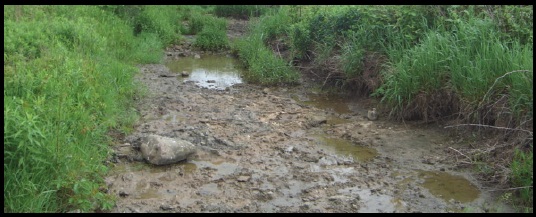
Exposures of ancient reef basins can be discovered in dried up stream beds and even under farmers fields.

Despite Haldimand and Norfolk County being a small example of a region once holding a thriving coral reef system, existing over 400 million years ago, the number of fossils of different species exposed is vast. Fossil corals, invertebrates, and species of marine organisms exist in many different shapes, sizes, and can be very fragile. Therefore, whether you are a scientist or amateur fossil collector, the next time you take a walk across the landscape to explore and search for fossils be sure to take along a fossil guide. You never know what new fossil discoveries you might make just walking across the countryside for an afternoon. For the Silo, Lorenz Bruechert.

Is Fighting Global Warming On The Downtrend?

Fighting against global warming is not popular with consumers today. But the consequences of a changing climate will not necessarily be kinder to the wallet.

If we take the case of three foodstuffs that are particularly consumed for breakfast, namely coffee, chocolate, and orange juice, a combination of unfavourable weather conditions have led to significant decreases in production and very sharp price increases: Lesechos.fr


Brazil, the world’s largest exporter of Arabica, is now increasingly plagued by drought (the latest one has almost dried up tributaries of the Amazon), which, not only affects harvests, but also results in hydroelectric production that has not increased for a decade.

It is again the drought that has penalized Vietnam, the leading exporter of Robusta, the other major variety of coffee grown in the world. In the end, the price of coffee has increased by 70% in one year.

But this is nothing compared to cocoa, whose price tripled over the period, due to unfavorable conditions in Côte d’Ivoire and Ghana, which account for 60% of exported volumes.

One of the margins for maneuver to lower prices is to increase production, but it is known that, for coffee and cocoa, the expansion of cultivation areas leads to deforestation… which will exacerbate global warming.

More coffee and chocolate?

Let’s drink orange juice! Unfortunately, the situation is not much more favorable for this citrus fruit. The table shows the drought in Brazil, the world’s largest exporter of oranges, but also a parasite that has led Florida’s production to be divided by 4.

Energy abundance, which started in a stable climate, has radically changed our consumption habits of exotic products in a few decades, allowing for long-range mass transport, and increasing crop yields.

Today, an orange, a chocolate bar or a cup of coffee have become commonplace products. But it doesn’t take a rocket scientist to understand that deglobalization (which will be a reality with a greatly reduced supply of hydrocarbons) and climate change will trigger an evolution that will go more or less far in the other direction.

Another not easy question in perspective! For the Silo, Jean-Marc Jancovic.

Image preview

Lutter contre le réchauffement climatique n’a pas la faveur du consommateur aujourd’hui. Mais les conséquences d’un climat changeant ne seront pas nécessairement plus clémentes pour le porte-monnaie.

Si l’on prend le cas de trois denrées particulièrement consommées au petit déjeuner, à savoir le café, le chocolat, et le jus d’orange, une conjonction de conditions météo défavorables ont conduit à des baisses significatives de production et des augmentations très fortes de prix : Lesechos.fr


Le Brésil, premier exportateur mondial d’Arabica, est désormais en proie de plus en plus souvent à la sécheresse (la dernière en date a quasiment mis à sec des affluents de l’Amazone), laquelle, non contente d’affecter les récoltes, a aussi pour conséquence une production hydroélectrique qui n’augmente plus depuis une grosse décennie.

C’est encore la sécheresse qui a pénalisé Le Vietnam, premier exportateur de Robusta, l’autre grande variété de café cultivée dans le monde. A l’arrivée, le prix du café a augmenté de 70% en un an.

Mais ce n’est rien à côté du cacao, dont le cours a triplé sur la période, à cause de conditions défavorables en Côte d’Ivoire et au Ghana, qui totalisent 60% des volumes exportés.

Une des marges de manoeuvre pour faire baisser les prix est d’augmenter la production, mais il est connu que, pour le café et le cacao, l’expansion des zones de culture engendre de la déforestation… qui va exacerber le réchauffement climatique.

Plus de café et de chocolat ? Buvons du jus d’orange ! Malheureusement, la situation n’est pas beaucoup plus favorable pour cet agrume. On retrouve dans la tableau la sécheresse au Brésil, premier exportateur mondial d’oranges, mais aussi un parasite qui a conduit la production de Floride à être divisée par 4.

L’abondance énergétique, qui a démarré dans un climat stable, a radicalement changé nos habitudes de consommation de produits exotiques en quelques décennies, en permettant les transports de masse à longue portée, et l’augmentation des rendements des cultures.

Aujourd’hui, une orange, une tablette de chocolat ou une tasse de café sont devenus des produits banals. Mais il ne faut pas être grand clerc pour comprendre que la démondialisation (qui sera une réalité avec un approvisionnement en hydrocarbures fortement diminué) et le changement climatique vont enclencher une évolution qui ira plus ou moins loin dans l’autre sens.

Encore une question pas simple en perspective ! Pour le Silo, Jean-Marc Jancovic.

North America’s Largest Convention Center Installs Bird Saving Window Film

CHICAGO (October, 2024) After receiving nearly 50,000 emails from In Defense of Animals supporters, McCormick Place Lakeside Center has taken a crucial step in safeguarding migratory birds by installing bird-safe window film on its iconic glass walls. This renovation addresses the soaring number of bird deaths caused by window collisions at the convention center, which claimed the lives of over 1,000 birds in a single night last fall.

“Windows collisions rank among the deadliest threats to birds,” said Katie Nolan, Wild Animals Campaigns Specialist for In Defense of Animals. “With wild birds in steep decline — over 3 billion lost in the past 50 years — we are delighted that the Metropolitan Pier and Exposition Authority has taken a crucial step by installing bird-safe window film at McCormick Place. This sets a new standard for all North American buildings to follow. Building managers can save millions by installing bird-safe window film and turning off lights.”

McCormick Place, situated along the Mississippi Flyway — a crucial migration route — has long been a site of concern for bird collisions, particularly during spring and fall migrations. In Defense of Animals and its Interfaith Vegan Coalition witnessed the devastating impact firsthand when attending a conference at McCormick Place in 2023.

“The bird deaths we witnessed at McCormick Place were heartbreaking,” said Lisa Levinson, Campaigns Director for In Defense of Animals. “While a member of our Interfaith Vegan Coalition was able to rescue one injured bird, many more had perished in a single night. We couldn’t be happier that McCormick Place has stepped up to protect these vulnerable birds.”

The Metropolitan Pier and Exposition Authority, which manages McCormick Place, announced the $1.2 million usd/ $1.62 million cad project to install bird-safe film has been completed, covering two American football fields’ worth of glass / or approximately 1.3 Canadian football fields’ worth of glass. The newly installed bird-safe window film is a critical part of reducing bird collisions, along with measures such as dimming or turning off lights during peak migration seasons. These actions help protect migratory birds, many of whom face deadly threats from light pollution and reflective windows.

McCormick Place’s efforts align with broader city initiatives like Lights Out Chicago, which aims to reduce bird deaths by encouraging buildings to dim their lights during migration periods. The installation of bird-safe window film will go a long way in ensuring that migratory birds continue to travel safely through the city. For the Silo, Jarrod Barker.

Quickening Ecological Restoration On St. Kitts

May, 2024. UNESCO. On International Day for Biological Diversity, we highlight the remarkable efforts underway to accelerate ecological restoration at St. Mary’s Biosphere Reserve on the island of St. Kitts. Home to thousands of species, this UNESCO-designated site spans vast marine areas, forested ridges, agricultural hills, cloud forests, mangroves, and coral reefs. Despite its rich biodiversity, 32% of the land is degraded, necessitating urgent restoration efforts. St. Mary’s is the first site to benefit from the expertise of volunteer scientists from the UNESCO Earth Network project, aimed at collecting key data, implementing restoration plans, and identifying sustainable livelihood opportunities.

St Mary’s Biosphere Reserve’s main challenges

Like many Caribbean islands, the socio-economic history of St Kitts and Nevis was marked by a heavy dependence on the lucrative sugar trade. Thanks to governmental efforts to diversify the economy since 1970s, the federation turned to tourism development, which brought unprecedented opportunities to improve the livelihood of locals. However, when the tourism industry came to a near standstill between 2020 and 2021, St Kitts and Nevis saw a 14.5% drop in its GDP, followed by another 4.3% contraction in 2021.

In addition, as a Small Developing State (SIDS), it faces a number of natural challenges accentuated in the last decade by climate change, with more frequent and violent natural disasters, including hurricanes and seismic events. The effects of climate change highlight the need to protect tropical forests and promote resilient and biodiversity-friendly agriculture.

What does agriculture have to do with biodiversity conservation?

UNESCO/Joan de la Malla

One of the primary goals of St Mary’s Biosphere Reserve is to conserve biodiversity, particularly one of the most emblematic species of the area, the critically endangered leatherback turtle. It may not seem obvious, but this goal is closely related with sustainable agricultural practices.

As explained by Dr Kimberly Steward (Ross University), leachate and chemicals used in farming end up on the beach and affect nesting zones as well as the algae, food and refuge for the leatherback and other turtle species.

What were the objectives of the UNESCO Earth Network mission to the biosphere reserve?

UNESCO/Joan de la Malla

With the generous support of the Government of Italy, the Earth Network project embarked on a mission to St. Mary’s Biosphere Reserve site to promote and work on ecological restoration. The initiative addressed specific challenges associated with agricultural practices, tools and methods of the St. Mary’s Biosphere Reserve site: cultivation, preservation and monetization of sustainable and biodiversity-led agriculture processes.

Furthermore, an inventory of biodiversity loss, i.e., soil-erosion, tropical forest depletion, diminished mangrove cultivation, extent of fauna and different species of birds, bees and other pollinators etc., was prepated. The mission also analysed potential employment opportunities based on sustainable, biodiversity-friendly agriculture practices and tools, i.e., better use of tropical forests as sources of new fruit and vegetable cultivation, and introducing new seed varieties more tolerant to heat and drought; and examined opportunities for the creation of small enterprises associated with sustainable use of natural resources and biodiversity.

Development of the mission and its first achievements

UNESCO/Joan de la Malla

The mission was conducted in two phases, both led by volunteer expert, Dr. Haydi Berrenstein. The first field mission took place from 20 – 24 February 2023 to collect data, assess the situation and exchange with local experts, as well as to interview local stakeholders.

A second mission took place in August 2023, when the Earth Network volunteer expert and local community members worked together to formulate technical advice towards an ecological restoration plan in line with available good practices and assess the feasibility of a local biodiversity inventory.

Additionally, in August 2023, a plan to improve their practices began to be implemented, through the creation of a Seed Bank, the development of natural fertilizers and a whole Biodiversity Agricultural Reforestation plan. The overall aim is to embrace better use of tropical forests, enhance the cultivation of new fruits and combat soil erosion.

Furthermore, the knowledge generated through the mission was consolidated and included in the UNESCO Biodiversity Portal, which provides real-time data from UNESCO-designated sites, as well as top-notch solutions.

Featured image- St. Kitts/Nevis natural springs.

Once Vibrant Expanse Of Sea Now Covered With Trash

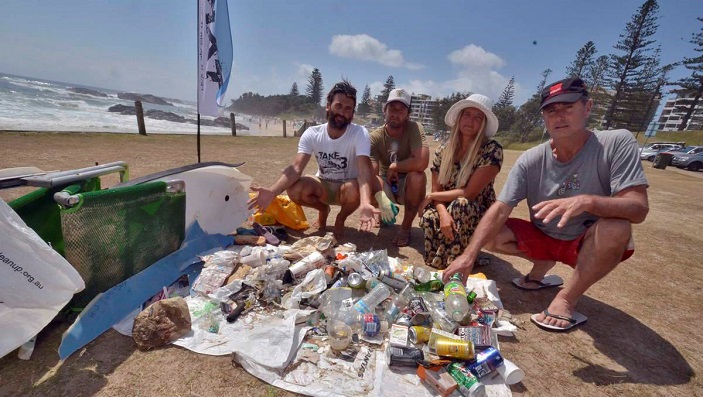
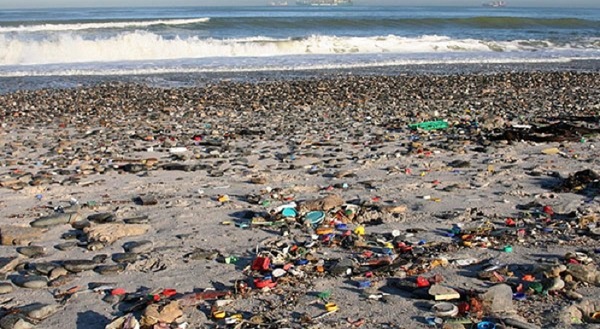
My name is Ivan Macfadyen and I am a seasoned sailor with many voyages in the World’s oceans. My last Pacific crossing has raised an ominous alarm-  I’m used to seeing turtles, dolphins, sharks and big flurries of feeding birds. But this time, for 3,000 nautical miles there was nothing alive to be seen. This once vibrant expanse of sea was hauntingly quiet, and covered with trash.

Ivan Macfadyen
Ivan Macfadyen

Experts are calling it the silent collapse.

Although very few of us see it, we are causing it — overfishing, climate change, acidification, and pollution are devastating our oceans and wiping out entire species. It’s not just the annihilation of millennia of wonder and beauty, it impacts our climate and all life on Earth.

But we have a fleeting window still to act and this could be the year to turn the tide — the UN is considering an initiative to stop dumping and pillaging in the high seas, and announced back in 2015 that they will help create the largest single marine reserve ever in one of the most pristine areas on earth!

Lack of political will is the only real obstacle to getting more of these agreements moving.

Ocean Pollution Beach Example

My apocalyptic sailing voyage is a clarion call to action. Let’s get started on making everyone aware of the situation right away.

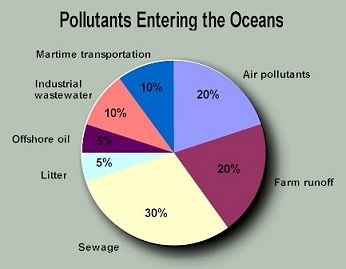
Right now, fishing boats are scraping the ocean floor clean, and over 80% of sea pollution is coming from fertilizers, pesticides, and plastics pouring off shore land. The reports are dire: in less than 40 years, our oceans could be completely fished-out.

In 100 years, all coral reefs in all the oceans might be dead.

Pollutants Entering Earths Oceans

But just as wilderness parks work to rehabilitate life on land, the same happens in the ocean. If our governments create big enough marine reserves and enforce protection laws, the ocean can regenerate.

Famed ocean explorer Jacques Cousteau said: “people protect what they love.” Let’s inspire millions more people to fall in the love with the ocean and defend its treasures.

We are in a precarious moment when there are still fewer marine mammal extinctions than there are on land, and when ocean ecosystems have shrunk less than those on land. We have not yet passed the tipping point for our oceans, but we will if we don’t act soon and at a scale that rivals the enormity of the problem. There is no other community in the world that can do that like we can. For The Silo, Ivan Macfadyen.


The Intelligent Design Of Our Universe

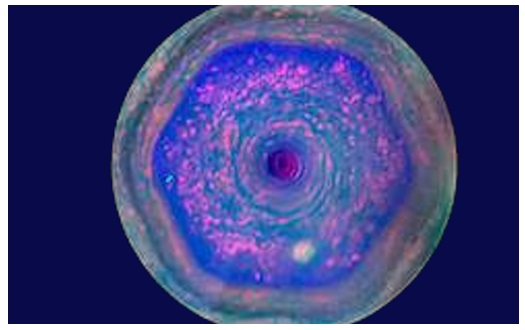
This isn't such a complex principle after all. Essentially, the idea is- if we can see strong similarities in design between say a Planet and between a structure or diagram that represents something else, then the inherent 'sameness' means an intelligence is at work, not some form of randomness. We'd love to hear your thoughts- agree or disagree? Comments are welcome at the bottom of this post CP
This isn’t such a complex principle after all. Essentially, the idea is- if we can see strong similarities in design between say a Planet and between a structure or diagram that represents something else, then the inherent ‘sameness’ means an intelligence is at work, not some form of randomness. We’d love to hear your thoughts- agree or disagree? Comments are welcome at the bottom of this post CP

Nothing exists for nothing, the universe is not itself made, and nothing in it has nothing to do.

The moment Mankind has been waiting for over a millennium has finally arrived. A tangible proof of off-planet life has occurred. The higher powers have at long last shown their hand.

In nineteen ninety nine, a website called ‘The Revelatorium’ was launched. The website revealed many aspects of the higher dimensions not previously known. By the fall of two thousand and thirteen the Revelatorium had morphed into a full revelation of the Intelligent Design by which all of Creation has been blueprinted and expressed.

The verity of the Design has now been proven in real time.

The drawing is Figure 77 in Chapter 8 of the Revelatorium. The figure depicts the cubistic blueprint of the first six dimensions of the Outer Creation according to the formats of the Intelligent design.

This image is of Saturn's North Pole and was taken recently by the Cassini probe.
This image is of Saturn’s North Pole and was taken recently by the Cassini probe.

If you carefully compare the Revelatorium and Cassini pictures you will see that they are structurally identical. The Revelatorium drawing was done in two thousand and two. The Cassini probe was launched in 2009.

Both have a clearly defined center hexagon area representing the first, second, and third dimensions collectively. Particularly confirmed is the red circle area in the middle.

A second greenish coloured hexagon ring with pink splotches around the first hexagon ring matches the ring of six different cubit designs around the center of Figure 77, representing the fourth dimension.

A third, blue colored hexagon shaped ring with uniform pink splotches around the second ring matches the ring of twelve identical cubit designs around the second ring of six cubits of Figure 77, representing the fifth dimension.

And finally a fourth hexagon shaped ring with faint pink splotches and completely different background color around the third ring matches the ring of eighteen identical cubit designs around the ring of twelve cubits of Figure 77, representing the six dimension.

[On higher dimensional physics: http://www.reasons.org/articles/higher-dimensions CP]

A close up of the Cassini image in black and white shows the features more distinctly, in particular the first second and third dimensional hexagon and circle aspects in the middle

 In short, the Saturn hexagon is a concrete lower dimensional proof of a higher dimensional factor.

The striking similarities in the respective pictures are not coincidental. The Saturn hexagon is home of the Solar System government. The hexagon is a magnetic resonance reflection in the third dimension of the domain’s six dimensional configuration. The population lives within its fifth dimensional band of materialization, represented by the thick ring in the hexagon, and ring of twelve similar designs in the same location in Figure 77.

As the cubistic matrix of Figure 77 would imply, the whole Intelligent Design is dirt simple and can be understood by anyone. The basic elements of the Intelligent Design consist solely of a sphere, a cube, and straight lines. The rules by which the elements work together hold the key. There is aught in existence not of the Design.

In figure 77, the red spheres represents Intelligence, the blue straight lines represent Energy, and the yellow cubes represents Substance. The attribute of the Father is Intelligence, the attribute of the Son is Energy, and the attribute of the Holy Ghost is Substance. Intelligence, Energy, and Substance is all there is.

The two most fundamental elements of the whole Design are The 'Cube and Sphere of Alpha and Omega' and the 'Cubit'.
The two most fundamental elements of the whole Design are The ‘Cube and Sphere of Alpha and Omega’ and the ‘Cubit’.

The Cube and Sphere comprises the entirety of the fourteenth dimension and acts as interface between the un-materialized inner form of the Creators in their fifteenth dimension as the Holy Trinity and above, and their materialized outer form in the thirteenth dimension and below as ‘Creation’.

The Cube and Sphere projected one dimension down to the thirteenth dimension comprises the ‘Cubit’, shown below. The ‘Cubit’ is the basic genome of Creation. By principle of the Cubit the whole of Creation has been blueprinted and expressed.

If you look again at Figure 77, you will see that it is composed entirely of variations upon the cubit. The variations reflect specifically different frequencies according to rule. By the rule the differing frequencies comprise the differing aspects of Creation. By this simple principle, the Intelligent Design is capable of blueprinting and depicting all of Creation in all of its aspects. The current Creation is over nine hundred trillion light years across and still within its infancy.

The Cube and Sphere

The Intelligent Design can be found in its totality at website http://www.revelatorium.com/.  For details about every thing going on now inter-dimensionally, also see: http://www.revelatorium.com/For the Silo, Delahnnovahh-Starr Livingstone.

Supplemental- Dr. William Dembski http://www.ideacenter.org/contentmgr/showdetails.php/id/776

Canada’s Ex-Minister of Defence Hellyer Claimed ‘We Shot Down UFOs’

The honorable Paul Hellyer (dec. August 2021), Canada’s former Minister of Defense, Aeronautical Engineer and Pilot appeared on Russian TV about a decade ago with Sophie Shevardnadze to discuss extraterrestrials and UFOs.

“We have a long history of UFOs and of course there has been a lot more activity in the last few decades since we invented the atomic bomb.” he said.

They are very concerned about that and that we might use it again, because the whole cosmos as a unity, and it affects not just us but other people in the cosmos, they are very much afraid that we might be stupid enough to start using atomic weapons again.

Hellyer has stated that “UFOs are as real as the airplanes that fly over your head.”

One-time Minister of Defence for Canada (!)- has Paul Hellyer become a publicity seeking 'kook' or an engaged humanitarian with secret information about the presence of 'aliens'?
Former Minister of Defence for Canada  Paul Hellyer

Shevardnadze asks Hellyer, “Why do you say that UFOs are as real as airplanes flying over our heads?” Hellyer responds, “Because I know that they are. As a matter of fact, they’ve been visiting our planet for thousands of years.”

Hellyer claims that UFOs have been downed by military action, and alien technology has been harnessed by Earthlings.

He stated that, as far as technology is concerned, they are light years ahead of us, and we have learned a lot of things from them. A lot of the things we use today we got from them, you know – led lights and microchips and Kevlar vests and all sorts things that we got from their technology and we could get a lot more too, especially in the fields of medicine and agriculture if we would go about it peacefully.

But, I think, maybe some of our people are more interested in getting the military technology, and I think that’s wrong-headed, and that’s one of the things that we are going to have to change, because we’re going to have to work together, all of us, everywhere on the planet.

Shevardnadze asks Hellyer if shooting down these UFOs is risking an interstellar war, and, if so, “should we be creating a Star Wars force (President Trump created the United States Space Force while in office)  to defend ourselves from possible invasion or something like that?”  Hellyer responds, “I think it’s a possibility, but it’s a possibility especially if we shoot down every UFO that comes into our airspace without asking who they are and what they want. Right from the beginning we started scrambling planes, trying to shoot them down, but their technology was superior enough that we weren’t able to get away with it, certainly not for a long while.

During that period of time they could have taken us over without any trouble if they wanted to, so I think, rather than developing our own Star Wars to protect ourselves against them, we should work with the benign species that are of a vast majority and work together, and rely largely on them, of course, and cooperate, so that we would be contributing something at the same time; I don’t think there’s any point in us developing a galactic force that would tempt us to ride on our own and get into mischief.”

Mr. Hellyer being interviewed on Russian Television.

“We spend too much money on military expenditures and not enough on feeding the poor and looking after the homeless and sick,’ he said.

‘They would like to work with us and teach us better ways but only, I think, with our consent. They don’t think we are good stewards of our planet.

‘We are clear-cutting forests and polluting our rivers and our lakes. We are dumping sewage in the oceans. We are doing all sorts of things which are not what good stewards should be doing and they don’t like that.’

‘Our future as a species, and here I mean all of the species in the world, is potentially at risk if we don’t figure what’s going on and work together to try and make life more amenable for all of us, and to work with our neighbors from other planets as well.’

Aliens are also responsible for some of our modern technology including the microchip, LED light and Kevlar vest, he said.

Hellyer said there has been a lot more activity with aliens in the last few decades since we invented the atomic bomb.

One of the technological advances that humans have aliens to thank for are Kevlar vests. Hellyer described one group as ‘Short Greys’ who have very slim arms and legs and are about five feet high with large heads.

While Hellyer said he has never met an alien, but has seen a UFO near his cabin on Ontario’s Lake Muskoka.

Hellyer described several types of aliens including ‘Tall Whites’ who are working with the U.S. air force in Nevada. ‘They’re able to get away with that; they had a couple of their ladies dressed as nuns go into Las Vegas to shop and they weren’t detected,’ he claimed.

Another group of aliens are called ‘Short Greys’ who have very slim arms and legs and are about five feet high with large heads. A third group are called  ‘Nordic Blondes’ and Hellyer said that if you meet one you’d probably say, ‘I wonder if she’s from Denmark or somewhere.’ For the Silo, George Filer.


Disinformation Tops Global Risks 2024 

  • Misinformation and disinformation are biggest short-term risks, while extreme weather and critical change to Earth systems are greatest long-term concern, according to Global Risks Report 2024.
  • Two-thirds of global experts anticipate a multipolar or fragmented order to take shape over the next decade.
  • Report warns that cooperation on urgent global issues could be in short supply, requiring new approaches and solutions.
  • Read the Global Risks Report 2024 here, discover the Global Risks Initiative, watch the press conference here, and join the conversation using #risks24.

Geneva, Switzerland, January 2024 – Drawing on nearly two decades of original risks perception data, the World Economic Forum’s Global Risks Report 2024 warns of a global risks landscape in which progress in human development is being chipped away slowly, leaving states and individuals vulnerable to new and resurgent risks. Against a backdrop of systemic shifts in global power dynamics, climate, technology and demographics, global risks are stretching the world’s adaptative capacity to its limit.

These are the findings of the Global Risks Report 2024, released today, which argues that cooperation on urgent global issues could be in increasingly short supply, requiring new approaches to addressing risks. Two-thirds of global experts anticipate a multipolar or fragmented order to take shape over the next decade, in which middle and great powers contest and set – but also enforce – new rules and norms.

The report, produced in partnership with Zurich Insurance Group and Marsh McLennan, draws on the views of over 1,400 global risks experts, policy-makers and industry leaders surveyed in September 2023. Results highlight a predominantly negative outlook for the world in the short term that is expected to worsen over the long term. While 30% of global experts expect an elevated chance of global catastrophes in the next two years, nearly two thirds expect this in the next 10 years.

“An unstable global order characterized by polarizing narratives and insecurity, the worsening impacts of extreme weather and economic uncertainty are causing accelerating risks – including misinformation and disinformation – to propagate,” said Saadia Zahidi, Managing Director, World Economic Forum. “World leaders must come together to address short-term crises as well as lay the groundwork for a more resilient, sustainable, inclusive future.” 

Rise of disinformation and conflict

Concerns over a persistent cost-of-living crisis and the intertwined risks of AI-driven misinformation and disinformation, and societal polarization dominated the risks outlook for 2024. The nexus between falsified information and societal unrest will take centre stage amid elections in several major economies that are set to take place in the next two years. Interstate armed conflict is a top five concern over the next two years. With several live conflicts under way, underlying geopolitical tensions and corroding societal resilience risk are creating conflict contagion.

Economic uncertainty and development in decline
The coming years will be marked by persistent economic uncertainty and growing economic and technological divides. Lack of economic opportunity is ranked sixth in the next two years. Over the longer term, barriers to economic mobility could build, locking out large segments of the population from economic opportunities. Conflict-prone or climate-vulnerable countries may increasingly be isolated from investment, technologies and related job creation. In the absence of pathways to safe and secure livelihoods, individuals may be more prone to crime, militarization or radicalization.

Planet in peril


Environmental risks continue to dominate the risks landscape over all timeframes. Two-thirds of global experts are worried about extreme weather events in 2024. Extreme weather, critical change to Earth systems, biodiversity loss and ecosystem collapse, natural resource shortages and pollution represent five of the top 10 most severe risks perceived to be faced over the next decade. However, expert respondents disagreed on the urgency of risks posed – private sector respondents believe that most environmental risks will materialize over a longer timeframe than civil society or government, pointing to the growing risk of getting past a point of no return.

Responding to risks


The report calls on leaders to rethink action to address global risks. The report recommends focusing global cooperation on rapidly building guardrails for the most disruptive emerging risks, such as agreements addressing the integration of AI in conflict decision-making. However, the report also explores other types of action that need not be exclusively dependent on cross-border cooperation, such as shoring up individual and state resilience through digital literacy campaigns on misinformation and disinformation, or fostering greater research and development on climate modelling and technologies with the potential to speed up the energy transition, with both public and private sectors playing a role.

Carolina Klint, Chief Commercial Officer, Europe, Marsh McLennan, said: “Artificial intelligence breakthroughs will radically disrupt the risk outlook for organizations with many struggling to react to threats arising from misinformation, disintermediation and strategic miscalculation. At the same time, companies are having to negotiate supply chains made more complex by geopolitics and climate change and cyber threats from a growing number of malicious actors. It will take a relentless focus to build resilience at organizational, country and international levels – and greater cooperation between the public and private sectors – to navigate this rapidly evolving risk landscape.”

John Scott, Head of Sustainability Risk, Zurich Insurance Group, said: “The world is undergoing significant structural transformations with AI, climate change, geopolitical shifts and demographic transitions. Ninety-one per cent of risk experts surveyed express pessimism over the 10-year horizon. Known risks are intensifying and new risks are emerging – but they also provide opportunities. Collective and coordinated cross-border actions play their part, but localized strategies are critical for reducing the impact of global risks. The individual actions of citizens, countries and companies can move the needle on global risk reduction, contributing to a brighter, safer world.”

About the Global Risks Initiative


The Global Risks Report is a key pillar of the Forum’s Global Risks Initiative, which works to raise awareness and build consensus on the risks the world faces, to enable learning on risk preparedness and resilience. The Global Risks Consortium, a group of business, government and academic leaders, plays a critical role in translating risk foresight into ideas for proactive action and supporting leaders with the knowledge and tools to navigate emerging crises and shape a more stable, resilient world.

World Economic Forum to Accelerate Multistakeholder Climate Action at COP28

The World Economic Forum will advance multistakeholder initiatives for enhanced climate solutions at the 28th Conference of the Parties of the UNFCCC. The Forum will focus on key priority action areas including industry decarbonization and net zero, energy transition, food, nature and innovative finance.COP28 takes place from 30 November to 12 December 2023 in Dubai, United Arab Emirates, and serves as an urgent call to action to the global climate crisis.Learn more about the Forum’s work at COP28 here.

Geneva, Switzerland, November 2023 – The World Economic Forum will convene heads of state, ministers, business leaders, philanthropy and civil society to advance climate action at the 28th Conference of the Parties of the UNFCCC (COP28) at the Expo City Dubai, in Dubai, United Arab Emirates. The Forum’s focus at COP28 is to address priority action areas including industry decarbonization and net zero, energy transition, food, nature and innovative finance.

“We have to take a holistic approach to address the environment crisis, with people at the heart of the agenda, focusing on restoring and protecting nature ecosystems, strengthening community resilience in the face of water stresses and extreme temperatures, while stopping the pollution of our land, sea and water,” said Gim Huay Neo, Managing Director, World Economic Forum. “Fostering a sense of inter-dependence, mutual trust and support as well as active collaboration between governments, the private sector, philanthropy, civil society and communities is needed to build a more harmonious relationship among communities and with the planet. COP28 is an opportunity for the World Economic Forum to provide a platform for multistakeholders to take stock on progress, enhance partnership efforts and explore new ideas and solutions together to safeguard our global commons.”

The discussions in Dubai will build on outcomes from the Forum’s Sustainable Development Impact Meetings 2023, which reflected on progress made on the Sustainable Development Goals (SDGs) and created momentum in addressing the climate and nature crises and advancing an inclusive energy transition.
 
As part of the COP28 programme, the Forum will hold several sessions aligned to the meeting’s thematic areas. Most of the sessions will take place at the COP28 Blue Zone, which is accessible to UNFCCC-accredited media.
 
Insights and initiatives
 
The following Forum announcements and publications will be released at COP28.
 22 Nov.: Net Zero Industry Tracker 202322 Nov.: Financing Energy Transition Projects with Industrial Clusters in Europe26 Nov.: Biodiversity Credits: Demand Analysis and Market Outlook27 Nov.: Biodiversity Credits: A Guide to Support Effective Use29 Nov.: Launch of Scope 3 Action Plan from the Alliance of CEO Climate Leaders29 Nov.: Navigating Article 6: Opportunities for the Middle East and North Africa30 Nov.: Grassroots to Boardrooms:Social Innovation Partnerships for Climate Adaptation30 Nov.: Catalysing Climate Action in Asia: Unlocking the Power of Philanthropic-Private-Public Partnerships30 Nov.: Policy Action to Mobilize Climate Finance and Market Responses 1 Dec.: Taking Stock of Global Business Efforts on Adaptation4 Dec.: Joint Communiqué: CEOs from the Leaders for a Sustainable MENA Sign Joint Letter to Pledging Net Zero by 2050 and to Reduce 200MT CO2 Emissions by 20304 Dec.: Roadmap for Enabling Measures for Green Hydrogen in the MENA Region4 Dec.: Fuelling the Future of Shipping: Key Barriers to Scaling Zero-Emission Fuel Supply5 Dec.: Circularity in the Built Environment: Maximizing CO2 Abatement and Business Opportunities5 Dec.: Using a People-positive Approach to Accelerate the Scale-up of Clean Power: A C-Suite Guide for Community Engagement Find more about World Economic Forum insight publications here.

The World Economic Forum, committed to improving the state of the world, is the International Organization for Public-Private Cooperation. The Forum engages the foremost political, business and other leaders of society to shape global, regional and industry agendas. (www.weforum.org).

This Spring Improve Survival Of Trees You Plant

Every year the landowners of Ontario’s watershed areas collectively plant tens of thousands of trees. These trees help to restore the natural environment by protecting water quality in streams and rivers, providing wildlife corridors and purifying the air we breathe.
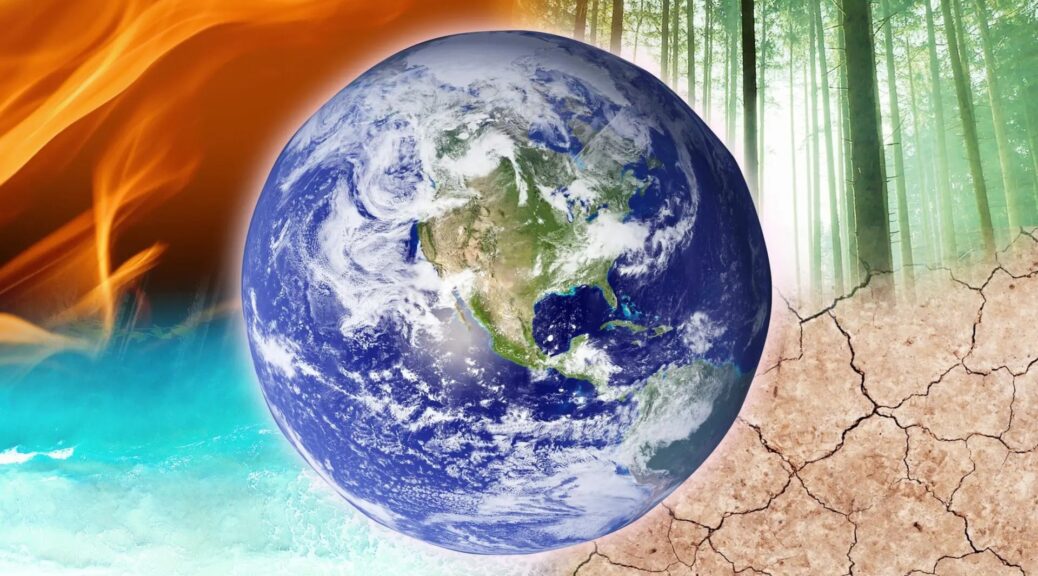
Unpredictable weather patterns mean it is even more important to keep planting trees. A number of crucial steps before and after planting will improve survival.
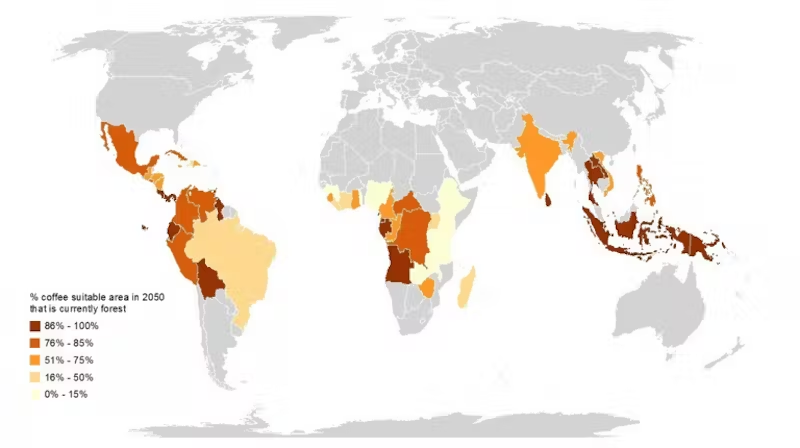
Right tree, right place

Factors such as soil texture, drainage and surrounding vegetation determine which tree species will thrive or die. Fine clay soils can hold trees like white cedar and Norway spruce. On the other hand, loose sandy soils are well suited to white pine and sugar maple. Silver maple and tamarack like wet sites, while larch and red oak will thrive in drier locations.
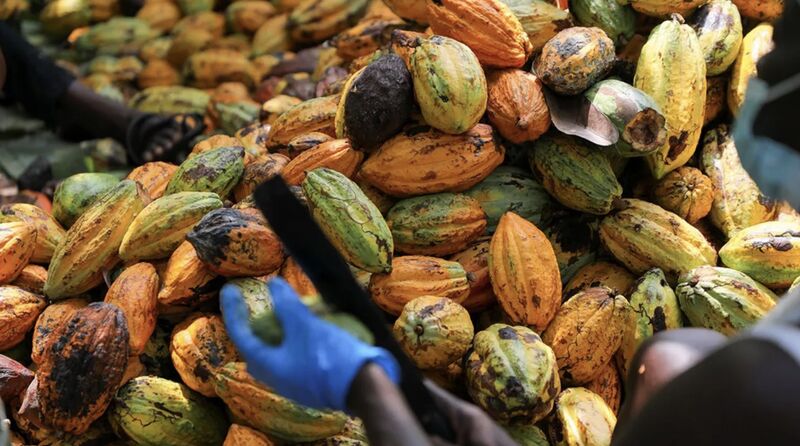
Road salt can contaminate the soil, but trees such as white spruce, larch and poplar have a higher tolerance for salt and these species are best for roadsides.
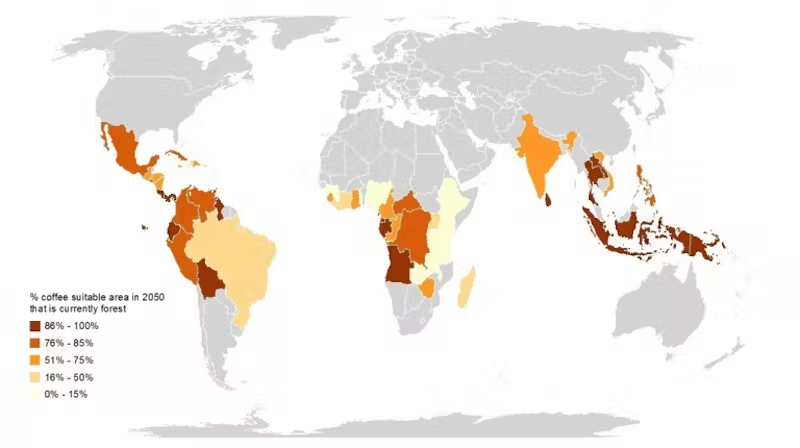
Site preparation

European buckthorn – Rhamnus carthartica – Invasive Plant Found In Ontario Watersheds
European buckthorn – Rhamnus carthartica

Preparing the land before planting will provide the best growth conditions for your trees. Clear areas of brush and invasive plants, such as European buckthorn. On larger sites, this can be done with a brush saw or a tractor and rotary mower to remove obstacles and provide growing space. Installing plastic mulch before tree planting is a great way to reduce weed competition and hold moisture in the soil. If planting into bare soil, seeding a cover crop of Dutch white clover is a great way to prevent excessive weed growth.

For the first years, control vegetation around the trees to make sure they have room to grow. This will give the trees the best chance of survival.

Click me to learn about Tree Planting incentives 🙂

Get trees into the soil quickly

The roots of bare-root stock (without soil around the roots) will dry out very fast when exposed to sun and wind and need to be planted very quickly. Keep these trees in their planting bag until they are directly planted into the ground. Potted trees can be kept in a shaded area and watered until they are planted.

Mulch madness

Mulching is one of the best ways to keep your trees growing well. Organic matter applied to the base of the tree acts as a blanket to hold moisture, protect against extreme soil temperatures and reduce grass competition. Make sure to place mulch in a donut shape around the tree, so that absolutely no mulch is touching the base of the tree. This can cause decay of vital root-collar tissue. A two to four inch layer of mulch at an inch or two away from the trunk is enough.

Water, water, water

For the first few years of growth, a tree expends a lot of energy trying to establish roots in the soil. Watering can be very important  during this time if rainfall is sparse. Water the tree right after planting and weekly during hot, dry weather. But be careful not to over water, because soggy soil inhibits the tree roots from accessing oxygen. There are many circumstances when watering is difficult due to distance from a water source or the number of trees planted. For the Silo, Lisa Stocco.

Acupuncturist Explains Eastern Medicine Methods and Chi

Living the EnerQi ConnectionAs westerners we’re used to running to the doctor for a prescription when we’re sick, but the down side to this is that many pharmaceuticals come with serious side effects.

  That’s just one reason why Asians believe in helping the body heal from more natural methods. Sheri Laine studied under one of the great Chinese medicine masters and in her new book, Living the EnerQi Connection, she shares a profound understanding of Asian medicine and explains the many benefits people are realizing from switching to natural products.

Many of us have heard the words Eastern/ Chinese/Asian medicine, acupuncture, and chi, but we don’t really understand what they mean or the long tradition behind the culture of it. We are westerners. We are used to doctors in white lab coats rushing to meet with us and write a prescription for whatever problem we have at the moment. Living the EnerQi Connection (HCI Books – $12.95) presents a new idea to health, medicine, and introduces us to what those words really mean.

The book discusses Asian medicine as a whole, but one of the main points that it touches on is qi (pronounced “chee” and sometimes spelled chi). This is the energy that is constantly circling through our bodies. Sometimes the flow of our qi can become blocked in some way, because we’re tired or run down which can leave our bodies susceptible to illness. Sheri Laine, L.Ac, has developed a way through Asian medicine to help us maintain our health and keep our qi flowing.

In this book Laine presents the L.A.I.N.E. system, which stands for: Learn, Align, Inform, Natural, and Energy.

Each chapter of the book explains a part of her system to give us a better understanding of the concepts of the energy in our bodies and the energy around us. This will help us to take a more active stance on our lives, our health and our healing.

Sheri Laine Diplomat of Acupuncture

Laine shows us moments from her childhood when she loved to play doctor to her friends and family, giving them shots by sticking them with cactus needles and giving them medicine from the plants in her back yard. Many years later she is doing this again, but she is no longer playing make-believe. Acupuncture and herbal medicine are a powerful way for Laine to help enhance our qi and energy.

Doctor Richard Teh-Fu Tan LAc, OMD

Sheri Laine studied for many years under the Chinese medicine master, Richard Teh-Fu Tan. It is a long tradition that an apprentice study under a master for many years to get such an extensive knowledge of the medicine, the science, and the tradition behind it. This is how Laine is able to help us understand the concepts for ourselves so that we may apply them in our lives. She is the president of Eastern Medical Arts, a licensed acupuncturist, herbalist and nutritionist, with a focus on Integrative Lifestyle Medicine.

Page Excerpt

“Deep in their roots, all flowers keep the light. “– Theodore Roethke

Oriental Medicine draws from nature to diagnose internal medical challenges. We have all admired a great majestic tree. Your health is like that great majestic tree. The roots are your immune system, your qi essence, and the power of your qi essence. The branches of your tree are your subjective symptoms of a greater imbalance. The problem is not in a bad branch; it actually lies in the roots of the tree and within the soil that nourishes the tree, what is the underlying cause of distress?”– Chapter 2: Drawing from Nature: The Elements of EnerQi

Supplemental- Just how gentle can acupuncture be?

Scientists Urge Caution On Underwater Mining

For years the ‘bad ones’ have poisoned rivers, devastated forests and displaced communities, and now massive companies are rushing to dig up the seabed for precious metals.

MIT: “The ocean’s deep-sea bed is scattered with ancient, potato-sized rocks called “polymetallic nodules” that contain nickel and cobalt — minerals that are in high demand for the manufacturing of batteries, such as for powering electric vehicles and storing renewable energy, and in response to factors such as increasing urbanization. The deep ocean contains vast quantities of mineral-laden nodules, but the impact of mining the ocean floor is both unknown and highly contested.”

Sledge From Sea Mining Operations
Sediment plumes following the wake of this deep sea mining ship.

And yet, only twenty-four people have the regulatory powers to stop this type of plunder in our planet’s most fragile places:  The International Seabed Authority.  You’ve likely never heard of them because this group attracts as little attention as an underwater mine miles offshore.

A few countries have agreed to full or partial bans, and leading scientists have appealed for a freeze on deep sea mining contracts.

Mining companies claim they can mine the seabed safely, but authorities in Namibia, Australia and New Zealand have blocked seabed mining projects.  Scientists point out that many deep water species are being discovered quite regularly, and that the ocean floor can take decades to recover from disturbances such as the creation of sediment plumes from deep sea floor bed mining.

There are limits to how deep Surface ships can reach- but is that enough to protect the deep of our Oceans?
There are technological limits to how deep Surface ships can reach- but is that enough to protect the deep of our Oceans? New technologies and techniques always lead to deeper mining.

Seabed Mining: The 30 People Who Could Decide the Fate of the — Oceans  Deeply
New technology allowing for deeper mining and intensified mining: A massive seafloor EV rover.

The International Seabed Authority has already issued licenses for exploratory mining across 1.2 million square kilometers of ocean floor. As mentioned earlier, this regulatory body is almost unknown, and its 24-person Legal and Technical Committee is solely responsible for the detailed scrutiny of proposals and environmental safeguards.

GreenPeace Graphic Deap Seabed Mining

Supplemental:

Deep sea mining: the new resource frontier? (Al-Arabiya)
http://english.alarabiya.net/en/views/news/world/2014/11/12/Deep-sea-mining-the-new-resource-frontier-.html

Marine mining: Underwater gold rush sparks fears of ocean catastrophe (The Guardian)
http://www.theguardian.com/environment/2014/mar/02/underwater-gold-rush-marine-mining-fears-ocean-th… 

New Interest in Seafloor Mining Revives Calls for Conservation (National Geographic)
http://voices.nationalgeographic.com/2013/12/11/new-interest-in-seafloor-mining-revives-calls-for-co… 

Deep sea mining hopes hit by New Zealand decision (Financial Times)
http://www.ft.com/intl/cms/s/0/6edaeea8-b894-11e4-a2fb-00144feab7de.html#axzz3VFC8Wm1y 

Scientists call for temporary halt on new deep sea mining projects (Popular Science)
http://www.ft.com/intl/cms/s/0/6edaeea8-b894-11e4-a2fb-00144feab7de.html#axzz3VFC8Wm1y

Shedding some light on the International Seabed Authority (University of Southampton)
http://moocs.southampton.ac.uk/oceans/2014/03/09/shedding-some-light-on-the-international-seabed-authority/

Former Canadian Minister Of Defense Claimed UFOs Are Here

Some years ago, in 2015,  I spoke with Paul Hellyer the former Canadian minister of defense, who stated he believes UFOs are from another planet and that the U.S. Government has kept it covered up.

As Canadian Minister of National Defense in 1963, Hellyer was responsible for integrating and unifying the Royal Canadian army, navy and air force into a single organization, the Canadian Armed Forces.

He is outspoken about UFOs visiting Earth and the US Banking System that he feels is greatly responsible for the present economic hard times. He feels we are naive and fail to understand we are being visited by alien life forms.

https://www.tvo.org/video/archive/hon-paul-hellyer-on-ufos

He told me he had spoken with key US government officials who confirmed aliens are visiting us and providing advanced technology.

Light At The End Of The Tunnel Hellyer BookHis book, “Light at the End of the Tunnel: A Survival Plan for the Human Species” reveals that humans are hell bent for extinction unless we change our attitudes and actions with an urgency appropriate to an impending disaster. Paul Hellyer suggests that we have about ten years to wean ourselves from the oil economy and profoundly regrets that the Copenhagen Conference reflected little progress in that direction.

The whole atmosphere was one that reminded him of Emperor Nero fiddling while Rome burned. World leaders simply have to do better! The book outlines the three monumental changes required to accommodate the miracle. First, the book claims that exotic energy sources already exist. They have been developed by the U.S. “shadow government” at the massive underground “black operation” installations in Nevada and Arizona using technology borrowed from visitors from other planets. Yet they remain secret for the alleged benefit of the privileged few. Second, the money has to be found to subsidize poor nations and facilitate major changes. This can be accomplished by a fundamental re-working of the monetary and banking system. Bank leverages must be dramatically reduced and the percentage of virtual money they create as debt strictly limited so that governments can gain the financial flexibility to finance the transition to sustainability. Finally, it will be necessary for all countries, races, faiths and colors to drop their antagonisms and work together in common purpose to save the heritage they have in common.

When Hellyer was Canada’s Minister of National Defense he stated, “I got periodic reports on sightings and I looked at them very casually, and it was decided that about 80 percent of them were natural phenomena of one sort or another, and the other 20 percent roughly were unexplained, and therefore unidentified. While spending one Thanksgiving holiday north of Toronto, Hellyer and his wife spotted an UFO. “The two of us stood there transfixed for 20 minutes, looking up at this thing moving first in one direction, and then another. By process of elimination, we determined it wasn’t a star or satellite and it wasn’t the space station, so there was really no explanation for it other than it was, in fact, a UFO.”

“It looked like a star, but it maneuvered in a way that stars do not. I must admit that when I saw this one, I wondered whether it was extraterrestrial or American. And I guess the thought that occurred to me was that if it is American, then they have learned some pretty big secrets about acceleration, because it accelerated at a pace that nothing I’ve ever known about that was built here is capable of.”   For the Silo, George Filer.  Join MUFON.

Supplemental- renowned Scientist Stephen Hawking warns about the danger of Extra-terrestrials.

Agrarians From Ancient World Knew About Biochar

Agrarians from various ancient cultures around the world discovered the soil fertility benefits of charred biomass over two thousand years ago.

Now known as ‘biochar’, this ancient soil management practice has been enjoying a renaissance of late for a number of reasons largely related to the need for more resilient and productive soils and biochar’s ability to sequester carbon in a safe and beneficial manner.

Biochar is made by baking organic material in an oxygen-limited environment, called pyrolysis. Benefits vary depending on the soil, crops and climate where biochar is used with poor soils benefiting the most. Providing long-lasting organic material, improving water and nutrient holding capacity, and improving overall soil tilth are all potential benefits.

Due to its porous nature and cation exchange capacity, biochar can also be used as a filtration medium to prevent nutrient run-off from farms into local water bodies. In Europe livestock farmers are adding small amounts of biochar to feed rations to improve feed conversion ratios and overall animal health. Biochar as carbon fodder has also shown promise as a way to reduce enteric methane emissions.

Biochar
“When we first started in 2011 to load biochar with high amounts of liquid NP-fertilizer and tested them in pod trials, we could prove reduced nutrient leaching after simulated strong rain events. When we planted a second culture (paprika after radish) in the same pods without additional fertilization, plant growth was significantly improved in the biochar treatments (see image). From an economic point of view, the difference in growth might have been not relevant as some additional fertilization would have been cheaper than the price of biochar that saved some mineral fertilizer. However working with low amounts of nutrient enhanced biochar [1 t per hectare] applied as slow release fertilizer close to the roots every year seems very promising when viewed from both an economic and ecological perspective. ” Ithaka Institute

Biochar is increasingly available to purchase but farmers can also convert their on-farm waste biomass in to biochar.

Farm scale equipment for making biochar is evolving and shows promise not just as a waste conversion technology which produces a valuable soil amendment, but also as a means for farmers to generate renewable energy in the form of heat, and in some cases electricity.  For the Silo,  Kathleen Draper.

Seen here: “…we focused on organic plant nutrients and started multiple tests with a wide variety of nutrient rich biomass wastes including: liquid animal manure, urine, feathers, yeasts, wool, vinasse etc. Over the past four years we have developed a panoply of organic carbon fertilizer that can be produced commercially or manufactured by farmers themself all over the world. One of our favourites is the sheep wool, vinasse, pyrolyse ash, biochar pellets with 7% Norg / 6.5% P2O5 / 6% K2O “

Kathleen Draper is the US Director of the Ithaka Institute for Carbon Intelligence, a non-profit focused on research, education and program services that promote climate positive solutions which enhance land management, urban design, and resource efficiency.  

Lake Erie Finds Questioning Archaeological Establishment

“In my personal archaeological research I’ve been focused on the shores of Lake Erie (and a few inland sites) beach and general shoreline lithic retrievals— on the Canadian side of the lake—for many years.”

Top Left- one of the retrieval locations Top Right- one of the retrieved teeth sent to Dr. Walker Center- eg's of stone artifacts discovered in indirect association with some of the teeth
Top Left- one of the retrieval locations.
Top Right- one of the retrieved teeth sent to Dr. Walker.
Center- eg’s of stone artifacts discovered in indirect association with some of the teeth.

The surf and weather are odd bedfellows, on one hand revealing and on the other destroying, so it seemed obvious to me that I should keep eyes to the ground, sand, and wave line and to pick up what seemed to me to be artifacts.

Occasionally friable materials turn up such as large, disarticulated bones. Even a basket made from reeds turned up. And then there’s the teeth— found in several varied locations and in indirect association with what look to me like artifacts and pierced pebbles.

I’ve yet, however, to find any of this material in situ, i.e. still buried in its confining sediments.

Some of the teeth seem to have been ‘broken’ perpendicular to the long axes, some seem to have been burned and some show calcified deposits of calculus in the interproximal grooves (I worked in dentistry for several years so have a basic understanding of tooth morphology and deposit identification etc).

Some teeth were found inland quite a few miles away from Lake Erie. I later contacted Dr. Danny Walker, RPA, Wyoming Assistant State Archaeologist at the Comparative Osteology Museum and Zooarchaeology Laboratory. I emailed to him photos and descriptions of the teeth. He kindly offered to study several of the teeth. (Dr. Walker is a co-author of the research paper, Unraveling the sequence and structure of the protein osteocalcin from a 42 ka fossil horse, Geochimica et Cosmochimica Acta 2006;70(8):2034-44.)

(Center) Equus Scotti- Pleistocene horse once native to North America.

Along with his graduate students, Dr. Walker identified the teeth that I had mailed to him as Equus scotti—Pleistocene ice-age horse. Now the story begins to resemble somewhat the X-files. The established archaeological community here in Ontario and the Royal Ontario Museum (I made all aware of the teeth, the lithics and the identification offered by Dr. Walker) disputed the finds, the identification and the lithics. The Royal Ontario Museum also told me that if I had the teeth dated and they showed as pre-contact, then they would offer this explanation— that the teeth were deposited on the Lake Erie shoreline after being brought aboard lake freighters from Europe; i.e. that they may have filled their ballast with gravels which could have included the teeth.

Putting aside the low probability of this possibility, as well as the fact that Equus scotti is a North American horse, the skeptics have failed to address the fact that some teeth were discovered inland—many miles away from Lake Erie. For the Silo, Jarrod Barker. 

Act Now Or Lose African Elephants Forever

Elephants are super smart — as close to humans as apes, yet we are literally killing them to extinction.

And they are obsessed with their death. They understand what is happening to them and their families, even identifying elephant bones and spending hours crying over them. Poaching is so emotionally devastating that it can take a herd 20 years to recover!

Legal Elephant Hunting in Mozambique

100 elephants a day are dying — shot sometimes from helicopters, their faces cut off by machetes often while still alive — just to produce ivory trinkets. What’s worse is that this savagery is managed by organized criminals who help fund some of the most dangerous terror groups in the world.

But now there’s reason to hope: China just announced it will phase out its ivory industry and there is legislation in eleven US states calling for a ban on ivory trading. It’s a tipping point moment in this fight for these majestic animals and we can make sure demand everywhere dries up by funding a flood of campaigns in the US, Thailand and Vietnam to kill the biggest ivory markets anywhere.

Elephant hunts are big business and are even organized from outfitters in North America.

Click here to pledge to fund species-saving work, pledges won’t be processed unless we raise enough to manage this ambitious goal.

Killing elephants is serious business — as wild elephants die out, the price for stockpiles of ivory skyrockets. Now poachers are on a race to kill as many elephants as they can. In 5 years, Mozambique has lost half of their elephant population. The clock is against us and if the current rate of killing continues, in little more than a decade, there may be no wild elephants, only graves.

The news from China could be our best chance to turn the tide and with top notch Avaaz campaigning in 11 states in the US, and in Thailand and Vietnam, we could help stop demand for bloody ivory, while supporting cutting edge anti poaching initiatives on the supply side. Here is what a dedicated global team could do:

  • Fund hard-hitting ad campaigns in SE Asia and the US to dissolve demand for ivory trinkets;
  • Launch online sites in SE Asia and the US to inform consumers of the suffering and carnage to help change the culture towards ivory;
  • Support and ramp up citizen campaigning in the consumer markets in SE Asia and the US;
  • Back ranger protection programmes in Africa and creative, ground-breaking initiatives like drones to monitor remote parks.

Avaaz has millions of members across the world, from the countries where conservation is critical to the countries where ivory statues are sold. If we each chip in we can finally help put the brakes on this cruel trade and move fellow humans to respect the other species that share this planet with us.

Outfitters and elephant hunters justify their hunts as a form of necessary conservation.

The choice before us is simple: act now or lose African elephants forever. Let’s not let ours be the generation that butchered these regal beings off the face of the earth. Let’s do what our community does best — pick careful battles, fight smart to ban the trade, and spread a culture of compassion.

SOURCES

African elephants could be extinct in wild within decades, experts say (The Guardian)
http://www.theguardian.com/environment/2015/mar/24/african-elephants-could-be-extinct-in-wild-within-decades-say-experts

African forest elephants are being massacred into extinction (Salon)
http://www.salon.com/2014/01/05/african_forest_elephants_are_being_massacred_into_extinction_partner/

Wild African elephants on verge of extinction, say experts (Al Jazeera)
http://america.aljazeera.com/articles/2015/3/23/wild-african-elephants-on-verge-of-extinction.html

At this rate, elephants will be wiped out within 10 years (The Independent)
http://www.independent.co.uk/voices/comment/at-this-rate-elephants-will-be-wiped-out-within-10-years-9012557.html

Click to view on I-tunes

The Ugly Journey Of Our Trash

It has been estimated that as much as 70 percent of all marine litter will end up on the seabed.

Marine debris comes from many land and ocean sources. Yet few of us understand that our trash can travel over land, down streams, rivers and storm drains to the ocean. That’s why Project AWARE is collecting marine debris data from divers. They’re painting a clear picture of the underwater trash that threatens ocean life and are building a case against ocean trash for all of us to see.