Tag Archives: ancient life

Fifty Years Ago Viking 1 Placed Humanity’s First Eyes On Mars

July, 2026- 5 MINUTE READ

Orange, rocky landscape (NASA/JPL)
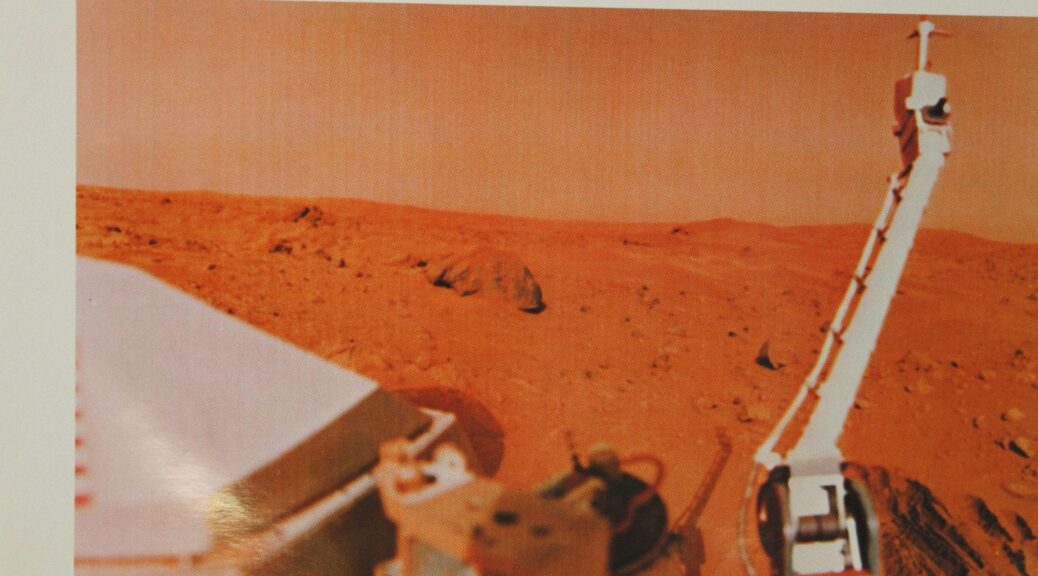
The Viking 1 lander’s photographs gave the world its first look at the surface of Mars, including this image taken before sunset August 21, 1976. (NASA/JPL)

On July 20, 1976, seven years after NASA landed a man on the moon, the U.S. space agency safely landed the first spacecraft on Mars.

Viking 1 operated for six years, far exceeding its planned 90-day mission. The lander tested soil and sent home the world’s first images of the Martian surface. While Viking 1 — consisting of an orbiter and a lander — did not find signs of life, its successful landing led to future exploration of Mars, including by the Perseverance rover launched in July 2020.

As the 50th anniversary of Viking 1 approaches, the United States is again reaching for Mars with missions that serve as a stepping stone toward sending astronauts to the red planet. NASA’s Artemis program aims to create a permanent moon base by 2032 to test human habitation on other planets and inform missions to Mars.

“We will pursue our manifest destiny into the stars, launching American astronauts to plant the Stars and Stripes on the planet Mars,” President Trump said in his January 2025 inaugural address.

Mars missions continue

Digital rendering of NASA's Space Reactor 1 Freedom (NASA)
This digital rendering provides a conceptual image of the Space Reactor 1 Freedom that NASA will use to study Mars. (NASA)

Other NASA missions are carrying on Viking 1’s legacy , furthering scientific knowledge of the fourth planet from the sun. Launched in November, NASA’s Escapade and Plasma Acceleration and Dynamics Explorers mission will reach Mars in 2027. The twin spacecraft will orbit Mars, collecting data on space-weather conditions to inform future robot and human missions.
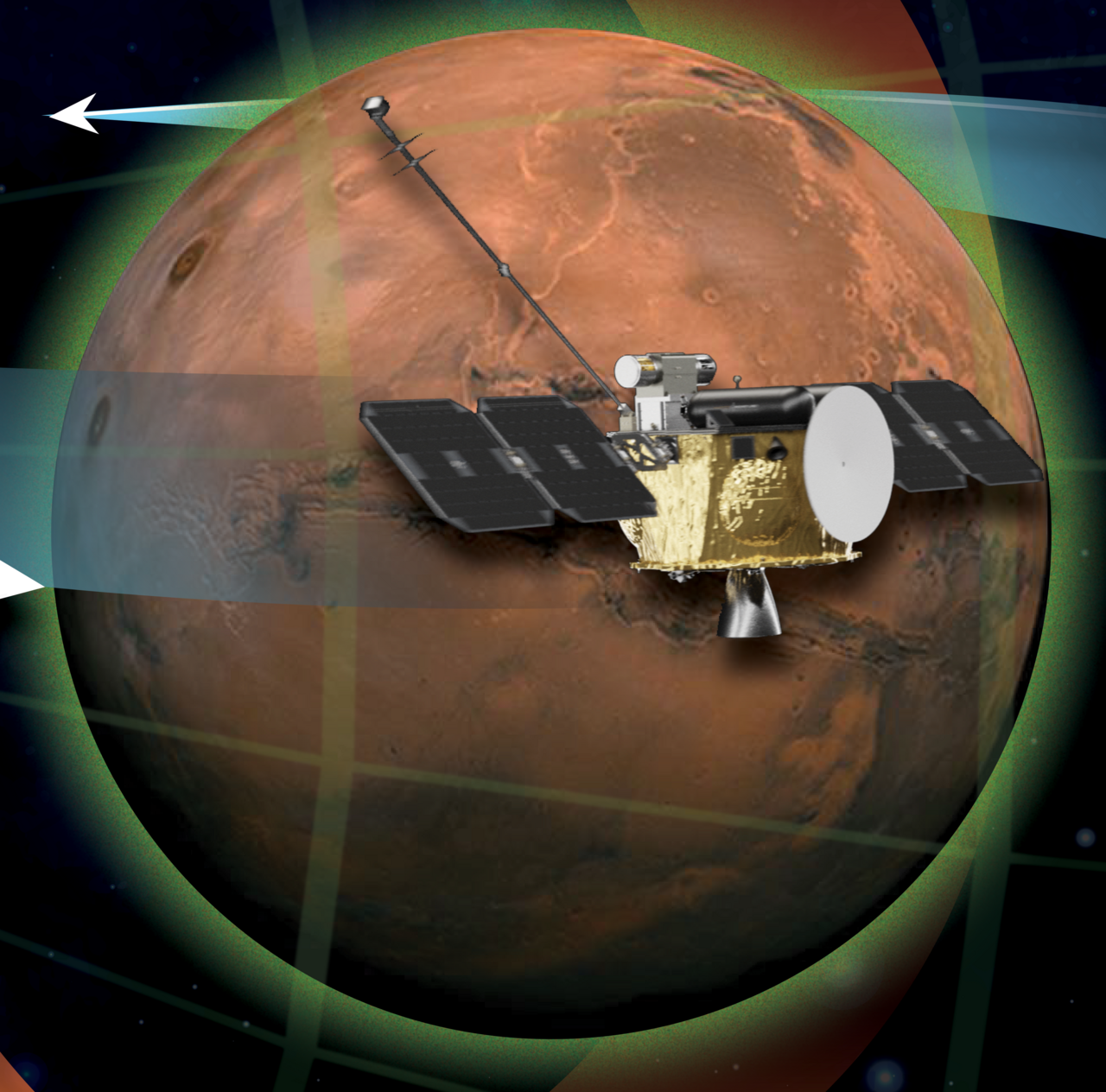
In 2028, NASA will launch the Space Reactor‑1 Freedom to Mars, an uncrewed mission designed to demonstrate whether nuclear electric propulsion can work in deep space, an essential element for human flight to Mars.

A pioneering legacy

Viking 2 image of surface of Mars (NASA)
A Viking 2 image of Mars’ Utopia Plain (NASA)

Successfully landing Viking 1 on Mars was an extraordinary achievement. While other nations had tried, communications were lost on touchdown. Yet NASA repeated the feat two months later with the safe landing of Viking 2 on September 3, 1976.

Project managers weren’t certain what to expect from either mission. The Viking 1 landing, originally scheduled for America’s bicentennial on July 4, 1976, was delayed when the planned landing site appeared too rocky. Yet the Viking missions’ legacy endures. Viking orbiters mapped 97% of Mars’ surface and sent home 52,663 images. The landers returned 4,500 photos before Viking 1 finally stopped operating in November 1982.

While neither mission discovered signs of life, the search continues as scientists revisit findings from Viking and later missions. In September, NASA announced  that a soil sample Perseverance collected may contain evidence of ancient microbial life, calling it “the closest we have ever come to discovering life on Mars.”

For the Silo, Charles Hoskinson/ Share America.
Lake Erie Finds Questioning Archaeological Establishment

“In my personal archaeological research I’ve been focused on the shores of Lake Erie (and a few inland sites) beach and general shoreline lithic retrievals— on the Canadian side of the lake—for many years.”

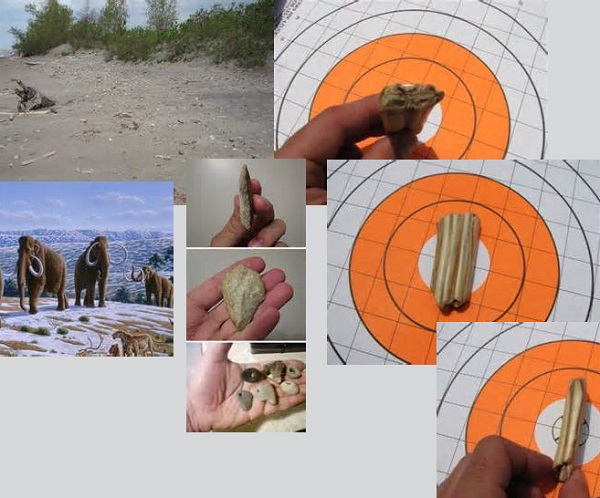
Top Left- one of the retrieval locations Top Right- one of the retrieved teeth sent to Dr. Walker Center- eg's of stone artifacts discovered in indirect association with some of the teeth
Top Left- one of the retrieval locations.
Top Right- one of the retrieved teeth sent to Dr. Walker.
Center- eg’s of stone artifacts discovered in indirect association with some of the teeth.

The surf and weather are odd bedfellows, on one hand revealing and on the other destroying, so it seemed obvious to me that I should keep eyes to the ground, sand, and wave line and to pick up what seemed to me to be artifacts.

Occasionally friable materials turn up such as large, disarticulated bones. Even a basket made from reeds turned up. And then there’s the teeth— found in several varied locations and in indirect association with what look to me like artifacts and pierced pebbles.

I’ve yet, however, to find any of this material in situ, i.e. still buried in its confining sediments.

Some of the teeth seem to have been ‘broken’ perpendicular to the long axes, some seem to have been burned and some show calcified deposits of calculus in the interproximal grooves (I worked in dentistry for several years so have a basic understanding of tooth morphology and deposit identification etc).

Some teeth were found inland quite a few miles away from Lake Erie. I later contacted Dr. Danny Walker, RPA, Wyoming Assistant State Archaeologist at the Comparative Osteology Museum and Zooarchaeology Laboratory. I emailed to him photos and descriptions of the teeth. He kindly offered to study several of the teeth. (Dr. Walker is a co-author of the research paper, Unraveling the sequence and structure of the protein osteocalcin from a 42 ka fossil horse, Geochimica et Cosmochimica Acta 2006;70(8):2034-44.)

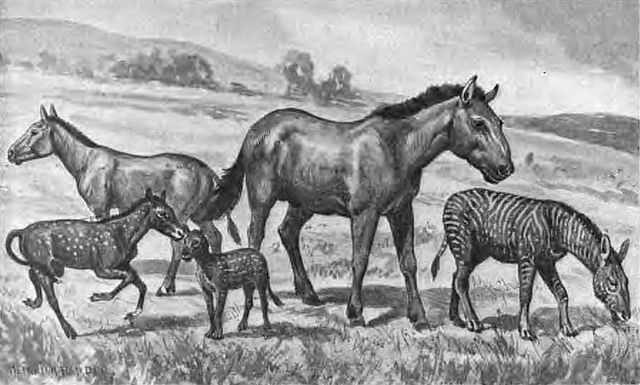
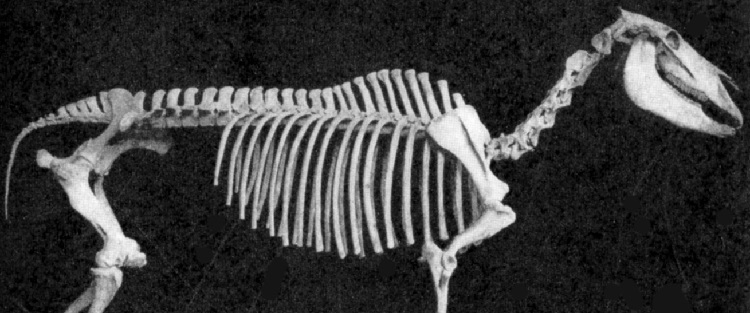
(Center) Equus Scotti- Pleistocene horse once native to North America.

Along with his graduate students, Dr. Walker identified the teeth that I had mailed to him as Equus scotti—Pleistocene ice-age horse. Now the story begins to resemble somewhat the X-files. The established archaeological community here in Ontario and the Royal Ontario Museum (I made all aware of the teeth, the lithics and the identification offered by Dr. Walker) disputed the finds, the identification and the lithics. The Royal Ontario Museum also told me that if I had the teeth dated and they showed as pre-contact, then they would offer this explanation— that the teeth were deposited on the Lake Erie shoreline after being brought aboard lake freighters from Europe; i.e. that they may have filled their ballast with gravels which could have included the teeth.

Putting aside the low probability of this possibility, as well as the fact that Equus scotti is a North American horse, the skeptics have failed to address the fact that some teeth were discovered inland—many miles away from Lake Erie. For the Silo, Jarrod Barker.