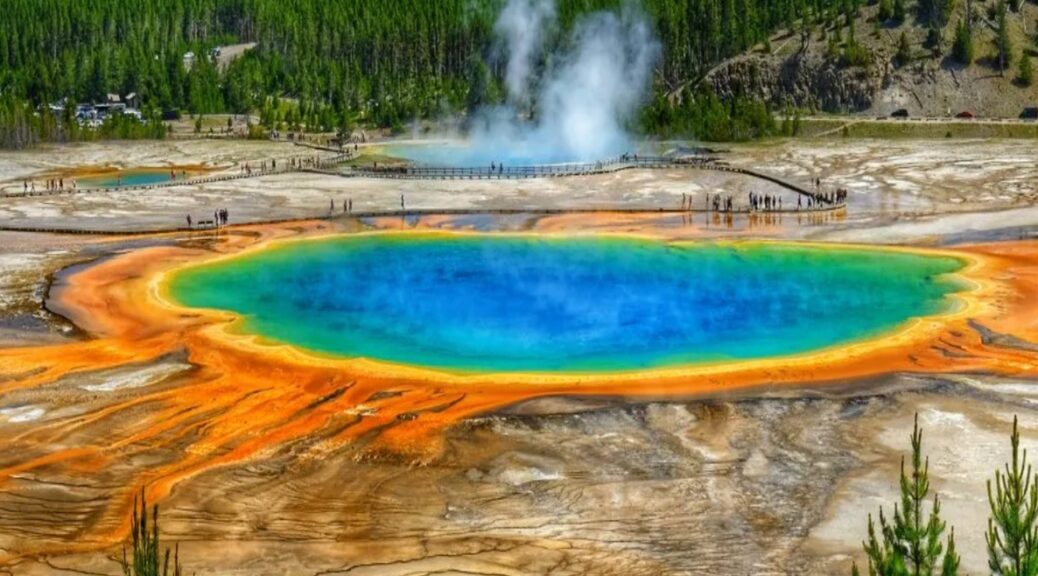
With its fluorescent natural wonders and diverse wildlife, Yellowstone National Park attracts 4.5 million visitors each year.
The world’s first national park was created on March 1, 1872, when President Ulysses S. Grant signed the Yellowstone National Park Protection Act. The law decreed that the headwaters of the Yellowstone River be “dedicated and set apart as a public park or pleasuring-ground for the benefit and enjoyment of the people.” The decision led to the creation of the National Park Service, which now protects more than 400 sites across the United States.
What are Geysers?
Sprinkled amid the hot springs are the rarest fountains of all, the geysers. What makes geysers rare and distinguishes them from hot springs is that somewhere, usually near the surface in the plumbing system of a geyser, there are one or more constrictions.
Geysers are hot springs with constrictions in their plumbing, usually near the surface, that prevent water from circulating freely to the surface where heat would escape. The deepest circulating water of the system can exceed the surface boiling point of water (199°F/93°C). Surrounding pressure increases with depth, much as it does with depth in the ocean. Increased pressure exerted by the enormous weight of the overlying water and rock prevents the water from boiling. As the water rises due to heating, steam forms and expands, increasing pressure in the constricted plumbing near the surface. At a critical point, the confined bubbles actually lift the water above the surface vent, causing the geyser to splash or overflow. This decreases pressure on the system, and violent boiling results. Tremendous amounts of steam force water out of the vent, and an eruption begins. Water is expelled faster than it can enter back into the geyser’s plumbing system, and the heat and pressure gradually decrease. The eruption stops when the water reservoir is depleted or when the system cools.
There are more geysers in Yellowstone than anywhere else on Earth. Old Faithful, certainly the most famous geyser, is joined by numerous others big and small, named and unnamed. Though born of the same water and rock, what is enchanting is how differently they play in the sky. Riverside Geyser, in the Upper Geyser Basin, shoots at an angle across the Firehole River, often forming a rainbow in its mist. Castle Geyser erupts from a cone shaped like the ruins of some medieval fortress. Grand Geyser explodes in a series of powerful bursts, towering above the surrounding trees. Echinus Geyser spouts up and out to all sides like a fireworks display of water. And Steamboat Geyser, the largest in the world, pulsates like a massive steam engine in a rare, but remarkably memorable eruption, reaching heights of 300 to 400 feet.
Vastness of Yellowstone
While mostly in Wyoming, Yellowstone’s 2.2 million acres (8,900 square kilometers) extend into neighboring Idaho and Montana. The massive park covers an area larger than the U.S. states of Delaware and Rhode Island combined.
Yellowstone was established to protect an extraordinary collection of 10,000 thermal features, including geysers, hot springs, fumaroles and boiling mud pots created by underground volcanic activity. With 500 geysers, the park has more than half of all the world’s erupting hot springs.
While waiting for Old Faithful, the world’s most famous geyser, is a Yellowstone tradition, the park also boasts abundant wildlife viewing opportunities. With the largest concentration of mammals on the U.S. mainland, Yellowstone is home to bison — the U.S. national mammal — as well as black bears, bighorn sheep, deer, elk, moose and mountain goats.
You may also glimpse predators, such as one of the 1,000 grizzly bears known to inhabit the area, along with lynx, wolverines and wolves.
Bird lovers will relish the opportunity to see 300 species of birds. The park service provides a checklist for bird watchers hoping to spot them all.
While Yellowstone offers something in every season, services are limited from early November through late April. Bad weather can change road conditions at any time, so check operating dates and conditions before visiting.
For those unable to visit, Yellowstone’s 10 webcams offer glimpses of the park. So whether you’re planning to feel the mist from an Old Faithful eruption or looking for a brief virtual escape, Yellowstone offers an experience unlike any other. For the Silo, Jarrod Barker.
Have you ever heard of supervolcanoes? They’re like regular volcanoes but way, way bigger. Imagine a giant sleeping beneath the Earth’s surface, capable of waking up and changing the world as we know it. That’s what supervolcanoes are like. They’re fascinating, a little scary, but incredibly important to our planet. Let’s explore these giants and understand what makes them so special and powerful.
What Are Supervolcanoes?
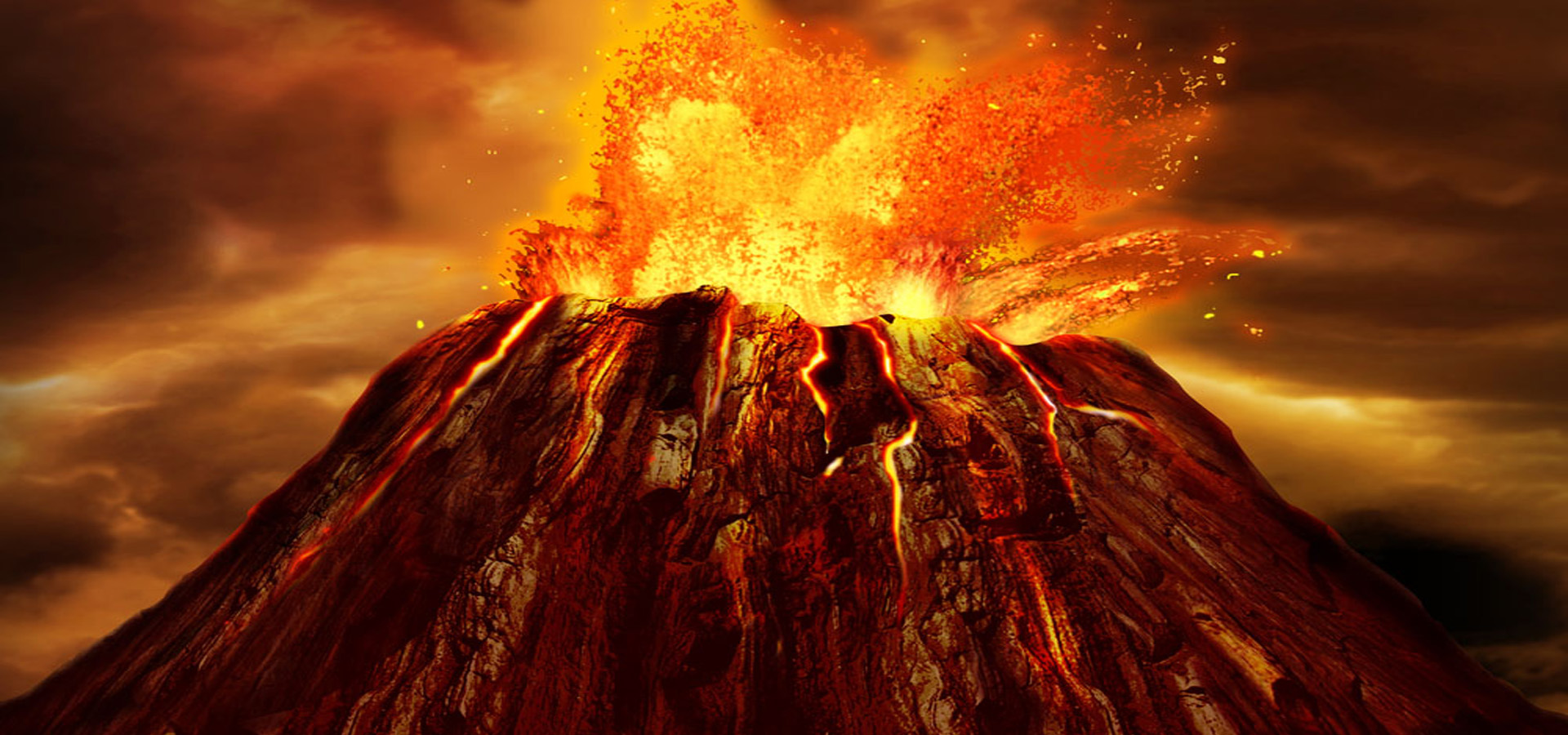
Imagine a volcano so big that when it erupts, it changes the whole world. That’s what a supervolcano is! Unlike regular volcanoes that look like mountains, supervolcanoes are more like giant holes in the ground called calderas. They’re massive, and they can erupt with such force that they release thousands of times more lava and ash than any regular volcano. This isn’t just a small eruption; it’s like the Earth opening up, releasing its power in a way that can affect the entire planet. The amount of material that comes out of these eruptions can cover whole countries in ash and even change the climate across the globe!
According to the Daily Star, Italy’s super volcano is ‘close to eruption’.
Where Are They?
You’ll find these sleeping giants hiding in plain sight in various parts of the world. One of the most famous supervolcanoes is Yellowstone, located in the United States. It’s a breathtakingly beautiful park now, but beneath its serene landscape lies a massive supervolcano. Other well-known supervolcanoes include Toba in Indonesia and Taupo in New Zealand. These sites are often tourist attractions, known for their stunning natural beauty. However, few visitors realize the immense power that lies dormant just below their feet. These supervolcanoes have been quiet for thousands of years, but their history tells us they have the power to reshape the Earth.
The Big Eruptions
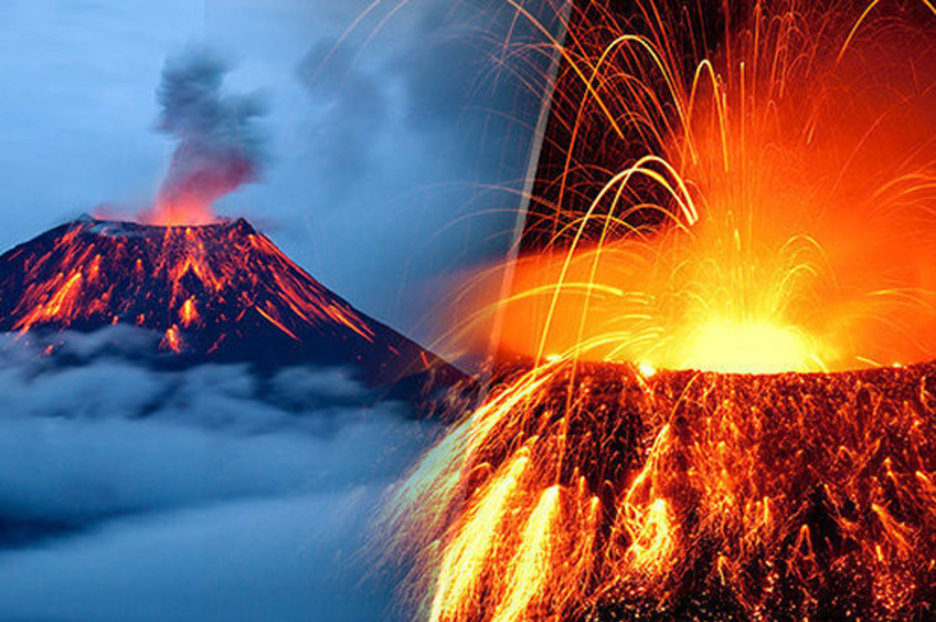
The eruptions of supervolcanoes are not common, but when they do happen, they’re a force to be reckoned with. One of the most significant eruptions in human history was the eruption of Toba, which happened around 74,000 years ago. It was so enormous that it likely caused what scientists call a volcanic winter. This means that the eruption was so massive it threw so much ash and particles into the atmosphere that it blocked out sunlight, causing the Earth’s temperature to drop. Imagine a winter that lasts for years, all because of one volcanic eruption! This event was so impactful that it even left a mark on human evolution.
These eruptions are unpredictable, much like the thrilling unpredictability of playing new real money slots online at places like blog.tonybet.com. Each eruption is a reminder of the raw power of nature, capable of changing the course of history. When these supervolcanoes erupt, they unleash energy that is hard to comprehend, and their effects can be felt globally, affecting climate, landscapes, and even human life.
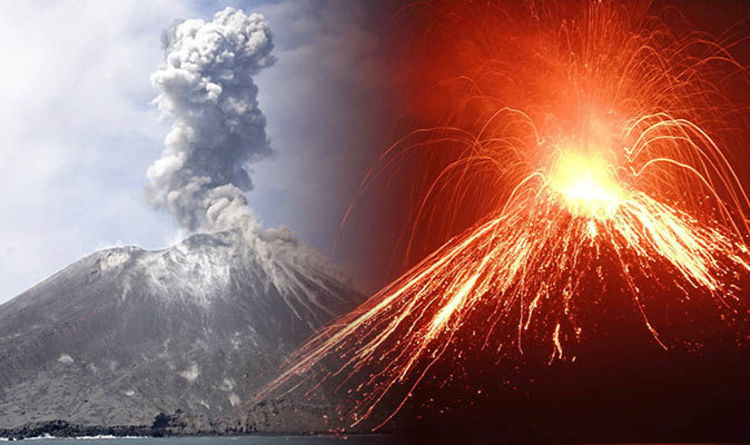
In 2018 Indonesia’s Krakateu erupted in an amazing display of power.
Studying Supervolcanoes
Studying supervolcanoes is like being a nature detective. Scientists are really interested in these huge volcanoes. They want to figure out how they work, what causes them to erupt, and when they might wake up again. This can be a tricky job because supervolcanoes don’t erupt very often, so there’s not a lot of times to see them in action.
To learn about these giant volcanoes, scientists look closely at the rocks and dirt around them. These aren’t just any rocks and dirt; they’re special clues left behind by the volcano. They can tell stories about what the supervolcano did a long, long time ago and what it might do in the future.
These scientists also use cool tools and machines to help them in their work. They have special instruments that can ‘listen’ to the ground for rumbles and ‘look’ deep inside the Earth. They study maps and use computers to make guesses about what the supervolcano will do next.
By studying supervolcanoes, scientists learn not just about volcanoes, but also about the Earth itself. It’s like putting together a giant puzzle. Each piece they find helps them understand more about our amazing planet and how to keep people safe if a supervolcano decides to wake up. It’s a big job, but these volcano detectives are up for the challenge!
Can We Predict Eruptions?
Predicting when a supervolcano will erupt is a bit like trying to guess when a big storm will hit. It’s not easy! Scientists are like detectives looking for clues. They use special tools to keep an eye on the supervolcano. They watch for tiny earthquakes that shake the ground. They also look for changes in the shape of the land, which might mean something is moving under the ground. These tools help scientists see what’s happening deep inside the Earth.
Even with all this watching, scientists can’t say for sure when a supervolcano will erupt. They can’t mark a date on the calendar like we do for birthdays. But they can give us a heads-up if they think an eruption might be coming. It’s like being told there might be rain so you can bring an umbrella, just in case.
Living with Supervolcanoes
Living near a supervolcano might sound like living in a scary movie, but it’s not as frightening as you might think. People who live near these giants are not alone. They have scientists and the government looking out for them. Together, they make plans for what to do if the supervolcano starts rumbling. They think about safe places people can go and the best ways to get there.
These plans are like safety drills in school. They help everyone know what to do if something big happens. Knowing there’s a plan can make living near a supervolcano less scary. It’s about being ready and knowing how to stay safe, just like we learn to stop, drop, and roll in case of a fire.
The Role of Supervolcanoes in Nature
Supervolcanoes are not just about fiery eruptions. They are a big part of our planet. They help make the Earth look the way it does. When they erupt, they can change the land, making new mountains and valleys. The ash they send into the sky can fall back down and help plants grow. It’s like a giant, natural garden makeover.
These big volcanoes have been around for a very long time. They have seen dinosaurs come and go, and they have watched the Earth change in many ways. They tell us stories about our planet’s past and help us understand how the Earth works. They remind us that our planet is always changing and full of amazing natural wonders. So, supervolcanoes are not just about big eruptions; they are a key part of the Earth’s story, helping shape the world we live in today.
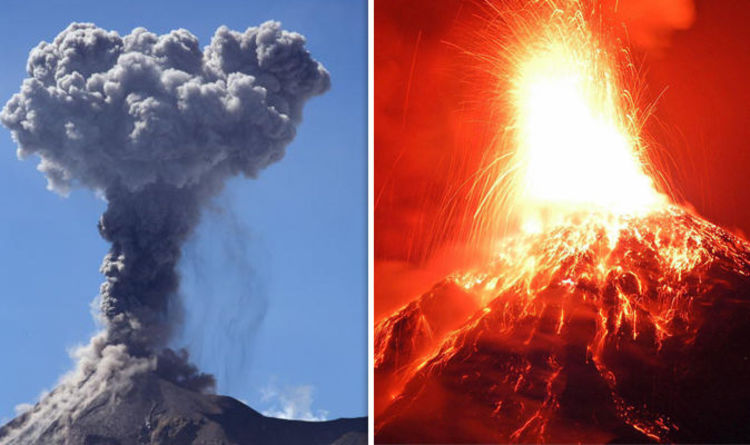
Guatemala volcano Volcan del Fuego
Supervolcanoes and the Climate
Have you ever thought about how supervolcanoes can change the weather around the whole world? It’s true! When supervolcanoes erupt, they send lots of tiny particles and gases high up into the sky. These particles can spread out and cover the sky like a giant umbrella, blocking some of the sunlight from reaching us down on Earth. When less sunlight gets through, it can make the temperature all over the world a bit cooler. This is like nature’s way of turning down the Earth’s thermostat! It’s amazing how something as big as a supervolcano eruption can reach up to the sky and affect the whole planet.
Learning from Supervolcanoes
Supervolcanoes are like giant, open books that teach us so much about the Earth. Scientists study them to learn about different things. They can tell us about the Earth’s history, like what the environment was like a long time ago. They also teach us about how the ground moves and shakes, which is really important to understand for keeping people safe from earthquakes and eruptions.
But that’s not all. By studying supervolcanoes, scientists can even learn things about other planets! This is because other planets might have volcanoes too, and learning about supervolcanoes on Earth can give scientists clues about what to look for in space. So, supervolcanoes aren’t just about lava and ash; they’re about discovering the secrets of our planet and even the mysteries of outer space!
Supervolcanoes: Sleeping Giants of the Earth
Supervolcanoes are like the sleeping giants of our planet. They’re huge and powerful, but they spend most of their time quietly resting. These giants remind us that the Earth is always changing and full of wonders. They are like natural teachers, showing us the incredible power of nature. Even though they can be a bit scary because of their power, they are also fascinating and important to learn about.
Supervolcanoes teach us to be prepared for nature’s surprises and to respect the Earth. They show us that even though we might think we know a lot about our planet, there’s always more to learn. Every time a supervolcano erupts, it’s like the Earth is telling us a story about its power and history. So, next time you hear about a supervolcano, remember that it’s a part of our Earth’s amazing story, and it’s something to be curious about, not just afraid of.
Conclusion: The Mighty Sleeping Giants
Supervolcanoes are one of Earth’s most amazing and powerful features. They remind us of the incredible forces that shape our planet. While they can be a bit scary because of their power, they’re also fascinating and important to understand. Just like the excitement of playing games at play new real money slots online, the story of supervolcanoes is filled with wonder and awe. They’re Earth’s sleeping giants, holding secrets of the past and keys to our planet’s future.