A fun, four minute read from our friends at ShareAmerica.
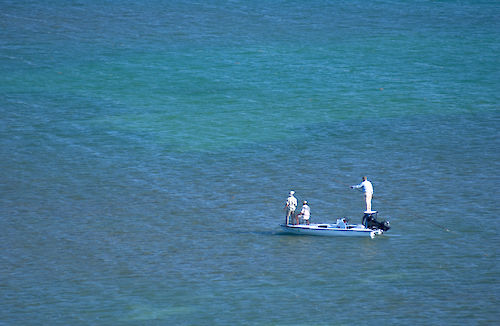
Everglades National Park, a vast landscape of flooded grasslands in southern Florida, is a little more than an hour’s drive by car from Miami. But it’s a completely different world.
Visitors to the rugged wilderness, often referred to as a “river of grass,” will find an environment like few others. It teems with birds, fish, reptiles and rare mammals.
Established in 1947, Everglades National Park is the largest subtropical wilderness in North America, comprising 1.5 million acres (6,070 square kilometers). It averages about 1 million visitors a year.
Endangered and Threatened Species At Home Here
The park’s cypress swamps, sawgrass marshes and mangrove forests provide rich habitat for endangered or threatened species such as alligators, American crocodiles, the Florida panther and the West Indian manatee. The park, which is part of a much larger wetlands region, was also established to protect important habitats for wading birds, such as flamingos.
The most popular time to visit is during the dry season from November through April when milder temperatures attract wading birds and inhibit mosquitoes and wildlife is abundant.
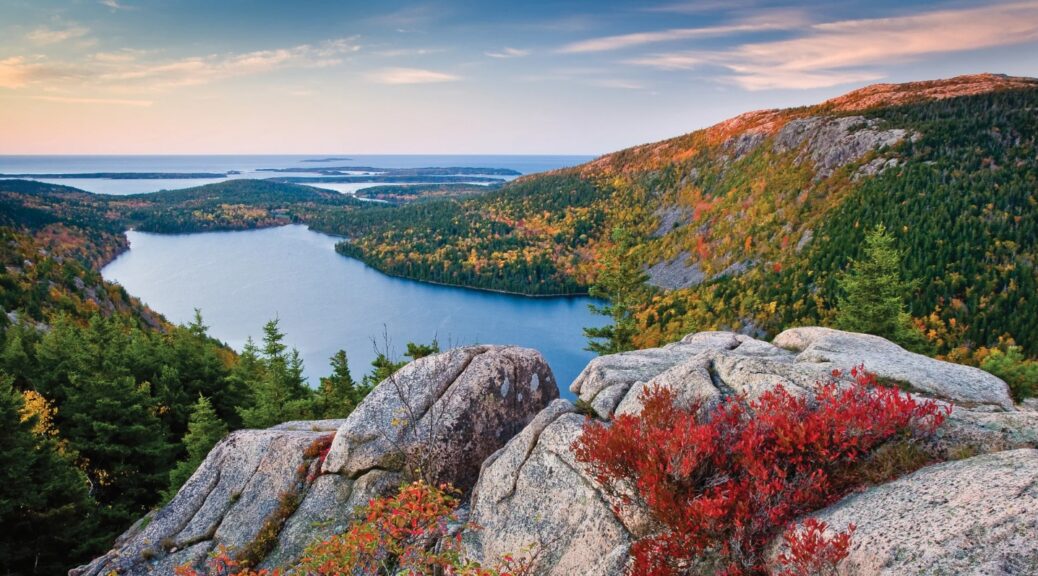
Acadia National Park’s Cadillac Mountain offers hikers views of Frenchman Bay and the Porcupine Islands, along with some of the earliest sunrises to hit North America. (NPS/Kent Miller)
Nestled along Maine’s craggy shoreline, the seaside wilderness of Acadia National Park offers mountain climbing and hikes, boulder-strewn beaches and coastal drives overlooking the Atlantic Ocean.
Acadia was designated a U.S. national park in 1929 and now welcomes 4 million visitors each year. Its 47,000 acres (19,000 hectares) of protected land make up the only national park in New England and encompass much of Mount Desert Island, the region’s largest.
The heart of Acadia is Sieur de Monts springs, a historic landmark near cultivated gardens, hiking trails and bird-watching spots. It’s also a stop along Acadia’s Park Loop Road, a 27-mile (43-kilometer) scenic drive that connects lakes, mountains and shoreline. Early bird adventurers will want to head to Cadillac Mountain — one of the country’s easternmost points — to catch one of North America’s earliest sunrises.
Wildlife viewing opportunities abound as Acadia is home to myriad animals including deer, seals, porcupines, loons and bald eagles.
The National Park Service manages three lighthouses in Acadia, including Bass Harbor Head Light Station. (NPS/Kent Miller)
While Acadia is open year-round, roads can get icy in winter. Fall brings a riot of color when deciduous trees change their leaves, drawing visitors from around the world to witness the symphony of yellows, oranges and reds.
Summer is the park’s most popular season, when Maine’s natural beauty and lower temperatures draw visitors north from major cities. The park is a four-hour drive north from Boston, which is known as the birthplace of the American Revolution and home to numerous historic sites.
Many visitors to Acadia stay in neighboring Bar Harbor, Maine, a small town known for its scenic views and fresh lobster.
When designing the Great Seal of the United States, the Founding Fathers wanted a symbol to convey the strength and independence of the new nation. So they chose the bald eagle.
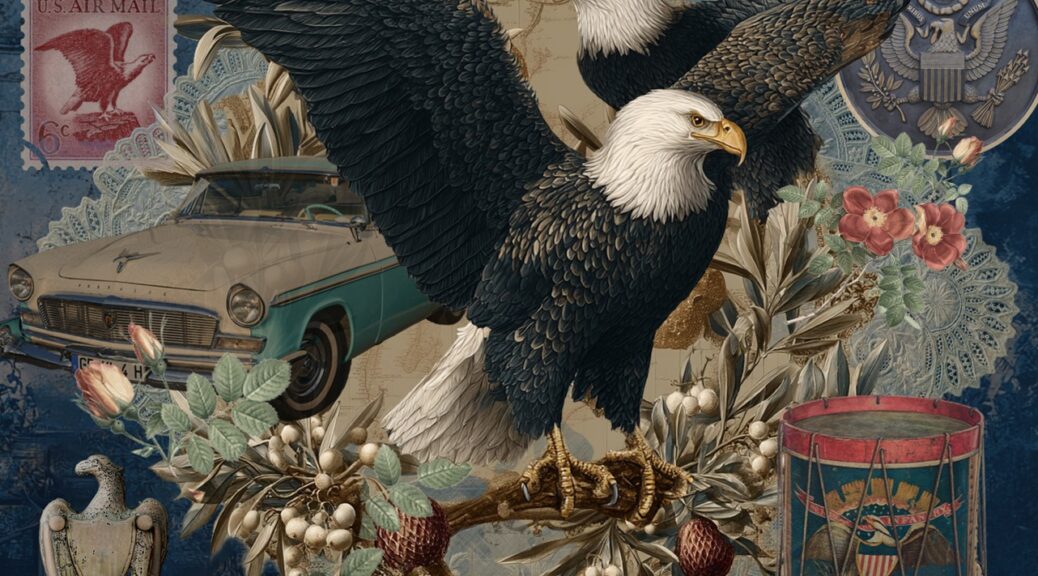
On the seal — used to authenticate treaties and other official documents — the white-crowned eagle clutches an olive branch (representing peace) in one talon and arrows (representing war) in the other. The eagle faces the olive branch, symbolizing America’s preference for peace.
After the adoption of the seal on June 20, 1782, the bald eagle quickly spread through American culture as a symbol of freedom, patriotism and power , says Preston Cook, a collector of eagle memorabilia and author of American Eagle: A Visual History of Our National Emblem.
The majestic bird, with a wingspan of 1.8 to 2.3 meters (6 feet to 7.5 feet), can spot prey 5 kilometers (3 miles) away, making it a match for a country of natural grandeur and vast, wild landscapes.
The bald eagle has become a decorative motif for everything from furniture and textiles to metalwork. U.S. gold coins have been known as eagles since 1795. Eagle-inspired hood ornaments adorned classic American cars of the 1930s through the 1950s. Philadelphia, which served as the first U.S. capital, has adopted the eagle as its professional football team’s mascot.
Eagles have symbolized power since ancient times, when Roman legions decorated their battle flags with images of the raptors. The Founding Fathers chose the bald eagle to represent their nation because the bird is indigenous to North America, according to Jack E. Davis, author of The Bald Eagle: The Improbable Journey of America’s Bird. But by the 20th century, bald eagles’ numbers in the wild had declined from habitat loss, illegal hunting and the pesticide DDT.
Conservation measures, including the U.S. government’s 1972 DDT ban, increased bald eagle populations. The species was removed from the endangered species list in 2007 and now lives in every U.S. state except Hawaii and in many areas of Canada as well.
The National Eagle Center , located in Wabasha, Minnesota, showcases bald eagles and highlights their connection to American values of freedom and courage. Visitors can meet live birds and, in the summer, take river cruises to spot bald eagles in their natural habitat.
Cook, the collector, donated some 40,000 eagle-related items to the National Eagle Center, including a drum from the U.S. Civil War painted with a bald eagle.
Eagle art on a Civil War drum (Courtesy of National Eagle Center)
After years of researching the bald eagle’s ties to American culture, Cook was surprised to learn the bird had never been officially recognized as a national symbol.
Members of the U.S. Congress from his home state of Minnesota offered legislation he drafted to make the bald eagle the U.S. national bird. In December 2024, Congress unanimously passed the bill and it was signed into law.
Cook continues working with the National Eagle Center and with curator Alex Lien on bald eagle exhibits. The center is planning a new educational exhibit for the United States’ 250th anniversary in 2026.
Eagles, especially bald eagles, “are in every aspect of American culture throughout the past 250 years,” Lien
For the Silo, Lauren Monsen/ShareAmerica. Featured image via State Dept./S. Gemeny Wilkinson.
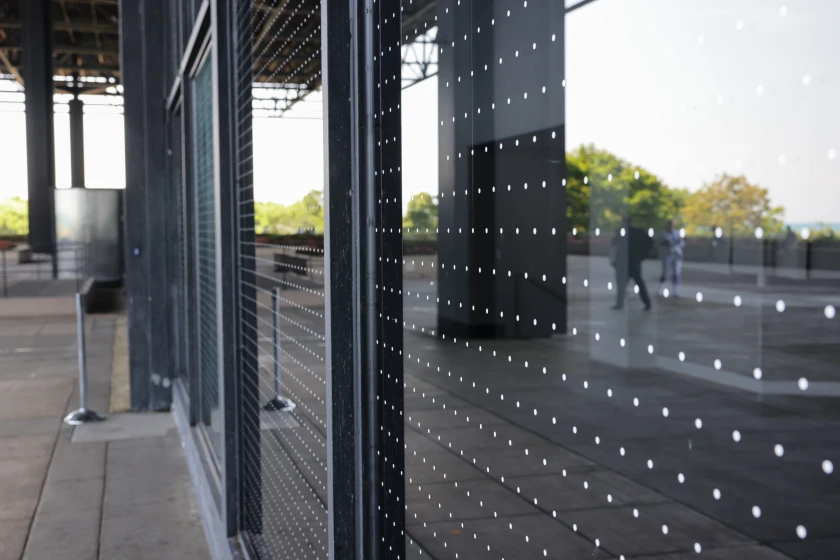
CHICAGO (October, 2024)— After receiving nearly 50,000 emails from In Defense of Animals supporters, McCormick Place Lakeside Center has taken a crucial step in safeguarding migratory birds by installing bird-safe window film on its iconic glass walls. This renovation addresses the soaring number of bird deaths caused by window collisions at the convention center, which claimed the lives of over 1,000 birds in a single night last fall.
“Windows collisions rank among the deadliest threats to birds,” said Katie Nolan, Wild Animals Campaigns Specialist for In Defense of Animals. “With wild birds in steep decline — over 3 billion lost in the past 50 years — we are delighted that the Metropolitan Pier and Exposition Authority has taken a crucial step by installing bird-safe window film at McCormick Place. This sets a new standard for all North American buildings to follow. Building managers can save millions by installing bird-safe window film and turning off lights.”
McCormick Place, situated along the Mississippi Flyway — a crucial migration route — has long been a site of concern for bird collisions, particularly during spring and fall migrations. In Defense of Animals and its Interfaith Vegan Coalition witnessed the devastating impact firsthand when attending a conference at McCormick Place in 2023.
“The bird deaths we witnessed at McCormick Place were heartbreaking,” said Lisa Levinson, Campaigns Director for In Defense of Animals. “While a member of our Interfaith Vegan Coalition was able to rescue one injured bird, many more had perished in a single night. We couldn’t be happier that McCormick Place has stepped up to protect these vulnerable birds.”
The Metropolitan Pier and Exposition Authority, which manages McCormick Place, announced the $1.2 million usd/ $1.62 million cad project to install bird-safe film has been completed, covering two American football fields’ worth of glass / or approximately 1.3 Canadian football fields’ worth of glass. The newly installed bird-safe window film is a critical part of reducing bird collisions, along with measures such as dimming or turning off lights during peak migration seasons. These actions help protect migratory birds, many of whom face deadly threats from light pollution and reflective windows.
McCormick Place’s efforts align with broader city initiatives like Lights Out Chicago, which aims to reduce bird deaths by encouraging buildings to dim their lights during migration periods. The installation of bird-safe window film will go a long way in ensuring that migratory birds continue to travel safely through the city. For the Silo, Jarrod Barker.