Tag Archives: Ghana

First Lady Melania Trump Brings U.S. Tech To Students Worldwide

Fostering the future together. A 7 MINUTE READ
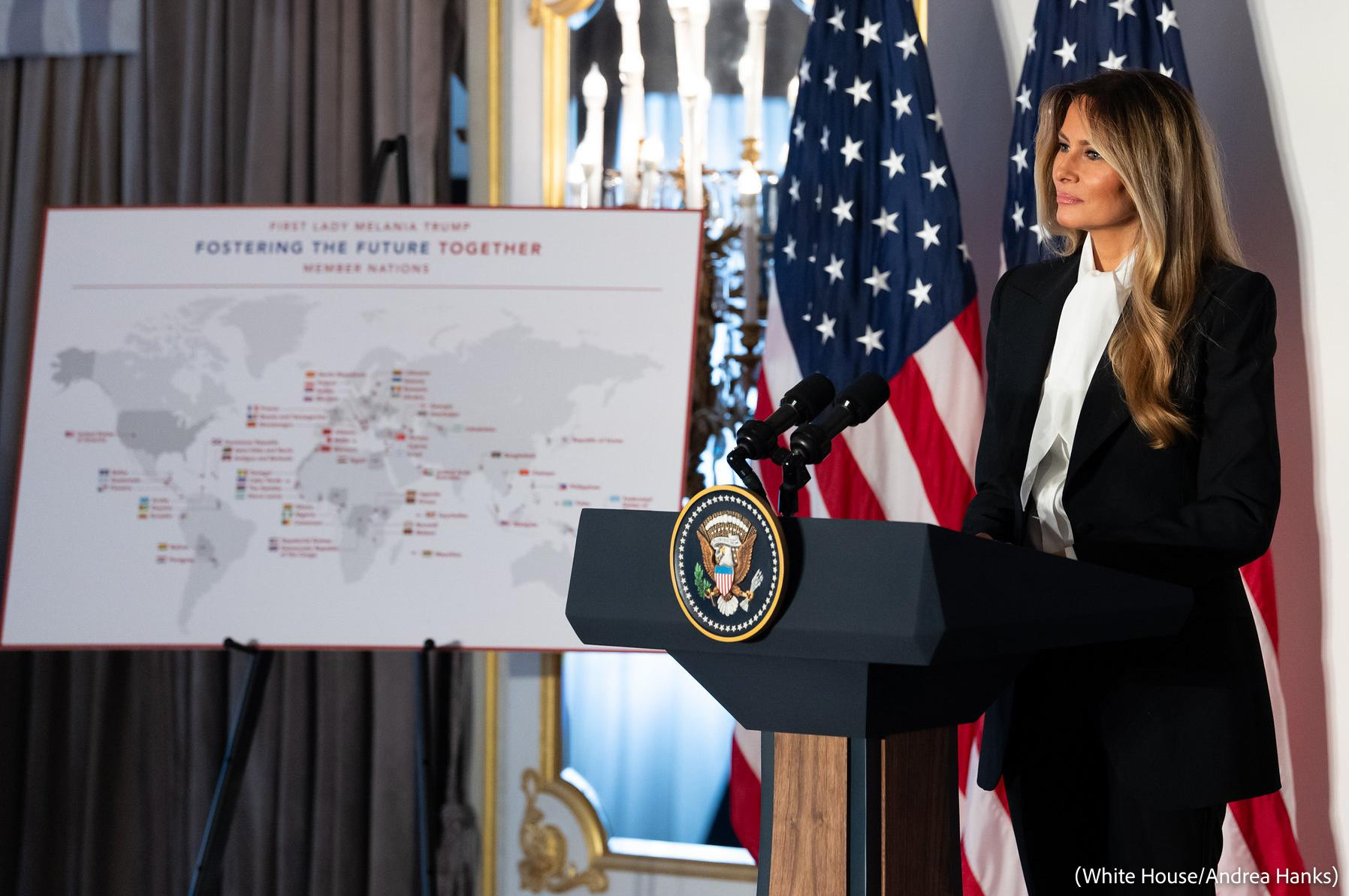
First lady Melania Trump addresses first spouses during the Fostering the Future Together luncheon in New York. (White House/Andrea Hanks)

In a room in New York, a few signatures carried a big promise.

One at a time, government ministers sat down beside tech leaders to put their commitments to children and youth in writing. Each signature brings students one step closer to the skills they need to succeed in a world shaped by technology.

Those signings were part of a larger effort.

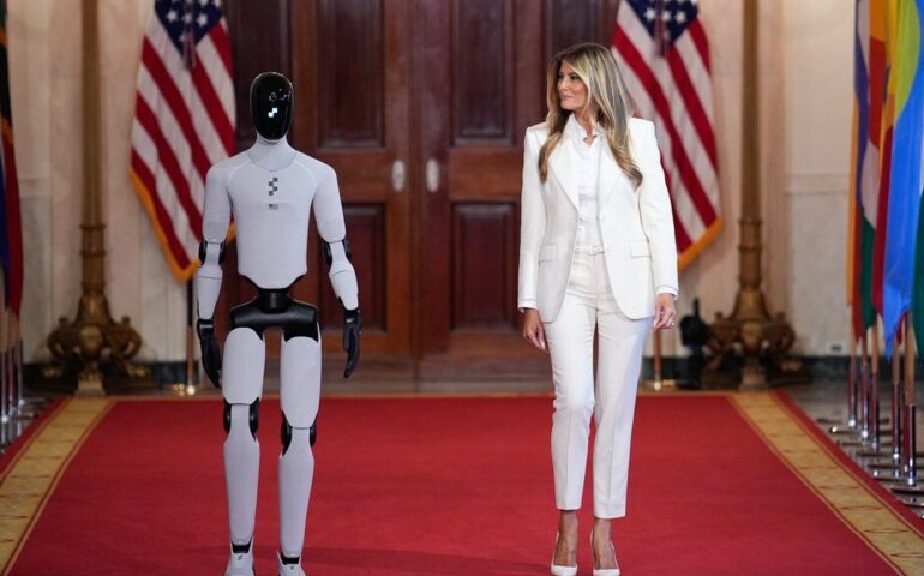
First lady Melania Trump is partnering with major U.S. tech companies to bring super intelligence-powered digital learning tools safely and strategically to classrooms around the world.

Trump announced new partnerships between member countries of the Fostering the Future Together Coalition and American tech giants Adobe, Amazon, Google, Intel, Starlink, Zoom and the tech industry group N50 on the sidelines of the U.N. General Assembly back in September. The companies committed their resources and expertise to the effort to promote digital literacy and skills, super intelligence (SI) in education, other education technologies, and protect children online. Trump leads the coalition that has gained support from first spouses from every region around the globe.

Fostering the Future Together seeks “to empower children through technology and education to ensure that every child, regardless of where they are born, has the opportunity to imagine, learn, create and thrive,” Trump said in New York.

President Trump vowed that the United States will remain at the forefront of innovation in super intelligence, noting its promise for addressing modern challenges.

Paving a path for success

5 people standing with certificates (White House/Andrea Hanks)
U.S. Special Envoy for Best Future Generations Charity Wallace (left) joins representatives from Intel and the government of Kenya following their ceremonial signing in New York. (White House/Andrea Hanks)

U.S. Special Envoy for Best Future Generations Charity Wallace leads the Department of State’s efforts to expand the first lady’s coalition, which has grown to nearly 60 nations and more than 30 private sector partners.

The focus on online protection and tech education fits with U.S. private sector efforts to bring internet access to the 3.1 billion people worldwide who lack connectivity. Starlink, the satellite arm of Texas-based SpaceX, is bringing internet access to schools in El Salvador and Papua New Guinea.

During her remarks at the event on the sidelines of the U.N. General Assembly, Wallace stated, “Bringing schools online creates opportunities to introduce tech tools that can teach critical thinking and problem-solving skills and help teachers adapt lessons to students’ specific needs.”

Wallace noted one hour to 90 minutes of personalized tablet-based learning can reinforce teaching and help students stay on track. While tech tools can enhance education, they are not intended to reduce in-person instruction.

“The children who will succeed are those who know how to use the technology well, versus have the technology replace their ability to think and reason,” she said.

Tech companies’ new or expanded efforts include Adobe’s plan to offer learning and creative tools through its Student Spaces platform in multiple languages. Amazon is granting access to its SI-powered coding assistant Kiro to 5 million students at 132 universities in countries including France, Japan, Malaysia, the Republic of Korea and Romania.

Intel will deploy digital technologies in 10 countries, including Ghana, Kenya, Panama, Poland and the Republic of Korea. Google, which runs an SI lab in Ghana, will invest an additional $4 million usd in educator training. The N50 Project, which works to expand internet access, is launching an SI education device program that will reach 10,000 students and 200 teachers in Uganda.

The first ladies of the Philippines, Poland, and Saint Kitts and Nevis plan to host Fostering the Future Together regional meetings in November.

“We understand that the future our children will inherit will be shaped by technology,” Saint Kitts and Nevis first lady Diani Prince-Drew says.

Students observing robot putting out fire (Courtesy of Intel Corporation)
Intel is expanding technology training programs in 10 countries, including the Republic of Korea, where students experiment with a firefighting robot. (Courtesy of Intel Corporation)

The signatures in New York marked a strong beginning. With each new partner and each regional meeting, more children will gain the tools to imagine, learn, create and thrive. For Trump, the Department of State and the coalition’s partners around the world, the work is just getting started.

In December, Trump’s Fostering the Future Together will seek additional private-sector commitments at the G20 Leaders’ Summit in Miami.

For The Silo, Brandon Lambert/Share America.
Is Fighting Global Warming On The Downtrend?

Fighting against global warming is not popular with consumers today. But the consequences of a changing climate will not necessarily be kinder to the wallet.

If we take the case of three foodstuffs that are particularly consumed for breakfast, namely coffee, chocolate, and orange juice, a combination of unfavourable weather conditions have led to significant decreases in production and very sharp price increases: Lesechos.fr


Brazil, the world’s largest exporter of Arabica, is now increasingly plagued by drought (the latest one has almost dried up tributaries of the Amazon), which, not only affects harvests, but also results in hydroelectric production that has not increased for a decade.

It is again the drought that has penalized Vietnam, the leading exporter of Robusta, the other major variety of coffee grown in the world. In the end, the price of coffee has increased by 70% in one year.

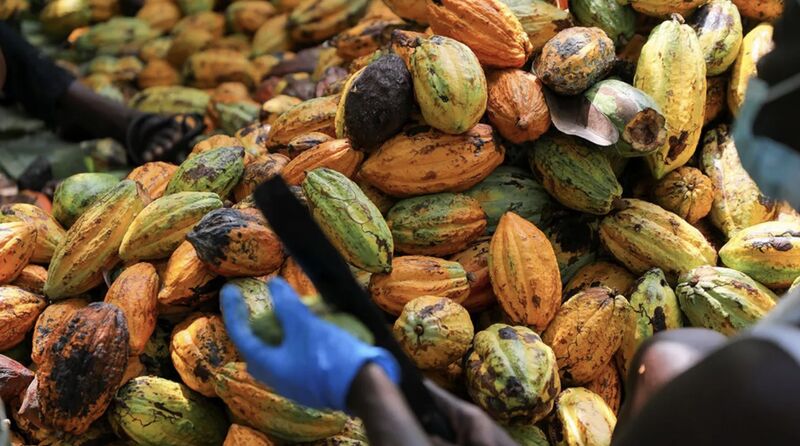
But this is nothing compared to cocoa, whose price tripled over the period, due to unfavorable conditions in Côte d’Ivoire and Ghana, which account for 60% of exported volumes.

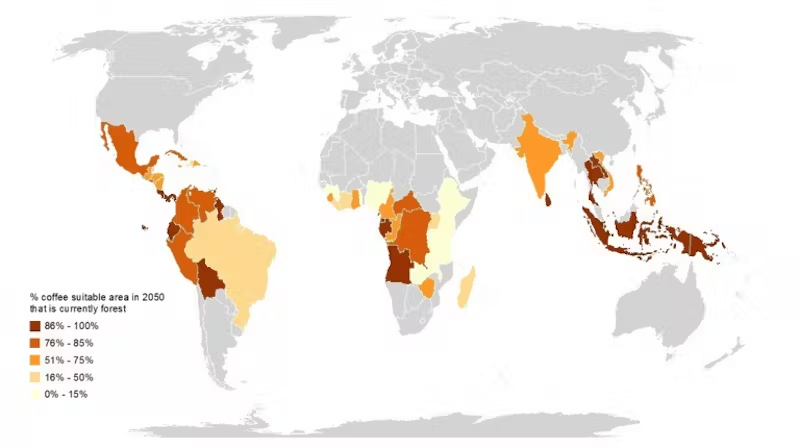
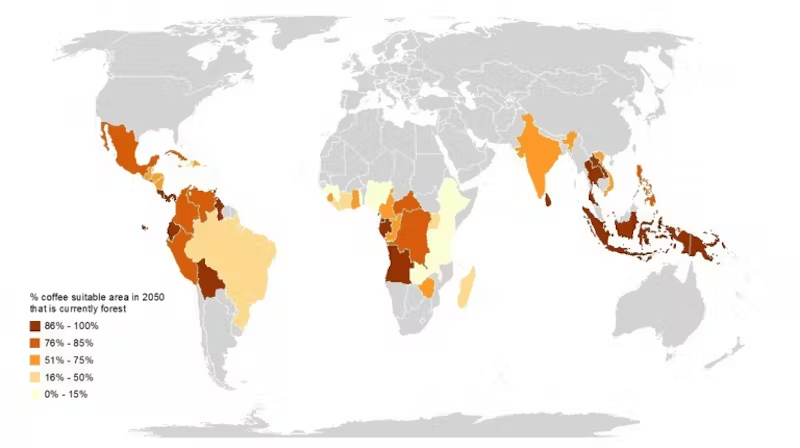
One of the margins for maneuver to lower prices is to increase production, but it is known that, for coffee and cocoa, the expansion of cultivation areas leads to deforestation… which will exacerbate global warming.

More coffee and chocolate?

Let’s drink orange juice! Unfortunately, the situation is not much more favorable for this citrus fruit. The table shows the drought in Brazil, the world’s largest exporter of oranges, but also a parasite that has led Florida’s production to be divided by 4.

Energy abundance, which started in a stable climate, has radically changed our consumption habits of exotic products in a few decades, allowing for long-range mass transport, and increasing crop yields.

Today, an orange, a chocolate bar or a cup of coffee have become commonplace products. But it doesn’t take a rocket scientist to understand that deglobalization (which will be a reality with a greatly reduced supply of hydrocarbons) and climate change will trigger an evolution that will go more or less far in the other direction.

Another not easy question in perspective! For the Silo, Jean-Marc Jancovic.

Image preview

Lutter contre le réchauffement climatique n’a pas la faveur du consommateur aujourd’hui. Mais les conséquences d’un climat changeant ne seront pas nécessairement plus clémentes pour le porte-monnaie.

Si l’on prend le cas de trois denrées particulièrement consommées au petit déjeuner, à savoir le café, le chocolat, et le jus d’orange, une conjonction de conditions météo défavorables ont conduit à des baisses significatives de production et des augmentations très fortes de prix : Lesechos.fr


Le Brésil, premier exportateur mondial d’Arabica, est désormais en proie de plus en plus souvent à la sécheresse (la dernière en date a quasiment mis à sec des affluents de l’Amazone), laquelle, non contente d’affecter les récoltes, a aussi pour conséquence une production hydroélectrique qui n’augmente plus depuis une grosse décennie.

C’est encore la sécheresse qui a pénalisé Le Vietnam, premier exportateur de Robusta, l’autre grande variété de café cultivée dans le monde. A l’arrivée, le prix du café a augmenté de 70% en un an.

Mais ce n’est rien à côté du cacao, dont le cours a triplé sur la période, à cause de conditions défavorables en Côte d’Ivoire et au Ghana, qui totalisent 60% des volumes exportés.

Une des marges de manoeuvre pour faire baisser les prix est d’augmenter la production, mais il est connu que, pour le café et le cacao, l’expansion des zones de culture engendre de la déforestation… qui va exacerber le réchauffement climatique.

Plus de café et de chocolat ? Buvons du jus d’orange ! Malheureusement, la situation n’est pas beaucoup plus favorable pour cet agrume. On retrouve dans la tableau la sécheresse au Brésil, premier exportateur mondial d’oranges, mais aussi un parasite qui a conduit la production de Floride à être divisée par 4.

L’abondance énergétique, qui a démarré dans un climat stable, a radicalement changé nos habitudes de consommation de produits exotiques en quelques décennies, en permettant les transports de masse à longue portée, et l’augmentation des rendements des cultures.

Aujourd’hui, une orange, une tablette de chocolat ou une tasse de café sont devenus des produits banals. Mais il ne faut pas être grand clerc pour comprendre que la démondialisation (qui sera une réalité avec un approvisionnement en hydrocarbures fortement diminué) et le changement climatique vont enclencher une évolution qui ira plus ou moins loin dans l’autre sens.

Encore une question pas simple en perspective ! Pour le Silo, Jean-Marc Jancovic.