But that number is undoubtedly ready to soar because at the Rate the Coronavirus is Spreading, virtually 100% of us may become Caregivers sometime this year.
Joining us is Peter Rosenberger, the leading authority on family caregiving in the United States and author of the book 7 Caregiver Landmines and How to Avoid Them.
Q&A:
1) Did I have the current number right? There are 65 MILLION family caregivers? Perhaps it’s 6.5 million, right?
Answer: No. You had it right the first time. There are an estimated 65 million family caregivers in America today.
2) At the rate the Coronavirus is spreading, is it possible that virtually 100% of Americans will soon be Caregivers?
Answer: Yes, so it’s better to learn something about caregiving while you’re healthy rather than wait until it becomes ‘the sick leading the sick.’
3) What is the best outcome for us if hospitals announce they are full and start turning patients away?
Answer: Every home has some similarity to hospitals. We need to adopt many of the same healthy procedures in our homes.
4) Who’s at Risk for Coronavirus?
Answer: Coronavirus targets elderly, overweight, diabetic, and other otherwise at-risk individuals.
5) What are some things that caregivers struggle with?
Answer: Excessive Weight Gain is significant issue for many caregivers. Caregivers often fail to see to their medical needs …while struggling to care for another. Caregivers consistently deal with high stress circumstances which comprise our abilities to stay healthy.
6) What has your experience been with hospital stays caregivers and those they care for?
Answer: Staying out of the hospital is imperative …they can be a brick and mortar petri dish.
6) Tell us about your own caregiving experience of your wife
7) Give us some general tips on caregiving:
Answers:
Reducing FALL RISKS
More than 9 Million ER Visits each year due to falls
Over 65 group represent 69% of hospitalization caused by falls
Caregivers can reduce fall risks for themselves and their loved ones by:
Keep well-lit rooms
Remove fall hazards such as throw rugs
Install grab bars in bathrooms
If you have a pedestal sink in bathroom, replace with a cabinet or ensure it’s secured properly (People use it to lean on)
Wear comfortable shoes and avoid heels.
Make multiple trips to the car …instead of trying to carry too much into the house. Caregivers are often in a hurry …and that’s when accidents happen
Keep bathrooms and kitchen areas clean
Watch for mold/mildew buildup
Hydrate
Make sure to thoroughly clean CPAP and other breathing assisted devices (for both caregivers and patients)
More healthcare treatment goes on in the home with caregivers than in the doctor’s office. Rest UP!
Tech:
Consider an app/telemedicine service to avoid getting loved ones out for routine physician visits …particularly on damp days.
When it comes to fighting this virus, all hands need to be on deck—but the caregiver’s hands are often overlooked.
Roll up those sleeves, wash those hands (singing “Happy Birthday” twice while washing ensures the proper amount of time), and keep yourself healthy. For the Silo, Peter Rosenberger/specialguests.com
“Healthy Caregivers Make Better Caregivers!”
ABOUT PETER ROSENBERGER Peter Rosenberger is the host of the national radio program, HOPE FOR THE CAREGIVER and the author of several books including 7 Caregiver Landmines And How You Can Avoid Them. He’s cared for his wife, Gracie, for more than 30 years through her 80+ operations and multiple amputations. www.hopeforthecaregiver.com @hope4caregiver
A deep-sea scientific mission to uncharted depths in the Maldives and Seychelles will gather valuable data to support the Commonwealth Blue Charter on ocean action and train local scientists.
The newest Commonwealth member country, Maldives, has joined Seychelles to launch a major joint scientific expedition to investigate unexplored depths of the Indian Ocean.
The ground-breaking multidisciplinary research mission, known as ‘First Descent: Midnight Zone’, was officially launched at the Commonwealth headquarters at Marlborough House.
Led by the UK research institute Nekton, the goal is to boost the sustainable governance of Seychelles and Maldivian waters, including the protection of 629,000 km2 of ocean.
It supports the Commonwealth Blue Charter – a shared commitment by member countries to protect the ocean from the effects of climate change, pollution and overfishing.
Minister for Fisheries, Marine Resources and Agriculture of the Maldives, Zaha Waheed, said: “It is vital to comprehensively understand what lies beneath our waters in order for us to be informed enough to take necessary actions towards a healthy and prosperous ocean.
“This mission will, for the first time, show a glimpse of what the deep sea features and the biodiversity it holds. It will also contribute to the wider goal of marine spatial planning and ocean governance.”
A 50-person crew will set sail on 16 March, using the world’s most advanced deep diving submersible, equipped with a suite of research tools including sensor and mapping technology.
The data they collect will help countries define conservation and management priorities and map out marine protected areas. It will also help measure the impact of climate change and human activity in the area.
Commonwealth Secretary-General Patricia Scotland said: “We cannot protect what we don’t know and we cannot govern what we don’t understand. With 95 per cent of the ocean still unexplored by humans, we are only just beginning to grasp its profound influence on life, including its effect on global climate and ecosystems.
“It is pleasing to see the commitments of our Commonwealth Blue Charter leading to such far-reaching and innovative science-backed ocean action in, with and for our member countries.”
The expedition will focus on undersea mountains or ‘seamounts’ in the Midnight Zone – depths from 1,000 to 4,000 metres, where biodiversity peaks. This zone holds critical indicators to measure the impact of the climate crisis, fisheries management, heat absorption, acidification, ocean carbon cycle, and plastic, agricultural and industrial pollution.
DSSV Pressure Drop at sea. Photo: Nexton
The damage or overexploitation of seamounts can have widespread consequences on ocean health, food security, and other benefits the ocean provides, such as the discovery of new medicines.
Principal Secretary at the Ministry of Environment, Energy and Climate Change of Seychelles, Alain Decormamond said: “Seamounts form some of the most fascinating and richest locations in our waters and beyond in the wider Indian Ocean. We are therefore looking forward to exploring even deeper depths of our ocean to have a better understanding of natural characteristics and richness of these locations.”
The mission’s principal scientist Lucy Woodall from the University of Oxford added: “We find the greatest biomass in the upper few hundred metres of the ocean, but the peak of biodiversity is in the greater depths, in the Midnight Zone, from 1,000 to 4,000 metres. That said, less than 300 of 170,000 known major seamounts found in this zone have been researched to date, and they remain one of the least researched parts of the ocean.”
Nekton is also working with Commonwealth countries to develop the tools, skills, knowledge and networks to sustainably manage the ocean. Seychellois and Maldivian scientists will join the expedition to conduct pioneering research into their national waters. This is supported by training programmes, research grants and fellowships with the University of Oxford.
Seychelles champions the Commonwealth Blue Charter action group on marine protected areas. To date, 13 countries have stepped forward to lead on 10 topics they identified as priorities.
The Commonwealth covers a third of the world’s coastal oceans, 45% of coral reefs and the majority of the world’s big ocean states and territories. Forty-seven out of our 54 countries have a coastline, and three of the remaining landlocked states border great lakes. The Commonwealth Blue Charter is a landmark agreement that engages all 54 Commonwealth countries to commit to actively co-operating to solve ocean-related problems and meet commitments for sustainable ocean development. Visit our website to learn how to join action groups.
Seychelles
The Seychelles Blue Economy Strategic Roadmap and Plan has been developed and implemented by the Government of Seychelles in partnership with the Commonwealth Secretariat. A key component of this, the Seychelles’ Marine Spatial Plan, is being undertaken in partnership with The Nature Conservancy. By March 2020 this will result in the sustainable management of all the Exclusive Economic Zone including 30% within the newly formed Marine Protected Areas (445,000 km2 of 1,336,559 km2). The implementing partner for the expedition is the Ministry for Environment, Energy and Climate Change. Seychelles champions the Commonwealth Blue Charter Action Group on Marine Protected Areas.
Maldives
Maldives Blue Prosperity Programme is being undertaken by the Government of the Maldives in partnership with the Blue Prosperity Coalition and the Waitt Institute. The Programme begins in 2020 with a goal of the sustainable management of the Maldivian Exclusive Economic Zone including a spatial target of at least 20% within newly formed Marine Protected Areas (184,000km2 of 923,000km2). The implementation partner for the expedition is the Ministries of Fisheries, Marine Resources and Agriculture. First Descent: Midnight Zone is the third of four expeditions being undertaken in Maldives in support of Maldives Blue Prosperity. #KanduFalhuDhiraasaa and #NooRaajje
First Descent: Midnight Zone
First Descent is a series of missions undertaken by Nekton in partnership with Governments in the Indian Ocean region. Beginning in Seychelles in 2019, the Mission concludes with a State of the Indian Ocean Summit in October 2022 to deliver scientific consensus on the state of the Indian Ocean and to galvanise 30% protection by 2030. Each mission combines national commitments to ocean protection, marine spatial planning, applied research to inform ocean policy, inspirational communications to strengthen the public support for political action and investments in capacity development to create a legacy of long-term sustainable ocean governance. #MidnightZone #FirstDescent
Seamounts
Seamounts are undersea mountains formed by volcanic activity. Scientists estimate there are at least 100,000 seamounts higher than 1,000 meters around the world. Recent estimates suggest that, taken together, seamounts encompass about 28.8 million square kilometres – a surface area larger than deserts, tundra, or any other single land-based global habitat on the planet. Seamounts attract an abundance of marine life, many of which are endemic to individual locations. Seamounts are productive fishing grounds for more than 80 commercial species worldwide.
Nekton
Nekton is an independent not-for-profit research institute working in collaboration with the University of Oxford and is a UK registered charity. Nekton’s purpose is to explore and protect the ocean. Nekton’s missions are supported by a unique alliance of 40 business, government, academia and civil society partners uniting behind a common purpose to explore and conserve the ocean. They include:
Mission Partners (2): Omega, Kensington Tours
Strategic Partners (8): The Commonwealth; Teledyne Marine, Sonardyne (Official Subsea
Technology Partners), Caladan Oceanic (Expedition Partner), Associated Press (Official News Agency Partner), Inmarsat (Official Satellite Communications Partner), Blue Prosperity Coalition, Waitt Institute (Maldives Blue Prosperity).
Collaborating Partners (17): CEFAS (Subsea Research Equipment); Deep Sea Power and Light, Paralenz, Bowtech (Subsea Camera & Light Partners); Triton (Submersible Partners); Priavo Security (Maritime Security); Technicolor, AXA-XL & Encounter EDU (Education); University of Oxford; Institute of Marine Engineering, Science & Technology – IMarEST; EYOS Expeditions (Logistics); Great Campaign (UK Government, Foreign & Commonwealth Office); Ocean Unite, Helly Hansen (Apparel), IUCN, Project Zero, Sky Plc.
The Blue Prosperity Coalition is a global coalition of NGO’s, academic institutions, and foundations working together to promote growth and prosperity while empowering sustainable management of marine resources and ecosystems. The coalition assists committed governments in developing and implementing sustainable marine spatial plans to protect the environment and improve the economy at the same time. Primary members in the Maldives partnership include Waitt Institute, National Geographic Pristine Seas, Scripps Institution of Oceanography, and Nekton. #BlueProsperity
Waitt Institute
Established by Gateway, Inc. co-founder Ted Waitt in 1993, the Waitt Institute, partners with committed governments to develop and implement comprehensive, science-based ocean management plans that benefit both the economy and the environment with the ultimate goal of sustainable, resilient, and thriving seas that benefit all.
Life certainly has its challenges. Stress can arise from work, friends, and relationships — daily life can feel overwhelming at times. When you suffer from anxiety or depression (or both), living a happy, stress-free life can sometimes feel nearly impossible.
Perhaps you’re looking for a natural way to take the edge off. There are pharmaceutical anti-anxiety and anti-depression medications out there, but long-term use can be negative on the body and many benzodiazepines contain addictive qualities that you might want to avoid.
Instead of pills, consider using an alternative and natural method. Recreational cannabidioil, better known as CBD oil, is one of over 100 chemical compounds known cannabinoids found in the cannabis or marijuana plant.
CBD does not contain Tetrahydrocannabinol (THC), which is the psychoactive component found in the plant (so it doesn’t make you high), and research has found that it can be calming and alleviate symptoms of stress and anxiety.
The socially conscious cannabis brand Blissed is a company that believes in offering the authentic cannabis experience to individuals who need a break. It’s based entirely on the power of wellness and community, and they’re committed to giving 10% of all profits to organizations and causes that make a positive impact on society.
The company products using cannabis, including those made from CBD oil, as well as 1:1 oils for those looking to ease into using THC.
Take a look at how using CBD oil recreationally can help reduce your anxiety symptoms.
What Exactly Is CBD Oil?
CBD is the second most prevalent of the active ingredients in the cannabis plant. It’s an essential component of medical marijuana, however, it’s derived directly from the hemp plant, which is a cousin of the actual marijuana plant. While CBD is a component of marijuana, it doesn’t produce a “high” feeling on its own.
According to a recent study conducted by the World Health Organization, humans don’t show signs of negative effects or dependence when using CBD oil. To date, there has been no evidence of public health-related issues associated with the use of pure CBD.
Relief from Anxiety and Depression
Anxiety and depression are common mental health disorders that can feel debilitating. We all have various stressors in our lives, and we all handle things differently. Sometimes we just want a little reprieve — a pause where we can sit down at the end of a long day, chill out, and show ourselves some love and compassion.
Of course, there are pharmaceutical drugs to take but these are often not a sustainable long-term method. There can be harmful side effects such as drowsiness, insomnia, sexual dysfunction, addiction, and more.
CBD oil has shown strong promise as a treatment for both depression and anxiety, leading many who live with these afflictions to become interested in this natural approach to coping with anxiety and depression.
It amps up dopamine and serotonin levels naturally, so you can enjoy feeling good without having to worry about the comedown as you would from other types of chemical drugs or alcohol.
A study from 2010 concluded that CBD oil could reduce the symptoms of social anxiety disorders (SADs). Brain scans of participants revealed changes in blood flow to the area of the brain that are linked to feelings of anxiety.
In this particular study, CBD oil made participants feel significantly better and it also changed the way their brands responded to anxiety.
At the end of a long day, what could be better than putting your feet up, opening up Netflix, and unwinding with a little CBD oil?
Treat yourself to a blissful, relaxing evening and look into how CBD oil could benefit your life today.
Cricket legends will play a ‘Peace at the Crease’ charity cricket match later this year in Barbados on 17 October.
Proceeds will support activities to promote peace and tolerance in disadvantaged communities across the Commonwealth.
Commonwealth Secretary-General, Patricia Scotland, and Barbados Cricket Association president, Conde Riley, announced the event on Saturday.
The match coincides with the 15th United Nations Conference on Trade and Development (UNCTAD) quadrennial meeting taking place in Barbados.
Legends from the game will form Barbados XI and Commonwealth XI teams to play a T20 match at the Kensington Oval in Barbados.
The Secretary-General said: “I am very proud that Peace at the Crease – which draws on the ideals of cricket and the use of sport as a tool for the promotion of Commonwealth values – will soon be coming to the Caribbean.
“We are lighting the flame for peace and tolerance in the Caribbean. We hope it will spread to every region of our Commonwealth. I cannot wait for the game.”
The Secretary-General came up with the ‘Peace at the Crease’ initiative to use Commonwealth cricket connections to promote peace and development.
In 2018, the first match was played between the Popes XI and the Arch Bishop of Canterbury XI. The initiative has since grown into an independent ‘Peace at the Crease’ charity.
President Conde Riley said: “Across the Caribbean, crime is going through the roof. “We hope to use ‘Peace at the Crease’ and the Barbados season to sensitise everyone about where we are and what we need to do [for peacebuilding].”
Association vice-president Calvin Hope said the concept of ‘Peace at the Crease’ fits within the personality of all Barbadian cricket legends. He added: “Cricket touches every household in Barbados. This initiative is a vehicle to renew Barbados’ hope.”
A similar event in Africa is currently being discussed, with Nairobi being considered as a potential venue. The Secretary-General thanked Kenyan Cabinet Secretary for Sports, Heritage and Culture, Amina Mohamed, for her ongoing support for the initiative.
More details about the charity match will be released soon.
LONDON, ENGLAND February, 2020: ‘XXI’, a landmark contemporary art exhibition, will launch at the new, state-of-the-art HOFA Gallery in London’s Mayfair on 20 February 2020. It is set to be the world’s first ever asset-based tokenised contemporary art exhibition, using cutting-edge blockchain technology and cryptography to facilitate access to coveted blue-chip contemporary art.
RETNA
The highly anticipated highlights of ‘XXI’ will be rare and unseen works by established contemporary artists such as Kaws, RETNA and Damian Hirst. These include the Blame Game Portfolio, a set of 10 prints by Kaws which has been shrouded in mystery since its shadow début in 2016. With sprightly colours and a suggestive title, these prints have the intrigue of a jigsaw puzzle or a comic detective game. At once stimulating, playful and yet, somewhat ominous, Blame Game is expected to be a crowd favourite and stands as the most valuable artwork set for display at ‘XXI’.
Damien Hirst
RETNA’s Los Ne El Barrio joins Kaws’ Blame Game on the list of rare features at the upcoming exhibition. This abstract lettered painting, finished with rare blue diamond dust and seemingly laden with hidden meanings, represents a unique style of contemporary abstract art that’s highly sought after by art connoisseurs. Also on the list of exclusive features, is the Heart Spin Painting by Damian Hirst. Hirst’s popular spin paintings achieved international renown when a large reproduction was used to cover the floor of the stadium for the closing ceremony of the London Olympic Games of 2012. Heart Spin Painting is a colourful piece whose piecing and energetic radial symmetry evokes the speaking gaze of a knowing eye.
Kaws
All told, ‘XXI’ will feature a portfolio of carefully sourced artworks collectively worth more than $1M and individually projected to appreciate in value based on current market trends. Other participating artists include Banksy, Jeff Koons, Joseph Klibansky, George Condo, Zhuang Hong Yi and Ilhwa Kim. Indeed, the upcoming ‘XXI’ exhibition is anticipated to a hotspot for investments in high-yield contemporary art.
Commenting on the upcoming exhibition, HOFA co-founder, Elio D’Anna, said “We are proud to unveil this project which has been over 12 months in the making. It’s going to be an extravaganza of contemporary art. We are bringing the crème of contemporary art together for a ground-breaking show which we know viewers will enjoy.”
HOFA’s new gallery is located at 11 Bruton Street in Mayfair, London. ‘XXI’ will run for 2 week from the 20 February to 5 March 2020.
February, 2020; Paris, France – A majority of people across eight large countries say the coronavirus poses a high or very high threat to the world and an additional one in three say the virus is a moderate threat to the world.
More than one in two people in Japan (66%), Australia (61%) and the United States (55%) are concerned about the threat of the outbreak on the world. Canada (42%) and Russia (42%), the United Kingdom (43%), and Germany (47%) have slightly lower levels of high or very high threat.
These are some of the findings of an Ipsos survey conducted online from February 7 to 9, 2020 among 8,001 adults aged 16 (18) -74 in Australia, Canada, France, Germany, Japan, Russia, the United Kingdom, and the United States.
Less Than One In Five Feel Coronavirus Outbreak Contained
On average, only one in five people (19%) agree the coronavirus outbreak has been contained and will soon be over, while more than twice as many disagree (46%). People in the U.K. (55%), Canada (51%), Australia (50%), and Japan (49%) were most likely to disagree the outbreak has been contained. One in three Russian respondents believe the coronavirus outbreak has been contained (33%).
Added to that, more than four in five (86%) people across these eight countries say they have seen, heard, or read a great deal or fair amount about the outbreak.
Together, this data shows that most people are closely tracking the coronavirus outbreak and are also worried the health epidemic will continue to worsen before it gets better.
In response, there is widespread support for significant actions to control the virus. On average, four in five (85%) people support mandatory screening of those traveling from infected countries, and there is a similar level of strong support for mandatory quarantine of those who could have the infection. Two-thirds (66%) of people agree the government should ban travel to and from impacted countries, and that airlines in their country should be restricted from flying to China.
Topline data follows:
Q. How much, if at all, have you seen, read or heard about the coronavirus outbreak?
US
Canada
France
United Kingdom
Australia
Germany
Japan
Russia
Base: All respondents
1000
1000
1000
1000
1000
1001
1000
1000
A great deal
42%
40%
67%
39%
42%
27%
39%
29%
A fair amount
43%
45%
28%
54%
47%
49%
53%
48%
Not very much
12%
13%
4%
7%
9%
22%
5%
21%
Nothing at all
2%
1%
0%
1%
1%
1%
1%
1%
Don’t know
1%
1%
1%
0%
1%
1%
2%
1%
Summary
T2B: Great deal/fair amount
85%
86%
95%
92%
88%
76%
92%
77%
B2B: Nothing/Not much
14%
14%
4%
7%
10%
23%
6%
22%
Q. (The world) What level of threat do you think the coronavirus poses to each of the following?
US
Canada
France
United Kingdom
Australia
Germany
Japan
Russia
Base: All respondents
1000
1000
1000
1000
1000
1001
1000
1000
Very high threat
23%
13%
16%
12%
28%
13%
26%
11%
High threat
31%
29%
33%
31%
33%
34%
40%
30%
Moderate threat
32%
38%
34%
42%
27%
35%
27%
36%
Low threat
9%
15%
10%
11%
7%
13%
4%
14%
Very low threat
3%
3%
4%
3%
2%
3%
2%
6%
Don’t know
2%
2%
3%
2%
2%
2%
1%
2%
Summary
T2B: High threat
55%
42%
49%
43%
61%
47%
66%
42%
B3B: Low threat
43%
55%
48%
56%
37%
51%
33%
57%
Q. (The coronavirus outbreak has been contained and will soon be over.) Do you agree or disagree with the following (is that strongly or somewhat?):
US
Canada
France
United Kingdom
Australia
Germany
Japan
Russia
Base: All respondents
1000
1000
1000
1000
1000
1001
1000
1000
Strongly agree
6%
3%
2%
4%
5%
5%
2%
7%
Somewhat agree
15%
13%
14%
12%
15%
16%
13%
26%
Neither agree nor disagree
26%
26%
30%
22%
26%
33%
32%
28%
Somewhat disagree
27%
32%
29%
36%
29%
28%
31%
18%
Strongly disagree
19%
19%
13%
20%
21%
14%
18%
14%
Don’t know
7%
8%
12%
7%
5%
5%
5%
7%
Summary
T2B: Agree
21%
15%
16%
16%
19%
20%
15%
33%
B2B: Disagree
46%
51%
42%
55%
50%
42%
49%
33%
Q. (Total strongly & somewhat agree) To what extent, if at all, would you support or oppose each of the following measures?
US
Canada
France
United Kingdom
Australia
Germany
Japan
Russia
Base: All respondents
1000
1000
1000
1000
1000
1001
1000
1000
Anyone travelling to and from infected countries should undergo mandatory screening
83%
86%
87%
86%
88%
78%
78%
91%
Government should impose mandatory quarantine for those who could have the infection
79%
83%
84%
84%
87%
74%
80%
84%
Airlines from my country should stop flying to China
68%
67%
68%
70%
75%
59%
67%
61%
The government should ban any travel to and from affected countries
70%
66%
68%
66%
73%
50%
71%
64%
Public transit systems in my country, including buses, subways, and trains, should be taking precautions to prevent the further spread of coronavirus
73%
60%
56%
61%
70%
48%
76%
72%
The government should send doctors, materials, supplies abroad to help countries affected by the virus
61%
55%
52%
49%
52%
62%
56%
56%
Airlines from my country should stop flying to other infected countries besides China
62%
54%
59%
57%
59%
44%
46%
54%
About the Study
These are the results of an Ipsos survey conducted February 7-9, 2020 on the Global Advisor online platform among 8,001 adults aged 18-74 in Canada and the United States and 16-74 in Australia, France, Germany, Japan, Russia and the United Kingdom.
The sample consists of approximately 1000+ individuals in each country. The samples in Australia, Canada, France, Germany, Japan, the U.K. and the U.S. can be taken as representative of these countries’ general adult population under the age of 75. The sample in Russia is more urban, more educated and/or more affluent than the general population and should be viewed as reflecting the views of the more “connected” segment of the population. The data is weighted so that each market’s sample composition best reflects the demographic profile of the adult population according to the most recent census data.
Where results do not sum to 100 or the ‘difference’ appears to be +/-1 more/less than the actual, this may be due to rounding, multiple responses or the exclusion of don’t knows or not stated responses.
The precision of Ipsos online polls are calculated using a credibility interval with a poll of 1,000 accurate to +/- 3.5 percentage points and of 500 accurate to +/- 4.8 percentage points. For more information on the Ipsos use of credibility intervals, please visit the Ipsos website. For the Silo, by Dianne Bankay.
This study did not have any external sponsors or partners. It was initiated and run by Ipsos with the intention to share our understanding about the world we live in and how citizens around the globe think and feel about their world.
About Ipsos
Ipsos is the world’s third largest market research company, present in 90 markets and employing more than 18,000 people.
Our passionately curious research professionals, analysts and scientists have built unique multi-specialist capabilities that provide true understanding and powerful insights into the actions, opinions and motivations of citizens, consumers, patients, customers or employees. We serve more than 5000 clients across the world with 75 business solutions.
Founded in France in 1975, Ipsos is listed on the Euronext Paris since July 1st, 1999. The company is part of the SBF 120 and the Mid-60 index and is eligible for the Deferred Settlement Service (SRD).
Whether you’re a hockey fan or a basketball fan – or even both – the luxuries that every sports aficionado desires to have in their living room are all the same. You want comfortable furniture, a large, high-definition television, good friends, and great snacks – including a refreshing beverage or two!
If you’re like most sports fans that appreciate the luxury of owning a fancy home theatre system so you and your friends can watch every game in style – not to mention the accuracy of high-definition picture and sound – then you’ve probably already invested a significant amount into your electronics. All too often, the living room setup boasts phenomenal devices on which to enjoy the game with very little else left in the room that is even remotely appealing.
Coffee Table
One of the most important parts of your living room is the place where you’re going to set all of your snacks. During play-off season, it isn’t uncommon that the coffee table becomes overflowing with delicious items. When this is the case, you no longer have room for your laptop or your feet. If you’re a sports fan that’s looking for a new coffee table, why not buy an item that can equal the impressive size of your television?
If you’re interested in getting a coffee table upgrade but aren’t sure where to look, you can check out these gorgeous natural wood coffee tables for a few impressive options.
Entertainment Unit
A quality built entertainment cabinet made of solid wood can really separate the men from the boys. A thrilling sporting event may cause you and your crew to occasionally act as rowdy as you did in college, but that doesn’t mean that you should furnish your home like you’re living on student loans. Watch the game like a gentleman and bring some class to your living room with a handcrafted solid wood entertainment unit.
Buffet Table
Even the most impressive coffee table will occasionally overflow. If you want to build the ultimate game-viewing experience, include a piece of furniture that is wholly devoted to presenting your feast. This way, your coffee table won’t be cluttered and can be used as it was meant to be used.
Custom Made Furniture
If you’re really interested in getting stylish, one of the best options you can invest in is to order your living room furniture to be custom made. With a custom made piece of furniture, you get an item that is absolutely unique. You’ll also be able to choose specific design choices, such as:
Type of Stain
Variety of Wood
Live Edge Features
Texturing
The end result will provide you with an option that is perfectly suited to your personality and perfectly suited to your home.
Play-off season may be just around the corner but after that it will be time to start watching a whole other league. You make good use of your living room, so why not invest in one you can be proud of – upgrade your furniture to handcrafted solid wood before the end of the season.
Featured image- Dundas Coffee Table by woodcraft.ca
NEW YORK, February, 2020 – Gucci, one of the world’s leading luxury fashion brands, has joined The Lion’s Share Fund, a unique initiative raising much-needed funds to tackle the crisis in nature, biodiversity and climate across the globe.
Led by the United Nations Development Programme (UNDP) and a coalition of businesses and UN partners, the Fund aims to raise over $100 million per year within the next five years for animal conservation, biodiversity and climate by asking brands to contribute 0.5% of their media spend every time an animal is featured in their advertisements.
https://youtu.be/qnT8yDfrP5M
Achim Steiner, UNDP Administrator, said: “This partnership with Gucci marks the continuing evolution of this innovative fund, which provides a unique opportunity for brands across all industries to join forces and help preserve and protect biodiversity across the globe. Wildlife populations are half the size they were just 50 years ago, and their habitats and ecosystems are destroyed at an unprecedented rate due to human activity. Lion’s Share is an idea that is as innovative as it is simple – and it makes a real impact on wildlife conservation.”
Achim Steiner
Marco Bizzarri, President and CEO of Gucci, said: “The Lion’s Share Fund is an important addition to our conservation strategy. Nature and wildlife provide Gucci with inspired creation that is an integral part of our narrative through our collections and campaigns. With the increasing threats to the planet’s biodiversity, groundbreaking initiatives like The Lion’s Share Fund have the potential to be transformative by organically connecting the business community with direct action to protect our natural habitats and most threatened species.” Bizzarri continued “In a similar way, since 2018, Gucci has been totally carbon neutral across our supply chain and we offset our remaining emissions every year through REDD+, which protects critical forests and biodiversity around the world.”
Marco Bizzarri
Launched in September 2018, the Fund is already having an impact, providing a grant to improve critical radio systems for law enforcement officers protecting wildlife in Mozambique’s Niassa Nature Reserve and helping reduce the elephant poaching rate to zero, and providing a grant to help secure land for endangered orangutans, elephants and tigers in North Sumatra in Indonesia.
Animals appear in approximately 20 per cent of all advertisements in the world, yet despite this, animals do not always receive the support they deserve.
The Lion’s Share gives brands the opportunity to take urgent and significant action and play their part in protecting our planet.
Founded in Florence in 1921, Gucci is one of the world’s leading luxury fashion brands, with a renowned reputation for creativity, innovation and Italian craftsmanship.
Gucci is part of Kering, a global Luxury group managing the development of a series of renowned Houses in Fashion, Leather Goods, Jewelry and Watches.
For further information about Gucci, visit www.gucci.com
About The Lion’s Share Fund
The Lion’s Share was established in June 2018 by the United Nations Development Programme (UNDP) with FINCH, Mars, Incorporated, Nielsen and BBDO as founding members. The fund tackles the crisis in biodiversity and climate by asking advertisers worldwide to donate 0.5 percent of their media spend for each advertisement that features an animal. Those funds are pooled and distributed to projects globally that have a significant impact on animal conservation, habitat loss and the climate crisis. The Lion’s Share contributes to the Sustainable Development Goals, the UN’s universal call to action to end poverty and protect the planet.
About the United Nations Development Programme (UNDP)
UNDP partners with people across societies to help build nations that can withstand crisis, and drive and sustain the kind of growth that improves the quality of life for everyone. On the ground in nearly 170 countries and territories, we offer global perspective and local insight to help empower lives and build resilient nations. For more information on UNDP, visit undp.org.
Everyone has a relationship with money, but for women, it’s much more fraught with emotion, says Meriflor Toneatto.
When we avoid and ignore those emotions, we allow them to quietly guide our decision-making – which inevitably holds us back.
“Understanding our emotions, fears and doubts about money and how they affect our behavior can help us heal them so we can experience financial and personal freedom,” says Toneatto, an entrepreneur, certified business and life coach, and author of “Money, Manifestation & Miracles: 8 Principles for Transforming Women’s Relationship with Money.” For women, money is an emotional currency. It’s tied to our sense of self-worth and self-confidence, and our feelings of safety and security. These feelings often translate into self-limiting decisions.
The effect can be profound. Consider female entrepreneurs:
“The number of women-owned U.S and Canada. businesses is growing 1.5 times faster than the national U.S. average, but a report from 2013 found that they’re still contributing less than 4 percent of overall business revenues, about the same as they were in 2007,” Toneatto says.
“Our businesses are smaller because we’re less likely than men to borrow in order to expand. We’re afraid to take financial risks,” she says citing a U.S. Department of Commerce report..
And in the corporate world:
Women comprise half the workforce, yet hold the majority of lower-wage jobs in the United States, according to the 2014 State of the Union address.
What are the emotions shaping so many of our decisions? Toneatto cites five:
Fear: The most common emotion among women is fear. With money, we fear not having enough of it; that we’ll lose it all and never get it back. Nearly including those according to the 2013 Women, Money and Power Study.
And we fear an abundance of money. We may fail to negotiate a higher salary because we fear we can’t live up to it. Successful women may be reluctant to reach higher because we fear failure — and losing it all.
These fears often have roots in situations we were exposed worth. They send a strong signal that we need to root out their source and heal it.
Guilt: People who say things like, “I feel guilty when I spend instead of save” or “I never buy anything unless it’s on sale” have guilt feelings associated with money. These, too, are often rooted in the fears and messages we saw and heard in childhood about not having enough money. Many of us are natural nurturers who’ve gotten the message that “good” women are selfless, and so we may freely, even recklessly, spend on others while withholding from ourselves.
Shame: This painful emotion cuts whether worthy and deserving. We avoid talking about shame, and so it exerts control over us. With money, shame is commonly connected to amassing a lot of debt and hiding it because we fear being judged, humiliated, and disliked.
Anger: This emotion repels money, opportunities and people because it can leave us closed off emotionally and physically from others. It’s based in a belief in the unfairness of life and/or the unfairness of money. A person who becomes angry about money may be angry at herself for missing an opportunity or for mishandling money in the past. Anger can lead to trust issues and to over-protecting every cent – even hoarding money.
Blame: Anger and blame often go hand in hand. hand in hand. It stems from feeling disappointed or wronged because you believe your life would have been easier and/or better if someone – maybe parents or a spouse — had been able to provide you with more money. Blame can sabotage relationships with both people and money for years.
“At some point in our lives, we all have felt one or more of these emotions,” Toneatto says. “The good thing is, once you begin to recognize them, they’re like a flashing yellow ‘caution!’ light.”
About Meriflor Toneatto
Meriflor Toneatto is the founder and CEO of Power With Soul, a company dedicated to empowering female entrepreneurs and professionals by helping them transform their relationship with money. The author of “Money, Manifestation & Miracles: 8 Principles for Transforming Women’s Relationship with Money.” Toneatto holds a bachelor’s degree in public administration and management and graduate certifications in personal, professional and financial coaching. A former corporate executive, she is a recipient of the Amethyst Award for Excellence and Outstanding Achievement from the government of Ontario, Canada.
Dr. James L. Hardeman – known for busting health and diet myths.
Dr. James L. Hardeman has seen firsthand the consequences of unhealthy lifestyle habits during his 30 years as a practicing physician, and he says they’re just not worth it.
“There are very clear, biological reasons why we are compelled to eat sugary, fatty foods; but if there was ever a case of ‘too much of a good thing,’ it’s a sedentary lifestyle coupled with delicious, readily available food,” says Dr. Hardeman, author of “Appears Younger than Stated Age,” (www.jameslhardeman.com ), a pragmatic guide to looking younger.
As we evolved, sugar, salt and fat were rare yet necessary commodities, and that’s why we enjoy them so much, he says. But there are devastating consequences associated with too much rest, sugar and fat – including heart disease, obesity, diabetes and sleep apnea, he says.
“The ‘easy life’ isn’t so easy in the long term,” he says.
Multiple studies indicate the multidimensional nature of healthy habits, including one recently published by the Lund University Diabetes Centre in Sweden. The study tracked significant improvements in men who changed their lifestyle from inactive to active, and the results were impressive.
Waist circumference and blood pressure drastically improved after six months. But the study also showed that health also improved at the microscopic level, such as the functioning of genes and how they express proteins. Other studies indicate that gene improvement can occur after just one workout.
“Our bodies want to be healthy, and it’s just a matter of getting and staying motivated,” says Dr. Hardeman, who offers tips:
• Don’t fall into the “I don’t have time” trap. Time is arguably the most precious commodity any individual has – and that means life span. Don’t have time to chop veggies before dinner or work out after work? Then make time! You will almost certainly live longer by following a healthier lifestyle. Need more incentive than a vague sense of health? How about avoiding the lifestyle restrictions imposed by diabetes, or the medical interventions necessitated by a heart attack?
• Keep in mind the intake/output principle. Miracle diets don’t exist. While some people can burn calories more easily than others, it ultimately comes down to what you put into your body and what you do with that energy. If you want to lose or maintain weight, think of a 360-calorie muffin as a loan you have to pay back with 35 to 40 minutes worth of jogging, or a 55-minute walk.
• Keep doing fun things! Remember what it was like to be a little kid? Back then, simply running around during a game of tag was a blast! It’s never too late to turn exercise into play. Try snowboarding, dancing at a club, hiking a beautiful landscape or taking a bicycle ride with the family.
• Find the motivator that works for you. Many people find a partner helps them stay motivated to exercise. If you’re not inclined to walk in the morning, but you don’t want to let down your walking partner, then you’re more likely to walk anyway. Same goes for a dog that needs to be walked.
However, the most dependable person to keep you motivated is you. If your routine is getting a dull, mix it up with an mp3 player. Whether it’s Metallica, Manilow or Mozart, you can program a personal adrenalin soundtrack to keep yourself fully amped.
About Dr. James L. Hardeman
Dr. James L. Hardeman has been a physician for 30 years. Triple board certified in Internal Medicine, Pulmonary Diseases, and Critical Care Medicine, Dr. Hardeman works both in a hospital and at his own busy office practice. After graduating Summa Cum Laude from the University of California at Irvine, he attended Baylor College of Medicine where he graduated with honors.
Postgraduate training in Internal Medicine and Pulmonary/Critical Care Medicine took place at USC and UCI.
School has ‘been in’ for awhile now. Does your child’s school lunches sound healthy to you? How do you think it compares to school dinners from around the world? And how much do school meals affect energy levels for post-lunch learning and does that have an impact on PISA test results?
Check out this infographic to discover what the school meals of other countries look like and how each nation scores on the PISA test. For the Silo, Dinah Makani.
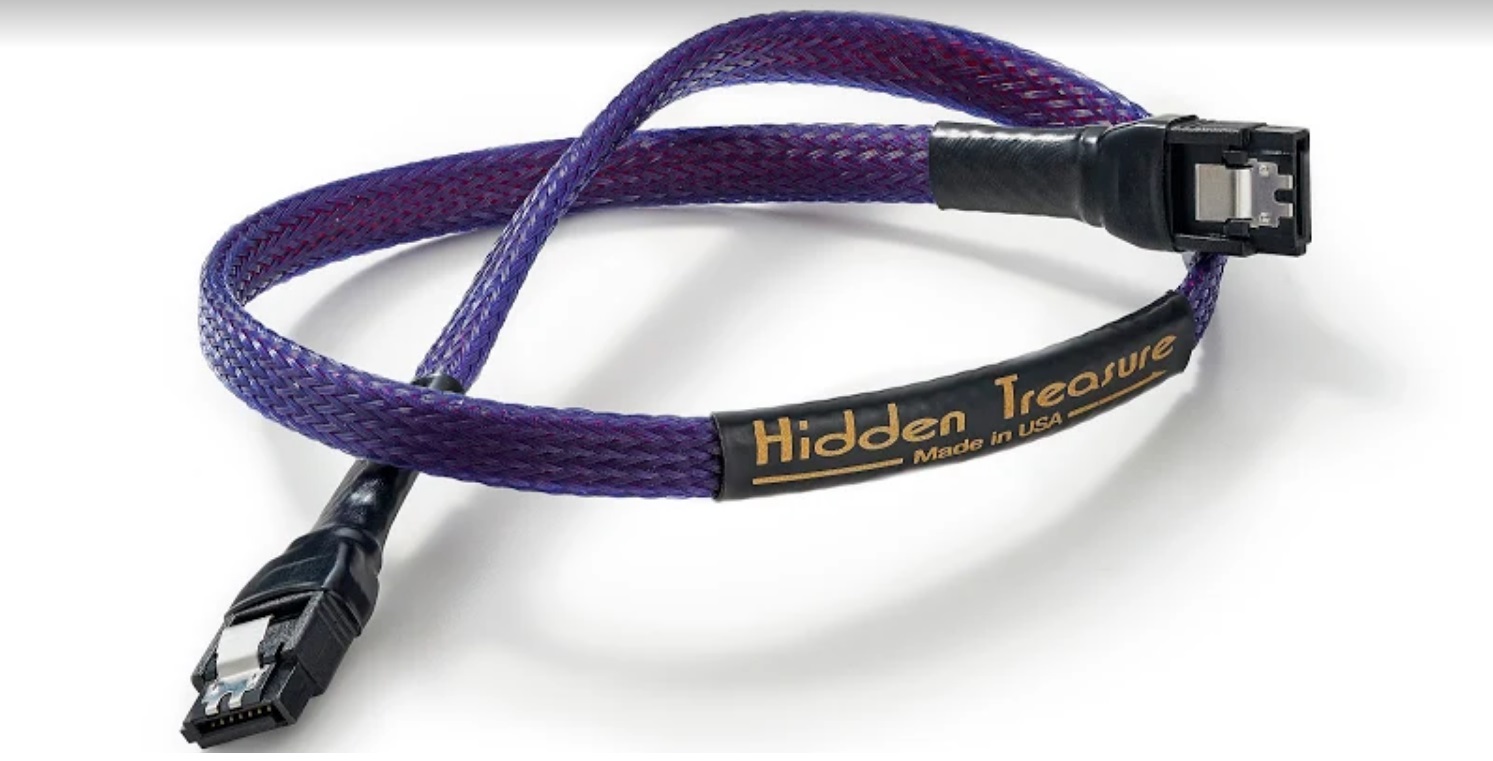
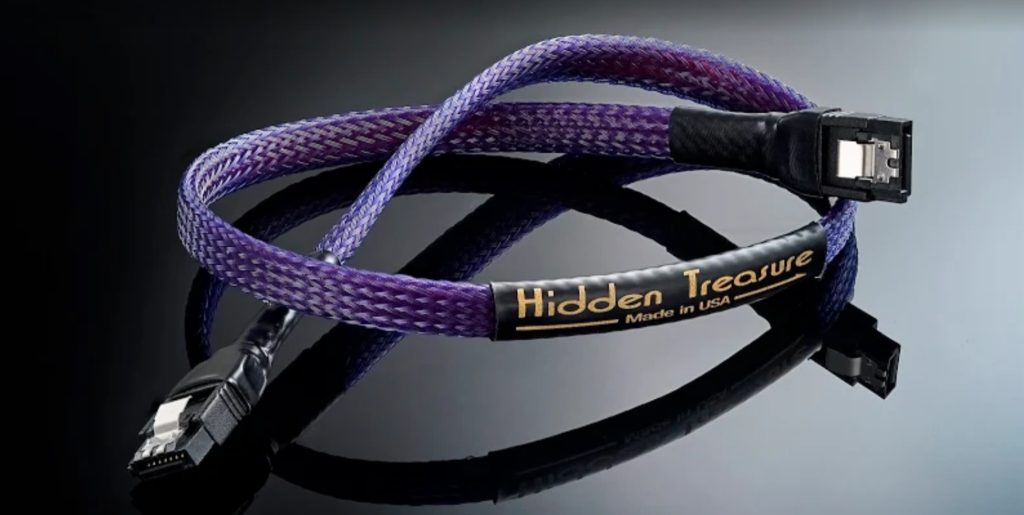
San Marcos, CA–Audience is now shipping its Hidden Treasure SATA Data Cable. The new SATA (Serial AT Attachment) cable is designed as an upgrade for internal connections of music server/computer storage devices, solid-state and disk drives and other hardware.
The new Hidden Treasure SATA cable provides better data transfer by reducing jitter and RF contamination, resulting in a lower noise floor and notably improved sound quality in audio components such as computer-based music systems. It can be easily installed as a DIY upgrade.
“More audiophiles are turning to music servers and other data storage, drive-based devices for their music listening, and these devices require a SATA cable for connecting the drive to the rest of the internal electronics,” noted John McDonald, president of Audience. “As a cable manufacturer it was a logical area for us to look into. We’ve discovered that upgrading the stock SATA cable with our Hidden Treasure cable can significantly improve the sound.”
Transmission of data including digital audio signals through a SATA cable happens at a much higher speed than via a USB connection and as a result, is more susceptible to jitter and internal system noise. The Audience Hidden Treasure SATA cable employs newly developed proprietary design techniques intended to block noise and ensure optimum signal condition and data integrity. By removing layers of sonic “grunge,” the audible result is greater low-level detail and a smoother, more inviting sonic presentation.
Although the retrofit of a component’s stock SATA cable with a Hidden Treasure SATA cable is a simple un-plug and re-plug function, Audience recommends that the upgrade be performed by a qualified technician. Audience also recommends consideration of the manufacturer’s warranty that could potentially be voided when modifying a particular music player. Audience accepts no liability for damage caused by improper installation.
The Audience Hidden Treasure SATA data cable is currently available. Suggested retail pricing in USD is as follows: 12-inch cable, $180; 18-inch cable, $200; 24-inch cable, $220.
About Audience
Audience was formed in November 1997 by John McDonald and the late Richard Smith, as a design and production company focused on building the best possible audio and video equipment. To pass the Audience test, each product must truly make a significant contribution to the reproduction of audio and/or video. Audience offers loudspeakers, electronics, cables, power conditioners, high-resolution capacitors and the Auric Illuminator optical disk resolution enhancement.
Audience’s commitment is to develop the very best products possible, and the company is committed to unexcelled customer service and product support. All Audience cables have an unconditional lifetime warranty and power conditioners have a ten-year warranty.
Announcement Comes As Nuclear, Climate, and Tech Issues Dominate An Unsettled World Stage; Experienced World Leaders to Join Bulletin Experts on Climate and Nuclear Warfare.
WASHINGTON, D.C. – NEWS ADVISORY – The Bulletin of the Atomic Scientists will host a live international news conference at 10 a.m. EST/1500 GMT on Thursday, January 23rd, 2020 to announce whether the minute hand of the iconic “Doomsday Clock” will be adjusted. The decision is made by the Bulletin of the Atomic Scientists’ Science and Security Board in consultation with the Bulletin’s Board of Sponsors, which includes 13 Nobel Laureates.
The factors contributing to the decision about the Doomsday Clock time will be outlined today.
The Doomsday Clock did not move in 2019. However, the Doomsday Clock’s minute hand was set forward in January 2018 by 30 seconds, to two minutes before midnight, the closest it has been to apocalypse since 1953 in the early years of the Cold War. Previously, the Clock was moved from three minutes to midnight to two and a half minutes to midnight in January 2017. Click the image below to watch the live stream of the news announcement.
News event speakers for the Doomsday Clock announcement on January 23rd, 2020 will include:
Former UN Secretary-General Ban Ki-moon, deputy chair, The Elders; and former South Korean Foreign Minister;
Former California Governor Jerry Brown, executive chair, Bulletin of the Atomic Scientists;
Former President of Ireland Mary Robinson, chair, The Elders; and former UN High Commissioner for Human Rights;
Rachel Bronson, president and CEO, Bulletin of the Atomic Scientists;
Robert Rosner, William E. Wrather Distinguished Service professor, Departments of Astronomy & Astrophysics and Physics at the University of Chicago; and chair, Science and Security Board, Bulletin of the Atomic Scientists;
Sharon Squassoni, research professor, Institute for International Science and Technology Policy, Elliott School of International Affairs, The George Washington University; and member, Science and Security Board, Bulletin of the Atomic Scientists;
Robert Latiff, member, Science and Security Board, Bulletin of the Atomic Scientists; fellow, University of Notre Dame Institute for Advanced Study; and member, Intelligence Community Studies Board, and the Committee on International Security and Arms Control of the National Academies of Sciences, Engineering, and Medicine; and
Sivan Kartha, member, Science and Security Board, Bulletin of the Atomic Scientists; and senior scientist, Stockholm Environmental Institute.
(Calgary, Alberta) Australian wildfire facts are being blocked from public distribution by the International Fact Check Network (IFCN), Poynter Institute and facebook. Friends of Science Society has issued a rebuttal to Climate Feedback’s Australian wildfire analysis, a member of IFCN, that claims human-caused ‘climate change’ is the culprit behind Australian wildfire stories, not arsonists or untenable fuel load. In turn, relying on Climate Feedback’s ‘authority’, facebook has been demoting page quality of those who post Australian wildfire stories that don’t fit the climate catastrophe narrative. Friends of Science wildfire expert says “fuel rules” in the case of wildfires, not temperature.
Facebook and Poynter Institute have partnered in a journalism ‘integrity’ project intended to prevent the spread of false news, but instead, they are promoting a singular climate dogma narrative. Most mainstream media outlets toe the line on the pronouncements of Poynter’s IFCN/Climate Feedback without question. Friends of Science Society argues that this is contrary to the principles of freedom of the press and is damaging to the safety of the public.
Decades of detailed wildfire research by the National Fire Protection Association, a global non-profit established in 1896, has shown that proper setbacks of shrubbery, removal of combustible material, and other house-proofing measures can significantly increase the likelihood that a house will survive a wildfire. Wildfire management techniques like clearing firebreaks and managing combustible fuel loads of dead or dry shrub vegetation and the cutting of firebreaks are well-known, successful wildfire risk reduction techniques.
In their rebuttal to Poynter’s “Climate Feedback”, Friends of Science Society points out that in Alberta, the 2011 statistics of human caused fires versus those caused by lightning reached 72% in the five-year average. Human-caused wildfire includes arson, accidental or negligent activity and fires started from human infrastructure issues – like power lines sparking on contact with tree branches. Some of the largest Canadian wildfires, like the 2011 Slave Lake catastrophe, have been identified as arson.
For those people demanding climate action to reduce carbon dioxide from human industry, the grand irony is that poor forestry and fuel load management lead to wildfires which in turn emit huge quantities of carbon dioxide, as reported by Esquire. Proper forestry management would reduce those emissions.
Many climate activists condemn Australia as being at fault for climate warming because it is a coal-producing nation. Based on those claims, Australia is facing economic trade wars by Greenpeace, BankTrack, and even Greta Thunberg. But as discussed in Friends of Science Society’s “Burning Questions” 2015 report, wildfires, especially those that create huge Pyrocumulonimbus clouds, are a significant driver of climate change. “The Untold Story of Pyrocumulonimbus” explains the complex findings of wildfire’s influence on climate and environment, with the research led by Mike Fromm of US Naval Research Lab.
Likewise, Friends of Science Society’s report “Unfriend ENGOs – Befriend Facts” deconstructs the green trade wars against essential prime power industries like coal, natural gas and oil, driven by environmental groups acting as proxies for ‘green billionaires’ who are deeply invested in pushing global cap and trade, carbon pricing and their vested interests in renewables.
Climate activists, Poynter and facebook are suppressing freedom of the press and freedom of speech, while falsely proclaiming a climate emergency, a concept developed by a clinical psychologist in the US, intended to scare people into compliance. The same “Climate Mobilization” organization advocates for World War II style rationing, managed economy, and massive restrictions on freedoms.
On April 6, 2020, Friends of Science Society’s 17th Annual Event “Freedom of Speech! No Climate Emergency” will host investigative journalist Donna Laframboise to address these diminishing freedoms, and Dr. Roy Spencer, who will offer “10 Reasons Why There is No Climate Emergency.”
Friends of Science Society is an independent group of earth, atmospheric and solar scientists, engineers, and citizens who are celebrating its 17th year of offering climate science insights. After a thorough review of a broad spectrum of literature on climate change, Friends of Science Society has concluded that the sun is the main driver of climate change, not carbon dioxide (CO2). Friends of Science Society P.O. Box 23167, Mission P.O. Calgary, Alberta Canada T2S 3B1 Toll-free Telephone: 1-888-789-9597 Web: friendsofscience.org E-mail: contact(at)friendsofscience(dot)org Web: climatechange101.ca
Discovering the Picker’s barns…after visiting Marcel Gosselin [last issue- http://tinyurl.com/7g4oxnk CP ] we went on to a large picker’s barn we had noticed on the way into Victoriaville which is where we met Jean (Kojak) Deshaies. As we arrived, the place was buzzing with activity as several pickers clamored for the attention of a completely bald man; pointing at, and demanding prices of items still being unloaded from his pickup truck. Not being used to this type of “pressure” buying we went inside and started to peruse the rows of furniture and items there.
Nothing was priced. We made note of several things of interest, and waited.
After several minutes the bald man came in and approached us introducing himself in a distinctive, low raspy voice as Kojak, and started simply “how can I help you?”. I was slightly taken aback by the intensity of his voice, abrupt manner, powerful short build, and the fact that he had absolutely no facial hair including eyebrows. He seemed….slightly hostile. We explained that we were dealers from Ontario, and that this was our first trip to Quebec. He immediately broke into a big smile and grabbed my hand and gave it a firm shake, and after introductions asked us what we found interesting. As we pointed out several pieces of early furniture, rugs, carvings, etc., he would offer a short description and then bark out the prices. As we said yes to an item, a young helper would grab the piece and haul it off to a place by the entrance where he started to make a pile. Kojak wrote the prices on a piece of scrap paper. He warmed with every item chosen and before long would sometimes follow the price quoted with a second lower price he called “prix d’ami” or “friend’s price”.
After awhile I noticed the large pile we had accumulated. I expressed my concern that I might not have enough cash for everything, but he said not to worry because a cheque would be fine. I was surprised at this sign of trust but he joked that he knew I would be back, and besides if the cheque was not good he would soon be at my door to collect, and I wouldn’t want that to happen.
He told us that he and a few of the other local dealers were just back from New York City where they had marched unannounced into the office of a downtown lawyer who had bought several items in the area with bad cheques, and had not answered their calls. “We just walked into his office, grabbed him by the scruff of the neck and told him we wanted our stuff back. We didn’t have to do more. He took us right to the warehouse. We were back home ten hours later.”If you had trouble covering a cheque it was fine as longs as you were up front about it, and made it right. No problem.”
Getting all of the stuff we bought into the truck was another thing but we managed. For the Silo, Phil Ross. Visit Phil’s blog at www.shadflyguy.com
There are a number of reasons why you might want to replace your windows and doors in the winter. Either you’ve just moved in and want to upgrade them because they are old, or maybe you feel like they aren’t performing well, or perhaps even you may just feel like they are out-dated and that your home needs a new look.
Windows and doors are an essential part of any home. They allow us to enter and exit our home, to let air and light in, but they are also designed to protect us from the elements and intruders when necessary. When they aren’t performing optimally, windows and doors can be the cause of heat loss in a home which can in turn make your furnace overwork – meaning you will be paying more on your energy bills.
When considering window replacement, it’s important that you find a window and door company in Kitchener that manufactures their products according to the highest energy standards. Look for a company that can offer you ENERGY STAR® certified windows that can help you lower your household energy bills by an average of 12 percent. Bonus: by lowering your energy consumption you are also helping to reduce greenhouse gas emissions.
Best Time to Replace Windows and Doors
You might be thinking that the middle of winter isn’t the most ideal time to contact your local window installer. Not only may it seem like it would be difficult for them to work in bad weather, but you’re probably also worried about the snow and cold getting into your home while they work.
Despite your worries, professional, certified window installers are typically able to install your units in one day. They also take precautions to ensure that your home is protected while they work, like by putting up plastic sheeting to keep the elements out and your things protected.
You can trust a window company that takes the time to assess your home and give you a quote before beginning work. The best ones will even do the measurements and check the work being done twice before starting – this ensures that everything is exactly to your specifications.
Once a day has been selected, your window and/or door installation team will likely ask you to move items at least two feet away from the areas being worked on. They’ll also ask if there is anything outdoors that they need to be careful of – like a favourite bush or flower bed.
By providing them with the information they need upfront, they’ll be able to prepare properly to make sure that nothing gets damaged in the process. If it’s just a straight replacement, things generally go smoothly and quickly, and as already noted can typically be finished in a day.
With the right windows and doors, you can protect your home from heat loss this winter, lower your energy bills, and also beautify the inside and outside of your home.
Cyclones in the Caribbean and Pacific, devastating bushfires in Australia, recurrent floods and droughts in Asia and Africa, increasingly bring tragic loss of life to our nations and communities, inflicting physical and mental trauma on survivors, and causing irreparable damage to centuries old ways of life and undermining prospects for future prosperity and growth.
The current bushfires in Australia have been among the most distressing manifestations, leading the government to declare a state of emergency.
The total cost to the economy of the bushfires with which Australia is grappling seems likely to run into billions of dollars. Continuous drying of undergrowth creates optimal conditions for bushfires, leading to tragic loss of human lives and destruction of infrastructure. There is devastating impact on the precious biodiversity of flora and fauna, threatening drastically to affect the ecology of the region. Heightened levels of air pollution in the affected and adjoining regions are having adverse impacts on the respiratory health of scores of people.
Such extreme events are occurring with rising frequency, destroying the means of livelihood for millions people in Commonwealth countries, increasing vulnerability and reducing resilience. The Commonwealth collectively recognises that without well-planned and integrated national and international action, natural disasters and extreme events will continue to challenge the resilience of affected communities and smaller countries. The Commonwealth Secretariat is working alongside member nations to protect the environmental health of fragile and susceptible ecosystems, including through increased national preparedness for tackling natural disasters and mobilising resources.
For the arid and drought-prone member countries, which are highly vulnerable to dryness and bushfires, the Commonwealth provides support for governments to develop projects on sustainable and resilient landscape management, with the Commonwealth Climate Finance Access Hub (CCFAH) helping to unlock necessary financial resources. Similarly, by pooling information into a streamlined platform for better and more convenient access to information, the Commonwealth Disaster Risk Finance Portal currently in development will help countries find suitable sources of finance and support to deal with disasters.
On behalf of citizens of all Commonwealth countries, I express my heartfelt condolences to all families and communities who have lost loved ones in the tragic events of recent days. I commend the courage and commitment of firefighters, emergency service personnel and all others who are battling to rescue and protect people and property, wildlife and natural resources, or human infrastructure. In these testing times, the wider Commonwealth family stands in solidarity alongside the Government and people of Australia. For the Silo, by Patricia Scotland, Commonwealth Secretary-General
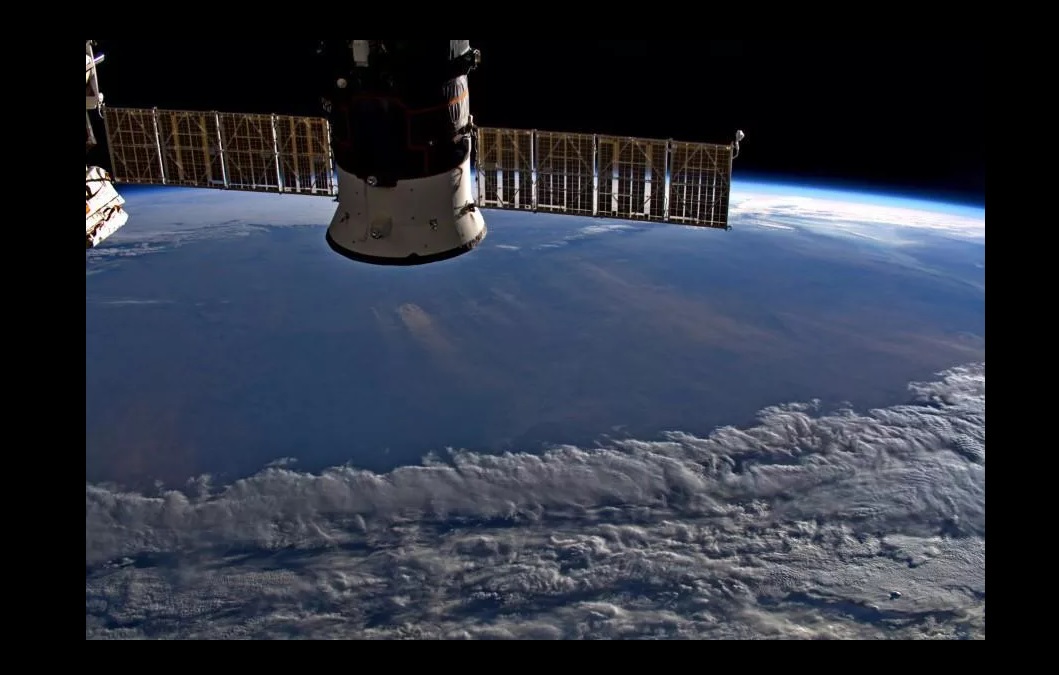
Featured photo- Luca Parmitano ESA Astronaut – Australia “Ash cloud” as viewed from the ISS International Space Station.
In the past decade and a half cellphones have evolved from contraptions you make calls from to devices that do so much more. Now they can help you organize your social life, perform your banking and act as a food diary. There’s an app to be found that is based on your entire existence!
With tablets being commonly used in schools, and the fact that ICT is a relatively new subject, technology is changing the way students are being taught.
In this piece, we’ll provide a comprehensive guide of how technology will shape the future of education and what students will be studying and using in years to come.
From making use of 3D printers, to using virtual reality as part of an immersive learning experience, the possibilities are endless!
So what are you waiting for? Take that first step to get ahead in the future by having a sneak peek in this infographic from our friends at educationcity.com.
Beverly Hills CA – Chrissy Teigenand John Legend celebrate life with Cook Unity (cookunity.com), a Los Angeles-based meal delivery. The couple cuddled up in their Beverly Hills home around Cook Unity’s Chef Luciano Pellegrini while learning the secrets of making the perfect fresh pasta stuffed with Fontina Cheese and Black Truffles.
The couple shared the experience with some of their closest friends and relatives and shared a few snapson snapchat for their fans.
Cook Unity is a decadent catering and meal delivery service that has been aiding Hollywood A-listers get through the summer with their alluring, ever-changing menu designed to keep you in shape and conveniently delivered to your doorstep daily. Cook Unity (formerly crateful.com) is quickly becoming the most sought-after, luxurious meal delivery service in Southern California with an ever growing roster of high profile clients throughout Hollywood, such as Cindy Crawford, Jamie King, January Jones.
WHAT THEY MADE:
.
Chrissy’s Snapchat photos
About Cook Unity
Cook Unity makes every chef-prepared meal using state-of-the-art cuisine techniques, creating perfectly balanced portions with the highest quality ingredients available. Together with a team of award-winning chefs and nutritionists, all produce is organic, wholesome and always fresh. All meal plans are calorie controlled and personalized to the individual’s dietary needs allowing a wide range of customization for each meal plan. Offering four different menus, all with Gluten, Dairy, Soy Free options, and with 42 different meals per menu in the breakfast, lunch and dinner categories, there is always something new and exciting to try. Cook Unity set out to revolutionize meal delivery services, by combining slowly and artfully prepared food with fast and convenient delivery.
Inspired by their Italian roots and new world innovation, they offer chef-prepared gourmet meals with locally-sourced and organic ingredients. All dishes are designed and prepared to taste just as delicious when you eat them as the moment they came out of the oven. Preparing them in the lightest and healthiest way possible allows leverage whilst enhancing the quality of the wholesome ingredients.
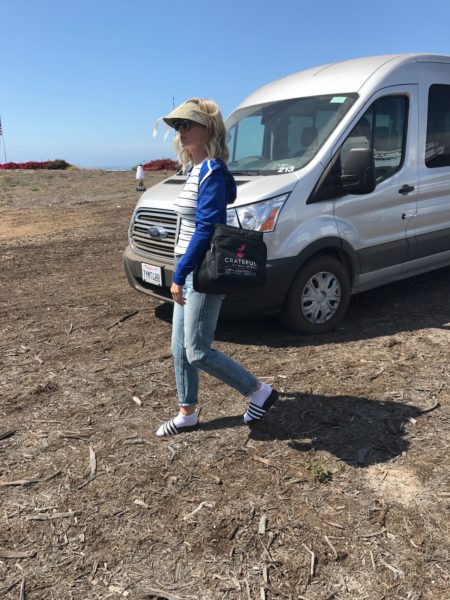
Jaime King and Cook Unity’s Chef Luciano Pellegrini during a behind the scenes look at how Cook Unity makes their organic, on the go, fresh meals. This took place at Jaime King’s House. | January Jones arriving on the set of The Last Man on Earth carrying a special bag of goodies.
All photos except Snapchat pics by Eclat Public Relations
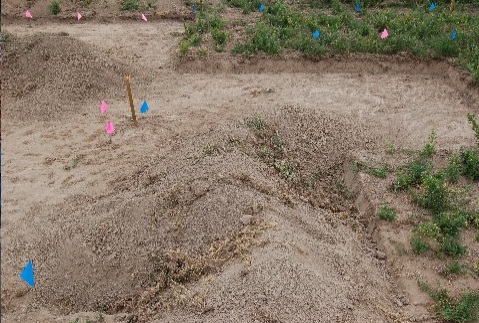
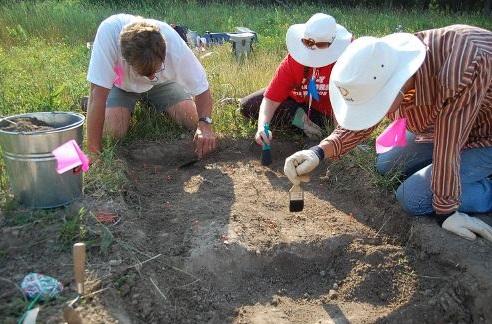
For over 25 years archaeological efforts have been ongoing to delineate where potential prehistoric trails exist across the landscape of southern Ontario. Trails were created and used by the earliest inhabitants of the region after glaciers disappeared some 15,000 years ago. One of the roles for a trail system was to help keep people alive.
The challenge to identify the existence of these trails is that they existed approximately 10,000 years ago. The primary region for this research has been Haldimand-Norfolk County. In the past seven years the search for prehistoric trail systems in these two counties has become increasingly intensive as part of the Haldimand-Norfolk Archaeological Regional Project (HNARP) http://www.hnarp.ca/ .
The premise of the regional project is to better understand how early people lived and managed their lives on a landscape once rich with animal, plant, and raw resources such as rock for making stone tools.
A critical activity that has assisted this regional project is permission to walk over farm lands from supportive agricultural land owners to help find these trails. Access to farm lands assists archaeologists to identify where people lived in the region. The land mass of the two counties combined covers approximately 2,000 square kilometers.
Historically, it was always possible to read information written down and recorded about trails in the region. This would include place names and popularly used trails. Even oral history in Haldimand County by senior land owners some 30 years ago mentioned trails used by people to walk across the landscape to neighbouring farms, villages, and the shores of Lake Erie.
To date, archaeologists have identified artifacts left behind by people still exist after 10,000 years of changes to the landscape. One piece of evidence has been the type of stone used for making tools. Throughout the world people searched out different types of rock for making stone tools.
In Haldimand County, chert formations created over tens of millions of years ago can be found. These chert formations have different identifying markers such as colours and fossils that make chert distinct from others. It is these identifying markers that help chert to be identified from its original source and help to develop new evidence to show where and when people lived and crossed the landscape.
It is hoped that finding and identifying the different colour cherts and fossils in the rock will help archaeologists piece together Haldimand-Norfolk County’s long forgotten past. For the Silo, Lorenz Bruechert.
At CES 2020 Audio-Technica will introduce a host of innovative products including headphones, turntables and mics across a wide variety of categories, from high value to ultimate-performance.
New QuietPointtruly wireless in-ear headphones combine next-generation truly wireless technology with digital hybrid active noise-cancelling electronics. The result is improved high-fidelity sound with superior noise cancelling performance.
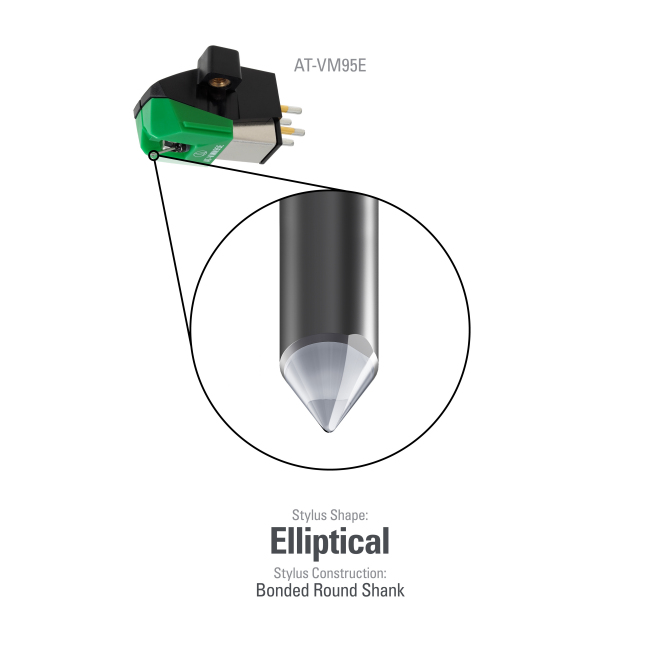
A new belt-drive turntable combines an exceptional vinyl listening experience with a stunning, high-gloss piano black finish that complements any music system. The turntable includes a VM95E phono cartridge, built-in phono preamp and accessories.
Audio-Technica will introduce four all-new high-end headphones. The on-ear models combine beautifully crafted exotic woods with superb sound. The in-ear model features an exclusive hybrid multi-driver system for unmatched in-ear listening. All offer Hi-Res Audio quality.
Two Sonic Sport in-ear headphones will make their debut. One model features a built-in portable music player for the ultimate in on-the-go listening convenience. Both headphones offer a host of fitness-friendly features and powerful, immersive sound.
Audio-Technica’s newly upgraded ATR Series microphones feature improvements such as USB-C connectivity, high-performance internal A/D converters and restyled designs. They’re ideal for streaming, podcasting, recording, live performance and more. For the Silo, Frank Doris.
If you find yourself in the area, please visit us at CES Booth 20648, South Hall 1, Las Vegas Convention Center to hear these and other products.
The decade that just ended was one Princess Diana would have treasured.
Both of her sons – Prince William and Prince Harry, married lovely women: Kate Middleton and Meghan Markle, respectively. Diana now has 4 grandchildren whom she would have loved and adored.
But that was not meant to be. Tragically, she died in a car crash more than 20 years ago. Princess Diana’s legacy continues as musicals about her life are flourishing in 2020 and beyond.
Singer/songwriter Karen Sokolof Javitch’s newly revised Princess Diana the Musical is being re-released by Heuer Publishing in early 2020. Featuring over 25 of her original songs, one of the most touching is, ‘Hope in My Heart’. “It’s a beautiful song that Princess Diana sings while visiting a hospital. Even with all of her problems, ‘hope’ is what she carried with her and ‘hope’ is what she gave to all of us. In this new decade, there is still so much trouble in the world and divisiveness in our country. We could use a little ‘hope in our hearts’ right now,” Ms. Javitch reveals.
Link here to the song, “Hope in My Heart”, sung by Sasha Weiss:
Princess Diana the Musical has been performed in many community theaters in the United States. “Our production entertains audiences about the public and private life of this iconic woman and most beloved princess,” explains songwriter Karen Sokolof Javitch. “Even after many successful runs, I recently revised the script and songs and I’m thrilled to re-release it to America’s theaters through Heuer Publishing Company,” explains Ms. Javitch.
Javitch wrote the music and lyrics and co-authored the book with Elaine Jabenis in 2000. The inspiring story journeys in song with the “People’s Princess” through her trials and tribulations of being an unknown 17-year old to becoming the most famous woman in the world. With Karen’s original songs, Princess Diana the Musical captures the grace, charm, compassion, and style that was Diana.
About Karen Sokolof Javitch:
Karen has written and produced 15 albums of her music, and she has co-written 4 musicals. She was the creator and co-host of a popular Omaha, United States radio show, “It’s the Beat.” Besides her musical about Princess Diana, her others are From Generation to Generation and Love! at the Café. (also published at Heuer).
These shows have been performed in many cities in the United States. Ms. Javitch has raised over $350,000 USD for US national and local charities with her original music and musicals. Featured image- from Princess Diana The Musical.
International migration continues to grow on a scale never seen before, bringing with it social and cultural diversity, and inequalities in living standards. At the same time, the world has seen a sharp rise in terrorism, threats of war, populist politics and significant lack of confidence in leadership. But can the arts build on its foundation of “universal language” and actually bring cultures closer together?
Survey after survey in recent years have pointed to the significant connections between strong academic achievement and arts learning.
Professor Ada Aharoni, who lives in Israel and is the founding President of the International Forum for the Literature and Culture of Peace (IFLAC), believes that education has a critical role to play in the peace process. Intercultural communication, peace literature and a peace media can substantially help in healing the urgent ailments of our global village. However, Aharoni notes, “Peace and tolerance education should be given to the teachers and the parents too. If a child goes back home after class to parents that are intolerant and violent, the child, despite his peace and tolerance education at school, will be forcefully influenced by the values, customs and traditions of his parents.” Today’s youth are living in a globalized world, and a true global citizen according to Aharoni is, “a human guardian of all the people in our global village, and not only of the country she or he lives in.”
Professor Ada Aharoni received the President Shimon Peres Award for Peace in 2012 for her peace research, her books and her work with IFLAC. She was nominated for the Nobel Peace Prize 2014.
Ada, in your opinion, what does it mean to be a true ‘global citizen’?
A true global citizen, in my view, is a human guardian of all the people in our global village, and not only of the country she or he lives in.
image- CMRubin
Many claim that without conflict and competition there is no advancement. If the world were completely at peace, could we develop or would the world be at a complete stand-still when it comes to new discoveries/ revolutions?
When the world one day will be completely at peace, after having thrown out of our lives, of our planet and of our dictionaries, the destructive concept and practice of war – we would develop our creativity and all our abilities at a fruitful rate the world has never seen before.
You grew up learning about other cultures. In today’s age, classrooms are becoming more diverse than ever yet people are afraid of certain cultures and religions. Do you believe that peace begins in a classroom? How important is the role of education in nurturing tolerance?
Education is the most important element in developing, nurturing and propagating peacemaking, conflict resolution, tolerance and harmony. However, Peace and Tolerance education should be given to the teachers and the parents too. If a child goes back home after class to parents that are intolerant and violent, the child, despite his peace and tolerance education at school, will be forcefully influenced by the values, customs and traditions of his parents.
“International cooperation can develop, strengthen and empower people to be both loyal global citizens and loyal patriots at the same time.” — Ada Aharoni
Are ‘patriot’ and ‘global citizen’ mutually exclusive terms? Can someone love and want the best for their country while also advocating for international cooperation?
A “global citizen” can, and should, also be a loyal patriot to his own country. International cooperation can develop, strengthen and empower people to be both loyal global citizens and loyal patriots at the same time.
Your movie talks about government accountability and the falsifying of history, especially when it comes to the origins of Jews in Israel. In what way do you see younger generations demanding accountability and transparency from their world leaders? Do you think politics are becoming more or less accessible to people?
I am glad you watched my movie:The Pomegranate of Reconciliation and Honor,and understood it so well. However, it is not the falsifying of history, but ignoring the history and the uprooting of more than half the citizens of Israel – the Sephardi citizens who were thrown out or escaped from the Arab countries, after the establishment of the State of Israel in 1948.
This history is so important as it can promote the Reconciliation between the Palestinians and Israelis. When the Palestinians realize that they are not the only victims of the Arab-Israeli Conflict, it gives them back their “honor” and they become open to a reconciliation.
The Ministry of Education in Israel should teach in schools – both in Jewish and Arab schools – the History and the Uprooting of the Jews from Arab countries, and its importance as a major element to Peace Making and Reconciliation. This history, of half the citizens in Israel, should be learned and practiced also by all the leaders on both the Israeli and Palestinian sides.
In today’s volatile, uncertain world, can literature and the arts truly bring about change? What has your experience with your own work taught you?
Yes, I believe that words, communication, literature and the arts can promote peace, tolerance and harmony, and bring about a change. Our work at IFLAC has shown us this again and again. For instance, I received many enthusiastic letters and messages from Palestinians who watched my film,The Pomegranate of Reconciliation and Honor, on YouTube, and wrote that the movie had instilled hope of peace in them and had given them back their honor as Palestinians.
For the Silo, David Wine/CMRubinWorld. Featured image via news.ucsb.edu.
Smart Speakers 101 The trendy devices can help you with everything from appointment reminders to grocery shopping lists to playing your favorite music and podcasts. It’s that last item that has the radio world excited. Find out why all the buzz is good news not only for broadcasters but also importantly for you.
A recent trend has shown an increase in radio listenership through popular smart speakers such as Google Home and Amazon Alexa. So what can broadcasters do to take advantage of this trend? Steve Goldstein of Amplifi Media and Sonic Ai aims to help.
A broadcaster by trade, most recently as EVP at Saga Communications, Steve saw a shift to on-demand content, and in 2015 launched Amplifi, a firm focused on developing on-demand audio—the intersection of podcasting and broadcasting. Earlier this year, Steve partnered with Jacobs Media on Sonic Ai, who develops smart speaker skills (more on skills later) for podcasters and broadcasters.
So what is it about smart speakers that make it easier for people to listen to radio? Steve explains, “There are a number of factors. For starters, the number of radios in the home has been on a steady decline. By some estimates, two-thirds of homes do not have radios. Generationally it’s even fewer.” Steve says the notion that it’s a choice between a radio and something else isn’t really true anymore – in some homes, there is no radio.
While it may be hard for those of us in the broadcast industry to imagine, the smartphone has replaced the radio and clock radio in many homes. “The smartphone is an entertainment hub,” Steve says. “It’s where people listen to music, get the news, watch videos, and so on. It’s transitioned from a telephone to a full-fledged hub. Part of that hub can be radio, but very little listening to radio occurs through the device.”
Steve says radio stations need to think beyond the transmitter and audio stream. While there are only so many radio stations in a market, there are 100,000 radio stations available via the TuneIn Radio app, streaming services like Spotify and Pandora, and 400,000 podcasts. “You’re talking about an awful lot of audio,” he asserts. “The focus needs to be on-demand content. That’s the trend. The expectation today is that content is available on-demand.” The ability to listen whenever and wherever a listener desires—in the car, while they’re walking the dog, when they’re exercising—is in step with today’s lifestyles.
It’s the same arc we’ve seen on the video side with on-demand services such as Netflix, Hulu, and others. While adoption has been slower on the audio side, the conversion is happening rapidly among millennials.
An Edison Research study from NPR earlier this year showed that somewhere between 7-11% of homes in the U.S. have these devices and the largest group of users is millennials (18-34). And we should expect this trend to continue, especially with the holidays upon us. “We should expect these devices are going to sell like hotcakes over holiday season,” Steve says. He points out that some analysts predict that market penetration may increase to 15-18% by the end of the year.
Smart Speaker
With the trend toward radio and audio consumption through smart devices, it’s apparent the way forward for broadcasters is to develop new ways to connect audiences to their content.
Got Skills?
You’ve probably heard the term skills thrown about when smart speakers are discussed. So what exactly are skills? And how do they relate to broadcast audio consumption via smart speakers? Steve explains. “Think of smart speakers as computers… They don’t know what to do until you teach it. In this case, Amazon refers to the learning aspect of the device as a skill. We develop skills and invocations for the stations we work with.”
As an example, Sonic Ai built a skill for WMMR in Philadelphia called ‘Open MMR.’ The listener hears a greeting from the morning show, then is offered a menu of choices. Listeners can choose to listen to the live stream, the latest podcast of the morning show, or the show’s top feature, called ‘The Bizarre Files’—an 8-12 minute piece of audio you can listen to without sitting through the entire morning show. Steve says WMMR has seen significant traction from listeners who missed the segment on the morning show tuning in to listen at a time convenient to them.
For a top-performing morning show, this is huge; for the first time, there’s a retention strategy, with the ability to repurpose and reuse audio. Additionally, in PPM markets, listening to content within 24 hours of the original broadcast is accretive to a station’s ratings.
Steve points out that when it comes to a radio station’s invocations and skills, getting it right is essential. Depending on the name or phrase used to identify a station, the invocation might not provide the audio stream you’re looking for. Steve cites the phrase ‘Lite FM’ as an example. “If you say ‘Play Lite FM’ as your invocation, you’re going to get Lite FM in Beirut, Lebanon, or an Inspirational station in Albany, NY. So you need to get your name and invocation correct, and register it.”
Steve suggests however that if stations are only doing this for streaming purposes, that’s not enough. “The real opportunity is with on-demand audio, which is what we’re focused on.”
The capabilities of smart speakers are constantly being enhanced, and they’re used for a variety of tasks, but audio is by far the top option. That’s the good news, Steve says, but the challenge for broadcasters is that that audio is coming from a variety of sources. “The linear AM/FM notion is going away, but the notion that broadcasters create relevant content is not, so they need to be more flexible about where content is being consumed, less focused on the transmitter, and more focused on devices that can play audio.”
It’s a new challenge, but with booming sales of smart speakers and potential for a measurable increase in listeners, it’s a challenge broadcasters need to embrace. Steve sums it up. “Broadcasters need to get out of the radio business and into the audio business. That will change your thinking about everything.” For the Silo, Dave Sarkies/Telos Alliance.
There is a paucity of Palaeolithic art in the southern Levant prior to 15000 years ago. The Natufian culture (15000–11500 BP; Grosman 2013) marks a threshold in the magnitude and diversity of artistic manifestations (Bar-Yosef 1997). Nevertheless, depictions of the human form remain rare—only a few representations of the human face have been reported to date. This PDF article presents a 12000-year-old example unearthed at the Late Natufian site of Nahal Ein Gev II (NEGII), just east of the Sea of Galilee, Israel (see Figure 1 PDF link below). The object provides a glimpse into Natufian conventions of human representation, and opens a rare opportunity for deeper understanding of the Natufian symbolic system.
The NEGII face is carved from a limestone pebble measuring 90×60mm.
Minimalistic manipulation of the pebble’s surface creates a simple but realistic human expression. The artist used the natural form of the pebble to represent the outline of a human head, and slightly modified the stone’s perimeter with a flat band to shape the contours of the face(see Figure 2a PDF link below). The main modification engraved on the front of the pebble consists of a T-shaped linear relief that emphasizes an eyebrow ridge and nose; two low arcs that meet at the centre of the pebble form the eyebrow ridge and then turn downward to depict a straight, elongated nose.
By skillful play with line depth and curvature,the artist has achieved a soft depiction of the cheeks and deep, shaded eye sockets (see Figure 3 PDF link below). The artistic qualities of the representation are schematic, but they present a realistic and uniquely expressive human face.
Leore Grosman
The back of the pebble is not carved but is lightly modified at the edges. Microscopic analysis shows a few small, smooth and shiny areas that may have been created by gentle polishing of the surface with a soft material such as skin or fabric, or by…… continue reading this article by clicking here.For the Silo by Leore Grosman, with Natalie Munro and Hadas Goldgeier/ academia.eu. Feature image photo by Dana Shaham.
Pre-Christmas debate in the Ontario Legislature provided me an opportunity to highlight upcoming changes in parliamentary protocol, and procedure with respect to the Crown. For example, a change to the Legislature’s Standing Orders will add a clause: “Following prayers on the first sitting Monday of each month, the Canadian national anthem and the Royal Anthem shall be sung in the chamber.” Although I love the concept, I can’t recall hearing parliamentarians singing “God Save the Queen” in the legislative chamber. I find this strange, considering every elected member has sworn allegiance to the reigning monarch – I would assume since the times of Loyalist Lieutenant Governor John Graves Simcoe – in the House since 1792.
Through all that, what hasn’t wavered is the admiration, respect, and affection people in Ontario feel for the Royal Family. Something else that hasn’t changed is the anticipation loyal Ontarians and Royal Watchers have each year for the Queen’s Christmas message. Our Queen’s grandfather, King George the Fifth, initiated the Christmas message in 1932. He was initially unsure about using radio in this manner, but a visit to the BBC to see their cutting-edge technology reassured him.
The first Christmas message was written by poet and writer Rudyard Kipling. The first sentence being: “I speak now from my home and from my heart to you all; to men and women so cut off by the snows, the desert, or the sea that only voices out of the air can reach them.” The first televised message was broadcast live in 1957. It allowed viewers to see the Queen in her own residence, decorated for Christmas like many viewers’ homes. As I read through my favourites of the Queen’s Christmas message, it impresses me how tied to current events – both good and bad – they are. I was touched by her humanity when she mentioned the 2018 Manchester bombing tragedy -truly a monarch with a heart and conscience. Throughout her 68-year reign, Her Majesty has demonstrated tremendous dedication to serving the public. It is a commitment that has inspired countless others to follow in her footsteps. She has been involved in the work of hundreds of organizations, charities, and causes and has met more people than any other monarch in the United Kingdom and elsewhere in the Commonwealth.
Her humanity and commitment to good causes fits perfectly into the spirit of the Christmas season, and is the main reason, year after year, millions eagerly tune in to hear her speak. Christmas is the time of year that brings us together and reminds us to appreciate those in our lives. May Christmas fill you with joy and peace, and the yuletide spirit fill your heart and home with laughter, harmony and many blessings. From my family and staff, have a wonderful Merry Christmas and a safe and Happy New Year. God Save the Queen. For the Silo, Toby Barrett MPP for Haldimand-Norfolk.