Tag Archives: planning

Are You Thinking of Retiring? Don’t Miss These Crucial Steps

Retirement is exciting to think about. After decades of work, the idea of having more control over your time… that’s something people look forward to, right? Many spend their working lives waiting until the day they retire – so if that’s you, you aren’t alone.

No matter how you imagine spending your retirement – traveling, spending more time with your family, or just enjoying a slower pace of life – it is a rewarding stage of life. But before you take the leap, there are a few important things worth putting in place.

A little bit of preparation now makes the years ahead much less stressful.

Create a Retirement Budget

You’ll have spent years earning a salary. One of the biggest changes you’ll go through after retiring is relying on savings and retirement income. Because of this, you must have a clear picture of your finances. That’s essential.

Even more so as Canadians now believe they require $1.7 million to retire. This is an increase from $1.54 million in 2025. So yes, having a budget is a must.

Begin with an estimate of what your monthly income will be. This might include pensions, investment income, retirement savings, or government benefits. Once you know what is coming in on a monthly basis, take a look at what typically goes out.

Many expenses will stay the same. Living expenses – groceries, mortgage or rent, utilities, and the like – don’t disappear when you stop working. At the same time, retirement also brings new spending. You might be one of the many retirees who travel more, take up new hobbies, or spend more time dining out.

Put everything on paper. This helps you understand whether your income comfortably supports your lifestyle. It’ll be easier to make adjustments before you retire if you notice a gap. 

Some people do find it helpful to speak with financial professionals who focus primarily on retirement planning. Firms – like Aleph Retirement Planners – work with individuals who want a long-term plan. Such forward planning helps manage income and expenses after leaving the workforce.

Plan for Long-Term Care

Another important part of retirement planning? Health. Most people hope to stay active and independent as they age, but it’s wise to consider what might happen if extra care is needed.

You might think it silly to consider this now. It isn’t. You need to be prepared, especially when there are numerous options. Long-term care takes different forms. Some people need occasional help at home, while others may eventually require assisted living. Depending on where you live, these services could be costly.

Think about these possibilities early. This gives you more options. You might explore long-term care insurance. Others might choose to set aside a portion of their savings specifically for future care needs.

Speak with family members, too. Discuss their preferences, if they have any. Sure, these conversations likely won’t be easy, but they do prevent confusion later on. Your wishes will be understood and followed.

Update Your Will and Power of Attorney

Retirement is a good time to review legal documents as well. There’s a chance your circumstances will have changed since you first created a will, particularly if you made it many years ago.

Maybe you’ve welcomed grandchildren. Perhaps you’ve purchased property. You might have experienced another major life change. Updating your will ensures your assets are distributed the way you intend.

Equally important is a power of attorney. This document allows someone you trust to handle financial or medical decisions on your behalf if you’re unable to do so. Again, you might not think this is necessary – but it might be. Without it, loved ones may need to go through complex legal processes just to step in and help you.

Review these documents periodically. Doing so keeps everything up to date and avoids unnecessary problems later.

To conclude, retirement is a life transition. A major one. It doesn’t need to overwhelm you, though. If you want to approach this next chapter with confidence, then you need to consider the above steps. 
This way, retirement becomes a time to enjoy everything you’ve worked hard for.

For the Silo, Jarrod Barker.

Overcome Travel Anxiety Ahead Of This Years Season

A whopping 1.3 billion international tourist arrivals were recorded in 2023.

Undoubtedly, travel has become an integral part of many people’s lives. And while it can bring many joys, it can also cause stress.

With travel season fast approaching, the experts and our friends at HAYPP wanted to help those struggling with travel anxiety by providing helpful tips on how to best overcome it.

Five healthy ways to overcome travel anxiety

1. Understand your anxiety 

To be able to best cope with your travel anxiety, you need to have a good understanding of the things that actually cause it. Pinpoint specifically what is making you feel anxious about your trip – is it that you’ll be on the road for hours, that there would be things out of your control, that you would have to be surrounded by a lot of people at an airport? Once you understand what triggers your anxiety, you can ensure to plan ahead for the best ways to handle those triggers.

2. Create a detailed plan for your trip

One of the reasons for experiencing anxiety when travelling is that you’re being taken out of your comfort zone and won’t have full control over everything. To help ease that anxious feeling, try to plan out your trip in as much detail as possible. Write down an itinerary, either on paper, or you can make use of a trip planner app like TripIt, Wanderlog, or Sygic Travel, for every day that you can follow, which will give you a sense of control, but it’s equally as important to think of alternative plans of action for anything that could potentially not go as planned, so that you’re prepared.

3. Learn to use relaxation techniques  

Deep breathing by taking long breaths through the nose and then exhaling slowly through the mouth is a technique proven to help reduce any feelings of stress. Another useful way to calm your mind is by meditating, which can take many different forms from listening to music to focusing on your breath. To make sure you find the mindfulness technique that works best for you, try out a few different ones before your trip, so when the time for travelling comes you can use the most efficient one to set your mind at ease.

4. Ensure you have things that bring you joy  

Having things with you that generally bring you joy can be extremely useful in distracting you from your negative feelings. These can include physical items like a journal in which to write your thoughts, a book to read, or a game to occupy your attention. Alternatively, you can create a playlist of songs you love or make sure you have your favourite TV show (or movie) with you, as these will keep your mind occupied, decreasing your feelings of anxiety.

5. Take care of your physical health  

Being physically active is a great way to reduce feelings of anxiety and stress. Even if it’s just a long walk, make sure to incorporate physical activity in your days, especially the days leading up to your trip and if possible, during the trip as well. Spending some time outside and connecting with nature, be it only by visiting a park, can have a positive effect on your physical and mental being, which in turn will help reduce your anxious thoughts. 

For the Silo, Caitlin Purvis.

Start Saving for an Emergency Fund

Debt is much more common than you think. Almost everyone has encountered it at least once in his or her life, and it’s nothing to be ashamed of. What is most important is being able to recognize it and address that you need help.

One way to get help is by consulting a not-for-profit credit counselling agency that offers holistic support in all aspects of debt maintenance. The right agency will offer advice on everything from how to spot and avoid credit repair scams to delivering judgment-free credit rebuilding advice through wise credit and money management.

To avoid future situations of financial uncertainty start saving for an emergency fund once you’ve been able to knock off some of your debt. Having a safety net will make you feel more stable in years to come, and as the title suggests, it’s always an excellent idea to have funds available if any sort of emergency takes place.

It takes time and dedication, but you’ll thank yourself later on when you can pay debts off in half the amount of time as it would normally take.

How Much Should You Save?

Of course, everyone’s situation is different. Depending on if you have a family or you live on your own, if there is a beloved pet that may require medical care — there are many factors that can affect how you should consider initiating your emergency fund.

It’s a common belief that a typical person should be able to access six-months of salary at any time. This is incredibly unrealistic for most people, but it can be a long-term goal.

Look at what you earn per month, and think of an amount that makes sense to set aside in a savings account each paycheque.

How to Build the Emergency Fund

Speak with your Credit Counsellor first to gain some insight on what your emergency fund could look like, and consider these ideas.

  • The first step is to save one month of living expenses. Sit down and plan out how much your food, entertainment, bills, rent, and so on cost. Work out how long it would take to save that amount, and set aside a chunk of money each month. Even if takes a few months, the point is that you’re working toward a goal.
  • If time and health allow, get supplemental income. Are you free on weekends to work a few shifts at your friend’s store? Perhaps you could take on an additional freelance writing or design gig to chip away at in the evenings. It’s hard work, but if you’re able to take on something a little extra, it will pay off.
  • Save your tax refund. It might not be possible to save the entire amount, but if you’re able to, do it! After you’ve filed your taxes and if you qualify for a refund, saving it can be a simple way to boost your savings.

Think about the benefits of opening an emergency fund. You’ll feel so much more secure and calm knowing that there are funds available in case something unpredictable happens.

You will get back on track and you can plan for the future.

Top Ways Folks Go Broke

Being broke sucks and you don’t have to come from a wealthy family, have the next  billion-dollar idea or work 18-hour days to become rich, says self-made millionaire Mike Finley. In fact, you don’t have to be extraordinary in any of the headline-grabbing ways. What you need is the self-awareness to avoid wasting Financial Happiness.

“Money used wisely can give you financial security ”

Finley lists 10 of the most common money traps that lead to consumers going broke:

1- Making the appearance of wealth one of your top priorities by acquiring more stuff. The material trappings of a faux lifestyle, as seen in magazines and advertisements, are not good term happiness.

2- Working a job you hate, and spending your free time buying happiness. Instead, find fulfilling work Monday through Friday so you are not compensating for your misery with expensive habits during the weekend.

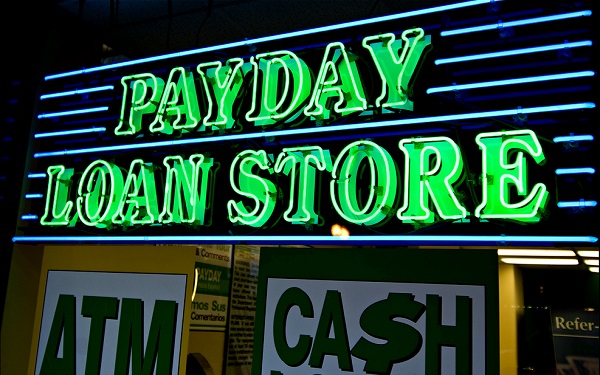
Even worse than living paycheck to paycheck- advance loan on your paycheck.

3-  Living paycheck to paycheck and not worrying about saving money. Don’t live for today, as if that’s all that matters. Have you already achieved all of your dreams by this moment? If not, embrace hope and plan for tomorrow. (Appreciating your life today doesn’t require unnecessary expenditures.)

4-  Stopping your education when someone hands you a diploma; never reading a book on personal finance. Just about any expert will tell you that the most reliable way out of poverty is education. Diplomas shouldn’t be the end of learning; they should be a milestone in a lifetime of acquiring wisdom.

5-  Playing the lottery as often as possible. While you’re at it, hitting the casino! Magical thinking, especially when it comes to money, is a dangerous way to seek  financial security.

6-  Running up your credit cards and making the minimum payments whenever possible. Paying interest on stuff you really don’t need is a tragic waste of money.

7-  When you come into some free money, spending it. Feeling like you deserve it. By that logic, you’re saying that a future version of you doesn’t deserve the money, which can be multiplied with wise investments.

8-  Buying the biggest wedding and the biggest ring so everyone can see just how fabulous you really are. Nothing says “Let’s start our future together” like blowing your entire savings on one evening.

9-  Treating those “amazing” celebrities and “successful” athletes as role models. Trying to be just like them whenever possible. As far as we know, there’s only one you the universe has ever known. Don’t dilute your unique individuality by chasing an image.

10-  Blaming others for your problems in life. Repeat after me: I am not a victim. The victim mentality is an attempt to rationalize poor habits and bad decision-making.

“If you’re feeling uncomfortable with your financial situation, don’t just sit there in a malaise of ‘If only I had more money,’ ” Finley says. “Instead, use it as motivation for a better life; that’s why the discomfort is there.”

Like most North Americans, Mike Finley was raised with no education in personal finances. Joining the Army out of high school, he realized he didn’t understand money management and began the task of educating himself. After 26 years in the service, during which he practiced the principles he learned, he retired a millionaire. Finley is the author of “Financial Happine$$,” and teaches a popular financial literacy class at the University of Northern Iowa.  For the Silo, Jarrod Barker.