Tag Archives: folklore

Rice University Upcoming- Masako Miki: Shapeshifters, Sprites, and Spirits

April, 2026 (Houston, Texas) — The Moody Center for the Arts at Rice University announces that its summer 2026 exhibition will feature the work of Masako Miki (b. 1973, Osaka, Japan). The artist’s first solo show in Texas, this site-specific, sculptural installation is populated with spirits, shapeshifters, and other changelings animated by a longing for recognition and connection amid a rapidly changing world.

The Influence Of Surrealism And Japanese Folklore

Rendered through Miki’s vibrant visual language in a style informed by twentieth-century art historical movements, including European Surrealism and Japanese manga, this exhibition interprets themes from Japanese folklore and brings them into relation with the present, reflecting the artist’s interest in storytelling and myth as forces that shape how the world is understood.

 “The empathetic throughline of Miki’s work draws visitors together into a space that is both entirely original and deeply familiar,” said Alison Weaver, co-curator and Suzanne Deal Booth Executive Director for the Moody Center for the Arts. “Amid global conflict and widening cultural divides, in the year following the eightieth anniversary of the bombing of Hiroshima and Nagasaki, this exhibition offers a bridge across time and tradition to demonstrate how shared narratives can foster connections across seemingly insurmountable differences.”   

Central to Miki’s practice, and to the folkloric traditions from which it draws, is the belief that all beings and things contain a spirit.

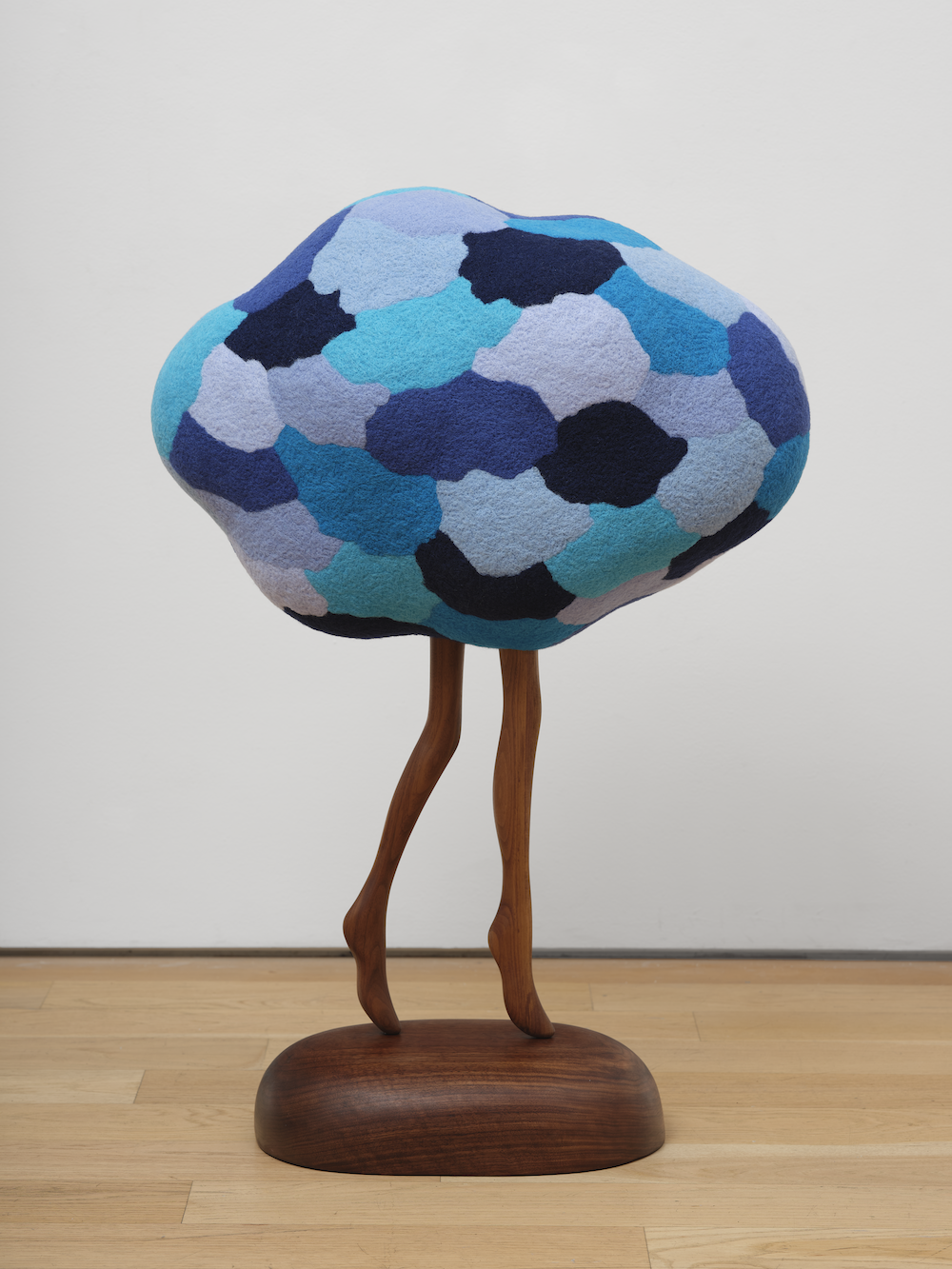
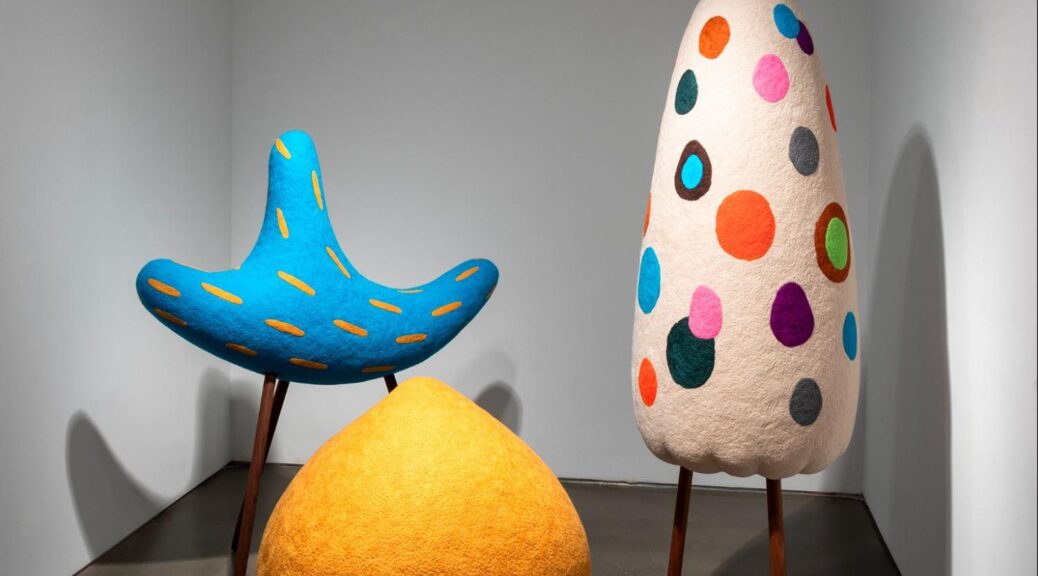
Specifically, the influence of Shinto animism informs Miki’s sculptures of everyday objects and natural elements—gourds, dolls, trees, and others—that assume human scale and a vivid sense of character. Constructed from felt layered over wood armatures, Miki’s creatures form abstract silhouettes that feel both natural and fantastical. Questions that inform Miki’s approach include: Why do some stories live on for generations while others are forgotten? And how do strangers relate to one another despite cultural and political divides?

According To The Artist

According to the artist, “[These] mythologies have the potential to counter past narratives such as the legacy of World War II in Japan and the history of slavery in the United States. My characters are ordinary but have extraordinary powers; they are secular but are attuned to sacred traditions. As a collective, they advocate for both individual and collective agency, and the importance of stories as unifying systems in today’s complex world.” This exhibition is curated by Associate Curator Claudia Mattos with Suzanne Deal Booth Executive Director Alison Weaver. 

Masako Miki: Shapeshifters, Sprites, and Spirits is made possible by the City of Houston through the Houston Arts Alliance, the Moody Center for the Arts Excellence Fund, the H. Russell Pitman Fund for the Moody Center for the Arts, the Tamara de Kuffner Fund, the Kilgore Endowment Fund, and the Sewell Endowment.

More About the ExhibitionMasako Miki, Blissful One-Eyed Spirit, Courtesy of the artist and Jessica Silverman. Photo: Steve Ferrara
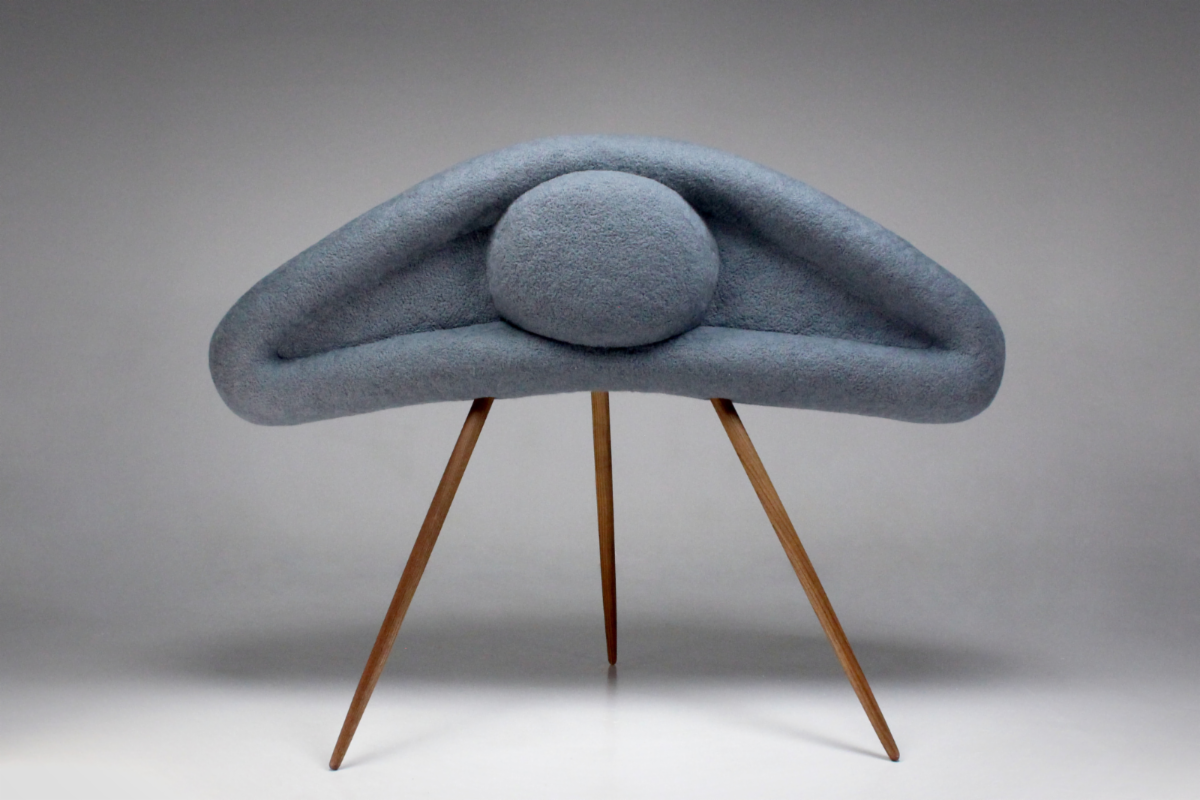
Bringing mythic and mundane worlds into contact, Masako Miki focuses her Moody presentation on yōkai—supernatural entities taking the form of beings, objects, and apparitions—particularly those that appear in the Night Parade of One Hundred Demons (Hyakki Yagyō), a legend dating to medieval Japan. In this tale, discarded household objects, from a monk’s string of prayer beads to abandoned umbrellas, come to life and gather in an unruly procession, making themselves known to a world that has failed to recognize their presence. 

Forms That Go Overlooked

“By attuning viewers to forms of life that often go overlooked, Miki raises questions about belonging, resilience, and who—or what—has been cast aside or forgotten,” said Claudia Mattos, co-curator and Associate Curator for the Moody Center for the Arts. “

Mindfully arranged in our gallery, each grouping suggests companionship, conspiracy, or collectivity, allowing sculptures to assert a presence in relation to the space, the viewer, and one another.” In tandem with the exhibition, the Moody will screen episodes of GeGeGe no Kitarō, a Japanese animated series based on a manga created in 1960 by artist Shigeru Mizuki (1922–2015), a World War II veteran whose work was shaped by his experiences of war.

Credited with reviving interest in Japanese yōkai in twentieth-century popular culture, the story follows a childlike yōkai named Kitarō who moves between human and supernatural realms and intervenes when conflict arises between them. The episodes were influential to Miki’s development growing up, and their contemporary reimagining of folklore resonates with themes that shape her practice today. Masako Miki: Shapeshifters, Sprites, and Spirits invites visitors to imagine how traditional stories can speak to contemporary sociopolitical realities. The exhibition makes the case that expressions of joy and the human imagination are radical acts with the potential to disrupt prevailing cultural discourse to imagine a more compassionate, harmonious, humane future. 

Moody Center for the Arts at Rice University Announces Summer 2026 Exhibition Masako Miki: Shapeshifters, Sprites, and Spirits
On view May 29 – August 15, 2026, Masako Miki’s first solo show in Texas brings folklore into a present-day focusMasako Miki, Waiting Cloud, 2025. Photo by Chris Gunder
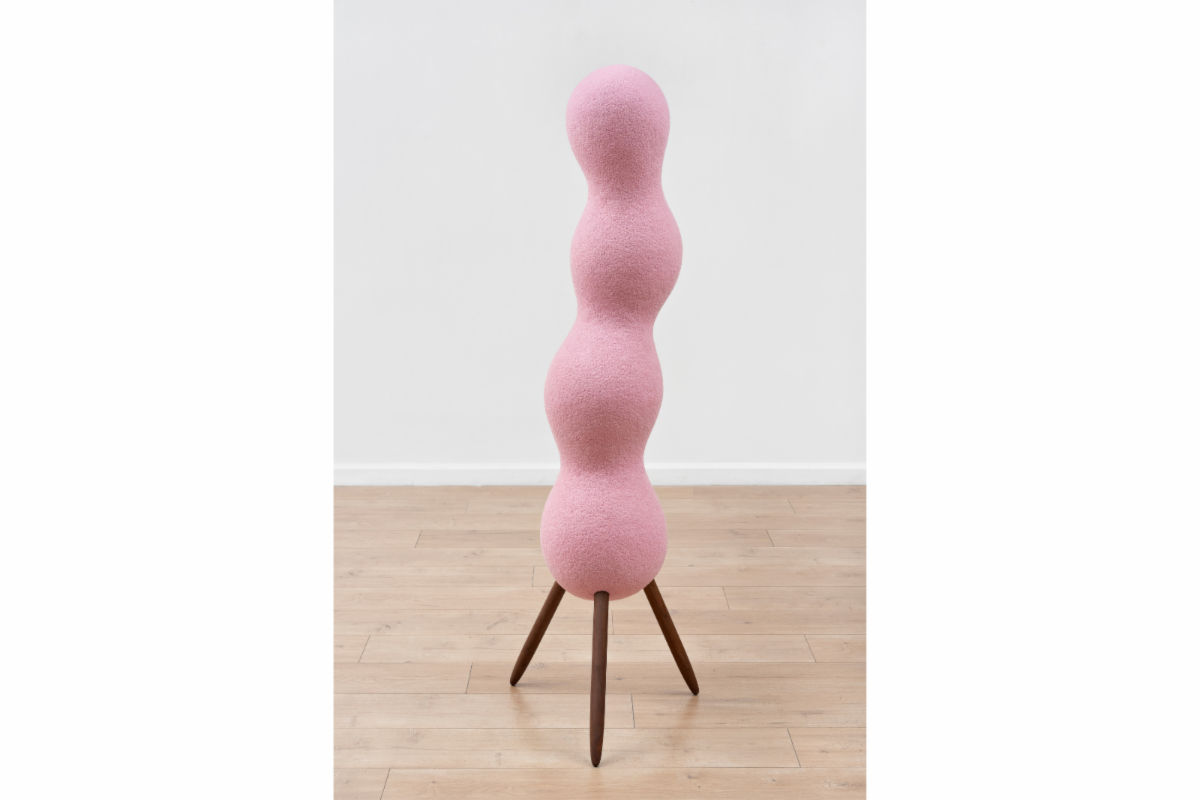
Masako Miki, Rising Pink Prayer Beads, Courtesy of the artist and Jessica Silverman. Photo: Phillip Maisel About the ArtistMasako Miki. Courtesy of the artist and Jessica Silverman. Photo: Francis Baker.
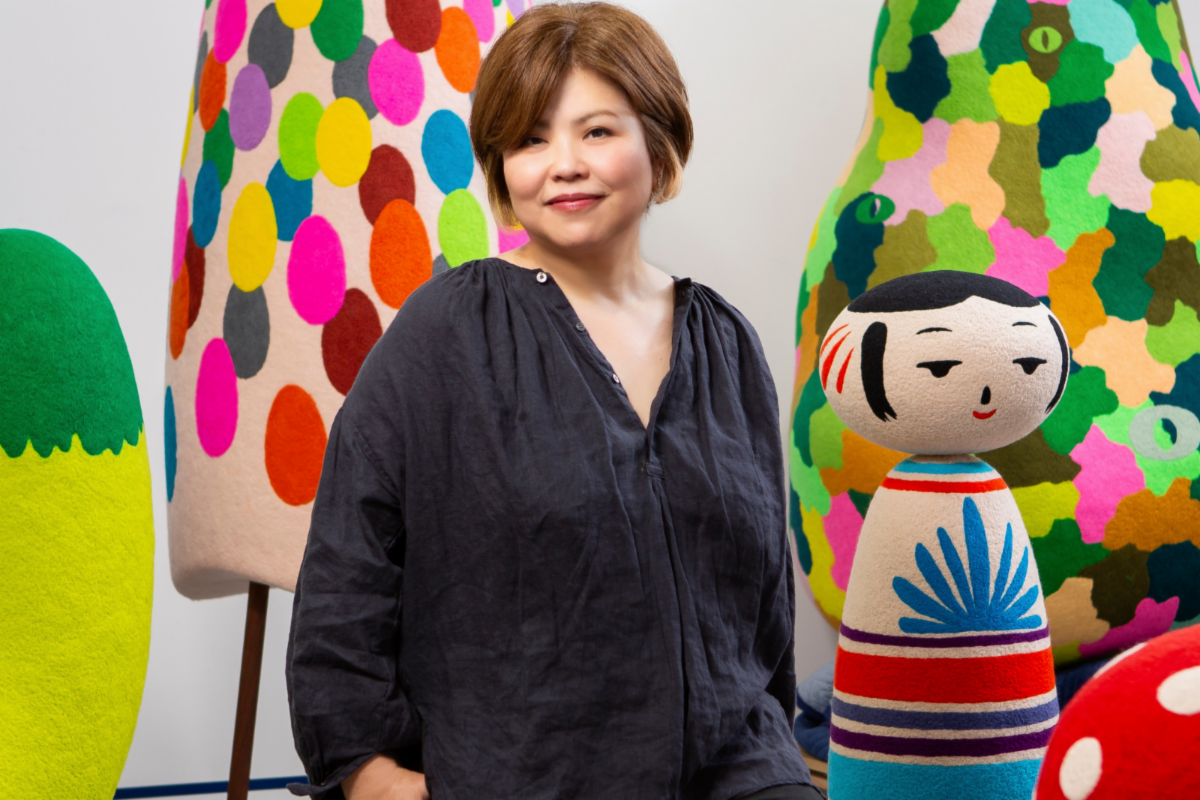
Masako Miki (b. 1973, Osaka, Japan) holds an MFA from San José State University, CA, and a BFA from Notre Dame de Namur University, Belmont, CA. Her work has been the subject of solo exhibitions at the Institute of Contemporary Art, San Francisco; de Young Museum, San Francisco; Massachusetts College of Art and Design, Boston; Berkeley Art Museum and Pacific Film Archive, CA; ICA San José, CA; and KMAC Contemporary Art Museum, Louisville, KY. Her work is in the permanent collections of SFMOMA; BAMPFA; the McEvoy Foundation for the Arts, CA; Collección SOLO, Madrid; Byrd Hoffman Water Mill Foundation, New York; and Tweed Museum of Art, Duluth, MN, among others. Miki lives and works in Berkeley, CA.
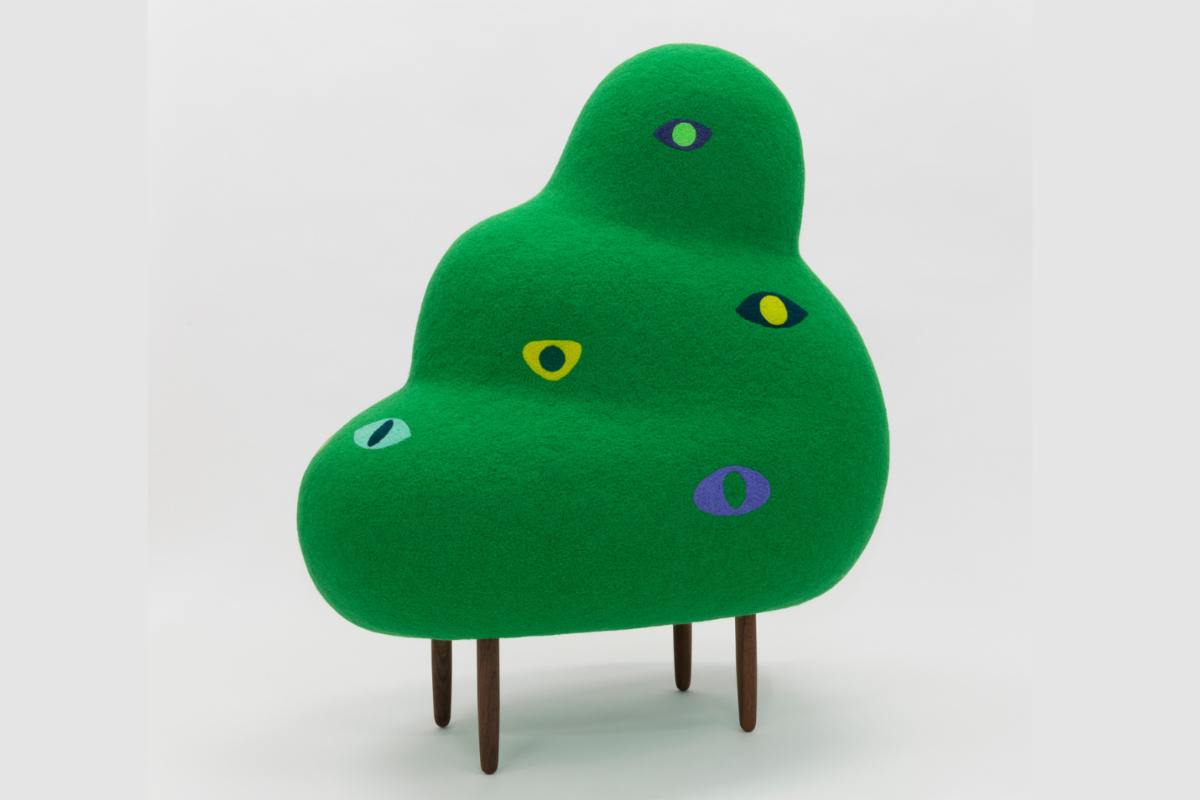
Masako Miki, Pine Tree from Ancient Time, Courtesy of the artist and Jessica Silverman. Photo: Steve Ferrara

For the Silo, Jarrod Barker.

Last And Largest Supermoon of 2024 Is Nearly Here

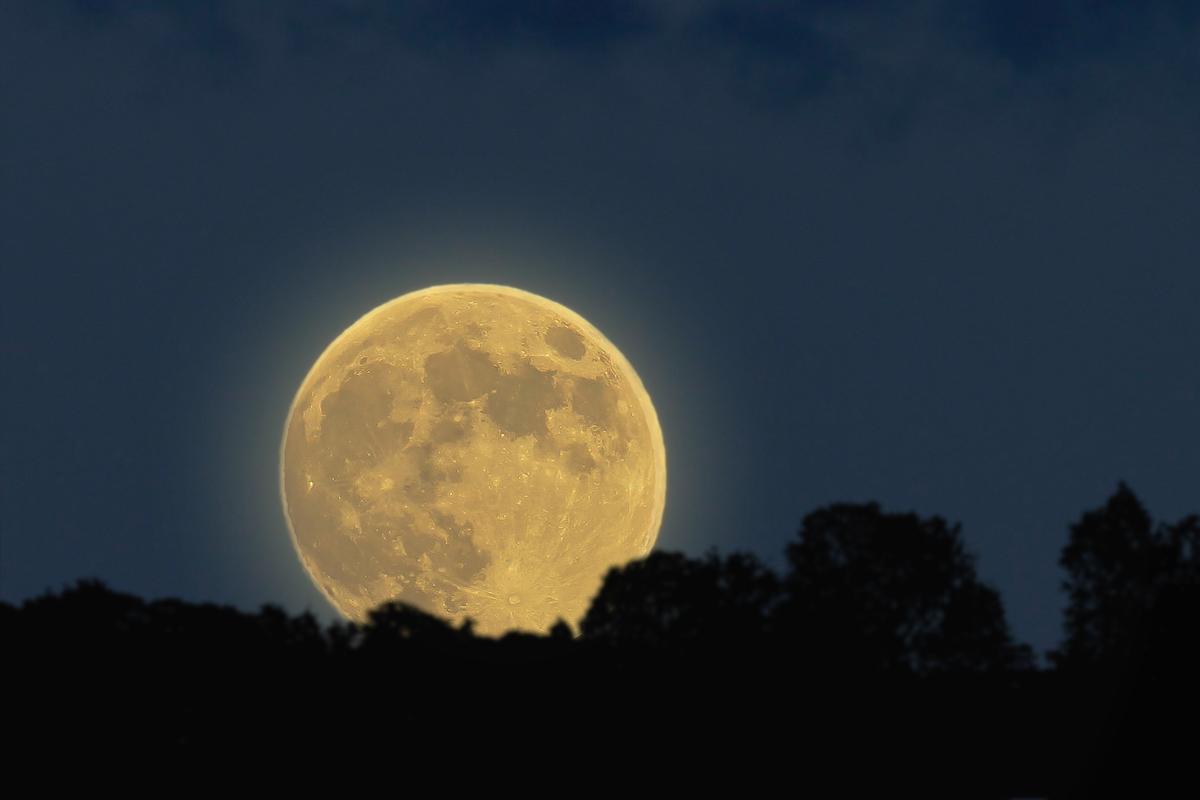
The full Hunter’s Moon—a moon known for its extra-bountiful glow in autumn, one that traditionally helped hunters harvest venison into the late evening, before the winter freeze—will rise on Oct. 17. It will loom larger and brighter than ever. The reason?

It will be a supermoon. But not just any supermoon.

The Hunter’s Moon this October will be the biggest supermoon of the year, the fourth and final one of 2024.

How the Hunter’s Moon Got Its Name

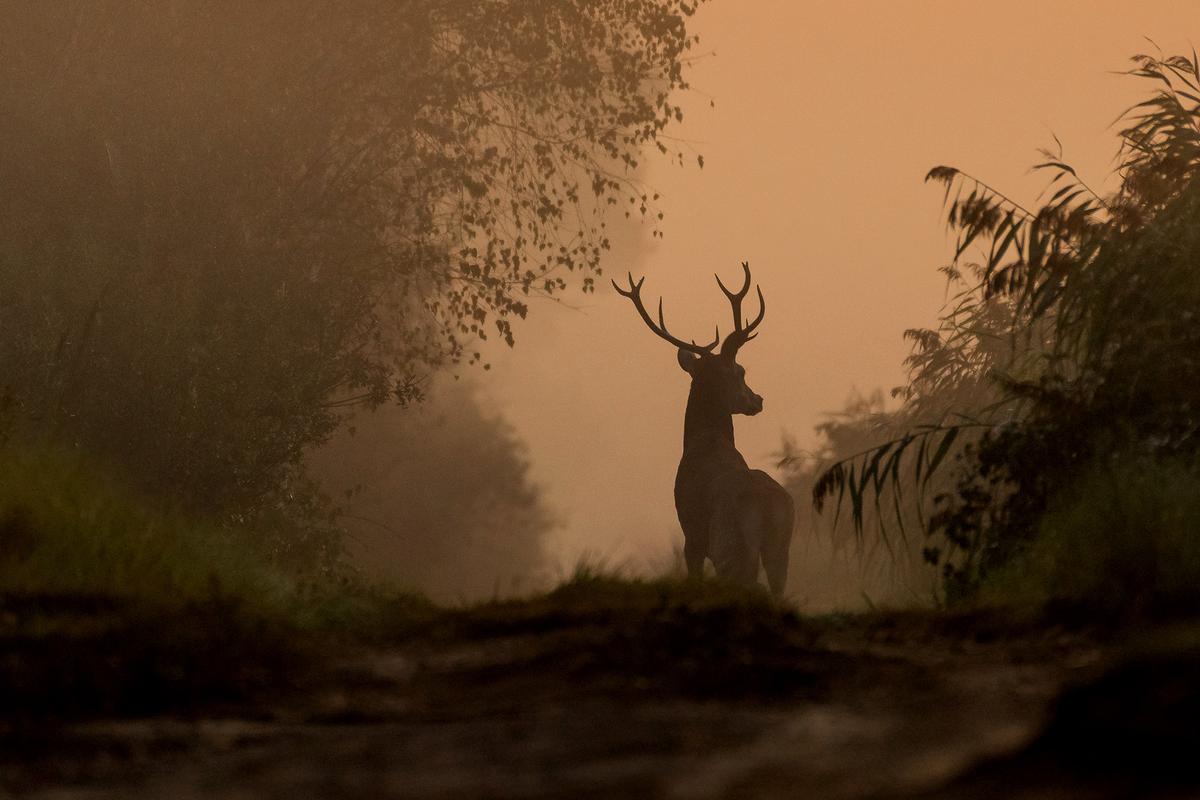
Both Colonial Americans and Canadian Settlers once had to hunt to fill their stores before settling into their lodges for the winter. To this end, they would hunt late into the evening while deer and other large game were easy to spot in the open stubble fields after the harvest.

These night hunts were assisted by moonlight from October’s full moon, which mysteriously rose sooner than expected and loomed larger than was typical. It was as if it provided light specifically for their hunting.

What looked like a helping hand from the full moon gave rise to its traditional name: the Hunter’s Moon.

This year, the Hunter’s Moon falls on Oct. 17, reaching peak illumination at exactly 7:26 a.m. EDT. It will be below the horizon for stargazers here in Canada and the rest of North America at that time. But at sunset that evening you can look eastward and find it still quite full, as it will seem the following evening, on Oct. 18, and the evening prior, on Oct. 16. Moons don’t change their cycles on a dime.

It Will Be a ‘Supermoon’

Similar to September’s huge Harvest Moon, October’s full moon will be a supermoon. It will appear larger and will be closer to the Earth than usual, which happens because the moon’s distance from Earth isn’t fixed. Our largest natural satellite travels along an oval-shaped orbit, so sometimes it’s nearer and other times further away.

Full Harvest Moon to Fall in September Will Be a Supermoon—Here’s Why It Will Loom Gigantic

Scientists Have Confirmed Cave on Moon That Could Be Used to Shelter Future Explorers

When a full moon occurs near the point closest to Earth along said orbit, a point called the perigee, a supermoon results. This occurred in September’s Harvest Moon and will happen again for October’s Hunter’s Moon, making it the fourth and final supermoon of the year; the largest in 2024.

The Hunter's Moon traditionally follows the Harvest Moon. (Shutterstock/Harry L/Richard OD)
The Hunter’s Moon traditionally follows the Harvest Moon. Shutterstock/Harry L/Richard OD

On Oct. 16, perigee will be reached. At exactly 8:57 p.m. EDT, the moon will be 222,055 miles from Earth, roughly 17,000 miles nearer than average. Not 12 hours later, the full moon will fall. Supermoons can loom 7 percent larger than normal, though human eyes can’t usually tell. It’ll also shine slightly brighter.

Facts And Folklore of Autumn Full Moons

As full moons go, autumn’s are famously big. Supermoon or no supermoon, farmers have long relied on fall full moons for moonlight when working late to bring harvests in before the frost. Folklore says these moons are larger and even seem to forestall their departure mysteriously, as if gracing the harvest with extra illumination.

The “Hunter’s Moon” usually falls in October, but not always. Full moons in September, October, and November sometimes swap names. Harvest Moon always denotes the moon closest to the equinox (the first day of fall) and usually falls in September, and so, they are most commonly in September. But every so often, October’s full moon is closest to the equinox (which is in late September) and thus assumes the title Harvest Moon. When that happens, the Hunter’s Moon gets bumped into November.

Swapping names is unusual for full moons; they don’t follow that tradition in other months. April’s Pink Moon and June’s Strawberry Moon don’t shift, nor do moons of other months. Furthermore, most moon names denote the month’s entire lunar cycle, whereas the Harvest Moon and Hunter’s Moon denote just the full moon event.

Colonial Americans traditionally hunted after the autumn harvest to fill their stores for the winter months. (Shutterstock/Maciej Pawlik)
Colonial Americans traditionally hunted after the autumn harvest to fill their stores for the winter months. Shutterstock/Maciej Pawlik

Autumn moons loom larger than usual, too. Astronomers say this is just an optical illusion. Autumn moons often appear near the horizon because the moon’s arc is so affected by Earth’s axial tilt during the equinox. They may seem larger when viewed next to terrestrial foreground objects like trees or buildings. The psychological impact this has makes the moon look grander.

It’s just an illusion, though—the “moon illusion.”

But there’s more to the equinox than smoke and mirrors. Some of the strangeness is real, as autumn moons follow a perplexing schedule. On average, throughout the year, the moon rises 50 minutes later each night as its orbit carries it steadily eastward. But around the equinox, it may rise as few as 23 minutes later. This boon to farmers is no illusion.

Astronomers twist their tongues to explain it.

The Old Farmer’s Almanac says it’s because the moon’s arc has its greatest northerly component during fall and is thus at its longest. Now traveling rapidly northward, it appears to rise sooner than expected, and all the more so the further north you go.

All together—the Hunter’s Moon, the extra moonlight, the equinox, the moon illusion, and the largest supermoon of 2024—it seems we’re in for a sublime lunar spectacle. There’s a chill in the air. So grab your fall coat for an evening under the warm glow of the Hunter’s Moon. For the Silo, Michael Wing.

Featured image- Designed by friends at The Epoch Times Shutterstock/solepsizm/Richard OD/Harry L

How Societies Become Consumer Cultures Through Housing

Alfred Marshall’s (Principles of Economics, 1891) view of housing still goes right to the heart of what makes housing and built environment an important anthropological topic. No artifact is so clearly multi-functional, simultaneously a utilitarian object of absolute necessity, and an item of symbolic material culture, a text of almost unending complexity.

In every house the economic, social and symbolic dimensions of behavior come together. This may be why the analysis of housing has had such a wide appeal in disciplines as diverse as social psychology, folklore, economics and engineering. Anthropologists themselves have shown a new willingness to consider the house as a key artifact in understanding the articulation of economic and social change during economic development.

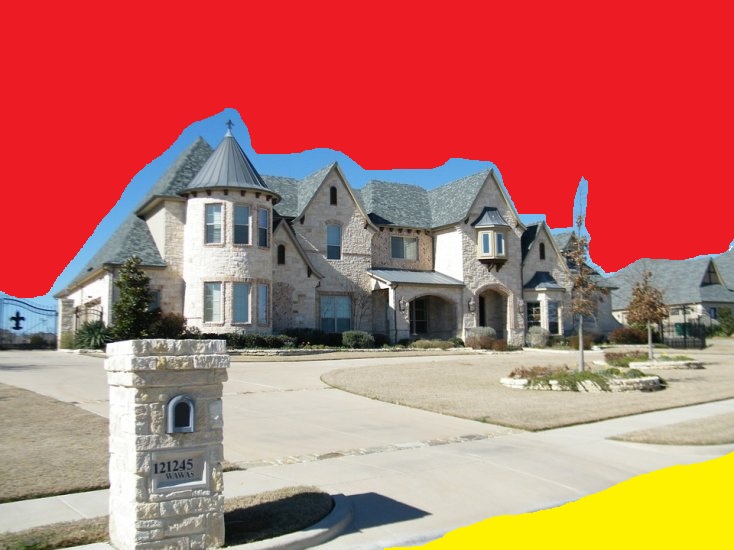
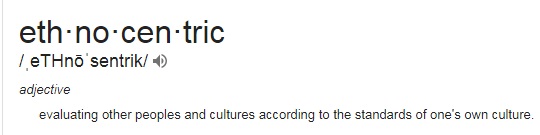
An ethnocentric home.

From the perspective of our own contemporary society, surrounded by houses of all shapes and sizes, where wealth and luxury are synonymous with housing, this seems obvious and commonplace. The 1980’s television show “Lifestyles of the Rich and Famous” and journals like “Architectural Review” are odes to the home as a shrine and symbol of wealth. But just as clearly, there are societies where all the houses look alike, even though all the people are not alike. Perhaps then, the assumption that there is something natural and obvious about spending on the house and home market as a marker of prestige is ethnocentric. Why the house instead of something else?

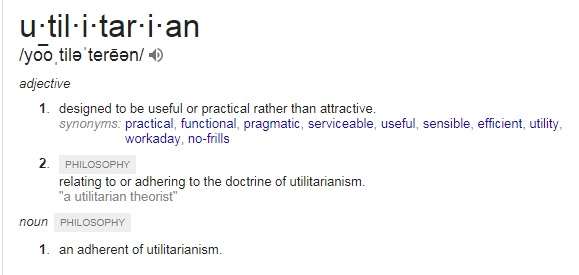
A number of anthropological approaches attempt to place the house in a theoretical context which answer this question by relating housing to social, economic, and psychological variation and change. For example, a utilitarian approach that views the house partially as a workspace links changes in the elaboration of houses to changes in the kinds of work done in the household (Braudel 1973:201). Or if the house is seen as a reflection of how all household activities are organized and divided, then the shape of the house will change as activities are modified, differentiated, or recombined (Kent 1983, 1984).

Utilitarian houses.

An even more utilitarian perspective relates the form of the house to climate, technology and the kinds of building materials that are available (Duly 1979).  For the Silo, Richard R. Wilk.

Read on..click here and read the full PDF document on your device.

Supplemental- Complete Text  Principles of Economics (London: Macmillan and Co. 8th ed. 1920).
Author: Alfred Marshall
About This Title: This is the 8th edition of what is regarded to be the first “modern” economics textbook, leading in various editions from the 19th into the 20th century. The final 8th edition was Marshall’s most-used and most-cited.