Tag Archives: rocket

New Zealand United States Space Cooperation Strengthened

Joint Statement on U.S.-New Zealand Space Dialogue

Post via US Secretary of State Office of the Spokesperson

Pursuant to the desire of the Government of The United States of America and the Government of New Zealand, the countries held a bilateral Space Dialogue in Washington, D.C. on March 23 and on March 26 to strengthen bilateral space cooperation. The Space Dialogue demonstrates the robust and growing cooperation between the United States and New Zealand in outer space.

The U.S. delegation was led by Valda Vikmanis, Director of the Office of Space Affairs of the Bureau of Oceans and International Environmental and Scientific Affairs, and by Eric Desautels, Director of the Office of Critical Domains for the Bureau of Emerging Threats. The New Zealand delegation was led by Andrew Johnson, Deputy Head of the New Zealand Space Agency. Chris Seed, New Zealand’s Ambassador to the United States, delivered opening remarks that underscored priorities of strengthening commercial space ties, enhancing space security cooperation, and advancing scientific collaboration. Both delegations included whole-of-government participation.

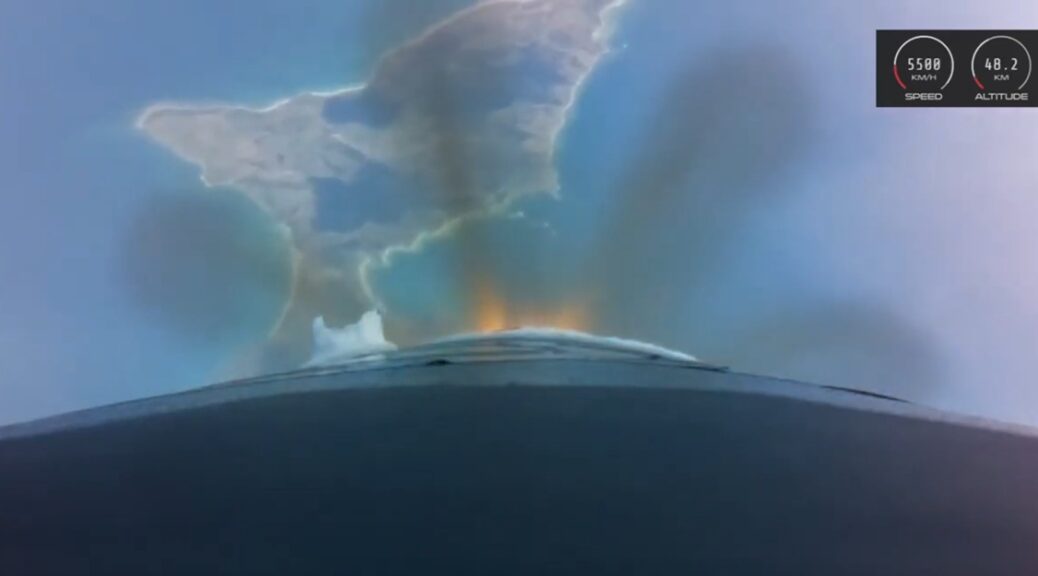
The participants welcomed the holding of the Dialogue during a period in which the United States and New Zealand share a close cooperation on space which has had mutual benefits for both countries. In October 2024, New Zealand became the third most frequent launcher of orbital rockets, with U.S. headquartered and New Zealand founded company Rocket Lab propelling New Zealand to these new heights.

A significant focus of the Dialogue was the evolving role of the commercial space sector in supporting both economic growth and shared security interests. Discussions covered the changing role of government in enabling commercial activity and the expanding range of applications, with both sides expressing their intent to continue cooperation on spaceflight safety, launch, payloads, science and innovation, and associated technology security measures. Both sides also discussed opportunities for further cooperation to address space-related threats to shared security interests, including military space cooperation and managing the risks to ground-based space infrastructure.

The delegations recognized the potential for expanded cooperation on policy and regulatory interoperability related to commercial space, including space situational awareness, launch and reentry, and commercial remote sensing. They decided to work closely together to address regulatory constraints that hinder effective cooperation, commercial engagement, and mutual benefits.

Participants welcomed the open and productive nature of the Dialogue, which included discussion on space cooperation grounded in the principles of the Artemis Accords, to which New Zealand was an early signatory. Both sides emphasized the importance of promoting peaceful and transparent behavior in outer space.

Participants acknowledged New Zealand’s geographic advantages have enabled frequent and responsive launches for U.S. industry and government agencies, adding strategic resilience to launch capacity. New Zealand’s location has enabled hosting of ground-based space infrastructure to enhance both space situational awareness and communications with spacecraft. The United States noted New Zealand’s recently passed, world‑first legislation on the operation of ground-based space infrastructure, which strengthens its ability to protect New Zealand’s national interests and values.

New Zealand’s growing focus on space security has opened new avenues for cooperation, strengthening the United States and New Zealand partnership and advancing practical efforts to promote stability, resilience, and the responsible use of space.

New Zealand’s Space Scholarships program, where New Zealand funds post graduate students to complete a three-month internship at the Jet Propulsion Laboratory in Southern California, where they contribute to cutting-edge space technology projects, was acknowledged as a way to create enduring space connections between New Zealand and the United States.

Participants also welcomed the announcement of the first round of joint research projects between New Zealand research institutes and NASA centers, focusing on Earth observation. These projects lay the foundation for future collaborations in other research areas, including potential contributions to the Artemis program following the March 24-25 Ignition events and announcements at NASA headquarters.

Both countries resolved to continue working together in these areas and to explore other opportunities for strengthening bilateral cooperation, including facilitating bilateral commercial connections.

The Pioneer Who Inspired America To Reach The Moon

When Robert Goddard launched the first liquid-fueled rocket in a farm field in Auburn, Massachusetts, on March 16, 1926, it flew 2.5 seconds and reached only 12 meters (41 feet) in altitude.

The short flight 100 years ago would eventually earn Goddard (1882–1945) recognition as the father of American rocketry. But the significance of his work for space exploration was only fully recognized when the United States began sending astronauts into space in the 1960s and landed the first man on the moon on July 20, 1969.

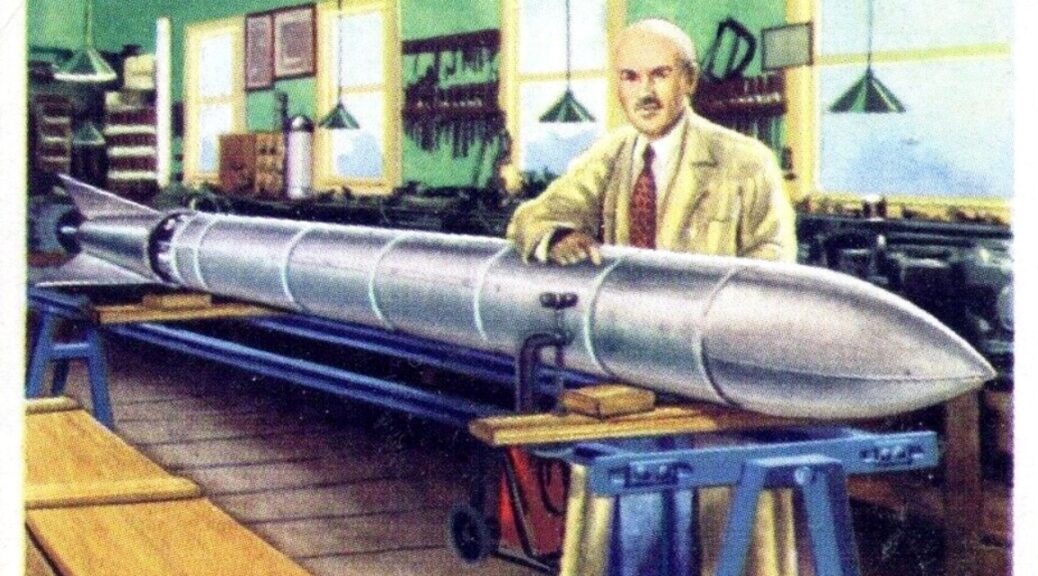
Robert Goddard posing with rocket in workshop (NASA)
Robert Goddard is seen in his workshop in Roswell, New Mexico, in October 1935. (NASA)

In the years before his famous launch, Goddard’s theories that liquid-fueled rockets could operate in space and even reach the moon had drawn ridicule, with some mockingly calling him the “moon man.” The Clark University physics professor was secretive about his research and hid the news of his first successful rocket test.

Goddard’s critics argued that rockets needed air for propulsion and so could not operate in the vacuum of space.

Goddard’s first rocket used gasoline and liquid oxygen for propulsion, according to NASA .

Robert Goddard standing next to rocket inside frame in field (NASA)
Goddard launched the first liquid-fueled rocket on March 16, 1926. (NASA)

While Goddard’s theories made him a controversial figure, they also inspired people to believe in the possibility of space travel, says Michael Neufeld, a retired senior curator at the Smithsonian’s National Air and Space Museum in Washington. The museum holds the largest collection of artifacts from Goddard’s work.

“He does inspire people to assume that space travel is real and the rocket is the way to go,” Neufeld says.

Why Liquid Fuel Was So Innovative

Goddard’s pioneering use of liquid fuel led to more efficient rockets that could lift larger payloads. Notably, the massive Saturn V rocket that took U.S. astronauts to the moon burned liquid fuel.

While the moon landing came years after Goddard’s death, NASA historian Brian Odom says Goddard’s work “proved what we had known in theory to be true in practice … And [that] it could be scalable.”

The launch of NASA’s Apollo 11 mission to the moon led the New York Times, on July 17, 1969, to issue what observers have called , “one of the most famous newspaper corrections in history.”

The paper that once called Goddard’s theories “a severe strain on credulity,” now acknowledged that rockets could operate in the vacuum of space and said, “the Times regrets the error.”

For the Silo,  Charles Hoskinson/Share America.

New Moon Rover Readies For 2030 Launch

VENTURI SPACE PRESENTS MONA LUNA, 
THE EUROPEAN LUNAR ROVER
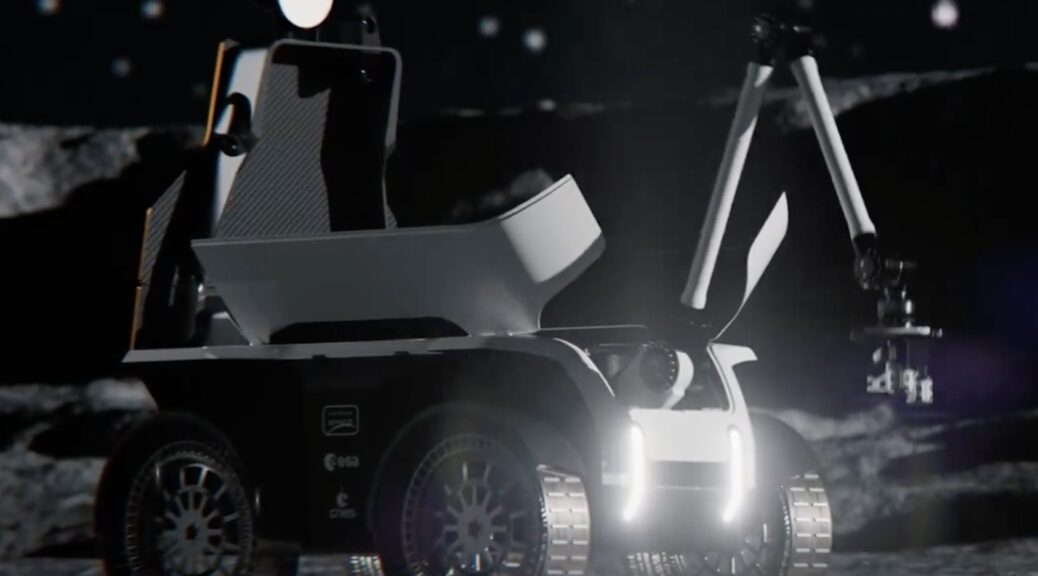
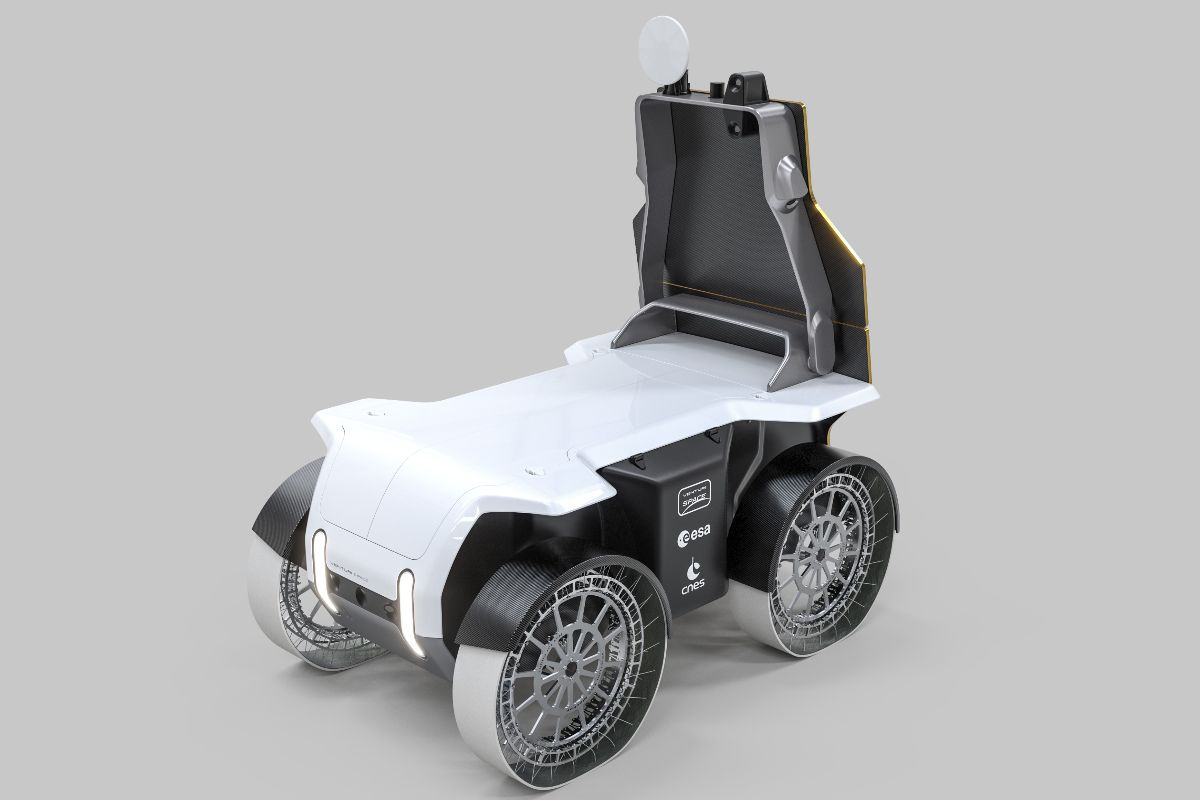
MONA LUNA, designed by Sacha Lakic

Paris Air Show, Le Bourget, June 2025 – Venturi Space unveils MONA LUNA, its 100% European-built lunar rover. Designed to support the ambitions of the European Space Agency and the French CNES, the vehicle will be built at Venturi Space France’s facility in Toulouse. The ultimate aim is to provide Europe with a lunar-capable rover by 2030.

European autonomy in lunar mobility is a major strategic challenge. Venturi Space is helping to make that a reality with MONA LUNA, its upcoming lunar rover designed to meet the needs of ESA and national European space agencies. The vehicle will further Europe’s efforts to achieve technological independence in the field of lunar mobility, enabling it to get ahead of the industrial curve and achieve its space ambitions.

A project led by Venturi Space France 
Venturi Space France will oversee MONA LUNA’s development and space qualification from its base in Toulouse, coordinating every aspect of the process: onboard electronics, avionics, space-to-ground links, energy management systems, assembly, final integration, and acceptance testing in readiness for space flight. All with one clear objective: to deploy MONA LUNA at the Moon’s South Pole by 2030.

Backed by the ESA and CNES
The European Space Agency is supporting Venturi Space’s efforts to design and develop the critical technologies required for a large lunar rover, capable of surviving multiple lunar nights. ESA’s support validates Venturi Space’s approach and highlights its expertise. The project will draw on the experience acquired from the programmes to develop the FLIP and FLEX rovers under a strategic partnership with US-based company Venturi Astrolab, Inc. Venturi Space is currently designing and building the hyper-deformable wheels that will be fitted to those vehicles, along with the associated electrical systems (in Switzerland) and high-performance batteries (in Monaco).

Using technology made in Europe
MONA LUNA is designed to be carried into space by the Ariane 6.4 launch system and landed on the Moon’s surface by the European Argonaut lunar lander, while the rover itself will be equipped with a robotic arm to handle scientific instruments and payloads. It will be:
– electrically powered, recharging via solar panels,
– designed to move autonomously,
– equipped with three high-performance batteries,
– capable of carrying a wide range of payloads,
– designed to survive multiple lunar nights,
– capable of a top speed of 20 km/h,
– designed to weigh a total of 750 kg.

The rover could also be used in an emergency to carry an astronaut in difficulty, as envisaged by the ESA and CNES in their feasibility studies.
A clear commercial purpose
MONA LUNA’s maiden mission will focus on purely scientific applications, but future deployments could be organized to meet demand from the European private sector for a variety of purposes, including carrying payloads to the South Pole, exploiting lunar resources (such as helium-3) in situ, or even public outreach campaigns. This approach will help establish a sustainable long-term economic model for the rover, in much the same way as the early development of terrestrial mobility.


Gildo Pastor, President of Venturi Space:
“I’m still an explorer, first and foremost. Space is a new frontier, and MONA LUNA is how we are actually going to broach it. Alongside Europe, we aim to build an autonomous lunar exploration capability to meet the scientific, economic, and strategic challenges of tomorrow.”

Dr. Antonio Delfino, Director of Space Affairs at Venturi Space:
“Our primary focus is to make ourselves fully available to the ESA and European national space agencies. With MONA LUNA, we aim to deliver major technological breakthroughs that will pave the way for extended lunar mobility.”

For The Silo, Jarrod Barker.

Virgin Galactic Completes New Spaceship Manufacturing Facility

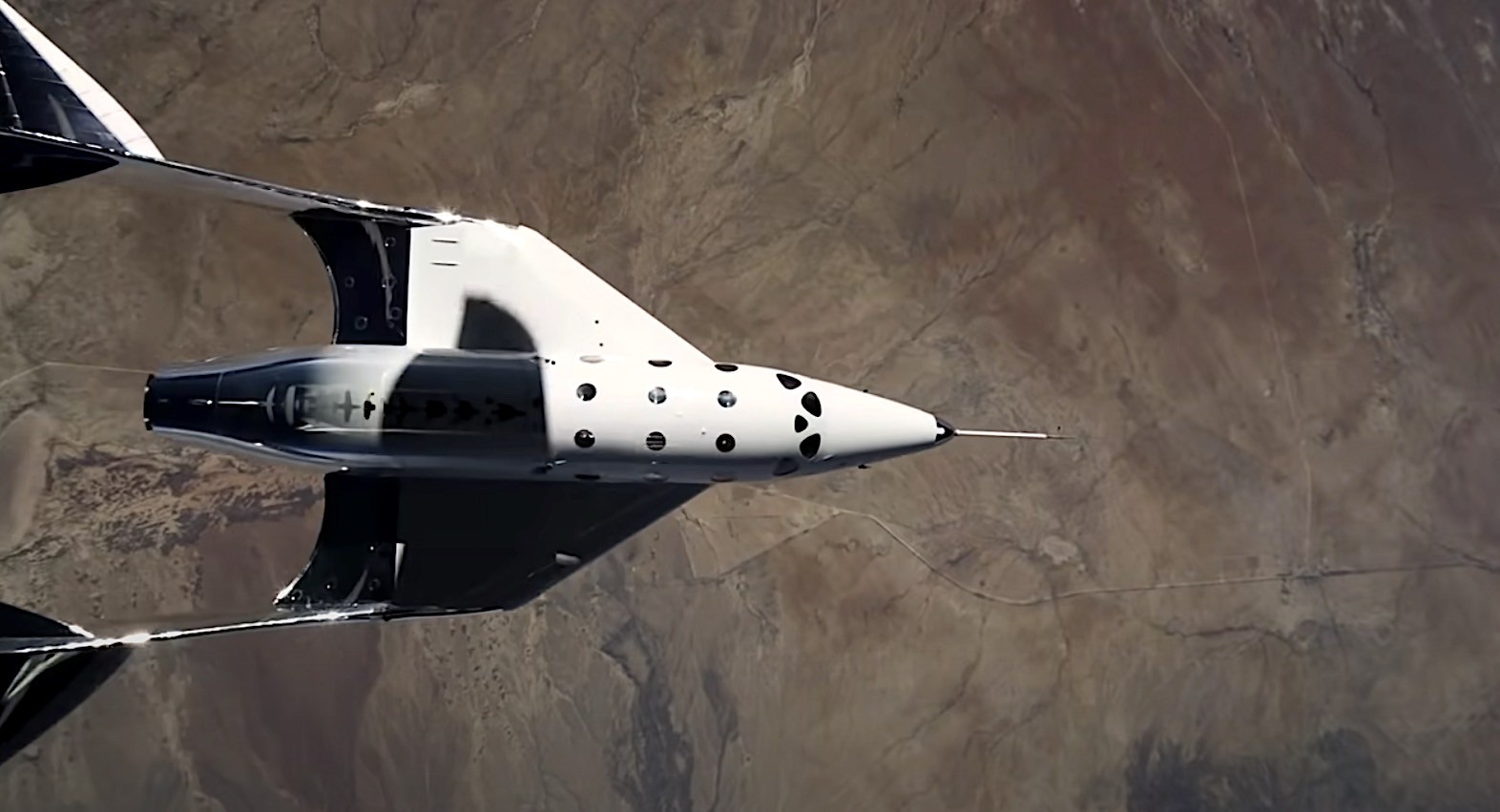
Orange County, Calif. – Virgin Galactic Holdings, Inc. (NYSE: SPCE) (“Virgin Galactic” or the “Company”) recently announced the completion of its new manufacturing facility in Mesa, Arizona (Greater Phoenix area), where final assembly of its next-generation Delta spaceships is scheduled to take place starting in Q1 2025.

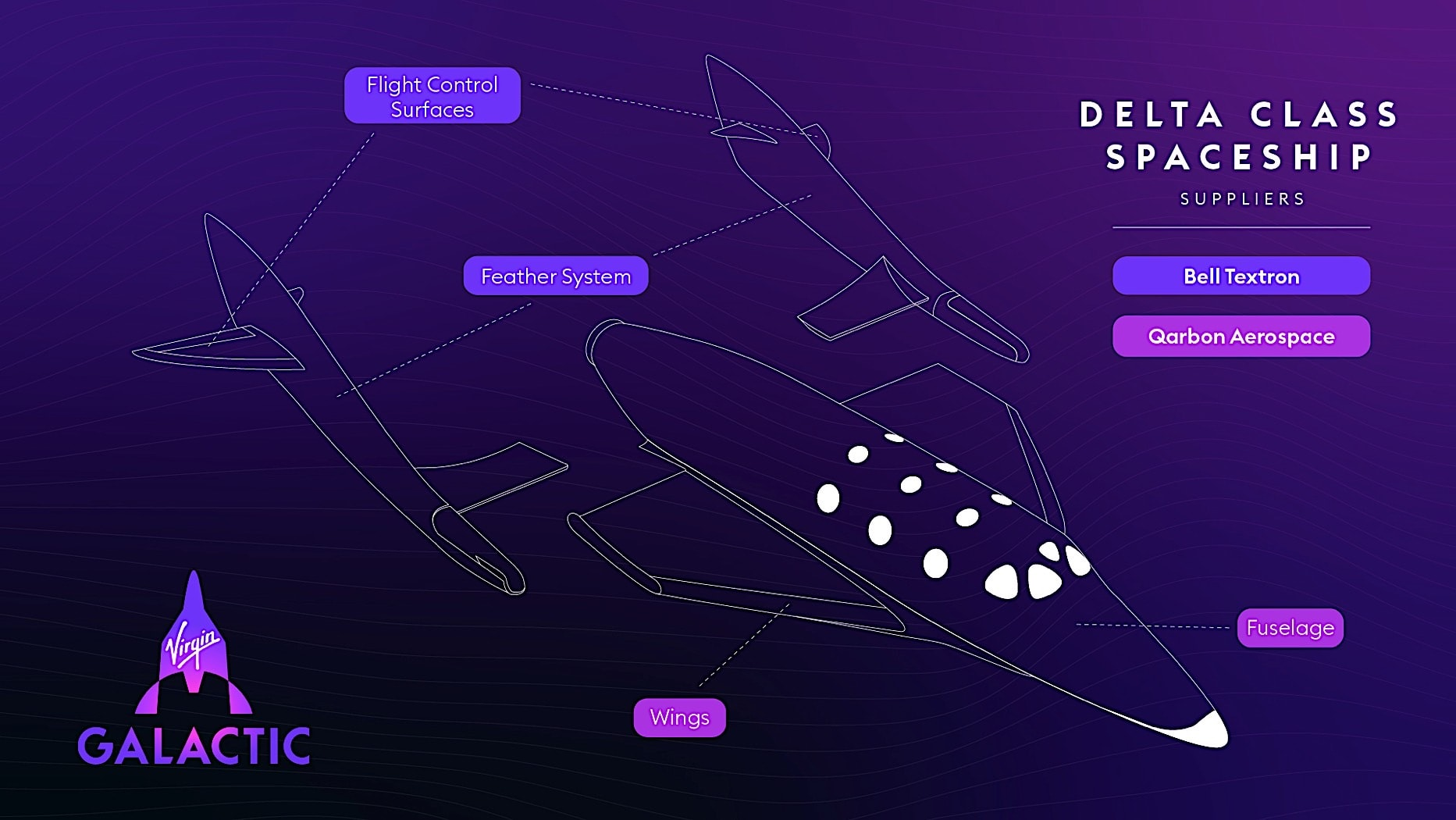
An initial team of Virgin Galactic technical operations and manufacturing personnel has begun preparing the facility to receive and install tooling, expected to arrive in Q4 2024. The facility will then begin to receive major subassemblies, including the wing, the fuselage, and the feathering system next year, as the team scales to build the first two ships of the Delta fleet. Once ground testing is complete, Virgin Galactic’s mothership will ferry completed spaceships to Spaceport America, New Mexico for flight test ahead of commercial operations, which are expected to begin in 2026.

The multiuse facility includes two hangars equipped with multiple bays, designed for maximum flexibility in building and testing space vehicles.

Work at the facility will be supported by the Company’s digital twin technology, which enables seamless integration between Virgin Galactic and suppliers through real-time collaboration, promoting strong governance and increased efficiency and reliability.

In May 2024, Virgin Galactic opened a ground testing facility in Southern California for Delta subsystems, including avionics, feather actuation, pneumatics, and hydraulics, using an Iron Bird test rig.

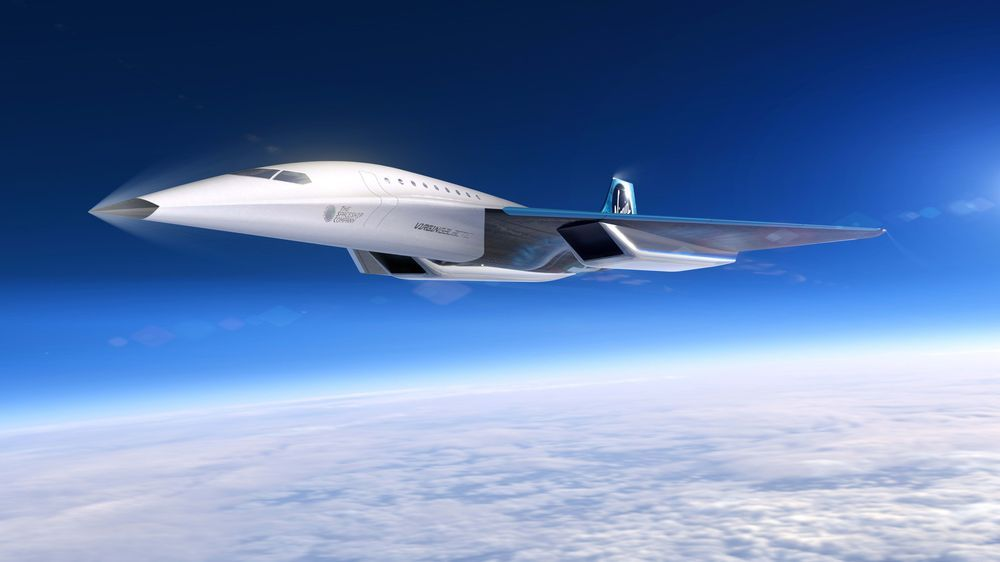
Design concept- Virgin Galactic’s MACH 3 Supersonic commercial passenger jet – a partnership with Rolls Royce (Concorde engines) could mean this design stands a real chance of being produced as well in the future.

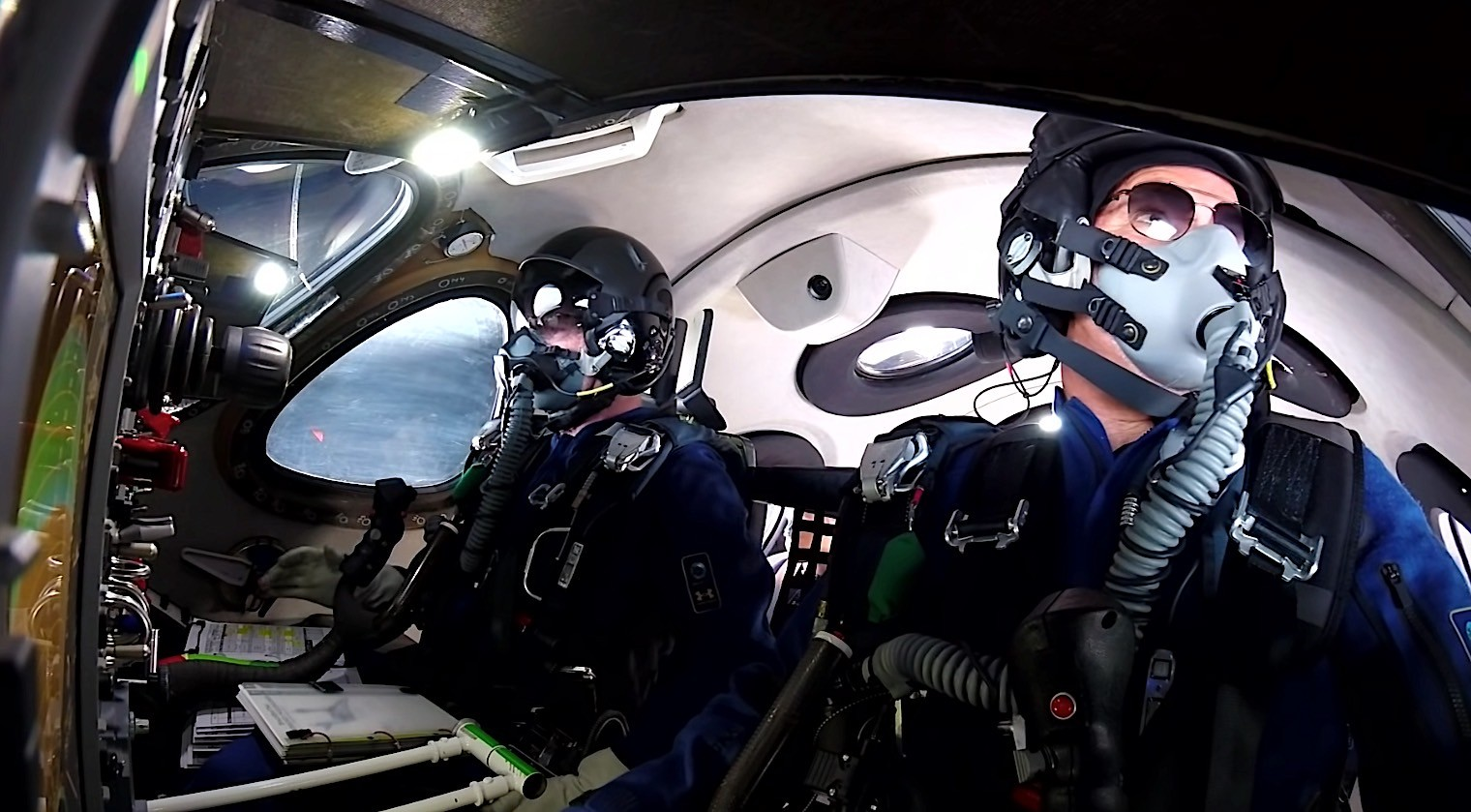
Virgin Galactic’s Delta spaceships will seat up to six private passengers, and each is expected to be capable of flying up to eight missions per month, dramatically increasing access to space.

“The completion of our new manufacturing facility is an important milestone in the development of our fleet of next-generation spaceships, the key to our scale and profitability. Tooling will begin arriving in a matter of months to support spaceship final assembly, which we expect to commence in Q1 2025.”

Michael Colglazier • CEO of Virgin Galactic

Marriage Proposals While Orbiting Moon By 2022

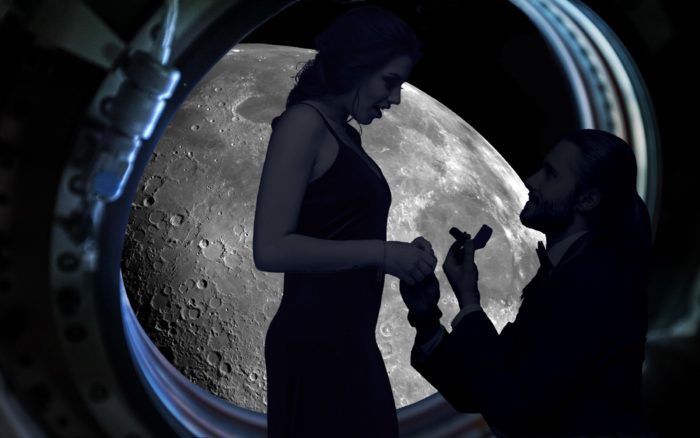
Starting in 2022 it will be possible to ask for the beloved’s hand in marriage while flying over the lunar surface to the sound of Frank Sinatra’s “Fly Me to the Moon”. The one-week interplanetary flight will be carried out using a self-contained and autonomous spacecraft allowing the two lovers to travel alone.

The ApoteoSurprise agency, a French marriage proposal planner specialized in creating extravagant proposals, introduces a whole new service for 145 million dollars which will allow 21st century handsome princes to propose while flying around the Moon. Reaching for the Moon in the name of love is about to become a reality, the ultimate goal of the Paris-based agency being to “stage the craziest and most outstanding marriage proposal of the last 13.8 billion years“.

Apoteo Marriage Proposals France

From March 2022, elite lovers will be able to book the all-included service on the site www.proposeinparis.com and five months later find themselves enjoying the following program:
– Twelve weeks of pre-requisite technical and physical training.
– Takeoff on D-Day from the Kennedy Space Center in Cape Canaveral, Florida.
– Richard Strauss’s “Thus spoke Zarathustra, Op.30” (Theme from 2001 Space Odyssey) resounding in the two space tourists’ helmets when the first effects of weightlessness are felt.
– Arrival in lunar orbit, three days later, flying over the satellite’s grayish surface at only 200/300 kilometers altitude.

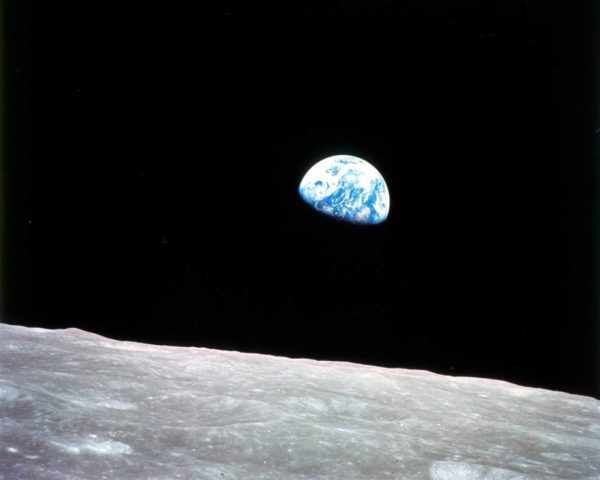
Earthrise Apollo 8
The famous ‘Earthrise’ photo from Apollo 8, the first manned mission to the moon. The crew entered lunar orbit on Christmas Eve, Dec. 24, 1968. That evening, the astronauts held a live broadcast, showing pictures of the Earth and moon as seen from their spacecraft. photo:NASA

– Cut-off of all communication with Earth for around thirty minutes while the capsule flies over the dark side of the Moon.
– The Frank Sinatra song “Fly Me to the Moon” played halfway through the orbital flight, allowing the suitor to make his marriage proposal far from any form of human life (engagement ring secretly hidden in his spacesuit).
– A spectacular Earth-rise seen from behind the lunar craters and return trip of nearly four days before atmospheric re-entry and final touchdown.

The flight-plan followed by the space capsule will mirror that of the mythical Apollo 8 mission in 1968. The spacecraft, traveling at a speed of up to 38,000 km/h, will be equipped with eight cameras allowing the couple to immortalize their entry into the history of the conquest of space and the conquest… of love! For the Silo, Nicolas Garreau.