Today, the aftermath of the attempted assassination of former President Donald Trump: a breakdown of the assassination attempt, and initial theories about the gunman. Via our friends at the Associated Press & The Epoch Times.
Highlights
A Breakdown of the Assassination Attempt Against Trump
It started at 6:02 p.m. with former President Donald Trump taking the stage in Butler, Pennsylvania. Ten minutes later Mr. Trump was lying bleeding on the stage and shielded by Secret Service agents.
Why It Matters: An attempted political assassination of a former and potential U.S. president impacts the world.
FBI Found ‘Suspicious Device’ in Shooter’s Car, Investigating Attack as Domestic Terrorism
The FBI has provided background on its investigation of the would-be killer of former President Trump and what else he may have been trying to do. Officials said they don’t have a motive yet, but did find a suspicious device in the dead gunman’s car and continue to work with his family as the investigation continues.
Why It Matters: Many questions need to be answered, including what the shooter’s motive was, and how he was able to nearly kill a former president.
FBI Investigating Attack as Act of Domestic Terrorism
The FBI said a ’suspicious device,’ which was later defused, was found in the assailant’s car.
State and local police block off roads surrounding the home of the suspected shooter of former President Donald Trump, as the FBI carries out an investigation, in Bethel Park, Pa., on July 14, 2024. (Rebecca Droke/AFP via Getty Images) Joseph Lord
FBI officials say they believe the would-be assassin of former President Donald Trump acted alone.
The agency is investigating the attack as both an attempted assassination and an act of domestic terrorism, officials told reporters in a call with news media on July 14.
The new details emerged less than 24 hours after the United States saw its first major assassination attempt of a president or presidential candidate since President Ronald Reagan was shot in 1981.
Authorities have identified the shooter as 20-year-old Thomas Matthew Crooks, a resident of Bethel Park, Pennsylvania. At a Trump rally in Butler, Pennsylvania, on July 13, the assailant fired several shots from an elevated position near the venue. Witnesses saw a man with a rifle on the rooftop of a nearby building.
Former President Trump’s right ear was pierced by one of the bullets before he was rushed to his car by Secret Service agents. However, one of the attendees at the rally, 50-year-old firefighter Corey Comperatore, was killed. Two other rally attendees—identified by Pennsylvania State Police as David Dutch and James Copenhaver—were injured.
Both of the injured attendees are in stable condition, according to Pennsylvania State Police, which did not provide further details on their injuries. A GoFundMe effort established by the Trump campaign for the victims and their families had raised more than $3 million usd/ $4,090,000 cad as of the evening of July 14.
FBI Investigation
The FBI has not yet identified a motive. The assailant’s family is cooperating in the investigation, officials said.
Biden Says He’s Directed an Independent Review of Security at Trump Rally
Attorney General Merrick Garland called the assassination attempt on the former president “an attack on our democracy itself.”
“[The Justice Department has] no tolerance for such violence, and as Americans, we must have no tolerance for it,” Mr. Garland told reporters. “This must stop.”
The agency said a “suspicious device” was located during a sweep of Mr. Crooks’s car. It was later defused by bomb technicians.
FBI Director Christopher Wray vowed that his agency would “leave no stone unturned” in its investigation of the attack.
“An attempt to assassinate a presidential candidate can only be described as absolutely despicable and will not be tolerated in this country,” Mr. Wray told reporters.
Earlier on July 14, President Joe Biden said he asked that the investigation be “thorough and swift.”
FBI Director Christopher Wray testifies about the bureau’s budgetary needs during a Senate Appropriations Committee hearing in Washington on June 4, 2024. (Allison Bailey/Middle East Images via AFP via Getty Images)
Prior to the attack, officials said, the perpetrator wasn’t on the FBI’s radar as a potential threat.
The FBI’s screening of the shooter’s social media presence has so far revealed no ideology or political beliefs that could have been his basis for the attack, officials said.
The FBI has received more than 2,000 tips so far, they said.
Officials believe that the rifle used in the attack was a semi-automatic rifle similar to an AR-15.
Kevin Rojek, special agent in charge of the FBI’s Pittsburgh Field Office, told reporters that the weapon belonged to the shooter’s father, who purchased it legally. It’s still unclear how Mr. Crooks got his hands on the rifle, or if his father was aware that he had taken it.
“These are facts that we’ll flesh out as we conduct interviews,” Mr. Rojek said.
Speaking from the White House, President Biden said the assassination attempt was “contrary to everything we stand for as a nation.”
“It’s not who we are as a nation, it’s not America, and we cannot allow this to happen,” he said.
The president said that he had a “short but good conversation” with former President Trump on the evening of July 13.
The former president, meanwhile, was due to arrive in Milwaukee for the Republican National Convention on July 14, as originally planned. He said in a social media post that he had wanted to delay the travel in the immediate aftermath of the attack, but ultimately decided against it.
Secret Service officials confirmed on July 14 that no changes have been made to security at the convention, which starts on July 15, noting that the event has already been given the highest-grade security.
“Currently, there are no known articulated threats against the RNC or anyone visiting the RNC,” Michael Hensle, special agent in charge of the FBI for Wisconsin, said at a news conference.
The Secret Service has refuted claims that the 45th president’s security team requested additional security for the July 13 event and was denied.
“This is absolutely false. In fact, we added protective resources & technology & capabilities as part of the increased campaign travel tempo,” Secret Service spokesman Anthony Guglielmi wrote in a July 14 post on X.
Former President Trump, in a statement on July 14, thanked his supporters, saying of the attack that it was “God alone who prevented the unthinkable from happening.”
The former president made a call for unity, saying, “In this moment, it is more important than ever that we stand United, and show our True Character as Americans.”
Former First Lady Melania Trump, in her own statement, called on Americans to “ascend above the hate” and “simple-minded ideas that incite violence.”
“When I watched that violent bullet strike my husband, Donald, I realized my life, and Barron’s life, were on the brink of devastating change,” Ms. Trump wrote.
She said that she was “grateful to the brave Secret Service agents and law enforcement officials who risked their own lives.”
Over on Capitol Hill, lawmakers are vowing their own investigations into the matter.
House Speaker Mike Johnson (R-La.) said Congress will probe if there were security lapses at the rally.
“We need to know: How could an individual be at that elevation that was seen by apparently bystanders on the ground—how could that not be noticed by Secret Service?” Mr. Johnson told NBC’s “Today” on July 14.
In a July 14 letter to Department of Homeland Security (DHS) Secretary Alejandro Mayorkas, House Homeland Security Committee Chairman Mark Green (R-Tenn.) revealed several pieces of information, including the security plan that was in place on the day of the shooting. The Secret Service falls under the umbrella of DHS.
A DHS spokesperson confirmed receipt of the letter.
“DHS responds to congressional inquiries directly via official channels, and the Department will continue to respond appropriately to Congressional oversight,” the spokesperson told The Epoch Times in an email. For the Silo, Joseph Lord.
We asked our friends at Hagerty what defines a great sounding automotive engine. Here’s what they had to say.
When executed just right, a proper exhaust is the cherry on top of the perfect automotive sundae—it stands out in its own right, but it also completes the package. And it’s not just the sound, glorious though it may be. The visual—and sometimes the artistry—that a good set of pipes can add sometimes does more to define a car than any bit of thoughtfully penned bodywork.
We got to thinking about the sights and sounds that captivate us most, and this list was the result. We could have gone on for days, though, and we bet you have some favorites, too, so give our submissions a read, then tell us your favorite exhaust—for whatever reasons you choose—in the comments!
Ford GT40
I’m going to go with the Ford GT40’s “bundle of snakes” exhaust. When you stop to consider the precision with which such a system had to be fabricated, your mind kind of melts a bit. If you’ve never YouTubed one of these things at full honk, do yourself a favor and click play below. — Nate Petroelje
Dan Gurney, Eagle-Weslake T1G, Grand Prix of Great Britain, Silverstone, 20 July 1968.Bernard Cahier/Getty Images
The first time I ever saw a Gurney Eagle was at Gooding’s Pebble Beach auction in 2013.
The car was on display in the lobby area of the tent, and I remember being flabbergasted at the intricacies of the exhaust pipes coming out of that Gurney-Weslake V-12. I’d never seen anything like it, and all I could think of was spaghetti twirled up on a fork. — Stefan Lombard
No question, there are some lovely-to-look-at exhausts here, but I’m more moved by the sound an engine makes through that exhaust, and that’s a tough call. On several occasions I’ve been lucky enough to be at a racetrack when vintage Ferrari Formula 1 cars were making an exhibition run, and the Ferrari 412 T2’s fabric-tearing sound from its 3.0-liter V-12 is just otherworldly. But I’m picking something far less sophisticated: An exhaust note made by simple unmuffled headers fed by a 410-cubic-inch V-8 engine in an outlaw dirt sprint car. One car is loud; 24 sprint cars, representing about 21,600 horsepower, is thunder. The biggest sanctioning body for sprint cars is the World of Outlaws, which runs about 90 races a year, in a season that, in 2024, starts on February 7 and ends on November 9.
Due to local zoning laws, the WoO requires mufflers for 22 of the races. Since my hearing is shot already (Kids! Don’t do drugs, but DO wear earplugs!), I’ll take the unmuffled races, and the unmistakable smell of methanol in the evening. — Steven Cole Smith
Drag Headers
Cameron Neveu
The best exhaust systems are the ones that end after the headers.
I couldn’t have said it much better than SCS. A 410 engine belching out of unmuffled Schoenfeld headers is tops.
But a close second are drag headers. Zoomies or fenderwell are my favorite on old drag cars. That cackle. That’s the noise I’d like to hear out of the trumpets as I approach heaven’s gate. Oh, and the visual appearance of four pipes directing exhaust up and over fat slicks, or peaking around the lip of a fender. Get outta here! — Cameron Neveu
My favorite exhaust in terms of looks is the side exit exhaust of the 2003–10 Mercedes SLR McLaren, because of that insane amount of space between the front wheel and the cowl and the subtle little twin pipes peeking under that area. The flat belly pan likely made this a mandatory location, but that only adds to the appeal. But when it comes to looks and sounds, for me there’s nothing like a 1987-93 Mustang LX with its signature chrome double-barreled shotgun tailpipes, and that small block Ford rumble. I could look and listen to that exhaust all day. — Sajeev Mehta
Ford
Shelby Mustang GT350
Ford
I grew up on V-8s in a GM family.
That said, the first time I heard the idle and subsequent roar of a 289 in an early Shelby GT350, I knew Ford had done something right.
It wasn’t till I was older that I learned all about how firing order, crank design, and exhaust setup influenced the amazing sounds that come from our favorite engines. That 289 was what I remember as my earliest favorite so that’s what I picked for this response, but like Steven Cole Smith said, there are so many great sounds out there that it’s a really tough call. — Eddy Eckart
Far from the stress of crowded airports or stations, ferries allow you to travel in comfort while taking your time.
Our friends at Vivanoda, a web platform that enables all travelers to find ferry, bus, train and plane tickets, wanted to launch a major study into ferry prices in Europe in order to gain a better understanding of the variations in ferry ticket prices according to a number of criteria (destination country, distance, seasonality, etc.).
Fortunately for those of us interested in a Europe trip that includes ferrying, they have analyzed tens of thousands of ferry fares on hundreds of routes in Europe, as well as crossings to Turkey and the Maghreb countries (Morocco, Algeria, Tunisia), to get as exhaustive a picture as possible. If you enjoy comparing prices using graphs you are going to want to keep reading…
It’s not difficult to understand the appeal of Ferry travel- leisurely comfortable rides with great views.
Here are the key points highlighted by this study at European level:
Ferry crossings to Tunisia, Lithuania, Latvia, Poland and Sweden have the lowest price index.
Conversely, ferry crossings to Turkey, the UK and Morocco have the highest price indexes.
Connections between Greece and Turkey and those between Morocco and Spain are proportionally the most expensive in Europe.
Connections between Germany and Lithuania or Latvia are the least expensive in relation to the distance travelled.
The shorter the crossing, the more expensive it is.
Across Europe, prices are higher on average from July to September. They are also slightly higher at weekends.
For The Silo, Nicolas Pellier.
About Vivanoda Vivanoda is a web platform that makes it easy to find ferry, train, bus and plane tickets for travel in Europe. Launched in 2013, the site has received awards from the European Commission, the International Union of Railways and the Groupama insurance group.
On her fridge door, along with numerous family pictures, Danielle Brandt has a handwritten quote by Dr. John Trainer: “Children are not a distraction from more important work. They are the most important work.”
A proud Calgary mother of three boys (Aiden, 10, Theodore, 4, and Silas, 2), Mrs. Brandt is a homemaker. Her husband, Adam Brandt, is the breadwinner. At the core of their parenting philosophy is the belief that strong families make strong societies, Mrs. Brandt says.
She was a music teacher before becoming a stay-at-home mom, but when she returned to work shortly after giving birth to her first child, she says she realized she wanted to be fully involved in raising her children.
“The idea that your identity is found at home with your family and not out in the world with your peers, and that your parents and your family are what matters first … that’s the reason I wanted to be home with my children.”
While Mrs. Brandt persists in adhering to her traditional role in the family, there is declining interest among young Canadian women to pursue the same path.
Canadians are “increasingly less likely” to form families, and if they do, they are choosing to have fewer children, if any at all, according to a May 2024 report jointly published by the Macdonald-Laurier Institute (MLI) and the Centre for the Study of Living Standards.
The same report, based on evidence from existing data and literature, found that traditional families enjoy more prosperity and better health.
Adults who are in a couple tend to earn more money per person than singles of the same age and, if married, they tend to live longer, have healthier lifestyles, and are less stressed. Similarly, children benefit from being raised by their two biological parents in a stable marriage, appearing to have a higher standard of living and educational attainment, and being less likely to engage in risky behaviour, the report found.
But a significant fraction of Canadian children will see their families break up by the time they are 14, and more than a quarter live in one-parent families, the report said. The author, Tim Sargent, deputy executive director of the Centre for the Study of Living Standards, concluded that the rates of family dissolution in Canada are higher than those in the United States and the UK, culturally comparable countries.
Janice Fiamengo, a retired University of Ottawa English professor who now gives talks on the role of women in society, says the downward trends in family formation are largely due to how women’s priorities are being redefined in Canada.
“Their primary goal in life is to be independent, to have a career, and to regard marriage and childbearing as secondary, if not undesirable in general,” Ms. Fiamengo told The Epoch Times, describing the trends and messages aimed at young women today.
Trends Among Canadian Women
Women are now taking longer to complete their higher education. From 2000–2022, the participation in education of women aged 20 to 24 rose by 12 percent (to 51 percent), according to Statistics Canada.
Only 37 percent of men in the same age range participated in education in 2022, and that rate grew by just four percentage points since 2000. Similar trends are seen among men and women aged 25 to 29.
Women’s participation in the labour market has also increased dramatically in recent decades, with fewer and fewer women choosing to be stay-at-home moms.
Employment among women aged 25 to 54 has almost doubled from 40 percent in 1976 to about 80 percent as of May 2024, according to Statistics Canada. Employment rates for women in general remain higher than they were prior to the pandemic in 2017 and 2019.
In addition, more women aged 25 to 34 now delay living with their partner. The proportion of those who live with their parents increased by 3.3 percentage points, from 12.8 percent in 2011 to 16.1 percent in 2021.
Marriage rates are on the decline while divorce rates are increasing, and women are waiting until later to have children.
At the same time, Canada’s fertility rate has been declining persistently for the past 15 years, with the national rate hitting an all-time low in 2022 at 1.3 children per woman.
A study by the think tank Cardus found that the top factors that diminish a woman’s desire to be a mother are wanting to grow as a person, wanting to save money, focusing on a career, and believing that kids require intense care.
“Any woman who decides that what she primarily wants to do is to marry and to have children, that woman is seen as having failed, having let down other women, and having failed herself,” says Ms. Fiamengo.
She says the prevalence of feminism in Canada has played a role in shaping these views.
Changing Views on Traditional Family Roles
It wasn’t until the second-wave feminism of the 1980s that an idea with communist roots took hold—the dissolution of the traditional family structure, Ms. Fiamengo says.
Feminism takes many forms and contains different ideas—in the 19th century, it was about women’s suffrage. The idea that the traditional family is at odds with gender equality and women’s fulfilment has its origins in communist ideology.
In his 1884 book titled “The Origin of the Family, Private Property and the State,” Friedrich Engels, based on notes by Karl Marx, made the first allusion to the monogamous family as “the world historical defeat of the female sex,” in which the woman was reduced to servitude and turned into an instrument for the production of children.
He thus advocated for the liberation of the wife, the abolishment of the family, and for the care and education of the children to become a public affair.
“[Engels] explicitly makes that connection, that the man—the patriarch—is the capitalist oppressor. The woman is in the situation of being the oppressed worker or the sex slave in the family,” says Ms. Fiamengo.
“He saw no distinction between prostitution, in which a woman is bought by a man to have her body used for the man’s pleasure, and the situation of a woman in a marriage.”
Betty Friedan’s 1963 book “The Feminine Mystique,” a precursor of feminism as a struggle between genders, urged women to break free from the domestic sphere and find their own identity outside the home. Friedan promulgated that fulfillment could not be found through marriage and motherhood alone.
Ms. Fiamengo says feminism’s lack of encouragement for women to start a family makes them miss out on what she thinks is one of the greatest joys of human life—childbearing.
“The fact that our government doesn’t encourage marriage … or encourage couples to stay together for the good of their children, is doing a terrible disservice to the future generations,” she says.
Peter Jon Mitchell, program director for Cardus Family, says the prevalent view of marriage in Canada is that “it’s nice, but unnecessary.”
“We don’t really talk a lot about marriage and the benefits of marriage in our culture.” Mr. Mitchell also that, compared to the United States, where the two-parent privilege—the fact that children fare better in two-parent rather than single-parent households—and the benefits of marriage are part of the public discourse, Canada lags behind.
The May MLI report cites some studies showing that children in two-parent households fare better. One published by the National Library of Medicine in 2014 found such children do better physically, emotionally, and academically.
Likewise, in a 2015 research paper, David Ribar, honorary professor at the University of Melbourne, found that children who grow up with married parents enjoy more economic and family stability. Mr. Ribar argues that the benefits of marriage for children’s wellbeing are hard to replicate through policy interventions other than those that support marriage itself.
Consequences of Putting Family Role Second
Sociologist Brigitte Berger noted in her book “The Emerging Role of Women” that work is important for both sexes. Yet liberation through work means different things to different people.
To the working-class women and the poor, for whom work is a necessity, liberation means freedom from financial burden and the freedom to devote time to things that matter outside of work, such as family, community, and hobbies. Among women for whom work is not a necessity, modern thinking has led them to find identity and liberation through paid labour.
According to a 2021 survey by the Canadian Women’s Foundation, 28 percent of mothers reported difficulty keeping up with work demands, and half of mothers felt exhausted trying to balance work and childcare responsibilities.
“I think most mothers would prefer to be part-time,” says Mrs. Brandt. “They don’t actually want to leave their kids 100 percent of the time with someone else.”
She says the widespread notion that women can do it all is not realistic and can lead many to burnout. “I can’t fully parent my children well and fully do another job [outside the home], at least not the way I want to,” she says. “Something has to give; there’s not enough of me.”
Mrs. Brandt says she is not worried about her chances of returning to work at some stage.
“We live a long time nowadays. You can’t always have kids, you can’t always be with your kids when they’re young or get that time back when they’re young,” she adds. “But you could do a career later, and that’s the amazing thing about our culture, too.”
Last year, a study by the think tank Cardus found that half of Canadian women are not having as many children as they would like, and that this group reported lower life satisfaction than women who achieved their fertility goals.
Cardus senior fellow Lyman Stone noted low fertility rates are not because women want few kids, but the timeline most of them follow for school, work, self-development, and marriage leaves too few economically stable years to achieve the families they want.
One of the most striking findings of the May MLI report is that Canada has seen a marked deterioration in the mental health of young women over the last decade.
More than three-quarters of women aged 15 to 30 reported excellent or very good mental health between 2009 and 2010. Throughout the following nine years, that figure dropped 22.5 percentage points, to 54 percent. For women aged 31 to 46, mental well-being also declined, but only by 10.1 percentage points.
Source: Canadian Community Health Survey, 2003 to 2019. (Chart: Carolina Avendano/The Epoch Times)
Motherhood and Women’s Happiness
A Cardus 2023 study concluded that women’s happiness and fertility are linked. The think tank surveyed 2,700 women aged 18 to 44 about family and fertility, and found that mothers are happier than non-mothers everywhere (except when they are under 25 or living in poverty).
“The role of the mother really is to nurture and to develop children,” says Mrs. Brandt. “My husband is a wonderful nurturer, he’s fantastic at it, but my boys, even the ones that have the closest relationship with him, they still need mom … I’m still the safe place.
“I am not saying that men can’t do it, but sometimes women are built for it, and there’s nothing wrong with that.”
Danielle Brandt with her youngest son, Silas, at her Calgary home on June 1, 2024. Mrs. Brandt homeschools her oldest son, Aiden, because she saw he was falling behind in class. Seeing the positive response, she now plans to also homeschool her other two children. (Carolina Avendano/The Epoch Times)
She draws inspiration from her mother, who was also a teacher turned homemaker. Mrs. Brandt says her mother was always available for her and her three siblings, and would show up at their most important moments, including sporting events, school functions or field trips. “We felt like we were the priority because we were,” she says.
But being a stay-at-home mom is also demanding, Mrs. Brandt adds. Although it’s rewarding, she says the challenge is that there is no time off. “But at the end of the day, when I look at my children and see them peacefully sleeping, [I think to myself] ‘That’s it, that’s what this is about,’” she says. “They are the future generation. I want to pour into that, and there is no more valuable work than that.” For the Silo, Carolina Avendano.
Featured image- Danielle and Adam Brandt with their sons Silas (L), Aiden (C), and Theodore at their home in Calgary on June 1, 2024. (Carolina Avendano/The Epoch Times)
(New York, July, 2024)—This summer, The Metropolitan Museum of Art will present the exhibition Mary Sully: Native Modern, opening July 18, 2024. Born Susan Mabel Deloria on the Standing Rock Reservation in South Dakota, Mary Sully (1896–1963) was a little-known, reclusive Yankton Dakota artist who, between the 1920s and 1940s, produced highly distinctive work informed by her Native American and settler ancestry. The exhibition is part of The American Wing at 100, a series of gallery reinstallations and exhibitions marking the wing’s 2024 centennial.
Image: Mary Sully (Dakota, 1896–1963). Alice (detail), ca. 1920s–40s. The Metropolitan Museum of Art, New York, Purchase, Morris K. Jesup Fund and funds from various donors, 2023
The exhibition is made possible by the Barrie A. and Deedee Wigmore Foundation.
“This compelling exhibition celebrates how Mary Sully’s cultural sensibilities influenced her unconventional body of work,” said Max Hollein, The Met’s Marina Kellen French Director and Chief Executive Officer. “Sully translated her life and experiences into a unique graphic language, culminating in an intensely creative perspective from which to consider Indigenous cultures and imagery.”
This first solo exhibition of Sully’s groundbreaking production highlights recent Met acquisitions and loans from the Mary Sully Foundation, works that call into question traditional notions of Native American and modern art.
Working without patronage, in near obscurity, and largely self-taught, Sully produced approximately 200 intricately designed and vividly colored drawings in colored pencil, graphite, and ink on paper that captured meaningful aspects of her Dakota community mixed with visual elements observed from other Native nations and the aesthetics of urban life. Euro-American celebrities from popular culture, politics, and religion inspired some of her most striking works, which she called “personality prints”—abstract portraits arranged as vertical triptychs.
Panel from Titled Husbands in the USA by Mary Sully (1896–1963), 1927–1945. Colored pencil on paper, 12 7/8 by 18 inches. None of Sully’s pieces are dated, but it is estimated that they were all created between 1927 and 1945. Except as noted, all objects illustrated are in the collection of Philip J. Deloria. via themagazineantiques.com
Featuring 25 rarely seen Sully compositions—primarily her “personality prints”—as well as archival family material and other Native American items from The Met collection, the exhibition offers a fresh and nuanced lens through which to consider American art and life in the early 20th century.
Sylvia Yount, Lawrence A. Fleischman Curator in Charge of the American Wing, said: “We’re thrilled to present Mary Sully: Native Modern as a special feature of the department’s 100th anniversary in 2024. Born of particular Native and Euro-American cultural entanglements, Sully’s work is highly relevant and resonant for the American Wing, The Met’s historic department of a broadly defined American art by diverse makers, with a deepening concentration of work by women and artists of color.”
Portion of Mary Sully’s The Indian Church (around 1938-45)Collection of Philip J. Deloria
As a great-granddaughter of the successful 19th-century portraitist Thomas Sully (1783–1872), Susan Deloria expressly adopted the name of her mother, Mary Sully (1858–1916), daughter of Alfred Sully (1820–1879) and the Dakota woman Susan Pehandutawin (dates unknown), an artist in her own right. Deloria grew up in a distinguished family of Dakota leaders. Her sister Ella Cara Deloria (1889–1971), with whom she primarily lived, was a linguistic ethnographer trained by the esteemed Columbia University anthropologist Franz Boas. Her nephew, Vine Deloria, Jr. (1933–2005), was an author, theologian, historian, and activist for Native American rights. And her great-nephew, historian Philip J. Deloria, is the author of Becoming Mary Sully: Toward an American Indian Abstract (University of Washington Press, 2019), the only scholarly investigation of her art and life.
Related Presentation in Art of Native America Installation
In late June, the American Wing unveiled a new rotation of works by Native American artists focusing on intergenerational knowledge and their critical role as knowledge keepers. These include recent acquisitions by contemporary basket makers Jeremy Frey (Passamaquoddy) and Theresa Secord (Penobscot), in addition to painter Rabbett Strickland (Red Cliff Ojibwe).
Credits and Related Content
Mary Sully: Native Modern is curated by Patricia Marroquin Norby (P’urhépecha), Associate Curator of Native American Art, and Sylvia Yount, Lawrence A. Fleischman Curator in Charge of the American Wing.
The exhibition is conceived in partnership with the Mary Sully Foundation and the Minneapolis Institute of Art.
Featured image– Mary Sully, “Good Friday” From Philip J. Deloria, “Becoming Mary Sully; Toward an American Indian abstract” (Seattle, University of Washington Press: 2019) ISBN 978-0-295-74504-6. Courtesy University of Washington Press.
Found Object, Recycled Art, Readymade or Junk Art?
Abstract
The phenomenon of found objects and waste transmutation into works of art, dominates contemporary African art ostensibly as the new continental creative identity. Majority of contemporary African artists experiment with waste as their preferred artistic medium and find in them (waste), potent metaphors for creative expressionism. However, although this art form is rapidly gaining prominence and international acclaim, it is surrounded by equivocations emanating from available literature sources.
Discourses have emerged which attempts to theorize this genre of art but such discourses have only created varying levels of ambiguities which impedes understanding of its history, conceptuality and context in contemporary art-space. This article reviews recent literature dealing with found object appropriation in Africa, to expose the obscurities inherent in such studies. Using discourse analysis, this review indicates the existence of ambiguities ranging from terminology devising and classification to issues of hegemonic exclusivity and problems of contextualization. On the premise of these existing gray areas, I propose an in-depth study into this modern African art type, such study should adopt a particularized system to investigate the methodology of African found object art, its ideology and cultural motivation as basic criteria to enable our understanding and establishing of this modern art form as traditional to Africa in form, content and context and subsequently differentiate it from those of European art conventions to which it is currently erroneously likened to.
Incorporation of materials from pop culture into African visual practice may have existed since the continent’s encounter with the west during slave trade and even earlier, as evidenced in the use of European spirit bottles assembled to build deities and shrines (Shiner 1994). But very little is found in literature that provides an account of any in-depth investigation into the historiography of this African art convention. This art genre (waste and found objects appropriation) has proliferated across the entire continent and now dominates contemporary art practice. As observed by Sylla and Bertelsen (1998), “found object art dominates modern African visual practice and very few are those who have not practice found object appropriation art in the continent”.
Numerous reasons are responsible for the fast propagation of this art type and subsequent adoption of ‘bricolage’ creative methodology by African artists, but the most noticeable factor is globalisation (Shiner 1994, Sylla & Mertelsen 1998). While through 21 st century advances in technology and innovations the world is becoming a global village, it conversely leads to increased consumption and accompanying generation of varieties of waste. These waste and found materials occasioned by modernity, become materials for artistic use (Kart 2009). Modern waste (the bye products of modernity and civilization) are employed by Africans as effective visual metaphors for creative explorations and expressionism. This interconnectivity between globalization, modernity and waste generation, accompanied by technological advancements in contemporary Africa, results in waste uniquely adapted into art to a high level it has even been argued that, discarded objects incorporation into art originated from Africa. Evans (2010, p.1) posited that, “through found object transformation, African artists have created a truly unique art form and have bequeathed a new art context to the world”. Reasons being that, for many contemporary African artists trained in western art education systems and equipped with such artistic conceptualism, interrogating the rich meanings locked in waste and found objects is considered quintessential for artistic self expressionism and creation of heighten multifarious layers of meanings since according to Aniakor (2013), “images and objects are plaited with meanings and only by interrogating them, that knowledge is extended and certain messages and ideologies expressed”. Thus, such artists tailor their creative experimentations towards achieving artistic self expressionism and higher codified meanings. This is because as observed by O.Connor, found object artworks are believed to be enriched with superlative double fluidity of meaning (Op cit 2013).
Mamiwata, 2006 Calixte Dakpogan
It is perhaps achieving that fluidity of meaning which has driven modern African artists to position themselves as material experimentalist to creatively interrogate waste and found objects, exploring their artistic qualities and meanings, as well as using such works to reflect societal circumstances and issues in contemporary Africa, as the basis for their art. They do so because, according to Fontaine (2010, p57), “by engaging with ready-mades from pop culture, the artist becomes an agency through which the inherent beauty and art qualities trapped in found/waste materials are brought to lime light via transmutation”.
From an African
Arts and Design Studies www.iiste.org ISSN 2224-6061 (Paper) ISSN 2225-059X (Online) Vol.12, 2013 42 trajectory, not just the beauty in waste is considered but the circumstances creating these waste (globalization, modernity and consumption) forms the ideological/conceptual framework for waste transformation into new art conventions. Whilst this genre of art is gaining prominence and widespread international recognition, it has stirred up scholarly interest from both African/western art historians and critics. Available literature with regards to this contemporary African art form, consist of numerous ambiguities which impedes understanding of its contextual artistic existence. Such literatures have sprang up in the 21st century by scholars [African and western] who, ignoring the historiography of this African art form, only problematically treat found object transmutation into art in Africa as a recent artistic endeavour.
A lot of hasty generalizations and confused contextualizations exist, pointing to the fact that no in-depth research has been conducted to provide clarity to existing gaps in this body of knowledge. Some scholars have struggled with devising a rubric for this art form that will define and categorize it as African. Others have adopted what may be considered a problematic discourse of likening this art form in parallel morphological and ideological terms with European Readymade, Dadaism, Surrealism and Found Object Art, indicating the extent to which scholars have grappled with this subject.
The rubric ‘Recycling in Contemporary African Art’ has been problematically adopted by scholars to holistically describe this African art form in the past two decades, a rubric which Binder (2008) argues that is “misleading”. Binders view point is supported by Van-Dyk who observed that “A lot of artists have made art out of found materials before the word ‘recycle’ was even known in our society… the term Recycling in African Art therefore is a misconception” (Van- Dyk, 2013. P2). This paper reviews recent articles and catalogues which deals with waste transmutation into art, in order to reveal the ambiguities surrounding this modern art genre in Africa, it goes further to posit that for proper understanding to be attained, an in-depth research into found object art is exigent.
Providing solutions to these existing gaps is beyond the scope of this paper, however, in the course of this discourse, insights will be provided into ways through which studies can be effectively directed using cultural perspectivalism of particularised methodological investigation which will enable the possible establishing of this contemporary art convention as African in form, content, and context and, distinguish it from those of western art culture.
2. Articles, Submissions and Gray Areas on waste ‘Upcycling’ into contemporary Africa art:
Four literature sources (three papers and a book) are reviewed in this section to bring to lime light gray areas and gaps in the body of knowledge with regards to found object appropriation in contemporary African art.
2.1 Globalizing East African Culture: From Junk to Jua Kali Art.
By Margaretta Swigert-Gacheru 2011 Swigert-Gacheru’s paper focuses on waste transformation into art practiced in East Africa, using Kenya as case study. The main idea from an economic and innovative view point purported by the author is that, Jua Kali Ingenuity which culminates into Kenyan Junk Art is a contemporary East African renaissance movement which not only defines a unique genre of art, but contributes to boosting the economy through its bricolage productivity. Also, the author pointed out that Jua Kali is the most dynamic contemporary art form in Kenya which exists as a heighten level of creative ingenuity inspired by the presence of global waste/throw-away and poverty (Swigert- Gacheru 2011. P129).
She further observed that, by virtue of its appropriation of global waste, Jua Kali Junk Art bridges the gap between African and western art worlds by creating a global flow through such hybridization which in turn defies the myth of tribal art and primitive order (Swigert-Gacheru 2011. P127). Another submission made by the author is that, through creative resuscitation of discarded materials deposited in East Africa from Europe, Jua Kali Junk Art combines makeshift creativity with entrepreneurship as a strategy for survival (Swigert-Gacheru 2011. P129). Thus, poverty is cited as the motivation for the innovation of Jua Kali Junk Art in Kenya, whilst various artists inspired by economic hardship are listed. Although Swigert-Gacheru presents evidence of how makeshift creativity in the arts can boost the economy of both the artists and the nation, and also brought to lime light the fact that this ingenuity in East Africa was relegated to the background before now by scholars, the authors classification of what constitutes junk and debris is very confusing and especially problematic because this classification is the proviso for her dubbing of this art form as Junk Art.
The author stated that Junk Art is made from electronic garbage and found natural objects, while environmental debris and old clothes are used in installation (Swigert-Gacheru 2011, p. 131). This classification brings about various unanswered questions which subvert this genre of contemporary African art. For instance, can all art made from junk in Africa be classified as Junk Art? How does natural found object like stones, sea shells etc which are not electronic garbage justify their inclusion in the categorisation Junk Art? Or, does the inclusion of discarded materials into an artwork in this case as the author enumerated (old clothes and environmental debris), automatically transform such works into installation art? Is discarded material Upcycling into art, the-same as installation art? By using media as the criterion for devising the rubric ‘Jua Kali Junk Art’, one will assume that all artworks in East Africa or Africa at large made from found, discarded or readymade
Arts and Design Studies www.iiste.org ISSN 2224-6061 (Paper) ISSN 2225-059X (Online) Vol.12, 2013 43 objects will ideally fall into this category (junk art) but this isn’t the case. Castellote (2011) observed that Olu Amoda uses discarded materials and junk which he prefers to call ‘Re-Purpose Materials’, and that his art be looked at as ‘Repurpose Material Art’. One observes that, Olu Amoda and other African artists even though make use of junk, devise different names for their waste materials and refuse that their artworks be called junk art. This is why Swigert-Gacheru’s adoption of the term junk art to generalize found objects transmutations in Kenya is problematic because other waste appropriation artists in Kenya have different names for their waste materials. Furthermore, by using numerous names for waste materials, devised by different artists as the main trust or generic mode of investigation to explore and interrogate this genre of African art, such line of enquiry as adopted by Swigert-Gacheru and other scholars has only lead to different confused classifications. Two issues stand out from Swigert-Gacheru’s study.
Firstly, the fact that the categorization of what constitutes waste and what falls into the typology debris is problematic means the terminology adopted for this art form is equally problematic. From the author’s submissions, it implies that natural objects, old clothes or environmental debris are excluded from the typology Junk art and by virtue of their waste composition, have become installation art. Also, classifying electronic garbage as the material used for making Junk Art, means they can’t be used in installation art by the author’s submission which makes her proposition very confusing. Secondly the author’s problematic waste categorisation culminates in an inability to differentiate junk art from Installation art. We are thus left with a rubric (Junk Art), which doesn’t even encompass all of Kenya’s found object appropriation, neither does it, reflect or encompass found object transmutation practiced elsewhere in East Africa, nor the entire African continent, and submissions which leaves us unaware of the boundaries between this art (Junk Art) and Installation Art. These unanswered questions and issues stated above, indicates the presence of more than a modicum of gray areas and uncertainties in Swigert-Gacheru’s paper.
2.2 Zimbabwe: The Lost and Found Art.
By Knowledge Mushohwe 2012 This article provides peripheral insights into contemporary African found object appropriation and possesses accompanying obscurities. The main purport of the article is the branding of art that utilizes available waste or ready-mades as ‘Found Object Art’, with the author positing that Zimbabwean artists use found object art as a way of finding meaning in thrash to communicate encoded messages. One major assertion made by the author is that, found object works of art are superlative to the more mundane forms of sculptures which are the old conventions. Arguing that, the punctuated coding system within found object art gives such sculptures a contemplative challenging quality which is an edge over traditional forms of sculpture (Mushohwe, 2012. P1). That additive aesthetic edge is born out of the complex creative process which the author describe as ‘Organised Vandalism’, a process which involves displacing old meanings and forms of objects to create and accord them new forms and meanings (Mushohwe, 2012. P1).
Whilst pointing to the fact that, found object art involves re-contextualisation of objects by dislocating them from their original context and locating them in higher realms of artistic existence, the author equally draws ones attention to the fact that its vandalising nature constitutes a cause for concern as critics question the legality of such practice. Most noticeably and ambiguously so too, is the fact that the author describes and associates found object art in Africa to those of western rebellious art movements. He stated that, “the rebel nature of this found object art is traced to Dadaism and its principal exponent is Marcel Duchamp” (Mushohwe, 2012. p2). Such a bold assertion however, is not proven with adequate facts which make it confusing and problematic as will be enunciated in the next paragraph. Although this paper provides some new insights into this genre of contemporary African sculpture, especially by branding it ‘Found Object Art’ and establishing the fact that, because this art form dislocates discarded objects from their original context to a new creative realm, it assumes contemplative/challenging qualities which accord them aesthetic/creative edge over traditional forms of sculpture such as modelled statues, carvings etc, the article notwithstanding, constitutes further ambiguities and raises various questions.
The author’s likening of this African art convention to Dadaism and purporting that Marcel Duchamp is the founder of Dadaism is shrouded in obscurities without sufficient scholarly evidence to support such claims. Firstly, in as much as Duchamp, Ricaba and Man Ray started anti art in America, Duchamp is not the founder of Dadaism.
Dadaism began in Zurich with artist like Tristan Tzara, Marcel Janco, Jean Arp, etc credited for stemming the process that lead to Dadaism (Hans 1965, Uwe M 1979, Sandqvist 2006). However, Duchamp a pioneer member of anti-art in America originated the ‘Readymade’ which varies from Dadaist Surrealistic objects in various respects. Therefore, his linking of Duchamp’s Readymade and Surrealistic Found Object in same category is problematic. This is because, he implies by such proposition that Duchamp’s Readymade and Surrealist found objects are same art types which from literally evidence is not the case. Duchamp’s Readymade is a conceptual art style arrived at through his disinterested art ideology and experimentation with his ‘Creative Order and Infrathin’ [aesthetics of indifference] emphasizes the intellectual/conceptual content of an artwork over its visual form, to question what defines/constitute art and the entire art institution. Furthermore, such Readymade were unaltered by the artist and only assumed the dignity of art through ‘Dislocated Contextual Description’ (Read 1985, Obalk 2000, Arts and Design Studies www.iiste.org ISSN 2224-6061 (Paper) ISSN 2225-059X (Online) Vol.12, 2013 45 El Anatsui’s works and practice methodology.
Her main submission is that Anatsui’s works frequently interpreted principally in relation to clothe, should instead be read as conceptual contemporary sculpture, and a localized reading be adopted in discussing his practice of incorporating locally available or sourced materials into his art. The author also argues that the rubric ‘Recycling in Contemporary African Art’ used to describe all modern African art involving material reclamation is misleading. Also, the term Found Object Art is said to be inappropriate and a wrong reflection of Anatsui’s practice and works since the artist himself chooses to refer to his materials and works as “Objects the Environment Yielded” (Binder 2008, p.27). Thus, she refers to Anatsui’s works as ‘Transformations’ instead of Found Object Art on the premise that the term ‘Found Object’ was born to art history of a particular European movement not relating to Africa, so the term ‘Transformation’ is more appropriate and not only signifies ownership but also an elevation of the material form of Anatsui’s art.
Citing Dilomprizulike (The Junk man of Africa) who works with discarded materials and always requires his works whether they are transformed or not to be called ‘Junk’ as an example, Binder argues that although many artists in Africa work with discarded materials, they are dissimilar in many ways thus, the dubbing of this art type “Recycling in Contemporary African Art” is cloaked in misconceptions. Another valid contribution in this paper is the advocating for a ‘Localized Reading’ of discarded material appropriation in modern African art as the most appropriate method of investigation for understanding its individual cultural peculiarities, since studies and categorizations with emphasis on material rather than practice methodology is inadequate. (Binder 2008, p.35)
By proposing a ‘Localized Reading’, the author indicates that dissimilarities exist between African artists practicing found object appropriation and between this African art convention and those of western art cultures. This view is supported by Olu Oguibe who observed that “the found object for Anatsui was not complete in and of itself, but required the transfiguring intervention of human agency in order to be translated into sculptural form thus, his works differ from others” (Oguibe 1998, p.48). This is why Binder proposed a localized reading into individual’s practices to be able to understand this art phenomenon.
What this reiterates is the fact that, the individual/cultural ideology, methodology and motivation behind found object creative manipulation are key to understanding the works produced and determines the way we perceive and appreciate such oeuvres. This is because “ones aesthetic responses are often functions of what one’s beliefs and perceptions about an object are” (Danto 1981. p99). Furthermore, the suggestion for a localized reading into this genre of contemporary African art is one that will provide a possible vantage point towards really understanding its modern art qualities and conceptuality. If a localized methodological reading is adopted perhaps alongside cross cultural comparison, then Binder’s argument that the adopted rubric ‘Recycling in Contemporary African Art’ for this art genre by western and African scholars is ambiguous and misleading will properly be understood and addressed.
This is because, only by understanding the practice methodology, cultural inspiration and ideology upon which these works derive the potency for their artistic being that the point of departure can be established that will lead to a comprehensive understanding as to why this art form may be peculiarly African. This said, propositions in Binder’s article raises a lot of issues that further contribute to the obscurity ubiquitous on this subject matter. The author classifies Anatsui’s artworks as ‘Transformations’ and her decision to adopt this terminology as appropriate for this style of art, hinges on two hypothesis; on the one hand is the fact that the found materials are manipulated creatively and the degree of such manipulation is employed as a vital coefficient and on the other hand, the ideology and intended codified messages locked in the piece to be expressed or communicated to the general public.
This paradigm of thinking though insightful, leads to the following lines of questioning; If the degree of manipulation of the discarded is the basis for devising the rubric and classification ‘Transformation’, how is Anatsui’s works different from Jua Kali Junk Art which adopts even deeper levels of material manipulation? By adopting the degree of artistic manipulation of the discarded as the sine qua non for classification, it is apparent that Anatsui’s assemblages or constructions are not different from Kenyan Junk art nor are they different from those of other Nigerian and African artists who work with found objects. On this premise, can those other works be classified too as Transformations? Or, the other way round, Anatsui’s works as Junk Art? Furthermore, by citing technique of making (Construction) as the basis for differentiating Anatsui’s works from others, does it mean that artworks made with this same technique (Assemblage/Construction) using different materials are or not qualified for this sobriquet Transformations?
Another trajectory in Binder’s investigation is the use of intent/metaphoric content (ideology) behind the works as a criterion and reason for underpinning the exclusive categorization of Anatsui’s works as Transformations. If the conceptuality, and metaphoric content are central to terminology devising for art types, then it becomes very confusing why Anatsui’s art should be treated as exclusive from others nor is there any need for discussing and differentiating found object appropriation in Africa under numerous terminologies by scholars because, almost all African artists who engage in this practice uses their art for same purposes; which according to Peek (2012), “is to create aesthetic objects for appreciation or to comment on the present condition of modern societies”. Issues relating to over consumerism, socio-economic and political ills and cultural/moral decadence are regular Arts and Design Studies www.iiste.org ISSN 2224-6061 (Paper) ISSN 2225-059X (Online) Vol.12, 2013 46 themes associated with this art genre in Africa, which is equally the conceptual feature in most postcolonial art.
Which is the aesthetics of humanity that engages with the current and transforming state of human race and defined by such extend of engagement with these concerns (Young 2010). As this is the case, based squarely on ideology and messages conveyed like in most post colonial African art, there are no major differences between Anatsui’s art and those of other African artist who work with waste and convey same contemporary concerns in visual form.
Conversely, will it then be a misplaced submission, if Anatsui’s art is called Junk or Found Object art? Or can Jua Kali Junk Art or that of Zimbabwe, those of Delomprizulike or the works of Olu Amoda qualify to fall under the typology Transformations? While Binder’s article provides great insights into Anatsui’s practice, as well as pointing out the fact that, attempting to generalize this genre of African art under the rubric ‘Recycling in Contemporary African Art’ as is often the case is misleading, and further observing that, adopting Euro-American terminologies and likening African found object art tradition to those of the west is a faulty proposition, her assertions in this article equally bellies lots of uncertainties observed above which hasn’t help provide clarifications needed on this subject.
3. Ambiguities Identified
This brief survey indicates the presence of gaps in the knowledge and discourse of found object appropriation in modern Africa. Thus, various issues emanating from the reviewed literature sources are categorised into the following problems subheadings:
3.1 Muddle Terminologies and Classification Problem
From the foregoing, it is apparent that the first ambiguity is the problem of classification. Terminologies such as Junk Art, Trash Art, Found Object Art, Recycled Art, Transformations, Readymade, Objects the environment yielded, Re-purpose Material Art, etc have all been adopted by scholars and artists alike to exclusively discuss and describe their art as products of individual ingenuity even though their artworks like those of others, equally involves the use of same creative methodologies and ideologies for waste and found object appropriation from pop culture into art in Africa. This trenchant attempt at carving out a unique individualistic identity or for ethnic groups or gilds working in this modern African art convention as is the main purport in many literary discourses, is an evidence of classification ambiguity which constitutes into grappling with devising or coining a suitable terminology for this art form which will effectively categorize it as individually exclusive or holistically encompassing to accommodate all African art forms made from readymade or found materials into one typology.
3.2 Hegemonic Exclusion of the Historiography of African Found Object Appropriation
There is also the problem of hegemonic exclusion which is made manifest in the writings of western scholars on African contemporary art. In an attempt to co-opt other art traditions into western art mainstreams, these scholars have refused to investigate or make any references to the origin of found object art in Africa and have concentrated in treating this art form as a recent artistic endeavour. In doing so over the years, that is ignoring the historiography of this African art convention, western scholars have fashioned a discourse on African found object transmutation art, which problematically excludes its historic context (origin). The resultant effect is evidenced in the fact that, even African scholars and critics have adopted this paradigm and thus, problematically treats African found object appropriation as simply an extension of European modernism rather than an art form with any cultural particularities/inspirations or determined by traditional philosophies.
So long as this remains the case and the origin of this art convention in Africa hegemonically excluded from contemporary discourse, the ambiguities surrounding it will continue to impede any comprehensive understanding of its contemporary artistic existence.
3.3 Problem of Contextualization
“There has been much debate surrounding the applicability of Euro-American terminology and classification to systems of art production outside of that specific history. While I am in no way arguing that these terms are not also applicable to practices other than those in Europe and America, I am suggesting a considered application rather than a catch-all grouping of the work as either recycling or found object. The answer is to acknowledge the local while assessing the reciprocity of art practices in a global historical context” (Binder 2008, p36) Binder’s argument is on the premise that, Euro-American terminologies may not effectively reflect or apply to art traditions or styles that fall outside the specific history which generated such terminologies.
If this happens, that is, Euro-American terminologies applied to outside art traditions, it will deprive such art forms or traditions drawn into European art mainstreams, of their true cultural artistic value, identity and conceptuality. Binder’s observation exhibits another level of ambiguity surrounding found object appropriation art in Africa as equally observed in the studies surveyed earlier in this paper, which is the problem of contextualization. Most writers both African and western, have applied Euro-American terminologies to describe this genre of art and in the process contextualize it based on western art movements of the 1900s like Readymade, Found Object, Dadaism etc. This application has not proven to be exceptionally adequate because, the ideological and conceptual frameworks that gave birth to those art forms and movements in the west are not responsible for the innovation.
Arts and Design Studies www.iiste.org ISSN 2224-6061 (Paper) ISSN 2225-059X (Online) Vol.12, 2013 47 of this modern African art form. This means that such Euro-American terminologies cannot effectively reflect and encompass this art type in Africa. Other writers have invented terminologies to treat this art type as uniquely African yet they fall into the pit fall of making references to and likening this African art convention to western terminologies/theories and modernists art movements attempting to justify their course, but in the process, do not provide enough evidence to establish why this art form is uniquely African and different from those of the west. Such multifarious terminology devising and faulty contextualization for exclusivity purposes by these scholars and artists end up excluding others in the continent who work in same style convention and beclouding their art practices in ambiguities.
This problem exists because contemporary African artists and critics as well as their western counterparts have consciously and continuously engaged in the discourse of treating found object art in Africa as a very recent artistic endeavor and have avoided any trace of history to establish the origin of this African art form. If an in-depth research into the origin and growth of found object art in Africa is conducted, then the problem of contextualization of this art genre will be addressed.
4 Conclusion
Whilst found object appropriation into art in Africa has become the core of almost all contemporary creative experimentation, artist’s inventions of numerous rubrics to describe their materials in unison with some African and western scholars, has lead to problematic and obscured submissions. Such problematic propositions as this paper illustrates, has created various levels of obscurities (muddle terminologies/classification problem, problem of western hegemonic exclusion of the historiography of this art form in Africa and the problem of contextualization) which impedes understanding of this modern art convention.
Available literature sources reviewed in this discourse which contextualizes this art type in analogous aesthetic context with European art movements are misleading, while those that treat it as traditional to Africa provide insufficient information to underpin their assertions. Conversely, it is my opinion that for clarity to be attained, an in-depth research into found object transmutation into art in Africa is exigent. The point of departure firstly for such investigation will be to examine the origin and history of found object art in Africa. If the origin is established, it will determine if this art convention is inspired by traditional culture or occasioned by western influences.
Furthermore, such study should adopt a particularized reading system to examine the practice methodologies of African found object appropriation artists, the ideologies and cultural motivations behind this art convention. If a particularized reading is conducted into these three key aspects of African found object art, both the colonial, cultural and contemporary context of waste and found object appropriation into African art will be accorded much needed clarity and the problem of contextualization addressed. If this is done, it will effectively establish it (found object and waste appropriation genre of art in the continent), as African in form, content and context as well as differentiate it from European art movements/art cultures for which it is currently erroneously likened to. Providing solutions to these ambiguities is beyond the scope of this investigation.
Rather, what I have done is simply bringing to lime light the various obscurities surrounding this modern art type and suggesting directions for further investigations. For the Silo, Clement Emeka Akpang, School of Art and Design, University of Bedfordshire, Luton, United Kingdom.
Adewunmi, A. ed (2008) Art is Everything 7: International Waste-to-art Workshop Catalogue. Nigeria: Timex Press Aniakor, C. (2013) ‘Interrogation of Objects and Images as means for Postgraduate Visual Enquiry in Environmental Sciences’ [Oral Interview]. Cross River University of Technology Calabar-Nigeria. 20th June, 2013 Arthur, D. (1981) The Transfiguration of the Commonplace. Cambridge: Harvard University Press. Breton, A (1938) Surrealist Situation of the Object, in Manifestoes of Surrealism, trans. R. Seaver and H. R. Lane Michigan: University of Michigan Press, 272. Breton, A. (1987) Mad Love, trans. Mary Ann Caws. Lincoln: University of Nebraska Press. Binder, L. M. (2008). ‘El Anatsui: Transformations’. African Arts, 41(2), 24-37. Castellote, J (2011) ‘Olu Amoda’ A View From My Corner [Online] Available at: http://jesscastellote.wordpress.com/2011/01/16/olu-amoda/ Accessed on: 10 th June 2013 Emgin, B. (2012) ‘Trashion: The Return of the Disposed’. Design Issues, 28(1), 63-71. Evans, B (2010) ‘Contemporary African Art’ Contemporary African Art Newsletter [Online],
Available at :http://www.contemporary-african-art.com/contemporary-african- art.html#sthash.wGlqQyzZ.dpuf….14 Accessed: 3rd June 2013 Hans, R. (1965), Dada: Art and Anti-art. Oxford: University Press. Iversen, M (2004) ‘Readymade, Found Object, Photograph’ Art Journal Vol. 63, No. 2, pp. 44-57 Kart, S. (2009). ‘The Phenomenon of Récupération at the Dak’Art Biennale’ African Arts, 42(3), 8-9. Mushohwe, K. (2012) ‘Zimbabwe: The Lost and Found Art’. The Herald [Online]
Available at: Arts and Design Studies www.iiste.org ISSN 2224-6061 (Paper) ISSN 2225-059X (Online) Vol.12, 2013 48 http://www.allafrica.com/stories/201210240435.html?viewall=1 Accessed: 8th April 2013. O’Connor, L., (2013) ‘El Anatsui: When I Last Wrote to You about Africa’ CAA Reviews [Online] p.1-3. Available from: Art Full Text (H.W. Wilson), Ipswich. Accessed June 5, 2013. Oguibe, O. (1998). “El Anatsui: Beyond Death and Nothingness,’ African Arts 21(1):48-55. Sandqvist, T. (2006) Dada East: The Romanians of Cabaret Voltaire. London: MIT Press Shiner, L. (1994) ‘`Primitive fakes,’ `Tourist Art,’ and the Ideology of Authenticity’, Journal of Aesthetics & Art Criticism, 52 (2), pp.225. Swigert-Gacheru, M. (2011) ‘Globalizing East African Culture: From Junk to Jua Kali Art’, Perspectives on Global Development & Technology, 10 (1), pp.127-142 Sylla, A., Betelsen, M. (1998) ‘Contemporary African Art: A Multilayered History’, Diogenes, 46 (184), pp.51- 70. Uwe M, S. (1979), George Grosz, His life and work: Universe Books Van Dyk, M. (2013) ‘The Transformer: Mine Hill artist Re-imagines Found Objects as Art’ Daily Report [Online].
Available at: http://www.dailyrecord.com/article/20130509/GRASSROOTS/305090005/The- transformer-Mine-Hill-artist-re-imagines-found-objects-art?nclick_check=1 Accessed on: 29 th August, 2013 Young R. J. C. (2010) Explorations – What do we mean by Postcolonial Art [Video]. Edinburgh: British Council. Available Online At: http://vimeo.com/15559912 Accessed: 5th June 2013.
PS Audio Introduces Its Compact, High-Performance aspen FR5 Loudspeaker
– New FR5 stand-mount speaker delivers expansive sound in a room-friendly design
Boulder, Colorado, July 2024 – PS Audio recently announced the introduction of its aspen FR5 loudspeaker, a stand-mounted speaker that delivers the same quality of extraordinary musical realism as the larger aspen Series models, in a compact design that fits easily into smaller and medium-sized rooms.
The new FR5 features a custom-designed PS Audio push-pull planar magnetic high-frequency driver, complemented by a newly-designed midrange/woofer, and a high-excursion passive radiator. Available in satin black or satin white with optional matching stands, the PS Audio FR5 is styled to complement any décor.
Paul McGowan, PS Audio CEO pointed out: “The FR5 was designed to bring the same level of uncompromising sound quality as all aspen Series speakers into any listening environment, and is ideal for living spaces where floorstanding speakers can’t be used. Although it’s small, the FR5 delivers powerful and dynamic sound with extended bass, and will play surprisingly loud even in larger rooms.”
The FR5 measures 14.5 inches high by 8 inches wide by 13 inches deep (28.25 inches high with optional stands). The drivers in the FR5 are purpose-designed by PS Audio and are tuned for optimum performance in a two-way stand-mount configuration. The 2.5-inch planar magnetic ribbon tweeter is the same unit used in all aspen Series loudspeakers. It utilizes a symmetrical push-pull design with a high-strength magnet and a diaphragm made from Teonex® film, a material that provides exceptional clarity, transient response and resolution.
The aspen FR5 features a newly-designed 6.5-inch cast frame midrange/woofer made from Curv woven polypropylene, a material that is drawn into thin monofilaments and woven and reinforced using a proprietary process. The high-excursion driver employs a split-gap magnet structure with dual Faraday rings and a custom suspension. It’s augmented by a rear-firing 6 by 9-inch passive radiator to achieve in-room low-frequency extension down to 30 Hz. Both FR5 drivers are mounted on a thermoset resin front baffle that adds rigidity and minimizes diffraction effects.
PS Audio’s aspen FR5 utilizes a new enclosure technology, with viscoelastic damping sheets between the bracing and cabinet side walls, and around the woofer. This minimizes unwanted enclosure vibrations and contributes to the FR5’s superb imaging and spaciousness. The crossover uses air-core inductors, metallized poly capacitors, and wirewound resistors to ensure maximum sonic purity and seamless driver integration.
The FR5’s simple, elegant design is complemented by its optional matching stand, which has an integrated wire management system and can be mass-loaded. The FR5 comes with magnetically detachable grilles.
The aspen FR5 will be available in August 2024 at a suggested retail price of US $3,499/ CAD $4,771 per pair. The optional stands will be available at US $500/ CAD $682 per pair.
aspen FR5 Features at a Glance:
Enclosure type: sealed
High-frequency transducer: 2.5-inch planar magnetic ribbon tweeter with Teonex diaphragm
A charming read about quirky and rare Canadian built cars from our friends at Hagerty–
Less than a week ago, we all celebrated Canada Day, aka Fête du Canada, the anniversary of Canadian Confederation that occurred on July 1, 1867. It’s a day to “reflect on what it means to be Canadian, to share what makes us proud,” and it “highlights the richness of our land, our diversity, our culture, our contributions, but above all, our people,” according to our government’s official website. It’s a glorious day for Canada, and though we are a little tardy on the dateline, we’re looking at some of the popular classic vehicles to come from the Great White North, and how much they’re worth in today’s market.
Starting in the early twentieth century, the big Detroit automakers south of the border built factories in Canada to sell to Canadians, rather than ship U.S.-built vehicles north.
This was because of tariffs between the two countries, and while many Canadian-built Ford, GM and Chrysler products were similar to the ones driven by Americans, others were rather uniquely Canadian. There were Meteors (Ford), McLaughlin Buicks, Fargo (Dodge) trucks, and Plymouths trimmed out as Dodges, and Acadians and Beaumonts (both GM). After the Canada-United States Automotive Products Agreement in 1965, though, cross-border trade loosened up. The specifically Canadian models and marques gradually disappeared, although promising independents like the Bricklin SV-1 or Manic GT continued to pop up. Today they’re all interesting, somewhat obscure classics. Below are the Canadian vehicles we most often see on the market.
1960 Frontenac
Flickr/Michael
When Ford introduced its compact Falcon in 1960, Ford Canada brought out an all-new marque to bring the compact party up north. They called it the Frontenac, short for a 17th-century Governor General of New France (I guess Louis de Buade, Comte de Frontenac et de Palluau was too long to fit on a badge) and built it in Oakville, Ontario. Frontenacs were essentially a mildly restyled Falcon, and were available in two- and four-door sedan body styles as well as two- and four-door wagons. All were powered by the 144-cubic inch Thriftpower straight-six. Ford Canada sold over 9500 Frontenacs for 1960 but discontinued the brand after only one year, replacing it with the Comet for 1961.
Frontenac prices differ by body style, ranging from $13,100 (CAD 17,900) for a four-door wagon at the bottom to $23,000 (CAD 31,400) for a two-door wagon at the top.
1948–52 Mercury M-Series Pickups
Mecum
To American eyes, pickup trucks with a Mercury badge seem a little Twilight Zone, like a budget city car sporting a Rolls-Royce grille or Kia making a mid-engine exotic. But from the postwar years up until the late 1960s, Mercury M-Series pickups were a very real thing for Canadian buyers.
At the time, many parts of the country didn’t have a Lincoln/Mercury dealership and a Ford dealership, so the Mercury M-Series gave truck-buying customers an option even if there was no Ford store around. The first-generation 1948-52 M-Series followed the same format as the first-generation Ford F-Series. Mercury M-Series trucks came in most of the configurations available on the Ford versions down south, but with fewer engine options. Currently, we only have the 1/2-ton, 239-cid eight-cylinder M-Series in the Hagerty Price Guide, and their #2 values range from $44,600 (CAD 60,900) for the earlier 1948-50 M-47 to $40,800 (CAD 55,700) for the 1951-52 M-1 model. Condition #3 values currently sit in the mid-$20K (CAD 27,300) range.
1968–69 Beaumont
Mecum
Of all the special Canadian market versions of Big Three vehicles, General Motors’ Acadian and Beaumont lines were arguably the most distinctive.
In 1962 GM launched Acadian, referring to the 17th- and 18th-century French settlers of eastern Canada, as its own brand. Its first model was based on the Chevy II/Nova compact but with different grille and trim, and different models included the mid-tier Acadian Invader and the range-topping Acadian Beaumont. In 1964 when the mid-size Chevelle came out, then Acadian added a Chevelle-based model to the lineup, recycling the Beaumont name. Then, in 1966, Beaumont became its own brand. When the second-generation Chevelle arrived for 1968, Beaumont followed suit. This was short-lived, however, as GM Canada axed the Beaumont brand after 1969 in favor of the Americanized Chevelle and Pontiac LeMans.
Built in Ontario and sold at Pontiac/Buick dealers, the 1968-69 Beaumont looks like a Chevelle with a few scoops of Pontiac mixed in, and generally followed the Chevelle in terms of trim and powertrains, which included 283, 307, 327, 350 and 396 cid engines as well as three- and four-speed manuals or Powerglide and Turbo Hydramatic automatics. Equivalent to Chevrolet’s Super Sport (SS) trim on the Chevelle was Beaumont’s Sport Deluxe (SD).
The average condition #2 value for a 1968-69 Beaumont is $24,200 (CAD 33,000) but, like their Chevrolet-badged cross-border cousins, prices vary widely depending on drivetrain and body style. The cheapest V-8 model in the Hagerty Price Guide is the 1968 307/200 hp sedan with a #2 value of $9600, while the most expensive is the extremely rare 396/350 hp L34-powered convertible with a #2 value of $81,800 (CAD 111,700).
1974–75 Bricklin SV-1
Joe Ligo
Seven years before John DeLorean came out with his own ambitious but under-powered, ill-fated gullwing sports car, Malcolm Bricklin built one in New Brunswick, Canada. Bricklin, the serial automotive entrepreneur who brought Subaru to North America, imported Fiat sports cars under the Bertone and Pininfarina brands and was the man behind the Yugo, envisioned a small and reasonably priced sports car with gullwing doors when planning his next business venture in the early 1970s. As the concept developed, Bricklin snagged a few million dollars in funding from the government of New Brunswick and set up two facilities in Saint John and Minto. The company officially unveiled the production version of the Bricklin SV-1 at the Four Seasons in New York in 1974.
By its looks, one might think that SV-1 stands for “Sports Velocity-1” or something wild like that, but it actually stands for “Safety Vehicle”.
The frame of the Bricklin includes an integrated roll cage, and each bumper is designed to absorb 5-mph impacts, both forward-thinking steps at the time. The bodywork is color-impregnated (five shades available) acrylic resin bonded to fiberglass, and the famous doors raise via hydraulic cylinders in about 12 seconds.
When Bricklin went looking for a parts bin to raid, it settled on AMC, so the SV-1 borrows its suspension from the Hornet, and early SV-1s have AMC’s 360-cubic inch four-barrel V-8. Later ones got Ford’s two-barrel 351 Windsor. Most SV-1s got a three-speed automatic, but a few buyers selected a Borg-Warner four-speed manual. In the end, Bricklin suffered the same fate as a lot of upstart carmakers, including the later DeLorean, minus the sting operation and tired Back to the Future redemption arc. There were quality control problems and supplier hold-ups, while a ballooning price and Malaise Era V-8 performance in a nearly 3500-pound car made the SV-1 difficult to sell. Only about 3000 were built.
Canada’s sports car has never been particularly expensive, but some strong sales for clean cars have seen prices surge surprisingly to a current median condition #2 value of $38,000 (CAD 51,900).
The current #3 value sits at $23,000 (CAD 31,400) and the #4 value at $9,000 (CAD 12,300). The later Ford-powered cars would theoretically be easier to service, but the 351 was rated with lower grunt than the AMC 360 (175 hp vs. 220), so the two carry similar values. Add a few grand for the four-speed.
Hagerty maintains a Canadian version of our popular online valuation tool, complete with prices shown in Canadian dollars. It can be accessed here.
About 14 percent of Canadians aged 12 and older – approximately 4.6 million people – did not have a regular health-care provider in 2022, according to Statistics Canada. Even more alarming, about 6.6 million Canadians rely on family doctors aged 65 and over, meaning that even more people could soon find themselves adrift as their physician retires.
Canada has the highest number of general practitioners per capita among comparator countries, yet ranks worst in terms of having a doctor or a regular place for medical care (only 86.2 percent of surveyed Canadians had one in 2023).
What is happening?
Several factors are at play.
First, it’s no secret that the physician workforce, much like the rest of our population, is aging. There aren’t enough new graduates to replace retiring physicians and meet the needs of a growing population. [Canada currently has one of the highest Immigration rates in the world with rates growing steadily and currently sit at around 1.2% population increase each year. CP]
Moreover, physicians have been spending fewer hours on direct patient care. Administrative tasks, such as paperwork for insurance claims, sick notes, and duplicate form requests from different organizations, consume approximately 18.5 million hours of physician time annually in Canada, equivalent to 55.6 million patient visits. Economic and cultural factors are also steering medical trainees towards specialties rather than general family practice. Without changes, the gap between the supply and demand for family physicians will only widen.
My recent C.D. Howe Institute analysis shows that under a normal retirement scenario – where 57 percent of family physicians aged 75 and over retire – the projected supply of family physicians in 2032 will meet 90 percent of the demand. If all family physicians aged 75 and over were to retire, only 78 percent of projected demand would be met, leaving us 13,845 family physicians short.
This means that about 9.6 million Canadians could be without a family physician in the next decade. The consequences of this shortage could be dire, leading to delayed or inadequate care, increased costs, and a strain on other parts of the healthcare system.
With only about 1,550 family physicians completing residency in 2022, the current pipeline of graduates is insufficient. What needs to be done?
Increasing numbers is essential, but will not suffice to meet the demands of a growing and aging population. We need a comprehensive strategy, and five well-established strategies can help.
First, we need to increase the number of training positions for prospective family doctors and accelerate pathways for international medical graduates to enter family medicine, whether direct-to-practice or through residency positions.
Second, administrative processes need to be streamlined to reduce family physicians’ unnecessary workload, freeing more time for direct patient care.
Another strategy is to introduce payment models such as capitation or bundled payments that better support family physicians, making family practice more attractive and encouraging more patient enrolment and after-hours care.
As well, allowing other primary-care providers, such as nurse practitioners and pharmacists, to take on a broader range of responsibilities could assist with sharing the workload and improving patient access.
Finally, developing and expanding team-based models of care that bring together health-care professionals to provide comprehensive and continuous patient care could also benefit Canadians.
The good news is that some of these steps are starting in some provinces.
Nova Scotia is advancing on all fronts; creating a new designated pathway to residency for international medical graduates; committed to reducing physician red tape by 80 percent by 2024; is a leader in paying family physicians with alternate payment; introduced pharmacist-delivered primary care for 31 minor ailments; and expanded team-based care at new and existing locations. Similarly, British Columbia and Ontario have made notable advancements in several of the five strategies.
Improving primary-care access is a nationwide challenge that requires concerted efforts and innovative solutions. By learning from the policies and experiences of different provinces, Canada can develop and implement effective strategies to ensure every Canadian has access to a family physician and the primary care they need. Canada’s health-care system – and the health of its people – depends on it.
For the Silo, Tingting Zhang -Junior Policy Analyst at the C.D. Howe Institute.
Buying a car is an exciting journey, filled with possibilities but also peppered with potential pitfalls, especially for first-time buyers. The process can seem daunting, given the vast array of options, financial considerations, and the long-term commitment to the chosen vehicle. This guide is designed to simplify the car-buying journey, offering practical tips to navigate the market, make informed decisions, and ultimately find the perfect car that meets your needs and budget. These strategies will help ensure a smoother, more enjoyable car-buying experience.
Know Your Budget
Before diving into the sea of car options, it’s crucial to have a clear understanding of your budget. This includes not only the purchase price but also the ongoing costs of ownership such as insurance, maintenance, and fuel. A realistic budget will narrow down your options and keep your financial health in check. For instance, opting for a used Hyundai Sonata in Saskatchewan might offer the balance of affordability, reliability, and features you’re looking for, without stretching your budget too thin.
When considering your budget, also think about financing options. If you plan to take out a loan, get pre-approved to understand how much you can afford and to streamline the buying process. This can also give you leverage during negotiations, as you’ll be seen as a serious buyer with financing already in hand.
Research Thoroughly
The importance of research cannot be overstated. Start by listing what you need in a car: size, performance, features, safety ratings, fuel efficiency, and reliability. Use online resources, consumer reports, and forums to gather information on models that fit your criteria. This is also the time to read up on common issues or recalls associated with models you’re interested in, which can save you from future headaches.
Next, explore ownership costs for your shortlisted models. Some cars may have a lower purchase price but higher maintenance costs or less favorable fuel efficiency. Websites and tools that calculate the total cost of ownership over time can provide valuable insights here, helping you make a more informed decision.
Test Drive and Inspect
Once you’ve narrowed down your options, it’s time to get behind the wheel. Test driving is not just about seeing if you like the car; it’s about ensuring everything works as it should. Pay attention to how the car handles, brakes, accelerates, and how comfortable and intuitive the interior is. For those considering a used vehicle, such as a used Hyundai Sonata, it’s advisable to bring along a trusted mechanic for a thorough inspection. This can uncover potential issues that aren’t visible to the untrained eye.
Don’t rush this step. Spending ample time test-driving the car and inspecting can prevent buyer’s remorse and ensure you’re truly happy with your choice. It’s also a good opportunity to check if the car’s space and features meet your practical needs.
Negotiate the Best Deal
Negotiation is part and parcel of the car-buying process. Armed with your research, you’ll be in a stronger position to discuss prices. Know the market value of the car you’re interested in and don’t be afraid to negotiate based on that knowledge. For new cars, this might mean working on the price down from the Manufacturer’s Suggested Retail Price (MSRP). For used cars understanding their market value can help you negotiate a fair price.
Remember, negotiation isn’t just about the sticker price. It can also involve terms of the warranty, interest rates on financing, and additional perks like free maintenance or accessories. Be clear about what you want, be prepared to walk away if your terms aren’t met, and always keep the conversation respectful and professional.
Finalizing Your Purchase
After negotiating a deal you’re happy with, it’s time to finalize the purchase. This involves reviewing and signing paperwork, including the bill of sale, warranty documents, and financing agreements. Make sure you understand all the terms and conditions before signing anything. It’s also a good opportunity to review any additional offers for extended warranties or service packages, weighing their costs against the potential benefits.
Before driving off the lot, ensure you have all necessary documents, such as the vehicle registration and proof of insurance. This is also the time to ask any last-minute questions about the vehicle’s features or maintenance requirements. Taking these final steps seriously will help ensure a smooth transition to becoming a happy car owner.
Smart Buying Leads to Happy Driving
Embarking on your car-buying journey with these tips in mind will set you up for a successful purchase. From understanding your budget to negotiating the best deal, each step is crucial in finding a car that fits your life. Whether you’re eyeing a brand-new model or a used car, the goal is to make an informed decision that you’ll be satisfied with for years to come. Remember, a little patience and a lot of research can lead to many happy miles on the road.
If you’ve spent time in rural Southern Ontario you know that there are many unique cultural identifiers. You may have noticed that things move a little slower…except for certain classic cars that continue to amaze with horsepower and style. I sure have, and it is a joy to cross paths with all of the “sweet rides” of Norfolk County nestled along the Lake Erie North Shore.
Jeff’s Gran Torino Sport is, like many classic cars, an icon.
This model of car starred in a funky 1970s show (and later a Stiller-Wilson movie) that needed a car with character. A car that would be believable chasing after a pimped out Lincoln or Caddy. And though formulaic in this simple premise of cops + cool car= fun, Starsky and Hutch just wouldn’t be the same were it not for the Gran Torino.
It is safe to say that the classic Gran Torino succeeded in showing that muscle, style and comfort catches the viewer’s eye, as well as the bad guys. Look for Jeff’s wheels in and around Port Rowan, Ontario. For the Silo, Jarrod Barker.
Supplemental- Port Dover’s Scott Misner talks about rescuing an El Camino and more-
CAS ANVAR RELISHES HIS “VULCULAN” ROLE- Silver screen and small screen actor Cas Anvar couldn’t believe he was stepping onto a soundstage in a STAR TREK CONTINUES episode when he first emerged in costume as Sentek in Episode 10 (“To Boldly Go: Part I”).
After playing opposite Ben Affleck in Argo, an Oscar winner for Best Picture, Anvar has stayed busy with Hollywood in film and TV roles in productions like the Princess Diana biopic Diana, the sci-fi adventure Source Code and suspense thriller The Factory. He has also appeared in Steve Spielberg’s The Terminal and then there’s a long list of TV roles on Anvar’s resume, including appearances on NCIS:LA, In Plain Sight, Boston Legal, Castle, and 24.
But to emerge in full Romulan garb on a planet set in rural Georgia? That was one of his personal career highlights – so far.
“On my very first scene, they brought me to the planet set. And it was amazing. I’d never really seen a real STAR TREK set before. You don’t realize how those sets were constructed back then. This thing was so authentic with its fake boulders and sparkly mineral dust and the elevator on the surface of the planet. Then I had my first exposure to holding a disruptor and doing the big fight scene. It was everything you’ve ever imagined when you watch STAR TREK!”
Anvar is a Canadian born and trained actor whose big break came with his role 2003’s Shattered Glass with Hayden Christiansen, and his professional career began following graduation from Canada’s prestigious National Theatre School. Anvar is also a well-known voice actor, whose talents can be heard in some of the world’s most popular video games (including Call of Duty: BO2, Halo 4, and Assassins Creed: Revelations.)
As a voice actor, he was familiar with STAR TREK CONTINUES executive producer Vic Mignogna. Anvar learned about the opportunity to join the cast as a guest star following a fortuitous meeting with STC director James Kerwin and through a connection with STC make-up artist Lisa Hansell.
“I’d been exposed to STAR TREK CONTINUES before I found out about the opportunity to participate. Their reputation was very high, and the production really is amazingly impressive and very high quality. I like the way STC uses technology to make it possible to produce ‘new’ episodes of The Original Series without losing authenticity,” Anvar said.
Anvar is a fan of all flavors of STAR TREK, noting that “there’s not one that I’ve missed. I’m a Roddenberry fan – a fan of the universe that he created. But each of the STAR TREK series is like a movement in a symphony. Each one has a place and a purpose and its own unique flavor.”
The “Vulculan”
To prepare for the role of Sentek (“I call him a ‘Vulculan,” says Anvar), he thought about what would be required for a cool and collected Vulcan to appear as a hot-headed Romulan.
“This is a character who grew up on Vulcan with emotional suppression. And he’s masquerading as a Romulan, who is much more emotional and volatile. So how does this character allow himself to pass as a Romulan? He has to behave in a way that is a little less Vulcan, trying to find the balance. You have a lot of imagery and a wealth of knowledge of Vulcans by watching Leonard Nimoy as Spock. Of course, Sentek was performing in a very non-Vulcan way. That made for an interesting challenge to try to figure out how he could rationalize such impulsive and dangerous behavior. It was fun to figure it out.”
In the Steps of Bill Shatner
“I studied psychology and sciences at McGill, and I think Bill Shatner did as well. He started in theater and did some Shakespeare, and of course everyone knew that he was an alumnus of the school. He went on to perform at Stratford in Toronto.”
That connection to Shakespeare proved very fortuitous.
Christopher Plummer as Star Trek villain Chang
“I actually got Bill Shatner to endorse a fundraising effort for a Shakespeare campaign, along with Christopher Plummer (an honorary McGill graduate.) Both of these famous actors came from my hometown. But after 9/11, our Shakespeare company had a financial problem. These great actors were sympathetic and helped us raise the money we needed. Later, of course, I also worked with Shatner on Boston Legal and saw him as the incredible Denny Crane.”
“Honestly, it was a surreal experience. Ever since I was a kid I wanted to be on STAR TREK and play some sort of an alien – ever since I was a kid. To getting to realize that dream was exciting,” Anvar says.
Supplemental- Questions & Answers with STC Director James Kerwin
How did you get involved with STC and express your interest in directing an episode — something that led to directing several episodes?
I’d known Vic Mignogna for several years, and cast him in a short film I directed. While we were on set, he mentioned that he was producing a STAR TREK fan series, and asked me to check out “Pilgrim of Eternity.” To be honest, I was wary at first. Although I wasn’t very familiar with fan films, those which I’d happened to catch ranged from great to amateur, from a production perspective. That’s not a “knock” at all — God bless anyone with the gumption to make a fan film. So Vic opened his laptop and said “Just watch.” I did, and I was hooked! The production value was top-notch.
While we were in post-production on the short, Vic mentioned that he was thinking about doing a “Mirror Universe” story for STC episode 3, and asked me if I’d like to come aboard. I was drawn in by his overall goal and philosophy for the show: namely, to produce a Trek webseries made by fans who also happened to be film and TV industry professionals, both behind the camera and in front of it… professionals who agreed to set their busy schedules aside, without fame or financial incentives, to express their love of TOS and share it with the world. So we tossed around a couple plot ideas, but ultimately felt that his initial instinct — to do a fast-paced story that picks up moments after “Mirror, Mirror” and explores Spock’s immediate actions — was the strongest. The rest is history.
That episode still holds a special place in my heart because it was my first — and the Mirror Universe is just so much fun! Wired came to set for that one and shot “behind-the-scenes” footage of the project; I encourage everyone to check that out as well:
I assumed “Fairest of Them All” would be my sole trip on the TOS Enterprise… but a few months later, Vic asked if I’d be interested in coming back to direct episode 4. At that point, I needed to make a decision as to whether I’d be willing to set aside my career for a couple years to focus on STC, because writing and directing episodes isn’t a part-time job. It wasn’t a difficult decision, simply because this entire endeavor was so rewarding!
After “The White Iris,” I settled in as the series’ “story editor” — that’s the person who works creatively with the showrunner (executive producer) to decide on overall storylines and which scripts to produce. I eventually became a co-producer (and later producer) on the show. In addition to directing and/or co-writing most of the episodes, it was necessary for me to work in post as well, helping Vic decide on music and sound cues, etc. I performed what’s called the “online edit” — I took Vic’s cut of each episode and readied it for color grading by our cinematographer Matt Bucy — and then performed the “DI conform” after the graded footage was returned. That involved adding film grain, comping in ungraded opticals (i.e., viewscreen shots), and even adding “judder” to the end titles to simulate the 1969 optical film printing process. I also scheduled shoots, helped Lisa Hansell and Linda Zaruches with some of the social media and publicity, cut together “blooper” reels, and authored the DVDs and Blu-ray discs. But my focus remained primarily on directing. I’m quite proud of what we accomplished, needless to say!
How do you describe the role and activity of a director to someone not familiar with filmmaking. In other words, what does a director do?
The director makes the creative decisions about what’s seen on-screen. He or she works with the actors to craft performances, and composes the shots (i.e., collaborates with the director of photography to determine camera angles, lighting, etc.). The overall “feel” and “pace” of the piece is the responsibility of the director.
Now, there are significant differences between directing for film — which was my primary background before STC — and directing for series television. On a film, the director is usually “top dog,” so to speak. The buck stops with him or her. He or she establishes the overall vision and style of the movie, from the broad strokes to the finest details. That involves making decisions in every department — makeup, costumes, art / set design, sound, camera, lighting, acting, editing, music. A film director is basically the general in charge of a large army. It requires a lot of pre-planning; and that involves everything from casting roles to storyboarding (drawing) shots to making judgment calls on wardrobe. Time is money when you’re on-set or on-location, and — while it’s important to be malleable and be able to think on one’s feet — films ultimately run much more smoothly if the director has pre-visualized everything (either on paper, digitally/virtually using pre-vis software, or even simply in his/her mind). Films involve large crews and complex camera moves, lighting, and shot composition. One typically shoots about 2 or 3 script pages a day on a feature or short — and even that is pushing the limits at times. A theatrical film can have a shooting schedule anywhere from a few weeks to a few months.
Directing for TV is rather different. By the time a director comes onto a series, many of the creative decisions have already been made: primary cast, sets, costumes, and — perhaps most importantly — the overall “style” and “feel” of both the camerawork and the actors’ performances. With few exceptions, most series have multiple directors, and each one can’t bring his/her own personal vision to the table — you’d have a show that looks totally different from one episode to the next! That’s why, in TV, the executive producer is ultimately in charge. Individual directors must conform their styles to the overall vision of the showrunner. In the case of STC, I also had to honor the rich legacy of TOS, and shoot the episodes in a style reminiscent of 1969 network television. So a lot of my 21st-century directorial instincts had to “take a back seat” in order to serve the overall series. On top of that, unlike films, a television episode has a much quicker production schedule. On STC, we usually shot 5 or 6 pages a day — sometimes even 7 or more! That’s definitely a challenge to pull off.
How does the all-volunteer aspect of a fan production like STC make things more difficult — or easier — for a director?
Fortunately, on STC, our so-called “above the line” positions (main cast and guest stars, producers, writers, directors) and our primary department heads had a lot of experience working in film and/or television, and that helped tremendously. I didn’t have to “reinvent the wheel” or show people the ropes.
That cut both ways, though. Since we were dealing with working industry pros, getting everyone together on a volunteer basis was often quite difficult. For example, unlike a “normal” series, we didn’t have the luxury of putting our main cast under series-regular contracts. So if certain actors were working on another film or TV series at any given time, we either couldn’t film during those weeks, or I’d have to shoot “around” their absence. Same thing for our behind-the-scenes crew.
Plus, understandably, we just didn’t have the budget to put our people up in hotels in Georgia — and feed them — for weeks on end. So our production schedule was often pretty tight. The more script pages one must shoot per day, the more stress one is under. There’s no way to avoid that. I suppose that having a background in indie film — where one often must work with lower budgets and tighter schedules — helped me cope!
Ultimately, though, having people who came together out of love for the material was a huge plus. Our team members were all motivated to do their best work, simply because that’s why they were there. And every night after photography, we’d all go out for dinner and drinks together. It really was a family… and one that I already miss.
What are some of the films and television series which influence you as a director?
I think Kubrick is probably my all-time hero. I love the specificity and patience of his films, and how his composition and pacing both inform and reflect his actors’ performances. 2001 is wonderful. I also love both Blade Runner movies, Solaris… but in addition, I have a soft spot for the late-60s aesthetic. The early Bond films, Flint, Barbarella… there’s a fun, sexy style there that we don’t see often any longer. As for television, I thought Ronald D. Moore’s version of Battlestar Galactica was wonderful. And there’s so much great content on right now. Black Mirror, for example. And Mr. Robot just blows me away.
What’s your background, and what are you doing professionally now that STC has finished its final episode?
Growing up, I used to make Doctor Who fan films and amateur movies with our family’s old video camera. If I was assigned to do a term paper, rather than writing a boring old report, I’d shoot it as a narrative film! So it was probably around high school when I first started thinking seriously about a career in directing. I also had — and still have — a passion for cosmology, so I was a bit indecisive. I went to T.C.U. in Dallas / Fort Worth, and started a double-major… but when I realized I’d be in college for many, many years, I ultimately decided to focus on filmmaking (although I did earn a minor degree in astrophysics). My student thesis film wound up winning a first-place Telly Award, so I stayed in Texas for a few years after that, directing shorts, music videos for local bands, etc.
When one of my films started to make a splash on the festival circuit, an assistant agent at talent agency APA offered to rep me, and I moved to Los Angeles. When I first got here, I wound up falling into a lot of stage directing, both classical and modern — which was unusual for me because I had relatively little background in live theatre at the time. But it’s an amazing process, and very different from filmmaking. My work at the Blank Theatre Company in Hollywood — a wonderful venue run by Daniel Henning and Noah Wyle — gave me a lot of “in the field” experience with actors, including many accomplished television and film veterans who’ve retained their passion for live theatre despite their on-screen success.
Ultimately, though, film is my first love, and I was fortunate to get the opportunity to direct a cerebral science fiction noir feature for Entertainment One studios called Yesterday Was a Lie (www.yesterdaywasalie.com), starring Kipleigh Brown as well as Chase Masterson from STAR TREK: Deep Space Nine. After YWAL, we started working on a film based on the science fiction Czech play R.U.R. from 1919. We originally shot a short (www.rurfilm.com) loosely based on the story — that’s where Vic and I first connected re: STC — and we’re developing it into a high-concept feature set in an alt-history, late-60s world. And Kipleigh and I have a couple other things in the works as well. But immediately next for both of us (as well as for Vic and Lisa) is a short psychological character drama called When the Train Stops — also starring Trek actors Michael Forest and John de Lancie. Lisa’s producing, and she did an excellent job successfully crowdfunding the film. We’ll be shooting in 2018, and I’m very much looking forward to it!
A Profile with Producer and Make-Up Supervisor Lisa Hansell
How did you get involved with STC, and how did that relationship grow to be more than providing make-up services?
Once upon a time, August of 2012 actually, I was in the process of turning Tim Russ into Tuvok when this guy named Vic Mignogna walked in. We were introduced, exchanged pleasantries and went about our business. At the end of the day, he asked for my business card. The very next day, he called and asked to have lunch to discuss a project he was launching.
Over lunch, he began to explain his vision for STAR TREK CONTINUES. His excitement for STC was palpable, and we established that we both dearly loved STAR TREK and had been lifelong fans. Now, I have been a professional in the entertainment industry for years and had been pitched “passion projects” many times (read: no pay). I had to turn them down because my bills don’t get paid with “great opportunities for exposure,” but this felt different somehow…special. Vic’s passion was contagious!
In The Beginning, there weren’t very many people on board, but all the usual pre-production details needed to be handled. Vic was trying to do it all himself, so I volunteered to take over social media for starters and helped source costumes for our first shoot, which was the final scene for “Pilgrim of Eternity.” There were a million details to take care of, and I offered to help share the load. Over time, this deepened my friendship with Vic and my involvement with STC. I have given input on script and story development (the ending for “Lolani” was my idea, for example), wardrobe choices, sound design, etc. I did whatever needed to be done without regard to whether or not it was “my department” all for love of the project.
What are some of the challenges you faced as Makeup Supervisor on STC?
Of course, the whole series was a period piece with the goal of recreating the look and feel of late 1960’s STAR TREK. They used heavier, more theatrical makeup back in the day, but we were shooting in HD which is much less forgiving than film. Finding a balance of makeup looks that would fit the period and yet not be distractingly obvious was not an easy task!
Several episodes brought their own unique challenges, which I LOVE! In Episode 1 we had to vary the age appearance of Apollo several times throughout the story. Episode 2 was a LOT of green for our Orions, and that green had to be something that wouldn’t transfer onto costumes, props and sets. We custom mixed something called PAX, which is a combination of medical grade adhesive and acrylic color. Consequently, it was very time consuming to apply and remove. Episode 3 was all about recreating every character’s look from “Mirror, Mirror.” In Episode 4, we recreated three known loves from Kirk’s past.
Then there was Episode 8. The ‘Old Kirk’ prosthetic makeup was equal parts long, hard work and a lot of fun! Special effects makeup is my absolute favorite thing because I get to watch the actor use my work to enhance and inform their performance. Episode 9 was a color theory workout! I tested many color combinations for our guests stars before settling on schemes that would read ‘normal’ in black and white and not look completely ridiculous in color. Me to Vic: “I can’t have our guest stars looking like a bowl of hard candies.” For our finale episodes, I got to create an Andorian and…Romulans! So many pointed eartips…glorious! I’m incredibly proud of the work my team and I did throughout the series.
What’s involved in being the Social Media Manager and keeping people informed about STC activities – on Facebook and otherwise?
I could really write a novel here, but I’ll try to summarize. Our main Facebook fan page has grown to nearly 200K “Likes,” and our Facebook Group now has 14.5K members. We have a Twitter following of nearly 22K and 4.5K on Instagram. That’s a lot of eyeballs on our activities! For our main Facebook page, I have an angel volunteer named Linda (I LOVE you, Linda!) who combs through our behind-the-scenes photos and schedules out a ton of posts. I go in daily and check through them, tag people, monitor comments, etc. I check in on the group, and the other platforms several times a day, and have done so every day for the last 5 years.
Social media really is our main liaison with our fans, which is incredibly important. Early on, I wanted to establish a ‘voice’ for STC that included professionalism, class, courtesy, enthusiasm and the principles of IDIC. How STC is perceived is extremely important to me because I believe it reflects on everyone involved – on our family – so I’m very protective of it. I have been so gratified when hearing from fans that we have achieved an excellent public perception.
Vic consults with James Kerwin and myself pretty much daily on STC activities and decisions that he has to make regarding the direction of the production. You could say James and I are the “Bones” and “Spock” to his “Kirk” off-screen. Ha! (We’ve had a group Facebook chat going since episode 4!) Whenever we have an event coming up, we three hash out the plan of execution and release, Take our Christmas gift of downloads for the fans, for example. That has been in the works for months! Then it’s all about choosing the right wording, imagery, etc., and coordinating the exact date and time of release so that it happens as seamlessly as possible.
I’m sure you’ve been touched by the stories that people have told about how STC has affected them. What are a couple of examples that really stand out?
I’m always thrilled to hear stories about STC bringing people together. Parents and children reconnecting to watch new Star Trek episodes like they did years ago, or fans who may no longer have that parent around but can feel their presence each time they watch STC are some of my favorites.
I have to say, though, that the messages and emails I received after “Come Not Between the Dragons” were the most profoundly moving. We had adults who were abused as children write in to say that they were able to heal and let go of the anger they had harbored for years against an abuser who had long since passed. We even had abusers write to us and tell us they finally saw themselves through their children’s frightened eyes and vowed to change – to break the cycle. We never could have imagined having the affect we have had on some of our fans, and I find it profoundly humbling to be a part of something that could invoke that in others.
Is working on STC like working on other fan productions?
There are similarities in that almost any fan production is driven by a passion and love for the source material. I have very much enjoyed working on other things and have made lifelong friendships as a result.
That said, STC is unlike any other production I’ve worked on, fan or otherwise. I’ve been fortunate enough to work on quite a few films that were filled with wonderful professionals who’ve become friends and had a fantastic time doing it, but STC is very different. Everyone is doing it for love and not for money. When you’re pouring your heart into something vs waiting for a paycheck, it shows!
Also, from very early on I have had a much deeper involvement with STC than on most other productions. As a producer, I have input on the final product that I wouldn’t normally have as a makeup artist, and I find that I am much more invested as a result. This has moved me to pursue more of an active role in producing other things as well, because I enjoy being a part of the creative team for the whole project and not just for one department.
When you look back on your experiences with STC, what has been most personally rewarding?
I would have to say that the relationships I’ve built with the cast and crew of STC are #1 for me. We throw the word “family” around a lot, but there just isn’t a better word for it. I deeply and sincerely LOVE each and every one of the crazy nerds on our team, and I know that is for life – there’s no question in my mind. This is my ‘chosen’ family.
A close second would have to be the chance to spend so much time living INSIDE my lifelong love of Star Trek. I’ve walked the corridor of the Enterprise. I’ve sat in the Captain’s chair, stared into Spock’s scanner, dusted the table in Kirk’s quarters, climbed the ladder in engineering and even got to ‘drive the ship’ in a couple of episodes. I’ve napped in sickbay, on the transporter pad, in a turbolift, and in the warp core (yes, really)! I’ve stood at the monitor watching new STAR TREK being created before my very eyes. It doesn’t get any better than that!
What’s your background in the entertainment world, and what’s next on your professional horizon?
I began doing special effects and beauty makeup 11 years ago. I’ve worked on everything from micro budget independent films to multi-million dollar theatrically released features. I’ve worked with names like Ed Begely, Jr., Sean Young, Eric Roberts, Martin Kove…and I absolutely love what I do. The artistry of it combined with storytelling is what I find most compelling.
I’m currently in pre-production on a short film with some STC alumni. The film is called When the Train Stops, and it stars John de Lancie, Michael Forest, Vic Mignogna, Kipleigh Brown, and my dear friend Darren Jacobs. Darren is a Shakespearean Theater-trained actor whose talent always blows me away. I can’t wait for you to see him in action! Of course, our readers already know what brilliance the rest of the cast is capable of. I’m excited to also bring back Emie Morissette, who you will recognize as the relief navigator from STC’s finale episodes.
The film will be directed by our very own James Kerwin, and I’m producing it. It’s a drama with a twist – think Twilight Zone. We will no doubt bring on more STC folks as we get closer to production and start filling out the crew. When you find your “A” team for filmmaking, why look any further! You can check out our website for more info: www.whenthetrainstops.com
In closing, I’d like to thank Vic for bringing me aboard this wonderful journey. His vision gave birth to STC, and my time working on it has truly been one of the most memorable and remarkable experiences of my life. Thank you, Vic, for being a wonderfully insane geek to the extent that you created this beloved masterpiece, and for letting me play on your starship! It was a great ride…
Frequently Asked STC Questions Weren’t you going to make 13 episodes? Did CBS make you stop?
CBS is not responsible for the decision to end the series. We are doing 11 episodes instead of 13 because another fan group took advantage of the good graces of the copyright holders forcing them to protect their property and the interests of their license holders. In deference and gratitude to CBS, we wrapped up earlier than planned and are very proud of what we’ve accomplished.
What will happen to the studio/sets? Will set visits/tours be available?
We don’t have a definitive answer on this right now, but we’re considering all our options.
So, you can’t make more full-length episodes due to the guidelines, but can you make more vignettes?
Yes, short films are allowed by CBS’s guidelines, but the run time is not the only limitation that would preclude us from continuing. We finished our mission and are grateful to have been able to do so.
How about making some other fan film (Firefly, Battlestar Galactica, Lost in Space, etc?)
STC was born from Vic Mignogna’s love of STAR TREK and not any other franchise. It’s the kind of love required to do this kind of work for 5 years for free. While the other shows are favorites, they aren’t “devote-5-years-of-your-life” favorites!
Weather has been used for dramatic effect since fiction began, so much so that the term ‘pathetic fallacy’ is probably one of the main things you remember from your English Literature classes. But how does this apply to Hollywood cinema and film?
Hands down, the most dramatic of all meteorological phenomenon is fog.
It can be used to ratchet up tension, conceal terrifying creatures and even provide important characters with a suitably dramatic entrance.
Spanning genres from horror to sci-fi, mist and fog are more versatile than mere set dressing; they dominate scenes and often make them the most memorable part of their respective movies.
So, without further ado, let’s investigate the importance (not forgetting the scare-factor) that fog brings to the silver screen in this infographic from our friends at vapingman.
Which films are we missing? Which scenes have stood out for you? Please comment below.
For starters, The Argentina Country Brand highlights distinctive values and attributes to promote exports, attract foreign direct investment, and boost inbound tourism.
Let’s begin with cooking.
Cooking is more than a daily practice: it is a gateway to understanding a country’s history, culture, and diversity. This is what Argentina is presenting right now at Argentina Week in Miami ending this Friday June 28 in Miami-Dade and Broward counties in Florida. The event will offer the opportunity to experience Argentine culinary culture and its most representative products, creating a unique experience that connects Miami’s culinary enthusiasts with potential consumers.
Considered one of the best cuisines in the world, with Italian and Spanish influences due to immigration, Argentina will showcase its most iconic dishes ahead of the Copa América through more than 80 establishments participating with exclusive promotions and prices. By visiting the Argentina Weekportal, www.argentinaweek.ar , participants can find each day’s value proposition from each establishment, making Argentina Week a unique experience.
The event launch began in the afternoon on Monday, June 24, at La Cabrera Grill in Sunny Isles. The following day, in keeping with the Euro 2024 Soccer excitement the Chile vs. Argentina match was broadcast live at La Birra Bar, and today, Wednesday, June 26, will feature a pizza night at the traditional Banchero pizzeria in Miami Beach.
On Thursday, June 27, Casa Vigil will host the week’s events, and on Friday, June 28, the new La Cabrera location in Coconut Grove will be the meeting point.
With unparalleled cultural heritage, great biodiversity, and a perfect blend of flavors and history, Argentine cuisine offers many recipes, traditional dishes, typical flavors, and high-quality local products.
In this regard, Argentina seeks to diversify its export offerings by strengthening the positioning of sustainable and competitive value-added products. Exclusive promotions and prices for participants to immerse themselves in Argentine cuisine will be available as Argentina seeks to diversify its export offerings and consolidate national products and ingredients. For the Silo, Kat Fleischman.
Dalian, People’s Republic of China, June 2024 – The World Economic Forum announces today the publication of its annual Top 10 Emerging Technologies Report featuring technologies with the greatest potential to make a positive impact in the world in the next three to five years.
“Organizations make better choices when they understand the factors shaping the future. The report identifies technologies poised to significantly influence societies and economies,” said Jeremy Jurgens, Managing Director, World Economic Forum and Head of the Centre for the Fourth Industrial Revolution. “It also spotlights technologies with immense potential for revolutionizing connectivity, addressing the urgent challenges of climate change and driving innovation across various fields.”
“Drawing on the expertise of Frontiers’ Chief Field Editors worldwide brings our shared commitment to transformative science into clear focus, bringing insight and clarity to breakthrough technology that has the ability to change societies, economies, and lives for the better,” said Frederick Fenter, Chief Executive Editor, Frontiers. “This is open science in action and we are delighted to partner with the World Economic Forum in bringing these technologies to the attention of business, science and political leaders across the globe.”
The Top 10 Emerging Technologies of 2024 are:
AI for scientific discovery: While artificial intelligence (AI) has been used in research for many years, advances in deep learning, generative AI and foundation models are revolutionizing the scientific discovery process. AI will enable researchers to make unprecedented connections and advancements in understanding diseases, proposing new materials, and enhancing knowledge of the human body and mind.
Privacy-enhancing technologies: Protecting personal privacy while providing new opportunities for global data sharing and collaboration, “synthetic data” is set to transform how information is handled with powerful applications in health-related research.
Reconfigurable intelligent surfaces: These innovative surfaces turn ordinary walls and surfaces into intelligent components for wireless communication while enhancing energy efficiency in wireless networks. They hold promise for numerous applications, from smart factories to vehicular networks.
High-altitude platform stations: Using aircraft, blimps and balloons, these systems can extend mobile network access to remote regions, helping bridge the digital divide for over 2.6 billion people worldwide.
Integrated sensing and communication: The advent of 6G networks facilitates simultaneous data collection (sensing) and transmission (communication). This enables environmental monitoring systems that help in smart agriculture, environmental conservation and urban planning. Integrated sensing and communication devices also promise to reduce energy and silicon consumption.
Immersive technology for the built world: Combining computing power with virtual and augmented reality, these technologies promise rapid improvements in infrastructure and daily systems. This technology allows designers and construction professionals to check for correspondence between physical and digital models, ensuring accuracy and safety and advancing sustainability.
Elastocalorics: As global temperatures rise, the need for cooling solutions is set to soar. Offering higher efficiency and lower energy use, elastocalorics release and absorb heat under mechanical stress, presenting a sustainable alternative to current technologies.
Carbon-capturing microbes: Engineered organisms convert emissions into valuable products like biofuels, providing a promising approach to mitigating climate change.
Alternative livestock feeds: protein feeds for livestock sourced from single-cell proteins, algae and food waste could offer a sustainable solution for the agricultural industry.
Genomics for transplants: The successful implantation of genetically engineered organs into a human marks a significant advancement in healthcare, offering hope to millions awaiting transplants.
About the Top 10 Emerging Technologies Report The Top 10 Emerging Technologies Report, now in its 12th edition, serves as a vital source of strategic intelligence for professionals. Drawing on insights from scientists, researchers and futurists, the report identifies 10 technologies poised to significantly influence societies and economies. In addition to promising major benefits to societies and economies, these emerging technologies must also be disruptive, attractive to investors and researchers, and expected to achieve considerable scale within five years.
This year’s edition introduced an innovative trend analysis methodology, incorporating academic literature, funding trends and patent filings, to ensure the accuracy and relevance of the selected technologies. The technologies featured in the report, produced in collaboration with Frontiers, were identified through a rigorous selection process involving over 300 world-leading academics and experts from the Forum’s Global Future Councils, the University and Research Network, the Frontiers network comprising over 2,000 chief editors worldwide from top institutions, and Mariette di Christina and Bernard Meyerson, Co-Chairs of the Emerging Technologies Steering Group.
MediaFuse.org, a leading PR platform, is excited to announce its revolutionary solution for brands and agencies seeking to effectively broadcast their announcements. With an extensive network of leading websites in various industries, MediaFuse.org delivers a comprehensive distribution system including Chainwire that maximizes exposure, enhances branding, and drives significant traction for companies.
Led by Nadav Dakner, an esteemed veteran online marketer with 15 years of industry experience, MediaFuse.org has positioned itself as a game-changer in the PR industry. The platform enables brands to reach their target audience by distributing their news announcements to renowned websites in their niche.
“MediaFuse.org is set to disrupt the PR industry by providing innovative solutions that empower brands and agencies to stand out,” said Nadav Dakner, CEO of MediaFuse.org. “Our platform offers unmatched access to a vast network of influential websites, ensuring that our clients gain the exposure they deserve.”
MediaFuse.org boasts a wide range of advantages over traditional newswire services such as PR News Wire and BusinessWire. With its unique approach, MediaFuse.org aims to revolutionize the PR landscape and address the shortcomings of existing platforms. By providing companies with direct access to their target audience through leading websites, MediaFuse.org helps them achieve their marketing goals more effectively.
In a recent interview, Nadav Dakner articulated his motivation behind creating MediaFuse.org. “After years of being an agency owner and dealing with the limitations of traditional newswire tools, I recognized the need for an innovative PR platform that truly empowers businesses,” he explained. “With MediaFuse.org, we aim to redefine the way companies distribute their news, enhancing their presence in their respective industries.”
Nadav Dakner
MediaFuse.org offers a range of services, including press release distribution, media monitoring, and analytics. Brands and agencies can leverage these services to create a tailored PR strategy and effectively engage their target audience. In addition, MediaFuse.org provides company profile pieces and interviews, contributing to its clients’ brand recognition and thought leadership positioning.
For further information on MediaFuse.org and its services, please visit https://mediafuse.org/.
More On Chainwire
Designed for cryptocurrency projects, blockchain companies, exchanges, investment firms, and PR agencies, Chainwire allows press releases to be published simultaneously across hyper-targeted media outlets.
Developed by an experienced team with long-established media connections, Chainwire gives you a direct line to your target market. Having operated on the frontlines of the crypto newswire business for years, we’ve forged links with every major publisher in the business.
How Chainwire Works
Once you submit your press release on your Chainwire app, our editorial team goes over your content and provides you with their insights. After working in the crypto & blockchain PR field for many years, we know how to help you make your PR more powerful, relevant and concise. Full integration with hyper-targeted crypto & blockchain media outlets broadcasts your message far and wide, and enables you to analyze the results in near real-time.
Why Chainwire Is Different
With Chainwire, you can focus on building your business while we circulate the news of your success. Our intuitive dashboard gives you all the tools you need to submit, monitor, and refine your news announcement campaigns. Automated distribution saves you time and effort, with Chainwire’s service putting your stories on the front page of all the media sites that matter. For the Silo, Kat Fleischman.
One of 150 Miura SVs (Sprinto Veloce) built from 1971-1973
One of just 96 late-production “split-sump” Miura P400 SVs, and one of a mere 76 examples completed during the final year of production
German delivery example originally equipped with rare factory air conditioning
Retains its matching-numbers engine benefitting from a rebuild by Top Motors Salvioli of Nonantola Modena, Italy and Team CJ Works of Austin, TX
Recipient of a meticulous restoration by ex-Lamborghini factory workers and original Lamborghini parts suppliers, overseen by legendary Lamborghini test driver Valentino Balboni
Well documented example of the groundbreaking Miura in its most desirable SV specification
Chassis No. 5048 Engine No. 30735 Body No. 835
Few cars deserve to be mentioned in the same breath as the all-conquering Ford GT40, yet the Lamborghini Miura is just such a car.
Months before the mid-engined Ford would topple Ferrari at the 1966 24 Hours of Le Mans in one of the most famous 1-2-3 finishes in motorsport history, precocious Lamborghini engineers Giampaolo Dallara and Paolo Stanzani set out to implement the radical mid-engined architecture into a road-going chassis. The unclothed P400 was presented at the 1965 Turin Auto Show with a massive Giotto Bizzarrini-designed V12 mounted transversely in the middle, appearing again just a year later at Geneva with coachwork that, to this day, is viewed by many as Bertone’s crowning achievement. The pen of 25-year-old Marcello Gandini was responsible for the Miura’s dramatic shape, which stunned attendees of the 1966 Geneva Motor Show with its impossibly low stance, voluptuous rear quarters, bulging air intakes, and distinctive “eyelash” headlights. Just as Ford had outclassed Ferrari with the ingenious packaging of the GT40, the Prancing Horse was caught flat-footed yet again when the P400 Miura went on sale in 1967, waiting until 1971 to respond with its own mid-engined 365 GT4 BB.
The disgruntled former Ferrari owner Ferruccio Lamborghini had achieved his quest of building a more outlandish and capable sports car than Enzo Ferrari.
In 1971, the industry-disrupting Miura reached its final and most developed iteration – the Sprinto Veloce, or SV. A mere 150 examples of the much-improved Miura P400 SV were produced between 1971 and 1973, characterized by their lack of headlight lashes and the addition of flared rear wheel arches to accommodate a five-inch-wider rear track. Less immediately apparent were its extensive chassis stiffening measures and its redesigned rear suspension architecture, which consisted of a conventional lower A-arm replacing the inverted A-arm and trailing link arrangement of the P400 and P400 S. Lastly, the SV received an additional 40 horsepower through altered cam timing and the use of four Weber 40 IDL30 triple carburetors, helping it achieve a production car record top speed in excess of 180 miles per hour.
The final and most significant improvement to the Miura during its production run came in the form of a split-sump lubrication system which alleviated oil starvation under hard cornering while also allowing for the use of different types of oil for the engine and transaxle. This particular Miura P400 SV, chassis number 5048, is one of just 96 late-production examples factory equipped with a split-sump system. A left-hand-drive, German delivery example, chassis 5048 was built by Marchesi & C. in Modena and dispatched to Bertone in Turin where it was clothed in body number 835 and finished in Giallo Fly (Fly Yellow). According to Bertone records sourced under previous ownership, this is one of only 19 Miura P400 SVs originally finished in vibrant Giallo Fly, and even fewer specified with a Nero leather interior featuring desirable contrasting beige cloth seat inserts, a Voxson stereo with an eight-track player, and exceedingly rare factory air conditioning. The car was sent from Bertone to Lamborghini in Sant’Agata for completion in May 1972 – making it one of 76 Miuras built during the final year of production – before joining its first German owner, Fischer Schulze, on 10 June 1972.
The Miura is understood to have remained in continental Europe until its recorded history resumes in 1983, when the car was imported to the United States via JFK International Airport by New York-based collector Stan Zagorski.
After a short time in Zagorski’s collection, the Lamborghini was relocated to the West Coast with Len Renwick of Fullerton, California, where it joined his collection of important classics including his Miura P400. While in Renwick’s care, the SV’s original engine was treated to a rebuild and its original Bertone coachwork was refinished in red with gold rocker panels and matching gold wheels. In 1990, chassis 5048 was shipped overseas yet again, this time to Kanagawa, Japan with new owner Tomohiro Utski. The SV remained in the island nation for the next 17 years, seeing only moderate use, until passing in 2007 to SPS Automotive in Hong Kong. Shortly thereafter, the highly original Lamborghini was purchased by an English collector based in Western Australia, who saw fit to conduct a comprehensive cosmetic and mechanical restoration to factory specifications. The monumental undertaking, which is said to have exceeded £130,000/ $225,100 CAD, encompassed a bare metal repaint in its original shade of Giallo Fly, retrimming the interior with correct beige cloth seat inserts, servicing the engine and transaxle, recharging the factory air conditioning system, and overhauling various mechanical systems in need of attention.
Tragically, while newly under the ownership of noted English collector Jon Hunt, chassis 5048 caught fire in the streets of London in 2013 shortly after leaving the shops of H.R. Owen following a recent service. All of the original Bertone body panels save for the passenger’s-side rear quarter, as well as the original engine were deemed salvageable and subsequently shipped to Italy by 2015 for a total restoration. According to a letter on file from legendary Lamborghini test driver and supervisor of the restoration, Valentino Balboni, chassis 5048 was entrusted to many of the same Lamborghini experts and official suppliers who manufactured the Miura at the time of its production in May 1972! This included S.C.N. Carrozzai of Nonantola Modena, an official Lamborghini supplier, responsible for repairing the Bertone coachwork and renewing it in period-correct Argento (Silver). The major mechanicals, including the engine, transaxle, brakes, and suspension, were all salvaged and carefully rebuilt by Top Motors Salvioli of Nonantola Modena, led by ex-Lamborghini Service Department Head Orazio Salvioli. Even the wiring harness – a highly specialized component – was sourced from Christian Gatti, son of William Gatti, Lamborghini’s original wiring supplier. And finally, the interior was trimmed in period-correct blue leather by Bruno Paratelli of Interni Auto Barbieri & Bussolai in Ferrara, the original upholsterer of Lamborghini interiors since 1972.
Rarely is this level of care and attention lavished by ex-Lamborghini factory workers and original parts suppliers on a restoration, never mind being overseen and fine-tuned by the very same test driver who would have driven the car prior to its delivery to its original German owner. Following its completion, the car was briefly in the custody of Joe Macari Classics before joining its current U.S.-based owner, a prominent collector and restorer of significant European sports cars. Under current ownership, there is a further $106,734.10 USD/ $146,162 CAD worth of invoices on file from work performed by Team CJ Works in Austin, TX.
As a matching-numbers, split-sump, factory air conditioning car, this exceptionally rare final-year example of the ultimate Miura variant would be a landmark acquisition for the dedicated collector of groundbreaking Italian sports cars.
June,2024 – Lengthy delays and regulatory uncertainty is deterring investment in major infrastructure projects in Canada, according to a new report from the C.D. Howe Institute. In “Smoothing the Path: How Canada Can Make Faster Major-Project Decisions”, authors Charles DeLand and Brad Gilmour find that Canada’s regulatory approval process is creating high costs for investors and preventing critical projects in hydrocarbon production, mining, electricity generation, electricity transmission, ports and other infrastructure from being built.
Sectors that have historically driven business investment and productivity in Canada—mining, oil and gas—are most affected by complex regulatory procedures.
While investments in these sectors have supported high incomes for workers and high revenues for government in the past, they are now trending downwards. “Canada is struggling to complete large infrastructure projects in a reasonable time frame and at a reasonable price and the proposed amendments to the Impact Assessment Act (IAA) are insufficient,” says Gilmour.
Canadians have been debating whether Canada’s regulatory and permitting processes strike the right balance between attracting investments in major resource projects and mitigating potential harm from those investments.
These regulatory processes typically apply to complex and expensive projects, such as mines, large hydrocarbon production projects (oil sands, liquefied natural gas [LNG], offshore oil), electricity generation (hydroelectric dams, nuclear), electricity transmission (wires), ports and oil or natural gas pipelines. These projects often involve multiple levels of jurisdiction and can prove particularly slow to gain government approval.
Canada struggles to complete large infrastructure projects, let alone cheaply and quickly. We propose improving major project approval processes by: (a) ensuring that provincial and federal governments respect jurisdictional boundaries; (b) leaving the decision-making to the expert, politically independent tribunals that are best positioned to assess the overall public interest of an activity; (c) drafting legislation with precision that focuses review on matters that are relevant to the particular project being assessed; and (d) confirming the need to rely on the regulatory review process and the approvals granted for the construction and operation of the project.
The new version of the Avant-Garde watch, while based on the original model with its famous red triangular hand, rises to a fundamentally new design level.
It now has a multi-layered dial, a sophisticated case and more striking hands with Super-LumiNova glow, showing the time even in the darkest dark. One of the main design innovations was to replace the usual numbers with words: zero, three, six, nine. Three main avant-garde colours – red, white, and black – combined with the austere geometry of hands and fonts help emphasize the beauty and uniqueness of each moment. Even a quick glance at your wrist will remind you of this, revealing each time a new art composition on the dial.
Drawing on the idea that the Raketa Avant-Garde model is “art in motion”, you can constantly interpret and reinterpret this ever-changing artwork, filling it each time with new meanings.
The abstract geometrical shapes on the dial are set in motion by a Raketa automatic movement designed and manufactured at the Raketa Watch Factory in St. Petersburg. Looking through the transparent case back, you can appreciate the beauty of the movement and enjoy its harmonious work.
Specifications
Factory:
Raketa Watch Factory (Saint-Petersburg)
Movement:
Calibre:
2615
Functions:
Automatic
Number of jewels:
24
Testing positions:
4
Average rate (s/d):
-10+20
Average running time (h):
40
Frequency/hour:
18.000 / 2.5Hz
Bi-directional automatic winding
Yes
Stopper of self-winding unit activated during manual winding:
Yes
Decoration:
Laser engraving Neva wavesPrint
Case:
Material:
Stainless steel
Size:
39,5 mm
Front glass:
Sapphire
Back glass:
Mineral
Crown:
Ruby stone inside the crown
Water resistance:
5 АТМ
Hands:
Super-LumiNova
Strap/bracelet:
Material:
Genuine leather
Width:
22 mm
Sex:
Unisex
FR
Raketa “Avant-Garde” L’art en mouvement
Basée sur le modèle original avec sa célèbre aiguille triangulaire rouge, la nouvelle version de la montre Raketa “Avant-Garde” monte en gamme.
Ce modèle a désormais un cadran multicouche, un boîtier plus sophistiqué ainsi que des aiguilles plus saisissantes qui, grâce au Super-LumiNova, indiquent l’heure même dans l’obscurité. Mais une des principales décisions en matière de design a été de remplacer les chiffres habituels par des lettres : zéro, trois, six, neuf. Les trois principales couleurs de l’art avant-gardiste – rouge, blanc et noir – associées à une géométrie stricte des aiguilles et des polices de caractères permettent de souligner la beauté et le caractère unique de chaque instant. Même un bref coup d’œil à votre poignet vous le rappellera, révélant chaque fois une nouvelle œuvre d’art sur le cadran de la montre.
S’inspirant de l’idée que le modèle Raketa “Avant-Garde” est de l’art en mouvement, vous pourrez réinterpréter inlassablement à votre manière la composition qui se renouvelle sans cesse sur le cadran, et lui conférer des significations nouvelles.
Le déplacement des formes géométriques abstraites sur le cadran est assuré par un mouvement automatique Raketa conçu et fabriqué à la manufacture horlogère Raketa de Saint-Pétersbourg. Le fond transparent du boîtier permet d’apprécier l’élégance du mouvement et de son fonctionnement harmonieux.
Le prix
Spécifications
Le prix est de 1.950 Euros (TVA comprise)/ $2,863 CAD. Pour le confort de nos clients, les montres sont livrées gratuitement jusqu’à leur porte par DHL.
Manufacture :
Manufacture de montres Raketa (Saint-Pétersbourg)
Mouvement :
Calibre:
2615
Fonctions :
Automatique
Nombre de rubis :
24
Positions de reglages :
4
Marche moyenne (s/j) :
-10+20
Réserve de marche moyenne (h) :
40
Fréquence/heure :
18.000 / 2.5Hz
Remontage automatique bidirectionnel :
Oui
Système de débrayage du module automatique lors du remontage manuel:
Did you know that Canada’s five biggest banks are among the 20 largest fossil fuel financiers in the world?
Since the Paris Agreement was signed in 2015, they have invested over$900 billion into the fossil fuel industry. This means that your hard-earned dollars are being invested in projects that make it impossible to meet Canada’s climate targets. While not well known, the financial sector is the missing piece in ensuring a climate-safe future.
Last week, the CEOs of Canada’s top 5 banks were in Ottawa testifying about their role in the climate crisis. Environmental Defence was on the front line of this critical moment. We were invited to testify in this important study and use our expertise to advise policy solutions to align our financial system with climate action.
Canada can only keep a safer climate if finance aligns with climate action, and new rules from the government would help make that happen. And, we are creating public awareness of the issue and mobilizing Canadians to speak up by writing letters and attending rallies- increasing the pressure on the federal government to take action.
At a time when climate-fueled disasters (such as wildfires, droughts and floods) are rising, it’s ludicrous that Canadian banks are allowed to fund oil and gas industries at a rate of over $100 billion per year. We will be watching future proceedings closely. And, we will continue to push the federal government to ensure that Canadian banks are helping, not hindering our climate goals. For The Silo, Alex Walker. Program Manager, Climate Finance for Environmental Defence.
Bringing refined bohemian living to Türkiye’s Aegean coast
Image: Bobo by The Stay
London, England – (June 2024) Bobo by The Stay, the newest of the Stay Hotels, has now opened in Bodrum, Turkey. Perched high above the sparkling Aegean Sea, Bobo offers guests exclusive access to the turquoise waters of Cennet Bay, on the Turkish Riviera.
Bobo was designed by visionary architect Mahmut Anlar and his team at Geo ID.
The hotel, tailored for adults, opens with 24 exclusive rooms and suites, each with nature-inspired curved walls and floor-to-ceiling windows allowing breath-taking views of the surrounding coastline and centuries-old olive groves. The hotel’s layout ensures space and privacy for every guest.
True to its name, Bobo has been created to celebrate refined bohemian living, and offers a unique fusion of entertainment, gastronomy, and the arts. Guests can look forward to a vibrant array of cultural and artistic events, including pop-up comedy festivals, guest chefs, and sunset parties throughout the summer. For those who enjoy nightlife, the hotel offers a private nightclub for guests to let their hair down to the beat of international DJs.
Image: Paraliaki Restaurant located in Bobo by The Stay
Bobo brings the flavours of Istanbul’s Bebek Hotel by the Stay to Bodrum, featuring locally sourced dishes, live music, and signature cocktails by the sea.
Dragon, famed for its stellar Cantonese and Szechuan cuisine in Istanbul, opens its second restaurant at Bobo, while the Greek-inspired Paraliaki restaurant creates menus focused on fresh seafood. As evening descends, guests are treated to an unforgettable dining experience. With dishes created to celebrate the region’s rich maritime heritage and seating on grass or sand, guests can unwind in a laid-back atmosphere that captures the essence of Bobo living.
The hotel’s private beach club, Bobo Beach, features sun loungers on a secluded stretch of Cennet Bay, creating a perfect spot for relaxing and sampling gourmet dishes by the sea. The hotel also offers an exclusive yacht catering service for those who are exploring the beautiful waters of Cennet Bay. In keeping with the relaxed coastal vibe, there’s an outside gym and holistic Stay Spa with saunas and rejuvenating ice baths overlooking the forested bay. The Bobo Store, a boutique housed in a domed tent, will offer beachwear, artisanal wares from local craftspeople, and Turkish brands that reflect the local Aegean culture.
About The Stay Hotels
The Stay Hotels group is a collection of design-focused, culturally connected properties across Türkiye, including four in Istanbul, one in Alaçatı on the Çeşme Peninsula, and the newest on the Bodrum Peninsula. Each hotel combines modern, stylish design with respect for local heritage, offering intimate stays with attentive service.
In Istanbul, guests can choose from The Stay Nisantasi Boulevard, an art-filled mansion in the Fashion Quarter; The Stay Nisantasi, a sleek retreat in the same area; The Stay Bosphorus, a revamped 19th-century waterside mansion; and the Bebek Hotel by the Stay, a glamorous hotel overlooking the Bosphorus. In Alaçatı, The Stay Warehouse is a beautifully restored former warehouse near the coast. With the opening of Bobo by The Stay, the Stay Hotels adds a coastal retreat with light-filled rooms, cultural events, and pop-up restaurants to its stable of hotels.
STOW, OHIO, June, 2024 — Audio-Technica today announced the introduction of its new top-of-the-line phono cartridge, the AT-ART1000X Direct Power Stereo Moving Coil Cartridge. Hand built in Tokyo, Japan, the AT-ART1000X builds upon the engineering excellence of the previous rave-reviewed AT-ART1000 with improvements in design and materials, and threaded mounting holes for easier installation.
Innovative New Design
Unlike conventional moving coil cartridges, the AT-ART1000X’s Direct Power System places its dual moving coils on top of the stylus tip rather than at the base of the cantilever, enabling the cartridge to deliver extraordinary fidelity with greater musical detail. The AT-ART1000X’s coils are now rectangular rather than round, which positions more of their surface area in the magnetic field. This provides improved reproduction of record groove modulations, along with a higher output voltage for better signal-to-noise ratio and an expanded low-frequency range.
“By placing the moving coils, which convert the motion of the stylus and cantilever into electrical signals, directly on top of the stylus, the effects of the cantilever’s length and material type are minimized,” noted Yosuke Koizumi, Audio-Technica Cartridge Engineer. “This design and the additional refinements we’ve made to the AT-ART1000X achieve a new level of sonic realism, with remarkable resolution, tonal and spatial accuracy, and dynamic impact.”
Pure Copper Coils Make A Difference
Each of the AT-ART1000X’s two moving coils is made of 20 µm diameter PCOCC (Pure Copper by Ohno Continuous Casting) wire, hand-wound in eight turns to create a 1.1 mm x 0.6 mm (0.043 in x 0.024-inch) rectangle. The coils are contained in an ultra-thin 25 µm (0.98 mil) special film and housed in an 0.5 mm (0.020-inch) gap of the powerful magnetic circuit (smaller than the previous 0.6 mm gap), enabling each coil to generate a higher 0.22 millivolt output with a 3.5-ohm coil impedance, despite having a non-magnetic core.
The AT-ART1000X employs a special line-contact stylus and solid boron cantilever for superb accuracy in tracking the record groove.
The support base for the magnetic circuit, stylus and cantilever is made from titanium. The base, and the cartridge’s aluminum housing and hard plastic cover all operate together to disperse any internal resonances that would otherwise affect sound quality. In addition, a special coating protects the magnetic circuit from corrosion. The musical result is rich, natural full-bodied reproduction of vocals and instruments, with weight, presence, and depth, presented on an expansive soundstage.
The Audio-Technica AT-ART1000X Direct Power Stereo Moving Coil Cartridge is now available at US$5,499.00/ CAD$7,574. For the Silo, Jamie Bobek.
Discover the exceptional collaboration between Golden Concept, the Swiss master of ultra-luxurious Apple Watch Cases, and Blvck Paris, renowned for its ‘All Black’ luxury lifestyle apparel and accessories. Together they unveil a groundbreaking line that merges Parisian chic with Swedish sophistication, redefining the realm of high-end tech fashion. The limited-edition styles are now live and range from $899usd / $1,234cad to $1299usd / $1,783cad. The collaboration features two of Golden Concept’s top-selling pieces that have been expertly modified into exclusive black editions. This unique transformation combines the signature luxury and craftsmanship of Golden Concept with the distinct, all-black aesthetic of Blvck Paris. The pieces come in two sizes; one compatible with the Apple Watch 45 mm and the other one compatible with the Apple Watch 49 mm. These reimagined pieces perfectly represent both brands’ renowned styles, offering an unparalleled luxury experience for Apple Watch enthusiasts.
“We are super excited about this collaboration with the exquisite brand of Blvck Paris. My passion has always been in the design and creation process and to embark on this together with Julian and his team has been a real treat. We hope the customers love it as much as we do,” says Puia Shamsossadati, CEO and Creative Director of Golden Concept. “At Blvck Paris, we’re excited to team up with Golden Concept. Both brands have a deep appreciation for aesthetics and luxury, making this collaboration a natural fit. Our shared vision is to create designs that are both elegant and contemporary, offering something truly special for our customers.” – Julian O’hayon, Founder & CEO of Blvck Paris. For the Silo, Melissa Nicholls.
About Golden Concept
Golden Concept is the premier brand of luxurious tech accessories where design and style take center stage. Founded by Puia Shamsossadati in 2014, we are now celebrating a decade in the market. Our product range also includes mobile cases, accessories, and apparel with prices ranging from $1,000usd / $1,373 to $250,000usd/ $343,125cad. Golden Concept is available at over 150 premium retail locations worldwide, as well as flagship stores in Tokyo, Taipei, Singapore, Bangkok, and Shanghai, with worldwide shipping from Golden Concept. About Blvck Blvck Paris is a luxury lifestyle brand founded in 2017 by French designer Julian O’hayon. Blvck is known for its ‘All Black’ clothing, accessories, and digital goods. Blvck strives to pioneer an aspirational lifestyle from visual content to merchandise, pursuing quality and design. To date, the brand opened stores worldwide in California, Tokyo, Taipei, Taichung, Hong Kong and Macau.
Many people are surprised to learn that for seventy-five years and counting, Russian aircraft regularly enter Canada territory. For example, on September 11, 2022, the North American Aerospace Defense Command (NORAD) detected, tracked and positively identified two Russian maritime patrol aircraft entering and operating within the Alaskan and Canadian Air Defense Identification Zones (ADIZ).
photo: DND
NORAD and USNORTHCOM are Canadian and the American bi-national military commands charged with three missions in the defense of North America: aerospace warning, aerospace control, and maritime warning.
The Russian aircraft remained in international airspace and did not enter American nor Canadian sovereign airspace.
Contrary to how you may feel about it, Russian activity in the North American ADIZ (Air Defense Identification Zone) is not seen as a threat nor is the activity seen as provocative. NORAD tracks and positively identifies foreign military aircraft that enter the ADIZ, and routinely monitors foreign aircraft movements and as required, escorts them from the ADIZ.
THULE AIR BASE, Greenland —Thule’s ballistic missile early warning radar
The radar is operated by the 12th Space Warning Squadron, a geographically-separated unit of the 21st Space Wing. This upgrade completes another step toward a fully-operational missile defense system for the United States and Canada and friends and allies.
NORAD employs a layered defense network of satellites, ground-based radars, airborne radar and fighter aircraft to track and identify aircraft and inform appropriate actions. We remain ready to employ a number of response options in the defense of North America and Arctic sovereignty.
Canada’s North Warning System Radar Sites. image:cbc
Aside from Thule Air Base, Greenland, and other Alaskan air bases, defensive operations are also based out of Canadian Forces Station Alert, Nunavut; Whitehorse, Yukon; Yellowknife, Northwest Territories; 17 Wing/Canadian Forces Base Winnipeg, Manitoba; 22 Wing North Bay, Ontario and 5 Wing Goose Bay, Newfoundland and Labrador.
The expanded Canadian Air Defence Identification Zone (CADIZ).
Another operation saw Canadian CF-18 fighters operating from northern airfields to intercept aircraft role-playing as threats. Fighter aircraft were supported by Royal Canadian Air Force and United States Air Force KC-135 air-to-air refuelers.
The monitoring and control of North American airspace remains a primary mission focus area for NORAD. The command maintains robust air defense capabilities to execute the airspace mission over the continental U.S., Alaska and Canada.
General Glen VanHerck
“Exercising in the Arctic allows us to demonstrate our resiliency and advance our operational capabilities that are critical for integrated deterrence and layered defense,” said General Glen VanHerck, NORAD/USNORTHCOM commander. “The men and women of NORAD, in Canada and the United States, remain steadfast in our sacred obligation of deterring threats, and if required, defending North America.”
Artificial Intelligence (AI) is revolutionizing the way security is managed at cryptocurrency casinos. From detecting fraudulent activities to ensuring fair play, AI’s role is becoming indispensable. Understanding how AI enhances security can provide better insights into its applications and benefits.
In recent years, the rise of cryptocurrency casinos has brought new challenges and opportunities for security measures. As a casino enthusiast, you might wonder how these platforms maintain integrity and protect users’ assets. The answer lies in the sophisticated use of AI technologies that are transforming the landscape of online gambling.
How AI detects fraudulent activities
One of the most significant advantages of AI in cryptocurrency casinos is its ability to detect fraudulent activities. By analyzing large datasets and recognizing patterns that indicate suspicious behaviour, AI systems can flag potential fraud before it causes harm.
For instance, some platforms featured on casinoutansvensklicens.ltd leverage AI to identify unusual betting patterns that might suggest cheating or money laundering. This proactive approach not only safeguards the casino’s operations but also ensures a secure environment for players. AI can even delve deeper, analyzing blockchain transactions to identify suspicious activity linked to specific crypto wallets, further strengthening the platform’s defences.
The importance of fair play
Another crucial aspect where AI shines is in ensuring fair play at cryptocurrency casinos. These platforms rely on complex algorithms to generate random outcomes for games, which can sometimes be vulnerable to manipulation. By implementing AI-driven solutions, casinos like those found here can monitor and verify the randomness of game results continuously. Utilizing such technology builds trust among players, knowing that the games they are participating in are fair and unbiased.
Improving user experience
AI isn’t just about security; it also significantly enhances the overall user experience at cryptocurrency casinos. Personalized gaming experiences are becoming more common as AI analyzes players’ behaviours and preferences to offer tailored recommendations. This means you can enjoy a more engaging and enjoyable gaming session with suggestions that match your interests. Additionally, AI-powered chatbots provide instant customer support, addressing queries and resolving issues swiftly.
The future of AI in cryptocurrency casinos
Looking ahead, the role of AI in cryptocurrency casinos is poised to expand even further. As technology continues to advance, so will the capabilities of AI systems in predicting and mitigating risks. New developments in machine learning and data analytics promise even more robust security measures and enhanced player experiences. Staying informed about these innovations is essential for anyone interested in the dynamic landscape of online gambling.
The call letters KLEE-TV had not been broadcast since July 1950, more than 3 years before a viewer in London, England picked up their transmission on his television set.
Adding to the mystery was the fact that while in operation KLEE-TV was based out of Houston, Texas- an entire continent and ocean away. Since this was an era before satellite t.v. transmission how could the images be picked up? Was it simply a hoax?
Though debunkers have stated that this story first appeared in Readers Digest, it actually was first reported in 1953 by TV Guide: a viewer based magazine that organized and listed television programming and reviewed highlighted television shows. Hugely successful and widely distributed- it seems counter-intuitive to consider how this might affect an already paranoid and anxious viewer body. After all, the Cold War and the Space Race were underway. Many Americans were building nuclear bomb shelters and keeping their eyes to the skies.
Television was still a new form of media and to many it transcended the boundaries of space of time.
It seemed possible that ghostly transmissions from another time and another place could occur. TV Guide pointed out in its story that at the time of the phantom KLEE-TV transmission, no other t.v. station in the world used those call letters.
For the next 12 year this enigma was forgotten but then in February 1962 Mrs. Rosella Rose of Milwaukee, Wisconsin witnessed the following. The KLEE-TV letters were flashed onto her screen as well as the images of an unknown man and woman arguing on a balcony, followed by the flashing of the word “HELP!” Then suddenly, her screen went blank. It seemed as though Mrs. Rose had witnessed an electronic netherworld. Could an alternate universe be superimposing its reality onto hers? The simplest answer is that Mrs. Rose was a victim of her time.
Phantom signal transmission in Stranger Things.
Perhaps as mentioned in Haunted Media Static and Stasis, “….The fleeting and inexplicable transmissions of KLEE are eerie in that they are symptomatic of a general loss of self presence felt socially in electronic communications as a whole.” I think it’s safe to say that Canadian Film Director David Cronenberg felt this way and successfully incorporated these themes into Videodrome. I think it’s also safe to say that the success of the recent Netflix series Stranger Things is due in some part to this notion of a technologically created netherworld. And what about the Australian reports of a Coke bottle and drinking flask being transmitted during the Moon Landing?
Today there are reports of phantom webcam transmissions, of strange beings quickly seen on a monitor or a tablet. If we are able to view images on our devices then is it so far fetched to imagine that we ourselves can be seen by others through our devices? And if that’s possible to what end are we being surveilled? For the Silo, Jarrod Barker.
The Max Headroom Signal Intrusion Incident of 1987
Attention all Stanley Cup hockey fans and puzzle fans. Let’s have some fun! Our friends at Gambling Zone have created a series of hockey-related brainteasers to move your mind and get you thinking and pumped for this weekend’s game one of the cup final. Apologies if you can’t find the Toronto Maple Leafs represented below- but let’s face it, they have been missing from the final rounds of the playoffs for so long now it would be cruel and punishing to their fans to create more brainteasers than they already have to deal with.
No. 1 – Vancouver Canucks Fans
For this brainteaser, we have taken a trip to the stands, so just how quickly can you spot the Canucks fans? Finding them is actually easier than you may first think with 69% of people finding them in under 10 seconds! Did you beat this time?
No. 2 – Hockey Pucks
The hockey playoffs are in action and this weekend is finally the beginning of the Stanley Cup Final and one that will mark the longest travel distance between two finalist teams in the history of the NHL. So to honor that difficulty of travel, this next brainteaser is a tricky one, as only 25% of people are able to spot the hidden hockey pucks in under 13 seconds. How fast did you spot all 5? Please let us know in the comments below this article 🙂
No. 3 – Oilers Jerseys
Sports fans from across Canada have come together to support their teams. Can you find all of the Oilers jerseys in 10 seconds or less? Only 15% of people have been able to spot them this quickly.
An increasing number of Canadians can’t afford a house or find a decent-paying job. Some can’t find a date or are fed up with the bitter politics, while others are in search of adventure, are sick of the cold winters, or simply miss the feeling of ‘being home’.
The solution they seek? Leave Canada.
The rising cost of living, record-high immigration, a stagnating economy, and political tensions are prompting rising numbers of Canadians—both native and naturalized—to leave the country.
Canada is increasingly becoming a country of emigrants, as well as a country of immigrants, experts say.
“We’re definitely seeing a lot more interest from people wanting to leave Canada,” Michael Rosmer, founder of Offshore Citizen, a Dubai-based company that offers relocation services to people around the globe. “This is disproportionate to their numbers overall.”
He said many of his clients are motivated by the increasing ability to work from anywhere, plus political tensions within Canada accompanied by a feeling of lost freedoms. Also a factor is the rising standard of living of many countries that were once far below Canada in terms of health care, education, and other services.
While Canada was once considered among the best places in the world to live, “it’s like the world has flipped,” Mr. Rosmer said. “The alternatives have gotten meaningfully better. Today if you go to Kuala Lumpur you’re going to find that it is arguably better than any Canadian city.”
Some 94,576 people emigrated from Canada from mid-2022 to mid-2023, an increase of 1.8 percent from 92,876 in the year-earlier period, and up sharply from 66,627 in the period from mid-2020 to mid-2021, which fell during the pandemic lockdowns, according to data from Statistics Canada.
A study released last year by the immigration advocacy group Institute for Canadian Citizenship (ICC) showed immigrants are also increasingly reluctant to stay, with the proportion who stick around to obtain full citizenship within 10 years of receiving permanent resident status plunging to 45.7 percent in 2021 from 60 percent in 2016 and 75.1 percent in 2001.
Cameron MacDonald, a 29-year-old from the Niagara Falls region of Ontario who left Canada in March for Japan, cited the high cost of living as the main reason for his move, which uprooted him from friends, family, and a job as an anti-fraud analyst with a major Canadian bank. He is now studying Japanese and looking for a job with a foreign firm, while living in Tokyo, which has a population density of 6,363 people per square kilometre compared to Toronto’s 4,427.8 per square kilometre.
“Here in Tokyo, the world’s biggest city, I pay $650 a month for a room that I would have had to pay $2,000 for in Toronto.” I had a routine and a cushy bank job and I was even living with my dad after a while but I still couldn’t get ahead financially.”
He said the high cost of housing in Toronto means that all of his friends of a similar age in Canada are still living with their parents and, as many of them consider starting families, they are watching his move with the thought of moving abroad themselves.
“My five-year goal includes a wife, a house, and kids and there’s no way I could afford that in Canada,” Mr. MacDonald said. “You can’t really date and find a wife when you’re living with your dad.”
“In Japan, I wake up with a smile on my face every day,” he said. “It’s like I have found a new passion—I can start a family here.
High Immigration
Like many people, Mr. MacDonald blames Canada’s rapid pace of immigration for driving up the cost of living and forcing him to move abroad.
As of Oct. 1, 2023, Canada’s population was estimated at 40,528,396, a record increase of 430,635 people in the previous three months alone, according to Statistics Canada. That growth rate, at 1.1 percent in a quarter, was the highest since 1957, amid Canada’s baby boom plus an immigration surge fueled by a refugee crisis in Hungary at the time.
In just the first nine months of last year, Canada’s population grew by 1,030,378 people, more than any other year dating back to confederation in 1867, the statistics show. And 96 percent of that growth came from immigration. Overall, the population grew 30 percent since it reached the 30 million figure in 1997.
Canada’s Plan to Welcome 500000 Immigrants by 2025. ascenda.com
Indeed, rapid population growth has outstripped economic growth in recent years, lowering the standard of living in Canada as more people compete for less housing space and place greater strains on health care, education, and other services, according to a study published in May by the Fraser Institute. The study shows Canada’s real gross domestic product per person dropped 3 percent between April 2019 and the end of last year, from $59,905 to $58,111. The only steeper drops in the 40 years covered by the study were from 1989 to 1994, with a decline of 5.3 percent, and the financial crisis of 2008 to 2009, when it dropped 5.2 percent.
Another factor propelling emigration may be the aging of the baby boomer generation. As more Canadians reach retirement age, emigration to the United States, particularly to sunny states such as Florida, is accelerating.
A study by Statistics Canada also shows that high immigration tends to push up emigration because some immigrants move back to their home country. The study showed that 15 percent of the people who immigrated to Canada between 1982 and 2017 returned within 20 years of admission.
Whatever the root cause, the interest in leaving Canada has caught the attention of the global industry of specialists offering services to wealthier emigrants around the world.
Videos created by people seeking to offer second-passport services and other relocation help are growing in popularity. “Nine Steps to Escape Canada,” a YouTube video watched 362,000 times, “5 Reasons to Leave Canada in 2024,“ watched by 261,000 and ”Canada is Dying!,” with 531,000 viewers are some of the most popular.
Jay Suresh, the founder of Goodlife Investor, which offers emigration services to people around the world looking to obtain second passports, foreign tax advantages, and other benefits, says the number of Canadians looking for dual citizenship jumped after the Canadian government banned unvaccinated people from flying or travelling by train in late 2021 until the summer of 2022.
“This was an eye-opener for a lot of people. They got frustrated with just that one citizenship and they wanted multiple citizenships,” he said in a video promoting his company. Now, he says, Canadians are nearly tied with U.S. citizens in searches for second passports, even though the United States has 10 times Canada’s population. For the Silo, Adam Brown.
Featured image: People line up to go through security screening at Pearson International Airport in Toronto on Aug. 5, 2022. (The Canadian Press/Nathan Denette)



















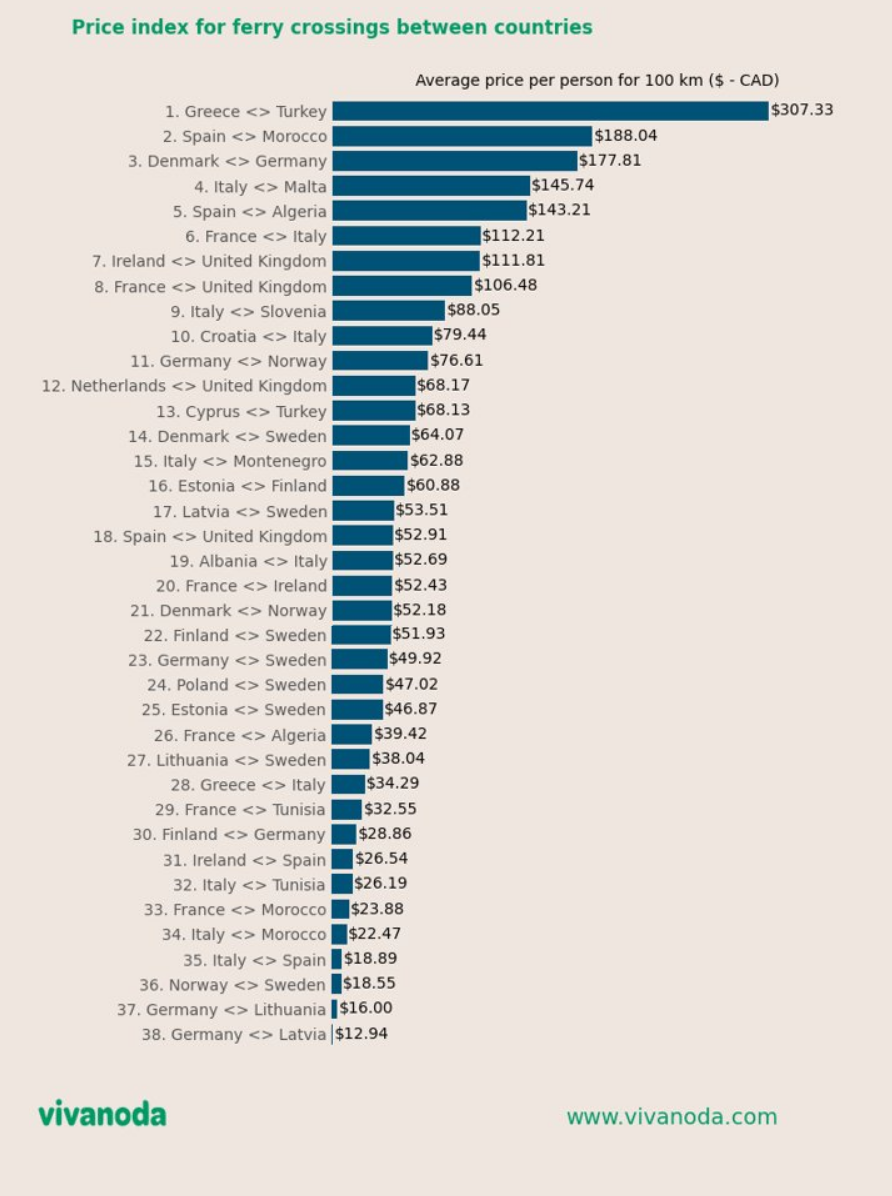


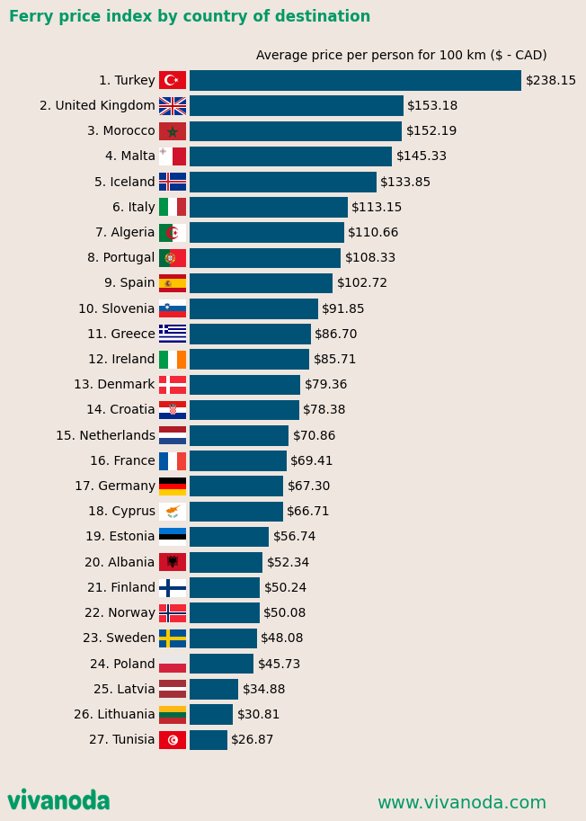
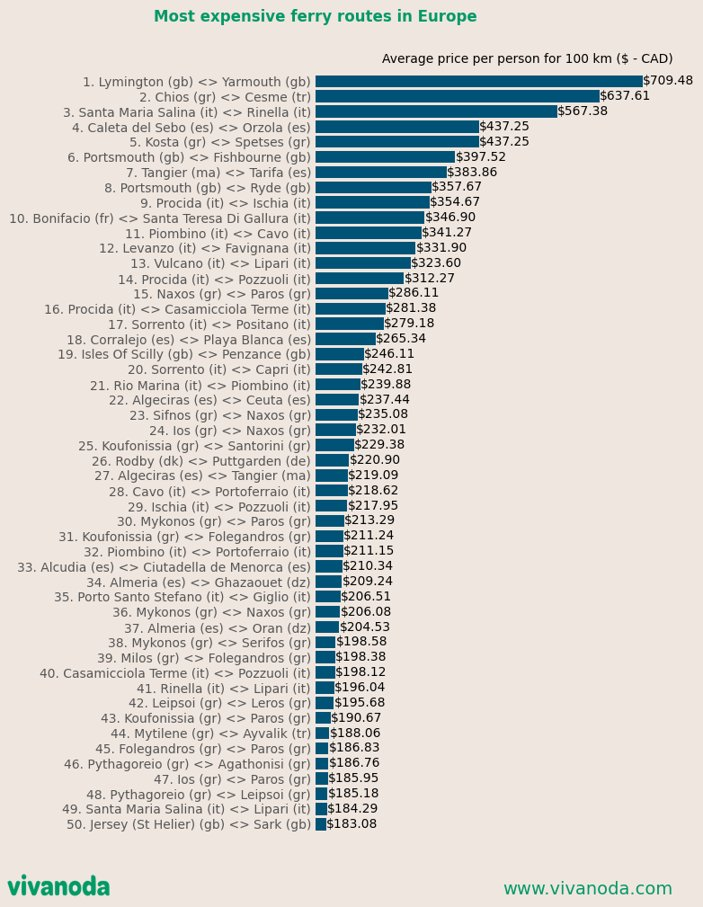
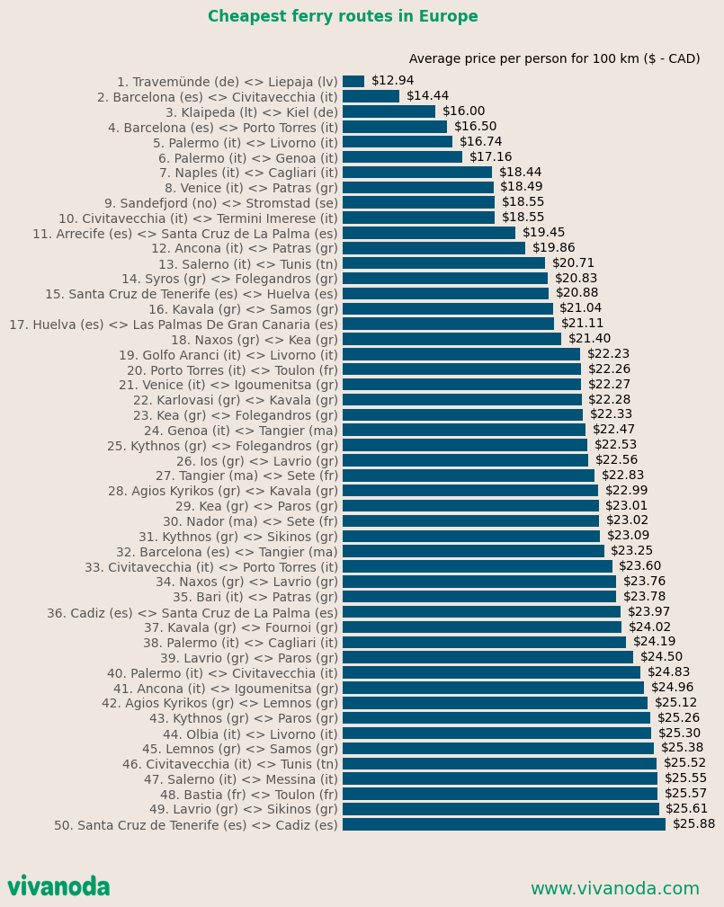
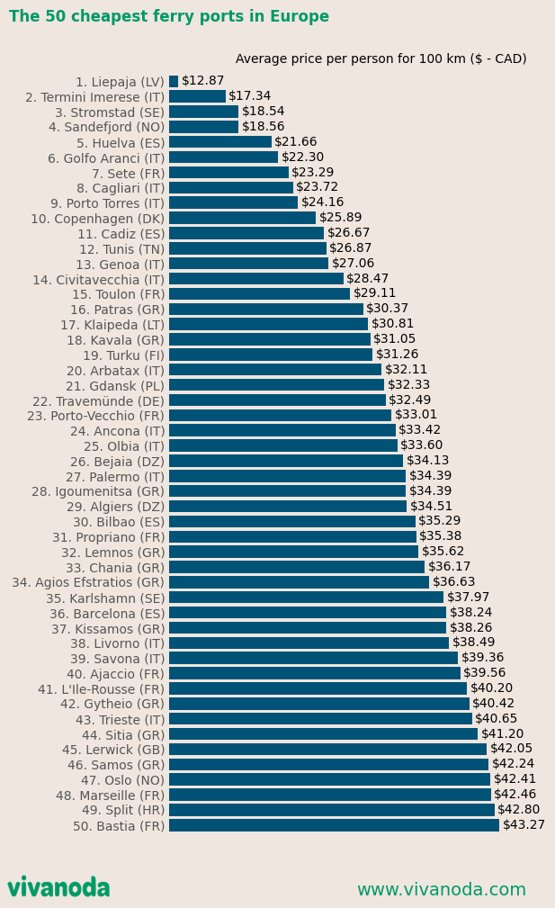

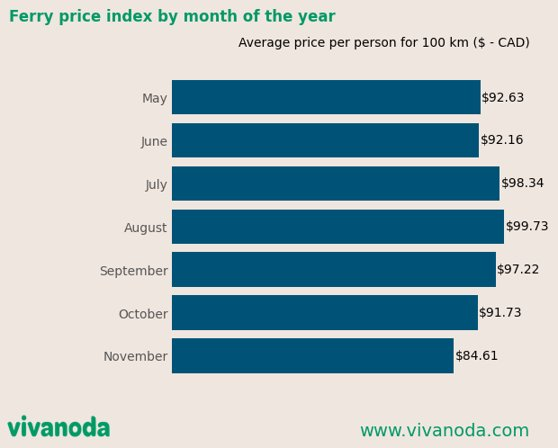



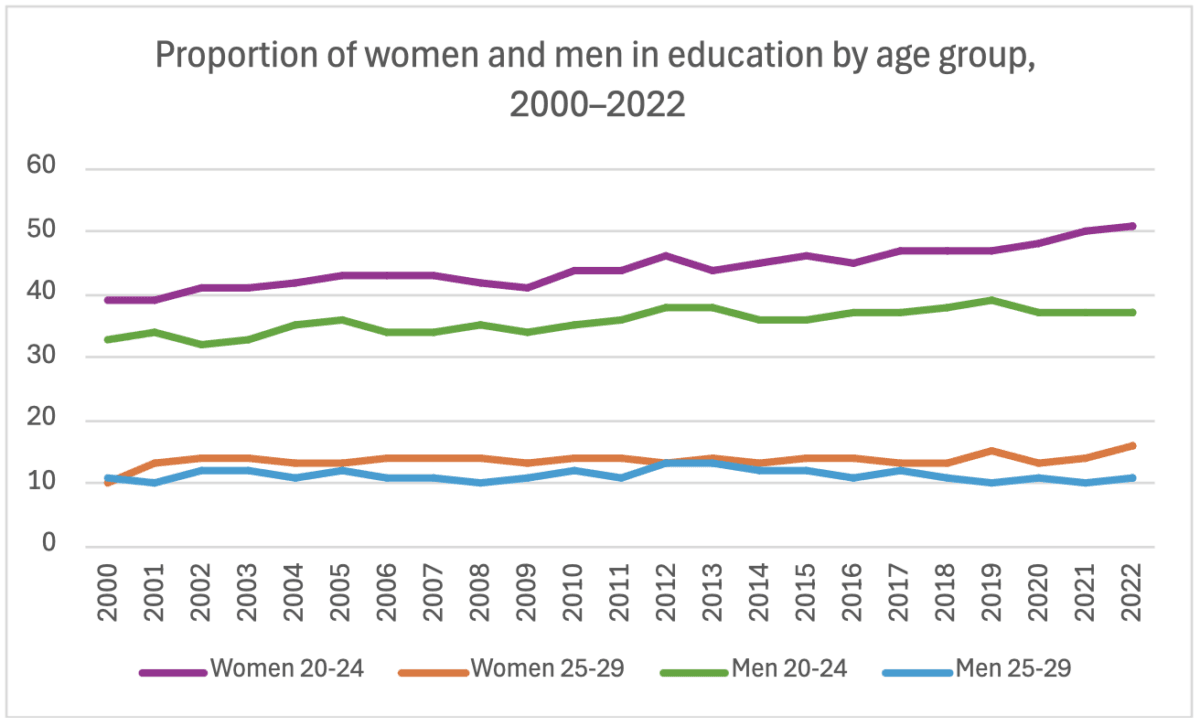
































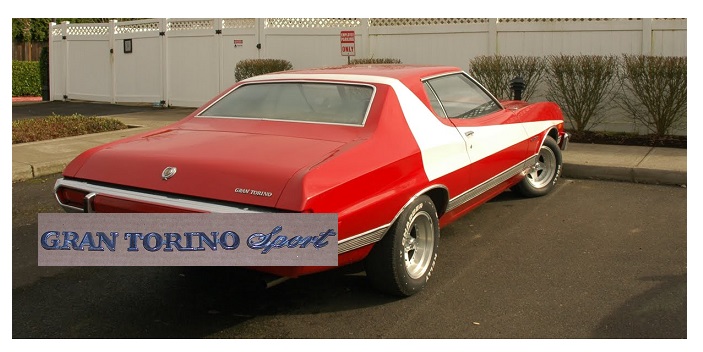
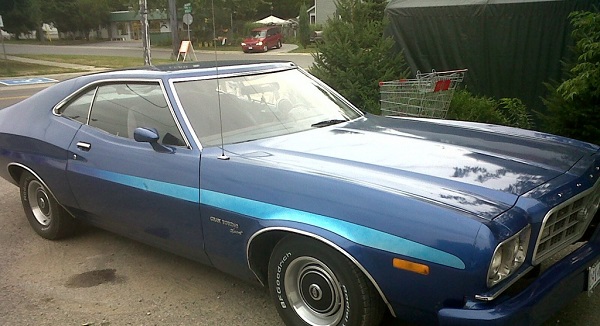

 Anvar is a Canadian born and trained actor whose big break came with his role 2003’s Shattered Glass with Hayden Christiansen, and his professional career began following graduation from Canada’s prestigious National Theatre School. Anvar is also a well-known voice actor, whose talents can be heard in some of the world’s most popular video games (including Call of Duty: BO2, Halo 4, and Assassins Creed: Revelations.)









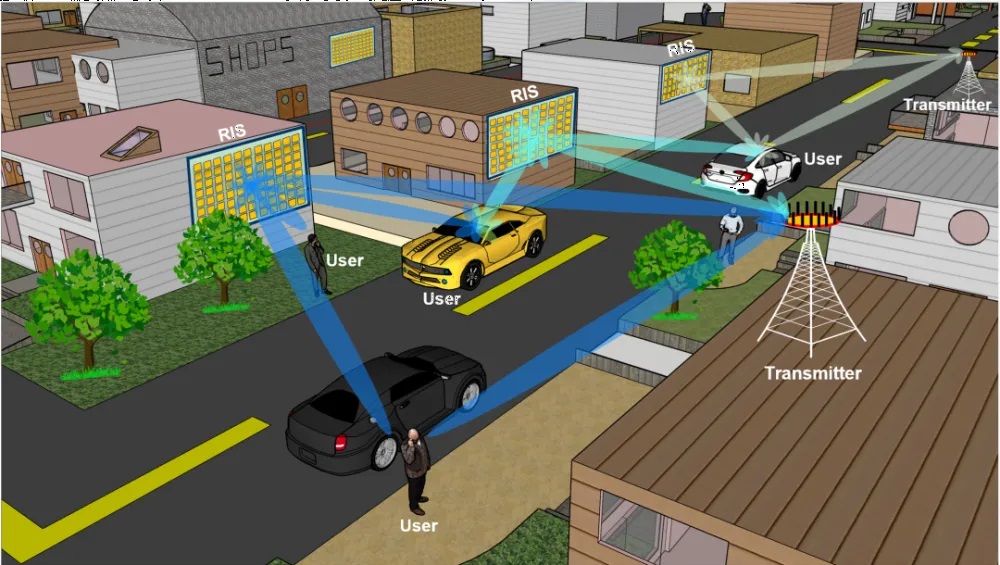

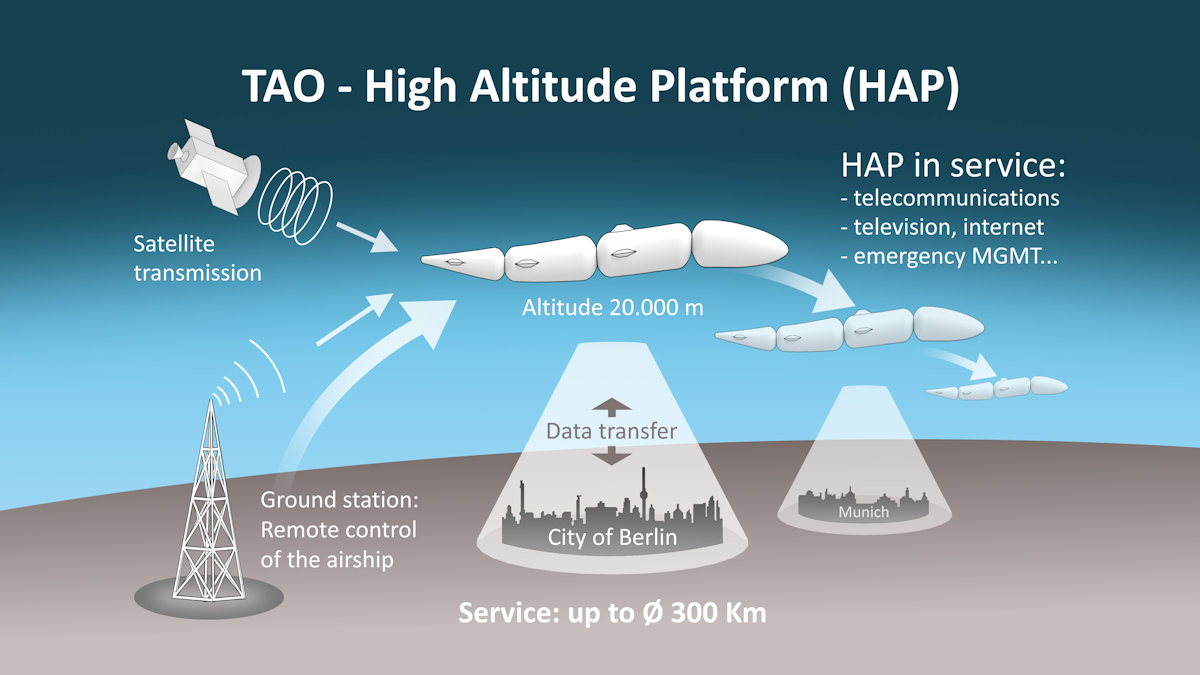















































































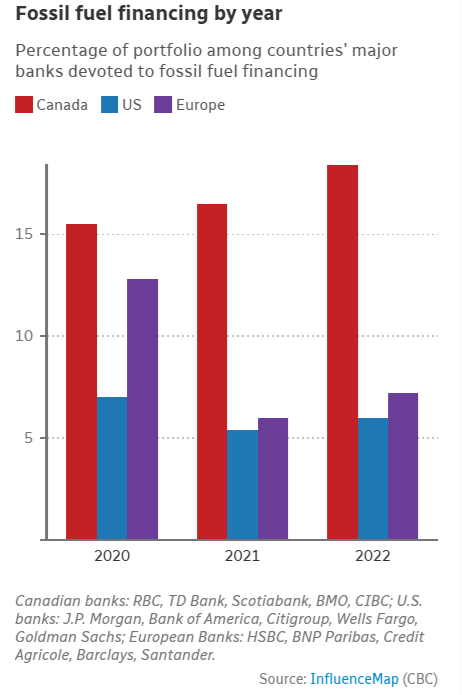










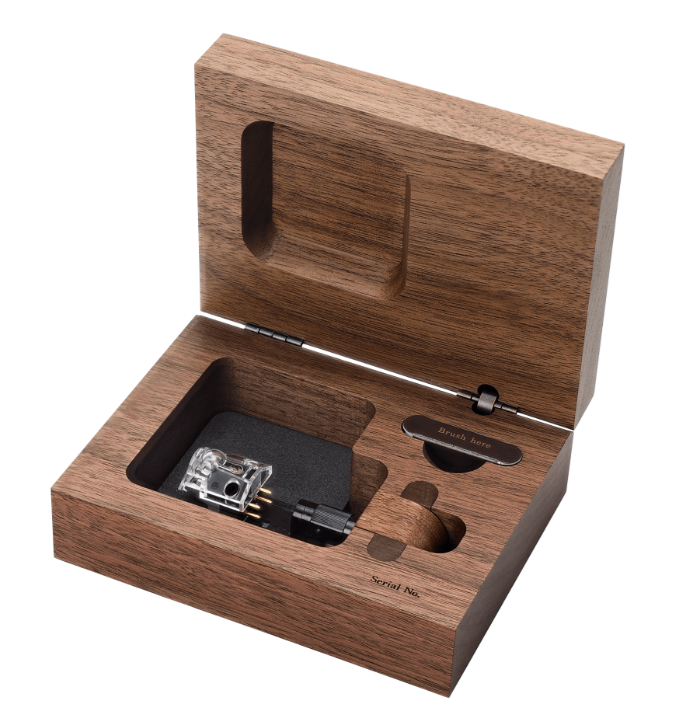





 About Golden Concept








 Though debunkers have stated that this story first appeared in Readers Digest, it actually was first reported in 1953 by TV Guide: a viewer based magazine that organized and listed television programming and reviewed highlighted television shows. Hugely successful and widely distributed- it seems counter-intuitive to consider how this might affect an already paranoid and anxious viewer body. After all, the Cold War and the Space Race were underway. Many Americans were building nuclear bomb shelters and keeping their eyes to the skies.