The Met to Present the First Major Exhibition Dedicated to the Design Drawings for Louis C. Tiffany’s Celebrated Gilded Age Creations
Newly conserved works reveal the creative process behind Tiffany Studios’most celebrated stained-glass windows, lamps, mosaics,and interiors.
This exhibition will reunite two major stained-glass windows with their original design drawings for the first time in nearly half a century—This fall, The Metropolitan Museum of Art will present Designing the Gilded Age: Drawings from the Studios of Louis C. Tiffany, a major exhibition exploring the creative process behind some of Tiffany Studios’ most celebrated works.
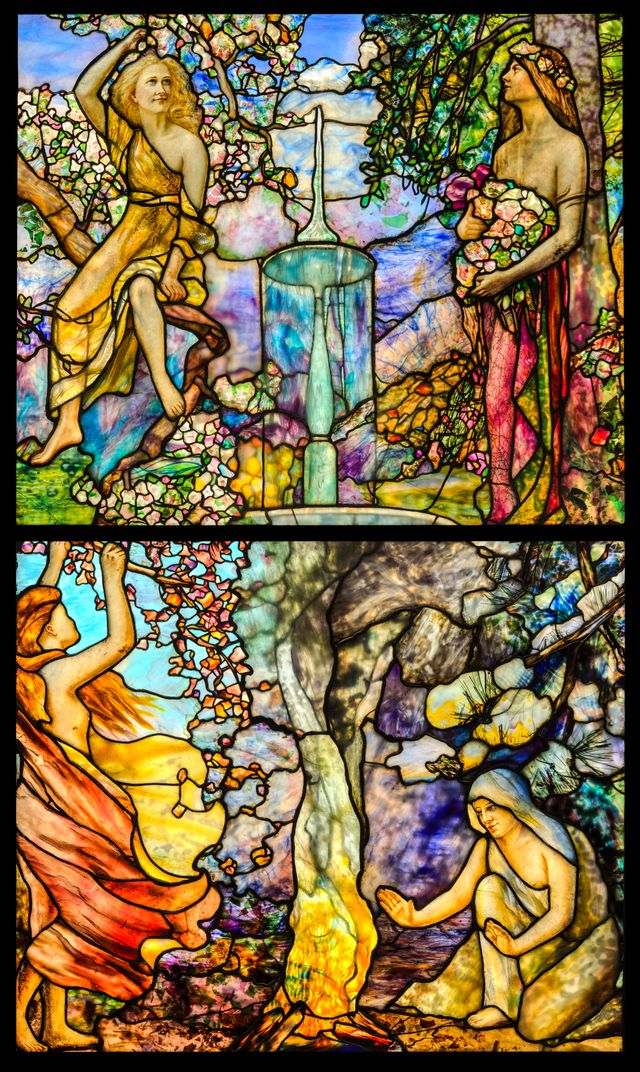
Four Seasons in Glass
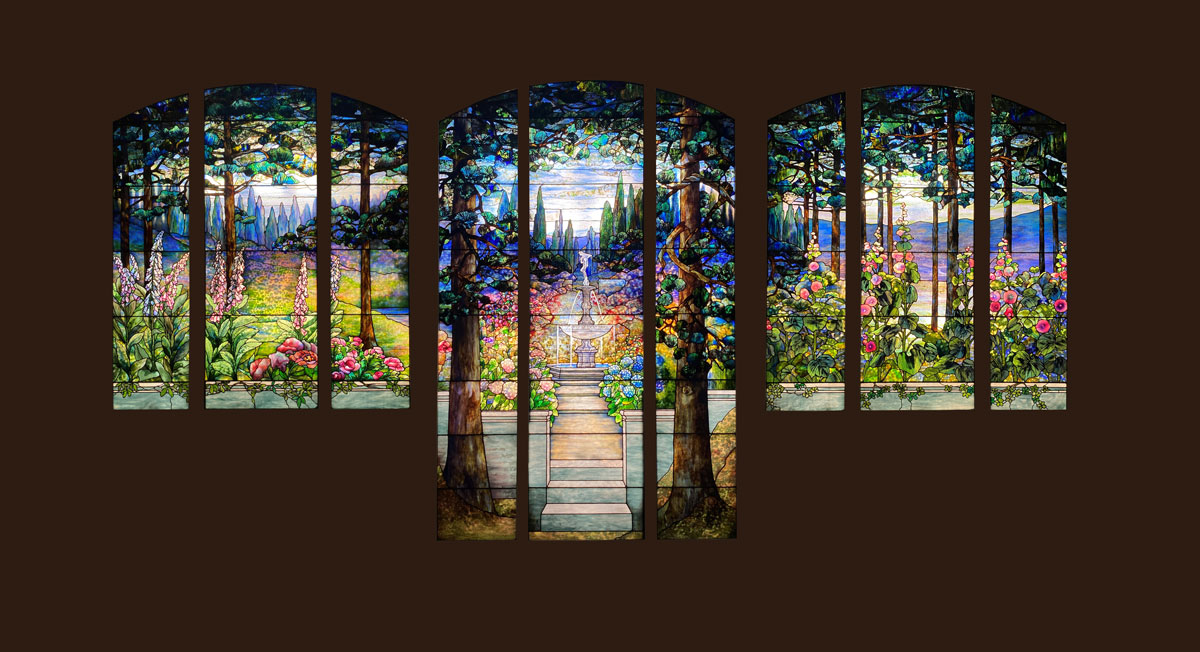
On view from October 22, 2026, through February 7, 2027, the exhibition brings together nearly 120 works from the Museum’s collection—along with a select group of key loans—to examine the artistic range of Louis Comfort Tiffany and the collaborative studio that produced significant works of American decorative art.
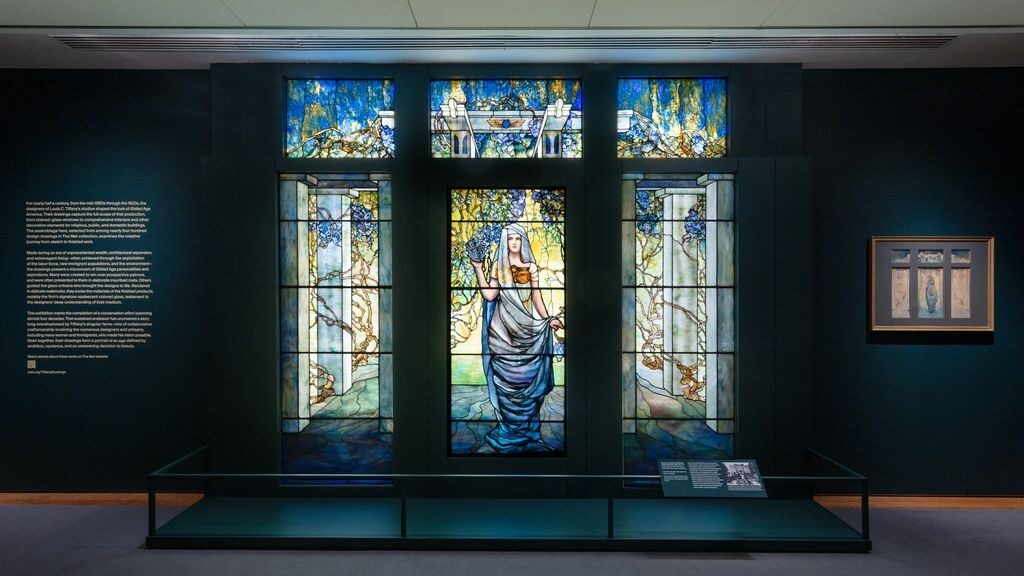
A major loan from the Chrysler Museum of Art reunites its monumental stained-glass window, Woman in a Pergola with Wisteria(1911), with the original wisteria transoms designed for the work. Recently discovered in a private home in Arizona, the transoms make possible the ensemble’s first presentation together in at least half a century.
The exhibition is made possible by Tiffany & Co. “The Met’s unparalleled collection of design drawings from the studios of Louis C. Tiffany reveals how some of the most iconic works of American decorative art came to life,” said Max Hollein, The Met’s Marina Kellen French Director and Chief Executive Officer.
“The exhibition illuminates the artistry, innovation, and collaboration at the heartof Tiffany studios, while offering new insights into the cultural and aesthetic ambitions of the Gilded Age.”
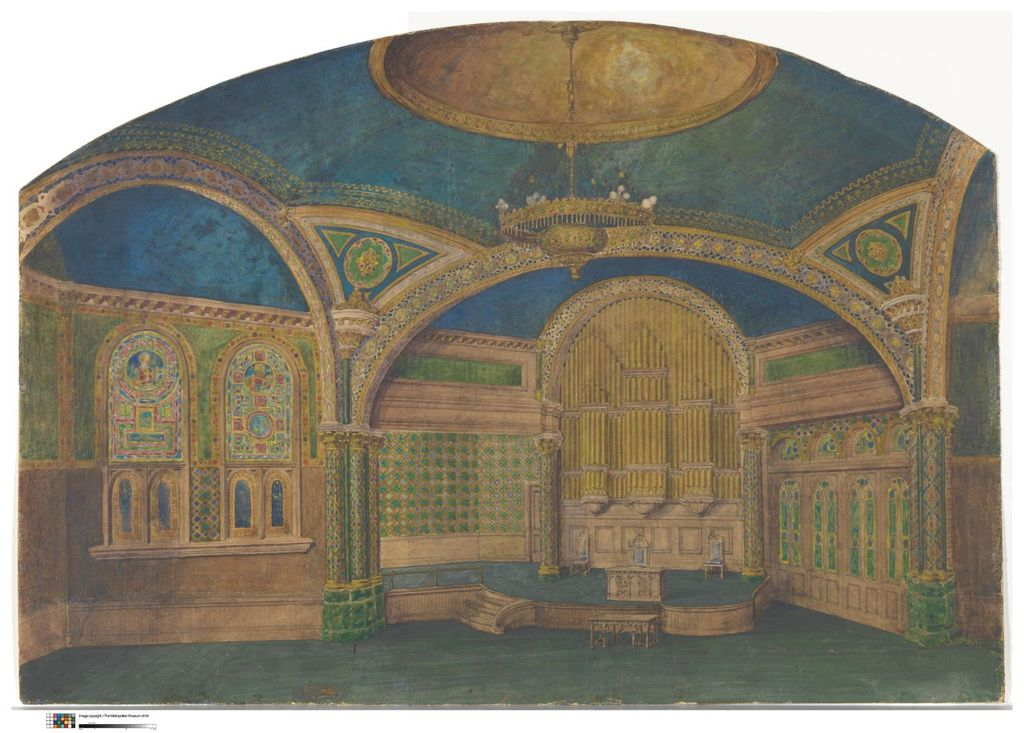
Design for interior of First Presbyterian Church.
Largest Collection Of Tiffany Drawings In The World
“This exhibition builds on decades of conservation and sustained study of The Met’s extraordinary holdings—the largest collection of Tiffany design drawing s anywhere,” said Alice Cooney Frelinghuysen, The Met’s Anthony W. and Lulu C. Wang Curator of American Decorative Arts.
“As these works have been conserved to their full beauty, they reveal the richness and complexity of the studio’s creative process. The reunion of two major windows side by side.
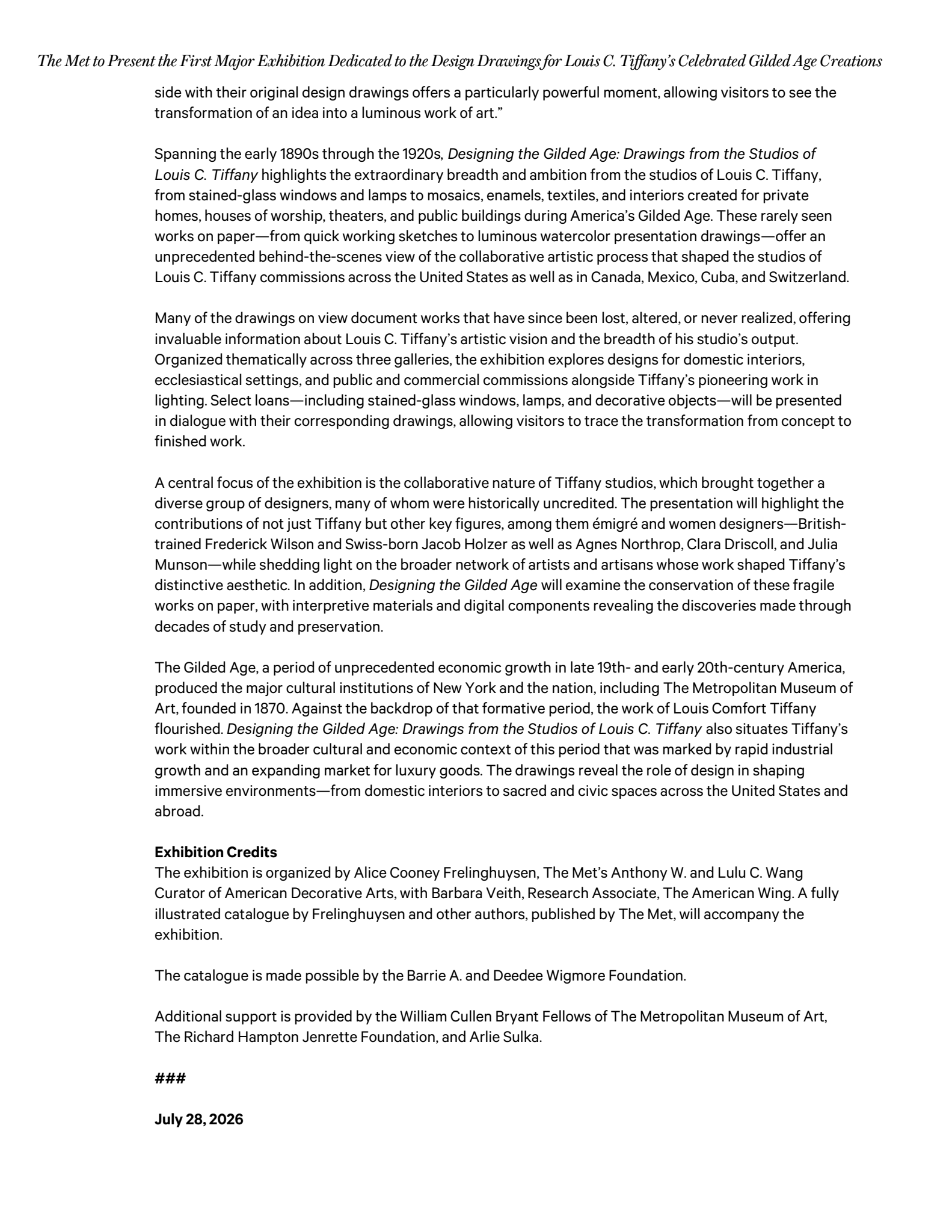
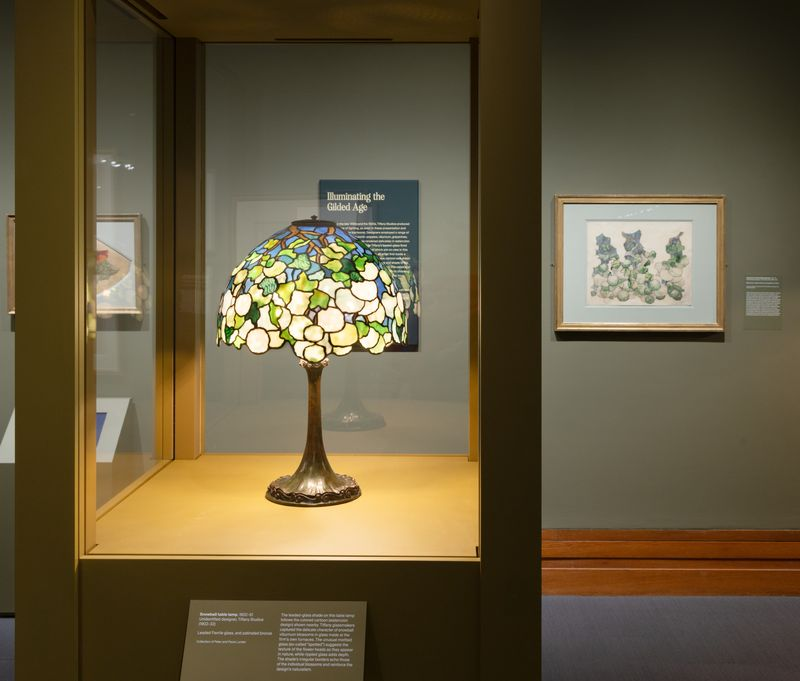
The exhibition allows visitors to see the transformation of an idea into a luminous work of art.
Spanning the early 1890s through the 1920s, Designing the Gilded Age: Drawings from the Studios of Louis C. Tiffany also highlights the extraordinary breadth and ambition from the studios of Louis C. Tiffany, from stained-glass windows and lamps to mosaics, enamels, textiles, and interiors created for private homes, houses of worship, theaters, and public buildings during America’s Gilded Age. These rarely seen works on paper—from quick working sketches to luminous watercolor presentation drawings—offer an unprecedented behind-the-scenes view of the collaborative artistic process that shaped the studios of Louis C. Tiffany commissions across the United States as well as in Canada, Mexico, Cuba, and Switzerland.
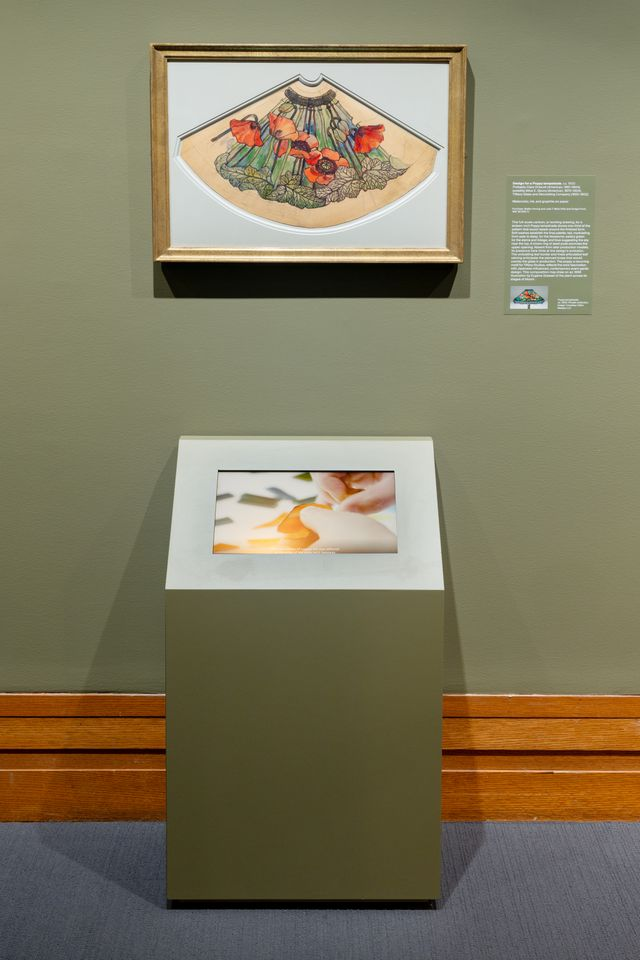
Many of the drawings on view document works that have since been lost, altered, or never realized, offering invaluable information about Louis C. Tiffany’s artistic vision and the breadth of his studio’s output. Organized thematically across three galleries, the exhibition explores designs for domestic interiors, ecclesiastical settings, and public and commercial commissions alongside Tiffany’s pioneering work in lighting.
Select loans—including stained-glass windows, lamps, and decorative objects—will be presented in dialogue with their corresponding drawings, allowing visitors to trace the transformation from concept to finished work. A central focus of the exhibition is the collaborative nature of Tiffany studios, which brought together adiverse group of designers, many of whom were historically uncredited. The presentation will highlight the contributions of not just Tiffany but other key figures, among them émigré and women designers—British-trained Frederick Wilson and Swiss-born Jacob Holzeras well as Agnes Northrop, Clara Driscoll, and Julia Munson—while shedding light on the broader network of artists and artisans whose work shaped Tiffany’s distinctive aesthetic.
In addition, Designing the Gilded Age will examine the conservation of these fragile works on paper, with interpretive materials and digital components revealing the discoveries made through decades of study and preservation. The Gilded Age, a period of unprecedented economic growth in late 19th-and early 20th-century America, produced the major cultural institutions of New York and the nation, including The Metropolitan Museum ofArt, founded in 1870.
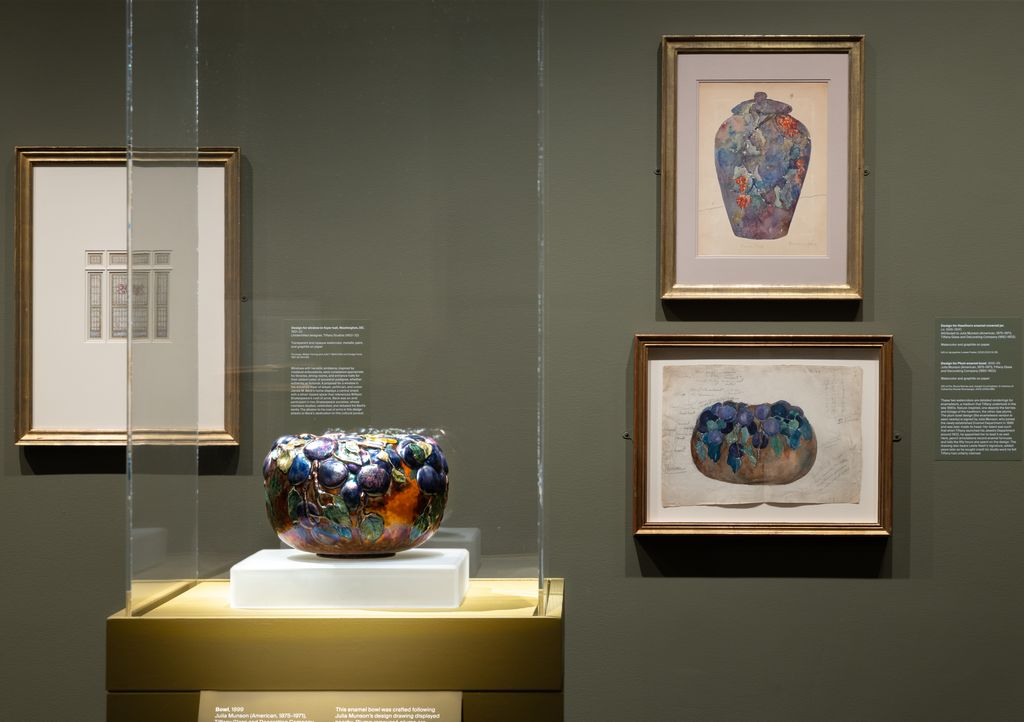
Against the backdrop of that formative period, the work of Louis Comfort Tiffany flourished.
Designing the Gilded Age: Drawings from the Studios of Louis C. Tiffany also situates Tiffany’s work within the broader cultural and economic context of this period that was marked by rapid industrial growth and an expanding market for luxury goods. The drawings reveal the role of design in shaping immersive environments—from domestic interiors to sacred and civic spaces across the United States and abroad.
Exhibition Credits
The exhibition is organized by Alice Cooney Frelinghuysen, The Met’s Anthony W. and Lulu C. WangCurator of American Decorative Arts, with Barbara Veith, Research Associate, TheAmerican Wing. A fully illustrated catalogue by Frelinghuysen and other authors, published by The Met, will accompany the exhibition. The catalogue is made possible by the Barrie A. and Deedee Wigmore Foundation. Additional support is provided by the William Cullen Bryant Fellows of The Metropolitan Museum of Art, The Richard Hampton Jenrette Foundation, and Arlie Sulka.
For the Silo, Jarrod Barker.