Tag Archives: USA

Yellowstone: The World’s First National Park

People walking on boardwalk around Grand Prismatic Spring at Yellowstone National Park (© Vaa Eriksen/Adobe)
The Grand Prismatic Spring is among the Yellowstone sites created by underground volcanic activity. (© Vaa Eriksen/Adobe)

With its fluorescent natural wonders and diverse wildlife, Yellowstone National Park attracts 4.5 million visitors each year.

The world’s first national park was created on March 1, 1872, when President Ulysses S. Grant signed the Yellowstone National Park Protection Act. The law decreed that the headwaters of the Yellowstone River be “dedicated and set apart as a public park or pleasuring-ground for the benefit and enjoyment of the people.” The decision led to the creation of the National Park Service, which now protects more than 400 sites  across the United States.

What are Geysers?

Sprinkled amid the hot springs are the rarest fountains of all, the geysers. What makes geysers rare and distinguishes them from hot springs is that somewhere, usually near the surface in the plumbing system of a geyser, there are one or more constrictions.

Geysers are hot springs with constrictions in their plumbing, usually near the surface, that prevent water from circulating freely to the surface where heat would escape. The deepest circulating water of the system can exceed the surface boiling point of water (199°F/93°C). Surrounding pressure increases with depth, much as it does with depth in the ocean. Increased pressure exerted by the enormous weight of the overlying water and rock prevents the water from boiling. As the water rises due to heating, steam forms and expands, increasing pressure in the constricted plumbing near the surface. At a critical point, the confined bubbles actually lift the water above the surface vent, causing the geyser to splash or overflow. This decreases pressure on the system, and violent boiling results. Tremendous amounts of steam force water out of the vent, and an eruption begins. Water is expelled faster than it can enter back into the geyser’s plumbing system, and the heat and pressure gradually decrease. The eruption stops when the water reservoir is depleted or when the system cools.

There are more geysers in Yellowstone than anywhere else on Earth. Old Faithful, certainly the most famous geyser, is joined by numerous others big and small, named and unnamed. Though born of the same water and rock, what is enchanting is how differently they play in the sky. Riverside Geyser, in the Upper Geyser Basin, shoots at an angle across the Firehole River, often forming a rainbow in its mist. Castle Geyser erupts from a cone shaped like the ruins of some medieval fortress. Grand Geyser explodes in a series of powerful bursts, towering above the surrounding trees. Echinus Geyser spouts up and out to all sides like a fireworks display of water. And Steamboat Geyser, the largest in the world, pulsates like a massive steam engine in a rare, but remarkably memorable eruption, reaching heights of 300 to 400 feet.

Vastness of Yellowstone

While mostly in Wyoming, Yellowstone’s 2.2 million acres (8,900 square kilometers) extend into neighboring Idaho and Montana. The massive park covers an area larger than the U.S. states of Delaware and Rhode Island combined.

People watching geyser erupting (© Wasin Pummarin/Adobe)
Spectators watch an Old Faithful eruption. (© Wasin Pummarin/Adobe)

Yellowstone was established to protect an extraordinary collection of 10,000 thermal features, including geysers, hot springs, fumaroles and boiling mud pots created by underground volcanic activity. With 500 geysers, the park has more than half of all the world’s erupting hot springs.

While waiting for Old Faithful, the world’s most famous geyser, is a Yellowstone tradition, the park also boasts abundant wildlife viewing opportunities. With the largest concentration of mammals on the U.S. mainland, Yellowstone is home to bison — the U.S. national mammal — as well as black bears, bighorn sheep, deer, elk, moose and mountain goats.

You may also glimpse predators, such as one of the 1,000 grizzly bears known to inhabit the area, along with lynx, wolverines and wolves.

Bison licking calf (© Michael Underwood/Adobe)
A mother bison cares for her calf. (© Michael Underwood/Adobe)

Bird lovers will relish the opportunity to see 300 species of birds. The park service provides a checklist for bird watchers hoping to spot them all.

While Yellowstone offers something in every season, services are limited from early November through late April. Bad weather can change road conditions at any time, so check operating dates  and conditions before visiting.

For those unable to visit, Yellowstone’s 10 webcams  offer glimpses of the park. So whether you’re planning to feel the mist from an Old Faithful eruption or looking for a brief virtual escape, Yellowstone offers an experience unlike any other. For the Silo, Jarrod Barker.

Featured image- Daphne Zheng via Getty Images

US Sanctions To Disrupt Iran’s Weapons Procurement Networks and Shadow Fleet

Press release via Thomas “Tommy” Pigott, Principal Deputy Spokesperson

February, 2026. The United States is designating individuals and entities involved in multiple weapons procurement networks based in Iran, Türkiye, and the United Arab Emirates supporting the Iranian regime’s ballistic missile and advanced conventional weapons (ACW) development.  We are also sanctioning numerous shadow fleet vessels and their owners or operators that have collectively transported hundreds of millions of dollars’ worth of Iranian petroleum, petroleum products, and petrochemical products.           

The Iranian regime continues to mismanage its economy, with catastrophic consequences for its people, and prioritizes funding of foreign proxies and missiles over the basic needs of ordinary Iranians. Today, sanctions target the illicit funds that the regime uses to advance its malign and destabilizing ends.   

This action implements President Trump’s National Security Presidential Memorandum 2 by countering the Iranian regime’s aggressive development of missiles and other asymmetric and conventional weapons capabilities.  It also denies the Islamic Revolutionary Guard Corps access to assets and resources that sustain its destabilizing activities.  The nonproliferation designations today support the reimposition of United Nations restrictive measures and sanctions on Iran, which occurred as a direct result of the Iranian regime’s “significant non-performance” of its nuclear commitments. 

The United States will continue to use all available means to expose, disrupt, and counter the Iranian regime’s ability to procure revenue to develop its weapons programs and fund its destabilizing behavior. 

The Department of the Treasury’s action was taken pursuant to Executive Order (E.O.) 13382, which targets proliferators of weapons of mass destruction and their supporters, E.O. 13949, the Iran conventional arms authority, and E.O. 13902, which authorizes sanctions related to key sectors of Iran’s economy. For more information on today’s actions, please see the Department of the Treasury’s Press Release.

Supplemental-

George Washington: North America’s Earliest Fashion Influencer

George Washington standing next to horse (National Gallery of Art)
A print of George Washington by Valentine Green. (National Gallery of Art)

George Washington, who as a general led America to independence from Britain and who went on to serve as the first U.S. president, also nurtured a lifelong interest in men’s fashion.

Washington recognized his attire sent a signal about America’s standing in the world, according to Suited to Lead: The Lives of Six Presidents Through Fashion , an online exhibit of the White House Historical Association. (The exhibit also explores the fashions of presidents John Quincy Adams, Abraham Lincoln, Theodore Roosevelt, Harry S. Truman and Jimmy Carter.)

Washington “thought deeply about what his choices conveyed to the public,” says Fiona Hibbard, a graduate student in New York University’s Costume Studies program. Hibbard curated the exhibit while an intern at the society in 2025.

“Washington was interested in projecting an image of authority, unity and American identity,” she says.

The exhibit highlights how Washington’s sartorial choices conveyed leadership and created an early-American aesthetic that endured for generations.

Washington chose blue for the uniforms of the Continental Army to present colonial militias as unified and to clearly differentiate the fighters from British soldiers, known as “redcoats.”

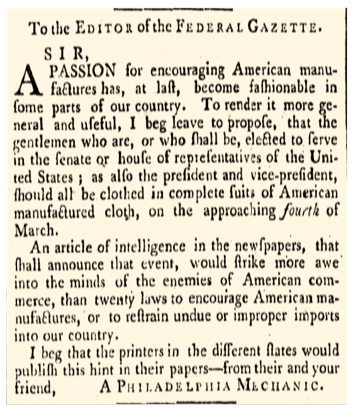
Federal Gazette, January 7, 1789

As a military commander and later as president, Washington appeared in portraits wearing a blue coat trimmed in yellow, with matching waistcoat and breeches.

Emanuel Leutze’s 1851 painting “Washington Crossing the Delaware” (Collection of The Metropolitan Museum of Art)

Blue and yellow remained the colors of the United States Army until the Civil War in the 1860s.

Washington also adapted military uniforms to better suit soldiers to their environment by replacing breeches, which only came to the knee, with full-length trousers that better protected the soldiers’ legs as they climbed or scrambled on difficult terrain.

Washington supported American manufacturers, Hibbard says, “something most Americans can relate to and take pride in.”

Before being sworn in as the country’s first president, he ordered high-quality American wool from a Connecticut manufacturer for his brown inaugural suit . He had deliberately avoided using British-imported fabric, according to the Mount Vernon Ladies’ Association, which runs Washington’s Virginia estate. Though commonly known as “London Brown,” Washington’s fabric became known as “Congress Brown,” a nod to the new country’s representative form of government.

“George Washington’s inaugural suit was more than attire — it was a statement of national identity,” the association says.

Left: Illustration of George Washington's inauguration (Library of Congress) Right: Washington's inaugural coat (Courtesy of the Mount Vernon Ladies' Association)
Washington wore American-made wool for his April 30, 1789, inauguration as the first U.S. president. (Library of Congress, Courtesy of the Mount Vernon Ladies’ Association)

For the Silo, Lauren Monsen/ Share America.

The Next Era of Nuclear Arms Control

A picture containing text, sign

AI-generated content may be incorrect.

Here is a recent Substack post from U.S. Secretary of State Marco Rubio on the next era of nuclear arms control.


The Cold War

During the Cold War, few negotiations proved as complex as those between the United States and the Soviet Union to limit and reduce their vast nuclear arsenals. They required trust between adversaries who had little reason to believe each other’s words, and they relied on intricate, constant systems to verify compliance. American statesmen persevered and reached a series of agreements first with the Soviet Union and then the Russian Federation that left the United States safer.

Everything has its season though and yesterday, New START expired.

Arms control advocates and many voices in the media have tried to cast the expiration as a sign that the United States is initiating a new nuclear arms race. These concerns ignore that Russia ceased implementing the New START treaty in 2023, after flouting its terms for years. A treaty requires at least two parties, and the choice before the United States was to bind itself unilaterally or to recognize that a new era requires a new approach. Not the same old START, but something new. A treaty that reflects that the United States could soon face not one, but two, nuclear peers in Russia and China.

China Arsenal

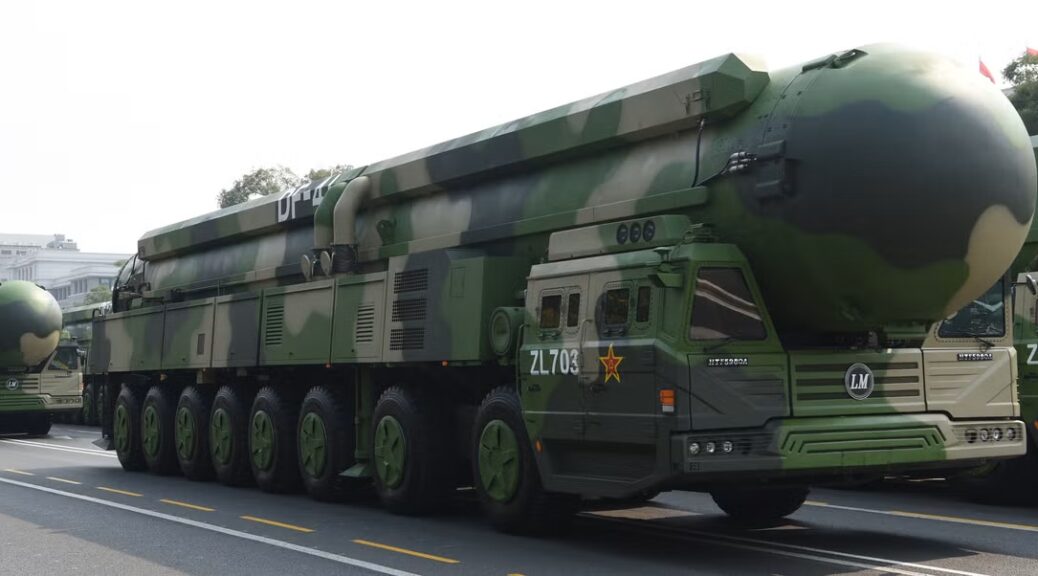
China’s rapid and opaque expansion of its nuclear arsenal since New START entered into force has rendered past models of arms control, based upon bilateral agreements between the United States and Russia, obsolete. Since 2020, China has increased its nuclear weapons stockpile from the low 200s to more than 600 and is on pace to have more than 1,000 warheads by 2030. An arms control arrangement that does not account for China’s build-up, which Russia is supporting, will undoubtedly leave the United States and our allies less safe.

President Trump has been clear, consistent, and unequivocal that future arms control must address not one, but both nuclear peer arsenals.

Our call for multilateral nuclear arms control and strategic stability talks, presented today in Geneva, reflects the principles President Trump has laid out.

No Longer A Bilateral Issue

First, arms control can no longer be a bilateral issue between the United States and Russia. As the President has made clear, other countries have a responsibility to help ensure strategic stability, none more so than China. Second, we will not accept terms that harm the United States or ignore noncompliance in the pursuit of a future agreement. We have made our standards clear, and we will not compromise them to achieve arms control for arms control’s sake. Third, we will always negotiate from a position of strength. Russia and China should not expect the United States to stand still while they shirk their obligations and expand their nuclear forces. We will maintain a robust, credible, and modernized nuclear deterrent. But we will do so while pursuing all avenues to fulfill the President’s genuine desire for a world with fewer of these awful weapons.

We understand that this process can take time. Past agreements, including New START, took years to negotiate and were built upon decades of precedent. They were also between two powers, not three or more. However, just because something is hard does not mean we should not pursue it or settle for less. No one understands that difficult deals are often the only ones worth having more than President Trump, who has repeatedly underscored the awesome power of nuclear weapons and his desire to reduce global nuclear threats. Today in Geneva, we are taking the first steps into a future where the global nuclear threat is reduced in reality, not merely on paper. We hope others will join us.

Marco Rubio was sworn in as the 72nd Secretary of State on January 21, 2025. The Secretary is creating a Department of State that puts America First.

Each November American Thanksgiving Includes Lots Of Giving Back

Most take part in the holiday’s rituals, including traveling to spend time with family and counting life’s blessings, and 19% also donate to charities  to help others eat well around the holiday, according to a recent poll. It is a time of year that many Americans volunteer at food banks, churches or service organizations in order to help prepare meals or provide ingredients to those without enough.

Volunteers with Operation Turkey, a national nonprofit based in Austin, Texas, cook and deliver thousands of Thanksgiving meals complete with turkey, stuffing, gravy, vegetables and a slice of pie.

After 25 years, the all-volunteer organization has expanded to about 20 cities and now operates in states beyond Texas, including North Carolina and Pennsylvania. “It’s inspiring and humbling watching our local community rally together to make a difference for their neighbors,” says Josh Ortiz , an Operation Turkey volunteer in Dallas. “It all matters and makes a difference.”

People serving Thanksgiving meals in a commercial kitchen (© Timothy Hiatt/Getty Images for Feeding America)
Volunteers serve food at a church in Chicago the day before an earlier Thanksgiving. (© Timothy Hiatt/Getty Images)

Exercising for a cause

Many Americans want to help others while also getting in a little exercise before the big meal. (The average American consumes 4,500 calories on Thanksgiving, according to the Calorie Control Council). Thus, turkey trots — events where people run or walk to raise money for charities — are held in cities and towns across the country. Turkey trots make Thanksgiving “the biggest U.S. running day of the year,” according to the website RunSignup.com.

How about Canadian Thanksgiving Calories?

Ohio Turkey Trot

The 5K Turkey Trot in Granville, Ohio, drew 1,900 runners in 2024  and raised $130,000 usd/ $183,300 cad for a local food bank. Michelann Scheetz, of St. Luke’s Church, which organizes the annual event, says a team of volunteers works to pull off the Thanksgiving Day tradition that started in 2005. America’s Trot for Hunger, held in Washington, is now in its 24th year and draws thousands.

Jessica McCrorie, who served as a teen ambassador for the national nonprofit Feeding America, said she saw Thanksgiving bring out her own and others’ spirit of generosity. While volunteering with Island Harvest, McCrorie helped the nonprofit in Melville, New York, collect 30 turkeys and hundreds of dollars in donations at a grocery store.

“I feel like people may have felt more generous and connected to the issue of hunger because the Thanksgiving holiday is a time for family and friends to come together and share a meal,” she told Feeding America .

How Rules Of USA Flag Influenced New Series Of Soft Sculptures

A few years ago, Keiran and I were visiting antique stores in Connecticut when we came across an American flag that had fallen from its flagpole and was lying on the steps to a manor house, which doubled as an antique store.

We looked at each other in horror. This was one of those All-American towns where flags flew proudly and the anthem played on the radio. The store owner probably played quarterback in high school. What would his reaction be to learn his flag had been desecrated?

Flags aren’t such a big thing in Canada, so I’m not entirely sure of the rules.

But I’m fascinated by the strict set of protocols for displaying and respecting flags, an inanimate object. Can you wear them? What happens if you accidentally fly one upside down? How do you store one? What spell do you have to cast if it accidentally falls on the ground? And most pressing: why?

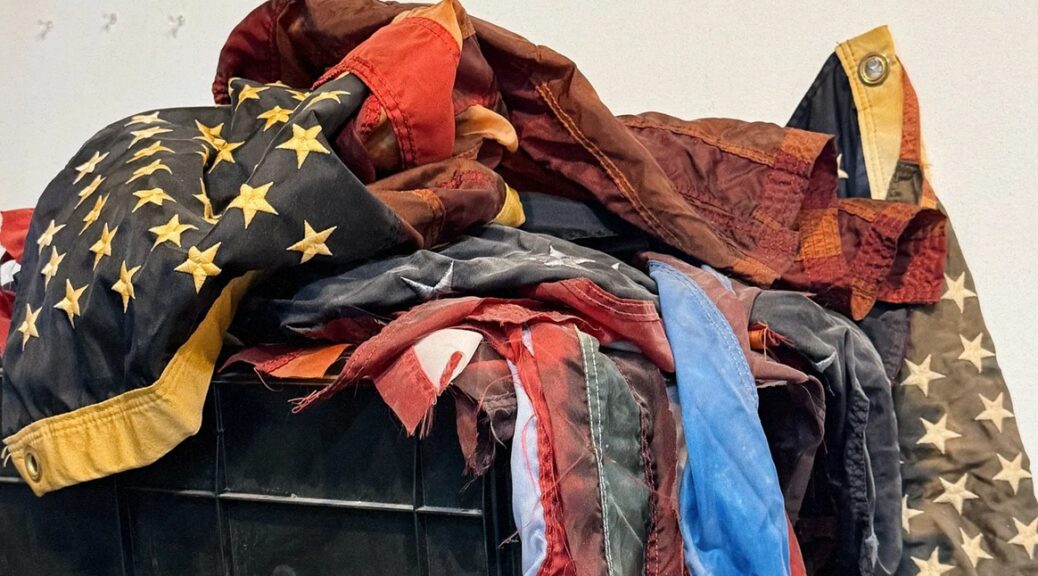
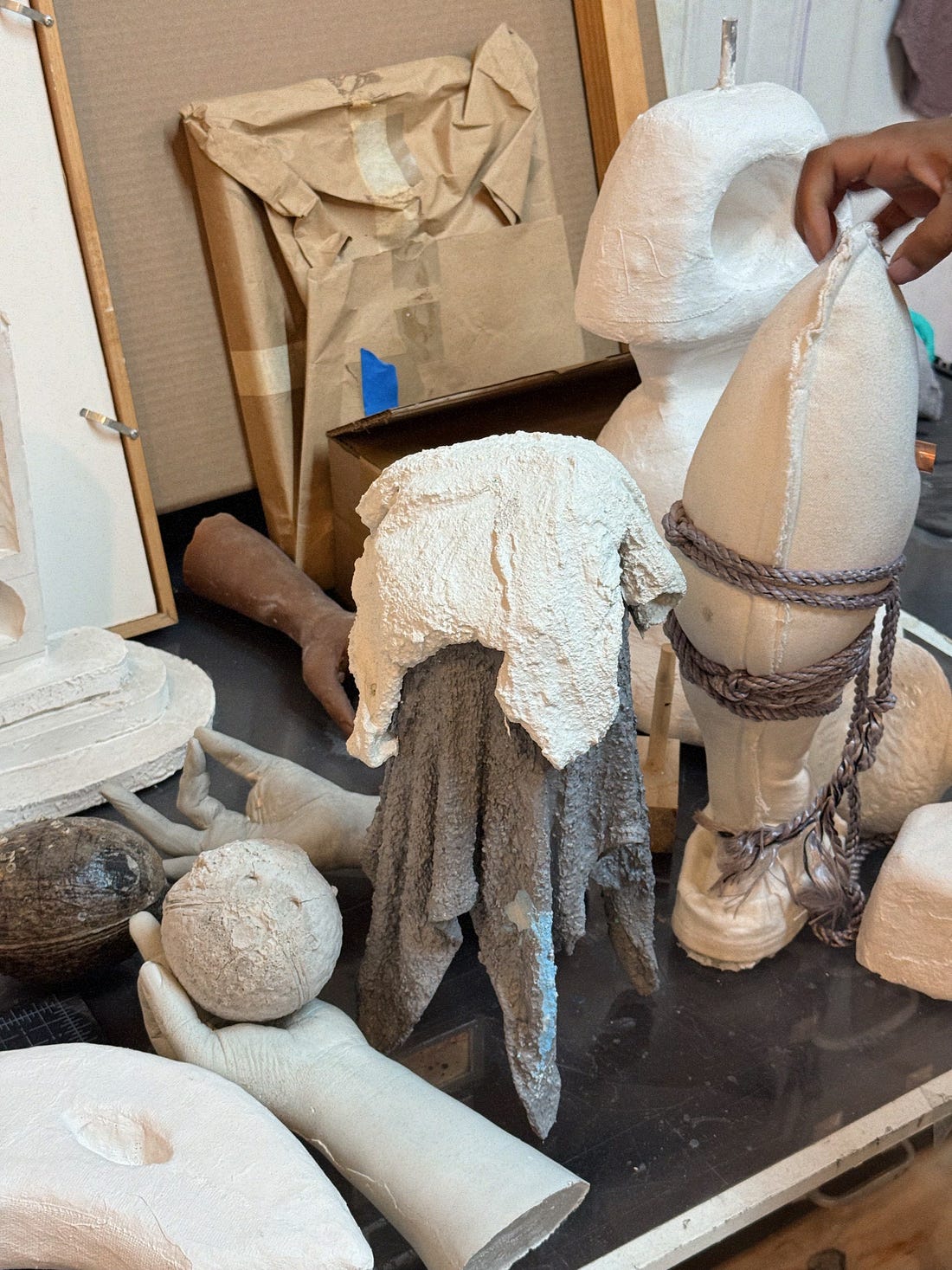
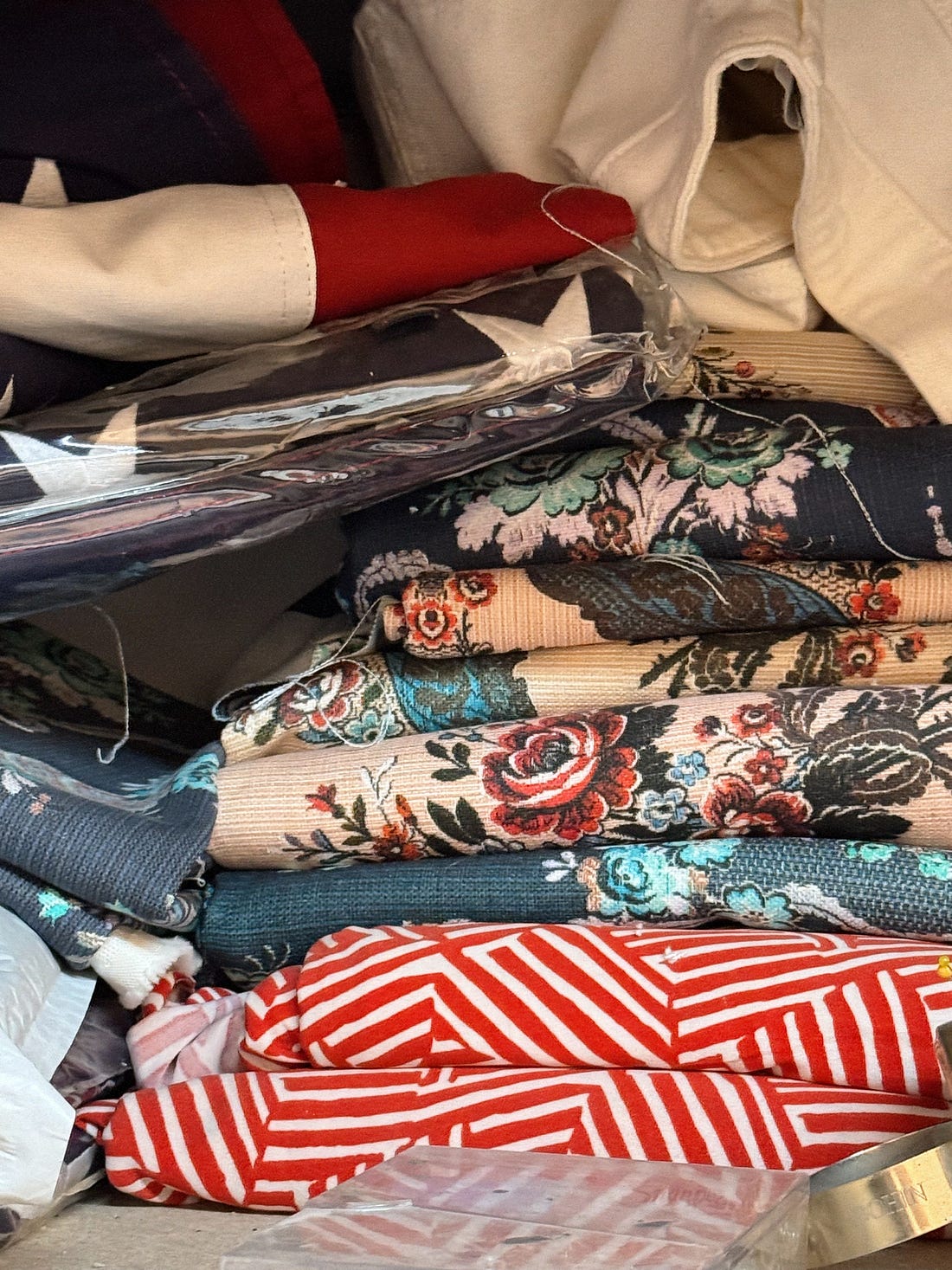
The artist Carla Edwards is also interested in the state-issued protocols for handling the American flag, and sets out to upend said formal rules by dismantling, dyeing, and reconfiguring standard-issue American flags in her Flag Series. The work becomes unrecognizable from its origin, transformed into patterned tapestries with abstractions that harken to the domestic activity of quilting.

Edwards’s sculptural work, made from rope configured in gravity-dying shapes that come to take on human-like qualities, continues her pursuit of shifting materials through rigorous process. Just like a flag, it seems like ropes and knots come with their own set of rules: how to tie them properly, and the practical roles they play.

I think about all the metaphors we have for ropes and knots: walking a tightrope, enough rope to hang oneself, tied up in knots, tying the knot.

Another inanimate object takes on outsized proportions.

Edwards takes it even further, imbuing pieces with energy and anthropomorphic qualities that make the viewer think for a beat longer about what these objects mean—and, most importantly, why.

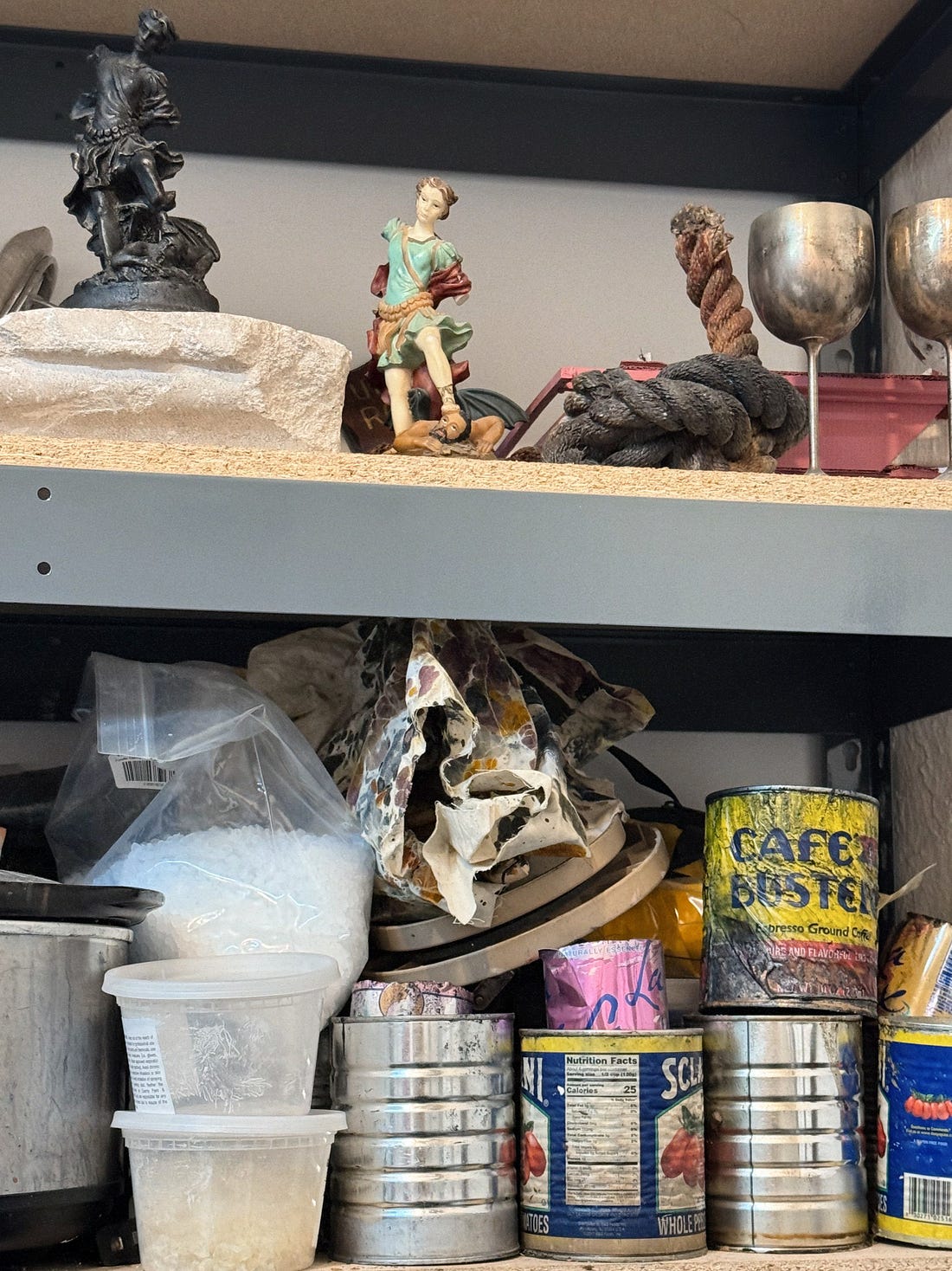
Below is a look inside Carla Edwards’s studio in Brooklyn, NY. The artist will have work at Art Basel Miami with Night Gallery.

Carla Edwards (b. Illinois) received her MFA in Sculpture from the Rhode Island School of Design, Providence, RI. She has exhibited her work nationally and internationally, including at the Studio Museum in Harlem, New York, NY; Louisiana State University Museum of Art, Baton Rouge, LA; Crystal Bridges Museum of American Art, Bentonville, AR; Paula Cooper, New York, NY; Nuit Blanche Toronto, Canada; Volta5, Basel, Switzerland; Night Gallery, Los Angeles, CA; and Lyles & King, New York, NY, among other venues. She has exhibited public sculpture at the Socrates Sculpture Park in Queens, NY and at Lighthouse Works, NY. The artist is an alumna of Skowhegan School of Painting and Sculpture and was a studio fellow in the Whitney Independent Study Program. Her works are included in numerous private collections and the public collections of Crystal Bridges Museum, Bentonville, AR; Institute of Contemporary Art, Miami, FL; Vera Institute of Justice, Brooklyn, NY; and JP Morgan Chase. She lives and works in Brooklyn, NY.

For the Silo, Tatum Dooley.

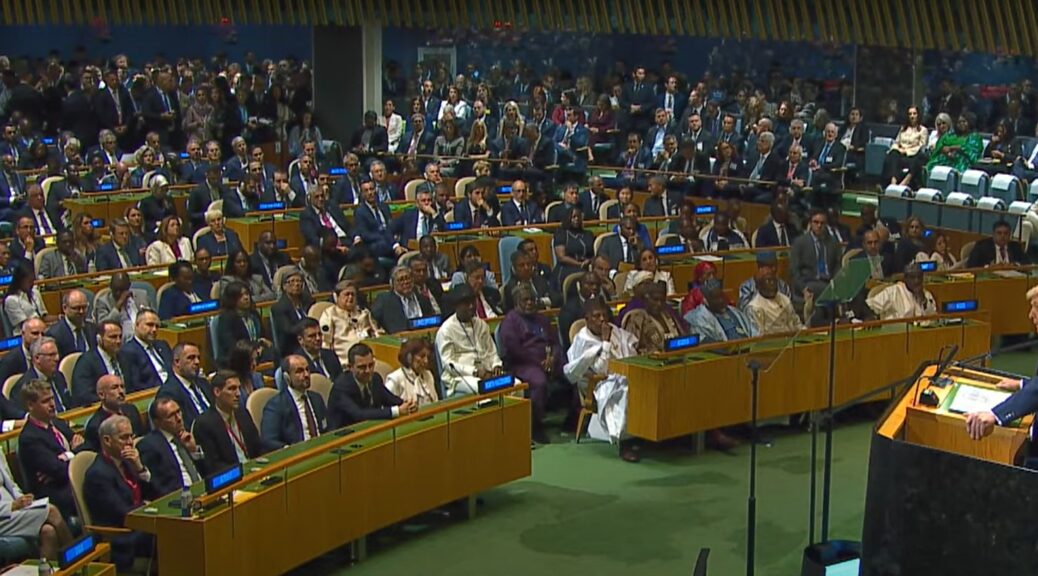
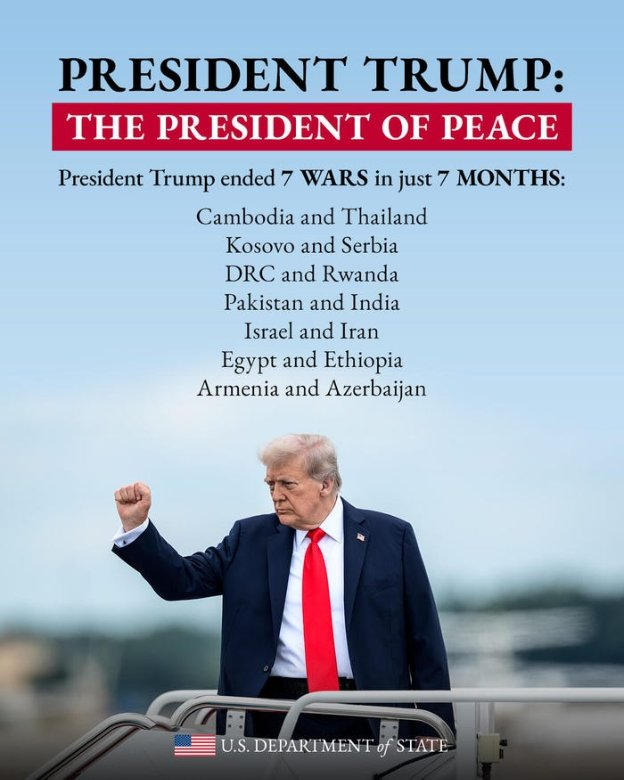
POTUS Delivers Poignant Remarks To UN General Assembly Without Teleprompter

Earlier this month marked the 80th session of the United Nations General Assembly (UNGA80), which opened  on September 9, 2025.  UNGA High-Level Week also took place this week and ends today, when leaders from around the world will gather in New York City.  

The 80th Anniversary of the founding of the UN is an opportunity to return the organization back to its founding mission of promoting peace and security around the world. This year the United States is prioritizing three themes through their engagement at the United Nations:  Peace, Sovereignty, and Liberty. 

“POURING IN OVER FOUR YEARS OF THE INCOMPETENT BIDEN ADMINISTRATION AND NOW WE HAVE IT STOPPED, TOTALLY STOPPED. IN FACT, THEY’RE NOT EVEN COMING BECAUSE THEY KNOW THEY CAN’T GET THROUGH. BUT WHAT TOOK PLACE IS TOTALLY UNACCEPTABLE. THE U.N. SUPPOSED TO STOP INVASIONS NOT CREATE THEM AND NOT FINANCE THEM.

IN THE UNITED STATES, WE REJECT THE UNITED STATES MASS NUMBERS OF PEOPLE FROM FOREIGN LANDS CAN BE PERMITTED TO TRAVEL HALFWAY AROUND THE WORLD, TRAMPLE OUR BORDERS, CAUSE CRIME AND DEPLETE OUR SOCIAL SAFETY NET. WE HAVE REASSERTED THAT AMERICA BELONGS TO THE AMERICAN PEOPLE AND I ENCOURAGE ALL COUNTRIES TO TAKE THEIR OWN STANCE IN DEFENSE OF THEIR CITIZENS, AS WELL. YOU HAVE TO DO THAT BECAUSE I SEE IT. I’M NOT MENTIONING NAMES, I SEE IT AND I COULD CALL EVERY SINGLE ONE OF THEM OUT, YOU ARE ENJOYING YOUR COUNTRIES, THEY ARE ENJOYING — BEING DESTROYED.

THEY ARE BEING BY ILLEGAL ALIENS LIKE NOBODY EVER SEEN BEFORE. ILLEGAL ALIENS ARE POURING IN AND NOBODY IS DOING ANYTHING TO CHANGE IT, TO GET THEM OUT. IT IS NOT SUSTAINABLE AND BECAUSE THEY CHOOSE TO BE POLITICALLY CORRECT, THEY ARE DOING ABSOLUTELY NOTHING ABOUT IT.” President Donald Trump

This article courtesy of the U.S. Department of State.

Strengthening Canada’s Trade Laws to Address Emerging Global Threat

Key Canadian trade laws do not refer to national security as a factor that allows Canada to counter threats from imports of goods or services. Given the tense geopolitical situation, I propose ways to close this “national security gap.” 

The gap is particularly worrisome in two key import-governing legislation: (1) the Customs Tariff Act and (2) the Export and Import Permits Act.

I will show why the omission of the national security element in these and possibly other statutes needs to be remedied.

National Security & Chinese Exports

The Americans imposed surcharges on Chinese EVs, steel, aluminum, semiconductors and other products in May 2024 in response to heavily subsidized Chinese imports that were said to have breached international trade rules. 

The EU started applying countervailing duties on Chinese EVs in July this year, using a more standard trade remedy process to counter the injurious impact of subsidized imports on the European automotive industry. 

The danger posed by Chinese EVs, steel and aluminum imports, plus these actions by Canada’s major trading partners, led the Canadian government to apply comparable tariff surcharges. The strategic threat posed by China’s state-subsidized exports made for the right response by Canada. 

While existing laws allowed the federal cabinet to take action in this case, it also brought home the fact that there is an absence of any reference to “national security” in some of Canada’s major trade law statutes.

Section 53 – Canada’s Rapid  Response Mechanism

In the United States, Section 232 of the 1962 Trade Expansion Act, along with Section 301 of the 1974 Trade Act, authorize the president to increase tariffs on imports if the quantity or circumstances surrounding those imports are deemed to threaten national security.1

Section 232 was used by the Trump administration in 2018 to apply surcharges to a range of imports from numerous countries, including Canada. However, these tariffs were ultimately dropped in the face of threats by Canada to retaliate against American goods exported to Canada.

Unlike the US, Canada lacks the legislative means to impose import surcharges on the basis of national security. The closest we have is Section 53 of the Customs Tariff Act, which focuses on the enforcement of Canada’s rights under trade agreements and responses to practices that negatively affect Canadian trade. It was Section 53 that was used in the August decision on Chinese EVs, etc., referred to earlier.

Indeed, there are similarities between Section 301 of the US Trade Act of 1974 and Section 53 of the Customs Tariff Act.But while existing laws allowed the federal cabinet to act in this case, the case brought home the fact that there is an absence of any reference to “national security” in some of Canada’s major trade law statutes.

Governments have shied away from using Section 53 as a policy tool over the years. It was used only once before its present deployment, in response to the Trump administration’s surcharges on Canadian steel and aluminum in 2018 and 2020.2

 The surcharges were ultimately withdrawn when the US tariffs were terminated.Section 53 comes under Division 4 of the Actentitled “Special Measures, Emergency Measures and Safeguards,” giving the government broad powers to apply unilateral tariff measures on the joint recommendation of the ministers of Finance and Global Affairs:

…for the purpose of enforcing Canada’s rights 

under a trade agreement in relation to a country 

or of responding to acts, policies or practices of 

the government of a country that adversely affect, 

or lead directly or indirectly to adverse effects on, 

trade in goods or services of Canada…

There is no requirement for public consultations or input under this provision. Although the government held a round of stakeholder consultations before moving on Chinese imports in August, it was not legally obliged to do so. While the ministerial recommendations must be fact-based and supported by credible data, the law is effective in that nothing inhibits rapid action by the federal cabinet. In this respect, it is a superior tool to Section 232 of the American legislation.3

The critical shortcoming, on the other hand, is that while allowing the government to protect Canadian trade interests in a fairly rapid fashion, Section 53 does not allow action on imports found to be threatening national security, whether it be economic, military or other. There is clearly a need to repair this omission, not only here but in Canada’s other trade laws.

In my view, we need a national security component in Section 53 as the Canadian counterpart to Section 232 of the US Trade Expansion Act.

Import Controls and National Security

Together with tariff measures, Canada can control imports under the Export and Import Permits Act(EIPA) through the creation of import (and export) control lists designed to achieve particular strategic, security and economic objectives. These lists are established by orders-in-council, 

requiring listed goods and technology to have a permit in order to be imported or exported. These permits are issued by the Trade Controls and Technical Barriers Bureau in Global Affairs Canada (GAC). Without a permit, imports of controlled items are illegal.

While Section 5(1) of EIPA provides for the creation of import control lists covering arms, ammunition and military items, it fails to provide for imports of goods or technology to be controlled for national security reasons. The Act could not have been used, for example, to deal with the effects on national security of imports of Chinese EVs, steel, aluminum or any other goods or technology. EIPA is thus deficient in this regard.

There is a related issue when it comes to export controls. Section 3(1) of EIPA authorizes the establishment of export control lists, among other reasons:

“(a)…to ensure that arms, ammunition, 

implements or munitions of war, etc. … otherwise 

having a strategic nature or value will not be made 

available to any destination where their use might 

be detrimental to the security of Canada.”

The reference to the “security of Canada” under paragraph (a) is the only such reference in the statute and is confined to the security aspects of imports of arms, ammunition, munitions of war, etc. While not as significant as the problems regarding import controls, it is nonetheless a serious omission.

The result is that as EIPA is currently drafted, the federal government lacks the legal authority to create import or export controls designed to protect or safeguard Canadian security. EIPA needs to be amended to add this authority on the part of the government.

Indeed, it may be desirable to re-consider much of the architecture of EIPA from the viewpoint of safeguarding Canada’s security interests on both the export and import side.

Controlling Imports Through Sanctions

Canada’s sanctions laws are found in the Justice for Victims of Corrupt Foreign Officials Act (JVCFOA), the United Nations Act, and, notably, the Special Economic Measures Act (SEMA). Each of these statutes allows the federal cabinet to issue sanctions through regulations 

applicable to specific countries and/or jurisdictions and prohibiting transactions in specific items of goods or technology. None of these laws allow sanctions for matters related to Canadian security.

SEMA is Canada’s most widely used sanctions legislation. Section 4 is the only part of the Act that uses the term “security,” but only in instances when, among other matters:

(b) a grave breach of international peace and 

security has occurred that has resulted in or is likely 

to result in a serious international crisis.

Because of the restrictions on international peace and security, the government lacks the authority to issue sanctions dealing with national security interests.4

For example, Canada’s sanctions on Russia are directed at countering actions that “constitute a grave breach of international peace and security that has resulted or is likely to result in a serious international crisis,” with no reference to Canadian national security interests.

SEMA should be amended to allow prohibitions of any transaction or dealings of any kind where Canada’s national security is at risk.

Trade Remedies and National Security

In accordance with the GATT/WTO Agreement, antidumping and countervailing (AD/CV) duties can be applied to dumped or subsidized imports when a domestic industry is injured or threatened with injury from exactly the same imports as that industry produces. In Canada, these are provided for under the Special Import Measures Act (SIMA).

SIMA actions are driven by complaints filed by domestic producers who make exactly the same or directly competitive products as the imported items. It means, for example, that in the absence of a Canadian industry threatened with injury or actually injured by the same type of Chinese EVs, aluminum or steel imports as those producers make, AD/CV duty remedies would not be available. SIMA makes no reference to national security as a factor in the application of these duties.

In short, because the SIMA process is geared to provide protection to domestic producers and private sector industries, it is inappropriate as a vehicle for dealing with national economic security concerns that range well beyond those private interests.

The same is true in the case of safeguards, another kind of trade action allowed under the World Trade Organization (WTO) Agreement to counter floods of imports that are not dumped or subsidized but, because of their volume, cause or threaten serious injury to domestic producers of the same product.

In Canada, safeguard measures come under the Canadian International Trade Tribunal Act, where an inquiry takes place and, if recommended by the Tribunal, are applied under the Customs Tariff Act.

As in the case of dumped or subsidized imports, safeguard measures are designed to protect specific domestic industries and not to deal with overarching national security issues.

Again, because the objective of these remedial measures in international and Canadian trade law is to protect a domestic industry from financial harm due to imports and not to deal with broader questions of national security, the absence of reference to “security” in these various statutes does not seem to be a significant issue.

National Security under International Trade Law

Article XXI of the 1947 General Agreement on Tariffs & Trade (GATT) is the only provision in the entire WTO package that deals with national security. That article (entitled “Security Exceptions”) allows departures from normal trade rules to permit unilateral trade-restrictive measures that a contracting party “considers necessary for the protection of its essential security interests…taken in time of war or other emergency in international relations.”

The drafting of GATT Article XXI dates back to the post-World War II Bretton Woods era. What was considered an international emergency at that time was war, regional armed conflict or a global pandemic like the Asian flu of 1918-1920. The same broad view of international emergency conditions was applied when the Uruguay Round negotiations took place (1991-1994) leading to the conclusion of the WTO Agreement.

With recent cataclysmic changes in the world, whatever the WTO-administered multilateral system might prescribe, governments are moving to protect a range of national (and economic) security concerns by means of unilateral measures in ways that were not envisaged when the Bretton Woods architecture was devised in the late 1940s.

For decades, there was little recourse to Article XXI exceptions. However, their use emerged in the last number of years with the unilateral surcharges imposed by Trump. 

The situation is different – and materially different – in the case of Chinese exports, not only EVs, steel or aluminum but also in technologically advanced or other critical items. These are goods that, by abundant evidence, are heavily subsidized, with massive overcapacity, exported to global markets as part of the Chinese government’s strategy to enhance its geopolitical position – facts uncovered in the EV situation through detailed investigations by the EU and the US.5

Thus, aggressive actions by China and possibly other countries in strategically sensitive areas take the issue beyond the WTO ruling in the US-Section 232 case and raise these to the level of an “emergency in international relations.”

In summary, the concept of an international emergency is much changed in today’s digitized, cyber-intensified world, including the aggressive and destabilizing policies of Chinese state capitalism and other bad actors. The application of GATT/WTO rules drafted in 1947 and updated in the 1990s must be adapted to deal with today’s realities if they are to provide governments with meaningful recourse.

Conclusions

In conclusion, Canada has a panoply of criminal, investment, intelligence gathering and other laws that address national security concerns. However, there is a notable absence of the term “national security” in Canada’s core trade law statutes.

This absence is of concern in the Customs Tariff Act and the Export and Import Permits Act, two important statutes that give the government authority to act to counter injurious imports threatening Canada’s national security.

Given the state of world affairs and the challenges Canada faces from aggressive players like China, Russia, Iran and others, the omissions in these statutes need to be remedied. This should be acted on immediately. There is also a lack of reference to national security in Canada’s sanctions legislation, notably the Special Economic Measures Act (SEMA), the main Canadian sanctions statute. 

Amendments should be made to make security concerns a ground for imposing sanctions here as well. The findings of EU agencies on Chinese BEV after a detailed investigation support the view that Chinese state capitalism and its centrally planned industrial capacity are geared toward dominating world markets in critical goods, part of that country’s geopolitical strategy. These and other similar governmental actions can be said to meet the “emergency in international relations” threshold under the WTO Agreement. 

Given the state of affairs at the WTO, including the paralysis of its dispute settlement system, amendments to or reinterpretation of the GATT rules are difficult, if not impossible. The result is that governments will be resorting to unilateral application of the Article XXI exclusion in their own national security measures. While the situation may evolve at the WTO, and without diminishing Canada’s support for the multilateral rules-based system, the federal government should bring forth measures to add reference to national security interests in the above statutes.  For the Silo, Lawrence L. Herman/ C.D. Howe Institute.

International Economic Policy Council Members 

Co-Chairs: Marta Morgan, Pierre S. Pettigrew Members: Ari Van Assche Stephen Beatty Stuart Bergman Dan Ciuriak Catherine Cobden John Curtis Robert Dimitrieff Rick Ekstein Carolina Gallo Victor Gomez Peter Hall Lawrence Herman Caroline Hughes Jim Keon Jean-Marc Leclerc Meredith Lilly Michael McAdoo Marcella Munro Jeanette Patell Representative, Amazon Canada Joanne Pitkin Rob Stewart Aaron Sydor Daniel Trefle

1 The Trade Expansion Act of 1962 (Pub. L. 87–794, 76 Stat. 872, enacted October 11, 1962, codified at 19 U.S.C. ch. 7); The Trade Act of 1974 (Pub. L. 93–618, 88 Stat. 1978, enacted January 3, 1975, codified at 19 U.S.C. ch. 12).

2 The government announced it was applying these “to encourage a prompt end to the U.S. tariffs, which negatively affect Canadian workers and businesses and threaten to undermine the integrity of the global trading system.” See: “United States Surtax Order (Steel and Aluminum),” Government of Canada, June 28, 2018, https://gazette.gc.ca/rp-pr/p2/2018/2018-07-11/html/sordors152-eng.html. 

3 Section 232 of the Trade Expansion Act allows the president to impose import restrictions – but these must be based on an investigation and affirmative determination by the Department of Commerce that certain imports threaten to impair US national security.

4 The array of Canada’s sanctions can be found on the GAC website at: https://www.international.gc.ca/world-monde/international_relations-relations_internationales/sanctions/current-actuelles.aspx?lang=eng. 

5 The EU measures followed a countervailing duty approach, as opposed to direct action in the case of Canada and the US. In its extremely detailed investigation, EU agencies found, on the basis of massive evidence, that:
“ . . . the BEV [battery electric vehicle] industry is thus regarded as a key/strategic industry, whose development is actively pursued by the GOC as a policy objective. The BEV sector is shown to be of paramount importance for the GOC and receives political support for its accelerated development. Including from vital inputs to the end product. On the basis of the policy documents referred to in this section, the Commission concluded that the GOC intervenes in the BEV industry to implement the related policies and interferes with the free play of market forces in the BEV sector, notably by promoting and supporting the sector through various means and key steps in their production and sale.”See: “Commission Implementing Regulation (EU) 2024/1866,” European Union, July 3, 2024, at para. 253, https://eur-lex.europa.eu/eli/reg_impl/2024/1866/oj
How Canada Can Help Repair Today’s Global Trading System

The article below (Furthering the Benefits of Global Economic Integration through
Institution Building: Canada as 2024 Chair of CPTPP) was first published by the C.D. Howe Institute by Paul Jenkins and Mark Kruger.

Introduction

Over the last 10 to 15 years, the global economy has become fragmented. There are many reasons for this fragmentation – both economic and geopolitical. A particularly important factor has been the inability of the institutions that provide the governance framework for international trade and finance to adapt to the changing realities of the global economy.

This erosion is reflected in the cycles of outcome-based measures of globalization, such as trade-to-GDP ratios. Research indicates that the development of institutions that promote global integration is highly correlated with more rapid economic growth. To secure the benefits of economic integration, the international community should re-commit to a set of common rules. This should involve the renewal of existing institutions in line with current economic realities.


But institutional renewal alone is not sufficient. Nurturing and growing new institutions are also critical, especially ones reflecting the realities of today’s global economy. Most promising in this regard is the Comprehensive and Progressive Agreement for Trans-Pacific Partnership (CPTPP).


The CPTPP is seen as a “next generation” trade agreement. It takes World Trade Organization (WTO) rules further in several key areas, such as electronic commerce, intellectual property, and state-owned enterprises.
Expansion of CPTPP represents a unique opportunity to strengthen global trade rules, deepen global economic cooperation on trade and sustain an open global trading system. The benefits for Canada of an expanded CPTPP are further diversification of its export markets and deepened ties with countries in the Indo-Pacific region.

Trusted Policy Intelligence


The challenge to enabling broad-based accession to CPTPP is geopolitical, reflecting the rising aspirations of the developing world, the associated
heightened contest between democracy and autocracy, and the prioritization of security. Indeed, for many, today’s security concerns are at the forefront, trumping economic issues. We argue that recognition of the economic benefits
of global economic integration must also remain at the forefront, and that research presented in this paper shows that institutional building is at the core
of securing such benefits.


As 2024 Chair of the CPTPP Commission, Canada has an opportunity to play a leadership role, as it did in the creation of the Bretton Woods institutions 80 years ago, by again promoting global institution building, this time through the successful accession of countries to the CPTPP, both this year and over the long run.

  1. Cycles in Global Economic Integration
    Former US Fed Chair Bernanke points out that the process of global economic integration has been going on for centuries. New technologies have been a major force in linking economies and markets but the process has not been a smooth and steady one. Rather, there have been waves of integration, dis-integration, and re-integration.
    Before World War I, the global economy was connected by extensive international trade, investment, and financial flows. Improved transportation – steamships, railways and canals – and communication – international mail and the telegraph – facilitated this “first era of globalization.” The gold standard linked countries financially and promoted currency stability. Trade barriers were reduced by the adoption of standardized customs procedures and trade regulations. The movement of goods, capital, and people was relatively unrestricted.
    The outbreak of World War I frayed global economic ties and set the stage for a more fragmented interwar period. The Treaty of Versailles imposed
    punitive measures on Germany, exacerbating economic hardships. Protectionist policies, such as high tariffs and competitive devaluations, became widespread as countries prioritized domestic interests.
    The collapse of the gold standard further destabilized international finance. In contrast to the cooperation seen before the war, countries pursued economic nationalism and isolationism.
    Protectionism increased in the 1930s as a result of the dislocation caused by the Great Depression. In an attempt to shield domestic industries from foreign competition and address soaring unemployment, many countries imposed tariffs and trade barriers.
    The Smoot-Hawley Tariff Act in the United States exemplified this trend, triggering a series of beggar-thy-neighbour policies. These protectionist policies exacerbated the downturn and contributed to a contraction in international trade that worsened the severity and duration of the Great Depression.
    Mindful of the lessons of the 1930s, a more liberal economic order was established in the aftermath of World War II. The creation of the Bretton Woods Institutions – the International Monetary Fund (IMF), the World Bank and the General Agreement on Tariffs and Trade (GATT) – provided the principal mechanisms for managing and governing the global economy over the second half of the 20th century.
    Building on the GATT, the formation of the World Trade Organization in 1995 provided the institutional framework for overseeing international trade and settling disputes. China became the 143rd member of the WTO in 2001 and almost all global trade became subject to a common set of rules.
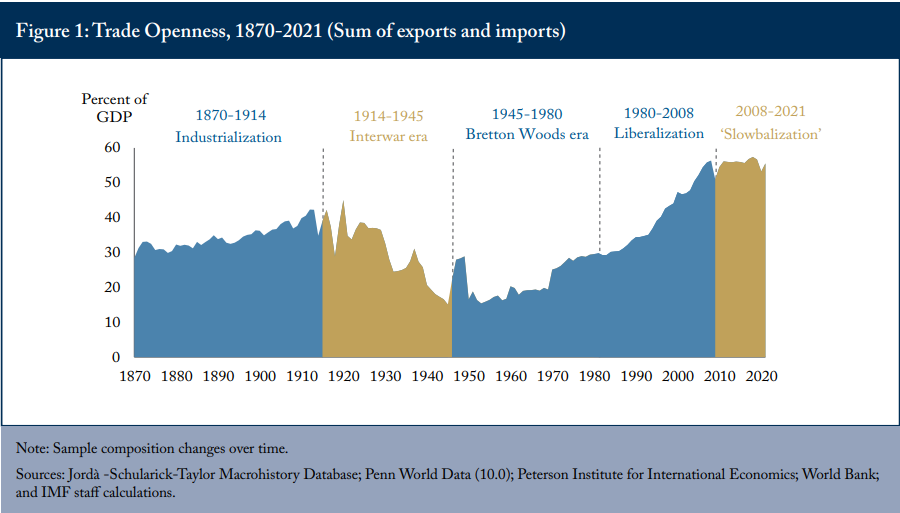
    The rise and fall of international economic governance are reflected in the cycles of outcome-based measures of globalization. Looking at trade openness, i.e., the sum of exports and imports as a percentage of GDP, the IMF divides the process of global integration into five periods: (i) the
    industrialization era, (ii) the interwar era, (iii) the Bretton Woods era, (iv) the liberalization era, and (v) “slowbalization” (Figure 1).
    Many factors have contributed to the plateauing of trade openness in the last 10 to 15 years. The fallout from the Global Financial Crisis was severe and the recovery was tepid. Brexit, with its inward-looking perspective, has disengaged the UK from Europe.
    Populist protectionism has led to “re-shoring” in an effort to address rising inequalities and labour’s falling share of national income. There has been far-reaching cyclical and structural fallout from COVID-19.
    And while the AI revolution portends significant opportunities, uncertainties over labour displacement abound.
    Geopolitics has also played a critical role. Security concerns have become more important, trumping economic issues in the eyes of many. This has led to multiple sanctions, along with export and investment controls, being imposed to protect national security interests.
    The IMF has carried out several modelling exercises that estimate the consequences of fragmentation if further trade and technology barriers were to be imposed. The studies employ a variety of assumptions regarding trade restrictions and technology de-coupling. In summary, the cost of further fragmentation ranges from 1.5 to 6.9 percent of global GDP. As with all modelling exercises, a degree of caution is warranted. At the same time, these studies should not be viewed as upper-bound estimates because they disregard many other transmission channels of global economic integration.
  2. De Jure and De Facto Globalization
    In assessing the evolution of globalization, however, it would be misleading to focus too narrowly on outcome-based measures such as the trade-to-GDP ratio depicted in Figure 1.
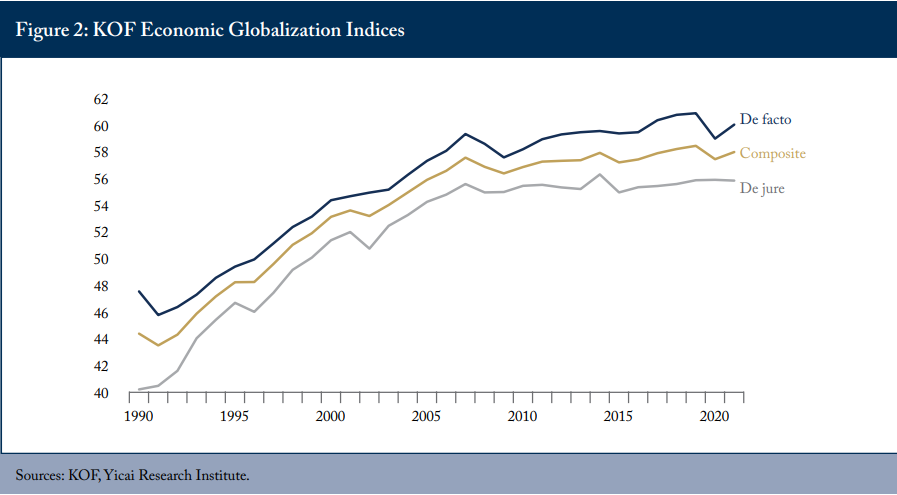
    The data compiled by KOF, a Swiss research institute, provide a more nuanced view of global economic integration. KOF constructs globalization
    indices that measure integration across economic, social, and political dimensions. Its globalization indices are among the most widely used in academic literature. KOF’s data set covers 203 countries over the period 1970 to 2021. Our focus here is on KOF’s economic indices.
    In terms of economic globalization, KOF looks at the evolution of finance as well as trade. Moreover, one of the unique aspects of KOF’s work is that it examines globalization on both de facto and de jure bases.
    KOF’s de facto globalization indices measure actual international flows and activities. In terms of trade, it includes cross-border goods and services flows and trading partner diversity. For financial globalization, its indices measure stocks of international assets and liabilities as well as cross-border payments and receipts.
    KOF’s de jure globalization indices try to capture the policies and conditions that, in principle, foster these flows and activities. For trade globalization,
    these include income from taxes on trade, non-tariff barriers, tariffs, and trade agreements. De jure financial globalization is designed to measure the institutional openness of a country to international financial flows and investments. Variables to measure capital account openness, investment restrictions and international agreements and treaties with investment provisions are included in these indices.
    The trends in KOF’s de facto and de jure economic globalization indices are shown in Figure 2. Both globalization measures increased rapidly from 1990
    until the Global Financial Crisis. Both measures subsequently plateaued. In 2020, as the global pandemic took hold, the de facto index plunged to its
    lowest level since 2011. In 2021, it recovered half of the distance it lost the previous year. The de jure index has essentially been flat for the last decade.
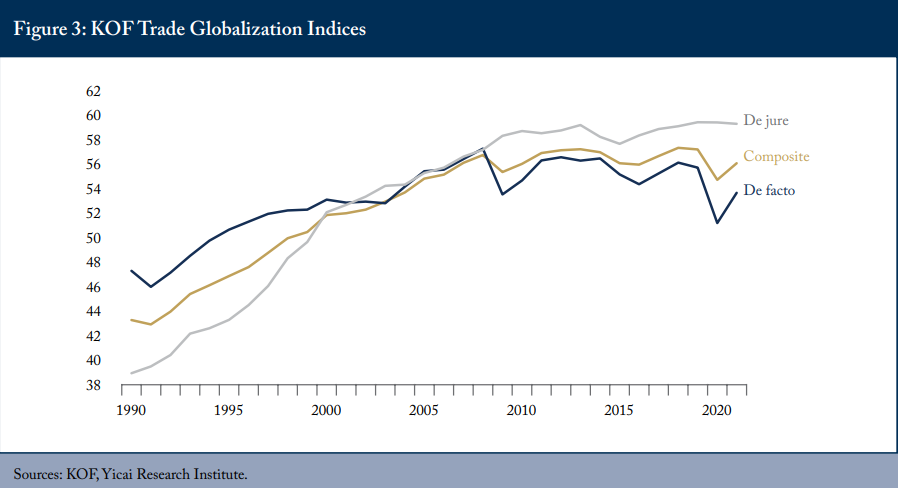
    There has been a sharp divergence between KOF’s de facto and de jure trade globalization measures in the last five years (Figure 3). By 2020, de facto trade globalization had dropped to a 25-year low. Although it recovered somewhat in 2021, it remains well below the average of the last decade. In contrast, de jure trade globalization levelled off after the Global Financial
    Crisis. It reached a modest new high in 2019 and has essentially remained there since then.
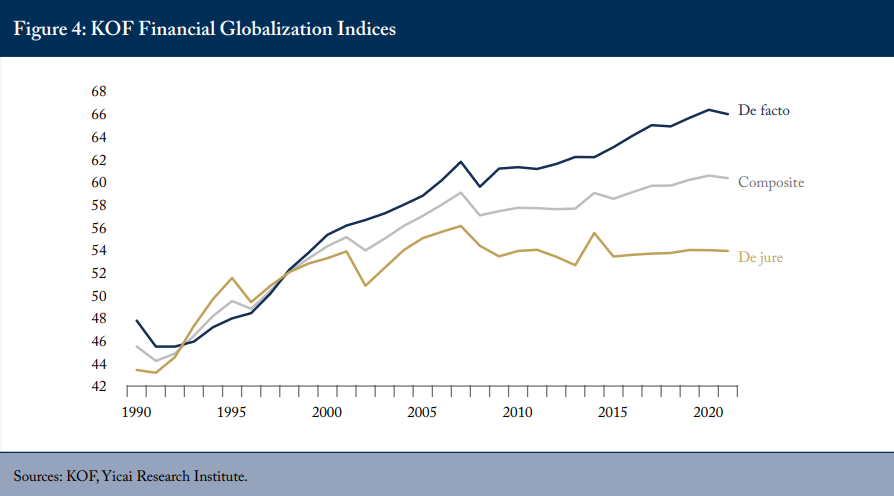
    The trends in financial globalization are almost the reverse of those of trade globalization. De facto financial globalization continued to increase through
    2020 and dipped slightly in 2021. De jure financial globalization has been essentially flat over the last two decades (Figure 4).
    The KOF researchers provide convincing econometric evidence that economic globalization supports per capita GDP growth. Importantly,
    their analysis shows that institutions matter. They demonstrate that the positive impact on growth from trade and financial globalization comes from
    institutional liberalization rather than greater economic flows. Through a series of panel regressions, the researchers show that it is the de jure trade and financial globalization indices that are correlated with more rapid per capita GDP growth. In contrast, there is no significant relationship between growth and the de facto indices.
    KOF’s conclusions are consistent with the work of Rodrik, Subramanian and Trebbi who examine the contributions of institutions, geography, and trade
    in determining relative income levels around the world. They find that institutional quality “trumps everything else.” Once institutions are controlled for, conventional measures of geography have weak effects on incomes and the contribution of trade is generally not significant.
    Thus, to recapture the economic benefits of free trade and open markets, countries need to recommit to finding ways to further de jure globalization; that is, putting in place the institutional building blocks in
    support of enhanced trade and financial integration.
  3. Geopolitical Realities
    Institutional reform, however, requires trust and mutual respect among partners. Many would argue that such trust and respect is in limited supply
    today, especially between the United States and China. The United States is willing to endure the costs of heightened protectionism to purportedly
    strengthen the resilience of its economy and secure greater political security. This has resulted in multiple sanctions, particularly in areas of digital technologies.
    In response, China, amongst other measures, has imposed export controls on critical minerals used in advanced technology in defence of its geopolitical goals.
    Yet, as discussed by Fareed Zakaria in a Foreign Affairs article, The Self-Doubting Superpower, China has become the second largest economy in the world richer and more powerful within an integrated global economic system; a system that if overturned would result in severely negative consequences for China.
    For the United States, its inherent strength has been its commitment to open markets and its vision of the world that has considered the interests of others. In many respects, it remains uniquely capable of playing the central role in sustaining the global economic system.
    Following a recent trip to China, Treasury Secretary Yellen stated that “the relationship between the United States and China is one of the most consequential of our time,” and that it “is possible to achieve an economic
    relationship that is mutually beneficial in the long-run – one that supports growth and innovation on both sides.”
    This means that the United States would need to accommodate China’s legitimate efforts to sustain a rising standard of living for its citizens, while
    deterring illegitimate ones. For China, it would mean a clear and abiding commitment to an open, rules-based global economic system.
    It appears that there is currently no clear path forward for this change in mindset, given what many see as insurmountable geopolitics in both the United States and China. Yet, history shows that achieving and sustaining long-term economic growth is in every country’s best interest, and that such growth is best secured through ongoing global economic integration.
  4. A Way Forward
    Recent discussions at the IMF’s Annual Meeting in Marrakech about IMF quota reform, including quota increases and realignment in quota shares to
    better reflect members’ relative positions in the global economy, are important signals of possible renewal.
    Similarly, calls to revamp the World Bank’s mandate, operational model, and ability to finance global public goods, such as climate transition, reflect a growing consensus that the Bretton Woods Institutions must change in the face of today’s realities.
    But institutional renewal alone is insufficient.
    Broad-based accession to the CPTPP represents a unique opportunity to strengthen global governance overall, and to address common challenges in ways that benefit both countries as well as the global economy.
    The CPTPP sets a high bar, requiring countries to:
  • eliminate or substantially reduce tariffs and other
    trade barriers;
  • make strong commitments to opening their markets;
  • abide by strict rules on competition, government
    procurement, state-owned enterprises, and
    protection of foreign companies; and
  • operate within, as well as help promote, a
    predictable, comprehensive framework in the critical
    area of digital trade flows.
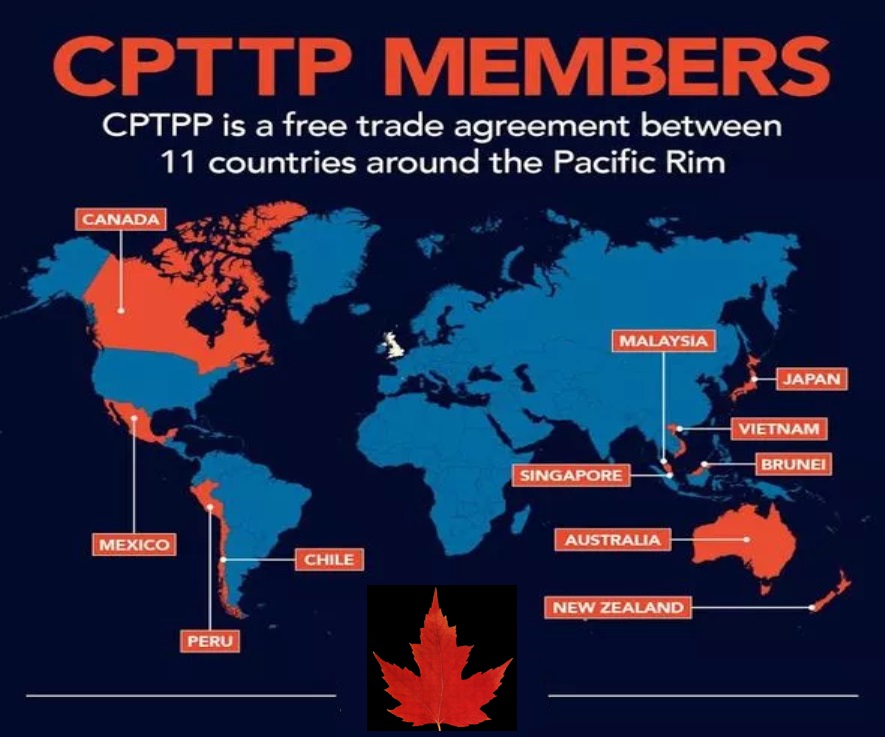
    The United Kingdom formally agreed to join the
    CPTPP in July 2023. Once its Parliament ratifies
    the Agreement, the UK will join Australia, Brunei
    Darussalam, Canada, Chile, Japan, Malaysia, Mexico,
    New Zealand, Peru, Singapore, and Vietnam in the
    trading block.
    Such a diverse membership clearly demonstrates
    that countries do not have to be geographically close
    to form an effective trading block.
    A half-dozen other countries have also applied
    to join the CPTPP, with China’s application having
    been the earliest received.
    Petri and Plummer estimate that joining the
    CPTPP would yield large economic benefits for
    China and the global economy. For the latter, the
    boost to global GDP would be in the order of $600
    billion annually. The United States in joining would
    gain preferential access to rapidly growing Pacific Rim
    markets. Much of the additional market access would
    come from China’s opening of its service sector.
    Industrial policy and state-owned enterprises,
    however, will continue to play a much larger role
    in China than they do in Western economies. The
    key for China is to demonstrate that a socialist
    market economy (i.e., one that has a mixed capitalist
    market and government-controlled economy) can be
    consistent with fair trade.
    The process of China joining the CPTPP will
    undoubtedly be time-consuming. It took 15 years of
    negotiations before China joined the WTO in 2001.
    This was five more years, on average, than it took
    those countries that joined after 1995.
    The challenge for Canada, and subsequent chairs,
    is to ensure that China’s entry maintains the high
    standards CPTPP members have met so far.
    Broad based accession to the CPTPP, including
    the United States and China, however, is best viewed
    Page 8 Verbatim
    Trusted Policy Intelligence
    as a long-term goal. China would need to undertake
    unprecedented reforms, involving complex political
    challenges, including Taiwan’s potential accession. For
    its part, the United States would need to step well
    back from its current mercantilist mind set, which
    risks worsening.

Canada as Chair in 2024

While efforts to renew existing global institutions to better reflect current economic realities are important, we see promoting broad accession to the CPTPP as the best means to turn today’s global economic fragmentation around.
At the heart of the global economic system is the open trading framework put in place at Bretton Woods in 1944. Many would see today’s fragmentation as becoming more acute, rather than getting better, due to geopolitical divisions.
But further fragmentation is no way to save the open, rules-based global trading system that has served so many countries so well for so long.


While restrictions reflecting legitimate security concerns are inevitable, an open, competitive trading system remains in the best interests of all countries.
As 2024 Chair of the CPTPP Commission, Canada has an opportunity to contribute to turning around the fragmentation of today’s global trading system and moving the global economy back along a path towards a
more open, rules-based trading system.


An important goal for Canada’s chairmanship would be to clarify the rules of accession. This would be a big step forward in sustaining expansion of CPTPP. While today’s geopolitical realities surrounding the applications of both China and Taiwan represent a particularly challenging area to advance, significant progress in other areas must be made. It should accelerate inclusion of Costa Rica, Uruguay, Ecuador, and Ukraine, all of whom have applied. And it should help move forward discussions with South Korea, Indonesia, Philippines, and Thailand, who have expressed interest in joining.


Over and above all that, however, at a more strategic level, Canada should also champion discussion and understanding of why building towards the long-run goal of broad accession to CPTPP is important. Open and inclusive institutions are at the core of providing the benefits of global economic integration to all countries.


Canada will also be Chair of the G7 Summit in 2025. This, along with the various ministerial and officials’ meetings leading up to the Summit, offers another critical avenue for Canada to take a leadership role in sustaining and promoting an open, rules-based global trading system.

    Most Famous And Weirdest Retired Soccer Jersey Numbers


    With the retirement of Francesco Totti five years ago, fans had been wondering if his team, Roma, would retire his famous number 10 shirt. In the end, they did not.   

    That got us thinking, what are the most famous shirt retirements in Soccer – Football history? Let’s take a look.

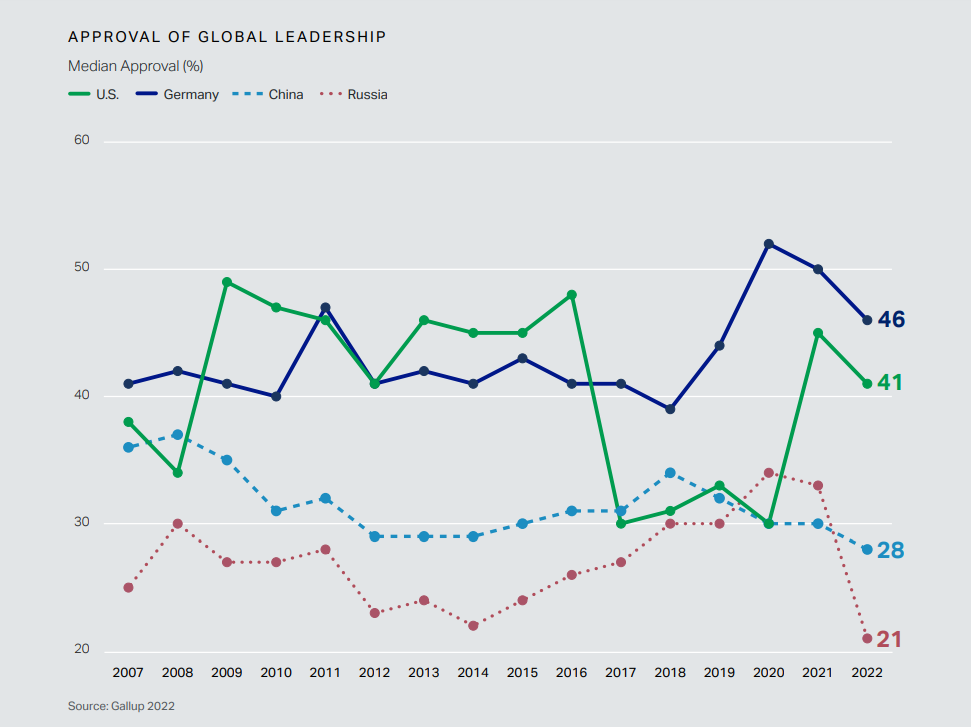
    USA, Germany Ratings Weaker As Russia Suffers Global Rebuke

    U.S. leadership ratings retreated after the U.S. withdrew from Afghanistan, with most of the world disapproving of Russia’s leadership after its invasion of Ukraine 

    Washington, D.C. — A new Gallup report based on interviews in 137 countries in 2022 shows the honeymoon is over for U.S. President Joe Biden, and Germany’s image has lost some of its clout under new Chancellor Olaf Scholz. Though global approval ratings of the U.S. and Germany dipped in 2022, both countries are still in much stronger positions than Russia — which saw its ratings plunge after its invasion of Ukraine — and China.

    German Chancellor Olaf Scholz (L) with Canada Prime Minister Justin Trudeau (R)

    Here are some of the key findings from Gallup’s Rating World Leaders 2023 report:

    • U.S. leadership ratings around the world rebounded in 2021 in the first year of Biden’s presidency but declined in his second.
    • Ratings for the U.S. first slipped after withdrawal from Afghanistan in August 2021.
    • There were double-digit decreases in U.S. leadership approval in 36 countries between 2021 and 2022 — mostly in Europe and the Americas.
    • Russia’s approval ratings plunged worldwide after the invasion of Ukraine, and the majority of adults around the world now disapprove of Russia’s leadership.
    • Majorities in 81 of the 137 countries surveyed disapproved of Russian leadership.

    A look back to last year’s rankings and previous years.

    Implications Beyond 2023:

    One of the biggest foreign policy challenges facing the U.S. and its allies in 2023 and beyond will be to ensure the transatlantic unity that was so greatly tested in 2022 does not fracture as Russia’s war against Ukraine continues.

    The images of the U.S. and Germany are in slightly weaker positions than before the war started, but they are still in much stronger positions than Russia. But perhaps more importantly, the soaring disapproval of Russia’s leadership in all parts of the world shows they are not the only countries that care.

    High Altitude Fun This Spring and Summer In Colorado Mountain Towns

    Colorado Come To Life Logo

    Colorado’s mountain towns are known worldwide as an incredible wintertime paradise for skiers and snowboarders, but in summer, the same high-altitude ski towns become gorgeous playgrounds for outdoor adventure and family fun.

    When the powder melts, popular slopes turn into verdant hiking and mountain biking trails and nearby rivers and lakes rise to new levels, ideal for fishing and boating. Colorado’s ski towns are not just about communing with nature — there is plenty for those who prefer less of a workout. The summer months welcome dozens of festivals celebrating music, food, art and more. From luxurious Aspen to historic Durango, take a look at some Colorado ski towns that shine in the summertime.

    Colorado Ski Towns AspenSun salutations in Aspen

    Head to luxurious Aspen for a total mind, body and spirit retreat this summer. Enjoy the fresh air and valley views with a session of mountain-top Hatha yoga at 11,000 feet, then cap off your mountain getaway with a mind-blowing body treatment at Remède Spa at the St. Regis Aspen, voted #1 spa in the world by Travel + Leisure.

    Colorado Ski Towns Mountain TrainsTravel back in time in Durango and Silverton 

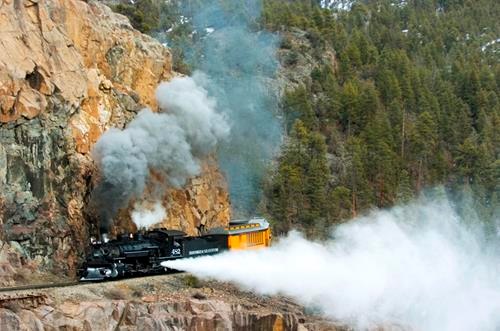
    The Durango and Silverton Narrow Gauge Railroad winds through the same tracks settlers of the Old West took over a century ago. Today, tourists climb aboard the historic locomotive for a 45-mile trip through the still-wild San Juan Mountains to Silverton, where they can lunch and shop before re-boarding for the trip home. The train climbs nearly 3,000 feet to Silverton and the high mountain air will be on average about 10 degrees cooler than in Durango, so remember to pack layers and drink plenty of water before this high-altitude ride.

    Colorado Ski Towns BreckenridgeGo local in Breckenridge

    Head to local watering hole Breckenridge Brewery & Pub for spectacular views of the surrounding peaks, a relaxed patio atmosphere, refreshing beer and delicious Colorado comfort food. Located in the charming and historic mountain town of Breckenridge, this favourite hotspot is worth traveling for. Since 1990, local Breckenridge Brewery has grown into one of the most successful craft beer and restaurant companies in the USA. After dessert, stroll down quaint Main St., catch some live music and shop-till-you-drop at some of Colorado’s best local boutiques.

    Colorado Ski Towns Steamboat SpringsFill your creel in Steamboat Springs

    The Yampa River begins in the Flattops Mountain Range and moves through downtown Steamboat Springs, providing easy access to almost endless flat-water. The river is one of the best northern pike and smallmouth bass fisheries in the U.S., so warm up the BBQ and cast your line. Excellent fishing opportunities can also be found in one of the most plentiful trout fisheries in Colorado just upstream from Yampa River State Park.

    Colorado Ski Towns Keystone Bike ParkTwo-wheel adventures in Keystone

    Nestled between three mountains, Keystone is perfect for summer visitors looking for a world-class mountain biking adventure. Keystone Bike Park is the ultimate mountain-bike destination, offering 57 trails across 88 kilometers of terrain. The infamous Drop Zone, rated one of the best in the country, has progressive terrain for all riders. With rock gardens, drops, and high-speed features there is never a dull moment on your bike. There are also more than 100 miles of single track for touring. Or, for a more relaxing afternoon, take a cruiser ride or road bike along miles of paved bike path. Have I missed one or two other attractions that are must-see-must-do? Drop your ideas in the comments section below. For the Silo, Melissa Medeiros.

    Worlds Leading Architects Include Sir Norman Foster

    Who is Sir Norman Foster?  A British born architect world renowned for his ground-breaking interpretations of neo futuristic and post-modern design, that’s who.

    Perhaps most famously known for designing and constructing “The Gherkin” tower in London, England at a cost of 138 million pounds. This office building is sure to turn the heads of tourists and Londoners alike.

    Best Countries For Post Covid Study Abroad Programs

    As more students are heading towards graduation each year, the struggle to get a graduate job is becoming more difficult, and students have to ensure strong CVs in order to stand out from the crowd.  The Covid pandemic has put a halt to students having options in countries other than their own. However, with a bit of luck, the pandemic will continue to end and travel restrictions will be eased. When that happens, international students will finally be allowed to return to studying abroad, learning new skills and experiencing new cultures.

    Although this may be seen as one long holiday to those not in the know, those that study abroad will, in fact, have a higher starting salary, earning an extra 5% more than those who don’t. On average, this could amount to an extra £75,000 ($126,709 CDN at time of this article)  over a career.

    Study Abroad Graduates

    Not only will they earn more, they are also almost ¼ less likely to be unemployed after graduation. So although all study abroad programs come with a cost, with readily available bursaries, this opportunity is accessible to any student who is hoping to boost their employ-ability and is an opportunity that should be taken.

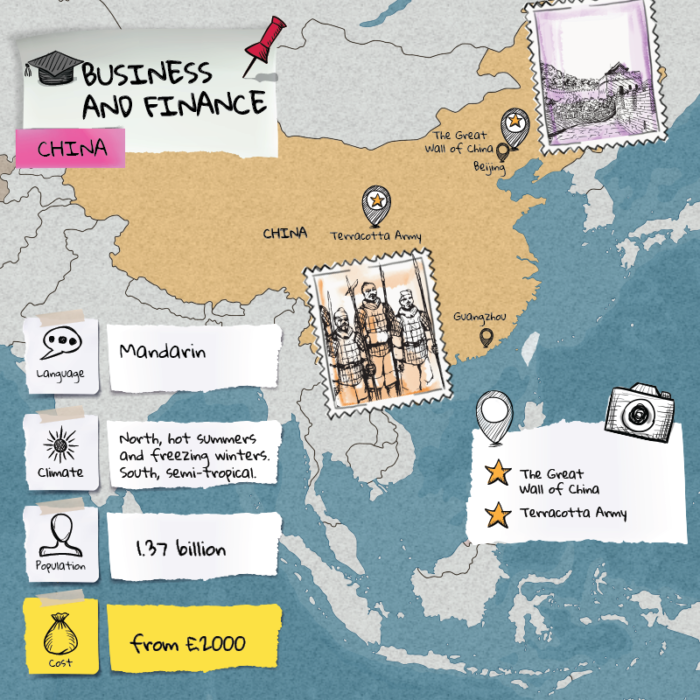
    Business and Finance Students – China: As the second largest economy in the world, China offers endless business opportunities, whilst encouraging students to learn the most widely spoken language in the world, Mandarin.

    Business and Finance Studies in China

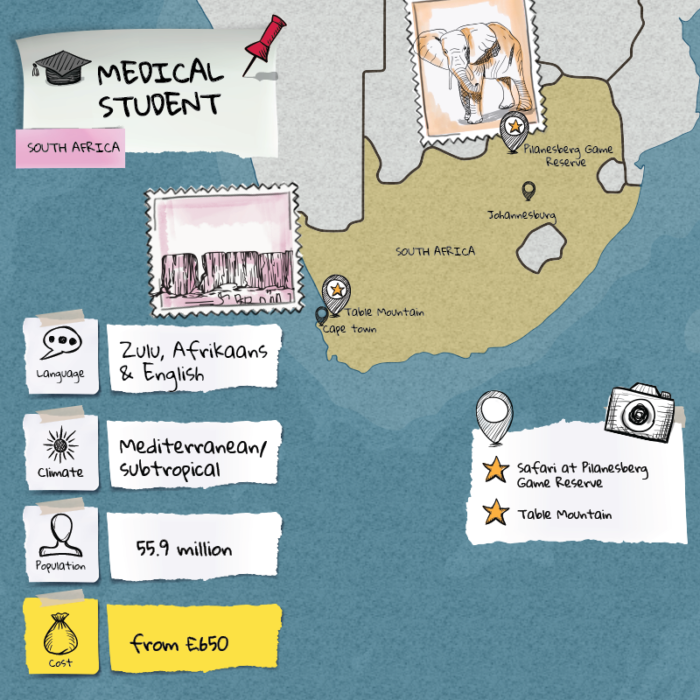
    Medical Students – South Africa: Of the 234 million surgical procedures made every year, just 4% of these happen in the poorest third of the global population. When medical students choose to volunteer in South Africa, they will gain experience in a different medical setting, and all whilst giving back.

    Medical Student study in South Africa

    Education Students – Australia: As an English-speaking country, Australia is the perfect study abroad opportunity for future teachers. With the average UK class size standing at 30 pupils, the Australian’s average size of 16 will be a lot easier to manage. Plus for those who decide to stay in Australia long-term, new teachers can expect to earn £40,000+ ($67,572 CDN) compared to the £22,000 ($37,164 CDN) starting salary in the UK.

    Education studies in Australia

    Conservation – Madagascar: Conservation is a growing industry as concern grows for animals and the environment. As the fourth largest island in the world, and as home to species not found anywhere else, Madagascar is the perfect opportunity for a once in a lifetime opportunity for conservation enthusiasts.

    Conservation Studies in Madagascar

    Art & Design Students – Italy: From ancient and classic sculpture to modern day art, Italy is the perfect place to learn and gain an even greater passion for art history.

    Art and Design Studies in Italy

    Humanities Students – USA: With three of the top five humanities universities based in the USA, America offers a vast array of historical and literary studying options. This time abroad will open up options for students who are wanting to work in academia, journalism or teaching.

    Humanities Studies in the United States
    For the Silo, Bekki Ramsay/storageworld.

    US/Canada Poll- Quick Economic Recovery From COVID-19 Unlikely

    Many think it’s unlikely the economy will recover quickly once COVID-19 lockdown is over

    Most negative about an economic recovery in hard-hit countries except China

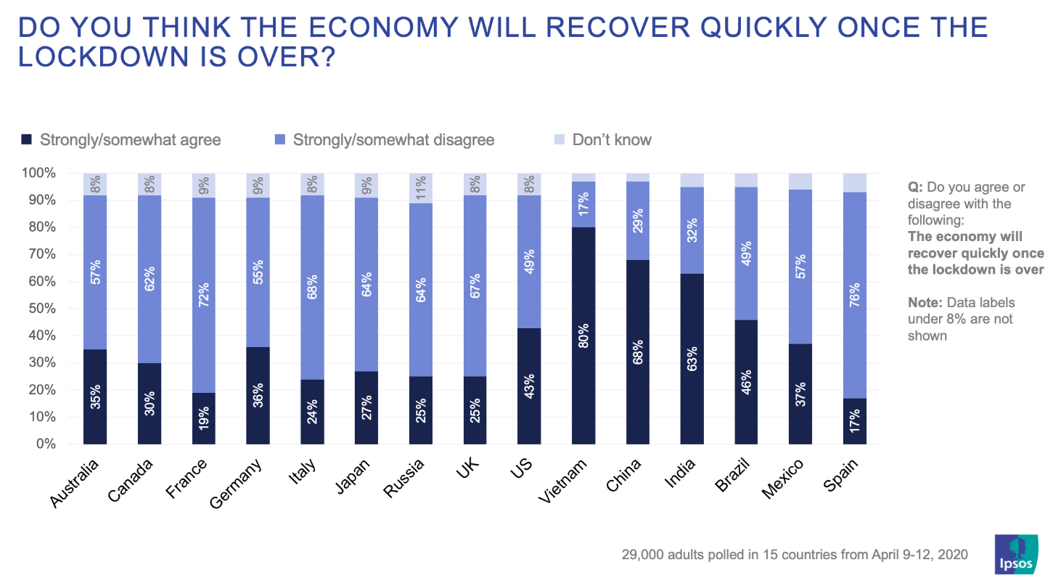
    Paris, France April , 2020 — A majority of people in 10 of the 15 countries polled by Ipsos disagree that the economy will recover quickly once the lockdown from the coronavirus pandemic is over – suggesting a lasting impact.

    People in Spain (76%), France (72%), Italy (68%), the United Kingdom (67%), Russia and Japan (64%), and Canada (62%) feel most strongly against a quick economic recovery in a survey of nearly 29,000 respondents conducted from April 9 to 12. Those in Vietnam (80%), China (68%) and India (63%) are most likely to say a quick recovery will take place.

    At the same time, one of the countries most divided on this question is the world’s largest economy – the United States  ̶  with nearly half of those surveyed (49%) disagreeing on a quick recovery, while 43% think it will happen.

    V2, wave 8, pr 2, graph 1.png

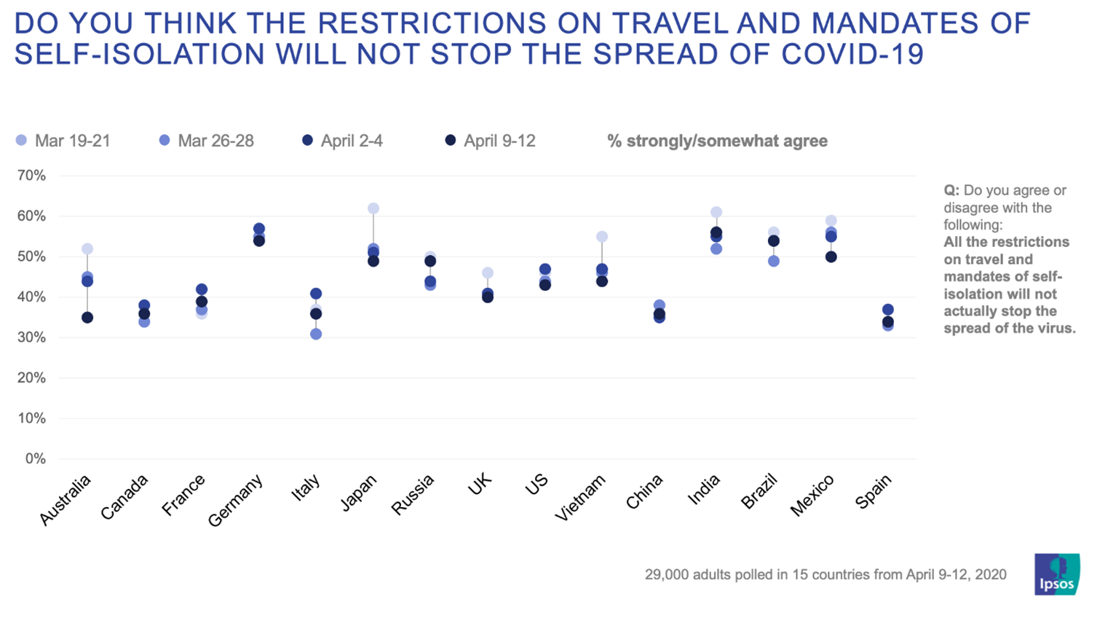
    In terms of actions taken, majorities in India (56%), Brazil and Germany (54%) say all of the restrictions on travel and mandates for self-isolation will not stop the spread of COVID-19. That compares with majorities in China (63%), Australia (59%), Italy and Canada (58%), Spain (57%), the U.K., and Vietnam (54%) and France (51%) who think the restrictions do work.

    Countries that have the seen the most significant change on this measure since mid-March are the ones where optimism has increased. Australia saw a drop of 17 percentage points in the number of those that agree the measures will not stop the spread of the pandemic, while the number of respondents in Japan fell by 13 points.

    V2 wave 8, pr 2, graph 2.png

    About the Study

    These are the results of an Ipsos survey conducted April 9th to 12th , 2020 on the Global Advisor online platform among 28,000 adults aged 18-74 in Canada and the United States and 16-74 in Australia, Brazil, China, France, Germany, Italy, India, Japan, Mexico, Russia, Vietnam and the United Kingdom. Where available, tracking results from previous studies, conducted through March and selected results from February are referenced by date.

    The sample consists of approximately 2,000 individuals in each country with the exception of Vietnam each at 1,000. The samples in Australia, Canada, France, Germany, Italy, Japan, the U.K. and the U.S. can be taken as representative of these countries’ general adult population over age 16 or 18 (as above) and under the age of 75. The sample in Brazil, China, India, Mexico, Russia, and Vietnam is more urban, more educated and/or more affluent than the general population and should be viewed as reflecting the views of the more “connected” segment of the population. The data is weighted so that each market’s sample composition best reflects the demographic profile of the adult population according to the most recent census data. Sample sizes may vary in prior waves. 

    Where results do not sum to 100 or the ‘difference’ appears to be +/-1 more/less than the actual, this may be due to rounding, multiple responses or the exclusion of don’t knows or not stated responses. The precision of Ipsos online polls are calculated using a credibility interval with a poll of 1,000 accurate to +/- 3.5 percentage points. For more information on the Ipsos use of credibility intervals, please visit the Ipsos website (www.Ipsos.com).

    Sugar Battery Set To Power Phones, Tablets And Other Devices

    Catalyzing Commercialization Sugar could some day be used to power smartphones, tablets, and other electronic devices thanks to a recent breakthrough by Blacksburg, VA-based Cell-Free BioInnovations, Inc. It might seem strange to use an ingredient found in cupcakes and cookies as an energy source, but it’s not, as most living cells break down sugar to produce energy. And, interestingly, the energy density of sugar is significantly higher than that of current lithium-ion batteries.

    Working under a Small Business Innovation Research (SBIR) grant from the National Science Foundation, a research team led by Y-H Percival Zhang, Chief Science Officer of Cell- Free BioInnovations and an associate professor of biological systems engineering at Virginia Tech, has successfully demonstrated the concept of a sugar biobattery that can completely convert the chemical energy in sugar substrates into electricity.

    As reported in the January 2014 issue of Nature Communications, this breakthrough in sugar-powered biobattery can achieve an energy-storage density of about 596 A-h/kg — an order of magnitude higher than the 42 A-h/kg energy density of a typical lithium-ion battery.

    A sugar biobattery with such a high energy density could last at least ten times longer than existing lithium-ion batteries of the same weight, drastically reducing how often users need to recharge their electronic devices. This nature-inspired biobattery is a type of enzymatic fuel cell (EFC)— an electrobiochemical device that converts chemical energy from fuels such as starch and glycogen into electricity.

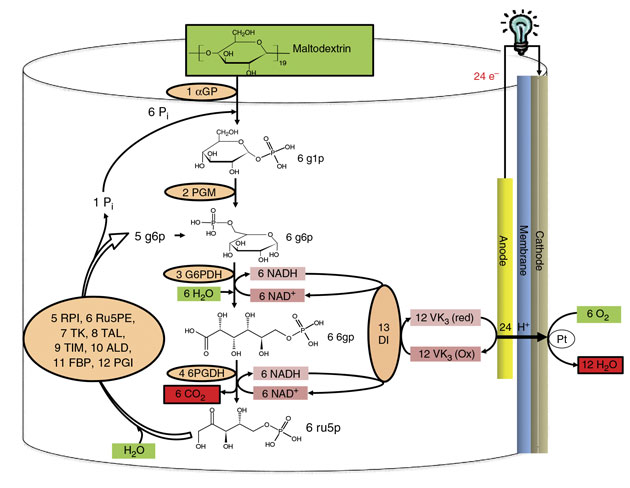
    While EFCs operate under the same general principles as traditional fuel cells, they use enzymes instead of noble metal catalysts to oxidize the fuel. Enzymes allow for the use of more-complex fuels (e.g. glucose), and these more-complex fuels are what give EFCs their superior energy density. For example, the complex sugar hexose can release 24 electrons per glucose molecule during oxidation, whereas hydrogen (a fuel used in traditional fuel cells) releases only two electrons. Until now, however, EFCs have been limited by incomplete oxidation, releasing just two to four electrons per glucose molecule.

    “We are not the first who proposed using sugar as the fuel in the biobattery,” says Zhiguang Zhu, a senior scientist at Cell-Free BioInnovations. “However, we are the first to demonstrate the complete oxidation of the sugar in the biobattery, enabling our technology to have a near-theoretical energy conversion yield that no one has ever reported.”

    Zhang and his team constructed a synthetic catabolic pathway (a series of metabolic reactions that break down complex organic molecules) containing 13 enzymes to completely oxidize the glucose units of maltodextrin, yielding nearly 24 electrons per glucose molecule.

    We put specific thermostable enzymes into one vessel to constitute a synthetic enzymatic pathway that can perform a cascade of biological reactions the sugar, converting it into carbon dioxide, Zhang says. Unlike natural catabolic pathways for the oxidation of glucose in cells, the designed synthetic pathway does not require costly and unstable cofactors, such as adenosine triphosphate (ATP), coenzyme A, or a labile cellular membrane. The researchers used two redox enzymes that generate reduced nicotinamide adenine dinucleotide (NADH) from sugar metabolites. NADH, a reducing agent involved in redox reactions, is a natural electron mediator that carries electrons from one molecule to another. They also used ten other enzymes responsible for sustaining metabolic cycles and an additional enzyme that transfers electrons from NADH to the electrode.

    This new synthetic pathway enables the biobattery to extract the theoretical number of electrons per glucose unit and thereby use all the chemical energy in the sugar. This, the team reports, represents a significant breakthrough.

    In addition to its superior energy density, the sugar biobattery is also less costly than the Li-ion battery, refillable, environmentally friendly, and nonflammable. While researchers  continue to work on extending the lifetime, increasing the power density, and reducing the cost of electrode materials for such a battery, they hope that the rapidly growing appetite for powering portable electronic devices could well be met with this energy dense sugar biobattery in the future. For the Silo, Zhiguang Zhu, chief scientist at”The Sweet Battery Project”.

    This technology was funded through the America’s NSF Small Business Innovation Research Program.