
|
Category Archives: Culture

How Apple Parallels My Life

When I think back to the 1980’s I have mostly fond memories. It was time of great fun and discovery for me personally. I had both Commodore and Apple computers and a hairstyle that is happy to remain in my past. I listened to cool groups like “Twisted Sister” and wouldn’t publicly admit that I enjoyed “Culture Club”. Being in high school, I was painfully shy and didn’t have a lot of success with girls.
Apple had a pretty similar experience if you think about it. They were a little shy and reserved, but very much loved by those who understood them. They didn’t go out much – choosing to stay in schools and in a very few select homes. They had their share of identity crisis’ in the early 80’s and tried to break free with a whole new persona called “Macintosh” in 1984.
They walked around confused between educational, business, and recreational use and staggered out of the fog towards the end of the decade.
The 1990’s brought about a new confidence and independence. I had started a business just at the end of the 80’s and took my experience to heart as I tried to find the right niche for me. I knew that computers was where I was meant to be and grew a business from nothing to exceptional sales in a short time.

I also saw the market hinge and my sales erode and I wasn’t quite able to move fast enough to recover my previous glory.
Apple saw their market share grow and decline in the 90’s as well. They knew that computers were where they were meant to be, but they couldn’t decide if they were the company to make them. They tried licensing out their operating system to others in a move that ultimately
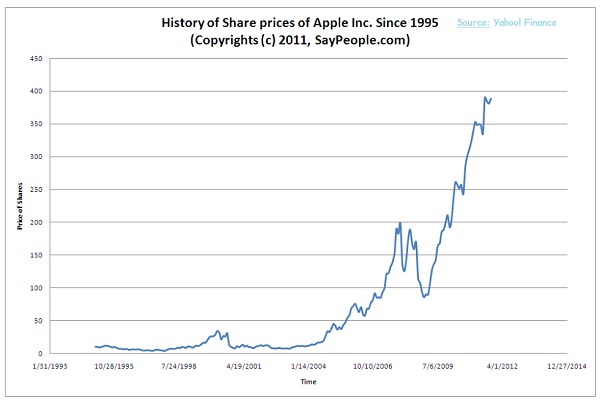
muddied the market and left their loyal customers wondering just exactly where they were going next. Following graph courtesy of www.saypeople.com
The 2000’s became a year of maturity for me. More confident in the path I was following, I followed my dreams to open a computer museum and finally saw it through in 2005. I refocused my energies with my passion for video games to acquire the largest collection in Canada while at the same time educating others along the way.
I worked my way towards a global following for those that have shared my vision. Apple made the move from niche computer to dedicated
music device, to a more advanced smart phone in the 2000’s. They grew their loyal following in the computer market by making some radical
changes to their core operating system and integrating their new consumer devices flawlessly. They became the company they had always
dreamed they could be.
Today, I ’m following my dreams and am no longer the shy, awkward guy I was in high school. I ’m successful and I ’ve moved on from “Culture Club”. My life is very interesting because I like to keep one foot in the past to enjoy the good times, while putting another foot forward into the exciting future.
The best is yet to come, and I think the same is true for Apple. For the Silo, Syd Bolton. Check out www.pcmuseum.ca in Brantford,Ontario.

5 Dog Myths That Can Lead To Tragedy
It’s the kind of headline that makes dog behaviorist and author Melissa Berryman’s blood boil: “Dog on Trial after Attacking Child.”
According to the report, a pointer-hound mix named Milo, a dog that had never caused any problems, was napping on the couch in his home in January when a 6-year-old neighbor arrived. The boy sat down on the couch and started petting the sleeping dog. The child was bitten in the face after being left alone with the dog. No one witnessed the incident.
“The dog was put on trial for an accident that’s preventable when people understand what our behavior means to dogs,” says Berryman, who has spent years studying dog bites and is the author of “People Training for Good Dogs:What Breeders Don’t Tell You and Trainers Don’t Teach”. She also teaches classes on safety and liability protection for dog owners, provides community safety solutions andpromotes the right way to behave around dogs through The Dog Owner Education and Community Safety Council

“Dog owners are set up for failure because our default is to blame the dog. Owners get fined or sued for repeated human mistakes. Dogs often pay with their lives for mistakes made by people,” Berryman says.
That’s the case for the American canine Milo. At his Feb. 27 hearing in Mansfield, Mass., selectmen voted to euthanize him. The owners have 10 days to appeal.
“Prevention has to be the priority,” Berryman says. “Sure, it’s cute to us when the baby hugs the dog. But dogs do not say ‘I love you’ with a hug. When one dog ‘hugs’ another, it’s an act of domination. It should be a given that people do not hug dogs. Yet the message for children to hug dogs is prevalent in our culture and the facial bites continue.”
What are some other common misperceptions people have about dog and human behaviors – and how you can change to prevent catastrophes?
Berryman shares 5:
1. Myth: When greeting a new dog, you should extend your hand for it to sniff.
Fact: Dogs don’t sniff each other’s paws when greeting and like us prefer to be asked before being touched by a stranger. Instead, ask the owner and then also ASK the dog by tapping your hand on your thigh simulating a wagging tail and act friendly. The dog will relax and nuzzle you, need to sniff more to get to know you or will stay away.
2. Myth: Breed dictates temperament.
Fact: Dogs, first and foremost, are predatory canines that live in groups. Breeds are generalizations that enable breeders to better market the product they sell. What dictates temperament is their pack position, the role you, the human, play in the group and the rank of group members. Dogs have superior/inferior interrelationships and command and defer accordingly. And just as siblings in a family have the same parents yet are very different, one cannot purchase behavior by buying a dog of a certain breed.
3. Myth: When a dog charges, there is nothing you can do.
Fact: When a dog charges you, it’s trying to decide if you are friend, foe or prey. Their eyesight is poor so hats, sunglasses and other objects you may push or carry can scare them. Act like a friend and pretend you are not afraid. Stand facing the dog with relaxed body language, tap your thigh with your hand and use a high-pitched voice for a friendly greeting like “good girl.” Fake it if you are afraid.
4. Myth: Posting a “Beware of Dog” sign will protect you from liability if your dog injures someone on your property.
Fact: Dogs can only read body language. These signs make people react to your dog in a fearful manner, which is more likely to cause a dog to consider visitors prey and bite them. Use No Trespassing and Dog At Play signs instead.
5. Myth: Only bad dogs owned by bad people bite.
Fact: Even responsible dog owners operate under the same false beliefs about human and canine behavior. They are also encouraged to take a passive role concerning their dog. Any dog can bite especially when it feels personally threatened, is exposed to prey behavior or thinks that someone lower in rank threatens its resources, such as food, toys, bedding and the attention of its owner.
About Melissa Berryman– author of People Training for Good Dogs:What Breeders Don’t Tell You and Trainers Don’t Teach
A Massachusetts animal control officer from 1993 to 1999, Melissa Berryman is a US national dog bite consultant who founded the Dog Owner Education and Community Safety Council (www.doecsc.org) and works with communities, rescue groups, dog owners and bite victims. She also designed and teaches a safety and liability class for dog owners, from which “People Training for Good Dogs” is derived. She has worked with more than 10,000 dogs. Berryman holds an undergraduate degree in Animal Science Pre-Veterinary Medicine, and a master’s in Public Administration. For the Silo, Ginny Grimsley.

Letters To The Silo, Life Is A Hassle So Tell Your Story
 > Dear Silo, It’s your life.
> You are the star of your own movie, it’s as important as that of the billionaire and the celebrity, just don’t expect anybody else to watch it or care about it.
>
> Social media is where you connect and share with your friends, if you’re doing it to brag and establish a career, you’re doing it wrong.
>
> Friends are everything. Build your crew. Share your ideas. Laugh. If your buds are unsatisfying, feel free to bring in new blood, or to graduate all together. But accolades without a posse to enjoy them are worthless.
>
> Money is irrelevant. Not if you don’t have enough, then that’s unfortunate and it’s all you can think about. But if you can pay for food, health and shelter, don’t nickel and dime, at the end of your life you’ll realize it’s just not worth it. Give a few extra percentage points as a tip. Lend money and don’t ask for it back. Pay the fee to put your bag underneath the plane as opposed to schlepping it on board. Being cheap only hurts yourself.
>
> You’re your own hero. The truth is everybody else is just as clueless as you. Don’t look up to anyone else, just build your confidence, and know that everybody’s unsure of the path.
>
> Having said that, everyone has expertise in different areas, it’s the nature of life. You’ll find if you share your dilemmas with others they’ll have loads of insight and will help you navigate what you find so challenging.
>
> Your experience is all that matters, and when you’re gone it evaporates with you.
>
> The government can’t protect you from the scam. Maybe after the fact it can help you claw some money back, but the truth is deception and even fraud are the cornerstones of even the biggest businesses. Just try to cancel a service… It’s nearly impossible. Better yet, try to renegotiate your cable bill. You’ll spend hours on the phone and only few will get a great deal. Buying a car has been democratized by the internet, but signing up, canceling and adjusting your cable bill is akin to the wild west.
>
> Don’t let the testosterone get you. Feel free to say no to the group. Get guys together and one will propose the outrageous and the others will be afraid to be labeled wimps and will go along with what might be dangerous. It takes a lot to say no, but if your insides tell you to, do so.
>
> And just because your fellow travelers in estrogen tell you you’re beautiful and rally around you when your romantic life is challenged, don’t think they’ve got accurate insight into guys. Sure, there are cads, players and manipulators, never mind those who don’t follow through. But the truth is most men are clueless and moldable. If there’s a spark, feel free to text and call them, you’re in the driver’s seat…unless you place all your faith in testosterone and go where your man goes, but that might leave you in a bad place, just like the guys above.
>
> Buy something if you’re gonna use it, don’t buy it to show it off. The truth is no one cares.
>
> Tell your story. Women are good at this, men are bad at this, fearful of appearing weak. But once you tell somebody the way that you feel…you’ve got the opportunity for them to respond in a warm, understanding way and you’ll feel connected, which is the ultimate desire of all people on this planet.
>
> Life is a hassle. You’ll lose and be hurt and despite having plenty of people to blame, you won’t get compensation, or if you do it won’t make up for your loss. Accept this. Plans will get broken, as will you. You can stay at home and never go out or you can enter the world and have unexpected, great experiences, but you’ll be exposed to greater danger. Life is a risk. If you’re playing it safe, it’s pretty damn boring.
>
> Work is about fulfillment more than money. Don’t envy those who don’t work, they’re empty and unsatisfied at the core. Try to have a job you love, but don’t assume just because you’re passionate about it you’ll get rich. But it’s okay to have a mediocre job to support your hobbies. Just don’t have a mediocre job and a mediocre life.
>
> Change happens. The journey to the other side will be painful. But you’ll always end up in a better spot, as long as you can let go of the past.
>
> Don’t be vindictive. Don’t try to get even. No one is keeping score and the longer you try to settle scores the more time you’re losing in life.
>
> Relationships are not about love but commitment, never forget it.
>
> Divorce may be necessary, but it will haunt you forever.
>
> Children center your life, they give you something to live for, they give you purpose. But don’t have them with someone who is unwilling to make themselves subservient to your progeny.
>
> Most of what popular culture will tell you is important is not. Enjoy that movie, follow politics, but if you think it amounts to a hill of beans you’re too deep in the weeds. Records and movies come and go. Who is President will affect you, via Supreme Court decisions if nothing else, but what’s in the news every day is about selling advertising.
>
> The older you get, the less you know. When someone is sure, they’re usually young or insecure.
>
> He who is famous today is forgotten tomorrow. If you’re doing it to be remembered, you won’t.
>
> Lefsetz…………..
> —
> Visit me: http://lefsetz.com/wordpress/
> —
> http://www.twitter.com/lefsetz
Supplemental- “Prometheus”: The Human Struggle

These Classes Help Your Kids Explore Their Creative Side
Kids love to make things. Everyone is born creative – if you feel like you don’t have a creative bone in your body, it’s not because you lack some inherent trait. It’s because your natural instinct to imagine was educated out of you by a school system that values standardized testing over creativity. That’s something you can help your kids avoid.

Creativity isn’t a mysterious trait only possessed by artists and entrepreneurs. It’s something that can be encouraged and cultivated, like any skill or body of knowledge. And business today is hungry for innovation. Businesses are looking for leaders who can think outside the box and come up with their industry’s next Big Idea. That takes creativity.
Signing up your kids for classes that foster creativity helps them continue to explore and nurture their imaginative side.
1 Photography
The technology in smartphones and tablets means that kids have more access to cameras than any time in the past. A photography class can give kids skills way beyond your average selfie. Photography classes teach kids about timing, focus, perspective, and framing. They may also learn how to use editing technology and bring their digital photos to new heights.

Photography is an outlet to share their creative perspective and refine their skills.
2 Video Game Coding Classes for Kids
Learning how to make a video game combines creativity with math and problem-solving skills. All creative endeavors come down to problem solving one way or another: how do you use the materials you have to create the effect you want? When it comes to making video games, the solutions lie in the coding language and what you can tell a computer to do.
You can find coding classes at Real Programming 4 Kids for a wide range of ages and ability levels. From age 7 up, coding courses for kids introduce the logic and language of coding. Intermediate and more advanced levels begin teaching kids the coding languages used by professional video game developers today.
Coding is a great way for students who are more mathematically inclined or interested in computers to exercise their imaginative muscles.
3 Painting and Drawing
Visual art requires specialized skills and learning how to use the tools of the medium: paint, brushes, pencils, charcoal. It takes discipline and patience to learn how to use your materials and transform it into the vision you see in your head on the page.
Painting and drawing starts with the imagination, but it becomes about the process of making something come to life.

Behind every creative pursuit is a valuable lesson. Not only are kids being taught skills that help them bring their projects to life, they’re also learning the patience and discipline it takes to master those skills.
An arts education is far more than time to play or imagine. PBS reports that kids who participate in the arts regularly (three hours a day at least three days in a week) are four times more likely to excel at academics and receive some kind of recognition for it.
Arts are an important part of childhood development from a young age to the teenage years. Sign your kids up for creative classes today. For the Silo, Mila Urosevic.

Working Toward Sustainable Health Care System For Ontarians
During meetings, doorknocking and attending community events, I find the provision of health care remains the number one issue for Ontario taxpayers. Access to publicly funded health care is fundamental to our shared understanding of what it means to be an Ontarian and a Canadian. However, there are threats to the long-term sustainability of our system – not the least of which includes an increasingly aging population with complex needs.
The future of the health care system we cherish and expect is at risk. To that end, Ontario’s Health Minister Christine Elliott attended AMO – Association Municipalities of Ontario – to present our plan to build a modern, connected and sustainable public health care system. Our system is in need of transformational change. With the creation of Ontario Health, the province’s new central health agency, and the work toward establishing the first wave of local Ontario Health Teams, the goal is to build a connected, integrated, coordinated system of care — centered on the patient.
To ensure patient-centered care, health teams will be based on and driven by local communities. We must also consider how best to deliver public health, a central component of community health care, in a way that is resilient, efficient, nimble, and modern. Municipalities stress the need to consult more broadly. That is why Premier Ford made a commitment to pause any changes to the funding for 2019. Doing so will offer municipalities the time needed to find ways to support the shared objective for a more sustainable public health care system.
Starting January 1, 2020, all municipalities will transition to a 70-30 cost sharing funding model – 70 province and 30 municipality. I sit on the Standing Committee on Public Accounts. In 2017, Ontario’s Auditor General reported that public health units are poorly coordinated and duplicative. Since 2014, one-third of public health units have undertaken research on a number of common topics – like sugar-sweetened beverages, energy drinks, e-cigarettes and alcohol. We question the need to invest taxpayer dollars to produce multiple reports on the same topics. People need to know that the services offered by their public health unit are available to them, no matter where they live in the province.
Currently, there is inconsistency across Ontario in the services available. Something has to be done.
The status quo is not an option. That is why our government will launch renewed consultation with municipalities and other partners in public health. The next phase of engagement will be open and transparent, anchored by the release of a discussion paper. Among other aspects of the new regional entities, this paper will outline our proposals for boundaries for the new regional public health entities.
Ontario will not be reducing funding to land ambulance services.
In fact, municipalities will receive on average nearly four per cent more in funding for the 2019 calendar year, and can expect continued growth for 2020. Together, we are building a modern, sustainable and integrated health care system that starts and ends with the patient. Modernizing our public health sector and our emergency health services are an important part to the plan. Because of the important work being done today, people in Ontario can rest assured that there will be a sustainable health care system for them when and where they need it. For the Silo, Toby Barrett MPP Haldimand-Norfolk.

Life Lessons Everyone Can Learn From Olympic Athletes
All eyes were on Rio for two weeks when the world’s greatest athletes competed in the 2016 Summer Games. Next years Summer Olympics look to be no different. While it’s great to enjoy the games, there are actually some very important lessons that everyone can learn from watching Olympic athletes.

Steve Siebold, a former professional athlete, psychological performance coach and author of 177 Mental Toughness Secrets of The World Class, says there are 10 important lessons we can all learn about success from Olympic athletes:
- They never stop learning: Olympic athletes are at the top of their games because they spend so much time practicing, watching replays of their performance and strategizing with their coaches. If you want to be the best at something, you must commit yourself to being a student for life.
2. They overcome obstacles: When most people run into an obstacle, they seek escape. Olympic athletes have a plan to push forward when this happens and learn all they can from the challenge. They know facing adversity is part of being successful.

- They think big: Ask most people what they’re thinking at any given time, and you might be surprised to learn how many think about just getting by. That’s called selling yourself short. If you ask every athlete in Rio if they think they are going to win the gold, they would all tell you ‘yes.’ They fully believe in themselves and their abilities, and nothing you could say will talk them out of it. They think big and therefore get big results.
- They know consciousness is contagious. Olympic athletes live together and spend so much time together because consciousness is contagious. Your level of success in any area of your life is most likely the same as the people you spend the most time with. If you want to be better at something, get around people who push you to greatness.
- They are consistently great. The reason Olympians are so consistent is because their actions are congruent with their thought processes. They have a very clear mental picture of what they want, why they want it and how to move closer to their target objective. Do you?
- They compartmentalize their emotions. In other words, Olympic athletes have the ability to put aside anything else going on at that very moment, and focus only on the task in front of them: winning the gold.
- They know very good is bad. For the average person, to be classified as very good is something to be proud of. For the great ones like Olympians, it’s an insult. Don’t settle for mediocrity. Why just be happy with the bronze or silver when you can go for the gold?
- They are held accountable: Olympic athletes are held accountable on so many levels. One of the biggest problems is that most people have no means of accountability or a support system in place when it comes to what they’re trying to accomplish. Whether it’s losing weight, making more money or anything else, being held accountable changes everything.
- They know it’s their desire that counts. Olympic athletes know winning isn’t everything. It’s wanting to win that counts. Olympians have a “whatever it takes” attitude. They’ve made the decision to pay any price and bear any burden in the name of victory.
- They are comeback artists: While most people are demoralized by setbacks and defeat, Olympians know that large scale success is based on a series of comebacks. Emotionally speaking, they don’t understand the concept of giving up. On the physical plane, they have perseverance. On the mental plane, they have toughness. On the spiritual plane, we call it artistry. For the Silo, Jack Allen.
Supplemental- Top Ten All Time Sporting Upsets

Toronto Drops To Sixth As Washington DC Enters World Safety City Index
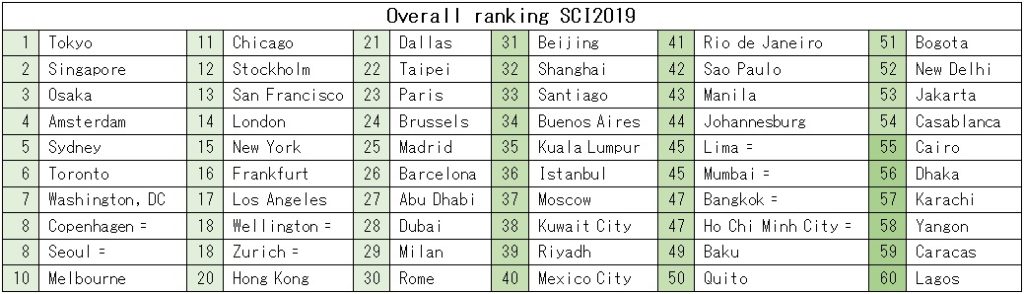
| Tokyo edges Singapore (2nd) and Osaka (3rd) again to take the top spot globally in 2019.Two North American cities make up the top ten, including Toronto (6th) and Washington, DC, (7th).The remaining top ten cities are: Amsterdam (4th), Sydney (5th), Copenhagen and Seoul (tied 8th) and Melbourne (10th).The 2019 edition of the index includes ten new indicators, of which eight are related to environmental resilience. The Economist Intelligence Unit today releases the third edition of the Safe Cities Index (SCI) at the Safe Cities Summit in Singapore. The index, which is the centre piece of a research project sponsored by NEC Corporation, ranks 60 cities worldwide across five continents. It measures the multifaceted nature of urban safety, with indicators organised across four pillars: digital, infrastructure, health and personal security. Cities in the Asia-Pacific (APAC) region make up six of the top ten safest cities, with Tokyo taking the top spot for the third time in a row. Along with Tokyo, other APAC cities, as in the past, dominate the SCI2019. Singapore and Osaka come second and third, while Sydney and Melbourne also make the top ten. Toronto and Washington, DC, are the highest ranked North American cities in the SCI2019, with Washington, DC, entering the top ten for the first time. Overall, North American cities perform well in digital security, accounting for seven of the top ten cities in this category. These cities include Chicago, Washington, DC, Los Angeles, San Francisco, Dallas, New York and Toronto. Vaibhav Sahgal, consultant at The Economist Intelligence Unit, says: “US cities continue to perform well in digital security as the government strengthens its cyber-security regulations, while Canadian cities tend to fare better than their US counterparts in personal security. None of the cities in the US make it into the top 20 in the personal security category—Washington, DC, only ranks 23rd, together with Shanghai.” The SCI2019 benefits from a major revision designed to better capture “urban resilience”—the ability of cities to absorb and bounce back from shocks—a concept that has had an increasing influence on thinking in urban safety over the last decade, especially as policymakers worry about the implications of climate change. The 2019 edition is the third, following the 2015 and 2017 iterations.The SCI2019 scores are not evenly spread, with a large number of cities clustered at the top, and the rest showing wider variation in scores. Just ten points separate the overall scores of the top 24 cities, while the following 36 are 40 points apart. The research shows that levels of transparency in cities correlate as closely as income with index scores. |
| Research shows that the performance of different safety pillars correlates very closely with each other, signifying that different kinds of safety are thoroughly intertwined. The top performers in each pillar are as follows: Digital security: Tokyo (1), Singapore (2), Chicago (3), Washington, DC, (4), Los Angeles/San Francisco (5)Health security: Osaka (1), Tokyo (2), Seoul (3), Amsterdam (4), Stockholm (5)Infrastructure security: Singapore (1), Osaka (2), Barcelona (3), Tokyo (4), Madrid (5)Personal security: Singapore (1), Copenhagen (2), Hong Kong (3), Tokyo (4), Wellington (5) The leading cities got the basics right, including easy access to high-quality healthcare, dedicated cyber-security teams, community-based police patrolling and/or disaster continuity planning. The accompanying SCI2019 report explores the index results, incorporating 14 in-depth interviews with industry experts around urban safety. Naka Kondo, senior editor at The Economist Intelligence Unit, and editor of the SCI2019 report says: “Overall, while wealth is among the most important determinants of safety, the levels of transparency—and governance—correlate as closely as income with index scores. Our research shows the many ways that transparency and accountability are essential in every pillar of urban security, from building safer bridges to developing the trust needed for relevant stakeholders to share information on cyber-attacks. The research also highlights how different types of safety are thoroughly intertwined—that it is rare to find a city with very good results in one safety pillar and lagging in others. Policies, service planning and provision should also take this into account—and this year, we have decided to convene stakeholders from around the world in a Safe Cities Summit to discuss such matters around urban safety.” |


How Canada Influenced American Civil War
This August we saw the fifth U.S. Civil War re-enactment at Circle G Ranch, east of Cayuga, Ontario. On Sept. 13, re-enactors of the ‘Blue and Grey’ will go to battle in Otterville.
The American Civil War had a tremendous influence on the British North American colonies, and continues to be of mind.
At onset of the Civil War, Canada did not yet exist as a federated nation. When the war broke out in 1861, Canada was still a subject of Great Britain and had maintained an uneasy peace with its American neighbors since the War of 1812.
William Seward, the American Secretary of State during the Civil War, was an annexationist who felt that British North America was destined to become part of the United States. As it became obvious that the North would emerge victorious there was a fear the Union army would turn its eyes north of the border.
Many in the US government were supporters of Manifest Destiny, an ideology that stated America should conquer the continent. Canadians were concerned about the possibility of a US invasion.
The tensions between the United States and Britain, which had been ignited by the war and made worse by the Fenian Raids, led to concern for the security and independence of the colonies, helping to consolidate momentum for Canadian confederation.
In the election of 1864, the Republican Party used annexation as a means to gain support from Irish Americans and the land-hungry.
In 1866, an annexation bill passed in the US House of Representatives stating the United States acquire all of what is now Canada.
The Civil War also had an important effect on discussions concerning the nature of the emerging federation. Many Fathers of Confederation concluded the secessionist war was caused by too much power being given to the states, and thus resolved to create a more centralized federation. It was also believed that too much democracy was a contributing factor and the Canadian system was thus equipped with checks and balances such as the appointed Senate and the power of the British-appointed governor-general.
The guiding principles of the legislation which created Canada, the British North American Act, were peace, order and good government – in stark contrast to the perceived rugged individualism of the neighbours south of the border.
Since 1793, thanks to then Lieutenant-Governor John Graves Simcoe, Upper Canada – now present day Ontario – had banned the importation of slaves.
Canadians were largely opposed to slavery, and Canada had recently become the destination of the Underground Railroad.
The Underground Railway was a network of safe houses and individuals who helped runaway slaves reach free sates in the American North or in Canada.
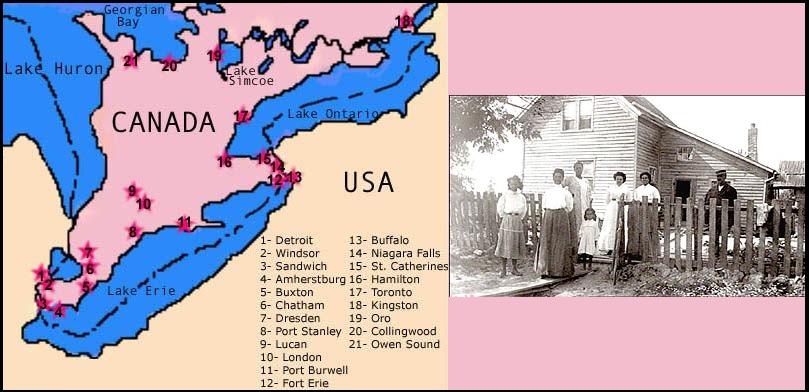
It ran from about 1840 to 1860. It was most effective after the passage of the Fugitive Slave Act in 1850, which enabled slave hunters to pursue runaways onto free soil. It is estimated that about 30,000 reached Canada. Several communities were established in Ontario, including one east of Cayuga, at Canfield.
The Civil War claimed 7,000 Canadians and almost 620,000 US lives.
Between 33,000 and 55,000 men from British North America served in the Union army, and a few hundred in the Confederate army. Five served as generals, and 29 received the U.S. Medal of Honour. For the Silo, Toby Barrett MPP Haldimand-Norfolk.

Ontario Lawyer Book Outlines Path To Successful Divorce
Noted family lawyer Russell Alexander has written a book outlining the path to a successful divorce, taking readers step-by-step through the process from finding a lawyer to handling post- litigation issues. This one of the few books that touches exclusively on Ontario divorce law.
 “It made me realize how much hunger there is for information on how divorces work,” said Alexander. “No one ever expects to get a divorce, so it’s not a subject that people spend much time learning about until they are facing one. It can be hard to catch up at such a stressful time.”
In 300+ pages, Alexander’s book, “The Path to a Successful Divorce,” aims to give readers a solid grounding on the key questions about family law that they’ll face as they go through a divorce, including whether they’ll need a separation agreement first, how courts view adultery and why representing yourself is a bad idea.
Using his knowledge of Canadian case law, Alexander also peppered the book with interesting anecdotes about real divorces that illustrate how some of these issues play out, such as a father who sent abusive text messages and a couple who were married in front of 500 people but never obtained a marriage license.
“Every divorce is unique,” Alexander said. “But there are principles that underlie the process that you need to understand before you move forward in a divorce. This is one case where what you don’t know can hurt you. Hopefully this book will help readers avoid that problem.”
The book is now available for purchase on Amazon Kindle and will be available in print on Amazon and on the firm’ s website later this spring. For more details, contact: marketingdirector@thesilo.ca
Russell Alexander Family Lawyers is committed to practicing exclusively in the area of family law in Ontario dealing with all aspects, including separation and divorce, child custody and access, spousal support, child support, and division of family property. A team of lawyers provide guidance from start to finish, helping clients identify and understand the legal issues as well as the options and opportunities available through the transition. The firm has offices in Lindsay, Whitby, and Markham, Ontario. For the Silo, Alison Beckwith .

5 Tips For Choosing Good Immigration Lawyers
You increase your chances of approval when working with a specialist in immigration law. However, you must be careful when choosing a lawyer in order to avoid falling into the wrong hands. Many fraudsters take advantage of applicants who are doing everything they can to move to Canada or any other country. You may pay a high fee for poor services if you make the wrong decision. Some rogue lawyers or consultants do not even deliver the service but give endless excuses after receiving the fees. Here are some tips to help you choose the right immigration lawyer.

1. Utilize Your Consultation Fee Fully
You have an opportunity to ask all manner of questions and judge the quality of services during the consultation process. Ask as many questions as you can about the process. You may only have a few minutes to interact with the lawyer if the firm charges a low consultation fee. However, you can utilize that time fully and determine if the lawyer has enough experience in handling the immigration process.
2. Hire a Specialist
The major reason why you should hire an immigration lawyer is to ensure that your application is completed and submitted within the deadline. If a lawyer handles all types of legal cases, he or she may not have expertise in your type of application. The lawyer may miss some requirements if immigration is not his or her specialty. Ask about the range of services during the consultation process to determine if the lawyer is a specialist in immigration law.

3. Ask About the Fees Before Signing the Contract
A fraudulent lawyer will rush you to sign a contract even before you discuss the fees. Do not fall for this trick with any lawyer. Discuss the fees and agree before signing a contract. The best lawyers will give you an option to choose fixed fees payable in installments. Determine the best rate depending on the nature of services or case and ensure that the agreement appears on the contract. This brings us to another important tip.
4. Ensure that Both of You Sign a Written Contract
Insist on a written contract even if you trust the lawyer. Many lawyers know that clients expect a written document before agreeing to use their services. Fraudulent lawyers will leave out some important clauses such as the fees charged. Others will push you to sign the documents but fail to sign their part. Do not take any excuses for delays in signing the contract. Go through the document to ensure that it is accurate and comprehensive. Ensure that the lawyer signs the necessary parts and keep a copy of the contract.
5. Trust Your Gut
If you develop any doubts during the consultation process or regular communication, stop the negotiations immediately and get another lawyer. Discontinue the process if the lawyer gives dishonest answers even for the simplest questions. If your intuition tells you that a lawyer is not interested in meeting your needs, trust it and move on. If it feels wrong, there are high chances that you are talking to the wrong immigration lawyer.

Hiring the right immigration lawyer is the best decision you can make if you want to move to another country. An immigration specialist will make sure the application process is fast and easier and will relieve much of the stress associated with the whole process. Taking the time to ensure that you have the right lawyer is an essential first step in the process. For the Silo, Dimitry Karloff.
Featured image- Imgur: The magic of the Internet

Get Your Children Ahead This Summer With Fun Math Songs
Get your children ahead this summer
Summer is here, but that doesn’t mean your child can’t keep learning. Karen Sokolof Javitch’s album ‘YOU’RE MATH-ERRIFIC’ is out now.
YOU’RE MATH ERRIFIC features educational songs that can help your children get ahead. Use these songs along with other educational apps to help keep children busy this summer.
Karen’s diverse creations include songs about exercising, celebrities, holidays, political figures, babies, children, math, patriotism, love and family.
The album contains both fun and educational songs and can be found on her website, https://jmrproductions.com/
Here today to talk about her music is Karen Sokolof Javitch.
Questions:
- What inspired you to create this album? I loved math as a child, but I know that many children struggle with it. So I wanted to write some songs that would be fun to listen to and be helpful with certain math concepts. I would recommend the songs for elementary school students.
- How can these songs help children with their math? .All of the songs have catchy melodies and are all fun to listen to. I’ve included a wide variety of subjects – addition, subtractions, shapes, counting, counting coins, And I take certain numbers – like 9 – Mr. 9 (27,000 hits) and expand on the number – there are “9 baseball players on a field,” it’s “in between 8 and 10.” Nine is the “last single digit.” These songs are great in the classroom and for children who are home-schooled. Listen to the album in the car and have your children watch the YouTube when they are home because there are very cute visuals to go along with the songs.
- What song is your favorite off the album? The first one – ‘I’m Math-errific!’because it’s very positive about math and about how we are all ‘Math-errific! Math is all around us and it’s fun! “Math is such a part of our lives! One, two, three and four and five! Math gives us such good vibes! That’s why we’re math-errific!”
- What other music have you been working on? I just finished my first baby song album – and my two little toddler grandsons love to dance and clap to the songs! It’s really cute! I have written many exercise songs. Sometimes I write satirical political songs – I try and find the humor in politics! Like when all of a sudden there were 23 people running for the democratic nomination, which inspired me to write, “Why Don’t you run for President?”
- One of your songs on the mother who had octuplets went viral with about 10 million YouTube views. What are some of your most popular songs and music videos? I have 15 albums and my album about Princess Diana has sold the most copies. Also on youtube, I have thousands of hits on my Princess Diana songs. I wrote a musical about her, as I feel she was such a exceptional human being. Some of my exercise songs are very popular – ‘Shake it for NObesity’ is one and ‘My Workout Place’ is another. – Mr. Nine is very popular. I have over 100 youtube videos.
- Where may people find your music? Itunes, Spotify – cdbaby.com – and I have many videos on youtube – just type in my name – Karen Sokolof Javitch – or the title of the song and they will come up. I have a website where you can find my songs – JMRProductions.com – named for my 3 kids – Jenny, Mark and Rachel.
About Karen Sokolof Javitch:
Besides Karen’s 15 albums, she has co-written 4 musicals and was the creator and co-host of a popular Omaha radio show, “It’s the Beat.” Her musicals include “Princess Diana the Musical,” “From Generation to Generation,” and “Love at the Café.” These shows have been performed in many cities in the United States. In addition, Ms. Javitch has raised over $350,000 for national and local charities with her original music.
Featured image via moage.com

Finally A Happy, Catch, Easy-To-Remember Anniversary Song
Email Your Performance And Win 1000$ Donation To A Charity Of Your Choice
Omaha NE) To celebrate someone’s birthday pretty much anyone can belt out the “Happy Birthday” song, but what to sing in celebration of a couple’s anniversary? How can we ceremoniously honor such an important and personal holiday equally melodiously? Read below and discover not only how to, but also what you will receive in return if you email our highlighted songwriter a video of your performance. (Don’t worry the lyrics are only a few lines long and easy to remember.)
To answer these burning questions, award-winning singer-songwriter Karen Sokolof Javitch recently announced the worldwide launch of her personalized “Happy Anniversary Song.”
To
commemorate this joyous event, Javitch currently has a nationwide
search underway for all couples celebrating an anniversary to submit
a video to her e-mail of them, family or friends singing her song.
Karen will acknowledge the couple’s extreme faithfulness, by
donating $1000USD to the charity of the couple’s choice. All
entries must be submitted by August 30, 2019 to jenmarach@yahoo.com
Anyone who enters will also receive one of Karen’s albums as a gift.
“Everyone knows the ‘Happy Birthday’ song, yet we all stumble when we try to sing a song for someone’s anniversary,” explains Javitch. “My new anniversary song is short and very easy to learn. Now, when you go to someone’s anniversary party, you’ll know what to sing. There will never be royalties, licensing or performances fees. It is my present to the world!”
To register, listen to the Happy Anniversary Song on her website JMRProductions.com, copy the words below and e-mail your video. Though not required to enter, those so inclined may view Javitch’s Happy Anniversary Song music video right here on The Silo:
As billed, the lyrics to the song are short, sweet and easily stick: Happy Anniversary, Happy Anniversary (wife’s name) and (husband’s name) we’re so happy to be at your (add # of years) Anniversary.
Javitch has raised over $350,000 for national and local charities through her original music.
Besides Javitch’s 15 albums, she has also co-written four musicals performed in many cities throughout the United States and was the creator and co-host of a popular radio show, “It’s the Beat.” Her family-friendly music includes a variety of songs about exercising and good health, celebrities, holidays, weddings, politics, children, babies, education, patriotism, love and family. For the Silo, Gerald McGlothlin.
Featured image- goodfon.com
5 Most Famous Hotels In London England

Luxurious living, money and fame are things that spring to mind when thinking about hotels London. Many of them have stood the test of time and built a sterling reputation all over the world attracting many of the rich and famous.
Here we’ve compiled a list of the most renowned hotels in London.
Claridge’s, London

Opened in 1854 Claridges London is one of the oldest hotels in the city. Located in London’s infamous Mayfair, Its clientele are among the rich and famous with celebrities such as Brad Pitt and Mick Jagger no stranger to its doors. TV favorite Gordon Ramsay also had his own restaurant there for a time.
Its décor and facilities boast the best in fine dining and luxury living unrivalled in London and has over its long lifespan attracted royalty from all over the world. The hotel was also the feature of a 3 part documentary series for the BBC entitled ‘Inside Claridges’.
The Connaught, London
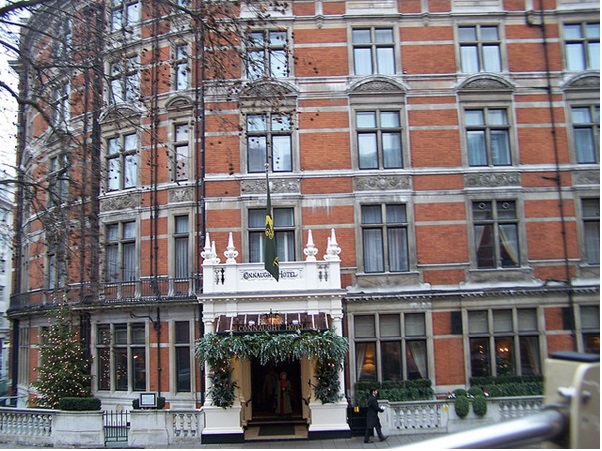
Residing in Mayfair, the Connaught first opened its doors in 1815. The hotel allows both traditional British and contemporary design to co-exist by maintaining its Victorian exterior and completing a 70 million pound internal refurbishment by lead designer Guy Oliver.
This hotel and its staff have won many prestigious awards over its lifespan including its spa winning first prize in the spa category in the Hotel & Lodge Awards 2012 and it’s very own bartender Agostino Perrone winning International Bartender of the Year 2010.
Brown’s, London
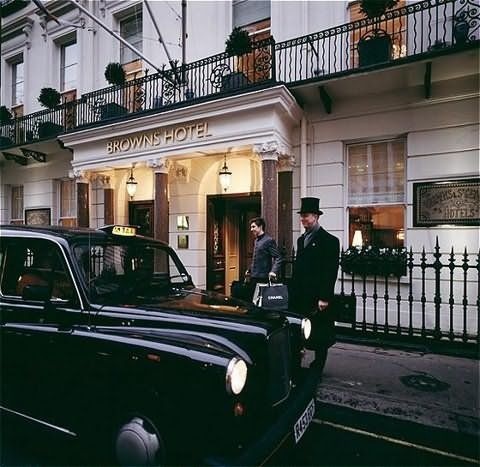
One of London’s most established hotels is Browns. Opening its doors in 1837, it celebrated its 175th anniversary in 2012 and has consistently attracted guests of wealth and fame, most notably President Theodore Roosevelt and Oscar Wilde.
Not only does this Mayfair hotel boast a stunning Victorian 5 star setting it is also within walking distance to some of London’s busiest attractions such as Hyde Park, Bond Street, Regent Street and some of its most famous landmarks.
The Great Northern Hotel
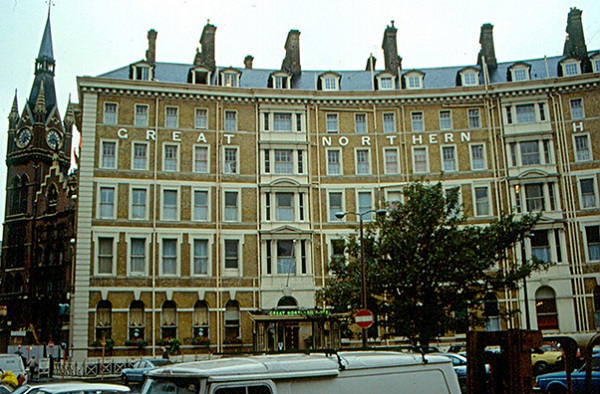
Dubbed as ‘The World’s First Great Railway Hotel’ , The Great Northern is a stunning boutique hotel with rail connections to Europe and beyond via the Eurostar. It stands tall above the areas surrounding buildings and it’s a significant point of interest for all arriving into Kings Cross St Pancras station.
Designed by infamous architect Lewis Cubitt stood as the centrepiece for the steam revolution.
The Berkeley

The Berkeley is a five star deluxe hotel, located in Knightsbridge, London. Its history spans well over a 100 years and has even moved buildings. The infamous hotel began its life at Berkeley Street and served as accommodation for mail coach drivers travelling to the West Country.
In 1972 it moved to its current location, incorporating an entirely new refurbishment to include London’s only rooftop swimming pool. Aside from its unique facilities and décor the Berkleley has attracted numerous Michelin star chefs including Pierre Koffmann and more recently Gordon Ramsay and his Boxwood Café. For the Silo, Susan Varano.
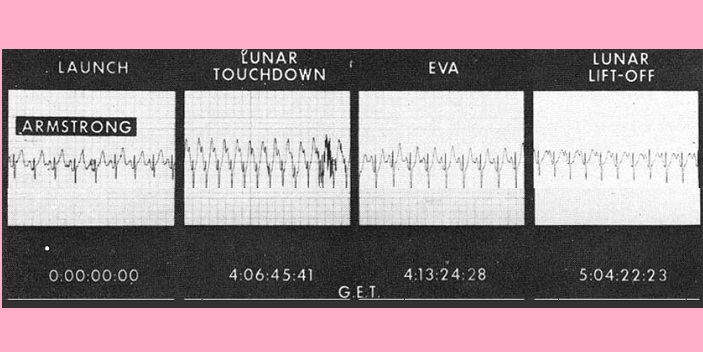
Armstrong’s Heartbeat As Merged Artwork Beamed To Moon

Los Angeles, CA, – Richard Clar using an earth-moon-earth (EME), or moon bounce as it is also called, radioed two very special signals off the surface of the moon where their return was received at Dwingeloo Radio Observatory in the Netherlands.
Clar’s extraordinary two-part project, Giant Step and Lune sur la Lune, paid tribute respectively to Apollo Astronaut pioneer Neil Armstrong’s first step on the moon on July 20, 1969 and to the far side of the moon itself, something witnessed only by a rare group of individuals, the Apollo Astronauts. The two radio transmissions to the moon and back emanated from a radio dish in Italy.
Giant Step is a personal response to an event Clar personally witnessed back in 1969, and he wanted to use his creativity to pay tribute to those who took part in the Apollo program, and especially Neil Armstrong for what he did on that momentous day.
He wanted this work to say something about the moon itself, using the moon.
His interest was piqued after hearing about an earth-moon-earth bounce (EME) from Italian artist and colleague, Daniela de Paulis, who together with radio specialist Jan van Muijlwijk developed the process of using EME to send images to the moon and back in 2009. As he researched the Apollo Archives, he came across an Electrocardiogram (EKG) of Neil Armstrong as he took the first step on the moon on July 20, 1969 – and Richard found his inspiration!
While data scientist Dr. Ryan Compton created the sonification tone from Armstrong’s actual EKG graph, prominent Los Angeles-based double-bass jazz performer and composer Roberto Miranda used the tone to create compelling sounds that have been called “edgy and hauntingly beautiful.”
In addition, an image of the first footprint on the moon was transmitted and bounced back to Dwingeloo. [Listen to Neil Armstrong’s heartbeat beginning at the 2:10 mark here Ed.]
“I wanted the art to say something about the first humans to set foot on the moon. Think how many living beings have observed the moon for eons…and now we have made a number of trips to the moon and back. I want people to have new experiences through my artwork,” says Clar.
Lune sur la Lune, an image of the far side of the moon, was transmitted in a poetic gesture onto the earth facing side of the moon. Since only the Apollo astronauts have seen the far side of the moon, using the radio-reflective surface of the moon to produce a site-specific artwork makes the moon a unique part of the process rather than just a subject matter ─ and also gives people on earth an opportunity to witness this phenomenal event and experience the moon in a new and different way. Shortly after the sound and image from Giant Step and Lune sur la Lune were received and processed at Dwingeloo, and will soon be accessible to the world at www.rockthemoon.com.
There was considerable excitement at the Dwingeloo Radio Dish on September 26th by those who witnessed the sound signal and image signals being received from the surface of the moon after the moon bounce. All in all, the art mission was a great success.
“For me It was an incredible feeling to use this 120 ton radio dish, capable of peering into the far reaches of the universe, to create an artwork focusing on one of the greatest achievements in human history,” stated Clar.
Richard Clar’s timeless work has been exhibited in museums, galleries and universities throughout the United States and Europe. His visionary ‘art in space’ began in 1982 with a NASA-approved concept for an art-payload for the U.S. Space Shuttle. Philosophical in nature, many of Clar’s themes originate in space environment issues, such as orbital debris, war and peace, the Search for Extraterrestrial Intelligence (SETI), and water management on earth.
Clar studied at the Chouinard Art Institute (now Cal-Arts). In 2001 and 2002, he coordinated the Leonardo/OLATS/IAA Space Art Workshops in Paris. Clar is the Director of Art Technologies; a Member of the International Academy of Astronautics (IAA); a Member of the IAA SETI Permanent Study Group; a Member of Women in Aerospace, and a Member of the Leonardo Space Art Working Group. He was the Secretary of the former Art and Literature Subcommittee of the International Academy of Astronautics, and a past Member of the Executive Board, Graphic Arts Council, the Los Angeles County Museum of Art.

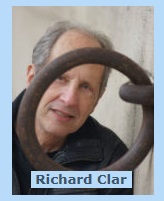 Clar founded Art Technologies in 1987 as a liaison between the worlds of art and technology. By collaborating with such partners as the U.S. Naval Research Laboratory, Boeing Aerospace Corporation, and contemporary composers, Clar generates high-visibility art works that transform state-of-the-art technology and highly-engineered materials into evocative contemporary art. His work is found in many corporate collections, including JBL Sound, Home Savings of America, and the MGM Grand Hotel in Las Vegas.
After spending the last fourteen years in Paris, Richard Clar now resides in Northern California. For more information on his extraordinary artwork, please visit:
http://arttechnologies.com
http://rockthemoon.com
https://www.facebook.com/RichardClar.ArtTechnologies

Pueblo Incident: Two Failed Submarine Missions ©
In response to the January 23, 1968 North Korea seizure of the USS Pueblo and crew, the Johnson Administration sent an armada of ships and up to nine subs, both nuclear-powered and diesel/electric, into the Sea of Japan. The operation was known as “Formation Star,” the largest build-up of U.S. naval forces around the Korean peninsula since the Korean War. This U.S. naval show-of-force was led by the USS Enterprise, the world’s first nuclear-powered aircraft carrier and the largest warship in the world at the time.
Less known are the stories of the two submarines sent in response to the Pueblo Incident—the USS Segundo and USS Swordfish—both of which failed to execute their missions as planned. In the case of the Segundo, her detection by the North Koreans off the coast of Wonsan, North Korea nearly led to the deaths of the entire crew. And while not life-threatening, the failed Swordfish mission led to a cascade of Cold War events including, according to one author, the sinking of a U.S. sub in retaliation for the sinking of a Soviet sub, which the Russians had falsely attributed to ramming by the USS Swordfish.
In August 2000, decades after the resolution of the Pueblo crisis, a small California newspaper interviewed Russ Noragon, a member of the USS Segundo crew. In what a staff writer at the Ventura County Star described as a “top-secret mission that might be the stuff of a Tom Clancy spy novel,” Noragon described how his sub had to submerge to the bottom of the sea off the coast of Wonsan, North Korea to avoid capture by the North Koreans. At the time, Noragon was a Machinists Mate (MM); a Chief before retirement.
In an article titled “Local Submariner Recalls Time on Bottom,” Noragon told how he and the other 79 men on board had barely escaped with their lives when the Segundo and crew nearly ran out of air. The incident occurred on the day the Pueblo was hijacked in international waters off the coast of North Korea. Noragon said his sub was “ordered to attempt a rescue of the 83 sailors aboard the intelligence vessel USS Pueblo…,” the planning of which began immediately, he said. According to the Segundo’s Chief of the Boat (COB), there were five special ops on board, but their role was unknown to the crew.
But instead of completing their mission undetected, Noragon said North Korean sonar-equipped patrol boats discovered his sub at periscope depth shortly after it arrived in the area. They then began bombarding the Segundo with depth charges, forcing it to the sea bottom with its engines and most of its equipment shut down. After a couple of days on the ocean floor, “It was miserable,” Noragon said. “We all got terrible headaches from the lack of oxygen.”
Noragon, who was assigned to the engine room, said he didn’t even know the depth of the water, only the tenseness of the situation. Meanwhile, the crew covered everything on board with a “special powder” (presumably lithium hydroxide) that absorbed the carbon dioxide in the air that built up in the close quarters. Some fresh air was pumped in from the submarine’s reserve tanks, but only enough to keep the air breathable.
To avoid detection, Noragon said the crew, who “spoke in whispers,” were ordered to stay in their bunks when not on watch, in what submariners call “silent running.” The seriousness of the situation became all too apparent when classified materials and equipment were readied for destruction. Noragon said he really got nervous when the radiomen brought out all of the Segundo’s cryptography gear and the weighted bags and hammers. At which point, Noragon said to himself, “Oh, this is not good.” When the commanding officer of the Segundo, Cdr. David A. Fudge, realized that rescuing the Pueblo crew was no longer possible, Noragon said his crewmates devised an escape plan.
With North Korean vessels at the surface lying in wait, Fudge had the crew eject hollow can targets, alternating between the sub’s bow and stern. As each target pinged the North Korean sonar, the Segundo moved a little. “We had all these bubbles down there,” Noragon recalls. “Pretty soon, there were so many targets, they [the North Koreans] didn’t know which was real and which were a decoy.” This allowed the Segundo and crew to finally escape. Now fifty years later, the ill-effects of this failed mission remain with the surviving members of the crew.
About ten days after the Pueblo seizure, the USS Swordfish raced to the Sea of Japan from her homeport at Pearl Harbor. The sub’s belated departure might have been to compensate for the withdrawal of Segundo from the area, or perhaps it was sent to help confront the Soviets who by then had sent an armada of their own ships and subs to confront Operation “Formation Star.”
Unfortunately, in early March, Swordfish struck a block of ice that had drifted south, bending her mast back at a 45-degree angle; so she departed the area for the U.S. Naval Base at Yokosuka for repairs, which required ten days. However, when the Japanese press noticed the arrival of a damaged submarine on the surface—a rare event—they requested an explanation from the U.S. Navy. To avoid disclosing the Swordfish’s secret mission—all submarines on special operations were classified—the Navy said the Swordfish had come to Yokosuka for some much-needed R&R. But what about the damage? As the Navy explained, the “damage was likely caused by hyoryubutsu,” meaning flotsam or wreckage, not ice.
When a photo of the Swordfish with a bent mast appeared in an article in a Japanese newspaper, the Russians smelled a rat. About a week earlier, K-129, their nuclear-armed Project 629A (NATO reporting name Golf II) diesel-electric powered submarine, sank without explanation. Had the Swordfish intentionally rammed a Soviet submarine, resulting in the death of all 98 men on board? When the Russians confronted the Americans, the Pentagon would only say that the Swordfish was about 2,000 miles from where their Soviet submarine sank—no mention was made of Swordfish’s secret Pueblo mission. According to Ed Offley, the author of “Scorpion Down: Sunk by the Soviets, Buried by the Pentagon,” the Soviets intentionally sank a U.S. submarine, the USS Scorpion, in retaliation for the Swordfish’s sinking of their submarine about two months earlier. For the Silo, Bill Streifer.
Featured image- USS Scorpion.
Model Building Led To Canadian Titanic Society Founding

Norm Lewis was just twelve years old in 1958, a student at the old South Public School, when he saw the film A Night To Remember, a straight forward rendering of the Titanic disaster based on the book by Walter Lord. The film was a pivotal experience for Norm, and the beginning of a life-long fascination with this most infamous nautical event.
The Beginnings of a Canadian Society
In 1993 Norm attended a Boston conference of The Titanic Historical Society, meeting enthusiasts from all over the world. He began polling Canadian delegates on the idea of starting their own group and got an overwhelming response. In 1998, this former locksmith and transport driver became the President, Founder and CEO of the Canadian group. Radio stations from Calgary, Kitchener and Toronto all called for an interview, and within a week The Canadian Titanic Society was receiving more letters than Norm could carry.
Norm has collected a great deal of Titanic memorabilia over the years, including 110 underwater photographs taken by Ralph White, the Society’s official “Explorer in Residence” and 2nd Vice-President, who at the time of his death in 2008 had made more dives to the wreck than anyone else in the world. A pioneer in deep sea photography and cinematography, Ralph was the expedition leader for James Cameron’s 1997 epic movie. And you know the name of that one.
Norfolk County Ontario Connections
With the help of some volunteers, Norm also researched Norfolk County connections to the disaster, finding Titanic crew members, survivors and passengers from the rescue ship Carpathia living like Norm, in Simcoe Ontario though all have now passed away.
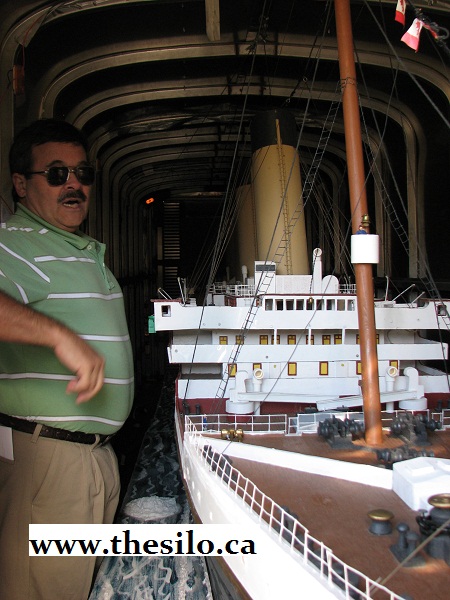
But perhaps most impressive, Norm Lewis is the sole architect of a twenty-foot scale model of R.M.S Titanic that has appeared in parades and exhibitions all over the province. Detailed, historically accurate, and made almost entirely out of wood, the model is the only one of its kind. It has working propellers, smoking funnels and a truly impressive digital recording of the actual titanic whistles. It took him eight years. You might call that obsession, but if you think of a twelve year old boy, rapt in fascination at one of the most spectacular and terrible stories in nautical history, you might just call it a labor of love. For the Silo, Alan Gibson.

Luxury Villas Offering Guests Oil Paintings of Themselves
Nobilified and Villa de Campo have partnered up to offer their customers a unique art and hospitality experience. A selection of luxurious villas offered by Villa de Campo for rent come with hand-painted portraits of each guest, which are hung throughout the Villa during their stay.

Located in La Romana, Dominican Republic; Casa de Campo is no stranger to luxury. This prestigious Resort spreads over 7,000 acres, featuring three award-winning golf courses, a clay pigeon shooting center, an equestrian center, tennis courts, pools, and restaurants, as well as 1,700 private villas populating the resort, some of which are available for rent. Villa de Campo specializes in giving customers prompt and personalized service for vacation rentals in the resort. Whether it’s understanding your needs and recommending homes to stay in or helping you book a personal chef or schedule your activities, Villa de Campo is stepping up the meaning of the saying “the customer is king”.

With this partnership with Nobilified, Villa de Campo adds an extra touch of personalization to one’s holiday—and we aren’t talking about personal chefs or yacht rentals. Nobilified, which creates hand-painted oil portraits of its customers as royalty will be using its inspiration to paint memories of holidays for guests to keep. The paintings will be inspired by the nature of the trip, whether a romantic couple retreat, a golf trip with boys, or a family holiday; Nobilified’s classically trained artists will paint the guests prior to their arrival, according a certain theme, and have the pieces hung throughout the villa during their stay. Guest then get to take the pieces home after their stay.
The Nobilified special aims capture memories in the world of art. Chris Jensen, the founder of Nobilified, says, “Our aim is to capture one’s memories in art. We want guests of the villas to remember all the small things that made their holiday one to remember. When they get home, they will hang the piece, and each time they look at the piece, they will remember their holiday. We think that is special.”
Villa de Campo
Villa de Campo offers a selection of luxury villas in which to spend your next activity-filled holiday in the Dominican Republic. Spread over 7000 acres, the Casa de Campo resort is home to over 1700 private villas of which around 100 are available for rent on villadecampo.com.

Booking a Villa has become the perfect way to spend a holiday whether with family, friends or as a couple. Our selection of luxury villas are located throughout the entire resort and cater to various tastes and needs. Villa de Campo also includes additional amenities such as complimentary golf carts, private chefs and a holiday concierge to help you book and plan your dream stay. Casa de Campo possesses a variety of restaurants, private beach clubs, a Marina, 3 golf courses, a tennis center, an equestrian center, a spa, and much more.
Nobilified
Nobilified is dedicated to revolutionizing the art world. Nobilified believes that while not everyone may have the artistic skills required to paint a masterpiece, everyone possesses an intuitively creative mind. At Nobilified, customer dreams and fantasies are transformed into actual works of art, which can proudly displayed in any home, dorm, office, cabin, yacht, or even a swanky Chateau. Everyone has an artistic side, and everyone sees the world in their own unique way. Nobilified wants this diversity to make an imprint on the course of art history by immortalizing customers’ wildest dreams.
In addition to providing high quality oil paintings, Nobilified wants to change the way people perceive art, by making it fun and accessible, thus giving customers the opportunity to share or gift a unique custom made oil painting with friends and family. No longer will having an oil painting of oneself hanging above the chimney be out-of-reach. This privilege used to be reserved for the upper tiers of society, but, now, it is shared with everyone, even if they are not knighted. A unique, hand-painted, oil-on-canvas work of art can add a touch of grandeur to any living quarters.
Featured image: Cupid and Psyche by Jacques Louis David
How Award Winning Math Professor Inspires Students And Family
RAPID CITY, SD- Professor Travis Kowalski starts most days with a squiggle.
For the past eight years, the South Dakota School of Mines & Technology math professor has carried on a family tradition started by his father, who would ask the young Travis to make a squiggle on a piece of paper. From that squiggle, his father would create a drawing. Often, Kowalski’s father would give him a squiggle and the two would sit together drawing.

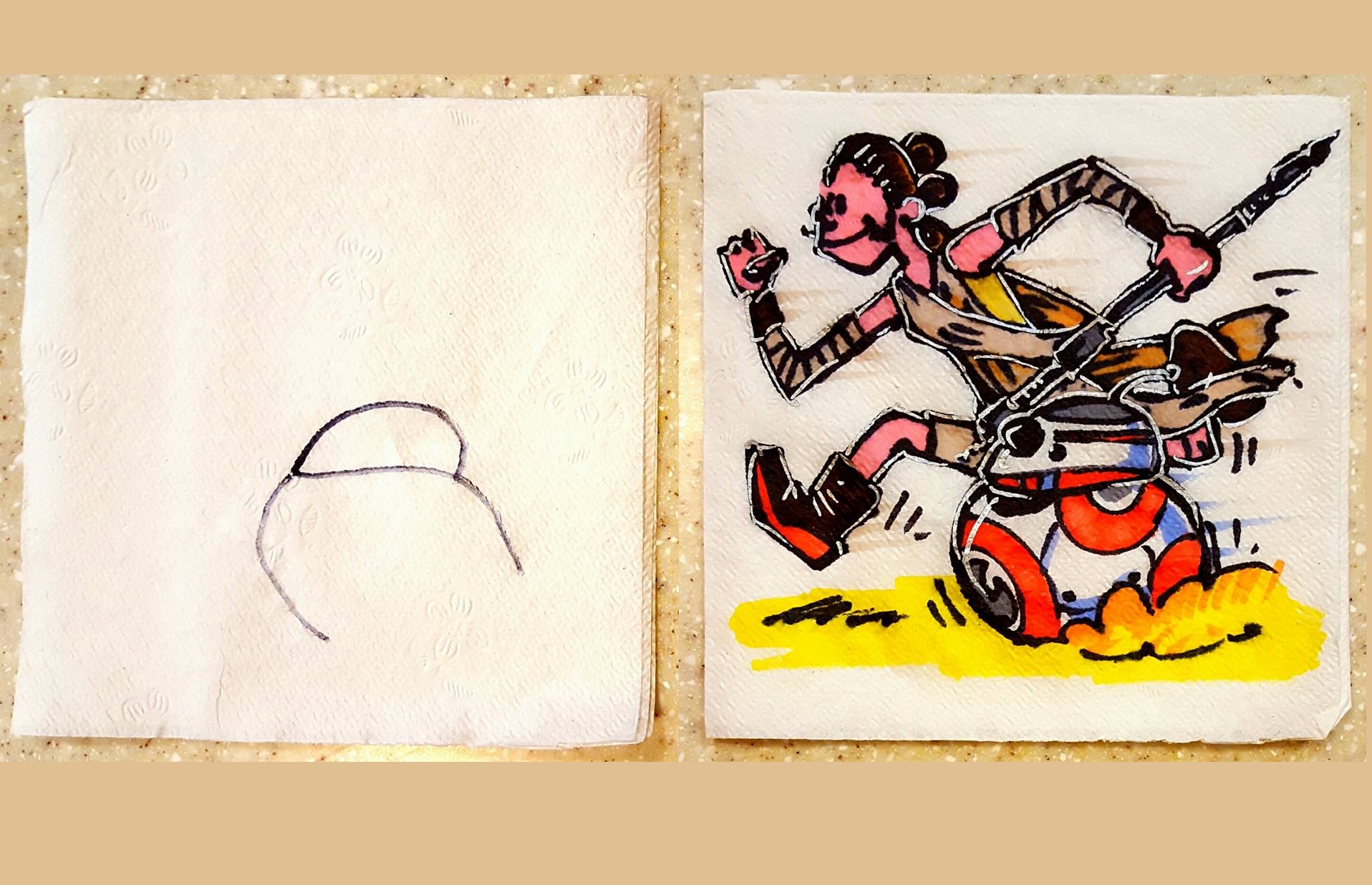
Nowadays, Kowalski uses a napkin and markers in his “squiggle game,” and the recipients are his two daughters – Liliana, 13, and Maia, 9. Kowalski says he started the tradition when Liliana was entering kindergarten, hoping the lunch napkin art would make her transition to school easier.
Each evening or early in the morning, Kowalski encouraged his oldest to draw a squiggle on a napkin. The next morning, he turned the squiggle into colorful drawings and slipped it into her lunch box. Once Maia arrived, Kowalski began doing the same for her. “She expected it,” he says.

It’s not exactly what most people expect from a math professor at an engineering and science university. But Kowalski, a Ph.D. who currently serves as the interim head of the Department of Mathematics at SD Mines, says math and art co-mingle perfectly.
His drawings range from a buffalo against a bright pink sky (drawn May 6, 2019) to an astronaut in space (Jan. 24, 2019), to Kermit the Frog (Dec. 7, 2018), to the composer Bach at his harpsichord (May 14, 2018). Kowalski posts both the starting squiggle and the finished product on his Facebook and Instagram pages.

The two social media platforms are filled with vibrant, colorful drawings often accompanied by clever taglines – a bear holding up a paw and asking, “I would like some salmon, please” and a praying mantis playing a video game under the title, “Playing Mantis.”
Known on campus for his colorful Hawaiian shirts and clever math-related ties, Kowalski is the professor whose office walls are covered with unique visual art. He’s the kind of professor who sneaks his labradoodle Cauchy, named after French mathematician Augustin-Louis Cauchy, into class the last day of the semester to play out an obscure (to the general audience at least) mathematics joke. He’s the math teacher who so passionately talks about the subject that even the least math-minded people can’t help but get excited.

And he’s good at what he does in the classroom. So good that Kowalski was recently awarded the 2019 Burton W. Jones Award by the Mathematical Association of America. The award recognizes post-secondary level math instructors nationally who “foster student excitement about mathematics.”
“It’s cool and humbling to be part of that group,” he admits.
Donald Teets, a Ph.D. professor in the SD Mines math department, is a previous winner of the award and the person who nominated Kowalski. In his nomination, Teets writes, “He is, (in this writer’s opinion) the best teacher in a department devoted to teaching excellence.”
This is hardly the first recognition for Kowalski, Teets says. In 2014, Kowalski was awarded the Benard Ennenga Award, which honors one SD Mines faculty member each year for teaching excellence; and in 2017, he won the George Polya Award from the Math Association of America for his College Mathematics Journal article, “The Sine of a Single Degree.”
“His lecture based on ‘The Sine of a Single Degree’ is as good a mathematics lecture as you will ever see!” Teets wrote in his nomination.
Teets says the thing that makes Kowalski so good at this job is his enthusiasm, noting that students consistently rate him on classroom surveys as “the best math teacher I’ve ever had.” He’s “innovative,” constantly striving to engage his students and utilize technology into his teaching, Teets says. “Like Superman wears the big ‘S’ on his chest, Dr. Kowalski deserves a big ‘I’ for Innovator.”
As for Kowalski’s artistic talents, Teets is equally as effusive. “As a person who can barely draw recognizable stick figures, I am in awe of Travis’s artistic abilities. It’s a great complement to his extraordinary skills in mathematics!” he says.
Kowalski grew up in California, raised by a draftsman father and a “crafty” stepmother. “My dad drew all of the time,” Kowalski says. “That was the home I grew up in. You drew.”
In college at University of California, Riverside, Kowalski majored in art. To finish off an academic requirement, he enrolled in Calculus 2. A good student in high school, he had already taken an advanced placement Calculus 1 class. He was class valedictorian, but “I worked hard at it. I was not a prodigy,” he says with a laugh.
He still remembers the Riverside professor’s name who taught his first college math course – Albert Stralka. He “taught in a way I hadn’t seen before,” Kowalski says. “There were ideas behind the math.”
When he got an A in that class, the professor convinced him to take Calculus 3.
Next, the professor suggested he take topology, which is the study of geometric properties and spatial relations which are unaffected by the change of shape or size of figures. “It’s the geometry of shapes under change,” Kolwaski says. “That class blew my mind.”
The rest is history – after topology Kolwaski changed his major and embraced a love of mathematics. But he never left his art behind, and it’s important to understand that the two subjects go hand-in-hand, he says. “Half of mathematicians do what they do because they think it’s pretty,” he says of the geometry of math.
As a math professor at SD Mines, Kolwaski admits that “I still like to sit and draw things, but I don’t have as much time anymore,” he says.
That’s where his morning squiggle drawings come in.
Each one of Kowalski’s squiggles for his daughters takes about 15 to 30 minutes from start to finish. “The first part is to see something,” he says. He spins the napkin around, looking at the squiggle until he “sees” the picture that will emerge.
Mia tends to draw extremely elaborate squiggles, sometimes lobbying for a specific outcome – for instance a unicorn. Other times, his daughters will bring home requests from friends for specific drawings.
Liliana has saved all her napkins over the years, storing them in a plastic container in her room. That made it a little easier for Kowalski when she came to him recently to say, “What with my school schedule being so busy and my lunch break so short and closet so full of the ones you’ve already made me – which I love, thank you – I just don’t think you need to make me lunch napkins anymore.” Kowalski playfully posted her words on social media with an image from Boromir’s death from “Fellowship of the Rings” with arrows sticking from his heart.
Kowalski says his older daughter relented, most likely after an intervention from his wife, and is continuing to play the squiggle game. He’s glad, hoping that both of his daughters will always remember the squiggle game and maybe even carry it on with their own families one day.
“It’s definitely a great memory about my dad,” he says. “Hopefully it will be the same for them.” For the Silo, Lynn Taylor Rick.

UNESCO Seeks To Open Markets For Global South Cultural Goods
Paris, 30 May – Experts, stakeholders and government representatives will examine ways to improve exports of cultural products from the Global South, reinforce cultural entrepreneurship and improve the status of artists during the biennial meeting of the signatories to UNESCO’s Convention on the Protection and Promotion of the Diversity of Cultural Expressions, at the Organization’s Headquarters from 5 to 7 June.
Government officials and cultural professionals will address these and other issues at three Create|2030 debates during the session:
Rebalancing trade flows: making the case for preferential treatment in culture, will examine ways to open markets to cultural goods and services from the Global South, in line with the Convention’s binding provision to grant them preferential treatment in international trade. Cultural goods and services from developing countries currently only account for 26.5% of the global trade in this rapidly growing sector. Panelists will also examine how the concentration of creative content on large online platforms is impacting the distribution of cultural products and expressions. (7 June, 10 am—1 pm, Room II)
Strengthening cultural entrepreneurship: The International Fund for Cultural Diversity (IFCD) will discuss investments in vocational training andbring together beneficiaries of UNESCO’s IFCD from Brazil, Cambodia, Colombia and Senegal. The Fund, which aims to address the gap between developed and developing countries in the creative economy, has provided more than 10,000 artists and cultural professionals with new skills in project management, business and career development to date. (6 June, 10 am—1 pm, Room II)
Rethinking the status of the artist will explore ways to enhance the professional, social and economic conditions of artists through policies concerning training, social security, employment, income, taxation, mobility and freedom of expression. (6 June, 2—5 pm, Room II)
During the meeting, participants will also examine an Open Roadmap designed to strengthen the Parties’ capacities to promote the diversity of cultural expressions in the digital age, as well as other innovative policy practices. Priorities in line with the UN’s 2030 Agenda for Sustainable Development will be set for the next two years, with particular attention to gender equality, fundamental freedoms, quality education, economic growth, decent jobs, and equality between countries.
The 2005 Convention on the Protection and Promotion of the Diversity of Cultural Expressions provides a framework for the design of policies and measures that support the emergence of dynamic cultural and creative industries around the world. The 146 Parties (145 States and the European Union) that have ratified the Convention meet at UNESCO every two years to examine its impact and determine future action. Twelve new Members will be elected to the Convention’s Intergovernmental Committee during the session.
Peter Robinson On Job Obsolescence- Government Should Not Protect Jobs
A recent OECD report finds that low and middle income earners have seen their wages stagnate and that the income share of middle-skilled jobs has fallen. Rising inequality has led to concerns that top earners are getting a disproportionate share of the gains from global “openness and interconnection”. During a Summer 2017 meeting of OECD, employment outlook revealed that job polarization has been “driven by pervasive and skill-biased technological changes.
Founded in 1945, the United States Council for International Business (USCIB) builds awareness among business executives, educators and policy makers around issues related to employment, workforce training and skills enhancement. CMRubinWorld spoke with USCIB President and CEO Peter M. Robinson, who serves as a co-chair of the B20 Employment and Education Task Force, through which he helped develop recommendations to the G20 leaders on training for the jobs of the future. Robinson also serves on the board of the International Organization of Employers, which represents the views of the business community in the International Labor Organization.
“I think the guiding principle for government should be to protect and enable/retrain the worker, not protect the job. Policy makers and educators should focus on making sure that workers are as equipped as possible to transition to new opportunities” Peter Robinson.
Peter, welcome. How severe do you believe jobsolescence will be over the next 20 years? How big will the challenge be to offset it and maintain a growing workforce?
I really don’t think the overall effect will be as dramatic as some people fear, at least for the medium-term as far as we can tell. There is an over-hype factor at play, but the consequences still deserve serious attention. For one thing, so many of the jobs in the United States, Canada and other advanced economies are in the service sector, and involve interacting with other people. Despite all the advances in AI, we are still a long way off from robotic nurses or home health aides. Overall, history tells us that at least as many new jobs are created as are displaced by technological innovation, even though transitions can be difficult in some sectors and localities, and as long as upskilling takes place.
“The biggest threat is that our educational institutions won’t be able to keep pace with new skills demands.” — Peter Robinson

What do you think are the biggest obstacles facing college grads today trying to enter the workforce?
I actually think the greatest obstacles are faced by those who don’t make it to university or some form of higher education beyond high school (a four-year degree is not the right path for everyone). A 2014 Pew survey found that among workers age 25 to 32, median annual earnings of those with a college degree were $17,500 greater than for those with high school diplomas only. Obviously, everyone at whatever educational level needs to keep their skills sharp, and governments should join with employers and educators to instill better life-long learning. But there are far fewer established paths toward long-term employment at a middle-class level of income for those who don’t graduate from college. A greater emphasis on vocational education and apprenticeships would help. We strongly support the work being done by United States Secretary of Labor Acosta to promote apprenticeships.
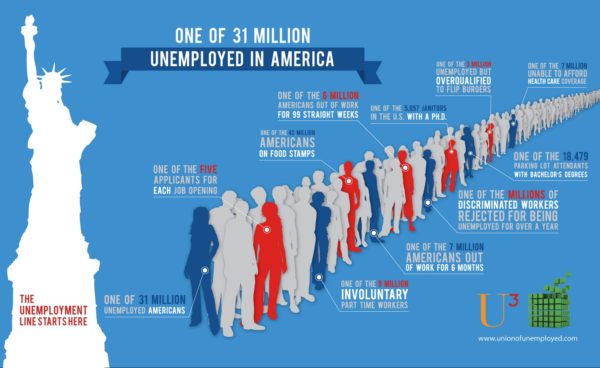
Given that machines are in the process of stripping white collar workers from their jobs, what kind of skills are key manufacturing and service industries going to need from new employees?
I think the premise of your question is overstated. We’re all being told that our jobs are doomed by robots and automation. But the OECD estimates that only nine percent of jobs across the 35 OECD nations are at high risk of being automated, although of course even 9% can be generative of social difficulties. But there is an established track record across history of new technologies creating at least as many new jobs as they displace. Usually these new jobs demand higher skills and provide higher pay. The biggest threat is that our educational institutions won’t be able to keep pace with new skills demands.
“It is becoming clear that Versatility matters, in a constantly changing world, so Jim Spohrer’s IBM model of a “T-shaped” person holds true: broad and deep individuals capable of adapting and going where the demand lies.” — Peter Robinson

In an economy with a significant on-demand labor force, what competencies will these workers need to compete?
There are two types of competencies that will be needed: “technical” – or in other words, related to deep knowledge of a specific domain, whether welding or optogenetics; and “transversal,” which applies to all occupations. Those are described by the Center for Curriculum Redesign as skills (creativity, critical thinking, communication, collaboration), character (mindfulness, curiosity, courage, resilience, ethics, leadership) and meta-learning (growth mindset, metacognition).
How will managerial skill requirements change as a result of major structural changes that are likely, including human replacement by machines and growth of the on-demand economy?
OECD’s BIAC surveys of 50 employer organizations worldwide has shown that employers value not just Skills as described above, but also Character qualities as well. Further, it is becoming clear that Versatility matters, in a constantly changing world, so Jim Spohrer’s IBM model of a “T-shaped” person holds true: broad and deep individuals capable of adapting and going where the demand lies.

“We often hear about the need for more STEM education. But I think there is an equal need for a greater emphasis on the humanities and the arts, for their intrinsic value as well as for developing skills and character qualities.” — Peter Robinson
What central changes in school curricula do you envision, both at the secondary school and college levels?
We often hear about the need for more STEM education. But I think there is an equal need for a greater emphasis on the humanities and the arts for their intrinsic value as well as for developing skills and character qualities as described above. As David Barnes of IBM wrote recently, these skills are more durable and are also a very good indicator of long-term success in employment.
How can the evolving changes in competencies required for employment be effectively translated into school curricula? Where are the main opportunities to enable this? e.g. Assessment systems? Business/Education collaboration? Curriculum change?
I’d go back to something else David Barnes said: We need much stronger connections between education and the job market, in the form of more partnerships among employers, governments and education institutions. Everyone needs to step up and create true partnerships. No one sector of society can address this alone. OECD’s BIAC has also documented employers’ wishes for deep curricular reforms to modernize content and embed competencies in order to meet today’s market needs.
What role should government play in ensuring citizens receive a quality and relevant education given the challenges that lie ahead?
I think the guiding principle for government should be to protect and enable/retrain the worker, not protect the job. Policy makers and educators should focus on making sure that workers are as equipped as possible to transition to new opportunities as these develop, and on ensuring that businesses have the freedom to pivot and adopt new technologies and business processes.
 For the Silo, C.M. Rubin. C. M. Rubin is the author of two widely read online series for which she received a 2011 Upton Sinclair award, “The Global Search for Education” and “How Will We Read?” She is also the author of three bestselling books, including The Real Alice in Wonderland, is the publisher of CMRubinWorld and is a Disruptor Foundation Fellow.
Toronto Is Home To Proud History And Great Architecture
Well before the construction of Ontario’s present Queen’s Park Legislative Building, Ontario was governed as the British colony of Upper Canada.
After its formation in 1791, Upper Canada’s elected Legislature first met on September 17th, 1792. As no permanent structure was built to house the Legislature in Newark, now Niagara-on-the Lake, meetings took place in a variety of locations including Navy Hall—which also served as a residence for our first Lieutenant Governor John Graves Simcoe. The first legislators were also reputed to have met in Butler’s Barracks, and also under a large oak tree.

In 1793, a site at York, now Toronto, was chosen as the new location for Upper Canada’s capital. Lieutenant Governor Simcoe initiated plans for the construction of the colony’s first purpose-built Legislative Building. Completed in 1797, the “Palace of Government,” as it was known, was located near the present-day intersection of Front and Parliament Streets. Consisting of two small structures connected by a covered walkway, they were the first in York to be made of brick.
The Legislature met there until 1813, when the building was burned to the ground in the aftermath of the Battle of York during the War of 1812-14. During this American raid, the first Mace of Ontario—made for the Legislature of Upper Canada in 1792—was seized by the American soldiers. It was later returned in 1934 by President Roosevelt as a gesture of friendship. While waiting for construction of a new building, Upper Canada’s Legislature met in several temporary locations.
The next structure, completed in 1820 on the same site, was destroyed by an accidental fire in 1824. As before, sessions of parliament were held in temporary locations, including the court house and the general hospital.
In 1832, another structure at Front and Simcoe Streets served the province well, but by the 1870s, it was in poor condition. This prompted the Department of Public Works to formulate plans for a modern facility. The legislature continued to meet in the rapidly declining structure until the opening of the present Legislative Building at Queen’s Park in 1893.

The Legislature, which has become one of my places of business and almost a second home, was proudly opened on April 4th, 1893 by Ontario Premier Sir Oliver Mowat. It took six years to complete (1886-1892). People were thrilled by its beauty, expanse and grandeur—not to mention its electric lights and a new and exciting invention, electric elevators.
The beautiful building was designed by Architect Richard A. Waite in the Richardson Romanesque style, featuring heavy stonework, majestic rounded arches, and fanciful carvings. The exterior walls are pink sandstone and the roof was covered in slate. Oak floors and cast iron pillars lined the halls. Intricate details were added to every inch of the building’s interior and exterior.
The structure is divided into the East Wing, West Wing, and the North Wing, which was constructed later and opened in 1913.
All in all, the building is a large home-like meeting place where I work for my constituents and the people of Ontario.
When in Toronto, I would urge any lover of great architecture, history, and good government to come for a visit and learn more about our provincial parliament.
(Acknowledgement to Parliamentary Protocol and Public Relations “History and Heritage” brochure). For the Silo, Toby Barrett MPP for Haldimand-Norfolk.
Featured image-
Historical Maps of Toronto: 1834 Alpheus Todd Engraved Plan of the City
Can Another Ottawa Residence Win Canada’s Best Garden Street?

neighbourhood is the winner of the Canada’s Best Garden Street contest.
Toronto, ON Garden Days – The month of June hosts Canada’s three-day celebration of gardens and gardening. There are loads of Garden Days official activities scheduled across the country, and almost every province has a Flagship Event for you to enjoy. It’s the perfect time to get dirty in one’s own garden, visit a nearby public garden or spend some time in a local garden center.
You’ll be in great company
If you’re planning travelling around the province or across Canada this Summer, be sure to visit a few of the many public gardens that we’re becoming world renowned for. Dr. Richard Benfield, author of ‘Garden Tourism’ estimates that annually there are 6 million garden tourists in Canada.
And the winner is . . .
On the occasion of our upcoming National Garden Day, Friday, June 13, the Canadian Garden Council is pleased to announce the winner of the Garden Days’ ‘Best Garden Street’ Contest which celebrates the contribution that public and/or private gardens have made to the quality of life on individual streets and neighbourhoods. The winner of $1000 worth of Marks’ Choice Lawn and Garden products from Home Hardware, and the bragging rights to be named ‘Canada’s Best Garden Street’ is: Mary Moreland, Russell Avenue, Ottawa.
Garden Days spokesperson, Mark Cullen, recently said, “The partnership between the hand of man and Mother Nature has produced some of the highest quality green spaces and gardens in Canada and on earth. Garden Days, a new idea that’s all about this successful collaboration, has been sown on fertile soil. I have no doubt that the ideas and principles behind the concept will sprout and grow into national significance. And the sooner the better.”
This coming weekend join in the national celebration of everything that the Garden contributes the quality of all our lives.

Organized by the Canadian Garden Council, and kicked off with National Garden Day, always the Friday before Father’s Day, Garden Days is a three-day celebration of gardens and gardening. The program’s objective is to draw attention to Canada’s garden culture, history and innovations and to underscore the importance of public and private gardens, the values of home gardening and the promotion of environmental stewardship. For the Silo, Courtney Charette.

Plastic Surgeons See Increase In Injectables Procedure For Under 30 Year Olds
|


Artificial Stimulants In Energy Drinks Hurt Kids

Why Your Kid Shouldn’t Be Guzzling ‘Energy’ Drinks
Vitamins & Minerals are Safer and More Effective than
Artificial Stimulants, Says Food Science Expert
Anxiety, hypertension, elevated heart rates, interrupted sleep patterns and headaches are just some of the side effects commonly associated with energy drinks, and those problems are more pronounced in children, according to a recent University of Miami study.
But that’s just the tip of the iceberg. These drinks have also been linked to heart palpitations, strokes and sudden death.
The term “energy” drink is an unfortunate misnomer, says food science expert Budge Collinson. They don’t give your body energy; they stimulate you with brief jolts of caffeine and unregulated herbal stimulants, he says.
“Soccer moms and dads buy these ‘stimulant’ drinks for their kids before matches because both kids and parents want that competitive advantage,” says Collinson, founder of Infusion Sciences and creator of Youth Infusion, (www.drinkyouthinfusion.com), an effervescent, natural multivitamin beverage that helps people maintain consistent and healthy higher energy levels.
“For a few moments, you’ll get that spike, but it’s a short-term experience with a heavy long-term toll.”
So, what are some ways kids can get a healthy energy boost? Collinson offers the following tips.
• Go for a speedy bike ride together, take a brisk walk or hold foot-races in the yard. Numerous studies demonstrate the power of vigorous exercise in boosting energy. Exercise pumps more oxygen – pure, healthy fuel — into the bloodstream and to the brain and muscles for a short-term energy boost. Exercising regularly will increase lung capacity, so the body will gets more oxygen on a sustained level for the long term. Exercise also releases endorphins, the body’s natural feel-good chemical, which makes us feel happy. And happy people are energized people.
• Seek nutrition from a variety of sources. As humans, we need more than 40 different vitamins and minerals to keep our bodies functioning optimally. Since there is no single food that contains them all, it is important for children and adults to eat a variety, including as many different vegetables and fruits as possible. Adding a daily multivitamin supplement with essentials such as CoQ10, arginine, theanine, resveratrol and magnesium can help ensure bodies young and old are running at top speed.
• Drink plenty of water – the natural energy drink. Even mild dehydration can leave children (and adults) feeling listless, so encourage children to make a habit of drinking plenty of water. Kids need more water than adults because they expend more energy, and they may not recognize when they’re slightly thirsty. Parents, too, often don’t recognize the signs of dehydration; a national survey of more than 800 parents of kids ages of one month to 10 years found that more than half feel they don’t know enough about dehydration. A quick, light pinch of the skin on the child’s hand or arm is an easy check. If the skin is slow to resume a smooth appearance, the child is likely at least mildly dehydrated.
About Budge Collinson
Budge Collinson was the beneficiary of his mother’s natural health formula as a sick baby, which led to a deep interest in health and wellness at a young age. After years of research and seeing the growing demand for natural products with clinical support, he founded Infusion Sciences, www.infusionsciences.com. Collinson earned a bachelor’s degree in food and resource economics from the University of Florida and certification from the National Academy of Sports Medicine. Recently, he became a member of the American Academy of Anti-Aging Medicine and consistently attends the Natural Products Expo, where he learns the latest science and news about nutritious ingredients. Collinson is also a go-to source for media outlets across the country for healthy lifestyle and food source discussions.

Selling An American Comedy Icon’s UFO House
It took awhile, but eventually, Bob Hope’s UFO house sold for $13 million USD, after first being listed in early 2013 with a price tag of $50 million USD. Having gone through a couple of price cuts over the years, the most recent cut lowered the ask to $25 million USD. But with no comparable homes available, how does one actually price a concrete space ship? Seems that when $25 million was thrown at the wall, $13 million stuck.

The Palm Springs spaceship/volcano house, designed for Bob and Dolores Hope by John Lautner in 1973, needed a buyer with deep pockets who would appreciate its futuristic leanings, had appreciation for architects who think outside the box and are young at heart enough to enjoy a bit of whimsy. The buyer, California billionaire Ron Burkle, co-founder and managing partner of a private equity and venture capital firm, is well known in the Los Angeles area for his connections with the Clintons. Sporting as interesting a persona as the house, Burkle is a prominent Democratic activist and fundraiser.

At 23,000 square feet under the dramatic high undulating roof, the unique house has open spaces in the walls and ceiling which allow daylight or stars to shine through casting shapely shadows into the interior. These curved openings also allow for stunning views across the landscape and mountains while appearing to be nestled comfortably into its well-designed desert landscaping and outdoor living areas. The house also has a spa with greenhouse wall, 6 bedrooms, 13 bathrooms, indoor and outdoor pools, a pond, putting greens and a tennis court.
Burkle collects other historic architecture and purchased the Frank Lloyd Wright Ennis House in 2011 and also owns Greenacres that was originally built for silent comedy film actor Harold Lloyd. Patrick Jordan and Stewart Smith of Bennion and Deville Homes were the listing agents and Ron de Salvo of Coldwell Banker Residential Brokerage represented Mr. Burkle. Even at the greatly reduced closing price of $13 million, the sale has set a record for the highest sale price in Palm Springs beating Lautner’s Elrod House that sold for $7.7 million two months earlier. For the Silo, Terry Walsh.

How Societies Become Consumer Cultures Through Housing
Alfred Marshall’s (Principles of Economics, 1891) view of housing still goes right to the heart of what makes housing and built environment an important anthropological topic. No artifact is so clearly multi-functional, simultaneously a utilitarian object of absolute necessity, and an item of symbolic material culture, a text of almost unending complexity.
In every house the economic, social and symbolic dimensions of behavior come together. This may be why the analysis of housing has had such a wide appeal in disciplines as diverse as social psychology, folklore, economics and engineering. Anthropologists themselves have shown a new willingness to consider the house as a key artifact in understanding the articulation of economic and social change during economic development.

From the perspective of our own contemporary society, surrounded by houses of all shapes and sizes, where wealth and luxury are synonymous with housing, this seems obvious and commonplace. The 1980’s television show “Lifestyles of the Rich and Famous” and journals like “Architectural Review” are odes to the home as a shrine and symbol of wealth. But just as clearly, there are societies where all the houses look alike, even though all the people are not alike. Perhaps then, the assumption that there is something natural and obvious about spending on the house and home market as a marker of prestige is ethnocentric. Why the house instead of something else?
A number of anthropological approaches attempt to place the house in a theoretical context which answer this question by relating housing to social, economic, and psychological variation and change. For example, a utilitarian approach that views the house partially as a workspace links changes in the elaboration of houses to changes in the kinds of work done in the household (Braudel 1973:201). Or if the house is seen as a reflection of how all household activities are organized and divided, then the shape of the house will change as activities are modified, differentiated, or recombined (Kent 1983, 1984).

An even more utilitarian perspective relates the form of the house to climate, technology and the kinds of building materials that are available (Duly 1979). For the Silo, Richard R. Wilk.
Read on..click here and read the full PDF document on your device.
Supplemental- Complete Text Principles of Economics (London: Macmillan and Co. 8th ed. 1920).
Author: Alfred Marshall
About This Title: This is the 8th edition of what is regarded to be the first “modern” economics textbook, leading in various editions from the 19th into the 20th century. The final 8th edition was Marshall’s most-used and most-cited.
Places To Pick Provincial White Trillium In Ontario

The white trillium is a spring wildflower with 3 distinct leaves and petals. It has been the provincial flower of Ontario since 1937 and is also the logo of the Ontario Government. It’s white flower is seen as a symbol of peace and hope.
While it is a popular belief that it’s illegal to pick the White Trillium in Ontario, in reality they are only protected in provincial parks and land owned by conservation authorities. However, if the leaves as well as the flower are picked, the plant could die as it no longer has any means to produce the energy it needs to take it through the winter into another spring.
Sometimes mutant plants with green striped petals are found in White Trilliums. These plants are diseased — infected with parasitic mycoplasmas that cause the greening. Over time, the mycoplasmas will cause deformity in the petals and eventually the death of the plant. For the Silo, Dixie Greenwood.