Tag Archives: Health Canada

Canada’s Fragmented Systems Fighting Against AI Adoption For Healthcare

Scaling Up: Commercializing Health AI in Canada

The following excerpts from the Fourth meeting of the C.D. Howe Institute’s Health Sector Economic Growth and Resilience Working Group

Meeting Overview

The C.D. Howe Institute’s Health Sector Economic Growth and Resilience Working Group met for its fourth session on June 23, 2026, to examine the adoption, oversight, and commercialization of artificial intelligence (AI) in Canada’s healthcare system. The meeting featured presentations from Shelley Spence, Auditor General of Ontario; Krista Balenko, Canada Health Infoway; and Gavin Tong, Accenture, followed by an open discussion among the group.

The panel examined a specific and rapidly scaling use case – AI-generated clinical documentation, or “AI scribes” – alongside the broader international policy environment that will determine whether this early point solution matures into a durable Canadian AI commercialization pathway. The meeting took place on the same day as a federal-provincial announcement extending investment in shared clinical data infrastructure to additional provinces,1 which several participants cited as further evidence of growing momentum for AI in Canadian healthcare. They also acknowledged that public trust has not kept pace with adoption.

Participants broadly agreed that AI scribes have moved from pilot to meaningful scale faster, and with a more positive clinician reception than most had expected. At the same time, an independent audit presented at the meeting identified accuracy and governance gaps in the initial procurement of these tools, highlighting that oversight has not always kept pace with adoption. The discussion that followed centred on how Canada can safely accelerate the broader commercialization of healthcare AI, given a policy and procurement environment that most participants agreed remains fragmented relative to international peers.

Auditing Ontario’s First Wave of AI Adoption

Shelley Spence, Auditor General of Ontario

Shelley Spence presented findings from a recent audit of AI use across the Ontario Public Service (OPS), undertaken following the Ontario government’s 2024 AI strategy. The audit covered AI governance and oversight, the responsible and secure use of AI tools, and the procurement and evaluation of vendor-of-record AI systems. It included a specific deep dive into AI scribe systems used in healthcare and a separate facial-recognition-based document verification service.

At an OPS-wide level, the audit found that staff could access unsanctioned and unsecured AI tools from government-issued devices: approved AI tools were used at a rate of roughly 6 percent, against a 94 percent usage rate for non-approved generative AI websites, and only about 3 percent of staff had completed AI training as of August 2025.2

In the case of AI scribes, Supply Ontario procured the tools through a vendor-of-record model and made them available to physicians, nurse practitioners, therapists, and other clinicians.3 The audit found that security, accuracy, and bias-related criteria carried limited weight in vendor evaluation and that the process relied heavily on vendors’ own claims rather than independent verification, with no requirement for live product demonstrations.

Subsequent testing by clinical and technical staff from Ontario Health and the provincial Ministry of Health found that all 20 evaluated vendors exhibited at least one identified issue. More than half included incorrect medical information (including misidentified medications), 45 percent exhibited instances of “hallucinations” (fabricated content), and 30 percent had incomplete documentation or omissions. While these results are potentially concerning, participants noted that AI tools and their underlying algorithms are evolving rapidly and that the findings apply to tools available and in use through summer 2025. This rapid evolution also means that data security, output accuracy, and potential biases can change over time, requiring regular evaluation to ensure appropriate public sector use.4

The Auditor’s report recommendations focus on strengthening procurement discipline and improving policies and protocols for AI use within the public service, rather than curbing adoption. They include giving greater weight to security, privacy, and bias criteria in vendor scoring; requiring independent assessment of vendor security documentation rather than relying on vendor attestations; mandating live product demonstrations; requiring formal bias testing; and requiring clinicians to confirm they have reviewed AI-generated notes before those notes are finalized in the patient record. The Auditor General’s office follows up on recommendations after two and five years to track progress, and the government stated that they had already acted on some recommendations from this audit.

Scaling AI Scribes Nationally

Krista Balenko, Canada Health Infoway

Krista Balenko described a national initiative intended to provide up to 10,000 primary care clinicians with a 12-month funded AI scribe licence drawn from a list of pre-qualified vendors, targeting reach to roughly 20 percent of the primary care market. The program was built collaboratively at a national level, drawing on Ontario’s early vendor-of-record work as well as parallel efforts already underway in British Columbia and Nova Scotia. A national external advisory group set core clinical, business, privacy, and security requirements and participated in vendor testing and live demonstrations, an approach designed to avoid duplicating the same procurement and evaluation work in every jurisdiction. Registration was straightforward, directing all clinicians to a common landing page where they could select their region. From there, most jurisdictions opened access to any pre-qualified vendor, while Nova Scotia opted to deploy a single vendor province-wide. All regions were supported by common adoption resources such as readiness checklists, privacy guidance, and templates.

Demand exceeded expectations. More than 6,000 providers registered within two days of launch and more than 10,000 within two weeks, prompting several jurisdictions to close registration once notional allocations were reached. Balenko reported that the program has since supported more than 11.5 million patient encounters, at an average of roughly 1.2 million encounters per month – a volume that a large comparable US health system reportedly took some 15 months to reach with a similar enrolled user base.

An independent evaluation found strongly positive results across most direct measures: roughly 90 percent of clinicians rated the tool as valuable to their practice, about 80 percent reported a significant reduction in cognitive load, close to 70 percent reported reduced administrative burden, and about 80 percent reported feeling more engaged with patients (Centre for Digital Health Evaluation 2026). Roughly three-quarters of clinicians reported time savings. Of that group, about half redirected the time to completing other administrative or clinical tasks and roughly a fifth used it to see and/or take on more patients. Balenko cautioned that benefits are not uniform: the specific value delivered depends on the clinician, the appointment type, and the patient context.

Looking ahead, Balenko noted that clinicians increasingly view AI scribes as an entry point into a broader ecosystem of AI-enabled tools, including pre- and post-visit summaries, automated form completion and billing support, and clinical co-pilot functionality, several of which vendors are already layering onto existing products. In her assessment, the main policy question is how quickly AI scribes can be scaled responsibly – and under what governance and data-access arrangements.

Canada’s Commercialization Gap: An International Comparison

Gavin Tong, Accenture

Gavin Tong focused on the international economic policy environment shaping AI use cases in healthcare, particularly “front office” applications such as those involving personal health information and directly touching patient care, as distinct from valuable but less contentious “back office” applications. He described a broadly common two-part policy challenge facing every jurisdiction. The first is regulatory friction, including medical device certification, AI-specific regulatory regimes, and data privacy requirements. The second is creating commercialization pathways that convert regulatory approval into a viable, reimbursable route to market – historically a long and uncertain process for novel health technologies.

Tong described three distinct approaches that have been deployed across different jurisdictions. England has established a regulatory sandbox called the “AI Airlock,” allowing regulators and companies to jointly iterate on safe deployment controls for continuously learning AI medical-device products. Qualifying products move into a provisional clinical use and real-world monitoring phase before entering a national AI procurement framework, with current use cases concentrated in areas such as imaging triage, cardiac diagnostics, and dermatology (Medicines and Healthcare products Regulatory Agency 2026). Germany and France, by contrast, have focused on giving developers a clear route from regulatory approval to a “digital therapeutic” pathway that can be prescribed, with automatic access to national insurance coverage, applied particularly to mental health applications and combined patient-facing device and app products. Singapore offers a highly integrated model. It has placed AI at the centre of national economic policy since 2023, using a live national clinical dataset and sustained biotech investment to position itself as a launch pad from which private companies can scale innovations across the wider Asia-Pacific market.

Against this backdrop, Tong argued that Canada holds many of the underlying ingredients for success: strong AI research, rich longitudinal health data, a receptive and well-educated workforce, and an early proof point in AI scribes. Canada’s challenge is that it lacks the commercialization architecture to leverage these foundational assets into rapid commercialization, adoption, and scale. Even if Canada achieves a more unified national approach to regulation, he suggested, commercialization is likely to remain fragmented across 13 separate provincial and territorial procurement processes. Healthcare also has historically had a risk-averse purchasing culture and a reluctance to be a first customer for novel technology, meaning many companies launch their products and capture value abroad before entering the Canadian market.

The presentation also raised concerns about AI-driven workforce displacement across both blue- and white-collar occupations and the well-documented health consequences of concentrated unemployment, particularly among younger workers, as a longer-term risk that merits attention alongside the immediate commercialization of AI tools. Future adoption patterns and applications of new AI tools remain uncertain. Given workforce and access challenges in healthcare, improving the efficiency of healthcare delivery will become increasingly important, alongside monitoring AI’s broader and evolving economic and health impacts.

Policy Discussion

Opening the discussion, the moderator summarized the tension raised across the three presentations: a point solution – AI scribes – that has already achieved wide and enthusiastic clinician uptake despite documented imperfections in how it was first procured, set against a more uncertain outlook on Canada’s broader capacity to commercialize healthcare AI. The group was asked how to create room to accelerate commercialization while maintaining accuracy, security, and bias safeguards, and whether Canada’s best path is to learn from international leaders, even at the cost of being a “second or third mover,” or to pursue a made-in-Canada sandbox and national procurement model.

Several participants argued that Canada should embed AI directly in its own regulatory processes, rather than only regulating AI as a product, pointing to international examples where AI-assisted application review has replaced slower, correspondence-based bureaucratic processes to shorten approval timelines without weakening oversight. This was linked to a recurring and largely undisputed observation: participants repeatedly identified the fragmentation of healthcare procurement and regulatory authority across 13 provincial and territorial jurisdictions as the primary structural obstacle to scaling AI commercialization in Canada, in contrast to the single national markets of peer jurisdictions such as Germany and France. While this structure is constitutional, provinces can still cooperate to make the Canadian market more attractive by harmonizing regulatory and procurement policies and processes.

One participant drew a direct comparison to Canada’s national shipbuilding strategy, in which a single centralized federal buyer aligns procurement with domestic economic development goals, and asked how a similar alignment mechanism might be built across health technology purchasing – including a “buy Canada” dimension – given the absence of an equivalent central decision-maker in healthcare. Another participant cautioned against treating this purely as a procurement design problem, noting that jurisdictional fragmentation reflects broader structural features of Canadian health federalism that a procurement fix alone would not resolve. The group did not fully reconcile these two framings.

A further international example was offered as a model for policy learning rather than pure imitation: Germany and France’s collegial “leapfrogging” on digital therapeutics reimbursement frameworks. Germany’s early rollout identified a gap in clinician and patient training that France subsequently addressed in its own framework, with the two countries openly exchanging implementation lessons.

On the regulatory classification of clinical AI tools, one participant noted that AI scribes generally sit outside Health Canada’s medical device framework, unlike more clinically substantive diagnostic or decision-support AI applications, though guidance specific to generative and higher-risk AI tools continues to develop. The central challenge, in this view, is calibrating oversight to a tool’s genuine clinical risk and value so that governance does not simply add to clinician burden. The participant also suggested exploring national procurement principles that could sit alongside continued provincial responsibility for funding and administration, rather than requiring a full redesign of health system financing.

Echoing this, another participant – drawing on work developing a “patient charter” through a co-design process – suggested that Canada’s governance toolkit of legislation, policy, and programmatic guidance is not yet clearly organized to distinguish between areas where absolute certainty is required and those where flexibility should be preserved while the technology and public confidence in it continue to evolve.

The discussion closed with a participant cautioning that while AI tools, including scribes, offer clear benefits, public and clinician trust remains uneven. The participant cited an example in which a physician declined to see a patient who had asked that an AI scribe not be used, illustrating a live tension around patient choice and informed consent that adoption figures alone do not capture. These tensions must be balanced with reported clinician-side gains, including several hours of weekly time savings and more face-to-face time with patients. Participants broadly agreed that healthcare AI remains a moving target for regulatory policy and procurement-stage product validation and, at least for now, requires human validation and verification.

Policy Conclusions

There was clear consensus that AI scribes have demonstrated clinician demand and delivered measurable value in clinical practice. Participants generally viewed the risk of under-investing in healthcare AI, given capacity and access challenges, as greater than the risks of broader adoption, provided accuracy, bias, and security safeguards keep pace with deployment. Participants likewise agreed that human review remains a necessary safeguard against the documented error rates in current AI scribe products, and that Canada’s fragmented procurement and regulatory landscape across 13 provincial and territorial jurisdictions is the principal structural barrier standing between early wins in AI adoption and a durable Canadian AI commercialization advantage. Canada Health Infoway’s recent AI Scribe Program demonstrated that a successful and scalable national procurement and coordinated deployment process is possible, offering a potential model for other products.

Genuine uncertainty remains in several areas. Participants could not say with confidence how much AI use is already occurring outside sanctioned or governed channels, noting that this kind of activity is inherently difficult to observe or quantify. There was similar uncertainty about whether Canada can build a coordinated national approach to regulation and procurement quickly enough to keep pace with faster-moving peer jurisdictions, or whether a province-by-province default will persist. Multiple participants noted that the pace, scale, and distributional impact of AI-driven workforce displacement will need to be monitored, along with associated effects on population welfare and healthcare needs.

There was some debate about Canada’s ideal adoption and regulatory strategy. Some participants favoured a deliberate “fast follower” posture, learning from international leaders such as England, Germany, France, and Singapore. Others argued that this posture risks entrenching the very lag participants identified as Canada’s central weakness and favoured a more assertive domestic approach combining a Canadian regulatory sandbox with coordinated national procurement. Participants also differed on whether persistent 13-jurisdiction fragmentation could be addressed through a centralized buying model akin to national defence procurement, or as a symptom of deeper structural features of Canadian health federalism that procurement reform alone cannot resolve. Overall, participants agreed that regulatory modernization is a necessary companion to continued AI scribe scale-up, and a precondition for translating Canada’s research and data advantages into a genuine commercialization pathway.

Participants of the C.D. Howe Institute Health Sector Economic Growth and Resilience Working Group

Individuals participate in their personal capacities, and the views collectively expressed do not represent those of any individual, institution, or client.

Co-Chairs:

Helen Angus, CEO, AMS Healthcare

Tony DiEmanuele, President and CEO, Mohawk Medbuy Corp. (session chaired by Peter Longo, COO, Mohawk Medbuy Corp., in Mr. DiEmanuele’s absence).

Presenters:

Shelley Spence, Auditor General, Office of the Auditor General of Ontario

Krista Balenko, Vice President, Enablement and Operations, Canada Health Infoway

Gavin Tong, Canadian Health Industry Data and AI Lead, Accenture

Participants:

  • Neala Barton, VP, Communications and Client Experience, Canadian Institute for Health Information
  • Brigid Buckingham, Director of Government Affairs and Policy, GE Healthcare
  • Barbara Carnegie, Vice President, Healthcare and Group Benefits, Canadian Life and Health Insurance Association
  • Nathan Clark, Director, Government Relations, Manulife
  • Donna Duncan, CEO, Ontario Long Term Care Association
  • Jonathan Feairs, Head, Government Affairs and Enterprise Policy, AstraZeneca Canada
  • Cathy Hecimovich, CEO, Ontario Retirement Communities Association
  • Jim Keon, President, Canadian Generic Pharmaceutical Association
  • Geneviève Lavertu, Government Affairs and Policy, Johnson & Johnson Canada
  • Richard Lech, Senior Manager, Market Access, Edwards Lifesciences
  • Leslie Madden, Head of Government Affairs and Policy, Moderna
  • Chad Mitchell, Senior Association, Global Public Affairs
  • Janice Mundell, Chief Marketing Officer and SVP of Business Intelligence and PMO, Mohawk Medbuy Corporation
  • Christian Ouellet, VP Corporate Affairs, Sandoz Canada
  • Paul Petrelli, Vice President and General Manager, Gilead Sciences Canada
  • Joanne Pitkin, Vice President of Government and Public Affairs, GreenShield Canada
  • Ramesh Ranjan, Lead, Official Engagement, Canadian Blood Services
  • Nissa Shariff, Partner, Health, Government and Public Sector, PricewaterCoopers LLP
  • Lori Shortill, Sales Excellence Leader, Philips
  • Dan Singh, Director, Strategy and Innovation, Canada’s Drug Agency (on behalf of Suzanne McGurn, CEO)
  • Michelle Theroux, Partner, Life Sciences & Healthcare, Deloitte

References

Auditor General of Ontario. 2026. Performance Audit: Use of Artificial Intelligence in the Ontario Government. https://www.auditor.on.ca/en/content/specialreports/specialreports/en26/2026_AI_EN.pdf.

Centre for Digital Health Evaluation, Women’s College Hospital Institute for Health System Solutions and Virtual Care. 2026. “Evaluating Artificial Intelligence (AI) Scribes to Reduce Administrative Burden and Enhance Data Interoperability in Canadian Primary Care.” https://insights.infoway-inforoute.ca/docs/component/edocman/497-results-report-evaluating-artificial-intelligence-ai-scribes-to-reduce-administrative-burden-and-enhance-data-interoperability-in-canadian-primary-care?Itemid=0.

Medicines and Healthcare products Regulatory Agency. 2026. “AI Airlock: The Regulatory Sandbox for AIaMD.” https://www.gov.uk/government/collections/ai-airlock-the-regulatory-sandbox-for-aiamd.

Can Canadian King Kong Coffee Cup Sizes Cause Convulsions?

I  was travelling a local highway a few years ago when my friend pointed out the license plate on the rear of the car ahead of us. It read, somewhat cryptically to me at first, XLDBLDBL.

Then I looked again and realized this automobile owner had created a move-able billboard, and perhaps loving tribute, to the most popular and recognizable coffee brand in Canada- Tim Hortons.

The “Canadian” coffee giant is owned by American corporation Burger King and has had a presence in the U.S.A. since 2012. It made the move of super-sizing its retail coffee format over half a decade ago. The small was now called an extra-small, and was the same price as the old small. The old medium was now a small, the large was a medium and so on. You paid the same price for the same amount of Joe, you just call it by a different name. And for 20 cents or so extra, that XL double-double now got you 24 oz of coffee. That’s 3 full cups of strong coffee y’all.

Now, I love coffee as much as the next person.

Maybe more. I enjoy sampling the near infinite combinations of blends and roasts from the various growing regions of the world, much like wine. But, as with alcohol, I have found that moderation in my coffee intake is key to my mental, emotional—even physical—health.

Is anyone reading this old enough to remember when a cup of coffee used to literally be a cup of coffee: around 8 ounces (the amount in the Tim Horton’s extra-small)? But as our conception of “large” becomes ever larger, it’s like food where like so many things, excess becomes easier.

This trend is actually an American-style sizing format that’s been in place south of the border for years. Remember when Starbucks came north? Remember when you thought the Venti was an outrageous amount of coffee? That’s 20 oz., just so we’re clear. What will come to us next? The $3.99 All-You-Can-Eat Breakfast Buffet? Just how many sausages can you eat in an hour? How many do you want to eat? And for the record, Starbucks has the 31oz. size for its iced drinks called the Trenta.

That’s a lot of beverage. Trenta, in Italian, means 30.

Excess coffee consumption, according to Health Canada, can have results from irritability and sleep disturbances to muscle tremors, nausea and mood swings, according to this CBC News article from February 2010. In more extreme cases: irregular heartbeat, vomiting, diarrhea—even convulsions. 

There’s positives though.

Coffee’s high antioxidant content may also be responsible for a host of health benefits: decreased susceptibility to some cancers and type-2 diabetes, and increased cardiovascular health and memory function in older adults. But Health Canada also suggests that 400mg of caffeine should be the maximum daily adult dose—the amount contained in about 3 cups, or 24oz, of coffee.

Frankly, I think there is enough rage, anxiety and insomnia in our culture without people regularly downing two or three 24oz javas every day. It’s not that everyone is going to do that. It wouldn’t even be bad for everyone. Just for most of us. So I believe a note of caution is in order: as with anything, think before you drink. – For the Silo, Alan Gibson.

Truths And Concerns- The Miracle Drug Ozempic

Ozempic: A Microcosm That Can Teach Us a Lot about Canadian Healthcare Markets Ozempic (and other GLP-1 medications) have been having their moment.

Headlines hail a “miracle drug” for weight loss , others say that’s too good to be true, and there’s even a South Park episode titled “the end of obesity.” It’s all new territory for medications for type-2 diabetes and weight loss treatment.


And all the media attention gives us a teaching moment to help illuminate the behind-the-scenes dynamics that affect international pharmaceutical markets, insurance companies, public healthcare systems and government finances.
This article summarizes the various issues that have been in the spotlight and additional posts linked in the supplemental section at the end of this article will go further behind the curtain, using Ozempic as an example, to explain the interconnected and complex economic factors and government machinery that play roles in determining the supply, demand and accessibility of pharmaceutical treatments and products, as well as broader economic responses.

First, some background.

GLP-1 receptor agonists (like Ozempic) have been used for more than 16 years to treat type 2 diabetes and for weight loss for the past nine years. Ozempic is Novo Nordisk’s brand name for a semaglutide marketed and sold for treating type 2 diabetes. Other medications in the same class include Trulicity (dulaglutide, GLP-1) and Mounjaro (tirzepatide, a dual GLP-1/GIP).

While Ozempic is heavily associated with weight loss in the media, it is NOT approved by the FDA or Health Canada as a weight-loss drug.

From the globex press release: “GlobexPharma® is thrilled to announce the launch of Ozempic Chewable Gummies for Kids®, a groundbreaking prescription treatment designed to combat obesity in children aged 1 to 5 years.”

Health Canada approved it in 2018 for adult patients with type 2 diabetes, noting that there was limited information on safety and efficacy for minors or people over age 75. The FDA has authorized it for similar purposes and also includes reducing the risk of heart attacks and strokes in type 2 diabetes patients with known heart disease.

Wegovy, a similar injectable medication containing higher amounts of semaglutide and made by the same company, is approved for weight loss in obese patients by the FDA and recently entered the Canadian market (it was approved in 2021, but only became available to consumers in May 2024). Saxenda (liraglutide, GLP1), is approved for weight management in obese pediatric patients over 12 years of age in Canada.


The class of medications is not new, their effectiveness for weight loss in non-obese patients, as well as their potential to improve fertility, reduce cardiac risks, and reduce the risk of kidney failure have all increased the attention and discussion of this class of medications.

Their growing weight-loss popularity has disrupted the market, and provides an opportunity to investigate many interrelated market dynamics including:

  • The incentives and potential for pharmaceutical companies to expand markets for existing products by finding new applications for them.
  • Similarly, off-label prescribing by physicians can provide patients access to treatments, even if a full-scale clinical trial has not been conducted.
  • Market expansion through new indications and off-label prescribing can create surges in demand that increase financial risks for public and private drug insurance plans.
  • Similarly, rapidly increasing demand increases the risk of drug shortages, at least until manufacturing capacity can expand to meet the new market demand.
  • Both shortages and financial risk for insurance companies can lead to restricting coverage and rationing supplies to prioritize particular patient groups.

The healthcare market and broader economy respond to these dynamics in sometimes unexpected or potentially counterproductive ways. For example, counterfeit or black market versions of the regulated medications, a proliferation of virtual services advertising directly to consumers that they can provide access, and patients failing to complete treatment due to costs or shortages.
There is evidence of wider economic responses as well.

For example, Nestlé is launching a new line of frozen pizzas and pastas enriched with protein, iron, and calcium designed for people taking appetite suppressing drugs.

That’s our landscape. For The Silo, Rosalie Wyonch.

Supplemental

Dig into the various strategies insurance providers and governments are using to manage financial risks and mitigate drug shortages.

Examine the counter-balancing industry and consumer responses that seek to maintain broad access or capitalize on the new and growing market.

Health Canada- Covid Vaccination Is Safe But…

COVID Vaccination Is ‘Safe’ but Remains Clinically Untested for Pregnant Women: Health Canada

COVID Vaccination Is ‘Safe’ but Remains Clinically Untested for Pregnant Women: Health Canada
A sign is displayed in front of Health Canada headquarters in Ottawa on Jan. 3, 2014. (The Canadian Press/Sean Kilpatrick)

Nearly four years after the launch of the massive COVID-19 vaccination campaign, which included mandates and passports, the safety of the products for pregnant women remains mostly untested clinically.

Health Canada answered a series of questions from Tory MP Colin Carrie in April about the issue.

“What specific research data supported the claims that … this product may be safely administered at any stage of pregnancy?” asked Mr. Carrie in an Inquiry of Ministry.

“Please note that the vaccine manufacturers did not seek an indication for use in pregnant and lactating women and the Product Monographs included statements about the uncertainty regarding safety and efficacy in pregnancy and lactation,” answered Health Canada, which is responsible for authorizing vaccines in Canada.

The product monographs for the widely administered COVID-19 shots from Pfizer-BioNTech and Moderna, which describe the properties, claims, indications, and conditions of use for the drug, state the unavailability of data regarding use during pregnancy.

“No data are available yet regarding the use of COMIRNATY Omicron XBB.1.5 during pregnancy,” said Pfizer-BioNTech’s monographs, both for its updated Omicron injection and its original one.

Health Canada Asked Pfizer for DNA Fragments Size in COVID Shots, Linked to ‘Probability’ of Genomic ‘Integration’

“The safety and efficacy of SPIKEVAX XBB.1.5 in pregnant women have not yet been established,” similarly say Moderna’s monographs for its updated Omicron shots and its legacy product.

Pfizer-BioNTech’s initial clinical trial for pregnant women, announced publicly in February 2021, encountered recruitment problems.

A Pfizer Canada representative told a member of the National Advisory Committee for Immunization (NACI) in April 2022 that the trial had been stopped due to slow enrolment, according to internal emails seen by The Epoch Times.

Jelena Vojicic, vaccines medical lead at Pfizer Canada, also said “it became unreasonable/inappropriate to randomize pregnant women to placebo given the amount of observational evidence that the vaccine is safe and effective, coupled with increasing number of technical committees supporting immunization of pregnant women.”

Despite hurdles, Pfizer-BionTech submitted results for a small clinical trial with 348 participants in July 2023, according to the U.S. government website ClinicalTrials.gov.

Moderna’s observational pregnancy outcome study was terminated in the fall of 2023 due to low enrolment, with ClinicalTrials.gov noting 20 enrolled participants.

Neither Pfizer nor Moderna responded to a request for comment.

While confirming there is little to no clinical trial data, Health Canada said vaccination for pregnant women was recommended based on evidence of safety and effectiveness growing from “real-world use.”

“Analysis of the data show that mRNA COVID-19 vaccines are safe for people who are pregnant or breastfeeding.”

Dr. Bernard Massie, a virologist and former National Research Council acting director general of the Human Health Therapeutic Research Center, raised doubts about the reliability of data obtained outside clinical trials, calling them “very incomplete and often biased.”

“We won’t find what we’re not looking for,” noting that real-world passive surveillance of side effects can be underrepresented by a factor of 10 and up to a 100 for lax systems.

‘Off-Label’

While Health Canada authorizes vaccines, the regulator said that NACI is responsible for formulating recommendations for public use.

“This means that NACI may provide recommendations that are broader or narrower than the conditions of use approved by Health Canada, often referred to as ‘off-label’ recommendations,” said spokesperson Anna Maddison, adding such a practice by NACI is ”not uncommon.” Ms. Maddison also noted the COVID-19 vaccines are not contraindicated in pregnant or lactating women.

At the beginning of the vaccine rollout, NACI said in December 2020 that pregnant or breastfeeding mothers “should not” in most circumstances be offered the vaccine “until further evidence is available.”

The recommendation was changed in January 2021 to “may be offered” following a risk assessment.

By May 2021, NACI had updated its recommendation for pregnant women that they “should be offered” COVID-19 mRNA shots.

To back its recommendation, NACI cited a U.S. government study of 35,000 pregnant women using data from December 2020 to February 2021.

“Preliminary findings did not show obvious safety signals among pregnant persons who received mRNA Covid-19 vaccines,” said the study. It noted, however, that “more longitudinal follow-up, including follow-up of large numbers of women vaccinated earlier in pregnancy, is necessary to inform maternal, pregnancy, and infant outcomes.”

Dr. Massie questioned whether the study by government scientists was interested in finding issues with vaccination and pregnancy given that the government was promoting mass vaccination.

After the results of the study were published on April 21, 2021 in the New England Journal of Medicine, other government advisory bodies recommended COVID-19 vaccination in pregnant women.

Quebec’s government announced vaccination would be offered to pregnant women on April 27 of that year, citing a recommendation from its immunization committee which “analyzed the evolution of scientific data and recommendations in different countries.”

B.C.’s government recommendation came on May 4, 2021. “All Health Canada-approved vaccines are safe and effective, and I encourage everyone to register and receive their vaccine as soon as they are eligible. Today, this includes people who are pregnant,” said Dr. Bonnie Henry, B.C.’s provincial health officer.

‘Not’ Advertising

Dr. Philip Oldfield, who has more than three decades of experience specializing in the bioanalysis of protein/nucleic acid therapeutics and regulatory affairs, raised questions about the product monographs for vaccines saying effects on pregnancy were not tested while government bodies encourage pregnant women to be vaccinated. 

He also points to passive surveillance data on vaccine adverse events collected in the United States showing over 2,000 miscarriages following COVID-19 vaccination. While this data doesn’t prove causality, it is considered largely underreported.

Dr. Oldfield said Health Canada encouraging pregnant women to get vaccinated for COVID-19 could contradict “both the law with respect to false and misleading advertisements of a drug, and contradicts the safety data found on both the Moderna and Pfizer monographs.”

The Epoch Times asked Health Canada if it is allowed by law to make recommendations about the use of products for certain populations for which the products’ monographs do not indicate safety information. The Foods and Drugs Act states that “No person shall label, package, treat, process, sell or advertise any drug in a manner that is false, misleading or deceptive or is likely to create an erroneous impression regarding its character, value, quantity, composition, merit or safety.”

Health Canada spokesperson Anna Madison responded that “public health messages from a government authority that promote vaccination would not qualify as advertising of a health product.”

Despite different bodies’ recommendations for pregnant woman, NACI noted in a summer 2022 report that “uptake of COVID-19 vaccine has been lower among pregnant people compared to non-pregnant people in Canada.”

“Preliminary unpublished evidence in Ontario indicates that primary series vaccine coverage among pregnant people (71 percent) was 16 percentage points lower than in the general female population of reproductive age in Ontario by the end of 2021.”

Animal Studies

Outside of emerging real-word evidence, regulators and advisory bodies have also cited studies conducted on animals to determine the safety for pregnant women and their babies.

“Animal studies do not indicate direct or indirect harmful effects with respect to pregnancy, embryo/fetal development, parturition, or post-natal development, and human randomized clinical trials were not submitted for regulatory evaluation,” said Health Canada in responding to MP Carrie.

The NACI also cited a study conducted on rats with Pfizer’s mRNA vaccine to back its recommendation, saying no issues were encountered.

A Moderna nonclinical overview submitted to the U.S. government and obtained by legal advocacy group Judicial Watch through a lawsuit indicates the presence of “statistically significant increases” in rat offsprings with “wavy ribs and 1 or more rib nodules.” 

“There were no other indicators of mRNA-1273-related developmental toxicity observed, including delayed ossification; therefore, these common skeletal variations were not considered adverse,” concluded the manufacturer.

Both Dr. Oldfield and Dr. Massie said the animal studies conducted are not proper to assess risk in humans. “Using an inappropriate species in the Developmental and Reproductive Toxicity (DART) studies would never pick up the toxic effects due to the spike protein,” said Dr. Oldfield. “The animal studies were performed using an inappropriate species (rat) which unlike humans, their ACE receptors does not bind to the vaccine generated spike protein.”

Breastfeeding

MP Carrie also raised the issue of breastfeeding in his request for information to the government, asking what specific research data there is to say that “modRNA vaccine, and consequently the spike protein, do not excrete into breast milk.”

Health Canada responded that the product monographs for authorized COVID-19 vaccines “include a statement that it is unknown whether the COVID-19 vaccine is excreted in human milk.”

“A risk to newborns/infants cannot be excluded,” it adds.

Studies have found mRNA from COVID shots does end up in breast milk, with a recent one published in the medical journal Lancet in September.

In response to previous questions, Health Canada told Mr. Carrie last year that “mRNA-encoded spike protein is only expressed transiently and at the injection site and the liver, then declines over time.”

Authors of the study published in the Lancet noted their “findings demonstrate that the COVID-19 vaccine mRNA is not confined to the injection site but spreads systemically and is packaged into [breast extracellular vesicles].”

The scientists said that since only “trace quantities” are present and a “clear translational activity is absent, we believe breastfeeding post-vaccination is safe, especially 48 h after vaccination.” They specified that since the minimum mRNA dose to elicit an immune reaction in young infants is unknown, breastfeeding mothers should consult with a health-care provider to discuss risks and benefits in the first two days after vaccination. For the Silo, Noé Chartier/Epoch Times.

Noé Chartier

Africa without vaccines while Canada doses are wasted

Canada just moved from having enough doses to vaccinate every Canadian, into a surplus position.

This also means that Canada reached a new very problematic milestone. Doses are going bad in Canada, while desperate people, including frontline health workers in Africa, are still struggling to get access to vaccines.

None of us are safe until all of us are safe. We know this pandemic isn’t truly over until it is over everywhere. Canada MUST share more of our excess doses now. Canada MUST resist the urge to offer 3rd dose “boosters” to healthy Canadians (some of whom are getting them in order to vacation in the Caribbean) while nurses in Senegal are still unprotected.

We have more than enough vaccines, others don’t.

Africa is facing a COVID-19 crisis, cases are surging and the continent is heading towards a global catastrophe. Over the last month deaths from COVID in Africa have increased 80%. Only roughly 3% of Africans have received the first shot, and the continent is not on track to vaccinate 10% of its population by the end of the year. The WHO’s Bruce Aylward said this should be “a scar on all of our consciences.”

What can Canada do?

Meanwhile in Canada, Prime Minister Trudeau announced on July 27th that with 66 million doses received, we have enough to fully vaccinate every eligible Canadian. We have now reached a point where the supply of vaccine exceeds demand, and already Astra Zeneca doses have been thrown away and Moderna vaccines are sitting in freezers nearing their expiry dates.

Canada is the country that has ordered the most vaccines per person: counting optional purchases, enough to vaccinate each Canadian 5 times. Unless the excess doses are shared right now, we could end-up throwing away millions of doses while most of the rest of the world remains unvaccinated. This is a scandal that we cannot let happen.

Vaccines being discarded is not a theoretical concern. In addition to the 300,000 doses from Johnson and Johnson that were discarded due to a manufacturing issue, thousands of Astra Zeneca doses have already been wasted in Canada because they could not be used before their expiry dates. With this vaccine barely been used in anymore, there may be thousands more sitting in freezers or the garbage, and provinces are coy about how many they may be throwing away.  The same is starting to happen with Moderna, with pharmacists unable to put some of the doses they have in arms.

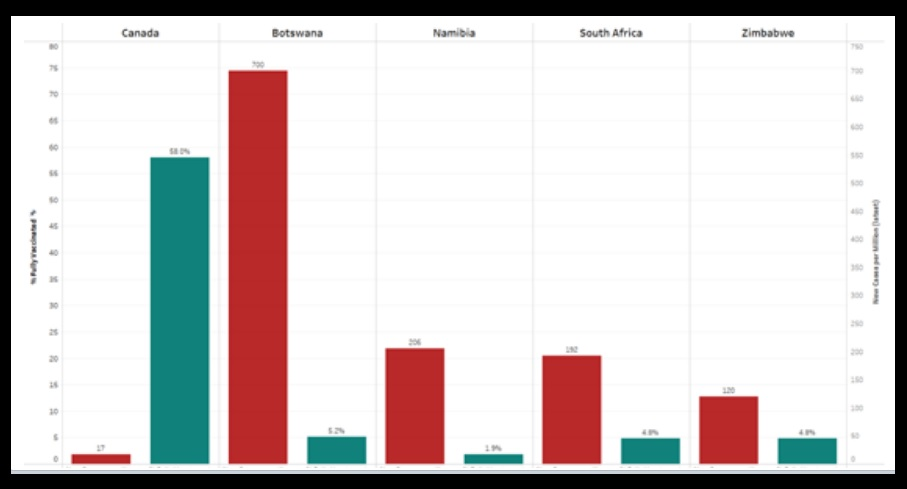
Figure 1: A tale of two pandemics
While Canada is in a very good position, some African countries are seeing an increase in cases with a very small share of their population vaccinated.


Canada has so far committed to share 30.7 million doses with COVAX, the global vaccine distribution mechanism, including a recent pledge to donate the remainder of our Astra Zeneca orders. But there has been no confirmation of when these donated vaccines might reach countries in need.

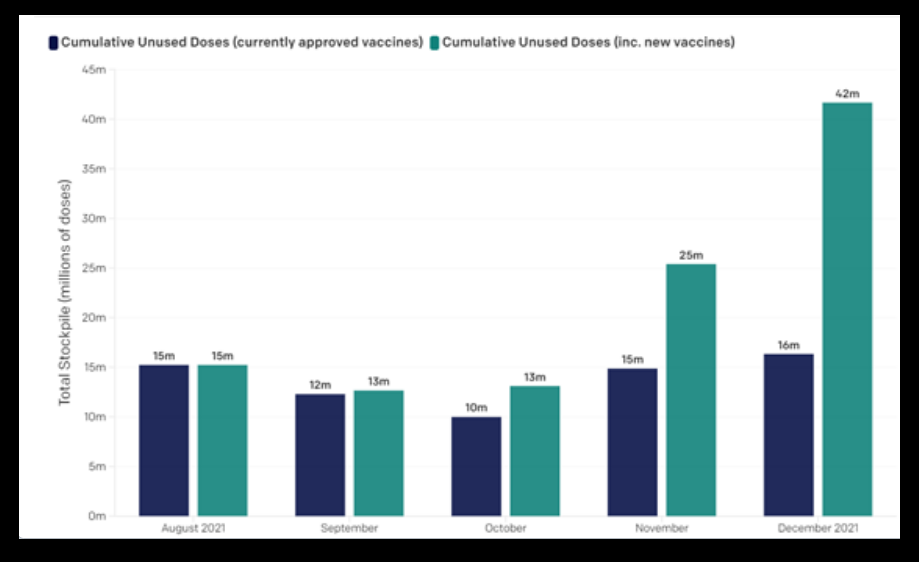
In addition, new analysis by the ONE Campaign based on data from analytics firm AirFinity shows that at the current rate, Canada will end-up with between 16 and 42 million more vaccines piling up in freezers or thrown away by Christmas, while the pandemic continues raging on in Africa and the developing world.

We not only have a moral obligation to share doses, it is in our own best interest to stop the global spread and emergence of new variants. Until then, more preventable deaths will occur and Canada’s own recovery will be threatened by a shaky global economy. According to the IMF, failing to help the developing world defeat Covid-19 could cost the global economy US$4.5 trillion.

The time to donate more doses is now. Lives depend on it.

Africa is experiencing an increasingly urgent COVID crisis and needs at least 200 million vaccine doses by the end of September to slow the spread and prevent more needless deaths. Canada should immediately transfer all incoming vaccine orders to COVAX, beyond ensuring that there are enough for every Canadians to be fully vaccinated. This should mean at least 12 million more doses shared before the end of September, and in total 16-42 million vaccines donated before the end of the year if we want to end the pandemic and avoid unimaginable waste.

Vaccines being discarded is not a theoretical concern. In addition to the 300,000 doses from Johnson and Johnson that were discarded due to a manufacturing issue, thousands of Astra Zeneca doses have already been wasted in Canada because they could not be used before their expiry dates. With this vaccine barely been used in anymore, there may be thousands more sitting in freezers or the garbage, and provinces are coy about how many they may be throwing away.  The same is starting to happen with Moderna, with pharmacists unable to put some of the doses they have in arms.

It may be tempting for the Government to keep vaccines stockpiled just in case boosters may be needed. But the evidence so far on the need for boosters is far from conclusive, and many experts have warned that it would be counterproductive to start giving third doses to healthy people in rich countries while at-risk populations have not yet had their first shot in developing countries. Stockpiling a product with a short shelf life will inevitably lead to a lot of waste. In any case, Canada has already ordered up to 60 million more doses of Pfizer a year for the next 3 years in case boosters are needed.

The excess doses we have coming in the next 5 months must urgently be shared with countries in need to stem the pandemic globally. Variants spreading around the world pose a threat to Canadians. The longer we wait to vaccinate the world, the more variants we will see and the longer this vicious cycle will continue. The time to donating more doses is now. Lives depend on it.

Up to 42 million doses could go unused in Canada by Christmas

By December 2021, Canada will have received at least 92 million doses of the four vaccines currently approved by Health Canada (Moderna, Pfizer, Astra Zeneca and Johnson & Johnson). If Medicago and Novavax post positive Phase 3 results and are also approved, total supply could increase to 117 million doses. [1]

To fully vaccinate every Canadian, including children under 12 should vaccines be approved for them, 76 million doses will be required in total. These are highly optimistic projections of actual demand, since it is unlikely that 100% of the population will want to be vaccinated.

This means that between 16 and 42 million excess vaccines risk being stockpiled or wasted in Canada by the end of the year. The higher scenario means our excess vaccines would be enough to fully vaccinate everyone in a country like Burkina Faso this year. Right now, 0.01% of people are fully vaccinated in Burkina Faso. For the Silo, Justin McAuley.

Figure 2: A growing stockpile
Even accounting for the already-announced donations, Canada will have millions of excess vaccines

[1] This excludes the 30 million doses already donated to Covax.

Identify Toxic Cosmetics

What does the ingredients list above represent? It’s taken from the label of a popular name brand soap advertised with fresh faces, and as leaving no residue on the skin. Would it surprise you? Perhaps you recognized it, but thought well it’s being sold in stores so it must be safe.

The good news is that since 2006,  Canadians have been provided with mandatory labeling on personal care products. Health Canada has even gone a step further providing a “hotlist” or list of prohibited or restricted chemicals . This is a huge step above our neighbours to the south, whom currently have minimal regulation on personal care products. Canada is on the right track, but is still a few steps behind the European Union, where personal care products are held to stringent guidelines.

The bad news is that even though there are guidelines set of by Health Canada, some of the products on the market today still contain chemicals, with similar structures to those chemicals that have been restricted. And if something shares a similar structure it is likely to interact with the human body in a similar fashion, thus causing similar health concerns.

What at can you do? The good folks at the David Suzuki Foundation performed a Survey of Canadians and their use of personal care products, and from this developed a “dirty dozen” of chemicals to avoid. Results of their survey demonstrated that 80% of products contained at least one ingredient on the list, and only 20% did not contain any. By visiting the www.davidsuzuki.org and searching “What’s Inside? That Counts,” you can download your own copy of the list, or even visit the mobile site when you are out shopping.

Why does this all matter? Many of the chemicals that are found in personal care products can bio-accumulate, meaning they can increase in concentration over time, and be passed on to our next generations. There is also well documented evidence of effects within the human body caused chemicals affecting the endocrine system. Within the human body endocrine disruptors have been implicated in neurological diseases, reproductive disorders, thyroid dysfunction, immune and metabolic disorders. Cancer is also another health concern that has been linked to many of the chemicals found in personal care products.

What about my health? As a naturopathic doctor I am always thinking from a preventative medicine point of view. The more I learn, I continue to look for natural/chemical free personal care products. Also important is optimizing your body’s innate ability to remove build up of chemicals through organs such as liver, skin, and kidneys. As always, prevention is the best medicine, and becoming a savvy consumer involves reading labels and asking questions. For the Silo, Ashley Beeton Bsc. ND. 

Glyphosate From Roundup Pesticides Does Not Belong In Canadian Food

Let’s cut right to the chase: Do you know what’s in your lunch?  We were curious, so we decided to investigate further.

We tested popular foods such as Cheerios, a Tim Hortons bagel, Ritz crackers and Fontaine Santé hummus and the results were overwhelming: 80 per cent of the foods tested contained the harmful chemical glyphosate. Glyphosate, Canada’s top-selling weed killer and key ingredient in Monsanto’s product Roundup, is of particular concern because of its links to cancer.

The unchecked use of glyphosate and widespread contamination of the foods that you and your children eat every day is not acceptable.

Just last month, a California court ruled that Monsanto’s glyphosate–based pesticide, contributed to an American citizen’s cancer. The court case revealed documents showing Monsanto manipulated scientific research and downplayed the risk of its products for decades. This case is just one of several thousand lawsuits against Monsanto (now owned by Bayer).

In Canada, the Pest Management Regulatory Agency (a department of Health Canada) recently reauthorized glyphosate for another 15 years. We are calling on the federal government to bring our outdated toxics and pesticide laws into the 21st century and remove harmful chemicals like glyphosate from our food. With your help, we can make this happen. For more information check out this report at whatsinyourlunch.ca   For the Silo, Muhannad Malas. 

Supplemental- Jurors give $289 Million USD to man they say got cancer from Roundup weed killer.


Canada Needs To Adopt WHO Labeling Says MP Justin Trudeau

photo courtesy of the author

Article from March , 2013 –  In 1981, the World Health Organization introduced Code of Marketing for Breast-milk Substitutes. To date, 84 countries have enacted legislation making the labeling Code law in their countries. While Canada agreed and signed onto The Code and the amendments, to date it has not created any law, which would uphold this International document.

The WHO Code says, among many other items, that breast milk substitutes (including formula and infant foods) should not be directly advertised to consumers because they are sub-optimal foods to feed to babies and infants. Advertising includes newspapers, ads on Google or other websites, texting, and free samples through the mail.

Formula companies in Canada say they abide by the WHO Code by including a preamble in every commercial: “while breast milk is best…” Ask your average consumer today what they think about breast milk and formula and specifically if there is any difference. I have posed this question while working at numerous health fairs in the past 5 years. It is staggering the number of people who view breast milk and formula as having the same nutritional value. In case you do not know already, this has scientifically been proven false.

Over the past 5 years, I have written MPs and MPPs about why Canada does not uphold the WHO Code. What I heard from Health Canada directly is:

The Food Directorate of Health Canada is responsible for the development of policies, regulations and standards for all foods. The Food Directorate is also responsible for the premarket notification process for infant formulas…Manufacturers are responsible for the accuracy of information on the labels and advertisements for food and for compliance…”

This is akin to letting prisoners run the jail.

While writing my monthly (and at times weekly) concerns to government officials, I found an MP who said that, “If we were signatories to it, we should live up to it.” This was Justin Trudeau.

I am saying be politically involved. I have a stack of letters and many emails from all parties in their response to the WHO Code. It has been 30 years since Canada signed The Code. Why is it taking so long to actually do something to enforce it? Enforcing the Code would not result in taking formula off the market at all. The Code’s aim is to make healthier babies and our babies are entitled to the highest degree of health. For the Silo, Stephanie MacDonald. 

StephanieMacDonaldSiloWriter