Tag Archives: courage

The Courage of Sudanese Women in a Country at War

Last week, I travelled to Sudan with two colleagues and six journalists. We went to listen, to learn, and to see more clearly what too much of the world now sees only in fragments. What I came home with was not one neat conclusion, but a deeper conviction that amid one of the gravest humanitarian catastrophes on earth, Sudanese women are still carrying extraordinary burdens with immense courage. More than 30 million people in Sudan are in urgent need of humanitarian assistance, and major humanitarian agencies now describe Sudan as the world’s largest humanitarian crisis. 
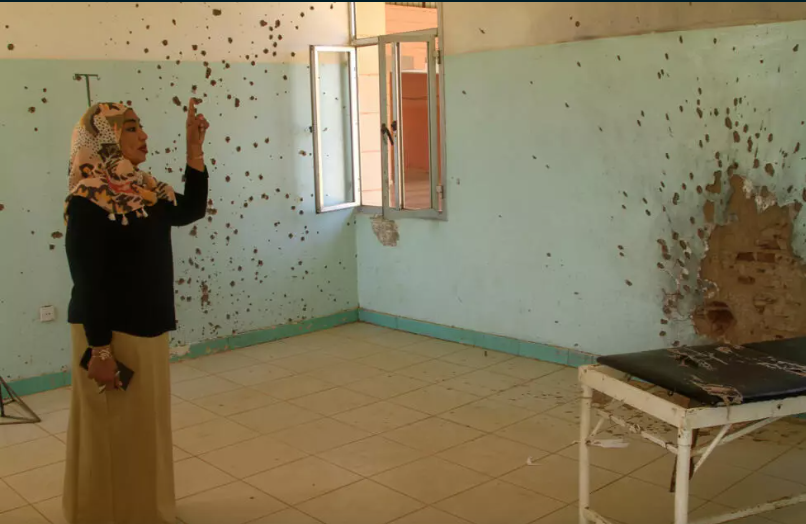
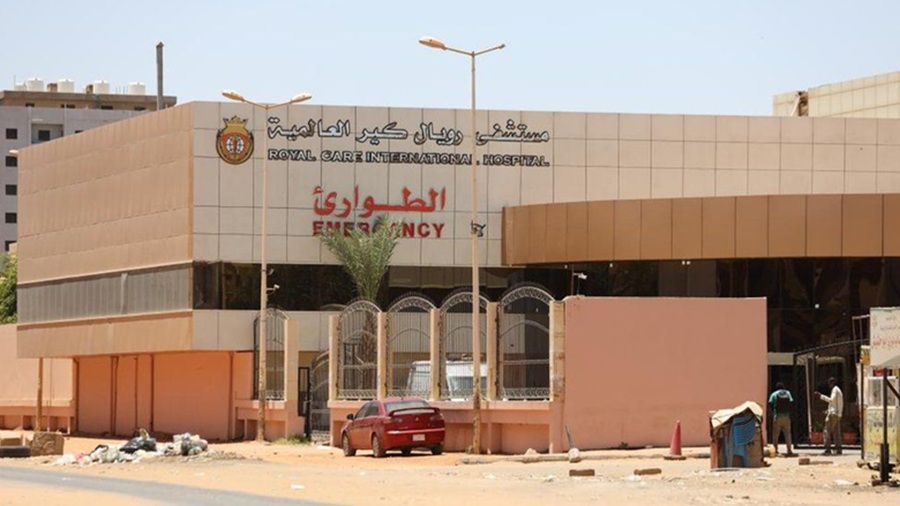
Photo: France24.com Hospital director Dr. Safaa Ali shows the bullet holes that still riddle the wards of the reopened Saudi hospital in Omdurman. © Ebrahim Hamid / AFP

That truth was visible in the wreckage of Khartoum, in the strain of Port Sudan, and in the harsh fragility of the refugee camp near Al Dabbah. But nowhere was it more clear than in the women we met, women who were not simply surviving the war, but, in many ways, still holding Sudan together.

One of the most unforgettable voices of the trip was Dr. Safa Ali, an obstetrician and gynecologist and the director of Saudi Maternity Hospital in Khartoum. She is one of the Sudanese women who have become symbols of moral seriousness in this war, not because they sought attention, but because they refused to leave when everything around them was falling apart. During the war, she stayed at her post even as parts of the city emptied out and the health system buckled under violence, shortages, and flight. She has been publicly recognized for her courage, including as one of the women highlighted internationally for remaining at work through the conflict. 
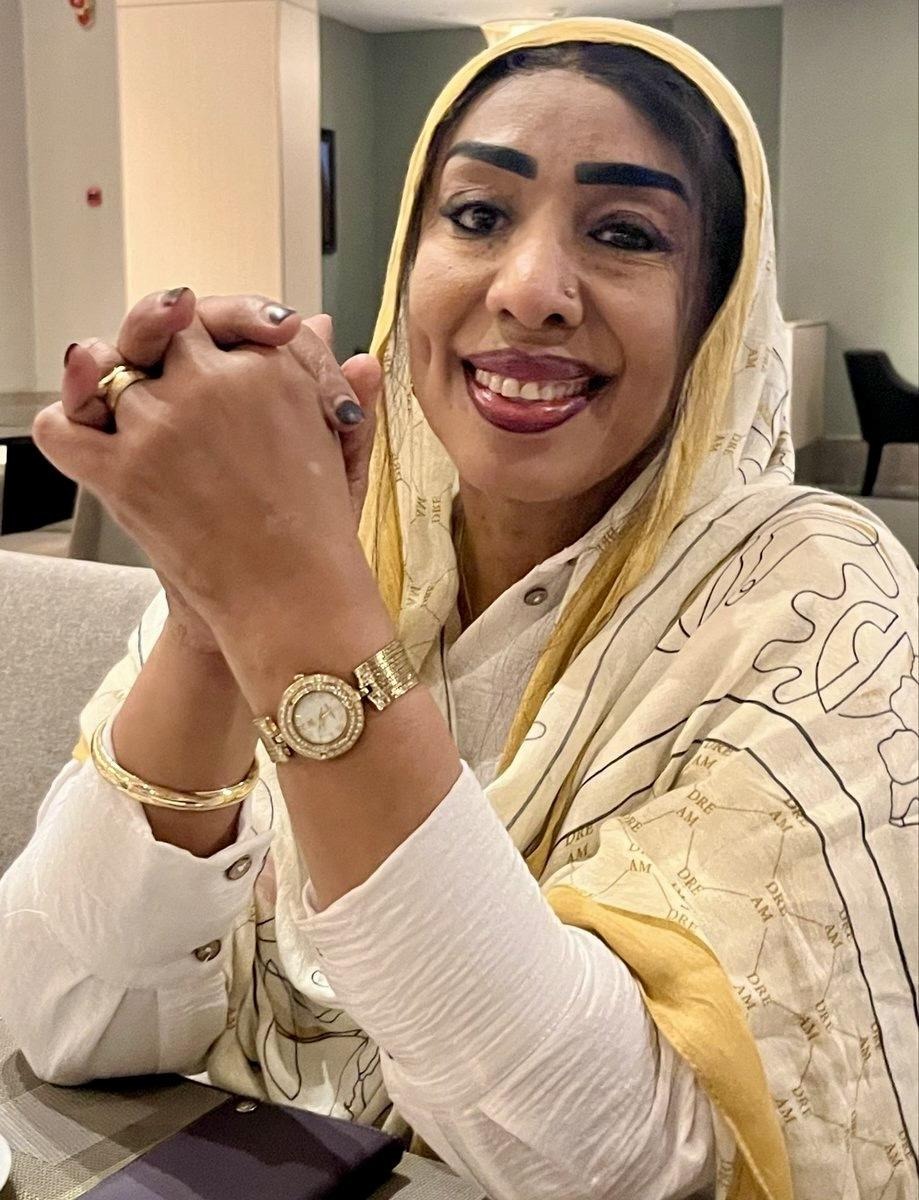
Photo: Dr. Safa Ali speaking with international journalists in Khartoum. The word “dream” is repeated across her headscarf, a striking detail in a conversation about war, survival, and the future of Sudanese women.

When we met her, there was nothing theatrical about the way she spoke.

With the precision of a physician, she described a hospital under intense pressure: shattered windows, failing electricity, scarce water, damaged equipment, too few medicines, and too few staff. Yet women kept coming, because pregnancy and childbirth do not stop for war. Birth continues whether the world is stable or falling apart. Dr. Safa Ali described women arriving after long and dangerous journeys, weakened by malnutrition and anemia, often without antenatal care, and carrying pregnancies already under immense strain. She spoke of the collapse of neonatal support, the shortages of medicine, and the lasting damage the war is doing as experienced health workers leave and younger staff are forced to fill impossible gaps. 

She also described stories that were difficult to hear and impossible to forget. A pregnant woman arrived with a gunshot wound to the abdomen. The bullet tore through her womb, injured the baby, and fractured the child’s arm. Somehow both survived. Another woman, critically wounded in a missile strike, could not be saved. She and her unborn child both died. Dr. Safa Ali also treated women made pregnant through sexual violence. A colleague who was struck and killed by a stray round mid-conversation. What stood out in the way she recounted these cases was not anger or self-dramatization, but steadiness. She said the first task was to create safety, to tell survivors it was not their fault, and to treat them with dignity. In a war like Sudan’s, even basic care becomes an act of resistance. 

If Dr. Safa Ali showed what leadership looks like inside a collapsed health system, Duaa Tariq revealed something equally important: what it means to defend human dignity and agency under pressure. Duaa is an activist, humanitarian, and artist. She is also the co-founder and director of Color Sudan, a collective of artists that promotes civic and political rights through art and public engagement. Since the war began, she has remained deeply involved in grassroots efforts to support civilians, including through local mutual aid and women-led initiatives. Humanitarian networks have recognized her as one of many Sudanese women who stayed in Khartoum to support those left behind. 
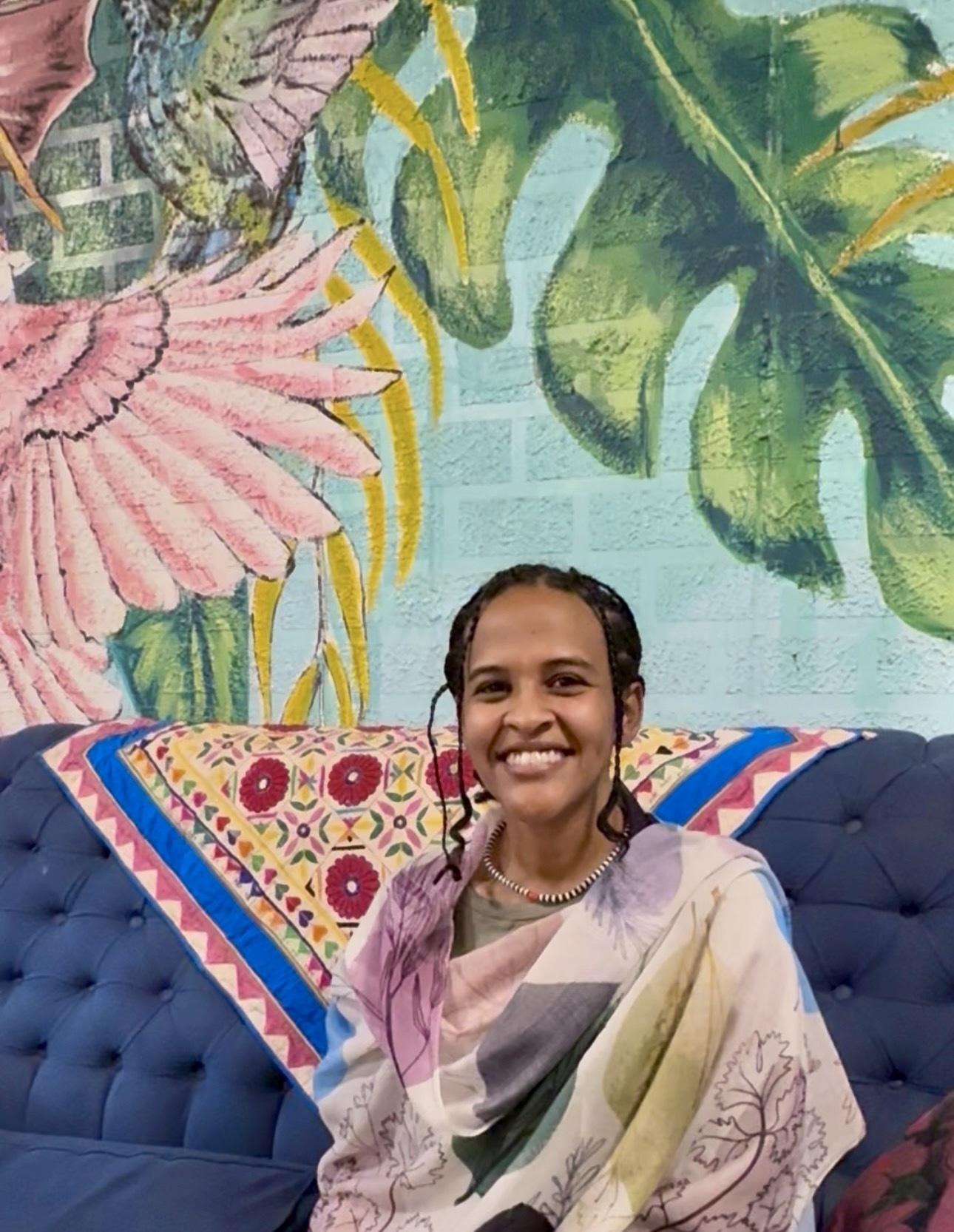
Photo: Duaa Tariq sits in front of “The Unfinished Piece” a mural that was interrupted when the war in Sudan began and the artists involved fled Khartoum.

What struck me most about Duaa was not just what she said, but what happened when the conditions around her changed. Before our interview formally began, she was warm, animated, charismatic, and full of life. But, she was careful. Government representatives were in the room listening to what she had to say to the journalists. 

That moment said something profound about Sudan today.

The country is not only a place of bombs, displacement, and ruined institutions. It is also a place where people self-censor, where power enters the room quietly, and where what can be safely said depends on who is standing nearby. Duaa’s poise under those conditions was, in its own way, leadership. She represented a different but equally necessary form of courage: the courage to keep speaking, organizing, and staying present in a place where speech itself is constrained. This is hardly a surprise from a woman who insisted on going for walks in the city during the Battle of Khartoum, to demonstrate that women remained. To show other women that they are not alone.

If there was a theme that kept surfacing throughout the trip, it was this: Sudanese women are not incidental to the story of Sudan’s survival. They are central to it. In hospitals, camps, communities, and civic spaces, they are preserving life, preserving memory, and preserving some thread of continuity while so much else has been broken.

We saw that clearly near Al Dabbah, where displaced families were trying to survive amid too little sanitation, fragile water access, and clinics barely holding public health together. Even there, mothers were still trying to keep children focused on the future. Teachers were still teaching. In a retrofitted shipping container, 4-5 births happen each day. Families were still trying to impose some order on profoundly disordered lives. In camps like these, resilience is often talked about too casually, as though it were a noble trait. What we saw was not noble in the abstract. It was exhausting, practical, relentless. People were carrying life forward because they had no choice. 

Sudan is often described in North America as a forgotten crisis.

That phrase is accurate, but insufficient. Sudan is not forgotten because there is nothing to see. It is forgotten because the world has chosen, again and again, to look elsewhere. Yet as the war enters another year, the scale of the emergency is staggering. More than 34 million people, roughly two-thirds of the population, now need urgent humanitarian assistance, and millions have been displaced. International officials and aid groups continue to warn that Sudan remains the world’s largest humanitarian disaster, even as global attention drifts. 

That is why the courage of women like Dr. Safa Ali and Duaa Tariq matters so much. They are not symbols in the abstract. They are evidence that even under conditions of violence, surveillance, exhaustion, and profound uncertainty, leadership can still be humane, practical, and morally clear.

What I will remember most about Sudan is not only the destruction in a city of shattered glass, though there was plenty of that. It is the stubbornness of life in the middle of war. A doctor staying. An activist continuing. A mother enduring. A teacher teaching. A people insisting, despite everything, that this is still their home. 

Sudan does not need pity. It needs attention, honesty, and sustained engagement. Readers should keep paying attention, even as the world’s focus is pulled in a dozen other directions, because Sudan remains too important, and too devastated, to be left to the margins. The women holding the line there deserve at least that much from us.

For The Silo, Justin McAuley/ONE.org.

ONE.ORG ONE fights for a more just world by demanding the investments needed to create economic opportunities and healthier lives in Africa.  

ONE se bat pour un monde plus juste en exigeant les investissements nécessaires pour créer des opportunités économiques et des vies plus saines en Afrique.

What We Learn From The Death Of A Spouse And How To Find Love Again

He had no idea his life would change so significantly……For 31 years, Dennis and Hope Freed had a fulfilling marriage. They raised a family, built a home, and shared their dreams with one another and their two sons.

Overcoming Spiritual Midlife CrisisThen Hope got cancer, and their lives changed drastically overnight. She fought a long brave battle, and went through over 250 chemotherapy treatments, but on April 7, 2012, on an evening that heralded Passover in the United States and Easter in Israel, she died.
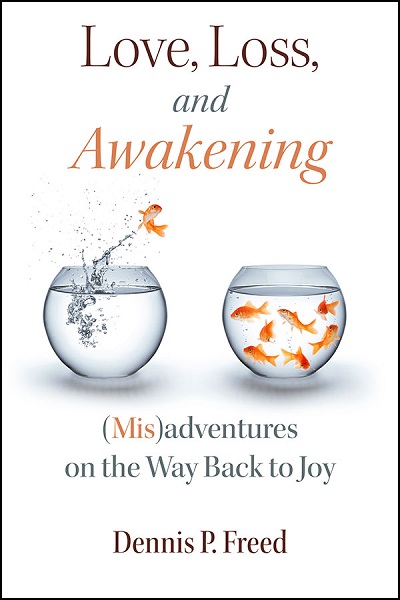
Dennis Freed’s beloved wife and best-trusted friend had gone, leaving him alone to figure out a future he’d never imagined. For the first year, he sorted through what society expected of a long-term caregiver and widower. Eventually, Dennis emerged from mourning, his heart ready for life’s next chapter. Is there love after marriage?

In Love, Loss and Awakening, Dennis Freed tells the story of how he began to go out with women again. He shares the reality of dating at age 50-plus—how he endured the awkward and hilarious encounters and embarrassments a man experiences when he hasn’t been on a date with a new woman for decades. Dennis’s book chronicles how one finds love after the death of a spouse. He describes his courageous and uplifting journey through sorrow, his search for new love, and his rediscovery of love and happiness.

Drawing upon the wisdom and personal experiences he acquired dating middle-aged women in all the wrong places, Freed takes the mystery out of the many lessons he learned. Dennis found out that as a widow or widower you can find love again, but it’s a difficult road. Love isn’t unique to the person you loved first. That love never fades, but your heart has room for more. You can get love back in your life. Your new love becomes a special love in its own right.

Here are just a few of the valuable insights:

Hole Heart/ Whole Heart

When you lose your best, most trusted friend, the hardships just begin. You are now alone. Your whole heart collapses to half its size. It transforms into a Hole Heart. The process of resurrecting it to wholeness is like Lego construction, built one little brick at a time. At first, bricks of varying shapes and sizes are sorted through and meticulously placed. Slowly they assume the weight and shape of your newly imagined Whole Heart.

Learn How to Be Physical, Affectionate, and Intimate

You spent thirty-plus years kissing no one but your spouse. If you spend your time worrying about the “what if” instead of enjoying the right now, it will rob you of your joy today. Sometimes you just have to learn something new, like all the kissing pleasures one never experienced. It’s not such a bad idea. Understand that it takes time and practice, and that each person you meet is unique. You’ll make hurtful intimacy mistakes just like a teenager. You’ll make stupid and inconsiderate mistakes. It’s a fact. Practice and learn so that when the right person comes along, you’ll be ready.

A Hundred Bottles of Beer on the Wall

You are going to date a lot of people. It is okay to be sad, mad, depressed, empty, lost after a date that isn’t perfect. Embrace the journey! Feel! Live it! Then get on to the next one so your failures don’t consume you. Have fun searching. Let your dating escapades become the target of jokes for your friends. Entertain them with style!

LoveLossAndAwakeningDennisPFreedBookCoverLove, Loss and Awakening

Dennis P. Freed

 List $ 12.95US

88 pages, trade softcover, also available in ebook version

ISBN 978-0-9971916-1-5

Tolawaken Press

 The death of a loved one is devastating, and can leave us questioning our new path. Will I ever want to find love again, and if so, how do I find it? What’s appropriate behavior for a widowed fifty-four-year-old? Should I explore dating sites? Meet women in bars? Rely on introductions from friends? The questions far outnumber the answers. In Love, Loss and Awakening, Dennis Freed shares his experiences and his journey to new love and the rediscovery of happiness.

For more information, visit www.LoveLossandAwakening.com


About the Author

Dennis P. Freed is a native of Brooklyn, New York, and, from age three, grew up in Oceanside, Long Island, where he later raised his family. He earned a BS in Civil Engineering at the University of Rhode Island. After a stint as a structural engineer, he entered the Construction Management and Development profession in New York City, where he has led teams to construct and develop more than sixty-five buildings. Also an associate professor at Pratt University in New York, he teaches Construction Management to architecture students.

Sunset

What People Are Saying

“Love, Loss, and Awakening is an engaging story of how one man bounces back after losing the love of his life. It is an ode to the power of being in relationship, especially when faced with incredibly difficult and heartbreaking loss. And it is with much humor that Dennis Freed takes the reader on a journey to find what we are all looking for to be joyous and fulfilled in relationship.”

Harville Hendrix, Ph.D., and Helen LaKelly Hunt, Ph.D., Creators of Imago Therapy and authors of Getting the Love You Want

“This is a story of digging deep after loss, finding that being with another is worth the risk, and staying open to lessons both human and Divine. At times an excruciating memoir of living with cancer, at others, a combination of ‘How To’ and, more useful, ‘How NOT To’ of middle-aged dating. Those who have loved deeply will be reminded of what they have or have lost; for others, it’s the promise of how good a relationship can be. The book has a happy ending, yet acknowledges that seeking love must always include a willingness to lose again.”

—Cynthia Wall, LCSW, author of The Courage to Trust: A Guide to Building Deep and Lasting Relationships

“Get ready to cry, laugh, cringe, and howl with wonder and delight as you go through Dennis Freed’s amazing experiences after the loss of his wife. He offers heartfelt real-life insights on how to cope with the despair and overcome the pain so you can face the world and find love and happiness anew.”

—Paul J. Krupin, author of Words People Love to Hear Simple Verbal Recipes for Making the People Around You Feel Good

World War One Trenches Crisscrossed Western Front Over One Hundred Years Ago

About one hundred years ago, millions were involved in war – a war later to be known as the War to End All Wars. It was a global conflict of brutality, propaganda and technological advance — a war of survival and humanity and courage.

Trench warfare forced soldiers to adapt to new technology and new techniques in order to survive – something my grandsons and I learned on a recent visit to the Canadian War Museum.

The helmet, the respirator and the Lee Enfield rifle were all introduced in 1916. The helmet was in response to shrapnel artillery shells. The respirator provided some defense against chlorine and phosgene gas. The Lee-Enfield bolt-action, magazine-fed, repeating rifle replaced the unsuitable and much hated Ross Rifle.

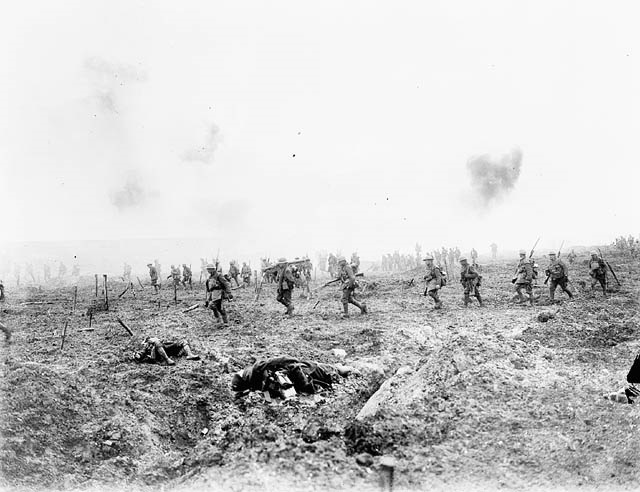
One hundred years ago, thousands of miles of trenches crisscrossed the western front.  Between the opposing trench systems lay No Man’s Land — a battered killing zone across which soldiers had to move in order to attack.

Howitzers were used to pound trenches and targets at the enemy’s rear. The eight-inch Howitzer could fire an enormous high-explosive, 200-pound shell up to seven miles.  The trajectory of fire was very high, with the shell plunging downward to deliver a devastating explosion.

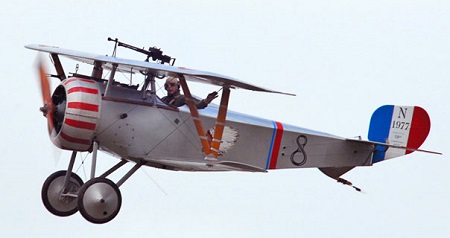
Nieuport 17 image courtesy of airpowerworld.info

Shrapnel shells were designed to burst in the air, producing a cone–shaped whirl of deadly metal. Soldiers suffered horrific wounds as pieces of shrapnel ricocheted inside the body, causing further internal damage and gaping exit wounds.

The Creeping Barrage was a key to victory on the Western front. This moving wall of artillery fire forced the enemy to remain under cover, unable to fire on the attacking infantry as they moved across No Man’s Land.

Control of the air was essential for victory on the ground. Canadians played a key role in the British air services as fighter and reconnaissance pilots, aerial observers, mechanics and flight instructors. The Nieuport 17, introduced in 1916, featured a powerful engine and a synchronized Vickers machine gun. It became one of the best allied fighter planes of the war.

Improvements in combat surgery and new techniques like blood transfusions meant almost 90 per cent of all wounded soldiers who received medical treatment survived.

Doctors learned to treat the terrible wounds of modern warfare, and served in the front lines or within range of enemy artillery. Causalities were so heavy that more than half of all Canadian physicians served overseas to meet the demand.

Canadian nurses were trained medical professionals, but nothing could have prepared them for the horror of battlefield wounds — more than 3,000 served in the Canadian Army medical corps. Their wartime service assisted women to receive greater recognition within the medical profession.

To pay for the enormous cost to equip our personnel overseas, the federal government imposed a business profits tax in 1916, and an income tax for individuals in 1917. Proposed as a temporary emergency measure, the income tax became permanent.

And, almost every city and town across Ontario and the country launched campaigns to raise money. Women worked without pay to provide countless supplies and gifts, including warm clothing, bandages and food.

To quote a popular phrase of the time, everyone was encouraged to, “Do your bit,” in support of soldiers and winning the war.

A century has passed, and we remember the tremendous impact of the War to End All Wars. For the Silo, Haldimand-Norfolk MPP Toby Barrett.