Tag Archives: culture

GlobalData : Travelers From Japan To France Set To Reach 1.3 Million By 2023

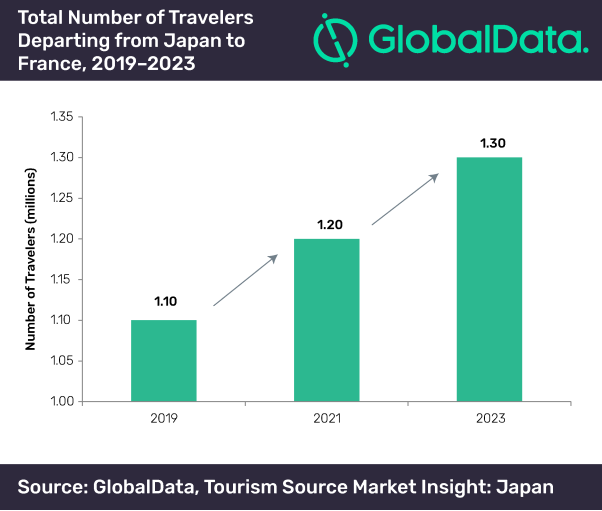
The number of international travelers from Japan to France is set to grow from 1.1 million in 2019 to 1.3 million in 2023, increasing at a compound annual growth rate (CAGR) of 4.6%, says GlobalData, a leading data and analytics company.  

GlobalData’s latest report: ‘Tourism Source Market Insight: Japan’ reveals that the Japanese are specifically drawn to Paris due to their perception that it is a romantic city. 

Ralph Hollister, Travel and Tourism Analyst at GlobalData, comments: “This substantial growth forecast illustrates that the Japanese source market is willing to sacrifice affordability and sometimes accessibility due to the cultural draw of a destination. The city is a popular tourist destination due to Japan’s fascination with all things French; cities such as Tokyo are filled with French patisseries and luxury French fashion outlets such as Chanel and Louis Vuitton.” 

Image result for japanese tourist in france
PR7476

According to GlobalData, France overtook Guam in 2018 to become the fifth largest outbound market for Japanese travelers. Guam is a destination which is much closer to Japan (average flight time of 3 hours 45 minutes, compared to 12 hours 50 minutes to France), thus making it more accessible and affordable also. However, Japanese travelers are willing to sacrifice these vital aspects of a holiday in order to experience  the French tourism product, due to the nation being heavily romanticized by the Japanese media. 

Hollister continues, “Air France and New Caledonia-based Aircalin have renewed their codeshare agreement for five years in October 2019. The airlines offer a daily service between Paris and Noumea, with additional frequencies during peak periods and optimized connections at Tokyo Narita and Osaka Kansai airports. This renewal will no doubt contribute to this accelerated growth rate.” 

It is clear to see that the majority of Japanese travelers are flocking to Paris, contributing to the growing issue of over-tourism in the capital. Atout France – the national tourism development agency, should focus on promoting less touristic cities to the Japanese source market such as Bordeaux. This city is popular for its gastronomy and many chateaux’s (castles), which are the type of famed stereotypes that attract Japanese travelers.  

About GlobalData

4,000 of the world’s largest companies, including over 70% of FTSE 100 and 60% of Fortune 100 companies, make more timely and better business decisions thanks to GlobalData’s unique data, expert analysis and innovative solutions, all in one platform. GlobalData’s mission is to help our clients decode the future to be more successful and innovative across a range of industries, including the healthcare, consumer, retail, financial, technology and professional services sectors.

Canadian Money And How Select Banks Create It

Poof!My book, Money: Whence It Came, Where It Went, tells us that “The study of money, above all other fields in economics, is one in which complexity is used to disguise truth or to evade truth, not to reveal it.

 The process by which banks create money is so simple the mind is repelled.”

Graham Towers, the first Governor of the Bank of Canada, explained the process by which banks create money: “The manufacturing process consists of making a pen-and-ink or typewriter entry on a card in a book. That is all. Each and every time a bank makes a loan, new bank credit is created – new deposits – brand new money.

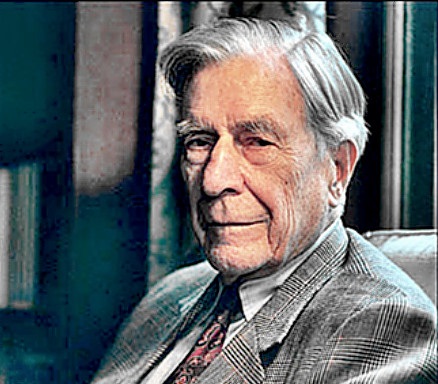
John Kenneth Galbraith- mystic or curmudgeon? image: poorwilliam.net

Broadly speaking, all new money comes out of a bank in the form of loans. As loans are debts, then under the present system all money is debt.”

Money created by banks and other financial institutions is interest-bearing debt. They create the principal and expect their money to be returned with interest. We can’t create interest the way they create the principal, so we must obtain it from some other money that was also created as interest-bearing debt. There is never enough of this money in existence at any time to pay off all of our collective debt. More interest-bearing money must continually be borrowed into existence.

In 2013, not so long ago, the ratio of household debt in Canada, including mortgages and consumer debt, was more than 160% of disposable income after mandatory deductions and income taxes and this statistic will keep growing with each year. The federal debt in Canada then was more than $600 billion, and interest payments on the debt in 2011-2012 cost $31 billion dollars or 11 cents of every tax dollar. Now in 2019, the federal debt has grown to $768 billion.

The five largest banks in Canada reported more than $27 billion in combined net income for the 2012 fiscal year.

Canada’s central bank, the Bank of Canada, claims to “regulate credit and currency in the best interests of the economic life of the nation”, and to mitigate “fluctuations in the general level of production, trade, prices and employment”, yet the purchasing power of the Canadian dollar has dropped steadily since the Bank of Canada was founded in 1934. As a store of value the dollar has not performed very well. It should also be noted that Canadian banknotes ceased to be redeemable for gold in 1929.

Bank of Canada notes are fiat money that the federal government declares to be legal tender, and the Bank has a monopoly on the issuance of bank notes. These notes are supplied to financial institutions to satisfy public demand. Chartered banks in Canada are no longer required to maintain statutory cash reserves for the loans they make. According to some estimates, Bank of Canada notes add up to less than 2% of the total amount of loans made by the banks and other financial institutions.

Once upon a time, Canada used real paper bills for one and two dollars. The move away from paper currency is interesting. Is there a concerted effort to 'do away' with physical money? (The recent withdrawal of the penny being an example.) The penny was costing more to manufacture and distribute than its actual physical value...that's partly because it wasn't made out of pure copper- hence it became "expensive". Will the nickel be the next coin to die? Is it even made out of nickel anymore? Check back in ten years. CP

Money created as interest-bearing debt is scarce from the moment it is created, which curtails its effectiveness as a medium of exchange. Every dollar comes into existence as interest-bearing debt, and the overall cost of interest is reflected in the price of everything we buy. This is not to suggest that interest should be banned or that interest rates need to be controlled by a central bank. Anyone should be free to lend his or her savings at a mutually agreeable rate. Equity financing, with shared risks and rewards, is another option.

What is being suggested here is that we ask some fundamental questions about the monetary system and the function of money.

 Are you able to use your goods, services, labour, knowledge, skills and abilities to obtain enough money to purchase other goods and services?

Are you able to obtain credit when you need it and are also willing and able to pay it back? Are you able to negotiate an agreeable price for credit and loans? Are you on a treadmill of debt, no matter how hard you work, how many expenses you cut, or how hard you try to save?

Are your savings secure and retaining their value?

Money is basically credit, like an IOU. Our ability to exchange our goods and services should not be hampered by the price of credit or an inadequate supply of money. Anything physically possible is financially possible. We can extend credit to anyone who wants to purchase anything from us and who is willing and able to provide us with a mutually agreeable amount of his or her goods and services. In essence, goods and services pay for other goods and services.

A mutual credit clearing system is an alternative method that can be used to facilitate reciprocal exchange.

Members of a credit clearing association have a trading account where an ongoing record is kept of their sales and purchases, their credits and debits. Every transaction includes a credit entry for one member and a debit entry for another, but interest does not have to be paid when an account temporarily has more debits than credits. Credit is extended to members from the rest of the traders in the group, and the major benefit of this system is that members can obtain interest-free credit. In the long term every member is expected to provide as much as they obtain. It all balances out within the community of traders. It’s all a simple matter of bookkeeping.

Direct credit clearing systems can be operated on a fee-for-service basis to cover expenses and to compensate those who provide this service. Nobody is ever forced to join any trading group and members are also free to leave when their debts are clear. Anyone can start their own credit clearing service, which allows competition between associations based on quality and price of service. Associations can also cooperate with each other to increase the number of potential trading partners and broaden the range of goods and services that are available.

Credit does not have to be scarce or expensive. We can control our own credit and allocate it as we choose. Are your best interests being served by the money you use?   For The Silo, John Kenneth Galbraith.

5 Dog Myths That Can Lead To Tragedy

It’s the kind of headline that makes dog behaviorist and author Melissa Berryman’s blood boil: “Dog on Trial after Attacking Child.”

According to the report, a pointer-hound mix named Milo, a dog that had never caused any problems, was napping on the couch in his home in January when a 6-year-old neighbor arrived. The boy sat down on the couch and started petting the sleeping dog.  The child was bitten in the face after being left alone with the dog.  No one witnessed the incident.

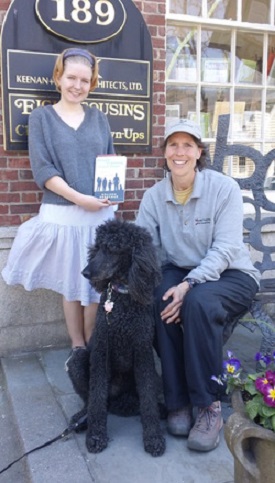
“The dog was put on trial for an accident that’s preventable when people understand what our behavior means to dogs,” says Berryman, who has spent years studying dog bites and is the author of “People Training for Good Dogs:What Breeders Don’t Tell You and Trainers Don’t Teach”. She also teaches classes on safety and liability protection for dog owners, provides community safety solutions andpromotes the right way to behave around dogs through The Dog Owner Education and Community Safety Council

Author Melissa Berryman (right) is a US national dog bite consultant.

“Dog owners are set up for failure because our default is to blame the dog. Owners get fined or sued for repeated human mistakes. Dogs often pay with their lives for mistakes made by people,” Berryman says.

That’s the case for the American canine Milo. At his Feb. 27 hearing in Mansfield, Mass., selectmen voted to euthanize him.  The owners have 10 days to appeal.

“Prevention has to be the priority,” Berryman says. “Sure, it’s cute to us when the baby hugs the dog. But dogs do not say ‘I love you’ with a hug. When one dog ‘hugs’ another, it’s an act of domination. It should be a given that people do not hug dogs. Yet the message for children to hug dogs is prevalent in our culture and the facial bites continue.”

What are some other common misperceptions people have about dog and human behaviors – and how you can change to prevent catastrophes?

Berryman shares 5:

1.     Myth: When greeting a new dog, you should extend your hand for it to sniff.

Fact: Dogs don’t sniff each other’s paws when greeting and like us prefer to be asked before being touched by a stranger. Instead, ask the owner and then also ASK the dog by tapping your hand on your thigh simulating a wagging tail and act friendly.  The dog will relax and nuzzle you, need to sniff more to get to know you or will stay away.

2.     Myth: Breed dictates temperament.

Fact: Dogs, first and foremost, are predatory canines that live in groups. Breeds are generalizations that enable breeders to better market the product they sell.   What dictates temperament is their pack position, the role you, the human, play in the group and the rank of group members.  Dogs have superior/inferior interrelationships and command and defer accordingly.  And just as siblings in a family have the same parents yet are very different, one cannot purchase behavior by buying a dog of a certain breed.

3.    Myth: When a dog charges, there is nothing you can do.

Fact: When a dog charges you, it’s trying to decide if you are friend, foe or prey.   Their eyesight is poor so hats, sunglasses and other objects you may push or carry can scare them.  Act like a friend and pretend you are not afraid. Stand facing the dog with relaxed body language, tap your thigh with your hand and use a high-pitched voice for a friendly greeting like “good girl.” Fake it if you are afraid.

4.    Myth: Posting a “Beware of Dog” sign will protect you from liability if your dog injures someone on your property.

Fact: Dogs can only read body language.  These signs make people react to your dog in a fearful manner, which is more likely to cause a dog to consider visitors prey and bite them.  Use No Trespassing and Dog At Play signs instead.

5.    Myth: Only bad dogs owned by bad people bite.

Fact:  Even responsible dog owners operate under the same false beliefs about human and canine behavior.  They are also encouraged to take a passive role concerning their dog.  Any dog can bite especially when it feels personally threatened, is exposed to prey behavior or thinks that someone lower in rank threatens its resources, such as food, toys, bedding and the attention of its owner.

About Melissa Berryman– author of  People Training for Good Dogs:What Breeders Don’t Tell You and Trainers Don’t Teach

A Massachusetts animal control officer from 1993 to 1999, Melissa Berryman is a US national dog bite consultant who founded the Dog Owner Education and Community Safety Council (www.doecsc.org) and works with communities, rescue groups, dog owners and bite victims. She also designed and teaches a safety and liability class for dog owners, from which “People Training for Good Dogs” is derived. She has worked with more than 10,000 dogs. Berryman holds an undergraduate degree in Animal Science Pre-Veterinary Medicine, and a master’s in Public Administration.  For the Silo, Ginny Grimsley. 

Free Presidential Helicopter Game Via White House Historical Association

NEW GAME Added to White House Experience App

“Fly Like Ike”

Players Can Pilot Presidential Helicopter Around Washington, D.C.

August, 2019 (Washington, D.C.) – The White House Historical Association has just launched a new game in its WHExperience mobile app called “Fly Like Ike.” This interactive game allows users to pilot the president’s helicopter and make stops to learn about several monuments and historic sites in Washington, D.C. before testing their aviation skills by landing on the South Lawn of the White House.

A picture containing grass, sky, outdoor

Description automatically generated

Helicopters have played an important role in transporting the president since 1957 when President Dwight D. Eisenhower became the first president to use a helicopter. The helicopter used in this game is a replica of the Official 2019 White House Christmas Ornament.

“Fly Like Ike” currently features these seven destinations: U.S. Supreme Court, U.S. Capitol, National Mall, Washington Monument, Jefferson Memorial/Tidal Basin, Lincoln Memorial, and the White House.

“Fly Like Ike” is the latest feature on the White House Historical Association’s WHExperience app, which is free to download on iOS, Android devices.

The WHExperience app also provides information and a link to purchase the  2019 Official White House Ornament, which commemorates President Eisenhower’s commitment to innovation as the first president to fly in a helicopter while in office in July 1957.

“Fly Like Ike” requires Wi-Fi or a data plan, and is compatible with iPhone 7 and up and devices running Android version 7.0 and up.  

The WHExperience app also includes virtual tours of the White House and a “Presidential Lookalike” selfie feature, which is powered by Amazon Rekognition technology. For the Silo, Jessica Fredericks.

About The White House Historical Association

First Lady Jacqueline Kennedy envisioned a restored White House that conveyed a sense of history through its decorative and fine arts. In 1961, the White House Historical Association was established to support her vision to preserve and share the Executive Mansion’s legacy for generations to come. Supported entirely by private resources, the Association’s mission is to assist in the preservation of the state and public rooms, fund acquisitions for the White House permanent collection, and educate the public on the history of the White House. Since its founding, the White House Historical Association has contributed more than $50 million USD in fulfillment of its mission.  

Can Another Ottawa Residence Win Canada’s Best Garden Street?

Congratulations! Russell Avenue in Ottawa’s Sandy Hill neighbourhood is the winner of the Canada’s Best Garden Street contest.
Russell Avenue in Ottawa’s Sandy Hill
neighbourhood is the winner of the Canada’s Best Garden Street contest.

Toronto, ON Garden Days – The month of June hosts Canada’s three-day celebration of gardens and gardening. There are loads of Garden Days official activities scheduled across the country, and almost every province has a Flagship Event for you to enjoy. It’s the perfect time to get dirty in one’s own garden, visit a nearby public garden or spend some time in a local garden center.

You’ll be in great company
If you’re planning travelling around the province or across Canada this Summer, be sure to visit a few of the many public gardens that we’re becoming world renowned for.  Dr. Richard Benfield, author of ‘Garden Tourism’ estimates that annually there are 6 million garden tourists in Canada.

And the winner is . . .

On the occasion of our upcoming National Garden Day, Friday, June 13, the Canadian Garden Council is pleased to announce the winner of the Garden Days’ ‘Best Garden Street’ Contest which celebrates the contribution that public and/or private gardens have made to the quality of life on individual streets and neighbourhoods.  The winner of $1000 worth of Marks’ Choice Lawn and Garden products from Home Hardware, and the bragging rights to be named ‘Canada’s Best Garden Street’ is: Mary Moreland, Russell Avenue, Ottawa.

Garden Days spokesperson, Mark Cullen, recently said, “The partnership between the hand of man and Mother Nature has produced some of the highest quality green spaces and gardens in Canada and on earth.  Garden Days, a new idea that’s all about this successful collaboration, has been sown on fertile soil.  I have no doubt that the ideas and principles behind the concept will sprout and grow into national significance.  And the sooner the better.”
This coming weekend join in the national celebration of everything that the Garden contributes the quality of all our lives.

Garden Days are a family affair. Photo: Pierre Boucher

Organized by the Canadian Garden Council, and kicked off with National Garden Day, always the Friday before Father’s Day, Garden Days is a three-day celebration of gardens and gardening.  The program’s objective is to draw attention to Canada’s garden culture, history and innovations and to underscore the importance of public and private gardens, the values of home gardening and the promotion of environmental stewardship. For the Silo, Courtney Charette.

How Societies Become Consumer Cultures Through Housing

Alfred Marshall’s (Principles of Economics, 1891) view of housing still goes right to the heart of what makes housing and built environment an important anthropological topic. No artifact is so clearly multi-functional, simultaneously a utilitarian object of absolute necessity, and an item of symbolic material culture, a text of almost unending complexity.

In every house the economic, social and symbolic dimensions of behavior come together. This may be why the analysis of housing has had such a wide appeal in disciplines as diverse as social psychology, folklore, economics and engineering. Anthropologists themselves have shown a new willingness to consider the house as a key artifact in understanding the articulation of economic and social change during economic development.

An ethnocentric home.

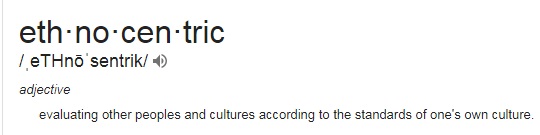
From the perspective of our own contemporary society, surrounded by houses of all shapes and sizes, where wealth and luxury are synonymous with housing, this seems obvious and commonplace. The 1980’s television show “Lifestyles of the Rich and Famous” and journals like “Architectural Review” are odes to the home as a shrine and symbol of wealth. But just as clearly, there are societies where all the houses look alike, even though all the people are not alike. Perhaps then, the assumption that there is something natural and obvious about spending on the house and home market as a marker of prestige is ethnocentric. Why the house instead of something else?

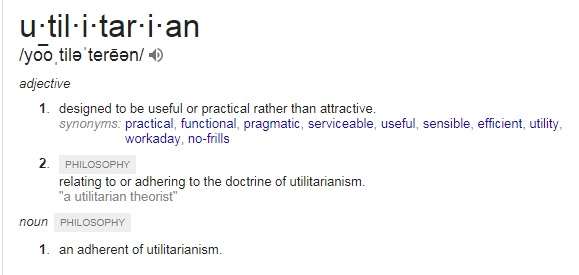
A number of anthropological approaches attempt to place the house in a theoretical context which answer this question by relating housing to social, economic, and psychological variation and change. For example, a utilitarian approach that views the house partially as a workspace links changes in the elaboration of houses to changes in the kinds of work done in the household (Braudel 1973:201). Or if the house is seen as a reflection of how all household activities are organized and divided, then the shape of the house will change as activities are modified, differentiated, or recombined (Kent 1983, 1984).

Utilitarian houses.

An even more utilitarian perspective relates the form of the house to climate, technology and the kinds of building materials that are available (Duly 1979).  For the Silo, Richard R. Wilk.

Read on..click here and read the full PDF document on your device.

Supplemental- Complete Text  Principles of Economics (London: Macmillan and Co. 8th ed. 1920).
Author: Alfred Marshall
About This Title: This is the 8th edition of what is regarded to be the first “modern” economics textbook, leading in various editions from the 19th into the 20th century. The final 8th edition was Marshall’s most-used and most-cited.

Fast Track To The Future With Virtual Reality

Occulus Rift Xray ImageThe implications of what Virtual Reality can achieve are vast, and it is predicted that VR will seep into every area of our lives in the very near future. VR is not just a concept that excites the entertainment business, but has a very real presence in some of the world’s most essential industries. However, many people remain skeptical about the impact virtual reality will actually have and suggest that it is only an attractive concept for gamers. Although it is true that VR is a fantastic way to improve online gaming, it has already been used in the medical and manufacturing industries, proving that virtual reality is not just a tool for play. Others fear VR could replace physical social interaction and they are therefore reluctant to consider the many benefits it actually presents. By taking a selection of real-life situations in which virtual reality is already used, we can assess its impact and perhaps decide whether it is to be embraced or discarded.

Surgery

It may not surprise you to know that the health sector is one of the biggest users and advocates of virtual reality. VR is of exceptional benefit in surgical training, improving student skills whilst minimizing risk to potential patients. This type of training can improve confidence and allow students to explore surgical procedures and options that would otherwise be inaccessible to them during the initial stages of their training. Virtual reality is already used by surgical staff, trainee nurses, dentists, and in numerous other health settings, world wide, allowing students to quickly gain skills without putting themselves or other individuals at risk.

Therapy

The authentic nature of VR allows therapists to assist patients with certain phobias. VR promotes controlled environments which can quickly be changed or eradicated during a course of therapy. For example, a person suffering from arachnophobia would perhaps find it more helpful and less daunting to experience holding a spider via VR rather than in a real life situation, and of course, a virtual reality headset can be turned off immediately should the situation require it. Other phobias and aversions could be tackled through the use of VR, including water aversion, acrophobia (fear of extreme heights) or aviophobia (fear of flying).

Occulus Rift Hot Babe VR PornEntertainment

For some people, the online world is their only connection to society and if virtual reality gaming can help them continue to connect, then this can only be perceived as a positive thing. There is no denying that virtual reality is an amazingly entertaining concept and, when done well, is an excellent way to experience online gaming. Being fully immersed in a game is a highly attractive idea: whether it be one that takes you to a battlefield, or a game that allows you to feel as if you are actually being dealt cards at a plush casino in Vegas. Currently, gamers can connect with people from all over the world, or play slots in the comfort of their own home by visiting a site such as  www.luckynuggetcasino.com yet imagine the thrill of full immersion through the power of virtual reality.

Transport and Training

Again, we touch upon the benefits virtual reality provides to many aspects of training and, in this particular situation, to the world of transport. For years the aviation industry has been using simulations to help train pilots and virtual reality is a welcome advance in such training. VR flight training presents minimal risk to both the pilot and passengers whilst allowing pilots to experience the difficulties that may arise whilst being in control of the aircraft. The most spectacular example of virtual reality based vehicle training is perhaps that used by NASA to train its astronauts. The training includes various simulations including that of an astronaut having to perform repairs during zero-gravity conditions, as well as a simulated detachment from the shuttle with the astronaut having to use a powered backpack to return. NASA has even managed to use VR in space, keeping astronauts up to date with training whilst on a mission and it has been suggested that VR will be used to entertain astronauts in space in the future. Just imagine, you could soon be sharing your virtual poker table with the astronauts of tomorrow!

Supplemental- Gamers are talking about the Oculus Rift and the Playstation VR but the HTC Vive looks pretty sweet too!

A Musical Journey for Robots and their masters~ CLICK ME

Top Ways Folks Go Broke

Being broke sucks and you don’t have to come from a wealthy family, have the next  billion-dollar idea or work 18-hour days to become rich, says self-made millionaire Mike Finley. In fact, you don’t have to be extraordinary in any of the headline-grabbing ways. What you need is the self-awareness to avoid wasting Financial Happiness.

“Money used wisely can give you financial security ”

Finley lists 10 of the most common money traps that lead to consumers going broke:

1- Making the appearance of wealth one of your top priorities by acquiring more stuff. The material trappings of a faux lifestyle, as seen in magazines and advertisements, are not good term happiness.

2- Working a job you hate, and spending your free time buying happiness. Instead, find fulfilling work Monday through Friday so you are not compensating for your misery with expensive habits during the weekend.

Even worse than living paycheck to paycheck- advance loan on your paycheck.

3-  Living paycheck to paycheck and not worrying about saving money. Don’t live for today, as if that’s all that matters. Have you already achieved all of your dreams by this moment? If not, embrace hope and plan for tomorrow. (Appreciating your life today doesn’t require unnecessary expenditures.)

4-  Stopping your education when someone hands you a diploma; never reading a book on personal finance. Just about any expert will tell you that the most reliable way out of poverty is education. Diplomas shouldn’t be the end of learning; they should be a milestone in a lifetime of acquiring wisdom.

5-  Playing the lottery as often as possible. While you’re at it, hitting the casino! Magical thinking, especially when it comes to money, is a dangerous way to seek  financial security.

6-  Running up your credit cards and making the minimum payments whenever possible. Paying interest on stuff you really don’t need is a tragic waste of money.

7-  When you come into some free money, spending it. Feeling like you deserve it. By that logic, you’re saying that a future version of you doesn’t deserve the money, which can be multiplied with wise investments.

8-  Buying the biggest wedding and the biggest ring so everyone can see just how fabulous you really are. Nothing says “Let’s start our future together” like blowing your entire savings on one evening.

9-  Treating those “amazing” celebrities and “successful” athletes as role models. Trying to be just like them whenever possible. As far as we know, there’s only one you the universe has ever known. Don’t dilute your unique individuality by chasing an image.

10-  Blaming others for your problems in life. Repeat after me: I am not a victim. The victim mentality is an attempt to rationalize poor habits and bad decision-making.

“If you’re feeling uncomfortable with your financial situation, don’t just sit there in a malaise of ‘If only I had more money,’ ” Finley says. “Instead, use it as motivation for a better life; that’s why the discomfort is there.”

Like most North Americans, Mike Finley was raised with no education in personal finances. Joining the Army out of high school, he realized he didn’t understand money management and began the task of educating himself. After 26 years in the service, during which he practiced the principles he learned, he retired a millionaire. Finley is the author of “Financial Happine$$,” and teaches a popular financial literacy class at the University of Northern Iowa.  For the Silo, Jarrod Barker.

Ways To Retrain And Put Your Adult Brain Back In Charge

Jungian Psychology uses art-therapy, dreams and imagery in mapping personal and collective unconscious, archetypes and complexes. Jung believed that there were fears and thoughts that children and adults exhibit that are "remarkably similar across time and culture" (allpsych.com) image: skycladtherapist.files.wordpress.com
Jungian Psychology uses art-therapy, dreams and imagery in mapping personal and collective unconscious, archetypes and complexes. Jung believed that there were fears and thoughts that children and adults exhibit that are “remarkably similar across time and culture” (allpsych.com) image: skycladtherapist.files.wordpress.com

The human brain is a wonder of the universe, but our understanding of it can seem contradictory, says Steven Jay Fogel, author of the book Your Mind Is What Your Brain Does for a Living.

“On the one hand, we’re often told of those crucial years that our brain develops in childhood, when we’re rapidly progressing in development of our language and other skills, and our preadolescent and teenage years, when our brains undergo a sort of second Big Bang of learning,” says Fogel, (www.StevenJayFogel.com).

“But although it may seem that the brain is pretty much set by adulthood, it remains malleable throughout adulthood; it continues to change as we learn and adapt.”

Most of us are unaware that elements of our inner child’s development are constantly tugging at us, and we don’t have a clue that it’s happening, he says. In Jungian therapy there’s a concept called the dark side, or shadow side, the place in our unconscious to which certain feelings and thoughts are banished because they don’t support our image of ourselves, he says.

Steven Jay Fogel is a longtime student of human behavior and development.
Steven Jay Fogel is a longtime student of human behavior and
development.

“That is our inner child responding to the emotional pain we experienced and interpreted with the limited understanding we had when we were very young. It continues to steer our reactions and behavior as adults, often in inappropriate ways,” Fogel says.

Awareness creates an opportunity for change. Fogel reviews how our adult brain can take command of the inner child:

• Recognize the elements of your self identity that keep you trapped. Our identity – how we want the world to see us – develops, in part, as a response to avoiding pain. Our identity may change from one situation to another (in the same way a chameleon changes its body color to match its surroundings) as we slip on the persona we believe is expected in a particular environment or social setting. This automatic behavior is the opposite of making mindful choices, and it robs us of the joy of living in the moment and inhibits spontaneity.

• Be aware of when you’re acting. Many of us live our lives as though we’re playing parts in various movies, navigating different storylines every day. You may be the righteous Clint Eastwood manager at work and then shift into the town drunk during happy hour, and later the loving husband and father during brunch the following weekend morning. When you’re playing these roles, you’re not in the present.

Be skeptical of what the voice in your head may tell you. It’s not easy to recognize and quiet the mental chatter associated with the different roles we play. We’ve become so accustomed to the voice in our head, that we don’t realize its messages are programmed – and not necessarily the truth. Is your voice telling you to feel guilty? Ashamed? Angry? Is that rational? If not, it may be your inner child acting out of a childlike fear.

“Instead of simply responding to what we’re hardwired to think and react, we can hear, in mindful repose, those promptings as simply chatter,” Fogel says. “When you’re mindful, the inner child’s chatter can be seen for what it is, and you will be free to take a more mature directionin your day-to-day living.”

Steven Jay Fogel is a longtime student of human behavior and development; he has studied with psychologists, educators, and rabbinical scholars. Your Mind Is What Your Brain Does for a Living, (Greenleaf Book Group Press, 2014), is his third book. He is also the author of My Mind Is Not Always My Friend: A Guide for How to Not Get in Your Own Way (Fresh River Press, 2010) and The Yes-I-Can Guide to Mastering Real Estate (Times Books-Random House). For decades he has been an active participant in the human potential movement, inspiring and mentoring others to seek their true selves. Fogel is a principal and cofounder of Westwood Financial Corp., one of the largest owner-operators of retail properties in the United States. He is a licensed real estate broker and past chairman of the California Arts Council.

Supplemental- Synchronicity is the experience of two or more events that are apparently causally unrelated or unlikely to occur together by chance, yet are experienced as occurring together in a meaningful manner. The concept of synchronicity was first described in this terminology by Carl Gustav Jung, a Swiss psychologist, in the 1920s.
The concept does not question, or compete with, the notion of causality. Instead, it maintains that just as events may be grouped by cause, they may also be grouped by meaning. A grouping of events by meaning need not have an explanation in terms of cause and effect.

Click to view on I-tunes

Star Ancestors Extraterrestrial Contact In Native American Tradition

Star Ancestors by Nancy Red StarNancy Redstar explores the long-standing contact between American Indian tribes and extraterrestrial visitors through interviews with the tribes’ spiritual leaders and shares the wisdom and ET experiences of Dawnland founder Dana Pictou, Mayan daykeeper Hunbatz Men, Choctaw wisdomkeeper Sequoyah Trueblood, and Creek healer and artist Shona Bear Clark.

Her book includes color photos of ET-inspired work by prominent Indian artists as well as traditional Indian art and petroglyphs depicting contact with “Sky Elders”

As humanity stands at the crossroads between the Fifth and the Sixth Worlds, American Indian wisdom keepers have recognized signs that they must now speak their closely held knowledge about extraterrestrial contact, their original instructions from the Sky Elders. These ET relationships have existed since the beginning of time. They have been depicted on ancient rocks and hides, embedded in creation stories, choreographed in sacred dances, beaded on wampum belts, and continued to this day through rituals and the tobacco blessing.

They show our planet back into balance with natural laws.

Exploring the unifying “Sky Elder” theme found in virtually every Indian culture, Nancy Red Star shares her profound interviews with wisdom keepers from several Native traditions and produced an exciting documentary film that offers their teachings on taking our rightful place among the peoples of the universe. http://www.nancyredstar.com/film.htm

Laying out a path for rebuilding our world, the Sky Elders’ original instructions initiate us into the possibility of a coming time of peace. Inviting all peoples to realize their Star ancestry, the women and men of proud lineage and inspiring wisdom who share their experiences here offer us a survival plan for walking into the next world. http://www.amazon.com/Star-Ancestors-Extraterrestrial-American-Tradition/dp/1591431433

For the Silo, George Filer. from Filer’s Files #23 http://tinyurl.com/ka82j4j

Photo Glitch Art Book Is Mysterious And Beautiful

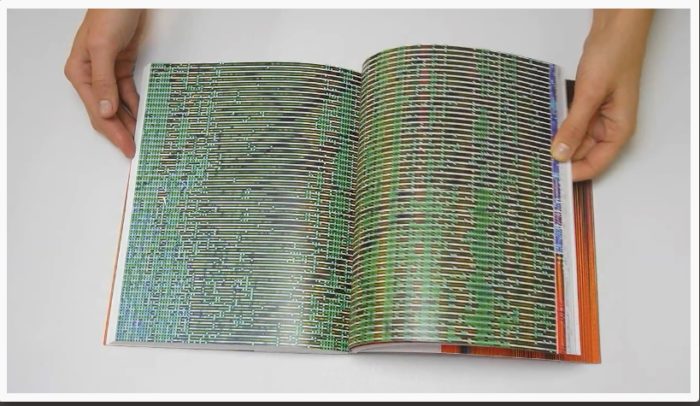
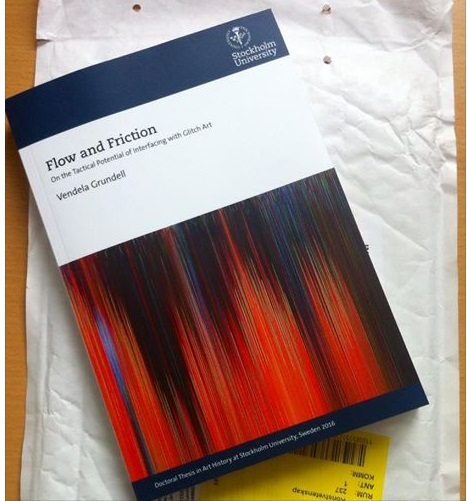
“The growing flow of digital culture depends on the hidden protocols of its underlying systems. To explore how interfacing shapes spectatorship online, this pioneering study pinpoints experiences of flow through the friction of photo-based glitch art by Phillip Stearns, Rosa Menkman, and Evan Meaney.

Glitch photo

Homing in on the viewer, these three cross-disciplinary case studies present and analyze material that is new to the art-historical context. In particular, they focus on how glitched artworks in online environments make viewers aware of their own activity within the flow, causing a break from the increasingly naturalized integration of system and individual.

Glitch ArtbookMysterious and Beautiful

When a glitch invites the viewer to try out different positions in relation to the system, a tactical spectatorship unfolds.” That’s the introduction text of Vandela Grundell’s  book Flow And Friction: On The Tactical Potential Of Interfacing With Glitch Art. In simpler terms, our modern online life utilizes smartphones and digital cameras to not only represent who we are, but to present to others ‘how’ we are.

It’s a culture of ‘identity sharing’ that we live in and we are spending more and more time at online sites and hangouts where our digital selves mingle as shared photos, text and videos. However, sometimes things do not go as planned. Perhaps a faulty internet connection wreaks havoc with an upload…or maybe a dying battery in your i-Phone confuses the CPU and errors are introduced into the system creating a digital mutation.

glitch font

In the early days of computer, during the great Cold War and its technologically dependent Space Race this was known as a ‘glitch’.

Flow and Friction is a fascinating celebration of the mystery and the beauty that sometimes arises from glitched systems. 238 pages. Recommended.  For the Silo, Jarrod Barker.

Supplemental: Moire pattern, John Glenn’s “glitch” , the History of the word “bug” when used in Computing.

Appetite For Failing Public Figures Continues To Be Satiated

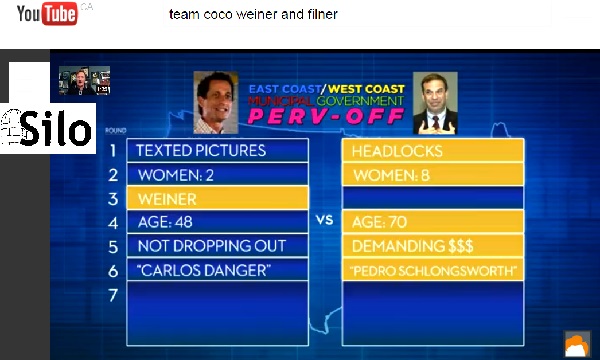
Yes this post’s title bears repeating. The public’s appetite for failing public figures continues to be satiated.  But beyond the face value of these stories, should the public have deeper concerns about their causes and what could they be indicative of beyond sexual obsession? According to Dr. David M. Reiss, what is more pertinent to analyze is the self-defeating, self-sabotage aspect of these actions, and essentially the unconscious self-hatred and hatred of anyone who cares for them (i.e., humiliation of a wife).

According to Reiss, “We are getting away from one on the true critical issue — masochism.  It is the acting out of the self-hatred by politicians through their legislation and power that is actually infinitely more dangerous to the public than any particular sexual activities.  What more don’t we know about their behaviors behind the scenes and what else may manifest?”

In addition, the so-called treatment for someone is nothing more than a publicity play to help “fix” the problem in the public eye.  The idea of his going into an “intensive treatment program” for two weeks is a joke. Especially at age 70, with decades of this type of behavior, a program like that can’t do anything but perhaps a diagnostic evaluation and set a course for ongoing therapy – with a poor prognosis. Otherwise, it’s an insult to the idea of therapy to think that two weeks could be of any significant effect.

Dr. Reis maintains a busy travel and lecturing schedule including Oct 4 - 7: Presentation at "Psychology of the Other" Conference, Cambridge, MA

David M. Reiss is a practicing psychiatrist for 30 years and recognized internationally for his expertise in character and personality dynamics. He has performed more than 10,000 psychiatric evaluations; evaluated and treated patients from diverse social and cultural backgrounds, and from every occupational field.  He is an in-demand lecturer and has been published and covered in academic journals as well and general consumer media. For the Silo, Alyssa LaManna.

Rare India Desert Treasures Exhibition At ROM 2019

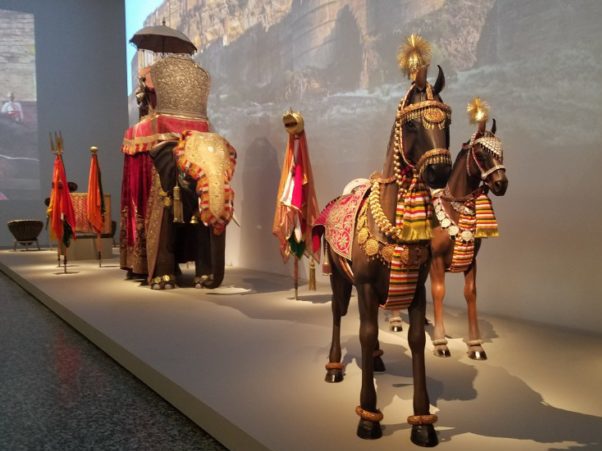
TORONTO — In March 2019, the Royal Ontario Museum (ROM) brings visitors an exhibition of rarely-seen royal treasures from Marwar-Jodhpur, one of the largest former princely states in India. The ROM will be the final North American destination and the exclusive Canadian venue for Treasures of a Desert Kingdom: The Royal Arts of Jodhpur, India. This exhibition, organized by the Museum of Fine Arts, Houston, with the collaboration of the Mehrangarh Museum Trust, India, will be on display from March 9 to September 2, 2019.

“As a leading centre for scholarship and expertise in South Asian art and culture, we are delighted to give visitors the unprecedented opportunity to explore a part of India’s rich cultural history that has rarely been seen,” says Josh Basseches, ROM Director & CEO. “This landmark exhibition will not only captivate audiences, it will also offer a deeper understanding of India’s artistic heritage and its continuing influence today.”

“Peacock in the Desert” | Turbans from Museum of Fine Arts, Houston on Vimeo.

Treasures of a Desert Kingdom features nearly 250 artworks and objects from the kingdom of Marwar-Jodhpur, located in the northwestern state of Rajasthan. The exhibition traces the kingdom’s cultural history as it was continually reshaped by cross-cultural encounters. Lavishly-made ceremonial objects, opulent jewellery, textiles and tapestries, palace furnishings, architectural treasures, and a monumental 17th-century court tent showcase the history of Marwar-Jodhpur and the Rathore dynasty that ruled the region for more than 700 years.

MFAH choker necklace al-Sabah Collection photo: Houston Press

Drawn primarily from the collections of the Mehrangarh Museum Trust and the private collections of the royal family of Jodhpur, the exhibition marks the first time that most of these treasures have been seen beyond the palace walls.

Dr. Deepali Dewan, the exhibition’s coordinating curator and ROM’s Dan Mishra Curator of South Asian Art & Culture says: “This exhibition will be a special experience because most of the treasures are coming from Jodhpur itself. Treasures of a Desert Kingdom tells the story of an incredibly dynamic, cosmopolitan, and influential kingdom that saw art and culture as a critical aspect of rule. Jodhpur flourished, despite the odds of being in the middle of a desert, because they made strategic alliances, opened their borders, and allowed for a diverse culture. These are lessons still relevant today. This enthralling presentation demystifies our notions of life at the royal court, while highlighting India’s multifaceted past and its contemporary cultural landscape. There will be something familiar and something surprising for everyone.”

On view in Garfield Weston Exhibition Hall, Treasures of a Desert Kingdom: The Royal Arts of Jodhpur, India explores numerous thought-provoking themes, including the cross-pollination of new ideas through art and culture; the strong influence of women in the royal court; the importance of royal patronage; and the powerful role of art as tools of diplomacy.

Royal Ontario Museum ROM logoThe ROM engagement follows the exhibition’s run at the Museum of Fine Arts, Houston and the Seattle Arts Museum.
Treasures of a Desert Kingdom: The Royal Arts of Jodhpur, India is a separately ticketed exhibition. ROM Members enjoy free admission and exclusive opportunities to experience ROM exhibitions and programs.  For the Silo, Anne Vranic. 

Featured image- MFAH Exhibit Peacock in the Desert photo: Houstonia

Adult Coloring Books Inspired By Yves Saint Laurent & Jean Cocteau

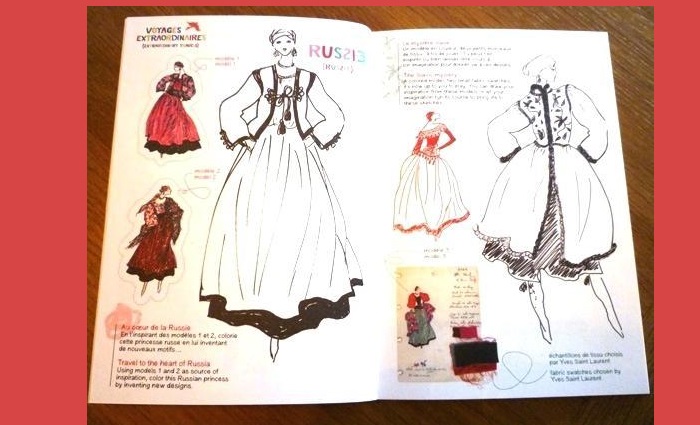
If you enjoy French fashion, art and film and coloring books, sharpen your pencil crayons and prepare to be inspired by two French icons of unparalleled creativity: fashion designer Yves Saint Laurent and playwright and filmmaker Jean Cocteau in these two funky adult coloring books.

Adult coloring book
“The chicest stress reliever ever.” —Buzzfeed
This elegant, imaginative colouring book explores the dynamic, fanciful creations of iconic fashion designer Yves Saint Laurent, who headed the House of Dior at age twenty-one before launching his own design house at age twenty-five.

The book’s line drawings for colouring are based on many of fashion designer’s original sketches for dresses over the years. In these pages, one can see the breadth and versatility of his creations with designs inspired by harlequins and the Carnival of Venice, Pop Art and Mondrian, and the cultures of Asia, Africa, and beyond. Colourists have much breadth and versatility to design creations of their own, with the accompaniment of full-colour photos of the dresses for reference.

This book is produced in conjunction with the Fondation Pierre Berge-Yves Saint Laurent, dedicated to preserving and promoting the history of the House of Yves Saint Laurent.

Adult coloring book

JEAN COCTEAU COLOURING BOOK
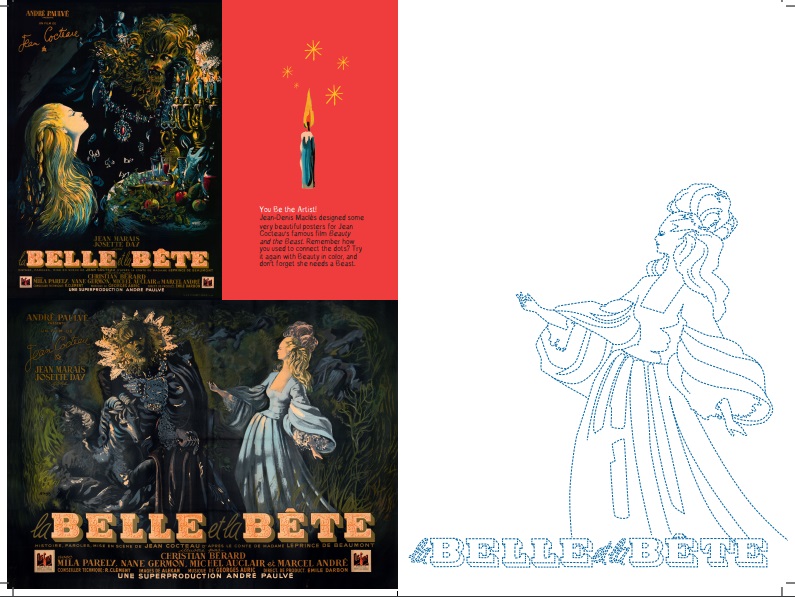
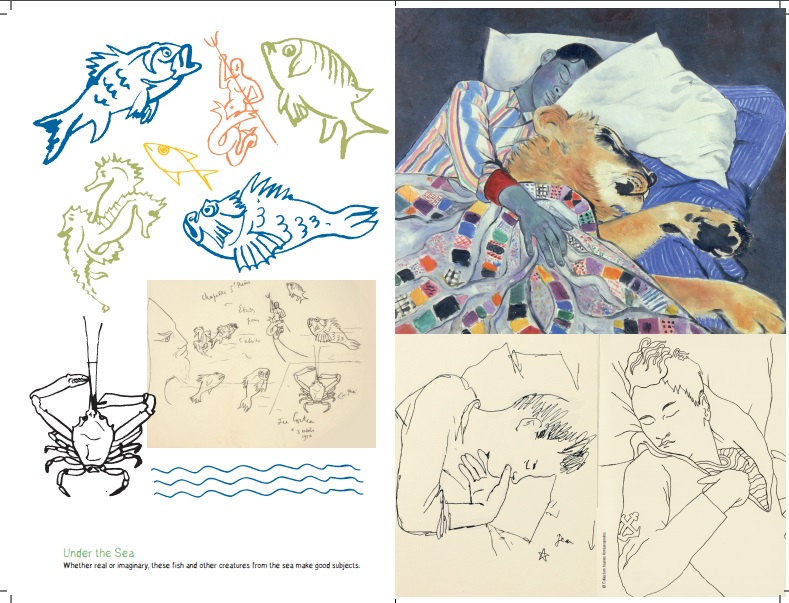
The Jean Cocteau Coloring Book brings the fanciful, elegant world of artist, playwright, and filmmaker Jean Cocteau to life, serving as a primer on the work of this inspiring artist.

As a playwright, Cocteau is best known for The Human Voice (1930); as a filmmaker, he directed Beauty and the Beast (1946) and Orpheus (1948). A prominent member of the Paris avant-garde (1910s), he formed friendships and professional relationships with Picasso, Stravinsky, Gide, and more. His paintings and graphic art were playful, fantastical expressions exploring mythological themes and subjects, personal portraits, and domestic scenes.
Cocteau’s graphic drawings are ready to be coloured in, alongside original illustrations for reference. Also included are images from the original film poster for Beauty and the Beast, playful doodles that Cocteau included in letters to his lover Jean Marais, and drawings of Parisien women, cats, sleeping figures, circus performers, and other figures emanating from Cocteau’s imagination.  For the Silo, Cynara Geissler.

Yves Saint Laurent Coloring Book
ISBN: 978-1-551526-39-3
$12.95 list USD | CDN
US distribution by Consortium
Canadian distribution by UTP
Canadian sales by Ampersand Inc.

Jean Cocteau Coloring Book
ISBN:978-1-55156-40-9
$12.95 list USD | CDN
US distribution by Consortium
Canadian distribution by UTP
Canadian sales by Ampersand Inc.

YVES SAINT LAURENT COLORING BOOK

Los Angeles Bans Fur

LOS ANGELES (September, 2018) – Following years of campaigning by In Defense of Animals to end the barbaric fur trade, Los Angeles is making history by becoming the largest city in the world to ban fur sales. Los Angeles’ City Council today voted unanimously to draft an ordinance outlining a city-wide fur ban.

“Los Angeles’ historic move to ban fur sales today is likely to herald the end of the barbaric fur industry for good,” said In Defense of Animals President, Marilyn Kroplick M.D. “This major city sets global fashion and culture trends, and has sent a message to the world that animals should not to be abused for clothing. We are delighted by this significant victory for animals, the public, and activists and organizations around the world who have exposed the cruel fur industry.”


Los Angeles’ fur ban ordinance will prohibit the sale of apparel and accessories made in whole or in part of fur, including coats, handbags, shoes, hats, and jewelry. Retailers will be given a two-year phase-in period. The fur ban ordinance will need to be approved and signed by Mayor Eric Garcetti before officially becoming law.


Councilmembers Paul Koretz proposed the ordinance and highlighted the far-reaching impact of this ban, stating to the chamber, “Other big cities will see what we’re doing and follow our lead, and pretty soon there will be no big cities in which you can buy a fur coat anywhere in the United States.”


4 million Los Angeles residents and nearly 50 million tourists who visit the city every year will be affected by the ban, making it the world’s most significant fur sales restriction to date.

Los Angeles’ ban follows fur sales bans in San Francisco, Berkeley, and West Hollywood. More than 20 countries worldwide have taken national legislative action against fur including the UK, Austria and the Netherlands.


The Los Angeles fur ban builds on years of dedication and hard work of California activists including several members of In Defense of Animals who have spent many years of their lives fighting fur and hosting Fur Free Friday events every year without fail.

Learn more at www.furkills.org

In Defense of Animals is an international animal protection organization with over 250,000 supporters and a 30-year history of fighting for animals, people and the environment through education, campaigns and hands-on rescue facilities in India, Africa, and rural Mississippi.

Supplemental-  Germany Votes To Ban Remaining Fur Farms

Novel Warns North Americans Of Corrupt Bankers And Valueless Dollar

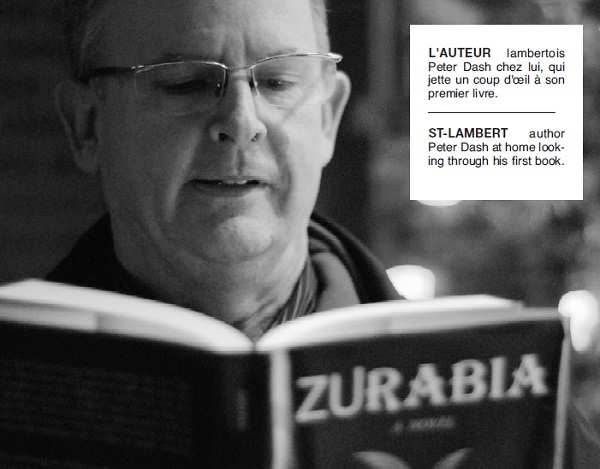
Back in 2012 The Silo reported on a dark novel titled Zurabia. That book held a plot that seems less like fiction with each passing year.  Corrupt bankers, a practically valueless dollar, hyper-unemployment and underemployment, home-grown terrorism, the uptick in natural disasters and the overall lack of trust in our most important institutions – these are some of the reasons all North Americans should be very, very concerned, according to author Peter Dash a world-traveled researcher for Harvard University’s Center for International Affairs.

Peter Dash and his novel

“I predict a brutal world ahead of us,” says Dash, author of “ZUrabia,” a book about rogue forces taking over the world’s most important institutions. “Unfortunately, I have been right since my research at Harvard in 1986, when I questioned the viability of government institutions to meet general needs and growing problems, both domestically and abroad.”

The pragmatic holiday shopper this year will purchase items to safeguard their families against these threats, which have been long in the making and won’t disappear quickly, he says.

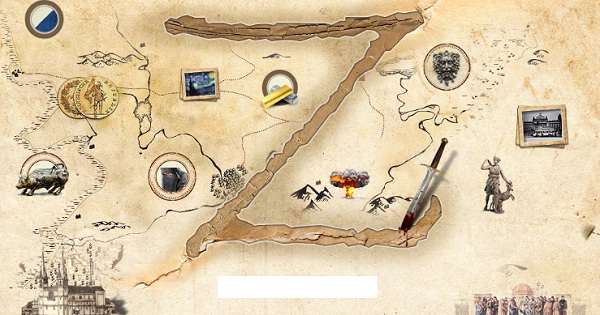
From Dash’s homepage- a map of Zurabia complete with mountains and a mushroom cloud. Biblical ! CP

“Terrorism wasn’t inaugurated with 9-11; extremism in Muslim sects has been growing for decades, and Neo-Nazi groups are starting to flourish in failing states like Greece,” he says. “The dollar has been steadily losing its value since the creation of the Federal Reserve in 1913; climate change has been on the radar for quite a while; and there have been greedy bankers since, well, banks have existed.”

“If you’re confident that everything is sure to be okay, then you’re not paying attention,” he says.

He offers a four-point survival strategy for holiday and everyday shopping:

• Gold is good: The dollar has lost 95 percent of its value in 100 years, and it will continue losing value. As
the Reserve continues to flood money into the system, thereby reducing current or potential value, more inflation is inevitable, acting as yet another tax on wages. So, collect and buy any gold that you can and consider spending federal notes while they’re still worth something to businesses. Think about your
jewelry, and buying more. Silver is a good option if gold is too expensive, and there are Exchange Traded Funds, or ETFs, that are backed by physical gold. A reputable banker or broker can help explain for those who are interested. “TD Ameritrade or Charles Schwab may be good places to start getting information on gold and silver ETF trading,” according to Dash.

• Inflation: Spend your money now or smartly invest it before you lose it. Remember, banks often give clients less than one percent on many accounts, but inflation on food and real items we use, like gasoline, are going up by much more. In essence, your banker is stealing your money through the assistance of the Fed, which is killing your savings rate by cheapening money. As if to pour salt on this wound, the bank,
in many cases, lends money at four percent or higher. Rerouting some bank savings/wages by investing in canned food, for example, may protect you against the scourge of food inflation, as well as other disasters.

• Worthy purchases: With food and water, a failed society puts a premium on additional goods. They include home insulation, gardening tools and materials, computer programs and language learning kits – perhaps Spanish or Chinese – because of the increasing prominence of other cultures. Guns, security systems and other measures to protect one’s home will likely prove extremely valuable should law enforcement be spread too thin, or fail as an institution.

• Buy in bulk: Places like Wal-Mart or Costco will help you get the most value with large purchases of food. It’s important to be well-stocked if something happens that results in the emptying of grocery markets, but remember to have adequate space in your house, apartment or cabin for a “safe” room, which is part of a sound strategy for protecting you and your family.

Peter Dash has been a teacher, professor and corporate trainer for the last 17 years, working in Saudi Arabia, the former Soviet Union and China. He has an applied science degree in forestry from the University of British Columbia and a Masters in applied teaching from Southern Queensland in Australia. He was a researcher in world (dis) order and youth groups at Harvard University’s Center for International Affairs, started by Henry Kissinger. He follows the investment field intensely, focusing on commodity funds and trends.
Fifteen percent of his book’s royalties will go to needy students consistent to the many years Dash has worked in assisting voluntary youth organizations. He lives on a small tropical island that is stocked with the finest well water, fish and food. Dash invests in Gold ETFs and commodity trading companies.

SupplementalCBC radio interview with Dash on Zurabia

Roar And Embrace Your Inner Cougar

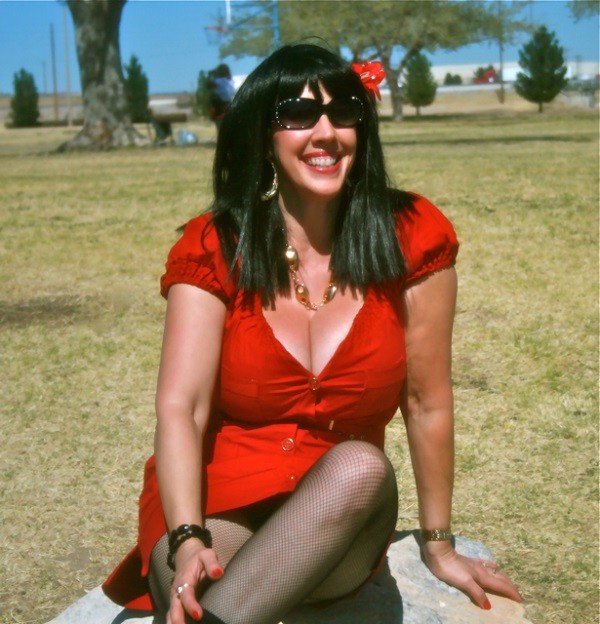
Xandra "Sunny" Moon, author of “The Power of the Titz…a woman’s journey back to her self”
Xandra “Sunny” Moon, author of “The Power of the Titz…a woman’s journey back to her self”

It’s not hard for women in midlife to feel like they belong to the Island of Broken Toys, says Xandra “Sunny” Moon, a self-described liberated, 18-wheeler-driving, 40-plus babe.

“There are thousands of beautiful mothers, wives and ex-wives out there who feel like they’ve lost their sexuality – I know because they tell me as I travel the country and get to know them,” says Moon, author of “The Power of the Titz…a woman’s journey back to her self”(www.sunnymoonspowerworld.com). “My mission is to let them know they can get it back!”

ThePoweroftheTitzXandraMoonCoverWeb

Like the many of the women she meets in her travels, Moon suffered physical and emotional abuse as a young woman. After raising four children and enduring an unhappy marriage for several years, she fell into a deep depression, she says. But several steps took her out of despair, and by the time she climbed out, she was happy, confident and back in touch with Sunny, she says.

Moon lists the ways in which women 40 and older can rediscover their “inner babe:”

• Embrace your sexuality!: It’s not just a “Mrs. Robinson” stereotype – older women do make for better, more participatory sexual partners. Older women have more self-possession; they’re not as callow and tend to have more character both in personality, intrigue and in sexual performance. Women 40 and older are also more forthright, which can be a major turn-on, especially for younger men in need of direction.

Younger women are still deciding what sex means to them, whereas older women are more likely to appreciate it for its own sake.

• Education and employment: Perhaps the most important vehicle for Moon’s self-empowerment is her continuing education. Gaining her GED and furthering her education at a university allowed her to support herself with a good job. Past generations of women were overwhelmingly reliant upon their husbands for financial support.

Having your own income allows women the power to choose their relationships, and not remain stuck in one.

• Remember your old social life?: A big part of relocating your inner diva is remembering the good times you had as a teen and 20-something – back when you had your first appletini, your first date at a fancy restaurant and, yes, your first day-long hangover.

In many ways, these things are like new again. Under-appreciated mothers and wives tend to live primarily for others, but now it’s time to reclaim those fun nights out with the girls and catch some time for yourself.

• Cosmetic surgery: This is still a touchy subject for many ladies. Moon’s first rule is to have cosmetic surgery only for yourself – not for someone else, and to ensure you are in good enough health to withstand the rigors involved with surgery. Other important considerations include realistic expectations, potentially catty responses from girlfriends, short- and long-term consequences, such as time off work and maintenance, and whether or not you really want larger breasts or a botoxed brow.

• Dating outside your comfort zone: Maybe now is the time to consider other types of partners — perhaps those of a different ethnicity or maybe even a different gender. Now is the time to be adventurous and explore new avenues.

• Health/Diet/Exercise: Of course, feeling and looking attractive is important to you – so be healthy! Nothing is better at giving ladies that can-do attitude than a nice workout. Being selective about what you eat is as important as being selective about who you date; you want a lover and diet that will treat you right.

“We have but one life,” says Lee Abzu, Moon’s second husband, soul mate and coauthor to her books.

“If you’re single and in your 40s, 50s, 60s or older, you can either wait around for the kids or grandkids to come by and visit, or you can get out there and regain the vitality and lust for life you used to have.”


About Xandra “Sunny” Moon

Xandra “Sunny” Moon is a survivor who came into her own after age 40. As a younger woman, she endured rape, unlawful imprisonment, mental and emotional abuse, and divorce. She has worked 14 years as a truck driver, during which she has spoken with thousands of woman near or at midlife.

After raising her four children, she continued her education at Idaho State University and eventually married her second husband and soul mate, Lee Abzu. She now counsels women who are seeking rebirth. For the Silo, Ginny Grimsley. 


Regarding Money And Government In Business Positions

LetterstotheSilo Dear Silo, I kept my Silo printed back issues and I just re-read the January-February 2013  issue of The Silo. I noticed that a few of the articles involve the issue of consent (biogas facility, mega-quarry, dads attending births) and choice (media publications, GMO foods, liquor sales). Freedom of choice and voluntary consent are basic human liberties that we often take for granted.

In the old printed article, Peter Dash questions the viability of government institutions to meet general needs, and MPP Toby Barrett says it’s high time the Ontario government takes its nose out of business. As the one image on page 13 puts it: “Government didn’t build my business, I did”. Government does not produce. It is usually an expensive and inefficient provider of services. Liquor sales should definitely be opened up to private competition to enable consumer choice. All government services, including health care, education, infrastructure, pensions, security and defense, should compete in a free market. Why should any group of individuals (including “government”) have an imposed monopoly on the provision of any services?

Goods and services should compete in a free market based on price, quality and consumer demand. Any individual should be free to do anything at their own risk and expense that does not adversely affect anyone else, and to negotiate an agreeable price for the purchase of any goods or services that they actually want and use.

monopolypoortax

Money and power are central to almost every issue. We do not have political freedom or economic freedom because we don’t have – or don’t exercise – monetary freedom. The banks, in collusion with government, essentially control money and credit by controlling the creation, allocation and price of the medium of exchange, which essentially controls the production of goods and provision of services. Money created as interest-bearing debt is always in scarce supply. Inflation is a hidden tax. We are essentially helpless to prevent anything decided for us by the people in government and their friends in big business because we do not control money and credit.

A necessary step, therefore, is to take control of our own credit and allocate it wisely, rather than doing what the controllers of money demand of us. Products and services, including currencies and alternative exchange systems, should compete with each other in a free market. Thomas H. Greco’s recent book, The End of Money and the Future of Civilization, provides an excellent explanation of the nature and function of money and offers a practical alternative to the present system. The Money Fix, a documentary by Alan Rosenblith, also explains the creation of money and its role in the economy. You might find both of these sources informative and interesting.

Sincerely,
K (Name withheld due to request)

“Banks create money. That is what they are there for… The manufacturing process consists of making a pen-and-ink or typewriter entry on a card in a book. That is all. Each and every time a bank makes a loan, new bank credit is created – new deposits – brand new money. Broadly speaking, all new money comes out of a bank in the form of loans. As loans are debts, then under the present system all money is debt.”
Graham Towers, Governor of the Bank of Canada from 1935-1955

Quotes To Consider- 

“Money is created when banks lend it into existence. When a bank provides you with a $100,000 mortgage, it creates only the principal, which you spend and which then circulates in the economy. The bank expects you to pay back $200,000 over the next 20 years, but it doesn’t create the second $100,000 – the interest. Instead, the bank sends you out into the tough world to battle against everybody else to bring back the second $100,000.”
Bernard Lietaer, economist and author

“By enabling people to cooperate with one another without coercion or central direction, it reduces the area over which political power is exercised. … The essential notion of a capitalist society is voluntary cooperation, voluntary exchange. The essential notion of a socialist society is force.”
Milton Friedman

“What is the basic, the essential, the crucial principle that differentiates freedom from slavery? It is the principle of voluntary action versus physical coercion or compulsion.”
Ayn Rand

“For in reason, all government without the consent of the governed is slavery.”
Jonathan Swift

“Give to every other human being every right that you claim for yourself – that is my doctrine.”
Thomas Paine


Government Of Belgium Battling Social Media Sites Blocking Nude Artwork

Facebook and other social media sites are blocking masterpieces of “nude” art from Rubens, Bruegel, Van Eyck and others. In an open letter, several top European Museums are asking social networks to reconsider their policy. Facebook has been in the spotlight recently for blocking content including some parts of the United States Constitution and other historical documents and multimedia content.

Artistic censorship continues to pursue Peter Paul Rubens. In the 17th century, the Flemish Baroque painter was asked by the Catholic Church to paint camouflaging ‘loincloths’ over certain body parts of his Venus figures. Nowadays, social media networks, including Facebook, go one step further. All breasts, buttocks and cherubs painted by artists such as Rubens are banned on these platforms. ‘Bots’ on Facebook use artificial intelligence to screen for nudity, but do not make a distinction between pornographic images or nudity in art. Flanders – the perfect place to enjoy the Flemish Masters in all their glory – is denouncing this artistic censorship in a playful manner. At the Rubens House, ‘nudity viewers’ with a Facebook account were blocked from viewing nudity by a group of “social media police agents”.

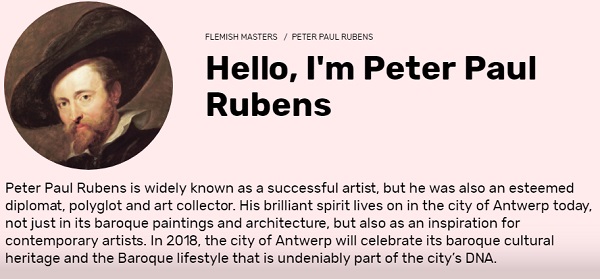
Peter Paul Rubens Flemish Master Painter

The Flemish Masters are best experienced in Flanders, the number one destination for art lovers. After all, this is where Rubens, Bruegel and Van Eyck lived and worked. Their work can often be found still hanging in the very same places for which they were made. “We want to promote this unique experience,” says Peter De Wilde, CEO of VISITFLANDERS. “Our Flemish Masters attract hundreds of thousands of visitors to Flanders each year and we are proud of this achievement.

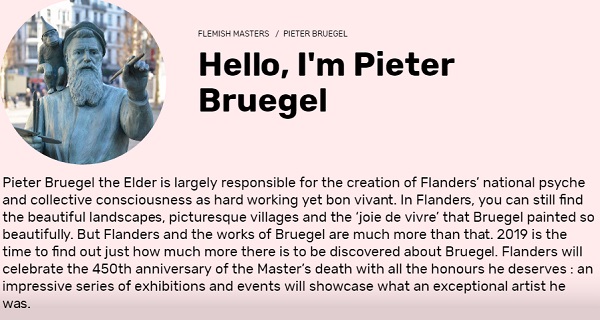
Pieter Bruegel Flemish Master Painter

With our multi-year program focusing on Rubens, Bruegel and Van Eyck, which was launched in 2018, we are aiming for three million visitors by the end of 2020. At the moment it is not possible for us to promote our unique cultural heritage via one of the most popular social media networks. Our art is categorized as being indecent and sometimes even pornographic. This is such a shame as it restricts the promotion of our Flemish Masters.”

Eve detail Ghent Altarpiece by Jan van Eyck

The agency in charge of promoting tourism in Flanders, Belgium explains that they have invested 30 million US dollars in 2018 to improve the experience of cultural travelers visiting that region, especially in cities like Antwerp, Bruges, Ghent and Brussels. Now they can’t promote some of those museums due to restrictive policies applied by some online social networks.

Jan van Eyck Flemish Master Painter

‘We are for it and not against it’ is what the people of Flanders say. Peter De Wilde explains, “Social media and art have a lot in common. Art brings people together. Social media brings people together, and our Flemish Masters too. This is why we want to enter into discussions with Facebook so that we can use this platform as one way in which to make our art visible. Surely it’s not that difficult to differentiate between cultural heritage and gratuitous nudity?”

VISITFLANDERS position is supported by several top museums in Belgium and around Europe. In an open letter, the institutions ask Mark Zuckerberg to revise Facebook’s policy related to art, culture and heritage. Click here to read the open letter.

“We tried various channels to bring this matter to Facebook’s attention. Unfortunately nobody listened,” De Wilde explains. Flanders hopes the comedy video produced in Rubens’s House will facilitate a discussion to solve the issue and allow users to view this content that is present in encyclopedias and elementary school grade text books. “Flanders is a unique art destination. But because we are naturally modest in Flanders, we do not shout out about it often enough. This stunt enables us to make our presence felt and also honor the spirit of Pieter Paul Rubens. He was an artistic rebel who was not afraid of engaging in social debate. There’s no finer tribute to honor our Flemish Master than by taking up the battle against unnecessary artistic censorship.”  For the Silo, Marcos Stupenengo.

About the Flemish Masters.
For over 250 years, from the 15th to long into the 17th century, Flanders was a figurehead for fine arts in Western Europe and the source of inspiration for well-known art movements of the time, such as the Flemish primitives, the Renaissance and the Baroque. Artists were known for their craftsmanship, creativity and technical innovations and they transformed the prosperous and urbanized Flanders into one of the most refined cultural regions with their impressive artistic and architectural creations.

About Peter Paul Rubens, master of female nudity.
Rubens is the best-known Flemish Master. This Baroque painter, illustrator and diplomat was one of the most celebrated artists of the 17th century. He exerted a particularly strong influence. He was a master of color, composition and painting techniques and also an expert in painting female nudity. His nude figures – which often refer to mythical beings – appear extremely lifelike, made from flesh and blood, with a fair amount of cellulite and with all kinds of body shapes visibly on display.

About Antwerp, the home of the Flemish Baroque movement.
Lonely Planet selected the best cities to visit in 2018 and included Antwerp in its top 10. According to the travel guide, Antwerp is one of Europe’s best kept secrets. And there is certainly plenty to see and do there in 2018. The “Antwerp Baroque 2018. Rubens inspires” festival shows you the finest places in Antwerp: www.antwerpbaroque2018.be

Explore The Evolution And Creation Of America’s Music On Giant IMAX Screen

America’s Musical Journey follows singer/songwriter Aloe Blacc as he traces the roots of American music and explores the great musical cities- places like New Orleans, Chicago, Nashville, Miami, New York City and more- where such electrifying art forms as jazz, the blues, country, soul and rock and roll were born.

In America’s musical cities, every chord, every riff, every bang of a drum tells a story. In America’s Musical Journey these stories come together to create a soundtrack for the American experience—a soundtrack that showcases the nation’s diversity and its collision of cultures, culminating in a unique blend of sound, music and innovation unlike anywhere else in the world. Click here to read full PDF release.

Aloe Blacc
Singer/songwriter Aloe Blacc tracing the roots of American music.

“There’s something exciting that happens when different cultures come together as they have in America. One of the things that happens is incredible creativity.”

Aloe Blacc US Consulate Toronto
Aloe Blacc- one of the stars of America’s Musical Journey- performing live this month at the U.S. Consulate in Toronto.

America's Musical Journey IMAX

America’s Musical Journey is a MacGillivray Freeman Film produced in association with Brand USA and presented by Expedia.

Director: Greg MacGillivray
Producer: Shaun MacGillivray
Executive Producer: Tom Garzilli
Writer: Stephen Judson
Music By: Steve Wood
Editors: Stephen Judson, Jason Paul and Victoria McGinnis
Director of Cinematography: Brad Ohlund
Aerial Cinematographer: Ron Goodman
Production Manager: Meghan MacGillivray
Production Manager: Kathy Almon
Visual Effects: Alan Markowitz

Click Me!

Port Dover Hosts Biggest Single Day Biker Event In Canada

Before you contemplate the pictures above lets flash-back to Friday 13th, 1984, when Chris Simons, a local biker, and a few of his buddies met in the “ZOO,” a local watering hole, to shoot the breeze and have a few cold ones. They agreed to meet every Fri. 13th and pass the idea on to friends. And so it began.

Friday the 13th in Port Dover,ON

Many local people, including the Municipal Council, feared the 1% of potentially violent bikers invading Norfolk County (as opposed to the 99% of peaceful riders), but as it grew into the biggest money making event the Kinsmen had ever seen, the need for some organization became evident.

The word went out to “LEAVE YOUR COLOURS AND ATTITUDES AT HOME,” otherwise the Council threatened to shut it down. The Kinsmen knew the bikers would continue to come and numbers would soar. The Coffin Bike and even Santa Claus were soon regular attendees as well as the Motor Maids (6000 strong nation-wide) and the Christian Riders.

HOG (Harley Owners Group) and BRO (Bikers Rights Organization) were present. By 1999 the OPP reported 12 outlaw biker clubs present in Port Dover, including Satan’s Choice, Hells Angels, Outlaws, Nomads, Para-Dice Riders, Red Devils, Piston Pushers, and even Banditos. Still, no violence erupted and over 100 police were brought in to maintain order.

As word spread Port Dover became THE place to be on Friday The 13th. Bikes were showing up from Quebec, Manitoba, Nova Scotia and B.C., as well as Americans from as far away as Florida. Even several Brits put their bike on a ship and came over.

Tim Hortons Drive-Thru soon was a walk-through. Yard Sales were common; seniors sold food to pay for a wheelchair-van. Pop, water and Freezies were sold from many local yards and eateries. Bars and beer gardens struggled to meet the demand in the summer months.

Big name bands were soon playing, like Steppenwolf, Colin James, Blue Rodeo, Dry County, Tragically Hip and local favourites. As the 20th century came to a close over 100,000 people were attending in the summer months.

As crowds swelled to over 150,000 in a town of 4,500, businesses placed “WELCOME BIKERS” signs in their storefronts and traffic backed up to Simcoe in the West and Cayuga in the East. Lodgings were booked-up for a year in advance and campgrounds swelled to full capacity quickly. Some businesses closed for the day like law offices, pharmacies, hardware stores and banks, though they stocked their debit machines full and went to work with the service clubs.

In 2009 The Port Dover Board of Trade, Kinsmen and the Lions partnered to run this massive event. The Kinsmen now handle bookings for 100 vendors in Powell Park and the Harbor Front, and run a 1,200 capacity beer garden. They monitor about 1200 campers in Kinsmen Park and Doverwood School, as well as selling souvenirs, including over 1,000 t-shirts. Shuttles are provided to haul campers to the action downtown.

Over the years the Kinsmen Club recruited many others to help, like Minor Softball and Hockey, Hard ball, Jr. Hockey, Figure Skating, Soccer, Maureen Dodds Art Foundation, Alzheimers, Big Brothers, High School Council (the Port Dover High School was closed a few years ago) Scouts K. of  C., and the Harbor Museum. Other Kin Clubs came on board as did “Support our School.” At one point 26 other groups assisted the Kinsmen with everybody getting a share of the pie. It’s well known that bikers come back to visit Port Dover even when it’s not Fri. 13, as can be witnessed on any good weekend throughout the summer. The welcome mat is out so come visit us on Friday, September 13th, 2013 and every Friday the 13th to follow.   For the Silo……Yours in Kin: Life Member Dave C.
Digital Blessings For Auto Restoration And Repair

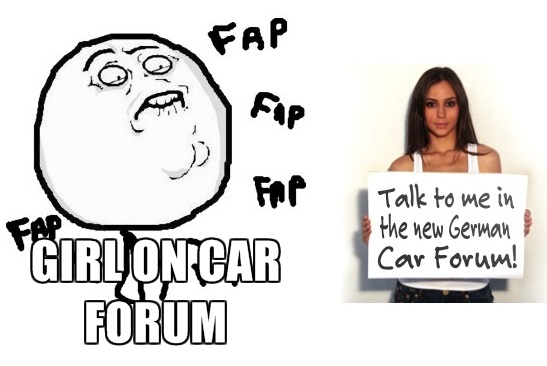
CarForumMemeOne of the biggest influences that the internet and social media has on the automotive industry is the now ease of finding hard-to-find parts and procedures. Go on Google, type in your year, make, and model, followed by the part  or procedure you are looking for, and in the results you are bound to find (at the very least) a forum, web group, or page dedicated to your vehicle specifically. What this means to you is that now you can discuss (with others who love the same vehicle as you) parts, repair procedures, styling, or just why you love your vehicle so much! What this also means is that you now can draw from a vast pool of knowledge from others who share your same interest.

So be it a complicated repair or common problem, you can usually chat with someone who has already been there and done that. (a majority of the time) and a lot of the forums usually have step by step procedures with pictures.  This came in handy for me last month when a certain silver Smart car I know had starting issues. The  first problem? Where is the starter? This may sound dumb but, Look under the bonnet (hood under the trunk) and you tell me where the starter is. I would bet 5 bucks that you could not, even from underneath. Unless, you have messed with one, prior. The next Issue, where the heck is this starter supposed to fit out? Lastly, How  do you even get to the bolts that hold it in?


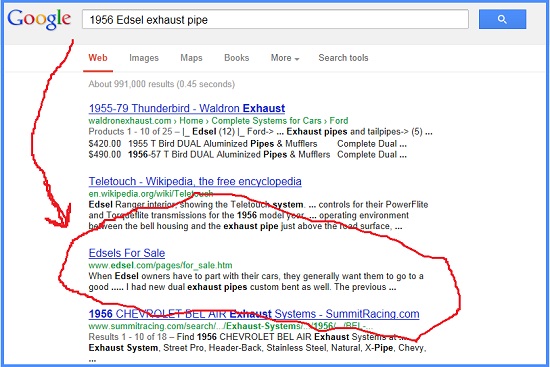
Let's say you need a part for an old Edsel- just plug in the parameter in your fave search engine (give bing.com a try) and voila: related links CP

Luckily for me, there are many Smart car pages based out of the U.K. and one really good one I found, had many members who were very knowledgeable in this topic, this page also had step by step  detailed instructions along with very clear pictures. This is substantial considering that one cannot even get a repair manual for these cars, almost nobody has parts listings OR interchanges for any of these cars  with a model year prior to 2008 (this car being a 2006). Who knew that to change this starter there was insane procedure including dropping the engine and removing the intercooler system.  A bunch of people on this page had already been through this and had come up with a very efficient shortcut. This saved me hours of time.  All this from a free membership.   Here are a few Facebook pages that I follow:

corvettesyndicate

“Restoring Old Cars” – a lot of classic car posts,  “Lifted Trucks USA”- lots of pics of lifted trucks lol, “Chevy Chevelle”- Lots of Chevelle pics, ”Chevy Militia”- jacked up Chevy truck pics, and my two favorite ones “Bow-tie Society”- for everything Chevrolet, also where Ford and Dodge Trollers come to get put back in their respective places.  And “Black Crow Car Education System” –this guy posts all kinds of cool classic auto industry pics, vintage, and artistic mechanical pics. All of these pages are very cool. Check em out by searching them on Facebook. Till next time. For the Silo, Robb Price, WC Kustoms.

ISIS Goal Splits Family And Divides Muslims

History is made in moments, often of crisis and uncertainty, and the wisdom with which we meet them. This is one of those moments.

ISIS goal is to split the human family. To divide the world’s 1.5 billion Muslims from everyone else. Those in our societies who sow fear, suspicion and hatred of Muslims  are the best allies the extremists who attacked Paris and Beirut could ask for.

Muslims are almost one quarter of humanity, and 99% are as horrified by the ISIS attacks as everyone else. They have been the greatest victims of ISIS, and have the greatest power to help defeat it. So let’s answer hate with humanity, and seize this chance for transformative change. For all of us – Muslims and Non-Muslims everywhere – to fiercely welcome each other into our one human family like never before.

We Are All One

Sign the global “Undivided” message, add your own, and share the page with everyone – If enough us join now, we can start a global wave of solidarity, and make the pain of these attacks the birth pangs of a more beautiful world. When we get to 500,000 signatures Avaaz will run ads in Muslim community papers and online, as well as key right wing papers that spread fear and division: 

https://secure.avaaz.org/en/loving_transformation_loc/?bsOTIab&v=69561&cl=8992696952

The real front line of this war is not just in the dusty towns of Syria and Iraq, but in the media and social media forums where the stories we tell ourselves compete. There is a fraternity of ignorance and hatred and it stretches across borders, in which extremists on all sides work together to drag the rest of us down into their backward world of spiraling brutality.

Our governments will need to increase their vigilance in preventing attacks, and support military efforts to defeat ISIS. But our job as people, and our leaders’ jobs as moral leaders, is to ensure that love, the transformational antidote to ISIS’ hate, blooms between Muslims and everyone else everywhere. THAT would be ISIS’ worst nightmare – it might even give some of the angry young men they recruit cause to hesitate – a chance to see an alternative as inspiring to them as the backward brand of faith that ISIS markets.

At the darkest times, our light as humanity can shine brightest. Human rights were not recognized until after the second world war. The world got it wrong after 9/11, when leaders play into Al Qaeda’s hands by stoking Islamaphobia. This time, let’s be wiser, come together as Muslims and non-Muslims more closely than ever before, and brightly shine the light of the world we’re building:

https://secure.avaaz.org/en/loving_transformation_loc/?bsOTIab&v=69561&cl=8992696952

From a place of love, we might begin to listen to our brothers and sisters among Muslims that have lent ISIS some support. First and foremost those Sunnis from Syria and Iraq, who have been treated unjustly by Iraq’s government, and incredibly brutally oppressed by Syria’s dictator Al Assad. We might begin to understand that when we failed to offer their families protection and relief from the horrors they faced, ISIS offered that protection, and some accepted it. We might focus on learning from this, and offering them a better deal.

With that lesson, we might see the stories of the peoples around the world that ISIS fighters come from. From Chechnya, where generations of Muslim families were horrifically murdered while the world looked away. Or from Egypt, or Algeria, or dozens of other countries, where sickeningly brutal state security police have tortured and murdered countless Muslims who dared to stand up to their venal corruption – something that is a religious responsibility for Muslims.

And maybe then we will understand that while ISIS is a monster that we must defeat, the monster is more than just the group itself. It’s the desperation of millions of people suffering under horrific conditions, and looking for a way out. And the rest of us in the human family, Muslims and non-Muslims, have either looked away, failed to effectively address, or often, backed and supported these horrors.

So let’s seize this moment with wisdom, to bring down the monster we face, the one we all have lines of responsibility for. Let’s see the human family united like never before to defeat ISIS – not just on the battlefield, but in our own societies, in the media and social media, and most of all in the thousands of Muslim communities that live today around the world in fear.  Let’s encourage Muslim and Non-Muslim communities everywhere to embrace each other, welcome refugees with compassion, escalate our pressure on Egypt and other brutal governments to stop brutalizing opponents and creating the ISIS’ of the future, redouble our efforts to achieve a peace deal in Syria, protect at-risk communities like the Rohingya, stop constant terrifying drone attacks on communities, and ensure that the military actions we support are scrupulously careful to avoid traumatizing the civilians who are suffering enough already under ISIS’ boot. If we do these things, we’ll do far more than defeat ISIS, we’ll defeat the misery that has given rise to them, and in a way that takes the human family one wiser step further on our journey together.

With love and gratitude for this amazing community,

Ricken, Luis, Ben, Alice, Rewan, Elana, Mohammed, Steve, Emma and the whole Avaaz team.

Do’s And Don’ts Of Political Conversations

We live in one of the most politically heated times in history. Expressing your point of view is a personal decision and can be tricky.  Although conversations may start out benign, they can quickly become a toxic dialogue.

Sharon Schweitzer, an international etiquette expert, author, and the founder of Access to Culture, says there are several “do’s and dont’s” to make sure polite political discourse doesn’t turn into hostile debates.

DO   

Show respect for differing opinions

It can be challenging to listen to those with different opinions. It’s important to show respect and take time to listen, giving the other person the opportunity to share their viewpoints. The Platinum rule encourages treating others as they wish to be treated. Stay calm, collected and respectful.

Agree to disagree

If their opinions are different from your views, you can agree to disagree. Try saying something along the lines of, “I respect your perspective, but I think we may need to agree to disagree” or “That’s a different way of thinking about the issue, but I’m comfortable if you and I can agree to disagree.”

Ask questions

If someone asks you a question about your political beliefs, you can reciprocate by asking them about their own beliefs. Let the other person do the talking while you listen. Try to ask open-ended questions such as, “What are your thoughts on the current political atmosphere?” or “How do you feel about the media’s portrayal of …?”

Change the subject

  • If someone continues to ask your opinion, change the topic by saying: “It’s impossible to keep track of the different versions of the news. How is your family doing by the way?” “With the divisive political atmosphere, I’m not comfortable sharing my personal opinions, but thank you for your interest.” “I can’t answer that question, but what I can discuss is… ”

DON’T

Get angry, cross or upset

It can be difficult to keep your temper, but don’t get angry or upset if you don’t agree with someone’s viewpoints. Expressing sarcasm, bitterness or passive aggressiveness won’t change any minds. It will only damage your reputation.

Talk over them

The worst thing you could do is interrupt conversation and start talking about your own opinion. Be respectful of other opinions and views. Listen attentively, especially when you don’t agree with that viewpoint. It gets easier the more you practice.

Overshare

Politics is a difficult conversation, particularly with family members and close friends. If you are speaking to someone you’ve just met, refrain from oversharing. In this case, less is more. Avoid saying something you will later regret.

Make assumptions

We make mental notes when we first meet someone new. We make a first impression based on hair, shoes, watch, clothing, mannerisms, etc. However, political views are hidden unless they are shared verbally or by wearing a revealing detail.  It’s important to approach people with an open mind to avoid awkward and potentially toxic conversations.

For the Silo, Scott Jones.

Featured image- http://ashleylewis-oldmeetsnew.blogspot.ca/

Becoming AFI Celebrates 50 Years Of American Film Institute

“This book puts you directly behind the scenes for a story that began with a dream,
overcame constant challenges, and evolved into the institution it is today.”
―Steven Spielberg
 
“Documented here by the people who lived it, this is a remarkable tale of how a major institution,
created out of whole cloth, wove itself into the American fabric.”
—Cokie Roberts, author and political commentator for ABC and NPR
  
 
Image
For over fifty years, the American Film Institute has flourished as one of America’s great cultural entities. Its graduates, faculty, supporters, and trustees have included such acclaimed individuals as Steven Spielberg, Maya Angelou, Gregory Peck, Sidney Poitier, Meryl Streep, Les Moonves, Patty Jenkins, David Lynch, Jane Fonda, Edward James Olmos, Shonda Rhimes, James L. Brooks, and many other respected leaders in the worlds of film, television, digital media, and philanthropy.
 
In their new book, Becoming AFI: 50 Years Inside the American Film Institute (Santa Monica Press/October 2017), Jean Picker Firstenberg and James Hindman provide a candid look at how this remarkable organization brought together aspiring filmmakers, educators, and artists who helped AFI become the foremost national champion for moving images as a vibrant art form.

Preview page from BECOMING AFI: 50 YEARS INSIDE THE AMERICAN FILM INSTITUTE

From its early years operating out of the Kennedy Center in Washington, DC, and the legendary Greystone mansion in Beverly Hills under the leadership of George Stevens Jr., through its incredible growth into an influential cultural institution at its landmark Hollywood campus under the guidance of Jean Picker Firstenberg, to its continued excellence today under the dynamic leadership of Bob Gazzale, the organization and its history are chronicled in Becoming AFI through in-depth essays written by those who have been involved in its adventures, growth, and success.
2007-10-03_NATM_GroupShots_VC-208
“After being asked so many times what our book would be about, we decided to put together AFI’s history as we experienced it personally,” explain Firstenberg and Hindman. “As we structured the book with the stories we wanted to tell from those years, we realized that some of those stories really belonged to other voices. So, we went to several former colleagues and asked them to join our band. Each chapter tells a stand-alone story about an aspect of AFI, but together, they add up to the full picture.”
 
Becoming AFI provides an insightful, behind-the-scenes look at how AFI, with passionate determination, overcame the hurdles of advancing technology, political shifts, and new audience dynamics to turn its aspirations into a substantial and highly successful organization, becoming a tireless advocate of moving images as one of America’s most popular forms of art, and maturing into one of the world’s most respected educational and cultural institutions. For the Silo, Trina Kaye.
 
 
“No matter how divisive life in this country may become, the movie theater  has always been a place where we can discover what unites us.”
—Vernon Jordan Jr., New York Times
  
44 2006-05-31_COMMENCEMENT_HonoraryDegrees_Basinger_Fries_Jones_Pollack-0131
 
“AFI saved our film history. AFI celebrates filmmakers. AFI trains the next generation. Thanks to Becoming AFI for telling us the fascinating story of its fifty-year history. And a big thank you to Jean Picker Firstenberg and James Hindman for documenting all of it! Here’s to the next fifty!”
―Edward James Olmos, actor and AFI trustee
 
 
About the Authors
 
Jean Picker Firstenberg served as president and CEO of the American Film Institute from 1980 to 2007, overseeing the development of AFI as one of America’s greatest national, cultural, and educational resources. She received an AFI Life Achievement Award for Service to the Institute and was named president emerita and a lifetime trustee. In 2016, Firstenberg was named to the California State University Board of Trustees by Governor Jerry Brown, overseeing the largest four-year public university system in the United States, with twenty-three campuses educating the most diverse student body in the nation. Prior to serving at AFI, Firstenberg spent four years as a program officer at the John and Mary R. Markle Foundation. She also served as director of Princeton University’s Publications Office. Firstenberg is a summa cum laude graduate of Boston University’s College of Communications. She has served on several boards, including that of Boston University (1984–1996), the George Foster Peabody Awards at Georgia University (1985–1997; board chair 1991–1997), and the United States Postal Service Citizens’ Stamp Advisory Committee (2002–2014; committee chair 2008–2014). She has won numerous awards and honorary degrees.
 
James Hindman, PhD, has spent his career in cinema and performing arts, creating and leading professional and public education programs at major institutions. During his twenty-four years at the American Film Institute, where he served as co-director and chief operating officer, he was provost of the AFI Conservatory, which he nurtured through WASC accreditation. He was also the uncredited producer of the award-winning feature documentary Visions of Light and the television series Starring the Actor. He developed the AFI Silver Theatre and Cultural Center in Silver Springs, Maryland, as well as numerous television projects and international film and television festivals. Subsequent to AFI, he developed and led film schools in the U.S. and internationally, including the Red Sea School of Cinematic Arts in Aqaba, Jordan, and New Mexico State University’s Creative Media Institute in Las Cruces. He is currently on the board of the New Mexico School for the Arts in Santa Fe, charged with creating a new cinematic and media arts program and facilities for the school. Prior to AFI, he served as head of graduate studies in the Performing Arts Department at American University in Washington, DC, having previously taught at the University of North Carolina. Hindman holds a PhD in drama from the University of Georgia and has served on the boards of the AIDS Service Center and LAMP in Los Angeles. He currently splits his time between Santa Monica, California, and Taos, New Mexico.
 
Patty Jenkins made history in 2017 when she directed her second film, Wonder Woman, becoming the first woman to direct a studio superhero movie and earning the biggest domestic opening of all time for a woman director. Jenkins wrote and directed her first film, the crime drama Monster, in 2003, launching Charlize Theron’s career with many awards, including an Oscar for Best Actress. Jenkins graduated from the Cooper Union for the Advancement of Science and Art in 1993 and the AFI Conservatory in 2001.
 
Dana Gioia was appointed Poet Laureate of the State of California in 2015 by Governor Jerry Brown. An award-winning poet who has published five collections of poetry, Gioia served as chair of the National Endowment for the Arts from 2003 to 2009, and was named a USC Judge Widney Professor in Poetry and Public Art in 2011.
 
David Lynch, born in 1946 in Missoula, Montana. Eagle Scout.
 
 
BECOMING AFI: 50 YEARS INSIDE THE AMERICAN FILM INSTITUTE
By Jean Picker Firstenberg and James Hindman
Foreword by Dana Gioia
Preface by Patty Jenkins
Afterword by David Lynch
Santa Monica Press/October 2017
Hardcover/$27.95 usd
ISBN-13: 978-159580-094-7

Mountain Biking In Nepal


Splash image

 H+I Adventures  returned to biking the Himalayas for the first time since Nepal’s devastating earthquake in late October 2015. Continuing to support and promote Nepal’s local tourism industry was a priority for the award-winning mountain biking specialists. Throughout all of H+I Adventures’ twelve-day mountain biking holiday in Nepal, riders experience some of the world’s most breathtaking climbs, technical descents, fast and flowing singletrack, and the most spectacular views from the roof of the world.

Small image

“There’s never been a more important time to visit Nepal than now,” says Euan Wilson, owner, H+I Adventures. “We are deeply saddened by the devastation caused by the earthquake, but our friends, colleagues and partners in Nepal are resilient. We want to show mountain bikers that Nepal is safe and that the country is ready to welcome them with open arms.”

Led by a local Nepalese guide, H+I travellers will find themselves surrounded by five-mile-high peaks and stay in teahouses run by local villagers stocked with delicious food, cold beer and great conversation. Highlights include criss-crossing the Kali Gandaki Valley, the deepest valley in the world, navigating the legendary Annapurna Circuit and the lower Mustang region, and riding through Shivapuri National Park to the historic town of Bhaktapur. A hot-spring soak in the village of Tatopani provides some well deserved respite and muscular relaxation after what has been a full week of epic highs.

“We are very much back in business, and my team and I can’t wait for the new season to begin and to welcome riders back to our beautiful country,” says Mandil Pradhan, lead guide for H+I Adventures in Nepal.

Known for combining rich cultural experiences with adrenline-pumping trails and breathtaking climbs, H+I Adventures has created enriching opportunities for travellers to engage with local communities during each tour. For example, in Nepal, H+I mountain bikers visit with Himalayan thangka artists and witness how they create the most exquisite masterpieces, which can take years to complete.

Rates start at $3,196 USD per person, based on double occupancy, and includes Global Rescue, a world-class emergency service provider that offers medical and security evacuation assistances and destination reports. Small image

For more information visit: mountainbikeworldwide.com.
About Global Rescue

Global Rescue is a worldwide provider of integrated medical, security, intelligence and crisis response services to corporations, governments and individuals. Founded in partnership with Johns Hopkins Medicine, Global Rescue’s unique operational model provides best-in-class services that identify, monitor and respond to potential threats. Global Rescue has provided medical and security support to clients during every globally significant crisis of the last decade. Memberships start at $119 and entitle members to rescue and transport services to their home hospital of choice.

About H+I Adventures

H+ I Adventures specializes in premium mountain biking holidays. Based out of Inverness, Scotland, the company offers mountain biking trips in Namibia, Mexico, Slovenia, Spain, Yukon, Nepal, Ecuador and Whistler, with four destination trips in Scotland. They are committed to providing sustainable and responsible travel within the communities they visit. H+I Adventures is bonded by the Association of Bonded Travel Organisers Trust Limited (ABTOT)

More To Vast World Of Biennials Than Venice, Whitney and Documenta

With the historic opening of Documenta 14 in Athens this month, now is a perfect time to take a look around the world at more of the biennials happening in every corner throughout the year. You may recall a previous post in which we discussed three of the brightest stars in the biennial universe (namely, Venice, Whitney, and Documenta) but there is more to the vast world of biennials than just those few. There are old and new festivals celebrating cultural and political stories from every part of the globe imaginable. In these times of increased global awareness and community, the biennial may be one of the best conduits to further difficult conversations. The four biennials here take place in nations where socio-political upheaval has been or is part of the nations’ recent past or present existence.

Documenta 13 – Thomas Bayrle. Photo: commons.wikimedia.org

Odessa Biennale
A relative newcomer to the biennial scene, Odessa Biennale was established in 2013 by The Museum of Modern Art, Odessa. The first biennale was titled Self-government: cultural evolution vs. revolution. Participants were asked to examine the relationship and contradiction between various forms of freedom (personal, social, small group) and the impositions and restrictions of self-government. The upcoming biennale, set for August 26-September 30 is titled Turbulence. This year’s exhibition is rooted in Alvin Toffler’s 1970 book, Future Shock. Toffler examined the idea of collective shock as a result of living during a time of extreme change. Spinning out from the ancient curse, “may you live in an era of change” this year’s biennale seeks to disrupt the notion that extreme change is outside the ordinary and instead posits that all of human existence has been based around rotating times of chaos and calm. Open call for the 2017 biennale ended in December, but for future events (the next is slated for 2019) artists are always welcome to contribute their work for consideration.

Istanbul Biennale
This year will mark the 15th Istanbul Biennial. Since its inception in 1987, Istanbul has made the move to become an artist curated biennial. This year curation is headed up by artist duo Elmgreen & Dragset, Danish artists who explore the crossroads of art, architecture, and design. Istanbul has risen to a high place among the world’s biennial festivals, now being given similar footing to Venice, Sao Paolo, and Sydney. The event seeks to bring together Turkish artists as well as artists from the international community in order to further dialogue and exchange of cultural ideas. Past themes have included 2013’s Mom, am i barbarian? And in 2015 Saltwater: a theory of thought forms. The 2017 biennial is working in collaboration with the 2017 Istanbul film festival, both of which are exploring the title topic A Good Neighbor. In addition to the contemporary art program, the biennial will include ten feature and five short films all curated by Elmgreen and Dragset. The films (as well as the art) will look at the concept of home as a means of portraying identity and the intricacies of community and co-existence. The 2017 Istanbul Biennial runs from September 16-Novermber 12.

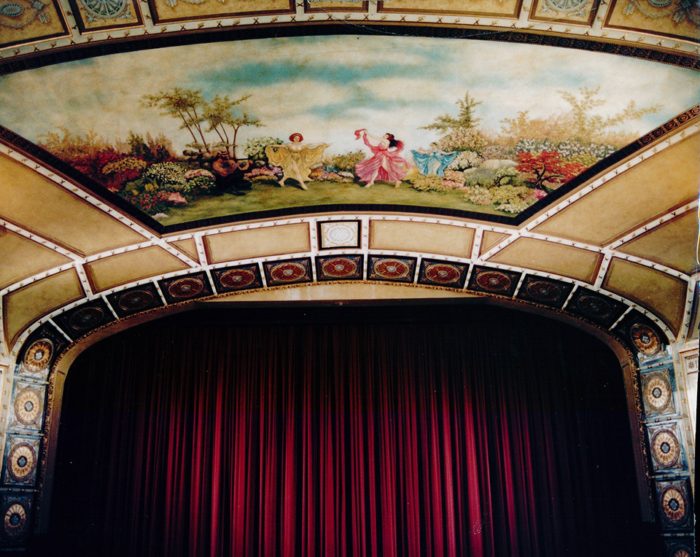
Beijing International Art Biennale
China is a nation with an ancient history of art as well as a finger on the developing pulse of the future. It is a burgeoning international economy as well as a land steeped in cultural tradition. The biennial was begun following China’s ascent to the WTO as well as their 2008 hosting of the Olympic Games. Through art, the Beijing Biennale seeks to further the notion of plurality as China continues to open its borders and join the world stage. The overall theme of each biennial is stated as demonstrating “the graceful bearing of opening up in an all-round way.”

photo: news.cn

A few of the tenets of the Beijing Biennale are, “building a grand path and bridge for international cultural exchanges” and “closely combining arts with international trends and national interests, developing the resource advantages in serving society and human beings.” The theme of the 2017 Biennale, set to run from September 24-October 15 at National Art Museum of China, encapsulates these basic principles. The Silk Road and World’s Civilizations considers the ancient tradition of China’s Silk Road and the new tradition of peaceful international development.

Karachi Biennale
In its first ever biennale, Pakistan will explore bold themes under the title Witness. According to the festival website, “Art as a testament of its time has always held significance, particularly in times when memory is heavily contested.

Czech born writer Milan Kundera

According to Milan Kundera, ‘The struggle of man against power is the struggle of memories against forgetting’. The theme Witness has been chosen for its strong relevance to politics of representation, erasure and selective documentation.” Pakistan has been a nation of political and social strife. Like much of the world today, upheaval has been a strong contributor to individual experience. Art has always been a medium that can reach beyond difficult times and continue a dialogue outside the socio-political arena. Karachi’s first Biennale will be curated by Amin Gulgee who grew up in Karachi.  For the Silo, Brainard Carey.

Brainard  is currently giving free webinars on how to write a better Artist bio and statement and how to get a show in a gallery – you can register for that live webinar and ask questions live by clicking here.

Banner image: Teaser Magazine 2015 Instanbul Biennale


Warm History Behind Sanderson Centre 100th Anniversary

temple theatre brantfordOpened as the Temple Theatre on December 22, 1919, the centre was originally designed as a vaudeville and silent movie house. Opening night premiered with five acts of vaudeville and the silent movie “Heart of the Hills” starring Mary Pickford. As one of the premiere theatres in Canada at the time, the Temple was a “first-run” film house attracting films from all the major distributors.

The local orchestra members started collecting promotional photos of the acts who performed at the theatre and glued them to the walls, the doors, and the sides of their sheet music cabinets. Many of these photos were salvaged during renovations of the orchestra pit and are on display throughout the lobbies today, along with photos of our more recent performers.

The Temple Theatre was renamed the Capitol in the early 1930s. For fifty-seven years, the theatre entertained moviegoers, and occasionally drew up her movie screen to be used again as a stage. As the years passed, attendance waned and in August 1986, the final movie “One Crazy Summer” was shown at the Capitol Theatre.

temple theatre3The vision of reopening the theatre as a performing arts facility was born and was met with fantastic support from local citizens. The Brantford Heritage Theatre Foundation spearheaded a highly successful fundraising campaign for the restoration and renovation of the Capitol Theatre. The first performance was Evita on October 2, 1986, tickets sold out quickly and two more performances were added. On December 11, 1989, the theatre was renamed the Sanderson Centre for the Performing Arts, a tribute to the memory of the Sanderson family known for their generous support of local causes.

The original ceiling mural (shown above this article’s title) was reproduced aided by ghost images which remained and historical photographs. It is believed the mural is titled “The Three Muses” depicting Greek goddesses who preside over literature, sciences, and the arts. Canada’s premiere performer Anne Murray officially opened the newly restored theatre on September 8, 1990, with a gala presentation.

In June, 1991 the Sanderson Centre for the Performing Arts was proud to be awarded the prestigious “Theatre Preservation Award” presented by the League of Historic American Theatres. The Sanderson Centre joins a select few authentically restored historic facilities including Carnegie Hall in New York and the Elgin Winter Garden Theatres in Toronto.

sanderson centre marqueeAmid the grandeur of 1919, the theatre inspires all to treasure the past and cherish the present. The Sanderson Centre for the Performing Arts, together with the Sanderson Centre Foundation, continues to honour our heritage. We invite you to enjoy the archival collection of photographs and memorabilia showcased in the lower lobby.

As we approach our 100th anniversary there will be many celebrations and events during the year.

sanderson centre modernization