Tag Archives: terrorism

US Sec Of State Rubio- In Defense Of Western Civilization

Via our friends at the U.S. StateDept

Oct, 2026
Author: U.S. Secretary of State Marco Rubio

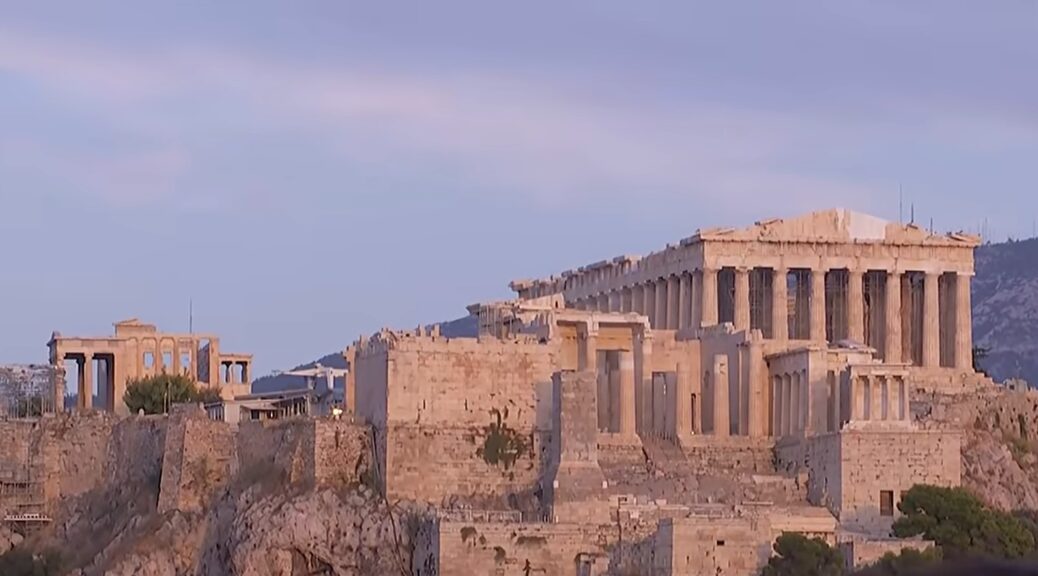
There are great ruins all across the world. In many cases, they are places where history seems to have exhausted itself: remnants of distant cultures that have long passed beyond living memory.

But the Acropolis is different.

For thousands of years, the civilization that built what stands behind me has captivated the imagination of the Western world. Generations of our statesmen, artists, and philosophers have looked to it – they’ve looked to it with wonder and they’ve looked to it with awe.

Now time has a tendency to dull the senses: great victories and catastrophic defeats, they seem to shrink to becoming like a footnote in a textbook, another fact for our schoolchildren to memorize and forget. But the Greeks of antiquity, they seem to have an almost mystical hold on our memory. They call us back to them, again and again.

480 years before Christ, the armies of Xerxes arrived in this city and they put its sanctuaries to the torch. Most Athenians had by then evacuated by ship to a nearby island. But there was a handful of them that refused to leave their home. So instead, they barricaded themselves in the rocky fortress of the Acropolis to fight an extraordinary last stand, heaving massive stones down the cliffs onto the Persian invaders and holding the greatest empire of the age at bay for days. They were eventually overwhelmed. The Persians plundered the temples, burned the shrines, and razed the Acropolis to the ground but when the Athenians returned, they gathered the broken remains of the old Acropolis and buried them in the hill where it had stood. And decades later, under Pericles, they raised the Parthenon.

For 25 centuries since, the Parthenon has stood. Empires have risen and fallen beneath its shadow. And the progeny of the men who built it – the sons of Athens and Rome – have carried their civilization with them to the ends of the Earth.

Two and a half centuries after the founding of the American republic halfway across the world from where I stand now – I stand here today as the Secretary of State of that republic, and a great-grandson of settlers who arrived in the new world from Spain – I stand here to testify to a debt that no lapse of time, no distance of space can ever extinguish.

The history of America, the history of my country, is covered with the fingerprints of antiquity. Greece is literally carved into the architecture of our government: in the towering columns, in the domes and the monuments across our capital city. The city where our Constitution was born – Philadelphia – is itself a Greek name.

The men who founded my country were fascinated by the heritage we inherited from yours. They were exceptionally well-read in history – they were vividly aware of their unique place in it – but no other age of the past held their attention or their imagination quite like that of antiquity. Many, many people are surprised to learn that the most commonly cited author in the Federalist Papers was not an Enlightenment philosopher or political theorist. No, the most commonly cited author in the Federalist Papers was Plutarch, the Greek biographer of Greece and Rome’s great men.

Now, much has been written and said about the influence of ancient Greece on the ideas of the American Founders – and, for that matter, on all of the Western philosophers and statesmen that preceded them. Most of us are familiar with the basic history. Athens gave us democracy. Plato and Aristotle gave us Western philosophy. Our ideas of law, of virtue, of citizenship, and republican government were shaped in the Greek city-states. Even much of our political vocabulary – words like democracy, tyranny, the word “politics” itself – found its origins here.

Now, all of that is true. But the things we owe to this place – as Americans, and as Westerners – are actually far far deeper. These institutions and ideas – these institutions and ideas were the outward expression of more fundamental qualities we see in the ancient Greeks – qualities that can’t be reduced to any particular political system or theory.

Here, in Athens, we found the first full realization of all the essential traits that would come to define the West: fierce individuality and relentless ambition; daring exploration and invention; a yearning for discovery, for adventure, risk and glory. An insatiable curiosity about the world and the principles by which it operates, a hunger to know the mysteries of nature and grasp the secrets of the cosmos. An impatience with the notion of impossibility, chafing at all boundaries and limits, straining to peer into the depths of the unknown.

These were not just the formulas or precepts of a particular school of philosophy. They were the characteristic of a people – expressed in their traditions, their stories, their imagination; in the qualities they demanded of their citizens; in the things they lived and fought and died for.

To know them is to know ourselves.

What blossomed here in this place was the Western desire to uncover all that ignorance, darkness, and distance had kept hidden from the mind of man. The Greeks did not just shape history; the Greeks gave us history itself. Much about – much of what we know about many ancient civilizations comes almost entirely from the records of Greek explorers and historians, explorers and historians who didn’t just chronicle the histories of their own people, but ventured outwards to observe and record the sagas of foreign peoples and cultures all across the world.

Where others looked inward, the Greeks were the first to direct their focus outward, to chase the thrill and glory of seeing all that was strange and new. It was this trait – it was this trait that would push the West to create and build things that others could not, marking us out from so many other cultures and civilizations where stability and subsistence were the highest ends of life.

But it is not just the ambition to explore the unknown that we inherit from the Greeks; it is the conviction that the unknown canbe known. The confidence that the world can be charted and measured and mapped and understood – and that there is a rational order to the cosmos, governed by certain fundamental laws, laws that men can observe and the mind can come to understand.

This was the foundation of the Western mind: our math, our science, our medicine. Our philosophy, ethics, and religion. It paved the way for the gospel of Jesus Christ to find fertile soil in Europe and flourish into the empire of Christendom. It was the foundation of the riches of Christian theology – of Augustine and Aquinas and the whole tradition of natural law.

It gave birth to a civilization marked not just by a common culture, it was marked by a common anthropology – a common view of man and his place in the universe. Its descendants would share not just the idea of a natural order, but a distinctive understanding of virtue; of destiny and fate; of truth, goodness, and beauty; of a code that dictates how men ought to live; of objective standards and ideals to strive towards.

For the Greeks of antiquity, the pursuit of excellence was the very principle of man’s existence. They organized all of civic life around contest, ambition, competition: in philosophy and poetry, in sculpture and drama, in athletics and art, in war and statecraft. The classical Greek city was an arena for great men to test and prove themselves, to hone their potential through perpetual struggle – to be the best, the strongest, the most beautiful, straining to inch ever closer to perfection.

Now I know that to modern ears, what I just described, this way of life, may sound odd; it may even sound cruel. The ideal of many ideologies in our time has, frankly, become a world of perfect safety, devoid of risk or failure, with neither the glory of victory nor the shame of defeat. Too often these days, we build downwards. We design our standards to ensure no one will lose; we preoccupy ourselves more with the comfort of the worst than the potential of the best. We hold the most exceptional things among us hostage to the average, the ordinary, the mediocre.

The men who made the Parthenon, they built upwards.They held that the highest and most noble aspiration in life was to surpass all others, to strive to be the best in all things. The ancient Greek city-states were filled. They were filled with intense passion and rivalry and faction and conflict. But from that constant struggle for distinction – from that came the great flowering of art and philosophy and political and intellectual energy that would transform a collective of Mediterranean cities into the birthplace of the greatest civilization in the world.

The thumos, as the ancient Greeks called it – the fire of passion, strength, courage, pride – is the heart of great civilization. And without it? Without it, nations lose their will to fight, the will to strive, the will to survive.
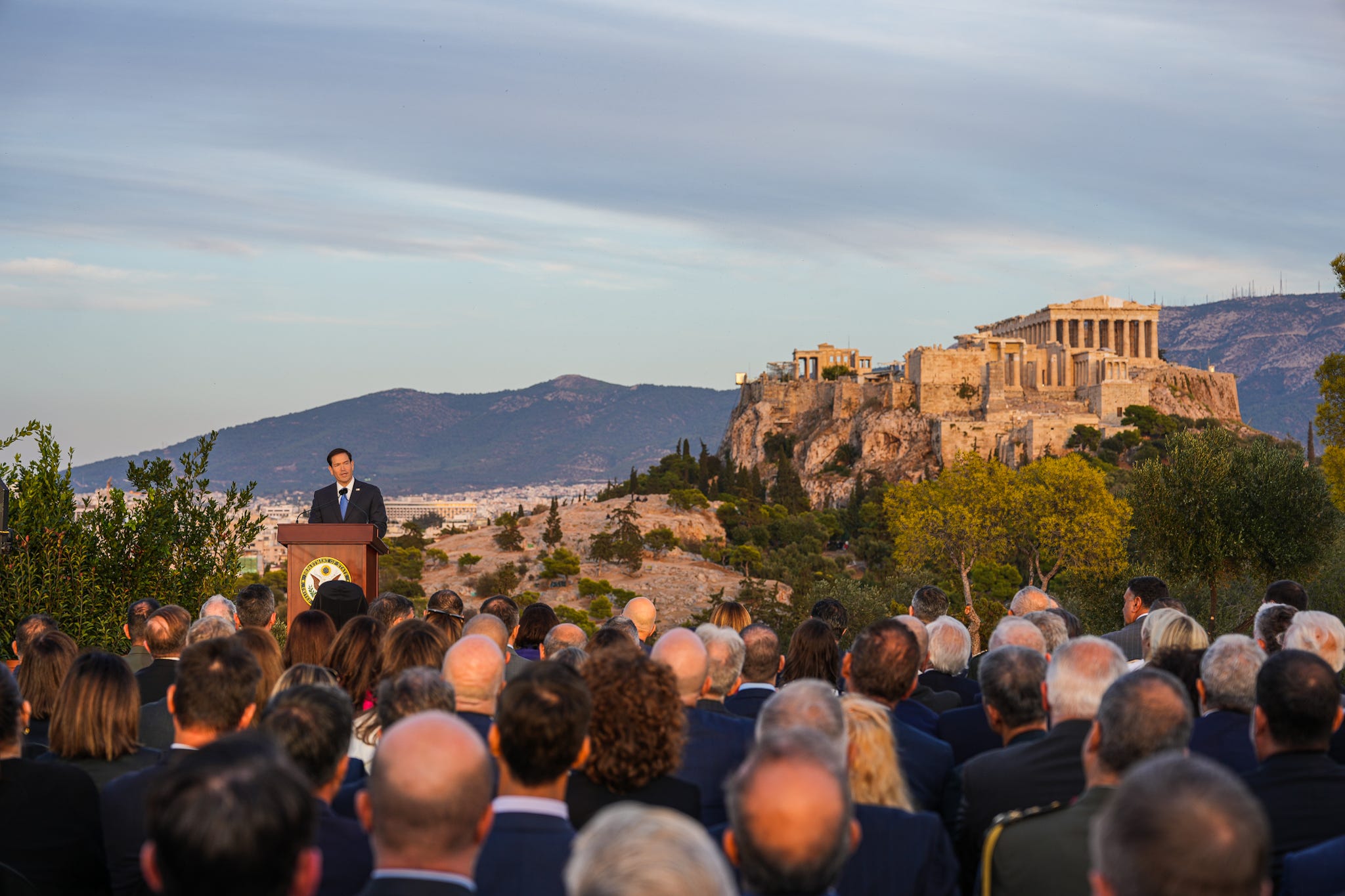
Marco Rubio was sworn in as the 72nd Secretary of State on January 21, 2025. The Secretary is creating a Department of State that puts America First.

Today, too much of the West has forgotten this quality. Over time, we in the West came to feel ashamed of the very things that made us exceptional. We felt embarrassed that our achievements set us apart from the rest of the world. Our prosperity somehow became a source of guilt. We no longer believed we deserved and had earned our greatness.

The word “nationalism” became a dirty word. And so we tore down our monuments; we condemned our own history. And in too many places, we taught our children to be ashamed of the countries they would inherit. In the process, we opened our borders and outsourced our industry, and allowed our militaries to wither and to decay.

And with every passing year, we seemed to outsource more of our sovereignty, transferring our decisions to global bureaucracies far beyond the reach of our control.

But others were all too happy to fill the vacuum that we left – the vacuum left behind by our weakness. And as the West’s confidence faltered, its adversaries and its rivals only grew more assertive, building up their own wealth and their own power in our stead.

And now, today, we find ourselves at a crossroads. Because the next decade and the decisions we make will write the story of the next century. The course we take will determine whether the West maintains its place at the head of the world or resigns itself to a future of atrophy and servitude and decline. We will either choose to act now or lose the choice to act at all.

Under President Trump, the United States has made its choice. We choose the unapologetic pursuit of national power: to take back control of our critical supply chains, to reindustrialize our economy, to rebuild our defense, to fight for dominance of the technologies and industries of the future.

We choose to reach for new frontiers: in advanced manufacturing and super intelligence; in drones, weapons, and warfare; in chips, minerals, cyber, and every other domain of human possibility. To unleash our energy, to rebuild our factories, to return our astronauts to the moon and launch a new age of exploration in space.

Now for all their lofty ideals, the ancient Greeks were not naive. They understood that nations have interests. They understood that statecraft requires prudence and diplomacy, but they also understood that it requires the ability to wield force when prudence and diplomacy fail. They understood that power requires not only having the means to defend yourself, it requires the credibility that you are willing to use it.

This is the classical understanding of politics and of statecraft that the Trump Administration hopes to reclaim – reclaim not just for our country, but for the whole of our civilization.

We believe that Europe can awaken from its long slumber and rekindle the fire that was lit here millennia ago.

There are already signs.

Across this continent, we are witnessing what we hope will be the beginnings of a generational shift: skyrocketing defense spending, a flurry of new partnerships and programs, expanded manufacturing and production, following on the historic defense commitments made last year in The Hague.

Greece has been at the center of this shift. The people of this nation have proved themselves once again to be an indispensable friend to Europe and to the United States alike, on everything from energy to migration to defense, where Greece has been a model ally.

And it’s our sincerest hope that all of Europe will follow your example.

Though passions may, at times, have strained the bonds of affection between the United States and Europe, it must not be allowed to break them. Together, we must strengthen an alliance capable of confronting threats of our age.

And we can. Because we do not believe the transatlantic friendship should be zero sum. Quite the opposite: our vision is of an alliance whose strength is greater than the sum of its parts. It is a vision we saw in action just last month, in an unprecedented new agreement between the United States, Denmark, and Greenland – an agreement that will reshape the Arctic and bolster the security of all of NATO. All three partners in that deal emerged victorious. All of Europe – and NATO and the United States emerged safer, stronger, and more secure because of it.

We want to win together. We must win together.

Now it’s has become fashionable today to believe that enlightened foreign policy means prioritizing the global community over one’s own people. And I think here, too, we have much to learn from the men of ancient Greece because they knew that there was nothing selfish or wrong about loyalty to your nation, nor anything selfish or wrong about fighting to defend its interests above all else.

They believed – fiercely – in the ideal of the great man: the exceptional individual who obtains immortality through his own deeds. But they believed that glory and fame, those things were won through striving, sacrificing and achieving greatly for something larger than yourself. The recurring hero of the ancient Greek world was the man who was willing to pay any cost for a cause worthy of his loyalty.

We see this in Socrates, who refused to abandon the inquiry into truth even at the cost of his own life. We see it in the legendary stand of 300 Spartans – surrounded and hopelessly outnumbered by the vast armies of Persia – who refused the chance to save themselves, choosing to fight to the last man rather than abandon their post or abandon their duty. And we see it in the epic myth of Achilles, who is offered the choice to return home and live a long and peaceful life – but chooses instead to remain at Troy and perish in pursuit of eternal glory.

These – these are the qualities that would shape the Western moral imagination. From the Christian martyr who refused to betray his faith to the patriot who gave his life for his country; from Saint Thomas More to the Battle of the Alamo, running through the immortal closing words of the Declaration of Independence of the United States which says, “We mutually pledge to each other our Lives, our Fortunes and our sacred Honor.”

It is from the Greeks that the West inherited its sense of duty – an unbreakable loyalty to one’s code, one’s cause, one’s country. Our heroes, the heroes of the West are those who choose to remain faithful to their duty precisely when it is most difficult and painful to do so: the man who is bound by his word, the soldier who will not abandon his post, the captain, the proverbial captain, who goes down with his ship.

This is wholly different from what we see, even now, for example from fanatics like the radical mullahs of Iran, whose cult of death hails child suicide bombers as national heroes, and portrays martyrdom as an end to itself.

Our heroes – our heroes may be willing to die for their cause; but our heroes do not worship death. It is precisely because we value life that we come to recognize the heroism in those who would sooner sacrifice it than to betray their principles. Now, we take the West’s conception of these things – heroism, honor, duty – we take these things for granted. We assume that these somehow are universal to all people in all times and in all places. They are not. They are the product of a distinct character, a distinct character which arose here and shaped the whole story of the civilization that came after it. A civilization that we must fight to defend today with the same passion as our forefathers did.

The men who built the Parthenon were succeeded by the architects of European Christendom, who raised the cathedrals of Milan, Cologne, and Florence. The quest to perfect the human form that moved the ancient Greek sculptors found a new expression in Michelangelo. The Greek philosophers’ search for the structure of the universe was inherited by Copernicus, and then Galileo, then Kepler, and in Newton.

The hunger for new knowledge, that’s what gave birth to Magellan’s first expedition around the world, to Columbus’ discovery of the Americas, and ultimately to Apollo 11’s journey to the moon. And the qualities that led Alexander to conquer the entire known world reappeared in Caesar, then Charlemagne, and Cortes.

And in America, that same tradition rediscovered itself anew. An open and wild land became the site of a great revival of Western imagination and ambition. The Greek aspiration for new horizons became the American frontier spirit. The civilization of Athens and Rome transformed an infant seaboard republic into a continental empire.

The greatest Americans of every generation have carried the unmistakable features of their forefathers – born in Athens, formed by Rome, baptized in Christendom, hardened in the furnace of medieval Europe, endowed with the English genius for liberty, and then carried across the Atlantic to be reborn on the shores of a new world.

Together, we must now rediscover that spirit. We are at an inflection point – an inflection point not only in the history of my nation, but an inflection point in the whole of our civilization.

The threats we face today are every bit as real as they were on the dramatic stage of antiquity.

National interests did not vanish in the face of international institutions. War did not disappear simply because we preferred peace. Other states continued to arm, to seek influence, to compete for territory, and technology, and resources, and markets, and energy, and power.

And now, there is war again. There is new competition between great powers again. There is vulnerability, aggression, terrorism, a whole universe of new threats and attacks again.

And so we must rebuild our institutions and our alliances to face these threats together – understanding that the purpose of these things is not to abolish the sovereignty of the nations that constitute them; it is to defend them. And that nations need not abandon their distinct identities in order to recognize their common interests.

We have built a model of that with our partners here in Greece. In our defense partnerships, in energy and technology, in our shared ambition to secure Europe’s borders from the threats of mass migration.

Our friendship dates back to the earliest years of my nation. When Greece rose in 1821 to recover its independence after centuries of Ottoman rule, Americans recognized something familiar in that struggle. Three years later, the great American statesman Daniel Webster, he delivered a famous address to Congress, helping bring the cause of the Greek Revolution before the representatives of the young American republic.

And he began by calling their attention to everything around them. This is what he said in his speech; he said: “This free form of government, this popular assembly… this practice of free debate, and public discussion, the contest of mind with mind… even the edifice in which we assemble, these proportioned columns, this ornamented architecture, all remind us that Greece has existed, and that we, like the rest of mankind, are greatly her debtors.”

Those words are as true today as they were when he said them. And all of us – not just Americans, but Europeans and our friends across the West – must relearn the lessons our forefathers took from this place and from its history.

The history of Greece – the history of Greece does not just offer us a glimpse – it does not offer a glimpse of our institutions in their earliest forms. The history of Greece shows us an image of ourselves.

It shows us that ours is the inheritance of great heroes, and that we should be proud – that we should be intensely proud – of where we come from. We should marvel at what our forefathers carved out of this countryside. The story of our civilization is the greatest story ever known to man. And it began here, with the first men and women of the West. From them – from them – we can rediscover the virtues, the courage, and the strength to confront the dangers that we face in our time.

Thank you.
U.S. Upends Iranian Shadow Fleet and Oil-for-Gold Terror Financing Network

Press Statement via Thomas “Tommy” Pigott, Principal Deputy Spokesperson April 15, 2026

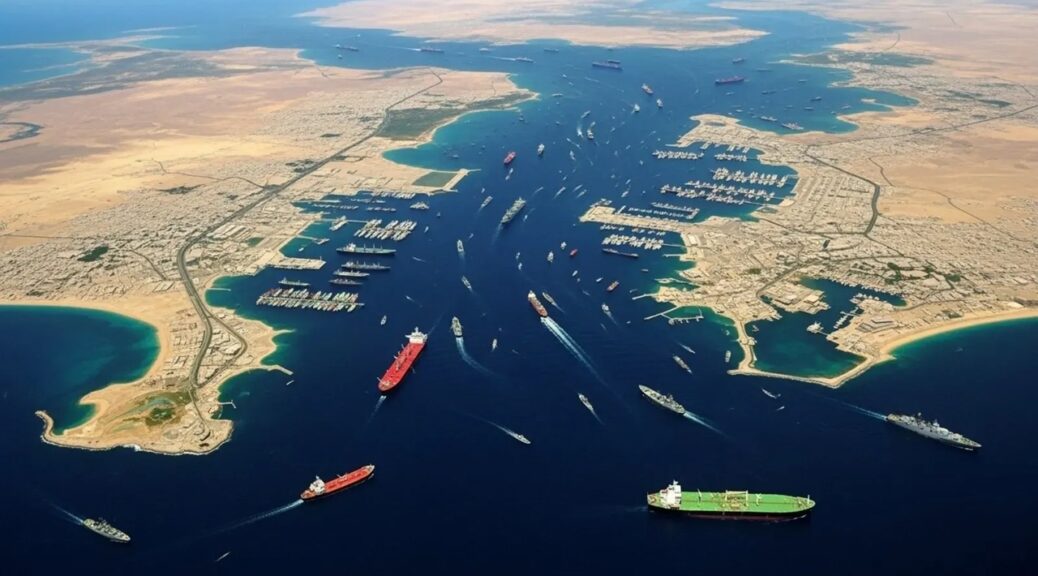
The United States is acting to decisively limit Iran’s ability to generate revenue as it attempts to hold the Strait of Hormuz hostage. Today’s sanctions target elements of U.S.-designated Mohammad Hossein Shamkhani’s multi-billion-dollar oil smuggling empire that enriches the Iranian regime and its elites. It also targets a separate oil-for-gold network that finances U.S.-designated Hizballah and the U.S.-designated Islamic Revolutionary Guard Corp-Qods Force (IRGC-QF).

The Iranian regime continues to enrich corrupt elites like the Shamkhani family while ordinary Iranians suffer under a deteriorating economy. The regime likewise funnels the wealth of the Iranian people to Hizballah and other terrorists in the Middle East. These designations underscore our commitment to maximum pressure on Iran and its terrorist proxies.

The complex schemes involving illicit Iranian oil, gold, and terrorist financing demonstrate the lengths to which Iran and its partners will go to evade sanctions and fund malign activities. We will continue to expose and disrupt these networks.

Since President Trump issued National Security Presidential Memorandum 2, the United States has sanctioned over 1,000 persons, vessels, and aircraft as part of our campaign against Iranian malign activity. We will not relent in our efforts to deny Iran and its proxies the resources they use to threaten U.S. interests and regional stability.

Today’s action marks the latest round of sanctions targeting Iranian oil sales and support to Iran’s terrorist proxies since the issuance of National Security Presidential Memorandum 2 (NSPM-2), directing maximum pressure on Iran and its regional proxies. More information on today’s designations can be found in Treasury’s Press Release.

In The Future Cyberwar Will Be Primary Theater For Superpowers

Cybersecurity expert explains how virtual wars are fought

With the Russia-Ukraine war in full swing, cybersecurity experts point to a cyber front that had been forming online long before Russian troops crossed the border. Even in the months leading up to the outbreak of war, Ukrainian websites were attacked and altered to display threatening messages about the coming invasion.

“In response to Russian warfare actions, the hacking collective Anonymous launched a series of attacks against Russia, with the country’s state media being the main target. So we can see cyber warfare in action with new types of malware flooding both countries, thousands of sites crashing under DDoS (distributed denial-of-service) attacks, and hacktivism thriving on both sides of barricades,” Daniel Markuson, a cybersecurity expert at NordVPN, says.

The methods of cyberwarfare

In the past decade, the amount of time people spend online has risen drastically. Research by NordVPN has shown that Americans spend around 21 years of their lives online. With our life so dependent on the internet, cyber wars can cause very real damage. Some of the goals online “soldiers” are trying to pursue include:

  • Sabotage and terrorism

The intent of many cyber warfare actions is to sabotage and cause indiscriminate damage. From taking a site offline with a DDoS attack to defacing webpages with political messages, cyber terrorists launch multiple operations every year. One event that had the most impact happened in Turkey when Iranian hackers managed to knock out the power grid for around twelve hours, affecting more than 40 million people.

  • Espionage

While cyber espionage also occurs between corporations, with competitors vying for patents and sensitive information, it’s an essential strategy for governments engaging in covert warfare. Chinese intelligence services are regularly named as the culprits in such operations, although they consistently deny the accusations.

  • Civilian activism (hacktivism)

The growing trend of hacktivism has seen civilian cyber activists take on governments and authorities around the world. One example of hacktivism is Anonymous, a group that has claimed responsibility for assaults on government agencies in the US. In 2022, Anonymous began a targeted cyber campaign against Russia after it invaded Ukraine in an attempt to disrupt government systems and combat Russian propaganda.

  • Propaganda and disinformation

In 2020, 81 countries were found to have used some form of social media manipulation. This type of manipulation was usually ordered by government agencies, political parties, or politicians. Such campaigns, which largely involve the spread of fake news, tended to focus on three key goals – distract or divert conversations away from important issues, increase polarization between religious, political, or social groups, and suppress fundamental human rights, such as the right to freedom of expression or freedom of information.

The future of cyber warfare

“Governments, corporations, and the public need to understand this emerging landscape and protect themselves by taking care of their physical security as well as cybersecurity. From the mass cyberattacks of 2008’s Russo-Georgian War to the cyber onslaught faced by Ukraine today, this is the new battleground for both civil and international conflicts,” Daniel Markuson says.

Markuson predicts that in the future, cyber war will become the primary theater of war for global superpowers. He also thinks that terrorist cells may focus their efforts on targeting civilian infrastructure and other high-risk networks: terrorists would be even harder to detect and could launch attacks anywhere in the world. Lastly, Markuson thinks that activism will become more virtual and allow citizens to hold large governmental authorities to account.

A regular person can’t do much to fight in a cyber war or to protect themselves from the consequences.

However, educating yourself, paying attention to the reliability of sources of information, and maintaining a critical attitude  to everything you read online could help  increase your awareness and feel less affected by propaganda.  For the Silo, Darija Grobova.

FBI- Trump Shooter Was Lone Gunman

Today, the aftermath of the attempted assassination of former President Donald Trump: a breakdown of the assassination attempt, and initial theories about the gunman. Via our friends at the Associated Press & The Epoch Times.

Highlights

A Breakdown of the Assassination Attempt Against Trump


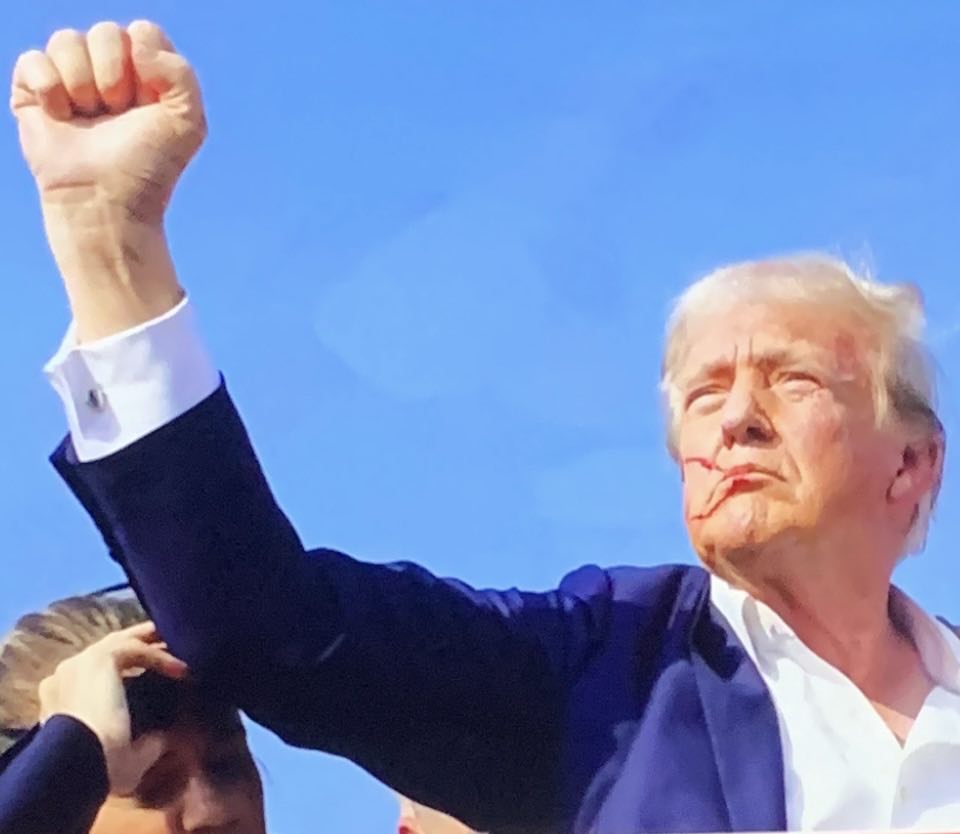
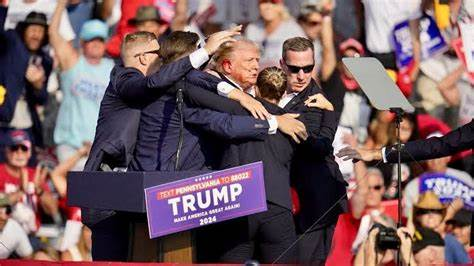
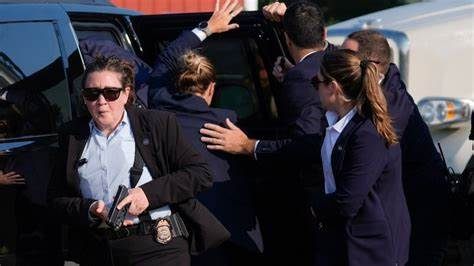
It started at 6:02 p.m. with former President Donald Trump taking the stage in Butler, Pennsylvania. Ten minutes later Mr. Trump was lying bleeding on the stage and shielded by Secret Service agents.


Why It Matters: An attempted political assassination of a former and potential U.S. president impacts the world.


FBI Found ‘Suspicious Device’ in Shooter’s Car, Investigating Attack as Domestic Terrorism


The FBI has provided background on its investigation of the would-be killer of former President Trump and what else he may have been trying to do.
Officials said they don’t have a motive yet, but did find a suspicious device in the dead gunman’s car and continue to work with his family as the investigation continues.


Why It Matters: Many questions need to be answered, including what the shooter’s motive was, and how he was able to nearly kill a former president.

FBI Investigating Attack as Act of Domestic Terrorism

The FBI said a ’suspicious device,’ which was later defused, was found in the assailant’s car.

FBI Believes Trump Shooter Acted Alone, Investigating Attack as Act of Domestic Terrorism
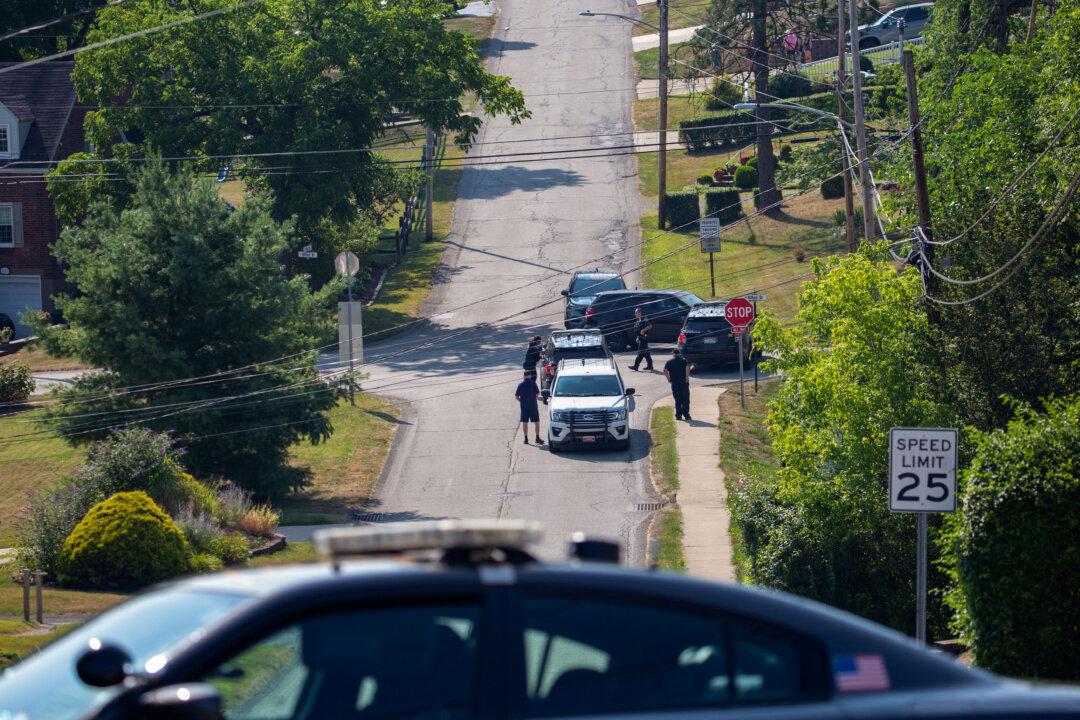
State and local police block off roads surrounding the home of the suspected shooter of former President Donald Trump, as the FBI carries out an investigation, in Bethel Park, Pa., on July 14, 2024. (Rebecca Droke/AFP via Getty Images) Joseph Lord

FBI officials say they believe the would-be assassin of former President Donald Trump acted alone.

The agency is investigating the attack as both an attempted assassination and an act of domestic terrorism, officials told reporters in a call with news media on July 14.

The new details emerged less than 24 hours after the United States saw its first major assassination attempt of a president or presidential candidate since President Ronald Reagan was shot in 1981.

Authorities have identified the shooter as 20-year-old Thomas Matthew Crooks, a resident of Bethel Park, Pennsylvania. At a Trump rally in Butler, Pennsylvania, on July 13, the assailant fired several shots from an elevated position near the venue. Witnesses saw a man with a rifle on the rooftop of a nearby building.

Former President Trump’s right ear was pierced by one of the bullets before he was rushed to his car by Secret Service agents. However, one of the attendees at the rally, 50-year-old firefighter Corey Comperatore, was killed. Two other rally attendees—identified by Pennsylvania State Police as David Dutch and James Copenhaver—were injured.

Both of the injured attendees are in stable condition, according to Pennsylvania State Police, which did not provide further details on their injuries. A GoFundMe effort established by the Trump campaign for the victims and their families had raised more than $3 million usd/ $4,090,000 cad as of the evening of July 14.

FBI Investigation

The FBI has not yet identified a motive. The assailant’s family is cooperating in the investigation, officials said.

Trump Says God ‘Prevented the Unthinkable’ During Assassination Attempt

Biden Says He’s Directed an Independent Review of Security at Trump Rally

Biden Says He’s Directed an Independent Review of Security at Trump Rally

Attorney General Merrick Garland called the assassination attempt on the former president “an attack on our democracy itself.”

“[The Justice Department has] no tolerance for such violence, and as Americans, we must have no tolerance for it,” Mr. Garland told reporters. “This must stop.”

The agency said a “suspicious device” was located during a sweep of Mr. Crooks’s car. It was later defused by bomb technicians.

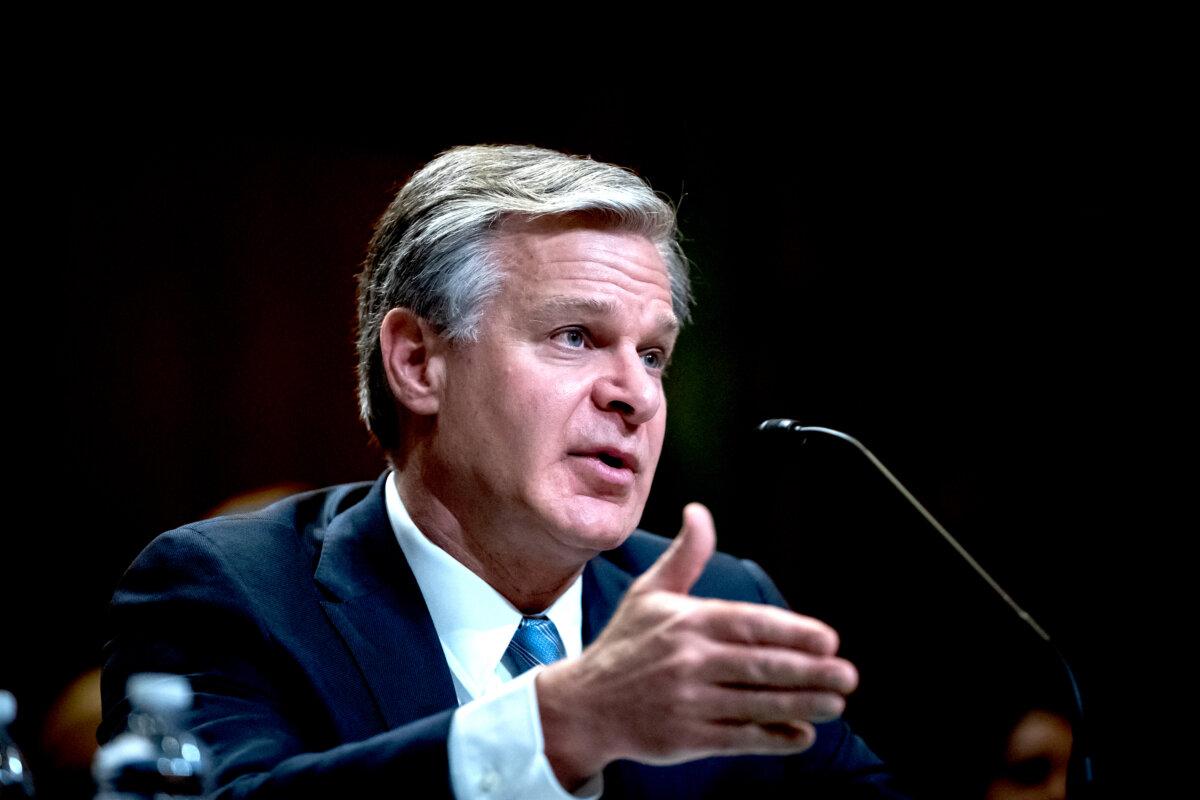
FBI Director Christopher Wray vowed that his agency would “leave no stone unturned” in its investigation of the attack.

“An attempt to assassinate a presidential candidate can only be described as absolutely despicable and will not be tolerated in this country,” Mr. Wray told reporters.

Earlier on July 14, President Joe Biden said he asked that the investigation be “thorough and swift.”

FBI Director Christopher Wray testifies about the bureau’s budgetary needs during a Senate Appropriations Committee hearing in Washington on June 4, 2024. (Allison Bailey/Middle East Images via AFP via Getty Images)

Prior to the attack, officials said, the perpetrator wasn’t on the FBI’s radar as a potential threat.

The FBI’s screening of the shooter’s social media presence has so far revealed no ideology or political beliefs that could have been his basis for the attack, officials said.

The FBI has received more than 2,000 tips so far, they said.

Officials believe that the rifle used in the attack was a semi-automatic rifle similar to an AR-15.

Kevin Rojek, special agent in charge of the FBI’s Pittsburgh Field Office, told reporters that the weapon belonged to the shooter’s father, who purchased it legally. It’s still unclear how Mr. Crooks got his hands on the rifle, or if his father was aware that he had taken it.

“These are facts that we’ll flesh out as we conduct interviews,” Mr. Rojek said.

Independent Review

President Biden said that he has directed an independent review of the security present at the rally.

Speaking from the White House, President Biden said the assassination attempt was “contrary to everything we stand for as a nation.”

“It’s not who we are as a nation, it’s not America, and we cannot allow this to happen,” he said.

The president said that he had a “short but good conversation” with former President Trump on the evening of July 13.

The former president, meanwhile, was due to arrive in Milwaukee for the Republican National Convention on July 14, as originally planned. He said in a social media post that he had wanted to delay the travel in the immediate aftermath of the attack, but ultimately decided against it.

Secret Service officials confirmed on July 14 that no changes have been made to security at the convention, which starts on July 15, noting that the event has already been given the highest-grade security.

“Currently, there are no known articulated threats against the RNC or anyone visiting the RNC,” Michael Hensle, special agent in charge of the FBI for Wisconsin, said at a news conference.

The Secret Service has refuted claims that the 45th president’s security team requested additional security for the July 13 event and was denied.

“This is absolutely false. In fact, we added protective resources & technology & capabilities as part of the increased campaign travel tempo,” Secret Service spokesman Anthony Guglielmi wrote in a July 14 post on X.

Former President Trump, in a statement on July 14, thanked his supporters, saying of the attack that it was “God alone who prevented the unthinkable from happening.”

The former president made a call for unity, saying, “In this moment, it is more important than ever that we stand United, and show our True Character as Americans.”

Former First Lady Melania Trump, in her own statement, called on Americans to “ascend above the hate” and “simple-minded ideas that incite violence.”

“When I watched that violent bullet strike my husband, Donald, I realized my life, and Barron’s life, were on the brink of devastating change,” Ms. Trump wrote.

She said that she was “grateful to the brave Secret Service agents and law enforcement officials who risked their own lives.”

Over on Capitol Hill, lawmakers are vowing their own investigations into the matter.

House Speaker Mike Johnson (R-La.) said Congress will probe if there were security lapses at the rally.

“We need to know: How could an individual be at that elevation that was seen by apparently bystanders on the ground—how could that not be noticed by Secret Service?” Mr. Johnson told NBC’s “Today” on July 14.

In a July 14 letter to Department of Homeland Security (DHS) Secretary Alejandro Mayorkas, House Homeland Security Committee Chairman Mark Green (R-Tenn.) revealed several pieces of information, including the security plan that was in place on the day of the shooting. The Secret Service falls under the umbrella of DHS.

A DHS spokesperson confirmed receipt of the letter.

“DHS responds to congressional inquiries directly via official channels, and the Department will continue to respond appropriately to Congressional oversight,” the spokesperson told The Epoch Times in an email. For the Silo, Joseph Lord.

Joseph Lord

The Associated Press contributed to this report. 

Intelligence Operative- Iran Source Of Explosives Causing Beirut Nuke Like Destruction

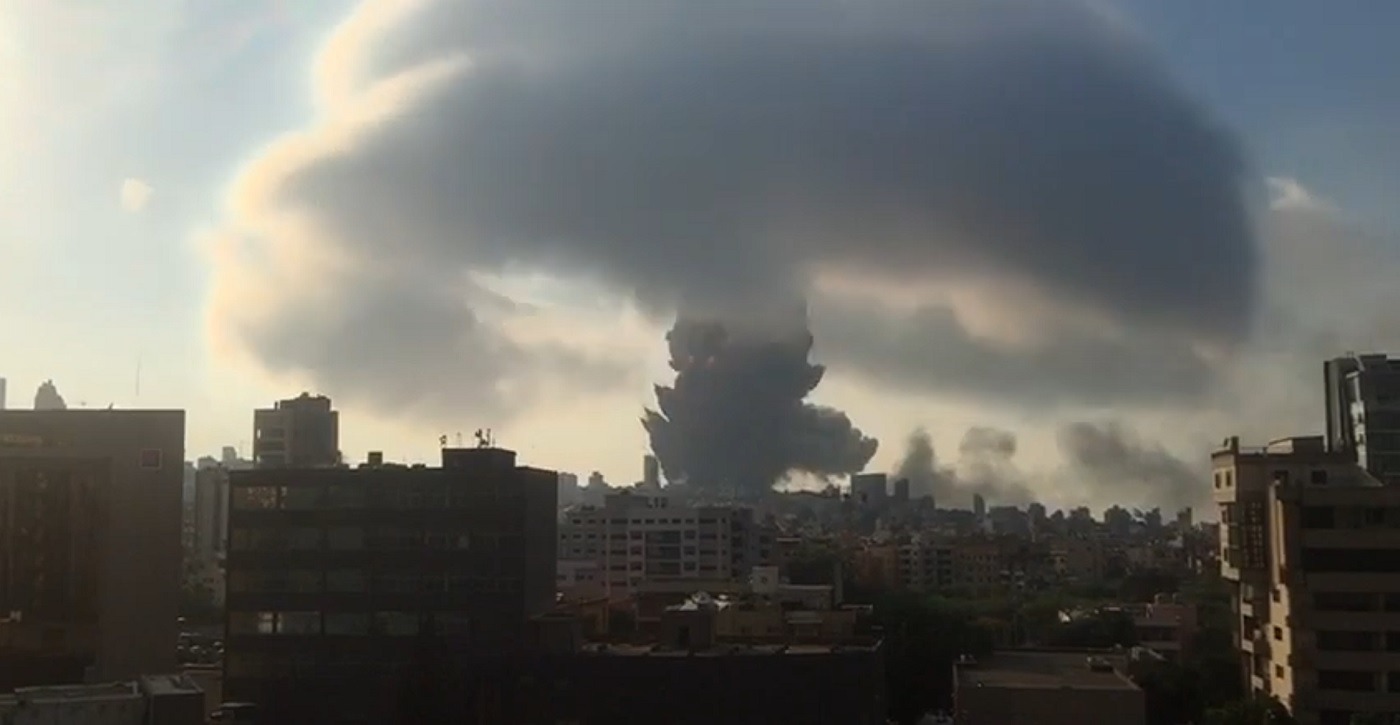
Beirut / Tehran – The 2,750 metric tons of ammonium nitrate which caused a massive explosion in the port of Beirut originated in Iran before being loaded onto the Russian ship MV Rhosus whose cargo ultimately ended up being unloaded in the port of Beirut.

This revelation comes from an intelligence operative within Tehran’s government who has been secretly working with pro-democracy activists. The information comes from the NGO ‘The New Iran’ which has a track record of successfully smuggling sensitive information out of Iran, including much of the video footage seem in the media of widespread protests within Iran following the Iranian military shooting down Ukraine National Airlines flight PS752. 

Intelligence Operative Connected to Pro-Democracy Movement

The intelligence operative communicated the details over a secure messaging technology The New Iran uses for coordinating with their democratic allies within the country.  

Lebanese government sources have disclosed that the ammonium nitrate was seized in 2013. This date is perhaps significant the source says because it follows shortly after the opening of an ammonium nitrate factory within Iran.  

“Our source is risking his life to bring us this information,” says Dr. Iman Foroutan, Chairman of The New Iran, “because he believes that recent developments within the government are going to make these kinds of disasters more common.”

At the end of June, the government of Iran approved an agreement for a “25-year comprehensive cooperation plan between Iran and China.”

The two countries are calling it a “strategic partnership.”

The agreement is designed to help Iran get around the punishing sanctions of the United States, which more and more is being looked at as a common enemy by both Tehran and Beijing. China will be investing $400 billion USD into Iran with an immediate payment of $320 billion USD – a substantial portion of which is going into strengthening ports and military capability.  

“The Iranian regime is the world’s leading sponsor of terrorism,” says Dr. Foroutan who along with other influential Iranians in exile are working to fully expose the danger of Ayatollah Ali Khamenei’s radicalism and eventually free the Iranian people. “Now with the cover of China, one of the world’s rising superpowers, Iran will be able to move more weapons and weapons components throughout the region and the world.” 

Hezbollah leader Hassan Nasrallah has already twice threatened to blow up the port of Haifa in Israel. Hezbollah allegedly sought to acquire ammonium nitrate via Syria since 2009 and tried to infiltrate the agriculture ministry in Lebanon to do so, according to leaked diplomatic cables.  

In February 16, 2016 Nasrallah also said that ammonia is stored in Haifa and that there are 15,000 tons of gas Haifa and that explosions there might cause the deaths of tens of thousands of people. “the expert added that this is exactly like a nuclear bomb. In other words, Lebanon has a nuclear bomb. This is not an exaggeration.” Nasrallah laughs as he says this in the video. 

https://youtu.be/hp_Pdew_sG8

“With the agreement between China and Tehran allowing the regime to ship under the cover of China, potentially deadly materials like ammonia nitrate [may be] circumventing US sanctions,” says Iman Foroutan, “The next explosion may not be an accident.” For the Silo, Lance Laytner.

Universal Language Hopes To Bring Cultures Closer Together In New Year

International migration continues to grow on a scale never seen before, bringing with it social and cultural diversity, and inequalities in living standards. At the same time, the world has seen a sharp rise in terrorism, threats of war, populist politics and significant lack of confidence in leadership. But can the arts build on its foundation of “universal language” and actually bring cultures closer together?

Survey after survey in recent years have pointed to the significant connections between strong academic achievement and arts learning.

Professor Ada Aharoni, who lives in Israel and is the founding President of the International Forum for the Literature and Culture of Peace (IFLAC), believes that education has a critical role to play in the peace process. Intercultural communication, peace literature and a peace media can substantially help in healing the urgent ailments of our global village. However, Aharoni notes, “Peace and tolerance education should be given to the teachers and the parents too. If a child goes back home after class to parents that are intolerant and violent, the child, despite his peace and tolerance education at school, will be forcefully influenced by the values, customs and traditions of his parents.” Today’s youth are living in a globalized world, and a true global citizen according to Aharoni is, “a human guardian of all the people in our global village, and not only of the country she or he lives in.”

Professor Ada Aharoni received the President Shimon Peres Award for Peace in 2012 for her peace research, her books and her work with IFLAC. She was nominated for the Nobel Peace Prize 2014.

Ada, in your opinion, what does it mean to be a true ‘global citizen’?

A true global citizen, in my view, is a human guardian of all the people in our global village, and not only of the country she or he lives in.

image- CMRubin

Many claim that without conflict and competition there is no advancement. If the world were completely at peace, could we develop or would the world be at a complete stand-still when it comes to new discoveries/ revolutions?

When the world one day will be completely at peace, after having thrown out of our lives, of our planet and of our dictionaries, the destructive concept and practice of war – we would develop our creativity and all our abilities at a fruitful rate the world has never seen before.

You grew up learning about other cultures. In today’s age, classrooms are becoming more diverse than ever yet people are afraid of certain cultures and religions. Do you believe that peace begins in a classroom? How important is the role of education in nurturing tolerance?

Education is the most important element in developing, nurturing and propagating peacemaking, conflict resolution, tolerance and harmony. However, Peace and Tolerance education should be given to the teachers and the parents too. If a child goes back home after class to parents that are intolerant and violent, the child, despite his peace and tolerance education at school, will be forcefully influenced by the values, customs and traditions of his parents.

Professor Ada Aharoni

“International cooperation can develop, strengthen and empower people to be both loyal global citizens and loyal patriots at the same time.” — Ada Aharoni

Are ‘patriot’ and ‘global citizen’ mutually exclusive terms? Can someone love and want the best for their country while also advocating for international cooperation?

A “global citizen” can, and should, also be a loyal patriot to his own country. International cooperation can develop, strengthen and empower people to be both loyal global citizens and loyal patriots at the same time.

Your movie talks about government accountability and the falsifying of history, especially when it comes to the origins of Jews in Israel. In what way do you see younger generations demanding accountability and transparency from their world leaders? Do you think politics are becoming more or less accessible to people?

I am glad you watched my movie: The Pomegranate of Reconciliation and Honor, and understood it so well. However, it is not the falsifying of history, but ignoring the history and the uprooting of more than half the citizens of Israel – the Sephardi citizens who were thrown out or escaped from the Arab countries, after the establishment of the State of Israel in 1948.

This history is so important as it can promote the Reconciliation between the Palestinians and Israelis. When the Palestinians realize that they are not the only victims of the Arab-Israeli Conflict, it gives them back their “honor” and they become open to a reconciliation.

The Ministry of Education in Israel should teach in schools – both in Jewish and Arab schools – the History and the Uprooting of the Jews from Arab countries, and its importance as a major element to Peace Making and Reconciliation. This history, of half the citizens in Israel, should be learned and practiced also by all the leaders on both the Israeli and Palestinian sides.

In today’s volatile, uncertain world, can literature and the arts truly bring about change? What has your experience with your own work taught you?

Yes, I believe that words, communication, literature and the arts can promote peace, tolerance and harmony, and bring about a change. Our work at IFLAC has shown us this again and again. For instance, I received many enthusiastic letters and messages from Palestinians who watched my film, The Pomegranate of Reconciliation and Honor, on YouTube, and wrote that the movie had instilled hope of peace in them and had given them back their honor as Palestinians.

For the Silo, David Wine/CMRubinWorld. Featured image via news.ucsb.edu. 

Novel Warns North Americans Of Corrupt Bankers And Valueless Dollar

Back in 2012 The Silo reported on a dark novel titled Zurabia. That book held a plot that seems less like fiction with each passing year.  Corrupt bankers, a practically valueless dollar, hyper-unemployment and underemployment, home-grown terrorism, the uptick in natural disasters and the overall lack of trust in our most important institutions – these are some of the reasons all North Americans should be very, very concerned, according to author Peter Dash a world-traveled researcher for Harvard University’s Center for International Affairs.

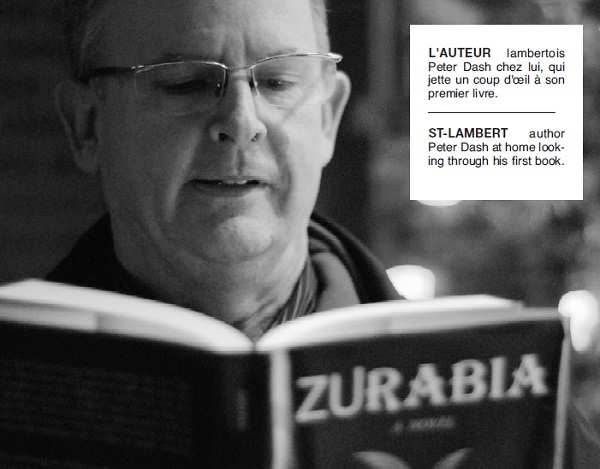
Peter Dash and his novel

“I predict a brutal world ahead of us,” says Dash, author of “ZUrabia,” a book about rogue forces taking over the world’s most important institutions. “Unfortunately, I have been right since my research at Harvard in 1986, when I questioned the viability of government institutions to meet general needs and growing problems, both domestically and abroad.”

The pragmatic holiday shopper this year will purchase items to safeguard their families against these threats, which have been long in the making and won’t disappear quickly, he says.

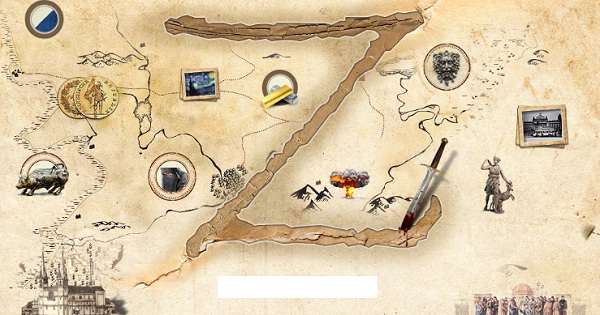
From Dash’s homepage- a map of Zurabia complete with mountains and a mushroom cloud. Biblical ! CP

“Terrorism wasn’t inaugurated with 9-11; extremism in Muslim sects has been growing for decades, and Neo-Nazi groups are starting to flourish in failing states like Greece,” he says. “The dollar has been steadily losing its value since the creation of the Federal Reserve in 1913; climate change has been on the radar for quite a while; and there have been greedy bankers since, well, banks have existed.”

“If you’re confident that everything is sure to be okay, then you’re not paying attention,” he says.

He offers a four-point survival strategy for holiday and everyday shopping:

• Gold is good: The dollar has lost 95 percent of its value in 100 years, and it will continue losing value. As
the Reserve continues to flood money into the system, thereby reducing current or potential value, more inflation is inevitable, acting as yet another tax on wages. So, collect and buy any gold that you can and consider spending federal notes while they’re still worth something to businesses. Think about your
jewelry, and buying more. Silver is a good option if gold is too expensive, and there are Exchange Traded Funds, or ETFs, that are backed by physical gold. A reputable banker or broker can help explain for those who are interested. “TD Ameritrade or Charles Schwab may be good places to start getting information on gold and silver ETF trading,” according to Dash.

• Inflation: Spend your money now or smartly invest it before you lose it. Remember, banks often give clients less than one percent on many accounts, but inflation on food and real items we use, like gasoline, are going up by much more. In essence, your banker is stealing your money through the assistance of the Fed, which is killing your savings rate by cheapening money. As if to pour salt on this wound, the bank,
in many cases, lends money at four percent or higher. Rerouting some bank savings/wages by investing in canned food, for example, may protect you against the scourge of food inflation, as well as other disasters.

• Worthy purchases: With food and water, a failed society puts a premium on additional goods. They include home insulation, gardening tools and materials, computer programs and language learning kits – perhaps Spanish or Chinese – because of the increasing prominence of other cultures. Guns, security systems and other measures to protect one’s home will likely prove extremely valuable should law enforcement be spread too thin, or fail as an institution.

• Buy in bulk: Places like Wal-Mart or Costco will help you get the most value with large purchases of food. It’s important to be well-stocked if something happens that results in the emptying of grocery markets, but remember to have adequate space in your house, apartment or cabin for a “safe” room, which is part of a sound strategy for protecting you and your family.

Peter Dash has been a teacher, professor and corporate trainer for the last 17 years, working in Saudi Arabia, the former Soviet Union and China. He has an applied science degree in forestry from the University of British Columbia and a Masters in applied teaching from Southern Queensland in Australia. He was a researcher in world (dis) order and youth groups at Harvard University’s Center for International Affairs, started by Henry Kissinger. He follows the investment field intensely, focusing on commodity funds and trends.
Fifteen percent of his book’s royalties will go to needy students consistent to the many years Dash has worked in assisting voluntary youth organizations. He lives on a small tropical island that is stocked with the finest well water, fish and food. Dash invests in Gold ETFs and commodity trading companies.

Supplemental– CBC radio interview with Dash on Zurabia