San Marcos, California, October, 2025 – In one of the most significant product introductions in the company’s history, Audience will debut its extraordinary Bellare loudspeaker at two US events: T.H.E. Show New York and Capital Audiofest 2025. As stunning in appearance as it is to listen to, the new Bellare full-range speaker incorporates a number of proprietary technologies including the company’s full-range driver approach to deliver a never-before-achievable level of musical realism.
The Bellare (Italian/Latin for “beautiful”) will be featured at T.H.E. Show New York 2025 at the Hilton Hasbrouck Heights/Meadowlands, Hasbrouck Heights, New Jersey (October 24 – 26, 2025), and at Capital Audiofest at the Hilton Hotel Rockville, Rockville, Maryland (November 14 – 16, 2025). It will be demonstrated as part of a complete high-end system including an all-new Audience equipment rack, and Audience cables and power conditioners (see complete equipment list at the end of this press release).
No need for the usual crossover requirement
At the heart of Bellare’s extraordinary performance is its use of multiple identical 3-inch wideband high-resolution drivers that cover the entire frequency spectrum from 120 Hz through the midrange and treble – eliminating the need for a crossover or different types of drivers for the midrange and high frequencies. This results in remarkable sonic coherence, tonal purity, and imaging, with excellent dispersion. There are no phase anomalies, discontinuities in frequency range, or disruptive changes in radiation pattern.
Bass Is Handled Separately
The bass below 120 Hz is handled by Bellare’s built-in 300-watt active bass module with DSP that offers remote control of its volume, and automatic room correction. The inclusion of this built-in bass unit enables Bellare to be used with even lower-powered amplifiers such as Class A or single-ended tube amplifiers, since they are only driving the midrange and high frequencies.
The result is a loudspeaker that offers a seamless, natural musical presentation with remarkable spaciousness, presence, dynamic impact and tonal truthfulness. The Bellare achieves a level of sonic realism undreamed of until now. It is one of the finest loudspeakers ever produced by Audience – or anyone.
The Audience Bellare loudspeaker will be available in March 2026 at a suggested US retail price of $36,000 per pair/ $50,374 CAD (at today’s conversion rate).
Key Audience Bellare Loudspeaker Features:
Identical 3-inch drivers provide seamless performance above 120 Hz
Crossover-less design (above 120 Hz) preserves coherence, phase integrity, tonal purity and an ideal radiation pattern
Built-in 300-watt bass module powers the woofer and mid-woofer
DSP offers remote control of its volume, and active room correction
Frequency response: -3 dB at 28 Hz and 22 kHz
105 dB continuous output without driver compression
Smooth impedance with minimal phase shift for effortless amplifier control
88 dB sensitivity. Very easy to drive thanks to its well-behaved impedance curve and integrated bass augmentation system
Nominal impedance of 9.5 ohms and does not drop below 8.5 ohms
Exceptionally smooth phase response
List of Components to be Used in T.H.E. Show New York and Capital Audiofest Demonstration Systems:
Atma-Sphere Class D monoblock amplifiers ($6,100/pair usd/ $8,535 cad)
Exemplar Audio eXpression DUAL ES9028PRO DAC with outboard power supply ($5,500 usd/ $7,696 cad)
SONY UBPX – 1100ES disc player ($700 usd/ $979 cad)
Audience Adept Response aR6-T4 6-outlet reference power conditioner ($6,900 usd/ $9,655 cad) with optional FrontRow Reserve HP powerChord ($7,600 usd/ $10,634 cad)
Audience Forte V8 8-outlet power strip w/Forte F3 power cord ($980 usd/ $1,371 cad)
Full loom of Audience frontRow Reserve interconnects, speaker cables, and power cords.
Audience 800-565-4390 (US and Canada)
About Audience
Audience was formed in November 1997 by John McDonald and the late Richard Smith, as a design and production company focused on building the best possible audio and video equipment. To pass the Audience test, each product must truly make a significant contribution to the reproduction of audio and/or video. Audience offers loudspeakers, electronics, cables, power conditioners, high-resolution capacitors and the Auric Illuminator optical disk resolution enhancement.
Audience’s commitment is to develop the very best products possible, and the company is committed to unexcelled customer service and product support. All Audience cables have an unconditional lifetime warranty and power conditioners have a ten-year warranty. For more information visit www.audience-av.com.
Ontario Government Strips 106 Species at Risk of all Provincial Recognition
Late last week, it was announced that the Ontario government will cease to recognize more than 106 different species at risk, ranging from the Eastern Mole, Eastern Musk Turtle and Cougars, to the endangered Red Side Dace and Red-Headed Woodpecker. This is directly related to the passing of Bill 5 six months ago.
Do you disagree with this decision?
There’s still time to make comments on the amendments to the Species Conservation Act, 2025 on the Environmental Registry of Ontario. The commenting period is open until November 16.
Statement from Phil Pothen, Counsel and Ontario Environment Program Manager, and Rebecca Kolarich, Water Program Manager
Toronto | Traditional territories of the Mississaugas of the Credit, the Anishinaabeg, the Haudenosaunee, and the Wendat – Nearly 4 months after Progressive Conservative MPPs forced approval of a law that will repeal Ontario’s Endangered Species Act, the Ontario government is confirming experts’ gravest warnings about what it will mean for at-risk plants and wildlife. The Ontario government has announced that once the law comes into force, it will cease even to recognize more than 106 different species at risk, ranging from the Eastern Mole, Eastern Musk Turtle and Cougars, to the endangered Redside Dace, and Red-headed Woodpecker.
This decision should light a fire under the federal government to strictly enforce the existing federal Species at Risk Act and existing habitat protection orders in Ontario, but also to expand and broaden federal protections and monitoring. Federal protections will now be the only real protection for many habitats. In particular, because the Ontario government will remove all provincial recognition of endangered and threatened birds and fish, the government of Canada should issue emergency protection orders that extend to all species and habitats previously protected provincial habitat regulations and the Ontario Species at Risk list.
The Ontario government also intends to remove all recognition of species that are currently recognized as being of “special concern” and monitored due to their susceptibility to identified threats. This means that federal agencies will step up their monitoring of these species’ federal jurisdiction.
Premier Ford has shown a pattern of constantly prioritizing his developer friends and unnecessary projects over wildlife and nature. The federal government must not do the same. Now more than ever, it is crucial that the federal government uphold and enforce the appropriate federal laws and deny the approval of permits that would allow harmful development projects to destroy critical habitat. For the Silo, Tim Gray/Environmental Defence.
ABOUT ENVIRONMENTAL DEFENCE (environmentaldefence.ca): Environmental Defence is a leading Canadian environmental advocacy organization that works with government, industry and individuals to defend clean water, a safe climate and healthy communities.
A horse and buggy. Excellent horse-power huh? People got tired of the nurturing it took to take care of a work horse. People wanted more and as with anything the need for something better fuels the spark for innovation. How about something to do work, but doesn’t need rest? Doesn’t need medication? Doesn’t need someone to shovel up its crap? Take this formula and you get the steam engine, not a crazy engine, but an engine none-the-less. Suddenly the glowing aura of potential is perceivable, right on the horizon. Now we can have multiple horse-power without the care. Still needed someone to shovel though.
The Horsey Horseless. Designed to prevent horses being frightened by a car.
Enter, the mother of current automotive technology today, the oil industry.
Instead of burning coal, why not find some ways to refine oil to be used as fuel sources to run things on? Who knows, we could have been running advanced versions of steam engines today? They actually can be made to be fairly efficient and clean using current technology and were quite practical cars back in 1918.
Then the internal combustion engine enters the scene the oil companies love this, and a mass marketed engine that is completely dependent on oil is born. Just think, this is awesome for business, these engines need oil for fuel and lubrication. Then all the different designs start flowing. (Off the top of my head and in no chronological order) The single cylinder, then 2, then 4, then 6, then the flathead V8. Now this is where we start to see major horse-power and design improvements. The trusty ole’ inline 6’s, the small block eating slant 6’s,The overhead valve V engine, big blocks, small blocks, Hemi’s. There are pancake engines, W engines, rotary engines, v-tecs, boxster engines and many, many more. (Not to mention all of the different fuel delivery systems!)
The cylinder and valves and crankshaft of the Internal Combustion Engine
The one thing that really makes me scratch my head is the fact that it took so long getting hybrids, smart-cars, electric cars, and hydrogen cars that are actually worth looking at and driving. I mean, why is it that I can take a full size 2008 Chevrolet Silverado with a 5.3 L vortec engine, put: a cold air intake, a magnaflow exhaust system, and a good edge products programmer, and I can get an average of over 36miles per gallon, with the same horse-power? Why is it that I (not being an automotive engineer) can do this, but you can’t just buy one with those numbers from the manufacturer?
Not to mention brown-gas converters that have been tested on most common engine types that can take, mineral water, and a reaction from current between two electrified plates (similar to a car battery) and create a safe amount of hydrogen gas as a by-product which can make your car run the same on half the amount of fuel. The thing that boggles me is that most people have never even heard of these. You can buy the plans off the internet (not as complicated as it sounds) or I can even get ready to install ones from my performance part supplier. I just find it strange that automotive technology and fuel sources have taken this long to start to veer just slightly away from oil (or as ‘ol Jed calls it “Texas tea”).
At one point we bridged the gap from a horse and buggy to a steam engine, and then to internal combustion. With the technology we have now, we should have much higher mpg’s and horse-power or an extremely viable alternative. It really makes me wonder where we might be now if this technology was steered in a different direction from the start. It’s been over 100 years now of improving the same technology using more or less the same fuel source. There are guys in the States who run their own garage refined deep fryer grease to power their small pickups and VW buses. There are guys who run pickups off wood-fire smoke. Just something to think about.
Before I started collecting art, I dipped my toe in the water by buying prints and art posters (the latter still has a soft spot in my heart). One thing that often gets overlooked when collecting works on paper in the pursuit of affordable art is just how expensive framing is. Now, when given a choice between a painting on canvas or paper, I’ll sometimes choose the former to avoid the cost of framing.
Polish Rocky Poster
Polish Back to the Future poster.
Years and years ago, on a trip to Cincinnati for the FotoFocus Biennial, I picked up this Polish theatre poster for a production of Who Killed Virginia Woolf. I love the history of Polish film posters, which have a distinct style that circumvented strict rules of the Stalinist regime around art making (you can read more about the history of that here). I love the weirdness and darkness of the posters, and with this particular poster, I love(d) the deeply pigmented pink.
Now I present my biggest art mistake:
The poster four years ago:
Hi, Raffi
And the poster now:
I’m sure being directly beside a window doesn’t help matters
All the pink pigment is gone. Remember when Kim Kardashian wore Marilyn Monroe’s dress to the Met Gala and everyone was furious that she ruined something archival? That’s basically how I feel.
Lesson Learned: Go for the more expensive glass or acrylic option!
I emailed Mitch Robertson at Superframe, a top-of-the-line frame shop in Toronto, to ask about how I could have prevented this. His first response was to express disbelief: Were they really the same poster? Yes, unfortunately, it is.
He followed up with an in-depth breakdown of why the glass, specifically the UV protection, is important to consider when framing:
For art or anything that is light sensitive, the type of glass or acrylic used is one of the most important decisions in framing. The sun and any source of UV light can bleach or shift the colours in a print or photograph in particular and warm colours like red are the most susceptible.
To prevent this, clients should choose a glass or acrylic with a high UV filter. Standard glass and acrylic typically block around 50% of UV light. Conservation options block 99% of UV light but look much like regular glass. Finally, low reflection glass and acrylics offer a much better viewing experience and offer 92 to 99% UV protection.
There is a price difference between the three levels so deciding which option is right for you can depend on budget as well as the location the art will hang as well as how vulnerable the art is to UV light. A reputable framer should have a range of options available and can explain the pros and cons for each.
While the glazing is a very important part of the decision for protecting your new art, other factors such as how the art is hinged and the quality of matboard and backing will also affect the art over time and can lead to discoloration if the materials and hinging methods are not to museum standards.
Mitch’s response demonstrated something I came to learn the hard way: it’s not the time to cut costs when choosing the type of UV glass. A sidenote is I’ve also had polaroids fade after framing in store-bought frames, so if there are family photos that are important, the same lesson applies.
I then started thinking about a conversation I had in 2021 with Monique Palma Whittaker, an art conservator who works between Toronto and Italy. We discussed the importance of collectors being stewards of artworks, propelling them into the future for the next generation. This conversation has always stuck with me because it answers a question I think about often: What is the purpose of art collecting? The answer might be as simple as taking care of art for our lifetime, so that it can exist into the future. It’s a question of maintaining history!
When collecting, it’s not just about the cost of the artwork, but the cost to properly take care of it for its lifespan. If that price is too high, whether it be framing or a properly temperature-controlled room, then it’s better to collect something you can holistically afford to take care of. For the Silo, Tatum Dooley.
David Paulides is an ex-cop on a mission. After years of investigating missing persons and studying thousands of missing persons reports he has discovered strange coincidences and similarities that he has documented clearly and factually in several of his books including Missing 411.
When pushed for a theory on what is causing these events David is reluctant to offer one and instead maintains that his role is to continue to collect and organize the vast numbers of cases and wait for an answer to come from an external source.
Perhaps even from someone like you or me…..
Historical records reveal that missing persons have occurred in North America for hundreds of years and what connects these cases is both frightening and confusing. David has discovered geographical connections that include- national park locations, urban locations near bodies of water, boulder fields, mountain elevations and other seemingly ‘safe’ locations.
He has found that there are vast differences in distance between reported disappearance and body discovery (or in rare cases when the missing person is found alive). Often mysterious events occur prior to the disappearance such as indications of strange behaviors or distress. In one case a man had reported repeatedly via cell phone that “people were outside” and in another case a man had fired a weapon as if in self defense.
Many times personal items such as clothing are found but not bodies or not complete bodies.
In some cases clothes are found in organized piles- as if they have been left behind carefully folded. Even more confusing is that this may occur during the Winter or at an elevated location where the idea of removing clothing simply does not make sense.
David’s research has shown that oddly, many missing persons in these cases are highly intelligent and healthy individuals that include doctors, scientists and marathon runners. In other cases the victims are hunters or seasoned hikers- people who would actually be most likely to prevent outdoor mishaps.
David is quick to rebuff any suggestion of paranormal causes such as ‘alien abductions’ or ‘bigfoot’.
He works hard to ensure that his research is taken very seriously and shows absolute respect for surviving family members and that’s when the eerie reality set in: there does not seem to be any explanation as to what is happening and families are being torn apart with no hope of closure.
Earlier this month our friends at Hagerty reported on the some of the absolute cheapest ways to get into the old-car hobby. These included cars like the 1975–81 Triumph TR7, the 1986–91 Cadillac Seville, and the 1973–77 Olds Vista Cruiser. The “ew gross” reaction these cars elicited in some of the comments wasn’t too surprising; no one, it seems, wants to shop for fun cars at a suburban Goodwill.
But what about the fun cars you might find at, say, the Goodwill in Beverly Hills?
That’s right, we’re talking about bargain-basement exotics—not exactly a tagline that inspires confidence when shopping for often-temperamental imports, but they are out there. Just know that service history and records are important to consider here. And just because a car is cheap, or keenly priced, if you prefer, doesn’t mean it’s not worth owning, especially if it provides entry into a marque you’ve always coveted. So give some consideration to these five once-distinguished Euro-mobiles, the cheapest models from their makers and all rated in #3 (good) condition. Let us know if you think we have missed any other contenders.
1973–77 Lamborghini Urraco
Lamborghini/Massimiliano Serra
Lamborghini announced the Urraco in 1970 as a Marcello Gandini–styled 2+2 coupe with a transverse V-8 mounted amidships. As a sharper-edged follow-up to the swoopy Miura, it foreshadowed the shape of Lambos to come. When it finally arrived for 1973, it made a fine competitor to the Ferrari Dino 308 GT4 and was available in 220-hp 2.5-liter P250 form, while the 265-hp 3.0-liter P300 launched in 1975. When that car arrived in the U.S. a year later, however, power was severely choked by emissions equipment, down to around 180 horses. Not many were built—just 522 of the P250s and 205 P300s—but today a #3 example ranges from $49,000 usd/ $68,350 cad for a P250 to $59,000 usd/ $82,290 cad for the P300. Given the ascendancy of Miura, Countach, Diablo, and Murcielago prices in recent years, that the Urraco is still so cheap is a bit surprising.
1977–82 Porsche 924
Getty Images
From the start, it seemed like Porsche vs. the world when it came to the 924. Whether because it was front-engined, or water-cooled, or simply a discount sports car meant to be a Volkswagen, plenty of people discounted it from the get-go. Until they drove it and realized, hey, this thing’s great. And it was great. Still is. With just enough power (110 hp from ’77 on) from a VW/Audi-sourced 2.0-liter four to complement its finely poised chassis, the 924 remains an excellent, easily approachable driver’s car, with good club support. Rust has killed many of them, and although Porsche built around 150,000 examples, parts are available but spendy, especially interior bits. A good #3 example should set you back about $8500 usd/ $11,856 cad. For comparison, an early 944 in the same shape is around $10,500 usd/ $14,645 cad.
1980–87 Ferrari Mondial 8 / Mondial 3.2 Coupe
Ferrari
When it came time to replace the Bertone-designed Dino 308 GT4, Ferrari tapped Pininfarina, and the resulting Mondial debuted in 1980 as a 2+2 coupe, with a convertible joining the lineup four years later. The GT4’s 2927-cc transversely mounted V-8 carried over, with Bosch fuel injection replacing Weber carbs, and in the Mondial it made 214 hp. They were sharp handlers, with more interior space than their predecessor, but no one ever accused them of being fast. Other Mondial variants arrived throughout the ’80s to address that, however, including the Quattrovalvole (QV) in 1984, the 260-hp 3.2 of 1986, and the radically different t of 1989, but it is the early coupes, along with the 3.2 coupes, that are most affordable. Today, a #3 Mondial 8 or 3.2 coupe costs about $22,000 usd/ $30,686 cad.
1981–87 Rolls-Royce Silver Spirit
Hagerty Marketplace/William_Cooper
If you’re an enthusiast of affordable opulence and Dijon mustard, then then look no further than the Silver Spirit. Successor to the upright Silver Shadow, the Spirit utilized a 220-hp 6.75-liter V-8 mated to a three-speed automatic. Inside, of course, you got all the trimmings, with Connolly leather seating, Wilton wool carpeting, and burl walnut inlays, as well as A/C and power everything. Giving the Spirit its silky-smooth road manners was a Citroën-sourced self-leveling hydropneumatic suspension. Rolls-Royces from this era have never been cheap to maintain, and deferred maintenance issues claimed many of them, so records are key with any Silver Spirit you might have your sights on. The right one, in #3 condition, won’t cost you much, at around $8400 usd/ $11,716 cad, but it will likely have needs, which could cost a lot.
1997–99 Aston Martin DB7
Aston Martin
Even 30 years on, the 335-hp Aston DB7 still looks gorgeous from every angle, and upon its arrival, it was instantly an Aston worthy of the famous DB badge. If you can overlook its relative lack of exclusivity, with more than 7000 produced in both coupe and convertible form, what you get is a proper English grand tourer with excellent performance and luxurious interior appointments. Subtle differences set it apart from the contemporary Jaguar XK8 (which costs less, it should be noted), and the higher costs associated with maintenance and repair are likely to set it apart as well. But right around $21,000 usd/ $29,291 cad should get you a good coupe, with the convertibles slightly cheaper.
Fans of old movies are well familiar with one of Hollywood’s most beloved villains, Bela Lugosi, as the character Dracula, in the 1931 film of the same name. Having had a very successful Broadway run in the part, Lugosi was chosen by Universal Pictures to portray the part in one of the first talkies. Doomed as a type-cast villain for his whole career, Lugosi went on to make the films “Murders in the Rue Morgue,” “The Raven,” “Son of Frankenstein” and “White Zombie.”
Lugosi was Hungarian born and began his acting career in his homeland.
He was forced to flee during the Hungarian Revolution of 1919 due to his activism in the actor’s union. From there he went to Vienna and then to Berlin until deciding to come to America, working his way over on a freighter to the port of New Orleans in 1920. He applied for citizenship in 1928 and became naturalized in 1931 at the age of 49. Throughout his Hollywood career, he had two competitors for parts: Boris Karloff and Peter Lorre. In a number of films he was paired with Boris Karloff and since the studio preferred Karloff, and regardless of the size of their roles, Lugosi would always get the second billing. Vampire fans, however, preferred Lugosi, since afterall, he was actually from Transylvania.
Castle La Paloma was Bela Lugosi’s home in his Hollywood days. Located in Beachwood Canyon on approximately a quarter of an acre with marvelous views to Palos Verdes, Long Beach, Beachwood Canyon and the Hollywood Sign, the Tudor-style brick mansion has been fully restored but retains its original classic details. Measuring in at 5,000 square feet, the home has five bedrooms, six baths, ballroom-sized living room, family room, formal dining room with iron windows, large master suite, eat-in chef’s kitchen and service wing. Details include original tile work, inlaid floors, handmade ironwork, and finished beam ceilings, inlaid Italian slate floor entries and foyers, mahogany doors, gated motor entry and slate roof. For more information visit our friends at toptenrealestatedeals.com.
Home of stage and screen actor Bela Lugosi, one of Hollywood’s most important villains, totally restored, priced at $4.197 million usd/ $5.86 million cad (exchange rated at time of posting).
October, 2025 – Canada has world-class strength in AI research but continues to fall short in widespread adoption, according to a new report from the C.D. Howe Institute. On the heels of the federal government’s announcement of a new AI Strategy Task Force, the report highlights the urgent need to bridge the gap between research excellence and real-world adoption.
In “AI Is Not Rocket Science: Ideas for Achieving Liftoff in Canadian AI Adoption,” Kevin Leyton-Brown, Cinda Heeren, Joanna McGrenere, Raymond Ng, Margo Seltzer, Leonid Sigal, and Michiel van de Panne note that while Canada ranks second globally in top-tier AI researchers and first in the G7 for per capita publications, it is only 20th in AI adoption among OECD countries. “This matters for the economy as a whole, because such knowledge translation is a key vehicle for productivity growth,” the authors say. “It is terrible news, then, that Canada experienced almost no productivity growth in the last decade, compared with a rate 15 times higher in the United States.”
The authors argue that new approaches to knowledge translation are needed because AI is not “rocket science”: instead of focusing on a single industry sector, the discipline develops general-purpose technology that can be applied to almost anything. This makes it harder for Canadian firms to find the right expertise and for academics to sustain ties with industry. Existing approaches – funding academic research, directly subsidizing industry efforts through measures such as SR&ED and superclusters, and promoting partnerships through programs like Mitacs and NSERC Alliance – have not solved the problem.
Four ideas to help firms leverage Canadian academic strength to fuel their AI adoption include: a concierge service to match companies with experts, consulting tied to graduate student scholarships, “research trios” that link AI specialists with domain experts and industry, and a major expansion of AI training from basic literacy to dedicated degrees and continuing education. Drawing on their experiences at the University of British Columbia, the authors show how local initiatives are already bridging gaps between academia and industry – and argue these models should be scaled nationally.
“Canada’s unusual strength in AI research is an enormous asset, but it’s not going to translate into real-world productivity gains unless we find better ways to connect AI researchers and industrial players,” says Kevin Leyton-Brown, professor of computer science at the University of British Columbia and report co-author. “The challenge is not that AI is too complicated – it’s that it touches everything. That means new models of partnership, new incentives, and new approaches to education.”
AI Is Not Rocket Science- 4 Ideas in Detail
Idea 1: A Concierge Service for Matchmaking
We have seen that it is hard for industry partners to know who to contact when they want to learn more about AI. Conversely, it is at least as hard for AI experts to develop a broad enough understanding of the industry landscape to identify applications that would most benefit from their expertise. Given the potential gains to be had from increasing AI adoption across Canadian industry, nobody should be satisfied with the status quo.
We argue that this issue is best addressed by a “concierge service” that industry could contact when seeking AI expertise. While matchmaking would still be challenging for the service itself, it could meet this challenge by employing staff who are trained in eliciting the AI needs of industry partners, who understand enough about AI research to navigate the jargon, and who proactively keep track of the specific expertise of AI researchers across a given jurisdiction. This is specialized work that not everyone could perform! However, many qualified candidates do exist (e.g., PhDs in the mathematical sciences or engineering). Such staff could be funded in a variety of different ways: for example, by an AI institute; a virtual national institute focused on a given application area; a university-level centre like UBC’s Centre for Artificial Intelligence Decision-making and Action (CAIDA); a nonprofit like Mitacs; a provincial ministry for jobs and economic growth; or the new federal ministry of Artificial Intelligence and Digital Innovation.
Having set up an organization that facilitates matchmaking, it could make sense for the same office to provide additional services that speed AI adoption, but that are not core strengths of academics. Some examples include project management, programming, AI-specific skills training and recruitment, and so on. Overall, such an organization could be funded by some combination of direct government support, direct cost recovery, and an overhead model that reinvests revenue from successful projects into new initiatives.
Idea 2: Consultancy in Exchange for Student Scholarships
Many businesses that would benefit from adopting AI do not need custom research projects and do not want to wait a year or more to solve their problems. The lowest-hanging fruit for Canadian AI adoption is ensuring that industry is well informed about potentially useful, off-the-shelf AI technologies. We thus propose a mechanism under which AI experts would provide limited, free consulting to local industry. AI experts would opt in to being on a list of available consultants. A few hours of advice would be free to each company, which would then have the option of co-paying for a limited amount of additional consulting, after which it would pay full freight if both parties wanted to continue. The company would own any intellectual property arising from these conversations, which would thus focus on ideas in the public domain. If the company wanted to access university-owned IP, it could shift to a different arrangement, such as a research contract. This system would work best given a concierge service like the one we just described. The value offered per consulting hour clearly depends on the quality of the academic–industry match, and some kind of vetting system would be needed to ensure the eligibility of industry participants.
Why would an AI expert sign up to give advice to industry? All but the best-funded Canadian faculty working in AI report that obtaining enough funding to support their graduate students is a major stressor. Attempting to establish connections with industry is hard work, and such efforts pay off only if the industry partner signs on the dotted line and matching funds are approved. There is thus space to appeal to faculty with a model in which they “earn” student scholarships for a fixed amount of consulting work. For example, faculty could be offered a one- semester scholarship for every eight hours set aside for meetings with industry, meaning that one weekly “industry office hour” would indefinitely fund two graduate students. Consulting opportunities could also be offered directly to postdoctoral fellows or senior (e.g., post-candidacy) PhD students in exchange for fellowships. In such cases, trainees should be required to pass an interview, certifying that they have both the technical and soft skills necessary to succeed in the consulting role. The concierge service could help decide which industry partners could be routed to PhD students and which need the scarcer consulting slots staffed by faculty members.
The system would offer many benefits. From the industry perspective, it would make it straightforward to get just an hour or two of advice. This might often be enough to allow the company to start taking action towards AI adoption: there is a rich ecosystem of high-performance, reliable, and open-source AI tools; often, the hard part is knowing what tool to use in what way. Beyond the value of the advice itself, consulting meetings offer a strong basis for building relationships between academics and industry representatives, in which the academic plays the role of a useful problem solver rather than of a cold-calling salesperson. These relationships could thus help to incubate Mitacs/Alliance-style projects when research problems of mutual interest emerge (though also see our idea below about how restructuring such projects could help further).
For academics, the system would constitute a new avenue for student funding that would reward each hour spent with a predictable amount of student support. Furthermore, it would offer scaffolded opportunities to deepen connections with industry. The system would come with no reporting requirements beyond logging the time spent on consulting. The faculty member would be free to use earned scholarships to support any student (regardless, for example, of the overlap between the student’s research and the topics of interest to companies), increasing flexibility over the Mitacs/Alliance system, in which specific students work with industry partners. Students who self-funded via consulting would learn valuable skills and would expand their professional networks, improving prospects for post-graduation employment.
Finally, the system would also offer multiple benefits from the government’s perspective. It would generate unusually high levels of industrial impact per dollar spent (consider the number of contact hours between academia and industry achieved per dollar under the funding models mentioned in Section 3). All money would furthermore go towards student training. The system would automatically allocate money where it is most useful, directing student funding to faculty who are both eager to take on students and relevant to industry, all without the overhead of a peer-review process. And it would generate detailed impact reports as a side effect of its operations, since each hour of industry–academia contact would need to be logged to count towards student funding.
Idea 3: Grants for Research Trios
Our third proposal is an approach for expanding the Mitacs/Alliance model to make it work better for AI. Industry–academia partnerships leverage two key kinds of expertise from the academic side: methodological know-how for solving problems and knowledge about the application domain used for formulating such problems in the first place. In fields for which the set of industry partners is relatively small and relatively stable, it makes sense to ask the same academics to develop both kinds of expertise. In very general-purpose domains like AI, it holds back progress to ask AI experts to become domain experts, too. Instead, it makes sense to seek domain knowledge from other academics who already have it. We thus propose a mechanism that would fund “research trios” rather than bilateral research pairings. Each trio would contain an AI expert, an academic domain expert, and an industry partner. This approach capitalizes on the fact that there is a huge pool of academic talent outside core AI with deep disciplinary knowledge and a passion for applying AI. While such researchers are typically not in a position to deeply understand cutting-edge AI methodologies, they are ideally suited to serve as a bridge between researchers focused on AI methodologies and Canadian industrial players seeking to achieve real-world productivity gains. In our experience at UBC, the pool of non-AI domain experts with an interest in applying AI is considerably larger than the pool of AI experts. One advantage of this model is that projects can be initiated by the larger population of domain experts, who are also more likely to have appropriate connections to industry. Beyond this, involving domain experts increases the likelihood that a project will succeed and gives industry partners more reason to trust the process while a solution is being developed. The model meets a growing need for funding researchers outside computer science for projects that involve AI, rather than concentrating AI funding within a group of specialists. At the same time, it avoids the pitfall of encouraging bandwagon-jumping “applied AI” projects that lack adequate grounding in modern AI practices. Finally, it not only transfers AI knowledge to industry, but also does the same to both the domain expert and their students.
Idea 4: Greatly Expanded AI Training
As AI permeates the economy, Canada will face an increasing need for AI expertise. Today, that training comes mostly in the form of computer science degrees. Just as computer science split off from mathematics in the 1960s, AI is emerging today as a discipline distinct from computer science. In part, this shift is taking the form of recognizing that not every AI graduate needs to learn topics that computer science rightly considers part of its core, such as software engineering, operating systems, computer architecture, user interface design, computer graphics, and so on. Conversely, the shift sees new topics as core to the discipline. Most fundamental is machine learning. Dedicated training in AI will require a deeper focus on the mathematical foundations of probability and statistics, building to advanced topics such as deep learning, reinforcement learning, machine learning theory, and so on. Various AI modalities also deserve separate study, such as computer vision, natural language processing, multiagent systems, robotics, and reasoning. Training in ethics, optional in most computer science programs, will become essential.
Beyond dedicated training in the core discipline, we anticipate huge demand for broad-audience AI literacy training; for AI minors to complement other disciplinary specializations; for continuing education and “micro-credential” programs; and for executive education in AI. There is also a growing need for “AI Adoption Facilitators”: bridge-builders who can help established workers in medium-to-large organizations understand how data-driven tools could offer value in solving the problems they face. Training for this role would emphasize business principles and domain expertise, but would also require firmer foundations in machine learning and data science than are currently typical in those disciplines.
The decidedly disturbing headlines around small pets like guinea pigs and rabbits underscore an escalating ‘disposable pet’ mentality, with certain factors exacerbating the problem. Case in point, this guinea pig rescue in Nova Scotia, Canada.
With the holidays looming, shelters are bracing for yet another spike in guinea pig surrenders in particular. Industry sources speculate there may be tens of millions of guinea pigs worldwide, yet shelter data point to troubling trends with some shelters seeing numbers more than triple since the pandemic. One facility reportedly took in over 650 guinea pigs in a single year! Sadly, this species is all too often treated as disposable.
Surveys show that roughly 7 million U.S. households own “small animals” like guinea pigs and roughly another 1 million Canadian households. The holiday season, when guinea pigs are frequently purchased as gifts, intensifies problematic ownership as many families underestimate the care required … only to relinquish these pets weeks or months later.
Clementine Schouteden, CEO of Kavee—the world’s leading guinea pig habitat brand, points out the following key issues:
Families should use a checklist to decide if they are truly ready for a small pet like a guinea pig or rabbit
Note the hidden costs and long-term commitments families often overlook before bringing home a guinea pig or rabbit
There are emotional and developmental benefits guinea pigs and rabbits can bring to children when cared for responsibly
Rising surrenders are straining shelters already overwhelmed with cats and dogs
Reach out to shelters and advocacy groups for recommendations on reducing post-holiday pet abandonment
Be aware that guinea pigs require larger, safer enclosures than most pet stores provide
Better guinea pig housing, enrichment, and education can prevent health issues and neglect
Common health problems are often tied to poor diets or improper housing—now how to spot them early
Consider simple changes that can make homes safer and more enriching for guinea pigs and rabbits
Be a proud part of the growing movement to elevate small pet care standards to the same level as cats and dogs
Market Trends
The small pet category may be niche, but the market data tells a compelling story.
The U.S. pet industry overall is projected to hit $157 billion usd/ $218.6 billion cad in 2025, up from $151.9 billion usd/ $211.5 billion cad in 2024, with $33.3 billion usd/ $46.4 billion cad of that dedicated to supplies, habitats, bedding, and related essentials (APPA). Within that, ~7.7 million North American households own small animals such as guinea pigs, rabbits, and hamsters (Forbes), representing a sizable and under-served customer base. Globally, the rodent pet accessories market is valued at $1.2 billion usd/ $1.7 billion cad in 2024 and forecasted to double to $2.5 billion usd/ $5.2 billion cad by 2033 (Verified Market Reports), while the guinea pig cage market alone is worth $455 million usd/ $633.6 million cad today and on track to reach $715 million usd/ $995.7 million cad by 2033 (Growth Market Reports). Complementary comfort products like cuddle cups are also on the rise, already a $134.7 million usd/ $187.6 million cad global market growing at a 7.4% CAGR.
Add to this the growing concerns in shelters and rescues about guinea pig welfare (HumanePro), and the momentum is clear: consumers, advocates, and regulators alike are demanding safer, higher-quality, and more enriching products. The fact that species-specific U.S. data for guinea pig habitats and accessories is still sparse only underscores the opportunity for Kavee to lead with content, education, and product innovation—filling a gap that few others have recognized, let alone acted on. For the Silo, Merilee Kern.
Schouteden’s journey is a masterclass in spotting underserved markets and scaling with vision. Below, she shares how a single decision transformed her entrepreneurship path, how her eCommerce brand is reshaping an overlooked corner of the pet industry and what’s next for small pet care innovation.
MK: Clementine, let’s start at the beginning. What inspired you to create Kavee? CS: It really began with my own guinea pigs. In March 2015, I adopted Bagpipe, a long-haired Peruvian and Livingstone, a short-haired Agouti. Later, Efendi joined the family. I couldn’t bring myself to put them in a tiny pet shop cage as it just didn’t feel right. Instead, I had a friend build a large wooden cage and I set up play areas in my flat so they could explore. Watching them thrive in a spacious environment showed me how much better life could be for small pets.
MK: What sets Kavee products apart from traditional cages? CS: We’ve always designed for the animals first. Our C&C cages are modular, easy to clean and expandable. We encourage pet parents to go larger than outdated minimums. For example, while many guidelines say a 2×3 cage is fine for two guinea pigs, at Kavee we recommend 2×4 for sows and 2×5 for boars, since they need more room to coexist peacefully. Our fleece liners, accessories and enrichment toys also bring comfort, safety and playfulness into their habitats.
MK: Kavee has grown from a startup to an international brand. What has that journey looked like? CS: In the early days, it was just me packaging orders on weekends while still working full-time as a consultant. Within six months, demand grew and I partnered with an “impact employment” group to provide jobs for people with disabilities. That freed me to scale the business. By 2018, I left consulting to run Kavee full-time. Since then, we’ve expanded into four online stores, grown a passionate team and provided spacious homes for over 50,000 guinea pigs.
MK: Beyond products, you’ve built a strong educational and advocacy component. Why is that important?
CS: Kavee is not just about selling supplies; it’s about changing perceptions of small pets. Too often they’re seen as “starter pets” for kids, but they’re intelligent and sensitive. Through blogs, social media and the Kavee Rescue initiative, we provide guidance on diet, grooming, habitat design and more. Our team even answers customer questions about gardening for guinea pigs! That level of community engagement makes a real difference.
MK: What role does sustainability and ethical business play in Kavee’s mission? CS: It’s at the core of what we do. Our products are designed to last, reducing waste. We carefully source safe, durable materials and we support inclusive hiring practices. Since 2023, our Kavee Rescue partnership has been another way to give back. Ultimately, if I wouldn’t use it with my own pets, it doesn’t go to market.
MK: Looking ahead, where do you see Kavee and small pet care evolving? CS: The future lies in rethinking standards. Minimum cage guidelines are outdated and pets deserve larger, more enriching spaces. I also see small pets becoming mainstream companions for professionals and singles, not just families. At Kavee, we’ll continue innovating, expanding product ranges and advocating for animal welfare globally.
MK: What were the biggest challenges you faced as a female founder in the pet care industry? CS: Breaking into a space that historically overlooked small pets was challenging enough, but as a female founder, I also had to fight to be taken seriously. Early on, suppliers and partners often assumed this was just a “side project.” Proving the demand, scaling internationally and building a team showed that Kavee was not just a niche brand but a movement.
MK: Was there a moment when you realized Kavee had truly “made it”?
CS: Yes. When I saw our first international orders come in, especially from the U.S., it hit me that we were filling a huge gap worldwide. Another milestone was when customers started sending photos of their piggies “popcorning” in our cages. Knowing our products were directly improving lives was the moment I felt Kavee had arrived.
MK: How do you balance innovation with customer feedback?
CS: We listen closely to our community. Many of our product upgrades, such as folding coroplast bases or fleece liners with new absorbent layers, came directly from customer suggestions. I believe true innovation happens when you combine design expertise with real-world feedback from the pawrents using the products daily.
MK: What advice would you give aspiring entrepreneurs who want to turn a passion into a business?
CS: Start small, test your idea and don’t be afraid of imperfect beginnings. Kavee began with one cage model and a very simple website. What made the difference was consistency, passion and being deeply connected to my “why,” which is improving small pet welfare. If you keep that clarity, growth will follow.
MK: As a female founder, what role do you think women play in shaping the future of entrepreneurship?
CS: Women bring unique perspectives to business, often blending empathy with innovation. In my case, it was about seeing the overlooked needs of small pets that weren’t being met and creating meaningful solutions. I believe more women in leadership will mean more industries reimagined with compassion, creativity and long-term impact at the core.
MK: How do you use your platform to inspire or empower other women in business?
CS: I make it a point to be visible and open about the realities of building a company from scratch. Sharing the challenges as well as the successes helps other women see that it is possible to turn a passion into a thriving business. I also mentor aspiring entrepreneurs, especially women, because representation and encouragement can be the push someone needs to take that first step.
MK: Looking back, what’s the most rewarding part of building Kavee?CS: Without a doubt, it is knowing we have improved the lives of thousands of animals. Every time I hear a story about a guinea pig who went from lethargic in a tiny cage to playful and thriving in a Kavee habitat, it reminds me why this journey matters. That impact is priceless.
From rescuing mice and birds as a child in rural France to transforming the global small pet industry, Clementine has proven that passion paired with innovation can create lasting change. Through Kavee, she’s redefined what it means to care for guinea pigs and rabbits. In the process she’s raising standards, fostering community and inspiring pawrents to think bigger.
In Clementine’s words: “Quite simply, if your piggies aren’t running around in their cage, something isn’t right.”
Thanks to her efforts, thousands of piggies—and the humans who love them—are finally getting it right.
The Lithuanian capital is quickly emerging as a vibrant cultural hub – mixing its Baroque architecture, Michelin-starred cuisine, and a fearless creative scene.
From Venice Biennale–level artists at ArtVilnius’25 to politically-charged performances at Sirenos Theatre Festival, and a massive city-wide celebration of Lithuania’s own artistic genius, M.K. Čiurlionis, Vilnius is redefining the autumn city break for culture seekers.
Vilnius: The New Berlin? Discover the Baltic Cultural Capital
This autumn, Vilnius transforms into a cultural hotspot, with the Baltics’ leading contemporary art fair, bold theatre, and world-class music inviting visitors to discover the city’s vibrant creative scene.
Art Fair ArtVilnius 2024. Photo by Andrej Vasilenko
Vilnius, Lithuania. Vilnius offers all the ingredients for a perfect autumn city break – cobblestone streets, Michelin-starred restaurants, and multiple art events happening this autumn. Intimate yet vibrant, the Lithuanian capital combines old-world elegance with a fresh creative energy that’s turning it into one of Europe’s most intriguing cultural destinations.
ArtVilnius’25 features Venice Biennale artists
Returning for its 16th edition, ArtVilnius’25 remains the largest contemporary art fair in the Baltics. From October 3 to 5, the Lithuanian Exhibition and Congress Centre Litexpo in Vilnius will host 80 galleries and institutions, presenting works by more than 320 artists from 16 countries.
Among the highlights is Tallinn–based Temnikova & Kasela Gallery, recipient of the prestigious FEAGA Award in 2016, which will showcase established Venice Biennale artists and Estonia’s forthcoming Biennale representative. Edith Karlson is one of Estonia’s most acclaimed contemporary voices and in her sculptural practice, animals and people are the main protagonists; Jaan Toomik, a senior figure in Baltic art, is presenting a few paintings never before exhibited, like Old Woman with a Wolf’s Scull, Calling the Fisherman, Self-portrait as a Bonfire with Sons.
“While new fairs have appeared in Latvia and Poland, ArtVilnius is still the only event of this size and quality. Our program goes far beyond gallery presentations. Visitors will discover the internationally curated Projects Zone, the annual “The Path” exhibition, and much more. The art on view will range from new talents fresh out of the academies to world-famous artists such as Marlene Dumas and Anselm Kiefer,” says Sonata Baliuckaitė Arlauskienė, Artistic Director of ArtVilnius.
Vilnius theatre festival turns the stage into a weapon
Until October 13, Vilnius hosts Sirenos, one of Northern Europe’s boldest international theatre festivals. Known for pushing creative and political boundaries, this year’s edition revolves around the theme “Theatre is a Weapon,” exploring how performance can confront modern-day realities. Headliners include Portuguese director Tiago Rodrigues with two acclaimed works: By Heart and Catarina and the Beauty of Killing Fascists. Also on the programme is the powerful film-performance hybrid Orlando, My Political Biography, which reimagines Virginia Woolf’s novel through the voices of 26 trans and non-binary performers.
Čiurlionis – the Baltic Da Vinci – celebrated with 150 events across Vilnius
This autumn, Vilnius celebrates the 150th anniversary of M.K. Čiurlionis, Lithuania’s most revered composer-painter, often called the Baltic Da Vinci for blending music and visual art into an entirely unique language. From October to December, the city will host nearly 150 events in his honour, including immersive exhibitions, orchestral tributes, and even virtual reality experiences that bring his dreamlike worlds to life. Program highlights include the premiere of the opera “Jūratė,” inspired by Baltic mythology, and the international concert “World Piano Stars Greeting Čiurlionis,” showcasing virtuoso performers interpreting his compositions.
European cinema spotlight
From 6 to 16 November, the Scanorama Film Festival brings over 100 thought-provoking European films to Vilnius, alongside talks with filmmakers and rising talent. It’s a key date for cinephiles seeking bold, artistic storytelling off the mainstream circuit.
Getting there
With direct, daily flights from Toronto and major European cities including Berlin, Frankfurt, London, Paris, and Warsaw, getting to the Lithuanian capital is quick and easy. The city’s well-connected airport is just 15 minutes from the Old Town, making it a seamless destination for a weekend getaway or a longer cultural escape.
The Golden Eagle is one of the best known and largest birds of prey in North America. The adult birds are dark brown in color with golden-brown feathers on the back of their head, neck and upper wings.
Golden Eagles use their strength, agility and powerful talons to snatch up prey including mice, rabbits, squirrels and even fox and young deer.
They are very swift and can reach speeds over 240 km per hour while diving in on their target. <240 km/h is about 150 mp/h- the top cruising speed of the American Commuter Acela- 1 express train by the way. Watch the video below and note at the 1m 8s mark as the Acela passes the station at about the same speed that the Golden Eagle achieves in a dive. Wow!
Golden eagles usually mate for life.
They build huge nests in high places including cliffs, trees, or even telephone poles and may return to this same nest for several breeding years.
The Golden Eagle is listed under Ontario’s Endangered Species Act, 2007, which protects it from being killed, harmed, possessed, collected or sold, and protects the habitat from damage or destruction. For the Silo, Dixie Greenwood.
California Wants to Turn Down Volume on Ads Played by Streamers
The bill makes Netflix, Prime, and other streaming services regulate ad volume. It passed unanimously and now goes to the state governor. Is it time for similar legislation here in Canada?
The logos for Netflix, Hulu, Disney Plus and Sling TV on a remote control, in Portland, Ore., on Aug. 13, 2020. Jenny Kane/AP Photo
Netflix and other video streamers might need to chill a bit more when it comes to the volume of commercials played in California.
California lawmakers want to moderate blaring advertisements that play louder than the shows. They passed a bill on Sept. 22 to address the issue.
“Have you noticed the increased volume of ads in the middle of your favorite shows? They’re so jarring!” Santa Ana Democrat Sen. Tom Umberg said about the bill on social media. “If they can target ads to me based on my age and favorite cereal, I have the utmost faith they could fix this problem.”
Senate Bill 576 passed the Legislature unanimously and was sent to the governor’s desk.
If signed, the bill would go into effect July 1, 2026, to close a loophole that exempts streaming services from complying with the national CALM Act, enforced by the Federal Communications Commission (FCC).
The federal rules were adopted in 2011 and went into effect a year later. They require commercials to have the same average volume as the programs they accompany.
The way people watch shows and movies, however, has changed. Consumers are using entertainment apps, or video streaming services, much more often now, and these haven’t kept up with the protections, according to Umberg.
“As a result, consumers are increasingly subjected to loud, disruptive commercial advertisements with no regulatory safeguards,” Umberg said in a legislative analysis. “By ensuring that commercial advertisements do not play at a volume higher than the primary video content, this bill enhances the viewing experience and protects individuals with hearing sensitivities—including seniors, children, and those with auditory processing disorders—from sudden and jarring noise spikes.”
Netflix pioneered the switch to streaming services by introducing video streaming in January 2007, followed by Hulu in 2008, Amazon Prime Video in 2011, and Disney+ in late 2019.
The services have quickly become a household staple, Umberg added.
The bill does not give the state any enforcement power and doesn’t include a way for consumers to report violations.
State Sen. Tom Umberg (D-Santa Ana) speaks at a Public Safety Committee hearing in Sacramento on March 28, 2023. Screenshot via California State Senate
The legislation faced opposition from the Motion Pictures Association, which represents Walt Disney Studios, Netflix, Paramount Pictures, Prime Video and Amazon MGM Studios, Sony Pictures Entertainment, Universal Pictures, and Warner Bros. Discovery.
According to the group, the legislation was “unnecessary” as the studios were working voluntarily on the issue of loud advertisements.
Many streaming services have undertaken efforts to adjust the loudness of ads that come from server-side ad insertion. They are also working with the Interactive Advertising Bureau and the Audio Engineering Society to establish the best way to “normalize” the volume level of advertising, according to the association. For the Silo, Jill McLaughlin/ The Epoch Times.
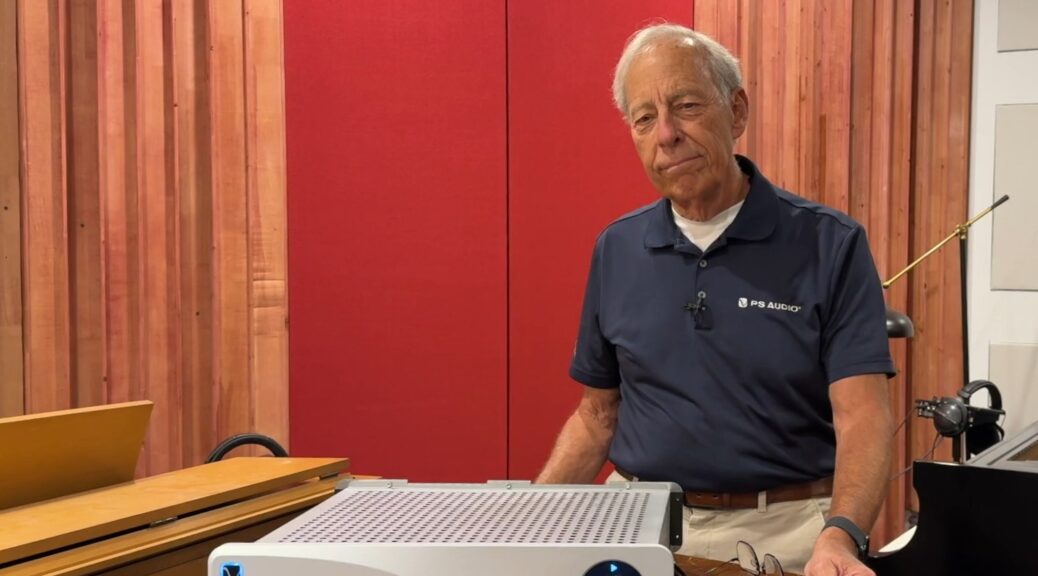
CDs played through the PMG Signature SACD Transport come closer than ever to high-resolution PCM and DSD, uncovering new layers of dimensionality, soundstage, depth, and musicality previously unobtainable in other optical readers or server-based audio systems.
What is a Transport?
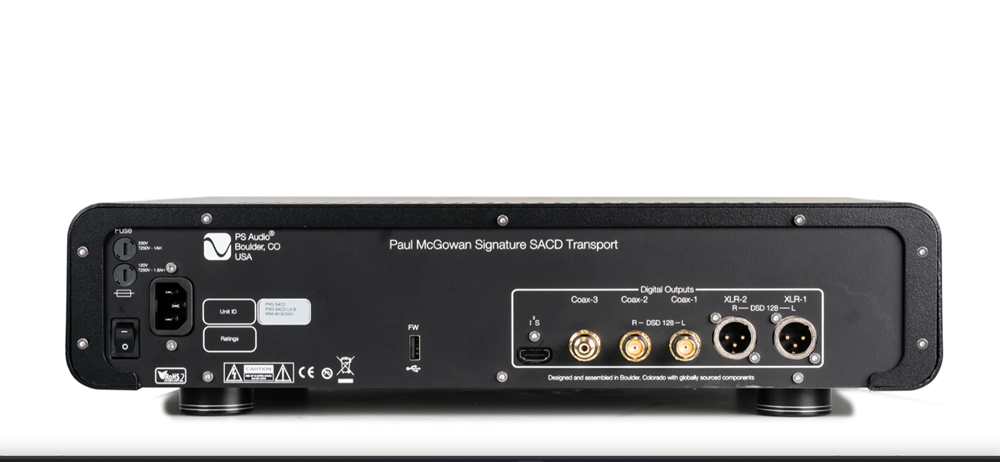
Like its predecessor (the PerfectWave SACD Transport) the PMG Signature opens the long-restricted DSD layer of SACD to PS Audio DACs. The PMG will deliver the raw DSD layer of copyright-protected SACD directly into your PS Audio DAC through I²S. This means that you’ll uncover the wealth of audio’s finest digital medium, DSD, and hear exactly what the mastering engineers who created these discs have enjoyed all along. Hear what you’ve been missing with the PMG Signature SACD Transport.
PMG Signature SACD Transport
Locked inside your CD and SACD collection is a treasure trove of music you’ve never truly heard. How do we know? Because PMG, like you, know every note of our reference discs—and we were stunned when we heard them through the new PMG Signature SACD Transport. This isn’t just another player. It’s the finest optical disc transport we’ve built in 43 years, and for the first time in our history, our founder has signed his name to it.
The PMG Signature SACD Transport is an engineering triumph, designed to extract every nuance and detail from your CDs and SACDs with unmatched precision. With galvanically isolated outputs and ultra-low jitter design, it breathes new life into your CD collection when paired with any DAC. And when connected via I²S, it unlocks the raw DSD layer of your SACDs—delivering what was once hidden to external DACs. This is not nostalgia. This is revelation. The PMG Signature SACD Transport is the ultimate disc playback system—worthy of the name, and the legacy.
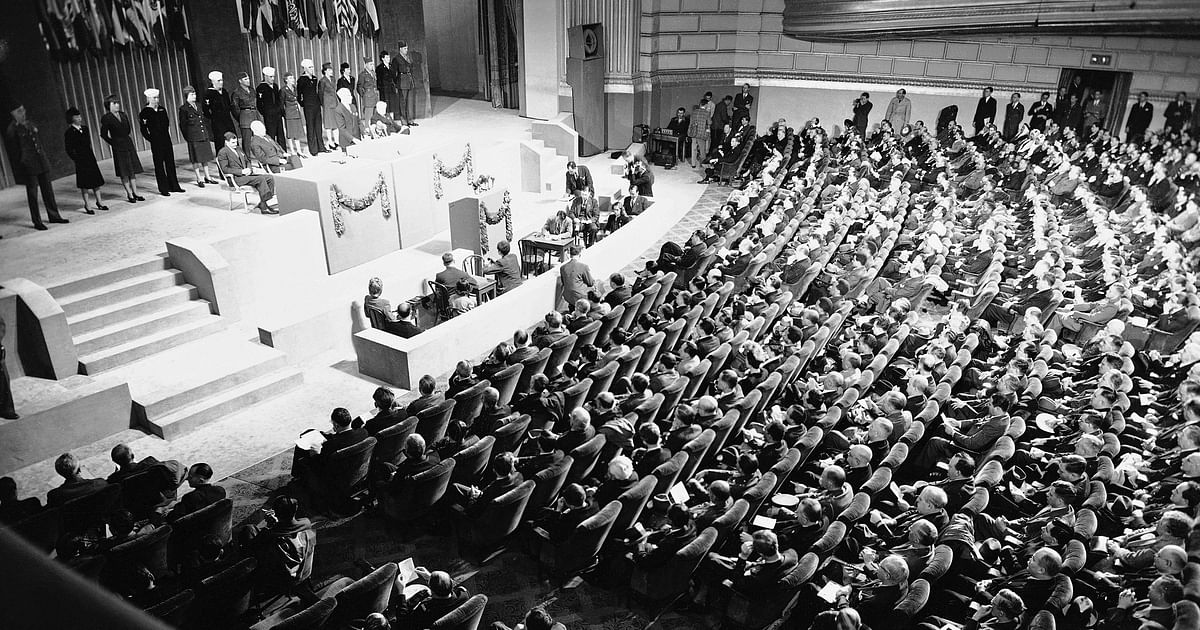
Earlier this month marked the 80th session of the United Nations General Assembly (UNGA80), which opened on September 9, 2025. UNGA High-Level Week also took place this week and ends today, when leaders from around the world will gather in New York City.
The 80th Anniversary of the founding of the UN is an opportunity to return the organization back to its founding mission of promoting peace and security around the world. This year the United States is prioritizing three themes through their engagement at the United Nations: Peace, Sovereignty, and Liberty.
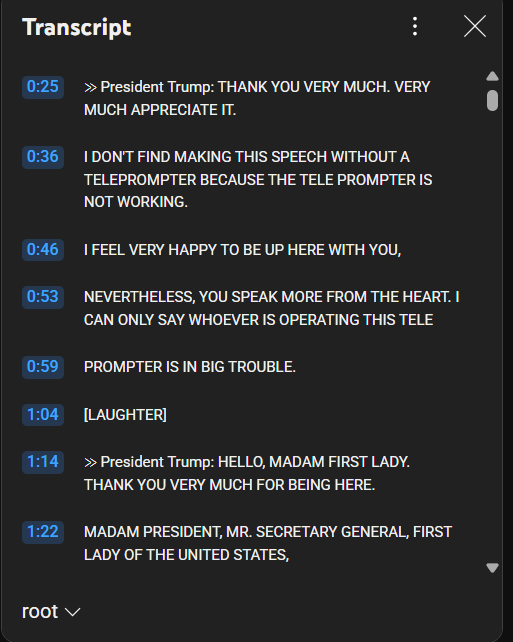
“POURING IN OVER FOUR YEARS OF THE INCOMPETENT BIDEN ADMINISTRATION AND NOW WE HAVE IT STOPPED, TOTALLY STOPPED. IN FACT, THEY’RE NOT EVEN COMING BECAUSE THEY KNOW THEY CAN’T GET THROUGH. BUT WHAT TOOK PLACE IS TOTALLY UNACCEPTABLE. THE U.N. SUPPOSED TO STOP INVASIONS NOT CREATE THEM AND NOT FINANCE THEM.
IN THE UNITED STATES, WE REJECT THE UNITED STATES MASS NUMBERS OF PEOPLE FROM FOREIGN LANDS CAN BE PERMITTED TO TRAVEL HALFWAY AROUND THE WORLD, TRAMPLE OUR BORDERS, CAUSE CRIME AND DEPLETE OUR SOCIAL SAFETY NET. WE HAVE REASSERTED THAT AMERICA BELONGS TO THE AMERICAN PEOPLE AND I ENCOURAGE ALL COUNTRIES TO TAKE THEIR OWN STANCE IN DEFENSE OF THEIR CITIZENS, AS WELL. YOU HAVE TO DO THAT BECAUSE I SEE IT. I’M NOT MENTIONING NAMES, I SEE IT AND I COULD CALL EVERY SINGLE ONE OF THEM OUT, YOU ARE ENJOYING YOUR COUNTRIES, THEY ARE ENJOYING — BEING DESTROYED.
THEY ARE BEING BY ILLEGAL ALIENS LIKE NOBODY EVER SEEN BEFORE. ILLEGAL ALIENS ARE POURING IN AND NOBODY IS DOING ANYTHING TO CHANGE IT, TO GET THEM OUT. IT IS NOT SUSTAINABLE AND BECAUSE THEY CHOOSE TO BE POLITICALLY CORRECT, THEY ARE DOING ABSOLUTELY NOTHING ABOUT IT.” President Donald Trump
This article courtesy of the U.S. Department of State.
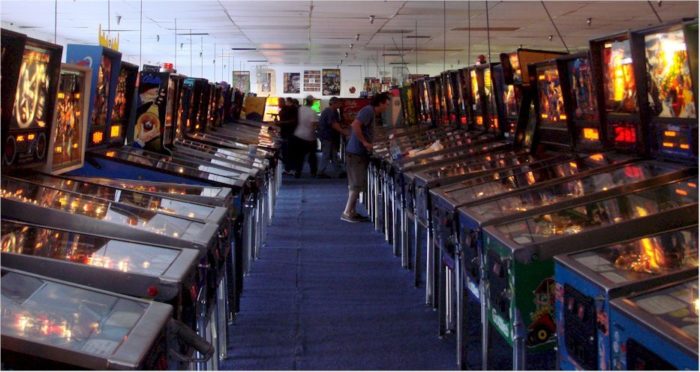
I was 7 years old in the mid-70’s, and the parents were carting myself and a few rep-team baseball buddies home from a game. They decided to stop at an old bowling alley in Burford, Ontario to get a bite to eat. I don’t remember what I ate, but what I’ll never forget was discovering that large cabinet standing on four metal peg-legs in the corner of the alley. Jutting up from the back was a headboard depicting brilliantly lit cartoon-like women with implausible breasts, silently calling out to me to come closer. My one baseball bud knew what it was all about. “Hey, do you want to play a game?” I most certainly did want to play a game. He dropped a quarter in the machine, pushed the credit button and the machine chugged to life. I’ll never forget my first game of pinball.
That moment started a lifetime love for me.
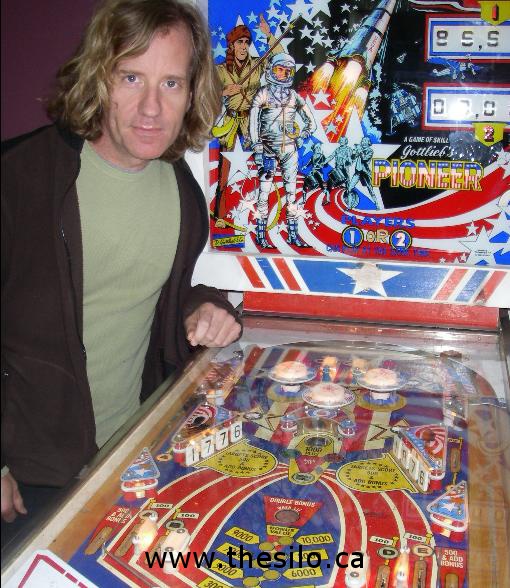
The number of hours spent chasing the silver ball in arcades, bowling alleys, laundromats and pizza parlours may have cost me a few grade points in school, but I developed into a very skillful player, winning cash prizes, a television, and my greatest tournament victory: a classic pinball machine which I now get to play at home. I even travelled to The World Pinball Championships in Pittsburgh to test my flipper prowess against the best, and found out I still had skills that I needed to work on!
Pinball kept pleasure and solace at never more than 25 cents away.
Nothing could clear my head and put me in the moment like releasing the plunger and sending that silver sphere jetting onto the playfield. What was going to happen this time? The nudge of the machine was its very own dance; enough pushing to alter the path of the ball, yet not so much that you might incur a disqualifying “tilt.” The immense satisfaction of a well-targeted flipper shot hitting the mark, the helpless feeling of a ball heading down the middle with maddening precision. The shrill clang of the bells, the churning of the scoring reels on the way to a free game. Man, there was nothing else like it. For the Silo, John McIntosh.
Have a hankering for some classic silver ball action? Check out these sites:
The Church of the Silver Ball is a warehouse of pinball machines in Mississauga open to the public to play. Check it out at www.thechurchofthesilverball.com
The Toronto Pinball League has game nights all across Southern Ontario in home arcades. Go to www.topl.orgfor info.
Want to play with the big boys? Check out PAPA, the home of The World Pinball Championships held each year in Pittsburgh www.papa.org/index.php
Artificial Intelligence (AI) has become an integral part of our daily lives, influencing everything from how we interact with technology to how businesses operate. But where did it all begin? Let’s take a journey through the early days of AI, exploring the key milestones that have shaped this fascinating field.
Today, AI is a rapidly evolving field with applications in various domains, including healthcare, finance, transportation, and entertainment. From virtual assistants like me, Microsoft Copilot, to autonomous vehicles and systems, AI continues to transform our world in profound ways.
A Copilot self generated image when queried “Show me what you look like”. CP
Conclusion
The journey of AI from its early conceptual stages to its current state is a testament to human ingenuity and perseverance. While the field has faced numerous challenges and setbacks, the progress made over the past few decades has been remarkable. As we look to the future, the potential for AI to further revolutionize our lives remains immense.
The Raketa Watch Factory in collaboration with the famous Moscow Sergey Obraztsov Puppet Theatre presents an exclusive watch model — Raketa Theatre. The limited series consists of 100 individually numbered pieces. Imagine it’s not just a watch, but a unique ticket to a special performance — where there are only 100 seats in the auditorium. Each watch is like a personalized theatre seat with an engraved number:
1/100, 2/100…100/100.
The dial of the model is inspired by the famous pediment clock that decorates the facade of the Sergey Obraztsov Puppet Theatre, where each hour corresponds to the figurine of an animal. Each figurine image has been reinterpreted by the Raketa’s designers in a modern avant-garde aesthetic and applied to the dial.
The restrained design of the Raketa Theatre watches is elegantly enhanced by three stylish accents: an avant-garde dial, multi-colored printing on the rotor, and contrasting stitching on the leather strap. These thoughtful details resonate with each other, creating a stricking balance of restraint and distinctiveness.
New time for the Sergey Obraztsov Puppet Theatre
The partnership with the Sergey Obraztsov Puppet Theatre goes beyond developing an exclusive watch model. Raketa specialists are also consulting the theatre on the restoration of its famous monumental facade clock. This project reflects the brand’s commitment to preserving cultural heritage and its tradition of incorporating art into watch movements.
Elena Bulukova, Director of the Sergey Obraztsov Puppet Theatre
“The clock is under restoration, but time at Obraztsov does not stand still. The clock’s characters have a new look now. Instead of becoming museum exhibits, they remain with us, as part of our living reality. This is how the living history of the puppet theatre continues”.
The art of appreciating time
For many people, the Sergey Obraztsov Puppet Theatre’s pediment clock is not just a mechanism but also a symbol of warm memories of the first time their parents brought them to meet fairy-tale characters. This tradition has become part of the personal history for thousands of families. Raketa’s new model is meant to bring back these touching moments, helping to lay the foundation for new traditions for future generations.
Made in Russia
The heart of the Raketa Theatre model is its automatic movement, manufactured from A to Z at the Raketa Watch Factory in St. Petersburg, one of the few watch manufacturers in the world that produces its own movements, relying on a base of Soviet-era production technology that passed down through generations.
Price
The cost is 3000 EUR (including VAT) / $4,876 CAD at time of posting . For the comfort of customers, Raketa watches are delivered worldwide free of charge by DHL directly up to the front door.
Specifications
Manufacture: Raketa Watch Factory (Saint-Petersburg)
Movement: Calibre: 2615
Functions: Automatic
Number of jewels: 24
Testing positions: 4
Average rate (s/d): 10+20
Average running time (h): 40
Frequency/hour: 18 / 2.5 Hz
Bi-directional automatic winding: Yes
Stopper of self-winding unit activated during manual winding: Yes
I graduated from the University of California at Berkeley about a decade ago with a degree in Mechanical Engineering. I received two job offers, one from SETI to work on high performance signal processing and the other from industry.
One does not simply walk away from SETI, so I had the pleasure of joining the Berkeley SETI Research Center (BSRC). I received a warm welcome and was promptly sent to West Virginia to help install a new SETI system at the Green Bank Telescope.
There was a steep learning curve, but I was fascinated by BSRC’s work and couldn’t wait to actually understand what was going on.
As it turns out, our group is looking to expand its computing power, providing the ability to look at more star systems with habitable planets, expand the involvement of volunteers and acquire larger volumes of data; in short, broaden the search and increase our chances of intercepting a signal. Now I’m working on setting up new servers, network hardware, and signal-processing systems at Green Bank. We’re hoping to get data flowing and recording soon, and make it available for the interested public.
From the 19th-century idea of drawing a giant Pythagorean triangle in the Siberian tundra to signal extraterrestrials, to our current collection of servers storing and analyzing data, it is not hard to see how much progress has already been made.
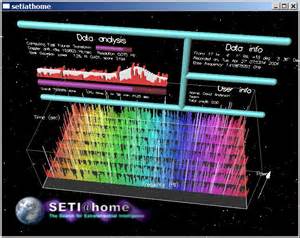
Running SETI software on your home computer looks like this.
Funding from the Breakthrough Initiatives is spawning new projects that would not have been otherwise possible. SETI@home is planning to work with Breakthrough Listen to collect and distribute data from the Green Bank and Parkes telescopes. However, in order to sustain the whole SETI@home effort we could still use support from our devoted SETI@home contributors.
Recently, I spent a day at the Bay Area Science Festival talking to kids and their adults. I was fascinated by just how stoked kids are about SETI. Some came with prepared questions and showed incredible curiosity and intelligence. The BSRC team is hoping to inspire kids to pursue science careers and I think searching for life beyond Earth is a great way to get them interested and involved. I hope you continue your support for this fascinating endeavor, and keep your eyes on the stars. For the Berkeley SETI Research Center team, Zuhra Abdurashidova.
Supplemental- via nemesis maturity YouTube channel
Wow Signal – Scientists say that if the signal came from extraterrestrials, they are likely to be an extremely advanced civilization, as the signal would have required a 2.2-gigawatt transmitter, vastly more powerful than any on Earth.
The signal bore the expected hallmarks of non-terrestrial and non-Solar System origin.
One summer night in 1977, Jerry Ehman, a volunteer for SETI, or the Search for Extraterrestrial Intelligence, may have become the first man ever to receive an intentional message from an alien world. Ehman was scanning radio waves from deep space, hoping to randomly come across a signal that bore the hallmarks of one that might be sent by intelligent aliens, when he saw his measurements spike.
The signal lasted for 72 seconds, the longest period of time it could possibly be measured by the array that Ehman was using. It was loud and appeared to have been transmitted from a place no human has gone before: in the constellation Sagittarius near a star called Tau Sagittarii, 122 light-years away.
All attempts to locate the signal again have failed, leading to much controversy and mystery about its origins and its meaning.
Joe Rogan’s car collection already includes a SharkWerks 997 GT3 RS, a 964 RS America, and a 993 Gunther Werks 911. Now, the comedian and podcast host has taken delivery of a custom-built Porsche 911 RSR tribute from The RSR Project. Nicknamed Silver 2, the car is designed to echo Porsche’s early motorsport roots while offering upgraded performance for modern driving.
The Build Process
The project began with a galvanized 1985 Carrera tub, which was stripped down and reworked with steel flares and fiberglass panels to achieve the classic long-hood RSR profile. The body was finished in a glossy silver paint that recalls bare metal and paired with period touches such as a ducktail spoiler, fiberglass bumpers, and 15-inch Braid Fuchs wheels wrapped in Michelin TB15 vintage tires
Power and Engineering
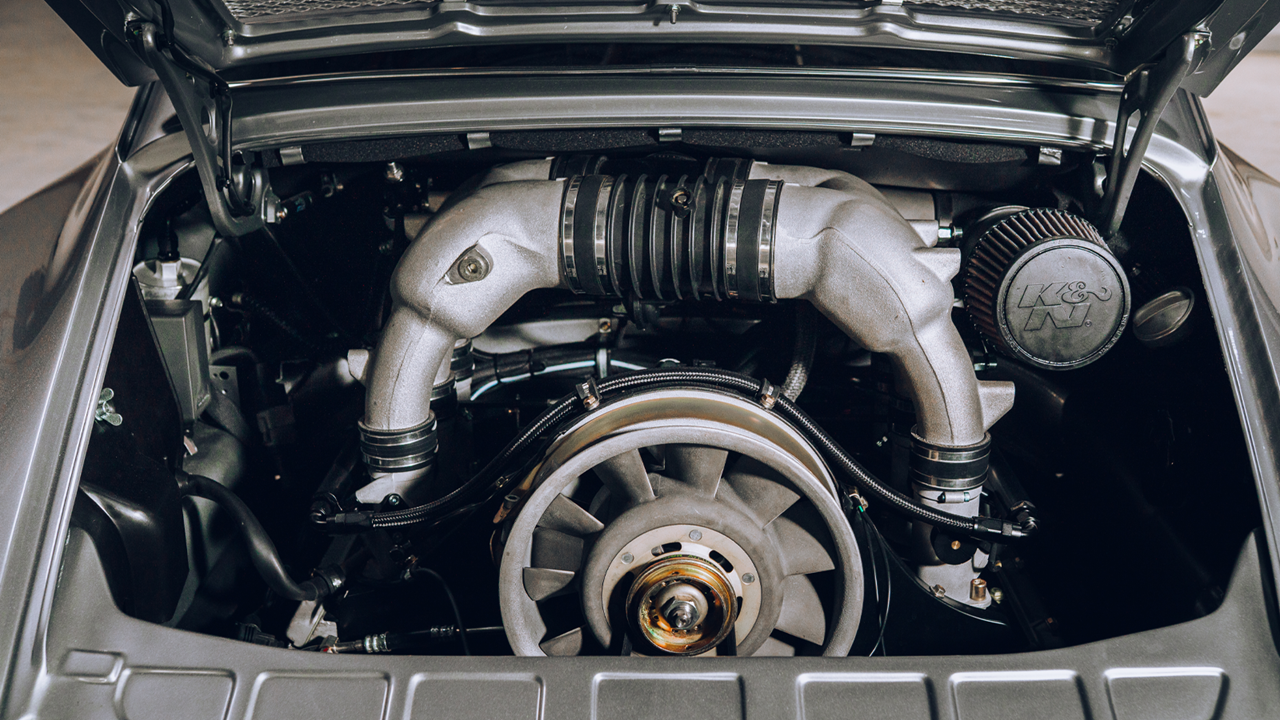
Founder Richard Schickman led the build, which included a complete mechanical overhaul. Rogan’s car is powered by a 3.5-liter flat-six producing 310 horsepower, equipped with twin-plug heads, GT3 intake plenum, Clewett Engineering throttle bodies, Elgin cams, Lucas injectors, and Bosch ignition components. The motor is controlled by an Emtron SL ECU and paired with a fully rebuilt transmission. Suspension and braking systems were also refreshed to meet both performance and reliability standards.
“Our goal with every build is to honor Porsche’s motorsport heritage while elevating performance to meet modern expectations,” Schickman explained.
Precision Rebuild Standards
Every RSR Project car undergoes a full teardown. Engines are disassembled, magnafluxed, and sonic cleaned, while rotating components are balanced to within a gram. Cylinder heads are resurfaced, valve guides replaced, and transmissions rebuilt with new synchros and seals. The result, according to the company, is a drivetrain that looks factory-new but performs with modern precision and durability.
Interior Details
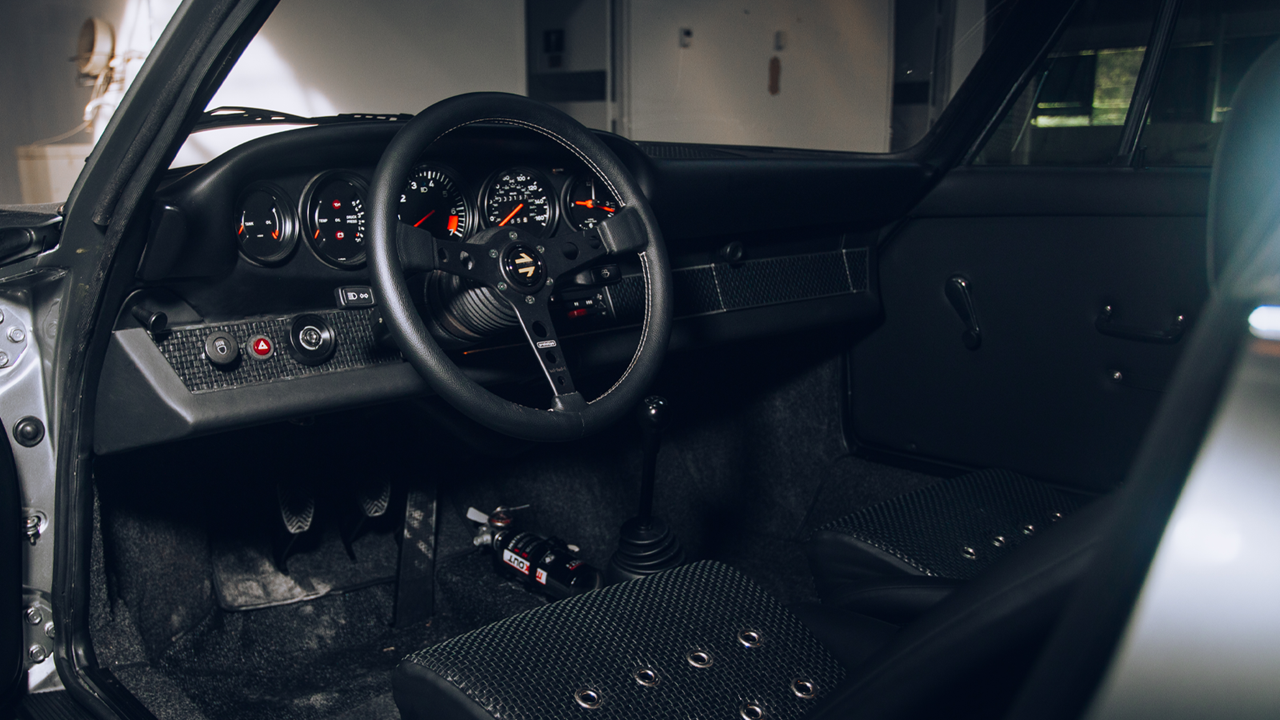
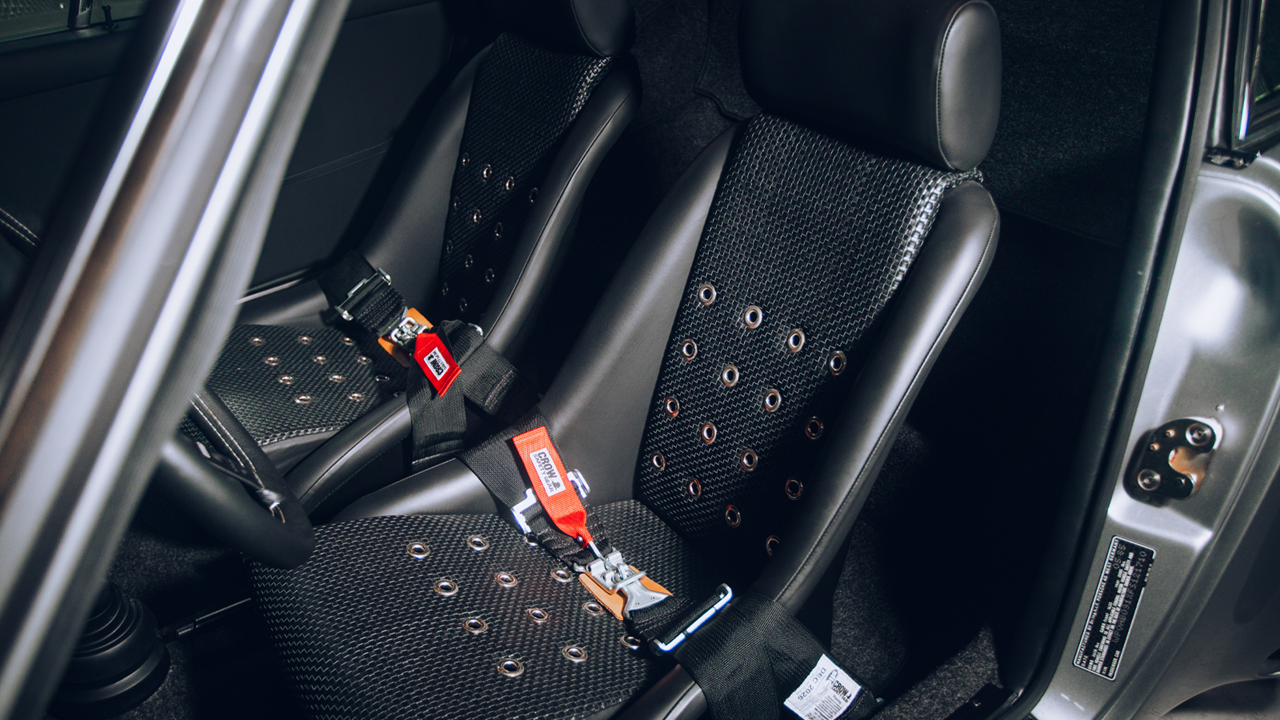
The interior follows the same philosophy of heritage blended with bespoke craftsmanship. Rogan’s build features black fixed-shell bucket seats trimmed in woven leather with nickel grommets, a nod to 1960s GT40s. The dashboard was replaced with a Porsche Classic unit, paired with RS-style door panels, lightweight Perlon carpeting, and a Momo Prototipo steering wheel. The minimalist approach is reinforced by details like pull straps, a radio block-off plate, and a Wevo short shifter.
Rogan declined extras like a sound system, opting instead for a stripped-down cabin that celebrates Porsche’s racing DNA. The only modern concession is an electric air conditioning system.
Road-Proven Performance
The RSR Project emphasizes that its cars are built for driving, not static display. Rogan’s Porsche underwent more than 700 miles of testing before delivery to ensure reliability and fine-tuned performance. As Schickman noted, “Every RSR we create is built to be driven and enjoyed thoroughly.”
Time and Cost of an RSR Build
Building a Porsche to this level is a significant undertaking. Each project typically requires 12 to 18 months to complete, with prices starting at $375,000 usd/ $516,750 cad (at time of posting). Clients can select additional options such as upgraded engines, modernized braking systems, and electric air conditioning. Earlier in the year, the company also unveiled RSR Project No. 21, a Signal Orange homage to the 1973 Rennsport Rennwagen.
Egloo, an Italian design studio known for eco-friendly home innovations. has just introduced ‘Tornado’, their latest bioethanol fireplace that combines sustainable design with modern functionality.
Tornado Highlights: • Innovative Design: hypnotic spinning flame in a sleek ceramic body, a unique centerpiece for any space. • Eco-Friendly: runs on clean-burning bioethanol, requiring no chimney or electricity. • Made in Italy: handcrafted in premium terracotta by skilled artisans.
Tornado will intrigue design-conscious and sustainability-minded people. Its blend of innovation, style, and eco-friendly functionality represents Egloo’s commitment to redefining home comfort in a greener way.
🔥 500% more heat
🌀 Spinning Flame Design
🍃 Bioethanol Powered
🇮🇹 Italian Craftsmanship
🏡 Indoor/Outdoor Versatility
👃 Aromatic Diffuser
🖼 Decor Statement Piece
🔒 Safe Operation
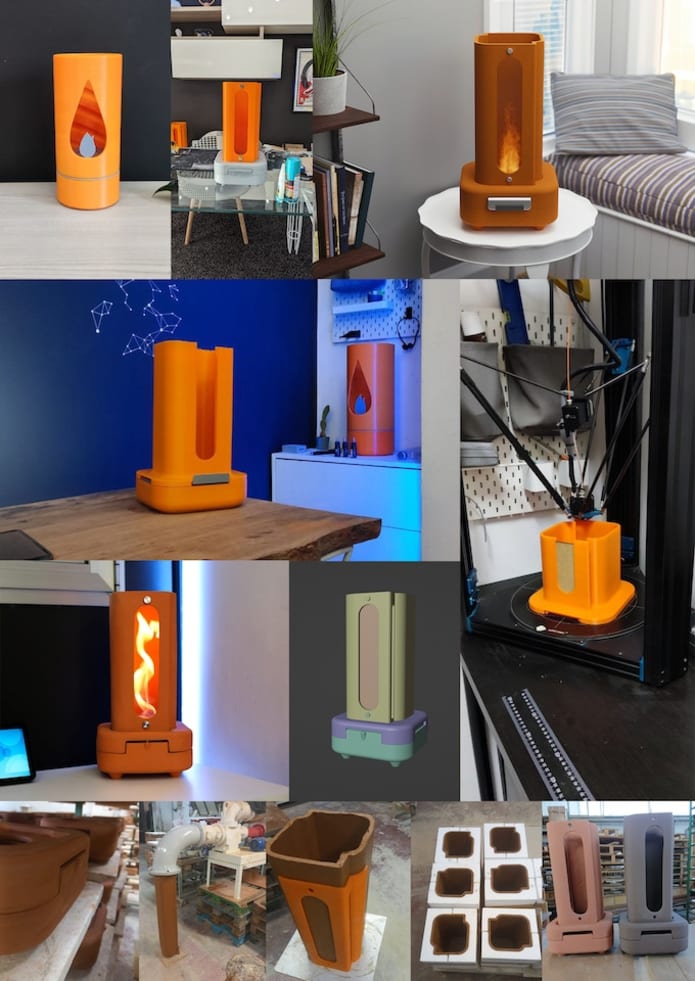
The design process commenced with identifying a dual objective: an efficient, eco-friendly heater that’s also a visual masterpiece. To bring this vision to life, Igloo leveraged the most advanced design tools available: 3D modeling allowed them to visualize and perfect every curve and contour, while 3D printing facilitated rapid prototyping and iterative refinement.
Specialist thermodynamics software was employed to ensure that when combined with terracotta, the bioethanol-fueled flame wasn’t just mesmerizing but also 500% more potent than conventional heaters. The result is Tornado, a testament to how traditional materials can be elevated through modern design methodologies.
September 2025 – Canada’s immigration policy continues to move in the wrong direction and requires a fundamental course correction, according to a new Communiqué from the C.D. Howe Institute’s Immigration Targets Council.
In “Immigration Policy Still in Need of a Course Correction,” the Council – composed of leading academics and policy experts – stresses that who is selected matters more than meeting numeric targets. They determined that immigration should be guided by human capital and long-term prosperity, not short-term labour market fixes or non-economic objectives. Notably, members also emphasized the importance of transparent, predictable policy that ensures economic immigrants have strong skills, earnings potential, and integration prospects.
Second Meeting of the C.D. Howe Institute Immigration Targets Council
The C.D. Howe Institute Immigration Targets Council held its second meeting on August 26, 2025, bringing together leading academics and policy experts to provide recommendations on Canada’s immigration-level targets and system design.1
Members agreed that Canada’s immigration policy has moved in the wrong direction and needs a fundamental course correction. Members stressed that the labour market skills and earnings potential of immigrants – both temporary and permanent – matter more than meeting numeric targets. Immigration policy should raise average human capital, rather than focusing narrowly on filling short-term labour market gaps, which prevents wage increases and capital investment to enhance productivity, or meeting non-economic objectives such as increasing Francophone immigration outside Quebec. Policy should also be transparent, predictable, and oriented toward long-term prosperity, ensuring that economic immigrants have strong skills, earnings potential, and integration prospects.
Building on these principles, the Council recommended annual permanent resident admissions of 365,000 in 2026, 360,000 in 2027, and 350,000 in 2028, reflecting the Council’s median votes. For 2026, this recommendation is modestly below the government’s current target of 380,000. Some members favoured a gradual reduction over three years to return to historical norms, while others supported higher levels to ease transitions from the non-permanent resident (NPR) population.
The group also raised serious concerns about the rapid growth and complexity of the NPR (Non permanent residency) population, as well as persistent challenges in the asylum system.
Members emphasized the importance of clear guardrails for the NPR population, recommending that the government maintain a ceiling of 5 percent of Canada’s population for NPRs in 2026, with a review in early 2027. They noted that the optimal NPR share requires balancing inflows, outflows, and clear pathways for temporary residents employed in high-skill occupations to transition to permanent residency, using objective criteria such as earnings. Improving efficiency in the asylum system was viewed as critical to protect genuine claimants and reduce pressures on the broader immigration system, since many currently see asylum as a pathway to permanent residency.
The Council further agreed that immigration programs require substantial reforms.
Regarding temporary immigration, members expressed concern that the international student system has become a pathway for low-wage labour rather than a means of attracting top global talent. They recommended higher admission standards, stronger language and academic requirements, limits on off-campus work, and stronger federal oversight to ensure only high-quality institutions and programs are eligible. Similarly, the Temporary Foreign Worker Program should be scaled back and not be used as a substitute for raising wages or improving working conditions, since relying on temporary workers can reduce employers’ incentives to offer better pay or workplace standards. Reducing reliance on low-skilled temporary workers – except in sectors such as agriculture, where transitions take time – was viewed by the group as essential to encourage productivity growth and higher wages for Canadian workers.
For permanent immigration, members were critical of the proliferation of boutique pathways in the economic class, such as category-based selection – targeted draws from the Express Entry pool based on specific attributes like occupation or language – and provincial nominee programs that prioritize lower-skilled workers, which allow provinces and territories to nominate candidates to meet regional labour market needs. They highlighted the need to simplify and strengthen the selection mechanism and agreed that Canada should move toward a single, transparent system centred on Express Entry and the Comprehensive Ranking System (CRS), a points-based tool used to assess, score, and rank candidates in the pool. They supported a human-capital-based model for economic principal applicants, which evaluates individuals on their education, work experience, and language ability, with a revised CRS that places greater weight on predictors of long-term success. New criteria should include the field of study for all applicants and verified earnings in Canada for those with prior Canadian experience. All economic principal applicants, they stressed, should be required to meet the CRS threshold. Members also agreed that these reforms – across temporary and permanent immigration programs, together with improving the integrity of the asylum system – are essential to reducing the size of the non-permanent resident population.
In addition, members highlighted the importance of fast-track pathways and policies to attract top-tier global talent. They called for stronger federal–provincial coordination and targeted initiatives to recruit individuals with extraordinary achievements in fields with lasting impact, such as science, medicine, and artificial intelligence. For high-profile research leaders, this should include pathways that allow them to bring their teams. Attracting such talent, they noted, requires not only immigration pathways but also the infrastructure and support that world-class research demands.
In conclusion, the Council emphasized the urgent need to restore a principled and sustainable immigration policy. By focusing on raising human capital, maintaining guardrails on the non-permanent resident population, addressing weaknesses in the asylum system, and reforming the economic immigration system, Canada can ensure that immigration contributes to long-term prosperity and sustains public confidence.
Members of the C.D. Howe Institute Immigration Targets Council:
Members participate in their personal capacities, and the views collectively expressed do not represent those of any individual, institution, or client.
Convener:
• Parisa Mahboubi, C.D. Howe Institute
Members:
• Don Drummond, Queen’s University
• Pierre Fortin, Université du Québec à Montréal
• David Green, University of British Columbia
• Daniel Hiebert, University of British Columbia
• Michael Haan, Western University
• Jason Kenney, Bennett Jones LLP
• Mikal Skuterud, University of Waterloo
• Christopher Worswick, Carleton University
• Donald Wright, C.D. Howe Institute and Global Public Affairs
If you are like me- someone who has drunk much more than one coffee in your life, you might be interested in pondering this question: Why do you think the multi-billion-dollar global coffee industry can be a losing business for the growers, whose hands till the land from where coffee starts?
In fact, if you drink 2 cups of coffee a day for one year, you’ll be spending more than the annual income of the coffee farmer in a developing country. To help present to fellow North American coffee drinkers this huge disparity between the farmer and the other key players across the coffee value chain, take a look at the infographic below.
Considering that North America is the biggest coffee consumer in the world, we can make a big dent by supporting the fair trade advocacy that ensures farmers get paid properly. Take a look at the infographic again. It describes how coffee is made from the farm to the mill, to the roasting plant and all the way to the consumer. Here are some of its highlights that show the bigness of this industry:
– 100 M people depend on coffee for livelihood; 25 M of which are farmers
– The U.S. spent 18 B for coffee yearly, equivalent to Bosnia’s GDP
– Coffee is the second most globally traded commodity after petroleum
For the Silo, Alex Hillsberg Web Journalist
Supplemental- How North Americans can help the #fairtrade program
Roughly once a month, I visit an artist’s studio for the ongoing series Studio Visits. I take iPhone photos of the corners and nooks of their studio, offering a more intimate look into a practice that usually takes place behind closed doors. I’ve said it before, and I’ll say it again: it’s such a gift to be invited into an artist’s studio, which often doubles as a kind of sanctuary for them.I don’t often visit photographers’ studios.
This changed a couple of weeks ago when I was invited to visit Suzy Lake at her studio in Toronto. I’m a huge fan of Lake, and I might have said as much a few times in our email correspondence, no doubt coming across as a crazed fan girl. But I’m a fan for good reason! An American-Canadian artist, Lake has been seminal in both countries for the last five decades. Her photographs combine self-portraiture and performance to comment on larger themes: political justice, the role of an artist, feminism, and aging.
She played a foundational role in shaping Conceptualism in Canada. There’s so much to admire in Lake’s career, and the work itself is equally compelling. So here I am, at Lake’s studio, one of the foremost photographers in Canada, and I am taking pictures. As you can imagine, I am very self-conscious. I start clicking away on my iPhone, no doubt diminishing the medium with my lack of artistic ability. (Of course, this series isn’t about the photos themselves, but a desire to document and archive important artist practices.)
For Lake, the act of photographing is important. The images are complex and layered. The photograph doesn’t happen the moment the shutter clicks, but in the process, creation, and performance that spans the duration of the photograph.For example, in her seminal series, Extended Breathing (2008-14) [see image below], Lake stands still for long enough to be picked up by the long exposure—at least 30 minutes. These photographs become touchstones for how we are remembered, the self as a constant, as life moves around us. Lake is asserting agency over the medium, conveying a powerful message through process.
Artist Bio: Suzy Lake is an American-Canadian artist based in Toronto, Canada. Lake’s work explores the politics of body and identity through performance, video and photography. Her later work addresses the ageing body, questioning structures of power politically and poetically. Lake’s work has been presented extensively across Canada and internationally at the Centre Pompidou-Metz, Museum of Modern Art (New York), Metropolitan Museum of Art (New York), National Gallery of Canada (Ottawa), Brandhorst Museum (Munich), Montreal Museum of Fine Arts, Vancouver Art Gallery, Hayward Gallery (London), Santa Monica Museum of Art, Los Angeles Museum of Contemporary Art, the Musée d’art contemporain de Montréal, and the Art Gallery of Windsor.
For the Silo, Tatum Dooley.
Featured image- Suzy-Lake_1983_Pre-Resolution_Using-the-Ordinances-at-Hand
Considered by many to be The Holy Grail of Polyphonic Synthesis, this meticulously refurbished Oberheim FVS-1 took 88 hours of skilled vintage synth tech time via our friends at tonetweakers to perfect. The FVS-1 contains 4 classic Oberheim SEM modules, each providing a single dual oscillator voice. Sounds are dialed in manually on each module, with global control over the most tweaked parameters via the programmer module, where patches are also saved and recalled. Since each SEM is manually adjusted, it’s hard to get them sounding exactly the same. The result is a much more organic, slightly detuned, richer, truly magical sound than you’d get out of most other poly synths.
Famous users include Lyle Mays, 808 State, Depeche Mode, Styx, Pink Floyd, The Shamen, Gary Wright, Joe Zawinul and John Carpenter (yep the film director of The Thing, Big Trouble in Little China, Starman, Escape From New York and other classics often composed and recorded music for his movies). You won’t find a better example of this beautiful classic synthesizer, so if you’re looking for an exceptional 4 voice, now’s the time. Visit our friends at tonetweakers.com to learn more.
The OB Four Voice contains 4 SEMs and a mixer module. This beautiful instrument can play up to 8 oscillators at once, for insanely humongous sounds.
One of the first
The 4 voice was one of the first polyphonic synths. Each of the four Synthesizer Expander Modules ( SEM ) can be assigned to a different note. Splitting voices between modules is also possible, as is a monophonic unison mode. A single voice is surprisingly powerful, offering 2 oscillators, 2 envelopes (1 for filter, 1 for volume), an LFO, pulse width modulation and a real sweet multimode filter with sweep-able mode (which few synths offered). The programmer module allows fast saving and recall of programmed sounds. With a combined 8 oscillators, these sound unbelievably fat. Even a single SEM sounds great. In unison mode, play all VCOs on one key for one of the most powerful vintage synth sounds ever. Nothing sounds like it to us and we’ve played everything. This is a personal favorite. This FVS-1 has the standard configuration of modules: 4 x Synthesizer Expander Module ( SEM ) Keyboard Output module Polyphonic Keyboard module Programmer module.
No clangs or zaps
If you are an analog synth head who makes musical sounds, you need one of these. To avoid disappointment though, we would recommend anyone looking for a dedicated sound effects machine to go for something else. This 4 voice is fabulous at musical tones and can make some interesting sound effects but there are better choices for clangs, zaps, explosions and similar atonal timbres.
Other famous users include: Joe Zawinul, Chick Corea, Larry Fast (Synergy), Jan Hammer, Herbie Hancock, Human League, Michael McDonald / Doobie Brothers, Patrick Moraz, Steve Porcaro, The Shamen, Tim Simenon, Depeche Mode, Vince Clarke / Erasure, Tangerine Dream, Stevie Wonder and many other influential musicians who could afford one – this was a very expensive instrument when it came out!
Did you know that, every year, home renovation projects are derailed by hidden costs, vague language, and inconsistent contractor bids—pushing 78% of jobs over budget and forcing two-thirds of homeowners into debt? It’s not just homeowners who feel the pain: contractors, property managers, real estate agents, investors, and flippers all struggle to assess and compare bids quickly and accurately.
The problem is that contractor quotes are rarely “apples to apples,” often missing critical details or disguising inflated charges—making it hard to identify true scope, cost, and risk. Now, the free-to-use and industry first BidCompareAI tool analyzes and compares multiple contractor bids, instantly identifying missing scope items, unrealistic allowances and other red flags before any work begins … often with tens of thousands of dollars on the line. In minutes, the AI generates a clear, line-by-line report that standardizes bids into transparent, actionable insights—helping homeowners avoid costly overruns, while enabling industry pros to quote with confidence, negotiate smarter, close deals faster, and protect ROI. Interest in this innovation raising industry transparency standards?
AI Reveals These Top 10 Home Renovation Bid Red Flags
First-of-its-kind free AI tool turns confusing, inconsistent contractor bids into clear, side-by-side insights—helping homeowners avoid costly overruns and enabling industry pros to quote, negotiate and close with confidence
Renovations are one of the most expensive and stressful decisions a homeowner makes. Yet 78% of projects blow their budgets, and 2 in 3 homeowners go into debt just to pay for them. Why? Because contractor bids are often riddled with hidden costs, vague language, and missing work that leave you paying more than you bargained for. Thankfully, new AI technology is now making these red flags impossible to ignore—saving homeowners thousands before a hammer is even swung. BidCompareAI is the first-ever AI tool that lets homeowners upload multiple bids and get a fast, detailed report comparing scope, pricing, and red flags—no construction expertise needed and no signup or payment required.
“Homeowners have been forced to make major financial decisions based on unclear or incomplete bids,” says GreatBuildz Co-CEO Jon Grishpul. “BidCompareAI adds instant transparency and clarity—saving people from costly mistakes before a project even starts. For contractors, property managers, and real estate professionals, it’s a credibility and efficiency tool that streamlines communication, builds trust and helps win more business.”
Here are the top 10 red flags often hiding in contractor bids, and how the BidCompareAI tool reveals them instantly:
1. Missing Scope Items — “Surprise” Costs Waiting to Blow Your Budget
Your contractor’s quote doesn’t include demolition, cleanup, or critical tasks? That’s a ticking time bomb. Now, homeowners can catch these omissions so you never get hit with surprise charges.
2. Vague Allowances — The Fine Print That Drains Your Wallet
Ambiguous line items like “fixtures” or “materials” can mean anything. The AI tool flags vague terms so you can demand specifics upfront.
3. Unrealistically Low Bids — Too Good to Be True? Usually Are
Low-ball bids often mean corners will be cut or costs will balloon later. This AI exposes these dangerously low estimates before you get stuck with change orders.
4. Pricing Inconsistencies — Comparing Apples to Oranges?
Quotes come in all formats with wildly different terminology. This advanced technology standardizes and compares them side-by-side, so you’re not left guessing.
5. Hidden Fees — The Black Box of Renovation Budgets
Permits, procurement, and labor fees sometimes get lumped in mysteriously. The AI reveals these “hidden” charges clearly in its summary report.
6. Overlapping or Duplicate Charges — Paying Twice Without Knowing It
Some bids unknowingly charge for the same work twice. The AI delivers a line-by-line analysis that spots these costly errors fast.
7. Unclear Project Timelines — When Delays Lead to Extra Costs
Vague or missing timelines can spiral into costly delays. While timelines aren’t priced, spotting missing info helps you demand accountability.
8. Missing Cleanup and Disposal — Don’t Get Stuck with the Mess
Quotes that don’t include cleanup leave you responsible for hauling debris and disposing of waste. This AI highlights these crucial omissions.
9. Discrepancies in Material Quality — Low-Quality Where You Expected Premium
One bid may specify high-end fixtures while another hides “allowances” that could mean anything. The AI tool flags these differences so you know exactly what you’re paying for.
10. Inconsistent Labor Charges — Watch for Inflated or Unexplained Fees
Labor costs vary widely, and some bids overcharge or include unnecessary markups. This user-friendly technology points out these red flags clearly.
“This is about more than just tech,” added Paul Dashevsky, Co-CEO of GreatBuildz. “It’s about empowering homeowners to feel confident and in control of their renovation projects—and helping contractors better serve their clients.”
Renovations don’t have to be a financial nightmare. As consumer-facing AI tools proliferate across industries, the BidCompareAI innovation demonstrates how artificial intelligence can bring real-world value by making complex, high-stakes decisions—like selecting the right contractor—faster, clearer and far less stressful. For the Silo, Marsha Zorn.
Installation view of Man Ray: When Objects Dream, on view September 14,2025–February 1, 2026at The Metropolitan Museum of Art. Photo by Anna-Marie Kellen, Courtesy of our friends at The Met.
American artist Man Ray (1890–1976) was a visionary known for his radical experiments that pushed the limits of photography, painting, sculpture, and film. In the winter of 1921, he pioneered the rayograph, a new twist on a technique used to make photographs without a camera. By placing objects on or near a sheet of light-sensitive paper, which he exposed to light and developed, Man Ray turned recognizable subjects into wonderfully mysterious compositions.
Introduced in the period between Dada and Surrealism, the rayographs’ transformative, magical qualities led the poet Tristan Tzara to describe them as capturing the moments “when objects dream.”
The exhibition will be the first to situate this signature accomplishment in relation to Man Ray’s larger body of work of the 1910s and 1920s. Drawing from the collections of The Met and more than 50 U.S. and international lenders, the exhibition will feature approximately 60 rayographs and 100 paintings, objects, prints, drawings, films, and photographs—including some of the artist’s most iconic works—to highlight the central role of the rayograph in Man Ray’s boundary-breaking practice.
“Before my eyes an image began to form, not quite a simple silhouette of the objects as in a straight photograph, but distorted and refracted … In the morning I examined the results, pinning a couple of the Rayographs—as I decided to call them—on the wall. They looked startlingly new and mysterious.” — Man Ray
The exhibition is made possible by the Barrie A. and Deedee Wigmore Foundation.
Major funding is provided by Linda Macklowe, the Horace W. Goldsmith Foundation, The Daniel and Estrellita Brodsky Foundation, The International Council of The Metropolitan Museum of Art, Andrea Krantz and Harvey Sawikin, and Schiaparelli.
Additional support is provided by the Vanguard Council.
The catalogue is made possible by the Mellon Foundation.
Additional support is provided by James Park, the Carol Shuster-Polakoff Family Foundation, and Sharon Wee and Tracy Fu.
Exhibition Catalog
Man Ray: When Objects Dream
This volume is the first in-depth study of Man Ray’s groundbreaking rayographs of the 1920s and their interconnections with his Dada and Surrealist works.
The “D” word. Stressful right? When your divorce is finally final, how will you begin again?
The transition can be liberating for some, daunting for others. Mixed feelings – anger, relief, sadness, joy, fear and uncertainty – are common and may take time to sort out.
Meanwhile, the clock on your new life is ticking, and regardless of your emotions, it is time for a freedom-inspired relaunch, says Jacqueline Newman, a Manhattan-based divorce lawyer and author of Soon To Be Ex: A Guide to Your Perfect Divorce & Relaunch (www.Jacquelinenewman.com).
The divorce proceedings – all the time spent with your attorney and in court, all the hours burned while considering highly emotional and financial factors, from the impact on your children to the division of assets – put a big part of your life on hold, not to mention a major strain on it. And now with the difficult process over, Newman says, it is important to focus on creating a brand new you.
“The last umpteen months have been about your kids, your ex, and your divorce,” says Newman, “thus, a little ‘me’ time is in order. Here is an opportunity to be free from having to answer to anyone but yourself. So live your life to its fullest.”
Newman’s message is that divorce does not have to be the worst thing that could have happened to you.
There are silver linings as you begin to take control of what you can, and she offers three tips on how to relaunch after a divorce.
• Treat yourself. Right out of the divorce gate, buy something meaningful for yourself. Lose the guilt your ex made you feel for spending on clothes or expensive shoes. Your gift could be something symbolic and therapeutic that fires a shot back at your ex. “I would absolutely recommend you buy yourself a divorce present of some kind,” Newman says. “You deserve it. One woman I represented was constantly mocked by her husband during their marriage for being flat-chested. It is easy to guess what she bought as soon as her cash payment cleared.”
• Embrace single hood. This does not mean you have to hug your first post-divorce dinner partner. It means embracing a new stage of discovery, with the different, interesting people you meet while dating becoming part of your growth. Newman recommends online dating as a way to “relearn how to date.” Many newly divorced people feel insecure about dating, but Newman suggests learning about people outside your comfort zone. And rather than trying to focus on finding Mr. or Mrs. Right, Newman says, “Give yourself some time to look around and meet different types of people. You may learn something that can broaden your perspective on life. If you can start seeing relationships not as the goal but as opportunities for growth, then you can start being more accepting with the outcome of each relationship.”
• Expand your freedom. Use your new windows of time to catch up with friends you have not seen. Newman recommends Facebook as an easy way to reconnect. On weekends when the ex has the kids, strengthen your friendship circle and broaden it. Explore and re-discover yourself. Pursue new hobbies or renew ones you did not have as much time for in marriage. Advance your career. “Your post-divorce life is offering you a chance to go after the promotion you have been dreaming about,” Newman says.
By doing the things you long wanted to do, you can find the new you.
“You are free to be who you are without judgment from a spouse,” Newman says, “and to do whatever you want. Learn to love yourself.” For the Silo, Cathy K. Hayes.
He listened to Mike Oldfield. He saw the pictures on the albums and he read about ‘this thing called a Fairlight’. Which raised Klaus’ curiosity about this ‘Computer Instrument’. Fellow keyboardists told him it was a mission impossible, getting your hands on one. But Klaus managed to find the holy grail…
‘To me, It’s still fresh. I can use the Fairlight to create sounds no one’s ever heard before.’
If we take a look at the history of popular musical style creation we see a common theme: new technology leads to new inventions leads to new possibilities for musicians and composers. Consider the evolution of the modern piano from its beginnings as a somewhat-limited-oft-out-of-tune harpsichord. Or the evolution of the electric guitar from the acoustic guitar- by adding an pickup to electronically capture sound, another inadvertent effect became possible: the ability to alter the signal and sound characteristic via electronic manipulation. Heavy Metal music would never have been possible without the distortion pedal, which itself is an evolution of overdriven mixing board input channels and later on- fuzz pedals.
The first fuzz pedal to hit the market was the Maestro Fuzz-Tone, which was launched in 1962. It was developed by engineer Glenn Snoddy in collaboration with Gibson Guitars.
Inspired by Grady Martin’s distorted bass, Glenn worked with Revis Hobbs to create a device that could replicate the sound consistently. Despite its clever design, the Maestro Fuzz-Tone wasn’t really liked by many musicians. They were unfamiliar with this new distorted sound and didn’t know how to use it into their music.
However, this all changed in 1965 when The Rolling Stones used it in their hit song “(I Can’t Get No) Satisfaction.” pedalplayers.com
In a similar way the Fairlight, the AKAI MPC, the EMU and other sampling based instruments allowed for extreme sound manipulation and even the creation of entirely new sounds leading to new techniques of musicianship and composition. Will we see another development to change the playing field? Is AI the next musical frontier?
”I was lucky enough to find a Series II, back in 2010. It’s quite a historical piece, for it used to belong to Synthesizer Studio Bonn, one of the only two Fairlight retailers in Germany. They bought it in 1982. It was their demo machine and It was kept in their shop until 1999. They went bankrupt, and the Fairlight was sold to a synth collector, who went bankrupt as well. He had to sell a lot of his equipment, including the Series II. I got it for a good price. But I do hope I won’t be the third one to go bankrupt.”
Klaus Himmelstein has been a music and science teacher on several German international schools for about twenty years now. He developed a special interest in electronic music, but originally he is a classically trained violin player. ”That’s how I started, at the age of 8. My parents took me to violin lessons, because they discovered I have perfect pitch hearing. I really love to play the violin and I still play it. Through the years, I got more and more interested in electronic instruments.”
Green screen, big box
”I remember getting my hands on a Yamaha DX7 for the first time, when I was about 12 years old. That was in 1986. I didn’t know what any of these knobs were for. I tried out the presets and I tried to tweak them, to get some other sounds out of it. Around that time period, I also heard about the Fairlight for the first time. I listened to Mike Oldfields’ albums and I read he was using a ‘Fairlight computer’. So I thought: ’What the hell is a Fairlight computer?’ And then, I figured out it was this funny machine with this keyboard and this green screen and a big box, pictured on some of his albums.”
He bought his first synth in 1991. ”A Roland D-5. Not to be confused with the famous D-50. The reason I bought it was because it is multitimbral. I already had an Atari ST computer. I used this set-up for making my first compositions. And, around that time, I started asking other keyboard players about the Fairlight. Some people didn’t know anything about it. But the people who knew about it, they’d be saying things like: ’Oh boy, that’s the holy grail…’, ’15.000 Deutsche Mark’, ’You won’t get your hands on one’ or ’That’s only for the big studios’. By the end of the nineties, Klaus had built himself quite a studio with a decent amount of vintage synthesizers. ”I started looking on eBay, checking for Fairlights. I’ve learned there are two types of Fairlight-ads: either the refurbished machines which cost a fortune, or just crap.”
Closing the deal
In 2010, an acquaintance of his – the guy from RetroSound, who publishes videos of pretty much every vintage synthesizer you can think of – notified Klaus there was a Fairlight for sale. “He knew I was looking for one, through my posts on forums. So one day, he sent me an e-mail. He knew there was one for sale, somewhere in the Eiffel area. A Series II, not in perfect condition, but good enough. He offered to put me in touch with the seller.
So, in the end, I went to this guy, checked it out, talked about the price and closed the deal. It was pretty easy going. I picked it up myself, for I don’t trust companies like UPS and DHL too much handling valuable packages. I had a huge car back in the day, a station wagon. I put lots of cushions and blankets in the back of the car. I wrapped it all up and drove back to my studio, which was located in the city of Münster. I set it all up and after that, people didn’t see me for quite some time, for I was in the studio all of the time.
I went through all the floppy disks. They contained a large collection of samples from Synthesizer Studio Bonn. They made their own samples, their own sounds. It was used for demo sessions. I checked out all the sounds; quite some unique stuff in there.”
Nothing like the real thing
”I was always fascinated by its sound. That was one of the reasons I wanted to have one. Not just for collecting purposes. I’m not treating it like some piece of history that sits in my studio, like some precious artefact, being polished every day. I really want to use it for making music.” Of course, it took some getting-used-to. Klaus: ”When you start to work with it, you’ll probably find out it’s quite difficult. For instance, the light pen isn’t as accurate as you think it might be; no drag ’n drop, no pull-down menu’s. But in the end, after a couple of days, I’ve found my way around it.
I also figured out, and this is a thing I learned from other users as well: after two or three hours working with the light pen, your arm gets really tired. And that CRT monitor, that green screen compared to todays monitors.… It isn’t too comfortable. But that sound, it makes it all worth while. I think the percussive sounds are the best in the world. And it’s that 8-bit sound… I don’t know why exactly, but I think it’s just the best. It’s unique. You don’t get that particular sound out of todays software. For instance, Arturia’s CMI V, it’s really nice, it’s a good reproduction. But if you want that original particular sound, there’s nothing like the original Fairlight CMI.”
Warm community
”I bought it back in 2010 and I have been using it ever since. It’s still in quite good condition, except for the CRT-monitor. It’s a little bubbly and not quite clear around the edges. But furthermore, the light pen is still working, one of the floppy drives still works, as well as the 8 voice cards. At the age of almost 40 years, it’s still a good machine. Together with Jean-Bernard Emond from France, I’ve made some modifications. For instance, we’ve replaced on of the floppy drives with an SSD-drive. Peter Wielk helped me out with one of the voice cards. I had a dead one. He had one in Australia, so he sent it to me.
I have two Emulators, and one of them just serves as a box of spare parts. I figured out there aren’t too many people familiair with repairing an Emulator. And it’s very, very difficult to get spare parts for it. With the Fairlight on the other hand, there’s a well grown community, pretty much world wide. You can get parts from France, from Australia, from the UK… There’s always someone somewhere in the world, with a great love for the instrument and lots of knowledge, who can help you out with any issue you might have.”
Inspirators
“In my studio, there are at least 25 keyboards and a whole lot of modules and other stuff. The Fairlight is a part of ’the orchestra.
I’m a big fan of Tangerine Dream, that is to say: their early work. Everything after about 1989 began to sound like pretty much everything else. They used cutting edge technology. But the funny thing is: they never used a Fairlight. According to Edgar Froese, they used a Synclavier, and Emulators. Their music comes close to what inspires me. Some people are comparing some of my work to Tangerine Dream. Others are saying it reminds them of Jean-Michel Jarre. The perception is quite different. I’m totally happy when people like my tracks. If they don’t? That’s fine with me. I’m working on my ideas and I’m enjoying the proces. That’s it. Sometimes, I get involved in some recordings, I made a couple of jingles for radio commercials and I once made a small movie score. Sometimes, I play keyboards and violin in bands. I’d prefer doing a little less teaching and a little more music production. The good thing about being a teacher: it’s a steady job. The bad thing about being a musician on the free market: you’re never sure of income. I prefer the more secure way. Teaching music actually is a lot of fun. Recently, we performed a few pieces with some students. I love teaching music to kids. But, I don’t take many of my synthesizers to school. My Moog Rogue is the only one I bring from time to time. They can tweak on pretty much every knob or slider; it doesn’t go out of order. But I’m not bringing the Fairlight to school. I don’t want to transport it too often.”
Final thoughts
“The Fairlight CMI, it’s a particular part of history. It has integrated sampling into modern music. Without the Fairlight, things would have happened totally differently. Back in the early 80’s, it was the latest thing to go on, the latest way to produce new kinds of music. I love that particular sound. For me, it’s still up to date. It’s not old-fashioned, it’s not vintage. For me, it is still fresh. In my opinion, I can use the Fairlight – as well as the Emulator – to create new and fresh sounds that have never been heard before. I’m convinced of that.” For the Silo, Mirjam van Kerkwijk/ Jarrod Barker. Read more about the Fairlight via For The Love Of The Fairlight . Have a fun Fairlight story to tell? Contact Mirjam at [email protected].


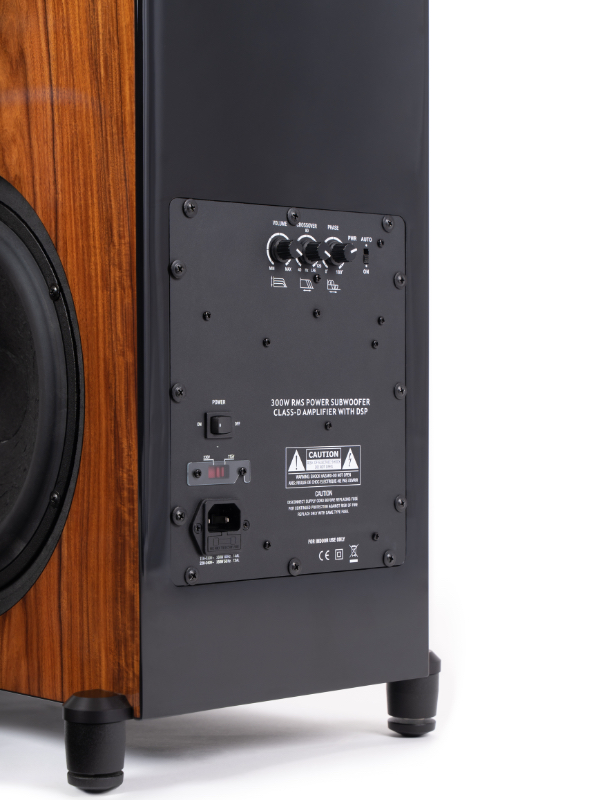
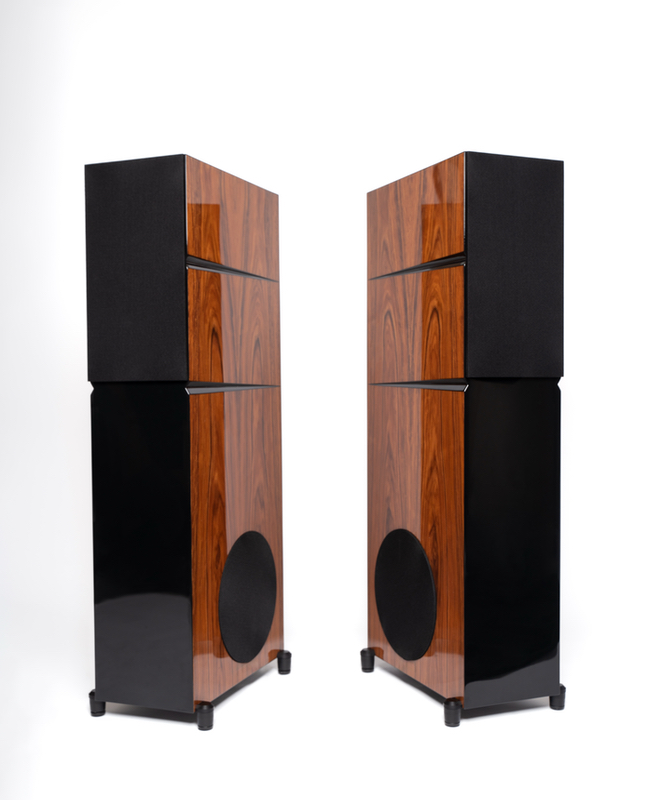




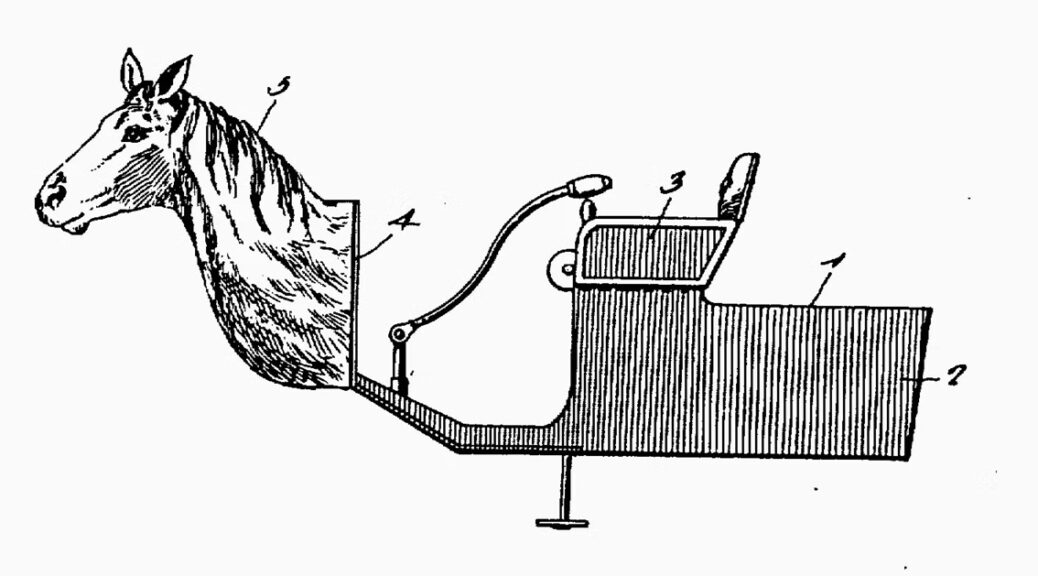

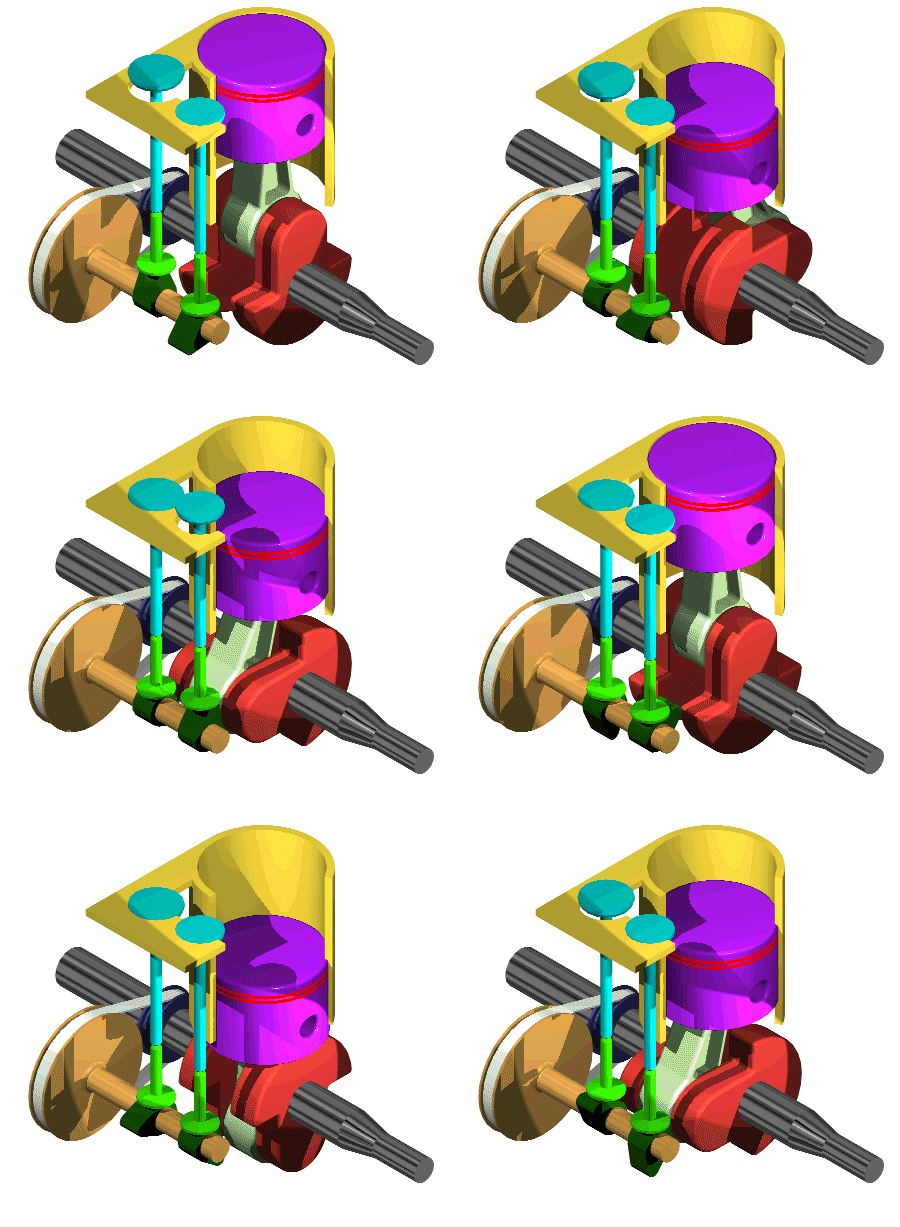






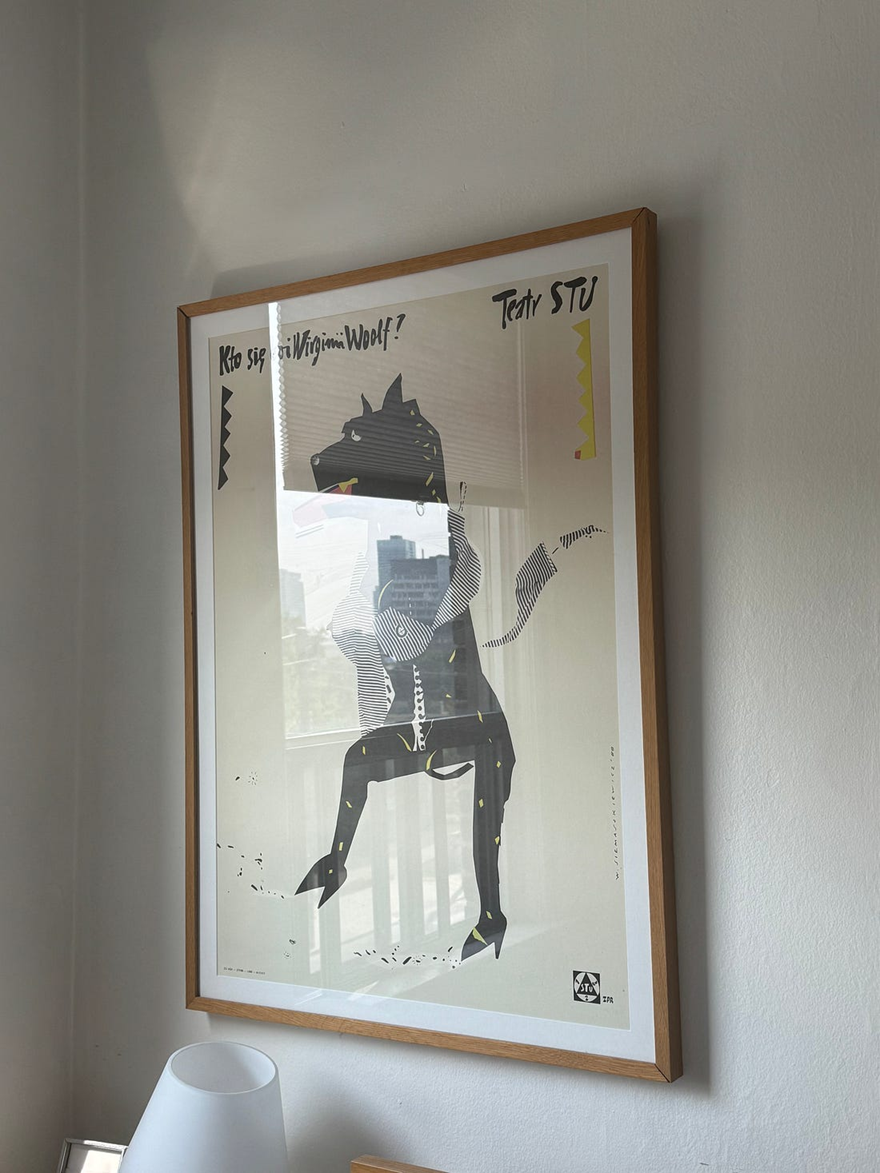


 Historical records reveal that missing persons have occurred in North America for hundreds of years and what connects these cases is both frightening and confusing. David has discovered geographical connections that include- national park locations, urban locations near bodies of water, boulder fields, mountain elevations and other seemingly ‘safe’ locations.
 David’s research has shown that oddly, many missing persons in these cases are highly intelligent and healthy individuals that include doctors, scientists and marathon runners. In other cases the victims are hunters or seasoned hikers- people who would actually be most likely to prevent outdoor mishaps.









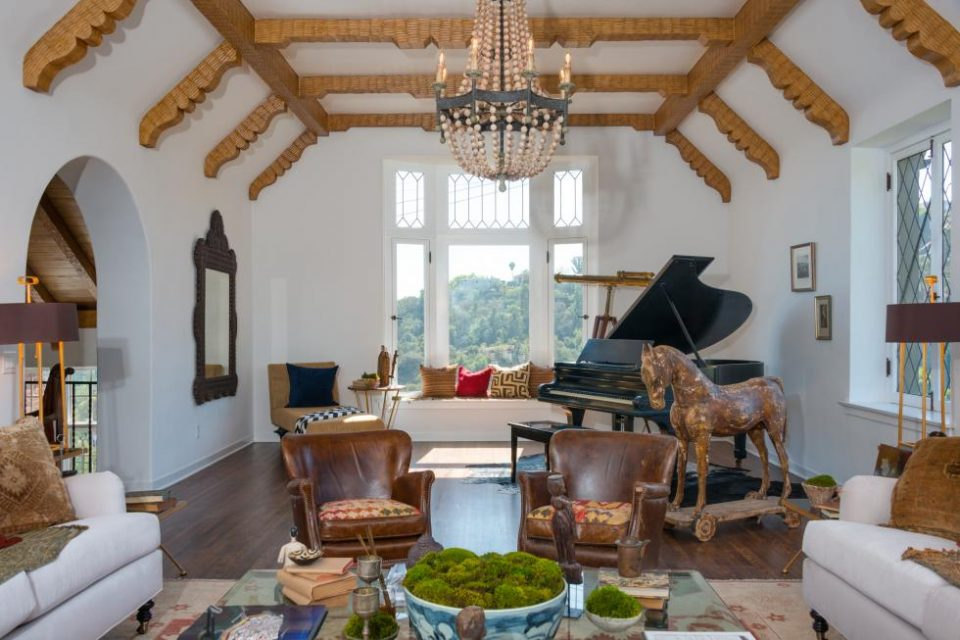









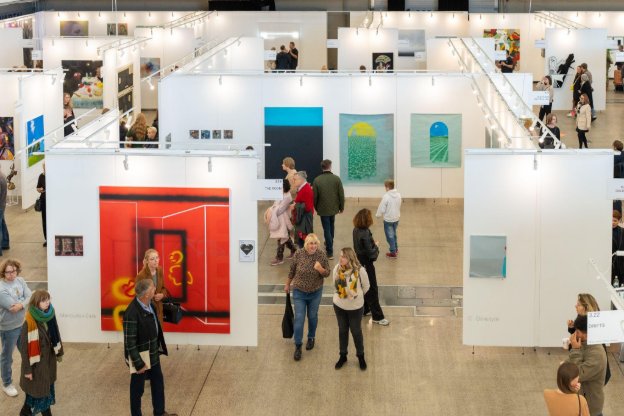 Art Fair ArtVilnius 2024. Photo by Andrej Vasilenko