This Aston Martin Virage Volante (available via our friends at ClassicDriver) is one of only 24 cars with both a works-engine upgrade from 5.3 to 6.3 liter and a wide body kit to handle the massive power increase to 465 PS. Furthermore, research suggests that it is also the only LHD-Virage 6.3 Wide Body equipped with a manual transmission.
When the Aston Martin Virage and its open-top Volante counterpart debuted at the close of the 1980s, they signaled a significant leap in performance over the outgoing V8 models. The secret ingredient was Tadek Marek’s robust 5.3-liter V8, which thanks to Callaway-designed cylinder heads and Weber-Marelli fuel injection pumped out 335 PS.
For customers who still demanded more, Aston Martin’s Works Service division offered an extraordinary factory-developed upgrade program.
On top of that was an enlarged 6.3-liter-V8, derived from the Group C racing car, that delivered 465 PS. To handle this monstrous power increase, Aston fitted the car with wider bodywork, a revised suspension, larger 18-inch wheels and ventilated AP Racing disc brakes.
Truly A One Off Car
This Virage Volante was originally built as a left-hand drive for its then German owner. It got its 6.3-liter-conversion in 1997, accompanied by the wide body installation and a re-spray in Porsche Midnight Blue. A package that elevates this only left-hand drive Virage with a manual transmission from an already exclusive Aston Martin to a truly one-off.
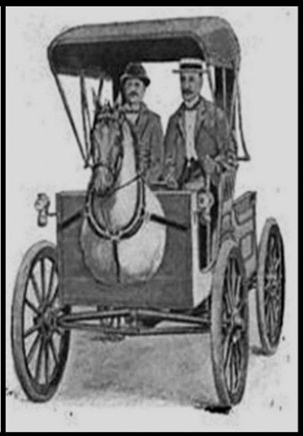
A horse and buggy. Excellent horse-power huh? People got tired of the nurturing it took to take care of a work horse. People wanted more and as with anything the need for something better fuels the spark for innovation. How about something to do work, but doesn’t need rest? Doesn’t need medication? Doesn’t need someone to shovel up its crap? Take this formula and you get the steam engine, not a crazy engine, but an engine none-the-less. Suddenly the glowing aura of potential is perceivable, right on the horizon. Now we can have multiple horse-power without the care. Still needed someone to shovel though.
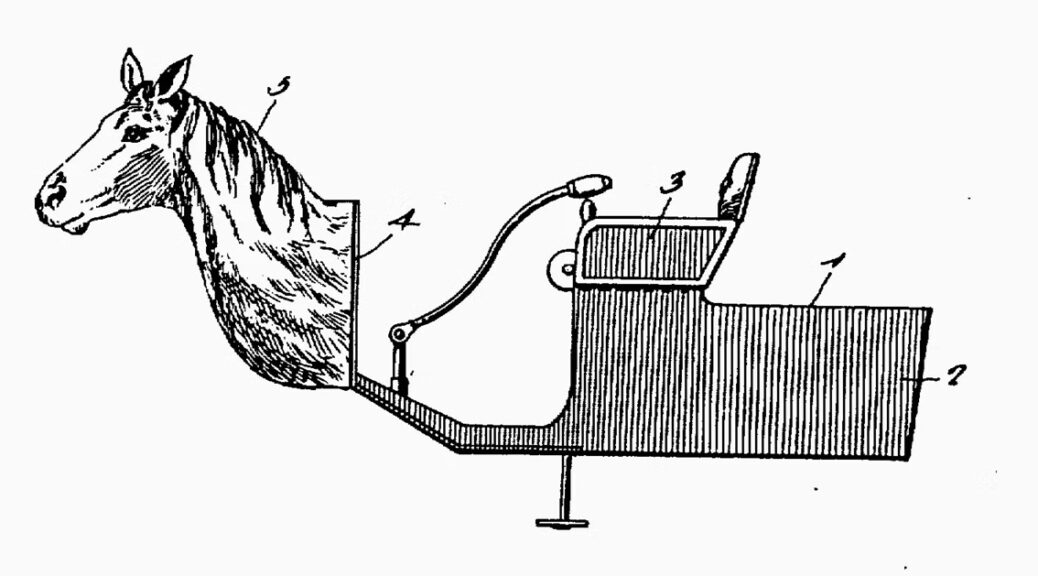
The Horsey Horseless. Designed to prevent horses being frightened by a car.
Enter, the mother of current automotive technology today, the oil industry.
Instead of burning coal, why not find some ways to refine oil to be used as fuel sources to run things on? Who knows, we could have been running advanced versions of steam engines today? They actually can be made to be fairly efficient and clean using current technology and were quite practical cars back in 1918.
Then the internal combustion engine enters the scene the oil companies love this, and a mass marketed engine that is completely dependent on oil is born. Just think, this is awesome for business, these engines need oil for fuel and lubrication. Then all the different designs start flowing. (Off the top of my head and in no chronological order) The single cylinder, then 2, then 4, then 6, then the flathead V8. Now this is where we start to see major horse-power and design improvements. The trusty ole’ inline 6’s, the small block eating slant 6’s,The overhead valve V engine, big blocks, small blocks, Hemi’s. There are pancake engines, W engines, rotary engines, v-tecs, boxster engines and many, many more. (Not to mention all of the different fuel delivery systems!)
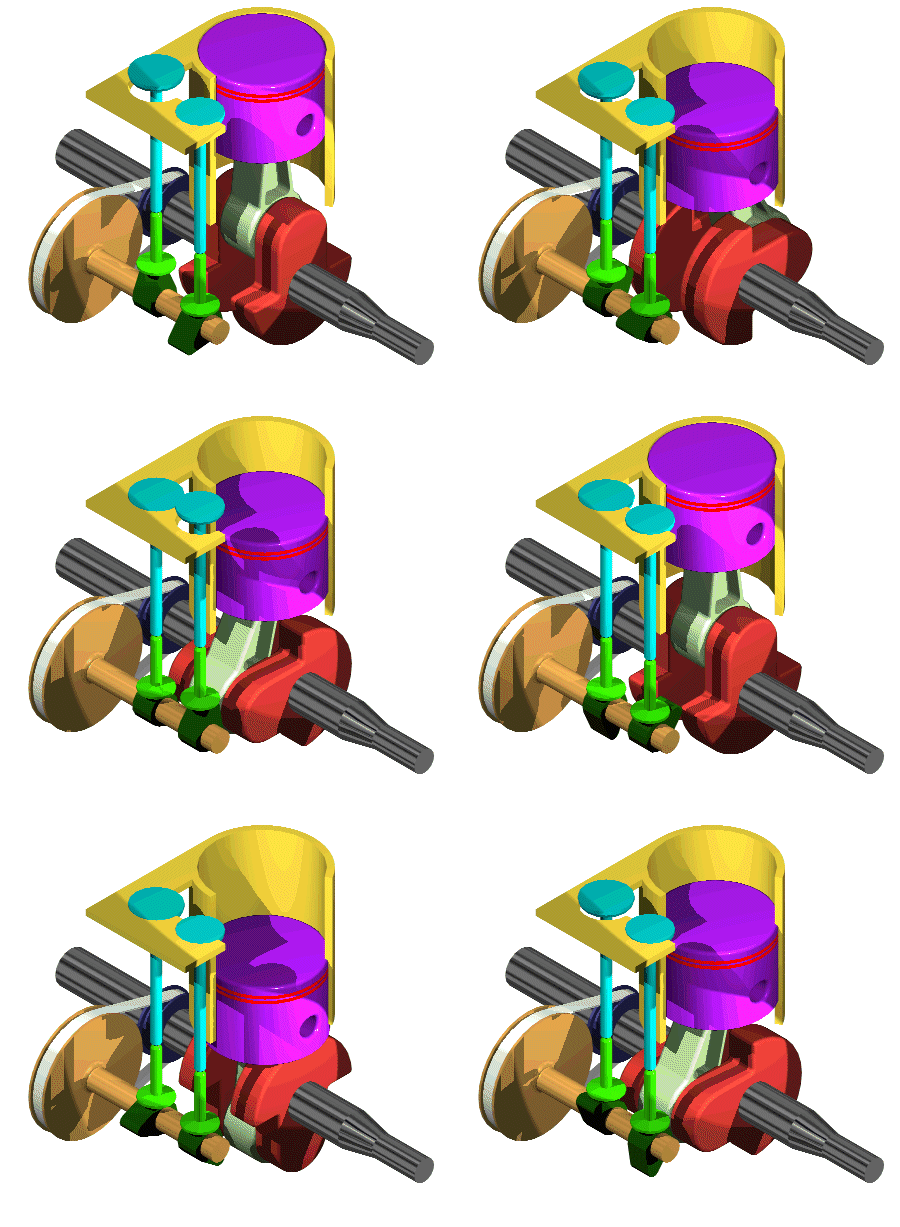
The cylinder and valves and crankshaft of the Internal Combustion Engine
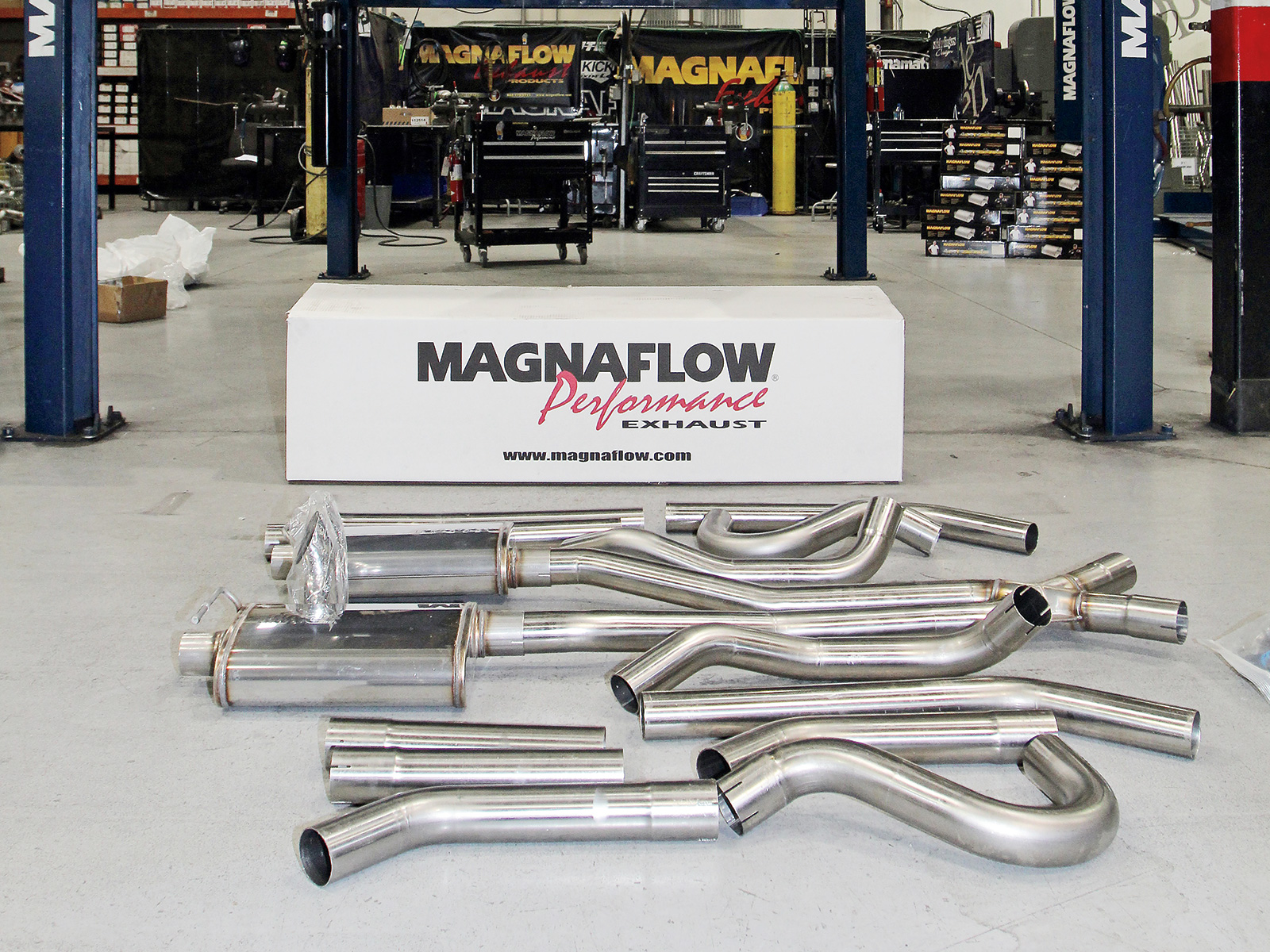
The one thing that really makes me scratch my head is the fact that it took so long getting hybrids, smart-cars, electric cars, and hydrogen cars that are actually worth looking at and driving. I mean, why is it that I can take a full size 2008 Chevrolet Silverado with a 5.3 L vortec engine, put: a cold air intake, a magnaflow exhaust system, and a good edge products programmer, and I can get an average of over 36miles per gallon, with the same horse-power? Why is it that I (not being an automotive engineer) can do this, but you can’t just buy one with those numbers from the manufacturer?
Not to mention brown-gas converters that have been tested on most common engine types that can take, mineral water, and a reaction from current between two electrified plates (similar to a car battery) and create a safe amount of hydrogen gas as a by-product which can make your car run the same on half the amount of fuel. The thing that boggles me is that most people have never even heard of these. You can buy the plans off the internet (not as complicated as it sounds) or I can even get ready to install ones from my performance part supplier. I just find it strange that automotive technology and fuel sources have taken this long to start to veer just slightly away from oil (or as ‘ol Jed calls it “Texas tea”).
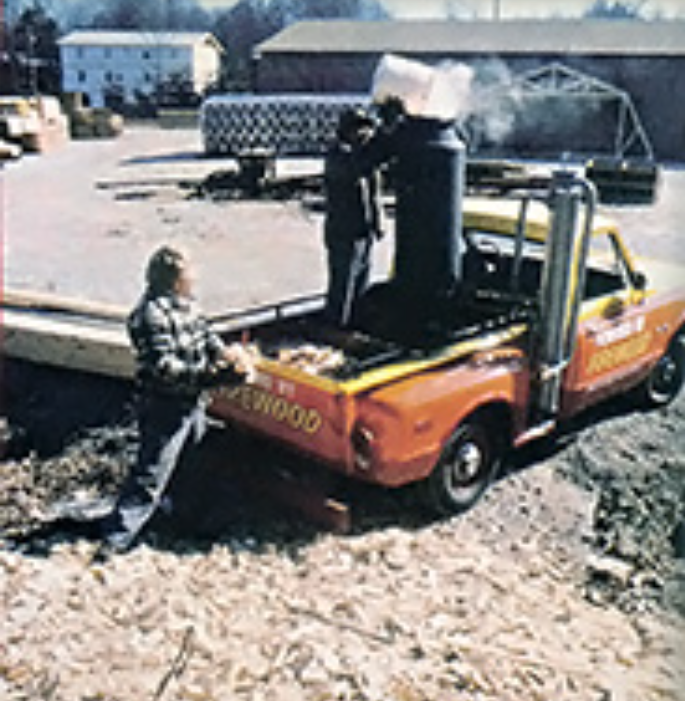
At one point we bridged the gap from a horse and buggy to a steam engine, and then to internal combustion. With the technology we have now, we should have much higher mpg’s and horse-power or an extremely viable alternative. It really makes me wonder where we might be now if this technology was steered in a different direction from the start. It’s been over 100 years now of improving the same technology using more or less the same fuel source. There are guys in the States who run their own garage refined deep fryer grease to power their small pickups and VW buses. There are guys who run pickups off wood-fire smoke. Just something to think about.