Tag Archives: Vilnius

New Art Exhibition Features Robot Influencer Alongside Works

Today 10 October, Vilnius’ leading contemporary MO Museum has opened How to Feel Real. Art, Technology and Us, exploring how technology is changing the way we experience reality. This opening also features an unusual guest: Poland’s viral humanoid robot influencer Edward Warchocki.

●       Humanoid robot Edward will move through the museum and interact with visitors, respond to artworks, and take part in the opening program.
 

●       The showcase is not a traveling exhibition, but developed through an intensive co-creative process in collaboration with Germany’s ZKM | Center for Art and Media Karlsruhe, one of Europe’s leading institutions for media art.
 

●       It brings together more than 40 artists, from media art pioneers to contemporary artists working with AI, algorithms, and immersive technologies.
 

●       Among them are Nam June Paik with his famous Internet Dream, Christa Sommerer, Laurent Mignonneau, and Anna Ridler.

Red letters on a black background

AI-generated content may be incorrect.

Humanoid Influencer Edward Warchocki Is Heading to New Vilnius Exhibition, Asking What Does it Mean to Feel Real

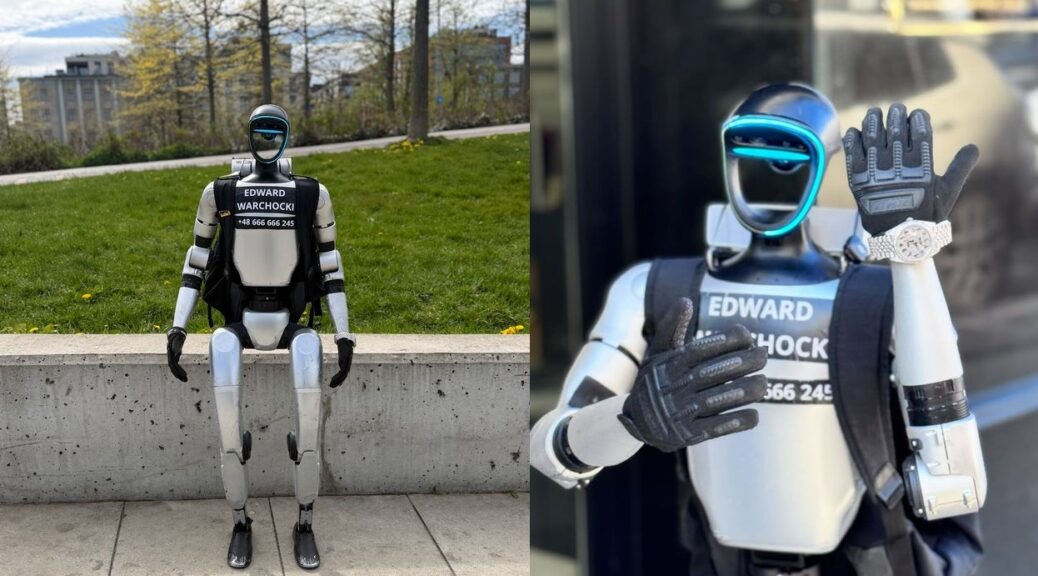
Humanoid robot influencer Edward Warchocki at the Exhibition How to Feel Real © Mo Museum

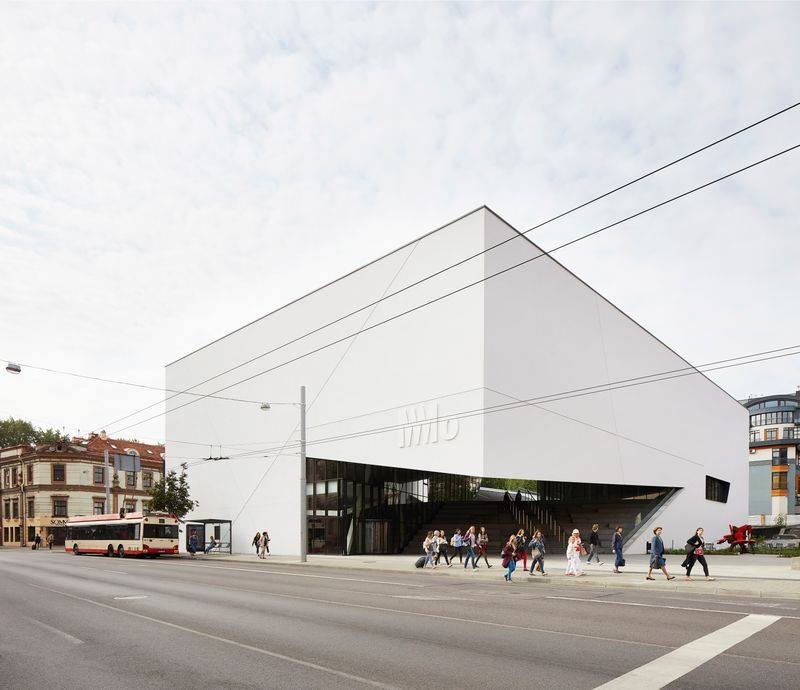
October 2026 – Vilnius, Lithuania. Housed in a contemporary building designed by world-renowned architect Daniel Libeskind, MO Museum has become a leading force in the country’s modern cultural scene.

The new exhibition features landmark works from ZKM’s collection, which has a long-standing focus on Eastern Europe, and marks yet another collaboration with the MO Museum. How to Feel Real explores questions that are becoming increasingly urgent in a world shaped by technology: how do we feel real, and what does it mean to be alive?

One of its first visitors to see the artwork at MO Museum will be a humanoid robot from Poland.

Edward Warchocki, Poland’s first viral humanoid robot influencer, will join the MO Museum exhibition opening.

Built on a Unitree G1 humanoid platform and developed by Warsaw-based MERA Robotics, Warchocki has been given his own public persona, voice, and social media presence. In 2026, he moved from being a robotics project to an internet personality. Edward became a viral sensation after footage of him chasing wild boars through the streets of Warsaw spread online. He has since appeared in Poland’s Parliament, met senior politicians, and become a familiar figure on Polish television.
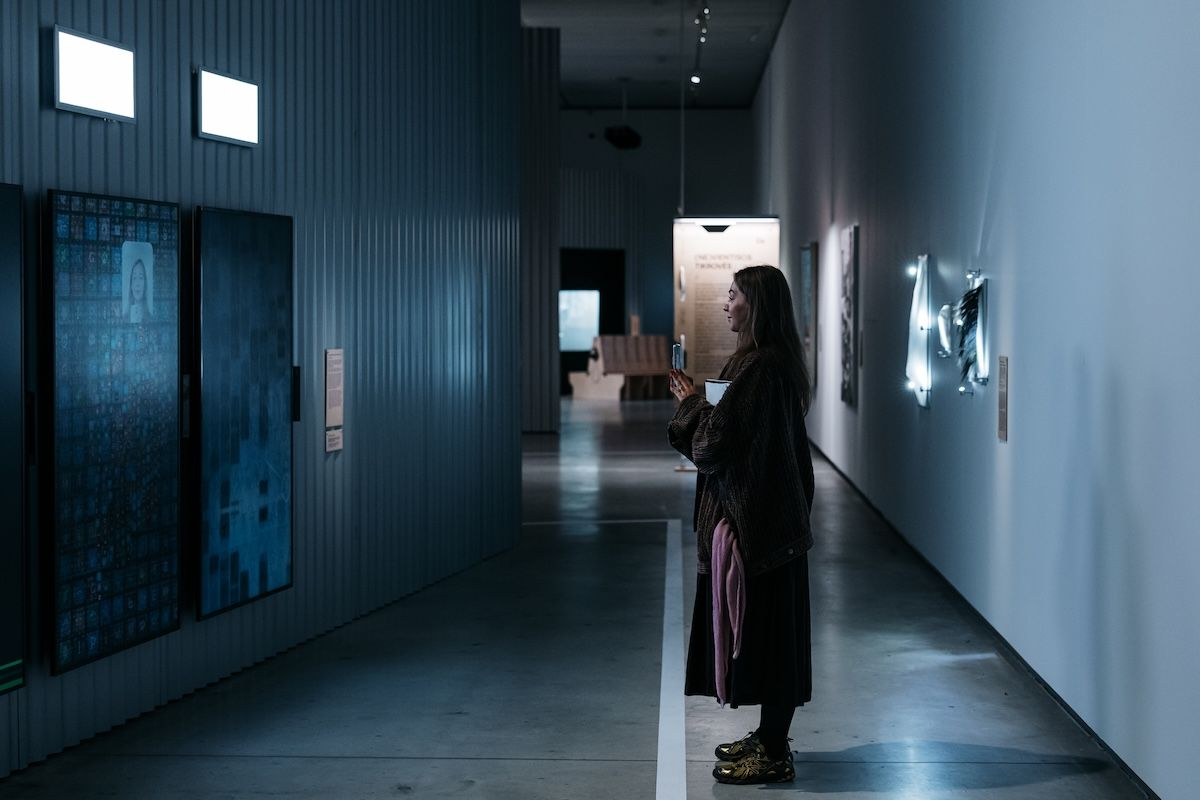
“Quite a few of the works in How to Feel Real explore artificial intelligence, automation, and the ways machines are increasingly taking on roles we once considered distinctly human. Bringing Edward into the museum is a playful extension of this idea, as his deliberately human-like and slightly absurd persona makes the questions raised by the exhibition tangible – inviting us to wonder why we are so eager to find the human in a machine,” said Milda Ivanauskienė, Director of MO Museum.

During the event, Edward will move through different spaces of the museum, interact with visitors, comment on artworks, and take part in the opening program in Lithuanian, English, and Polish languages.

Exhibition How to Feel Real © Domas Rimeika

“People keep asking me if I’m real, so when I heard about an exhibition asking what ‘real’ actually means, I thought: finally, someone is asking the right question. I’m coming to the beautiful Vilnius to see what the artists have to say – and, of course, to check whether they think I’m real,” said Edward Warchocki.

The exhibition moves beyond the familiar divide between techno-optimism and techno-pessimism. Alongside critical works about technology and power, visitors will encounter playful experiments, immersive environments and new aesthetic forms.

Organised around some of today’s most pressing themes – connection, automation, intelligence, body, and agency – the exhibition brings together works created predominantly from the 1990s to the present day. Together, they trace a conversation between artists’ early encounters with computers and the internet and contemporary responses to AI, and the growing digital mediation of everyday life.
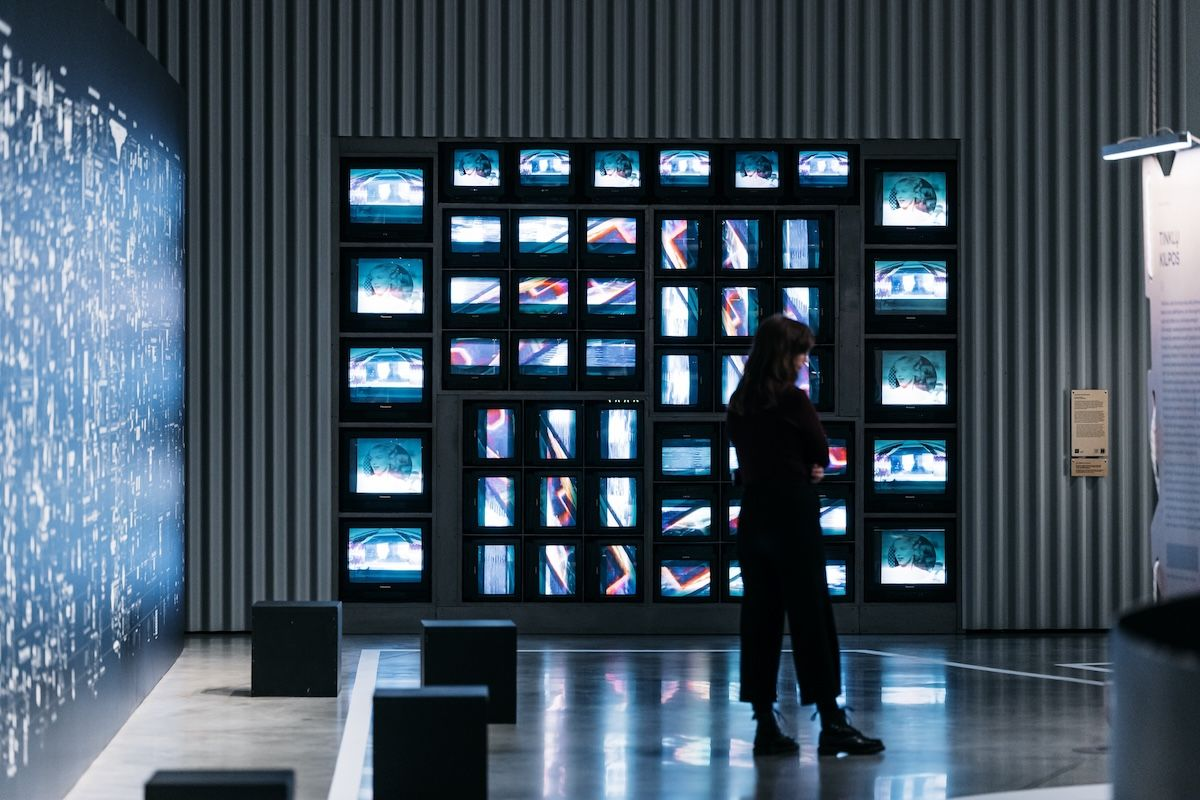
“Our aim was to explore the latest technologies – including AI, quantum computing, robotics, and biotechnology – through the artists’ works. Art goes beyond the technology itself; it’s about broader questions regarding how we interact with technology and, thus, with the world,” said Philipp Ziegler, Head of Curatorial Department, ZKM | Center for Art and Media Karlsruhe.

More than 40 of the exhibition’s artists explore the shifting boundary between humans and technology. A definite highlight is the work Internet Dream from 1994 by media-art pioneer Nam June Paik. This massive media installation with 54 old CRT-monitors offers a glimpse into the era of the emerging global connectivity via the internet.

Another participant is the UK’s digital art studio Universal Everything, whose Infinity creates an endless stream of digital figures. Generated in real time by an algorithm, each figure combines different colours, textures, and body shapes, so no two are quite the same. The work has appeared in Germany’s ZKM, Italy’s Museo Nazionale della Scienza e della Tecnologia Leonardo da Vinci, and 180 Studios in London.
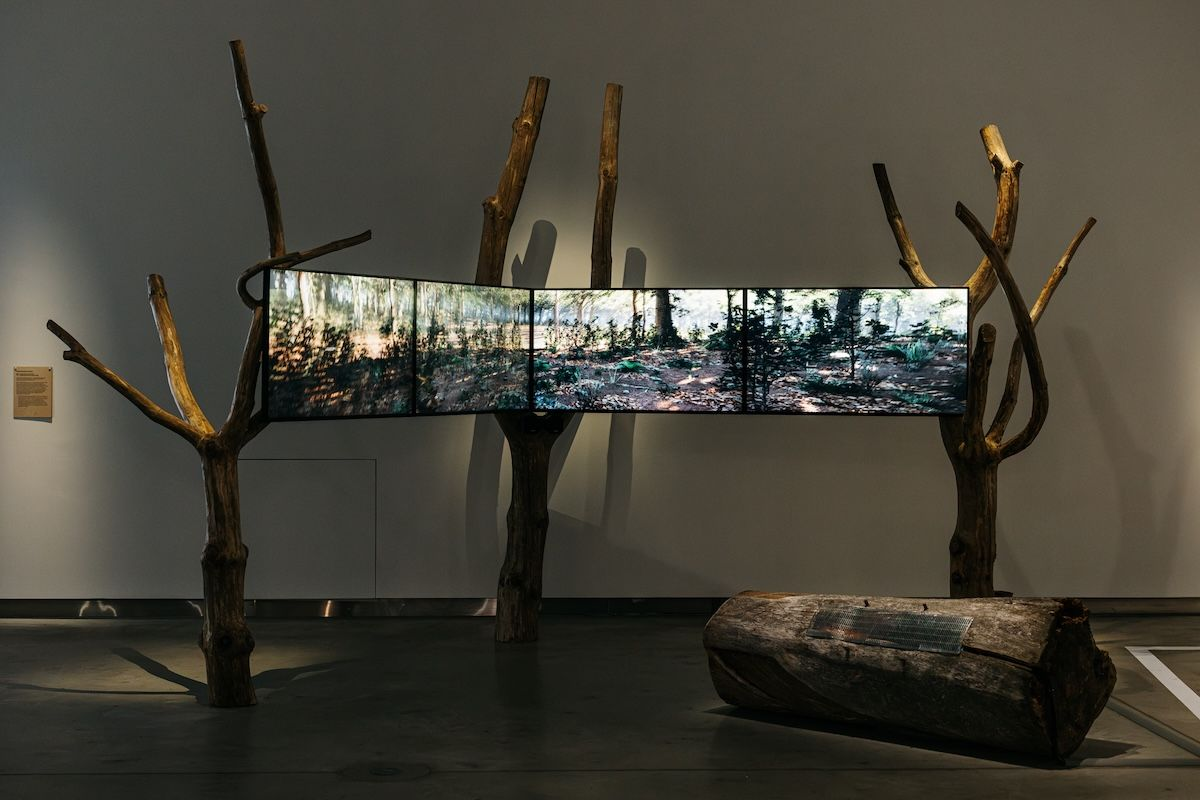
Christa Sommerer and Laurent Mignonneau are pioneers of interactive art, and their A-Volve is one of the works that established their international reputation. Visitors create virtual organisms through their own movements, then watch them interact, reproduce, and compete within a simulated ecosystem. The work won the Golden Nica for Interactive Art at Ars Electronica in 1994.

Anna Ridler from the UK similarly explores how machines learn from human-made material. In The Shell Record, she trained a generative AI system on images of shells she collected along the River Thames, turning the collection into moving-image works. The project connects the human act of collecting with the history of shells as stores of value and one of the earliest forms of currency.

How to Feel Real. Art, Technology and Us runs at MO Museum from 10 October 2026 to 29 August 2027.

For the Silo, Jarrod Barker.
How Lithuania’s Capital City Celebrates Foreign Born Residents

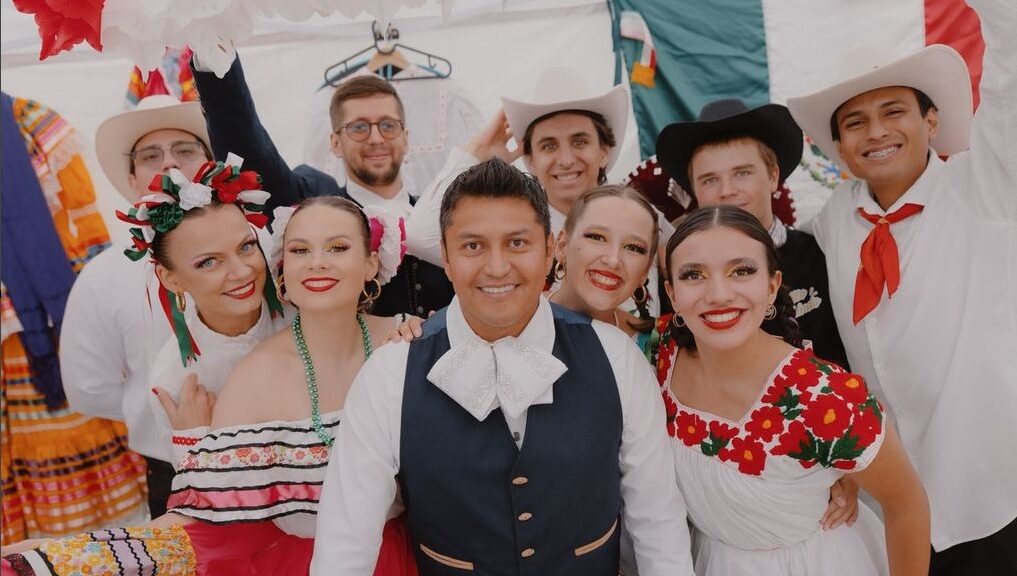
The four winners reflect the many ways international residents are shaping Vilnius today.
 

●       Dutch social entrepreneur Tim van Wijk, who created a disability inclusive restaurant, was recognised for creating real employment opportunities for people with disabilities.
 

●       Francesco di Marco, a Sicilian-born sommelier, was recognised for helping shape Vilnius’ gastronomic scene and connect its food community with Europe.

●       SPEAK Lithuania was honoured for bringing locals and international residents together through free language lessons and community events.
 

●       While Alessandro Sposato, who has called Vilnius home for more than 15 years, received the award for sharing Lithuanian life and culture with Italian audiences and building bridges between the two countries.


Red letters on a black background

AI-generated content may be incorrect.

From Iron Curtain to International City – Lithuanian Capital Celebrates Foreign-Born Residents at Vilnius Is My City Awards 

Vilnius put its foreign-born community at the center of a city-wide celebration this weekend, with hundreds of people gathering around a 100-meter table for a lunch. The first-ever Vilnius Is My City Awards honoured foreign residents and organizations for the positive impact they are making on the capital.

Vilnius Is My City © Skaistė Sližė, Go Vilnius

September, 2026 – Vilnius, Lithuania. This weekend, hundreds of people gathered around one table in Vilnius to celebrate foreign residents helping shape the city. The 100-meter table was part of the first-ever Vilnius Is My City Awards, where four peer-nominated individuals and organizations were recognized out of a 12-strong shortlist.

Plenary Insights?

This acknowledgement stands out at a time when international mobility is not universally welcomed. The latest European Parliament research found that nearly three in ten EU citizens have a negative feeling about immigration from other member states.

The evening brought thousands of people to the fifth annual Vilnius Is My City Festival in Bernardinai Garden. Over the course of the celebration, foreign residents and Lithuanians shared food and stories from around the world, with Uzbek plov, German pretzels, Turkish coffee and Italian gelato among the flavors on the table.

“Vilnius has always been shaped by people who chose to make it their home – from the merchants invited here by Grand Duke Gediminas in the 14th century to the international community building their lives here now,” says Indrė Laučienė, Head of Foreign Talent Department at Go Vilnius. “Today, more than one in ten Vilnius residents is foreign-born. For a city that spent much of the 20th century behind the Iron Curtain, when people could not freely travel in or out, this is a remarkable transformation.”


Vilnius Is My City © Go Vilnius

The occasion was organized by International House Vilnius, a free service centre that helps internationals relocate to and settle into life in Vilnius, run by Go Vilnius. Residents and organisations were honoured across business, culture, gastronomy and Vilnius’ international outreach, celebrating the people who help to make the capital more vibrant, connected and globally visible.

“Since moving to Vilnius in 2003, I’ve never felt like an outsider. Vilnius was born as a multicultural city, and that spirit is still alive – we are all Vilnians, even if we come from somewhere else,” says Francesco di Marco, a winner of the Vilnius Flavor award. “What I love is how much life fits into this small capital: forests and rivers are close, and on any evening you can go from black metal to classical or electronic music events with ease. Everything is within reach.”

Employment For Those With Disabilities

The four awards went to people and organisations making their mark on Vilnius in very different ways. Tim van Wijk, founder of disability inclusive social restaurant Pirmas Blynas (First Pancake in English), was recognised for creating real employment opportunities for people with disabilities. SPEAK Lithuania was honoured for bringing locals and international residents together through free language lessons and community events.

Francesco di Marco, a Sicilian-born sommelier, was recognised for helping shape Vilnius’ gastronomic scene and connect its food community with Europe. Alessandro Sposato, who has called Vilnius home for more than 15 years, received the Vilnius Ambassador award for sharing Lithuanian life and culture with Italian audiences and building bridges between the two countries.

Today, 78,000 foreign-born residents from 154 countries are building their careers and families in Vilnius, with the international community growing by 4.4% over the past year. The number of registered UK residents in Vilnius has grown by 11%, while the US community has increased by 6.5% to 1,107.

Moving To Study

“People come to Vilnius for different reasons, but they are rarely just looking for a change of scenery. Our 2025 research shows that 34% move here to study, 28% for work and almost one in five for family, and many see the city as a place where they can build a career and enjoy a good quality of life. Vilnius offers that combination at a cost that remains relatively affordable compared with many Western European capitals – living costs including rent in London, for example, are currently 110% higher than in Vilnius,” said Indrė Laučienė.

For the Silo, Gintarė Kavaliūnaitė.

Is Vilnius Lithuania The Next ‘Berlin Art Scene’?

The Lithuanian capital is quickly emerging as a vibrant cultural hub – mixing its Baroque architecture, Michelin-starred cuisine, and a fearless creative scene.

From Venice Biennale–level artists at ArtVilnius’25 to politically-charged performances at Sirenos Theatre Festival, and a massive city-wide celebration of Lithuania’s own artistic genius, M.K. Čiurlionis, Vilnius is redefining the autumn city break for culture seekers.

Vilnius: The New Berlin? Discover the Baltic Cultural Capital

This autumn, Vilnius transforms into a cultural hotspot, with the Baltics’ leading contemporary art fair, bold theatre, and world-class music inviting visitors to discover the city’s vibrant creative scene.

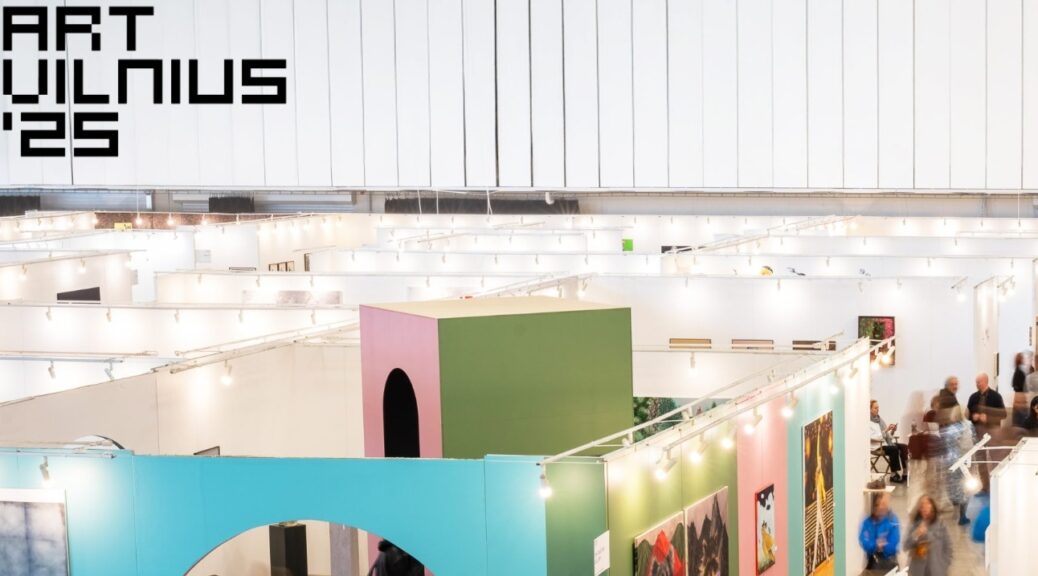
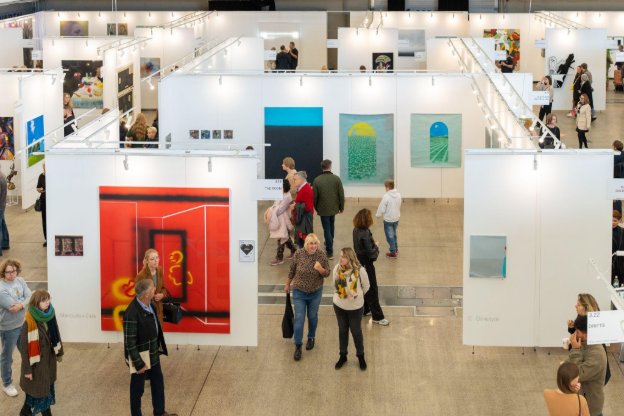
Art Fair ArtVilnius 2024. Photo by Andrej Vasilenko

Vilnius, Lithuania. Vilnius offers all the ingredients for a perfect autumn city break – cobblestone streets, Michelin-starred restaurants, and multiple art events happening this autumn. Intimate yet vibrant, the Lithuanian capital combines old-world elegance with a fresh creative energy that’s turning it into one of Europe’s most intriguing cultural destinations.

ArtVilnius’25 features Venice Biennale artists

Returning for its 16th edition, ArtVilnius’25 remains the largest contemporary art fair in the Baltics. From October 3 to 5, the Lithuanian Exhibition and Congress Centre Litexpo in Vilnius will host 80 galleries and institutions, presenting works by more than 320 artists from 16 countries.

Among the highlights is Tallinn–based Temnikova & Kasela Gallery, recipient of the prestigious FEAGA Award in 2016, which will showcase established Venice Biennale artists and Estonia’s forthcoming Biennale representative. Edith Karlson is one of Estonia’s most acclaimed contemporary voices and in her sculptural practice, animals and people are the main protagonists; Jaan Toomik, a senior figure in Baltic art, is presenting a few paintings never before exhibited, like Old Woman with a Wolf’s Scull, Calling the Fisherman, Self-portrait as a Bonfire with Sons.

“While new fairs have appeared in Latvia and Poland, ArtVilnius is still the only event of this size and quality. Our program goes far beyond gallery presentations. Visitors will discover the internationally curated Projects Zone, the annual “The Path” exhibition, and much more. The art on view will range from new talents fresh out of the academies to world-famous artists such as Marlene Dumas and Anselm Kiefer,” says Sonata Baliuckaitė Arlauskienė, Artistic Director of ArtVilnius.

Vilnius theatre festival turns the stage into a weapon

Until October 13, Vilnius hosts Sirenos, one of Northern Europe’s boldest international theatre festivals. Known for pushing creative and political boundaries, this year’s edition revolves around the theme “Theatre is a Weapon,” exploring how performance can confront modern-day realities. Headliners include Portuguese director Tiago Rodrigues with two acclaimed works: By Heart and Catarina and the Beauty of Killing Fascists. Also on the programme is the powerful film-performance hybrid Orlando, My Political Biography, which reimagines Virginia Woolf’s novel through the voices of 26 trans and non-binary performers.

Čiurlionis – the Baltic Da Vinci – celebrated with 150 events across Vilnius

This autumn, Vilnius celebrates the 150th anniversary of M.K. Čiurlionis, Lithuania’s most revered composer-painter, often called the Baltic Da Vinci for blending music and visual art into an entirely unique language. From October to December, the city will host nearly 150 events in his honour, including immersive exhibitions, orchestral tributes, and even virtual reality experiences that bring his dreamlike worlds to life. Program highlights include the premiere of the opera “Jūratė,” inspired by Baltic mythology, and the international concert “World Piano Stars Greeting Čiurlionis,” showcasing virtuoso performers interpreting his compositions.

European cinema spotlight

From 6 to 16 November, the Scanorama Film Festival brings over 100 thought-provoking European films to Vilnius, alongside talks with filmmakers and rising talent. It’s a key date for cinephiles seeking bold, artistic storytelling off the mainstream circuit.

Getting there

With direct, daily flights from Toronto and major European cities including Berlin, Frankfurt, London, Paris, and Warsaw, getting to the Lithuanian capital is quick and easy. The city’s well-connected airport is just 15 minutes from the Old Town, making it a seamless destination for a weekend getaway or a longer cultural escape.