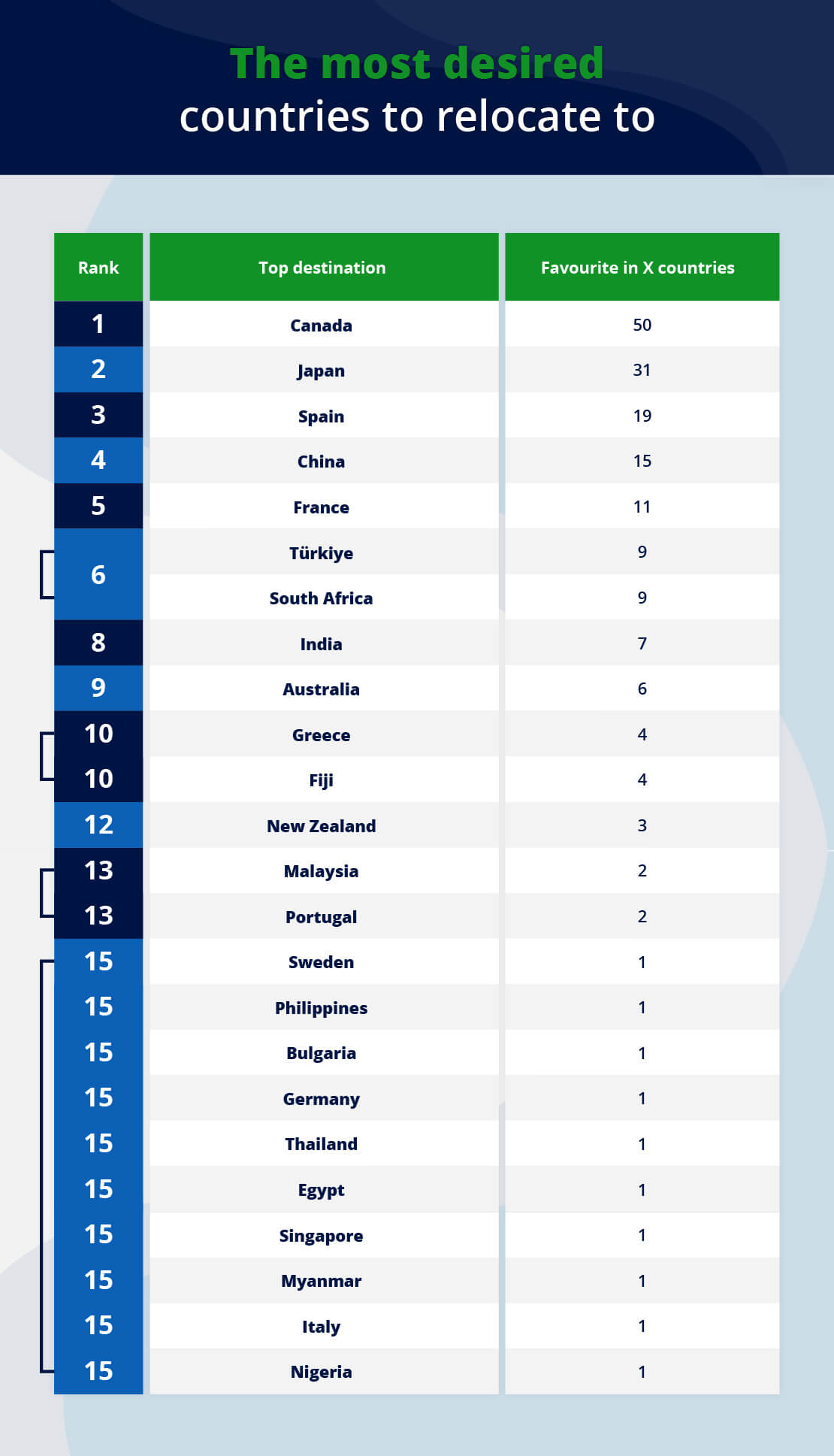
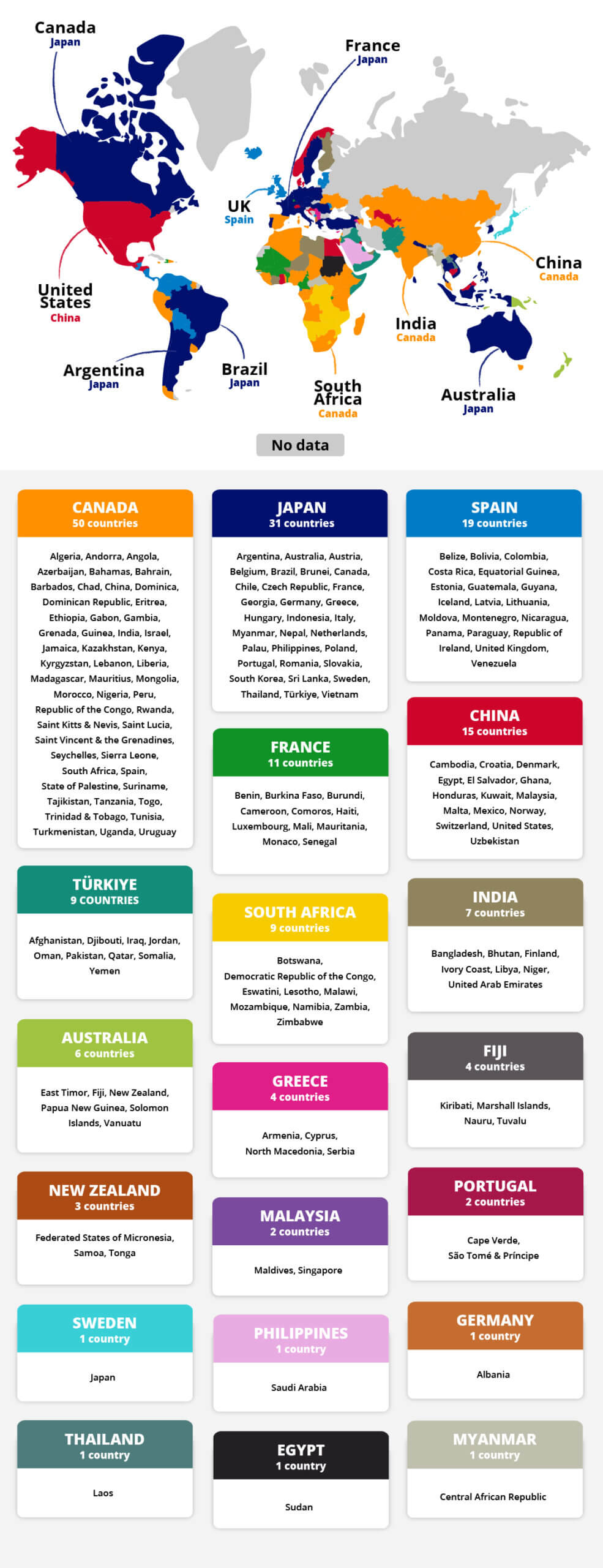
The Canadian Honours Award System is a system in which citizens of Canada can be recognized for their exceptional achievements. The system comprises three levels: the Order of Canada, the Order of Military Merit, and the Order of Merit. Each level has its criteria for eligibility and its process for nomination and selection.
The Order of Canada is the highest level of the Canadian Honours Award System. It was established in 1967 to recognize outstanding achievement and service in various fields of human endeavor.
February 26, 1997, Geddy Lee, Alex Lifeson and Neil Peart were awarded the Order of Canada at Rideau Hall in Ottawa (the official residence of the Governor General of Canada).
Below is everything you need to know about the Canadian honors award system, from eligibility requirements to the nomination process.
The requirements
1- You must be a Canadian citizen or a permanent resident of Canada
When you are a citizen of another country, you are not eligible for the Order of Canada, but you may be eligible for one of our other awards.
2- You must have made a significant contribution to your community or Canada
Your contribution can be in any field, such as the arts, business, philanthropy, science, sports, or public service.
3- You must be nominated by someone else
You cannot nominate yourself. Nominations are reviewed by an independent advisory committee, which makes recommendations to the governor-general.
4- You must meet the criteria for the specific level of award you are being nominated for
The Order of Canada has three levels: Companion (CC), Officer (OC), and Member (CM). The criteria for each level are different.
How to be nominated
1- Talk to the people who know you best
Your nominator should be someone who knows you well and can attest to your achievements. They may be a colleague, friend, or family member.
2- Fill out the nomination form
The nomination form must be completed in full and signed by the nominator. It includes sections on your biography, achievements, and contributions.
3- Include letters of support
Your nominator should also include letters of support from two other people who know you well. These letters should speak to your character and accomplishments.
4- Submit your application
Applications can be submitted online or by mail. The deadline for submissions is June 30.
The current Governor General of Canada is Canada’s first indigenous G.G.
The Selection Process
1- Review by an independent advisory committee
All applications are reviewed by an independent advisory committee, which makes recommendations to the governor-general. The governor general then decides who will receive the award.
2- Notification of the decision
The Office of the Secretary to the Governor General will notify all nominees of the decision by mail or email.
3- Ceremony and presentation of the award
Award recipients are invited to a ceremony at Rideau Hall, where they will receive their insignia from the governor-general.
Recipients can also choose to have their award presented to them at a ceremony in their community.
Celine Dion was first an Officer of the Order of Canada. Awarded on: January 6, 1998 and then later made a Companion of the Order of Canada Awarded on: October 23, 2008
In conclusion, the Canadian Honours Award System is a way to recognize the exceptional achievements of Canadians. To be eligible, you must be a Canadian citizen or permanent resident, have made a significant contribution to your community or Canada, and be nominated by someone else.
Humans possess a great depth of capacity when it comes to altruism. Again and again, we demonstrate our tendency to reach out when others are in distress. Cultivating these instincts is one of the ways in which we connect with our own humanity. Studies have indicated that altruism is not entirely innate. Environment plays a key role in the development of the qualities of altruism. Practicing this trait strengthens not only our own individual ability to extend hope and help to our fellow species, it allows us to explore more deeply our own inner kindness.
“Every man must decide whether he will walk in the light of creative altruism or in the darkness of destructive selfishness.” –Martin Luther King, Jr.
Mark Guglielmo had just finished an exhibition at Villa Victoria Center for the Arts in Boston, Massachusetts when he decided to emphasize what he felt was a missing ingredient in today’s society- altruism. Guglielmo’s work tries to emphasize this message by piecing together photo collages to form a larger image. For another show, he used photos from his time spent in Cuba. To complement the work, Guglielmo conducted interviews which were then incorporated in the exhibition. The particulars of the work involved thousands of photographs. Guglielmo captured detailed images of every nuance of a person, place, or thing. From these, he painstakingly compiled what he refers to as “a 1000-D version of reality.”
A natural storyteller, Guglielmo says the audio portion of his work was important to transport people to Cuba. Guglielmo witnessed the changes to the island nation. He decided to record the perspective of the Cuban people when it came to the changes to their relationship with the U.S. Guglielmo kept his conversations informal and allowed Cuban residents to drive them in order to keep them safe from government targeting for speaking out.
The conversations revealed the daily lives of Cubans often in the context of wealthy western tourists vacationing in the shadow of extreme poverty. Political tensions between the U.S. and Cuba have interfered with plans to show the work there.
Bucanero en Playa Ancon | Buccaneer at Ancon Beach, Trinidad de Cuba, 2017, Photo-mosaic, 46 x 68 inches
Frank Juarez is the co-founder of the Randall Frank Contemporary Art Collection and project manager of the Randall Frank Artist Grant Program. Juarez says the Randall Frank collection began quite organically. Juarez and his high school and college friend Randall shared a lifelong affinity for art. When they wanted to work together, art was the common theme they shared. Together, they began a collection and strove to support artists from their area. In the early days, they worked under a tight budget, purchasing art quarterly and storing them in Randall’s home in Richmond, Virginia. The two began looking for opportunities to sponsor art events. Their first endeavor in this capacity was a mural project in Milwaukee’s Black Cat Alley. Randall Frank Contemporary Art Collection (RFCAC) hopes to one day create a public space where they can house their collected art and make it available to the public.
As they became more established, RFCAC decided the best, most direct way to support artists was through a grant program. RFCAC’s pilot program seeks to support artists in the Midwest and east coast regions of the U.S. The grant is presently privately funded. Juarez works in many capacities within the art world. He is a gallery director, curator, and educator. Randall works in the private sector as a chemist.
A Few Words to Keep in your Pocket: Soften your heart and open your mind to the possibilities of altruistic behavior.
For the Silo, Brainard Carey.
Featured image– Induction #1 by Tony Conrad (l) and Katrina by Rob Neilson (r) courtesy of Museum of Non-visible Art.
Unless trust is restored, the FBI’s Mar-a-Lago raid may begin the “collapse” of U.S. law enforcement, according to police expert Michael Letts.
Over the past few years, the FBI has acted politically often enough that many Americans now struggle to trust it, Letts said. He runs In-Vest USA, a nonprofit that provides bulletproof vests to police departments.
Without explanations, acts such as the Mar-a-Lago raid create distrust between local and federal law enforcement, he said. They also create civilian distrust for law enforcement in general.
“Mar-a-Lago is just another nail in the coffin,” he said.
U.S. law enforcement runs on trust, according to Letts. Without trust, the system collapses into “Third-World status,” where police serve power instead of enforcing the law.
“Then, you have coup d’états, you have overthrows, riots. And then, whatever power happens to win at that particular day tries to solidify. The forces that it controls run out and eliminate everybody that’s not on their bandwagon,” he said.
Lack of Transparency in Politically Sensitive Case
The FBI made several decisions at Mar-a-Lago that could catastrophically damage trust in law enforcement, Letts said.
First, the raid itself shouldn’t have happened, he said.
Presidents often take many documents with them when they leave the White House. Often, staff accidentally pack at least a few secret documents by mistake. Most of the time, the federal government doesn’t punish this mistake, according to Letts.
Trump’s predecessor, former President Barack Obama, turned over 30 million documents to the National Archives.
“More often than not, they look at and realize [the document] no longer needs to be classified anymore,” he said.
But the FBI raided Trump’s home for the documents.
The FBI also refused to let Trump’s lawyer observe the search. Without someone else present, law enforcement could potentially plant fake evidence or steal a suspect’s property, Letts said. This has led many to now wonder whether the FBI demanded secrecy for alleged misconduct.
“They should have never provided fodder to the American people to have these kinds of questions,” he said.
Finally, FBI and DOJ leaders have failed to provide the public with a clear explanation as to why the raid had to happen.
In-Vest USA CEO Michael Letts. (Image courtesy of In-Vest USA)
Although the government released the warrant and receipt for property taken, these things didn’t provide enough of an answer, Letts said.
Since then, reports have been spreading about an internal FBI and Department of Homeland Security bulletin, leaked in part by CNN, NBC, and CBS, of an increase in bomb threats made online to law enforcement and officials following the Mar-a-Lago raid.
If the government truly wants to calm the situation, it needs to provide a full explanation, according to Letts.
“We need straight and direct answers,” he said. “We need congressional leadership. It needs to be a bipartisan effort.”
Trust: Cornerstone of the American System
The distrust from the FBI raid doesn’t only affect politics, Letts said. It also affects the inner workings of law enforcement.
Law enforcement agencies have to cooperate to do their work, he said. Federal and state police often join forces for investigations.
In these investigations, trust is crucial, according to Letts. If the FBI and local police don’t trust each other, they can’t cooperate.
Even law enforcement on drug dealing will fall apart if the FBI and police don’t trust each other, he said. If the FBI targets conservative politicians today, it might target anyone tomorrow.
“Is there something else behind the scenes? You’re willing to lie on FISA reports to courts. Are you willing to lie about this?” he asked.
The FBI’s Mar-a-Lago raid will also cause the public to distrust state and local police, as most of the time, the public doesn’t see the difference between local police, state police, and federal law enforcement, according to Letts.
“If anybody’s wearing a badge—sheriff, deputy, city police—they all get mixed into the same boat,” he said. “And now they all get vilified.”
In the past few years, law enforcement’s trust foundations have been weakened from a number of events, Letts said. Some media outlets have villainized them for alleged racism, which the police deny, during deaths in custody, while some city councils have cut their budgets. Officers faced immense pressure from all angles during the COVID-19 pandemic. Many police officers have resigned; few are recruited.
“They’re having to pull extra shifts. They’re at the highest stress rates. I mean, look at their divorce rates. They have some of the lowest morale we’ve ever seen in history,” he said of the police.
At some point, the “thin blue line” will snap, according to Letts.
“Who will they call when somebody is banging on their door to try to break in?” he asked.
We hope you enjoy our coverage! As you are visiting us today, we’d like to ask you one question — How much do you think news media outlets actually impact your life? …Probably more than you realize. For the Silo/Epoch Times, Jackson Elliott.
Featured image: Protesters gather in front of the Federal Building in Los Angeles on Aug. 13, 2022, to voice anger over FBI’s Mar-a-Lago raid. (Linda Jiang/The Epoch Times)
Digital privacy expert explains why often accepting cookies poses cyber risks
According to new research commissioned by internet security company NordVPN, only 3.5% of Canadians never accept cookies. To make matters worse, a whopping 43% say they always accept cookies. While most HTTP cookies are safe, some can be used to track people without their consent. Even more, cookies can sometimes be spied upon or used to fake the identity of a user, to gain access to their account or use their identity to commit a crime.
“HTTP cookies are vital to the internet, but they are also a vulnerability to people’s privacy. As a necessary part of web browsing, cookies help web developers to provide more personal, convenient website visits. Because of cookies, websites remember you, your logins, shopping carts, and even more. But they can also be a treasure trove of private information for criminals to spy on,” says Daniel Markuson, a digital privacy expert at NordVPN.
What are cookies, and why are they a threat?
Also known as an HTTP cookie or browser cookie, a cookie is a piece of data that’s stored on your browser whenever you visit a website. When enabled, the website will remember your preferences and any small changes you made during your last visit.
Cookies are a normal and necessary part of the internet. Without them, you couldn’t log into a website or fill your online shopping cart. However, too many cookies can become a threat to both your security and privacy.
“People need to be aware that cookies follow you online. Even if you hide your IP address with a VPN, cookies can track what you do online and form a partial ID of who you are. Moreover, third parties can sell your cookies. Some sites earn revenue by serving third-party cookies. These aren’t functional – their purpose is to turn a profit from your data. Also, cookies are a vulnerability. With the wrong browser settings or when visiting the wrong website, cookies can introduce security vulnerabilities to your browsing experience,” says Daniel Markuson, a digital privacy expert.
68.5% of Canadians feel that their online data is used for targeted ads
Research shows that Canadians feel the consequences of collected cookies:
68.5% feel that their online data is used for targeted ads;
66% feel that it’s being sold to other companies.
Moreover, 57% and 53% respectively believe that their data is analyzed by websites for their internal use and that it’s used by social media platforms for people to find the most relevant information
“Canadians must be pretty aware of the constant pop-up requesting them to ‘Accept all cookies?’ while visiting online websites. It happens in order to comply with data privacy laws, which were designed to protect users’ personal information and force companies to state what kind of data is being collected and how it is being used,” says Daniel Markuson.
How to stop cookies from tracking you
There are plenty of tools and tips to make your online activity more private.
“First, navigate to your browser’s settings and choose to delete all the cookies stored in your browser. Most browsers also offer features to block unnecessary cookies automatically. Second, use incognito mode. While incognito mode does not equal privacy, this is exactly what it was made for — setting aside a single browsing session that won’t save cookies and your history.
On a related note concerning personal data- The Public Health Agency of Canada (PHAC) tracked 33 million Canadians via their mobile devices to “monitor lockdowns” during to coronavirus pandemic. Privacy advocates said they were concerned about the data tracking.
Finally, use a VPN. One of a VPN’s core features is to hide your IP address, which is critical if you want your online searches to stay private. You can also look at installing various types of tracker blocker programs. That means that third-party cookies won’t be able to gather data about people’s browsing habits and create a detailed profile on you.
Methodology: The survey was commissioned by NordVPN and conducted by the external company Cint on October 4-12, 2021. The survey’s target group was residents of France, the USA, Canada, Australia, Germany, Spain, the Netherlands, and Poland aged 18+ (nationally representative), and the sample was taken from national internet users. Quotas were placed on age, gender, and place of residence. 7800 people were surveyed in total, made up of 800 people from Spain and 1000 people from each of the remaining countries.
August, 2022 – Business investment in Canada is so weak that capital per member of the labour force is falling, and the implications for incomes and competitiveness are ominous. Governments, particularly the federal government, need to get serious about growth to get workers more of the tools they require to compete and thrive, according to a new report from the C.D. Howe Institute.
In “Decapitalization: Weak Business Investment Threatens Canadian Prosperity”, authors William B.P. Robson and Mawakina Bafale write that since 2015 Canada’s stock of capital per available worker has been declining and its rate of gross investment per worker has been well below that in the United States and other OECD countries.
Capital= Business “bread and butter”
They examine why Canada might be lagging as well as what action to take.
“Business investment and productivity are closely related: productivity growth inspires investment by creating opportunities, and investment drives productivity growth by equipping workers with more and better tools,” says Robson. “Investment per available worker lower in Canada than abroad tells us that businesses see less opportunity in Canada, and prefigures weaker growth in Canadian earnings and living standards than in other OECD countries.”
New investment per available worker in Canada, adjusted for purchasing power, was only slightly above 50 cents for every dollar of investment per available United States worker in 2021 – lower than at any point since the beginning of the 1990s. In addition, in 2022, OECD projections show that Canadian workers will likely enjoy only 73 cents of new capital for every dollar enjoyed by their counterparts in the OECD excluding the US, according to Robson and Bafale.
The authors’ calculations from OECD projections for 2022 show $20,400 of new capital per available worker this year for OECD countries excluding the United States, compared to $14,800 for Canada.
In other words, new capital per available worker in Canada will be more than one-quarter less than in those countries this year.
Declines in the stock of machinery and equipment (M&E) and intellectual property (IPP) per member of the workforce are particularly worrisome, the authors explain, because those types of capital may be particularly important for economy-wide productivity. “Whatever special messages the recent M&E and IPP numbers may convey, the message from stocks of business capital overall is clear: the average member of Canada’s labour force began 2022 with less capital to work with than she or he had in 2014,” says Bafale.
Robson and Bafale identify a few probable causes for Canada’s dismal investment performance. These include: weak business in the natural resource industries; restricted access to finance for small and mid-size firms; a loss in Canada’s competitive edge in business taxation, notably against the United States; an uncongenial environment for IP investment; regulatory uncertainly; unpredictable fiscal policy; and governments’ in-house spending and transfers to households that are steering resources into consumption and housing rather than non-residential investment.
Is business investment capital trajectory predetermined?
“The prospect that Canadians will find themselves increasingly relegated to lower value-added activities relative to workers in the United States and elsewhere, who are raising their productivity and earnings faster, should spur Canadian policymakers to action,” conclude Robson and Bafale. “The first step is to recognize that recent trends are a symptom of threats to Canada’s prosperity and competitiveness – that low business investment is a problem that governments can and should address.”
Supplemental- Are you a small Canadian business frustrated with the difficulties involved in accessing capital? For example, our experience has shown that the multitude of Business Development Corporations operate with autonomy but without accountability, poor vision and nepotism. Essentially, gleaning business plans and strategies before revealing ‘jump through these application hoops” which include personal finance and personal life details. It is sobering to discover that they also receive a hefty commission % for every applicant they ‘certify as successful’. Do you agree or have you had a more positive experience? We want to hear from you in the comments below.
Vaping, which is the act of using e-cigarettes, is more popular in young adults and it is feared to lure them into smoking. On the flip side, it is thought to help adults who are already smoking to quit. Confusing, right? Indeed, it is. All of this is attributed to the presence of nicotine in the vape juice. Apart from this, the use of e-cigarettes is also linked to some other effects like on user’s health.
Effects of E-Cigarettes on Youths
As hinted, vaping might lead youths into using tobacco products in the long run. First, the majority of the vaping juices on the market today contain strong nicotine, which causes addiction. Users claim that it has the best experience, but they do not know that it will affect them eventually.
Youths are also known to be experimental, and hence, they like to try different flavors at the same time. This introduces them to different types of nicotine levels and increases the chances of addiction. They also vape out of peer pressure and they may end up becoming chain vapers.
E-puffer electronic cigar.
Eventually, youths might be tempted to smoke tobacco in search of more satisfaction. After all, it is believed that tobacco satisfies nicotine addiction in a better way than vapes.
What Youths Should Do
Young people need a lot of information to understand vaping in the best way. From this, they can know the best e juice to consume to avoid possibilities of addiction. They should know that peer pressure can lead them to making poor decisions that will cost them later.
Young people should also know that vaping has tons of health effects that they can avoid if they vape responsibly or quit. This means using products from reputable sellers and reading the labels to ensure that they are buying the right thing, which is low or medium nicotine vape juices.
How E-Cigarettes Helps Adults Quit Smoking
You have probably heard that vaping can help you to quit smoking. Many adults who are already tired of cigarettes or have health issues caused by tobacco wish they could quit, but the addiction is heavy. According to research, such adults can try vaping and gradually reduce the nicotine levels. E-juice ranges from strong nicotine levels to low and even zero nicotine.
Studies are showing that addiction to tobacco starts to reduce when one starts to vape cautiously. Many adults have finally stopped tobacco use by switching to vaping then other therapies like the use of gummies.
Is Vaping Good or Bad?
From the above insights, one might wonder whether vaping is good or bad. The truth is that it has its pros and cons, and this boils down to how people use it. As seen, youths tend to abuse it and they end up getting addicted or trying tobacco products. On the other hand, adults take advantage of e-cigarettes to quit smoking.
E-puffer electronic pipe.
It is up to the users to make use of electronic cigarettes in the right way to enjoy the experience they give and also help them to quit tobacco. Whether you are a teen or an adult, you can achieve this. Good luck! For the Silo, Bailey Merton.
Within the global sector of cyber security, the two major areas that are constantly under attack are financial and governmental. Financial organizations that hold consumer data, in particular those that provide financial services to retail and commercial customers, including banks, investment companies, real estate firms, retail banking and insurance companies, are an obvious target for the simple fact that this is where the money is. At the end of the day, unless an attack is of a personal nature, in which the reputation of an individual or business is targeted, monetary assets are the endgame.
Now imagine a cyber threat the same as you would a burglar walking down the street. When a thief leaves their home, they do not necessarily know what they are going to target, unless they have done some reconnaissance and are after something specific. In most cases, however, the target itself is not premeditated. And a house which is more vulnerable and has less defences, will always be the first point of call. Given the choice between a house with an open window and lights out, and a house with attack dogs, security cameras and search lights, nine times out of ten a burglar will take the opportunity to infiltrate the house with the open window. Why? Because it is easier and quicker to break into this house successfully.
The same applies within the finance industry. If there is a vulnerability, it will be the first target. In response, banks and financial institutions require tailored and sophisticated security to support their systems and people, and to defend against an onslaught of complex and aggressive cyber-attacks. Not only must security compliance within the financial sector be tenfold, but it is essential that security precautions evolve, to mirror the growing threat landscape.
But as new cyber threats develop daily, this is easier said than done.
Anti-Fraud Systems
To uphold compliance, and elements such as GDPR, antifraud systems within the finance industry have developed significantly over the last few years to safeguard credentials. To do this a combination of key codes, two factor authentication, voice ID, behavioral analysis, one-time passcodes, protective messaging, and digital fingerprinting have been widely integrated.
In fact, if you look at the document, ‘Comparison of banking providers’ fraud controls’, from the Financial Conduct Authority (FCA), the majority of banks use a combination of these systems. With organisations including the Bank of Scotland, First Direct, Halifax and HSBC, using touch identification. An element that would seem almost impossible to recreate virtually.
But cyber criminals have a concerningly accurate knowledge of the internal workings of banking and banking systems. And, in 2019, an arena known on the dark web as Genesis Market was uncovered. Within Genesis Market, digital fingerprints, stolen from PC’s, were/are sold. And, with each fingerprint, a user’s digital identity provides the means to bypass security measures and gain access to accounts.
According to darknetstats, Genesis Market is accessible by invitation alone. Once in, not only are fingerprints available, but so are passwords, credit card information, cookies and more.
Admiral Kirk retina scan in progress. Star Trek 2: The Wrath of Khan
It is no wonder that retina scanners are developing in the biometrics/banking sphere.
Internal Threats
It can be argued that the reason why many cyber criminals know so much about the inner workings of financial organisations is because, at one point or another, many worked legitimately within the industry. Internal teams pose as much of a threat as external attacks. In every Bond film there is always an insider guy.
The Insider guy in 1995’s James Bond film GoldenEye. Alec Trevelyan (006), aka Janus.
But whether an attack is malicious or accidental, internal security breaches are regular occurrences. Which us why User Behavior Analytics is crucial to understand the actions within a team, and to highlight and stop unusual activity before the damage is done.
Another element that is important to recognize with regards to internal threats, is that many employees/insiders are completely unaware that they are a threat in the first place. Take, for instance, an employee working remotely. This employee may be sat at a local café where they decide to work on a company device. If this device was unknowingly hacked while using a different Wi-Fi, the user may be completely unaware that they are spreading malicious malware via their device throughout the company.
Ransomware
Say a crime group has gained access to personal accounts. The next logical step is to blackmail the victim/organization via ransomware. Unfortunately, as a public security breach would cause mass panic and many potential lawsuits, banks will often pay off cyber criminals into an anonymous cryptocurrency account, rather than lose client data. Crime groups know this.
Sometimes victims speak out, but this does not always end well.
Take Travelex, the currency exchange company, for instance. Following an attack by a Sodinokibi ransomware in January, $6 million usd was demanded in exchange for 5GB of personal data. Since the attack, Travelex has fallen into administration, with PwC saying that the ‘foreign exchange firm was acutely impacted by COVID and the recent cyber-attack.’
For financial organisations, ransomware can and will destroy a whole business. And, if they lock you out of an account, you are finished.
App Developments
Apps surrounding investment and finance have grown substantially in 2020. This, in part, is a good thing, as the ability to invest online is quick and easy, and accessible to all. But due to the demand, many of these apps were developed quickly and are underprepared for cyber-attacks.
For instance, many do not provide two-factor authentication, are not supported by the appropriate regulations, are not patched or maintained properly, and do not have contingency plans in place to mitigate the effects of a cyber-attack. As a result, personal information of app users is relatively easy to steal and sell. This can be done by creating duplicate fraudulent apps to trick the user. On these duplicate apps, the imagery and language of the genuine app is mirrored. And, once the personal information is supplied, both real and virtual money is then accessible. Thus, the circle of ransomware ensues.
COVID-19
Another element to take into consideration over the past two years and counting is, of course, COVID-19. According to an article by ComputerWeekly, ‘what has been referred to as an “unprecedented anomaly”, cyber criminals were and to some degree still are increasingly targeting the financial services sector during the Covid-19 coronavirus pandemic, with attacks on banks and other financial institutions spiking by 38% between February and March of 2020 to account for 52% of all attacks observed by VMware’s Carbon Black Cloud.’
COVID-19 has altered cyber security on a global scale and in every vertical.
Third-Party Risk
These days, few organisations work on their own. The majority use third parties, including vendors, partners, e-mail providers, service providers, web hosting, law firms, data management companies, subcontractors and so on. With regards to many of these, from IT systems to sensitive information shared with legal teams, these third parties could easily be a backdoor into your financial systems for attackers to infiltrate.
According to Ponemon Institute, ‘53% of organisations have experience one or more data breaches caused by a third party, costing an average of $7.5 million to remediate.’ For a large organisation, this can be crippling. And can wipe out a small organisation in a matter of minutes.
To manage third parties, financial organisations must have the ability to detect threats, and the capability to respond to them. Which requires the right combination of people, processes, and technologies.
But half the battle is locating vulnerabilities in the first place. Which is why cyber resiliency needs to be sharp, and why investing in the best managed security services is essential. From Firewall Management, to Decoy Deception and Honeypots, it is important to know what services will support an organisation best. This will depend on factors including location, company size, current security measures and more.
Considerations
Cyber threats will continue to grow into 2023. That much is clear.
Financial organizations have either already tackled a cyber-attack, will tackle one in the very near future, or may be a target of one currently, but are simply unaware of the fact.
Effective security comes down to three key elements. Processes, people and technology. Processes must run seamlessly alongside the organisation. Security experts must have the capability to detect, react and understand the context of a risk. And the technology must be superior, to keep up with cyber threats. All elements are equally as important, and you must have all three to ensure security.
In times like these security measures are more crucial than ever. Especially for those within finance. So that our life savings are secure, the security of our loved ones is maintained, and the livelihoods of those employed within the financial world continues. Contact SecurityHQ for a free consultation to learn more. For the Silo, Eleanor Barlow.
Our friends at ExpertFlyer sat with Environmental and Air Transportation Experts to Learn How Airlines are Reducing Their Carbon Footprint Today and Where They are Investing Resources for Tomorrow.
NEW YORK, 2022 /PRNewswire-PRWeb/ — When it comes to carbon emissions, no industry absorbs more attention or criticism than the air travel industry. Our friends at ExpertFlyer recently spoke with experts in the environmental and air transportation industries to get a sense of what is actually happening in the U.S. and Canada to address aircraft CO2 emissions now and for the future.
ExpertFlyer went One-on-One with Steve Creedy, editor and Asia-Pacific bureau chief for AirlineRatings.com, a one-stop airline safety and product rating review website, and Nancy Young who heads up environmental affairs for Airlines for America, a U.S. trade association and lobby group that represents North American airlines, to learn more about how and where airlines are investing their time and money on behalf of the environment.
When it comes to “going green,” Steve Creedy says that North American based airlines aren’t quite bringing their A-game yet, citing a 2017 Newsweek report ranking the top 500 global companies according to their green credentials. While the report may not reflect a stellar performance by U.S. airlines, three made the top half of the list – United (100), Delta (137), and Southwest (179) – and American came in at 284. Canadian airlines see similar data points.
“The rankings measured the companies against general principles such as transparency, objectivity, publicly available data and comparability with their industry peers,” Creedy explained. “That matched my less scientifically rigorous view that United and Delta seemed more active in this space than some others,” he added.
Biofuel made from municipal waste. Image: Smithsonian Magazine
For example, Creedy noted that United was the first airline to incorporate sustainable aviation fuel, such as waste oils from biological origin (biofuels), in regular operations on a continuous basis. This initiative marked a significant milestone in the industry by moving beyond test programs and demonstrations to the everyday use of low-carbon fuel in ongoing operations. “In 2015, United invested $30 million USD / $38,490,000 CAD in alternative aviation fuel development and signed an offtake agreement in 2019 with Boston’s World Energy for up to 10 million gallons of biofuel over two years.”
But the airline industry, in general, continues to make enormous investments in technology, including the purchase of new, more efficient aircrafts. “In the end, what we’re really striving for is fuel efficiency and ways to increase that efficiency, thus reducing carbon emissions and investing in newer, more efficient planes is certainly a great start,” said Nancy Young who shared some of the things airlines are doing now to reduce emissions. “The airline industry is the first to have a global market-based measure applied to itself and we are very proud of our work and unwavering commitment to that,” she added.
Creedy concurs and added that airlines are also investing significant research dollars in electric aircraft, which could be used for commercial air transport for short-haul routes in the next 10-15 years. He also noted that airlines are beginning to use electric ground vehicles and introducing recyclable flatware on board while reducing single-use plastics to address other environmental concerns.
While the airline industry itself has a goal to reduce CO2 emissions 50% by 2050 (relative to 2005 levels), the International Civil Aviation Organization (ICAO) is currently focused on short-term goals from 2020 and beyond, including its MRV plan (Measurement, Reporting, and Verification) requiring aircraft operators around the world (with international operations) to report fuel burn to their respective governments to help measure carbon emissions. Ms. Young says the plan, known as the Carbon Offsetting Reduction Scheme for International Aviation (CORSIA), is not mandatory until appropriate regulations can be implemented, but says that U.S. and soon Canadian airlines are voluntarily complying with its guidelines.
And when it comes to alternative fuels, the “Flux Capacitor,” made famous in the film, Back to the Future, doesn’t seem so far-fetched anymore. “We’re really excited about transitioning our liquid fuels to sustainable aviation fuels, which can come from a number of sources, including municipal solid waste,” Ms. Young said. “In fact, a couple of our members have agreements for future supply literally from garbage, but right now United Airlines is taking supply of alternative fuels from waste oils at LAX. We can take these biomaterials and process them to be equivalent to jet fuel and they can bring up to an 80% reduction in carbon dioxide,” she added.
“The airline industry is making incredible strides to reduce carbon emissions through investments in a variety of new technologies, investments in bio-fuel research, and commonsense practices such as the use of recycled papers and plastics on board flights,” says Chris Lopinto, president of ExpertFlyer.com. “I believe that the airline industry will follow in the footsteps of NASA in the sense that its sizeable investment in research will yield numerous products that will become commonplace among general consumers around the world, thus furthering the environmental initiative.“
The recently deceased don’t always ingratiate themselves with their survivors when it comes time to read the will.
“People want to control things from the grave, not just throw a bunch of money in a beneficiary’s lap,” says family wealth guru John Pankauski, author of the new book, “Pankauski’s Trustee’s Guide: 10 Steps to Family Trustee Excellence.”
It’s their money so that’s their right.
But family members aren’t always crazy about how the deceased divided up the money or, if the inheritance was put into a trust, the restrictions that are placed on how the money is spent.
And often ill feelings among family members can bubble to the surface when money is at stake.
Often, an inheritance isn’t doled out immediately. Instead, it’s placed in a trust with a trustee to oversee it, making decisions on when and how to distribute the money based on the terms of the trust.
In many situations, that works out fine. But in seriously dysfunctional families, that can make a bad situation borderline intolerable.
Pankauski says any number of factors can lead to family feuds or general disgruntlement over an inheritance. Here are just a few:
• Sense of entitlement. Many beneficiaries have a misplaced sense of entitlement to an inheritance. They just expect that mom or dad will leave them money or property. In their minds, it’s what they have coming to them. “The truth is, you can dispose of your property any way you want,” Pankauski says. “There is no right to an inheritance and just about anyone can be disinherited.”
So if people want to leave their money in a trust for a family pet, or bequeath everything to a neighbor, a mistress or a charity, they have every right to do so, assuming they are competent and know what they are doing. “It’s their money,” Pankauski says. “They can do with it as they wish.” Other than dealing with a spouse, there are almost no restrictions.
• The audacity of the trust. Family members often become frustrated and angry when they realize they inherited money, but it’s in a trust and there are strings attached. “The beneficiaries view trusts as handcuffs on their money,” Pankauski says. “A trust takes all those family members’ personal feelings and emotions, all that baggage, and adds money to create a financial stew into which the beneficiaries are thrown.”
Often, because beneficiaries don’t like it that a trustee gets to make decisions on when and how they get a portion of their inheritance, family members will seek counsel and try to “bust the trust.”
• An implied accusation of financial irresponsibility. At some point it may begin to dawn on beneficiaries that one reason the inheritance was placed in a trust is that the deceased didn’t view them as responsible with money. “That may seem insulting, but it doesn’t have to be,” Pankauski says. “Many would argue that most people are irresponsible with money, particularly a large sum of inherited money that appears out of the blue, much like winning a lottery.”
Sometimes at least a portion of the family animosity might be avoided by better planning when the will is being written and the trust created.
“When beneficiaries don’t get along,” Pankauski says, “it may make more sense to cut their financial ties by either creating multiple separate shares within the trust or creating separate trusts altogether.”
Building a team is never easy, but it is one of the most important tasks within any company.
No matter how small or big a specific company is, some people do their best to deliver high-quality services and products, while working together.
Using a “Rage Cage” this Montreal company sets team members up with a variety of hand held weapons and lets them loose to destroy all kinds of items such as mirrors and glassware. See link below for details.
For great results, people need the right atmosphere, the right knowledge, and a great working atmosphere that enables them to learn and make mistakes (and learn from them), while at the same time they are experiencing different team challenges and great moments.
Plunged into darkness in this Montreal Restaurant, team members must work together. For details see the link below.
For a team to be successful and deliver, there must be a certain level of team cohesiveness, that enables people to be productive, effective, and communicate properly.
Not sure how some teams achieve this? Check the tips listed below to learn and implement.
Success Comes With Great Team Building
Teams that have fun, are teams that deliver. This is why team-building activities are so important.
Yes, some teams only need a weekly coffee to help them bond, while others need more frequent and more intense activities.
Learning to relax and breathe effectively. That’s the services offered by this Montreal team building company. See the link below for more info.
On the other hand, if you want to help your employees to bond further, while also they are exploring something new at a more durable pace than you should think about team building activities Montreal – team bonding experts know that the average person will spend 90,000 hours working throughout their life, which is why knowing co-workers is important, and no better way to get to know someone than through fun activity, such as cooking class, exploring the outdoors or doing some charity work.
For example, some teams are really into an active lifestyle and they need activities that will push them to work together and go for that medal (this is why competent sports are great team-building activities).
This Montreal company teaches teams how to sculpt ice. For details see the link above.
Establish The Rules
Every organization needs rules. Thanks to rules things happen. This is why teams should have their own rules, no matter how small or big they might be.
For a team to be great, they need essential rules that will help them stay on track.
If everyone knows the rules and follows them success is inevitable. For rules to be mindful, there must be goals.
Next to this have clear expectations and make sure that everyone understands their role within the team.
Establish Honest Communication
Communication is the key when it comes to working with people. Open and honest communication is something teat people appreciate and expect. This is why a clear line of communication is so important as much as having the right tools to keep everything communication-related in one place.
Be transparent as much as possible, without putting extra pressure on team members.
Ensuring communication creates a feeling of group cohesion. Why? This way everyone has a strong sense of belonging and inclusion.
Last But Not Least…
Do not forget to reward people. People love to see that their efforts are being appreciated and seen. This is why implementing any kind of reward and recognition system is important.
Have monthly work reviews, and reward the most productive team members as an example for doing great work. For the Silo, Bill Gordon. Featured image- Allez Up! Indoor climbing for team building.
Shortly before Boyd Bushman passed away on August 7, 2014, he was recorded on video candidly speaking about his personal experiences at Area 51, of UFOs, aliens and anti-gravity ideas.
Boyd was a retired Senior Scientist for Lockheed Martin. His career spanned over forty years, he was awarded many patents, and his record of work included spans with several major United States defense contractors. He claimed to have had contact with Extraterrestrials who had five fingers and five toes. He indicated that some UAPs / UFOs are ours and that he worked on them. He went further by stating that we also have the capability to take ET home- in other words, interstellar travel capability. Considering that he spent much of his time working on types of new energy this is a very interesting statement.
Bushman verified that Area 51 in Nevada was indeed the place where alien craft were tested– but that such testing moved to a facility in Utah after Area 51 became well known.
Area 51 has only recently been officially “recognized” by the CIA along with a “aliens do not exist” statement. Click image to learn more.
Bushman also revealed that he was friends with a Navy doctor that treated a pilot who shot down the infamous Roswell craft in 1947. Though he didn’t state the specific type of weapon that was used.
As a Senior Research Scientist at Lockheed Martin he also revealed that Lockheed Martin has researched antigravity technology, specifically gravity manipulation by means of magnetic fields, and that he had personally experimented at Lockheed Martin’s Fort Worth, Texas facilities, proving that magnetic fields affect the gravitational field and because of that, bodies don’t fall with the same acceleration, a result different from the classical experiments made by Galileo with no magnetic fields present.
EXPERIENCE:
Lockheed Martin Aeronautics Company, 1986 to 2000
Mr. Bushman had participated in Advanced Aircraft Concepts as a member of the technical team. He had conducted European Theater Tactical Fighter performance analysis. He developed laser, electro-optical sensor, and power systems. He developed and taught analysis courses. Several million-dollar contracts were obtained directly from him.
Texas Instruments, 1979-1987
Mr. Bushman worked on the development of laser guided smart bombs, Tank Mounted Infrared FLIR systems, focal plane arrays and GPS Systems all of which are currently deployed as major components of Tactical Land Air and Sea systems.
From 1976 to 1979 Mr. Bushman was a Manager at Parsons International of Iran, Mexico and then Louisiana with the U.S. department of Energy’s Strategic Oil Reserve Program. He managed a division of Trans Universal Finance Company in Southern California. Funding was obtained for multimillion dollar projects.
Whatever you believe- ask yourself this question- What could Bushman gain by lying?
Hughes Aircraft (Now Ratheon), 1968-1976
Mr. Bushman was the Manager/Technical Liaison officer to the Infrared Sensor Division (SBRC Santa Barbara Research Center). He was involved in technical description and financial disbursement. Systems were deployed to aircraft and satellite systems.
At Electro-Optical Systems (Now Ratheon), 1966-1968 as Program manager, he developed and produced Night Vision Image Intensifier Systems for military night operations. These are similar to night vision goggles used by pilots. Mr. Bushman achieved sustained production of hundreds of units per month.
1963-1966, General Dynamics (Pomona)
He coordinated the analysis, testing and development and production of the Redeye (Now Stinger Missile). The development and testing was achieved in concert with Sidewinder Missile Development team at China Lake Test Facility in California. Mr. Bushman coordinated the computer based operations analysis and system performance analysis for missile development and manufacture. Bushman holds 26 US Patents and some are still classified. This man was a genius. Should we believe him?
Will invest AED 62.4 million / $16.99 million USD / $21.82 million CAD on constructing UAE’s first used battery recycling centre in Ras Al Khaimah.
Ras Al Khaimah Economic Zone (RAKEZ) welcomed Royal Gulf Industries, a state-of-the-art lead acid battery recycling company, to its dynamic industrial ecosystem. A subsidiary of Hyderabad Castings Limited and part of Nakhat Group, the new company is set to invest AED 62.4 million (USD 17 million) to construct the UAE’s first environment-friendly automotive battery recycling centre on approximately 110,000 ft2 of land at Al Ghail Industrial Zone. Royal Gulf Industries will employ more than 150 people in its facility, which is set to be ready in the fourth quarter of 2022.
The company aims to recycle up to 35,000 metric tonnes of used lead acid batteries annually.
This will produce 21,500 tonnes of lead ingots and 2,400 metric tonnes of plastic granules. Both of these materials will be largely exported to India, Japan, Korea, China and Europe for the manufacturing of new lead acid batteries and cases. This activity accounts for recycling around 58% of the lead acid battery scrap generated in the UAE.
Ramy Jallad, Group CEO of RAKEZ, and Yogesh Nakhat Jain, Managing Director of Royal Gulf Industries, marked the beginning of the recycling unit’s construction during a recent signing ceremony held between the two parties at the RAKEZ Compass Coworking Centre.
Toshiba Lead Acid EV battery.
“We are very excited to start our journey in the UAE, where we will be fully recycling battery waste in an environment-friendly way. We aim to collect waste batteries not just from the UAE, but also import from around the world to make Ras Al Khaimah a hub for recycling” said Hanuman Mal Nakhat, Chairman of Royal Gulf Industries.
Discarded batteries are a gold mine for prospective recyclers.
“RAKEZ has supported us every step of the way in turning this massive project into a reality. Our customer experience so far has been excellent as we have received support not just for our company registration, but also for developing our business in the UAE. From liaising with government entities, including Environment Protection and Development Authority, RAK Municipality, Waste Management Authority and Ministry of Industry and Advanced Technology on our behalf to secure the relevant approvals, to hosting us during our visits to Ras Al Khaimah in the past three years of planning the company’s set-up formalities. The team also helped us find the right suppliers and connect with construction companies. We are confident that RAKEZ will continue to play a crucial role in the fulfilment of our vision by offering us all the assistance and support during our business journey,” he added.
Jallad said: “We are glad to be the chosen base for Royal Gulf Industries’ pioneering recycling facility in the UAE. Ras Al Khaimah’s leadership has been striving for environment sustainability. Hence, Royal Gulf Industries, along with other RAKEZ companies in the closed-loop supply chain complement the emirate’s efforts.” He added, “These companies boost the country’s non-oil GDP and advance the national sustainability agenda. We are committed to support their goal of making an impact in the planet through our nurturing and collaborative industrial ecosystem.”
In its second phase spanning three years, Royal Gulf Industries plans to invest about AED 125 million / $34.03 million USD / $43.71 million CAD and create 350 jobs in Ras Al Khaimah. The company also aims to make the UAE a hub for recycling metals, creating global supply chains.
After perusing the many niches of reality TV — well-to-do housewives in multiple major cities, the rugged Alaska lifestyle, and working the dirtiest jobs known to man — employment strategist Richard B. Alman wonders why we haven’t seen a show about a popular and compelling subject: long-term unemployment and drop-outs. (Spoiler alert- Life imitates art, this has in fact become reality…read on)
It’s a numbers game
While unemployment rates ebb and flow, according to various Government agencies such as the Bureau of Labor Statistics in the United States or Statistics Canada here at home, there is no reliable data for the long-term unemployed – those who’ve been jobless for 27 weeks or more – and for the underemployed.
“Recent college grads, who are typically saddled with student debt, still struggle to find terra firma in the professional world, and there’s a large blind spot for older unemployed workers, who may have gone back to school or taken a lesser job for which they’re overqualified, or they’re still searching,” says Alman, principal of Recruiter Media, owner of www.RecruiterNetworks.com, the world’s largest owner/operator of career websites.
The 1990 arcade game Smash TV- set in 1999 and with a vague story arc. Officially, the plot of Smash TV revolves around a futuristic game show in which players compete for various prizes, as well as their lives. Urban legend has included references to ‘out of work teens and college drop-outs’ being some of the principle characters.
“Drama, struggle, learning moments and, yes, hope – that’s what you’d get with an un- and underemployment-themed reality TV show.”
Life imitating art imitating life? The Running Man takes place in the year 2017- and pits ‘society discards against one another in a reality based TV show set in a dystopic future’.
Alman reviews how the first season might play out.
• Week 1: Job-seekers are happy to have a gig. Since reality show participants are paid, all are happy for this opportunity. Newly graduated college students are grateful to have a place to crash for several weeks with Wi-Fi and other free amenities, and love interests begin to develop. Older professionals, however, will have mortgages and families; for them, the show is a business trip. Underemployed job-seekers tell their stories of working long hours in unfulfilling positions.
• Week 2: Putting the reality into “reality TV.” “Un- and underemployment touches nearly everyone; we all know someone without enough work,” Alman says. While reality includes fortuitous wealth and fame for a few, it also includes tough times for many. The second week would feature job-seekers sticking to old methods of searching that have not worked in the past and continue to fail them.
• Week 3: The reveal – participants find out it’s a competition. While the cameras have sparked renewed vigor in their individual searches – a few participants may have even tried some wildly unconventional tactics – the group has had relatively little success. Producers reveal that it’s not just a reality show about job-seekers, it’s a competition. The group is separated into two teams. Participants from the winning team get legitimate interviews with Fortune 500 companies.
• Week 4: Job-seekers gain important tips. No matter how much experience, talent, youth or beauty they have, job-seekers still make mistakes with their strategies. While a well-written cover letter, an impressive education and a great resume certainly help – they’re not everything. Professionals give participants tips for staying relevant in today’s market, including the importance of doing volunteer work, preferably in roles that match their talents and training.
“I really cannot overemphasize this tip enough. Volunteering is probably the best way for the long-term unemployed to demonstrate their abilities, initiative and effectiveness in a marketplace that hasn’t given you enough of a chance,” Alman says. “It builds new skills, introduces you to a new network of potential employers, and adds recent experience to your resume.”
• Final week: All are on their way to gainful employment. After several weeks, most of the participants have made significant progress in landing career positions. While the winning team gains a great opportunity with a guaranteed, high-quality interview, there are no losers on this show. And, those who’ve made an excellent impression on the program are sure to gain additional opportunities.
For the Silo, Richard B. Alman
Supplemental-Following the theme of this story, you might like to consider the US game show “Paid Off”. Accordingly the contestants are graduates competing to have their student loans paid off.
Canada has some world leading parks but our neighbours to the South sure have their fair sure as well.
Utah’s five National Parks featured on Utah.com offer adventure travelers and families a unique blend of accessibility and grandeur that have put these beauties on bucket lists since their birth a hundred years ago. Utah’s magnificence extends far beyond the borders of its national parks, as travelers logging on to Utah.com will discover. While visiting Arches you can explore mountain bike slickrock trails in Moab; stop by Coral Pink Sand Dunes on your way to Zion; ski the slopes of Brian Head after you hike Navajo Loop in Bryce Canyon; swim in Calf Creek Falls while exploring Capitol Reef country; and rock climb in famous Indian Creek on your way out of Canyonlands.
Utah.com’s local expert team recently spent three days in Zion National Park where they browsed the area’s best rock shops, interviewed the park’s Director of Wildlife and went hiking with the locals.
They know where to take a six-year-old hiking; divulge the best spots to paddle a brand new kayak; and they’re keen to tell you which local bed and breakfast has the friendliest hosts and coziest fireplaces—and you can book all these experiences on the spot right on the site.
Travelers looking for meaningful and inspiring experiences in Utah can find itineraries about small towns like Kanab that are perfect for family excursions to national parks and other unexplored areas.
Utah.com also gives travelers practical hiking and biking trail information with difficulty ratings, photos, and waypoints. Adventurers can learn about places that locals have been quietly exploring for generations, and find the best base camps to maximize their limited time in the world’s top destination. For travelers on a budget, there are always tips about free admission days and where to take your kids when the weather rains on the outdoor parade.
And for the digitally dependent family member who longs to get off the grid? Utah.com’s off-season tips and information prove that Utah is a year-round wilderness of glorious solitude where Wi-Fi isn’t even a temptation.
Utah.com helps travelers discover, plan and book intergenerational traditions. They’ll want to take their children to Bryce Canyon National Park and pontificate about geological uplift, erosion and the Paunsaugunt Plateau after days of wandering through hoodoos—humanoid sandstone pillars. Eyes may roll, but those littles will find themselves giving the same speech to their kids decades later–in the exact same spot. Utah.com will lead them to national parks and awe-inspiring places they’ll never forget and will always preserve. For the Silo, Victoria George.
The European Union (EU) isn’t known for its intelligence, fairness, or competence to govern and it more than proved this when it changed financial regulations limiting the amount of leverage contract for differences (CFD) brokers could offer their clients.
A few years ago, there were no limits on forex trading leverage with some brokers offering up to 1,000 times leverage to clients who eagerly accepted these terms as the returns were often highly favorable. In August 2018, however, the EU imposed a 30X restriction on leverage to retail investors, damaging their ability to make great returns from forex trading and investing.
The regulations were implemented by the European Securities and Market Authority (ESMA). Any country that was within the EU at that time had to enforce them regardless of whether they thought they would make a positive or negative impact within their borders. It is how the EU works.
ESMA stated that the leverage restriction was to protect retail investors from overexposure to the market. It could be argued that there is some validity in this position, but a good counterargument is that leverage should be left in the hands of the individual to take responsibility for their decisions.
It also has to be said that as EU politics is dictated by lobbyists, you would have to be very naive not to rule out lobbying from big financial institutions to prompt the change in leverage limits. Larger brokers played the PR game and said they welcomed the decision but the market reaction was mixed.
So what do you do now if you are a retail investor and want to utilize forex trading leverage for higher returns and advantage when investing?
Become a Professional Trader
The solution is to become a professional trader as they have no limits on leverage. To become a professional trader is not an easy thing to do as you have to meet strict criteria. See below:
Experience – You have to have worked in the financial sector in a professional capacity for at least a year and can demonstrate expertise and knowledge of the forex markets including services and risks.
Portfolio – Your financial instrument portfolio exceeds €500,000 (at time of publication 1 euro = 1.3 CAD $) or equivalent in your local currency. Your portfolio can consist of your stock portfolio, cash savings, trading accounts, mutual funds, stock portfolio, stocks and shares ISA, and SIPP financial instruments. Non-tradable assets such as property, luxury cars, jewelry, and company pensions are not eligible.
Trading Experience – Over the last four quarters you can prove that you have carried out at least 10 large market transactions over each quarter. This can be related to any asset.
To achieve professional status, you need to demonstrate at least two of the above.
To become a professional trader you need to apply for a professional trading account from your broker. There are disadvantages with professional trading accounts as you may lose some forms of investor protection, but you’ll enjoy higher leverage from day 1. In some circumstances, you may even qualify for lower fees. As you are an experienced forex trader, you’ll know the fees eat into your investment returns.
Final Thoughts Forex Trading Investing
When the EU imposed regulations on forex trading and investing, many retail investors were impacted negatively. Retail investors were no longer treated like adults, and were treated as if they needed protection from themselves. Through opening a professional trading account, ESMA at least for now is treating you like an adult. So become a pro trader and trade as you want to. .
One of Hawaii’s most photographed and celebrity-popular homes with postcard views of a 240-foot natural waterfall, a sports stadium with seating for 450 people, a nine-tee golf course, an aquatic center, a two-story water slide, and some of Hawaii’s best ocean views is going to auction. Read more about this stunning slice of Hawaii. Shout out to our friends at TopTenRealestateDeals.com for this feature.
With a secluded location on the Big Island’s northeastern shore, Waterfalling Estate made gossip-mag headlines in 2016 when Canada’s own- Justin Bieber rented the home for two weeks at $10,000 USD / $12,875 CAD per night for his entourage, which included six skimpy-bikini-wearing models.
Located a few miles north of Hilo on eight acres overlooking where the jungle meets the ocean and the Hamakua coastline, the home has five bedrooms, ten bathrooms and two third-floor master suites with lanai. The main living area, including chef’s kitchen and dining has spectacular waterfall and ocean views. On the aquatic level are two guest suites, a game room, media area, two whirlpools, sauna, shower, outdoor kitchen and dining area. There is a one-bedroom guest house, four-car garage, helipad, plus an outdoor bar.
The Big Island offers a big number of activities and entertainment from stunning beaches such as Laupāhoehoe, Waikiki, and Waipi’o, hiking in the Hilo Forest Preserves or Akaka Falls State Park, zip lining over KoleKole Falls, Volcano National Park, whale watching, jungle jaunts, farmer’s markets, world-class fishing, and unforgettable sunsets.
Laupāhoehoe Beach
Even more adventure is just a 50-minute plane trip away to Honolulu for less than $100 USD/ $129 CAD.
Taking the plane from Honolulu to Waterfalling Estate.
Currently listed for $9.95 million USD / $12.82 million CAD, the property will be going to auction August 15th with a $5.99 million USD/ $7.6 million CAD reserve.
The AAA 4 Diamond award winning Hilton Bentley South Beach recently debuted a newly renovated 3000 sq. feet penthouse suite with gorgeous wrap around views overlooking the ocean and the beautiful southern tip of South Beach, where the ocean meets the bay at South Pointe Park. This two story suite is complete with two master bedrooms and 3 full bathrooms. Now one of the most sumptuous of suites available on the beach, the suite was once home to sisters Kim, Kloe, Kourtney when the Kardashians filmed the first season of their reality show in Miami.
Following a multimillion dollar renovation a few years ago, the penthouse boasts a private rooftop pool, a Jacuzzi, spacious deck and two private terraces for relaxing or entertaining.
With a full stainless steel kitchen, a personal wine chiller, elegant dining room, living room with oversized retractable LED television, marble bathrooms, and immaculately decorated, the Hilton Bentley Penthouse is perfect for romantic getaways, family vacations, or as the ultimate bridal suite.
The suite is an iso technologically advanced with an all encompassing Dolby surround sound system, electric privacy shades and climate controls all accessed through the touch of the in suite iPad, or from the guest’s own iPhone.
Night rates for the penthouse range from $2,500 USD / $3,212 CAD – $7500 USD/ $9,638 CAD.
ABOUT HILTON BENTLEY:
The Hilton brand’s South Beach outpost, Hilton Bentley offers travelers a luxurious beachfront oasis situated at the southernmost tip of Ocean Drive in the exclusive “South of Fifth” enclave. Guests are footsteps away from Miami’s most sought after restaurants and nightlife. For visitors looking to vacation within the hotel, the amenity rich Hilton Bentley is a one stop shop for entertainment including celebrity chef Douglas Rodriguez’s restaurant DeRodriguez Cuba on Ocean, Myles Chefetz’s Prime Italian, the indulgent Bentley Beach Club, and the zen sanctuary Spa 101. Designed by the famed Architectonica and appointed with handcrafted European furnishings, this all suite property is the definition of opulence with modern upscale services.
“Underground” is a word, which is an essential part in the title of the “Keep it simple, make it fast” conference. Not only in punk, also in techno this is a term very frequently used, referred to and rejected at the same time.
Many claim, this terms doesn’t make much sense anymore nowadays.
Is this really true, or is there just a lack of a fitting theory to explain, why this term seems still to be central for discourses in and about music scenes? So called ‘scenesters’ say they prefer things “more underground”.
Matrix Dance Club
One of my interviewees, a label owner, put it succinctly, “Berlin isn’t Lady Gaga or Paul van Dyk; this is the capital city of the underground.” What does this term mean here, and how is it sociologically rooted in the cultural field of electronic dance music (Bourdieu, 1996)?
Current post-subcultural theories, such as from Andy Bennett, David Muggleton or Ronald Hitzler (2010; 2008; 2003), offer little means to understand these claims and differences; and how to explain why they don’t disappear, but re-shape and accommodate with newer developments.
Although I broadly agree with the insights of post-subcultural theories, a crucial feature of the music scene has been lost along the way: a systematical sociological exploration of the roles that distinctions play and how they are rooted in the music scene’s cultural economy (Kühn, 2011, 2013).
So far, the economy of scenes has been mostly understood as being part of the cultural industries (or creative industries by now), or not even economic at all (Gebesmair, 2008; Wicke, 1997).
Music industry research sees them as fully integrated actors of global and national music markets, classified into so-called independents and majors (Handke, 2009) and differentiated along lines of size, musical specialties and originality. Creative industries research tries to subsume them as major drivers for the attractiveness of cities and national economies by their engagement into supposedly very innovative products (Caves, 2002; Florida, 2003; Hartley, 2004).
What both perspectives have in common is that they do not approach economic structures from the music scene’s perspective, but rather from an economic-industrial point of view. And thereby they overlook and underestimate structural peculiarities.
In order to define the economic sphere of electronic dance music scenes sociologically, I argue for the term scene economy (Kühn, 2011).
Although previous insights have been extremely illuminating, these studies have lacked a systematic perspective that analyses the aesthetic, distinctive and commercial attitudes of hobbyist and professional scene participants within the conditions of their specific cultural norms and scene-based reproduction.
My assumption is that the scene economy of ‘underground’ electronic dance music scenes represent their own differentiated economic fields with specific structures that have developed their own organizational logic. The consequences and the basis of this logic are particular conditions for action and relations of production within the scenes’ own infrastructure and value-creation chain that result from the specific cultures and market relations of electronic dance music.
To understand the specific structure, the following features need to be considered: Scene-based cultural production instead of industry-based cultural production, the emphatic role of the music culture, the internal subcultural hierarchy and the role of distinctions in maintaining and re-shaping the scene economy, music culture and attractiveness.
The following remarks and claims are firstly based on my research, using focused ethnography, on producers of electronic dance music, twelve expert interviews with individuals active in various areas of the scene economy. And secondly on my own long-standing participation in the scene as a DJ, booker and media producer as forms of sociological ethnography. I use ideal-type descriptions. That is, I work with exaggerated representations of differences that in reality occur in a substantially more mixed and indistinct way. And yet, their exaggeration is precisely what allows the core of their specificities to be represented most clearly.
Tresor
Towards neo-subcultural theory
In his theory on cultural fields, Pierre Bourdieu noticed a general trend towards two poles with opposing cultural logics. The ‘autonomous pole’ defines itself by its cultural orientation; in which the furthering of art itself takes highest priority over any political, moral, or economic interest. The other pole has a commercial orientation; treating art as just another form of commerce like any other, in which art is produced based on its marketability. Each pole has its way of making value and profiting from it, but they are also in tension with each other.
This tension also exists in electronic dance music: on the ‘autonomous’ side of things you find house and techno music, along with the club/open-air party culture of Berlin. On the other side, you find mass-produced and profit-driven so-called EDM ‘dance pop’, which readily absorbs anything that promises to increase sales and reach. Both poles have very different definitions of success, as well as sharply divergent aesthetics and modes of production.
Aesthetic subcultures
(and not class-based anymore) with their own identity and infrastructures struggling to maintain aesthetic and seductive cores against unwanted external influences and political, moral or economic instrumentalization. To understand the dynamics of post-modern popular cultures, it is necessary to overcome the opposition of subcultural and post-subcultural readings of music scenes. The reality is, in the case of electronic dance music such as house and techno, neither strictly the one or the other. As small scale underground music culture and their big scale counterparts suggests, also in other fields of music, both are closely intertwined and distinct from each other at the same time.
Click to view on I-tunes
Pierre Bourdieu’s field theory helps to extend the concept of the music scene and re-shape the concept of subculture to understand the cultural dynamics between “underground” and “mainstream” as different forms of meaningful culture-economic infrastructure and social identity.
By combining Bourdieu’s theory of the cultural field (2001) with updating scene and subcultural theory, the presented approach is linking both subcultural identities and cultural-economic structures and is heading towards overcoming the current dichotomy of subcultural and post-subcultural theory.
DJ SiSeN and Berlin Goth culture
Scene-based cultural production
Involvement in house and techno music typically starts with a random visit to a techno club, or by first listening to the music through recorded DJ sets. Some become very passionate about music and clubbing and start to visit clubs very frequently. In the beginning, participation remains passive, but quickly may evolve I : People start to look for certain sub-genres, follow certain DJs, gain certain scene-specific sets of knowledge about clubs, do’s and don’ts, artists, and so on. Then, to participate more deeply and earn money, some start to DJ, throw parties, launch music labels, found scene specific agencies or just start to work in clubs or for labels and agencies.
They start to combine their passion for a certain aesthetic with commercial and distinctive attitudes: For some, it will always just remain a hobby, but others quickly become professional and turn their scene participation into a business. However, for the passionate, this business orientation remains strongly limited by the cultural institutions of the music scene. They don’t start making other music just because it is more profitable. They relinquish economic opportunities, because the feelings of enjoyment and freedom experienced through the music are more important to them. They see economic activity as being able to get by instead of pure profit-maximization.
This means that they associate the generation of sufficient income and social protection with their main desire for economic self-determination, artistic freedom and passion in life. For them, money exists to make their lives possible, in which they will be able to ideally pursue their personal goals in artistic freedom—but not in order to secure as much wealth as possible, following a logic of accumulation.The small-business structure of many lone entrepreneurs promotes this logic, since it imposes fewer practical constraints on the individual than a large organization with numerous employees. This connection through a commonly shared passion also results in individuals working together in clubs or labels, often referring to their friends and colleagues as a “family”.
To summarize: Their private desires and business activities become closely coupled and integrated, resulting in a deeply culturalized economic orientation. One recruits “bottom-up” out of the fascination for a certain music and prioritizes cultural orientations over economic possibilities. This makes small-scale actors who mainly do it for the fun and a feasible outcome. An atomistic structure of many sole entrepreneurs dominates the markets. Instead of pure sale orientation, subjective aesthetics and political interests dominate the cultural products and business co-operations among the scene economy participants.
The emphatic role of the music culture
As participants of a certain music culture, their activity is oriented on the cultural institutions of Detroit Techno and Chicago House and thereby framed by its opportunities and restrictions. These cultural institutions enable and demand certain cultural practices to be fulfilled and followed in order to reproduce and accommodate the seductive core of the music scene. The norms are typical music tracks to be seamlessly mixed by DJs in front of a dancing crowd on a loud sound system. What are these institutions? Although very roughly and surely not exhaustively, house can be understood as established musical practices condensed as tracks with repetitive and loop based beats, with a focus on groove, making crowds dance in clubs, mixing in DJ sets and played on events at high volume.
Genre-typical patterns for house and techno music are the four to the floor beats, between 100 and 150 beats per minute speed, elements like basslines, kickdrums, snare drums, hi-hats and track themes. Techno sounds rather dark and heavy, house sound rather soft, funky and easy-going. Tracks are typically composed with intros, breakdowns, a main section, climaxes and outros. Tracks are supposed to make people dance at events and to be mixed in continuous sets by DJs (Kühn, 2009; Mathei, 2012; Volkwein, 2003).
The central role of distinctions in the music scenes economy
As a result of their scene-based involvement and fandom of house and techno, many scene participants towards the autonomous pole exert distinctions in order to conserve and develop their preferred set of aesthetics and scene-based cultural production (Strachan, 2007; Mäe & Allaste, 2011; Moore, 2007). In the post-modern world, aesthetics can flow everywhere and thereby can be used and adopted anywhere. Even in contexts, that many scene participants find not very much desirable.
The current boom of electronic dance music in the US, with associated artists like David Guetta, Swedish House Mafia, Skrillex and so on, is a good example of this. With the increasing success of so-called “mainstream” EDM, many scene participants insists of debunking that culture as “fake” and “inappropriate” – and try to keep these aesthetics, actors and corresponding organizations out of their scene contexts. Sociologically speaking, they draw boundaries around their aesthetics and modes of production.
It is a form of resistance not primarily rooted in class, but in the preservation and defense of aesthetically-based life-worlds. Typically, these distinctions are about a perceived corruption of cultural logics by the economic logics of apparently too commercialized music and events, or about external actors like companies, political shareholders or councils who are not intrinsically interested in the music culture, rather using them for their own allegedly purely commercial or political aims. Aims that eventually might endanger the productivity and survival of the music scenes by for example causing gentrification or mainstream identity.
These distinctions have become a background knowledge of the subcultural field and are also expected by the participants in order to enable economic cooperation. From these distinctions the possibility and necessity of an internal subcultural hierarchy within the field of electronic dance music evolves.
*See (Kühn, 2013) for an example, how event producers use distinctions to avoid unwanted music, DJs, insfluences and crowds on their partys.
Various forms of distinctions as a form of “aesthetic resistance” become the primary means to keep out unwanted aesthetics and modes of production in order to preserve the aesthetic core of the music scene. For the Silo, Jan Michael Kühn.
Funding:
This work was supported with a 3 years scholarship from the Hans Böckler Stiftung within the doctoral study group (Promotionskolleg) “Die Produktivität von Kultur – Die Kultur- und Kreativwirtschaft unter den Bedingungen globalisierter Mediennetzwerke”.
References
Bennett, A., & Peterson, R. A. (2010).
Music Scenes: Local, Translocal, and Virtual
. Vanderbilt Univ Pr. Bourdieu, P. (1996).
Rules of Art: Genesis and Structure of the Literary Field
(Auflage: New.). Cambridge: Wiley-Blackwell. Caves, R. E. (2002).
Creative Industries: Contracts Between Art and Commerce
(New Ed.). Harvard University Press. Florida, R. (2003).
The Rise of the Creative Class: And How It’s Transforming Work, Leisure, Community and Everyday Life
(Pbk.). Basic Books. Gebesmair, A. (2008).
Die Fabrikation globaler Vielfalt: Struktur und Logik der transnationalen Popmusikindustrie
(1., Aufl.). Transcript. Hall, S., & Jefferson, T. (2006).
Resistance Through Rituals: Youth Subcultures in Post-War Britian
(0002 ed.). Routledge Chapman & Hall. Handke, C. (2009). Indies im Aufwind?
: die Krise am Tonträgermarkt und ihr Verteilungseffekt. In Musikwirtschaft und Medien
: Märkte – Unternehmen – Strategien. – Baden-Baden
: Nomos, ISBN 978-3-8329-4383-7. – 2009, p. 49-72
. Hartley, J. (2004).
Creative Industries (First Edition, Later Impression.). Wiley-Blackwell. Hesmondhalgh, D. (1998). The British Dance Music Industry: A Case Study of Independent Cultural Production.
The British Journal of Sociology ,49 (2), 234. doi:10.2307/591311 Hitzler, R., Honer, A., & Pfadenhauer, M. (2008).
Posttraditionale Gemeinschaften: Theoretische und ethnografische Erkundungen (1st ed.). Vs Verlag. Kühn, J.-M. (2009).
Wie entsteht Neues bei der Produktion elektronischer Tanzmusik im Homerecording- Studio? Eine explorative ethnografische Erhebung
(Diplomarbeit). Technische Unversität Berlin, Institut für Soziologie. Retrieved from http://www.berlin-mitte-institut.de/wie-entsteht-neues-bei-der-produktion-elektronischer-tanzmusik-im-homerecordingstudio/ Kühn, J.-M. (2011). Working in the Berlin Techno Scene: Theoretical Sketch of an Electronic Music “Scene Economy.” 2011 ,translation made by Luis-Manuel Garcia from: Kühn, Jan-Michael (2011): Arbeiten in der Berliner Techno-Szene: Skizze der Theorie einer Szenewirtschaft elektronischer Tanzmusik, in: Journal der Jugendkulturen 17.
Kühn, J.-M. (2013). Underground und Kulturproduktion: Die Rolle von Distinktionen beim Veranstalten Berliner Techno-Partys. In B. Lange, H.-J. Bürkner, & E. Schüßler, (Eds.),
Akustisches Kapital: Wertschöpfung in der Musikwirtschaft
. Bielefeld: transcript. Lange, B., & Bürkner, H.-J. (2010). Wertschöpfung in der Kreativwirtschaft: Der Fall der elektronischen Klubmusik.
Zeitschrift Für Wirtschaftsgeographie , 54 (1), 46-68. Mäe, R., & Allaste, A.-A. (2011). Making Distinctions on Autonomous Cultural Field: the Case of Small-scale Alternative Music Festival Organisers in Estonia. Retrieved from http://core.kmi.open.ac.uk/display/1028677
Keep it Simple, Make it Fast! An approach to underground music scenes 286 Mathei, D. (2012).
Oh my god – it’s techno music!: Definition und Abgenzung des Technostils unter Berücksichtigung historischer, stilistischer und soziologischer Aspekte (1st ed.). Universität Osnabrück. Erzieh.- u. Kulturwiss.
Moore, R. (2007). Friends Don’t Let Friends Listen to Corporate Rock Punk as a Field of Cultural Production.
Journal of Contemporary Ethnography ,36 (4), 438-474. doi:10.1177/0891241607303520 Muggleton, D., & Weinzierl, R. (2003).
The post-subcultures reader . Berg. Strachan, R. (2007). Micro-independent record labels in the UK Discourse, DIY cultural production and the music industry.
European Journal of Cultural Studies ,10 (2), 245-265 doi:10.1177/1367549407075916 Thornton, S. (1995).
Club Cultures: Music, Media and Subcultural Capital . Blackwell Publishers. Volkwein, B. (2003).
What’s Techno?. Geschichte, Diskurse und musikalische Ge stalt elektronischer Unterhaltungsmusik
(1., Aufl.). Universität Osnabrück. Wicke, P. (1997). Popmusik als Industrieprodukt. Webseite Humboldt Universität Berlin. Retrieved from http://www2.hu-berlin.de/fpm/textpool/texte/wicke_popmusik-als-industrieprodukt.htm
If you want to live like Nicolas Cage, David Copperfield, Johnny Depp, Faith Hill and Tim McGraw, who own islands in the Bahamas, the 721-acre Little Ragged Island is going to auction.
Little Ragged Island, also known as St. Andrews, is currently listed at $14.5 million USD or $18.8 million CAD. This pristine island is located on the southernmost part of the Bahamas with miles of sandy beach and the Bahamas’ calm, blue waters. The property will sell with “no reserve” to the highest bidder regardless of price.
According to the listing from Sotheby’s Concierge Auctions, “St. Andrew’s offers a blank canvas of rolling hills and calm warm waters awaiting boundless opportunities for development.
Be it a picturesque residential settlement, an expansive tropical estate with miles of private beaches to wander, or a boutique resort with more than enough acreage left to add an entire 18-hole golf course. Surrounded by azure ocean waters and fringed with pristine white sand beaches, elevations vary from sea level to a hilly 40 feet (12.2 meters).”
The auction runs from July 25th to July 29th at Sotheby’s casothebys.com website. Buyers can bid remotely from almost anywhere in the world. From our friends at toptenrealestatedeals.com.
AMSTERDAM — HUDstats, the pioneering esports data analytics company, has partnered with the leading multi-channel supplier of 24/7 live betting services, Sports Information Services (SIS) to deliver actionable, real-time data for esports betting purposes.
“We’re looking forward to working with SIS and providing esports fans and esports betting aficionados with engaging and fascinating data and statistics for their favourite streams,” said Andrei Bălănescu, CEO of HUDstats.
As part of the partnership, HUDstats will use its proprietary Advanced Video Analysis (AVA) technology to collect, standardize and distribute accurate esports data from SIS Ebasketball and Esoccer streams for the creation of real-time esports betting products.
“Our technology stack allows us to provide a great number of accurate match data points in real-time, at a sub-second speed,” said Bălănescu. “Our partners, SIS, can use them to create engaging on-screen graphics and betting commentary that increase performance for their customers.”
Live AI stats from Counter Strike provide bettors informed choices when wagering on this popular esports game.
Conleth Byrne, Product Director at SIS added, “HUDstats provides a ground-breaking and easy-to-integrate solution that enables us to scale our 24/7 Competitive Gaming content with automated and accurate in-play event tracking.”
Tracking Multiple In-Game Events for Ebasketball and Esoccer
The HUDstats – SIS partnership currently involves tracking more than 20 major in-game events for Esoccer and 40 in-game events for Ebasketball.
For example, in Esoccer, HUDstats covers data points from events such as ball location, free kicks, goal kicks, throw-ins, substitutions, added time, offsides, goals, corners, and more. For Ebasketball, HUDstats can track free throws, 2-pointers, 3-pointers, timeouts, fouls, the team in possession, and others.
“HUDstats showcases all the noteworthy aspects of the match and even more in-depth features, such as what side a corner is taken from or if a free-kick is from a dangerous position,” said Bălănescu. “That’s a feat otherwise impossible to obtain in real-time by manual input.”
Highly-Scalable, Reliable, Sub-Second, Fast Data Collection
HUDstats covers a full range of esports titles such as EA FIFA, NBA2k, EA NHL, EA NFL Madden, as well as the big three: League of Legends, Dota 2, and Counter-Strike: Global Offensive.
Its proprietary technology generates data directly from the esports stream or game server and can collect over 1,000 data points for every single minute of a game.
HUDstats is able to scale its data-collection solution to numerous streams at a time, analysing hundreds of angles and allowing esports bettors to experience a new dimension of esports.
esports team doing their best in CS:GO
About SIS (Sports Information Services)
SIS (Sports Information Services) has been at the forefront of live pictures and data delivery to the global betting industry for over 35 years with a rich heritage in creating and distributing betting events for horse and greyhound racing, as well as esports and live numbers draws.
SIS is the leading supplier of high-quality 24/7 live betting services, delivering a range of 24/7 channels to retail and online operators globally 365 days a year. To complement their horse and greyhound racing, they provide a flexible SIS Trading Services offer, which now includes a fully outsourced managed trading service.
In addition to racing, they also offer over 150,000 highly competitive esports events a year, all underpinned with robust integrity, and provide over 300,000 Live Numbers draws annually.
SIS partners with over 400 operators in more than 50 countries, offering rights holder partners the opportunity to showcase their first-class content across six continents.
A study by Compare the Market Australia has analyzed each country around the world on their annual search volume for terms such as ‘relocating to [country]’ and ‘moving to [country]’ to reveal the world’s most desirable countries to relocate to.
The most desired countries to relocate to? Here comes a boring chart!
Rank
Top destination
Favourite in X countries
1
Canada
50
2
Japan
31
3
Spain
19
4
China
15
5
France
11
6
Turkey
9
6
South Africa
9
8
India
7
9
Australia
6
10
Greece
4
10
Fiji
4
Taking the top spot is Canada, with our North American nation being the most desired destination in 50 other countries around the world. Canada is a very welcoming country for expats, which has led to it becoming a very diverse and multicultural destination.
Second place goes to Japan, with 31 countries having it as their number one relocation destination, including Australia. Japan has one of the highest life expectancies in the world, which could explain why so many people are researching to move there.
Spain is another very popular choice, especially amongst those in other European countries, with 19 countries having it as their favourite in total. Known for its warm Mediterranean climate, Spain is also another destination that has excellent healthcare and quality of life.
The least desired countries to relocate to in the world include: Sweden, The Philippines, Bulgaria, Germany, Thailand, Egypt, Singapore, Myanmar, Italy, and Nigeria with only one other country wanting to move to each of these destinations.
Further Study Insights:
Each country’s most desired relocation destination
Check the map below to see where each country in the world wants to relocate to the most.
While the majority seem to prefer somewhere within the same continent, there are some notable exceptions to this.
As the most searched country overall, we can see that people from as far away as India and South Africa have Canada as their most searched destination.
However, there were also some definite regional trends though. For example, many African nations have South Africa as their most searched destination.
Methodology
Using Google Ads Keyword Planner, the annual search volume for each of the following terms was found for each country in the world:
Houses in [country]
[Country] property
Moving to [country]
Relocating to [country]
This process was then repeated for each country in the world, taking a total of the searches across all four search terms, to reveal where each country wants to relocate to the most.
Note that searches within the same country were removed from the results.
In addition, all searches were carried out in English, as results in native languages proved to give inconsistent results.
Although the smallest city to have hosted the summer Olympics, Helsinki’s functionalist structures were conceived as versatile recreational venues and have been preserved to become modestly emblematic of successful circular design 70 years later.
With functional design and sustainably-driven innovation as core priorities for Helsinki’s future, the city and the partners undertaking renovation work to the heritage sites have echoed contemporary architects and designers across the world using innovative design to renew rather than demolish existing buildings as the city grows.
Hanna Harris
Hanna Harris, Chief Design Officer, City of Helsinki, commented: “Helsinki’s Olympic landmarks are a source of great local and national pride, and are buildings that many of us have either grown up recognizing as part of the city’s fabric, or fondly remember for their original purpose. It is therefore of particular importance that we maintain and protect the legacy of these historic buildings, while reconceiving new uses and undertaking architectural updates that bring new life to former Olympic sites as sustainably as possible.”
Helsinki Olympic Stadium
Built in 1938 and intended to host the 1940 Olympic Games before its cancellation, the Helsinki Olympic Stadium, is an iconic landmark of independent Finland and Finnish functionalism. The stadium is the result of an open architectural competition held in the 1930s – a favoured design process in Helsinki – which was won by Finnish architects Yrjö Lindegren and Toivo Jäntti. Becoming a crown jewel of 1930s functionalist concrete architecture in Finland, and at the heart of the 1952 Games, the Stadium has since been re-envisioned as a multi-purpose sporting and events location.
The refurbishment of the stadium, completed in 2020, respects the original architecture by preserving theangular concrete facade and original structure of the design. Additional features were added in a 20,000 sq m underground extension, and include sports facilities, logistical spaces, technical spaces, and an indoor running track. In addition, K2S Architects + Architects NRT improved public safety and comfort by adding new entrances to the stands, and a canopy to cover the stands almost entirely.
Amos Rex Art Museum
Originally designed as a temporary building to serve visitors to the Olympic Games, the Lasipalatsi (“glass palace” in Finnish) once housed commercial premises, restaurants, and a cinema. 2018 saw the completion of a five-year, €50 million project by Helsinki-based architecture firm JKMM to restructure the Lasipalatsi to house the Amos Rex Art Museum, amongst other public spaces.
At the heart of the museum, 13,000 cubic metres of rock have been excavated to create a world-class gallery space. The gallery is topped with a series of domes and skylights, which above-ground create a series of mounds that articulate the surface of Lasipalatsi Square. The mounds generate a playful landscape which invites residents and visitors alike to interact with the space, and are often used as grandstands, stages, or platforms for public events.
A programme of creatives are invited to also make use of this public space to produce site-specific work, such as The Nest, a sculptural installation by Japanese artist Tadashi Kawamata (7 May – 4 September 2022), in which reclaimed materials surge over the roof of the Lasipalatsi building and up the courtyard chimney.
Helsinki Airport
Built in 1952, Helsinki Airport saw nearly 2000 flights pass through during the Olympic Games, with guests including royalty, such as Dutch Prince Bernhard and Prince Philip of the United Kingdom, as well as Olympic sports teams from around the world.
Designed by Helsinki-based practice ALA Architects, the newest terminal extension aims to streamline the user experience and bring excitement back into air travel, with new departure and arrival halls that from 21 June 2022 centralise all flights under one roof, in addition to the introduction of next-generation security control and a new multimodal travel centre. New stores enliven the visitor experience such as Balmuir and Marimekko stores, a variety of restaurants, and the beloved Moomin Shop.
A central feature of the airport extension is a cross-laminated timber ceiling, made up of 500 unique pieces of Finnish spruce which slot together to form a feat of carpentry in an undulating structure that appears to float overhead. The terminal extension reflects a purposeful dedication to Finnish design and nature through the use of predominantly domestic materials. A freeform installation titled “Luoto” echoes the rocks and islets seen across the national landscape as a natural diorama featuring trees, plants, and stones as a memorable experience for visitors.
The redevelopment is due to complete in 2023, when a new baggage claim hall will be put into service.
Serpentine House
Designed by Yrjö Lindegren, also responsible for the Olympic Stadium, the Serpentine House in the Käpylä district of Helsinki is a highlight of Finnish architecture. The building of 189 residential flats was first constructed as part of the Olympic Village in 1951. The project to renovate the southern residential building ran from 2016 to 2018 and was led by architect Mona Schalin of Kati Salonen and Mona Schalin Architects. Serpentine House subsequently won the 2019 Finlandia Prize for Architecture, awarded annually by the Finnish Association of Architects, SAFA.
Despite its total length of 287 m, the design succeeds in avoiding a rigid and austere feel by setting the residential units in a fan-like arrangement that creates a series of private and sheltered garden spaces. The design team also worked in close collaboration with the staff at Helsinki City Museum and the city’s planning and building control departments to propose a sustainable refurbishment. The majority of the original windows and kitchen fittings were preserved and repaired and, significantly, the original natural ventilation system was retained. This energy efficient system will continue to reduce maintenance costs and prevent indoor air quality problems in the years ahead.
The City of Helsinki continues to demonstrate commitment to innovative, sustainable design and the transformational potential of architecture in shaping the city as ways in which to further improve its maritime character, create liveable spaces, and promote active citizenship.
Later in 2022, an Architecture Policy will be unveiled that formalizes the city’s relationship to architecture across landmarks, everyday buildings, coastal connections, and urban renewal.
Also in 2022, the design winner of the Makasiiniranta quality and concept competition will be announced, cementing plans for Helsinki’s most high-profile upcoming development that will house the new Architecture and Design Museum.
Instituting a new chapter for the city’s South Harbor – the last old harbor area to be transformed for public use in Helsinki, including the protected Olympic Terminal – the development of the 83,000 sq ft historic site will reconnect the expanding pedestrianized city centre with the shoreline as a new culturally-intensive destination. A separate architecture competition for the Architecture and Design Museum is set to launch during 2023.
It’s been eight years since an historic landing took place between an European Space Agency drone and a comet.(which looked suspiciously a lot like an asteroid to us!)
At that time a report from Deep Space Industrieslaid out their business plans up to 2020 and what they had committed to sounded more like science fiction than fact.
But it wasn’t and they’d already secured investors.
A 2019 announcement from NASA stating that it would be the National Space Administration in the lead instead ( NASA will soon begin hunting a nickel laden asteroid ) spoke volumes about not only the possibility of asteroid prospecting- but also to its inevitability in the private sector.
DSI concept of “coming soon” asteroid mining.
And yet, things have changed…..again.
In early 2020 Deep Space Industries (along with the only other asteroid mining company, Planetary Resources) were purchased by Bradford Space Group and ConsenSys Group respectively and all plans for private asteroid mining were shelved indefinitely. Deep Space Industries is now focused on developing space propulsion systems and ConsenSys is now focused on developing blockchain security applications for space technology.
What could have been- Deep Space Industries ambitious plan before the take over
Their plan was to send an entire fleet of prospector spaceships to Near-Earth asteroids in order to harvest them for precious metals and other undisclosed resources. (space rubies anyone?). Starting in 2015, Deep Space Industries were to begin their operation by sending three small spacecraft called FireFlies to selected asteroids near earth for sample taking and photo reconnaissance. One year later, bigger craft called DragonFlies were to leave on four year missions to retrieve asteroid samples and bring them back to Earth. An ambitious project to be sure and not surprisingly, the timeline had been regularly pushed back.
This press release from DSI said a precursor mission was scheduled to launch in 2017: “Recently, Deep Space Industries and its partner, the government of Luxembourg, announced plans to build and fly Prospector-X™, an experimental mission to low-Earth orbit that will test key technologies needed for low-cost exploration spacecraft. This precursor mission is scheduled to launch in 2017. Then, before the end of this decade, Prospector-1 will travel beyond Earth’s orbit to begin the first space mining exploration mission.”
Valuable materials exist in abundance in space and have strong economic potential. Using their tested indicators as investment attractors, Deep Space will move towards securing a commercial space operation and start into the next phase of its business plan. This involves concentrating firstly on processing rocket fuel from asteroid-harvested water.
This fuel, harvested and processed in space will save millions of dollars, since existing communications satellites will no longer be ‘thrown away’ when their fuel supply has been used up. (Satellites that can longer ‘move’ and stay in orbit by using their rocket engines are left to slowly fall towards earth and burn up in the atmosphere ).
Deep Space Industries past-CEO David Gump estimated that a satellite ‘refueled’ and saved from burn up is worth up to $8,000,000 per month. Those figures start to add up when you factor in the number of satellites in use and being launched every year. Another plan during this phase of their business operations is to return precious group metals such as platinum and gold back to earth.
After all, if you’re splitting up asteroids and discover metal commodities, why not bring it back down to earth?
Deep Space believed that other metals harvested from asteroids also have an in-orbit value. They are developing the Microgravity Foundry- a type of 3D printer that will be used to fabricate and machine metal parts in space from pure asteroid metal such as high strength nickel parts.
Deep Space cgi mockup of their planned 3D space printer.
Since this factory will operate in space and in zero gravity and produce parts in space, the idea of permanent space development and human habitation is economically feasible. Stephen Covey co-founder of Deep Space Industries and inventor of the Microgravity Foundry process: “What’s cool about the [3D] printer is that it can take its own parts, grind them up, and recycle them into new parts.”
Stephen Covey- inventor of the Microgravity Foundry process
Deep Space Industries past-CEO David Gump: “Using resources harvested in space is the only way to afford permanent space development. More than 900 new asteroids that pass near Earth are discovered every year. They can be like the Iron Range of Minnesota was for the Detroit car industry last century- a key resource located near where it is needed. In this case, metals and fuel from asteroids can expand the in-space industries of this century. That is our strategy.” Company estimates place a value of 1 ton of raw asteroid material at a worth of $1,000,000 [usd] in orbit.
Buy outs over the last few years have all but ended the dream and it will be the various space agencies such as NASA and ESA that will fulfill Deep Space Industries abandoned plan. For the Silo, Jarrod Barker.
“Our ability to fight off disease resides in our muscles,” Dr. Osborn says. “The greatest thing you can do for your body is to build muscle.”
He cites a large, long-term study of nearly 9,000 men ages 20 to 80. After nearly 19 years, the men still living were those with the most muscular strength. (BMJ, formerly British Medical Journal, 2008).
Muscle is all protein – “nothing but good for you,” Dr. Osborn says.
Fat, however, is an endocrine organ, meaning it releases hormones and other chemicals. When a person has excess fat, he or she also has a
disrupted flow of excess biochemicals, which can increase insulin resistance and boost risk factors for stroke and high blood pressure, among other problems.
“Increased cytokines, an immune system chemical, for example, are associated with increased risk for cardiovascular disease,” Dr. Osborn says. “You’re only as old as your arteries!” Strength-training has health benefits for everyone, he adds, no matter their size. “Some fat is visceral fat – it’s stored around the organs and it’s even more dangerous than the fat you can see,” he says. “People who look thin may actually be carrying around a lot of visceral fat.”
So, what’s the workout Dr. Osborn recommends?
“Back to basics,” he says. “These five exercises are the pillars of a solid training regime.”
• The squat is a full-body exercise; it’s the basic movement around which all training should be centered. Heavy squats generate a robust hormonal response as numerous muscular structures are traumatized during the movement (even your biceps). Standing erect with a heavy load on your back and then repeatedly squatting down will stress your body inordinately – in a good way — forcing it to grow more muscle.
• The overhead press primarily activates the shoulders, arm extenders and chest. Lower body musculature is also activated as it counters the downward force of the dumbbell supported by the trainee. From the planted feet into the hands, force is transmitted through the skeletal system, stabilized by numerous muscular structures, most importantly the lower back.
• The deadlift centers on the hamstrings, buttocks, lumbar extensors and quadriceps, essentially the large muscles of your backside and the front of your thighs. As power is transferred from the lower body into the bar through the upper body conduit, upper back muscles are also stressed, contrasting with the squat, which is supported by the hands. Deadlifts are considered by some to be the most complete training exercise.
• The bench press mostly targets the chest, shoulders and triceps; it’s the most popular among weightlifters, and it’s very simple – trainees push the barbell off the lower chest until the arms are straight. This motion stresses not only the entire upper body, but also the lower body, which serves a stabilizing function. This provides a big hormonal response and plenty of bang for your buck.
• The pull-up / chin-up stress upper body musculature into the body. A pull-up is done when hands gripping over the bar; a chin-up is where hands are gripping under the bar. Nine out of 10 people cannot do this exercise because most simply haven’t put in the effort. It’s also been called a “man’s exercise, which is nonsense,” he says. There are no gender-specific exercises. Women, too, should aspire to enjoy the health benefits entailed with this pillar.
“There are no secrets to a strong and healthier body; hard work is required for the body that will remain vital and strong at any age,” Osborn says. “Always practice proper form and safety. Otherwise, the result will be the opposite of your goal, an injury.”
Bringing work home can put stress stress on a marriage, especially when that “work” is a beautiful woman who seems too cozy with the husband. But in Bruce Deitrick Price’s genre-busting tragicomedy book “Frankie”, looks are deceiving.
Raymond Mason, an AI genius and college professor, brings Frankie, his latest, most human-like creation, to dinner. Raymond knows his wife will be impressed.
No way! Julia Mason feels competitive and threatened. Raymond touches Frankie in a romantic way.
Julia is hostile and drinks too much. She passes out as Professor Mason runs upstairs to find a gun. An hour later, Julia wakes to find her husband dead and Frankie gone. Julia, semi-hysterical, races into the night to find the missing masterpiece.
Simon, a grad school drug dealer, falls in love with Frankie. He realizes he can build a cult around this spiritually evolved woman. First, he has to hide her.
For different reasons, many people search frantically for Frankie. Meanwhile, more unexplained deaths are reported. Panic sweeps New Jersey. Some experts think that humanity is dealing with an alien invasion.
A pathologist says he has never seen so many beautiful corpses. Cause of death: unknown.
“Elon Musk believes that AI will destroy us.
First there will be lots of misunderstandings, confusion, and paranoia,” Price says. “Frankie is a look into the future of AI. The smarter the robots, the more likely that strange, unanticipated things will happen.”
About the Author
Bruce Deitrick Price is a novelist, poet, artist and education reformer. He wrote his first article about robots around 1990.
Featured image: Historic “Mona Lisa of the Pacific Islands” photograph Mestiza de Sangley, c. 1875
Today the Phillips auction house will showcase a one-of-a-kind NFT that will certainly appeal to both art and automobile collectors.
As a part of its 20th Century & Contemporary Art Evening Sale in London, Phillips will auction a 1-of-1 Bugatti NFT, with a starting bid of more than 350k. The NFT is paired with a physical, handmade sculpture designed in rose gold by the iconic Asprey brand.
“This is the first masterpiece derived from the Asprey Bugatti partnership, following the hugely successful sell out of the smaller 261 collection, inspired by pop art and the current digital art movement. The NFT enables the artwork to link to two physical sculptures in the blockchain, preserving provenance and authenticity. The NFT is a secondary feature that simply enables the sculpture and artworks to co-exist together in a unique narrative, a moment in history for the art of Asprey and Bugatti.”
Ali Walker, Asprey Studio’s Chief Creative Officer
Raising fascinating questions around ownership and the object, NFTs and blockchain technology have become increasingly prominent aspects of our contemporary landscape.
You can read more about the the auction, which will take place around 2 p.m. ET today by clicking here.
The auction has drawn so much attention that an online sportsbook BetOnline.ag has even created odds for the highest bid, setting the “over/under” at 500k.
Asprey and Bugatti began its digital and physical collaboration more than three months ago when it announced an NFT collection in partnership with Exclusible. That collection consisted of 261 unique tokens with different color combinations.
Like today’s auction, each of the 261 NFTs from the “La Voiture Noire” collection were paired with handmade sculptures redeemable by the holder at a future date. The sterling silver sculptures were handcrafted at Asprey’s London workshop by master silversmiths so no two pieces will be identical.
From the Philips auction page: THIS LOT IS A “NON-FUNGIBLE TOKEN” (NFT) 35 Asprey Bugatti La Voiture Noire Token ID: 1 Contract Address: 0x9250…F0c4 Non-Fungible Token: ERC-721 PNG: 1.49 MB (1,565,152 bytes), 2835 x 6803 pixels Minted on 27 April 2022, this work is unique.
Please note the buyer of this NFT will have the option of ordering up to two physical sculptures, to be created by Asprey London Limited following the Auction.
“This exclusive partnership with Asprey will enable Bugatti customers and enthusiasts to enjoy our design values from a new perspective through this stunning Masterpiece. Featuring a Bugatti masterpiece at a prestigious contemporary art auction using NFT technology to fuse the art and the sculptures, embodies the spirt of innovation at Bugatti”
Wiebke Stahl, Managing Director of Bugatti International
Today’s physical item will be linked to the corresponding NFT via a QR code, serial number and color combination (unique base), and it will also include the Asprey and Bugatti logos. The physicals are expected to be redeemable in three months.
The current floor price on OpenSea is 12 ETH (At time of article, 1 ETHERIUM = $1,312.62 cad / $1,019.75 usd). The sales volume is 693 ETH, with an average sale of 10 ETH.
Asprey Bugatti NFT owners will be whitelisted for the Asprey Studio Club (ASC) Genesis membership in July. Genesis members will receive a physical gold signet ring with a founder edition engraving, along with special benefits such digital airdrops, whitelist for future drops, exclusive event/gallery invitations and more.
ASC members will also be able to display and offer for purchase their Asprey Bugatti NFT/sculpture on the first floor of the Asprey Studio showroom in the affluent Mayfair district of London.
As the 2022 school year comes to an end, the surge of summer travel plans begins. With an estimated60%of Canadians and Americans planning at least one trip over the next 3 months, hackers have roughly 200,000,000 projected tourists to prey on.
Lookout’s Cyber Security Expert, Hank Schless, shares how these cyber-attacks usually capitalize on travelers who are often overwhelmed or distracted when in unfamiliar environments, like airports and cafes.
>> Public Wifi Connections
“Although many airports offer free Wi-Fi connectivity, you should make sure that you join the official airport network and not a similar network that is configured to trick travelers into giving up their usernames and passwords”
Attackers have been known to set up fake networks – with obvious but convincing names like ‘Starbucks_Guest_WiFi’.
Once you connect, they’ll gain access to sensitive information, including your login credentials, emails, and messages.
In order to protect yourself from wifi threats, alter your device’s settings so that it does not automatically connect to nearby networks, which the Lookout app does automatically.
>> Social Awareness & Juice Jacking
While on the go, travelers rely on power outlets and USB cords to keep their mobile device’s battery charged. Attackers can exploit USB chargers by loading malware onto them that infects your device the second you plug it in – Always be aware of your surroundings.
The “USB condom” works by physically disconnecting the data pins of a USB device and only allowing the power pins to make contact.
If someone approaches you and offers their USB charging cord, it is best to decline.
Always travel with your personal USB cords, and plug your charger directly into an electrical socket (vs USB port) if possible.
The easiest place for a scammer to steal or hack your phone is in crowded areas – so never leave your phone or device unattended and only let people you know “borrow” your devices.
>> SMS and Email Travel Updates
“It’s important to be on guard for travel-related email, text, and social media scams as well. Attackers may try to steal a traveler’s credentials through phishing campaigns that pretend to be an airline, credit card company, or TSA”
The Lookout App by Google is now available in Canada.
Here’s how it works: A scammer will send a message telling the recipient that their TSA PreCheck needs to be renewed, but the link in the renewal email leads to a fake site where hackers can accept payment and steal a victim’s personal information.
Although the TSA sends renewal reminder texts and emails, travelers should always go directly to the TSA website for information on their existing accounts.
For added protection, consumers can also download security – Security protection, like the Lookout app, will automatically monitor and identify scam URLs in email, text messages, and on the web and block you from threats that can do harm.
Building a business is one of the hardest things to do, especially when one is trying to build a business bigger than Victoria’s Secret, who owns 50 percent of the lingerie industry.
But, Catalina Girald, founder of Naja Lingerie is setting out to do just that.
Going for Soul Not Sex – changing the lingerie industry one pair at a time : Inside Naja Lingerie by Catalina Girald
Headquartered in Medellin, Colombia, with offices in San Francisco and New York, Catalina found a niche in the already dominated lingerie industry. Having worn Victoria’s Secret for most of her life it was when she became a professional that she started to see that the highly popular brand overly sexualized women. As a business woman, Catalina no longer felt comfortable wearing such lingerie and decided to design her own. “My aim is beyond making high-quality bras and panties. I want to create a lifestyle brand. I see it as the Athleta of what happens in your bedroom and bath.”
Her mission to create an alternative lingerie brand for women has a long journey ahead, but Catalina remains focused.
Seeing beyond the needs of women and staying in tune with the digital force of today’s society, Ms. Girald’s small yet powerful brand, Naja Lingerie is changing the game in more ways than one. With quotes printed inside each of the panties, designed to empower women and the brand going completely e commerce, Naja lingerie is for women who want to be radically different. Never forgetting the core of her mission, the company’s Underwear for Hope program donates a percentage of purchases to the Golondrinas Foundation in Medellin, where Girald was born. The foundation teaches impoverished women, skills such as sewing which allows them to support their families. They sew the wash-bags that come with each Naja purchase.
Each collection is inspired by the founder’s travels around the world.
From living with nomads in Mongolia to learning about the weaving process in Indonesia and living among the Hmong people in Vietnam, Catalina’s 18 month spiritual journey throughout Asia brought ideas and life to Naja lingerie. It wasn’t always that way for Catalina who was once at the top of her career as an attorney over at Skadden Arps, one of the most prestigious law firms in the country. Looking to create something greater, Catalina Girald started attending the acclaimed New York’s Fashion Institute of Technology–literally sneaking off to classes in between meetings at Skadden. Ultimately, she left Skadden to pursue her MBA at Stanford University where the Colombian born entrepreneur founded one of the first venture-funded fashion sites (MOXSIE) for independent designers which was later acquired.
Introducing Naja, the inventive online lingerie brand that speaks volumes
Naja, a digitally driven, forward-thinking innovator in the lingerie industry, has officially launched to rave reviews. Naja, billed as the “radically different, thoughtful lingerie brand for smart, courageous and sexy women”, was pioneered by Colombian-born CEO, Catalina Girald. No stranger to the fashion and technology industries, Catalina founded MOXSIE, one of the first venture-funded fashion sites for independent designers which was later sold to Fab.com. Naja is a breath of fresh air in an industry that hasn’t changed appreciably in decades. When asked about the direction of the new firm, Founder Catalina Girald answered, “We celebrate strong women. We’ve done away with fans blowing fake wind into our models’ hair, and old, dated lingerie designs. Our fresh designs, pricing and mission to empower women are challenging the industry, and we’re building the first billion-dollar online lingerie brand for the next generation woman.”
Today, women looking for fashionable bras under $80USD [$103CAD] have limited choices, including Victoria’s Secret.
However, a growing number of shoppers have expressed dissatisfaction with the mass retailer, citing a lack of innovative designs, low construction quality, and environmental impact amongst their concerns. Naja changes all of that. The company offers exclusive designs paired with the highest quality of fabrics, placing significant focus on structural changes and better product design. Features reserved almost exclusively for luxury lingerie, such as breathable memory foam cups and ultrasonic sealed straps, are now being brought to consumers at fair prices.
Naja uses Peruvian sourced Pima cotton for the softest feel and intelligent fabrics with odor and sweat wicking properties for real women with performance needs, all while remaining health and eco-conscious by using no phthalate materials and water based dyes.
The capsule collection, inspired by Tattoos and Japanese Shunga, consists of a basic line and three groups including “The Secret Lives of Sparrows”, “One Night in Cashmere”, and “Miyoko Loves a Dragon”. The collection is characterized by innovative and surprising prints on the interior of all the bra cups, so that every woman can carry her own little secret. All of the fabrics are exclusively designed for Naja by a local San Francisco Tattoo artist and are individually hand printed making each piece slightly unique. In keeping with Catalina’s vision of making great design accessible, the collection is fairly priced with bras ranging from $45USD to $70USD [$56CAD to $90CAD] and panties ranging from $12USD to $22USD [$15CAD to $28CAD].
Perhaps the most interesting thing about Naja is the company’s dedication to changing women’s lives.
Through Naja’s Underwear for Hope program, the company donates a percentage of profits to training women in the poorest and most violent areas of the world to sew. Naja then employs them so that they can help themselves and their children. With each purchase of Naja, consumers can feel good knowing that they are contributing to changing a woman’s life. To learn more about the company’s lingerie, social mission or what sets Naja apart from others in the industry, visit http://www.Naja.co .























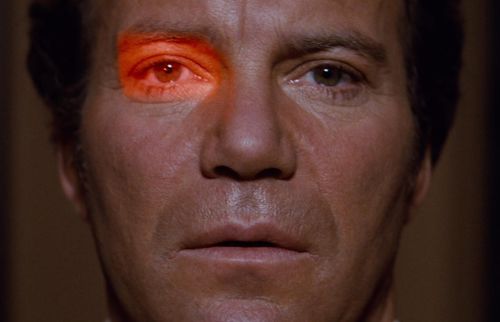


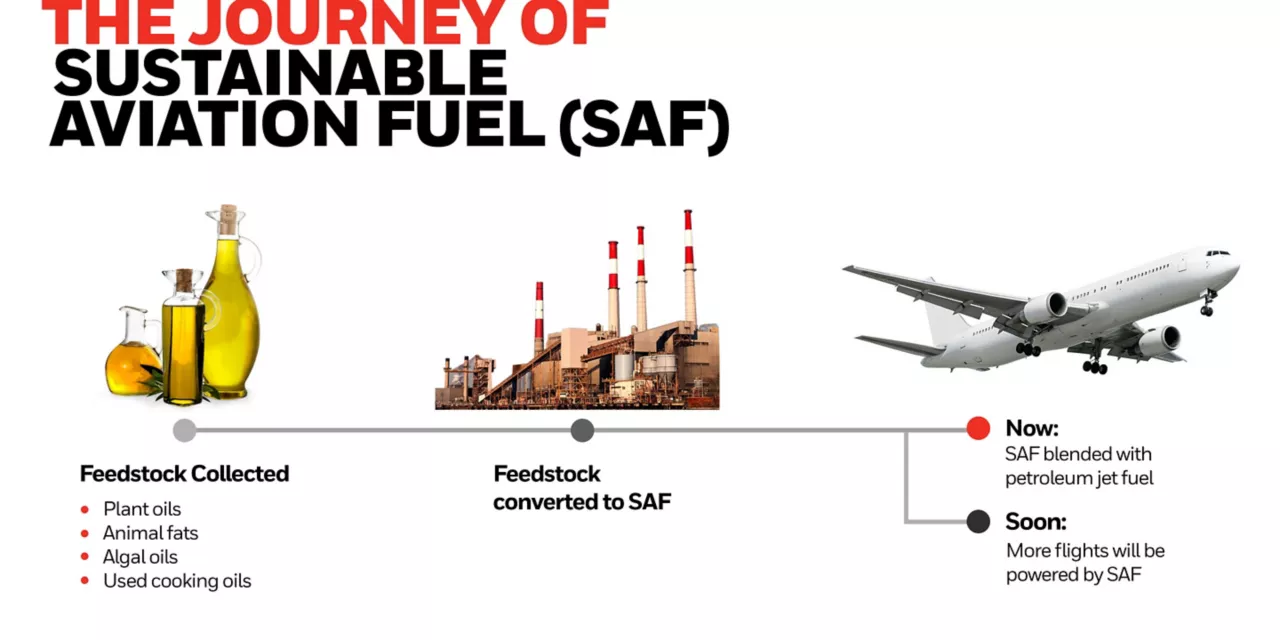









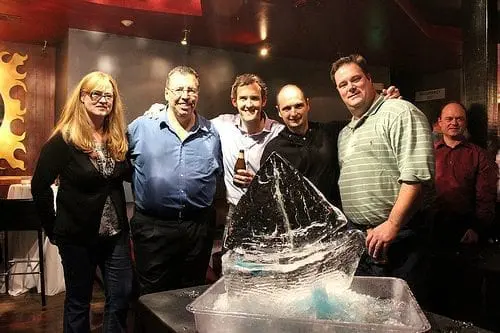




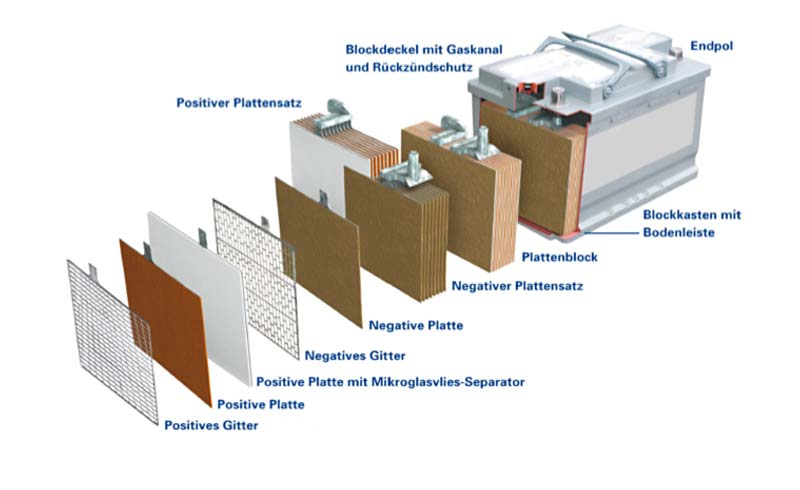


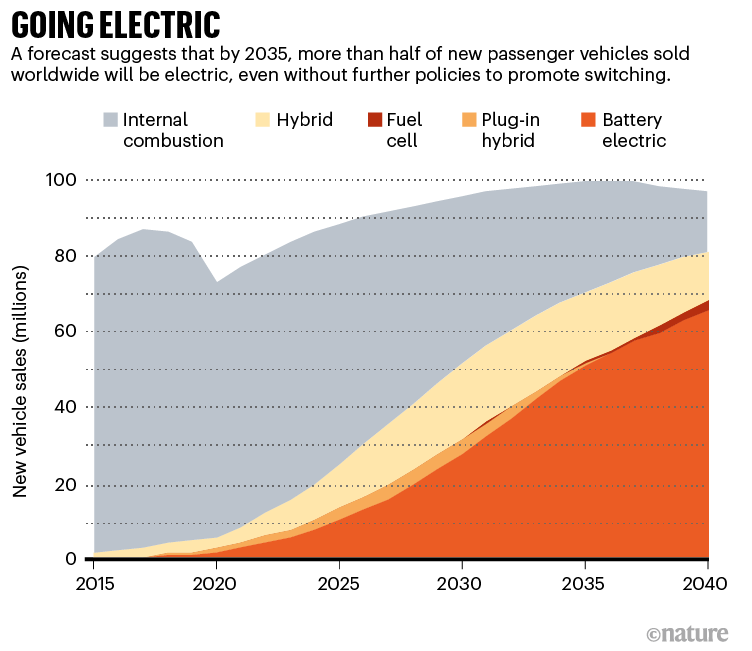




 Travelers looking for meaningful and inspiring experiences in Utah can find