Tag Archives: mining

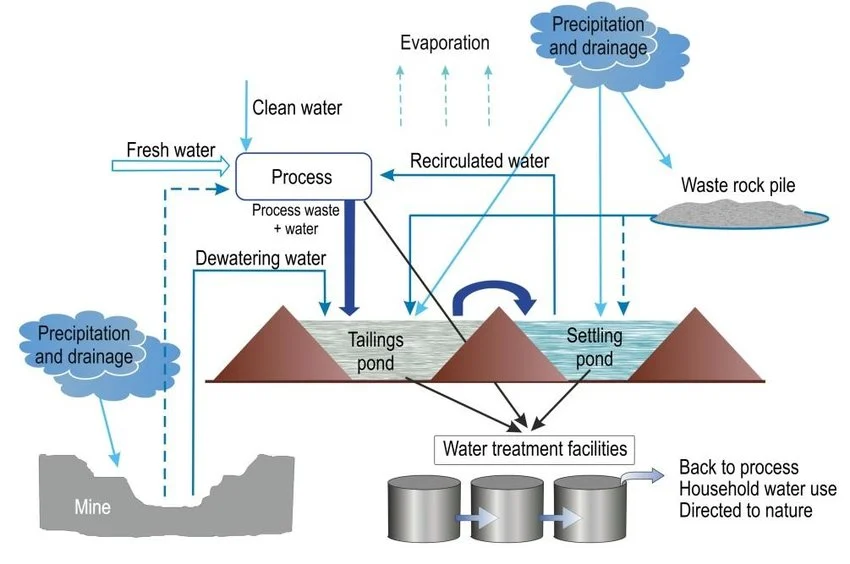
Engineering Water Futures in Mining: Engineering for Certainty across the Mine Water Treatment and Lifecycle

When it comes to mine water treatment, simple compliance is not an option, not anymore. Why? Because the operating environment has fundamentally changed. What used to be manageable within standard regulatory frameworks is now being reshaped by a convergence of high interest rates, increasingly aggressive ESG litigation, and the physical reality of water scarcity.

The industry is now running into hard limits that make traditional, linear approaches to water management untenable. You’re seeing the rise of zombie liabilities; long-term water obligations that persist well beyond mine closure, continuously drawing capital without any return. Alongside this sits the persistent handover gap, where the transition from active treatment systems to long-term closure solutions is under-designed, underfunded, or simply assumed to “hold.”

And then there’s the cost curve that doesn’t behave the way many expect. Removing the last fractions, those parts-per-billion levels of specific substances of concern, often requires disproportionate increases in energy, process complexity, and operational control. In certain contexts, that final level of treatment can rival, or even exceed, the cost intensity of earlier-stage operations.

Taken together, these pressures are forcing a shift. Mine water is no longer a compliance exercise, it’s a long-horizon technical and financial challenge that demands far more precision, foresight, and accountability than conventional models were built to handle.

  1. Geochemical Source Control: Designing against the Problem

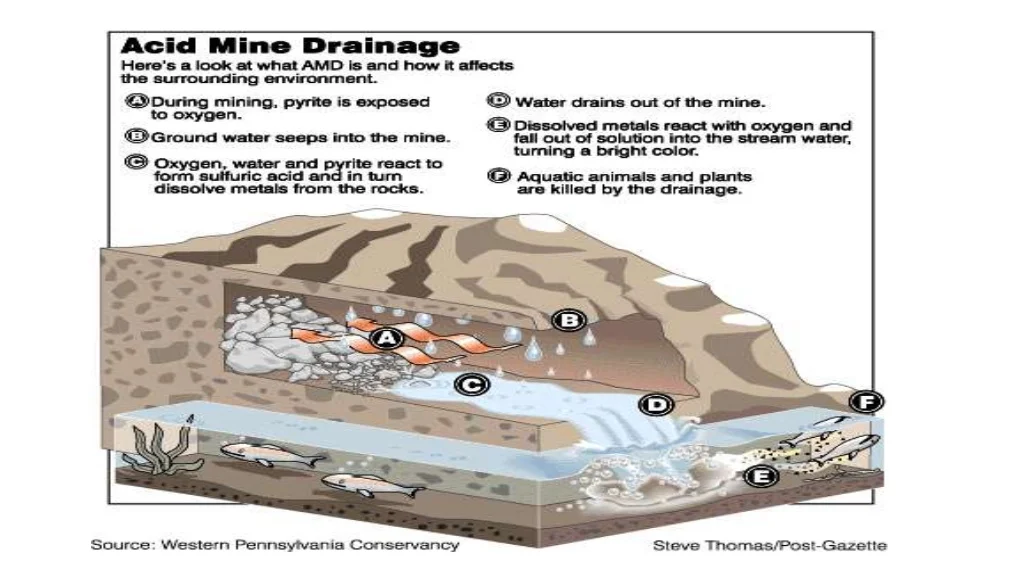
In the mine water treatment industry, experts in Mine Water Treatment Solutions understand the importance of source control, as it addresses the fundamental chemistry of mining before it becomes a liability. That is where aspects of Acid Mine Drainage (AMD) must be intercepted. Instead of treating the mine as a “source of dirty water,” experts treat the mine as a chemical reactor (prevention-based engineering) that can be controlled or deactivated by focusing on rock-air-water interface.

What this looks like in practice:

  • Oxygen limitation strategies: engineered covers or water saturation zones to suppress oxidation kinetics
  • Blended waste placement: pairing acid-generating material with neutralizing rock to stabilize pH evolution
  • Predictive modeling: tools like PHREEQC used not as academic exercises, but as decision frameworks for staging infrastructure

The value here isn’t just reduced treatment demand—it’s predictability. You’re not reacting to water quality spikes; you’re shaping them years in advance. That’s where disciplined engineering separates itself from reactive cost management.

  1. Selective Removal & Resource Recovery: Turning Liabilities into Process Streams

Bulk treatment is expensive because it ignores nuance. When everything is treated equally, everything costs more. The shift toward selective removal is really about precision, targeting what matters and extracting value where possible.

Consider the opportunities:

  • Metal recovery loops: SART systems pulling copper or gold from solution streams (which can be sold to smelter) where ion exchange resins are tuned for specific ions rather than broad removal. 
  • Salt valorization in brine systems: Fractional crystallization producing saleable sodium sulphate or gypsum. That reduces dependence on off-site hazardous disposal

This isn’t just clever chemistry—it’s strategic positioning. You’re moving from a cost center to a hybrid operation where treatment contributes to revenue. Investors notice that shift, because it fundamentally changes how water infrastructure is valued.

  1. Hybrid Treatment Pathways: Planning for Operational Reality and Closure

The lifecycle of a water mine design has to outlive the mine. Most failures in mine water don’t happen during operations. They happen in transition; the mine closes, flows change, chemistry shifts. And suddenly the system that worked yesterday is structurally wrong for today. That’s the real design problem. 

However, a resilient approach doesn’t rely on one technology, it layers capability across time:

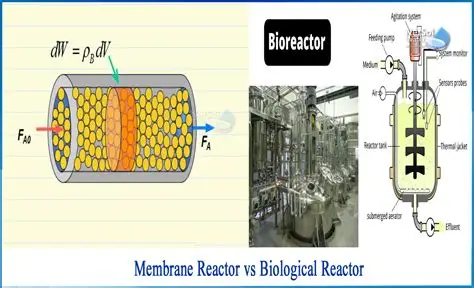
  • During operations: high-density sludge systems and membrane plants absorb variability, peak loads, and production-driven fluctuations
  • During closure: passive systems like wetlands or biochemical reactors take over once flows stabilize and intensity drops

But the real challenge isn’t choosing technologies. It’s designing the handover between them. Because if that transition is wrong, you don’t get closure, you get long-term operational debt disguised as environmental management.

  1. Water Quality Beyond Compliance: The Biological Dimension

Meeting discharge limits is no longer the finish line. Hitting regulatory numbers used to be the goal. It isn’t anymore. You can meet every limit on paper and still release water that quietly damages the ecosystem it enters.

That’s where things get more nuanced:

  • Whole Effluent Toxicity (WET) testing exposes what chemistry hides: It’s not about what’s in the water, it’s about what it does
  • Ionic balance matters more than concentration: Salinity, ionic ratios, small imbalances can ripple through entire ecosystems. Helps avoid high salinity or imbalances that disrupt aquatic life
  • Site-specific ecological alignment: One-size-fits-all discharge doesn’t work, water needs to fit where it’s going, not just pass a standard checklist. Tailoring treatment outputs to match receiving environments

For you as an operator, investor, or project decision-maker, this is bigger than compliance. It’s about avoiding legacy problems that don’t show up immediately, but hit hard when they do.
In essence, in mine water, nothing really disappears, it just shows up later, usually more expensive, and far less forgiving. The difference isn’t technology. It’s mindset. The operations that endure are the ones that stop thinking in phases and start thinking in consequences, because every shortcut taken today has a way of resurfacing when the system is least prepared to absorb it.

Basic Living Standard Arithmetic For Ottawa And All Governments

September , 2024

To: Canadians concerned about prosperity 
From: Don Wright 
Date: September 4, 2024
Re: Some Basic Living Standard Arithmetic for Governments

Governments often talk about “creating jobs,” but what they really do is choose some jobs at the expense of others. With their myriad spending, taxing and regulatory decisions, all governments try to direct job growth to different sectors – public or private, services or goods, resources or non-resources, and so on.

We all hope governments choose wisely.

It would help if they started paying more explicit attention to one factor: The impact of their decisions on Canadians’ standard of living.

A country’s standard of living is largely determined by the wages and net government revenue its tradeable goods and services sector can pay while remaining competitive against international competitors. If a company or sector is uncompetitive, it will have to either lower its wages, pay less tax or go out of business. These pressures on companies are never-ending. They determine both the wages a sector can afford to pay, and, through the interconnectedness of labour markets, average wages across the economy.

Some industries are so productive they can pay relatively high wages and significant taxes and yet remain competitive.

Industries that aren’t as productive can only pay lower wages and less tax.

Governments whose policies have the effect of moving labour from one sector to another had better pay attention to such facts.

Canadians may not like it but many of the country’s best-paying and most tax-rich jobs are found in natural resources. I was head of British Columbia’s public service. For most of B.C.’s history the province’s economic base has been dominated by natural resource industries – forestry, mining, oil and gas, agriculture and fishing. For a variety of reasons, these industries face strong political headwinds. Many groups press to constrain them and diversify away from them. The alternatives proposed include technology, film and tourism.

A few years ago, I asked officials in the province’s finance ministry to assess the relative performance of these different industries along the two key dimensions of average wages and net government revenue. In 2019-20 B.C. spent approximately $11,700 per citizen. Half the population was employed that year. So, to “break even” (i.e., have a balanced budget), the province had to collect $23,400 per employed person. If you look at things this way, each industry’s “profit” or “loss” is simply its revenue per employee less $23,400.

No such calculation will be exact, of course.

Several assumptions have to be made to get to an average “profit” or “loss” per employee. But, with that caveat, the numbers the officials brought back were telling. The industry with the biggest return to the province was oil and gas, at $35,500 per employee. Forestry was next, at $32,900. Then mining, at $14,900, and technology, though only at $900.

By this measure of profit and loss, however, film was a money loser, at -$13,400, and so was tourism, at -$6,900.

The negative numbers for the film industry reflect the very significant subsidies that B.C. (like many other provinces) provides to this sector. The negative number for the tourism sector primarily reflects low average wages per employee, which translate into relatively low personal income tax, sales tax and other taxes paid by employees.

These “profit or loss” numbers are not in any way a judgment about workers in these sectors. People find the best employment available to them in the labour market. Relative demands in that market are determined by many factors, none of which workers control. That said, if governments consciously move resources from the “profit” industries to the “loss” industries, they had better be aware of the consequences for wages, taxes and the overall standard of living.

The numbers I’ve cited were for a single year in British Columbia. The same analysis for other provinces or for Canada as a whole would likely produce different numbers – though I’d be surprised if the overall pattern were much different. Voters will draw their own conclusions about the impact on British Columbians’ standard of living from constraining the resource industries and promoting other industries instead.

Unfortunately, this type of analysis is rarely done when Canadian governments make decisions about what types of jobs they want to give preference to through their taxation, spending and regulatory decisions. They should do more of it. Ultimately, if [they] care about Canadians’ standard of living, governments need to start paying attention to the basic arithmetic of that standard of living.

Don Wright, senior fellow at the C.D. Howe Institute and senior counsel at Global Public Affairs, previously served as deputy minister to B.C.’s premier, cabinet secretary and head of the public service.

2022 And NOT Another Year Closer To Private company Asteroid Mining

It’s been eight years since an historic landing took place between an European Space Agency drone and a comet.(which looked suspiciously a lot like an asteroid to us!)

At that time a report from Deep Space Industries laid out their business plans up to 2020 and what they had committed to  sounded more like science fiction than fact.

But it wasn’t and they’d already secured investors.

A 2019 announcement from NASA stating that it would be the National Space Administration in the lead instead ( NASA will soon begin hunting a nickel laden asteroid ) spoke volumes about not only the possibility of asteroid prospecting- but also to its inevitability in the private sector.

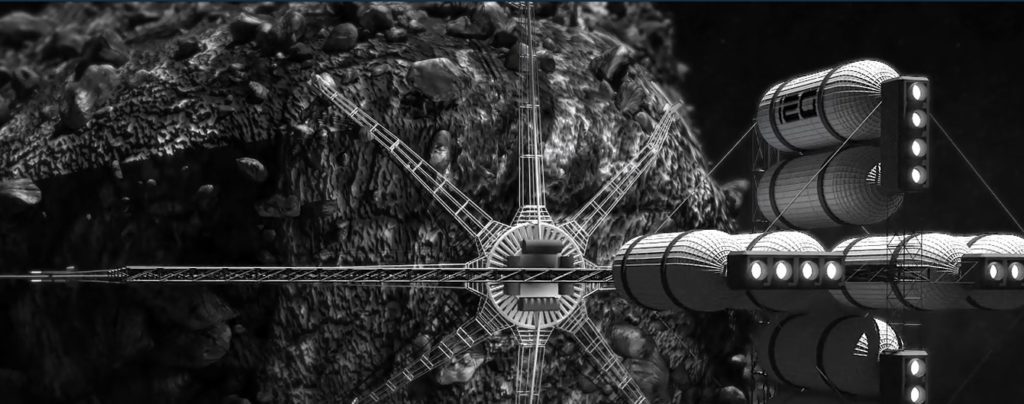
DSI concept of “coming soon” asteroid mining.

And yet, things have changed…..again.

In early 2020 Deep Space Industries (along with the only other asteroid mining company, Planetary Resources) were purchased by Bradford Space Group and ConsenSys Group respectively and all plans for private asteroid mining were shelved indefinitely. Deep Space Industries is now focused on developing space propulsion systems and ConsenSys is now focused on developing blockchain  security applications for space technology. 

What could have been- Deep Space Industries ambitious plan before the take over

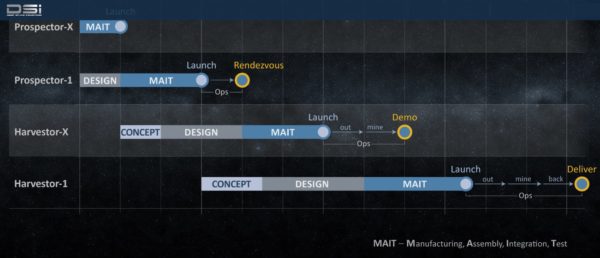
Their plan was to send an entire fleet of prospector spaceships to Near-Earth asteroids in order to harvest them for precious metals and other undisclosed resources. (space rubies anyone?). Starting in 2015, Deep Space Industries were to begin their operation by sending three small spacecraft called FireFlies to selected asteroids near earth for sample taking and photo reconnaissance. One year later, bigger craft called DragonFlies were to leave on four year missions to retrieve asteroid samples and bring them back to Earth. An ambitious project to be sure and not surprisingly, the timeline had been regularly pushed back.

dsi timeline mission planning

This press release from DSI said a precursor mission was scheduled to launch in 2017: “Recently, Deep Space Industries and its partner, the government of Luxembourg, announced plans to build and fly Prospector-X™, an experimental mission to low-Earth orbit that will test key technologies needed for low-cost exploration spacecraft. This precursor mission is scheduled to launch in 2017. Then, before the end of this decade, Prospector-1 will travel beyond Earth’s orbit to begin the first space mining exploration mission.”

daniel faber ceo deep space industries

Valuable materials exist in abundance in space and have strong economic potential. Using their tested indicators as investment attractors, Deep Space will move towards securing a commercial space operation and start into the next phase of its business plan. This involves concentrating firstly on processing rocket fuel from asteroid-harvested water.

This fuel, harvested and processed in space will save millions of dollars, since existing communications satellites will no longer be ‘thrown away’ when their fuel supply has been used up. (Satellites that can longer ‘move’ and stay in orbit by using their rocket engines are left to slowly fall towards earth and burn up in the atmosphere ).

Deep Space Industries past-CEO David Gump estimated that a satellite ‘refueled’ and saved from burn up is worth up to $8,000,000 per month. Those figures start to add up when you factor in the number of satellites in use and being launched every year. Another plan during this phase of their business operations is to return precious group metals such as platinum and gold back to earth.

After all, if you’re splitting up asteroids and discover metal commodities, why not bring it back down to earth?

Deep Space believed that other metals harvested from asteroids also have an in-orbit value. They are developing the Microgravity Foundry- a type of 3D printer that will be used to fabricate and machine metal parts in space from pure asteroid metal such as high strength nickel parts.

Deep Space cgi mockup of their planned 3D space printer.

Since this factory will operate in space and in zero gravity and produce parts in space, the idea of permanent space development and human habitation is economically feasible. Stephen Covey co-founder of Deep Space Industries and inventor of the Microgravity Foundry process: “What’s cool about the [3D] printer is that it can take its own parts, grind them up, and recycle them into new parts.”

Stephen Covey- inventor of the Microgravity Foundry process

Deep Space Industries past-CEO David Gump: “Using resources harvested in space is the only way to afford permanent space development. More than 900 new asteroids that pass near Earth are discovered every year. They can be like the Iron Range of Minnesota was for the Detroit car industry last century- a key resource located near where it is needed. In this case, metals and fuel from asteroids can expand the in-space industries of this century. That is our strategy.” Company estimates place a value of 1 ton of raw asteroid material at a worth of $1,000,000 [usd] in orbit.

Buy outs over the last few years have all but ended the dream and it will be the various space agencies such as NASA and ESA that will fulfill Deep Space Industries abandoned plan. For the Silo, Jarrod Barker.

Supplemental: http://www.businessinsider.com/deep-space-industries-asteroid-mining-plans-2013-1#ixzz2Io8Qg8uc

Updates: Deep Space Industries aligns with Luxembourg Government, applauds space commercialization policy.

Mexican commercial space company MXSpace partners with Deep Space Industries.

NASA hunting nickel 16 Psyche asteroid worth quadrillions of dollars.

Artificial Intelligence Or AI Is Set To Take Over Many Industries

Is there any question that Artificial Intelligence, or “AI”, is going to play a huge role in the future? The short answer is no- it’s already playing a large part today, so let’s delve into this new tech and look at how it is benefiting the energy sector and what we can expect to see from this AI phenomenon in the not so distant future.

AI In Energy Sector

Autonomous Vehicles Now Able To Stop Safely

Mendon, Utah – Autonomous Solutions, Inc. (ASI) has received Phase I funding from the U.S. Army Combat Capabilities Development Command Ground Vehicles Systems Center (formerly TARDEC) to improve the way heavy vehicles stop while operating autonomously. 

“Bringing large autonomous vehicles to a safe stop in varying environments can be challenging,” said Jeff Ferrin, CTO of ASI. “Having additional funding from the Army to further develop this technology will help us make autonomous vehicles safer, which is always our number-one priority.” 

The objective of the Army in awarding this grant is to develop and demonstrate a system that can be operated remotely and considers both the dynamics of the vehicle, as well as the environment, to optimally and safely bring a large ground vehicle to a complete stop despite the terrain.

“ASI has been working on terrain characterization with the Army since 2014,” said Ferrin. “This project will use similar technology to make sure the vehicle is aware of the terrain around it. This model of the terrain will then be used by the vehicle to ensure a safer stop is completed.”

A significant focus of this intelligent urgent stop initiative is machine learning. This improved technology will continuously monitor the interaction between a vehicle and its surroundings and update the internal model that is used to properly halt the vehicle. This process will allow the vehicle to learn and adapt as the terrain and environment change.

As the advanced solution is developed, tested and proven, it can be used by ASI’s autonomous vehicles across all the company’s multiple industries, including agriculture, automotive, construction haulage, mining, facility robotics and more.

According to Ferrin, “The system can be used with any drive-by-wire vehicle. It will interface with the brakes and steering to bring the vehicle to a safe, controlled stop.”

Details of the Phase I stage awarded to ASI include development of a concept design using commercial-off-the-shelf (COTS) sensors to perform safe deceleration of a large ground vehicle. A concept design report and performance analysis report are required deliverables before Phase II can be awarded. For the Silo, Brandon Taylor.

About ASI

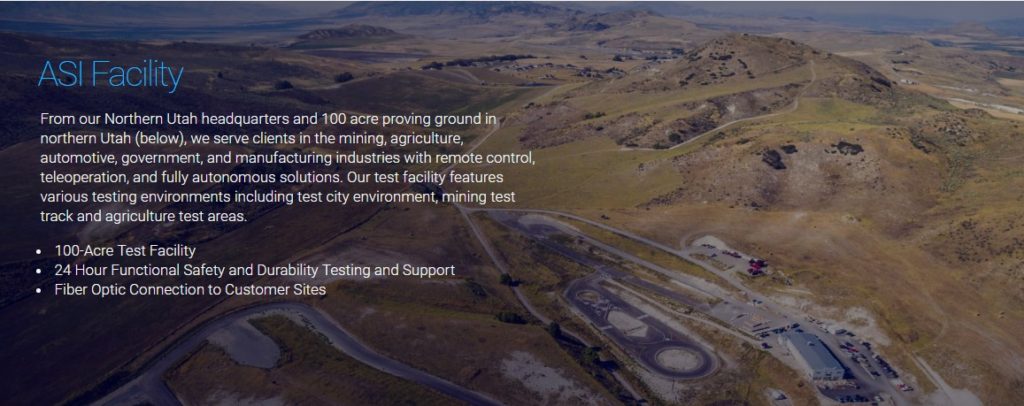
Autonomous Solutions, Inc. (ASI) is a world leader in industrial vehicle automation. ASI serves clients across the world in the mining, agriculture, automotive, government, and manufacturing industries with remote control, teleoperation, and fully automated solutions from its headquarters and 100-acre proving ground in northern Utah.