Tag Archives: cheese

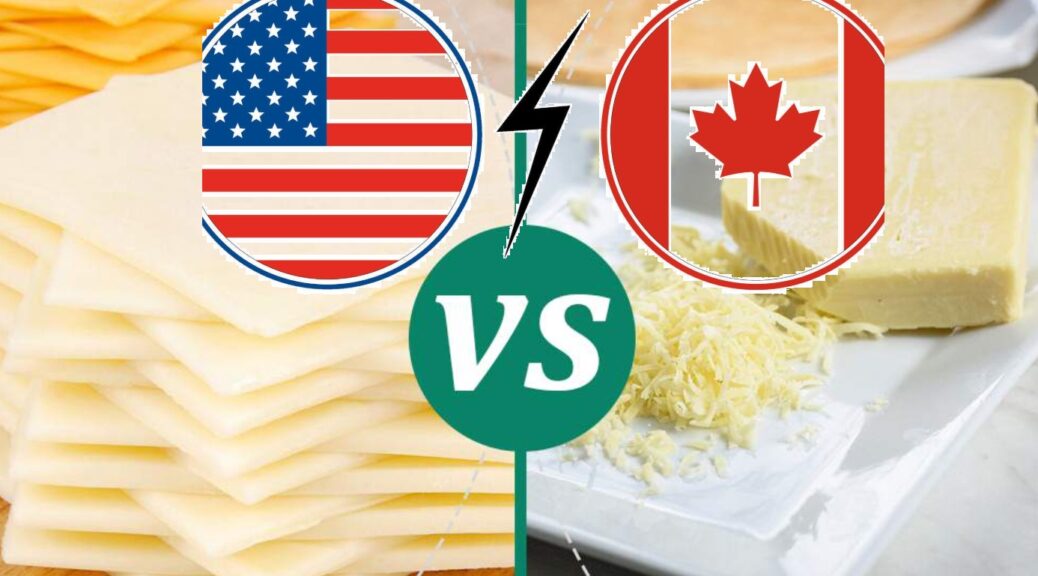
Why is the U.S. mad about who sells cheese in Canada?

Cheese has once again become a hot topic in the Canada-U.S. trade dispute.

While officials work to lower sectoral tariffs on Canadian steel and aluminum, the U.S. wants Canada to change its strict rules on importing cheese, which a Canadian agricultural economist warns heavily against.

“It’s not in the Canadian interest,” explains Al Mussell, a prominent Canadian agricultural economist and policy analyst.

Last month, U.S. President Donald Trump signed an executive order threatening a 50 per cent tariff on Canada’s dairy sector, which is now in a three day suspension period as negotiations continue.
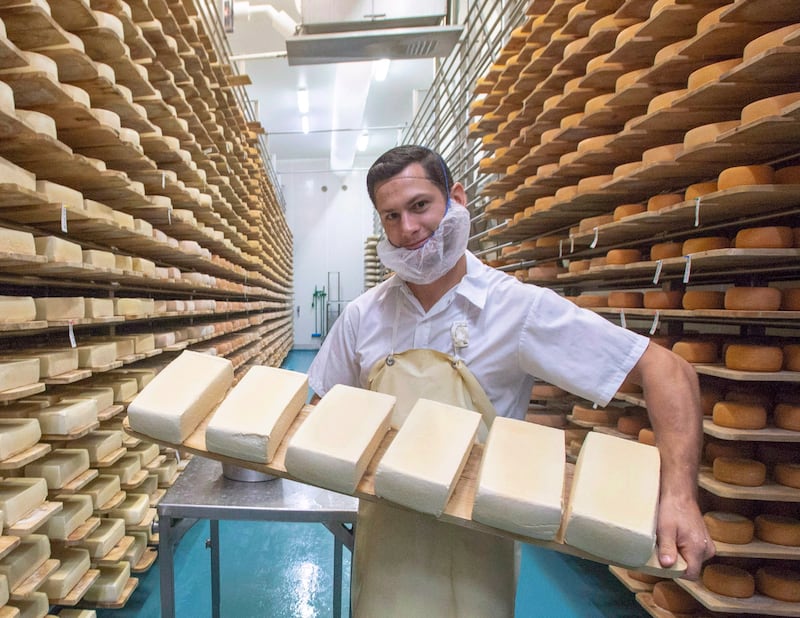
Raphael Kaiser stores some of the artisinal cheeses at the production facility of Fromagerie Fritz Kaiser in Noyan, Que., Thursday, Oct. 11, 2018.THE CANADIAN PRESS/Ryan Remiorz

Mussell explains that the U.S. wants more control over who can access Canadian retailers directly, so they can export some of their premium products to Canada.

“Of course, that’s not how our system works,” he says, adding that allowing it would threaten Canadian processors and complicate the domestic raw milk allocation system.

Canada currently gives dairy import quota access mainly to processors, while retailers are excluded under CUSMA. The U.S. argues that this restriction creates an unfair playing field because retailers are granted access under Canada’s trade agreement with the European Union.

The U.S. administration says “Canada is discriminating against the commerce of the United States through Canada’s tariff-rate quota allocation measures imposed on U.S. cheeses of all types.”

Canada and the U.S. have fought over this before

The dispute over who gets access to Canada’s dairy quotas is not new.

The U.S. first launched a formal dispute under CUSMA, arguing that Canada’s dairy import system shut out U.S. producers because it gave almost all its import permits to domestic dairy factories.

After a trade panel ruled that this was unfair, Canada changed the rules to let other dairy businesses, like distributors, get the permits too. However, retailers remain excluded.
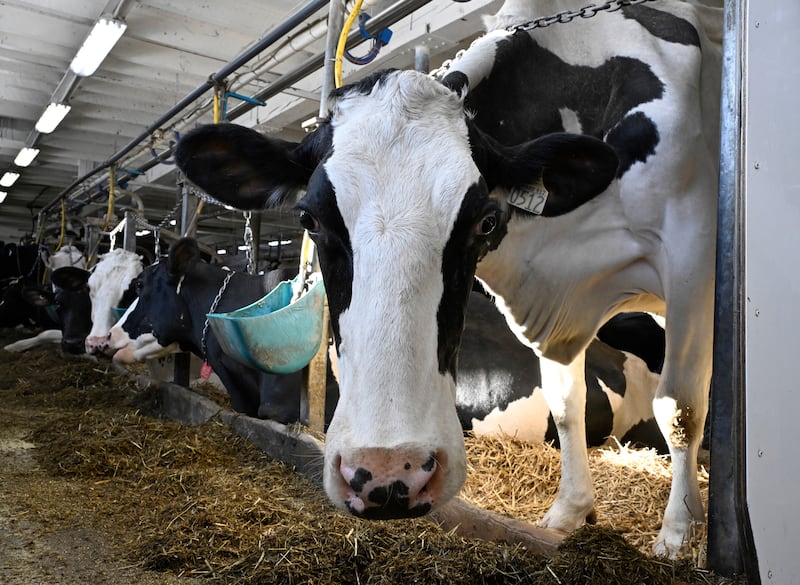
A cow in a dairy farm, Tuesday, January 23, 2024 in Saguenay Que. THE CANADIAN PRESS/Jacques Boissinot

When the U.S. challenged Canada again, arguing retailers should also be allowed direct access, the panel sided with Canada, saying it was in compliance with CUSMA.

Mussell says the U.S. continuing to press the issue despite that ruling is not a good sign.

“I think it goes far beyond cheese or dairy products,” he says.

“When the President can come in and make threats that contravene a decision that the dispute panel under the CUSMA agreement rendered… that’s really troubling.”

What happens if retailers get more access?

Mussell says giving grocery retailers direct access would not increase the total amount of U.S. cheese entering Canada, since the quota is already essentially filled, but it could shift sales away from Canadian manufacturers.

He says it could also complicate Canada’s supply management system because raw milk is allocated to processing plants on a regulated basis.
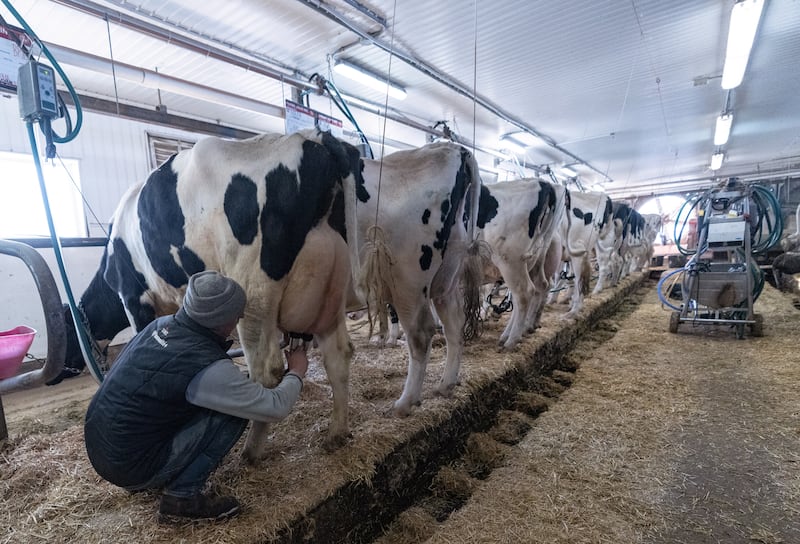
Cows are milked at a dairy farm in Granby, Que., on Wednesday, Feb. 5, 2025. THE CANADIAN PRESS/Christinne Muschi

“That could be costly to the Canadian dairy industry,” he says.

Mussell also warns that giving grocery retailers more direct access to imports could strengthen their negotiating position with Canadian dairy suppliers.

“Your’re kind of arming them in terms of the sorts of relations that they can have with their dairy suppliers,” he says.

‘Our national food sovereignty is not up for negotiation’

In response to the tariff threat, a joint letter by the Dairy Farmers of Canada and the Dairy Processors Association of Canada last week expressed disappointment that the dairy sector was dragged into a trade dispute once again.

“Our national food sovereignty is not up for negotiation,” said David Wiens, president of DFC.

“It is also clear that Canadians believe in the importance of having control over our food supply and ensuring that Canada’s strong domestic dairy sector is not compromised.”

The trade relationship in dairy already “massively favours the U.S.” said Mathieu Frigon, president of the DPAC.

“U.S. dairy exports to Canada far exceed Canadian dairy exports to the U.S. by more than $600 million annually and have increased by more than 150% since CUSMA came into effect,” said Frigon.

What about the quality of U.S. dairy?

Mussell says even if more U.S. milk entered Canada, there is a major difference between Canadian and U.S. dairy quality standards.

“You could have milk that shipped under the U.S. Grade A that would not be saleable in any province in Canada,” he says.
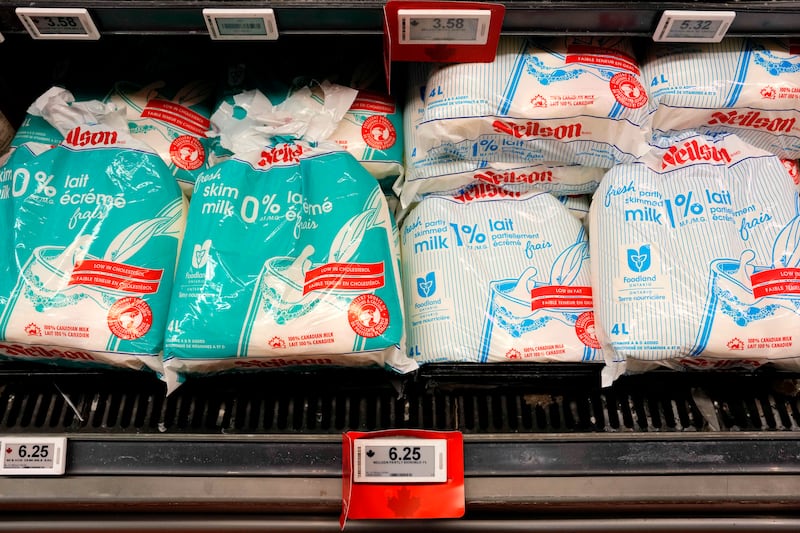
Canadian milk is seen at grocery store in Ottawa, on Wednesday, April 2, 2025. THE CANADIAN PRESS/Justin Tang

Moreover, he says a significant amount of American milk doesn’t even meet its own Grade A standard.

“Is that product being exported to Canada, made from that milk? We don’t know. They don’t label. We have no way of knowing that,” says Mussell.

He says federal funding for labs that monitor the U.S. milk testing system stopped last year.

“What’s the nature of the safety and quality of product that we’re getting from the United States? I don’t know that we have an answer for that, and it’s concerning,” says Mussell.

Anam Khan

For the Silo, Anam Khan/ BNNBloomberg.ca

Great Snacks To Take Everywhere

It is late and you are on your way home, but there is no open store to get something to eat – does this scenario sound familiar? 

Or it’s maybe early in the morning and you just pulled an all-nighter and you can hear your stomach making noises… Or you may be out in the middle of the street after your work and you forget to eat, and you are starting to feel dizzy. 

Is this something that you can relate to? If yes, you know that you need to think about your diet. 

It is easy to forget to eat when you have a busy day, especially when you are on the run with no store or restaurant around. 

This is why strategic snacking should be part of your daily routine. If anything, you should think of snacks as something that literally saves your life when you are super hungry. 

Let’s see how you can also have a delicious and easy-to-carry snack with you no matter the time of the year.

Drink Your Snack

Snacks should be healthy. 

Yes, this may be easier said than done, but with so many options on the market, you can actually have a healthy snack

For example, you don’t have to buy industrial pretzels if you can carry an apple with you, right? 

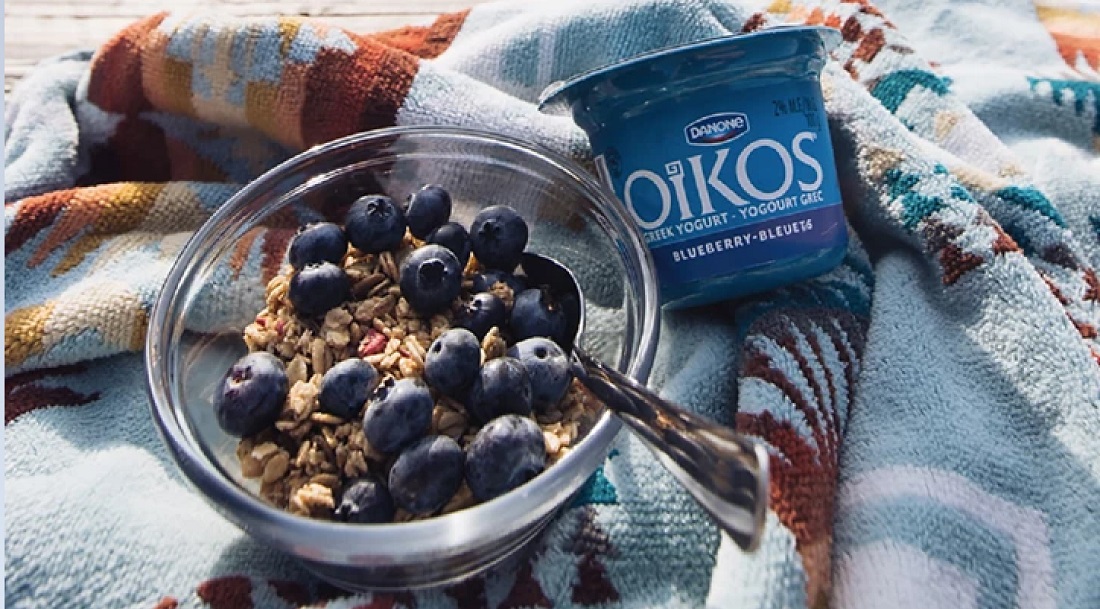
Still, if even bringing an apple puts you under a lot of stress, you should think about an even easier solution, such as a drinkable yogurt: this sort of snack is a great source of lean protein, usually packed with vitamins and minerals such as calcium and vitamin D, packed with numerous flavors from banana to peach. 

The great thing about drinkable yogurt is that you can mix it with other ingredients such as oats or use it as a dressing for your fruit salad. Fast and healthy!

Cheese And Whole-grain Crackers

Cheese and whole-grain crackers are a great snack idea if you want something that is easy to pack but enables bigger bites. 

This is something that you can bite throughout the day and even use as an addition to a salad. 

Spread cheese across crackers and you will have a quick snack in no time. 

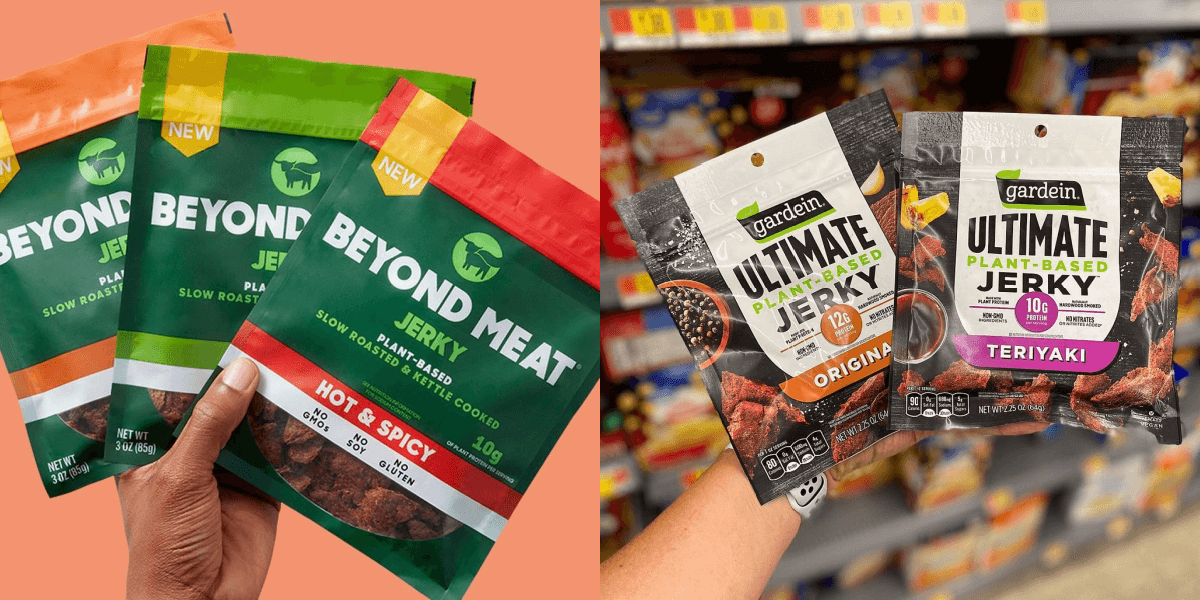
Beef Jerky

You cannot pull an entire day without meat? If so, you should plan ahead and think about having a meaty snack on you, such as beef jerky. 

This is something that is a mandatory part of every road trip, but it can serve while you are at work as well. 

Beef jerky is packed with protein, and as such, it is one of the best food items to keep your hunger under control. 

If possible, choose organic, and grass-fed beef jerky from a local store, and avoid shopping for beef jerky from the gas station. 

Did you know there are even tasty vegetarian jerky options?

You’ve got many snack choices to choose from once you start dealing with preparation. 

In no time, you will discover that there are many food items that you can carry with you easily, throughout the day and eat as you go. 

A little prep will be needed, but it’s nothing you won’t be able to handle. 

Extra Seven Snacks To Take Everywhere

  • Berries
  • Nuts
  • Hard-boiled eggs
  • Protein bars
  • Carrots
  • Grapes
  • Dried fruits

Cookbook Provides Uncomplicated Yet Sophisticated Cooking for Everyday

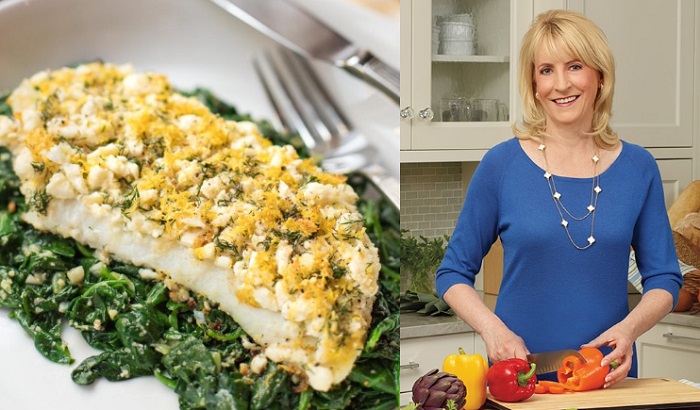
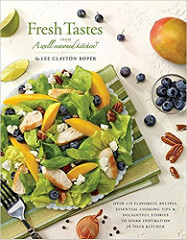
Award-winning cookbook author, Lee Clayton Roper, shows home cooks how to explore their culinary creativity with her award-winning, delicious cookbook, Fresh Tastes.  This beautiful book delivers over 170 flavorful recipes, essential cooking tips and delightful stories to spark inspiration in your kitchen.

Lee takes the “complicated” out of timeless classics, simplifying the process while ramping up flavors, using fresh ingredients when and where possible.  She shares personal reflections on lessons she has learned in the kitchen from those who have inspired her, along with 65 beautiful food photos, along with process shots of key preparation steps.
Fresh Tastes CookbookFresh Tastes epitomizes Lee’s culinary tastes, balancing an innovative approach with uncomplicated preparation techniques. Sophisticated in flavor and beautiful to present, the recipes in Fresh Tastes are prepared with the best quality, readily available ingredients designed to maximize flavor. Some of Lee’s delicious recipes include:
Prosciutto, Fig and Goat Cheese Tarts
Roasted Eggplant and Tomato Soup
Tomato and Peach Salad with Lime-Balsamic Dressing
Layered Salmon Salad with Avocado-Lime Yogurt Dressing
Grilled Rosemary-Dijon Chicken Breasts
Spicy Pork Chops with Argentine Chimichurri Sauce
Halibut with Celery Root Puree and Tomato Garnish
Chipotle Lime Shrimp Tacos with Tomato Mango Salsa
Roasted Root Vegetable Pot Pie
Peruvian Artichoke Tart
Pear Kuchen
Fresh Fruit with Brandy Custard Sauce
Drawing from her decades of experience, Lee provides readers with helpful advice on what is best for the dish, the flavor and the cook, considering such essential variables as seasonality and availability. Recipes in Fresh Tastes were evaluated by a team of volunteer testers across the country. Only the best, most flavorful, eye catching dishes made the cut. Fresh, flavorful and inspired, this collection of hand selected recipes in Fresh Tastes transcends the kitchen, reminding us all that every meal can and should be a simple yet sophisticated celebration of life.
“My approach with this cookbook starts with the confidence that, with the right preparation and a pinch of creativity, every dish can be extraordinary,” Lee explains.  “I have intentionally kept recipes and ingredients easy to get, often providing alternative substitutions.”
Lee Clayton Roper is an award-winning cookbook author, cooking instructor, public speaker and TV personality.  Her first book, A Well-Seasoned Kitchen received numerous rave reviews and is often featured in local and national press.  In 2010, A Well-Seasoned Kitchen achieved national acclaim, winning the prestigious “Living Now” gold medal.  With Fresh Tastes Lee expands her recipe collection, serving up fresh, delicious and sophisticated dishes guaranteed to inspire creativity in kitchen everywhere.  Lee tours the country sharing recipes and cooking tips and techniques in sold-out classes, leading cooking demonstrations, and is a frequent guest on radio and television and in print. 
“Roper’s follow up to A Well-Seasoned Kitchen expands on the approachable favorites that made her first cookbook such a hit, this time with a ‘fresh’ take on classics that lend themselves to parties and get-togethers.  This is a solid effort with practical dishes readers will likely find themselves returning to.”
Publisher’s Weekly and Entertaining Inspiration
FRESH TASTES
From A Well-Seasoned Kitchen
By Lee Clayton Roper
Southwestern Publishing Group
Hardcover/$34.95 usd
ISBN-13: 978-0984116362
Try these fresh and delicious recipes ( reprinted with permission from Fresh Tastes by Lee Clayton Roper):
APPLE, WALNUT AND STILTON CHEESE SALAD
SERVES: 6
The British have known for years that apples and Stilton cheese are a wonderful combination. In this delicious salad, they’re mixed together with spinach, walnuts and a walnut-flavored vinaigrette.I like to serve this salad with any grilled meat or alone as a meal.
1/4 cup raspberry balsamic vinegar*
1 1/2 teaspoons freshly squeezed lemon juice
1/2 cup walnut oil*
Salt, to taste
Freshly ground black pepper, to taste
10 ounces mixed baby greens (spinach, arugula, lettuce)
2 large Gala or other red apples, unpeeled, cored and chopped
1 cup (6 ounces) chopped walnuts, lightly toasted
1 1/2 to 2 cups (6 to 8 ounces) Stilton cheese, crumbled**
*If you can’t find raspberry balsamic vinegar, use regular raspberry vinegar and add 1 to 2 tablespoons of honey. If you can’t find walnut oil, substitute olive oil and add a few more walnuts.
**There are 2 types of Stilton cheese: blue and white. Either will work in this recipe. If you can’t find Stilton, you can substitute Gorgonzola or other forms of blue cheese.
In a medium glass jar with fitted lid (an empty Dijon mustard jar works well), whisk together the vinegar, lemon juice and oil until well blended. Season to taste with salt and pepper. Cover and set aside.
In a large bowl, toss together mixed greens, chopped apple, walnuts and cheese. Just before serving, toss with just enough dressing to coat the lettuce (you may have some dressing left over). Season to taste with salt and pepper.
VARIATION IN PRESENTATION: If you want to have a more formal, individually plated salad, then instead of chopping the apples, core and slice them. Toss the greens with part of the dressing and divide among six individual salad plates. Arrange the apple slices in a circular pattern over the spinach. Sprinkle the walnuts and cheese crumbles over the top. Drizzle with remaining dressing.
SEA BASS WITH A PISTACHIO CRUST
SERVES: 6
This dish comes together quickly and is delicious paired with green beans and roasted potatoes. It’s a bit on the rich side, so I suggest using fillets no more than 5 ounces each. If using one large fillet, you may need to increase the cooking time by a few minutes.
While the general rule of thumb for cooking fish is 10 minutes per inch of thickness, I’ve included the option to cook these filets for 12 minutes per inch. I find that with the crust on top, it can take a bit longer. It’s really to your taste — just remember, it will continue cooking after you take it out of the oven and let it rest.
6 (4- to 5-ounce) skinless Chilean sea bass fillets
1 cup salted, dry roasted pistachio nuts, very finely chopped (can chop in a food processor)
1/2 cup firmly packed brown sugar
3 tablespoons fresh lemon juice
1 tablespoon chopped fresh dill or 1 teaspoon dried dill
Freshly ground black pepper, to taste
Preheat oven to 400 degrees. Line a 15- by 10- by 1-inch baking pan with parchment paper.
Place sea bass fillets in prepared pan. In a small bowl, combine the nuts, sugar, lemon juice, dill and pepper. Spoon the mixture evenly over each fillet, pressing down to adhere.
Bake for 10 to 12 minutes per 1-inch of thickness of the fillet, or until fish reaches 140 to 145 degrees when measured with an instant-read thermometer. Let stand for 5 minutes before serving.
MAKE AHEAD: Fish with topping can be prepared but not baked up to 4 hours in advance, covered and refrigerated.
For the Silo, Trina Kaye.