Tag Archives: Low Frequency

Clothes From The Future- Sonic Jacket Has 180 Speakers To Subject Body To Sound Resonances

Our friends at Vollebak have taken these ancient ideas and used them in a new kind of transcendental technology. The Sonic Jacket, engineered with 180 speakers that fire frequency directly into your body. Evenly distributed across the jacket’s body, arms and hood, each speaker is just 32mm in diameter and 10mm deep, mounted in laser cut holes and able to generate frequencies from 4 Hz to 20,000 Hz. All fire inward towards the body rather than out into the room. So you don’t listen to this jacket. You feel it.

 The Sonic Jacket is not the first time sound and frequency have been used to alter the human body and mind. But it’s definitely the first time in history that you can walk around while having 4 Hz to 20,000 Hz fired directly into your body… so we decided to be our own guinea pigs

The jacket’s design is deliberately raw and functional. We’ve left the yellow wiring visible, the engineering exposed. “It’s made to look like a science experiment because that’s what it is,” says FBFX co-founder Grant Pearmain. “We’re not hiding the wires. Far from it.”

Patterned Vibration Pathways

Or read on for a short history of frequency in the human story…The earliest uses of sound for wellbeing were embedded in ritual, not medicine. Australian Aboriginal healers use the didgeridoo in ceremonies aimed at restoring spiritual and social balance, its low drones and pulsed rhythms strongly coupled to breath, chest vibration and trance. In ancient Mesopotamian and Egyptian temples, sung prayers and musical incantations were used alongside herbs and amulets. Illness was spiritual imbalance and sound was one route back to alignment. Patterned vibration was the path to group bonding, meaning making and altered states.

Classical Greek philosophy turned experience into theory.

For Pythagoras and his followers, simple musical ratios, octaves, thirds and fifths, were evidence that the cosmos and the body were structured mathematically. This was the “music of the spheres,” the idea that music could tune the soul as you tune a lyre string. Plato and Aristotle developed ideas of ethical acoustics, arguing that particular modes and rhythms encouraged courage, restraint or contemplation. In India and China Nada Yoga treated sustained tones and mantras as a route to meditative absorption while Chinese qigong pairs specific syllables with organs and emotions, using sound to regulate qi.

Musical Pillars?

Temples, cathedrals and megalithic chambers don’t just contain sound, they shape, sustain and amplify it. The room becomes part of the instrument. Recent acoustic studies of Hindu temples show that pillared halls and carved stone surfaces create highly diffuse sound fields, with strong resonance and long reverberation that envelop chanting and bells. At Meenakshi Amman temple, some columns are carved as “musical pillars” that ring with clear notes when struck. Work on Hagia Sophia mosque in Istanbul, built a millennium and half ago, has shown that its enormous dome produces a reverberation time of around 11 seconds, so that chant blends into an almost continuous halo of sound.


Archaeoacousticians study the sophisticated sonic mechanics of sacred spaces. They have found that chambers in many prehistoric sites in Europe and the Mediterranean strongly amplify frequencies around 108 Hz to 110 Hz, the “megalith frequency,” overlapping with male chants and drum tones. The American psychiatrist and neuroscientist Ian Cook found that at 110Hz, the brain shifts from analytical and verbal focus and towards emotion and non-verbal processing. These chambers were machines for generating calm introspection. Whether ancient builders understood this or simply worked until they got a building to sound the way they wanted, the result is the same… spaces that hack our brainwaves.

The Great Pyramid of Giza has become a focal point for studies into architecture and sonics. Its internal chambers behave as acoustic resonators, supporting standing waves at particular frequencies. Measurements in the King’s Chamber indicate strong modes in the low-frequency range, with some analyses highlighting a resonance near 117 Hz. The granite coffer inside the chamber has its own resonant frequencies, excited by striking or humming into it. Christopher Dunn’s “Giza Power Plant” theory argues that the whole structure is a coupled oscillator that converts seismic vibration into energy via piezoelectric granite.

Neuroscience has given us a more precise map of how different frequencies affect our mental state. Alpha waves, around 8 Hz to 12 Hz, are associated with relaxed wakefulness, internal focus and reduced sensory distraction. Theta, around 4 Hz to 8 Hz, shows up in drowsiness, early sleep, deep meditation and certain creative tasks. Gamma activity, roughly 30 Hz to 100 Hz, correlates with higher-order cognition and focused attention, working memory. Flow states – the feeling of total absorption in a task – have been linked to increased frontal theta alongside moderate alpha and bursts of gamma.

The brain, it turns out, has frequency signatures for different modes of being.

The idea that external sound can nudge the brain toward specific states is called entrainment. Present a rhythmic stimulus and the brain’s oscillations may start to synchronise with it. Pump slightly different tones into each ear, say 210 Hz and 200 Hz, and the auditory system generates a perceived third beat at the difference frequency, 10 Hz, which the brain allegedly follows. This is called the frequency-following response and it’s the theoretical underpinning of binaural beats and a growing number of apps, wearables and YouTube channels promising alpha for relaxation, theta for meditation, gamma for focus.

The man who came up with binaural beats was Robert Monroe. A radio executive who owned a production company in 1950s Virginia, Monroe began experimenting with sound patterns for learning during sleep. In 1958, he unexpectedly started experiencing powerful vibrational states and episodes of apparent separation from his body, experiences he later documented in the book Journeys Out of the Body and two sequels. Rather than dismiss them, he spent the rest of his life trying to understand and reproduce them. In 1974, he founded the Monroe Institute as a non-profit research centre devoted to the systematic exploration of altering consciousness through sound.


The jacket has a number of different ways to control your frequency feed. A control unit includes an MP3 player delivering 10 pre-set frequencies while a large physical dial lets you explore and fine-tune the frequencies that really make you feel good. The unit is also fitted with a reader for Micro SD cards which can hold up to 1,000 pre-set frequencies so you can create your personalised library. We are also working on a Sonic Jacket app that will connect to the control unit via Bluetooth.

At the lowest frequencies, speakers can overheat. To get over this, the jacket will exploit one of the strange ways we experience frequency. If we are ‘played’ two slightly different frequencies, say 100 Hz and 104 Hz, we hear or feel the difference between the two – which is 4 Hz in this case. That’s how the jacket produces ultra-low frequencies without doing something less fun… like catching fire.

The jacket is not a one-off experiment. The science of frequency and consciousness is still being written. And this jacket will play a part in writing it. Portable, personalised, immersive sound therapy will become an essential tool when we want to feel more, or less, human. And as a wearable resonance chamber, engineered to shift the wearer’s cognitive and physiological state through sound, it marks the start of a new era in wearable technology.  NICK AND STEVE TIDBALL – FOUNDERS   

For the Silo, Jarrod Barker.

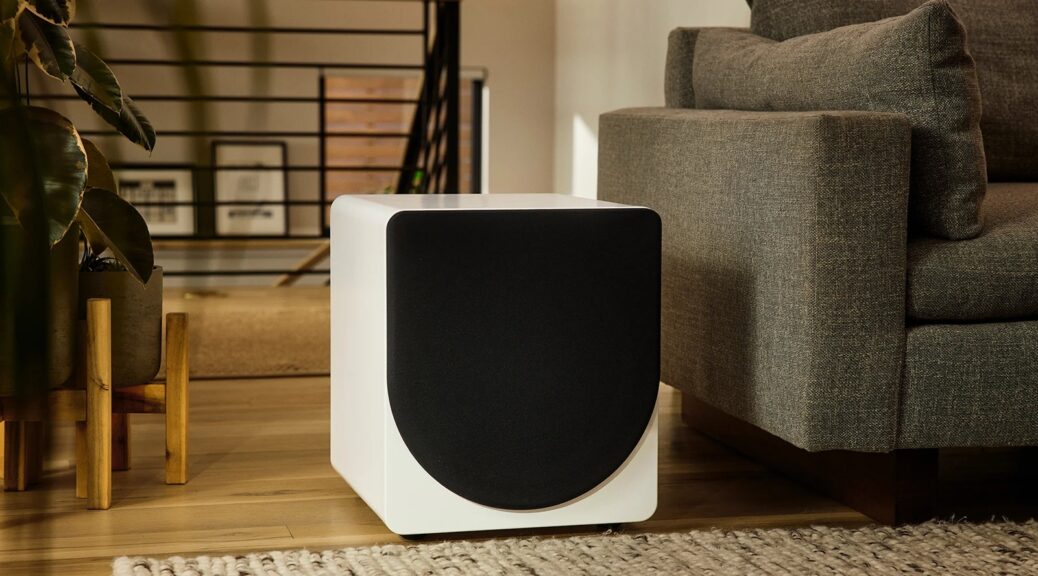
New Foundry F12 Subwoofer Includes DSP Room Correction

PS Audio Introduces Its First-Ever Subwoofer: the Foundry F12 With DSP Room Correction

New subwoofer features a custom high-excursion woofer, built-in amplification and versatile DSP room correction technology–

Boulder, Colorado, February, 2026 – our friends at PS Audio have just the introduced the Foundry F12 subwoofer, the company’s first ever subwoofer.

The Foundry F12 is a ground-up design featuring a high-excursion 12-inch woofer, 1,000 watts of built-in amplification, and advanced room mode correction technology that works in conjunction with PS Audio’s new Foundry control app.

“Designer Chris Brunhaver and I have been working on an ultimate-quality subwoofer for a long time,” said Paul McGowan, PS Audio CEO. “The Foundry F12 is the logical complement to our Aspen series loudspeakers – or any high-quality speaker. With the Foundry F12, reference-quality bass is not limited by room size, placement constraints, or compromise, and the built-in DSP room correction makes it easy to achieve accurate in-room low-frequency response.”


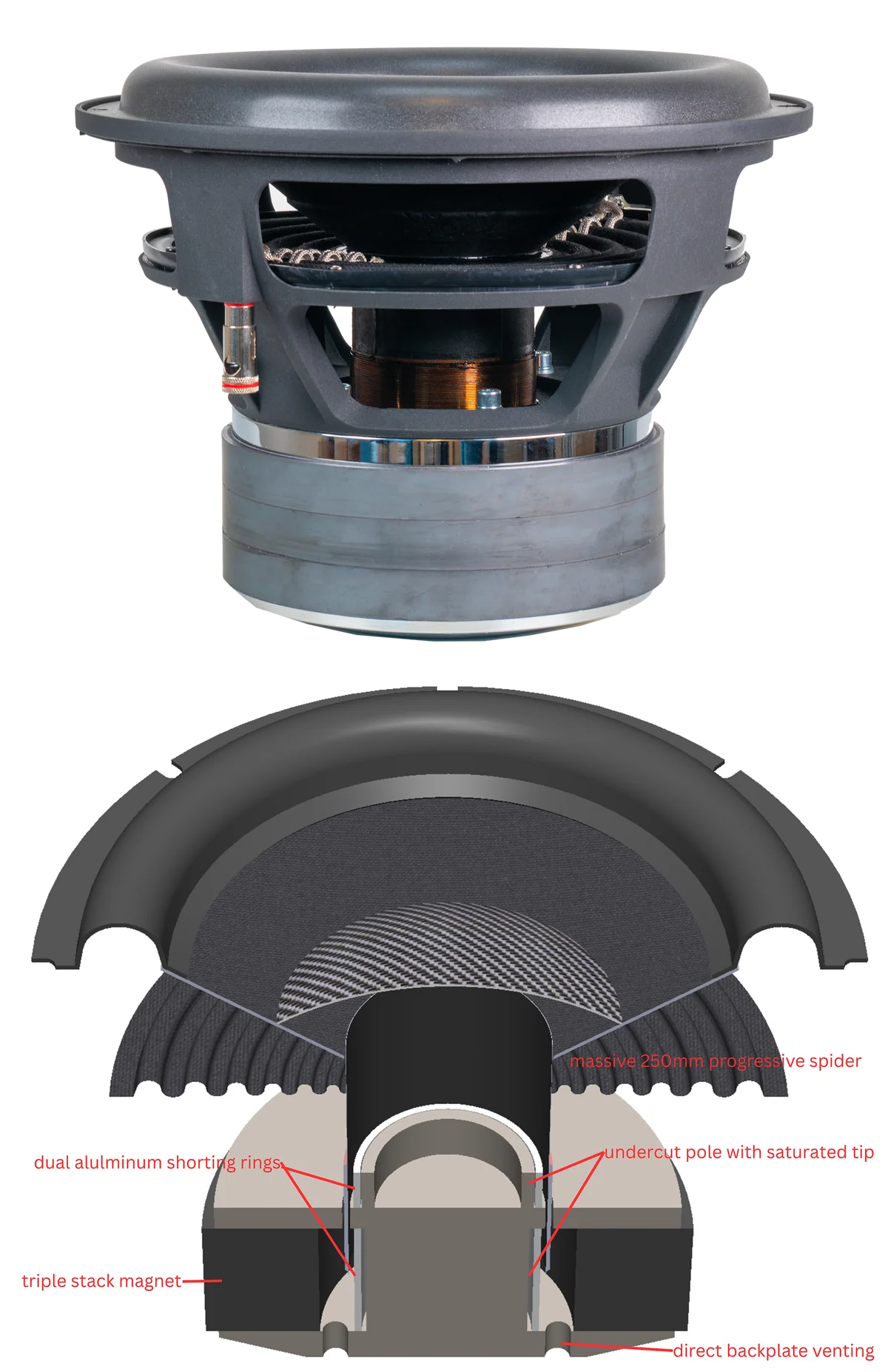
The PS Audio Foundry F12’s driver is a completely new design. It has an extremely long throw – greater than 2-1/2 inches – with a large 10-inch graduated Nomex spider. The motor structure utilizes large magnets, dual shorting rings and other elements to maintain a constant magnetic field throughout the driver’s excursion. The driver employs a paper cone with a carbon fiber dust cap, for high stiffness, low mass, and internal damping.

Ultimate High Current Subwoofer


The Foundry F12 includes a built-in 1,000-watt-continuous high-current amplifier with a massive 1,800-watt power supply. The result is a driver that delivers clean, articulate bass to below 20 Hz, with a fast, accurate response even at high output levels.

The Foundry F12 can be thought of as not just a subwoofer, but a solution to the low-frequency response anomalies every room has. The F12 employs the new Foundry control app, a purpose-designed app for iOS and Android that enables easy setup right from the listening chair. The Foundry app compensates for a listening room’s peaks and dips, (areas of bass reinforcement and cancellation) where most room problems occur.


The user can adjust the Foundry app’s settings either manually or via an auto EQ function. Comprehensive control is provided of volume, crossover point, delay, and parametric EQ. To use the automatic EQ, no external measurement mic is required; the listener just has to point their phone from the listening position and the app does the rest.

If desired, the user can tweak a variety of settings including EQ, high- and low-pass filters, phase, and more, and create custom user presets – for example, one preset for music and another for movies, or a setting for late-night low-volume listening. In addition to remote operation, the Foundry F12 offers rear panel controls, and a comprehensive set of balanced, single-ended and speaker-level connection options.

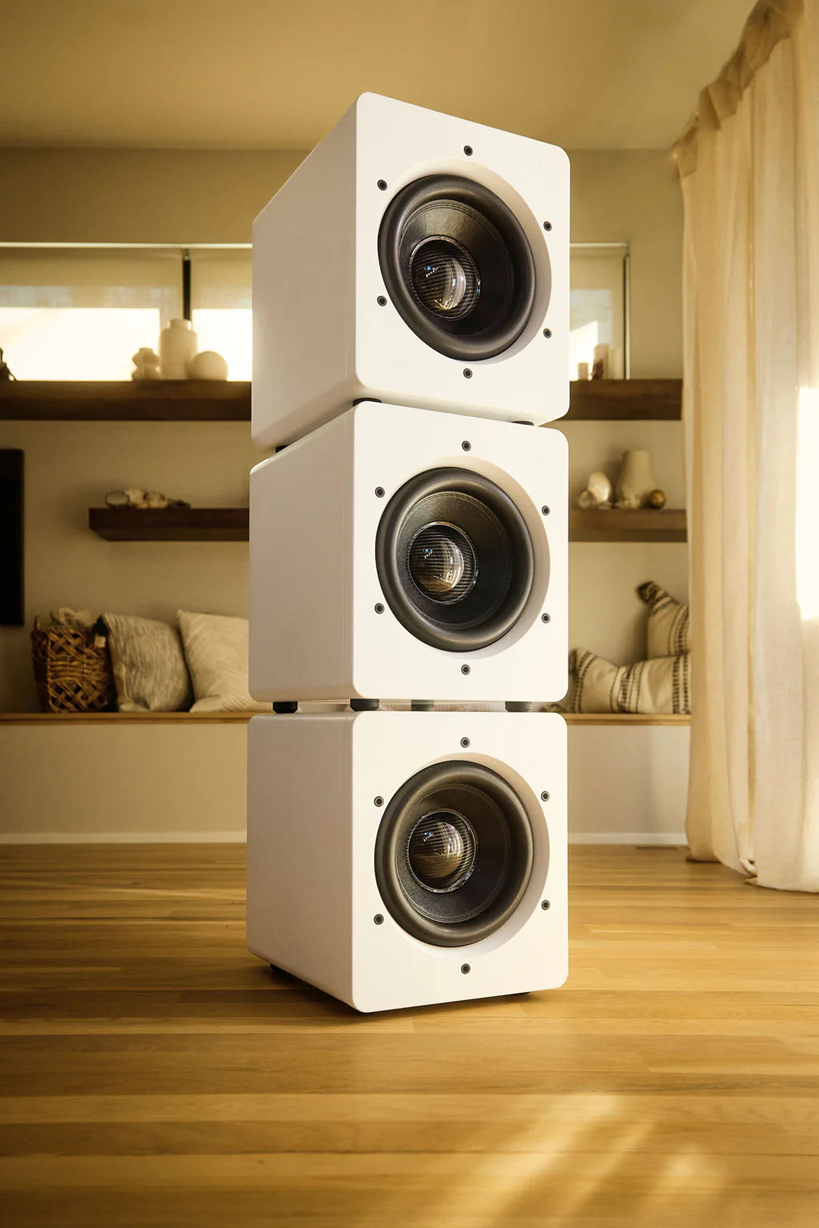
As an option, a wireless transmitter module is available, to eliminate the need for connecting cables. The transmitter utilizes WiSA E 24/96 wireless technology for extremely low latency and exceptional fidelity, and is compatible with other WiSA devices. For larger rooms and systems, an optional stacking kit enables multiple Foundry F12 subwoofers to be securely connected together for increased output and headroom.

The PS Audio Foundry F12 subwoofer is currently available in satin black or satin white at a suggested US retail price of $2,749 usd/ $3,721 cad. The optional wireless transmitter is available at $199 usd/ $269 cad and the stacking kit for $99 usd/ $132 cad .

For the Silo, Jarrod Barker.

PS Audio Foundry F12 Subwoofer At a Glance:


Custom 12-inch ultra-long-throw driver in sealed enclosure with 1,000 watts continuous of built-in high-current amplification

Extensive manual or automatic DSP control of EQ, delay, volume and other functions via the PS Audio Foundry app


Full complement of rear-panel connections to accommodate any system

Optional WiSA transmitter ​available for ultimate-quality wireless connectivity


Optional stacking kit allows multiple subwoofers to be connected together


Maximum output: 113 dB @2 meters

Frequency response: -6 dB @ 20 Hz anechoic (ground plane), flat to below 20 Hz in-room with room gain; ±0.5 dB to 500 Hz


Available in satin black and satin white finishes

Compact size for easy placement in any room


Dimensions (H x W x D): 14.75″ W x 16.75″ H x 17.5″ D (18.125″ with grille)


Net weight: 77 lbs.

About PS Audio
Celebrating 50 years of bringing music to life, PS Audio has earned a worldwide reputation for excellence in manufacturing innovative, high-value, leading-edge audio products. Located in Boulder, Colorado at the foothills of the Rocky Mountains, PS Audio’s staff of talented designers, engineers, production and support people build each product to deliver extraordinary performance and musical satisfaction. The company’s wide range of award-winning products includes audio components, loudspeakers, power regenerators and power conditioners.
 
www.psaudio.com

Combining Bass Loudness & Decay Times To Improve Stereo Quality

Research from acoustics scientist Dr. Floyd Toole indicates that bass quality accounts for about 30% of your system’s sound quality.  So, I’ve experimented with target curves that raise the bass loudness relative to other frequencies and added bass traps to reduce its decay times to improve my system performance and satisfaction.  My experiments are on top of already “perfectly time aligned” and EQ’d subs and main speakers via FIR convolution correction filters using Audiolense software.  OmniMic software is used to measure decay times and frequency response.    I’ll summarize my experience below.

Room Layout and Bass Trap Types

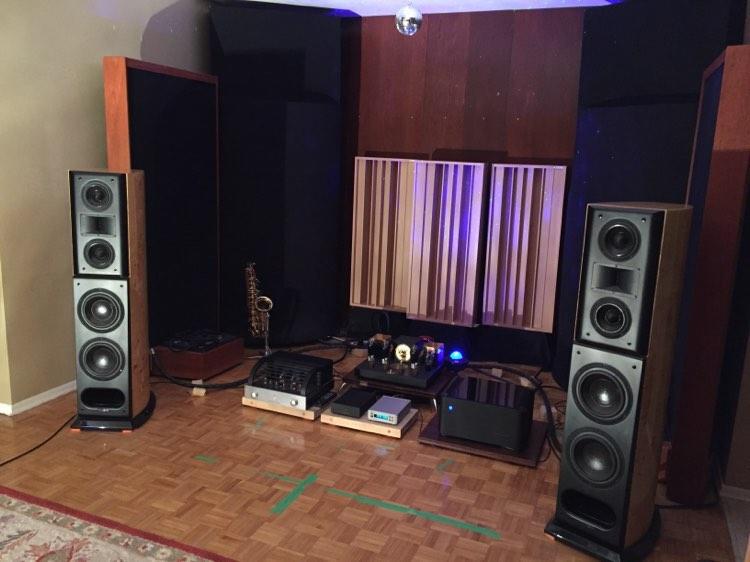
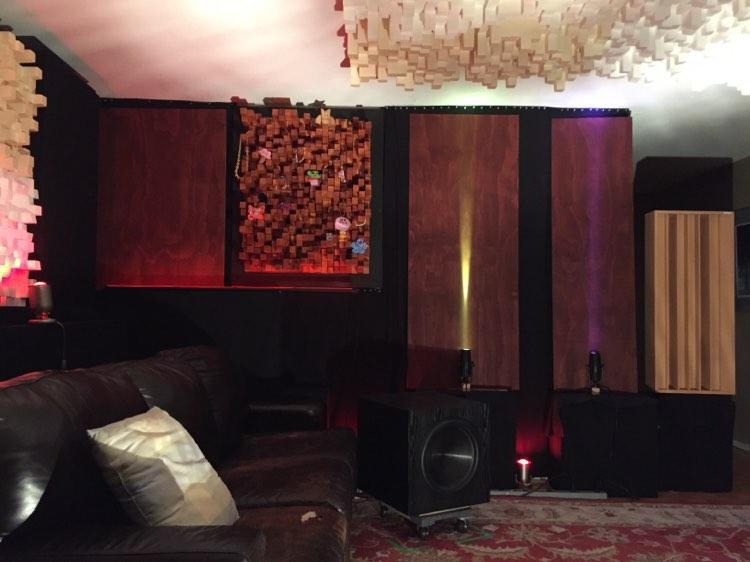
My living room layout (25′ x 11.25′ x 8′) is open on the left and right sides to a dining room and foyer and long hallway respectively.  At the back of the room on the right side it’s open to a den.  While these openings may act like bass traps allowing bass waves to escape before bouncing back with less energy, there is still much that can be done to improve the overall bass quality.  I use 25 bass traps, most in the listening room but 4 in a foyer/hallway, and 1 very large DIY in the dining room and den.  Six traps are “pressure” types that use a membrane to absorb bass, while the rest are “velocity” type traps that use insulation and friction to turn bass waves into heat.  Typically, pressure bass traps work below about 100Hz while velocity traps work above it.  Therefore, they are complimentary and both are needed when a system plays to the lowest bass notes.  Pictures of my room and trap locations follow.

Front Wall Trap Placement

Sept 27 Front wall2.jpg

Picture 1 above shows large bass traps in each front wall corner extending upwards to the ceiling.

Left Side Wall Trap Placement

sept 27 Left side wall1.jpgPicture 2 above shows black membrane traps on the floor against the wall (with boards atop) and a black velocity trap on its side on the far left.  Additional traps are behind the couch.
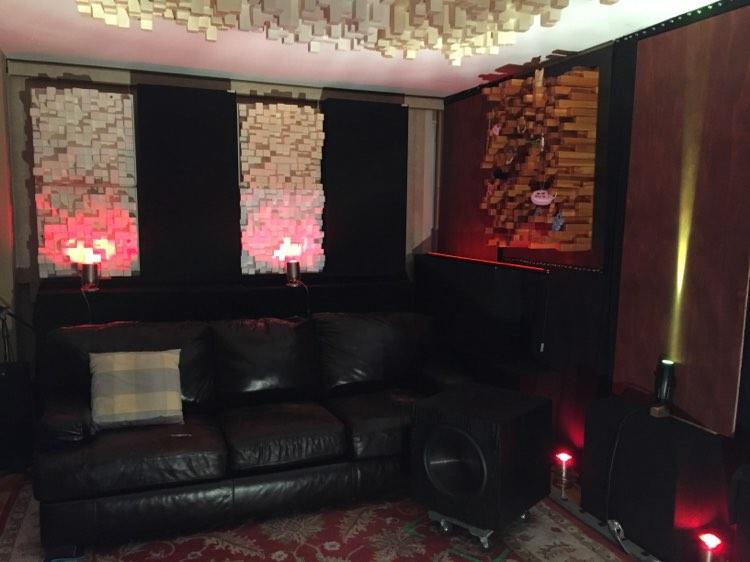
Back Wall Trap Placement

sept 27 Back wall1.jpgPicture 3 above shows the back wall with alternating white RPG Skyline diffusion and GIK Monster Bass Traps with FlexRange elevated above and behind the couch, while more GIK traps sit behind the couch on the floor.
Bass Loudness

It’s worth noting my preferred target curve to boost the bass frequency loudness is as follows:
250Hz is XdB
125Hz is X+1dB
63Hz is X+3dB
30Hz is X+6dB
This is a gentle almost logarithmic increase to partially-match our hearing’s “equal loudness curves.”

Bass Trap Positioning Affects Decay Times

If bass wavelengths are long and omni-directional, then traps can just be spread around the room I thought.  Well, in my room, it turns out that placing traps in the adjoining rooms and hallway helps to reduce bass decay times but not by as much as when the traps are moved and placed closer to the mic or speaker positions.  The membrane pressure bass traps for <100Hz were more effective when placed in a three-surface corner and in front of rigid concrete support walls where bass pressure is highest, and less effective in front of less rigid drywall etc.  The insulation filled velocity bass traps for >100Hz were sensitive to air space depth behind them, and I was surprised to find some places where they made little effect – not every wall is equal.  Trial and error and measurements helped find their best positions.

Calculating Decay Times

If your room is enclosed (and not open to the rest of the house), then one of the theoretical equations may work for you:
Decay Time = 0.3 X [(Cubic Room Volume/3532)(1/3)]
Divide your cubic room volume by 3532, then take the cubed root, and then multiply it by 0.3 which equals the average decay time based on room size.

However, if your room is an “open concept” or “great room” open to other rooms and hallways like mine, then the theoretical equation may not be best.  I prefer to measure decay time in 1/3 octave intervals and take the average from 20-20khz and then add/subtract 15% to represent an upper/lower limit respectively.  Each channel is measured separately to spot any anomalies and then their averages are combined as a single average decay metric.

Bass Ratio and “Warmth”


Perceived bass warmth is its loudness and decay times relative to mids/high frequencies and is a personal preference.  Perceived bass warmth factors include:
> frequency response (e.g. desired target curve to boost bass frequency loudness)
> decay time (e.g. absorption amounts)
> room acoustics (e.g. dimensions, materials, furnishings & acoustic treatments)
> personal preferences (e.g. preferred musical genres)

Musical genres seem to influence how much bass warmth we enjoy.
> Genres with More Bass Warmth: jazz, blues, R&B, soul, classical, reggae, folk
> Genres with Less Bass Warmth: electronic dance, rock, metal, pop, hip-hop

In attempts to quantify perceived bass warmth, I borrowed the “Bass Ratio & Warmth” metric found in F. Alton Everest’s book “Master Handbook of Acoustics” used for large spaces like auditoriums and concert halls.  It uses 2 bass octaves (centered at 125Hz and 250Hz) and compares it to the 2 midrange octaves above them (centered at 500hz and 1KHz).    Because it’s based on a ratio, it should work for smaller domestic rooms also I recon.  While large spaces use the RT60 metric for decay time, I prefer the T40 for domestic rooms.  It’s calculated as:
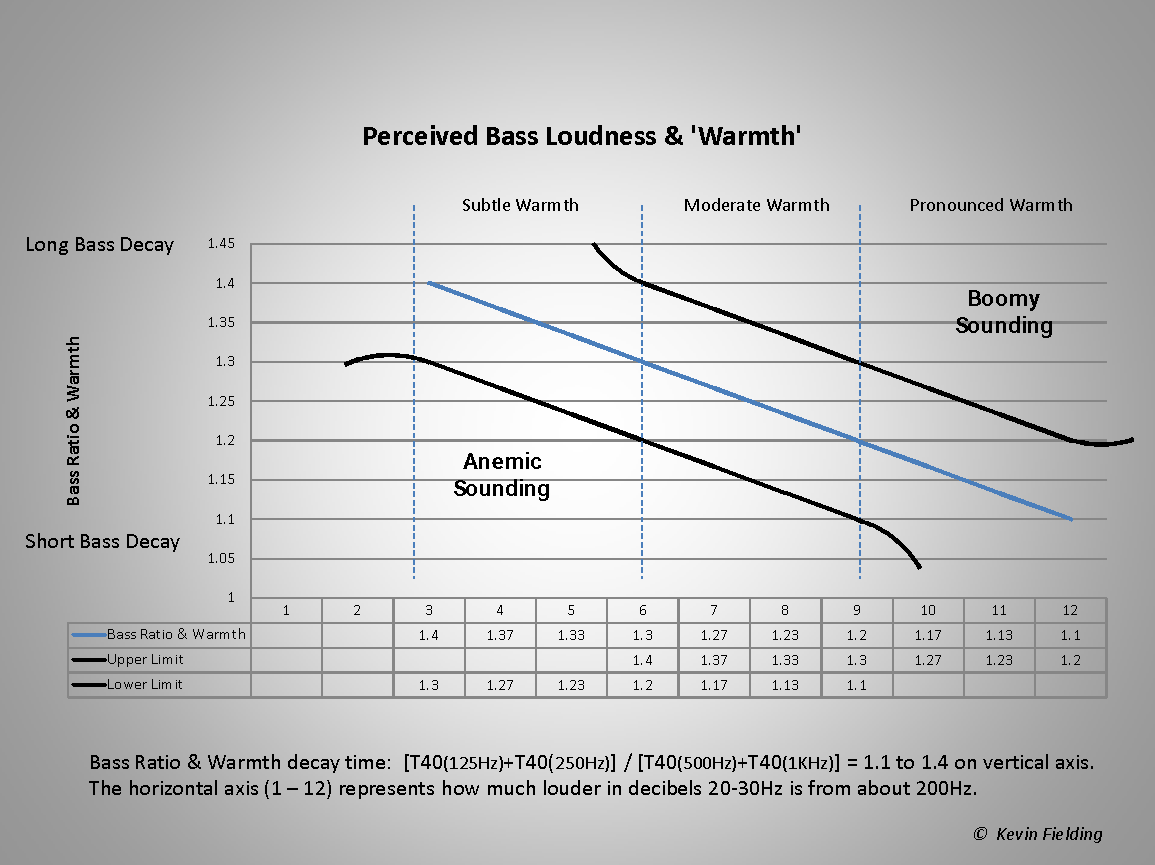
Bass Ratio & Warmth = [T40(125hz)+T40(250Hz)] / [T40(500hz)+T40(1khz)]  =  should be from 1.1 – 1.4

This means that the 2 bass octaves used in the formula have decay times 10% – 40% longer than the 2 midrange octaves (i.e. a 1.4 value is warmer than 1.1).

At one point I managed to get my bass ratio down to 1.2 which sounded a tad thin based on what I was used to hearing previously.  To compensate, I boosted the sub’s volume a bit.  Today’s ratio is 1.3 which sounds better to my ears likely because it is closer to how I’ve always had it but  I no longer boost the sub’s volume.  I might experiment with shifting the entire equation down one octave as I suspect my music with synthesized bass lines run deeper than an orchestra, so the calculation would be:
Bass Ratio & Warmth = [T40(63hz)+T40(125Hz)] / [T40(250hz)+T40(500Hz)]  =  maybe 1.2 – 1.5?

If bass warmth is affected by relative loudness and decay times, then how do we combine them into a workable ‘model?’  One way is to recognize that I can get bass warmth under two opposing situations: (A) short bass decay times but louder bass frequencies, and (B) longer bass decay times but with attenuated bass frequencies.  

The downside of (A) Short Bass Decay Time with Louder Bass Frequencies
> thin sounding as if harmonics are missing
> lacks a certain fullness
> possible listening fatigue from having the bass volume turned higher

The downside of (B) Long Bass Decay Time with Attenuated Bass Frequencies
> muddy or boomy sound where individual bass notes are not defined resulting in reduced clarity
> less clear midrange
> bass modes may be triggered for an unsmooth frequency response

And in between these two opposing situations is a continuum of possible situations that I attempt to show in Chart 1 below.

Tips

  • For starters, the subwoofers need to be perfectly time aligned with the main speakers as a minimum.  Use measurement software and impulse responses or get equipment like miniDSP or with DIRAC or ARC capabilities. or Audiolense to generate FIR convolution files.  If you only have analog sources then pull the subs ahead of the mains due to the sub’s group delay until they sound lockstep with the mains.
  • EQ bass peaks using FIR filters ideally or use DSP within JRiver/ROON or miniDSP, or graphic eqs as a last resort.  Measurements are a must.
  • Install both types of bass traps to augment each other and extend the absorption down to 40Hz or lower.  I’ve found that open concept rooms will naturally have lower high frequency decay times so you’ll likely need more bass traps to try and bring the bass decay times down and in line with the mids/highs compared to an enclosed room.
  • Take decay measurements as you move bass traps from one location scenario to another – it’s tedious work.  Try and achieve different Bass Ratios to hear how different they sound and take notes so you can revisit your best sounding scenario.  You want to strive for as flat a decay line through mids/highs with the bass about doubling the mids’ decay time.  Aim for 200 – 500ms decay time with the high end for stereo and the low end for Home Theatre.  Each speaker should have about the same decay times across the tested frequencies (i.e. little inter-speaker decay variance).
  • Try and preserve your mids/high decay times through reflections of hard surfaces like diffusion, or bass traps that have a membrane of sorts that reduce its absorbency of mid/high frequencies (e.g. GIK Monster with FlexRange).  Air acts as a natural absorber from +2KHz, and so does an open concept room that doesn’t allow the highs to reflect back with much energy. 
  • Experiment with different Target Curves that boost low bass frequency loudness.  

Want Less Bass Boom/Warmth?

If you want less bass warmth then: (i) move the starting point of the bass loudness boost from 250Hz to 150Hz or 100Hz (ii) use a less steep target curve to reduce the amount of boost at the lowest frequencies (iii) move speakers away from walls that reinforce bass (iv) add bass traps to reduce decay times and modal ringing (v) move your listening chair (vi) EQ out bass peaks.  

When assessing the perceived warmth of bass, consider frequency response loudness levels across bass and midrange frequencies and their decay times.

Chart 1 above shows how bass loudness and bass decay times can be combined to provide good bass quality from subtle to pronounced warmth.  For the Silo, Kevin Fielding.

Kevin Fielding offers acoustic measurements services and serves the greater Toronto area in person and will consult remotely with people farther away.  He is reachable at [email protected]

The Best Speakers Money Can Buy?

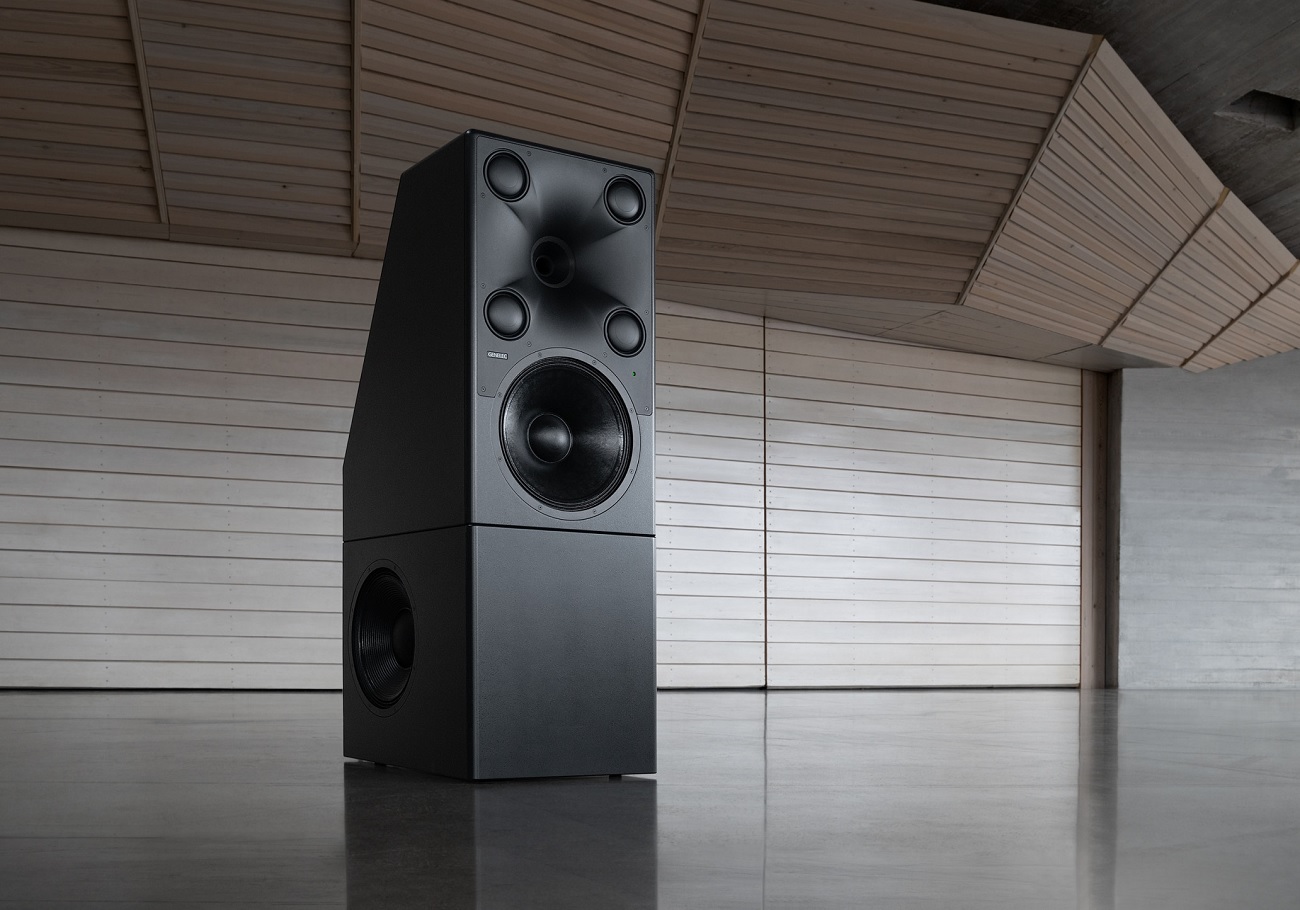
Genelec 8381A point source main monitor delivers unrivaled power and precision

NATICK, MA, May 16, 2023 — As part of its 45th anniversary year, Genelec has unveiled the 8381A Smart Active Monitoring system, a flagship floor-standing Adaptive Point Source™ design that fuses exceptional precision and envelopment with unrivalled LF control, huge headroom and high-resolution imaging. Designed for high-end music recording, mastering and audiophile listening, the 8381A creates a free-standing full-range monitoring solution that can intelligently adapt to any acoustic environment.

For audio professionals, the 8381A produces accurate full-band mixes that translate consistently to other rooms and playback systems, while audiophiles will experience every detail and nuance of a musical performance, just as the creators intended it to be heard.  

I first encountered Genelec powered monitors (more specifically monitor- more on this below) while on a scholarship at the Banff International Center for the Arts in Alberta, Canada. At that time (2010) I was unfamiliar with Genelec and had faith in the school’s choice of equipment: all the other available items were top notch.

Rosa Maria Robinson Bours

I settled on a single Genelec speaker as I was planning on a series of live mono recordings taking advantage of the talented classical guitar and voice cohorts such as Rosa Maria Robinson Bours. When the Genelec was delivered to my artist studio I was intrigued. It looked quite compact, it was black as soot and seemed to be as heavy as lead. After positioning and connecting the monitor I was blown away by the power, clarity and transparency for test playback and also while mixing and mastering tracks.

Let’s get back to the newest Genelec

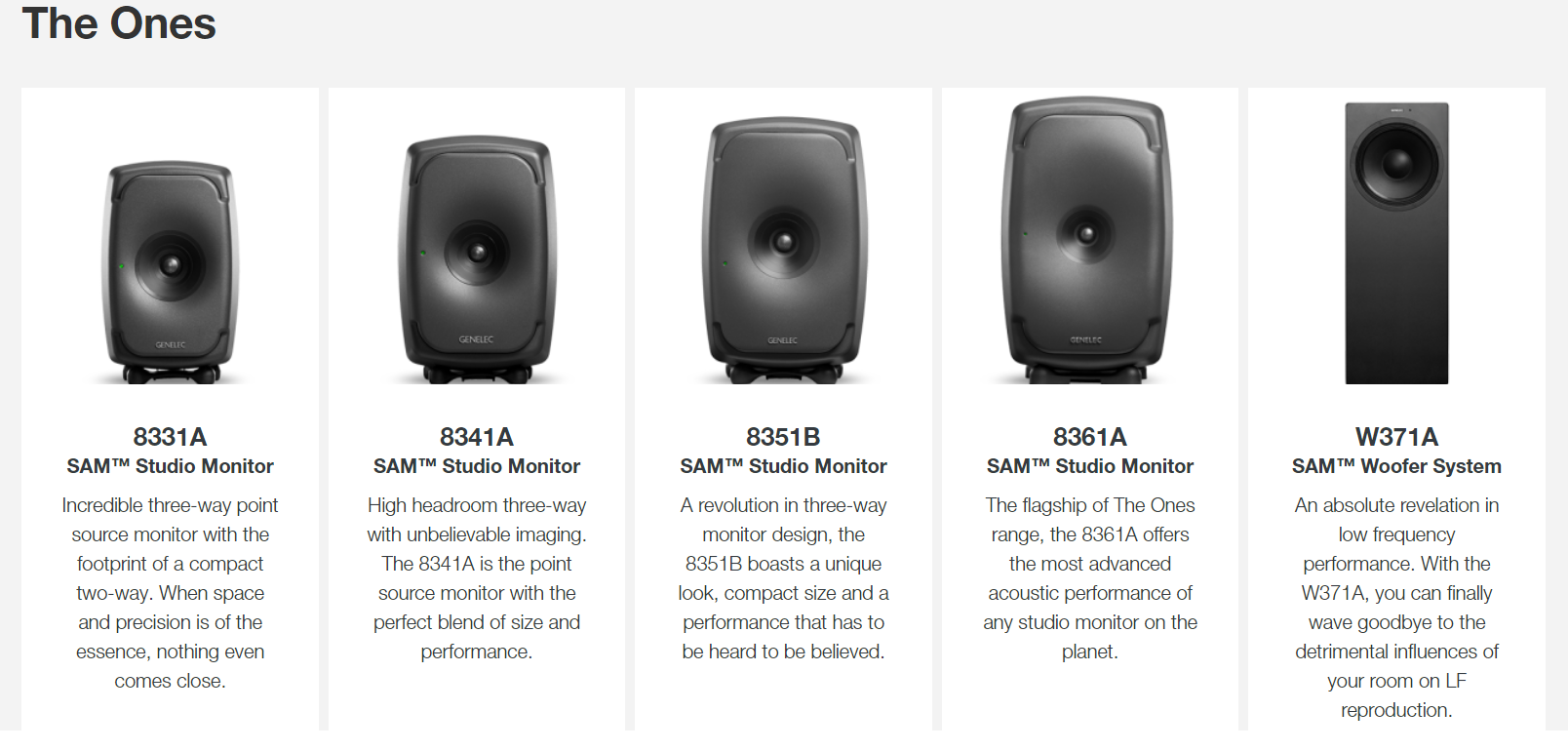
As a member of “The Main Ones” range, the 8381A system is acoustically coaxial right down to bass frequencies, and draws on proven technology developed for Genelec’s patented and award-winning “The Ones” family of point source monitors and the W371A Adaptive Woofer System, which themselves can combine to create a free-standing full-range monitoring system. However, the 8381A raises the performance bar even higher by offering controlled directivity and uncolored response both on and off axis, with an ultra-wide frequency response spanning from 20 Hz to 35 kHz. Additionally, with almost 6 kW of amplifier power and a staggering maximum SPL of 126 dB – the highest figure ever achieved by a precision point source acoustic design – the 8381A offers the most sophisticated features and specification of any audio monitor currently available.   

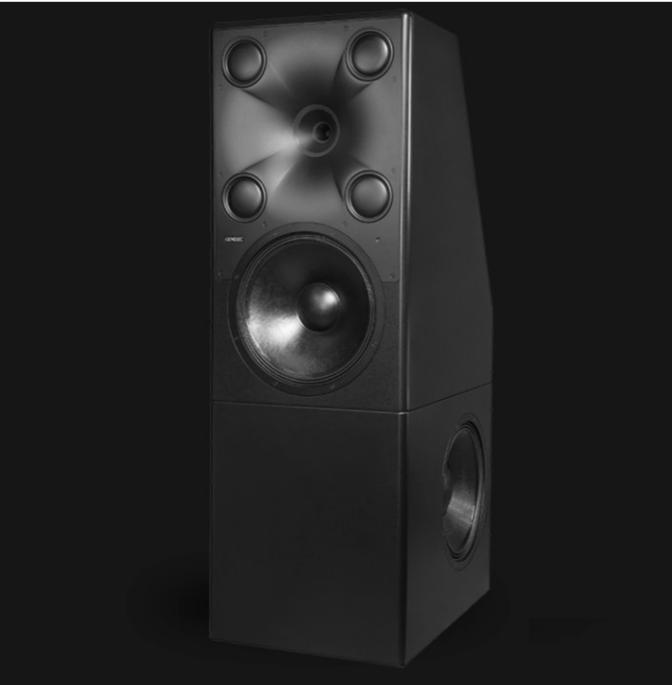
At the heart of the 8381A is a proprietary high SPL Minimum Diffraction Coaxial (MDC™) midrange/tweeter driver, which – combined with a powerful Genelec DSP engine – delivers extraordinary clarity, imaging and adaptability. This MDC driver shares a common acoustical axis with the 8381A’s four complementary 5-inch dome drivers, which are arranged as a midrange transduction system, and this unique array combines with a forward-facing 15-inch woofer to provide outstandingly stable directivity, control and coherence.  

To further enhance and extend the 8381A’s low frequency reproduction, a pair of high-performance 15-inch woofers employ the LF adaptive technology originally developed in the W371A, offering high resolution and supreme levels of low-frequency control – despite the effects of room acoustics. This technology allows the 8381A to tailor performance carefully to the room, offering flatter, smoother in-room response at the listening location, with LF imaging coherent with the full audio range. This flat and neutral LF response minimizes acoustic notching, and reduces detrimental reflections and resonances by the walls, ceiling or floor of the room.    

As part of Genelec’s Smart Active Monitoring family, the 8381A integrates tightly with Genelec’s GLM software, which can configure, calibrate and control entire Genelec smart monitoring systems. Based on experience from thousands of studios around the world, GLM minimizes the listening room’s influence on the sound, enabling the user to produce mixes that translate perfectly to other systems, whether the format is stereo, surround or high channel count immersive.

GLM also includes the ground-breaking GRADE room report feature, which gives the user a complete analysis of their room and monitoring system performance, providing specific observations and advice on any acoustical issues, helping users and studio designers alike to fine tune the room’s acoustic treatment, adjust monitor and listener positions, and optimize bass management.

Designed and manufactured to the highest standards of sustainability and environmental responsibility at Genelec’s headquarters in Iisalmi, Finland, the 8381A comes with a comprehensive SonicAdvisor™ system calibration and service package to jointly celebrate Genelec’s 45th anniversary, and the company’s total commitment to its customers and to sustainable development.   

“The demand for high quality free-standing full-range monitoring systems has been clear from the exceptional response to The Ones and W371A combination,” comments Genelec Managing Director Siamäk Naghian. “It was also evident that there was a desire from customers for a free-standing system that could deliver even more headroom and increased low frequency extension. And while we continue to offer a wide range of soffit-mounting main monitors, we’re confident that the flexibility and mobility of a floor-standing adaptive system like the 8381A will provide the perfect solution for any discerning user seeking a truly next-generation sonic reference.”   For the Silo, Jarrod Barker.