Tag Archives: the silo

How Termites Challenge Darwinism Theory of Evolution

Modern science lacks a unifying, interdisciplinary theory of life. In other words, current theories are unable to explain why life is the way it is and not any other way.

Dr. David Grinspoon writes about Charley Lineweaver’s review of “Scientists Debate Gaia,” a collection of essays gathered from an American Geophysical Union conference and by the published by MIT press. Charles H. Lineweaver is a Senior Fellow at Australia National University’s Planetary Science Institute.

Gaia author James Lovelock

He explained that James Lovelock (shown) proposed the Gaia hypothesis, in which Earth is an organism or system capable of self-regulation. He wondered: Can the existence of life be recognized from the chemical composition of a planet’s atmosphere? What would the Earth be like now, if life had never evolved on it? Would there be oxygen in the air? Would the surface temperature be hot like Venus or cold like Mars? In the mid-60’s, NASA consulted James Lovelock to assist in developing instruments for the Viking spacecraft to detect life on Mars.

He concluded that it wasn’t necessary to send a spacecraft to Mars. All you needed was to determine the composition of the Martian atmosphere –- if life was there, the atmosphere should be in chemical disequilibrium as it is on Earth. Recent observations, have detected methane on Mars indicating life.

Determining what life is and how to recognize it is the Holy Grail of astrobiology. To make progress, we need to explore the Martian subsurface and analyze the atmospheres of the nearest terrestrial planets. Lovelock’s Gaian chemical equilibrium test for the presence of life is fundamental to these efforts. Both NASA and ESA are putting their astrobiological money into interferometric infrared spectroscopy to look for the traces of chemical disequilibrium in planetary atmospheres as the primary biomarker.

Don't be fooled by your perspective- we all live on a rotating ball traveling through space!
Don’t be fooled by your perspective- we all live on a rotating ball traveling through space!

Lovelock thought that terrestrial life didn’t just passively produce chemical disequilibrium. There seemed to be some element of control or regulation. In 1978, he published a book called “Gaia” that described how the entire biosphere behaves like a living creature suggesting our Earth is alive.

Gaian science and astrobiology have very similar programs. Astrobiologists look at the stars and ask “What has life done to the planets out there and how can we recognize it?” Gaian scientists have been looking at the Earth for decades asking “What has terrestrial life done to our planet and how can we recognize it?” Astrobiology and Gaian science often remain separate fields of inquiry. Astrobiology attracts mainly astronomers and biologists, while Gaian science attracts atmospheric chemists, geologists and concerned ecologists.

The thin Martian atmosphere is mainly composed of carbon dioxide. Planetary scientists have studied the atmosphere of Mars for any signs of gases such as methane that could be generated by life. In this collection, Gaian scientists believe that over the past four and a half billion years, the Sun’s luminosity has increased by about 30 percent, but the temperature of the Earth’s surface doesn’t seem to have followed in step. Lovelock hypothesized that the biosphere regulates the Earth’s surface temperature. There are two obvious ways to do this: Regulate the albedo (light reflected by the planet) and/or regulate the abundances of greenhouse gases in the atmosphere.

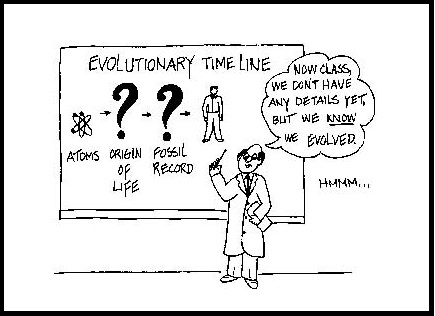
Creationist Cartoon

Lovelock invented the parable of Daisyworld to demonstrate that the biosphere could regulate the albedo. A nice Gaian extension of this idea is J. Scott Turner’s analysis of the thermo-regulation of termite colonies. So if a termite ecosystem can evolve to do it, why can’t a big one like the Earth? Thus, Gaia does what good scientific ideas are supposed to do. It extends and extrapolates a fundamental theory, from individuals to groups to ecosystems, up to the entire biosphere.

The central debate of this book is: How can Gaia (Earth) be selfish? How can it do anything “for” itself? Will it protect itself from human destruction of the environment by causing earthquakes, earth lights, an ice age, or a great flood?

Tyler Volk’s book “Gaia’s Body” “Gaia is Life in a Wasteworld of By-products.” He proposed that the atmosphere is one giant waste dump. Life produces wastes, and these wastes build up and affect the environment. They become intolerable for some forms of life, but then along come new forms of life who take advantage of these waste products. Volk’s point is that poop just happens. Thus the effects of the biosphere’s wastes are certainly “by” but not necessarily “for” the biosphere..

Volk suggests using cycling ratios to measure “by and for the biosphere” and to determine how beneficial for life something may be. A cycling ratio is the amount of an element cycling through the Earth and biosphere, divided by the amount that would be cycling through the Earth in the absence of life. Volk estimates the cycling ratio of carbon to be about 200 times more carbon flowing through the veins of Gaia than would be cycling through an Earth without life from plate tectonics and volcanism.

A collection of observations by the Earth Observing System flagship Terra were stitched together into a seamless true-color mosaic of every square kilometer (.386 square mile) of our planet.

Dorion Sagan and Jessica Hope Whiteside’s “Gradient Reduction Theory: Thermodynamics and the Purpose of Life” discussed the second law of thermodynamics as the purpose of life. Agnostics looking for purpose in their lives would do well to digest this chapter with Lovelock’s suggestion that agnostics worship Gaia to fill their religious vacuum. There is grandeur and universality in this thermodynamic view of life that can be applied to life anywhere in the universe.

I’d like to see Gaian scientists recognize that Gaia is part of a larger whole – that the Earth is not a closed system and that Gaia has a mother. We begin to wonder whether our Galaxy is a life form called Galactea. For the Silo, Jarrod Barker

“It is a must read for any life form that is even pretending to look for extraterrestrial life. /

– See more at: http://www.astrobio.net/ Note: It’s logical Mother Earth or Gaia feels totally threatened by environmental abuse from Earth’s humans and that those humans who are not loving to Mother Earth may be removed.

*Main image for this post courtesy of http://fourthdimension-celestialdreams.blogspot.ca

Supplemental-

Phylogenetic Analysis Forces Rethink of Termite Evolution | Okinawa Institute of Science and Technology OIST

How To Present New Ideas To Your Intimidating Boss

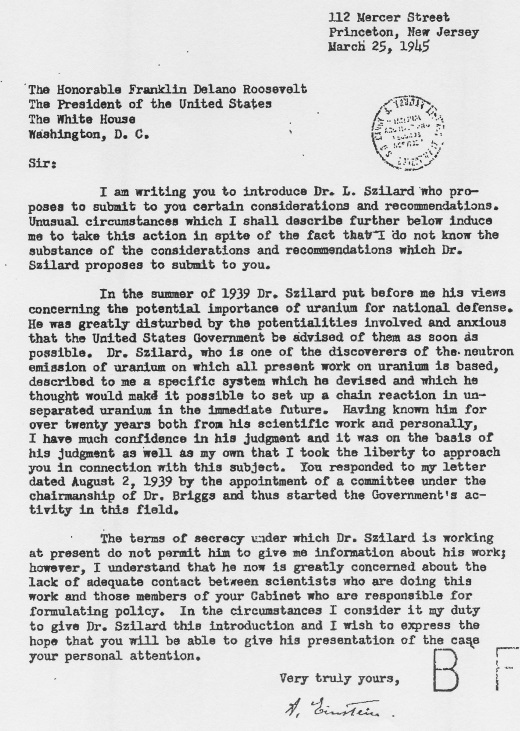
Not all ideas are 'shot down' by an intimidating boss- Albert Einstein's formal letter paved the way to American atom bomb research.
Not all ideas are ‘shot down’ by an intimidating boss- Albert Einstein’s formal letter paved the way to American atom bomb research.

Everyone says they want innovation in their organization, but when an ambitious employee offers it to a Boss or CEO, for example, the idea is often shot down, says Neal Thornberry, Ph.D., faculty director for innovation initiatives at the Naval Postgraduate School in California. There has to be a way of getting your ideas accepted, right? 

“Senior leaders often miss the value-creating potential of a new concept because they either don’t take the time to really listen and delve into it, or the innovating employee presents it in the wrong way,” says Thornberry, who recently published “Innovation Judo,” (www.NealThornberry.com), based on his years of experience teaching innovation at Babson College and advising an array of corporate clients, from the Ford Co. and IBM to Cisco Systems. 

Neal Thornberry: " Innovation should be presented as opportunities, not ideas. Opportunities have gravitas while ideas do not!”
Neal Thornberry: ” Innovation should be presented as opportunities, not ideas. Opportunities have gravitas while ideas do not!”

Thornberry outlines a template for innovation that works:

1 Intention: Once the “why” is answered, leaders have the beginnings of a legitimate roadmap to innovation’s fruition. This is no small task and requires some soul searching.

“I once worked with an executive committee, and I got six different ideas for what ‘innovation’ meant,” he says. “One wanted new products, another focused on creative cost-cutting, and the president wanted a more innovative culture. The group needed to agree on their intent before anything else.”

2 Infrastructure: This is where you designate who is responsible for what. It’s tough, because the average employee will not risk new responsibility and potential risk without incentive. Some companies create units specifically focused on innovation, while others try to change the company culture in order to foster innovation throughout.  “Creating a culture takes too long,” Thornberry says. “Don’t wait for that.”

3 Investigation: What do you know about the problem? IDEO may be the world’s premier organization for investigating innovative solutions. Suffice to say that the organization doesn’t skimp on collecting and analyzing data. At this point, data collection is crucial, whereas brainstorming often proves to be a waste of time if the participants come in with the same ideas, knowledge and opinions that they had last week with no new learning in their pockets.

4 Ideation: The fourth step is also the most fun and, unfortunately, is the part many companies leap to. This is dangerous because you may uncover many exciting and good ideas, but if the right context and focus aren’t provided up front, and team members cannot get on the same page, then a company is wasting its time. That is why intent must be the first step for any company seeking to increase innovation. Innovation should be viewed as a set of tools or processes, and not a destination.

If you’re gonna ‘demo’ your idea you better have practiced and perfected your routine before showing your boss-

5 Identification: Here’s where the rubber meets the road on innovation. Whereas the previous step was creative, now logic and subtraction must be applied to focus on a result. Again, ideas are great, but they must be grounded in reality. An entrepreneurial attitude is required here, one that enables the winnowing of ideas, leaving only those with real value-creating potential.

“Innovation without the entrepreneurial mindset is fun but folly,” Thornberry notes.

6 Infection: Does anyone care about what you’ve come up with? Will excitement spread during this infection phase? Now is the time to find out. Pilot testing, experimentation and speaking directly with potential customers begin to give you an idea of how innovative and valuable an idea is. This phase is part selling, part research and part science. If people can’t feel, touch or experience your new idea in part or whole, they probably won’t get it. This is where the innovator has a chance to reshape their idea into an opportunity, mitigate risk, assess resistance and build allies for their endeavor.

7 Implementation/Integration: While many talk about this final phase, they often fail to address the integration part. Implementation refers to tactics that are employed in order to put an idea into practice. This is actually a perilous phase because, in order for implementation to be successful, the idea must first be successfully integrated with other activities in the business and aligned with strategy. An innovation, despite its support from the top, can still fail if a department cannot work with it.

For the Silo, Neil Thornberry.

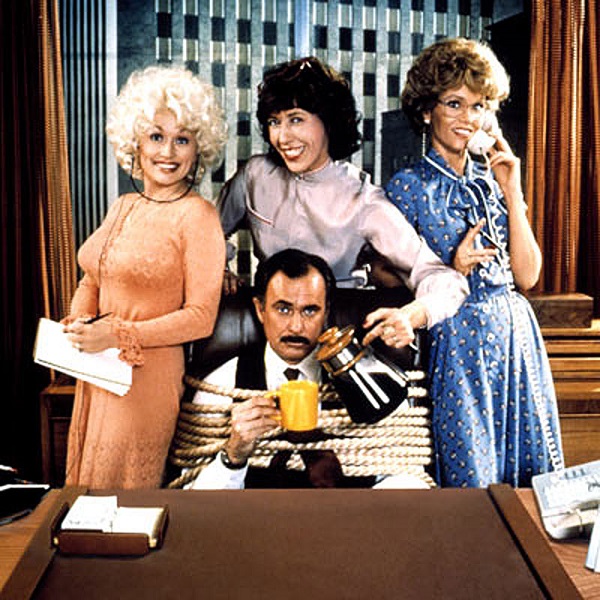
Working 9 to 5? Think about the best times to approach your boss.

Neal Thornberry, Ph.D., is the founder and CEO of IMSTRAT, LLC a consulting firm that specializes in helping private and public sector organizations develop innovation strategies. A respected thought leader in innovation, Thornberry is a highly sought-after international speaker and consultant. He  also serves as the faculty director for innovation initiatives at the Center for Executive Education at the Naval Postgraduate School in Monterey, Calif. Thornberry, author of “InnovationJudo:Disarming Roadblocks & Blockheads on the Path to Creativity, holds a doctorate in organizational psychology and specializes in innovation, corporate entrepreneurship, leadership and organizational transformation.

Canada’s Powerful Golden Eagle

The Golden Eagle is one of the best known and largest birds of prey in North America. The adult birds are dark brown in color with golden-brown feathers on the back of their head, neck and upper wings.

Golden Eagles use their strength, agility and powerful talons to snatch up prey including mice, rabbits, squirrels and even fox and young deer.

They are very swift and can reach speeds over 240 km per hour while diving in on their target. <240 km/h is about 150 mp/h- the top cruising speed of the American Commuter Acela- 1 express train by the way. Watch the video below and note at the 1m 8s mark as  the Acela passes the station at about the same speed that the Golden Eagle achieves in a dive. Wow!

Golden eagles usually mate for life.

They build huge nests in high places including cliffs, trees, or even telephone poles and may return to this same nest for several breeding years.

The Golden Eagle is listed under Ontario’s Endangered Species Act, 2007, which protects it from being killed, harmed, possessed, collected or sold, and protects the habitat from damage or destruction. For the Silo, Dixie Greenwood.

SETI Search For Space Aliens Increases Odds With Your Computer

Zuhra Abdurashidova
Zuhra Abdurashidova

I graduated from the University of California at Berkeley about a decade ago with a degree in Mechanical Engineering. I received two job offers, one from SETI to work on high performance signal processing and the other from industry.

One does not simply walk away from SETI, so I had the pleasure of joining the Berkeley SETI Research Center (BSRC). I received a warm welcome and was promptly sent to West Virginia to help install a new SETI system at the Green Bank Telescope.

There was a steep learning curve, but I was fascinated by BSRC’s work and couldn’t wait to actually understand what was going on.

As it turns out, our group is looking to expand its computing power, providing the ability to look at more star systems with habitable planets, expand the involvement of volunteers and acquire larger volumes of data; in short, broaden the search and increase our chances of intercepting a signal. Now I’m working on setting up new servers, network hardware, and signal-processing systems at Green Bank. We’re hoping to get data flowing and recording soon, and make it available for the interested public.

From the 19th-century idea of drawing a giant Pythagorean triangle in the Siberian tundra to signal extraterrestrials, to our current collection of servers storing and analyzing data, it is not hard to see how much progress has already been made.

Running SETI software on your home computer looks like this.

Funding from the Breakthrough Initiatives is spawning new projects that would not have been otherwise possible. SETI@home is planning to work with Breakthrough Listen to collect and distribute data from the Green Bank and Parkes telescopes. However, in order to sustain the whole SETI@home effort we could still use support from our devoted SETI@home contributors.

Recently, I spent a day at the Bay Area Science Festival talking to kids and their adults. I was fascinated by just how stoked kids are about SETI. Some came with prepared questions and showed incredible curiosity and intelligence. The BSRC team is hoping to inspire kids to pursue science careers and I think searching for life beyond Earth is a great way to get them interested and involved. I hope you continue your support for this fascinating endeavor, and keep your eyes on the stars.  For the Berkeley SETI Research Center team, Zuhra Abdurashidova.

Berkeley SETI Research Center Logo

Supplemental- via nemesis maturity YouTube channel

Wow Signal – Scientists say that if the signal came from extraterrestrials, they are likely to be an extremely advanced civilization, as the signal would have required a 2.2-gigawatt transmitter, vastly more powerful than any on Earth.

The signal bore the expected hallmarks of non-terrestrial and non-Solar System origin.

One summer night in 1977, Jerry Ehman, a volunteer for SETI, or the Search for Extraterrestrial Intelligence, may have become the first man ever to receive an intentional message from an alien world. Ehman was scanning radio waves from deep space, hoping to randomly come across a signal that bore the hallmarks of one that might be sent by intelligent aliens, when he saw his measurements spike.

The signal lasted for 72 seconds, the longest period of time it could possibly be measured by the array that Ehman was using. It was loud and appeared to have been transmitted from a place no human has gone before: in the constellation Sagittarius near a star called Tau Sagittarii, 122 light-years away.

All attempts to locate the signal again have failed, leading to much controversy and mystery about its origins and its meaning.

http://en.wikipedia.org/wiki/Wow!_signal

http://en.wikipedia.org/wiki/Tau_Sagi…

http://www.bigear.org/wowmenu.htm

How We Set In Motion Coffee Global Business

If you are like me- someone who has drunk much more than one coffee in your life, you might be interested in pondering this question: Why do you think the multi-billion-dollar global coffee industry can be a losing business for the growers, whose hands till the land from where coffee starts?

In fact, if you drink 2 cups of coffee a day for one year, you’ll be spending more than the annual income of the coffee farmer in a developing country. To help present to fellow North American coffee drinkers this huge disparity between the farmer and the other key players across the coffee value chain, take a look at the infographic below.

Considering that North America is the biggest coffee consumer in the world, we can make a big dent by supporting the fair trade advocacy that ensures farmers get paid properly. Take a look at the infographic again. It describes how coffee is made from the farm to the mill, to the roasting plant and all the way to the consumer. Here are some of its highlights that show the bigness of this industry:

– 100 M people depend on coffee for livelihood; 25 M of which are farmers

– The U.S. spent 18 B for coffee yearly, equivalent to Bosnia’s GDP

– Coffee is the second most globally traded commodity after petroleum

For the Silo, Alex Hillsberg Web Journalist


Here's How You Make Coffee A Billion Dollar Business

Supplemental- How North Americans can help the #fairtrade program

http://financesonline.com/cherry-to-cup-the-economics-of-coffee/

http://financesonline.com/why-fairtrade-should-matter-to-you/

Revolutionary Fairlight CMI Music Synthesizer Ushered In New Music Genres

He listened to Mike Oldfield. He saw the pictures on the albums and he read about ‘this thing called a Fairlight’. Which raised Klaus’ curiosity about this ‘Computer Instrument’. Fellow keyboardists told him it was a mission impossible, getting your hands on one. But Klaus managed to find the holy grail…

‘To me, It’s still fresh. I can use the Fairlight to create sounds no one’s ever heard before.’ 

If we take a look at the history of popular musical style creation we see a common theme: new technology leads to new inventions leads to new possibilities for musicians and composers. Consider the evolution of the modern piano from its beginnings as a somewhat-limited-oft-out-of-tune harpsichord. Or the evolution of the electric guitar from the acoustic guitar- by adding an pickup to electronically capture sound, another inadvertent effect became possible: the ability to alter the signal and sound characteristic via electronic manipulation. Heavy Metal music would never have been possible without the distortion pedal, which itself is an evolution of overdriven mixing board input channels and later on- fuzz pedals.

The first fuzz pedal to hit the market was the Maestro Fuzz-Tone, which was launched in 1962. It was developed by engineer Glenn Snoddy in collaboration with Gibson Guitars. 

Inspired by Grady Martin’s distorted bass, Glenn worked with Revis Hobbs to create a device that could replicate the sound consistently. Despite its clever design, the Maestro Fuzz-Tone wasn’t really liked by many musicians. They were unfamiliar with this new distorted sound and didn’t know how to use it into their music. 

However, this all changed in 1965 when The Rolling Stones used it in their hit song “(I Can’t Get No) Satisfaction.” pedalplayers.com

In a similar way the Fairlight, the AKAI MPC, the EMU and other sampling based instruments allowed for extreme sound manipulation and even the creation of entirely new sounds leading to new techniques of musicianship and composition. Will we see another development to change the playing field? Is AI the next musical frontier?

”I was lucky enough to find a Series II, back in 2010. It’s quite a historical piece, for it used to belong to Synthesizer Studio Bonn, one of the only two Fairlight retailers in Germany. They bought it in 1982. It was their demo machine and It was kept in their shop until 1999. They went bankrupt, and the Fairlight was sold to a synth collector, who went bankrupt as well. He had to sell a lot of his equipment, including the Series II. I got it for a good price. But I do hope I won’t be the third one to go bankrupt.” 

Klaus Himmelstein has been a music and science teacher on several German international schools for about twenty years now. He developed a special interest in electronic music, but originally he is a classically trained violin player. ”That’s how I started, at the age of 8. My parents took me to violin lessons, because they discovered I have perfect pitch hearing. I really love to play the violin and I still play it. Through the years, I got more and more interested in electronic instruments.” 

Green screen, big box

”I remember getting my hands on a Yamaha DX7 for the first time, when I was about 12 years old. That was in 1986. I didn’t know what any of these knobs were for. I tried out the presets and I tried to tweak them, to get some other sounds out of it. Around that time period, I also heard about the Fairlight for the first time. I listened to Mike Oldfields’ albums and I read he was using a ‘Fairlight computer’. So I thought: ’What the hell is a Fairlight computer?’ And then, I figured out it was this funny machine with this keyboard and this green screen and a big box, pictured on some of his albums.”

He bought his first synth in 1991. ”A Roland D-5. Not to be confused with the famous D-50. The reason I bought it was because it is multitimbral. I already had an Atari ST computer. I used this set-up for making my first compositions. And, around that time, I started asking other keyboard players about the Fairlight. Some people didn’t know anything about it. But the people who knew about it, they’d be saying things like: ’Oh boy, that’s the holy grail…’, ’15.000 Deutsche Mark’, ’You won’t get your hands on one’ or ’That’s only for the big studios’. By the end of the nineties, Klaus had built himself quite a studio with a decent amount of vintage synthesizers. ”I started looking on eBay, checking for Fairlights. I’ve learned there are two types of Fairlight-ads: either the refurbished machines which cost a fortune, or just crap.”

Closing the deal

In 2010, an acquaintance of his – the guy from RetroSound, who publishes videos of pretty much every vintage synthesizer you can think of – notified Klaus there was a Fairlight for sale. “He knew I was looking for one, through my posts on forums. So one day, he sent me an e-mail. He knew there was one for sale, somewhere in the Eiffel area. A Series II, not in perfect condition, but good enough. He offered to put me in touch with the seller. 

So, in the end, I went to this guy, checked it out, talked about the price and closed the deal. It was pretty easy going. I picked it up myself, for I don’t trust companies like UPS and DHL too much handling valuable packages. I had a huge car back in the day, a station wagon. I put lots of cushions and blankets in the back of the car. I wrapped it all up and drove back to my studio, which was located in the city of Münster. I set it all up and after that, people didn’t see me for quite some time, for I was in the studio all of the time.

I went through all the floppy disks. They contained a large collection of samples from Synthesizer Studio Bonn. They made their own samples, their own sounds. It was used for demo sessions. I checked out all the sounds; quite some unique stuff in there.”

Nothing like the real thing

”I was always fascinated by its sound. That was one of the reasons I wanted to have one. Not just for collecting purposes. I’m not treating it like some piece of history that sits in my studio, like some precious artefact, being polished every day. I really want to use it for making music.” Of course, it took some getting-used-to. Klaus: ”When you start to work with it, you’ll probably find out it’s quite difficult. For instance, the light pen isn’t as accurate as you think it might be; no drag ’n drop, no pull-down menu’s. But in the end, after a couple of days, I’ve found my way around it.

Fairlight CMI synthesizer

I also figured out, and this is a thing I learned from other users as well: after two or three hours working with the light pen, your arm gets really tired. And that CRT monitor, that green screen compared to todays monitors.… It isn’t too comfortable. But that sound, it makes it all worth while. I think the percussive sounds are the best in the world. And it’s that 8-bit sound… I don’t know why exactly, but I think it’s just the best. It’s unique. You don’t get that particular sound out of todays software. For instance, Arturia’s CMI V, it’s really nice, it’s a good reproduction. But if you want that original particular sound, there’s nothing like the original Fairlight CMI.”

Warm community

”I bought it back in 2010 and I have been using it ever since. It’s still in quite good condition, except for the CRT-monitor. It’s a little bubbly and not quite clear around the edges. But furthermore, the light pen is still working, one of the floppy drives still works, as well as the 8 voice cards. At the age of almost 40 years, it’s still a good machine. Together with Jean-Bernard Emond from France, I’ve made some modifications. For instance, we’ve replaced on of the floppy drives with an SSD-drive.  Peter Wielk helped me out with one of the voice cards. I had a dead one. He had one in Australia, so he sent it to me. 

I have two Emulators, and one of them just serves as a box of spare parts. I figured out there aren’t too many people familiair with repairing an Emulator. And it’s very, very difficult to get spare parts for it. With the Fairlight on the other hand, there’s a well grown community, pretty much world wide. You can get parts from France, from Australia, from the UK…  There’s always someone somewhere in the world, with a great love for the instrument and lots of knowledge, who can help you out with any issue you might have.”

Inspirators

“In my studio, there are at least 25 keyboards and a whole lot of modules and other stuff. The Fairlight is a part of ’the orchestra.

I’m a big fan of Tangerine Dream, that is to say: their early work. Everything after about 1989 began to sound like pretty much everything else. They used cutting edge technology. But the funny thing is: they never used a Fairlight. According to Edgar Froese, they used a Synclavier, and Emulators. Their music comes close to what inspires me. Some people are comparing some of my work to Tangerine Dream. Others are saying it reminds them of Jean-Michel Jarre. The perception is quite different. I’m totally happy when people like my tracks. If they don’t? That’s fine with me. I’m working on my ideas and I’m enjoying the proces. That’s it. Sometimes, I get involved in some recordings, I made a couple of jingles for radio commercials and I once made a small movie score. Sometimes, I play keyboards and violin in bands. I’d prefer doing a little less teaching and a little more music production. The good thing about being a teacher: it’s a steady job. The bad thing about being a musician on the free market: you’re never sure of income. I prefer the more secure way. Teaching music actually is a lot of fun. Recently, we performed a few pieces with some students. I love teaching music to kids. But, I don’t take many of my synthesizers to school. My Moog Rogue is the only one I bring from time to time. They can tweak on pretty much every knob or slider; it doesn’t go out of order. But I’m not bringing the Fairlight to school. I don’t want to transport it too often.”  

Final thoughts

“The Fairlight CMI, it’s a particular part of history. It has integrated sampling into modern music. Without the Fairlight, things would have happened totally differently. Back in the early 80’s, it was the latest thing to go on, the latest way to produce new kinds of music. I love that particular sound. For me, it’s still up to date. It’s not old-fashioned, it’s not vintage. For me, it is still fresh. In my opinion, I can use the Fairlight – as well as the Emulator – to create new and fresh sounds that have never been heard before. I’m convinced of that.” For the Silo, Mirjam van Kerkwijk/ Jarrod Barker. Read more about the Fairlight via For The Love Of The Fairlight . Have a fun Fairlight story to tell? Contact Mirjam at [email protected].

Listen on Soundcloud

Connections Between UFOs, UAPs and Presidents Of The United States

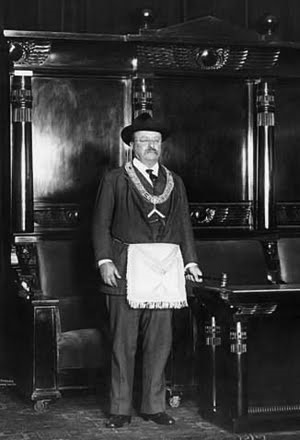
Theodore "T.R." Roosevelt, Jr. was an American politician, author, naturalist, soldier, explorer, mason and historian who served as the 26th President of the United States.
Theodore “T.R.” Roosevelt, Jr. was an American politician, author, naturalist, soldier, explorer, mason and historian who served as the 26th President of the United States.

Remember last year, when there was ongoing UAP/Drone activity hitting the news cycle and without any official explanation of what was happening over the skies of New Jersey and the rest of the world? There is still no answer and  it is fascinating to consider that this phenomena is in fact not new and has been reported for over one hundred years.

The drones have become unsettlingly frequent in Monmouth County, New Jersey (Picture: Monmouth County Sheriff’s Office. Dec 2024)

When one thinks of U.S. Presidents and UFOs several of our Chief Executives come to mind. Firstly, there is President Eisenhower purportedly meeting aliens at Edwards Air Force Base in 1954.

Then there is JFK’s memo to the CIA asking for disclosure on UFOs ten days before his assassination:

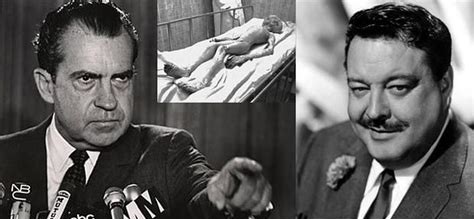
More humorously but perhaps true is the story of Richard Nixon treating comedian Jackie Gleason to a view of dead alien Grays at Homestead Air Force Base in 1974. 

But what about Teddy Roosevelt?

Is anyone in the UFOlogy Community even aware of a documented UFO sighting over the 26th US president’s home, Sagamore Hill, in Oyster Bay, New York on August 1, 1907 when he was in his second term of office?

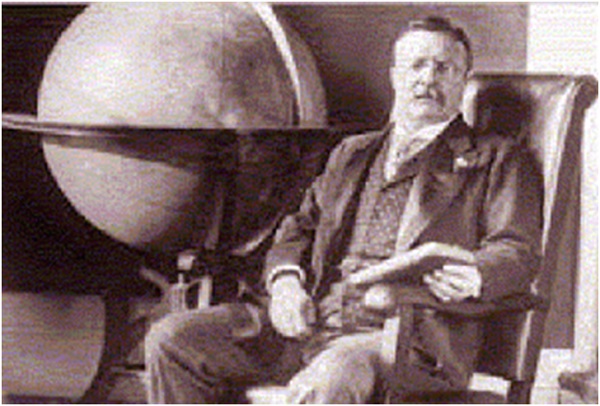
Teddy Roosevelt Globe

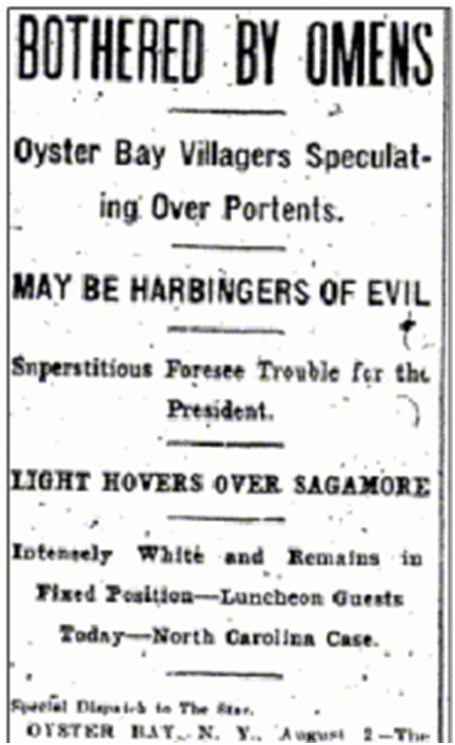
According to an old clipping found by UFOlogist Kay Massingill from a newspaper called the D.C. Evening Star dated August 2, 1907, two events of a mysterious nature occurred in the town of Oyster Bay in a twenty-four hour period and both concerned Mr. Roosevelt.

In the latter, the town librarian Miss Denton opened up the library on the morning of the 1st and discovered a beautiful mahogany chair donated by Teddy to the museum from his days as Governor of New York had split down the backside sometime the night before. More peculiar was the fact that on the reverse back of the chair was the Bald Eagle Seal of the United States of America and it was split in half! An ominous sign indeed! Was it an omen?

Newspaper Headline Lights Over Sagamore

However, the main event occurred the evening before between the hours of 9 p.m. and 11 p.m. when a brilliant white light was seen to hang motionless over Sagamore Hill.

According to the dispatch, it was a light “considerably larger than a star” and hung about 300 feet in altitude over the house according to numerous witnesses. It was an “intense white light” and after 11 p.m. it began to fade to a spark and then extinguished. Meanwhile in the library a short distance away, a chair associated with Sagamore Hill’s occupant was coming undone in a most mysterious way.

The home on Sagamore Hill

Was Mr. Roosevelt home the night of the UFO sighting? The article doesn’t say and we’ll probably never know but it is known that Sagamore was called Roosevelt’s Summer White House and it was the middle of summer.

So the main question to ask is why would a ball of light attend to Mr. Roosevelt in the heat of 1907? Two clues can be found concerning his agenda as President that year.

One clue was his December 3, 1907 Annual Address to Congress.

The speech is mundane for the most part dealing with anti-trust actions, railroads, the Department of Agriculture, conservation, unions and such but near the end of it Roosevelt begins to lay out the groundwork for creating the world’s most dominant modern navy. It seemed Roosevelt had a great grasp of what was happening in the world concerning Japan, Germany and China and their eventual rise on the world’s stage. He specifically recommended dredging Pearl Harbor to make it a world class naval base and increasing Alaska’s defenses. Did he know something about the world no one else did? His maneuvering just months after the Sagamore Hill incident directly led to America’ emergence as the modern world’s greatest Suprerpower. Did he have help from E.T. whispering in his ear? During his tenure America’s Navy grew from 5th to 3rd in the world in size.

The second clue is the very interesting coincidence of the Second International Peace Convention held at The Hague, Netherlands that year from June 15 to October 18, 1907 which was during the Sagamore Hill sighting. That convention was the brainchild of none other than Teddy Roosevelt! It was an attempt to codify the rules of war – particularly naval warfare. More importantly, it was seen as the world’s first attempt at an international governing body – a forerunner to the League of Nations and the United Nations.

The Tin Foil Hat Question 

Are aliens attempting to lay out the groundwork for, or interfere with, the earth’s direction in the 20th and 21st centuries? And might they have been in contact with American Presidents long before Eisenhower’s 1954 encounter? To see the complete newspaper clipping go to http://www.worldufowatch.com/historical_newspaper_clippings    For the Silo, Robert Spearing.

Why Getting A Business Off The Ground Takes Guts

Being an entrepreneur is a calling for those who not only cope well with risk, but thrive on the challenges it presents. Those who are satisfied by the comfort of a secure job and a steady paycheque need not apply.

It’s an idea that has crossed the minds of virtually everyone who has worked for somebody else, regardless of the job.

As you put in time and labour that ultimately benefits someone else’s business, it dawns on you: Why can’t I just set up shop and do this myself? Why can’t I be the one taking home the big money after all the bills are paid and enjoying the independence of running my own show?

They’re great questions, but the answers aren’t for everybody.

Actually making the decision to give up the security of a steady job, and the regular paycheque and benefits that come along with it, takes a lot of guts and perseverance — especially in today’s highly competitive economy.

Unless you are among the fortunate ones backed by deep resources, the bottom line is this: when you first set out to become an entrepreneur, you are truly on your own. It’s just you and your idea. And it will be the marketplace — relentlessly detached and unemotional — that determines whether you make it or not.

Budding entrepreneurs who do take the risk to start up their own business generally face two key barriers — capital and human resources.

Many entrepreneurs owe their initial success to the trust of friends and family members, who invest funds in their start-up idea. These types of loans can be troublesome if the proper precautions aren’t taken. Make certain the terms of all loans from friends or relatives are spelled out clearly in a promissory note prepared by a lawyer. You may not be dealing with a bank or a financial institution, but you have to treat repayment in the same manner to avoid conflict with your lenders, who also may happen to be your best friend or your sister.

It’s also important to keep your credit record as clean as possible and establish a line of credit, which you can access for instant cash flow at certain times.

Start-ups are limited to hire only the personnel who they can afford, which often means running on a skeleton staff who may not necessarily be those with the greatest skills and experience. This is why most of us who have conceived what we think is a great idea for a business usually choose too much of the work ourselves and wear many hats in the early days.

It can take a long time to find the right employees when you’re just starting out. Some of the top talent may be reticent to work for a small start-up because they are worried about how it will look on their resume, job security or getting a bigger paycheque.

You need to find candidates who share your entrepreneurial spirit and aren’t averse to taking risks. Look for people who want get in on the ground floor and grow with the business.

As you build your company and expand your market, it’s tremendously important to have a network of mentors whose advice and counsel you trust. No matter how much thought and preparation you put into your business plan, you won’t be able to anticipate everything ahead of you. The marketplace is constantly moving and evolving, causing you and your business to adapt. This is where mentors can help, offering guidance drawn from experiences they had during similar changes in their own journeys.

My own mentors have changed as my career progressed, but they all had a common trait that served me and my businesses well — perspective. They have been able to see things clearly from a distance when my own vision may have been clouded by emotion, allowing me to make more-effective decisions. Entrepreneurship is about taking chances, but not blind ones.

Being an entrepreneur is a calling for those who not only cope well with risk, but thrive on the challenges it presents. Those who are satisfied by the comfort of a secure job and a steady paycheque need not apply. For the Silo, Paola Abate.

Plants That Cure With Real Healing Powers

A fever, stomach pains or a simple case of the sniffles can send people rushing to the pharmacy for a drug to cure their symptoms.

But Mother Nature provides a number of medicinal plants with healing properties that also can nurse you back to health, a fact more North Americans are beginning to discover.

Doctor Sodhi -" More North Americans Realize The Effectiveness Of Remedies Found In Nature"

Doctor Sodhi -” more North Americans realize the effectiveness of remedies found in nature”

“The use of herbal medicine, although traditional in many Eastern cultures, had been only a minor fad in Western medicine until recent decades,” says Dr. Virender Sodhi, founder of the Ayurvedic and Naturopathic Medical Clinic , which provides complementary and alternative medicine.

That trend has been shifting as a growing body of studies and research has demonstrated the effects of traditional remedies on chronic diseases, such as diabetes and hypertension, says Sodhi, author of the new guide, “Ayurvedic Herbs: The Comprehensive Resource for Ayurvedic Healing Solutions.

That’s not necessarily news to ailing people in other parts of the world, such as Asia and Africa. For centuries, they have found relief through herbal medicines derived from shrubs, vines, trees and other plants, Sodhi says.

Here are four examples, a couple of which are recognizable by better known names and purposes.

American licorice is a native, perennial legume that grows in temperate climates of North America. Licorice, which grows in Europe and Asia, is the root of varieties of the Glycyrrhiza plant.


•  Glycyrrhiza glabra. Most people would recognize this plant by its more common name – licorice. It has been used for centuries in the traditional and folk medicines of Asia and Europe to treat ailments ranging from the common cold to liver disease, Sodhi says.

Most Americans likely encountered licorice as children because the sweet root of the plant is used to make candy. Licorice can cure more than a sweet tooth, though. It can protect people from the influenza virus. In cell line studies it was shown to reduce titer of the influenza virus by 90 percent and have strong immune modulation properties.

It’s an important ingredient in many herbal preparations, Sodhi said, especially for bronchial conditions. Because of its expectorant properties, powdered licorice has been used for centuries to treat coughs. Modern cough syrups often contain licorice extract.

Piper negrum

•  Piper nigrum. This flowering vine’s berries, when still unripe, are used to produce black pepper, but spicing up food isn’t its only talent. Piper nigrum has anti-inflammatory, anti-microbial and anti-spasmodic properties that make it ideal for treating digestive disorders, Sodhi says.

It doesn’t stop there. Drug resistance is a major concern in cancer patients. Piper nigrum can reverse multiple drug resistance many fold and significantly increase the apoptotic effect of many pharmaceutical drugs.

CLICK me to discover more about Frankincense

•  Boswellia serrate. Commonly known as Frankincense, this herb has powerful anti-inflammatory effects. Several patients with ulcerative colitis and Crohn’s colitis have gone in to remission using a Boswellia preparation.

In brain tumor patients it has reduced cerebral edema by 75 percent. Sodhi has mentioned case studies of many patients with rheumatoid arthritis, psoriatic arthritis, polymyalgia rheumatica and ulcerative colitis who went into remission.

Bael

  Bael. Commonly known as “golden apple”, this fruit-bearing tree indigenous to the hills and plains of central and southern India has numerous uses. The fruit promotes healthy digestion and is used medicinally to treat such conditions as diarrhea, dysentery and cholera. The leaves, roots and bark of Bael also have medicinal value.

They help relieve acute bronchitis, heart palpitations, intermittent fevers and many other ailments. Dr. Sodhi has observed 100 percent success in treating patients of clostridium difficile, who did not respond to standard medical protocol of metronidazole (Flagyl), Dificid (fidaxomicin), or vanconycin.


Seriously, What The F**k Do We Know About Reality?

Just over two decades ago in a small theater in Yelm, Washington a little film called What The Bleep Do We Know?!? screened to its first audiences and the term “I Create My Reality” was thrust into the collective consciousness. One of the themes explored is the idea that individuals have the power to create their own reality through their thoughts and intentions. This concept is illustrated through Amanda’s experiences and supported by discussions on the nature of consciousness and its potential influence on the physical world.

Since then countless films and books have extolled the wonders of quantum physics and how understanding the nature of reality could change your life, often in just 3 easy steps. I too thought it was easy, heck I made a movie about it! And for a while it was easy, until I realized that I had only scratched the surface of what “it” all means.

For sure, at a party I could rattle off the wonders of quantum this and quantum that, I could throw around words like entanglement and heady concepts like The Copenhagen Theory, I could wow you with the double slit like nobody’s business. But the truth was, it was really all just smoke and mirrors.

Fewer Than 42 Facts About Douglas Adams

What did understanding quantum physics have to do with my happiness?

What did understanding the workings of the brain mean to my life, in reality, at least this reality, the one where I have kids and bills to pay? I mean it’s fun to dream about other dimensions and my life as electron popping in and out, but in the end I felt as though it was becoming mental masturbation an easy way to escape from the fact that even though I knew I wasn’t really touching that chair, that it is possible I wasn’t even real.

Betsy was one of the three filmmakers (along with Willliam Arntz and Mark Vicente) involved in What the Bleep Do We Know !?
Betsy was one of the three filmmakers (along with Willliam Arntz and Mark Vicente) of What the Bleep Do We Know !?

What I was truly seeking was not the facts about how that chair manifested itself into my reality, but how I could be happy whether I had that chair or not.

Happiness has nothing to do with quarks and the discovery of the Higgs Boson was not going to bring me ever-lasting peace and joy. That I was going to have to find all on my own.

I began to explore the sacred cows, not only in my life, my beliefs about who I was and what I wanted, but also the sacred cows of spirituality, new thought and yes, quantum physics and how I could take all this knowledge and use it to create the happiness I sought, because after all, that is what we are all after. It is why we ask “why?”. It is why we explore the deepest depths of the quantum foam and so far quantum physics hasn’t found the happiness particle, because it doesn’t exist within the particles out there, it exists within the immeasurable particles within me.

For the Silo, Betsy Chasse.

image courtesy of: science.howstuffworks.com
Image courtesy of: science.howstuffworks.com

What the Bleep Do We KnowSupplemental-

Roger Ebert review Photo of Roger Ebert In Memoriam

https://www.rogerebert.com/reviews/what-the-do-we-know-2004

Now In Decline- Irish Is Third Oldest Written Language In Europe

JG O’Donoghue imagines a ‘versus’ scenario to demonstrate the struggle of ‘languages at risk’

There is a mass decline in linguistic diversity happening all over the planet and in places geographically far apart and I think that if things don’t change, the loss of language diversity will be immense.

In the book, Irish in the global context, Suzanne Romaine mentions that linguists believe 50 to 90 % of the world’s estimated 6,900 languages will simply vanish over next 100 years.

At this moment in time, 85% of the world’s languages have fewer than 100,000 speakers and over half of the world’s remaining languages are spoken by just .2 % of the world’s population. These facts have informed my work and have become the wider subject of my illustrations, specifically the linguistic decline of the Irish language.

In some ways the battle between the Irish and the English languages is one of the defining features in modern Irish culture, but it is Irish which defines this island more, and the Irish language tells the entire history of Ireland in its influences and in its form.

Ruairí Ó hUiginn said in his book  The Irish language: you have influences of Latin from the Christianization of Ireland in ecclesiastical words, influences from Viking invasions in words for “seafaring, fishing and trade”, influences from the militaristic Normans [ French CP] in words for “architecture, administration and warfare”, and from English colonialism you get English in every day words.

“To create my intended mood, the english words are given a general typography while the Irish words are given a distinctive script reminiscent of Geoffrey Keating’s book Foras Feasa ar Eirinn”

Each influence shows an aspect of Irish culture. What people forget to realize is that a language is much more than something spoken to express oneself. Ancient peoples created language in an attempt to describe the world around them and the world within them, in other words their worldview.

An example in Irish is- you don’t say ‘I’m angry’, you say ‘tá fearg orm’, which means ‘I have an anger on me’.

Nevertheless, Irish is important internationally too, and Irish is the third oldest written language in Europe, after Latin and Greek, and as a spoken language it may even be older than both.

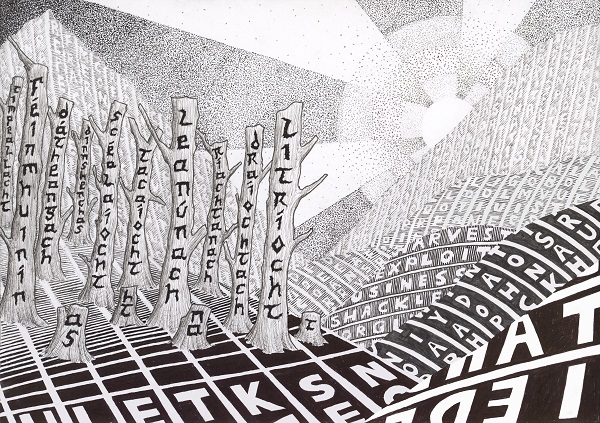
How should an artist illustrate a language? And more specifically the struggle of one language with another? I choose nature as my metaphor, from the ancient forests of Ireland, mostly gone now, to Islands which stand for thousands of years but are slowly worn away by the tide. The words that make up these landscapes are either ‘for’ or ‘against’.

My illustrations therefore visualize the real life drama of ancient language versus modern language.

I imagine a “versus” scenario. On the “against” side I chose English words plucked from peoples statements in online forums and in letters to newspapers. On the “for” side I chose Irish words, and they were chosen from recent investigations into the creation of the ancient Irish language. Irish words in my illustrations such as “dúchas (heritage), tír (country), litríocht(literature), and stair(history)” reflect the Irish language’s cultural importance, while “Todhchaí(future), féinmhuinín(self-confidence), beatha(life), and anam(soul)” reflect its importance in a metaphysical way to Ireland.

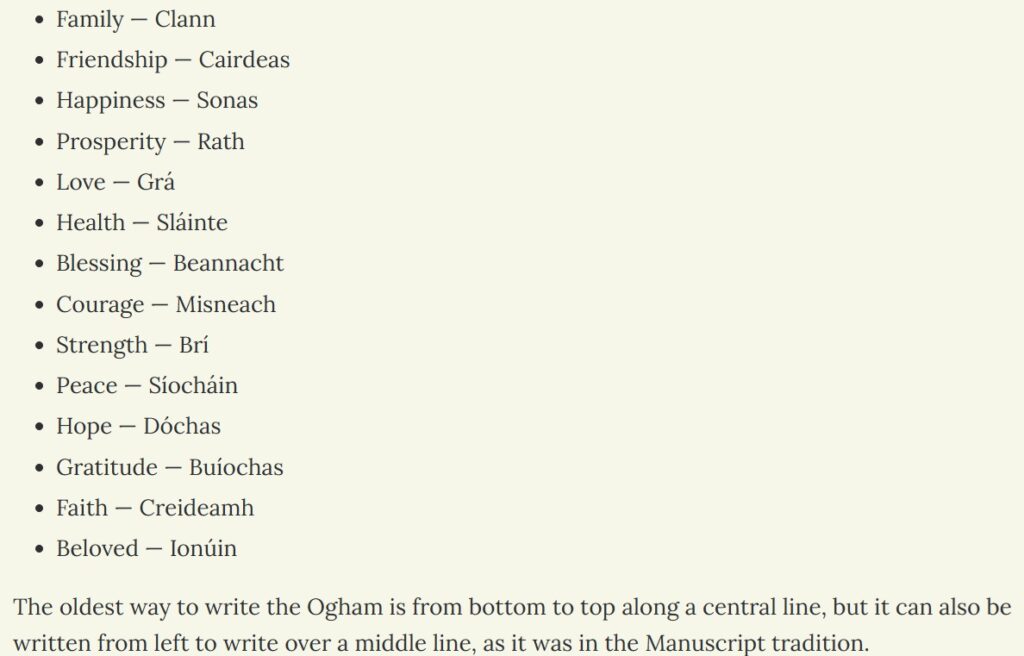
The Irish language forest- An Coill Teanga Gaeilge

The english ‘against’ words can range from the practical benefits of english within subjects such as “tourism, movies, business, and comics,” to words that reflect the interaction of English speakers with Irish. To illustrate the concept, I chose words like “conform, bend, harass, and adapt”.

To create my intended mood, the english words are given a general indistinctive typography reflecting uniform mono-linguilism, while the Irish words are given a distinctive Irish manuscript/Gaelic script reminiscent of Geoffrey Keating’s 17th century book- Foras Feasa ar Éirinn/History of Ireland.

The core message in my illustrations is a positive one, the sun is rising for a new day as the Irish language holds on, like a lot of minority languages. It is diminished but not beyond hope. I believe it can make a comeback, and this is exactly what is happening all over this country today, because of the work of people far more dedicated than myself. I hope my work can help reinforce linguistic diversity as well as all forms of heritage. I have the will to preserve these for future generations, so they too can live in a world full of diversity spending their lives discovering and exploring it in all its beautiful variety.

For the Silo, JG O’Donoghue.


How To Find Meaning Of Christmas In Our Politically Correct World

Once again it’s Christmas Eve and time for our perennial Christmas post which seems to gain more relevance and urgency with each year……2025 has been no exception. Merry Christmas to you all!

It seems that every where you turn these days, it is becoming incorrect to celebrate the Christmas holidays in “the manner in which you have become accustomed”- at least in the manner in which I have become accustomed.

To truly celebrate the Christmas season, and that’s what it is, no matter what anyone says, I have become open-minded and willing to accept EVERYONE’S ideas for the holiday season. If you disagree, please refrain from attending any “holiday” parties or dinners, taking the day off on December 25th or 26th (should you work for a company that still acknowledges these days as holidays) and carry on as usual. Should you happen to work for the government you are safe (for now) as they would never legislate against their own days off, although when it comes to politicians, I don’t believe never is in their vocabulary (particularly when it comes to matters involving taxes).

merry fucking whateverThe true “spirit” of the holiday season (oops, I meant to say Christmas) is for people to pause and give thanks. According to the man-made calendar of months and years, we are getting ready to start a New Year.

We give thanks for the things we have received in the past (not to be confused with Thanksgiving, another man-made tradition) and offer gifts to the people that have blessed us over the past year.

Being the humble (not humbug, Mr. Scrooge) creatures that we are, we also accept gifts from others (although for most it is not OUR birthday), all the while muttering that we aren’t worthy. Once these gifts are exchanged, a significant amount of “Why would she buy me this?” and “I don’t NEED another scarf” or “Does he think I’m that big?” are voiced in private, to be repeated over the next month or so. In the days immediately following Christmas, our thankful spirit has usually been diminished significantly.

The greatest reason for pausing at the end of the year (and any time, for that matter) is to be grateful for what you have.

Being grateful does not mean that you have to thank every one in your life personally, and you DON’T have to buy them a gift. If you are expecting a gift from someone you are probably going to be disappointed, and if you don’t reciprocate in kind you are going to be REALLY disappointed. If you have chosen to be open-minded I want to thank you for getting this far. I hope that you will also be open to a spiritual suggestion that will make you feel happy inside even though you may have received nothing outside.

Whether it is Christmas, Rosh Hashanah, the Chinese New Year, Hanukkah or Guy Lombardo’s Rocking New Year’s Eve, let those people who enjoy these festivals enjoy them. When someone acknowledges you with a holiday greeting that you are unfamiliar with, don’t believe in or if it makes you blow a gasket, pause for a moment and reply with a hearty “That’s The Spirit!”. Unless they have an aversion to ghosts, that reply should be fairly safe no matter what the season.

Let others grumble and complain that Christmas is too commercialized, the spirit of giving has been lost (or is too expensive), kids are spoiled today, no one appreciates anything and the holidays are just too much of a hassle anymore. Bellowing “That’s The Spirit!” right back at them is a great stress reliever, and at the very least will allow them to walk away from you (quickly, perhaps) in much the same way Lucy was bowled over by Charlie Brown’s enthusiastic “That’s It!” in “A Charlie Brown Christmas”.

At the risk of revealing my upbringing, I wish everyone a “Merry Christmas”, “Happy New Year” and a “God bless us, everyone”. By the way, for me it truly IS a wonderful life… For the Silo, Rick Fess.

Is A New Kitchen Faucet On Your Christmas List?

Pfister faucets

TORONTO – Practical gifts are back on the up trending list for homeowners both new and seasoned. Whether modernizing an old style kitchen or just looking for an ergonomic water saver, there are literally hundreds of choices available over a wide range of price points.

Selecting the perfect faucet for your kitchen may seem slightly daunting, but with a clear idea in mind, it’s easy to find the right one that will go with the flow.

“Installing the right kitchen faucet that fits your kitchen’s style is the final touch that will completely tie the room together,” said Mark Wallace, Senior Group Marketing Manager of Spectrum Brands – Hardware & Home Improvement. “People always notice a unique looking faucet when they enter a kitchen and depending on the model it can act as a true statement piece for the room. When considering a new faucet, the right one shouldn’t just provide function but should also reflect your overall kitchen style.”

To help you find the faucet that best matches your style, Pfister created a quick guide of the five most popular kitchens and what faucet you should consider to best match that style:

Country – White painted wood trim and butcher-block counter tops give the country style kitchen a charming and cozy feeling. Match the Pfister Glenfield with this style and watch it blend into the farmhouse vibe.

Modern – Clean lines, stark colors and stone accents make up the modern style kitchen. Make a statement with the Pfister Vosa featuring a simple and refined beauty – a perfect fit for the modern kitchen that has modern fixtures and modern lighting.

This gorgeous Pfister Tisbury single control Bronze kitchen faucet retails for around $450.00 cad. 

Wonderful contours and finish on this Pfister faucet.
Note the wonderful contours and finish on this Pfister faucet.

Rustic – Weathered cupboards, antique kitchen tables and exposed brick make up the increasingly popular rustic style kitchen. At home in front of a backsplash of colorful tiles or looking out a window, the Pfister Ashfield has an old-school design that will work in any rustic styled kitchen.

European – Functional and sleek, the European style kitchen is clean from its black tile floors to the exposed wood beams above. Go for the Pfister Fullerton, a sleek and angular faucet that will complement the room’s Scandinavian influence.

Traditional – Hanging bronze pots, a mix of wood and stone and sunlight streaming through large windows make this the most popular room of the house for a reason. A classic choice, such as the Pfister Wheaton looks right in a traditional kitchen, providing a functional and stylish option.

"Classic" chromed-silver finish.
“Classic” chromed-silver finish.

Yummy Turducken For American Thanksgiving Holiday Dinner

Turducken
The infamous Turducken- a bird eating paradise

“Turducken” – defined by the Urban Dictionary as: 1. (n) An American Thanksgiving holiday culinary grotesque: Consists of a chicken, stuffed into a duck, progressively stuffed into a turkey and baked.

Provides hours of entertainment in the form of waiting for the sucker to finish cooking and enough sandwich meat to last through The Apocalypse.

So who in their right mind would eat such a thing? Surprisingly… many. Believe it or not, this rather savage dish dates back to 18th century in which the wealthy English would make their traditional Yorkshire pies consisting of various meats baked in a crust. However, a Yorkshire pie seems meager in comparison to the barbaric turducken.

So how did the turducken come about? Well the answer to that remains a mystery.

Many have proclaimed that they are the inventors of the infamous dish yet little is found in the way of concrete evidence. During the 1800’s chef Grimond de La Reniere created the “roti sans pareil” (“roast without equal”) in which he stuffed 17 birds each within the other. Fast forward to the 1980’s, chef Paul Prudhomme claimed that he was the creator of what we know now as the turducken.

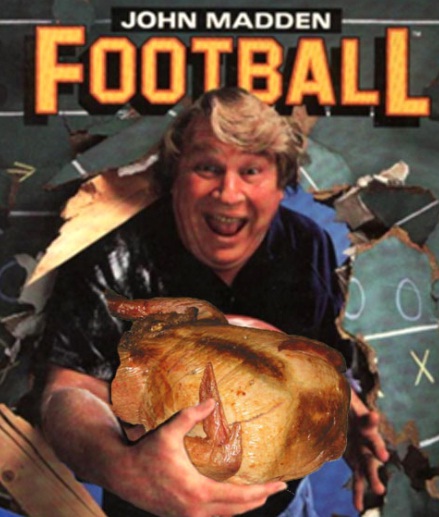
NFL’s Hohn Madden popularized the Turducken as an American Thanksgiving “eating grotesque”. Sometimes turkey just ‘ain’t enough’

Regardless, the idea of stuffing as many animals inside the other as possible has been around for quite some time. Now the question becomes why? I have never been acquainted with the turducken myself but I have come in to contact with those who have taken on the task of both making and devouring this triple decker bird. The consensus appears to be that despite the overwhelming thought of consuming three birds in one sitting, the savory taste is something like no other.

Now, let us step back for a moment and ponder this: why does a creation like the turduken receive praise while something like KFC’s Double Decker is criticized and made out to be the accomplice to the grim reaper? NFL commentator John Madden even endorsed the turducken and Herbert’s Specialty Meats located in New Orleans, has built a business on them! Thanksgiving and Christmas alone can have them shipping out thousands of turduckens to stores and homes all over the US.

Listen folks, whether you’re enjoying a juicy turkey, duck, hen, quail, pheasant, partridge or garden warbler – it doesn’t matter. After all, it’s the holidays! Relax, enjoy (or painfully endure, remember a few glasses of wine goes a long way) the time with family and enjoy some good home cookin’! Merry Christmas! For the Silo, Holly LaRue. 

Link to Turducken Recipe

Inside The High Flying & Spying World Of Hot Air Balloons

Remember early last year when we were besieged by strange, large balloons in our airspace- the kind of balloons that certain nations are using to spy on us or possibly manipulate the weather?

Okay let’s put those conspiracy theories aside for now. Hopefully everyone has seen a hot air balloon in flight at least once because they are majestic and otherworldly and quite calming to watch drifting around up in the blue sky above.

But have you ever wondered when the first one was invented? Or how much hot air is required to get them safely off the ground and ready for a flight around the skies? Or where they are stored when they aren’t being used? Our friends at SpareFoot were wondering the same thing, and the data they shared with us below is quite astonishing.

Hot Air Balloon InfoGraphic

SupplementalBaumgartner’s record setting Free Fall event utilized Hot Air Balloon to reach “edge of space”

We Should Be Consuming Fats Not GMOs

Archaeological studies have confirmed that ancient humans broke open bones for marrow and based on fossilized coprolites, ate a diet rich in fat. CP

When Dr. John Salerno – a protégé of “Atkins Diet” creator Dr. Robert Atkins – testified before the U.S.D.A. about plans for its most recent Food Pyramid revision, he spoke his mind: The food industry is corrupt and has supported recommendations that do not support the population’s health.

 “Hidden sugar, preservatives and highly processed white starch are what are really causing our health epidemic in the United States and Canada, Mexico, Australia and the United Kingdom,” says Salerno, author of “The Silver Cloud Diet,” (www.thesilverclouddiet.com). “Obesity, diabetes, heart disease, cancer and Alzheimer’s disease are killing this country, and it’s not because people are eating too much organic natural fats.”

Since the initial popularity of the Atkins food plan some years ago, however, there have been critics of the low-carbohydrate diet.

The science was and is sound, says Dr. Salerno, who worked closely with Atkins on research. The problem was that the diet itself was not sustainable.

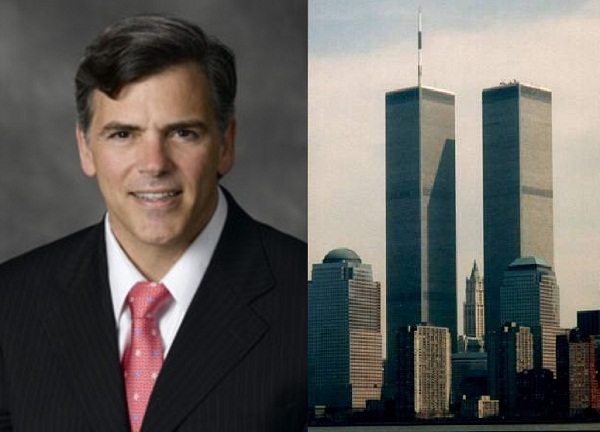
After the terrorist bombings of September 11, 2001, Dr. Salerno served as the Medical Director for the World Trade Center Landfill, a position that earned him a commendation from then-mayor Rudy Giuliani. In this capacity, he was charged with monitoring the health of the public workers assigned to manage the landfill where debris from the World Trade Center was transferred.

“The basic principles needed revision both to make the diet sustainable and to take into account the foods available today,” he says. How does a low-carb diet work? Salerno answers the most frequently asked questions:


 • How is a low-carb diet today different from the Dr. Atkins plan? Thirty years ago, the food supply was less degraded. Now, low-carb dieters have to be more proactive about selecting chemical-free foods that are not highly processed. There are many more farming techniques today that introduce unnatural elements into our meats and vegetables, and there are many, many more highly processed foods on store shelves. We need to be vigilant about preservatives and additives; hormone-infused meat can wreak havoc on a body.


  • What’s the first step? The Fat Fast Detox quickly puts one’s body into fat-burning mode. Adhering to the carb-free diet for two weeks will have participants losing five to 15 pounds and two inches from the waistline. Breakfast, for example, could include two large organic eggs and a side of bacon, sausage or ham, which can be washed down with coffee or tea with cream and sweetener.
  • What about eating out? Sustaining a low-carb diet is pretty simple when eating at restaurants. Take the burger out of the bread and skip the French fries. You’re good to go with grilled fish, roast chicken, pot roast, pork tenderloin, shrimp, scallops and pates.


  • How can you eat on the run? A small amount of planning goes a long way. Boil eggs and keep them on hand for long car trips and office snacking. Add to that list jerky salmon, nuts and string cheese. These foods are dense with nutrients.


  • Where can you find “clean” foods? Buy as “close to the ground” as possible, meaning choose organic produce, eggs and dairy. Inquire at farmer’s markets where they grow crops. Find a local provider for meats and fish if possible.


  • Can you eat cake on a low-carb diet? As your health and vitality improves with lost weight and increased activity, you can introduce more carbohydrates into your diet.


  • Are low-carb meals safe for family members who do not need to lose weight? What’s good for you – a broad and varied diet of unprocessed foods – is good for your family!


  • When is the diet over? Eating foods that are healthy, unprocessed and natural is something you should never stop doing. However, if you feel you’re starting to gain excess weight, go on a detox regimen by cutting out carbs completely for one week.


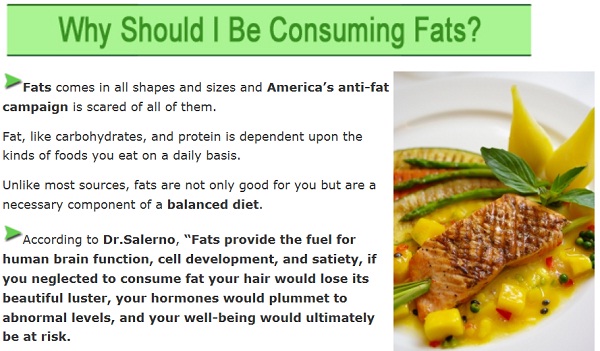
  • So, fat is good for you? Natural fat is the most nutrient-dense food there is. It’s lubricates your joints and helps your brain function at its best. It also keeps your hair shiny and helps prevent wrinkles. When you cut out processed carbs from your diet, you don’t need to worry about natural fat, which is an appetite suppressant.
 For the Silo, Dr. John Salerno.


7000 Words About The Dubious Refragmentation Of The Economy

One advantage of being old is that you can see change happen in your lifetime.

A lot of the change I’ve seen is fragmentation. For example, US politics and now Canadian politics are much more polarized than they used to be. Culturally we have ever less common ground and though inclusiveness is preached by the media and the Left, special interest groups and policies have a polarizing effect. The creative class flocks to a handful of happy cities, abandoning the rest. And increasing economic inequality means the spread between rich and poor is growing too. I’d like to propose a hypothesis: that all these trends are instances of the same phenomenon. And moreover, that the cause is not some force that’s pulling us apart, but rather the erosion of forces that had been pushing us together.

Worse still, for those who worry about these trends, the forces that were pushing us together were an anomaly, a one-time combination of circumstances that’s unlikely to be repeated—and indeed, that we would not want to repeat.

Describe How a Mass Culture Developed in America - JeankruwHumphrey

The two forces were war (above all World War II), and the rise of large corporations.

The effects of World War II were both economic and social. Economically, it decreased variation in income. Like all modern armed forces, America’s were socialist economically. From each according to his ability, to each according to his need. More or less. Higher ranking members of the military got more (as higher ranking members of socialist societies always do), but what they got was fixed according to their rank. And the flattening effect wasn’t limited to those under arms, because the US economy was conscripted too. Between 1942 and 1945 all wages were set by the National War Labor Board. Like the military, they defaulted to flatness. And this national standardization of wages was so pervasive that its effects could still be seen years after the war ended. [1]

Business owners weren’t supposed to be making money either.

FDR said “not a single war millionaire” would be permitted. To ensure that, any increase in a company’s profits over prewar levels was taxed at 85%. And when what was left after corporate taxes reached individuals, it was taxed again at a marginal rate of 93%. [2]

Socially too the war tended to decrease variation. Over 16 million men and women from all sorts of different backgrounds were brought together in a way of life that was literally uniform. Service rates for men born in the early 1920s approached 80%. And working toward a common goal, often under stress, brought them still closer together.

Though strictly speaking World War II lasted less than 4 years for the USA, its effects lasted longer and cycled North towards Canada.

Wars make central governments more powerful, and World War II was an extreme case of this. In the US, as in all the other Allied countries, the federal government was slow to give up the new powers it had acquired. Indeed, in some respects the war didn’t end in 1945; the enemy just switched to the Soviet Union. In tax rates, federal power, defense spending, conscription, and nationalism the decades after the war looked more like wartime than prewar peacetime. [3] And the social effects lasted too. The kid pulled into the army from behind a mule team in West Virginia didn’t simply go back to the farm afterward. Something else was waiting for him, something that looked a lot like the army.

If total war was the big political story of the 20th century, the big economic story was the rise of new kind of company. And this too tended to produce both social and economic cohesion. [4]

The 20th century was the century of the big, national corporation. General Electric, General Foods, General Motors. Developments in finance, communications, transportation, and manufacturing enabled a new type of company whose goal was above all scale. Version 1 of this world was low-res: a Duplo world of a few giant companies dominating each big market. [5]

The late 19th and early 20th centuries had been a time of consolidation, led especially by J. P. Morgan. Thousands of companies run by their founders were merged into a couple hundred giant ones run by professional managers. Economies of scale ruled the day. It seemed to people at the time that this was the final state of things. John D. Rockefeller said in 1880

Image result for john d rockefeller

The day of combination is here to stay. Individualism has gone, never to return.

He turned out to be mistaken, but he seemed right for the next hundred years.

The consolidation that began in the late 19th century continued for most of the 20th. By the end of World War II, as Michael Lind writes, “the major sectors of the economy were either organized as government-backed cartels or dominated by a few oligopolistic corporations.”

For consumers this new world meant the same choices everywhere, but only a few of them. When I grew up there were only 2 or 3 of most things, and since they were all aiming at the middle of the market there wasn’t much to differentiate them.

One of the most important instances of this phenomenon was in TV.

Popular culture and daily life of Americans in the 1950s - WWJD

Here there were 3 choices: NBC, CBS, and ABC. Plus public TV for eggheads and communists (jk). The programs the 3 networks offered were indistinguishable. In fact, here there was a triple pressure toward the center. If one show did try something daring, local affiliates in conservative markets would make them stop. Plus since TVs were expensive whole families watched the same shows together, so they had to be suitable for everyone.

And not only did everyone get the same thing, they got it at the same time. It’s difficult to imagine now, but every night tens of millions of families would sit down together in front of their TV set watching the same show, at the same time, as their next door neighbors. What happens now with the Super Bowl used to happen every night. We were literally in sync. [6]

In a way mid-century TV culture was good. The view it gave of the world was like you’d find in a children’s book, and it probably had something of the effect that (parents hope) children’s books have in making people behave better. But, like children’s books, TV was also misleading. Dangerously misleading, for adults. In his autobiography, Robert MacNeil talks of seeing gruesome images that had just come in from Vietnam and thinking, we can’t show these to families while they’re having dinner.

I know how pervasive the common culture was, because I tried to opt out of it, and it was practically impossible to find alternatives.

When I was 13 I realized, more from internal evidence than any outside source, that the ideas we were being fed on TV were crap, and I stopped watching it. [7] But it wasn’t just TV. It seemed like everything around me was crap. The politicians all saying the same things, the consumer brands making almost identical products with different labels stuck on to indicate how prestigious they were meant to be, the balloon-frame houses with fake “colonial” skins, the cars with several feet of gratuitous metal on each end that started to fall apart after a couple years, the “red delicious” apples that were red but only nominally apples. And in retrospect, it was crap. [8]

But when I went looking for alternatives to fill this void, I found practically nothing. There was no Internet then. The only place to look was in the chain bookstore in our local shopping mall. [9] There I found a copy of The Atlantic. I wish I could say it became a gateway into a wider world, but in fact I found it boring and incomprehensible. Like a kid tasting whisky for the first time and pretending to like it, I preserved that magazine as carefully as if it had been a book. I’m sure I still have it somewhere. But though it was evidence that there was, somewhere, a world that wasn’t red delicious, I didn’t find it till college.

It wasn’t just as consumers that the big companies made us similar. They did as employers too. Within companies there were powerful forces pushing people toward a single model of how to look and act. IBM was particularly notorious for this, but they were only a little more extreme than other big companies. And the models of how to look and act varied little between companies. Meaning everyone within this world was expected to seem more or less the same. And not just those in the corporate world, but also everyone who aspired to it—which in the middle of the 20th century meant most people who weren’t already in it. For most of the 20th century, working-class people tried hard to look middle class. You can see it in old photos. Few adults aspired to look dangerous in 1950.

But the rise of national corporations didn’t just compress us culturally. It compressed us economically too, and on both ends.

Along with giant national corporations, we got giant national labor unions. And in the mid 20th century the corporations cut deals with the unions where they paid over market price for labor. Partly because the unions were monopolies. [10] Partly because, as components of oligopolies themselves, the corporations knew they could safely pass the cost on to their customers, because their competitors would have to as well. And partly because in mid-century most of the giant companies were still focused on finding new ways to milk economies of scale. Just as startups rightly pay AWS a premium over the cost of running their own servers so they can focus on growth, many of the big national corporations were willing to pay a premium for labor. [11]

As well as pushing incomes up from the bottom, by overpaying unions, the big companies of the 20th century also pushed incomes down at the top, by underpaying their top management. Economist J. K. Galbraith wrote in 1967 that “There are few corporations in which it would be suggested that executive salaries are at a maximum.” [12]

Speaking Out Meant Standing Alone

To some extent this was an illusion.

Much of the de facto pay of executives never showed up on their income tax returns, because it took the form of perks. The higher the rate of income tax, the more pressure there was to pay employees upstream of it. (In the UK, where taxes were even higher than in the US, companies would even pay their kids’ private school tuitions.) One of the most valuable things the big companies of the mid 20th century gave their employees was job security, and this too didn’t show up in tax returns or income statistics. So the nature of employment in these organizations tended to yield falsely low numbers about economic inequality. But even accounting for that, the big companies paid their best people less than market price. There was no market; the expectation was that you’d work for the same company for decades if not your whole career. [13]

Your work was so illiquid there was little chance of getting market price. But that same illiquidity also encouraged you not to seek it. If the company promised to employ you till you retired and give you a pension afterward, you didn’t want to extract as much from it this year as you could. You needed to take care of the company so it could take care of you. Especially when you’d been working with the same group of people for decades. If you tried to squeeze the company for more money, you were squeezing the organization that was going to take care of them. Plus if you didn’t put the company first you wouldn’t be promoted, and if you couldn’t switch ladders, promotion on this one was the only way up. [14]

To someone who’d spent several formative years in the armed forces, this situation didn’t seem as strange as it does to us now. From their point of view, as big company executives, they were high-ranking officers. They got paid a lot more than privates. They got to have expense account lunches at the best restaurants and fly around on the company’s Gulfstreams. It probably didn’t occur to most of them to ask if they were being paid market price.

The ultimate way to get market price is to work for yourself, by starting your own company. That seems obvious to any ambitious person now. But in the mid 20th century it was an alien concept. Not because starting one’s own company seemed too ambitious, but because it didn’t seem ambitious enough. Even as late as the 1970s, when I grew up, the ambitious plan was to get lots of education at prestigious institutions, and then join some other prestigious institution and work one’s way up the hierarchy. Your prestige was the prestige of the institution you belonged to. People did start their own businesses of course, but educated people rarely did, because in those days there was practically zero concept of starting what we now call a startup: a business that starts small and grows big. That was much harder to do in the mid 20th century. Starting one’s own business meant starting a business that would start small and stay small. Which in those days of big companies often meant scurrying around trying to avoid being trampled by elephants. It was more prestigious to be one of the executive class riding the elephant.

By the 1970s, no one stopped to wonder where the big prestigious companies had come from in the first place.

Famous 1970s Logos: The Best 70s Logo Design Examples

It seemed like they’d always been there, like the chemical elements. And indeed, there was a double wall between ambitious kids in the 20th century and the origins of the big companies. Many of the big companies were roll-ups that didn’t have clear founders. And when they did, the founders didn’t seem like us. Nearly all of them had been uneducated, in the sense of not having been to college. They were what Shakespeare called rude mechanicals. College trained one to be a member of the professional classes. Its graduates didn’t expect to do the sort of grubby menial work that Andrew Carnegie or Henry Ford started out doing. [15]

And in the 20th century there were more and more college graduates. They increased from about 2% of the population in 1900 to about 25% in 2000. In the middle of the century our two big forces intersect, in the form of the GI Bill, which sent 2.2 million World War II veterans to college. Few thought of it in these terms, but the result of making college the canonical path for the ambitious was a world in which it was socially acceptable to work for Henry Ford, but not to be Henry Ford. [16]

I remember this world well. I came of age just as it was starting to break up. In my childhood it was still dominant. Not quite so dominant as it had been. We could see from old TV shows and yearbooks and the way adults acted that people in the 1950s and 60s had been even more conformist than us. The mid-century model was already starting to get old. But that was not how we saw it at the time. We would at most have said that one could be a bit more daring in 1975 than 1965. And indeed, things hadn’t changed much yet.

But change was coming soon.

And when the Duplo economy started to disintegrate, it disintegrated in several different ways at once. Vertically integrated companies literally dis-integrated because it was more efficient to. Incumbents faced new competitors as (a) markets went global and (b) technical innovation started to trump economies of scale, turning size from an asset into a liability. Smaller companies were increasingly able to survive as formerly narrow channels to consumers broadened. Markets themselves started to change faster, as whole new categories of products appeared. And last but not least, the federal government, which had previously smiled upon J. P. Morgan’s world as the natural state of things, began to realize it wasn’t the last word after all.

What J. P. Morgan was to the horizontal axis, Henry Ford was to the vertical. He wanted to do everything himself. The giant plant he built at River Rouge between 1917 and 1928 literally took in iron ore at one end and sent cars out the other. 100,000 people worked there. At the time it seemed the future. But that is not how car companies operate today. Now much of the design and manufacturing happens in a long supply chain, whose products the car companies ultimately assemble and sell. The reason car companies operate this way is that it works better. Each company in the supply chain focuses on what they know best. And they each have to do it well or they can be swapped out for another supplier.

Why didn’t Henry Ford realize that networks of cooperating companies work better than a single big company?

One reason is that supplier networks take a while to evolve. In 1917, doing everything himself seemed to Ford the only way to get the scale he needed. And the second reason is that if you want to solve a problem using a network of cooperating companies, you have to be able to coordinate their efforts, and you can do that much better with computers. Computers reduce the transaction costs that Coase argued are the raison d’etre of corporations. That is a fundamental change.

In the early 20th century, big companies were synonymous with efficiency. In the late 20th century they were synonymous with inefficiency. To some extent this was because the companies themselves had become sclerotic. But it was also because our standards were higher.

It wasn’t just within existing industries that change occurred. The industries themselves changed. It became possible to make lots of new things, and sometimes the existing companies weren’t the ones who did it best.

Microcomputers are a classic example.

Ms Dos 1.25 (1982)(Microsoft) Game

The market was pioneered by upstarts like Apple, Radio Shack and Atari. When it got big enough, IBM decided it was worth paying attention to. At the time IBM completely dominated the computer industry. They assumed that all they had to do, now that this market was ripe, was to reach out and pick it. Most people at the time would have agreed with them. But what happened next illustrated how much more complicated the world had become. IBM did launch a microcomputer. Though quite successful, it did not crush Apple. But even more importantly, IBM itself ended up being supplanted by a supplier coming in from the side—from software, which didn’t even seem to be the same business. IBM’s big mistake was to accept a non-exclusive license for DOS. It must have seemed a safe move at the time. No other computer manufacturer had ever been able to outsell them. What difference did it make if other manufacturers could offer DOS too? The result of that miscalculation was an explosion of inexpensive PC clones. Microsoft now owned the PC standard, and the customer. And the microcomputer business ended up being Apple vs Microsoft.

Basically, Apple bumped IBM and then Microsoft stole its wallet. That sort of thing did not happen to big companies in mid-century. But it was going to happen increasingly often in the future.

Change happened mostly by itself in the computer business. In other industries, legal obstacles had to be removed first. Many of the mid-century oligopolies had been anointed by the federal government with policies (and in wartime, large orders) that kept out competitors. This didn’t seem as dubious to government officials at the time as it sounds to us. They felt a two-party system ensured sufficient competition in politics. It ought to work for business too.

Gradually the government realized that anti-competitive policies were doing more harm than good, and during the Carter administration started to remove them.

The word used for this process was misleadingly narrow: deregulation. What was really happening was de-oligopolization. It happened to one industry after another. Two of the most visible to consumers were air travel and long-distance phone service, which both became dramatically cheaper after deregulation.

Deregulation also contributed to the wave of hostile takeovers in the 1980s. In the old days the only limit on the inefficiency of companies, short of actual bankruptcy, was the inefficiency of their competitors. Now companies had to face absolute rather than relative standards. Any public company that didn’t generate sufficient returns on its assets risked having its management replaced with one that would. Often the new managers did this by breaking companies up into components that were more valuable separately. [17]

Version 1 of the national economy consisted of a few big blocks whose relationships were negotiated in back rooms by a handful of executives, politicians, regulators, and labor leaders. Version 2 was higher resolution: there were more companies, of more different sizes, making more different things, and their relationships changed faster. In this world there were still plenty of back room negotiations, but more was left to market forces. Which further accelerated the fragmentation.

It’s a little misleading to talk of versions when describing a gradual process, but not as misleading as it might seem. There was a lot of change in a few decades, and what we ended up with was qualitatively different. The companies in the S&P 500 in 1958 had been there an average of 61 years. By 2012 that number was 18 years. [18]

The breakup of the Duplo economy happened simultaneously with the spread of computing power. To what extent were computers a precondition? It would take a book to answer that. Obviously the spread of computing power was a precondition for the rise of startups. I suspect it was for most of what happened in finance too. But was it a precondition for globalization or the LBO wave? I don’t know, but I wouldn’t discount the possibility. It may be that the refragmentation was driven by computers in the way the industrial revolution was driven by steam engines. Whether or not computers were a precondition, they have certainly accelerated it.

The new fluidity of companies changed people’s relationships with their employers. Why climb a corporate ladder that might be yanked out from under you? Ambitious people started to think of a career less as climbing a single ladder than as a series of jobs that might be at different companies. More movement (or even potential movement) between companies introduced more competition in salaries. Plus as companies became smaller it became easier to estimate how much an employee contributed to the company’s revenue. Both changes drove salaries toward market price. And since people vary dramatically in productivity, paying market price meant salaries started to diverge.

By no coincidence it was in the early 1980s that the term “yuppie” was coined. That word is not much used now, because the phenomenon it describes is so taken for granted, but at the time it was a label for something novel. Yuppies were young professionals who made lots of money. To someone in their twenties today, this wouldn’t seem worth naming. Why wouldn’t young professionals make lots of money? But until the 1980s being underpaid early in your career was part of what it meant to be a professional. Young professionals were paying their dues, working their way up the ladder. The rewards would come later. What was novel about yuppies was that they wanted market price for the work they were doing now.

The first yuppies did not work for startups.

AM2407 Spark blog: 1980s - The Yuppie

That was still in the future. Nor did they work for big companies. They were professionals working in fields like law, finance, and consulting. But their example rapidly inspired their peers. Once they saw that new BMW 325i, they wanted one too.

Underpaying people at the beginning of their career only works if everyone does it. Once some employer breaks ranks, everyone else has to, or they can’t get good people. And once started this process spreads through the whole economy, because at the beginnings of people’s careers they can easily switch not merely employers but industries.

But not all young professionals benefitted. You had to produce to get paid a lot. It was no coincidence that the first yuppies worked in fields where it was easy to measure that.

More generally, an idea was returning whose name sounds old-fashioned precisely because it was so rare for so long: that you could make your fortune. As in the past there were multiple ways to do it. Some made their fortunes by creating wealth, and others by playing zero-sum games. But once it became possible to make one’s fortune, the ambitious had to decide whether or not to. A physicist who chose physics over Wall Street in 1990 was making a sacrifice that a physicist in 1960 wasn’t.

The idea even flowed back into big companies. CEOs of big companies make more now than they used to, and I think much of the reason is prestige. In 1960, corporate CEOs had immense prestige. They were the winners of the only economic game in town. But if they made as little now as they did then, in real dollar terms, they’d seem like small fry compared to professional athletes and whiz kids making millions from startups and hedge funds. They don’t like that idea, so now they try to get as much as they can, which is more than they had been getting. [19]

Meanwhile a similar fragmentation was happening at the other end of the economic scale. As big companies’ oligopolies became less secure, they were less able to pass costs on to customers and thus less willing to overpay for labor. And as the Duplo world of a few big blocks fragmented into many companies of different sizes—some of them overseas—it became harder for unions to enforce their monopolies. As a result workers’ wages also tended toward market price. Which (inevitably, if unions had been doing their job) tended to be lower. Perhaps dramatically so, if automation had decreased the need for some kind of work.

And just as the mid-century model induced social as well as economic cohesion, its breakup brought social as well as economic fragmentation. People started to dress and act differently. Those who would later be called the “creative class” became more mobile. People who didn’t care much for religion felt less pressure to go to church for appearances’ sake, while those who liked it a lot opted for increasingly colorful forms. Some switched from meat loaf to tofu, and others to Hot Pockets. Some switched from driving Ford sedans to driving small imported cars, and others to driving SUVs. Kids who went to private schools or wished they did started to dress “preppy,” and kids who wanted to seem rebellious made a conscious effort to look disreputable. In a hundred ways people spread apart. [20]

Almost four decades later, fragmentation is still increasing.

Has it been net good or bad? I don’t know; the question may be unanswerable. Not entirely bad though. We take for granted the forms of fragmentation we like, and worry only about the ones we don’t. But as someone who caught the tail end of mid-century conformism, I can tell you it was no utopia. [21]

My goal here is not to say whether fragmentation has been good or bad, just to explain why it’s happening. With the centripetal forces of total war and 20th century oligopoly mostly gone, what will happen next? And more specifically, is it possible to reverse some of the fragmentation we’ve seen?

If it is, it will have to happen piecemeal. You can’t reproduce mid-century cohesion the way it was originally produced. It would be insane to go to war just to induce more national unity. And once you understand the degree to which the economic history of the 20th century was a low-res version 1, it’s clear you can’t reproduce that either.

20th century cohesion was something that happened at least in a sense naturally. The war was due mostly to external forces, and the Duplo economy was an evolutionary phase. If you want cohesion now, you’d have to induce it deliberately. And it’s not obvious how. I suspect the best we’ll be able to do is address the symptoms of fragmentation. But that may be enough.

The form of fragmentation people worry most about lately is economic inequality, and if you want to eliminate that you’re up against a truly formidable headwind—one that has been in operation since the stone age: technology. Technology is a lever. It magnifies work. And the lever not only grows increasingly long, but the rate at which it grows is itself increasing.

Which in turn means the variation in the amount of wealth people can create has not only been increasing, but accelerating.

The unusual conditions that prevailed in the mid 20th century masked this underlying trend. The ambitious had little choice but to join large organizations that made them march in step with lots of other people—literally in the case of the armed forces, figuratively in the case of big corporations. Even if the big corporations had wanted to pay people proportionate to their value, they couldn’t have figured out how. But that constraint has gone now. Ever since it started to erode in the 1970s, we’ve seen the underlying forces at work again. [22]

Not everyone who gets rich now does it by creating wealth, certainly. But a significant number do, and the Baumol Effect means all their peers get dragged along too. [23] And as long as it’s possible to get rich by creating wealth, the default tendency will be for economic inequality to increase. Even if you eliminate all the other ways to get rich. You can mitigate this with subsidies at the bottom and taxes at the top, but unless taxes are high enough to discourage people from creating wealth, you’re always going to be fighting a losing battle against increasing variation in productivity. [24]

That form of fragmentation, like the others, is here to stay. Or rather, back to stay. Nothing is forever, but the tendency toward fragmentation should be more forever than most things, precisely because it’s not due to any particular cause. It’s simply a reversion to the mean. When Rockefeller said individualism was gone, he was right for a hundred years. It’s back now, and that’s likely to be true for longer.

I worry that if we don’t acknowledge this, we’re headed for trouble.

If we think 20th century cohesion disappeared because of few policy tweaks, we’ll be deluded into thinking we can get it back (minus the bad parts, somehow) with a few countertweaks. And then we’ll waste our time trying to eliminate fragmentation, when we’d be better off thinking about how to mitigate its consequences.

Notes

[1] Lester Thurow, writing in 1975, said the wage differentials prevailing at the end of World War II had become so embedded that they “were regarded as ‘just’ even after the egalitarian pressures of World War II had disappeared. Basically, the same differentials exist to this day, thirty years later.” But Goldin and Margo think market forces in the postwar period also helped preserve the wartime compression of wages—specifically increased demand for unskilled workers, and oversupply of educated ones.

(Oddly enough, the American custom of having employers pay for health insurance derives from efforts by businesses to circumvent NWLB wage controls in order to attract workers.)

[2] As always, tax rates don’t tell the whole story. There were lots of exemptions, especially for individuals. And in World War II the tax codes were so new that the government had little acquired immunity to tax avoidance. If the rich paid high taxes during the war it was more because they wanted to than because they had to.

After the war, federal tax receipts as a percentage of GDP were about the same as they are now.

In fact, for the entire period since the war, tax receipts have stayed close to 18% of GDP, despite dramatic changes in tax rates. The lowest point occurred when marginal income tax rates were highest: 14.1% in 1950. Looking at the data, it’s hard to avoid the conclusion that tax rates have had little effect on what people actually paid.

[3] Though in fact the decade preceding the war had been a time of unprecedented federal power, in response to the Depression. Which is not entirely a coincidence, because the Depression was one of the causes of the war. In many ways the New Deal was a sort of dress rehearsal for the measures the federal government took during wartime. The wartime versions were much more drastic and more pervasive though. As Anthony Badger wrote, “for many Americans the decisive change in their experiences came not with the New Deal but with World War II.”

[4] I don’t know enough about the origins of the world wars to say, but it’s not inconceivable they were connected to the rise of big corporations. If that were the case, 20th century cohesion would have a single cause.

[5] More precisely, there was a bimodal economy consisting, in Galbraith’s words, of “the world of the technically dynamic, massively capitalized and highly organized corporations on the one hand and the hundreds of thousands of small and traditional proprietors on the other.” Money, prestige, and power were concentrated in the former, and there was near zero crossover.

[6] I wonder how much of the decline in families eating together was due to the decline in families watching TV together afterward.

[7] I know when this happened because it was the season Dallas premiered. Everyone else was talking about what was happening on Dallas, and I had no idea what they meant.

[8] I didn’t realize it till I started doing research for this essay, but the meretriciousness of the products I grew up with is a well-known byproduct of oligopoly. When companies can’t compete on price, they compete on tailfins.

[9] Monroeville Mall was at the time of its completion in 1969 the largest in the country. In the late 1970s the movie Dawn of the Dead was shot there. Apparently the mall was not just the location of the movie, but its inspiration; the crowds of shoppers drifting through this huge mall reminded George Romero of zombies. My first job was scooping ice cream in the Baskin-Robbins.

[10] Labor unions were exempted from antitrust laws by the Clayton Antitrust Act in 1914 on the grounds that a person’s work is not “a commodity or article of commerce.” I wonder if that means service companies are also exempt.

[11] The relationships between unions and unionized companies can even be symbiotic, because unions will exert political pressure to protect their hosts. According to Michael Lind, when politicians tried to attack the A&P supermarket chain because it was putting local grocery stores out of business, “A&P successfully defended itself by allowing the unionization of its workforce in 1938, thereby gaining organized labor as a constituency.” I’ve seen this phenomenon myself: hotel unions are responsible for more of the political pressure against Airbnb than hotel companies.

[12] Galbraith was clearly puzzled that corporate executives would work so hard to make money for other people (the shareholders) instead of themselves. He devoted much of The New Industrial State to trying to figure this out.

His theory was that professionalism had replaced money as a motive, and that modern corporate executives were, like (good) scientists, motivated less by financial rewards than by the desire to do good work and thereby earn the respect of their peers. There is something in this, though I think lack of movement between companies combined with self-interest explains much of observed behavior.

[13] Galbraith (p. 94) says a 1952 study of the 800 highest paid executives at 300 big corporations found that three quarters of them had been with their company for more than 20 years.

[14] It seems likely that in the first third of the 20th century executive salaries were low partly because companies then were more dependent on banks, who would have disapproved if executives got too much. This was certainly true in the beginning. The first big company CEOs were J. P. Morgan’s hired hands.

Companies didn’t start to finance themselves with retained earnings till the 1920s. Till then they had to pay out their earnings in dividends, and so depended on banks for capital for expansion. Bankers continued to sit on corporate boards till the Glass-Steagall act in 1933.

By mid-century big companies funded 3/4 of their growth from earnings. But the early years of bank dependence, reinforced by the financial controls of World War II, must have had a big effect on social conventions about executive salaries. So it may be that the lack of movement between companies was as much the effect of low salaries as the cause.

Incidentally, the switch in the 1920s to financing growth with retained earnings was one cause of the 1929 crash. The banks now had to find someone else to lend to, so they made more margin loans.

[15] Even now it’s hard to get them to. One of the things I find hardest to get into the heads of would-be startup founders is how important it is to do certain kinds of menial work early in the life of a company. Doing things that don’t scale is to how Henry Ford got started as a high-fiber diet is to the traditional peasant’s diet: they had no choice but to do the right thing, while we have to make a conscious effort.

[16] Founders weren’t celebrated in the press when I was a kid. “Our founder” meant a photograph of a severe-looking man with a walrus mustache and a wing collar who had died decades ago. The thing to be when I was a kid was an executive. If you weren’t around then it’s hard to grasp the cachet that term had. The fancy version of everything was called the “executive” model.

[17] The wave of hostile takeovers in the 1980s was enabled by a combination of circumstances: court decisions striking down state anti-takeover laws, starting with the Supreme Court’s 1982 decision in Edgar v. MITE Corp.; the Reagan administration’s comparatively sympathetic attitude toward takeovers; the Depository Institutions Act of 1982, which allowed banks and savings and loans to buy corporate bonds; a new SEC rule issued in 1982 (rule 415) that made it possible to bring corporate bonds to market faster; the creation of the junk bond business by Michael Milken; a vogue for conglomerates in the preceding period that caused many companies to be combined that never should have been; a decade of inflation that left many public companies trading below the value of their assets; and not least, the increasing complacency of managements.

[18] Foster, Richard. “Creative Destruction Whips through Corporate America.” Innosight, February 2012.

[19] CEOs of big companies may be overpaid. I don’t know enough about big companies to say. But it is certainly not impossible for a CEO to make 200x as much difference to a company’s revenues as the average employee. Look at what Steve Jobs did for Apple when he came back as CEO. It would have been a good deal for the board to give him 95% of the company. Apple’s market cap the day Steve came back in July 1997 was 1.73 billion. 5% of Apple now (January 2016) would be worth about 30 billion. And it would not be if Steve hadn’t come back; Apple probably wouldn’t even exist anymore.

Merely including Steve in the sample might be enough to answer the question of whether public company CEOs in the aggregate are overpaid. And that is not as facile a trick as it might seem, because the broader your holdings, the more the aggregate is what you care about.

[20] The late 1960s were famous for social upheaval. But that was more rebellion (which can happen in any era if people are provoked sufficiently) than fragmentation. You’re not seeing fragmentation unless you see people breaking off to both left and right.

[21] Globally the trend has been in the other direction. While the US is becoming more fragmented, the world as a whole is becoming less fragmented, and mostly in good ways.

[22] There were a handful of ways to make a fortune in the mid 20th century. The main one was drilling for oil, which was open to newcomers because it was not something big companies could dominate through economies of scale. How did individuals accumulate large fortunes in an era of such high taxes? Giant tax loopholes defended by two of the most powerful men in Congress, Sam Rayburn and Lyndon Johnson.

But becoming a Texas oilman was not in 1950 something one could aspire to the way starting a startup or going to work on Wall Street were in 2000, because (a) there was a strong local component and (b) success depended so much on luck.

[23] The Baumol Effect induced by startups is very visible in Silicon Valley. Google will pay people millions of dollars a year to keep them from leaving to start or join startups.

[24] I’m not claiming variation in productivity is the only cause of economic inequality in the US. But it’s a significant cause, and it will become as big a cause as it needs to, in the sense that if you ban other ways to get rich, people who want to get rich will use this route instead.

Thanks to Sam Altman, Trevor Blackwell, Paul Buchheit, Patrick Collison, Ron Conway, Chris Dixon, Benedict Evans, Richard Florida, Ben Horowitz, Jessica Livingston, Robert Morris, Tim O’Reilly, Geoff Ralston, Max Roser, Alexia Tsotsis, and Qasar Younis for reading drafts of this. Max also told me about several valuable sources. Essay from http://paulgraham.com/re.html

Bibliography

Allen, Frederick Lewis. The Big Change. Harper, 1952.

Averitt, Robert. The Dual Economy. Norton, 1968.

Badger, Anthony. The New Deal. Hill and Wang, 1989.

Bainbridge, John. The Super-Americans. Doubleday, 1961.

Beatty, Jack. Collossus. Broadway, 2001.

Brinkley, Douglas. Wheels for the World. Viking, 2003.

Brownleee, W. Elliot. Federal Taxation in America. Cambridge, 1996.

Chandler, Alfred. The Visible Hand. Harvard, 1977.

Chernow, Ron. The House of Morgan. Simon & Schuster, 1990.

Chernow, Ron. Titan: The Life of John D. Rockefeller. Random House, 1998.

Galbraith, John. The New Industrial State. Houghton Mifflin, 1967.

Goldin, Claudia and Robert A. Margo. “The Great Compression: The Wage Structure in the United States at Mid-Century.” NBER Working Paper 3817, 1991.

Gordon, John. An Empire of Wealth. HarperCollins, 2004.

Klein, Maury. The Genesis of Industrial America, 1870-1920. Cambridge, 2007.

Lind, Michael. Land of Promise. HarperCollins, 2012.

Mickelthwaite, John, and Adrian Wooldridge. The Company. Modern Library, 2003.

Nasaw, David. Andrew Carnegie. Penguin, 2006.

Sobel, Robert. The Age of Giant Corporations. Praeger, 1993.

Thurow, Lester. Generating Inequality: Mechanisms of Distribution. Basic Books, 1975.

Witte, John. The Politics and Development of the Federal Income Tax. Wisconsin, 1985.
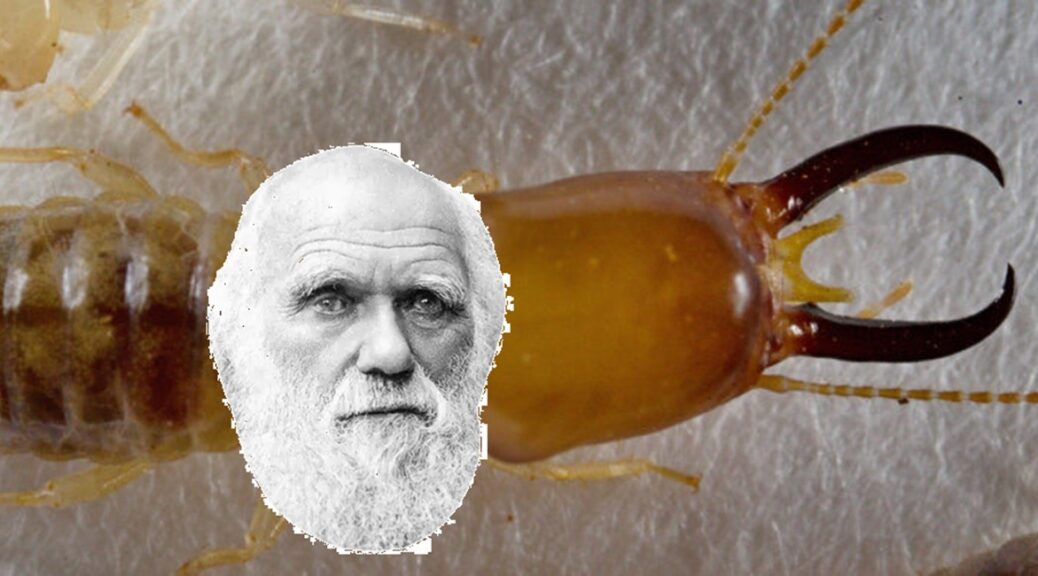
 

Why I’m Still Here Is Still Such An Amazing, Quirky Film

It’s been almost a decade and a half since Casey Affleck’s I’m Still Here perplexed us all. On reflection, it is a piece of modern motion picture history and a masterpiece.
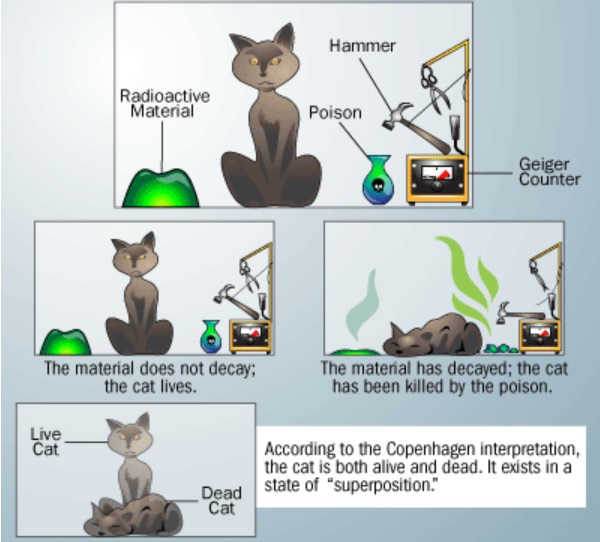

I say history because this just might be a first. Not even Borat with its pseudo-documentary style challenged moviegoers to discern whether what they were seeing was real or scripted. One thing is certain, Affleck’s film had us all believing that what we are witnessing on screen was in fact real. That’s because the film I’m Still Here was pitched, produced, filmed and shown worldwide as a documentary when in fact it wasn’t one. Or was it?

Plot Arc

A famous Hollywood actor will act no more and wants only to pursue his dream of becoming a rap music artist.

The Caper

While this film was being made- many people in Joaquin Phoenix’ circle including David Letterman, Ben Stiller and rap artist-producer Sean “Puff Daddy” Combs believed that Phoenix was going critical mass and turning his life away from cinema for good.

Stylistically, this film is a voyeur’s dream come true.

The camera follows him everywhere. Nothing seems set up or imagined. There isn’t much humor in this film unless you enjoy seeing a man seemingly self–implode and wreak havoc around insular members of his posse. (I laughed more than once.) Or, unless you cynically enjoyed David Letterman interviewing Joaquin and failing miserably in front of millions of live viewers.  (I laughed more than once.)

How about watching Joaquin stalk Puff Daddy with his demo CD only to be told “we ain’t working together”?

Whatever hidden meanings are to be found, this is a dark, dark film that impacts so forcefully because Affleck’s vision peels away the layers of Phoenix’ psyche. To an unsuspecting viewer it might all be real and that allows the movie to offer two legitimate yet different meanings. If this pre-AI mockumentary/documentary can seem so believably real, then we need to question everything that we see and read because it proves that the recipes available for cinema are indeed powerfully manipulative.

No One Is Safe From The Brute Force Of Introspection

Joaquin’s best friend appears as loyal manservant and tragically flawed aspiring musician who feeds Joaquin’s desires and takes a bastion of abuse (you’ll have to see it to believe it). The story revolves and evolves around these types of  dysfunctional connections and we are meant to endure it all. While doing so a powerfully subconscious investment in the characters is formed- it’s almost the same effect as slowing down at an accident scene and not being able to take your eyes off the situation.

Before watching this film I did not fully comprehend the impacts that media, fandom and an expectant audience have on a celebrity: Joaquin is mocked and misunderstood.  And for what? For establishing a new persona and a new artistic goal. For example, after a filmed rejection by Phoenix and perhaps believing Joaquin’s behavior to be real,  Ben Stiller wears a long hair wig, unruly beard and glasses for an Academy Award night schlock presentation. Hey, wasn’t that Steven Spielberg in the audience belly laughing along?

This movie’s effect is profound.

It’s a bag of emotional extremism, sympathy, repulsion, sorrow, and a dash of joy. It’s biblical in theme and it might not be such a stretch to suggest that Phoenix’ story mirrors aspects of The Mocking Of Jesus.

There are never enough positives to really help us feel good while trying to understand the point of it all.  Even if Joaquin manages to discard his former celebrity actor self and transform we wonder if he will be any happier as a rap artist. He seems like he’s incapable of happiness, unless of course it’s all an act.

Is the film a cautionary tale about the ramifications of an a-list celebrity actor that turns their back on the Hollywood establishment? Does it suggest that we take inventory of our expectations and of our blind trust in the media complex? Should we now question what we think, see and believe? Watch this film and find out for yourself. For the Silo, Jarrod Barker.

Jeff’s Gran Torino Sport and A Classic Car ‘Rescue’ Podcast

If you’ve spent time in rural Southern Ontario you know that there are many unique cultural identifiers. You may have noticed that things move a little slower…except for certain classic cars that continue to amaze with horsepower and style. I sure have, and it is a joy to cross paths with all of the “sweet rides” of Norfolk County nestled along the Lake Erie North Shore.

Jeffs Gran Torino Sport

Jeff’s Gran Torino Sport is, like many classic cars, an icon. 

This model of car starred in a funky 1970s show (and later a Stiller-Wilson movie) that needed a car with character. A car that would be believable chasing after a pimped out Lincoln or Caddy. And though formulaic in this simple premise of cops + cool car= fun, Starsky and Hutch just wouldn’t be the same were it not for the Gran Torino.

It is safe to say that the classic Gran Torino succeeded in showing that muscle, style and comfort catches the viewer’s eye, as well as the bad guys. Look for Jeff’s wheels in and around Port Rowan, Ontario. For the Silo, Jarrod Barker.

Supplemental- Port Dover’s Scott Misner talks about rescuing an El Camino and more-


A Historical Look At Robots In Cinema

You probably just heard a robot in your head right? And depending on when you grew up there is one particular robot voice that you heard. Perhaps you grew up in the 1960’s and heard “EXTERMINATE!!!” or you grow up instead in the 1970’s and it was Mel Blanc’s “Twikispeak” or maybe you grew up in the 1980’s or the 2000’s (and later!) and heard Anthony Daniel’s charming English butler like C3P0 voice.

Tell us in the comments below if this was the case.

Evolution Of Robots In Film Infographic

Convert your voice or audio to a robot’s voice.

Did we miss any? Which ones are your favorite and why? We’d love to hear from you.

The Most Common Keyboard Joke In Existence

As we get older we get wiser. It’s just part of the deal. We have all heard the expression that knowledge is power, but power can also be corrupting. Sometimes, it’s good to get a reminder that as smart or as knowledgeable as we think we might be there is always something new to learn.

I had one of those moments recently when I looked closely at a computer called the “Super Brain” that has been sitting out at a computer museum. I had never really spent much time with this machine but when I did I found out that it had a “Here Is” key. It’s enough to make you do a double-take. At first I thought it was a joke.

The most common keyboard joke in existence is the one about the “Any” key. Back in the days when computers ran text only operating environments (like DOS) it was common practice to put a message such as “Press Any Key To Continue” while waiting for the user to finish reading. The joke is that some people would literally spend time looking on their keyboard for a key marked “Any” rather than just literally pressing any key on the keyboard.

I had to do research on this key and discover what it is used for. It turns out that it is used for radio teletype identification. The key transmits a code 22 characters long that identifies to another teletype machine just which machine is sending a message. In other words, this old computer has a key that means only something in the context of a technology that is even older than itself.

Speaking of bizarre keyboards- what do you think of the layout on this vintage example of Orange Computers Inc keyboard? Makes me sort of hungry for starburst candy. A teletype (or more accurately a teleprinter) in case you don’t know or don’t remember is an electromechanical typewriter that can be used to send messages from point to point. They were used at the beginning of the twentieth century for many purposes ranging from spreading news to stock information and more. Variants were (and still are) used as telecommunications for the deaf and the aviation industry still have them around in small numbers.

The joy for me was that the day I discovered the “Here Is” key was a great reminder of how wonderful it is to learn something new. It’s almost self proclaiming (if only it were a “Here It Is!” key) and now, most likely, you too have learned something new today. For the Silo, Syd Bolton. 

Far Reaching Effects Of Visual Culture In Our World Of Appearances

Dusty book stall archeologist and writer Jonathan Guyer oversees the far reaching effects of visual culture in our modern ‘all about appearances’ world.

Jonathan Guyer on CBC -Canada Broadcasting Corporation 

Through frequent excursions to the bookshops of downtown Cairo in Egypt,  Guyer has unearthed a wealth of forgotten political narratives and overlooked illustrative histories. Book-ending his fascination with the alternative story lines of locally appropriated Western comics, Guyer’s faith in the ethical and ideological potential of cartoons and satirical imagery extends to the underground artistic movements of contemporary self-published zine-makers. In his eloquent interview, the prolific and level-headed writer remarks on welcome shifts in the Middle Eastern visual landscape, the necessary and terrifying obligations of artists, and the autonomy of art in an authoritative society.

Bascha Mon Prince Street Rag oil on canvas

Adaptive and indomitable painter Bascha Mon has traced each frame of light between the new and full moons. Bound to spontaneity and guided by intuition, Mon’s practice feels out a logic from the sanctuary and purgatory of a blank canvas. Impelled by the psychic pains of a laboring human family, Mon retrieves the fragments of her commiserating heart from the cold grasp of reality, like pulling her distorted reflection from the surface of the water. Expressed in her stirring and poignant interview, Mon’s necessary attachment to art conceals a deep solidarity with the misplaced souls of the Earth, who struggle to make sense of an existence where whimsy and intense meaning coexist. The sage observer and painter is never dissatisfied by an individual work, as no piece is anything less than perfect if it belongs to a whole.

Shipping Container is a book on Literary Theory by Craig Martin

Reading something interesting?

Tom Allen, is ensnared by the vehement poems of mid 19th century writer Jules Laforgue, the progenitor of free verse in the French tradition and treasure to the great modernist poets. Laforgue fashioned his fervent style of observation from the fiery idealism of the symbolists and the microcosmic subjectivity of impressionism. Another one of our users, Niels Van Tomme, is pleasantly amused by the playful and engaging Shipping Container, Craig Martin’s contribution to the Object Lessons series. Martin’s colorful prose enlivens the itinerant existence of this ubiquitous transport vessel, the unsung hero of our convenient and mobile world.

Urging the flow of time and water is the promise of change made by a fork in the stream.

For the Silo, Brainard Carey.

Worth The Cost- Ultra Premium Champagne To Ring In The New Year

 Luxury Maurice Vendome Champagne Label1Miami, FL,  – Ultra-luxury wine and spirits purveyor Prodiguer Brands, which privately develops and markets many of the world’s finest, award-winning wines and spirits, offers a very special Champagne.  Maurice Vendôme is now exclusively available in the United States (and in select LCBO’s and liquor stores in Ontario and Canada).

This offering furthers the company’s extraordinary and revered portfolio of premium ultra-grade adult beverage brands specifically tailored for the global luxury market to meet evolving consumer desires and tastes. What better way to celebrate New Year’s Eve?

“This rare Grand Cru Réserve Blanc de Blancs champagne represents over 100 years of combined experience, expertise and leadership by our team and the Maurice Vendôme wine grower,” notes Prodiguer Brands’ Managing Partner, Noel Shu—a self-made millionaire, Sommelier and entrepreneur. ” Housed within the beautiful village of Oger in the Côte des Blancs region, Champagne Maurice Vendôme has ancestral ties dating back to the French Revolution. It’s an exquisite champagne that benefits from Oger’s rich soils that provide the perfect setting for luxury winemaking.”
Using 100% rated rare Grand Cru grapes and a limited annual production, Maurice Vendôme offers an exquisite experience of luxurious quality and exclusivity. The caliber and excellence of this rare Grand Cru Réserve Blanc de Blancs champagne is uncompromised, further entrenching Maurice Vendôme as “A Timeless Luxury.”

Champagne Chapuy in Oger

The art of Champagne is created usually with the combination of three different types of grapes – Chardonnay, Pinot Meunier and Pinot Noir. Champagne Maurice Vendôme uses exclusively 100% Chardonnay to create a unique Blanc de Blancs luxury cuvée. Each Chardonnay grape is delicately handpicked  from only the finest vineyards in Champagne country and then pressed to release their first juice, premiér taille.
Tasting Notes:

  • Colour: Straw yellow appearance
  • Nose: Intense white fruits, sweet on the nose, slightly floral
  • Palate: Creamy smooth refreshing palate, full delicate flavor
  • Finish: Charming fresh finish
  • Premiér taille of 100% Grand Cru Chardonnay
  • Hand-picked, sorted and pressed within 24 hours Liqueur de dosage: Chardonnay wine with melted cane sugar at 12 g/liter, this champagne then rests for a further four months after disgorgement, resulting in a luxury aroma, taste, body, and finish
  • Formats: 75cl and Magnum 1.5l – larger sizes by special order

A Prestigious Pedigree: Makers of the World’s Most Expensive Champagne Prodiguer Brands gained much notoriety for developing and facilitating the record-breaking sale of the most expensive single bottle of Champagne in the world—a limited edition bottle of Goût de Diamants, Taste of Diamonds, which sold for a staggering $1.8 million usd / $2.4 million cad.
Made from 100% Grand Cru grapes, all Goût de Diamants Champagne—available as a brut, a rosé, a Blanc de Blancs and a vintage—is produced at the 8-hectare, family-owned, Champagne Chapuy in Oger. Each standard bottle of Goût de Diamants is a chic collector’s item that’s adorned with a brilliant cut Swarovski crystal in the center of a diamond-shaped pewter design resembling the Superman logo.

Goût de Diamants bottle

The Swarovski crystals are pink on the rosé bottles and clear on the Blanc de Blancs and the brut, which is aged for a minimum of 40 months before release including four months post disgorgement.  In addition, borrowing design cues from Armand de Brignac, the back of each bottle also boasts a hand-engraved pewter label featuring details of the blend inside. For its part, the bespoke multi-million dollar bottle saw the diamond logo crafted from 18-carat solid white gold while the Swarovski crystal was upgraded to a 19-carat flawless white diamond. The 18-carat white gold front label meanwhile, was engraved with the client’s name.

A Voraciously Vetted Vodka  Also in the Prodiguer Brands’ preeminent portfolio is JULIET Immaculate Vodka, which is the world’s first “Immaculate”-graded vodka—ranking it above other premium, super-premium and even ultra-premium brands. Notably, this “Immaculate” rank was actually incepted by Prodiguer Brands, itself, as was required to aptly classify this caliber of vodka, and is a grade now recognized and accepted by industry professionals worldwide.

Upon its official launch in Monte Carlo, Monaco in 2014 during the prestigious, Formula One Grand Prix weekend at the exclusive Ermanno Palace Penthouse, this luxury vodka subsequently appeared at a multitude of A-list events in key regions around the world, including New York City, Barcelona, Paris, Sweden and London. At that time, the brand released a range of Collector’s Edition bottles featuring artwork from renowned New York City based artist, Sue Tsai, based around the F1 and the Brazil World Cup 2014.

Prodiguer Brands expressly separated JULIET from competitors by creating a vodka using a boutique production process to ensure the highest quality vodka that boasts seven distinct unique selling propositions. For one, the vodka weighs in at 43% alcohol volume (is 86 proof), and is only distilled a single time. As the vodka is handcrafted in small batches and great care is taken to prevent impurities from entering at any point in the process, the result is an impeccably pure vodka that does not need to be distilled multiple times. In addition, the vodka is gluten free as, by using high quality sugar beet that the brand ferments in-house, gluten is avoided entirely. The sweetness of the sugar beet also levels out the strong 43% alcohol volume, leaving pleasant smooth vanilla notes. Moreover, the vodka does not require any additional filtration as it is purified in copper pot stills during the distillation process and, packaging-wise, it uses wood top natural corks and tin foil capsules to exemplify the brand’s approach to using natural, non-toxic and renewable materials. JULIET Immaculate Vodka is 100% British, created at its own dedicated distillery based in the South of England, United Kingdom.

French Champagne Grapes
Expertise Aplenty:
About Noel Shu, Prodiguer Brands’ Managing Partner Internationally-regarded sommelier Noel Shu, Managing Partner for the ultra-luxe, award-winning wine and spirts purveyor Prodiguer Brands, is a self-made millionaire since his early 20s, entrepreneur and author of the upcoming title, “China Through a Glass of Wine.”  With impeccable panache and style, Shu, has already accomplished more than many do in an entire lifetime. Shu has personally designed and sold extraordinary multi-million dollar timepieces and necklaces to China’s elite through his ancillary, highly successful luxury jewelry business.  Always striving for growth and self-improvement and with a reverence for continuing education, despite his busy schedule Shu is currently pursuing an Ivy League Master’s degree at Columbia University. As a globally-minded business practitioner, Shu understands commerce on both sides of the Pacific and brings that expertise to bear with his various ventures, including the highly anticipated upcoming release of “Regale”—an exclusive wine brand expressly developed for the Chinese marketplace, which will be exported to the region in early 2016.  Shu may be reached at www.prodiguerbrands.com.
About Prodiguer Brands Prodiguer Brands privately creates and owns some of the world’s finest wines and spirits.  With a growing portfolio, Prodiguer Brands prides themselves in creating luxury brands for the global luxury market that meet new consumer desires and tastes.  In 2016 the company will be releasing one of the world’s finest red wine offerings in the U.S. market: the highly anticipated SIA Cabernet Sauvignon. Led by Shammi Shinh, the company is predicated on strong dedication, wise investment, and offering the best consumption experiences.

Shinh has been commissioned by the likes of Hugo Boss and Christian Louboutin to ideate and help create engagement opportunities in the luxury marketplace.

Learn more about Prodiguer Brands online at www.prodiguerbrands.com.

The Protected Origin And Definition Of Spanish Cheese

One of my newest cheese loves is not a new cheese at all, but, actually, the traditional cheese of Spain. Manchego is a smaller wheel of Spanish sheep’s milk cheese that just makes the mouth water. It is regulated by Spain under the PDO (Protected Designation of Origin), which was granted through the European Union. (in a nutshell, PDO allows for exclusive food/geographical production so for example, in Europe, Parma Ham can only be sold and labelled as Parma Ham if it originated in Parma see link below for more CP ) This means that it must meet specific regulations in order to be called Manchego. It must be made from whole sheep’s milk taken from animals that have grazed in autumn in La Mancha province. Finished cheese must be aged from 60 days to 2 years. The milk must contain at least 6% fat and each stone, or wheel, of cheese must weigh between 2 and 3.5 kg.


View Larger Map

There is a distinctive pattern engraved in the inedible brown rind of the cheese.

Originally, the Manchego curd was hand pressed in plaited esparto grass baskets. The grass was taken from the same fields where the sheep grazed, and  the grass-flowers pressed into the top. Today, however, press moulds are formed using the traditional pattern and the grass baskets have been phased out of production. Still, the traditional zigzag is how you can recognize Manchego at your favourite cheese shop—and always look for the PDO label.

The inside of the cheese, or the paste, is an off-white that hints at golden. As the cheese gets closer to the rind, the colour progresses to more of an umber. Very small pockets of air are produced as the cheese ages and releases co2.

But enough of all this—the important part of Manchego is the taste. It has a wonderful, mellow flavour that is rich and subtle at the same time. There are slight hints of smoke, woody nuts, tobacco, honey and leather, and it finishes with the distinctive taste that only sheep’s milk can give you. Manchego can be served with olives, sundried tomatoes or hearty crusty bread. It pairs easily with a fine Rioja red wine or a fruity sherry—a wonderful way to stay warm on a winter’s evening.

Recently I heard that Manchego, cut in smaller chunks and dipped in honey poured on a plate, makes a fine conclusion to full meal. I tried this desert idea and the flavours of honey and cheese together are just wonderful. The smoky taste that coats the taste buds is a joy.

For the more daring, this traditional dessert of Spanish Manchego and honey also pairs well with a fine Cuban cigar. Enjoy your cheese.

Waaay back in 2007 the “Govinator” raised a few eyebrows at Ottawa’s Westin Hotel. After taking in a Sen’s hockey game, Arnold made an unscheduled stop for a 16$ Partagas Cuban

For the Silo, Scott Jensen.

Supplemental- Protected Designation of Origin Labelling, Terroir and the implications for Ontario agriculture: www.sustainontario.com/2010/05/11/2180/food-processing/protected-designation-of-labelling

Parma Ham and PDO:  www.prosciuttodiparma.com

Arnold enjoys Cuban Cigar while in Ottawa: www.activerain.com/blogsview/114533/-arnie-partakes-in-the-luxury-of-a-fine-cuban-stogie-after-hockey-game-in-ottawa

Eames: Iconic Husband & Wife 20th/21st Century Designers

The next time that you sit down to a table in a local restaurant for a nice meal with friends, rest in a waiting room, or even thumb through an Ikea catalogue (apologies to those that ‘yuck’ on that idea)—take note of the furniture that stands before your eyes…have you ever given it more thought than the function it is about to perform for you?  It has been designed by someone, who, perhaps, has been hired to make sure it is (hopefully) structurally sound, aesthetically appealing (again, hopefully), and possibly economically purchased, therefore mass produced.

The Eames’ designed Christmas Card

Is it a work of art? Do you consider it the work of a master?

Often little attention is given to the ingenuity and craftsmanship of design, so in order to pay it a little respect, I would like to introduce you to a pair whose work you might be somewhat familiar, or dare I say “comfortable” with, Charles Eames and his wife Ray Kaiser Charles Eames (American, b.1907), studied architecture at the Washington University in Illinois, during a time of great innovation in the discipline.

Great advances in building technology at the turn of the 20th century, namely steel reinforced concrete, allowed architects the design freedom to build taller buildings on a steel skeleton permitting the use of more glass and therefore, more natural light and a better view of the outdoors. After graduation in the late 1920s, Eames was fortunate enough to tour Europe and see the revolutionary designs of such masters in his field as Le Corbusier, Mies Van der Rohe and Walter Gropius.  Although this was a time of reconstruction after the Great War and utilitarianism was the mode, steel technology allowed this group of architects the freedom to use more organic forms in their designs and, as a result of the option to employ more glass in their structures, buildings that were based more around their external surroundings.

Eames Motorcycle- Note: who's driving

Eames’ own work really began to take off when he joined forces with his second wife, Ray Kaiser (American, b.1912).  Ray was a student of famous painter Hans Hoffman and had keen interest in all the arts, including film and dance. The pair, finding it difficult to secure work during the depression, settled in Los Angeles, Eames finding work designing sets for MGM and Kaiser creating covers for architectural magazines.

Secretly, in the evenings, the couple conducted plywood experiments in their apartment turned studio.

Their aim, along with several collaborators, was to make functional furniture with an attractive design that could be produced cheaply and quickly on a massive scale. Their experiments and designs proved to be successful and the Eames began to get contracts for their moulded plywood furniture that combined an organic aesthetic with technical ingenuity.  Branching out from wood, the couple also pioneered such technologies that are widely used today, such as fibreglass, plastic resin, and wire mess chairs.  Most notable is the 1956 Lounge Chair, made from leather and plywood, a design that is still quite popular in rec rooms today.

Eames Chair and Ottoman- Ikea anyone?

For the sake of the Eames lasting legacy in the history of modern architecture, it is necessary to mention the Eames House was constructed in 1949.  The design for this landmark structure was proposed by the husband and wife team for the famous Case Study house program for Arts and Architecture magazine. The goal of this program was to have an architect design a modern house, elaborating on its functional requirements and then actually build the home.  The house proposed by the Eames reflected their needs as a young married couple looking for a place to live, work and entertain.

They choose a site along the Pacific coast, and using mostly pre-fabricated steel and glass walls, constructed a home heavily influenced by cubist painter Mondrian’s “Composition in Red, Yellow and Blue”.

As a result, of the replacement of concrete walls for glass, the inhabitant of the home is afforded a spectacular view of the coastal property and exterior greenery, meanwhile, taking advantage of the natural light that is allowed to stream throughout the house. Of all of the proposals that were submitted for the Case Study houses, the Eames House is considered to be the most successful, as it not only made a definite architectural statement, but also functioned quite well as a comfortable and practical living space.  The property is still maintained by the Eames family, who continue to use it as an occasional residence, and it was designated a National Historic Landmark in 2006.

Eames House

So… consider this: although you might not find the Eames furniture in your hospital waiting room, rec room,or local restaurant, many mass produced models still bear their innovative legacy, either in their design, comfort or materials.  For the Silo, Eve Yantha.

Why I Am Hooked On Ontario Heirloom Tomatoes

I’m a tomato snob.  I can’t help it.  I’ve had the best and will never go back.

The first summery taste of a home-grown tomato, fully matured on the vine and still warm from the sun  is one of the great taste pleasures of summertime.  You need to experience it to appreciate it.

The poor imported supermarket version of the tomato just doesn’t compare.  And in reality, it can’t.  The imports are picked when they just start to show some colour, before their texture and especially their flavors have had a chance to develop.  Then they travel, sometimes halfway around the world.
Consequently on the store shelves we see these hard, bland-tasting, thick-skinned  things that misrepresent what a tomato could be.

In fact, modern tomato varieties are developed specifically for this kind of handling, packaging and transport.  Thick skins, uniformity of size and shape are all desirable attributes to producers.  Unfortunately, flavor isn’t.  But we want tomatoes, so we take what we can get.  However, with a little effort, we can get better. Why not grow your own?  It’s easy.  And why not grow specifically old-fashioned varieties? They taste a million times better than the imports and you aren’t paying for the oil to get them here.

Why I’m hooked on heirloom tomatoes.

The variety of colours, shapes, sizes, and even flavours,  is almost endless.  And it is a lot like collecting antiques.   In my own garden experience I’ve grown everything from the marble-sized ivory-coloured  White Currant to the enormous red Sicilian Saucers.  The fabulous tasting Black Krim  (originating from the Isle of Krim in Russia) is my absolute favourite of all tomatoes, with it’s lovely burgundy skin and marbled magenta and green interior. The appearance, flavour and variety in the heirlooms simply cannot be approached by the mass-produced  types.

Though tomatoes originate in ancient  Mexico, the heirlooms in my own collection were developed, some as far back as centuries ago, in France, Italy, Germany, Croatia, the Czech Republic, Bulgaria, USA, Russia, and the list goes on.  Some of their names are descriptive:  Black Cherry, Green Grape, Big Rainbow, Indian Stripe, the absolutely beautiful Persimmon, and the absolutely weird Purple Calabash.  And some of them bear the names of their sources:  Andrew Rahart’s Jumbo Red, Aunt Gertie’s Gold, Marianna’s Peace, Martha Homestead, and my favourite named – Olga’s Round Yellow Chicken Tomato – all varieties discovered and saved by home gardeners, often passed down through families for generations, and shared with friends.

And so, through the efforts of seed-savers throughout the world, the tomatoes are spared extinction and continue to be enjoyed for their wonderful flavor, but not by the masses.  Only by snobs like me.  And maybe you.

For the Silo, Rick Posavad.

Visit Our Friends to the South in Buffalo & Take In July 4 Celebrations

The Obelisk- MacKinley Monument near Buffalo City Hall

If you’re looking for a spur-of-the-moment day trip from Niagara, Canada side, I have the answer for you.

A visit to downtown Buffalo can be your answer. It’s about an hour away nestled on the American side of the Peace Bridge and it’s a place still oozing with charm. The older downtown area offers a step-back-in-time experience. Forget the Chicken wings; the historic buildings here make a statement about style and sophistication.

July Fourth Fireworks Galore!

There are many places to catch amazing fireworks displays in and around the city core.

Canalside Fireworks, Fourth of July, Fireworks in Buffalo NY

Cool Architecture and Art Deco Stylings

Fantastic architecture abounds in Buffalo- here is Buffalo City Hall, a fine example of Art Deco styling

Old City Hall
Start your day of exploring with a visit to Buffalo’s Art Deco City Hall. It dominates everything in the downtown area. Built during the early 1930’s (at the height of the great depression) this is a must see. The building is open free of charge Monday to Friday between 8:30 am and 4:30 pm. Take the elevator to the 22tnd floor, and then walk the stairway to the observation area. You’ll feel like you’re on top of the Empire State building in New York City. You’re rewarded with an awe inspiring view of the city, Niagara River and nearby Fort Erie. Free tours of City Hall are offered Monday to Friday at noon. Just meet in the lobby and a volunteer will put you through your paces as he or she walks and talks about the history of this Buffalo charmer. I was convinced, I was in a time warp. Docent (an American term which usually refers to a historic tour guide),

The term docent is an “Americanistic term” but has roots in the Germanic language

Rick Smyth, a retired teacher explained the meaning behind the many murals and statues that adorn the inside of the building. He said, “They tell about the friendship between Canada and the United States that has extended since the end of the War of 1812″.
Niagara Square
Outside City Hall is Niagara Square .Dominating the square is a monument built to honour the memory of William McKinley, the 25th president of the United States (1897-1901) who was assassinated in Buffalo at the Pan American Exposition in 1901. If you love old architectural buildings and their history you’ve hit the jackpot. Take your pick, the perimeter of the square beckons you. All of these century old buildings have stories to tell. Escorted walking tours can be arranged at www.buffalotours.org or 716-852-3300.
Lafayette Square
Lafayette Square is three blocks to the east of City Hall. It’s a park in the centre of the downtown. The block, which was once square, is lined by many of the city’s tallest buildings including the Liberty Building, and Rand Building. The Buffalo and Erie County Public Library (www.buffalolib.org) is an interesting place to explore. You can a get a first hand glimpse of the manuscripts of the Adventures of Huckleberry Finn. by Samuel L. Clemens, better know by his non de plume, Mark Twain lived in Buffalo between 1869 and 1871. The library is open daily at 8:30 am, except Sunday, free of charge. This block is surrounded by the Niagara Frontier Transportation Authority’s Metro Rail light rail rapid transit, which runs about 12 blocks above-ground along Main Street in what is called the Free Fare Zone. Try it you’ll love it. The ride really is free.
Live Theatre
You’d be hard-pressed to leave this area without visiting one of the many historical theatres that offers touring Broadway shows, concerts, opera, dance and classic film series. Shea’s Performing Arts Center (www.sheas.org) on Main Street, built in the style of 1926 European Opera House, has an outstanding line-up of live entertainment. Greats like George Burns and Frank Sinatra have performed here in the past.

Find a tall building downtown (like the City Hall building) for a great panoramic look of the skyline.

Where to Eat
When the hunger pains start to come on I recommend the Spot Coffee Restaurant (www.spotcoffee.com) at the corner of Delaware Avenue and Chippewa Streets. This independently owned coffee shop is more authentic than places like Starbucks. They have good reasonably priced food and plenty of it. Uneven floors, wood tables and exposed brick make this the perfect neighbourhood eatery. They open at 7 am and close at 11 pm. It’s where I like to hang out during the annual St. Patrick’s Day Parade. The parade takes place this year on Sunday, March 18 and begins at 2pm.
Downtown Parking
Street parking is reasonable here. Be sure to carry lots of American 25 cent coins to feed the $1 an hour meters. Lot parking is about $8.00 for the day.
For More Information TELL ’em The Silo sent ya ;>
www.visitbuffaloniagara.com or 1-800-283-3256.

For the Silo, George Bailey.

Canuck Star Dan Aykroyd Tells Why Alien Life Refuses To Make Contact

Of course we are seen as primitive compared to alien life. If we could use 20-30% of our brain, then perhaps we may impress them a bit, and break out of our selfish habits.

Hopefully, aliens will try to ignore our downfalls and instead focus on our positive aspects like love, passion, kindness towards others and so on. Humanity has potential.

Dan Aykroyd Talks About Aliens Viewing Humans as an Inferior Species

The New Zealand Harold states: “Actor Dan Aykroyd is convinced alien life forms refuse to make contact with the human race because we are seen as a “violent, depraved, disgusting species”. The Ghostbusters star is a keen student of extraterrestrial sightings and is adamant he has encountered UFOs on several occasions in the US.

He even insists he saw two suspicious objects in the sky as the horrors of the 2001 attack on the World Trade Center in New York were unfolding, and believes that sighting gives a clue as to why aliens have not made contact with humans.”

Aykroyd tells The Sunday Times Magazine, “(It’s) because we are a violent species. They don’t want anything to do with us. They watch us. There were two white orbs over (New) Jersey when the second tower went down on 9/11. They were on CNN for about two minutes… They never showed it again.”

“Can you imagine what was going through their advanced minds when they saw what happened on 9/11? These humans crashing our highest evolution in aviation into our highest evolution in architecture and metallurgy like kids wrecking toys in the sandbox. They are disgusted with us, and rightly so. Because we are a depraved, disgusting species.” The New Zealand Harold . UFO Sighting News.

For the Silo, George Flier via Flier’s Files #46-2014-  George A. Filer III New Jersey State Director MUFON Eastern Region Director

George A. Filer, III. I was a major in the U.S. Air Force and a navigator in various aircraft and tanker transport aircraft. He was an intelligence officer most of his career, and in that period, frequently briefed generals and congressmen on our capabilities and threats  to our forces.