Tag Archives: Washington

How The Monroe Doctrine Helped America Find Its Footing

United States Department of State

This article is a 5 MINUTE READ

Left: Oil painting of President Monroe (White House Historical Association/Samuel F.B. Morse) Right: The Monroe Doctrine (National Archives)
Then-President James Monroe, seen in an 1819 portrait, rejected foreign interference in a landmark 1823 address to Congress, known as the Monroe Doctrine. (White House Historical Association/Samuel F.B. Morse, National Archives)

In 1817, when James Monroe was inaugurated as America’s fifth president, the United States was a young country finding its place in the world.

It had been a few decades since the signing of the Declaration of Independence, yet European powers still held lands in the Western Hemisphere. Spain was fighting to retain control of Mexico, which won independence in 1821. And during the War of 1812, the British occupied Washington and burned the White House.

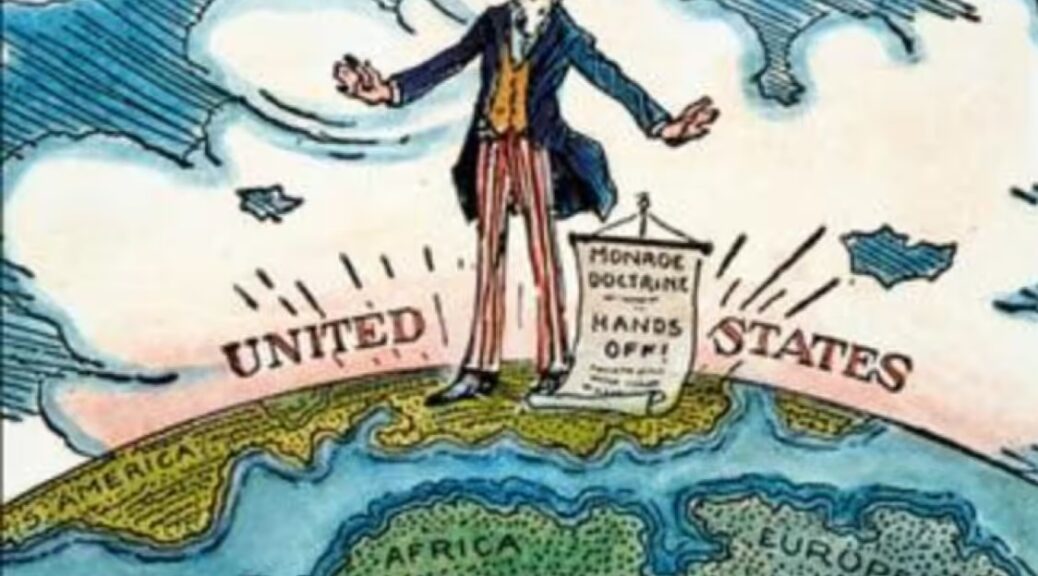
In a December 2, 1823, address to Congress, President Monroe rejected foreign interference in the Western Hemisphere and asserted U.S. leadership in the region. “The American continents, by the free and independent condition which they have assumed and maintain, are henceforth not to be considered as subjects for future colonization by any European powers,” he said.

As America celebrates its 250th anniversary, the Monroe Doctrine  stands as a milestone of U.S. sovereignty. Crafted with then-Secretary of State John Quincy Adams, the policy called for separate spheres of influence for the Americas and Europe, and opposed European colonization and interference in the Western Hemisphere.

Echoes of the founding

The Monroe Doctrine served “as a way to build the consciousness of America as independent” and promoted a “sense of nationhood and citizenship and common purpose,” says John Grant, a political science professor at Hillsdale College.

Painting of President Monroe's Cabinet (© Bettman/Getty Images)
Clyde DeLand’s 1912 painting depicts Monroe’s deliberations with advisers including then-Secretary of State John Quincy Adams, far left. (© Bettman/Getty Images)

Grant notes the doctrine followed the U.S. defense of Washington during the War of 1812, which showed Britain, “you’re not going to reconquer us; that’s not going to happen.”

Alison Mann, a curator of the Department of State’s National Museum of American Diplomacy in Washington, says the Monroe Doctrine built on the earlier-President Thomas Jefferson’s efforts to assert U.S. economic power and avoid European entanglements. Monroe consulted Adams on whether the young nation could resist foreign influence, asking if a European power were to try to colonize the United States, could the country rebuff the attempt with economic and military might. Adams said yes.

For Grant, the Hillsdale professor, the doctrine asserts America’s founding principles in a changing world. Monroe and Adams — who after serving as secretary of state would succeed Monroe as president — were the last U.S. presidents to have participated in America’s founding.

Monroe crossed the Delaware River  with George Washington on Christmas night 1776 for an ambush that turned the tide of the Revolutionary War.

Adams served as an aide to his father, John Adams, during negotiations for the Treaty of Paris, which ended the war and secured U.S. independence.

For the Silo, By Noelani Kirschner/ ShareAmerica.

IndyCar Drivers On Track For Washington Race Honoring America’s 250th

The world’s top race car drivers are headed to Washington to blaze around the nation’s capital in honor of the 250th anniversary of America’s founding.

For IndyCar racer David Malukas, the Freedom 250 Grand Prix, August 23, is a “once-in-a-lifetime race” and a chance to grow the sport that helped define the course of his life.

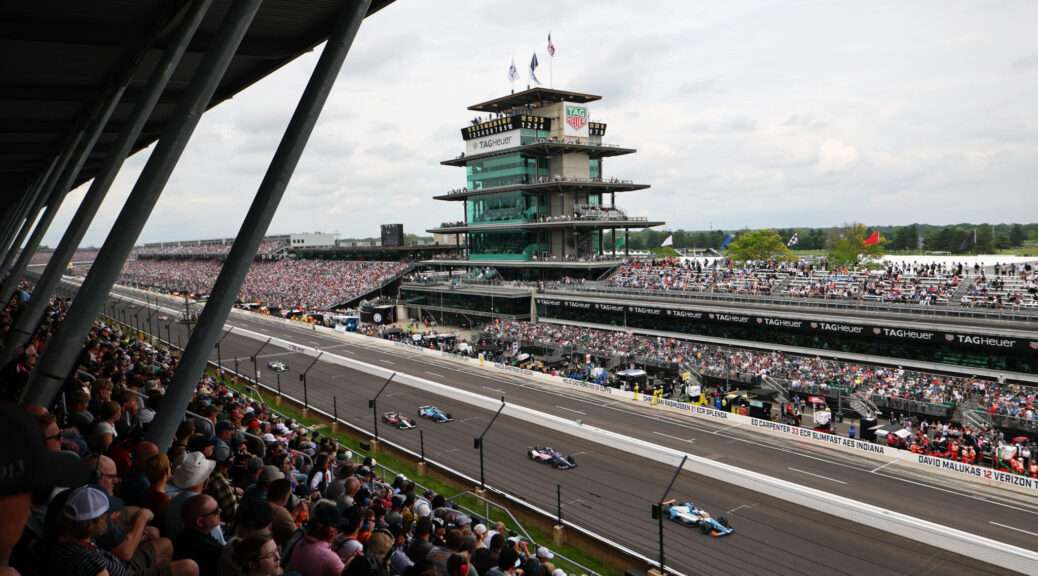
IndyCar racing, especially its marquee event the Indianapolis 500, is an American tradition that has served as a proving ground for automotive innovations that have, in turn, modernized the U.S. auto industry. The race, held each May, draws 350,000 spectators to the Indianapolis Motor Speedway and millions more television viewers from around the world.

The storied history of the ‘Brickyard’

The Indianapolis Motor Speedway is a 2.5-mile (4-kilometer) oval track that was built in 1909, just months after the U.S. debuted the Model T, the world’s first mass-produced car. Now known as the “Brickyard” — it was paved with 3 million bricks — the track has showcased advances in engine performance, aerodynamics, tire design and driver safety.

Artist rendering of race car speeding past U.S. Capitol (Courtesy of IndyCar)
An artist’s rendering of the Freedom 250 Grand Prix planned for August 23 in Washington. (Courtesy of IndyCar)

In 1911, Ray Harroun won the first running of the Indianapolis 500, averaging 75 miles per hour (120 kilometers per hour) in a car that featured the world’s first rearview mirror. Indy cars now reach speeds over 220 miles per hour (355 kilometers per hour). In addition to the rearview mirror, the race has debuted innovations  such as four-wheel drive, alternative fuels and seat belts, according to ESPN.

A new generation

A Chicago native, Malukas fell in love with racing on a childhood trip to Indiana. He began racing go-karts at age 7 and was winning European go-kart championships at 14. Yet he dreamed of racing in the Indianapolis 500. He achieved that goal in 2022 at age 20. IndyCar racing’s trifecta of formats — oval tracks, road courses and street circuits — present a never-ending challenge for racecar drivers.

Now one of the top-ranked American IndyCar drivers, Malukas trains with conditioning coaches (he even exercises his neck) to endure the physical demands of two- to three-hour-long races. In May, Malukas’ Penske Team Chevrolet #12 race car, maintained by a 14-member crew, finished within a half second of the winner at the 2026 Indy500.

A White House pit stop

In July, Malukas rocketed a red, white and blue IndyCar into the White House driveway for a presidential demonstration during which his team changed four tires in six seconds. The visit to the Oval Office visit was “unforgettable,” Malukas says. “It truly felt like a movie.”

President Trump meeting with Indycar drivers in the Oval Office (White House/Daniel Torok)
President Trump meets with IndyCar drivers (from left) David Malukas, Alex Palou and Felix Rosenqvist in the Oval Office July 13. (White House/Daniel Torok)

At the Freedom 250 Grand Prix , Malukas will compete in a race like no other. The 1.7-mile (2.7-kilometer) street circuit follows Pennsylvania Avenue and other Washington thoroughfares against a backdrop of the White House, the U.S. Capitol and the Washington Monument. Repaving is underway to ready the course and Malukas is practicing the circuit on a simulator.

Malukas will join about 25 other racers on August 22, a day before the race, for a round of qualifying to decide position at the start line. Among the field will be this year’s Indycar points leader, Alex Palou, and the reigning Indianapolis 500 champion, Felix Rosenqvist. President Trump, who is likely to wave a green flag to signal the start of the 250-mile (402 kilometer) race, has said it is the first time cars will travel 200 miles per hour (320 kilometers per hour) on the streets of Washington.

For The Silo, By Brandon Lambert/ Share America.

Seriously, What The F**k Do We Know About Reality?

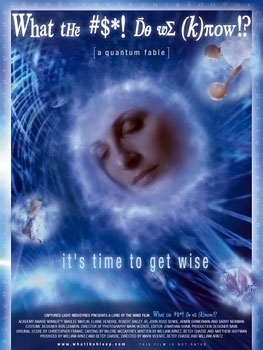
Just over two decades ago in a small theater in Yelm, Washington a little film called What The Bleep Do We Know?!? screened to its first audiences and the term “I Create My Reality” was thrust into the collective consciousness. One of the themes explored is the idea that individuals have the power to create their own reality through their thoughts and intentions. This concept is illustrated through Amanda’s experiences and supported by discussions on the nature of consciousness and its potential influence on the physical world.

Since then countless films and books have extolled the wonders of quantum physics and how understanding the nature of reality could change your life, often in just 3 easy steps. I too thought it was easy, heck I made a movie about it! And for a while it was easy, until I realized that I had only scratched the surface of what “it” all means.

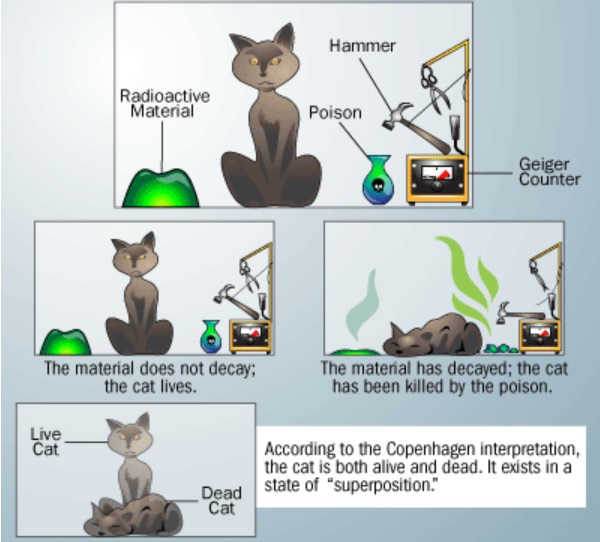
For sure, at a party I could rattle off the wonders of quantum this and quantum that, I could throw around words like entanglement and heady concepts like The Copenhagen Theory, I could wow you with the double slit like nobody’s business. But the truth was, it was really all just smoke and mirrors.

Fewer Than 42 Facts About Douglas Adams

What did understanding quantum physics have to do with my happiness?

What did understanding the workings of the brain mean to my life, in reality, at least this reality, the one where I have kids and bills to pay? I mean it’s fun to dream about other dimensions and my life as electron popping in and out, but in the end I felt as though it was becoming mental masturbation an easy way to escape from the fact that even though I knew I wasn’t really touching that chair, that it is possible I wasn’t even real.

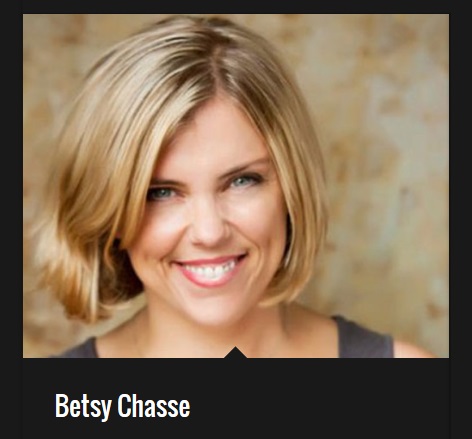
Betsy was one of the three filmmakers (along with Willliam Arntz and Mark Vicente) involved in What the Bleep Do We Know !?
Betsy was one of the three filmmakers (along with Willliam Arntz and Mark Vicente) of What the Bleep Do We Know !?

What I was truly seeking was not the facts about how that chair manifested itself into my reality, but how I could be happy whether I had that chair or not.

Happiness has nothing to do with quarks and the discovery of the Higgs Boson was not going to bring me ever-lasting peace and joy. That I was going to have to find all on my own.

I began to explore the sacred cows, not only in my life, my beliefs about who I was and what I wanted, but also the sacred cows of spirituality, new thought and yes, quantum physics and how I could take all this knowledge and use it to create the happiness I sought, because after all, that is what we are all after. It is why we ask “why?”. It is why we explore the deepest depths of the quantum foam and so far quantum physics hasn’t found the happiness particle, because it doesn’t exist within the particles out there, it exists within the immeasurable particles within me.

For the Silo, Betsy Chasse.

image courtesy of: science.howstuffworks.com
Image courtesy of: science.howstuffworks.com

What the Bleep Do We KnowSupplemental-

Roger Ebert review Photo of Roger Ebert In Memoriam

https://www.rogerebert.com/reviews/what-the-do-we-know-2004

RICO EXPERT COMMENTS ON TRUMP’S RECUSAL BID 

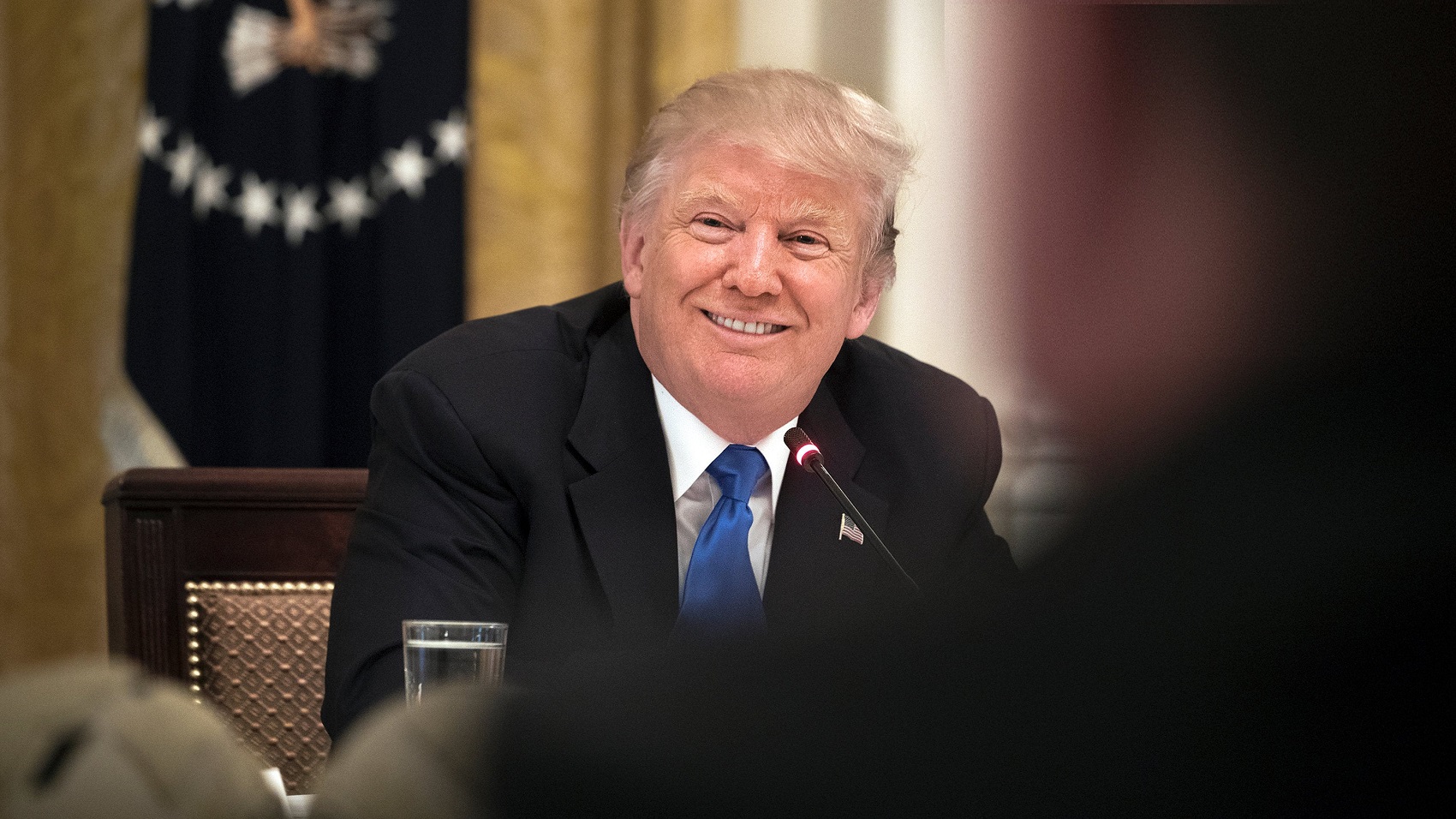
Los Angeles, CA … Lawyers for Donald Trump on Monday asked the federal judge presiding over his election subversion case in Washington to recuse herself, saying her past public statements about the former president and his connection to the January 6, 2021, riot at the U.S. Capitol call into question whether she can be fair. 

“Regardless of anyone’s personal opinion on the matter, Donald Trump’s motion for recusal has merit under the express provisions of 28 U.S.C. § 455, which requires a judge to recuse himself or herself in any proceeding in which [her] impartiality might reasonably be questioned. It is irrelevant whether the judge is actually biased. The U.S. Supreme Court squarely addressed this issue in Liljeberg v. Health Services Acquisition Corp., 486 U.S. 847, 860, which held that recusal is required even when a judge lacks actual knowledge of the facts indicating his interest or bias.

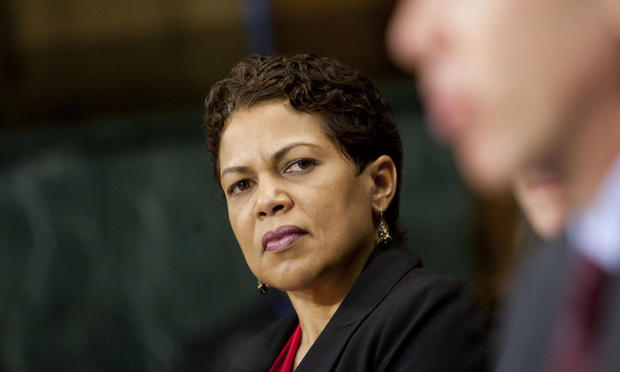
Judge Chutkan

Here, Judge Tanya Chutkan has made previous comments such as ‘Presidents are not kings, and Plaintiff is not a President’ and, in a December 2021 sentencing hearing, she stated, ‘the issue of who has or has not been charged is not before me. I don’t have any influence on that. I have my opinions, but they are not relevant.’ She has therefore publicly acknowledged her bias, which, at the very least, creates an appearance of partiality. This is nevertheless an uphill battle, as the motion has been submitted to Judge Chutkan, who will rule on this motion.

Having litigated this issue extensively in Angelica Limcaco v. Steve Wynn, Case No. 19-15949 (9th Cir. 2020), Donald Trump has to navigate a difficult path because the optics are problematic for him. The Justice Department will likely argue that Judge Chutkan has no financial interest, or something to that effect. Of course, if the motion is denied, the decision could result in an interlocutory appeal that may delay the case,” explained Jordan Matthews, a litigation partner at Weinberg Gonser LLP.

Toronto Drops To Sixth As Washington DC Enters World Safety City Index

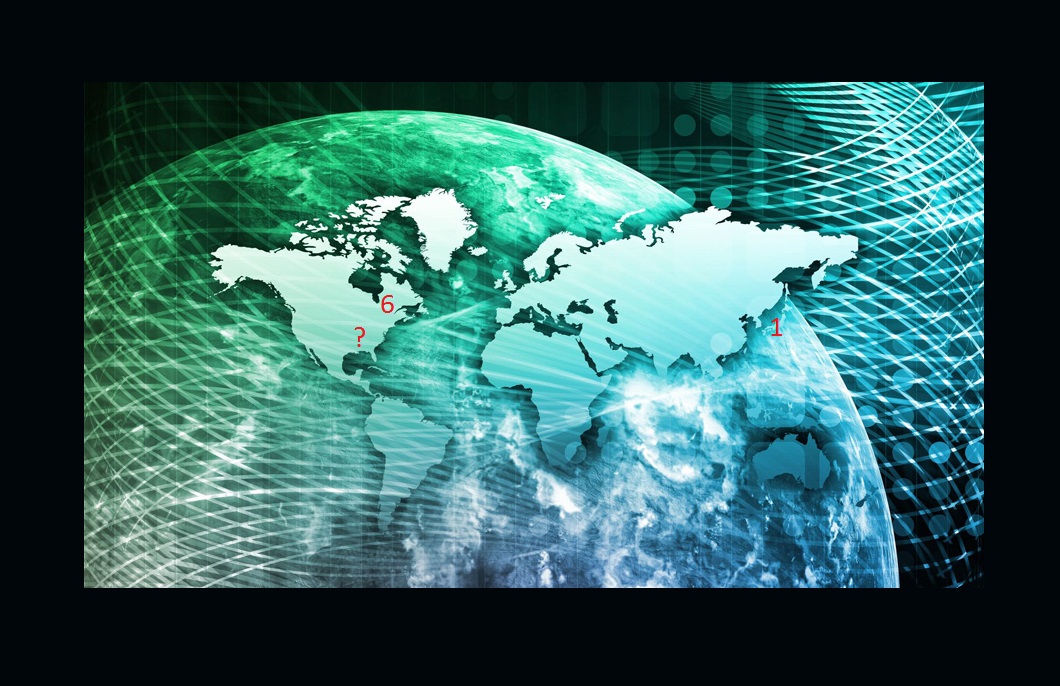
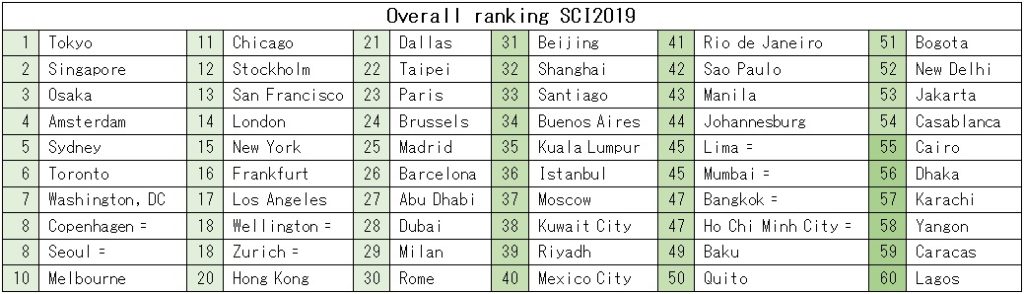
Tokyo edges Singapore (2nd) and Osaka (3rd) again to take the top spot globally in 2019.Two North American cities make up the top ten, including Toronto (6th) and Washington, DC, (7th).The remaining top ten cities are: Amsterdam (4th), Sydney (5th), Copenhagen and Seoul (tied 8th) and Melbourne (10th).The 2019 edition of the index includes ten new indicators, of which eight are related to environmental resilience. 

The Economist Intelligence Unit today releases the third edition of the Safe Cities Index (SCI) at the Safe Cities Summit in Singapore. The index, which is the centre piece of a research project sponsored by NEC Corporation, ranks 60 cities worldwide across five continents. It measures the multifaceted nature of urban safety, with indicators organised across four pillars: digital, infrastructure, health and personal security.  

Cities in the Asia-Pacific (APAC) region make up six of the top ten safest cities, with Tokyo taking the top spot for the third time in a row. Along with Tokyo, other APAC cities, as in the past, dominate the SCI2019. Singapore and Osaka come second and third, while Sydney and Melbourne also make the top ten.  

Toronto and Washington, DC, are the highest ranked North American cities in the SCI2019, with Washington, DC, entering the top ten for the first time. Overall, North American cities perform well in digital security, accounting for seven of the top ten cities in this category. These cities include Chicago, Washington, DC, Los Angeles, San Francisco, Dallas, New York and Toronto. 

Vaibhav Sahgal, consultant at The Economist Intelligence Unit, says: “US cities continue to perform well in digital security as the government strengthens its cyber-security regulations, while Canadian cities tend to fare better than their US counterparts in personal security. None of the cities in the US make it into the top 20 in the personal security category—Washington, DC, only ranks 23rd, together with Shanghai.” 

The SCI2019 benefits from a major revision designed to better capture “urban resilience”—the ability of cities to absorb and bounce back from shocks—a concept that has had an increasing influence on thinking in urban safety over the last decade, especially as policymakers worry about the implications of climate change. The 2019 edition is the third, following the 2015 and 2017 iterations.The SCI2019 scores are not evenly spread, with a large number of cities clustered at the top, and the rest showing wider variation in scores. Just ten points separate the overall scores of the top 24 cities, while the following 36 are 40 points apart. The research shows that levels of transparency in cities correlate as closely as income with index scores. 
Research shows that the performance of different safety pillars correlates very closely with each other, signifying that different kinds of safety are thoroughly intertwined. The top performers in each pillar are as follows: Digital security: Tokyo (1), Singapore (2), Chicago (3), Washington, DC, (4), Los Angeles/San Francisco (5)Health security: Osaka (1), Tokyo (2), Seoul (3), Amsterdam (4), Stockholm (5)Infrastructure security: Singapore (1), Osaka (2), Barcelona (3), Tokyo (4), Madrid (5)Personal security: Singapore (1), Copenhagen (2), Hong Kong (3), Tokyo (4), Wellington (5)
The leading cities got the basics right, including easy access to high-quality healthcare, dedicated cyber-security teams, community-based police patrolling and/or disaster continuity planning. The accompanying SCI2019 report explores the index results, incorporating 14 in-depth interviews with industry experts around urban safety. 

Naka Kondo, senior editor at The Economist Intelligence Unit, and editor of the SCI2019 report says: “Overall, while wealth is among the most important determinants of safety, the levels of transparency—and governance—correlate as closely as income with index scores. Our research shows the many ways that transparency and accountability are essential in every pillar of urban security, from building safer bridges to developing the trust needed for relevant stakeholders to share information on cyber-attacks. The research also highlights how different types of safety are thoroughly intertwined—that it is rare to find a city with very good results in one safety pillar and lagging in others. Policies, service planning and provision should also take this into account—and this year, we have decided to convene stakeholders from around the world in a Safe Cities Summit to discuss such matters around urban safety.

America Meditating Radio Show Launches “Meditate The Vote – Real Conversation”

America Meditating Radio Show LogoBuilding a better and more cohesive environment through collaboration
Washington, D.C.  – “Meditate the Vote – the Real Conversation” is the brainchild of the globally broadcast America Meditating Radio Show. In the midst of the election fever and the buzz that follows it, it is even more important that the citizenry is brought together to converse on mutual issues to create a better and more cohesive understanding of ways of moving the country forward and making the world a better place. Can getting into our Zen zone help Americans to decide who they vote for or what they do regardless of who enters office? 
The #MeditatetheVote grassroots campaign to bring respect, compassion and a peaceful dialog to our election process, intends to create an avenue where people from diverse backgrounds can express their views via various means of social media including Twitter, Facebook, and YouTube and gatherings in homes and other venues. This campaign, supported by an alliance of friends, thought leaders and organizations from around the country, will be launched on the 1st of May, coinciding with the start of National Meditation Month and will continue leading up to Election Day on the 8th of November, 2016. 
 
Our goal is simple. Meditate the Vote simply asks folks to amplify the quality of conversation using the Meditate the Vote questions to stimulate more inclusivity and partnership in the country as we lead up to Election Day on November 8th. Meditate the Vote does not endorse any candidate or political party. It is a movement to socially engage all folks into a higher and more cohesive way of working together as a people and a country. 
 
The internet and social media platforms will be used in spreading the word with participants making videos saying “I, Meditate the Vote” and why, as well as sharing feedback from their conversations using Meditate the Vote questions.
There is also the Pause for Peace App available for users of Android and iOS devices to allow for constant communication, meditations and videos, and for listening to the America Meditating Radio Show featuring various prominent thought leaders sharing methods for personal development. For the Silo, Antonia Silvera.
About America Meditating
America Meditating was launched in June 2012, as a nationwide initiative to promote unity and peace as everyone is encouraged to pause for moments throughout the day to reflect within and create an environment where love, respect, and trust reign.
It subsequently resulted in the birth of the popular America Meditating Radio Show hosted by teacher and motivational speaker, Sister Jenna. The program is available across the globe on numerous platforms including Blog Talk Radio, iTunes, Stitcher, Aha Radio, Speaker, the Pause for Peace App, and the Player.FM App.
Supplemental: The David Lynch Foundation was established to ensure that any child in America who wants to learn and practice the Transcendental Meditation program can do so.