Introducing NORTIV 8’s New FieldLite Collection Elevating Hiking Shoes for All
March, 2026, New York, NY – NORTIV 8 announces the debut of its highly anticipated FieldLite Collection, a new lineup of performance-driven hiking sneakers and boots for men and women. Designed to deliver dependable waterproof protection, trail-grade traction, and everyday versatility, FieldLite redefines accessible outdoor footwear with modern style and function.
Withstand Hours Of Steady Rainfall
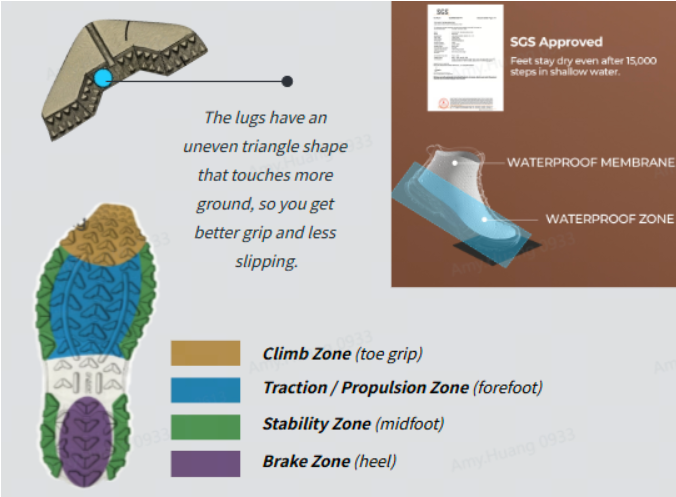
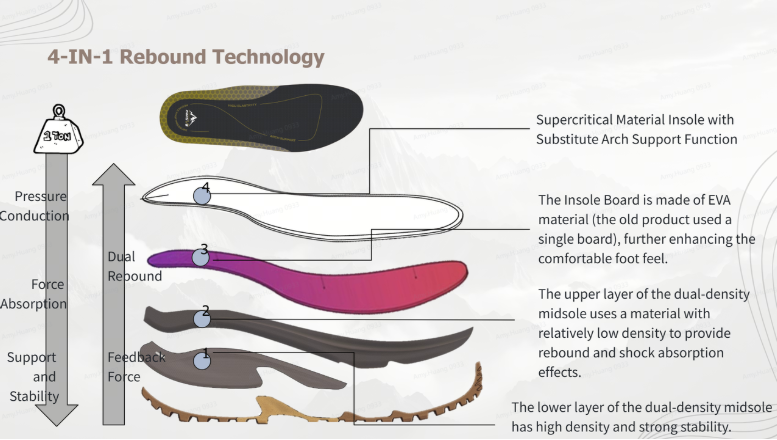
Engineered for unpredictable conditions, each style features waterproof construction tested for over four hours of steady rain and 15,000 cycles of water exposure, ensuring reliable protection in wet environments. A Quick-Grip multi-zone outsole with heel-lock stability delivers traction on both wet and dry surfaces while DualStride cushioning and reinforced toe and heel overlays offer all-day comfort and durability. Finished with a versatile trail-to-street silhouette, the FieldLite Collection seamlessly bridges the gap between fashion-forward footwear and high-performance outdoor boots.
NORTIV 8 Armadillo Men’s FieldLite Boot Army Green $83.99usd/ $114.61 cad
The FieldLite Collection is available now on Amazon and at NORTIV8.com Men’s sizes range from 7–14 and women’s sizes from 5.5–11, with retail prices between $70–$80 usd/ $95- 109$ cad.
Founded with a commitment to performance, durability, and everyday versatility, NORTIV 8 creates reliable footwear designed to move seamlessly from the outdoors to daily life. Combining advanced weatherproof technology, comfort-driven cushioning, and rugged traction with modern, wearable design, NORTIV 8 delivers high-quality boots and shoes built for adventure, commuting, and everything in between. With a focus on accessibility and innovation, the brand empowers customers to explore confidently no matter the terrain or forecast.
“I hid a sandwich in my spacesuit,” Astronaut John W. Young confessed in the April 2, 1965, issue of Life Magazine. The conversation about and the consumption of the sandwich, which lasted only about 30 seconds during the Gemini III flight, became a serious matter that drew the ire of Congress and NASA’s administrator after the crew returned home. Congress was particularly upset and brought the matter to leadership’s attention at hearings about NASA’s 1966 budget. Representative George E. Shipley was especially disgusted, knowing how much money and time NASA had spent to prepare the Gemini III spacecraft for launch. The fact that a crewmember brought something into the crew cabin, which Shipley likened to a “surgeon’s operating room,” put the techniques used to prevent a spaceflight mission from failing at risk; crumbs could have made their way behind instrument panels interfering with the operation of flight equipment and the loss of the mission and its crew. Shipley called Young’s antics “foolish” and asked NASA leaders to share their thoughts.
A Beef with Corned Beef
George Mueller, associate administrator for Manned Space Flight, stated unequivocally that the agency did not “approve [of] unauthorized objects such as sandwiches going on board the spacecraft.” And he promised Shipley that NASA has “taken steps, obviously, to prevent recurrence of corned beef sandwiches in future flights. There was no detriment to the experimental program that was carried on, nor was there any detriment to the actual carrying out of the mission because of the ingestion of the sandwich.” Manned Spacecraft Center Director Robert R. Gilruth was more forgiving of Young’s decision. These sort of antics, he told the committee, helped the crews to “break up the strain” of spaceflight, and he hesitated “to be too strict in the future by laying down a lot of rules for men who have this responsibility and who, in all the flights so far, have done such good jobs.” Webb disagreed and said, “this is the United States of America’s space program and, as a matter of policy, we are not going to permit individuals to superimpose their judgment as to what is going to be taken on these flights. I think it is fine for Dr. Gilruth to take a very strong position with respect to the individuality of these men, but from those of us who have to look at the totality of the matter, this was not an adequate performance by an astronaut.”
The loss of a Gemini mission, especially one so early in the program, would have been particularly challenging for an agency attempting to land humans on the Moon where each mission built on the previous flight. The United States was in a race with the Soviet Union, and for Congress at least, the purpose of Gemini and the cost of the space program was far too serious for these sorts of fun and games. For NASA Administrator James Webb, it was a sign that Gilruth was too lax when it came to managing his astronauts. Gemini III was just one example of the lack of control he noticed, and he pressed Gilruth for a report on the sandwich incident to determine if Young should be disciplined or at the very least reprimanded.
The In-Flight Meal
Young hatched the idea during training, when his commander, Virgil I. “Gus” Grissom grew “bored” with the food they practiced with for the mission. Grissom regularly complained about the dehydrated “delicacies” food scientists concocted.Bringing a sandwich onboard, an item that was freshly made and did not have to be rehydrated, “seemed like a fun idea at the time” to Young.
Astronauts Gus Grissom (foreground), command pilot; and John Young, pilot, are shown inside their Gemini III spacecraft as they prepared for their launch from Cape Kennedy, Florida, on March 23, 1965.
NASA
One of the goals of their flight was to evaluate NASA’s flight food packaging and whether the containers leaked when foods were reconstituted, as well as the procedures for disposing of the meal and its packaging after eating. Foods included rehydratable items such as chicken bites, applesauce, or drinks, and compressed foods such as brownie bites. The Gemini food system was not haute cuisine, however, and crews complained about its taste. Young described the chicken bites as “barely edible” in his post-flight debriefing. Don L. Lind, a scientist-astronaut selected in 1967, described the early Gemini food as “strange.” Their class took some to jungle survival training in Panama, and while no one wanted to eat it on the first two days, by the third day they were so hungry that they were willing to give it a try. Another problem was that all rehydrated meals for Gemini were mixed with cold water, which made them less appetizing than a hot meal.
Food packets planned for the Gemini III flight, including dehydrated beef pot roast, bacon and egg bites, toasted bread cubes, orange juice and a wet wipe. The astronaut’s method for rehydrating a pouch of dehydrated food with water is shown in the top left.
Locally Made Corn Beef Sandwich
A freshly made corned beef sandwich made at a local restaurant sounded like a better option, so Young had fellow astronaut and backup command pilot Walter M. “Wally” Schirra pick one up. Schirra purchased the sandwich for Young, and as he headed out to the launchpad, Young put it in the pocket of his pressure suit.
Nearly two hours into the flight, as Young started his food and waste evaluation, he pulled out the sandwich from his suit and offered it to his commander. As captured on the air-to-ground recordings, Grissom asked what it was and where it came from. “I brought it with me,” Young responded, “Let’s see how it tastes.” He didn’t expect the sandwich to be so pungent, “Smells, doesn’t it?” Grissom took a bite but found the rye crumbled so he placed the sandwich in his suit pocket to prevent the crumbs from floating about the cabin.
Where did that come from?
Gus Grissom
Gemini III Commander
Two days later, nearly a thousand members of the media from the United States and around the world gathered to hear from the crew and NASA management at the postflight press conference at the Carriage House Motel in Cocoa Beach, Florida. Space reporter Bill Hines asked Young about the sandwich, erroneously referring to it as a “baloney sandwich,” and what happened when Gus was offered a taste. “And,” he asked, “what became of the sandwich?” Young seemed surprised, “How did you find out about that?” and then laughed adding Grissom “ate the sandwich.”
John Young and Gus Grissom speak with the press about the Gemini III mission during a news conference at the Carriage House Motel in Florida. Behind the table, left to right, are Dr. Kurt H. Debus, director of Kennedy Space Center, Christopher C. Kraft, Jr., MSC assistant director for Flight Operations, astronauts John Young and Gus Grissom, Dr. Robert R. Gilruth, MSC director, Dr. Robert C. Seamans, NASA associate administrator, and Julian Scheer, assistant administrator for NASA’s Office of Public Affairs.
Carry-on Restrictions for Spaceflights
Ironically the Gemini Program offered astronauts more control over their flights than during Project Mercury, including the ability to maneuver their spacecraft and to be more independent from Mission Control; but the uproar over this event led NASA to draft rules about what astronauts could and could not take onboard a spacecraft. Starting with Gemini IV, flight crews had to present a list of items they planned to take on their missions. Prohibited items naturally included sandwiches as well as bulky or heavy items or metal that could negatively impact the operation of spacecraft equipment. (NASA still allowed astronauts to take personal items such as wedding bands or coins for families and friends in their personal preference kit.)
Young never received a formal reprimand for the incident but was made aware of Congress’s frustration. Others in the corps were advised to avoid similar stunts and to focus on the mission. The decision to bring a sandwich onboard did not have a negative impact on Young’s career. He was the first astronaut to fly to space six times —two Gemini missions; two Apollo missions, including the dress rehearsal for the first lunar landing; and two space shuttle missions including STS-1, known as the bravest test flight in history. He also served as chief of the Astronaut Office for 13 years.
For the Silo,
Jennifer Ross-Nazzal. NASA Human Spaceflight Historian
Featured image- Astronaut John W. Young, the pilot for Gemini III, checks over his helmet prior to flight. Credits: NASA
Back in the 1980s the cyberpunk genre envisioned a world of societal breakdown where technologically modified humans are controlled by mega-corporations watching their every move… or 2026 as it’s otherwise known. So as science fiction becomes modern day reality, our friends at Vollebak are giving you a chance to stick it to the mega-corporations, and dress a bit like Ryan Gosling in Drive at the same time.
Ever since brothers Nick and Steve Tidball started Vollebak they’ve been working on advanced material science to solve for things like disease resistance, climate change, space travel and resource scarcity. And next up is the electromagnetic spectrum.
Mars And The Hulk Have Something To Do With This Design
While Gamma rays might have turned Bruce Banner into The Hulk, in reality radiation and human beings don’t go well together. And as we enter an era of cybersecurity breaches, geopolitical instability, the first manned missions to Mars (after Elon settles down on the Moon first) , and cosmic radiation exposure, it’s going to present an increased threat.
So this is cool- this Electromagnetic Shielding Bomber is built with the same electromagnetic shielding technology used for the Mars Rover. Long before the Curiosity Rover was sent to Mars to search for signs of life, it had to be tested here on Earth. So NASA created an electromagnetic shielding tent that was designed to completely block out external electromagnetic radiation during testing… like someone sending a text, turning the microwave on, or chatting with the James Webb telescope.
Shields The Waves
We’ve now taken that technology and converted it into our first Electromagnetic Shielding Bomber. It’s embedded with pure silver that blocks radio waves and microwaves in the 0.2GHz to 14GHz frequency range – which includes WiFi, Bluetooth, Ku-band satellites and radar systems. It also comes with a phone shielding pocket that works like a Faraday cage – blocking access to your devices, regardless of whether they’re switched on or off. Conceptually it’s like making a pocket that’s entirely watertight… just for electromagnetic energy instead. So you shouldn’t be tracked, hacked, or even called. While the outside of the jacket offers space-age protection, its shape, cut and aesthetics come from the jet-age, and are based on the original MA-1 flight jacket.
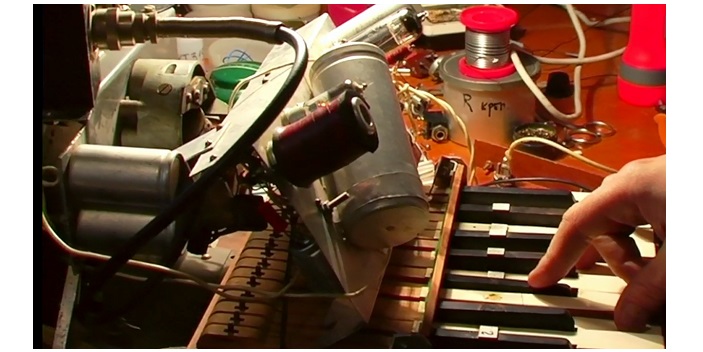
I spent most of yesterday afternoon watching and taking notes from the 86 minute documentary ELEKTRO MOSKVA. This film is so rich and interesting that I found myself sitting in reflection every time I jotted down another intriguing story element…..and believe me there were lots.
Stanislav Kreichi with ANS – world’s first ‘draw sound’ synthesizer.
The film’s official website describes itself like this: “ELEKTRO MOSKVA is an essayistic documentary about the beginnings of the Soviet electronic age and what remained of it- a huge pile of outdated, fascinating devices. Today they are being recycled and reinterpreted by musicians, inventors and traders, who carry that legacy on into an uncertain future. An electronic fairy tale about the inventive spirit of the free mind inside the iron curtain- and beyond.”
An example of everyday Soviet Russia DIY- In 1970 TV’s were readily available but not antennas.
Well all of that is certainly true but I discovered something deeper….. something partially hidden and really only stated at the end of the documentary: A metaphysical connection between electronic instruments, their circuitry and between immortality and rejuvenation. A sort of Frankenstein subplot. And that makes ELEKTRO MOSKVA much more interesting. It lingers and stays with you as all great films and documentaries tend to do.
Leon Theremin
Leon Theremin
Leon Theremin
If the inventor of the world’s first electronic instrument- The Theremin is to believed, his experimentation with electronic instrument designs led to techniques that allowed rejuvenation of human life and the bringing of the dead back to life. Kooky stuff to be sure but in our modern age of DNA manipulation and Stem Cell research shouldn’t we keep our minds open to all biological possibilities? Why is it so obtuse to think that electronic manipulation holds the key to immortality? The brain is after all- a sort of electronic computer. Why else would Russia have kept the body of Lenin whole and entombed for over a hundred years? Perhaps I’m getting ahead of myself- let’s move instead to the birth of Communist Synthesizers.
A Ghost of Communism: The backdrop for the film
It began with the Soviet electrification of the country. Then, as Russian homes and farms became wired, Science and Technical Progress became heralded by the state as ‘the new Gods’. In 1926 Léon Theremin ( Lev Sergeyevich Termen ) invented an early form of television which was adapted for border security use and classified. At the same time, the state decided that technological developments were only considered legit and legal if they strengthened communism.
Alexey Borisov
The long awaited electrical revolution expected by the masses and any notions of new, exciting products in Russian homes became instead a sort of electrified jail and super factory. Then, after Russia had successfully developed nuclear bombs and orbited the first man in space- things changed. A celebration of technical progress and Soviet achievement became politicized through the use of synthetic music and sound. Found out what happened next by watching ELEKTRO MOSKVA online in HD. Highly recommended. For the Silo, Jarrod Barker.
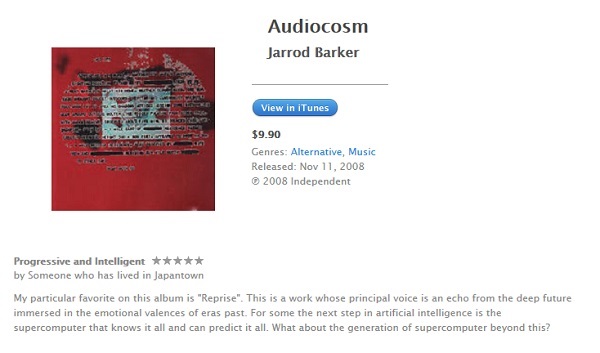
Click me! New Music created from early sci-fi soundtracks incl. Theremin cameos.
From rear wipers on supercars to color-matched air vents and factory ski bags, these are the strangest things you could legitimately spec from Stuttgart.
Rear Window Wiper on the Porsche 911 Turbo
A rear wiper makes sense on a hatchback. On a high-speed, whale-tailed 911 Turbo built for Autobahn runs? Less obvious. Yet since the air-cooled era, buyers have been able to specify a rear window wiper, even on performance-focused variants. In rainy climates, the sloped rear glass of a 911 collects spray quickly, so the option had genuine utility. But visually, the tiny arm perched beneath a towering rear spoiler looks like an afterthought.
356 B Carrera 2 – Rear Windshield Wiper (1968)
It remains one of those details that signals a car was ordered by someone who actually planned to drive it year-round.
Factory Fire Extinguisher in Road Cars
For years, Porsche has offered a factory-mounted fire extinguisher as an option in road-going 911s and Boxsters. Mounted ahead of the passenger seat, it is easily accessible and neatly integrated. For track-day regulars, it made sense. For daily drivers? It was an unusual but confidence-inspiring addition. It’s one of the few strange options that actually reinforces Porsche’s motorsport roots.
PCCB (Porsche Ceramic Composite Brakes) With Yellow Calipers, Even on Non-GT Models
Carbon-ceramic brakes make sense on track-focused cars. But Porsche has allowed buyers to spec its signature yellow calipers on surprisingly comfort-oriented models. The Porsche Cayenne Turbo, for example, could be ordered with massive ceramic brakes designed to withstand extreme heat. In practice, most owners would never approach their limits. It’s less strange technically than contextually: supercar-level hardware fitted to a luxury SUV primarily used for commuting.
The Refrigerator Compartment in the Porsche Panamera
That’s not a portal into an alternate ice-age universe…
When Porsche entered the luxury sedan market, it committed fully. Early Panamera models could be equipped with a refrigerated compartment integrated into the rear center console. This wasn’t a cooler tossed into the trunk; it was a built-in chilled storage unit meant for executive passengers. It signaled Porsche’s attempt to compete directly with high-end German sedans on comfort and prestige. In a brand historically defined by lightweight engineering, a factory mini-fridge feels wonderfully out of character.
Porsche Ski Bag
The good folks at Stuttgart figured owners of Porsches are likely going to need to transport their favorite ski equipment to their favorite slopes in their favorite car. So instead of sending them off to figure out which aftermarket ski bag is best for their particular application, the manufacturer provided the options to purchase a tailor-made ski bag for the specific Porsche vehicle.
The bag itself is well-made, fitted with proper mounting points, and tailored to the interior. It isn’t a generic accessory; it’s a deliberate acknowledgment that some Porsche owners genuinely planned to drive to the mountains.
Carbon Fiber Windshield Wiper Blades
In a move that sounds like caricature but is genuinely real, Porsche now offers lightweight carbon-fiber windshield wipers as a factory option on certain 911 models, including the 2026 Turbo S. These wipers are roughly 50 % lighter than the standard steel units, reducing un-sprung mass and adding a subtle performance benefit while visibly signaling that no surface was too small for carbon fiber.
For about $1,300 usd/ $1,773 cad, the option can be ordered through Porsche Exclusive Manufaktur alongside other carbon elements like roofs, exterior trim, or interior accents. Functionally, they work exactly like normal wipers, clearing rain and debris, but serve as a statement piece: a small detail that underlines how deeply Porsche’s customization programs can go.
The car shopping market is presenting drivers with the same classic dilemma: should you buy new or used? But, there are modern-day considerations as several factors and current events shape this debate, including depreciation trends, interest rates and price shifts in both new and used car markets. Making the right choice requires a close look at your financial situation and ownership goals.
Our friends Zach & Ray Shefska, Co-Founders of CarEdge, offer an easy-to-understand breakdown to help consumers make this all-important decision that will impact them for years to come.
When to Buy New:
You plan to keep the car for 5+ years and want the latest features.
You qualify for low APR financing and want predictable monthly payments.
Manufacturer incentives significantly reduce the cost.
To avoid depreciation altogether, consider leasing a new car.
When to Buy Used:
You want to avoid rapid depreciation and pay less upfront.
You’re willing to shop for 3-5 year-old vehicles in good condition.
You don’t mind driving a car with fewer bells and whistles.
You’re prepared to negotiate a great used car deal.
Here are details on some of the key considerations to help you determine whether buying new, buying used, or leasing makes the most sense for you.
Financing Deals Versus Depreciation Risks
New cars are known for their steep depreciation. A new car can lose 20-30% of its value within the first two to three years of ownership. However, buying new has its advantages, too. Manufacturer incentives are sweetening the deal for buyers with attractive lease offers, low APR financing, and cash incentives that simply aren’t available for used car buyers.
Why Buy New?
Incentives Galore: Automakers are offering competitive promotions to attract buyers, including 0% APR financing and cash-back deals.
Peace of Mind: New cars come with full warranties, the latest safety features, and no concerns about wear and tear from previous owners.
Custom Orders: Buying new allows you to select the exact trim, color, and features you want. However, custom orders can come at an even higher price.
Drawbacks of Buying New:
Higher Initial Cost: Even with incentives, new cars come with higher upfront prices compared to used options.
Depreciation Risk: If you plan to sell your car in less than five years, you’ll likely face a significant financial loss due to depreciation.
If you’re considering a new car but worry about depreciation, leasing may be a better option for you. It allows you to enjoy the benefits of driving new without the financial impact of resale value losses.
Interest Rates Matter – New Cars Have Lower Rates
Interest rates are a defining factor in the new versus used car debate. While borrowing costs remain high, automakers make it easier to finance new cars by offering low APR financing. Used car loans, on the other hand, often come with higher interest rates from banks and credit unions.
Why New Cars Win on Interest Rates:
Lower APR Offers: Many manufacturers are advertising rates as low as 0% APR for new car buyers, helping you save thousands over the life of the loan.
Better Loan Terms: Lenders tend to offer more favorable terms for new cars compared to used, including longer loan periods and lower down payment requirements.
Used car loans typically come with interest rates about 5% higher than those for new vehicles. Over a five-year loan term, this can significantly increase the total cost of financing a used car. If monthly payments are a concern, financing a new car with low APR may actually make more financial sense.
However, NEVER negotiate monthly payments – always negotiate the Out-the-Door Price to avoid add-ons and ripoffs.
New Tools Make Negotiating Easier Than Ever
The days of guessing what to pay for a new car are over. Today, buyers have access to tools that provide insight into dealer pricing, invoice costs, and manufacturer incentives.
How to Save Big When Buying New:
Use Dealer Invoice Pricing: This allows you to see what the dealer pays for the car and giving you leverage in negotiations.
Keep Up With Local Market Trends: Today, any car buyer in America can see the ins and outs of their local car market for each make and model..
Compare Offers Across Dealers: With free online tools, you can easily master the art of negotiating. A big part of this is learning how to effectively cross-shop between dealerships. Always compare prices and incentives from multiple dealerships to ensure you’re getting the best deal.
Leverage Manufacturer Incentives: Research available incentives to maximize your savings before heading to the dealership. We gather the best incentives in one spot for you.
These tools make it easier than ever to negotiate confidently and secure the best deal on a new car. That said, deals can still be hard to come by without the right negotiating tools.
Why Consider Buying Used?
Lower Upfront Costs: Used cars are more affordable than their new counterparts, making them a better choice for budget-conscious buyers. Saving $100 or more on monthly payments over five to six years really adds up!
Avoid Steep Depreciation: Buying a 3-5 year-old used car allows you to avoid the steepest depreciation period, saving you thousands. If you decide to sell in a few years, you won’t feel the heavy depreciation that a new car buyer in a similar situation would experience.
Used Cars Are Negotiable: As competitive new car incentives remain, fewer car shoppers are heading to the used car lots. A slump in demand is good news for those willing to negotiate used car prices.
Challenges of Buying Used:
Higher Interest Rates: As mentioned earlier, used car loans often come with higher APRs, which can offset some of the savings. The average used car loan rate in North America is nearly 14% APR.
Limited Incentives: Unlike new cars, used vehicles don’t come with manufacturer promotions or warranties. However, you can get a fair deal on an extended warranty.
Condition Concerns: Always get a pre-purchase inspection to avoid surprises with hidden issues.
Despite these challenges, buying used is still the go-to option for many drivers who prioritize affordability and don’t mind sacrificing the latest features.
For many car buyers, a 3-5 year-old used car strikes the perfect balance between affordability, reliability, and long-term value. This “sweet spot” in the used car market offers significant benefits that make it a smart choice for budget-conscious drivers who don’t want to sacrifice quality or performance.
Here’s why a 3-5 year-old used car could be the ideal option for you:
Avoid Steep Depreciation – New cars typically lose 30-40% of their value within the first three years, making depreciation one of the biggest hidden costs of buying new.
Lower Upfront Costs – Compared to buying new, 3-5 year-old used cars are significantly more affordable.
Modern Features Without the Premium – A car that’s 3-5 years old still comes equipped with many of the features found in today’s new models, such as advanced safety systems and driver assistance.
Remaining Warranty Coverage (Depending on Mileage) – A 3-5 year-old car is typically well within its prime and often covered by a portion of the manufacturer’s original powertrain warranty. If coverage is about to run out, get an Extended Warranty quote for peace of mind.
Better Financing Options Compared to Older Cars – While interest rates for used car loans are higher than those for new cars, lenders generally offer better rates for late-model used cars compared to older vehicles. This makes financing a 3-5 year-old car more manageable and less risky.
How to get the best of ‘both worlds’
By choosing a 3-5 year-old used car, you get the best of both worlds: modern features at a lower price, and the ability to avoid the financial pitfalls of buying new. It’s a smart compromise for car buyers looking for value and reliability. To ensure you’re making a wise investment, always research market trends, request vehicle history reports, and schedule a pre-purchase inspection before buying any used car.
Founded in 2019 by father-and-son team Ray and Zach Shefska, CarEdge is a leading platform dedicated to empowering car shoppers with free expert advice, in-depth market insights, and tools to navigate every step of the car-buying journey.
February, 2026. The United States is designating individuals and entities involved in multiple weapons procurement networks based in Iran, Türkiye, and the United Arab Emirates supporting the Iranian regime’s ballistic missile and advanced conventional weapons (ACW) development. We are also sanctioning numerous shadow fleet vessels and their owners or operators that have collectively transported hundreds of millions of dollars’ worth of Iranian petroleum, petroleum products, and petrochemical products.
The Iranian regime continues to mismanage its economy, with catastrophic consequences for its people, and prioritizes funding of foreign proxies and missiles over the basic needs of ordinary Iranians. Today, sanctions target the illicit funds that the regime uses to advance its malign and destabilizing ends.
This action implements President Trump’s National Security Presidential Memorandum 2 by countering the Iranian regime’s aggressive development of missiles and other asymmetric and conventional weapons capabilities. It also denies the Islamic Revolutionary Guard Corps access to assets and resources that sustain its destabilizing activities. The nonproliferation designations today support the reimposition of United Nations restrictive measures and sanctions on Iran, which occurred as a direct result of the Iranian regime’s “significant non-performance” of its nuclear commitments.
The United States will continue to use all available means to expose, disrupt, and counter the Iranian regime’s ability to procure revenue to develop its weapons programs and fund its destabilizing behavior.
The Department of the Treasury’s action was taken pursuant to Executive Order (E.O.) 13382, which targets proliferators of weapons of mass destruction and their supporters, E.O. 13949, the Iran conventional arms authority, and E.O. 13902, which authorizes sanctions related to key sectors of Iran’s economy. For more information on today’s actions, please see the Department of the Treasury’s Press Release.
It’s been nearly nine years since we published the article below and the water surrounding glyphosate use in Canada is still murky. Roundup is currently being used in an official capacity in certain situations by government agencies such as by the Ministry of the Environment to fight the invasive species Phragmites. Let’s review the earlier article:
Top Scientists Warnings
Dear friends across Canada, top scientists warn the most commonly used herbicide in the world probably causes cancer. Monsanto is demanding the World Health Organization retract their ground-breaking report. And experts say the only way to ensure the science is not silenced is if the public demands action, now. The regulatory system is renowned for being secretive and captured by the agro-chemical industry. But we have a unique moment right now — Canada is officially reassessing glyphosate, with similar processes underway in the US, Europe, and Brazil. And the Netherlands, Sri Lanka, and El Salvador are all looking at a ban. [However, it must be noted that as of today’s posting, Canada Health’s Food Safety Inspection statement is that glyphosate formulations ARE safe CP]The threat is clear — this poison is used on our food, our fields, our playgrounds, and our streets. Let’s get it suspended.
Monsanto is up in arms. Glyphosate brings in $6+ billion per year. It is the basis of RoundUp, the chemical cornerstone of Monsanto’s Genetically Modified empire. The company says the WHO report ignored studies showing glyphosate is safe. But these scientists are 17 of the world’s top oncology experts, not a bunch of crazies. They comprehensively reviewed independent studies, excluding those done by companies seeking product approval. Regulators rely mainly on tests done by the companies trying to sell the poisons!
Secret Information Makes Reporting Murky
Key results are kept from the public because they contain ‘commercially confidential information’, and 58% of the scientific panels in the EU Food and Safety Agency are linked to the sector. It’s nuts, but that is the system we have. And that’s why it’s going to take all of us to make sure this crucial independent report isn’t ignored. Some countries have already put bans on glyphosate. Now with the EU, the US, Canada, and Brazil all reviewing it, we have an incredible chance to turn the tide worldwide.
Sixty years ago Monsanto’s pesticide DDT was everywhere until the seminal book Silent Spring showed it could cause cancer — a decade later it was banned. If this could cause cancer, let’s not let it be sold for ten more years. Let’s demand emergency precautionary action now.
We’ve done it before — helped win a moratorium on bee-killing neonicotinoids in the EU and stop a Monsanto mega seed factory in Argentina. Now let’s protect our health and make sure we aren’t being used as lab rats. This could be a breakthrough moment in the fight for the safe, sustainable agriculture our world needs. With hope, Bert, Marigona, Antonia, Oliver, Alice, Emily, Danny, Nataliya, Ricken and the whole Avaaz team.
Featuring over 120 works from more than 80 U.S. and international lenders, this exhibition marks the first major New York presentation of either artist’s work in over two decades—and their first at The Met.
Exhibition Dates: October 4, 2026–January 31, 2027 Exhibition Location: The Met Fifth Avenue, Gallery 899, The Tisch Galleries
(New York, February, 2026)—Krasner and Pollock: Past Continuous at The Metropolitan Museum of Artis a major exhibition that charts the full arc of the careers of Lee Krasner (1908–1984) and Jackson Pollock (1912–1956) in parallel, examining the distinct yet connected practices of these artistic peers and life partners. On view October 4, 2026, through January 31, 2027, it marks the first major New York presentation devoted to either artist in more than 20 years, introducing their work to a new generation while reassessing their enduring impacts on modern and contemporary art.
A meeting of two great artists
Krasner and Pollock were emerging artists in New York when they met on the occasion of being included in a 1942 exhibition organized by the artist John Graham. They married in 1945 and moved to Springs, Long Island, where they remained entwined personally, artistically, and professionally until Pollock’s death in 1956. Pollock’s life’s work had secured his legacy, while the nearly three decades that Krasner survived him marked some of the most transformative years of her career. Drawing its subtitle, Past Continuous, from a 1976 painting by Krasner, the exhibition traces parallel lives and practices, first forged by lived experience and then shadowed by memory. It foregrounds the range and art historical significance of Krasner’s work while offering a sustained examination of Pollock’s rich and complex practice.
Number 31. 1950. Jackson Pollock
Outstanding philanthropy
The exhibition is made possible by Kenneth C. Griffin and Griffin Catalyst, Marina Kellen French, and the Barrie A. and Deedee Wigmore Foundation. Additional support is provided Trevor and Alexis Traina, the Aaron I. Fleischman and Lin Lougheed Fund, The Huo Family Foundation, and Joyce Kwok.
Number 11. 1952. Jackson Pollock
A novel way of reexamining modern art
“With its distinctive premise and scope, Krasner and Pollock: Past Continuous exemplifies The Met’s commitment to reexamining modern art through rigorous scholarship and fresh perspectives,” said Max Hollein, Marina Kellen French Director and Chief Executive Officer of The Metropolitan Museum of Art. “By considering each artist on their own terms while also foregrounding their consequential relationship, the exhibition situates Krasner’s and Pollock’s work within a broader cultural and artistic context—an approach central to the mission of The Met’s Department of Modern and Contemporary Art and to the vision of the forthcoming Oscar L. Tang and H.M. Agnes Hsu-Tang Wing, opening in 2030. This project affirms Krasner and Pollock not only as defining figures of their moment, but as artists whose work continues to shape and inspire future generations.”
What makes an artist revolutionary?
“Krasner and Pollock: Past Continuous begins with the fundamental premise that these artists are equals, partners in life, giants in the history of art, and revolutionaries who defined what abstraction could be,” said David Breslin, Leonard A. Lauder Curator in Charge, Department of Modern and Contemporary Art, The Met. “Each found a partner who would insist on the primacy of art over life; and they both aspired to an art that was forged out of historical connections but that also promised freedom and radical possibility in a world forever changed by war. The exhibition concerns entwined lives but is also about how different artistic directions come from shared terrain.”
“Krasner and Pollock: Past Continuous approaches these artists not as a single story, but as two practices unfolding in proximity over time,” said Brinda Kumar, Associate Curator, Department of Modern and Contemporary Art, The Met. “The exhibition examines how Krasner and Pollock shared a commitment to testing the possibilities of abstraction—through shifts in scale, material, and form—and how those investigations continued to evolve along distinct trajectories.”
Krasner and Pollock: Past Continuous follows each artist’s life and work.
The exhibition highlights their differences as much as their interrelation, with some galleries that place the artists together and others where they are presented independently. Krasner and Pollock were shaped by their distinct upbringings and formative trainings. Krasner adopted and negotiated the tenets of the European avant-garde, particularly Pablo Picasso, Henri Matisse, and Piet Mondrian. Her training under Hans Hofmann was key to her development. Pollock’s network of broad influences included Thomas Hart Benton and American Regionalism, Mexican mural traditions, Surrealism, and even his own family of artists.
Their early paths unfold as complementary divergences, tracing distinct strands of American modernism that would ultimately converge in the rupture known as Abstract Expressionism. For Pollock, his breakthrough was the “drip” technique, a radical mode of painting that flourished in a condensed but prolific period from 1946 to 1951. Krasner’s varied practice was typified by ceaseless explorations of abstraction, often cued by her abiding interest in the possibilities of nature and color. This manifested in bold collages, gestural canvases and vividly hued hard-edge painting. Historically, Pollock’s reputation has eclipsed Krasner’s. LIFE Magazine asked in 1949 if Pollock was “the greatest living painter in the United States.” His early death and posthumous media attention further amplified his fame and eclipsed critical appraisal of Krasner’s contributions. Today, both artists’ practices are rightly recognized as key to the innovations of art from the mid-20th century onwards. This exhibition continues and amplifies this reevaluation.
Rarely loaned works
Combat. 1965. Lee Krasner
The exhibition draws on The Met collection and rarely loaned works from more than 80 U.S. and international lenders, bringing together over 120 paintings, works on paper, and ephemera to reconsider Krasner’s and Pollock’s careers—both on their own terms and in dynamic relation to each another and their shared artistic context. Major institutional lenders include Peggy Guggenheim Collection, MoMA, the Whitney Museum of American Art, Tate, National Gallery of Art, National Gallery of Victoria, Centre Pompidou, Buffalo AKG Art Museum, Dallas Museum of Art, The Art Institute of Chicago, and SFMoMA. The exhibition will also include several rarely seen works from important private collections.
Organized into 12 chapters that span each artist’s career and are punctuated by defining moments, Krasner and Pollock: Past Continuous unfolds from the 1930s through the postwar years to the end of their respective lives, moving between moments of convergence and difference. The exhibition’s design, informed in part by historic spaces and installations, enhances moments of exchange—across time and practices—while allowing for discrete encounters with works by each artist, from Krasner’s Little Images series and Pollock’s drip paintings of the late 1940s to his monumental canvases in the 1950s and Krasner’s Umber and Earth Green series. The exhibition charts ongoing dialogues—Pollock’s late return to earlier motifs in the mid-1950s and Krasner’s extended engagement through the 1960s and 1970s with artists such as Klee, Picasso, Mondrian, and Matisse. This presentation will reveal two artists in constant negotiation with each other, themselves, and the cultural, political, and aesthetic stakes of their time.
A constellation of landmark works anchor the exhibition’s exploration of both artists’ practices, including Lee Krasner’s Composition (1949), The Seasons (1957), TheEye is the First Circle (1960), and Combat (1965), along with Jackson Pollock’s Stenographic Figure (1942), Guardians of the Secret (1943), Number 1, 1950 (Lavender Mist) (1950), and The Deep (1953). Two earlier exhibitions, Krasner/Pollock: A Working Relationship (co-organized by Guild Hall and Grey Art Gallery, 1981) and Lee Krasner-Jackson Pollock: Kunstlerpaare Kunstlerfreunde (Kunstmuseum Bern, 1989–90), concentrated on the approximately 15-year overlap in the artists lives, from 1941, when they met, until Pollock’s death in 1956. Krasner and Pollock: Past Continuous is the first exhibition to consider both artists’ practices, in their full chronological sweep, together.
The Met has long been significant for both Krasner and Pollock.
Pollock first exhibited a painting at The Met in 1943 in an exhibition in support of World War II. By the end of the decade, he would be among the artists—The Irascibles—who mounted a notable critique of the Museum’s then-prevailing attitude to contemporary art. However, a short while after Pollock’s death, The Met acquired the landmark painting Autumn Rhythm (Number 30) (1950). The Met’s collection of works by Lee Krasner—from her earliest self-portraits to her late magnificent Rising Green (1972)—includes important gifts to the Museum by the artist during her lifetime. The Met was notably also the venue for Krasner’s memorial service in 1984. Krasner and Pollock: Past Continuous builds on this history, marking the Museum’s first major exhibition devoted to either artist. A focused survey, the exhibition traces the arcs of their artistic developments, offering fresh perspectives on two of the most influential figures of 20th-century art.
The exhibition also reflects The Met’s commitment to showcasing artists whose work continues to shape how art is made and understood today. Krasner’s and Pollock’s contributions to modernism and their serious engagement with the possibilities of painting continues to be significant for the work of contemporary artists. In advance of the opening of the Tang Wing for Modern and Contemporary Art, opening in 2030, Krasner and Pollock: Past Continuous models a curatorial approach that reexamines canonical narratives and connects 20th-century innovations to the concerns of today’s artists and audiences.
Palingenesis. 1971. Lee Krasner
Exhibition Catalogue
The exhibition’s accompanying catalogue, Krasner and Pollock: Past Continuous, expands the project’s central themes through newly commissioned texts. Featured essays by the exhibition’s curators as well as Johanna Fateman, Prudence Peiffer, and Matthew Holman consider a range of topics, including Krasner and Pollock’s intertwined creative lives as an artist couple, their strategies of abstraction in the 1950s, and the transatlantic reception of their work, while artist Amy Sillman offers a contemporary painter’s perspective on artistic breakthrough and legacy. The volume also includes an illustrated, interwoven chronology as well as reflections by leading contemporary artists, underscoring the enduring resonance of Krasner’s and Pollock’s work across generations.
The catalogue is made possible by the Pollock-Krasner Foundation.
Additional support is provided by the Aaron I. Fleischman and Lin Lougheed Fund, The Robert David Lion Gardiner Foundation, Karen and Sam Seymour, the Wyeth Foundation for American Art, Suzanne Deal Booth, and Kelly Williams and Andrew Forsyth.
For the Silo, Julie Niemi.
Credits and Related Content Krasner and Pollock: Past Continuous is curated by David Breslin, Leonard A. Lauder Curator in Charge, and Brinda Kumar, Associate Curator, with the assistance of CJ Salapare, Research Associate, all of the Department of Modern and Contemporary Art, The Met.
The Met will host a variety of exhibition-related programs, to be announced at a later date.
Maximizing Property Potential Via Popular Home Expansions
For many homeowners, the need for more space arrives long before the desire to move. Growing families, remote work, multigenerational living, and changing lifestyles are pushing homeowners to rethink how their existing homes can evolve. Home additions have become one of the most practical ways to gain space, improve comfort, and increase property value without starting over in a new location. Yet deciding which type of addition makes sense requires a clear understanding of costs, construction complexity, and long term return on investment.
Across the United States as in Canada, home addition costs vary widely depending on region, labor availability, building codes, and design choices. In America, the average cost of a home addition often exceeds the commonly cited figure of $51,000 usd/ $70,000 cad, especially for projects involving plumbing, structural changes, or second story construction. Per square foot costs typically range from roughly $100 usd/ $137 cad to $500 usd/ $684 cad, depending on the type of addition and level of finish. Understanding these ranges helps homeowners plan realistically and avoid budget shock midway through construction.
A dry addition or a wet addition?
One of the most important distinctions in home additions is whether a project is considered a dry addition or a wet addition. Dry additions include spaces such as bedrooms, living rooms, offices, or sunrooms that do not require plumbing. These additions are generally less expensive because they avoid water lines, drains, and complex waterproofing requirements. Wet additions include kitchens, bathrooms, and laundry rooms, which add cost due to plumbing work, additional permits, and stricter building code requirements. Knowing which category your project falls into is one of the most reliable ways to estimate overall expense early in the planning process.
Room additions, often called bump outs, are among the most approachable projects for homeowners looking to add space without a full-scale renovation. These additions typically extend an existing room by a few feet to create more usable square footage. Nationally, bump outs often cost between $250 usd/ $342 cad and $500 usd/ $685 cad per square foot, depending on size and finish. While smaller in scope, they can dramatically improve daily living by relieving cramped layouts and improving functionality.
Adding a second story
Second story additions represent one of the most transformative but also most expensive home addition options. By building upward rather than outward, homeowners can double their living space without sacrificing yard area. These projects often range from $300 usd/ $410 cad to $500 usd/ $685 cad per square foot and require extensive structural reinforcement. Foundations, load bearing walls, and framing may need upgrades to support the added weight. Plumbing, electrical systems, and roofing are also typically impacted. While the upfront cost is significant, second story additions can deliver substantial long term value, particularly for homeowners committed to staying in place for many years.
Sunrooms offer a different kind of expansion, focusing on light, comfort, and connection to the outdoors. These spaces are often used as family rooms, dining areas, or quiet retreats. Costs typically fall between $200 usd/ $274 cad and $400 usd/ $547 cad per square foot, with total project budgets ranging from $40,000 usd/ $55,000 cad to $90,000 usd/ $123,000 cad or more. Three season sunrooms tend to be less expensive, while fully insulated, climate controlled spaces cost more but offer year round usability. Energy efficiency requirements and insulation quality play a major role in pricing.
The most cost effective way to add livable space
Garage conversions are one of the most cost-effective ways to add livable space because they utilize an existing structure. Nationally, these projects often range from $120 to $200 per square foot, with total costs commonly between $20,000 usd/ $27,300 cad and $50,000 usd/ $68,400 cad. Conversions typically involve insulation, drywall, flooring, electrical upgrades, and heating or cooling systems. Adding a bathroom increases both cost and value, but requires plumbing work and additional permits. For homeowners seeking flexibility without major exterior changes, garage conversions often deliver strong value.
Over the garage additions combine vertical expansion with efficient land use. These projects create new living space above an existing garage and commonly cost between $250 usd/ $340 cad and $400 usd/ $550 cad per square foot. Structural reinforcement is often required, and design integration with the main house is critical. When executed well, over the garage additions add bedrooms, guest suites, or home offices without reducing yard space, making them appealing in many suburban and urban settings.
ADU- aka the accessory dwelling unit
Accessory dwelling units have become increasingly popular as homeowners look for rental income opportunities or space for extended family. ADU costs vary widely but often fall between $100,000 usd/ $137,000 cad and $300,000 usd/ $410,400 cad depending on size, design, and site conditions. Well planned ADUs can generate significant returns through rental income while increasing overall property value. In many markets, returns between 50 and 80 percent are possible when long term income and appreciation are considered together.
The most complex home improvement
Kitchen expansions and additions are among the most complex home improvement projects. Building a new kitchen or expanding an existing one typically ranges from $50,000 usd/ $68,400 cad to $150,000 usd/ $205,200 cad or more. These projects involve plumbing, gas lines, electrical systems, ventilation, and often structural changes. High quality finishes, appliances, and cabinetry can significantly increase costs, but kitchens consistently rank among the highest value improvements for resale.
Expensive to be sure
Bathroom additions and expansions also carry meaningful costs but deliver strong returns. Adding a new bathroom often ranges from $30,000 usd/ $41,000 cad to $75,000 usd / $102,600 caddepending on size and plumbing complexity. Expanding an existing bathroom typically costs less but still requires careful planning around waterproofing, ventilation, and fixture selection. Bathrooms add both daily convenience and resale appeal, particularly in homes with limited existing bath space.
What type of addition should you choose?
Choosing the right type of home addition requires balancing personal lifestyle needs with financial considerations. Homeowners should assess how they use their space today, how that use may change in the future, and which additions offer the greatest functional improvement. Equally important is considering how future buyers might perceive the added space. Additions that align with common buyer preferences tend to deliver stronger returns.
Successful home additions are built on careful planning. Hidden costs such as permit fees, utility upgrades, and structural repairs can emerge once construction begins. Understanding local building requirements, maintaining detailed budgets, and setting aside contingency funds are critical steps. Consulting experienced professionals early in the process helps homeowners avoid delays, unexpected expenses, and design mistakes that can be costly to correct later.
It’s not just about square footage
Ultimately, home additions are not just about adding square footage. They are about adapting a home to better serve the people who live there. When thoughtfully planned, an addition can improve daily life, increase long term property value, and allow homeowners to remain in communities they love. With clear expectations, realistic budgets, and informed decision making, home additions can be one of the most rewarding investments a homeowner makes. For the Silo, Jon Grishpul/ Greatbuildz.com.
Over the years, fireplaces have been a familiar feature in many homes, however until very recently, they have undergone very little change from the traditional hearth.
Fireplaces are becoming the design focus for many rooms in and outside the house and with new technological advances it’s now possible to do more with the fireplace than ever before.
“We’re seeing some very interesting home designs that incorporate fireplaces in many creative new ways,” said David Coulson, of Napoleon Fireplaces. “While the traditional hearth will be a mainstay for many homes, modern fireplaces with crisp lines and glass frames will continue to rise in popularity with new homes and redesigned rooms. That being said we’re seeing several new trends emerge this season that are really changing the way people are thinking about fireplaces.”
Coulson suggests keeping the following hot trends in mind when looking for a new fireplace.
Napoleon outdoor fireplace
. Modern: Look for clean, linear lines with less metal and more
glass. People want the full flame and don’t want black or chrome metal frames blocking the view or interfering with the lighting.
. Gas: Gas fireplaces will continue to rise in popularity this season. The convenience of flicking a switch compared to collecting, piling and lighting firewood is quickly winning out. The younger generation of fireplace buyers want a quick lighting fireplace that is cleaner and easier to maintain.
. Outdoors: 2026 will again be a big year for the outdoor fireplace as people create or expand on their backyard oasis. The idea of turning a backyard into another room of your house is fueling the outdoor fireplace trend and Napoleon has developed several new models to accommodate this demand.
. Heat rises: Much like HD televisions, consumers are placing their fireplace inserts higher up on the wall. New technology allows for home
owners to insert enclosed gas fireplaces almost anywhere in the house and many people are taking inspiration from designers who are playing with the traditional ideas of where you find a fireplace.
. Unlikely locations: Much like the migration of fireplaces up the wall, more fireplaces are being installed in unlikely rooms. For example,
Napoleon makes several models which are ideally suited for the kitchen or bathroom. These fireplaces however are typically used to decorate the room, not to provide a main source for heating.
In the end, every room is different so it’s important to find the right fireplace that fits.
About Wolf Steel Ltd.:
It all began in 1976 when a small steel fabrication business launched by Wolfgang Schroeter started manufacturing steel railings in Barrie, Ontario, Canada. At that time, no one could imagine the incredible future that lay ahead for Wolf Steel Ltd. and eventually NapoleonR Fireplaces and NapoleonR Gourmet Grills.
Since the first wood stove rolled off the production line over 40 years ago, Wolf Steel’s commitment was to be distinctive and successful in everything they do. Napoleon’s commitment to producing quality products combined with honest, reliable service has proven to be successful framework to ensuring the continued rapid growth of the company. NapoleonR is an ISO9001 – 2008 registered company and now operates with 750,000+ square feet of manufacturing space and employs over 700 associates.
NapoleonR is North America’s largest privately owned manufacturer of quality wood and gas fireplaces (inserts and stoves), gourmet gas and charcoal grills, outdoor living products, waterfalls and a complete line of Heating & Cooling equipment.
Fake Photo? Manipulated Video? How to Spot Sham AI
This to preserve the credibility of digital media and safeguard users from falling victim to scams. As synthetic media becomes more sophisticated, identifying AI-generated manipulations presents a unique challenge, but numerous free apps and toolsare readily available allowing users to validate photo and video authenticity with ease—a major step forward in safeguarding trust in a world increasingly influenced by AI-generated visuals, ensuring transparency and security in the digital age. More below.
How AI Drives Misinformation
Amid the onslaught of highly concerning news headlines spotlighting how deepfake AI-generated photo and video scams are driving rampant misinformation and wreaking havoc across digital, cultural, workplace, political and other societal frameworks, solutions are emerging combat AI-driven misinformation and fraud before people fall victim to scams.
One AI disruptor transforming the fight against AI fraud is BitMind—an AI deepfake detection authority that offers a suite of free apps and tools that instantly identify and flag AI-generated images before you fall victim.
Built by AI Engineers
Built by a team of AI engineers hailing from leading tech companies like Amazon, Poshmark, NEAR, and Ledgersafe, BitMind’s instant detection of deepfakes helps uphold the credibility of the media, guaranteeing the authenticity of the information we use. A strong deepfake detection enhances digital interactions, supports better decision making and strengthens the integrity of the modern digital world—serving to protect reputations, shield finances and maintain trust for celebrities, politicians, public figures … and everyone else.
For both B2C and B2B use, these 5 BitMind tools are free and accessible to anyone:
AI Detector App: A simple web page where users can drag-and-drop suspicious images for fast deepfake detection results;
Chrome Extension: Flags AI-created content in real-time, while browsing.
X Bot: Verifies if images on X/Twitter are real or AI-generated;
Discord Bot: Verifies if images are real or AI-generated via its Discord Integration;
AI or Not Game: Fun Telegram bot that tests your ability to distinguish between AI-generated and human-created images.
“Recognizing the need to integrate deepfake detection into everyday technology use, our applications fit seamlessly into users’ lives,” notes Ken Miyachi, BitMind CEO. “For example, the BitMind Detection App is a user-friendly application that allows individuals to upload images and quickly assess the likelihood of them being real or synthetic. Additionally, the Browser Extension enhances online security by analyzing images on web pages in real time and providing immediate feedback on their authenticity through our subnet validators. These tools are designed to empower users, enabling them to navigate digital spaces with confidence and security.”
As the world’s first decentralized Deepfake Detection System, BitMind is an open-source technology that enables developers to easily integrate the technology into their existing platforms to provide accurate real-time detection of deepfakes.
“Deepfake technology has emerged as both a marvel and a menace,” continued Miyachi. “With the capacity to create synthetic media that closely mimics reality, deepfakes present unprecedented challenges in privacy, security, and information integrity. Responding to these challenges, we introduced the BitMind Subnet, a breakthrough on the Bittensor network, dedicated to the detection and mitigation of deepfakes.”
According to Miyachi, here are key reasons why BitMind technology is a game changer:
The BitMind Subnet, which represents a pivotal advancement in the fight against AI-generated misinformation. Operating on a decentralized AI platform, this deepfake detection system employs sophisticated AI models to accurately distinguish between real and manipulated content. This not only enhances the security of digital media but also preserves the essential trust in digital interactions.
The BitMind Subnet is equipped with advanced detection algorithms that utilize both generative and discriminative AI technologies to provide a robust mechanism for identifying deepfakes.
BitMind employs cutting-edge techniques, including Neighborhood Pixel Relationships, ensuring competitive accuracy in detection. The operation of the subnet is decentralized, with miners across the network running binary classifiers. This setup ensures that the detection processes are widespread and not confined to any centralized repository, enhancing both the reliability and integrity of the detection results.
Community collaboration is a cornerstone of the BitMind Subnet, actively encouraging the community to contribute to our evolving codebase, and by engaging with developers and researchers, the subnet is continuously improved and updated with the latest advancements in AI.
BitMind combines its extensive industry expertise, cutting-edge academic research, and a deep passion for technology. The team has a proven track record in AI, blockchain, and systems architecture, successfully leading tech projects and founding innovative companies.
What truly sets BitMind apart is their commitment to creating a safer, more transparent digital world where AI benefits humanity, driven by their passion for innovation, security and community engagement. Their technologies are expressly designed to safeguard the integrity of digital media and foster a trustworthy digital ecosystem.
In the modern world full of fake news and increasing cyber threats, BitMind’s innovations are paving the way for a future in which digital trust is not an option, but a necessity. As the threats increase, the global community must be equipped with the means to ingest digital information in a reliable and authentic in order to realize AI’s true potential safely and efficiently. For the Silo, Marsha Zorn.
The landscape of North American wealth is on the brink of a historic shift. Current research estimates that between $75 trillion usd and $125 trillion usd ($102.5 trillion cad and $170.8 trillion cad) will change hands over the next two decades in American alone as assets pass from the baby boomer generation to younger heirs. This unprecedented movement of capital, now widely referred to as the Great Wealth Transfer, is set to redefine family finances, generational relationships, and the future of estate planning across North America.
While the transfer represents an extraordinary opportunity for Millennials and Gen Xers, it also carries significant legal and emotional risks. Attorney Don Ford, a Board-Certified expert in Estate Planning and Probate Law with Ford + Bergner LLP, warns that without thoughtful preparation, the same wealth intended to provide security can just as easily fracture families and ignite costly disputes.
A Scale Never Seen Before
“The scale of this transfer is unlike anything we have seen before,” explains Ford, Managing Partner at Ford + Bergner LLP—a Texas-based boutique firm specializing in estate planning, probate, and guardianship. “And when large sums of money move quickly through families that are unprepared, conflict becomes far more likely.”
Why This Is Happening Now
Several forces have converged to accelerate this moment.
Americans are living longer, allowing assets to compound over extended periods. Many individuals entering their later years benefited from decades of sustained market growth, dramatically increasing the value of retirement accounts, real estate holdings, and privately owned businesses. Together, longevity and market performance have produced estates that are often far larger and more complex than families anticipate.
Yet wealth has grown faster than planning.
“Many estate plans are static while wealth is dynamic,” Ford notes. “People create documents years earlier and assume they will still work, even though their family structure, asset values, and risks have changed.”
Why Planning Is an Act of Care
Estate planning is often misunderstood as a tax exercise or paperwork requirement. In reality, it functions as a roadmap that protects families, preserves intent, and prevents conflict.
Effective planning allows families to address challenges before they escalate. Trust structures can provide what Ford describes as “training wheels” for heirs who are not yet equipped to manage significant portfolios. Clear language can reduce ambiguity in blended families, ensuring spouses and children from prior marriages are treated according to the individual’s wishes rather than default statutes.
Business continuity is another frequent flashpoint. Without an agreed-upon succession plan, profitable family enterprises can be forced into liquidation simply because heirs cannot agree on control or direction.
“Planning is not about control from the grave,” Ford says. “It is about clarity while you are still here.”
The Rising Tide of Probate Litigation
As wealth transfers accelerate, probate courts in America are bracing for an increase in estate-related litigation and similar situations are set to occur in Canada and Mexico. According to Ford, several recurring issues are already driving disputes.
Cognitive decline and undue influence are among the most common triggers. As older adults reach their eighties and nineties, dementia and other impairments become more prevalent. Late-life changes to wills or trusts are frequently challenged by heirs who believe a loved one was pressured or lacked capacity.
Blended family dynamics also play a major role. Modern families often include second marriages, stepchildren, and competing expectations. When individuals die without updated documents, intestacy laws can produce outcomes no one intended, fueling resentment and lawsuits.
Ambiguous or outdated estate plans remain another risk factor. DIY documents and boilerplate language often fail under scrutiny, leaving courts to interpret vague instructions. Fiduciary disputes are equally common when executors or trustees are accused of mismanagement, lack of transparency, or favoritism.
Family-owned businesses present some of the most complex conflicts. When multiple heirs disagree over leadership, equity, or control, litigation can become the only path forward, sometimes ending in forced sale.
“The tragedy is that most of these disputes are preventable,” Ford emphasizes. “They arise not from greed, but from silence, assumptions, and documents that were never meant to handle modern family realities.”
The Bottom Line
The Great Wealth Transfer is not merely a financial event. It is a social and legal reckoning that will test families’ communication, planning, and preparedness. As trillions of dollars move between generations, proactive estate planning has become less about wealth preservation and more about relationship preservation.
For families willing to plan with intention, the transfer can strengthen legacies rather than divide them. For those who do not, the cost may be far higher than they ever expected.
In today’s uber-competitive, rapid-fire workforce, a headshot isn’t about looking good; it’s about being believed. ..in an instant. From LinkedIn profiles and resumes to professional biographies and press mentions, your professional photo becomes the stand-in for you when you’re not in the room. Psychology shows that people form impressions in milliseconds, and your image carries the weight of that decision. The difference between forgettable and compelling is rarely accidental. And the implications can be make-or-break consequential.
The Career Accelerator Headshot: How to Convey Trust, Authority & Likability in a Single Frame
In business, first impressions often happen before a word is spoken. This is what makes your headshot is more than a picture; it’s a visual handshake, a silent introduction that conveys confidence, likability, and professionalism in a single frame. Like a handshake, it can be firm and reassuring, or limp and forgettable. The difference often lies in small but critical choices.
It Lives Everywhere
A headshot lives everywhere a professional’s reputation does—LinkedIn, websites, pitch decks, press releases. Before colleagues, clients, partners, vendors or hiring managers meet you, they meet your image. That photograph carries cues about how trustworthy you appear, how engaged you seem, and whether you project authority or warmth. Research in psychology consistently shows that people form judgments of competence and likability in milliseconds. Your headshot is the first test of that instinct.
Here are some tips to best ensure your photo visually conveys your desired personal brand image:
Do’s: Making the Most of Your Visual Handshake
Do use genuine expression. Confidence is communicated through the eyes; likability through the mouth. Together they create the balance of authority and warmth that makes people lean in. Forced smiles or stiff stares fail that test. If your smile doesn’t reach your eyes, it is fake.
Do consider the message you want to send. A corporate board member may want gravitas; a startup founder may want energy. There is no right answer other than the one you decide on. The headshot should serve that purpose, not just “look good.”
Do refresh periodically. If your appearance has changed meaningfully, update your headshot. Mismatched expectations can erode trust before you’ve even said hello. A ten year old shot or an AI shot is professional catfishing.
Don’ts: Pitfalls That Undermine Presence
Don’t rely on selfies or casual snapshots. What may work for personal social media rarely translates into professional credibility.
Don’t over-edit. Excessive retouching may erase authenticity and make you look like you lack confidence. A headshot should present the best version of you, not an unrecognizable one.
Don’t ignore body language. Slight posture cues—a tilt, crossed arms, leaning too far back—can signal defensiveness or disengagement. Tilting your head towards the shoulder closest to the camera makes you look weak.
The Broader Impact
A strong headshot doesn’t just open doors; it can also align a team’s brand. When a company or firm presents cohesive, polished headshots across its leadership, it communicates unity, credibility, and attention to detail. Conversely, mismatched or outdated images suggest inconsistency and a lack of care and resources. In an age where clients, investors, and partners often vet online before meeting, those subtle cues matter.
Think of your headshot the way you’d think of a handshake in a critical meeting: intentional, practiced, and aligned with the impression you want to leave. Done well, it can become one of the simplest yet most effective tools in your professional arsenal.
For the Silo, Chris Gillett.
Famed headshot photographer and expression coach Chris Gillett is nationally-regarded for his work helping executives, entrepreneurs and attorneys master the “visual handshake” by combining confidence and likability in every image. Connect with him at www.liketherazor.com
When I first walked into Stephen Bulger Gallery to see Joan Lyons’s retrospective exhibition, I exclaimed without much thought: These are so contemporary!
A truly inane statement on my part, for many reasons. First, Joan Lyons is a contemporary artist who continues to make work into her 80s. Secondly, the work I was referring to was made in 1973, not the 1700s. And lastly, why would something being “contemporary” necessarily be a compliment?
I guess what I meant is that there’s an enduring quality to the work.
Photography, at its best, can capture something fundamental about the human condition. This is exactly what Lyons does. I look at her photographs, and I see myself, despite the half-century of time between us. Whether a frustrating conversation with a male doctor, a jacket that I could see myself wearing, or the faces of a woman staring unwaveringly at the camera—there I am.
In “Xerox Transfer Drawings: Women’s Portrait Series,” which spanned from 1972-1980, Lyons set out to capture historical representations of women, by women. Through multiple transfers of the Xerox machine—I recall creating similar portraits as a young girl visiting my mom at work—a single image is constructed. “They are not naturalistic, but awkward in gesture, immobile and flattened—women frozen in their representations,” writes Lyons in the accompanying description of the work. “They countermand the idea of a photographic portrait as the record of a fleeting moment. In the 1970s, I was seeking to find myself as a woman within my culture and to locate my art practice within the history of artmaking.”
In these photographs, the image plane is skewed at an unnatural angle.
It’s like gravity doesn’t exist. The portraits feel close, as if the bodies are pressed up against the other side of the glass. The lack of any telling historical or geographic information in these images creates an artifact that exists outside of time.
Lyons writes that she was interested in “constructing,” rather than “taking,” a photograph. This construction of a photographic image is central to most, if not all, of Lyons’s work. Her exhibition at Stephen Bulger Gallery through February 28 feels like a journey through the history of photography.
Lyons wasn’t precious about what camera she used or pledged a relentless allegiance to one brand.
Instead, she used various techniques and equipment—including Xerography, screen-printing, Diazo paper, large-format Polaroids, digital cameras and pinhole photography—as a way to communicate. Through the quirks and features of each, Lyons leans into the medium’s uses and misuses, wielding the camera to best capture not only the reality of life but also its undercurrents of emotion.
Polaroids
About her series of large-scale Polaroids from 1980, Lyons writes: “ ‘Presences’ is an investigation of photographic portraiture. The images have a lot to do with multiple selves and with faces as masks. In these long exposures, bodies move, and backgrounds are stationary.” The images are jarring at times; my mind can’t compute how they were achieved. A face is slightly disfigured with motion or seemingly collaged together. In another, a woman in the foreground is oversaturated and blurry, whereas the background is crisply in focus and well saturated. The blend of abstraction and realism compresses time. These photographs are not snapshots meant to capture a single moment. By shunning this style of capture, they capture something more viscerally close to the unusual reality of life.
Me, reflected
I couldn’t help but photograph myself within the negative space of one of the Polaroid photographs, layering my face on top of the subjects. A mask on a mask. A photograph of a photograph. Another layer of history. For the Silo, Tatum Dooley/artforecast.
Whether it’s a cozy Valentine’s Day post-coital cuddle or the serene satisfaction following a solo session, the afterglow is that unmistakable halo of happiness we carry long after the climax. Far from being a fleeting sensation, the afterglow is a scientifically grounded phenomenon driven by hormones and emotional connectivity.
Our friends at LELO share everything you need to know about the science of the afterglow and why it deserves a central place in the conversation about pleasure, intimacy, and well-being.
The afterglow is the warm, contented feeling that lingers after sexual activity or orgasm. It’s that magical moment when you feel deeply connected to your partner or yourself. This glowing sensation can last minutes, hours, or even days, influencing how you approach your relationships, work, and personal life with a rejuvenated sense of calm and joy.
The Science Behind the Glow
Orgasm triggers the release of a powerful cocktail of hormones. Oxytocin, often called the “love hormone,” strengthens trust and bonding, especially during partnered intimacy. Dopamine delivers an intense rush of pleasure, while serotonin enhances relaxation and happiness. These hormones are universal, playing the same role whether the experience is shared with a partner or savored solo.
The parasympathetic nervous system also kicks in post-orgasm, reducing stress and fostering a profound sense of well-being. This physiological response underscores that pleasure isn’t just about feeling good in the moment; it’s about nurturing your mind and body in meaningful ways.
The Benefits of the Afterglow
Numerous studies show that the effects of post-orgasmic bliss can persist for up to 48 hours. During this time, the afterglow fosters emotional connection in relationships, boosts mood, and even strengthens immune function. It can also enhance self-esteem, helping you approach your day with confidence and optimism.
Partnered Pleasure
In relationships, the afterglow is an emotional glue, reinforcing bonds and increasing satisfaction. By prolonging this shared connection, couples can navigate conflicts more effectively and deepen their intimacy. The key is to be present and savor the moment together through touch, eye contact, or quiet conversation.
Solo Afterglow
Self-pleasure offers the same hormonal and emotional rewards as partnered sex, making it a powerful form of self-care. Beyond physical release, it’s an act of self-discovery and affirmation, promoting body positivity and emotional recharge. The afterglow from solo sessions is a reminder that connecting with yourself is just as vital as connecting with others.
Extending The Glow
To fully savor the magic of the afterglow, consider these tips:
Extend the Glow: Take a slow, mindful approach to aftercare. A shared bath, journaling about your experience, or meditative breathing can amplify the benefits.
The afterglow is more than a momentary sensation; it’s a testament to the beauty of connection, intimacy, and self-awareness. By leaning into these moments, you embrace the joy of pleasure and unlock a deeper understanding of your emotional and physical needs.
So, next time you bask in that warm, lingering glow, let it remind you of the transformative power of pleasure to nourish your body, mind, and soul. Stay glowing 🙂
Prioritize Connection: For couples, linger in the moment by sharing a cuddle, eye contact, or a few whispered words. For solo sessions, take time to appreciate your body and the joy it brings.
Set the Scene: Create an environment that invites relaxation. Soft lighting, calming music, or a warm blanket can extend the moment’s serenity.
Practice Gratitude: Whether with a partner or alone, reflect on the experience and express gratitude – for your body, your partner, or simply the pleasure itself. For the Silo, Emilie Melloni Quemar/ Lelo.
About LELO LELO is not “just a sex toy brand”; it’s a self-care movement aimed at those who know that satisfaction transcends gender, sexual orientation, race, and age. We’re offering the experience of ecstasy without shame, the pleasure of discovering all the wonders of one’s body, thus facilitating our customers with confidence, that leads to a fulfilled intimate life. LELOi AB is the Swedish company behind LELO, where offices extend from Stockholm to San Jose, from Sydney to Shanghai
Did you know that the majority of Ontario Wasaga beaches are no longer protected, including critical piping plover habitat? That’s because the Ontario government recently removed Wasaga’s beaches from the Provincial Park and are giving them to the municipality despite fierce opposition from Ontarians, including many of you.
Wasaga’s beaches are the birthplace of 70 percent of all Ontario-fledged piping plovers that have survived to adulthood since the species returned to Ontario in 2007. This irreplaceable habitat is now at immediate risk from destructive mechanical beach and sand dune raking planned by the Town Council for as soon as this spring.
Emergency Order
Although Wasaga’s beaches are no longer in a Provincial Park, there is still a way to protect the piping plover. The Federal government can and should issue an Emergency Order under the Species at Risk Act to protect this endangered shorebird from the destruction of the places where it eats and raises its young.
While this solution seems obvious, ensuring the Federal government does the right thing is not guaranteed. That’s why we urgently need your help. We want to launch a comprehensive public awareness campaign to mobilize Ontarians to push the federal government to fulfill its responsibility and protect Wasaga’s critical piping plover habitat. Will you help us?
Mechanical Raking Of Beaches
Time is running out. The Town of Wasaga Beach has already purchased mechanical raking equipment and announced a development plan that would bring beach clearing and raking to known piping plover nesting and feeding sites.
Mechanical beach raking destroys the natural debris piping plovers need to nest, forage, and hide from predators. Evidence from other Ontario beaches shows that once raking occurs, plovers often fail to return. With only three other active breeding sites left in Ontario, the loss of Wasaga would be catastrophic.
Environmental Defence has successfully fought and saved the homes of this bird before. After years of advocacy, we stopped the illegal bulldozing of piping plover habitat at Saugeen Beach (formerly known as Sauble Beach), and we will use our experience to fight the habitat destruction now threatening Wasaga. We know that only the immediate action of the federal government stands between the loss and the survival of the endangered piping plover on Wasaga’s beaches. The time for action is now.
Tourism Balance Can Be Established
The Town of Wasaga Beach is, and can continue to be, both a thriving home for endangered piping plovers and a world-class tourism destination. Together, we must demand that the federal government issue an Emergency Act under the Species at Risk Act and prevent the irreversible loss of Wasaga’s piping plover habitat. We hope we can count on your support by clicking here.
A print of George Washington by Valentine Green. (National Gallery of Art)
George Washington, who as a general led America to independence from Britain and who went on to serve as the first U.S. president, also nurtured a lifelong interest in men’s fashion.
Washington recognized his attire sent a signal about America’s standing in the world, according to Suited to Lead: The Lives of Six Presidents Through Fashion , an online exhibit of the White House Historical Association. (The exhibit also explores the fashions of presidents John Quincy Adams, Abraham Lincoln, Theodore Roosevelt, Harry S. Truman and Jimmy Carter.)
Washington “thought deeply about what his choices conveyed to the public,” says Fiona Hibbard, a graduate student in New York University’s Costume Studies program. Hibbard curated the exhibit while an intern at the society in 2025.
“Washington was interested in projecting an image of authority, unity and American identity,” she says.
The exhibit highlights how Washington’s sartorial choices conveyed leadership and created an early-American aesthetic that endured for generations.
Washington chose blue for the uniforms of the Continental Army to present colonial militias as unified and to clearly differentiate the fighters from British soldiers, known as “redcoats.”
Federal Gazette, January 7, 1789
As a military commander and later as president, Washington appeared in portraits wearing a blue coat trimmed in yellow, with matching waistcoat and breeches.
Blue and yellow remained the colors of the United States Army until the Civil War in the 1860s.
Washington also adapted military uniforms to better suit soldiers to their environment by replacing breeches, which only came to the knee, with full-length trousers that better protected the soldiers’ legs as they climbed or scrambled on difficult terrain.
Washington supported American manufacturers, Hibbard says, “something most Americans can relate to and take pride in.”
Before being sworn in as the country’s first president, he ordered high-quality American wool from a Connecticut manufacturer for his brown inaugural suit . He had deliberately avoided using British-imported fabric, according to the Mount Vernon Ladies’ Association, which runs Washington’s Virginia estate. Though commonly known as “London Brown,” Washington’s fabric became known as “Congress Brown,” a nod to the new country’s representative form of government.
“George Washington’s inaugural suit was more than attire — it was a statement of national identity,” the association says.
Washington wore American-made wool for his April 30, 1789, inauguration as the first U.S. president. (Library of Congress, Courtesy of the Mount Vernon Ladies’ Association)
As the blessed month of Ramadan approaches—bringing with it the values of mercy and solidarity—this year arrives amid a profoundly harsh humanitarian reality across vast regions of the Arab world.
Among the scattered tents of displacement that have become refuge for the uprooted, and in homes reduced to rubble—leaving behind only ruins, grief, and the names of the missing—some fasting individuals will observe Ramadan at meager tables, continuing their daily struggle to secure the simplest iftar meal after long hours of fasting. Others will fast without knowing how they will obtain their next meal.
Millions of Meals and Thousands of Beneficiaries
Humanitarian initiatives multiply each year, yet their impact varies. Some alleviate hardship, while others fall short of addressing the depth and complexity of ongoing crises.
For 33 years, LIFE for Relief and Development has mobilized its efforts to fulfill its humanitarian mission during the holy month of Ramadan by implementing relief programs focused on meeting the basic needs of the poorest and most vulnerable families. Through the distribution of food parcels and the organization of communal and individual iftar meals, LIFE’s assistance reaches hundreds of thousands of families in need worldwide.
LIFE teams were present in 37 of the 60 countries where the organization operates sustainable development and relief projects. During Ramadan 2025, nearly 6 million meals were distributed through 16,000 nutritionally balanced food baskets. Additionally, 51,000 freshly prepared hot meals were provided, benefiting approximately 97,000 fasting individuals in need.
Gaza: A Communal Iftar Amid the Rubble
Gaza stood at the forefront of LIFE’s efforts. Amid the devastating landscape and the remnants of war, displaced families recall memories of past Ramadans—when loved ones gathered around one table and smiles preceded the meal. Though those scenes now seem distant, LIFE continues to revive the spirit of solidarity, instilling a glimmer of mercy and hope in hearts exhausted by crisis.
LIFE worked to provide food security for 2,883 families—sufficient to sustain them for three months—alongside organizing communal iftar gatherings open to anyone in need. Despite being held atop the rubble, these gatherings brought moments of joy to attendees.
In addition, Eid celebrations were organized for orphans, benefiting 7,660 orphaned families, including 1,200 families at a special Gaza orphan event. Iftar and suhoor meals were also distributed at Al-Aqsa Mosque.
Confronting Famine in Sudan
From Sudan, we spoke with Ms. Rima Bakir, LIFE’s Projects Coordinator in Sudan, who described the scale of suffering:
“Ramadan will arrive for many children in Sudan not with joy, but with hunger and deprivation. They will welcome the month with empty stomachs, fear, exhaustion, and severe food shortages.
Pregnant and nursing women suffer from malnutrition and increasing health risks, while widows bear a doubled burden in securing food for their children after losing the family breadwinner amid rising living costs. They are living through daily hardship and a continuous struggle for survival.
Over the past year, we tracked displaced families in Kassala, where we provided suhoor and iftar meals to 845 families affected by the war. We also distributed nutritionally integrated food baskets weighing approximately 30 kilograms to support children’s healthy growth, in addition to providing clothing for orphans.”
Targeting the Poorest and Most Remote Communities
Regarding this year’s anticipated activities, Omar Mamdouh, Director of Projects, stated:
“We will intensify our teams’ efforts in the poorest areas facing potential famine, according to United Nations reports. We plan to support vulnerable families and displaced populations in crisis zones by strengthening social solidarity and spreading joy through food assistance projects, organizing iftar gatherings, and distributing hot meals and food baskets in remote areas often beyond the reach of charitable organizations.
Before Eid, we will also implement orphan sponsorship initiatives by providing Eid clothing, gifts, and financial and food assistance. We will distribute zakat and charitable donations to the most deserving beneficiaries, in addition to facilitating fidya and kaffarah contributions.”
Ranked Third Among the Best Organizations Fighting Poverty and Hunger
Vicky Robb, Director of International Programs, added:
“We will expand our food assistance projects in developing countries, particularly in displacement camps where children are suffering—such as those along the Pakistan-Afghanistan border, in war-affected regions of Sudan and parts of Africa, and in countries facing silent poverty in Southeast Asia.
LIFE distinguishes itself by strategically targeting areas inaccessible to most relief organizations—whether due to the severity of war, as currently in Gaza, Sudan, and Lebanon. Our teams have delivered Ramadan meals and food baskets on foot. In Bangladesh, they navigated deadly floods by boat to reach the hungry. In Afghanistan, despite mud and extremely difficult terrain, food was transported on horseback. In Tanzania, our teams left their own families for days to reach remote communities where hunger persists and infants cry silently from malnutrition. They relied on multiple forms of transportation to ensure aid reached beneficiaries before the start of the holy month.”
PS Audio Introduces Its First-Ever Subwoofer: the Foundry F12 With DSP Room Correction–
New subwoofer features a custom high-excursion woofer, built-in amplification and versatile DSP room correction technology–
Boulder, Colorado, February, 2026 – our friends at PS Audio have just the introduced the Foundry F12 subwoofer, the company’s first ever subwoofer.
The Foundry F12 is a ground-up design featuring a high-excursion 12-inch woofer, 1,000 watts of built-in amplification, and advanced room mode correction technology that works in conjunction with PS Audio’s new Foundry control app.
“Designer Chris Brunhaver and I have been working on an ultimate-quality subwoofer for a long time,” said Paul McGowan, PS Audio CEO. “The Foundry F12 is the logical complement to our Aspen series loudspeakers – or any high-quality speaker. With the Foundry F12, reference-quality bass is not limited by room size, placement constraints, or compromise, and the built-in DSP room correction makes it easy to achieve accurate in-room low-frequency response.”
The PS Audio Foundry F12’s driver is a completely new design. It has an extremely long throw – greater than 2-1/2 inches – with a large 10-inch graduated Nomex spider. The motor structure utilizes large magnets, dual shorting rings and other elements to maintain a constant magnetic field throughout the driver’s excursion. The driver employs a paper cone with a carbon fiber dust cap, for high stiffness, low mass, and internal damping.
Ultimate High Current Subwoofer
The Foundry F12 includes a built-in 1,000-watt-continuous high-current amplifier with a massive 1,800-watt power supply. The result is a driver that delivers clean, articulate bass to below 20 Hz, with a fast, accurate response even at high output levels.
The Foundry F12 can be thought of as not just a subwoofer, but a solution to the low-frequency response anomalies every room has. The F12 employs the new Foundry control app, a purpose-designed app for iOS and Android that enables easy setup right from the listening chair. The Foundry app compensates for a listening room’s peaks and dips, (areas of bass reinforcement and cancellation) where most room problems occur.
The user can adjust the Foundry app’s settings either manually or via an auto EQ function. Comprehensive control is provided of volume, crossover point, delay, and parametric EQ. To use the automatic EQ, no external measurement mic is required; the listener just has to point their phone from the listening position and the app does the rest.
If desired, the user can tweak a variety of settings including EQ, high- and low-pass filters, phase, and more, and create custom user presets – for example, one preset for music and another for movies, or a setting for late-night low-volume listening. In addition to remote operation, the Foundry F12 offers rear panel controls, and a comprehensive set of balanced, single-ended and speaker-level connection options.
As an option, a wireless transmitter module is available, to eliminate the need for connecting cables. The transmitter utilizes WiSA E 24/96 wireless technology for extremely low latency and exceptional fidelity, and is compatible with other WiSA devices. For larger rooms and systems, an optional stacking kit enables multiple Foundry F12 subwoofers to be securely connected together for increased output and headroom.
The PS Audio Foundry F12 subwoofer is currently available in satin black or satin white at a suggested US retail price of $2,749 usd/ $3,721 cad. The optional wireless transmitter is available at $199 usd/ $269 cad and the stacking kit for $99 usd/ $132 cad .
Custom 12-inch ultra-long-throw driver in sealed enclosure with 1,000 watts continuous of built-in high-current amplification
Extensive manual or automatic DSP control of EQ, delay, volume and other functions via the PS Audio Foundry app
Full complement of rear-panel connections to accommodate any system
Optional WiSA transmitter available for ultimate-quality wireless connectivity
Optional stacking kit allows multiple subwoofers to be connected together
Maximum output: 113 dB @2 meters
Frequency response: -6 dB @ 20 Hz anechoic (ground plane), flat to below 20 Hz in-room with room gain; ±0.5 dB to 500 Hz
Available in satin black and satin white finishes
Compact size for easy placement in any room
Dimensions (H x W x D): 14.75″ W x 16.75″ H x 17.5″ D (18.125″ with grille)
Net weight: 77 lbs.
About PS Audio Celebrating 50 years of bringing music to life, PS Audio has earned a worldwide reputation for excellence in manufacturing innovative, high-value, leading-edge audio products. Located in Boulder, Colorado at the foothills of the Rocky Mountains, PS Audio’s staff of talented designers, engineers, production and support people build each product to deliver extraordinary performance and musical satisfaction. The company’s wide range of award-winning products includes audio components, loudspeakers, power regenerators and power conditioners.
A growing paradox is reshaping the 2026 workforce: strong performers are still losing their jobs. According to a January 2026 HR Dive survey, nearly 50 percent of companies expect layoffs in Q1, even as most plan to hire selectively for growth roles, exposing a market where competence alone no longer protects careers. Strategic growth advisor and ‘The CodeBreaker Mindset‘ author Chitra Nawbatt warns this moment marks the rise of a “competence trap,” where professionals optimize output while organizations quietly reprice value around speed, adaptability, and influence. The result is a workforce operating by outdated rules in a system that has already moved on. Below are more of her insights.
How to Stay Relevant in 2026
Across industries, a growing number of professionals share the same uneasy feeling: despite strong performance and proven competence, job security feels increasingly fragile. That anxiety is not imagined. The rules of work are shifting in plain sight, and the changes are cutting through roles that once felt insulated from disruption.
Layoffs
Layoffs are no longer limited to underperformers or redundant teams. They are appearing in the middle of organizational charts, within core functions, and among employees who were recently labeled essential. According to strategic growth advisor Chitra Nawbatt, author of “The CodeBreaker Mindset: The Unwritten Rules for Success,” this signals a deeper structural change in how companies define value.
“Competence used to buy you time,” Nawbatt explains. “In 2026, competence is table stakes. The market is rewarding a different set of behaviors, and many professionals are still playing by the old rules.”
This shift is often mischaracterized as a simple story about machines replacing people. In reality, the more immediate force is organizational redesign. Companies are flattening decision layers, reducing bureaucracy, and repricing labor around speed and adaptability.
Reuters already reported that Amazon was preparing additional corporate job cuts as part of an effort to streamline its structure and remove management layers, even as it continues to invest selectively in priority roles tied to long term strategy.
“The narrative is convenient,” says Nawbatt. “Blaming technology masks the harder truth. Many organizations are still figuring out how to operate efficiently in a volatile environment, and people get caught in that recalibration.”
Data shows a contradiction
Data from HR leaders underscores the contradiction. A January 2026 survey cited by HR Dive found that nearly half of companies expect layoffs will likely occur in the first quarter, while most also plan to hire selectively for roles tied to growth initiatives.
This dual track of hiring and cutting reveals why performance reviews alone no longer predict job security. The system itself is changing faster than individual output can keep up.
Rise of the CodeBreaker
Nawbatt describes the professionals who thrive in this environment as CodeBreakers. The term does not refer to rule breakers for their own sake, but to people who understand that success is governed by both written rules and unwritten ones.
“Written rules tell you how things are supposed to work,” she says. “Unwritten rules tell you how decisions actually get made when pressure hits. In periods of reorganization, the unwritten rules are what determine who stays and who goes.”
Based on her work advising leaders and teams across multiple industries, Nawbatt outlines five shifts that separate those who remain relevant from those who become interchangeable.
1. Stop optimizing and start reading patterns
Efficiency can feel reassuring in unstable times, but it can also be misleading. Nawbatt emphasizes that productivity without direction often leads professionals deeper into roles that are quietly being deprioritized.
“The winners are not the busiest people,” she notes. “They are the ones who can see where budgets are tightening, where automation is accelerating, and where their work is becoming easier to replace.”
2. Treat unwritten rules as the real operating system
Most professionals are trained to follow job descriptions and formal processes. During restructurings, however, informal dynamics take over. Who is protected, which narratives leadership repeats, and how risk is managed become far more important than stated policies.
“When written and unwritten rules diverge,” Nawbatt says, “the people who notice early have options. Everyone else is reacting.”
3. Build a nonlinear value stack
The traditional career ladder assumed stability and long time horizons. In today’s environment, resilience comes from a portfolio of relevance that spans skills, relationships, and credibility across contexts.
“You are not competing for a seat anymore,” Nawbatt explains. “You are trying to become a node in an ecosystem. The goal is to create value that travels with you when structures change.”
4. Focus on information quality, not quantity
Modern organizations are saturated with dashboards, metrics, and opinions. According to Nawbatt, the ability to distinguish data driven insight from perception driven or manipulation driven narratives is becoming a defining leadership skill.
“Clarity is power,” she says. “The person who can say what is true, what is assumed, and what is being spun becomes indispensable when decisions must be made under uncertainty.”
5. Replace ladders with loops
Career progress in 2026 is less linear and more iterative. Learning, testing, building proof, and compounding impact now matter more than waiting for titles or recognition.
“High performers often get stuck waiting to be noticed,” Nawbatt observes. “CodeBreakers build evidence. They create work that can be demonstrated, taught, and scaled.”
A Market That No Longer Rewards Comfort
If this moment feels uncomfortable, that discomfort may be the point. The market has stopped rewarding stability for its own sake. The professionals most likely to thrive are those who confront change early and adjust with intention.
AI will continue to improve. Organizations will continue to thin. The defining question is not whether people can outwork machines, but whether they can outgrow outdated playbooks.
As Nawbatt puts it, “The CodeBreaker mindset is not about fear. It is about clarity. It is about understanding how systems really work and moving with discernment when those systems shift.”
Here is a recent Substack post from U.S. Secretary of State Marco Rubio on the next era of nuclear arms control.
The Cold War
During the Cold War, few negotiations proved as complex as those between the United States and the Soviet Union to limit and reduce their vast nuclear arsenals. They required trust between adversaries who had little reason to believe each other’s words, and they relied on intricate, constant systems to verify compliance. American statesmen persevered and reached a series of agreements first with the Soviet Union and then the Russian Federation that left the United States safer.
Everything has its season though and yesterday, New START expired.
Arms control advocates and many voices in the media have tried to cast the expiration as a sign that the United States is initiating a new nuclear arms race. These concerns ignore that Russia ceased implementing the New START treaty in 2023, after flouting its terms for years. A treaty requires at least two parties, and the choice before the United States was to bind itself unilaterally or to recognize that a new era requires a new approach. Not the same old START, but something new. A treaty that reflects that the United States could soon face not one, but two, nuclear peers in Russia and China.
China Arsenal
China’s rapid and opaque expansion of its nuclear arsenal since New START entered into force has rendered past models of arms control, based upon bilateral agreements between the United States and Russia, obsolete. Since 2020, China has increased its nuclear weapons stockpile from the low 200s to more than 600 and is on pace to have more than 1,000 warheads by 2030. An arms control arrangement that does not account for China’s build-up, which Russia is supporting, will undoubtedly leave the United States and our allies less safe.
President Trump has been clear, consistent, and unequivocal that future arms control must address not one, but both nuclear peer arsenals.
Our call for multilateral nuclear arms control and strategic stability talks, presented today in Geneva, reflects the principles President Trump has laid out.
No Longer A Bilateral Issue
First, arms control can no longer be a bilateral issue between the United States and Russia. As the President has made clear, other countries have a responsibility to help ensure strategic stability, none more so than China. Second, we will not accept terms that harm the United States or ignore noncompliance in the pursuit of a future agreement. We have made our standards clear, and we will not compromise them to achieve arms control for arms control’s sake. Third, we will always negotiate from a position of strength. Russia and China should not expect the United States to stand still while they shirk their obligations and expand their nuclear forces. We will maintain a robust, credible, and modernized nuclear deterrent. But we will do so while pursuing all avenues to fulfill the President’s genuine desire for a world with fewer of these awful weapons.
We understand that this process can take time. Past agreements, including New START, took years to negotiate and were built upon decades of precedent. They were also between two powers, not three or more. However, just because something is hard does not mean we should not pursue it or settle for less. No one understands that difficult deals are often the only ones worth having more than President Trump, who has repeatedly underscored the awesome power of nuclear weapons and his desire to reduce global nuclear threats. Today in Geneva, we are taking the first steps into a future where the global nuclear threat is reduced in reality, not merely on paper. We hope others will join us.
Marco Rubio was sworn in as the 72nd Secretary of State on January 21, 2025. The Secretary is creating a Department of State that puts America First.
Over 80% of the deep ocean remains unexplored. And you can see why. With sub zero temperatures, freaky alien-looking creatures, pressures that can crush steel, and the abyss, it’s not the most welcoming.
For divers operating in the coldest, darkest and most hostile environments on Earth – where the water temperature drops below 10°C– the survival system of anyone who values their life is the drysuit.
An impermeable shell that creates a seal of warm air around the body, wearing a drysuit is a bit like wearing an actual seal.
British Special Forces, S Squadron SBS (Special Boat Service) on patrol during an exercise – “By strength and guile”
And at the heart of this underwater system you won’t find foam, rubber, or blubber. But fleece. Insanely thick, astonishingly warm, flexible, fleece.
Naturally you’ll find the most badass drysuit fleece on the planet belongs to the British Special Forces – guys who don’t mind a bit of a splash about in some cold water. So we took their fleece – after asking them nicely – and turned it into the Deep Sea Diver Hoodie and the Deep Sea Diver Vest.
Model is 6ft 2 / 189cm with a 40 inch / 101cm chest, and wears size Large.
Denser than dense
At 539 grams / 1.2 pounds ! per square metre, this is the densest fleece we’ve ever used. And that means the Deep Sea Diver Hoodie traps more heat than any other hoodie we’ve made. It breathes, wicks, and is fast-drying and odour-resistant. We added egg-shaped pockets for warmth, and a double-lined snorkel hood creates a protective microclimate around your head, sealing in warmth and blocking out the elements.
While traditional heavy fleeces sacrifice mobility for warmth, ours is engineered for both.
Its four-way elasticity means it bends, stretches and rebounds in any direction. It moves like a baselayer but insulates like a winter shell. You can climb in it, sleep in it, or disappear into a snowstorm in it.
Technical Details
Previous slide
Fabric: Polartec® Power Stretch™ (91% polyester, 9% elastane)
Material weighs: 539 g/m²
Vest weighs 700g
Four-way stretch
Two-way centre-front zip with faux-suede garage and grosgrain guard
Exposed zip hand pockets with internal facing
Elasticated binding at hem and armholes
Flatlock and cover-stitched seams
Machine wash 30°C
Constructed in Portugal
For the Silo, Nick and Steve Tidball- founders Vollebak.
The path of pursuing a career in the arts for the last fifteen years has taught me that the journey is both as simple and as complex as you can imagine. Early on, I spent so much time wrestling with what to do, what to paint, later on what to post online, and who to reach out to. I was constantly hoping for some miraculous event that would finally put me on the path to my dream life.
I used to think that when someone finally noticed me, I would do the work. I thought that once the work sold, I’d paint bigger, or once I got the grant, I’d finally start that new body of work. But the reality is always the other way around.
The Science of Starting with Joy
We often think that success leads to happiness, but psychological research suggests the opposite is true. According to the “Broaden-and-Build” theory developed by Dr. Barbara Fredrickson, positive emotions like interest and love do more than just make us feel good in the moment. They actually broaden our sense of possibility and our ability to process information.
When you start from a place of doing what you love, your brain is chemically primed to see opportunities that a stressed or “discipline-only” mind would miss. This isn’t just fluffy advice. It is about how our biology responds to interest. Love and curiosity trigger the release of dopamine, which enhances creative problem-solving and cognitive flexibility. By starting with the thing you love, you are literally building the mental resources needed to sustain a career.
Moving Beyond the “When/Then” Trap
The real secret is that the vision must always come before the validation. We often wait for a sign to start, but devotion is required long before the proof arrives. It is not about a hardcore, drill-sergeant lifestyle of waking up at 4:00 AM. It is about really loving what you do and wanting to spend more time doing it. As a byproduct of that time, you get better. You articulate your vision more clearly, and people eventually respond to that.
Just this morning, I received a payment for paintings sold last month. While that feels normal to me now, it was once a burning hope for a younger version of myself who just wanted someone to want the things I loved creating. I’ve realized that I am only responsible for nurturing my own vision and falling in love with the process. People can sense when things are forced or formulaic, but they truly feel passion and love. When you resonate with your own work, the world eventually starts to resonate with it too.
Making the Day a Work of Art
Moving forward, my focus isn’t just on scaling a business or “growing my art career,” but on a deeper question: How can I make my day a work of art?When the path is enjoyable, you don’t have to force yourself to show up. It is kind of like how no one has to force you to get ice cream in the summer. You want that sweet, creamy, delicious dessert. If you are struggling with a creative or even business block, ask yourself if you are making the work for you or if you are following external pressure.
When you make something you are proud of, you naturally want to share it with the world. The social media and the newsletters happen on their own because they are just a byproduct of that excitement.
CATALINA ISLAND, Calif. (Feb. , 2026) — In Defense of Animals is expressing profound outrage and sorrow following the California Department of Fish and Wildlife’s (CDFW) decision to approve the Catalina Island Conservancy’s deadly, controversial, and unpopular plan to eradicate the island’s entire mule deer population. Despite widespread public opposition and a previous victory that forced the abandonment of a helicopter-gunning scheme, state officials have now greenlit a ground-based massacre that will pay professional sharpshooters to hunt down and kill every one of the island’s deer.
Opposition being ignored
This decision ignores the pleas of thousands of residents and the objections of Los Angeles County Supervisor Janice Hahn, who previously led the Los Angeles County Board of Supervisors to oppose the Conservancy’s killing plan. It also disregards the expert caution of L.A. County Fire Chief Anthony Marrone, who has stated that removing the deer could actually increase fire risks by allowing vegetation fuel loads to grow unchecked — directly contradicting the Conservancy’s primary justification for the slaughter.
“Today is a dark day for California’s wildlife and a betrayal of the public trust,” said Lisa Levinson, Campaigns Director for In Defense of Animals. “The Conservancy has rebranded a massacre as ‘restoration,’ swapping helicopters for ground squads to make the bloodshed more palatable to the public. But the result is the same: the senseless violent death of a beloved herd that has lived peacefully on the island for a century. We are heartbroken that the state has chosen bullets over biology and compassion.”
Mule Deer Generations On Island
Mule deer have been living on Catalina Island for over one hundred years and have integrated into the ecosystem. Despite this, the approved plan allows the Conservancy to hire private contractors to systematically kill the deer over several years, beginning with a fenced “pilot zone” of 10 acres near the Airport in the Sky before expanding to a 105-acre zone and eventually the entire island. While the Conservancy claims, without scientific proof, that the deer threaten native plants and increase fire danger, In Defense of Animals argues these claims are ideologically driven rather than actually proven.
Jack Gescheidt, Wildlife Consultant for In Defense of Animals, condemned the approval as a symptom of a larger industry problem.
“This plan is a sad product of the restoration industry, which often expends huge sums of public dollars to exterminate entire species under the tragically ironic guise of ‘conservation,’” said Gescheidt. “The mule deer integrated into Catalina Island’s ecosystem decades ago. Scapegoating them for climate change and drought-driven vegetation loss is scientifically dishonest. It is madness to authorize and finance wildly expensive and bloody animal extermination campaigns that do nothing to solve the larger ecological problem that is being ignored — the climate crisis. Just leave the deer alone.”
Deer Being Blamed
In Defense of Animals notes that the deer are being blamed for ecological changes driven primarily by human development and climate change. The Conservancy aims to protect “native” vegetation; yet the deer have lived peacefully on Catalina Island for nearly 100 years without suddenly threatening the entire ecosystem. No third-party scientific studies have validated the group’s “invasive” claims.
Furthermore, the Conservancy has made wild, inaccurate estimates of the mule deer population to justify the slaughter. Their estimate of 1,700-2,000 deer was based on a 2021 spotlight survey that extrapolated data from a small subset to the entire island. Islanders, who live nearest the deer, estimate the population is actually between 400 and 800.
“These exaggerations are typical of the ‘exterminate-to-restore’ mentality that falls back on controlling, managing and almost always killing wild plants and animals,” added Gescheidt.
In Defense of Animals has long championed the rights of wildlife on Catalina Island. Photo: In Defense of Animals
In Defense of Animals has been defending the Catalina Island wildlife for years. It is part of the island’s citizen group, The Coalition to Save Catalina Island Deer with the joint aim of protecting the island’s wild mule deer from any killing or interference, including hunting or sterilization. Over 13,600 In Defense of Animals supporters wrote to the California Department of Fish and Wildlife, Governor Gavin Newsom, and other officials asking them to oppose this brutal plan.
In Defense of Animals is now calling on its supporters to voice their continued opposition to the Conservancy and state officials.
Levinson called for further action, saying, “We urge the public to keep contacting state officials to tell them this lethal, sham ‘restoration’ sets a deadly precedent for wildlife management across the state.”
There are an insane variety of camouflage patterns. From subtle and understated but effective (solid polar white for snowy battlefields) to ostentatious and loud but surprisingly battle proven (the Belgian jigsaw pattern anyone?).
Main camo patterns of the world.
A Few Interesting Examples. Be Sure To Click On The B/W Images To View In Color.
You get the idea. But what is the best camouflage pattern?
That is an objective question and no doubt everyone has a personal favorite. Our friends at the kommandostore.com make a pretty solid case for the Rhodesian brushstroke pattern. Let’s take a closer look at the history of the Rhodesian Army and the buildup towards the Bush War where said pattern was dutifully employed.
Rhodesia Leading Up To The Bush War: An Overview
What we now know as Zimbabwe was Southern Rhodesia was one of three states merged in 1953 to form the British-administered Federation of Rhodesia and Nyasaland (also known as the Central African Federation). This union was largely a marriage of convenience, as the British protectorates of Northern Rhodesia and Nyasaland were significantly less developed than self-governing Southern Rhodesia.
However, the Federation balkanized and dissolved in 1963 amid ethnic tensions, political instability, and deep cultural divides. Simultaneously, changing political winds in London favored a policy of rapid decolonization and majority rule. The collapse of the Central African Federation was viewed as proof positive that failing to quickly implement majority rule would result in the collapse of European-lead African governments.
An early type brushstroke pattern.
The reality was more complex.
Western-style democratic republics require a certain level of social infrastructure in order to function as intended. While the white population of the Central African Federation carried western traditions with them from Europe, the myriads of African ethnic groups had long traditions of tribal organization along ethnic lines, with their own rivalries and blood feuds.
To address this, Southern Rhodesia had created the best educational system in Africa, spending enormous sums on literacy programs, primary and secondary schools, vocational education, technical colleges, and universities. On a GDP adjusted basis, Southern Rhodesia’s expenditures on education were not just the best in Africa, they were world leading. By 1959 this approach yielded incredible results with roughly 85% native children enrolled in school, a trend that would only accelerate through the 60s. Similar initiatives had developed road and rail networks, the best healthcare system in Africa, modern water purification, and cheap, plentiful electricity.
The British governed protectorates of Northern Rhodesia and Nyasaland enjoyed little of this economic or social development. In these areas western ideas held no hope for the future and only served to destabilize traditional power structures. These communities, dominated by subsistence farming and rural poverty, contrasted sharply with the economic miracle happening just across the border.
Fresh from the bloody partition of India, English politicians failed to appreciate the likelihood of a similarly violent outcome in the push for immediate majority rule in their African colonies.
Amid intense pressure to solve Britain’s problems at home, the UK’s rush to divest its colonies created a power vacuum that China and the USSR were more than happy to exploit by funding, training, and arming the Marxist-nationalist ZANU and ZAPU groups in Northern Rhodesia and Nyasaland.
Southern Rhodesia unilaterally declared independence (known as “UDI”), from Britain, forming the state of Rhodesia in 1965. And almost in unison, the Bush War began.
Formed around a small cadre of 10,000 highly experienced WWII combat soldiers and airmen, the Rhodesian military benefited from extensive counter-insurgency experience serving alongside British forces in the Malayan Emergency of the 1950s. Due to the stability, security, and prosperity in Rhodesia, the military had no problem recruiting a racially-integrated and majority native fighting force. The 60s and 70s would also see an influx of adventure seeking British and American expats, including many Vietnam veterans…
Cool Camouflage. Where Can I Get Some?
I thought you’d never ask. Made in South Africa, this legendary camo has been brought back to life by kommandostore and it is epic.
A Blank Canvas
Rhodesian camouflage, often referred to as “Rhodesian Brushstroke” or simply “Rhodie camo” is a distinct and highly effective pattern created during the height of the Cold War. Its development was driven by the unique circumstances of the Rhodesian Bush War (1964-1979), a conflict characterized by high tempo counterinsurgency operations and great power proxy warfare.
Prior to the widespread adoption of Rhodesian Brushstroke, the Rhodesian military primarily used camouflage patterns from allied British and Belgian forces. Specifically, the British WWII Denison, Belgian Moon and Ball, and Belgian Brushstroke patterns. Looking at these camouflages it’s easy to see how they influenced the development of Rhodesia’s indigenous camouflage.
Cut Off
Sanctions after ‘UDI’ aimed to isolate Rhodesia economically and politically, but paradoxically spurred swift industrial and economic development in Rhodesia, including production lines for vital military equipment. Without these sanctions, Rhodesian manufacturer David Whitehead Textiles Ltd, would not have been contracted to develop and manufacture a uniform for the nascent Rhodesian military.
2nd Time’s the Charm
The print itself was Designed by Dianana ‘Di’ Cameron, an young print designer at David Whitehead in Salisbury. Di hand painted different patterns and presented her canvases directly to senior military officials. This rapid iteration allowed Rhodesian camo to be put into production quickly, and changes continued to be made over several years.
Di’s ultimate ‘2nd pattern’ design was distinctly organic, with large, high-contrast of light and dark. Together these elements create a layered three-dimensional effect which was more effective than previous British and Belgian designs. Sadly, Di passed away in South Africa due to a stroke around 1995.
Pictured: Our remix of 2nd pattern brushstroke with a few minor differences.
Design Details
The fabric used in original Rhodesian uniforms was a 100% cotton twill available in two weights: a heavy denim-like fabric for use in hats, smocks, and some pants, and a lighter twill for shirts, trousers, shorts, and the like.
Throughout the Bush war, a half dozen local producers manufactured ‘official’ uniforms in these two David Whitehead fabrics. However, due to the ad-hoc nature of military procurement in Rhodesia, a handful of smaller companies and cottage producers also made their own copies and derivatives in various forms. The quality of these original uniforms varied widely; for example, early ‘1st pattern’ Rhodesian camo was infamous for totally washing out in the sun, and throughout the war fabric quality varied significantly.
Rhodesian uniforms were constructed in a variety of styles with different finishing, and trims. However most garments shared the same generous cut which prioritized range of motion, user comfort, and airflow in the hot African climate. Although some ‘arid’ versions of the Rhodesian uniforms were prototyped and trialed, the vast majority of Rhodesian forces simply used fresh uniforms with vibrant colors in the rainy season, and switched to their ‘salty’ sun-faded uniforms during the dry season.
A Stroke Of Genius?
Over the course of the Bush war, Rhodesian Security Forces became known for their military prowess. So much so that their distinctive camouflage acquired a certain prestige in Southern Africa. This association was so strong that the pattern was retained by Robert Mugabe after his successful conquest of the country. While attempts to field other camouflages were made, a variant of Rhodesian Brushstroke remains the current standard uniform to this day, presumably to lend credibility to the Zimbabwe Defense Forces.
Outside of Rhodesia, elite South African units adopted the print for clandestine cross border raids during Border War years. Due to its popularity, commercial manufacture of the print continued in South Africa after the fall of Rhodesia.
Among the most famous post-war manufacturers was Adder (aka. Adro), a company founded by Johan Niemoller in 1981 after he finished service as a SADF Recce. Known for his legendary contributions to innovative SADF webbing systems, Niemoller became an established military outfitter in the 1980s, supplying both the SADF and ‘other interested parties’ like Executive Outcomes. Niemoller’s businesses also enjoyed substantial commercial sales, with Adder Brushstroke appearing in stores and on the pages of Soldier of Fortune in the late 80s and early 90s.
All-Over-The-Globe
Outside of Africa, Rhodesian Brushstroke also made a notable appearance in the year 2000 during the USMC camouflage trials (which would culminate in the development of the MARPAT family of patterns.) Brushstroke was deemed one of the world’s most effective patterns and was evaluated alongside CADPAT and a modified US Tiger Stripe print.
In the US, Brushstroke can also be credited with inspiring the ‘All-Over Brush’ pattern featured in the US Army’s universal camouflage trials which took place between 2002 and 2004.
North Equipment
The dawn of the ANC government in 1994 shuttered most of South Africa’s defense industrial base, including Niemoller’s textile businesses. At this time all of Niemoller’s manufacturing equipment was moved to his property for storage.
Years later Niemoller’s neighbor, a former SADF Parabat with a keen interest in sewing, approached him with a proposal to restart textile manufacturing work in South Africa for the commercial and private security industry. In short order, all of Niemoller’s equipment was moved just across the road.
Our History With Brushstroke
‘Brushstroke’ camo has been in high demand with survivalists, outdoorsmen, and even militaries worldwide since it’s inception — we even had some of our own made in the early days of our business.
Nowadays, an average Google search brings up a minefield of low-quality, Chinese, drop-shipped casualwear — a minefield for anyone who hasn’t properly done their homework.
On the contrast, we can appreciate the passion that goes into actual high-quality reproduction equipment on the market, but it’s certainly scarce.
Our main aim was to do something a little different than everyone else. When it was finally our turn to try our hand at making ‘Brushstroke’, we wanted to make it in Africa, just like it was in its heyday.
Giving It Our Best Shot.
With the aid of local contacts in South Africa, we stumbled across this local business in 2021 while sourcing manufacturers for South African webbing and clothing.
It would take several years, but this working relationship would eventually evolve into the North Equipment brand and our exclusive, locally made 2nd-pattern-inspired Rhodesian Brushstroke using much of the same equipment and staff used by Adder in the 1980s.
Cold, wintry and stormy weather in February can feel overwhelming. Its drab and grey and icy and it seems like warm days are a vast memory of the past. But there is light at the end of the tunnel.
Imagine a quiet February day in a snowy State or Province.
The sky is a seamless blanket of dull grey, stretching endlessly and merging with the horizon. The sun is a mere suggestion behind thick clouds, offering no warmth or light to the landscape below. Bare trees stand like silent sentinels along the empty streets, their branches reaching out like skeletal fingers against the monochrome backdrop. Patches of old snow cling stubbornly to the frozen ground, now more slush than powder, dulled by the passage of time and footsteps.
The air is crisp and biting, carrying a faint hint of dampness that seeps into your bones. The world feels paused—no birds chirping, no leaves rustling—just the distant hum of a car braving the cold. Sidewalks are lined with puddles reflecting the somber sky, and the occasional streetlamp flickers as if struggling against the gloom. It’s that in-between time where winter refuses to release its grip, yet spring feels like a distant hope.
On days like this, it’s easy to feel a sense of ennui, a kind of restless boredom that settles in like the overcast sky. But sometimes, in the midst of all the grey, you might catch a glimpse of something quietly beautiful—a warm light glowing from a window, the intricate patterns of frost on a windowpane, or the simple joy of a hot drink warming your hands.
A Turn?
These drab February days have a way of making us turn inward, reflecting on the past and dreaming of the future. Have you found any small comforts or surprises that brighten up these grey days?
Read
It may be obvious, but ask yourself this: when was the last time you actually sat down and read something good? We’re not talking about an old hard copy magazine or newspaper (remember those?) or scrolling through your social media accounts – we’re referring to an actual book with a great story that allows you to escape to another world. The merits of reading a book are known universally, yet so many of us have neglected these merits – so why not start now? If you’re thinking of what you can read, try searching online for recommended book lists; we’d start with a list of classic novels which people have enjoyed for years, even centuries.
Start a journal
Starting a journal is related to reading, in a way, but if you’ve never had a diary or your last one was way back in high school, now’s the perfect time to start (or re-start). The mere act of writing in a diary or journal is relaxing and reduces stress, and it’s a brilliant way to get a better perspective on an issue or problem. In addition, by writing in a journal, you can effectively release your concerns, ideas, feelings, and emotions so they don’t have to stay repressed inside you.
Play an easy game or two
It may also be the ideal time to unleash your love for gaming – and if you’ve spent many hours playing games as a child, then you know exactly what we mean. For example, you can play a board game with your loved ones, or if you are flying solo, you can play a nice and easy online game like those casino games that are so popular nowadays (you may even win a prize or two!). Look for the best online casino in Canada, and you can’t go wrong if you choose a popular and trustworthy site. Moreover, playing a game helps you de-stress since you’re concentrating on another thing that’s entirely different from your work or home concerns, and it can definitely put you in an excellent mood if you win.
Listen to your favorite tunes
If you’re finding it increasingly difficult to concentrate, you may need to rejuvenate yourself and recharge – and what better way to do it than by listening to your favorite tunes? So bring out your playlist and spend an hour or two getting lost in the music you love – and if you want something more relaxing, try looking for relaxation or meditation songs online. Listening to music can lower your heart and pulse rate and reduce your stress hormone levels. For the Silo, Diane Hutton.
Moltbook, an AI-exclusive social media platform launched just days ago and dubbed the “Reddit for AI agents,” has exploded in popularity online. Within its first week, Moltbook attracted over 1.5 million registered AI agents and more than a million human spectators watching the agents interact with each other, sparking countless posts across human social networks.
The project originated with OpenClaw, an open-source AI agent created by Peter Steinberger that runs locally on a user’s machine. The software allows bots to use a computer and internet services just as a human would. Building on this, entrepreneur Matt Schlicht developed his own OpenClaw agent, named Clawd Clawderberg, and tasked it with coding, moderating, and managing the entire Moltbook platform. Now most moltbots on the platform run on OpenClaw.
Vulnerability of Moltbook
Cybersecurity professionals warn that this setup is terribly insecure and creates massive security vulnerabilities. However, most agree that it’s impossible to suppress public curiosity and discourage experimentation. Instead, they are calling for caution and offering some safety tips.
Karolis Arbaciauskas, head of product at the cybersecurity company NordPass, comments:
“Moltbook and OpenClaw have attracted tech-savvy tinkerers with unprecedented opportunities for experimentation because these tools have virtually no built-in security restrictions but have broad access to users’ computers, apps, and accounts. For example, you can connect to your OpenClaw bot through a messaging app to interact with it while you’re away. It can remember your conversations, read and write files on your computer, browse the web, build applications, and even consult other bots on Moltbook for advice on how to do it best.”
Curiosity Killed The Cat
“While it’s exciting and curious to see what an AI agent can do without any security guardrails, this level of access is also extremely insecure. Therefore, please run Moltbook and your personal bots only in secure, isolated environments.
“Do not give your AI agents access to your real accounts. Instead, create disposable alternatives for them to use. Do not let them use your main browser, especially if you store passwords on it. You should also be cautious with enabling autofill because it creates the risk of the agent having permanent remote access to your credentials. If you want an agent to build something autonomously and anticipate it may need to purchase software or rent server space, link it to a disposable payment card.
“Avoid running Moltbook or OpenClaw agents on your personal or work computers. These AI agents are unpredictable and highly vulnerable to prompt injection attacks. This means if your agent processes an email, document, or webpage containing a hidden malicious instruction, it will likely execute that command in addition to its original task. For example, it could be instructed to send all the credentials, personal data, and payment card information it has access to directly to an attacker.
“The risk isn’t limited to hackers with malicious intent. AI agents could leak users’ data unintentionally. And this is just the tip of the iceberg. Cybersecurity researchers have already identified critical flaws in Moltbook, including an unsecured database that could allow unauthorized users to take control of any AI agent on the site.
Launching Bots That Con?
“It would not be surprising if threat actors, trolls, and scammers have already found their way onto Moltbook and launched bots tasked with conning other AI agents into cryptocurrency schemes or luring them into hidden prompt injections.
“That’s why it is best to buy a separate, dedicated machine and use disposable accounts for any experimentation. It is also advisable to use encryption and a private mesh network as well as to try to harden your bot against prompt injections.”