Tag Archives: collector car

How 1972 Change To Horsepower Measurements Affects Today Muscle Car Values

A multitude of factors conspired to hamstring the American muscle car market in the early 1970s, most of all a 1972 change in how horsepower was measured. Here’s how that rating change affects the values of eight familiar collector cars.

Let’s Dig In!

Hagerty Marketplace

As anyone who’s ever wrung out a small sports car will tell you, horsepower isn’t everything. Driving is more about feel than what’s on a spec sheet. But that magical equine number, first adopted in the eighteenth century to measure the output of steam engines, does count for a lot, and domestic carmakers have been using it to sell cars for generations.

This was especially true during the second half of the 1960s, when muscle cars were flexing their hardest and 400-plus horsepower V-8s were readily available. Starting in 1971–72, though, the muscle car market famously came crashing down, and it wasn’t until the spread of electronic fuel injection in the 1980s that the numbers finally started to catch up to those of the ’60s.
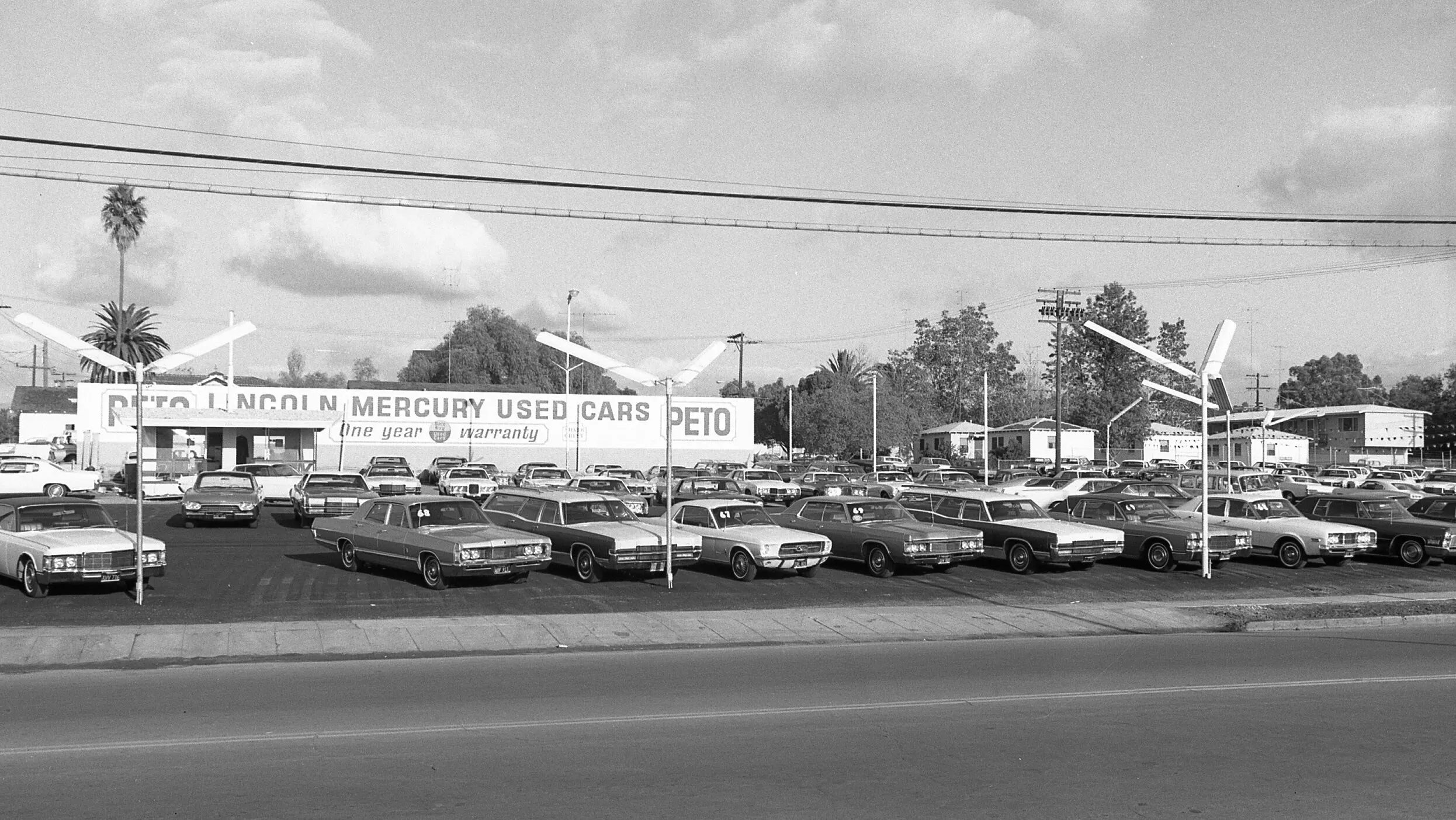
Used car dealership early 70s
Flickr/CSUSM

Understanding that early ’70s crash takes some explaining.

Muscle cars faced the multi-whammy of increased emissions regulations, crash safety rules mandating fatter bumpers, spiking insurance rates for high-performance automobiles, and lower compression ratios with the advent of lower-octane unleaded gas. There was also the 1973 oil crisis and well as the recession and 55-mph speed limits that resulted.

pumps during opec fuel crisis
Pictorial Parade/Getty Images

On top of all this was a 1972 switch in how horsepower was measured, which made the drop in muscle car performance seem worse than it actually was.

Prior to 1972, American carmakers used the SAE (Society of Automotive Engineers) “gross” measurement of horsepower, which is a figure taken from the engine running on a stand with no power-robbing accessories or mufflers. “Net” horsepower, meanwhile, measures the engine with accessories connected. Some carmakers started advertising gross and net figures in 1971, but a California law requiring only the net figure in any advertising materials starting in 1972 effectively prompted the switch to the net figure across the industry. Some American muscle favorites appeared to suddenly “lose” 100 hp.

That wasn’t strictly the case, though, and our friends at Hagerty recently started wondering what effect that gross-to-net switch might have on classic car values. Is there a discount to be had by ignoring the arbitrary numbers and going after an American V-8 classic from 1972 instead of its nearly identical ’71 counterpart? The answer is, sometimes “yes,” and sometimes “not really.” Below are eight examples. NOTE all monetary values are in US dollars- at time of posting multiply by 1.38 for CAD dollars.

Chevrolet Corvette LT1

Chevrolet Corvette LT1 engine air filter detail
Mecum

Regular Production Option (RPO) LT1 debuted in 1970 on the Corvette and the Z/28 Camaro. In the Corvette, what it got you was a 350cid V-8 with solid lifters, tight 11:1 compression ratio, forged pistons, balanced crankshaft, freer-breathing heads, and more improvements that helped push the new hot-rodded, high-revving small-block to 370 hp and 380 lb-ft. Unfortunately, the LT1 arrived just in time for the horsepower wars to start winding down, and with its compression ratio lowered to 9:1 in the 1971 version, performance was down to 330 hp. A bit disappointing, sure, but still lots of oomph.

Chevrolet Corvette LT1 1972 engine
1972 LT1 350/255 HP V-8 engineMecum

For the 1972 Corvette, RPO LT1 dropped to 255 hp with the switch to net ratings. The LT1 option disappeared after 1972, which was also the last year for chrome bumpers at both ends of America’s sports car. Visually, all 1970–72 LT1 Corvettes look nearly identical, but values drop way off as the power ratings decrease. A 1970 LT1 convertible is currently worth $108K in #2 (excellent) condition in our price guide. The equivalent coupe is currently worth $89,600. The 1971 model falls to $82,300 for a convertible in #2 condition, and $64,500 for a coupe. At the bottom, the 1972 LT1 currently carries #2 values of $74,300 for a convertible and $73,000 for a coupe. Condition #3 (good) values for these cars typically come in at about 25 to 30 grand less than the #2 value.

As for the Camaro Z/28, its #2 value drops from $53,600 for a 1971 model to $52,800 for a ’72, while the condition #3 value drops from $39,400 to $32,700.

AMC Javelin

1972 AMC Javelin front three quarter
1972 AMC JavelinAaron McKenzie

American Motors redesigned its plucky pony car, the Javelin, for 1971. The new second-gen model sprouted the famous exaggerated, creased wheel arches and long hood for which the Javelin is perhaps best known, in part thanks to Mark Donohue’s dominant ’71 Trans Am season behind the wheel of one. AMC’s two-seater AMX model also disappeared after 1970, but was added to the Javelin lineup as a high-performance submodel.

New for ’71 was a 401cid V-8, available in both Javelin SST and Javelin AMX trim. In gross horsepower terms, the 401 made 330 hp. In 1972, the net rating dropped that figure to 255 hp. Values also drop from ’71 to ’72, despite there being few cosmetic differences between the two years. For ’71 Javelins, an SST is worth $35K in #2 condition, and an AMX is worth $49,300. For ’72 models, these figures fall to $25,700 for an SST and $43,200 for an AMX.

Cadillac Eldorado
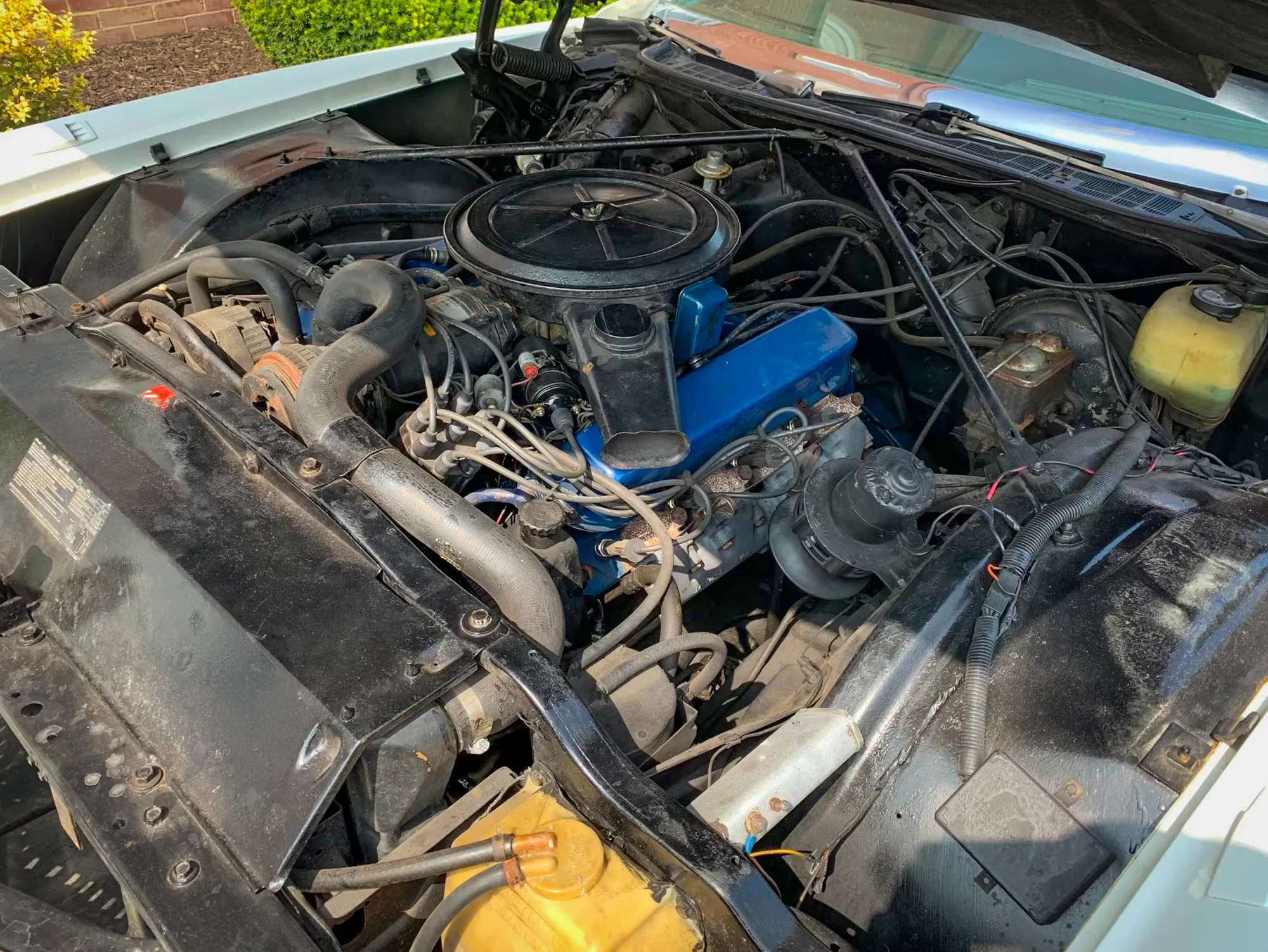
Cadilac-Eldorado-500-CID
500cid V-8Mecum

The ninth-generation Eldo came out in 1971, growing in wheelbase, overall length, and weight over its predecessor. Fender skirts were another addition, as was a convertible body style. Motivating this huge Caddy was a similarly huge V-8, which displaced a whopping 500 cid (8194 cc). The 500-cube unit had made 400 hp in the ’70 Eldorado, but this dropped to a still-potent 365 horses in ’71. The switch to net ratings suggested a huge drop, though, with the figure dropping to 235 hp for 1972.

The ’72 discount is fairly modest for the Eldorado, a car that never sold itself on speed, anyway. For 1971 models, a convertible is worth $37K in #2 condition, and a hardtop is worth $25,200. A ’72 convertible is worth $35,600, and a hardtop is worth $25,200.

Oldsmobile Toronado
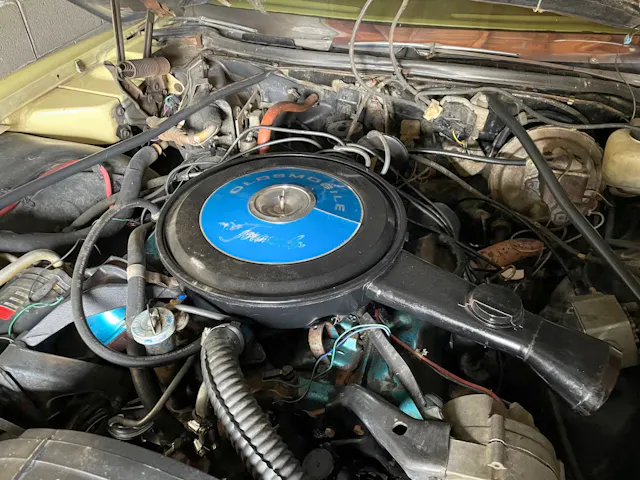
1971-Oldsmobile-Toronado-455-CI horsepower rating
455cid Rocket V-8Mecum

Oldsmobile’s large, groundbreaking front-wheel drive Toronado entered its second generation in 1971. Like the Eldorado, it was larger than its predecessor. Its 455cid Rocket V-8 carried over from the ’70 model, and carried a gross rating of 350hp. The switch to net ratings knocked off a full 100 ponies, for 250hp total. But, also like the Cadillac, the Toronado’s primary selling point was never power, despite its monstrous engine.

That goes a long way in explaining why a ’71 Toronado and a ’72 Toronado are worth almost exactly the same, with a ’71 coming in at $16,000 in #2 condition and a ’72 coming in at $15,600.

Plymouth GTX
1971 Plymouth GTX front three quarter
1971 Plymouth GTXMecum

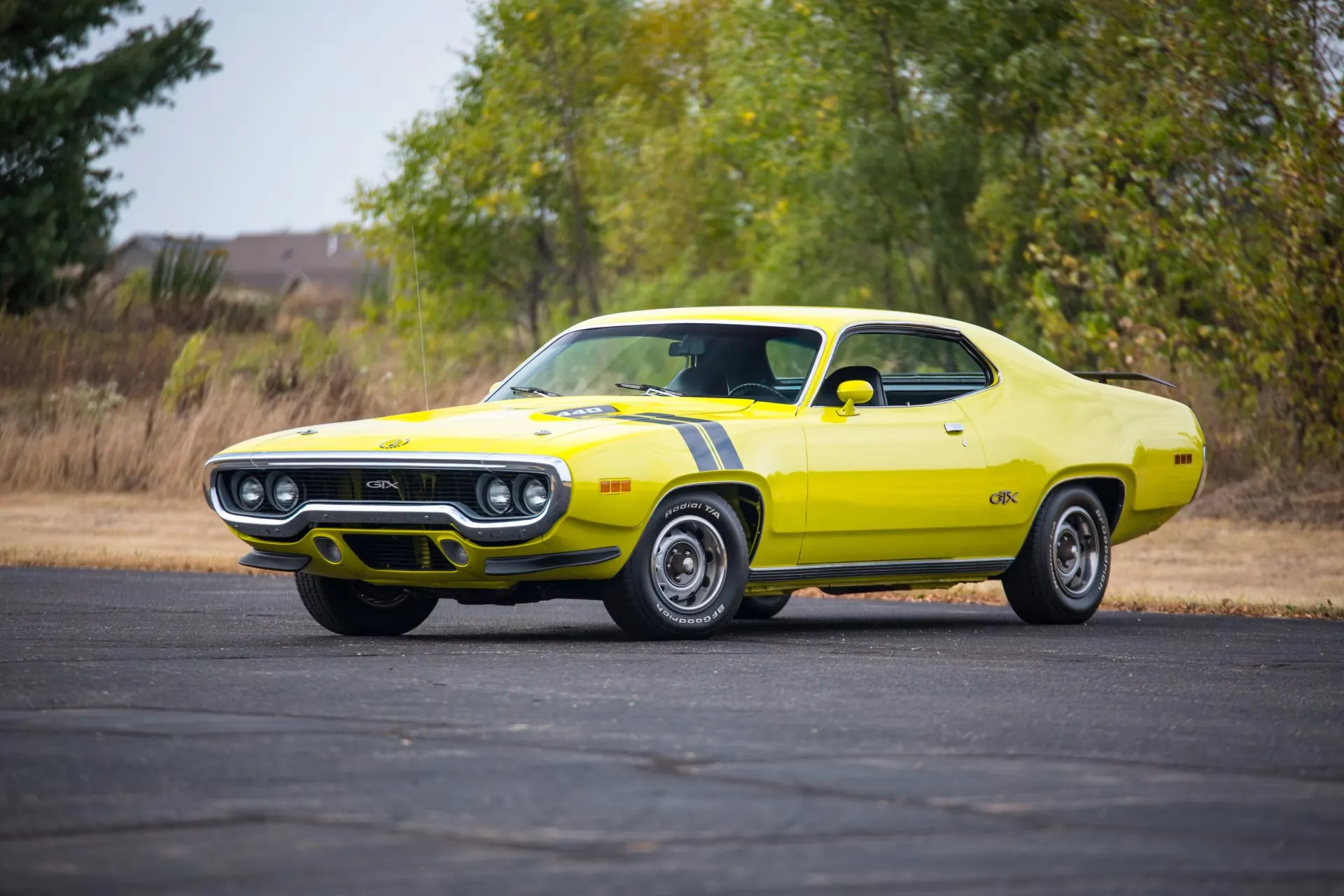
Plymouth redesigned its Road Runner, upon which the GTX was based, for 1971. The handsome fuselage theme included a loop bumper and a high trunk. While the 426-cid/425-hp Hemi was still available in the ’71 GTX, most got a version of the 440, either the three-carb 440-cid/375-hp “Six Pack” or the 440-cid/370-hp four-barrel.

By 1972, the original Street Hemi was gone, closing a major chapter in the history of Mopar muscle. The Six Pack was gone, too, leaving only the four-barrel 440 for GTX buyers, and its rating dropped from 370hp to 280hp. The GTX also ceased to be its own model that year, instead becoming an option package for the Road Runner, though styling remained largely the same. The discount in choosing ’72 over ’71 in this case is significant. The current #2 value for a 1971 GTX is $64,100, and for a ’72 Road Runner GTX it’s $53,300.

Pontiac GTO
1971 Pontiac GTO front three quarter
1971 Pontiac GTOMecum

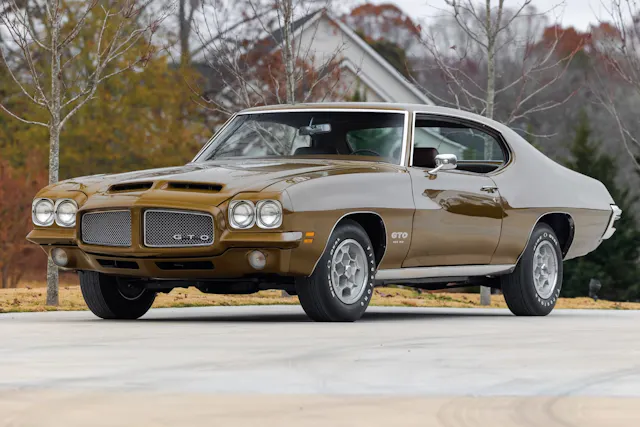
By 1971, the second-gen GTO’s muscles had atrophied a bit. The splashy colors of “The Judge” were still available, but the potent Ram Air engines were not, and compression ratios dropped across the GM lineup. The Pontiac’s most potent powerplants were now a 455 cid/325 hp or a 455 cid/335 hp.

For 1972, the GTO went from being its own separate model to being an option package on the Le Mans, just as it had been when it kicked off the muscle car era in 1964. In net terms, the 455 engines now carried ratings of either 250 hp or 300 hp.

As collector cars, there is naturally some variation in terms of value. The ’71 455/325 GTO carries a #2 value of $54,300, while the ’72 455/250 is worth $41,000. With the higher-output engines, though, they are essentially worth the same, with both ’71 455/335 and ’72 455/300 sitting at around $64,000, possibly due to the rarity of the later car.

Oldsmobile 4-4-2 W-30
1971 Oldsmobile 442 W-30 engine horsepower rating
455cid V-8Mecum

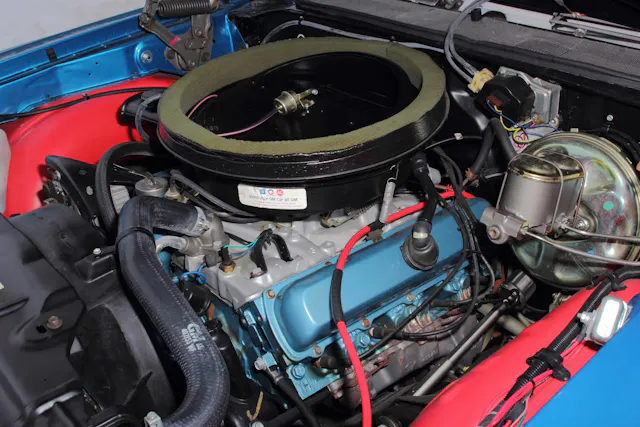
The second-gen 4-4-2, like the GTO, was a staple GM muscle car built on the A-body platform from 1968–72. It was similarly down on power and compression in 1971, with the high-performance W-30 package offering a 455-cid/350-hp V-8, down from 370 horses the year before. Net horsepower for the 1972 W-30, when the 4-4-2 reverted to being an option package on the Cutlass, sank the number to 300 hp. The beefier, slower third-gen 4-4-2 debuted in 1973 with GM’s malaise era “Colonnade” styling.

Olds 4-4-2 values drop significantly as the horsepower numbers go down. A 1970 W-30 Holiday Coupe in #2 condition is worth $99,200. The 1971, 350-hp equivalent is worth $82,800, and the 1972, 300-hp version is worth $69,400.

Chevrolet Chevelle SS

1971 Chevrolet Chevelle SS rear
1971 Chevrolet Chevelle SSMecum

Also an A-body, the Chevelle got a mild facelift in 1971, with two headlights instead of four, and four circular taillights instead of two rectangular ones. While the big dog in 1970 was the 454-cid/450-hp LS6 engine, it disappeared from the Chevelle lineup in ’71, and the top engine became the 454-cid/365-hp LS5. For 1972, little changed visually other than an updated grille and new front parking lights, but the LS5’s stated output dropped to 270 hp. A completely new and significantly less exciting, Colonnade-bodied third-gen Chevelle debuted for 1973.

LS5 values don’t vary too much from ’71 to ’72. A ’71 convertible in #2 condition is worth $93,300 or $73,100 in #3 condition, while a sport coupe in #2 condition is worth $70,500 or $53,500 in #3 condition. A ’72 convertible in #2 condition is worth $89,700 or $75,300 in #3 condition, while a sport coupe in #2 condition is worth $69,300 or $55,400 in #3 condition.

For the Silo, Andrew Newton.
It’s Time For the Concorso d’Eleganza Villa d’Este Auction

16 – 17 May 2026 Villa Erba, Italy

Our friends at Broad Arrow Auctions proudly welcomes the collector car community to the grounds of Villa Erba on the breathtaking shores of Lake Como—and amidst the prestige of the renowned Concorso d’Eleganza Villa d’Este—for a live preview launching the auction weekend.

Presenting over 70 of the highest quality collector cars, the sale promises to deliver a truly premium auction experience across two days of spirited bidding.

Whether joining Broad Arrow in person or participating from across the globe, you may register to bid in person, online (link below), by phone, or absentee. Contact Client Services at [email protected] for personalized assistance, please mention The Silo when contacting.

Auction
Saturday, 16 May 18:00 (CET)
Sunday, 17 May 10:30 (CET)
Preview 
Friday, 15 May 10:00 – 18:00 (CET)
Saturday, 16 May 10:00 – 18:00 (CET)
Sunday, 17 May 9:30 – 10:30 (CET)
Location
Villa Erba
Largo Luchino Visconti, 4
22012 Cernobbio
Italy

Some of the highlight cars

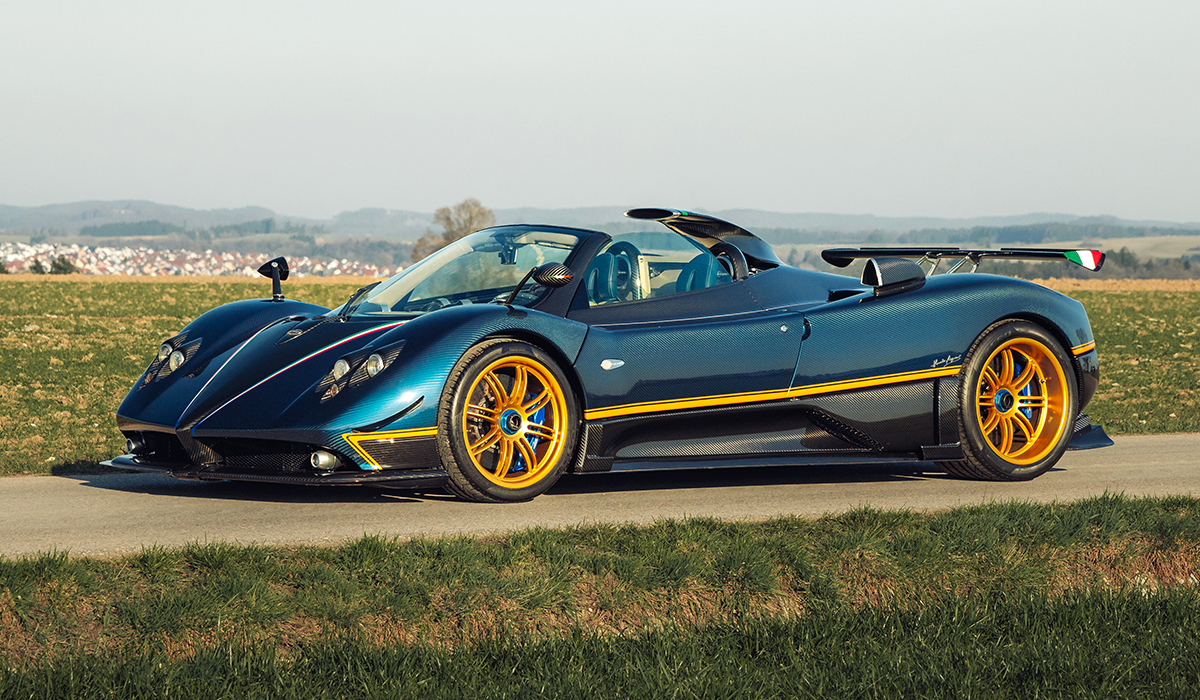
2018 Pagani Zonda Unica Lot: 228 Estimate: €9.500.000 – €12.000.000
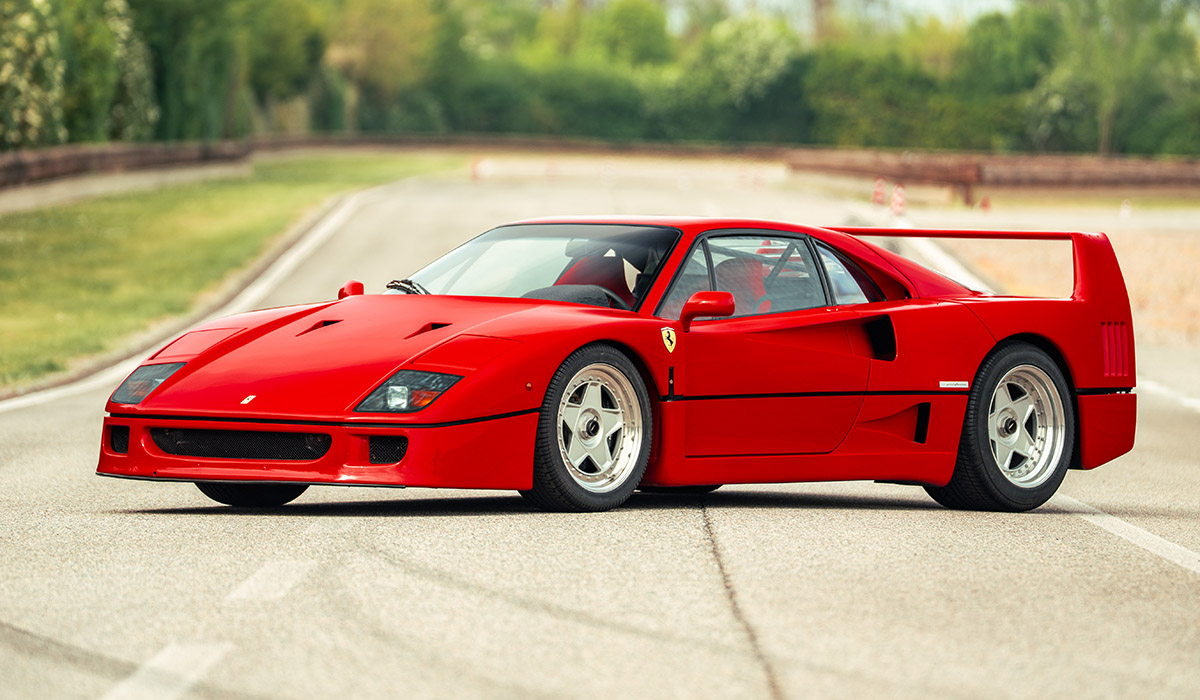
1990 Ferrari F40 Lot: 126 Estimate: €2.300.000 – €2.500.000
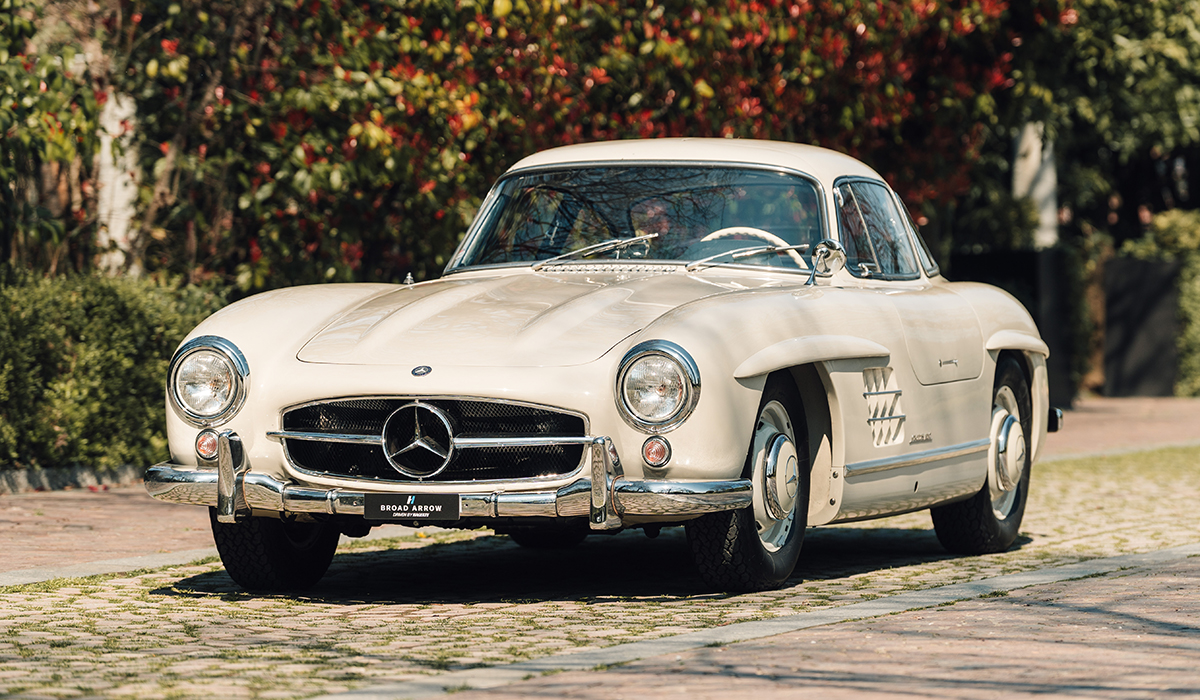
1957 Mercedes-Benz 300 SL Gullwing Coupe Lot: 124 Estimate: €1.600.000 – €2.000.000
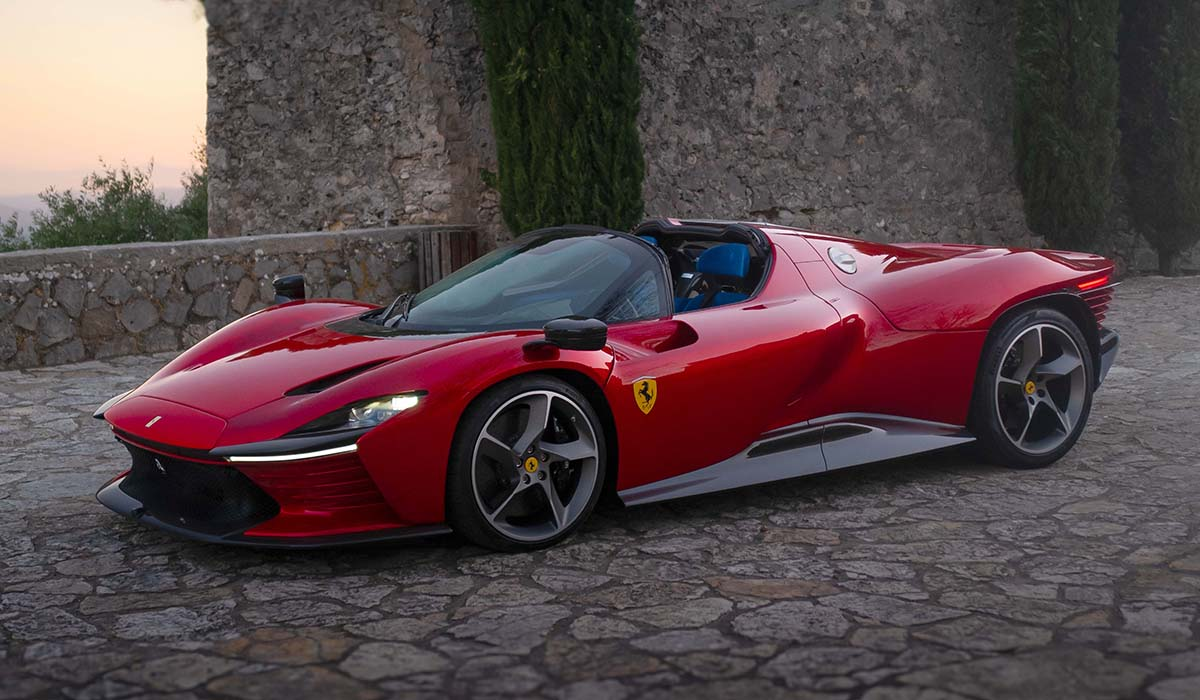
2023 Ferrari Daytona SP3 Lot: 253 Estimate: €6.500.000 – €8.500.000
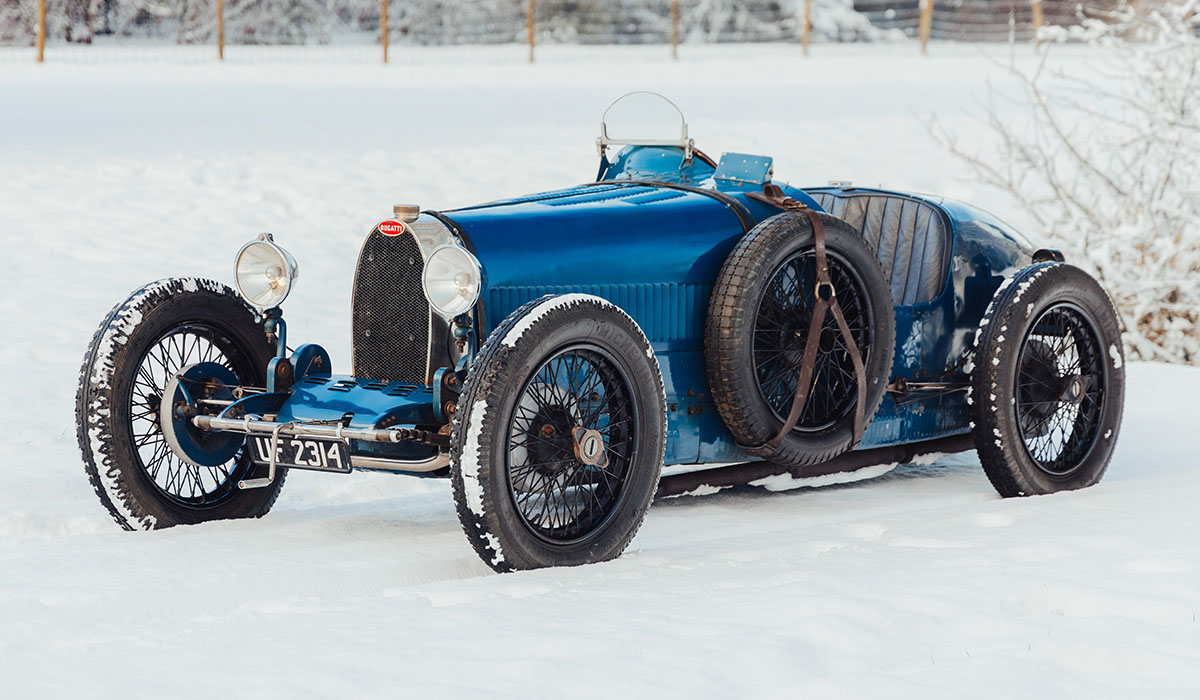
1926 Bugatti Type 37 Grand Prix Lot: 109 Estimate: €1.000.000 – €1.300.000
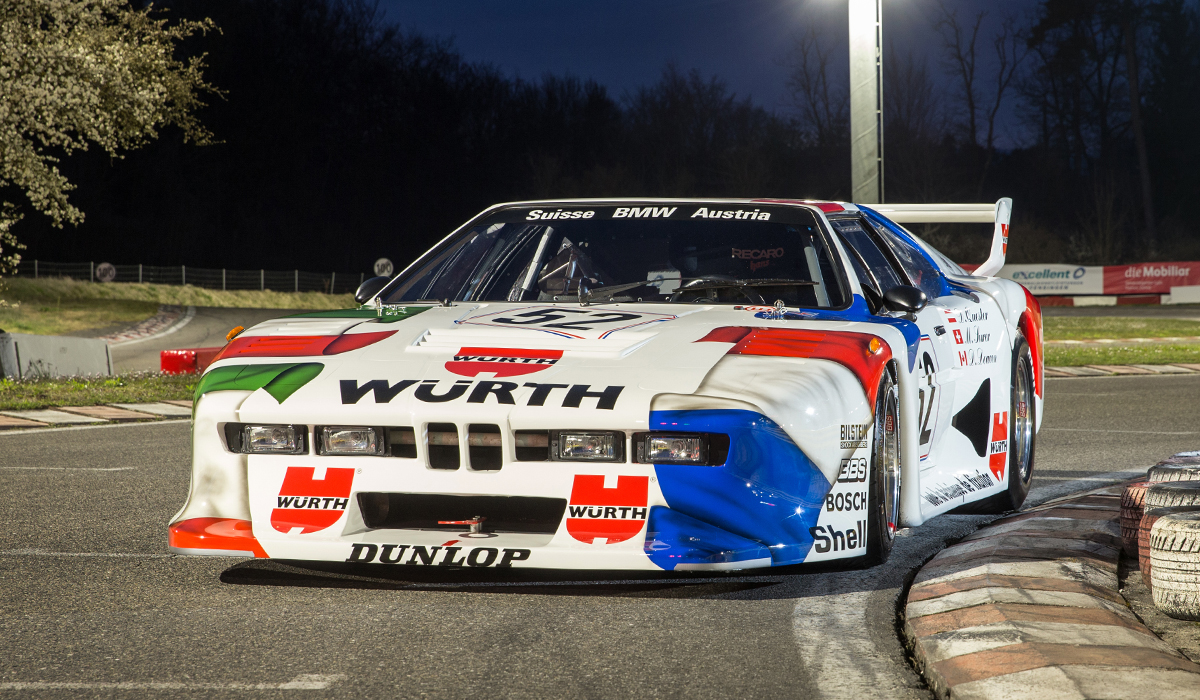
1981 Sauber BMW M1 Group 5Lot: 224 Estimate: €1.000.000 – €1.200.000
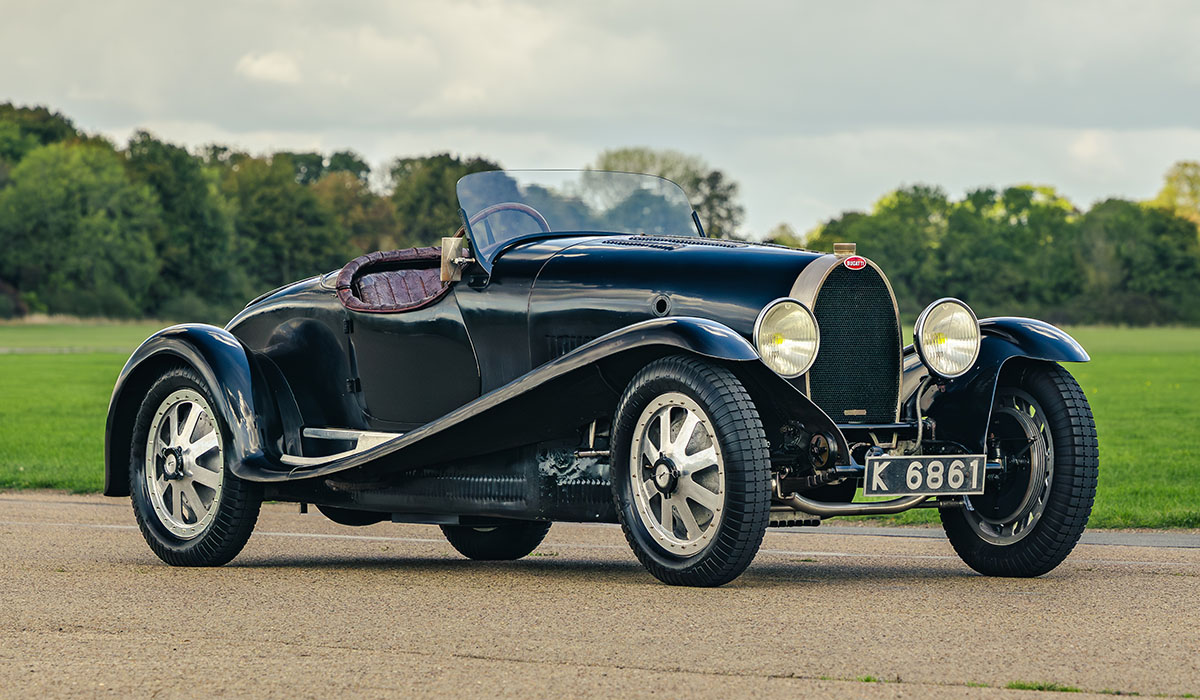
1929 Bugatti Type 43 Roadster by Eugène Matthys Lot: 243 Estimate: €2.500.000 – €3.500.000
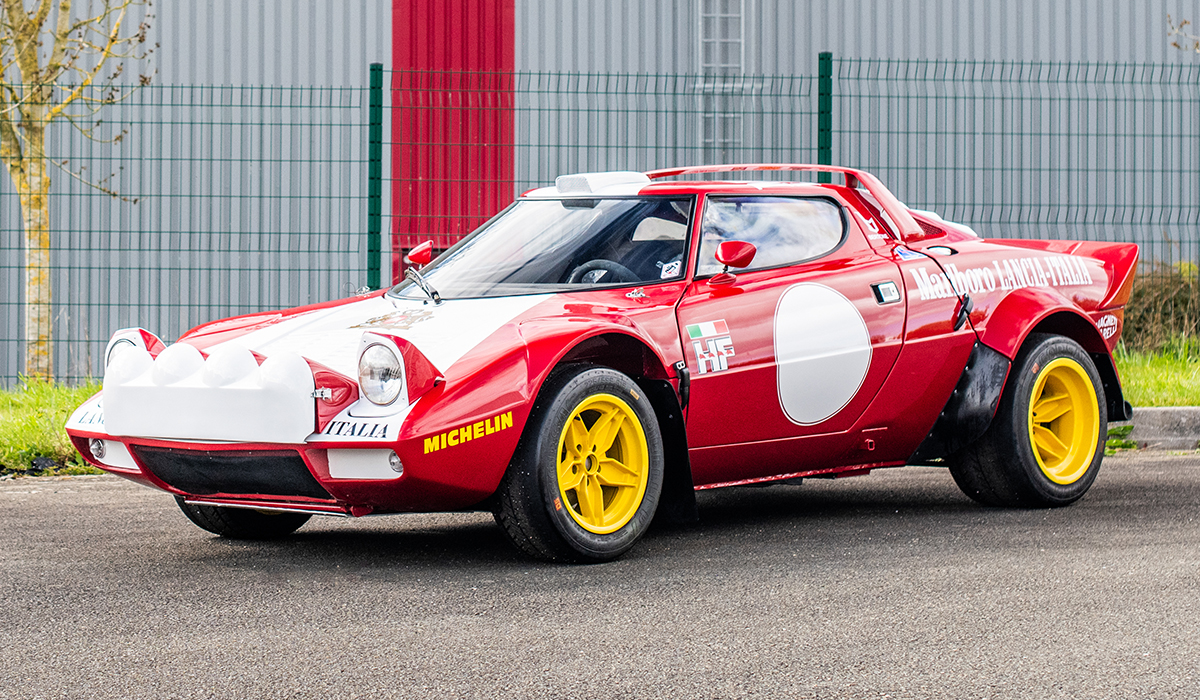
1975 Lancia Stratos HF Stradale Group 4 Specification Lot: 231 Estimate: €600.000 – €800.000 1955 Lancia Aurelia B24 S Spider AmericaL ot: 242 Estimate: €500.000 – €700.000
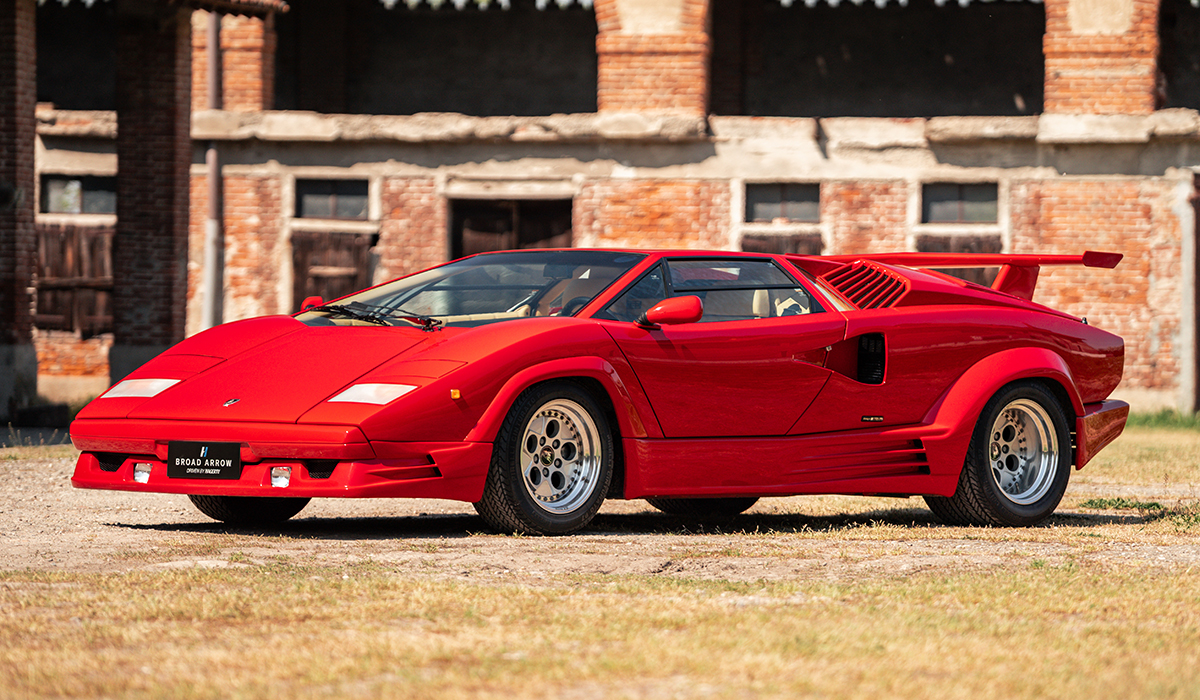
1990 Lamborghini Countach 25th Anniversario Lot: 130Estimate: €500.000 – €600.000 1989 Mercedes-Benz Boschert B300 Biturbo Gullwing Coupe Lot: 122Estimate: €475.000 – €525.000
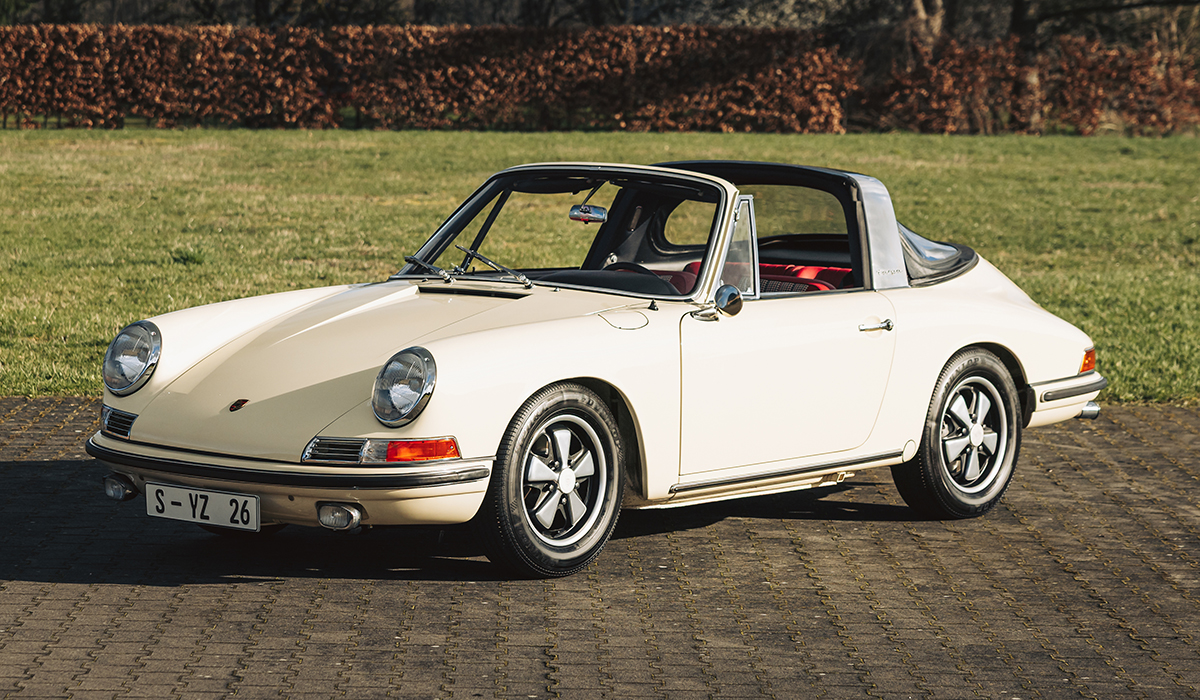
1966 Porsche 911 S Soft Window Targa Test Car ex-Neerpasch Lot:22 Estimate: €700.000 – €1.000.000

For the Silo, Jarrod Barker.

View full auction lots here

Click here to place your bid

Hallmark Of All Porsche Sportscars For Sale

  • Extensive restoration within the last decade
  • Restored in its originally delivered livery of Speedster White over Red leatherette
  • Considerable history dating back to the late-1970s, documenting long-term preservation into the late 2010s
  • Original U.S.-specification 1600 Speedster delivered to Hoffman Motors
  • Fitted with a period-correct 1956 1,600-cc engine with twin Solex carburetors paired with its numbers-matching transmission
  • Furnished with a copy of its factory Kardex warranty card, Porsche CoA, owner’s manual, and toolkit

Chassis No. 82181

Engine No. 63249
Transmission No. 8775

USD 485,000$/ CAD 678,130$ (exchange rate at time of posting)

Dispatched to Hoffman Motors in New York City in the spring of 1956, this 1956 Porsche 356 A 1600 Speedster was among those U.S.-market examples delivered via the legendary American-market distributor and tastemaker. It left the factory wearing Weiss (White) paint over Red leatherette, the same striking livery it wears today. Additional options noted on the Kardex include a speedometer in miles and sealed beam headlights.

The earliest history of the car dates to the late 1970s when it was sold via Weldon Scrogham’s G&W Motorwerkes to R.A. Hendricks of Waynesboro, Virginia. Service invoices show that by at least 1983 the car was in the hands of long-term owner Carter Elliott based in nearby Charlottesville. Elliott would take fastidious care of the car while under his ownership, a span that would last over three decades.

Invoices on file reveal more

Invoices remain on file showing parts purchases and work completed by the best suppliers throughout the 1980s and 1990s, including Stoddard, Performance Products, and H.G. Bieker. In 2018 the story of Speedster chassis number 82181 simultaneously began anew and circled back to familiar hands when noted 356 Porsche expert and restorer Cole Scrogham (son of Weldon) was tasked with a thorough refresh. Directed by its then-owner to keep as much of the original car intact as possible, Scrogham is said to have been able to retain the majority of its original, Reutter-built sheet metal with an eye on preservation while the car was refinished to “show quality” in its original shade of Speedster White.

A period-correct 1,600-cc flat-four (serial number 63249) from a 1956 356 A powers the wheels through its numbers-matching transmission. In the nicely detailed engine compartment, you’ll find proper FRAM and Bosch decals, correct finishes and components, as well as a pair of Solex carburetors topped by silver Knecht air cleaners.

Today, this Speedster appears just as Max Hoffman and the Porsche factory intended: in elegant White over Red, with such details as accessory chrome guards protecting the sealed-beam headlights, period-style Michelin XZX 165 tires, and gold-tone badging serving as clear indicators as the quality of its restoration. A matching red vinyl boot (trunk) covers the occasional soft top when it’s folded. Inside, the red vinyl bucket seats made famous by the Speedster wear contrasting ivory edge piping. A correct ivory two-spoke steering wheel with a horn ring frames a body color dashboard covered with a red upholstered top. VDO instruments feature with correct green lettering — including a miles-per-hour speedometer, as specified in the original Kardex. In a smart nod to modernity, the car is equipped with a pair of vintage style lap belts. Otherwise, Speedster chassis number 82181 presents very much as it did when delivered new in 1956 — down to its exquisite color selection.

In addition to extensive documentation dating back more than four decades, this iconic 356 A Speedster is furnished with a toolkit, a spiral-bound driver’s manual, a Porsche Certificate of Authenticity, a copy of its Kardex warranty card, and side curtains with their protective case.

For the Silo, Alexander Weaver/ Hagerty.

Upcoming ‘Swiss Sourced’ Collector Car Auction

Click on the full auction catalog below to learn about this unique car.

The Zürich Auction1 November 2025
The Dolder Grand – Zürich, Switzerland
Swiss-Sourced Collector Cars
It is no surprise that our friends at Broad Arrow are proud to present a selection of Swiss-sourced vehicles to be offered at their inaugural Zürich Auction. The vehicles are varied and exceptional and the setting could not be better.

Switzerland’s reputation for precision, care, and high standards extends beyond its watches and craftsmanship. These qualities are frequently reflected in the quality of its vehicles with Swiss-sourced cars often offering distinct advantages including:Exceptional Maintenance Standards: Thanks to strict technical inspections, such as the MFK, Swiss vehicles are typically kept in excellent condition. Low Mileage: Cars in Switzerland generally show less wear, as average annual mileage trends lower than many other markets. Clean, Verifiable History: Rigorous registration and control systems mean provenance is often clear and verifiable. Favorable Tax Conditions for Classic Cars: As with several European countries, vehicles over 30 years old may qualify for reduced VAT rates. Reliable Logistics Support: Broad Arrow has established partners throughout the region available to assist with customs, shipping, and other logistical needs. For more information on any of the offerings in our Zürich Auction, and for a complete list of Swiss-sourced vehicles, I invite you to contact their knowledgable team of specialists, or to reach out to their client service team.

Bidder registration is open with options for in-person, telephone, internet, and absentee bidding available. Contact their client service team for personalized assistance at [email protected]. Please mention the Silo when contacting. For the Silo, Jarrod Barker.

Art and Science of Hunting Rare Corvettes

Another boss article via friends at Hagerty. Vintage Corvettes have been bought and sold as collector vehicles for decades, and so you could be forgiven for thinking that all the hot ones have been accounted for, and that the current body of research has documented all that’s known about them.

That’s not the case, and to seasoned Corvette hunters like Kevin Mackay, that’s actually good news. Mackay started his business, Corvette Repair, 30 years ago in Valley Stream, N.Y. His timing could not have been better. Chevy had just launched the exciting C4 model, and the Corvette collector hobby was shifting into hyper drive. That trend brought a renewed interest in the Corvette’s heritage, including racing.

Canada Corvette Connection?

There were already expert collectors well versed in Corvette history, but history has a way of changing. As deeper dives would reveal gaps in Corvette knowledge, those who applied the resourcefulness and tenacity of TV police detective Columbo were able to find and authenticate super-rare Corvettes.

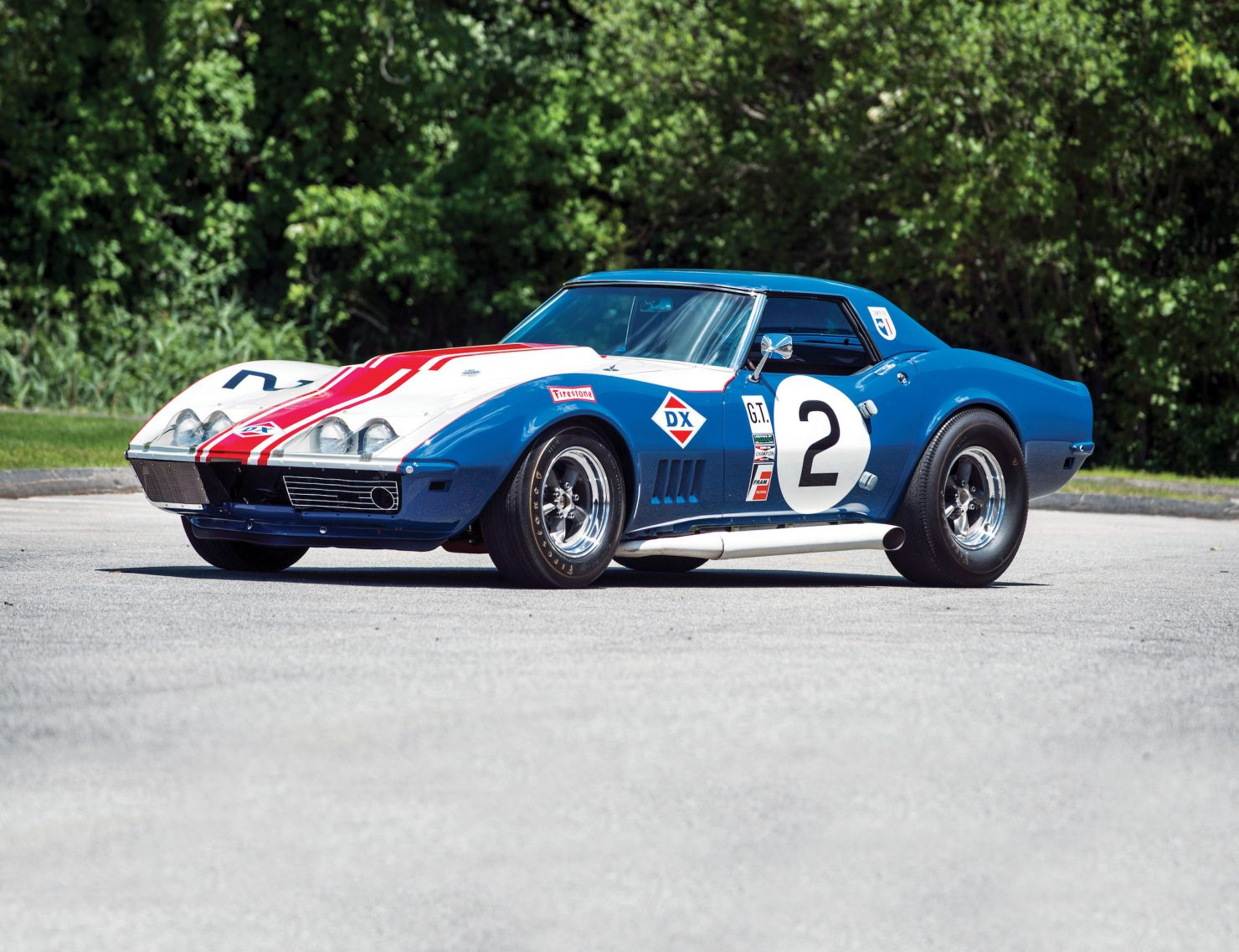
1968 Sunray DX L88

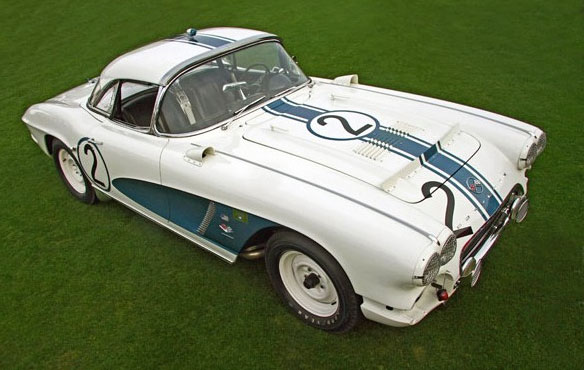
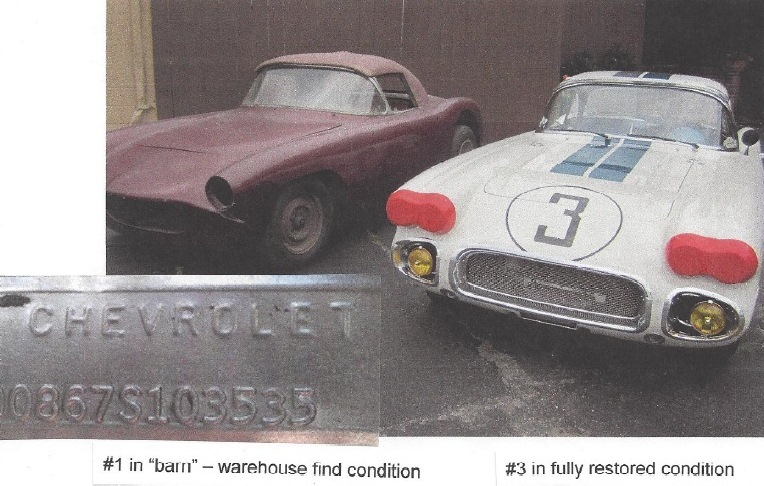
You won’t find Mackay wearing a rumpled raincoat around his shop, but his detective work continues to uncover cars thought to have been lost. Some of those are race cars that have come through his shop, including the 1960 Briggs Cunningham Le Mans car, 1962 Yenko Gulf Oil, 1966 Penske L88, 1968 Sunray DX L88 (found in a barn) and 1969 Rebel L88. All were Le Mans, Daytona or Sebring class winners. Corvette aficionados will see a pattern: Among lost Vettes that Mackay hunts are ones campaigned in those races.

The Rebel was one of the most successful C3 Corvette race cars ever, winning the GT class at Daytona and Sebring in 1972, where it also took fourth overall behind two prototype-class Ferraris and a prototype Alfa Romeo. Mackay tracked the car to a southern scrapyard 24 years ago and restored it; the car sold at Barrett-Jackson’s Scottsdale sale in January 2014 for $2.86 million usd/ $3.95 million cad.

“I know where every Corvette that raced Le Mans is,” Mackay said. Knowing, of course, is only the start of a long road to acquiring a car. Aspiring Corvette hunters might take note of other cars that grab Mackay’s interest.

Listen to What The Man Says

It could go without saying that any Corvette collector would want to stumble upon an L88 hiding in a barn. It’s a comparatively small group of cars, but it’s bigger than originally thought.

“We located 13 factory L-88 cars not previously known,” said Mackay, adding that three of the 20 1967 L88s are still missing. So, when an elderly man approached him with a claim that he still owned a 1967 L-88 that he bought new, Mackay listened, if with a skeptic’s ear.

“That happens a lot,” he said. “Guys claim they have a car that nobody has ever seen.”

A doubter may dismiss such claims, but Mackay says his experience has shown that sometimes, they lead to Corvette treasure. For example, he knows of a 1967 L-89 car, one of 16 made, that hasn’t been seen in decades; it was driven just 11 miles / 17.7KM from new and put away.

Not every lead pans out, but patience can lead to gold, Mackay advises.

“I waited 11 years to buy one particular car,” he said. “I’d call the owner every year. It was all about building trust.”

And so comes another lesson in hunting and buying classic Corvettes: It’s not always about the money. Mackay said that some owners are too emotionally attached to their cars to let go. And some never do, leaving valuable cars to be auctioned by heirs. In such cases, years of patience and building trust can seem wasted. But Mackay loves the challenge of the hunt.

For another car, he waited 19 years. And he’s got a list of others.

“There are two cars I’ve been waiting nine years to buy,” he said. “I always tell the owner that he’s just holding them for me for free storage.”

Follow the Clues

Many car enthusiasts enjoy reading old magazine articles. Mackay reads them for clues. “I look for names of people associated with cars, such as race mechanics, and then I look for those people,” he said.

Knowing where a Corvette was sold can be a help for an experienced hunter. If you have a Corvette’s VIN, you can get its original shipping data – including the selling dealer – from the National Corvette Restorers Society (NCRS) for $40. Even if the dealer is no longer in business, the information could lead to other clues.

Sometimes, answering an ad for parts leads to whole cars. While hunting down a lead on parts for a 1969 Baldwin-Motion Phase III Corvette, Mackay stumbled across a super-rare Phase III GT that turned out to be a car a customer owned when new and had regretted selling many years before. Mackay has also found engines and then later located the cars they belong to.

Serial Boxes

Some collectors like to own “firsts” and “lasts” and therefore hunt low and high serial number cars. The top prize in that category would of course be the very first Corvette built, but the first two were test cars thought to have been destroyed. Yet, as Lt. Columbo might ask, “Where’s the body?”

Mackay can claim something close. He found the original chassis to 1953 serial No. 3 for a customer. He explained: “The first three made were test cars. Before GM sold No. 3, they swapped the chassis, because the first one had been used in Belgian block testing, and there were concerns about possible stress cracks.”

Somehow, the first chassis got out of GM’s grasp and was discovered underpinning a 1955 body in the 1970s. Another chassis swap ensued, and 1953 No. 3 just needed to be reunited with its original body. Mackay said the owner of that car, however, was not interested.

So, instead, Mackay is building a unique cutaway 1953 Corvette around the chassis. It’s something he said could be shown and enjoyed by the whole Corvette hobby.

Other aspects can catch a collector’s fancy. It should be no surprise that original color can affect value, but the effect might be bigger than you thought.

“Black is the most sought-after color for Vettes,” said Mackay. “A black 427/435 car could be worth double a green version.”

And then there are production oddities, the kinds of things that likely would never happen on today’s computerized assembly lines with their just-in-time parts inventory control systems. The fabulous center knockoff wheel offered as an option for the 1964-1966 Corvette actually made an earlier appearance. Mackay said 12 cars got the wheels in 1963. One is claimed to be a Z06 “big-tank” car.

Have a clue to a “lost” Corvette? Mackay would love to hear about it: [email protected] For the Silo, Jim Koscs/Hagerty.

The Ultimate Modern Collector Car

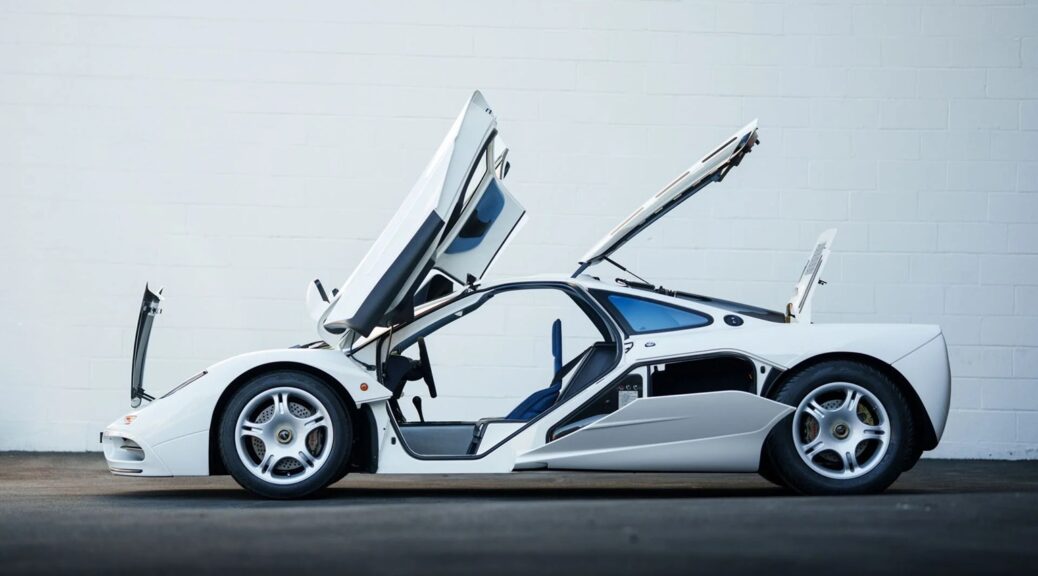
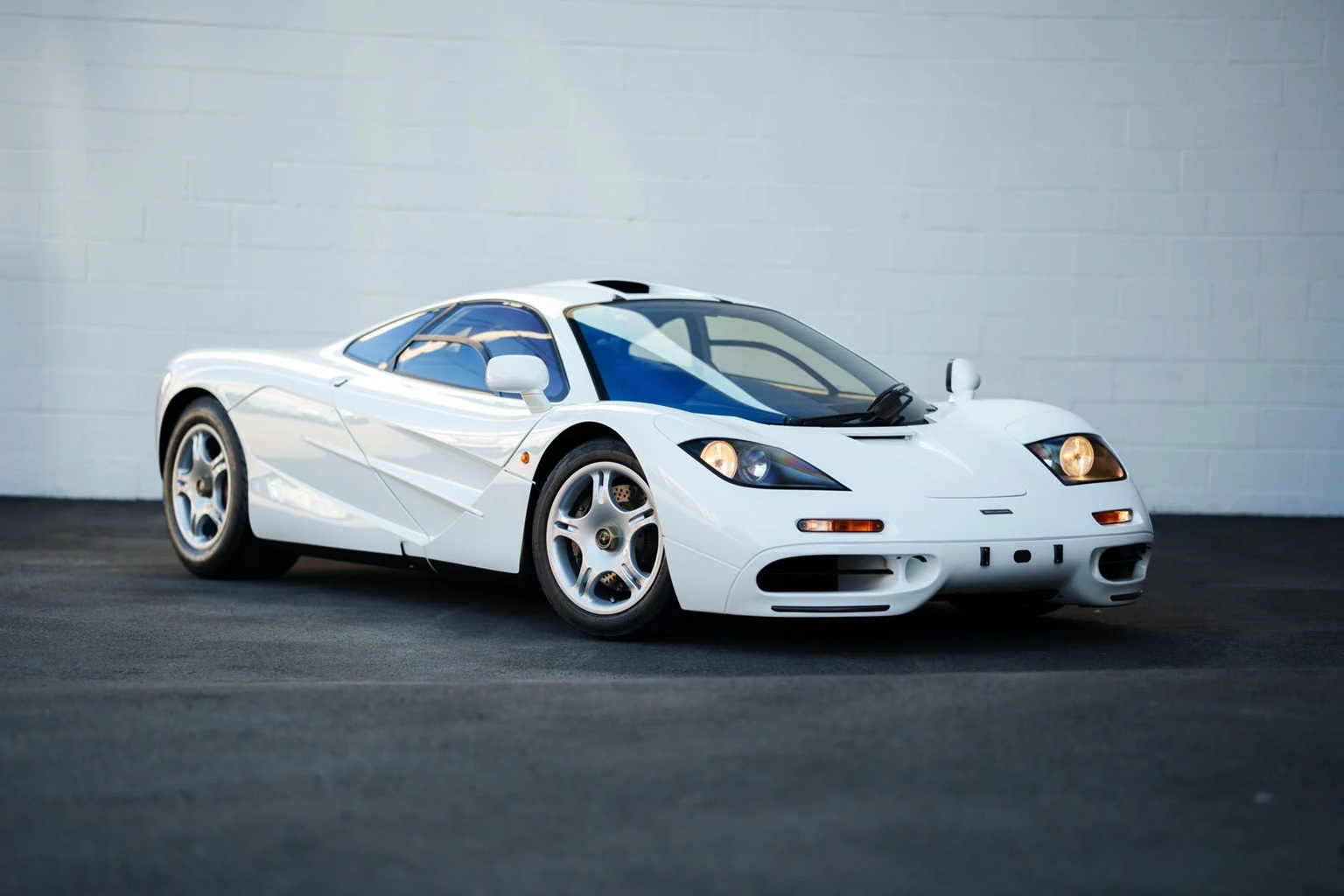
  • One of only two McLaren F1 road cars finished in the striking Marlboro White exterior
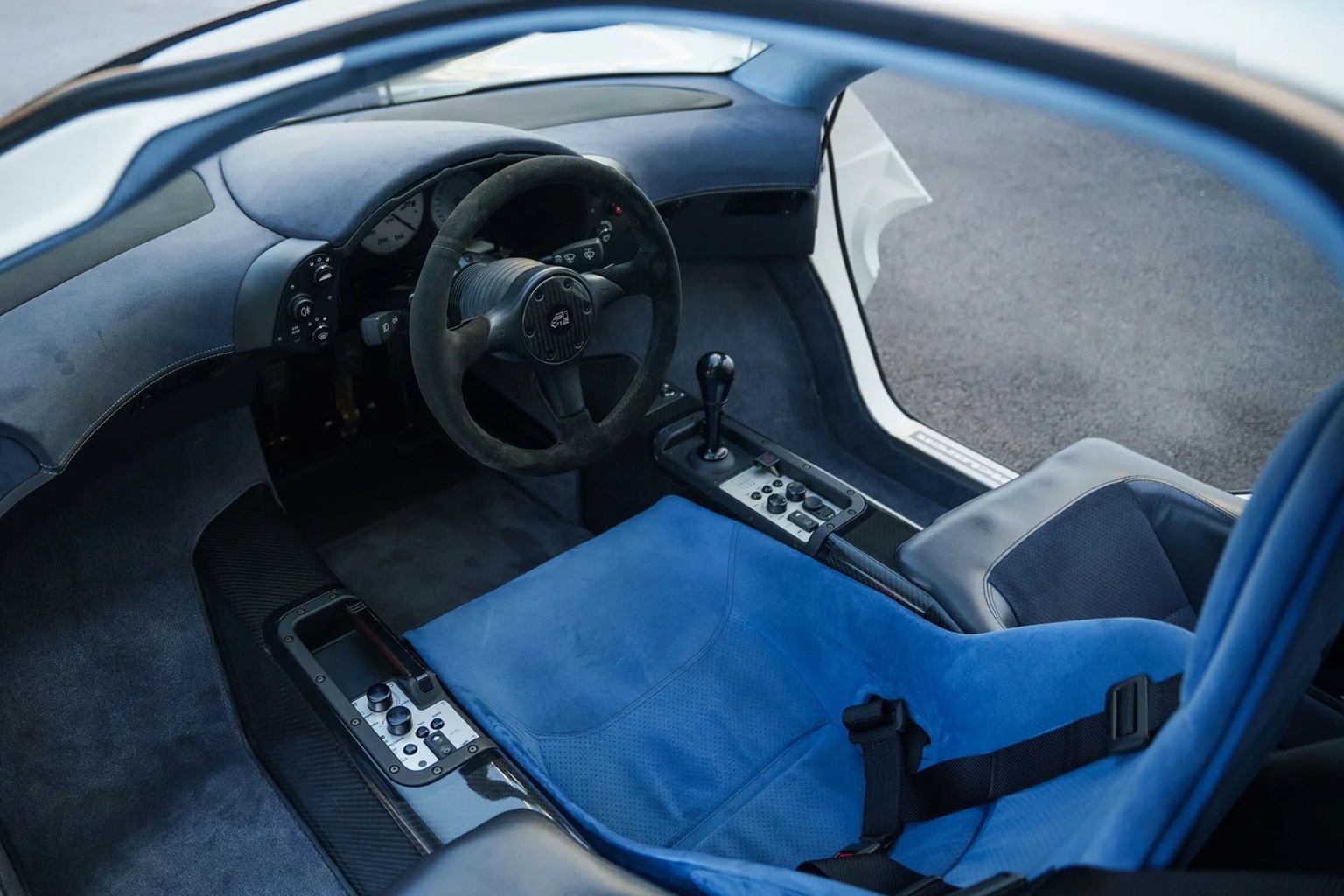
  • Attractive interior configuration with light blue Alcantara driver’s seat and dark blue/grey leather and Alcantara passenger seats
  • Incredibly low mileage with just 1,291 kilometers (802 miles) from new
  • Unaltered and maintained exclusively by McLaren Special Operations in Woking throughout its life
  • Received a fuel cell replacement in 2021, followed by comprehensive recent maintenance in November 2024
  • Documented ownership history from new, beginning with Japanese racing team owner Kazumichi Goh
  • Complete with original owner’s manuals, fitted luggage set, tool roll, and Facom toolchest

Chassis No. SA9AB5AC6S1048053

The McLaren F1 emerged from what might be the most consequential airport delay in automotive history. In 1988, following the Italian Grand Prix, TAG-McLaren Group executives Ron Dennis and Mansour Ojjeh found themselves stranded at Linate Airport alongside McLaren’s Technical Director Gordon Murray and head of marketing Creighton Brown. Their conversation turned to creating the ultimate road car—not just another supercar, but in Dennis’s words, “…the finest sports car the world had ever seen.”

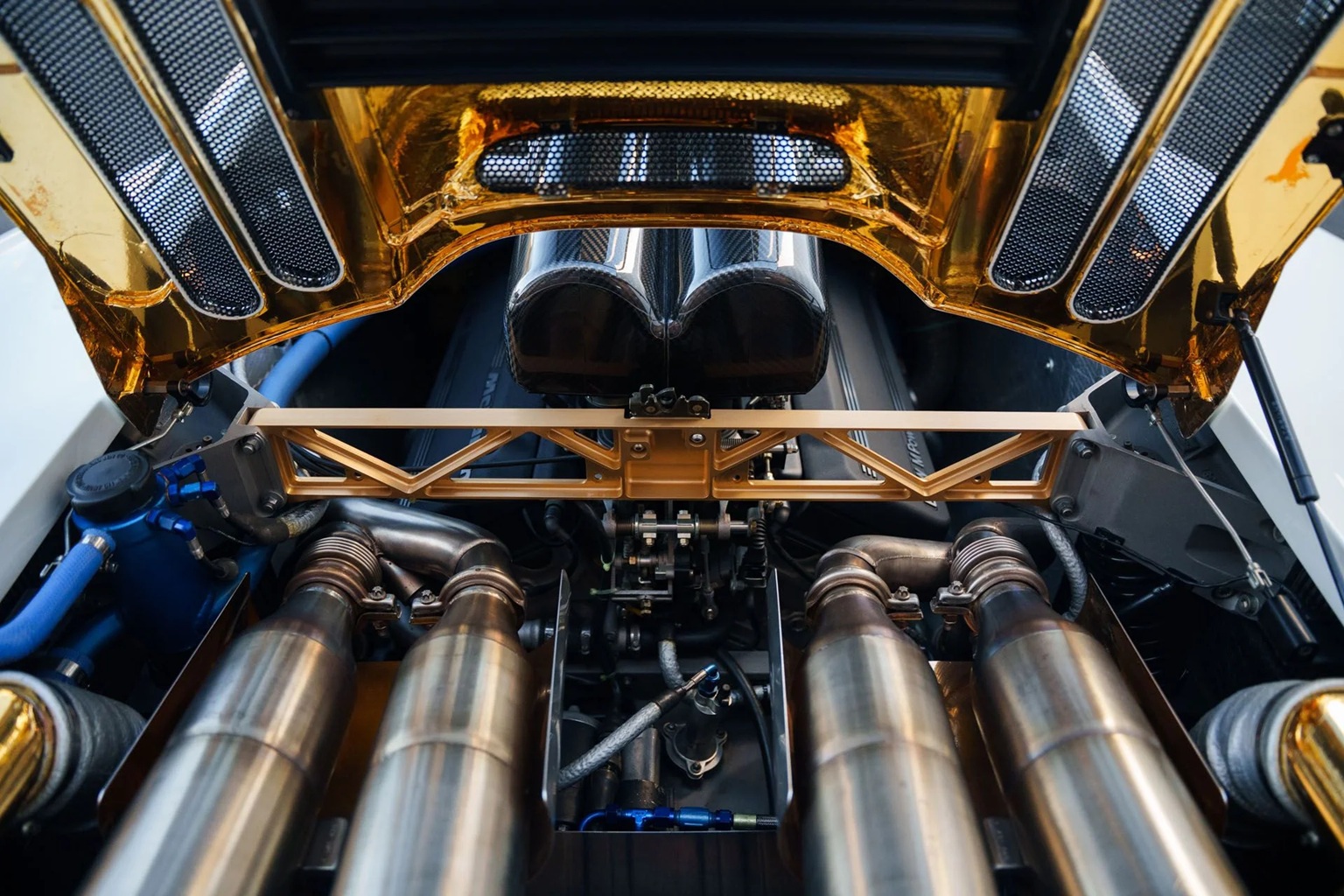
In May 1992 at Le Sporting Club Monaco, the McLaren F1 redefined the supercar genre upon its unveiling. Built around a carbon fiber monocoque—a world first for a production road car—and powered by a bespoke 6.1-liter BMW Motorsport V12 engine, the F1 delivered 627 horsepower and a power-to-weight ratio of 550 horsepower per ton. Its unique central driving position, gold-lined engine bay, and no-compromise approach to performance and driver engagement set new standards that remain unmatched to this day. Limited to just 106 examples across all variants, only 64 were built as standard road cars, making them the most revered and sought after supercar of the modern era.

This superlative example of the F1, chassis number 053, was ordered on 31 March 1995, and assigned production sequence 044. Assembly began on 28 July 1995, with the car being officially delivered “ex-works” on 27 November 1995, showing just 193 kilometers on the odometer. The original purchaser was Kazumichi Goh, the Japanese businessman behind Team Goh, which would go on to win the All Japan Grand Touring Car Championship (JGTC) in 1996 with a pair of McLaren F1 GTRs sponsored by Philip Morris cigarette brand Lark.

Chassis 053 featured a highly distinctive specification highlighted by its Marlboro White exterior finish—one of only two F1 road cars to wear this color. The cabin was finished with a unique blue-themed interior featuring dark blue/grey leather with pierced blue/grey Alcantara cloth central panels for the passenger seats, while the central driver’s seat was entirely covered in light blue Alcantara. This bespoke specification was completed with blue Wilton carpet, light blue Alcantara headlining, and an optional black suede steering wheel. The car was also delivered with a matching bespoke luggage set in dark grey leather with a blue Alcantara strip carrying the embossed chassis number. Factory driver settings were configured with the steering wheel at height position A (highest), pedals at position C (long), reach at position A (near), clutch foot rest at position D (extra long), and standard seat with extra long rails.

In 2004, chassis 053 was purchased by another Japanese collector. By late 2006, the car showed just 432 kilometers when it was sold by WHA Corporation of Nagoya, Japan, to dealer SPS Automotive Ltd. (Hong Kong) on 28 November. The car subsequently came to Europe in 2007 when it was acquired by dealer Lukas Huni AG in Switzerland on behalf of a European client with a recorded mileage of 482 kilometers. On 14 March 2014, chassis 053 was sold via Morris & Welford to collector in the United States. During this ownership, the car spent time in both the U.S. and U.K., and the mileage had increased to 1,108 kilometers. On 16 November 2016, the car was acquired by its next long-term European owner via McLaren Special Operations in Woking and subsequently registered in the U.K. with the appropriate license plate “53 MCL.”

Throughout its life, chassis 053 has been meticulously maintained by McLaren Special Operations. The service book records regular maintenance with all work completed at McLaren’s Woking headquarters on December 12, 2006 (481 kilometers), 14 June 2010 (998 kilometers), 25 October 2016 (1,185 kilometers), 24 April 2018 (1,238 kilometers), and most recently on 12 November 2024 (1,290 kilometers). In July 2021, the car received a comprehensive fuel cell service at McLaren Special Operations totaling £52,061.55 (excluding VAT), which included £31,624.50 in labor charges and £15,472.74 for the fuel cell unit itself. A covering letter from McLaren Heritage Manager Thomas Reinhold noted the return of a “favourite F1” to MSO, an F1 that also “drives extremely well.”

Further work was carried out in November 2021, including replacement of various pipes, fittings, suspension rose-joints and bushes, plus a new water pump at a cost of £23,992.05 (excluding VAT). Most recently, the car returned to MSO in late 2024 for a “3 Year Life Items” service, during which the steering wheel battery, instrument binnacle battery, key fob battery, air conditioning receiver dryer, engine oil and filters, gearbox oil, and coolant were all replaced. The car also underwent a full suspension set-up and headlamp alignment at a cost of £4,861.10 (excluding VAT). Heritage Manager Michael Wrigley’s covering email following this most recent service summed up the car’s exceptional condition: “It’s a truly lovely example so there is very little of note to comment on!”

With just 1,291 kilometers recorded from new, chassis 053 represents one of the lowest mileage and most original McLaren F1 road cars in existence. Its unique color combination, low mileage, comprehensive documentation, complete set of factory tools, owner’s manuals, and fitted luggage make it an unparalleled example of Gordon Murray’s masterpiece. Maintained throughout its life without regard to cost and exclusively serviced by McLaren Special Operations, this McLaren F1 offers its next custodian the opportunity to acquire the ultimate modern collector car in truly museum-quality condition.

For the Silo, Barney Ruprecht.

7 Most Expensive Electric Cars In The World Include Batmobile Inspired Dark Knight

While EVs are known mainly as environmentally friendly offerings, this list proves not all things with electric motors on four wheels are created equal.

1a. Automobili Pininfarina B95: $4.7 Million usd/ $6.67 Million cad

Topping the list is the Pininfarina B95, the world’s most expensive electric car at $4.7 million usd. Limited to just 10 units, the B95 blends breathtaking performance with unmatched luxury. With a top speed of 186 mph and acceleration from 0 to 62 mph in under two seconds, it’s as fast as it is exclusive. Crafted for collectors, the B95 epitomizes automotive luxury in the EV era.

1b. Automobili Pininfarina Battista B95 Dark Knight $4.2 Million usd/ $5.94 Million cad

Celebrating 85 years of Batman, this hypercar is meticulously crafted as the ultimate inspiration for Bruce Wayne’s conquest against darkness. The Battista Dark Knight emerges blending superhero mystique with high-performance luxury. Dark Knight transforms the elegant, pure-electric Battista into its most formidable version yet, Furiosa. Featuring never-previously-seen bespoke enhancements and aggressive styling, it showcases the pinnacle of Automobili Pininfarina’s dynamic design and craftsmanship.

Most Expensive Electric Vehicles In the World

2. Aspark Owl: $3.1 Million usd/ $4.4 Million cad

Hailing from the Land of the Rising Sun, the Aspark Owl takes electric speed to another level with a claimed top speed of 260 mph and a 0-60 mph time of 1.72 seconds. Its all-carbon-fiber body minimizes weight while maximizing aerodynamics. Limited to 50 units, the Owl’s exclusivity matches its $3.1 million usd price tag. A recent evolution of the model reached a record-breaking 272 mph, solidifying its place as one of the fastest EVs ever.

Most Expensive Electric Vehicles In the World

3. NIO EP9: $3 Million usd/ $4.25 Million cad

China’s NIO EP9 stands out with its focus on aerodynamics and track performance. With an active rear wing and 5,395 pounds of downforce at 150 mph, the EP9 excels on the racetrack. Its four motors enable a 0-124 mph sprint in just 7.1 seconds, and its innovative battery-swapping system adds convenience. Limited to 50 units, the EP9 costs $3 million usd and showcases NIO’s technical expertise.

Most Expensive Electric Vehicles In the World

4.Lotus Evija: $2.3 Million usd/ $3.25 Million cad

The Lotus Evija aims to redefine what an electric hypercar can achieve, delivering 1,973 horsepower from its four motors. Its lightweight design, with a curb weight of just 3,704 pounds, emphasizes performance, while a range of 250 miles ensures practicality. A special Fittipaldi edition pays homage to Lotus’s racing legacy, featuring even greater power and exclusivity. At $2.3 million, the Evija remains a pinnacle of British engineering.

Most Expensive Electric Vehicles In the World

5. Pininfarina Battista: $2.25 Million usd/ $3.18 Million cad

We mentioned the Batman version above already but the ‘base model’ Automobili Pininfarina’s Battista is an electrified masterpiece, blending exquisite design with awe-inspiring performance. With a combined output of 1,900 horsepower from four motors, the Battista rockets from 0 to 62 mph in just 1.86 seconds. Its 120 kWh battery allows fast charging to 80% in 25 minutes, and its carbon fiber construction optimizes agility. Priced at $2.25 million, this Italian creation is limited to 150 units.

Most Expensive Electric Vehicles In the World

6. Rimac Nevera: $2.2 Million usd/ $3.11 Million cad

Croatia’s Rimac Nevera has rewritten the record books, claiming the title of the world’s fastest EV with a top speed of 258 mph. Its four motors generate 1,813 horsepower, enabling blistering acceleration and exceptional handling. With only 150 units produced, each priced at $2.2 million, the Nevera is a true collector’s item. A special Time Attack variant, priced at over $3 million usd , adds even more exclusivity to an already rare hypercar.

Most Expensive Electric Vehicles In the World

7. Deus Vayanne: $2 Million usd/ $2.83 Million cad

The Deus Vayanne debuted at the 2022 New York Auto Show, boasting a staggering 2,243 horsepower thanks to its tri-motor setup. Designed in Austria, produced in Italy, and electrified in the UK, this hypercar achieves a balance of power and elegance. Its unique infinity-loop-inspired grille complements an interior lined with sustainable materials. With a range of 310 miles and a limited production run of 99 units, the Vayanne offers exclusivity at $2 million.

Most Expensive Electric Vehicles In the World

For the Silo, Verdad Gallardo.

World Record Price For French Photographer’s Ferrari Print

Monaco, French Riviera – A couple of months ago on Saturday, June 8th, artworld history was made during the prestigious auction “L’Astarossa” organized by Monaco Car Auction at the Grimaldi Forum.

A photographic work by artist Philippe Shangti reached a new peak.

The photograph, a unique piece titled “Luxury Pollution Car, Signature Masterpiece,” was sold for the hammer price of €290,000 / $435,000 CAD, a world record- making Philippe Shangti the highest valued contemporary French photographer.

The event “L’Astarossa” was primarily dedicated to Ferrari collector cars but also featured artworks related to the Ferrari theme.

The centerpiece of this artistic sale, “Luxury Pollution Car,” is a composition featuring the La Ferrari car with models in Shangti’s inimitable style. The print, called “Signature Masterpiece” by the artist, is printed on museum certified paper and traced with a hologram, signed, and numbered 1/1 on the back by Shangti himself. It measures 259 x 110 cm, and 267 x 128.5 cm with its baroque wood frame and molding.

This record comes just a few months after Shangti had already broken his own record.

Indeed, on March 8th, one of his photographs titled “Luxury Fifth Dinner,” a
print numbered in an edition of 7, sold for €54,000 / $81,000 CAD at Drouot Paris.
The auction of the photograph “Luxury Pollution Car” marks a historic milestone,
being the highest ever recorded for a living French photographer, held before by
Gerard Rancinan. This recognition strengthens Philippe Shangti’s position on the
international art scene and highlights the growing appeal of his works among
collectors and art enthusiasts.

These Fun, Affordable 21st-Century Cars Aren’t Classics…Yet


Every so often, I engage in a particularly futile and depressing ritual—I shop for cars that I’ve foolishly let go. They’re cars that could have been feasible 10 years ago, but not today. I’ve been priced out of the market for virtually all of them. And while the market might be settling down at the moment, there are few signs of an out-and-out retreat to pre-pandemic pricing. Among cars from the 1970s through the early 1990s, there are precious few bargains. But go a little bit newer, where there’s even some depreciation yet to be done, and the picture gets more enticing. I’m talking cars from the 2000s to 2010s that are getting older, but still aren’t considered any kind of “classic” or “collectible” yet. Here are some highlights.

Fiat 500 Abarth

Fiat

The 500 Abarth is the closest thing to a real hot hatch that Fiat has ever offered in the U.S., a market that is sadly short on real hot hatches. There were more interesting varieties of the Punto and Ritmo, but those were Euro-only cars that frankly weren’t very good compared to competition from Renault, Peugeot, VW, and Ford. As for the 500 Abarth, although it first arrived here in the early 2010s, the 160-hp pocket rocket feels more like a 1990s hot hatch. It’s crude, the ride is choppy, and a 10 year-old Fiat probably wears more like a 20 year-old VW. But it’s loud, analog-feeling, and fun. Most importantly, it’s cheap. Around $8000usd to $10,000usd/ $11,000cad to $13,700cad buys one with under 50,000 miles/ 80,467kms. That’s tons of fun per us or canadian dollar in a package that offers an old school driving experience in something that’s new enough to have most contemporary features and conveniences.

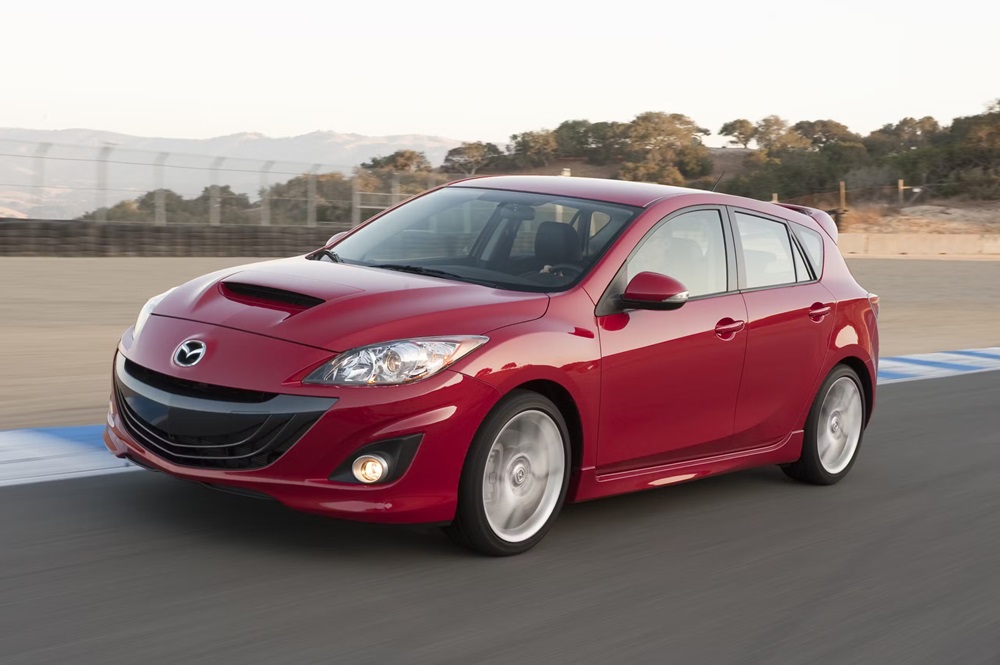
MazdaSpeed3

2010 mazdaspeed3
Mazda/Guy Spangenberg

Back in the days of the Zoom Zoom tagline, Mazda fielded the incredibly entertaining MazdaSpeed3. Offered from 2007-13, it’s a four-door hatch with 263 hp and 280 lb. ft. of torque. It’s exactly the kind of car enthusiasts and auto journalists beg manufacturers for, but rarely head to a dealership and actually buy.  Everyone who tested a Speed3 back in the day found the car fun, especially those of us who were entertained by the torque-steer. Car and Driver wasn’t, comparing driving the car to a game of tug-of-war. But, affordability and perfection don’t often go hand-in-hand, so for $10,000usd to $12,000usd/ $13,700cad tp $16,400cad at current prices you could do far worse than the powerful and practical Speed3.

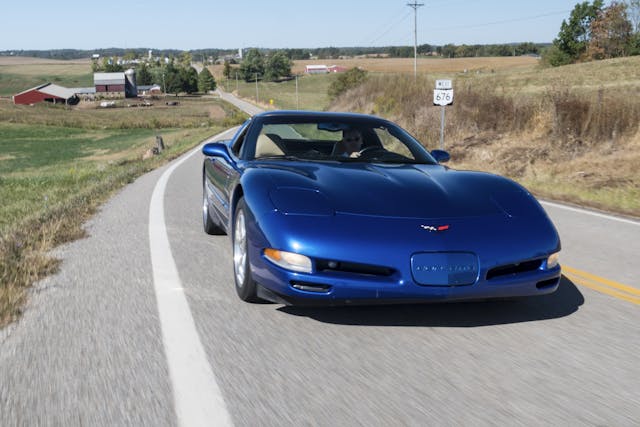
C5 Corvette

C5 Corvette Front Country Road Action
Josh Sweeney

If hot hatches aren’t your jam, there’s always the bargain Corvette of the moment, the 1997-2004 C5. While some variants, most notably the Z06, sailed beyond true affordability in the last several years, a base manual C5 with somewhere between 75,000 and 100,000 miles/ 120,000km and 160,934km can still be had in the $13,000usd to $15,000usd range/ $17,760cad – $20,490cad. That’s a huge bargain for what was an utterly clean sheet design, one of the few in Corvette history, and more performance than almost anything in this price point. Interiors are standard 2000s GM, but livable. And the styling, over a quarter-century after it was introduced, is aging quite nicely.

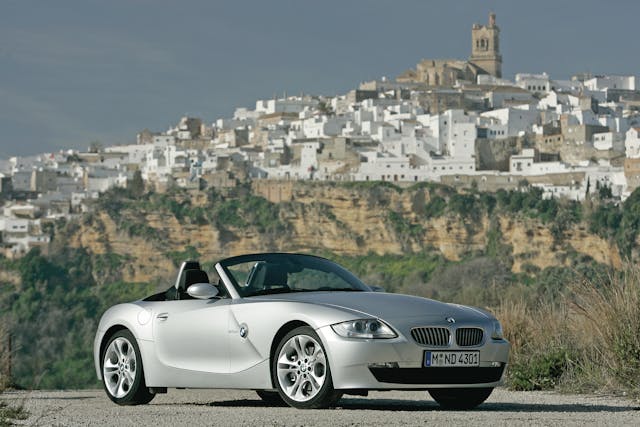
2003-08 BMW Z4

2006 bmw z4 roadster front
BMW

The 2003-08 Z4 is a bit like the C5 Corvette in that it wasn’t universally loved when new, but is aging well. Available in 2.5- and 3.0-liter six-cylinder forms, the Z4 was larger and more practical than its predecessor, the Z3. Its odd surface detailing and Kamm-tail also look better now than they did 20 years ago. The Z4’s list of maladies is well-known at this point—the VANOS variable valve-timing system can give trouble (it’s often the solenoids), as can the cooling system. These are pricy repairs, but with nice cars available in the $9000usd to $12,000usd/ $12,300cad to $16,400cad range, if you budget $2000usd-$3000usd/ $2,730cad-$4,100cad to sort things out, these can still be a compelling deal in semi-modern convertible German sports car.

2012 Mercedes-Benz SLS AMG CoupePalm Coast, Florida

2005-2014 Ford Mustang

2005 mustang convertible skyline beach
Ford Motor Company

You could argue that the 2005 Mustang was the first one to really look like a Mustang since maybe 1973. The brilliant Sid Ramnarace-designed S197 Mustang managed to look the part without being foolishly retro, a hard balance to achieve. Special editions, and certainly the Shelby versions of the S197 are not cheap, but a lightly optioned V-8 coupe or convertible is still one of the best cheap V-8 pony cars out there. Being a Mustang, there are always plenty on the market to choose from at any given time, and a decent manual transmission car can be had in the $12,000usd to $14,000usd/ $16,300cad to $19,130cad range.  For the Silo, Rob Sass/Hagerty.

Featured image: Mazda/Guy Spangenberg

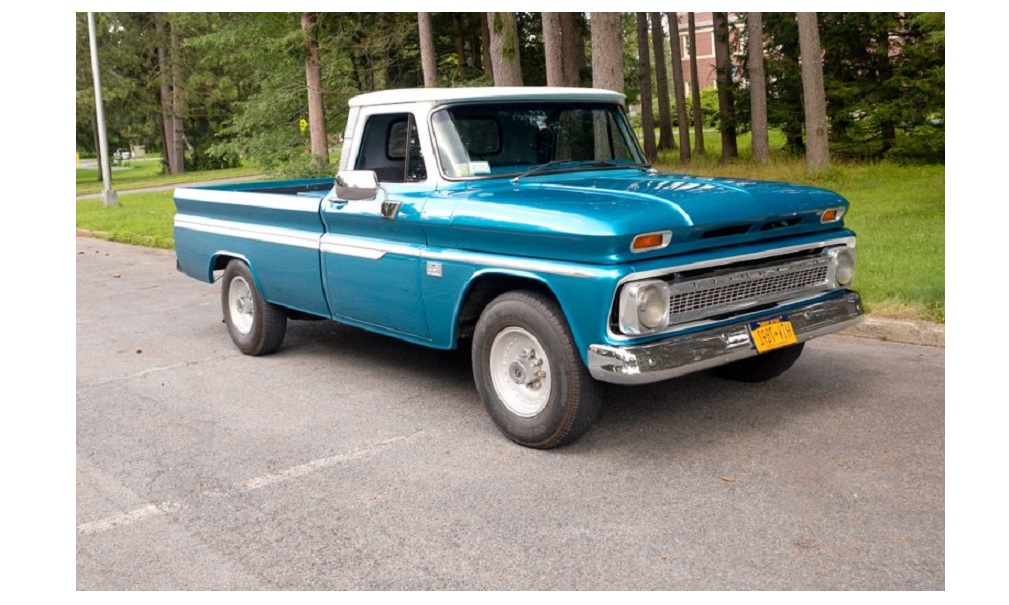
1966 Chevy C-20 Custom Pickup Rescued From Mojave Desert

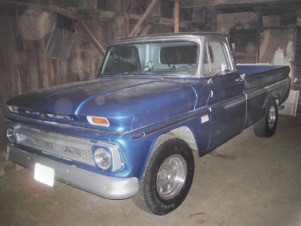
1966 Chevrolet C-20 Custom pick-up. Found in a wrecking yard in the Mojave Desert by the author.

Lloyd’s 66 Chevy C-20 Custom is the epitome of the classic story of finding a sweet ride, a diamond in the rough. Just tucked away somewhere conspicuous collecting dust down south. I found this truck in a wrecking yard in the Mojave Desert being neglected for over 12 years. Imagine the looks on the guys faces that walked by this old truck in the yard if they could see what it turned into now. (funny enough, this is the same yard in which I found my own personal truck of the same body style over 25 years ago.)

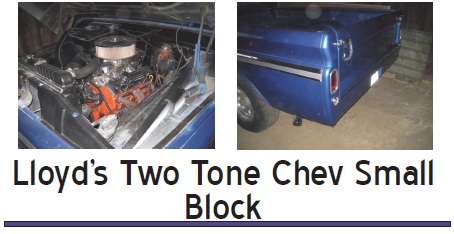
I went to California and worked on this truck for 3 weeks to get it running and road worthy before making the epic over 2500 mile trip back to WC Kustoms in Windham Centre. First thing was the engine. I took that dirty, tired, old 350 and swapped it out with a fresh Crane Cams build-up 60 over 350. I gave it a nice shiny new classic Chevy orange paint job and topped it off with everything chrome (edelbrock endurashine carb, high-rise intake, and Mr. Gasket chrome dress-up kit.) To make sure that you really know when it’s passing you, I added some Flo-tec headers and sold him a Magnaflow Stainless dual exhaust kit (the kit was installed by Queensway Garage in Simcoe.)

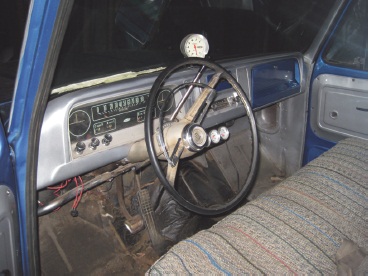
For outside looks, this sweet 66 got a stock, two-tone custom, color scheme using two 2011 factory Chevrolet colors. A wicked combination of Metallic Blue and Silver to make this truck as colorful as the character that owns it. Inside it also received a blue, back-lit Equus tach and gauge set. In pure Lloyd style one of the first additions was blue street-glow lighting. Deleye’s in Simcoe also installed a chrome custom trim kit, painted grille and front bumper, and a rear roll pan bumper that looks really good. This truck is a vast contrast from the old farm trucks that many would attribute this body style to.

If you’re a  retro gamer and Grand Theft Auto (San Adreas) fan, you should consider changing up the default tow-truck with the ’66 Chevy C-20 pickup.

For the Silo, by Robb Price.

WC Kustoms in Windham Centre, Ontario can be reached at 519-410-8308.