
Ontario is boosting support for nearly 100 cities and towns across the province, providing them with reliable, long-term funding to improve and expand their local transit systems and offer more travel options for commuters and families.
Premier Kathleen Wynne and Transportation Minister Steven Del Duca were at York Region Transit’s Richmond Hill facility today to announce the new investment.
The province has heard directly from people who are frustrated by their daily commute and from municipalities [Municipalities are often also incorrectly called “County”- though they are legally incorporated as a super-city Ed.] that are struggling to meet their transit needs. In response to these concerns, starting in 2019, Ontario will be increasing funding for local transit through an enhancement to the existing gas tax program, doubling the municipal share from two cents per litre to four cents by 2021. There will be no increase in the tax that people in Ontario pay on gasoline as a result of the enhancement to the program.
Cities and towns receiving the new funding are able to plan for and make major infrastructure upgrades, buy additional transit vehicles, add more routes, extend hours of service, implement fare strategies and improve accessibility.
Ontario recognizes that commuters need reliable transit options before revenue-generating measures such as road tolls are implemented. For example, the ongoing GO Regional Express Rail project will not be completed and in service before 2024. That is why the province is not supporting plans for municipal road tolls at this time. This new investment, along with Ontario’s $31.5-billion transit and transportation investment across the province, will support more buses in cities like Thunder Bay and Windsor, new LRT lines in Waterloo and Ottawa, and GO Regional Express Rail in the Greater Toronto and Hamilton Area, including SmartTrack in Toronto.
Supporting stronger public transit systems is part of our plan to create jobs, grow our economy and help people in their everyday lives.
QUOTES
” People in communities across Ontario can’t afford to waste time stuck in traffic — we all need better options to get to work and home to our families sooner. This substantial boost to funding for local transit in cities and towns across the province will help them make significant improvements that will have a big impact on people’s day-to-day lives.”
– Kathleen Wynne
Premier of Ontario
” We’ve heard loud and clear from municipalities that they need more sustainable funding for public transit to keep up with the demand to provide more service. By modernizing Ontario’s gas tax program we are helping municipalities improve their local transit service so people can easily get where they need to be.”
– Steven Del Duca
Minister of Transportation
QUICK FACTS
Funding will increase to 2.5 cents per litre in 2019–20, 3 cents in 2020–21 and 4 cents in 2021–22.
This year the province committed $334.5 million in gas tax funding to 99 municipalities [Municipalities are sometimes incorrectly called “County”- though they are legally incorporated as a super-city Ed.] . This amount is expected to increase to about $401.3 million in 2019–20, $481.5 million in 2020–21 and $642 million in 2021–22.
Ontario made its gas tax program permanent in 2013 to provide a stable source of funding for municipalities.
One bus takes up to 40 vehicles off the road and keeps 25 tonnes of greenhouse gas emissions out of the atmosphere each year.
Research shows that every $100 million of public infrastructure investment in Ontario boosts GDP by $114 million, particularly in the construction and manufacturing sectors.
LEARN MORE
Gas Tax Funding for Municipalities
Ontario.ca/BuildON
Available Online
Disponible en Français
L’Ontario accroît le financement des transports en commun des villes de l’ensemble de la province
Plus d’options pour les déplacements et amélioration du transport en commun local pour les navetteurs et les familles
27 janvier 2017 09h35
L’Ontario accroît son soutien à près de 100 villes de la province en leur fournissant un financement à long terme stable qui favorise l’amélioration et l’expansion des transports en commun locaux et offre un plus grand nombre d’options aux navetteurs et aux familles.
La première ministre, Kathleen Wynne, et le ministre des Transports, Steven Del Duca, se sont rendus aujourd’hui à la gare de transports en commun de la région de York à Richmond Hill pour faire l’annonce de ce nouvel investissement.
La province a directement recueilli les propos de navetteurs frustrés et de représentants de municipalités qui éprouvent des difficultés à répondre à la demande en services de transport en commun. Pour donner suite à ces préoccupations, l’Ontario augmentera à partir de 2019 le financement qu’il accorde aux transports en commun locaux et bonifiera son programme actuel de financement par la taxe sur l’essence en doublant la part municipale pour la porter de deux cents le litre à quatre cents d’ici 2021. Cette bonification du programme n’entraînera pas de hausse de la taxe provinciale sur l’essence.
Les villes qui toucheront ces nouveaux fonds pourront planifier et entreprendre des rénovations d’importance à l’infrastructure, l’achat de véhicules de transports en commun supplémentaires, l’ajout de circuits, la prolongation des heures de service, la modification de leur structure tarifaire et l’offre de services plus accessibles.
L’Ontario reconnaît que les navetteurs ont besoin d’options de transports en commun fiables, avant même que des mesures génératrices de revenus soient mises en oeuvre. Par exemple, le service régional express de GO Transit est en chantier et ne sera pas opérationnel avant 2024. C’est pourquoi la province ne soutient pas de plans pour installer des péages municipaux en ce moment. Ce nouvel investissement, qui s’ajoute à l’investissement de la province de 31,5 milliards de dollars dans les transports en commun et les transports à la grandeur de son territoire, soutiendra l’achat d’un plus grand nombre d’autobus dans des villes comme Thunder Bay et Windsor, la construction de nouvelles lignes de train léger sur rail (TLR) à Waterloo et à Ottawa, de même que le service régional express de GO Transit dans la région du grand Toronto et de Hamilton, dont le SmartTrack à Toronto.
Le soutien permettant l’amélioration des réseaux de transport fait partie de notre plan visant à créer des emplois, à stimuler notre économie et à améliorer la vie quotidienne de notre population.
CITATIONS
« Les habitants des collectivités ontariennes ne peuvent se permettre de perdre du temps dans des embouteillages — nous avons tous besoin de meilleures options pour nous rendre au travail et rentrer à la maison afin d’y retrouver notre famille plus rapidement. Cette hausse substantielle du financement affecté au transport en commun local aidera les municipalités à apporter des améliorations appréciables qui auront des effets marqués pour les gens dans leur vie de tous les jours.»
– Kathleen Wynne
première ministre de l’Ontario
« Les municipalités nous ont clairement fait comprendre qu’elles ont besoin d’un financement plus durable pour le transport en commun afin de satisfaire à la demande accrue en services. C’est en modernisant le Programme de financement par la taxe sur l’essence que nous aiderons les municipalités à améliorer leurs services de transport régionaux, de telle sorte que les gens pourront se déplacer plus facilement.»
– Steven Del Duca
ministre des Transports
FAITS EN BREF
Le financement augmentera à 2,5 cents le litre en 2019-2020, à 3 cents en 2020-2021 et à 4 cents en 2021-2022.
Cette année, la province s’est engagée à verser 334,5 millions de dollars en financement par la taxe sur l’essence à 99 municipalités. Ce montant devrait augmenter jusqu’à environ 401,3 millions de dollars en 2019-2020, 481,5 millions de dollars en 2020-2021 et 642 millions de dollars en 2021-2022.
C’est en 2013 que l’Ontario a rendu permanent son Programme de financement par la taxe sur l’essence pour ainsi offrir une source de financement stable aux municipalités.
Un seul autobus permet de retirer jusqu’à 40 véhicules de la route et réduit de 25 tonnes par année les émissions de gaz à effet de serre de l’atmosphère.
Des recherches démontrent que chaque tranche de 100 millions de dollars d’investissement dans l’infrastructure publique de l’Ontario fait croître le PIB de 114 millions de dollars, tout particulièrement dans le secteur de la construction et le secteur manufacturier.
POUR EN SAVOIR DAVANTAGE
Financement par la taxe sur l’essence pour les municipalités
Ontario.ca/ONrenforce
Disponible en ligne
Available in English

















 Set in an ancient kingdom fallen prey to divisive realm wars, where powerful Spellcasters vie for power, the game invites players to enter into a thrilling, competitive experience. Gamers will choose a Spellcaster, collect and upgrade powerful spells, build the deadliest decks and unleash hordes of minions to compete with friends and adversaries around the world.

 International-renowned sommelier, Noel Shu, provides in-depth look at the modern Chinese wine industry and guides us through the misty vineyards and crowded wineries of China.
 About the Author








 ” Nearly one in six Ontario couples is affected by infertility, and we are pleased to see so many people embracing the Ontario Fertility Program in its first year. Children are our future and by creating a more reasonable and accessible fertility program, Ontario is supporting family building for those who need the assistance of IVF.” – Dr. Eric Hoskins Minister of Health and Long-Term Care
 ” I am proud Ontario is supporting families and has taken such positive steps towards strengthening our adoption system, and we remain committed to keeping the process as smooth and successful as possible. All children and youth in Ontario deserve supportive, loving homes, and I’m thrilled to say that many families are one step closer to making this a reality.” – Michael Coteau Minister of Children and Youth Services
 In his new book, Four Days to Change, Welp provides the solution to systemic inequality through a comprehensive approach including diversity consulting, experiential learning, and leadership development. He also adds that all efforts should lead to tangible action and measurable results.

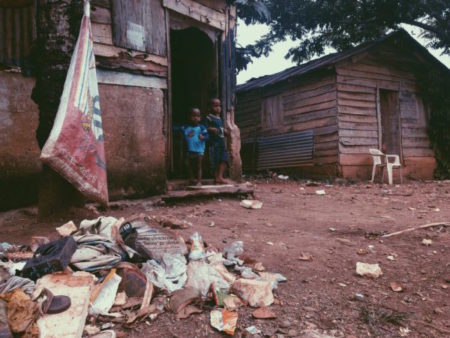
 All donations will go out to the Village of Altagracia in Dominican Republic. Because of your generous giving, Villa Altagracia will be provided with water, a public restroom, educational resources, and an overall growth and unity in community living. For the Silo, Jessica Kirk.



 Vodka: Unequaled flavors and aromas originate from Allaire’s choice of select grains grown in the heart of the polish plains. Their crafting methods, distilling it six times and then filtering it five times, gives it outstanding purity, clarity and shine. The complete process tops up its elegant taste.
 Click on the hyperlink above to read the full letter.
















 Designed utilizing the tools available on



 To prepare for episode 63’s debut, viewers will also be able to stream the entire Future Trunks arc (the arc begins at episode 47). Then, starting on October 30, the complete series will roll-out, with 10 episodes released a week at a time.


 For the Silo, Sam Sisakhti.
 s the official tournament eSports monitor of The Brooklyn Beatdown, recently held at the Barclays Center in Brooklyn, N.Y. Held alongside the ESL One New York Counter-Strike: Global Offensive (CS:GO) tournament, the Street Fighter V event featured the RL Series console monitors as 256 competitors battled for a $75,000USD prize pool. The ZOWIE RL Series armed competitors with experience-enhancing features such as head-to-combat, lag-free technology, instant response and adjustable stand.
 www.ingearpr.com/BenQ/160928BenQ-ZOWIE.docx