Tag Archives: Nuclear Weapon

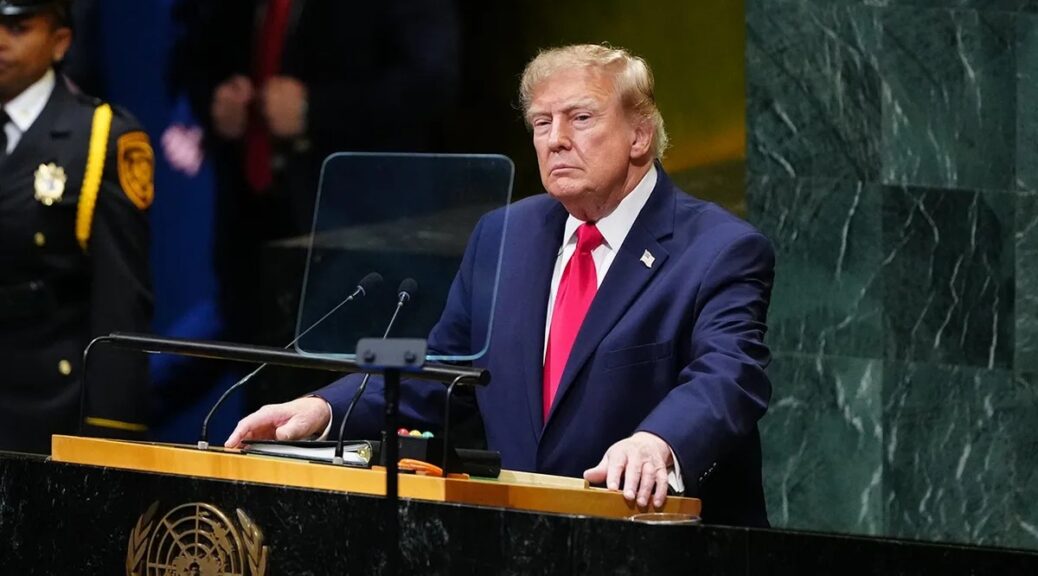
President Trump At UN Assembly Counsels Courage To Meet Today’s Challenges

A 5 MINUTE READ from our friends at ShareAmerica.

President Trump speaking at United Nations (© Michael M. Santiago/Getty Images)
President Trump speaks to leaders at the 81st session of the United Nations General Assembly September 22 in New York. (© Michael M. Santiago/Getty Images)

Heralding America’s “golden age” — as his administration has brought more jobs, lower poverty rates and less crime to the United States — President Trump encouraged world leaders to join him in building “a future for our people that is brighter, more hopeful and more magnificent than ever before.”

Speaking at the U.N. General Assembly yesterday September 22, Trump listed peace deals he has brokered. “While others have spoken of peace, I have made peace,” he said. He cited thank-you letters from leaders in Pakistan, Azerbaijan, Armenia, Cambodia and Rwanda.

Recalling the upcoming anniversary of the October 7 massacre in which Hamas killed 1,200 innocent civilians in Israel, Trump noted his administration’s work to free the hostages and called out Iran’s celebration of the massacre. To applause, Trump said that the Islamic Republic of Iran, “the bully of the Middle East … will never have a nuclear weapon.”

Shifting to the Western Hemisphere, the president said, “Our actions in Venezuela are proof that the United States will no longer permit threats to America to gain a foothold.” He commended the January 3 removal of Venezuela’s criminal leader, Nicolás Maduro, and subsequent release of political prisoners.

Today, he said, “we’re working closely with the leaders of Venezuela to forge a much better future for the Venezuelan people” and mentioned the recent U.S.-Venezuela deal to bring 65 billion barrels of oil to market.

After noting his administration’s designation of drug cartels as Foreign Terrorist Organizations, successful strikes on “drug boats” and successful mission with Venezuela to kill the leader of Tren de Aragua, Trump said the U.S. still faces threats from the hemisphere. He cited Cuban communist influence over U.S. groups and threats from Mexican drug cartels. “Communism will never be coming to America, but freedom will be coming to Cuba,” he said. “And safety and security will be coming to Mexico.”

‘A safer future’

While in New York, the president signed an agreement with Denmark and the people of Greenland to improve security in the Arctic for the United States, North America and Europe. The agreement enables the U.S. to review foreign military investments in Greenland for security risks. “This deal also protects Europe, in addition to America, and … very much enhances NATO,” Trump said, while commending NATO nations for increasing defense spending.

Noting the U.N.’s “great potential,” Trump said it must rein in globalist agendas that threaten the sovereignty of member nations.

He praised the defeat of the U.N.’s maritime agency proposal to charge shippers a carbon tax. “There is no global government, and while I’m president, there will be no global taxes.”

Trump vowed that the U.S. will remain at the forefront of artificial intelligence (AI) innovation and suggested that “super intelligence,” or SI, would be a better name for the promising technology. Cautioning against slowing the pace of SI development, he said, “I’m not going to stifle growth of something that will be bigger than the industrial revolution … or the internet itself.”

“We’re reasserting American power,” Trump said, “including American military power where necessary in our region and around the world to create a safer future for all of us.”
EMP Pulse Attack Would Cripple North American Energy Grids

EMP Attacks: Expert William Forstchen Describes Cataclysmic Impact

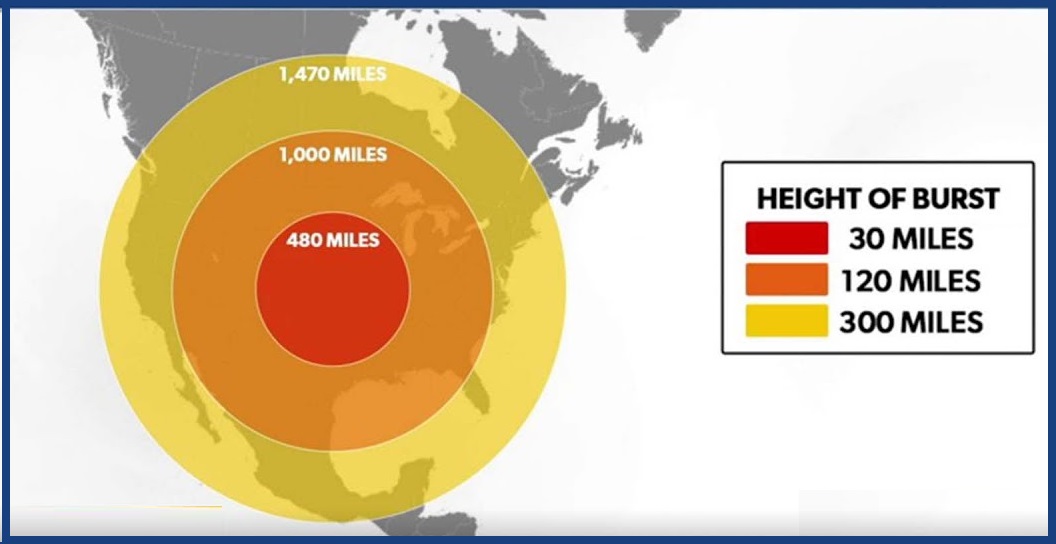
Washington, D.C., 2023 — An electromagnetic pulse (EMP) attack above the center of North America would cripple the already vulnerable energy grid, wiping out power and setting off a cascade of deadly events. But just how real is the threat?

“I believe the threat of America being hit by an EMP weapon is the single greatest danger to the survival of [North] America,” said William R. Forstchen, Ph.D.

Widely considered one of the foremost experts on EMP attacks, Forstchen has been consulted by agencies within the American federal and state governments and has spoken at conferences all over the United States.

Forstchen has also written extensively about the devastating impact of EMP strikes, beginning with his New York Times bestseller, One Second After, a realistic look at a weapon and its awesome power to destroy the entire United States and Canada, literally within one second.

One Second After immerses readers in the terrifying concept of an EMP attack, prompting discussions regarding:

  • The frightening specifics about EMP
  • The societal impact of an EMP attack
  • Hour-by-hour, day-by-day, month-by-month details on the effect an EMP attack would have on a community
  • What, if anything, can be done to protect people and the country against an EMP attack?
  • If EMP is such a threat, why aren’t we preparing?
  • The serious threats facing America regarding physical and cyberattacks on our nation’s infrastructure

The publication of One Second After spawned a series that includes One Year After, The Final Day and the upcoming book, Five Years Later. A feature film based on One Second After is currently being developed.

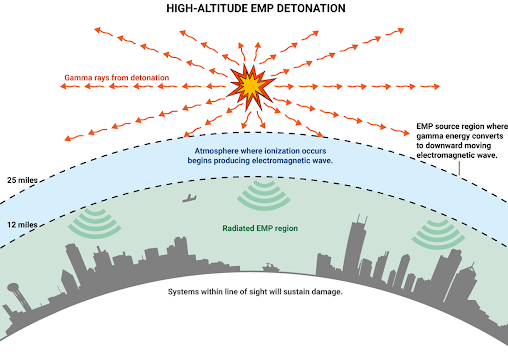
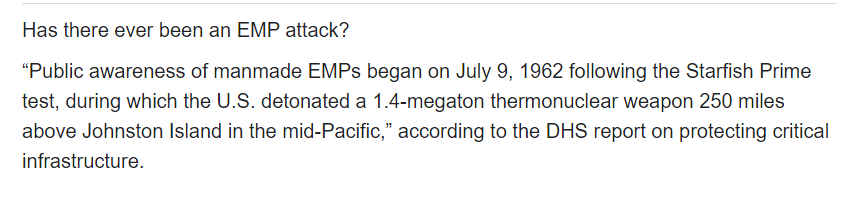
“EMP is a byproduct of detonating a nuclear weapon,” Forstchen said in an interview. “If you detonate a weapon 200-250 miles above the center of the United States … the gamma ray burst when it hits the upper atmosphere starts a chain reaction. … By the time this hits the earth’s surface at the speed of light, it is a giant electrostatic discharge … it blows out the entire power grid of the United States and Canada. Game over.”

William R. Forstchen is a New York Times bestselling author and holds a doctoral degree from Purdue University with a specialization in military history and technology. He is a noted expert historian and public speaker and has been interviewed on FOX News, C-SPAN, and Coast to Coast on topics ranging from history to technology and cultural issues, to space technology development, to security threats.

Canada’s Original Black Friday- ‘Cancelled Arrow’ Was Cutting Edge 1950s Jet Interceptor

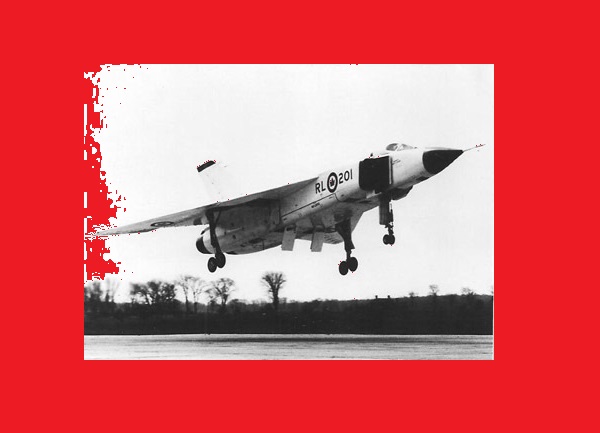
The first Arrow RL-201

I began writing this post after an annual viewing pilgrimage of sorts. Each year on the eve of shopping’s busiest day, I crack open the well worn plastic jewel case and fire up the DVD player. It’s a fictional account but based in fact and is very entertaining and I can’t help but wonder what “might have been” after watching CBC’s 1996 mini-series “the Arrow” again. [You can watch this right here at the end of this post CP]

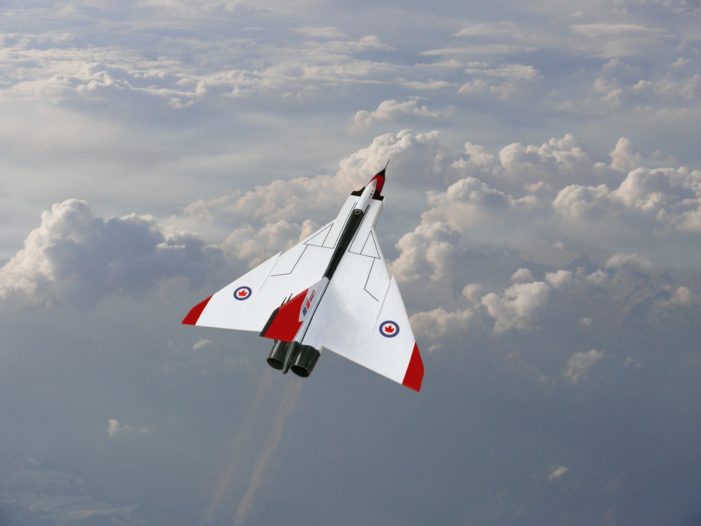
Over the decades fact and fiction have become tangled but the basic truths remain intact. In the late 1950’s a highly advanced jet interceptor designed to seek (and if necessary destroy) Russian nuclear bombers was conceived, designed, built and flown in Canada by a predominantly Canadian team. Here’s where things get fuzzy. The Arrow was developed when the federal Liberal party were in power but was finished and flown when the Conservatives were in power. It represented not only the technological capability of Canada’s aviation industry- but also the econo-political agenda of the mid-twentieth Century. So what happened at that time to help spell the doom of the Arrow?

-The ICBM- intercontinental ballistic missile was viewed as the future of warfare not the nuclear bomber. This meant that a jet interceptor was obsolete because it would be unable to intercept approaching missiles.

-Bad timing: on the day of the rollout of the very first completed Arrow, the Russians launched Sputnik, the world’s first artificial satellite. In the public eye jets seemed unimportant.

-The American Bomarc missile system was designed to intercept incoming nuclear bombers and ballistic nuclear missiles. The Bomarc had a small nuclear warhead which would detonate in the pathway of approaching missiles (or bombers) and create a nuclear ‘shield’. The Bomarc was highly controversial at the time because our Prime Minister did not want nuclear missiles on Canadian territory. However, our Defence Minister did not agree and eventually resigned over the matter. This defence ‘split’ exacerbated the Arrow program and any chance for an Arrow squadron legacy.

-The Canadian designed Iroquois engines were not  readied in time and were not fitted into the Arrow. These engines were innovative and theoretically could have propelled the Arrow to speeds of Mach 2.5 or possibly Mach 3.0- far beyond every fighter of the time with the exception of secret black technology projects like the American Blackbird SR-71. Had the Canadian engines been readied and proven, there seems little doubt that international orders would have offset some of the Arrow’s mounting costs.

Black Friday…….almost 15,000 workers lose their job.

Canadas Black Friday

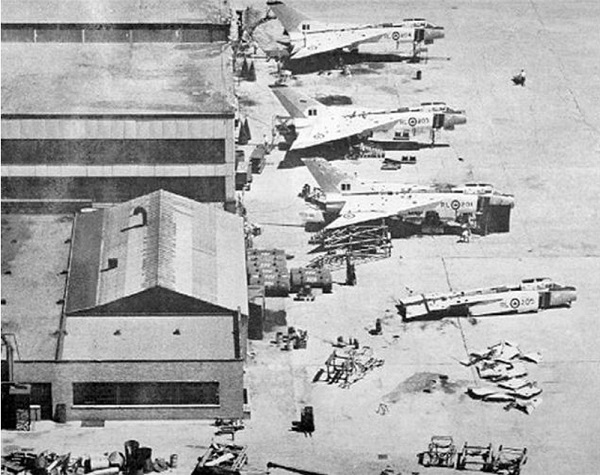
There is no official record of just who ordered the destruction of the remaining Arrows. Other than a few recovered test models, an incomplete cockpit and a few seconds of in flight film, nothing remains of this wonderful airplane . For the Silo, Jarrod Barker.


The completed Arrows being cut up and readied for a Hamilton,ON scrap dealer.


Supplemental-

University of Saskatchewan The Nuclear Question in Canada http://www.usask.ca/diefenbaker/galleries/virtual_exhibit/nuclear_question_in_canada/

Post Featured Image- http://plunkettgw.deviantart.com/art/AVRO-ARROW-17-139364086

Boeing’s  Bomarc Missile http://www.boeing.com/boeing/history/boeing/bomarc.page