The World Happiness Report has anointed Finland as the world’s happiest country for six years straight. What makes a Nordic land with 5,5 million people so happy? In Helsinki, the capital of Finland, art and culture make the city a good place to live and visit.
According to the UN-published report, Finns rate highly on key issues such as a high level of education, affordable healthcare, social stability, and positive work-life balance. But it’s not just these societal indicators that affect how Finns view their quality of life – Culture and art are highly prized aspects as well.
“We see a vibrant cultural sphere that is accessible and affordable for all citizens as a major contributor to everyday happiness. And we are looking at culture through a broad lens: from urban city culture, to sauna culture, to high-end cultural offerings, such as the world-famous Helsinki Philharmonic Orchestra. It’s a diverse mix,” according to Reetta Heiskanen, Deputy Culture Director at the City of Helsinki.
Sauna culture
In Helsinki, cultural events are designed for everybody, regardless the socioeconomic status, with world-class ambition. The city’s expanding cultural life makes the city a more exciting and diverse place for residents and visitors.
Photo: Julia Kivelä, Visit Finland
“Good examples are the Helsinki Festival and Flow Festival that draw international music lovers’ and urban hipsters’ attention to Helsinki every August. As well as the Helsinki Biennial, a visual art festival in summer – dealing this year with the wicked problems of our time, such as environmental crisis, political conflicts, and the consequences of technological development,” Heiskanen says.
“In Helsinki, culture belongs to everyone. For example, in the Culture Kids program, every child from Helsinki born in the 2020s has a cultural institution as a host, through whom the children and their families get a personal touch with art,” she adds.
Culture Supports Economy
Helsinki has a Nordic approach to art and culture: A unique urban culture is a key enabler of a good life – and culture also supports economic wellbeing.
Culture and events make Helsinki an enjoyable, dynamic, and attractive city. Cultural events boost economic development – while the city government is flexible, people and businesses find the city easy to work with when arranging events, big or small.
But what good would it be to provide interesting cultural offerings if people don’t have the time and energy to enjoy them? If you are working long hours, wouldn’t the sofa be the best option after a long day?
The answer is Finland’s emphasis on work-life balance. This year, Helsinki placed second in the Forbes worldwide work-life balance index of major cities. Generous paid leave and flexible work arrangements, such as hybrid and remote working, were among the factors cited for the high ranking.
“It’s a Nordic dream, a good everyday life, which you can achieve in Helsinki. This means that you can build a successful career and still have enough time and energy for a flourishing personal life and cultural experiences. A vibrant culture creates an attractive city that is easy to fall in love with,” Heiskanen concludes.
Unleash Your Curiosity About Finnish Culture
This year offers unique cultural offerings in Helsinki throughout the year. There are multiple great exhibition openings, such as world-famous Tom of Finland and Albert Edelfelt, in Ateneum, Finnish National Museum of Art, which will open its doors after a year-long renovation, and Helsinki Biennial, a contemporary art event, taking place for the second time in summer 2023, June 12th until September 17th. For the Silo, Leena Karppinen.
A major money saving and environmentally beneficial smart kitchen app launched waaaaay back in 2015, on World Environment Day, and deserves another look as it still works well and saves users up to $1,000 every year and helps reduce food waste.
The “Smart Kitchen” EatBy App reduces food waste, saving households up to $1,000 per year and helps the environment.
The staggering amount of wasted food continues to make headlines and back when the app was first created, husband and wife developers, Steffan and Barbara Lewis were focusing their passion for finding a solution to the environmental issues surrounding food waste and came up with the idea to develop and launch “Smart Kitchen” EatBy as soon as possible.
“We had the idea one lunchtime after we had to throw out the food we’d hoped to eat because it had passed it’s use by date. That led to a purge of all the out of date food in our kitchen. And quite frankly, we were shocked and disgusted with ourselves when we realised how much we waste.” said Barbara Lewis.
They decided to make the app free to download and offer expanded use with an optional shopping list that can be activated with an in app purchase.
“It’s important to us that the app’s basic functions have to be free in order to gain and benefit the maximum number of users. Collectively we can all make a huge difference to the environment. And it’s an added bonus that we’ll save around £700 ($1,000) each year.”
And the numbers add up.
Recent reports state that the average household wastes $80 usd ($109.23 CAD) every month on un eaten food. With over 123 million U.S. households that’s $9,840,000,000. Factor in similar habits throughout the rest of North America and an equivalent amount in Europe, the tally is somewhere around a staggering $236 Billion each year. It’s known that about one third of all food produced is discarded but the real cost to the environment is misunderstood: 1.3 billion tonnes of wasted food contributes 10% of worldwide total greenhouse gases.
Many strategies for reducing food waste have been proposed by environmentalists, government agencies and industry specialists. But the husband and wife creators of the EatBy App claim their app is the first practical personal tech solution to the problem of food waste. It is a simple to use Smart Kitchen App that effectively helps manage the food in your kitchen and lets you know when food items expire. The optional integrated shopping list will also help reduce buying too much food in the first place.
“We are under no illusion that our app will immediately solve this global problem,” Said Steffan Lewis, “But if only a few million people download and use it, then it’ll already make an impact and that’d be a great start. Obviously, we’d like everyone to use our app and benefit from it!”
The EatBy App is available for both Android and Apple devices. More information about the project’s history can be found at https://www.eatbyapp.com
EMP Attacks: Expert William Forstchen Describes Cataclysmic Impact
Washington, D.C., 2023 — An electromagnetic pulse (EMP) attack above the center of North America would cripple the already vulnerable energy grid, wiping out power and setting off a cascade of deadly events. But just how real is the threat?
“I believe the threat of America being hit by an EMP weapon is the single greatest danger to the survival of [North] America,” said William R. Forstchen, Ph.D.
Widely considered one of the foremost experts on EMP attacks, Forstchen has been consulted by agencies within the American federal and state governments and has spoken at conferences all over the United States.
Forstchen has also written extensively about the devastating impact of EMP strikes, beginning with his New York Times bestseller, One Second After, a realistic look at a weapon and its awesome power to destroy the entire United States and Canada, literally within one second.
One Second After immerses readers in the terrifying concept of an EMP attack, prompting discussions regarding:
The frightening specifics about EMP
The societal impact of an EMP attack
Hour-by-hour, day-by-day, month-by-month details on the effect an EMP attack would have on a community
What, if anything, can be done to protect people and the country against an EMP attack?
If EMP is such a threat, why aren’t we preparing?
The serious threats facing America regarding physical and cyberattacks on our nation’s infrastructure
The publication of One Second After spawned a series that includes One Year After, The Final Day and the upcoming book, Five Years Later. A feature film based on One Second After is currently being developed.
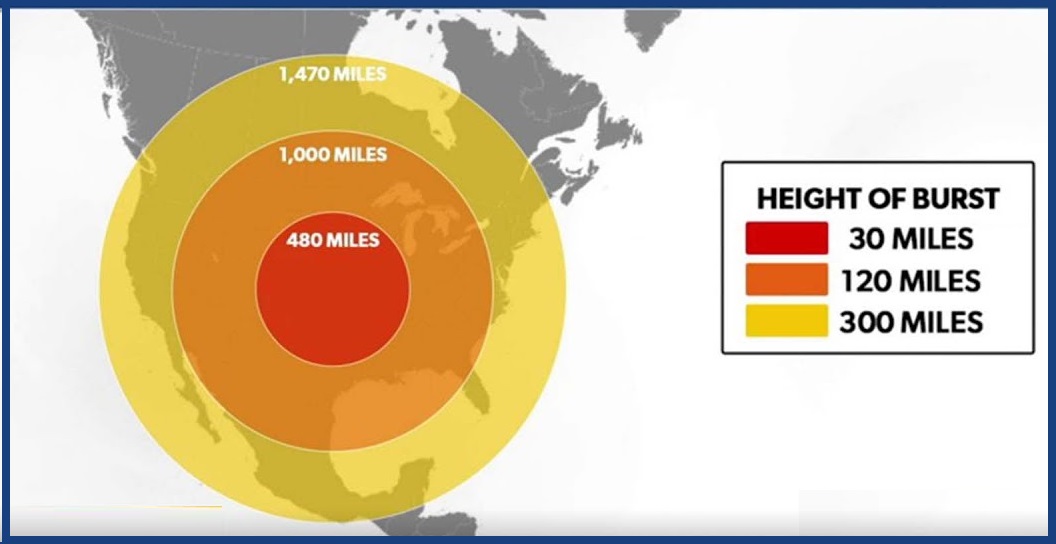
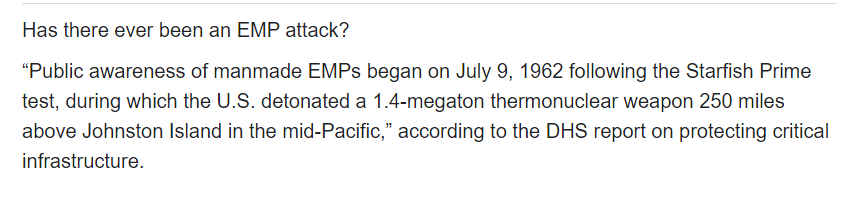
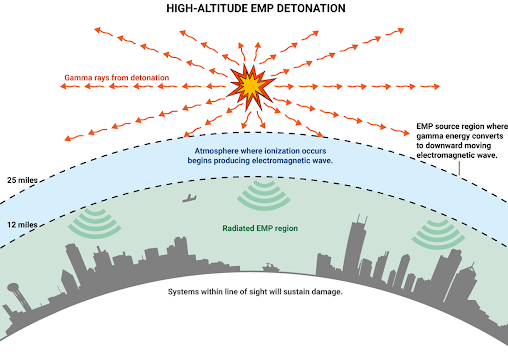
“EMP is a byproduct of detonating a nuclear weapon,” Forstchen said in an interview. “If you detonate a weapon 200-250 miles above the center of the United States … the gamma ray burst when it hits the upper atmosphere starts a chain reaction. … By the time this hits the earth’s surface at the speed of light, it is a giant electrostatic discharge … it blows out the entire power grid of the United States and Canada. Game over.”
William R. Forstchen is a New York Times bestselling author and holds a doctoral degree from Purdue University with a specialization in military history and technology. He is a noted expert historian and public speaker and has been interviewed on FOX News, C-SPAN, and Coast to Coast on topics ranging from history to technology and cultural issues, to space technology development, to security threats.
The recent rise of Artificial intelligence (AI) programs such as ChatGPT has created a frenzy around AI-related stocks.
C3.AI, a pure play AI stock, is up over 100% since late December.
But is this rally sustainable? After all, the public was already surrounded by AI without realizing it. Almost everything people use in daily life is affected by AI already:
advertising
entertainment streaming services
social media
cars (collision detection and blind spot monitoring)
fraud prevention
screening job applicants
email spam filters
many other applications
C3.AI is a company that creates software to help other companies deploy AI projects. C3 software is being used in multiple ways, including managing inventories, monitoring for energy inefficiencies, and predicting system failures. [Of particular note is one new product from C3 called ex machina which allows users to program AI initiatives without using any coding at all but instead via a series of visual programming tools. CP]
AI stocks, and technology stocks as a whole, were a neglected market in 2022. The Nasdaq 100, an index heavy in technology stock, fell more than 30% in 2022. C3.AI fell over 65% in 2022, and is currently down almost 90% from its 2020 high (even after the 100% rally in 2023). All currency quotes that follow are in USD.
C3.AI recently peaked at $30.92 on February 6. It then reached a low of $20.31 on March 1 before rallying back to $29.98. It has since fallen and is back near the $20.33 low.
This puts the stock at a crucial level.
An analyst from SafeTradeBinaryOptions.com had this input: “Right now, the stock is in an uptrend, albeit a precarious one. The price has been making higher swing lows and higher swing highs throughout 2023. But if the price drops much below $20, that will no longer be the case. The price will have made a lower high on March 6 (compared to February 6) and if the price drops below the March 2 low, that is a lower low. These are signs of a downtrend starting — not an uptrend.”
All facets of our modern world are already in the embrace of A.I. whether we know it or not.
This $20 region is important because if the area holds, this indicates the price is moving in a range, with the possibility of the price moving back up to the top of the range near $29. If that happens, there is still hope that the price will eventually break out of the range to upside, continuing its advance to $40, for example.
However, if the price drops below the $20 region, the range is broken and the uptrend is in jeopardy.
It’s important to watch C3.AI to see how investors are perceiving the future of AI, and what that may mean for the industry’s future.
As of March 2023, C3 doesn’t have a lot of direct competition. The company is not yet even profitable. How the stock moves is based on whether investors believe the company can eventually generate profits — and in this case, its profits largely depend on whether AI becomes even more widespread than it already is. For the Silo, Kat Fleischman.
Desrocher’s Whitehorse- a very nice folk art piece acquired by the author.
What is folk art? Any precise definition of art is by nature a slippery process and open to question.
“Folk art” is a term applied to diverse objects, like a highly organized Mennonite fracture drawing which expresses a collective, ethically based decorative tradition. Yet it is also applied to the more individualistic outpourings of any untrained painter, sculptor or other art practitioner.
Folk art is usually one step beyond the mundane. Not just a container to bring water to the mouth for survival (cupped hands for example), but instead a cup lovingly fashioned to bring pleasure or attract notice even when it is not being used, such as an intricately carved canoe cup.
On another level we can simply say that folk art is the art of ordinary people. It is sometimes called “primitive art” or “the people’s art” because by definition the artist has not been academically trained.
Folk art is made for one or more of three reasons: to share beliefs and traditions, to make some useful object beautiful, or to express one’s feelings.
Folk art, by definition has been produced and appreciated since cavemen and women started smearing blood and feces on cave walls, but the academic study of folk art is a relatively new thing. An English writer named William John Thomas first coined the phrase “folk lore” in 1848. At the time most anthropologists considered folklore to be worthless peasant creations. They were more interested in studying artifacts such as weapons and tools. It was through popularized folk tales by the likes of the Brothers Grimm that peasant traditions and art forms became interesting to the intellectual class.
I would argue that folk art did not show up on the radar of fine art institutions until around the turn of the century in Paris when Pablo (Picasso) and the boys flipped-out over the African art they saw for the first time, and started producing what today is called modern art. This led to a wider acceptance of all forms of art.
Folk art has become increasingly popular and more frequently studied in Canada, beginning in earnest after Expo ’67 gave us a greater appreciation of who we are as a nation. For the Silo, Phil Ross.
Featured image- Selections from Jim Linderman’s collection of folk art sewer pipe sculptures made by workers from leftover pipe clay. Photo: Oresti Tsonopoulos
Let’s go back to 2016 and re-consider how the works highlighted below are more relevant today than ever when asking “What is and isn’t art?”. The recent surge in AI and chatbot produced ‘art’ has created new challenges in recognition, interpretation and validation. Or has it? [J.Barker Content Producer for The Silo] It became immediately apparent that the rephrasing of the question “What is art?” to “What isn’t art?” signaled a dissolution of the boundary separating metaphor from reality.
Since, citizen and artist alike have been plunged headlong into the bacchanals of postmodernity, and the question has been obscured under a heap of incongruous discourse and subtexts.
Eva Davidova multimedia installation view
Two curious and intrepid artists offer their answers to this exhausting and illuminating question in their discussions of unexplored spaces and shifting subtexts.
Painter and multimedia artist Eva Davidova tests the digital waters of virtual reality through immersive, programmatic experiences. Articulating the conviction that emerging technology is obliged to transcend commercial application, Davidova’s phantasmagoric 3D renderings attempt to draw the strings away from the hands of big business. Topics mentioned include the beauty of academic reciprocity, the fiscal realities of living in the metropolis, and the future of collaborative artistic environments.
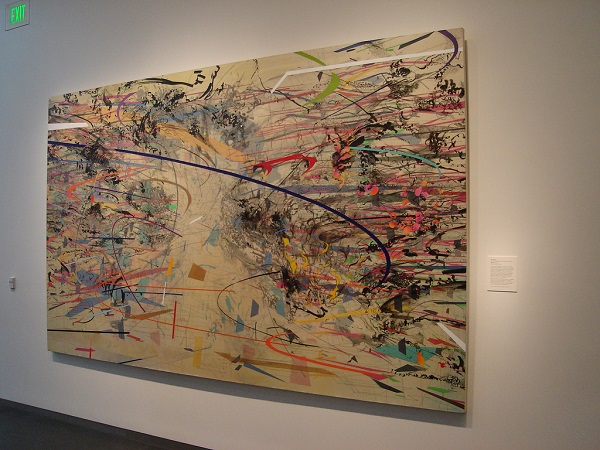
Julie Mehretu’s Dispersion
Behind the meticulous and sweeping abstract landscapes from the mind of Julie Mehretu are subtle societal and historical cues, which inform and enrich the surface of her paintings. In her ebullient interview, Mehretu speaks of the benefits and restrictions that arise from using architectural semantics to ground explorations of political and social change.
Wrought from countless painterly quotations, the identity of Mehretu’s brushstroke vanishes the moment it falls under interpretation.
The elusive and curious nature of the Ethiopian artist’s aesthetic experiments, coupled with a steady ethical subtext make for an engaging and memorable listen.
Featured image- “A Questionable Tale(#1)” 2022 Marina Zurkow/DALL-E (AI)
While spring brings warmer weather, sunnier days, and beautiful flowers, it also brings the reminder that it’s time to air out, declutter our homes, and do some spring cleaning. At the same time, it might be tempting to spray our homes with disinfectants, a lot of common household cleaning products are actually pretty toxic to our health. This is why we’ve provided you with some tips on how to get your home sparkling, but not at the cost of your health.
When it comes to cleaning products, we Canadians buy a lot of them.
In 2014 alone, we spent more than $641 million on products like window sprays and floor cleaners. When you break that down, we’re spending $200-$300 per household annually on products that we think help us maintain healthy homes, when in fact they could be doing the opposite.
Some of Canada’s most popular cleaning products contain harsh chemicals and fragrance ingredients that can harm you and your family’s health. (Tell the Canadian government that we need better protections from toxics in our personal care and cleaning products.)
We tested the homes of 14 volunteers and found that indoor air quality quickly deteriorates when some conventional cleaning products are applied.
The good news is that safer options are widely available. Even better, DIY alternatives for many spring cleaning items are not only easy to make, they can provide significant cost savings over store brands.
How concerned should we be about the impacts of cleaning products on indoor air?
We put some of Canada’s most popular cleaning products as well as certified green products and products that had non-verifiable green claims to the test! We sampled the air in volunteers’ homes while they cleaned their kitchens for half an hour to test for VOCs.
Things are pretty much the same in the United States.
(Volatile organic compounds, or VOCs for short, are a common type of air pollutant. VOCs are a broad category of chemicals, some of which are linked to asthma and other health conditions, including cancer. A key concern with VOCs is that some of them can react with other pollutants present in the air, and form other contaminants that are even more toxic).
So, what did we find?
For the nine homes where conventional cleaners were used, total VOCs increased by an average of 120 per cent.
For the three homes cleaned with certified green products with full disclosure labels, the VOCs increased by an average of only 35 per cent.
For the two homes cleaned with products that made a green claim on the label but did not disclose ingredients, total VOCs averaged 100 per cent.
Handy tips to keep your indoor air quality in good shape while getting the job done:
Choose green products that list their ingredients in full. Companies are not currently required to fully list their ingredients, but some forward thinking businesses offer this information to customers voluntarily.
Avoid cleaning products that list “fragrance” as an ingredient.
Keep rooms ventilated by opening windows or turning on fans during and after cleaning. This is especially important if you live in a condo or an apartment. Better air circulation will keep harmful VOC levels from building up.
Try some simple DIY recipes with two simple ingredients: water and vinegar.
Following these tips, and choosing green products, or making your own when possible, are great (and toxic-free) ways to get your spring cleaning done without dirtying the planet and your health!
For the Silo, Sarah Jamal Program Coordinator, Toxics environmentaldefence.ca
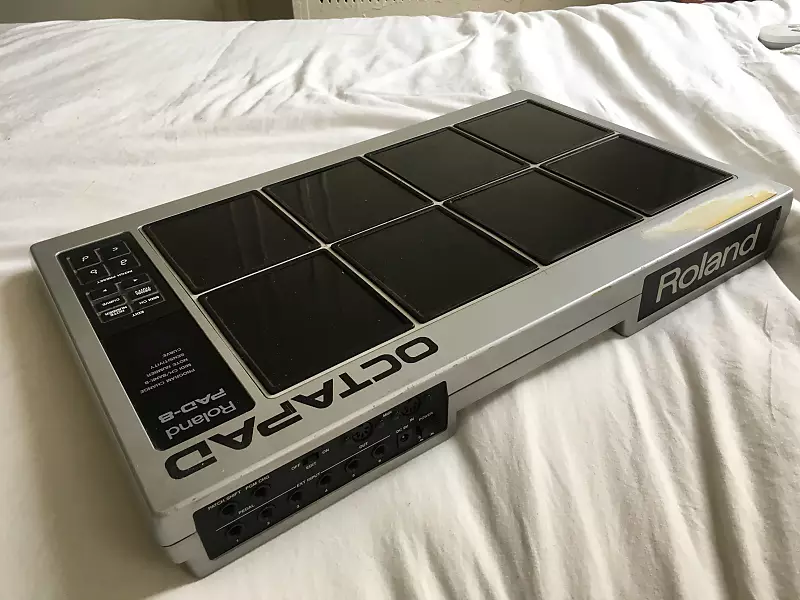
Run a search for “Octapad” or “Octapadist,” and you’ll find a vast musical community. Learn how the instrument became a household word.
Run a Google search for “Octapad” or “Octapadist,” and you’ll find a vast musical community. The overwhelming majority of these players have two fundamental traits in common. They use a device with eight rubber pads, and they likely live in a specific geographic location. But more on that in a moment.
An International Debut
When the Octapad Pad-8 debuted in 1985, it was a solution for artists looking to add MIDI to live performance. 1989’s Octapad II Pad-80 delivered enhanced patch capabilities and memory storage.
Fans could see the instrument on global stages with Phil Collins, Eric Clapton, New Order, and UB40. Soon, the SPD line arrived—with the bonus of onboard sounds—and the Octapad name all but disappeared.
Phil Collins in an early ad for the Octapad Pad-8The evolution of the Octapad: the SPD-30
A Specific Niche
In 2010, with the SPD-30, the Octapad returned in a big way. Still, in one populous, musically-rich region, it never went away. Thanks to a mutable layout and portable design, the Octapad captured a specific niche in India. It remains the instrument of choice for devotional musicians and Bollywood players alike.
Today, artists like Priya Shiyara Flash Octapadist and Mayuranga Octapadist maintain Facebook profiles. They represent the tip of the social media iceberg. Octapadists with large followings appear all over YouTube, sharing skills and growing audiences at the same time.
Traditional Tones to YouTube
Take Jiten Sunil Kriplani. He’s a popular YouTuber with almost a million subscribers who goes by the name Janny Dholi. “I’ve been using the Octapad for many years,” Sunil Kriplani says. “I absolutely love the true and dynamic tones which are customized especially for Indian artists. It’s the best for live shows and recording sessions.”
It was over 20 years ago that the original SPD-20 took the world—and especially India—by storm. Nowadays, legions of Indian musicians embrace the Octapad as their primary instrument. SPD-20 sounds permeate Bollywood, folk, devotional, and other musical styles across India.
Roland SPD-20
A Practical Tool
Musical Director Tushar Deval says, “I’ve been working in this industry for almost thirty-five years. It was 1998 or 2000 that I first tried the SPD-20, and I have been using it ever since. Great experiences come from different places.”
For Deval, the speed of creation is part of what cements the Octapad in India’s professional music world. “Making patches in SPD-20 is so easy,” he explains. “Basically, any Hindi song comes on, and we can make five of them in ten to fifteen minutes.”
“Great experiences come from different places. Any Hindi song comes on, and we can make five of them in ten to fifteen minutes.” -Tushar Deval
The 808 of India?
With such broad appeal, it’s easy to think of the Octapad as the TR-808 of India, so far-reaching is the instrument’s influence. The original eight-pad layout—much like the 808’s drum pads—is iconic. Like the 808, the Octapad’s look is instantly recognizable.
The instrument’s latest incarnation, the SPD-20 PRO, expands on the Octapad’s legacy. Among a host of sounds, it includes the following: dholak (a two-headed hand drum with drumheads attached by ropes), mridangam (a principal rhythmic accompaniment drum for Carnatic performances), kanjira (a frame drum from the tambourine family), ghatam (one of India’s most ancient percussion instruments), the duggi (an Indian kettle drum played with the fingers and palm).
Mridangam, Photo by Thamizhpparithi Maari
“The addition of 200 kits is mind-blowing,” Sunil Kriplani says of the upgraded Octapad. “It’s my favorite feature.”
Based in Pune, Maharashtra, Ajay Artre has used the Octapad for over six years. He appreciates the instrument’s core tones and interface. Artre praises “the sounds, editing, and especially the display.”
Roland’s history boasts many instruments intended for one use that became unexpected legends for something else entirely. Initially, an accompaniment device, the TB-303 kickstarted the acid house movement. Of course, the ultimate example of this trend, the TR-808, is inexorably linked to hip-hop’s history.
An Unusual Path
By contrast, the Octapad’s ascension from MIDI device to the go-to Indian devotional music tool is less clear. It doesn’t produce a sound utterly unlike anything that came before it. Rather, the Octapad plays a practical role in the musical culture of India.
In a blog for Roland India, Rupesh Iyar describes the Octapad as “a passionate instrument to play.” Iyar stresses that “any percussion player can switch to the Octapad from their traditional instrument.”
“It’s a passionate instrument to play. Any percussion player can switch to the Octapad from their traditional instrument.” -Rupesh Iyar
Therein lies the essence of the Octapad’s popularity in India. The device established its place in the country’s musical culture by bridging the past and the present. Those eight pads help move traditional sounds into the future, one pattern at a time.
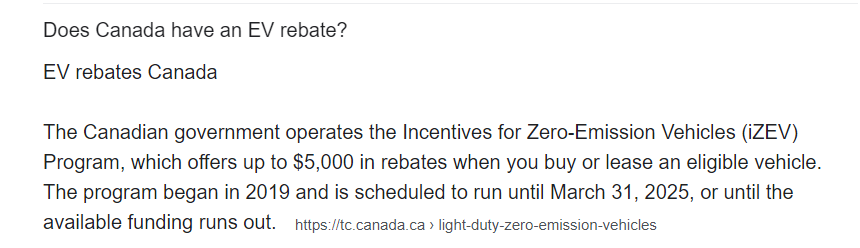
Tilbury, England. March 2023: British electric vehicle manufacturer Tevva has secured government plug-in truck grant (PITrG) eligibility for its 7.5t battery-electric truck. UK organizations looking to decarbonize operations and future-proof their fleets will benefit from a potential £16,000 ($26,260 CAD) discount, removed from the purchase price by Tevva. The current maximum Canadian EV amount is $5,000CAD.
To be eligible for the grant, N2 vehicles :trucks that weigh between 5-12 tonnes must have a CO2 emissions figure of at least 50 percent less than the conventional equivalent vehicle that can carry the same capacity and can travel at least 60 miles without any tailpipe emissions at all. (In the UK, a ton = 2,200 pounds and in Canada a ton is metric and = 2,000 pounds.) Tevva’s 7.5t battery-electric truck offers up to 140 miles (227 kilometers) from its 105-kWh battery on a single charge, and is ideal for last-mile and urban delivery fleets.
The Tevva 7.5t battery-electric truck is the only vehicle from a British manufacturer to qualify for the PITrG, and becomes only the third eligible truck to be listed on the government website. The grant pays for 20 percent of the purchase price, up to a maximum of £16,000 ($26,260 CAD) , reducing Tevva 7.5t battery-electric truck total cost of ownership (TCO),
This news follows hot on the heels of another significant company milestone in January, when Tevva secured European Community Whole Vehicle Type Approval (ECWVTA) for its 7.5t battery-electric truck. This meant that Tevva could start producing and selling in volume across the UK and Europe and represented the key regulatory step in the development and commercialization of the Tevva business.
Tevva Founder and CEO Asher Bennett said: “We know first-hand that demand for electric trucks is growing at speed, as we have been inundated with requests for our 7.5t battery-electric truck since going into full production last month. Now we are able to offer UK organisations a noticeable discount, thanks to the government grant, which will surely make zero emission trucking even more appealing to fleets.”
Tevva’s 7.5t battery-electric truck will be followed by a 7.5t hydrogen-electric truck, which benefits from a hydrogen range-extender that enhances vehicle range to up to 354 miles (570 km). The hydrogen-electric truck recently completed a 620-mile ‘border run’ between Tevva’s London HQ and the Scottish border at Berwick-on-Tweed – England’s most northernmost town. The return journey saw the truck cover almost 350 miles alone, without needing a single stop for recharging.
The Haldimand-Norfolk Archaeological Research Project was a regional study meant to discover new information about the past that has impacted the region such as; glaciers, climate change, prehistoric and historic settlements, wildlife, and geologic formations.
The agricultural lands of Norfolk and Haldimand County combined is approximately 2,286.49 km2 and is identified as a zone of geologic, archaeological, and historical significance, promising to reveal a great deal about past environmental events and people.
Yet, the urbanization of agricultural lands continues to alter the landscape by removing evidence of forests, tributaries, reduced land elevations, current and past ecologies, and lastly, evidence that people and their descendants once crossed the landscape of this region. For these reasons a regional study was initiated before this information is lost forever.
A stone tool retrieved by J. Barker at one of the site surveys.
When you take a closer look at the landscape you can find physical evidence proving that this region is unique.
Evidence such as the scrapes and grooves on bedrock surfaces by glaciers, erratics and drumlins left behind when glaciers melted away.
Watersheds and their tributaries, originally a result of glacial melt water, continue to drain seasonal waters from the agricultural lands year round. Present day Carolinian forests represent evidence of climatic changes in the great lakes region that supported a successful transition from a tundra-like environment over 10,000 years ago.
Mega mammals such as mastodon once roamed the ecosystems of Southern Ontario only to disappear and be replaced by other mammal species.
Geologic formations date back over 80 million years ago where fossils of coral reefs can be found and chert formations were formed and found across Haldimand County. People identified as Paleo-Indians used these same chert formations over 8,000 years ago to make stone tools as they crossed the landscape.
Regional studies were long-term and paid special attention to all aspects of a changing environment and landscape from one region compared to another. Typically, a regional study combines different scientific disciplines (e.g., archaeology, geology, hydrology, and paleobotany) that can bring specialists to assist with the recovery of new information. The results of a scientific study can produce new and unexpected insights into how the environment within a landscape once looked and how it was used by people.
Studies such as this create opportunities for community heritage to improve public awareness and education to understand how long term changes (e.g., climate, urbanization, and development) that can have an impact on a region.
What can a land owner expect when someone comes to their farm as part of a regional study?
Permission is always asked to begin a study of the landscape on private property. For example, I always work independently, and if help is needed, permission is asked to bring an assistant along. Once permission is given the study begins by walking over land repeatedly over a period of time and preferably free of crops.
Walking over open fields creates opportunities to examine the topography of the landscape, tributaries, plant and tree life, natural drainages, tree growth, and land elevations. Observations of prehistoric camps or historical homesteads, and their refuse pits is recorded when found.
Evidence of a camp or homesteads where people lived is called settlement patterns.
When settlement patterns are observed Geographic Positioning System coordinates are collected to record the exact location. Even though archaeological excavations are sometimes necessary, they are restricted to a small area. No excavation activity takes place unless permission is given by the landowner.
Even then, the landowner is first shown where an excavation is proposed on their property, and if crops are on the land, there is an offer of crop damage compensation based on current markets prices for wheat, soy, and corn.
A standard practice for a regional study is to recover and record the location of artifacts (e.g., prehistoric or historic) observed on the ground. These are recovered to gain new scientific insights regarding their origin, exact age, context, and association to surrounding landscapes. This includes the recovery of samples from rock formations for geologic studies.
Since regional studies are focused on private lands, all information is kept confidential and private. Information is not shared with the general public at any level, and there is absolutely no interference with farming practices whatsoever. Its business as usual! If landowners are curious to know what I am learning about the region from studying their farm land I am happy to share this information. For the Silo, Lorenz Bruechert/ Jarrod Barker.
Breaking a leg is never an easy experience, and even though Canada has free healthcare, there can be other medical bills that come with it and they can be overwhelming. And what happens if you were traveling and had an injury outside of the country- what then? In addition to the physical pain and recovery process, you may also have to worry about how to pay for these other medical expenses. In this article, we’ll explore some of the steps you can take to pay for your doctor’s bills after breaking your leg.
Image: castnews.org this site profiles girls with casts in bikinis. Not. Even. Joking.
Check Your Insurance Coverage
The first step to take when facing medical bills is to check your insurance coverage. If you have health insurance as an extra, you may be covered for some or all of the expenses associated with your leg injury. Check with your insurance provider to understand the limits and deductibles of your policy. Understand any out-of-pocket expenses, such as co-payments or coinsurance.
Consider Financing Options
Is the payment plan not working for you? No worries! You can find an emergency loan in Canada that can be a viable option to help you pay your bill on time. Many financial institutions and online lenders offer emergency loans for unforeseen expenses, including medical bills. These loans can provide quick access to funds to cover your medical costs, allowing you to focus on recovery.
Before choosing an emergency loan, it’s essential to research your options and compare interest rates and fees to ensure you select the option that works best for your financial situation. Ensure you understand the loan agreement’s terms and conditions before signing up.
Negotiate the Medical Bills
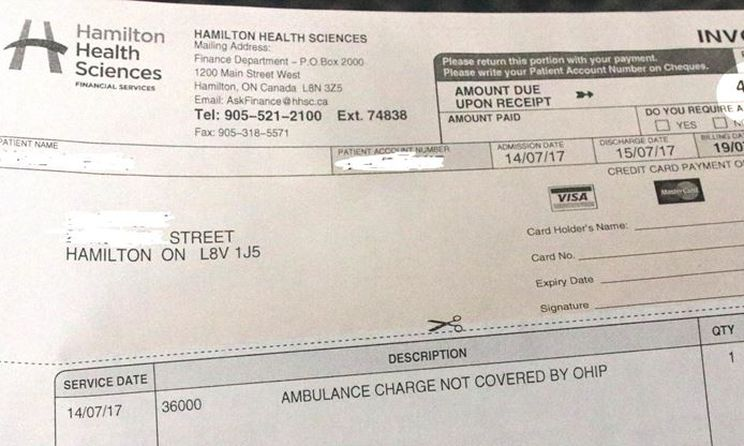
When you receive a bill for medical services related to your leg injury, ask for an itemized bill. This will allow you to see exactly what you’re being charged for such as an ambulance fee and identify any errors or discrepancies. Once you have an itemized bill, you can try negotiating with your healthcare provider or hospital. Explain your situation and ask if they can reduce the bill or set up a payment plan that works for you. If you’re uncomfortable negotiating independently, you can seek assistance from a medical billing advocate or attorney.
Set up a Payment Plan
If you cannot pay your medical bills fully, you can work with your healthcare provider to set up a payment plan. Many providers are willing to work with patients to develop a payment plan that fits their budget. When setting up a payment plan, make sure you understand the terms and conditions. You should know how much you’ll be expected to pay each month, when payments are due, and whether there are any penalties for late payments. Sticking to the payment schedule is vital to avoid accruing late fees or other penalties.
Look for Assistance Programs
Another option you can look for is financial assistance programs from non-profit organizations or government agencies. These programs help individuals who cannot pay for medical services on their own. Research the available options and apply for assistance if you meet the eligibility criteria.
Paying medical bills after you have an injury can be daunting. However, several financing options are available to help you cover your medical expenses. The key is to research your options carefully, compare interest rates and fees, and understand the terms and conditions of any financing agreement before signing up. By doing so, you can effectively manage your medical expenses and focus on your recovery without undue financial stress.
A dishwasher is an essential appliance in any modern kitchen. It saves time, water, and energy, making cleaning up after meals much easier. However, a new dishwasher can be expensive, and only some have the money to pay for one upfront. This article will explore some options for paying for a new dishwasher.
Assess Your Finances
Before you start shopping for a new dishwasher, it’s important to assess your finances. Determine how much you can afford to spend and create a budget. Look for areas where you can cut costs to save money. For example, consider cutting back on dining out or entertainment expenses. Use the money you save to put towards your new dishwasher.
Consider Financing Options
Financing is a popular option for purchasing a new dishwasher. Many appliance retailers offer financing plans with low monthly payments and no interest for a set period of time. However, comparing financing options and reading the fine print is important. Ensure you understand the interest rates and fees associated with the financing plan.
One other form of financing that you may consider if you live in Canada is a payday loan. Payday loans in Canada are short-term loans that are typically due on your next payday. They are a quick and easy way to get cash and do not require collateral. They are unsecured personal loans that you can use for your short-term needs.
Whatever option you choose, carefully review the terms and conditions of any financing plan.
Look into Rebates and Discounts
Many appliance manufacturers and retailers offer rebates and discounts for dishwashers. Look for promotions on the manufacturer’s website or in-store. These promotions can include cash-back offers, discounts, or free installation. Some utility companies also offer rebates for energy-efficient appliances. Take advantage of these offers to save money on your new dishwasher.
Consider DIY Installation
Installation fees for a new dishwasher can add up quickly. If you are handy with tools and have experience with plumbing and electrical work, consider installing the dishwasher yourself. DIY installation can save you hundreds of dollars. However, ensure you have the necessary tools, knowledge, and experience to complete the job safely and correctly. If you need more clarification, hiring a professional to install the dishwasher is best.
Sell or Trade In Your Old Dishwasher
If you currently have a working dishwasher, consider selling it or trading it in for a discount on your new appliance. Selling a used dishwasher can offset the cost of a new one. Consider listing it for sale on local classifieds websites, such as Craigslist or Facebook Marketplace. Make sure to clean and repair any damages before selling it. If your appliance retailer offers a trade-in program, take advantage of it. You can receive a discount on your new dishwasher by trading in your old one.
Purchasing a new dishwasher can be a significant expense, but there are several options for paying for it. Assess your finances and create a budget to determine how much you can afford to spend. Consider financing options, but make sure to read the fine print and understand the interest rates and fees. Look for rebates and discounts to save money on your new dishwasher. Finally, sell or trade in your old dishwasher to offset the cost of your new one. By using these tips, you can make a smart and informed decision when purchasing a new dishwasher.
Yes GTA VI is coming…finally and this trailer makes it official. If this leaves you asking questions and wanting more details ahead of Grand Theft Auto 6 release, you are not alone.
Officially verified facts and features are slim in some cases, but according to 50 Cent’s recent Instagram tease (sorry he deleted his post as this article was being written) and odds from leading sportsbook, Bovada,experts anticipate multiple celebrities to be featured in the blockbuster game. Grand Theft Auto 6 is the latest open-world modern era game set in Miami Vice City and will be returning back into the criminal empires of GTA.
A look at GTA V- will we see even more improved AI and graphics?
From 50 Cent himself (no stranger to having his persona digitized into the videogame world) to Kim Kardashian, Donald Trump and even Rihanna, gamers shouldn’t rule out any of the below cameo possibilities.
50 Cent in the legacy Xbox game Bulletproof
Check out the odds for each below and let us know who you think is a shoe in:
Pi Network increased its team member headcount by nearly 33% over the past year, debuted new developer features and KYCd 3.8M community members to-date
PALO ALTO, Calif., March, 2023 /– Pi Network, a community of tens of millions of humans mining Pi cryptocurrency to use and build the Web3 app ecosystem, today announced a series of milestones for the growing organization, including a notable spike in full-time Core Team members, multiple app developments and new improvements to its native KYC ID review algorithms.
March 14 (3-1-4) is Pi day
Despite the overall crypto market contraction, the Pi Core Team continues to grow, signaling the speedy development of the Pi Network ecosystem and its long-term vision.
Since February of 2022, full-time team member headcount has increased almost 33% in critical areas such as product, engineering, and community. Pi Network’s most recent hires include a new Senior Engineering Manager who will add more bandwidth to its technology management. The Pi Core team now stands around 40 strong and continues growing as the network expands and the ecosystem evolves.
“Given the breadth of work at Pi Network, the Core Team’s growth will continue to enable more decentralized efforts from our community of over 35 million engaged members who collectively build this network. Pi Network’s work is to empower those members in alignment with Pi’s vision of an ecosystem that is built on the blockchain to support a new Web3 social network of a large community, all of whom are empowered to create and use utilities through its developer’s platform and Pi apps. Building for that ambitious vision requires an all-hands approach from Pioneers, community developers, external partners, and the Core Team together,” said Chengdiao Fan, a Founder and Head of Product at Pi Network.
“By prioritizing the human aspect, focusing on building substance and adopting non-consensus long-term strategies, we’ve taken a more careful and deliberate path. We know that patience isn’t a strength in the crypto space but we’re confident in our approach: that’s why we’ve been able to continue the Network’s steady growth despite the downturn we’ve seen impacting some other crypto projects.”
In addition, Pi Network has taken great strides in the product and ecosystem fronts with numerous updates and developments.
Pi’s current Enclosed Network period of Mainnet allows Pi to focus on completing KYC and Mainnet Migration for the majority of the network, and bootstrapping the Pi ecosystem with meaningful apps and utilities, without undue influence from external factors.
To that end, Pi has been diligently improving its KYC ID algorithms to expand access to its native KYC solution, officially launched March 14, 2022, as the primary mechanism to validate Pioneers’ identities for Mainnet Migration. Since enabling mass KYC in June of last year, Pi has successfully validated over 3.8 million Pioneers to date.
Simultaneously, Pi has made significant efforts in building Developer Platform features and expanding community collaboration to foster Pi ecosystem growth, including the launch of PiOS, Pi’s Open Source Software License which allows Pi Community Developers to create open source applications and tools and exclusively extends to use within the Pi Ecosystem. Recent ecosystem-related updates include work on App-to-User payments and Developer Wallets for improved Mainnet payment flows, the Pi “Brainstorm” app (where “Pioneers” can propose and explore various ideas and pair up with like-minded Pioneers to build real Pi platform apps, and more.
Moreover, Pi has emphasized app development through Core-Team-developed apps, external business partnerships, and the most recent Pi Hackathon which hosted over 6,400 participants, all to better source talent, concepts, and utilities for the community.
“With the much-anticipated ‘Pi Day’—which celebrates the 4th anniversary of Pi’s official launch—happening this March 14, we have some exciting programs in the pipeline that we are eager to introduce to the Pioneers and developers for our decentralized efforts to build the Pi ecosystem,” said Dr. Nicolas Kokkalis, a Founder and Head of Technology. “At Pi, we’re creating things and solving problems in a way that the world hasn’t seen before.”
To learn more about Pi Network, please visit minepi.com.
ABOUT PI NETWORK
Pi Network is a community of tens of millions of humans mining Pi cryptocurrency to use and build the Web3 app ecosystem. Founded in 2018 by Stanford University PhDs with specializations in blockchain and social computing, Pi Network is a utilities-based ecosystem for third-party apps on a mobile web platform, with widespread (rather than concentrated) token distribution. The blockchain platform offers a mobile-first mining approach, with low financial cost and a light environmental footprint within the crypto space.
According to a study carried out by America’s Bureau of Labor Statistics in January this year, the restaurant labor force in that country is still over 450,000 jobs below pre-pandemic levels — marking the largest employment deficit among all U.S. industries. Although figures are not currently available for Canada, the situation is the same.
In November 2022, the USA National Restaurant Association found that 63% of full-service restaurants and 61% of limited-service places are operating with fewer employees than needed to accommodate guests.
At the beginning of February this year, The Washington Post reported that although many industries have recovered since the start of the pandemic, in the USA (similar trends in Canada) 2 million hospitality and leisure jobs still remain open.
“Hospitality is still stuck in the dark ages. High-friction ordering, slow and clunky payments, and labor challenges lead to low profitability and a poor customer experience,” notes Brian Duncan, President of me&u USA, a global leader in at-table ordering specializing in restaurants and bars.
The labor shortage has led chefs and restaurateurs to reduce their workweeks, while some restaurant owners have had to increase the wages of their staff by as much as 20% in addition to closing earlier on weeknights. Others have even had to change their business practices to attract new employees.
Technology can bridge the customer service gap when there are fewer employees available. Customers prefer to use self-service kiosks or access the menu by scanning QR codes because they can take additional time to read the menu, find new things to try, and customize their orders exactly to their preferences.
Such technology means shorter waits at the counter, faster table turnover, and more accurate orders because the information is transmitted directly from the customer to the kitchen. Also, Pay-at-the-Table Technology cuts out the back-and-forth trips from the POS terminal to the table to process payments shaving several minutes off each table turn.
“Manual orders are typically expensive, slow, and inefficient. Smart technology reduces labor costs, takes the load off servers, increases spending per order, and elevates the customer experience,” concludes Duncan.
What factors are impacting the restaurant and hospitality industries in the U.S and Canada.?
How can technological innovations help restaurants operate with limited staff and still increase revenue?
How can self-service ordering and streamlined payment tools enhance customer experience?
To mark the International Women’s Day on 8th March, Raketa releases a watch for ladies dedicated to the most beautiful feeling: Love.
Raketa “Big Love” offers a new interpretation of femininity. A watch as a mood, as a feeling, as love.
This model symbolizes the essence of Raketa’s “Big Zero” model: everything starts from 0. The hands of Raketa “Big Love” turn in a circle designating the word “LOVE” and each time the hour hand passes by the big “0” (or in this case the big letter “O”) everything restarts with LOVE!
The dial of Raketa “Big Love” embodies a minimalist design which is nevertheless full of feelings: a black and white dial with big letters L, O, V, E, crowned with the letter “O” (or with a zero – as you prefer).
With its classic black and white dial design and its four different color leather straps, Raketa “Big Love” will match any style and mood. The white, bright reddish-orange as well as pastel shades of pink and blue straps will emphasize your personality in both casual and classic styles. The quick-change strap system allows you to easily change the straps depending on your current outfit or mood.
Through the case-back of the watch, you can see the beautifully decorated Raketa automatic movement, fully manufactured in Saint-Petersburg by the Raketa Watch Factory.
Raketa “Big Love” is produced this year in a limited quantity of 200 models.
The price
The cost of the watch is 1333 EUR (without VAT) $1,413 USD / $1,906 CAD. For the comfort of customers, Raketa watches are delivered worldwide free of charge by DHL directly up to the front door.
Specifications
Factory:
Raketa Watch Factory (Saint-Petersburg)
Movement:
Calibre:
2615
Functions:
Automatic
Number of jewels:
24
Testing positions:
4
Average rate (s/d):
-10+20
Average running time (h):
40
Frequency/hour:
18.000 / 2.5Hz
Bi-directional automatic winding
Yes
Stopper of self-winding unit activated during manual winding:
Yes
Decoration:
Laser engraving Neva wavesRed rotor
Case:
Material:
Stainless steel
Size:
40 mm
Front glass:
Sapphire
Back glass:
Mineral
Crown:
Ruby stone inside the crown
Water resistance:
10 АТМ
Strap/bracelet:
Material:
Genuine leather
Width:
20 mm
Sex:
Unisex
Version Française
RAKETA BIG LOVE
Tout commence par l’amour !
En l’honneur de la Journée internationale des femmes, le 8 mars, la Manufacture horlogère Raketa propose le modèle Raketa “Big Love”, une montre pour dames dédiée au plus beau sentiment qui soit : l’amour.
Raketa “Big Love” est une nouvelle interprétation de la féminité. Une montre comme un état d’esprit, comme un sentiment, comme l’amour.
Ce modèle reprend le concept de Raketa “Big Zero” : tout part de zéro. Les aiguilles tournent autour du cadran en indiquant le mot “LOVE” et à chaque fois que l’aiguille des heures passe par le grand « 0 » (ou dans ce cas la grande lettre « O ») tout recommence par l’amour – par LOVE !
Le cadran de Raketa “Big Love” est inspiré de l’esthétique classique du minimalisme, tout en étant imprégné de sentiment : noir et blanc, avec les grandes lettres L, O, V, E, et couronné d’un zéro (ou de la lettre “O” – à vous de choisir).
La montre Raketa “Big Love” s’acorde avec tous les styles et toutes les humeurs grâce à son cadran classique noir et blanc et à ses quatre bracelets de couleurs différentes. Leurs tons – blanc, rouge-orange vif et pastel rose et bleu -, mettront en valeur votre personnalité, que vous adoptiez un style décontracté ou plus classique. Tous les bracelets sont munis d’un système “quick change” qui vous permet de facilement les changer en fonction de votre tenue ou de votre humeur du moment.
Le fond de la montre laisse voir le mouvement automatique Raketa minutieusement décoré et entièrement fabriqué à la Manufacture horlogère Raketa à Saint-Pétersbourg.
La montre Raketa “Big Love” est produite cette année en quantité limitée à 200 modèles.
Prix
Le prix est de 1333 Euros (hors TVA). Pour le confort de nos clients, les montres sont livrées gratuitement jusqu’à leur porte par DHL.
Spécifications
Manufacture :
Manufacture de montres Raketa (Saint-Pétersbourg)
Mouvement :
Calibre:
2615
Fonctions :
Automatique
Nombre de rubis :
24
Positions de reglages :
4
Marche moyenne (s/j) :
-10+20
Réserve de marche moyenne (h) :
40
Fréquence/heure :
18.000 / 2.5Hz
Remontage automatique bidirectionnel :
Oui
Système de débrayage du module automatique lors du remontage manuel:
According to research by our friends at NordVPN, one of the leading cybersecurity companies, adult content, streaming, and video hosting sites have the most security and privacy threats, such as malware, intrusive ads, and trackers. Research shows that NordVPN’s Threat Protection feature, whose sole purpose is to protect people from such threats, blocked 344M trackers, 341M intrusive ads, and 506K malware infections in the month of December 2022 alone.
“The online world is challenging people in every single move they make. Want to read an article? Dozens of ads and pop-ups are ready to immediately cover your screen. Another privacy threat – malware – is lurking for you on websites and in files you are about to download. Websites you browse are also full of third-party trackers that analyze your browsing history to find out what you do online. It depends on you to stop it,” says Adrianus Warmenhoven, a cybersecurity advisor at NordVPN.
Adult content sites contain the biggest amount of malware
Malware is malicious software that seeks to damage or compromise a device or data. Malware’s scope varies from relatively harmless to extremely dangerous. Malicious software can track people’s data, steal sensitive information, or even delete it without your consent.
NordVPN research shows that adult content sites (21%), as well as cloud storage providers (14%) and entertainment sites (11%), contain the biggest amount of malware. In December, Threat Protection blocked 60.4K, 40.1K, and 30.9K domains of these categories respectively.
Among the most common types of malware are viruses, spyware, worms, trojans, adware, scareware, ransomware, and fireless malware.
Streaming media sites have the most intrusive ads
Intrusive advertising refers to pushing invasive and irrelevant ads in front of consumers. They irritate users by popping up unexpectedly, blocking the host page, opening new pages and windows, or playing video and audio at inopportune times.
As for intrusive ads, the majority of them were found on streaming (23%), adult content (16%), and online shopping (9%) sites. Threat Protection detected and blocked millions of them: 552M, 389M, and 226M respectively.
“Today, ad blockers are essential for both security because they block ads that can infect people’s devices and privacy because annoying ads rely on collecting data from web activity and violating people’s privacy. Also, if a website is loading slower than usual, you can blame intrusive ads. Free apps filled with unwanted ads could also drain your device’s battery faster,” explains Adrianus Warmenhoven.
image: variety.com
Video hosting sites have the biggest number of trackers
While many trackers are a tool for advertising and improving user experience, they may also become handy for online spies. Internet service providers (ISPs), marketing agencies, social media companies, and governments can access your online actions and breach your privacy.
NordVPN’s Threat Protection showed that video hosting sites (22%), cloud storage providers (16.31%), web email (16.25%), and information technology sites (12%) have the most trackers. Video hosting sites alone had 239 billion trackers blocked by Threat Protection in December 2022.
It’s worth adding that earlier NordVPN research showed that the average number of trackers per website is highest in Hong Kong (45.4 trackers), Singapore (33.5), the United States (23.1), and Australia (18.6).
“You can become less trackable online by declining third party cookies, because the website can sell your browsing data to third parties; using a VPN, which will hide your real IP address and location; installing a tracker blocker, which will stop your browsers from collecting information about you; and using privacy browsers, which can obfuscate your browser fingerprint, or ditching Google, which tracks a lot of data about you,” says Adrianus Warmenhoven.
Threat Protection scans your files before you download them, identifies threats, and blocks them before they can harm your device. The feature is free with every NordVPN subscription – and it allows you to go online without leaving a trace, protecting your privacy and improving your digital security.
Methodology: The statistics mentioned above were acquired by analyzing aggregated data gathered by the NordVPN’s Threat Protection service in January 2023. No identifiable user information was collected, reviewed, or otherwise involved when the research and compiled results were conducted.
QUEEN’S PARK – Haldimand-Norfolk MPP Bobbi Ann Brady has introduced legislation that, if passed, will protect Ontario’s farmland.
“Land use planning affects our daily lives and Ontario’s farmland and arable land is an essential resource for the sustainability and security of our food systems, environment and local economies,” Brady said. “Farmland and arable land is productive, valuable and essential but most importantly it is finite and non-renewable, which is vital to consider in the face of increasing pressure to develop housing in the province.”
With Ontario having 52 per cent of the country’s prime arable land, and much of that being adjacent to cities, Brady said protecting these lands should be paramount. Further, according to census data, Ontario is losing 319 acres of farmland each day. Brady feels this is unsustainable. Constituents in Haldimand-Norfolk have also raised this same concern with the MPP since well before her election.
“As the government continues with its target to create 1.5 million new homes in Ontario, it is vital to put in place policies that will protect our farmers and their land, as well as the province’s food security, both now and in the future,” she said.
The bill requires the Minister of Agriculture, Food and Rural Affairs to develop a strategic action plan that aims to protect Ontario’s farmland and arable land from development, aggregate mining and the effects of fluctuating commodity prices and the availability of vacant land. It also stipulates a stakeholder-led Farmland and Arable Land Advisory Committee be set up to advise the Minister of Agriculture, Food and Rural Affairs. For the Silo, Jeff Helsdon.
The bill will be back before the Legislature for second reading debate on March 8.
For more information, contact MPP Bobbi Ann Brady directly at 519-428-0446 or 905-765-8413 or [email protected] Please mention The Silo when contacting.
Bookkeeping is tedious for most business owners unless you are a seasoned accountant or a fan of working with numbers. That is because businesses have a lot of financial details that need to be recorded, for instance, which supplier should be paid, outstanding customers, equipment to buy, significant purchases to make, and more. Without an accounting and bookkeeping system, you may lose essential business data, miss important goals, or make uninformed decisions that may affect your company’s finances.
Proper money-handling strategies are integral in any business as it helps you keep track of your long-term goals, improve your profits, and streamline seasonal cash flow changes. In addition, it will help your business stay out of trouble with the Internal Revenue Service or IRS.
By adopting good bookkeeping habits, you can avoid costly errors when it comes to record keeping. You can opt to have an in-house team to handle all your bookkeeping services, but this can be un-economical for small business owners. To save on cost, you can work with a bookkeeping agency, which often offers professional online and virtual services in Canada at very fair rates.
Here are seven tips for better bookkeeping for businesses in Canada.
Separate Your Business and Personal Finances
If you are a sole business owner, you should learn to separate your personal and business accounts. This will help you maintain records of every business and personal spending and help you keep the boundary to alleviate eating into the business growth finances.
For limited liability companies, the business is a separate entity from you, and your finances should be kept separate. That means you need to know which assets belong to the business and which are yours. By eliminating all personal transactions from the business accounts, you will lower the number of transactions the bookkeeper needs to categorize and reconcile. Additionally, your tax preparation and filing process will be seamless. You can find a bookkeeper in Canada to help you separate your accounts and provide outsourced business and personal bookkeeping services.
Control Your Business Credit
One of the common signs of an insolvent business is the inability to make payments promptly. The company may need better credit scores, lack of funding, or challenges in fulfilling its working capital needs.
When your business depends on bank financing to fund everyday operations, you will need help to pay back your high-interest debt. Therefore, you need to do due diligence before taking external funding.
You should set strict deadlines for your clients to pay what they owe and consider blocklisting repeat offenders that are taking advantage of you. Eliminate any late payments, as it is just like an interest-free loan. Your business may quickly become a cash-flow crisis if you lack rigorous credit control.
Track Business Expenses
Business expenses may be claimed against tax; therefore, tracking them is crucial if you want to cut overhead and maintain a healthy cash flow. You should always use a business credit card and keep records of expenses based on business activity.
Categorizing your expenses can be crucial, especially when your business is undergoing an CRA audit. The numbers on tax returns are often estimates, and these records help offer supporting evidence. Always remember that even trivial expenses will add up, and having records of everything can be helpful in the long run.
Overspending negatively affects any business; hence, keeping track of your expenses will ensure you track all your expenditures. Always remember that every dollar that you spend takes the business one step away from making a profit. Therefore, when running a business, keep a close watch on all your expenses, understand the benefit you gain from each expense, and document everything carefully. With outsourced online bookkeeping services, you can keep track of all your business expenses and maintain good records.
Schedule Routine Bookkeeping Times
As a business owner, you are handling many things at once, which can eat into the time you can use to monitor your financial record books.
The best way to keep your accounts is by consistently scheduling times to balance your books or working with a bookkeeping company in Canada. You can set aside time when your credit card statement is due and check through your monthly transactions to ensure everything is accurate. Although this task will take about one or two hours, it will simplify your life during the tax season by making tax preparation and filing much more effortless.
Create Budgets For Your Expenses And Set Financial Goals
Planning for business expenses, especially significant purchases, can help you best utilize your business resources and credit while giving you the peace of mind you need. Setting up and reviewing business budgets is directly related to the success of your business.
According to research, small businesses that regularly review their budgets on a weekly, monthly, and annual basis have success rates of 95%, 75%, and 25%, respectively. Therefore, if you want your business to succeed, you must have relatively high unused credit balances. In addition, you should also ensure your budget is monitored regularly, understand the benefits of using credit for your company, and be able to earmark the right amount of business payroll expenses.
Automate Manual Processes
One of the best accounting tips for growing businesses and start-ups is automating routine bookkeeping. Most accounting and bookkeeping activities are repetitive, and automating them will make your work easier and seamless.
Some repetitive bookkeeping processes you can automate include paying employees’ salaries monthly, following up on late invoices, and tracking invoices you send to customers. In addition, you can also automate the calculation of mileage payments for employee reimbursements and document utility bills in a central database.
Business owners can make life much easier by utilizing unified accounting project management solutions to help track expenses, automatically send invoices, and generate customized reports.
Consider Hiring a Tax Accountant
Investing in a seasoned tax accountant near me can be valuable for your business, even if the professional commits just a few hours every week or month to work on your small business bookkeeping and accounting needs.
A certified bookkeeper will record income and expenses and categorize them for a specified period. Conversely, a chartered accountant will help file your business taxes and set up your business’s accounting backbone. A reputable bookkeeping company will have certified tax consultants near me ready to assist you.
With an expert bookkeeper or chartered accountant handling all financial tasks, business owners can focus entirely on their business to attract customers and satisfy existing clients. They can also develop new products and services and grow their business.
Final Thoughts
Bookkeeping is a necessary evil that businesses cannot escape because almost everything depends on it. With an accurate and robust accounting system, you will get information about the business’s cash flow, performance, and financial condition, and it will help you make informed financial decisions. With the tips mentioned above in mind, you can ensure your small business bookkeeping records are available and can make better decisions for your business. You can also eliminate the headache of bookkeeping by outsourcing this function to a certified bookkeeper to help you out. Having a safe pair of skilled hands providing bookkeeping services for small businesses will give you, as the business owner, the confidence and freedom to lead from the front by focusing more on growing your business.
Have you ever dreamed of owning a piece of fine art but felt that it was out of reach financially? An art auction may be the answer to your dreams! Art auctions are an excellent way to purchase original artworks without breaking the bank. With the right approach, art auctions can be a great way to build a collection of art and save money.
The benefits of an art auction
For those who are looking to add to their art collection or simply just want to try something new, art auctions can be an excellent way to obtain art. Art auctions offer a unique opportunity to purchase artwork from all over the world at competitive prices. With a broad selection of works to choose from, they provide an exciting and engaging experience.
One of the main advantages of attending an art auction is that buyers have the chance to buy authentic artwork without the risk of buying a counterfeit piece. This can save buyers both money and time since they don’t need to worry about being scammed by an online seller.
Auctions also provide an opportunity for the buyer to get to know the artist and their work, as well as to discuss any questions with auctioneers or knowledgeable collectors.
How to participate in an art auction
Attending an art auction is a great way to find unique and valuable pieces of art. But it can be intimidating if you’ve never attended one before. Here are some tips to help make sure your first experience at an art auction is a successful one. Before you attend the auction, take some time to research the artwork that is being offered. Learn about the artist and the piece you are interested in. Knowing what you are bidding on can help you make informed decisions during the auction.
The difference between an art auction and an online sale
Auctions and online sales both offer a great way for art collectors to purchase artwork, but there are some key differences between the two. An art auction is a live event where bidders compete in a competitive environment to purchase pieces of art. Bidding is fast-paced and participants must be willing to pay the highest price in order to secure the artwork they desire.
Online sales are much different in that they are usually conducted over a longer period of time. Instead of a competitive environment, buyers have the opportunity to browse through the artwork and make their selections at their own pace. This allows buyers to take their time, research the piece, and evaluate whether it’s worth purchasing or not.
Furthermore, buyers may be able to negotiate a lower price as they may not have to compete with other bidders. Another difference between an art auction and an online sale is that auctions are typically reserved for more expensive pieces of art, while online sales tend to feature more affordable artwork. As a result, those who want to purchase high-end artworks may find it more beneficial to attend an art auction than to purchase from an online store.
Only 10% of rare diseases have an FDA-approved therapy. This sobering statistic highlights why research is so imperative for patients with rare diseases. Clinical trials can be a crucial opportunity to access life-saving treatments.
However, African-American, African-Canadian and Latino patients with rare diseases face significant underrepresentation in clinical trials. This lack of representation results in drugs being developed that aren’t proven safe or effective across different populations.
A 2018 research carried out by the U.S. Census Bureau stated that out of the 12% Black or African American population across the U.S., only 2.2% had participated in clinical trials for rare diseases. Sickle cell disease is one rare disease that predominantly affects the African American community.
India has close to 50-100 million people affected by rare diseases or disorders, with almost 80% of these rare condition patients being children. As per the U.S. Census Bureau, Indian Americans constitute 1.2% of the U.S. population, which translates to 4.5 million, as of 2021, and out of the 5.8% total Asian population across the U.S., their clinical trials participation in 2018 was only 1%.
When certain groups are underrepresented, the universal right to health is jeopardized, and the economic burden of public health care rises. Inequities in clinical research participation impede applications in drug efficacy, toxicity, therapeutic indices, and other areas. Furthermore, it has the potential to raise healthcare costs.
February is “Rare Disease Month”, while February 28th is “Rare Disease Day”, and 2023 is the 40th anniversary of “The Orphan Drug Act”—a law that was passed in the United States in 1983 to facilitate the development of orphan drugs—drugs for rare diseases.
Dr. Rajasimha, Founder and Executive Chairman of IndoUSrare says, “Rare Disease Month allows the rare disease community to come together and make themselves heard.”
The future of rare disease research and treatment still requires enhanced detection techniques, dissemination of understanding concerning optimal care, and research to prevent, treat, and cure disease, and IndoUSrare collaborates with researchers in the U.S. and other western countries with their counterparts in the Indian subcontinent to engage and include the large and diverse populations of Indians in India and globally.
Some years ago, in 2015, I spoke with Paul Hellyer the former Canadian minister of defense, who stated he believes UFOs are from another planet and that the U.S. Government has kept it covered up.
As Canadian Minister of National Defense in 1963, Hellyer was responsible for integrating and unifying the Royal Canadian army, navy and air force into a single organization, the Canadian Armed Forces.
He is outspoken about UFOs visiting Earth and the US Banking System that he feels is greatly responsible for the present economic hard times. He feels we are naive and fail to understand we are being visited by alien life forms.
He told me he had spoken with key US government officials who confirmed aliens are visiting us and providing advanced technology.
His book, “Light at the End of the Tunnel: A Survival Plan for the Human Species” reveals that humans are hell bent for extinction unless we change our attitudes and actions with an urgency appropriate to an impending disaster. Paul Hellyer suggests that we have about ten years to wean ourselves from the oil economy and profoundly regrets that the Copenhagen Conference reflected little progress in that direction.
The whole atmosphere was one that reminded him of Emperor Nero fiddling while Rome burned. World leaders simply have to do better! The book outlines the three monumental changes required to accommodate the miracle. First, the book claims that exotic energy sources already exist. They have been developed by the U.S. “shadow government” at the massive underground “black operation” installations in Nevada and Arizona using technology borrowed from visitors from other planets. Yet they remain secret for the alleged benefit of the privileged few. Second, the money has to be found to subsidize poor nations and facilitate major changes. This can be accomplished by a fundamental re-working of the monetary and banking system. Bank leverages must be dramatically reduced and the percentage of virtual money they create as debt strictly limited so that governments can gain the financial flexibility to finance the transition to sustainability. Finally, it will be necessary for all countries, races, faiths and colors to drop their antagonisms and work together in common purpose to save the heritage they have in common.
When Hellyer was Canada’s Minister of National Defense he stated, “I got periodic reports on sightings and I looked at them very casually, and it was decided that about 80 percent of them were natural phenomena of one sort or another, and the other 20 percent roughly were unexplained, and therefore unidentified. While spending one Thanksgiving holiday north of Toronto, Hellyer and his wife spotted an UFO. “The two of us stood there transfixed for 20 minutes, looking up at this thing moving first in one direction, and then another. By process of elimination, we determined it wasn’t a star or satellite and it wasn’t the space station, so there was really no explanation for it other than it was, in fact, a UFO.”
“It looked like a star, but it maneuvered in a way that stars do not. I must admit that when I saw this one, I wondered whether it was extraterrestrial or American. And I guess the thought that occurred to me was that if it is American, then they have learned some pretty big secrets about acceleration, because it accelerated at a pace that nothing I’ve ever known about that was built here is capable of.” For the Silo, George Filer. Join MUFON.
Many people are unaware that they can repair some problems with their air conditioners. There are some times when you can avoid some expensive repairs.
Before calling a professional, you can troubleshoot your system first.
If it’s aggravating to discover that the problems you called a technician to fix are things you could have done yourself, Nevertheless, before booking an appointment with a technician, you can try out these DIY air conditioner repair tips outlined below:
Examine your breaker
If you discover that your air conditioning system is not coming on, then it means that your breaker could have tripped. Your breaker tripping may occur when you have other appliances connected to it. You can save money by performing this quick check instead of calling an air conditioning technician. You may contact GetPaydayloans for instant help if you need a technician to fix your air conditioning system if you are out of funds to pay a technician.
Check your thermostat
Another tip that can save you a lot of money is to examine your air conditioner’s thermostat. For instance, if the unit is battery-operated, it may just need a new battery. Also, you need to ensure that the thermostat is set for a temperature below that of the room.
Change filter
To keep your air conditioner in good shape, you must frequently change the filter. In fact, changing your filter regularly can reduce the need for constant repairs on your air conditioner. When the filter is dirty, it can cause many issues that will affect other parts of the air conditioning system.
Melt any ice
When an air conditioner is iced up, it will not cool. Simply melting the ice will get the system back to normal. However, before dissolving the ice, turn off the system and run the fan. The fan will heat the ice, and it will fall off. You can also turn the air conditioner off and gradually melt the ice.
Consistent cleaning
A lot of people need to pay more attention to their air conditioning systems. Even something as simple as cleaning the air conditioning system can reduce the need for a lot of repairs. You may not need to dismantle the air conditioner to clean the inside. Simply cleaning the fan blades and removing debris can increase the air conditioner’s lifespan. However, you need to be careful when cleaning the fan blades of the air conditioner. Nevertheless, ensure the air conditioner is turned off before cleaning it.
Check the condition of your ducts.
Checking your ducts is another way to reduce the possibility of spending money repairing your air conditioner. However, only some people feel comfortable climbing into the attic to check if the air is coming from them. But if you climb to the attic and notice the duct is dirty, you could clean it, so the air can flow incorrectly.
Conclusion
Following the cost of repairing an air conditioning system, you must take a small step to reduce your spending. Try out these tips, and you may be shocked that they may be why your air conditioner is not working.
The gaming industry is undergoing a significant shift. The payments ecosystem is evolving towards a new era of cryptocurrencies and e-wallets and away from conventional online banking accounts. According to our friends at LotteryCritic.com, the impact of this changing payments ecosystem is multifaceted, affecting everything from the speed of transactions to how funds are stored and managed. Freddie Smith, CEO of LotteryCritic, commented:
Integrating crypto and e-wallet payments into the gaming industry is particularly advantageous because it eliminates the need for third-party payment processors. This means that users don’t have to go through traditional banking channels, which can be slow and unreliable. Moreover, crypto and e-wallet payments are more secure than traditional systems since they use sophisticated encryption algorithms.
Advantages and Opportunities of Cryptocurrency and E-wallets in the Gaming Industry
Cryptocurrency has widespread recognition as a form of payment, and the gaming industry is no exception. Many online gaming platforms now accept cryptos. Therefore, players can use them to buy in-game items or to place bets. The use of cryptos in the gaming industry offers several benefits. They include lower transaction fees, fast and secure transactions, and anonymity for players. E-wallets have also become increasingly popular in the gaming industry. Players use them to store funds and make transactions within the gaming platform. E-wallets offer several advantages, such as ease of use, fast dealings, and storing multiple currencies in one account. With the integration of e-wallets and cryptos, players can make quick and secure transactions.
The adoption of cryptos and e-wallets in the gaming industry has also opened up new revenue streams for gaming companies. For example, some gaming companies now offer in-game purchases using cryptocurrencies. Thus, allowing players to buy items using their digital assets. This has created a new market for gaming companies and has provided an opportunity for them to increase their revenue.
Challenges in the Adoption of Cryptocurrency and E-wallets in the Gaming Industry
The gaming industry has seen a rise in adopting crypto and e-wallets as payment. While these payment methods offer several benefits, adopting cryptos and e-wallets has challenges. One of the significant challenges is the volatility of crypto prices. Crypto prices can fluctuate rapidly and unpredictably. Thus, it can affect the value of in-game purchases made using cryptocurrencies.
The unpredictability can create confusion for both gaming companies and players. Besides, there is also a need for more regulation in the cryptocurrency market. The lack of rules makes it difficult for gaming firms to operate within a legal framework.
Moreover, the lack of regulation also exposes players to security risks, such as hacking and theft. Integrating cryptocurrencies and e-wallets into the gaming industry can also present technical challenges. Investors must ensure systems and processes used for transactions are secure and user-friendly. This requires significant investment in technology and infrastructure. The cost implications can hinder small and medium-sized gaming firms from investing. For the Silo, Elizabeth Kerr.
Pi- the only crypto you can mine from your smartphone.
Royalties Are Bullshit: A Musician’s Case For Basic Income….. “This song is Copyrighted in U.S., under Seal of Copyright #154085, for a period of 28 years, and anybody caught singin’ it without our permission, will be mighty good friends of ourn, cause we don’t give a dern. Publish it. Write it. Sing it. Swing to it. Yodel it. We wrote it, that’s all we wanted to do.”
-Woody Guthrie, copyright notice, This Land Is Your Land
Royalties are bullshit.
I say this as a musician, and as a songwriter. But let me go a step further: royalties have always been bullshit. The first problem? They’re not going to musicians, and they never have.
If money is being made, something is being sold. That something has to be a product, something that can be counted. Originally it would have been sheet music, before recorded music was widely available. Later on, it meant records, then tapes, CDs, downloads, streams, as well as licensing rights – use in a specific film, or for a particular commercial. There is a product. Someone is buying it. Some of that money goes towards the cost of producing, distributing, and marketing that product; some of it goes to the artist, as royalties.
Well, a little bit of it goes to the artist.
As Billboard notes, “An accurate map of royalty pathways would be a tangled mess.” It’s not easy to get paid.
Some royalties are set by the government, some are negotiated, some are paid through groups. For example, I license my music through TuneCore, which strikes deals with a series of digital music outlets, like iTunes and Spotify, each of which offers different terms of payment. Spotify pays artists, on average, $0.007 cents per stream.
Example of royalties earned for artist Jarrod Barker. Russian streamer Yandex awarded 8/100th of a penny for track streaming. Mr. Barker would need 99,992 additional streams to earn a dollar!
Beyond that, if you are “fortunate” enough to work with a major record label, there are restrictive terms and conditions. Techdirt quotes Tim Quirk of Too Much Joy explaining the Kafkaesque math [emphasis mine]:
A word here about that unrecouped balance, for those uninitiated in the complex mechanics of major label accounting. While our royalty statement shows Too Much Joy in the red with Warner Bros. (now by only $395,214.71 after that $62.47 digital windfall), this doesn’t mean Warner “lost” nearly $400,000 on the band. That’s how much they spent on us, and we don’t see any royalty checks until it’s paid back, but it doesn’t get paid back out of the full price of every album sold. It gets paid back out of the band’s share of every album sold, which is roughly 10% of the retail price. So, using round numbers to make the math as easy as possible to understand, let’s say Warner Bros. spent something like $450,000 total on TMJ. If Warner sold 15,000 copies of each of the three TMJ records they released at a wholesale price of $10 each, they would have earned back the $450,000. But if those records were retailing for $15, TMJ would have only paid back $67,500, and our statement would show an unrecouped balance of $382,500.
Of course, none of this is new, really. The history of artistsgettingscrewed by record labels is as long as the history of record labels, and includes everything from the creative math above to outright theft, failure to count sales, or inventive stunts like Fantasy Records accusing John Fogerty of plagiarizing himself. But bear with me, because it gets worse.
In the music industry today, there are a few people who are making money from royalties- and they’re making nearly all of it. More specifically, the top one percent of earners are taking in 77% of the recorded music revenue. Strikingly, these are many of the same artists who are now “at war” with YouTube. Artists such as Taylor Swift and Paul McCartney are convinced that YouTube is making money from their music by selling ads and subscriptions, and not paying adequate royalties. And they’re not wrong; YouTube is definitely making money by selling ads and subscriptions, and there’s no question that most of that is not going to the artists.
However, this is a stupid argument.
It’s a stupid argument because a tiny group of people that’s making the lion’s share of all recorded musical income is concerned that a new service doesn’t adequately compensate them; the major record labels feel the same way, of course. It’s a “war” that leaves out 99% of the musicians out there trying to make music and make a living, and it doesn’t really matter how they settle the conflict.
So let’s say, hypothetically, that we eliminate royalties. This raises a fundamental question.
How do we compensate and credit artists for their work?
I believe the answer is basic income, but first let’s take a closer look at that question. At a glance, it seems like it should be simple: pay them for their music. But what does that mean? It quickly gets complicated.
Part of the problem is that we as a culture equate value with ownership. If musicians have created a song, this thinking goes, and that song has value, they must own it, like any other form of property. But that’s ridiculous, and it’s pretty easy to see how quickly it becomes truly absurd.
For example, take a classic blues song, like Big Mama Thornton’s “Hound Dog.” Is that her tune? Yes! Does she deserve credit for it? Absolutely. Big Mama Thornton has a special place in blues history, and rightly so. But is it the first example of a 12-bar blues? No, of course not. Is it the first time someone used lyrics about a dog? Is it the first time someone used the call-and-response verse structure of a repeated first line and different last line? No, and no. And even though she made it a hit, the lyrics were by Leiber and Stoller. So which part of the song does she “own”? Is it just that specific recording? If so, how much does the bass player own, or the drummer? Do you pay royalties for playing it on the radio? What if it’s on the radio, and you tape it? What if you give that tape to a friend? I know, I know, nobody tapes anything off the radio anymore. What if you cover it in a bar? What if you sing it in your living room? What if you sing it in your living room and upload it to YouTube? What if you share the MP3? Where do we draw the lines?
Woody Guthrie, speaking from the folk music tradition, said “New words, new song.” Bob Dylan took that lesson to heart, both in early works like “Masters of War,” which took a melody from an English folk song called “Nottamun Town,” and in more recent releases. On Modern Times he lifted lines from a Civil War era Confederate poet named Henry Timrod, and used the arrangement of Muddy Waters’ “Rollin’ and Tumblin'” with re-written lyrics and the same title.
I don’t mean to discount Big Mama Thornton, or disparage Bob Dylan. I’m a big fan of both. What I want to illustrate is that “property” and “ownership” is a meaningless way to look at music, because it’s a living, inherited tradition. Everybody got something from somebody. Every electric guitar player owes something to T-Bone Walker, and T-Bone owes something to Blind Lemon Jefferson. Every folk singer owes something to Woody Guthrie and Pete Seeger. And more to the point, if you ask any great musician, they will tell you who they got it from. Eric Clapton tells people about Buddy Guy, but if you put a microphone in front of Buddy he’s going to tell you about Muddy Waters, BB King, Guitar Slim. The greats are always ready to turn around and credit the people who came before them, because that’s how a living musical tradition works.
So again: how do we compensate and credit artists for their work?
Splitting the question
One answer is to split up the question. When you think about it, it’s really two different questions. Let’s look at the second part first: how do we acknowledge and appreciate and credit the work that artists do? This is especially important because many important contributions to music, art, and human history generally, were made by people who get erased from popular culture- in particular women, LGBTQ folks, and people of color (Ma Rainey, for example, was all three). They are erased, in part, because there is money to be made by erasing them.
The uninformed still think “Hound Dog” and “That’s All Right” are Elvis Presley tunes. And while Presley himself was quick to credit his influences, most people have never heard of Arthur Crudup, and everyone’s heard of Elvis. Sometimes people were erased several times over; early blues music was driven by women like Bessie Smith, Ma Rainey, and Sister Rosetta Tharpe, who were largely displaced by black men, who then had their music co-opted by white guys playing rock’n’roll versions of the same songs. Some made serious efforts to show people where the music had its roots – The Rolling Stones, appearing on the show Shindig in 1965, insisted that Howlin’ Wolf also get to perform. On the other hand, Led Zeppelin took Willie Dixon’s song “You Need Love,” and recorded it as “Whole Lotta Love,” without ever mentioning where they got it. It’s ironic, since Dixon himself was notorious for taking credit and royalties for other people’s work, often by offering to “take care of the paperwork” on a new tune.
So how do we make sure we credit and acknowledge artists? One way, I believe, is to end a system of compensation based on owning something that cannot be owned. In a system like we have now, where the focus is on ownership of a particular sound, or song, or style, there is a real financial incentive to take credit. In the case of the record labels, you can even get the actual rights to an artist’s songs. If we disconnect the money from the “ownership” of the music, we are removing part of the incentive to pretend that new music doesn’t freely flow from old music.
Universal Basic Income
To be clear, I’m not suggesting artists should not be paid. There are different ways to support artists, and the internet has allowed for a lot of direct interaction between artists and fans. There are crowdfunding sites like Kickstarter and Patreon, there are independent music platforms like BandCamp and CDBaby. They’ve got their advantages and disadvantages, but what I’m advocating is something simpler, more widespread and direct: universal basic income.
Universal basic income, sometimes called emancipatory basic income or simply “basic income,” is an easy idea to understand: you give everybody money. Everybody. Rich people, poor people, working people, the unemployed, the young, the old, everybody. Everybody gets a salary. It’s not a lucrative salary, but enough to make sure you can provide for yourself.
First, let me clear something up: this is not a wild, crazy, utopian idea. It’s a serious proposal, that is increasinglybeingtreated as such. Even Forbes ran a piece called “Universal Basic Income Is Not Crazy.” Of course, it works better if you already have some of the social framework much of the world takes for granted: child care, family leave, health care. But let’s leave those aside for a moment to look at basic income from the musician’s perspective. What is the impact for working musicians?
Quit Your Day Job
Many, if not most, working musicians [and artists CP] support themselves with a day job. This includes long-time performers with steady gigs, people who have gone on world tours and recorded on dozens of albums. Buddy Guy drove a tow truck into his thirties. Composer Philip Glass worked as a plumber and taxi driver until he was 41. Wes Montgomery worked in a factory from 7am to 3pm and played gigs until 2am.
Let me tell you: it’s not easy. As a musician, you already have to balance many competing demands: playing gigs, traveling, booking and promoting shows, recording new material, rehearsing a band. Being a professional musician is, effectively, more than one job already. Now try to schedule all that around a conventional job structure that wants you working at 8 or 9 in the morning, 5 days a week, regardless of where you played last night or when you got home. It’s hard to fit all of it in, and that’s without stopping to consider that it might be nice to sleep occasionally or even see your family now and then.
One reason basic income is sometimes called “emancipatory” is because it frees you from this burden. You’re still going to be out there hustling for gigs, scheduling sessions, trying to record and promote and – let’s be real – get paid. Basic income doesn’t eliminate the desire or possibility for people to make money by working, it just means you don’t have to worry about starving or getting evicted while you do it. And let’s remember, most of the money musicians make doesn’t come from royalties anyway. People are getting paid for gigs, for shows, for studio sessions, for tours, sometimes for merchandise or direct sales (in particular if you’re producing your stuff independently).
Make The Music You Want To Make
Musicians make compromises all the time. Sometimes it’s about timing: you want to put something out, and you can’t afford to wait, so you settle- you keep a take that could have been better, you scratch a song that needs a few more sessions to come together. Sometimes it’s about the sound: a record label wants to market you a particular way, a track needs to be “radio friendly” to get airplay. Sometimes it’s just about resources: recording and producing music, even with all the advances in digital technology, is a laborious, expensive process. For some players, there’s also the trade-off between taking gigs that might pay better but be musically unfulfilling (think wedding band or corporate events) versus pursuing a musical vision that might not have a ready-made market. And, of course, there’s that most precious of all resources, time, which is often given over in huge amounts to the aforementioned day job.
Basic income removes the immediacy of financial pressures, and frees up a lot of time. Does that mean we won’t have choices to make? No, of course not. There are always choices, and there are always constraints, and even if we get basic income that won’t turn time itself into a limitless resource. But it changes the balance of the decision.
Creative Liberation: Supported By Research
Right now, across the country, there are brilliant artists whose music could change and enrich our culture in ways we can’t imagine, and we don’t get to hear them. They’re stuck working day jobs, playing the gigs that pay the bills, and trying to fit their creativity into commercial constraints. Pause for a moment, and imagine the explosion of new sounds and ideas we can liberate with basic income.
As a musician, that paragraph felt intuitively true to me. However, a number of people who were kind enough to review an early draft of this essay suggested that my point might be better served if I backed it up with “evidence” and “examples.” Of course, there’s not exactly a one-to-one comparison available, so I’m going to draw on some similar programs and related ideas.
First: the MacArthur “Genius” grants. These fellowships are awarded to people who are already recognized to be exceptional; they provide a no-strings-attached stipend of USD$625,000 over five years. Obviously that’s a lot more than “basic” income, but they underpin the idea that simply providing creative people with resources allows them greater freedom to explore, discover, and create. In a review of their program and its effectiveness, The MacArthur Foundation found that 93% of the fellows reported greater financial stability (no surprise) and 88% reported an increased opportunity to express creativity. Three quarters felt it lead them to make riskier, more ambitious choices in their work.
Some might argue that the fellowships exhibit a selection bias, since they go to people already known to be creative. However, there’s good reason to believe that supporting the poorest and most marginalized offers even greater benefits. Dissent magazine recounts the history of the Federal Writers Project, which offered “unemployed” writers guaranteed income by giving a fixed salary to produce travelogues or other commissioned writings:
…with regular paychecks, FWP writers could experiment with more creative projects at the same time. Over the course of eight years, the program employed over 6,600 writers, including Nelson Algren, Jack Conroy, Zora Neale Hurston, Richard Wright, and Ralph Ellison. The FWP enabled new classes of Americans to become “professional” writers.
While employed by the FWP, these writers—most notably writers of color—wrote fiction that challenged the political status quo, and they revolutionized literary form in order to do so. To be sure, many of these writers developed their politics in pre-FWP years, but stable employment facilitated their political and artistic ambitions—by providing them with steady income, connecting them to other writers, and offering literary inspiration. From 1936–37, between posts at the Federal Theatre Project and the FWP, Hurston wrote her beautiful and troubling novel Their Eyes Were Watching God, a book celebrated today for its inventive use of black vernacular. Wright spearheaded the “Chicago Renaissance,” a creative community strengthened and supported by FWP projects in the state of Illinois. Meanwhile, in New York City, Ellison was conducting FWP oral histories when, as he reported it, he stumbled across a man who described himself as “invisible.” This encounter would be the genesis for his Invisible Man, surely one of the strangest and most significant novels of the twentieth century.
I recognize that the subjective self-evaluation of MacArthur fellows and even the impressive work of FWP authors can be considered, to some extent, anecdotal evidence. But there is also controlled research, and what it shows is the flip side of the coin: that poverty impedes cognitive function. Lead by Harvard economist Sendhil Mullainathan, the team found that “experimentally induced thoughts about finances reduced cognitive performance among poor but not in well-off participants.” They also found that farmers showed diminished cognitive ability before harvest, when they were poor, compared to after harvest when they were relatively rich. That’s after controlling for free time, nutrition, work effort, and stress.
If you’ve ever been broke and had bills to pay, this is not news. It’s hard to focus when you have a huge bill hanging over your head and no immediate prospect for paying it off. When you’re in a position of financial hardship, a portion of your brain is effectively set aside to repeating over and over again, “AAAH THE RENT AAAH THE RENT AAAH THE RENT.” Or the hospital bill, or the car payment, etc. You know the classic sci-fi trope that imagines what you could do if you could harness the full power of your brain? Turns out it doesn’t require genetic engineering – you just need to be able to pay your bills.
I would argue that we are effectively paying a cultural opportunity cost in the form of lost creativity. Coming back to music, anthropologist David Graeber puts it this way:
“Back in the 20th century, every decade or so, England would create an incredible musical movement that would take over the world. Why is it not happening anymore? Well, all these bands were living on welfare! Take a bunch of working class kids, give them enough money for them to hang around and play together, and you get the Beatles. Where is the next John Lennon? Probably packing boxes in a supermarket somewhere.”
The Robot Imperative – It’s Not Just About Musicians
I realize we’re covering a lot of ground here, and we’re about to talk about robots. So first, a quick recap
Royalties don’t go to (most) musicians.
Royalties don’t make sense because they rely on ownership of something that cannot be meaningfully owned.
This system of ownership creates financial incentives to take credit for other people’s work.
Eliminating royalties forces us to confront the fundamental question of how we credit and compensate artists for their work.
Basic income answers part of that question – compensation – while eliminating royalties removes, at least in part, the financial incentive to take credit.
Basic income liberates musicians from the constraints of a day job and the pressures of commercial music.
Evidence supports the idea that this liberation leads to more, and more adventurous, creative work.
In short, basic income separates the idea that people have value from the idea that they must own something valuable.
All of that has been true for quite some time, and in fact arguments for basic income are as old as Thomas Paine. But there is a huge, disruptive change happening that makes this a much more urgent question, not just for musicians but for everyone. Namely, robots. Robots and computer automation are about to eliminate huge numbers of jobs (think tens of millions). Some are in the news right now: Uber is testing self-driving cars in Pittsburgh. Driverless trucking is not far behind, taking 3.5 million jobs with it. And it’s not just truckers: designers, fast food workers, accountants, financial analysts, doctors, hotel concierges. Thousands of news stories are being written by robots. An Oxford University study estimates that 47% of total employment may be at risk. Even jazz musicians have to be worried.
In short, the day job could be going away, and not just for musicians. The question is, what will we do with these millions of people, once they’re out of work? Will we insist that truckers can all get jobs doing social media? Will a few wealthy people retreat behind high walls and leave the rest of us to fight for the scraps of employment through a fog of financial worry and expensive, short term trade-offs?
Or will we embrace basic income, recognize that people have innate value, and unleash a wild torrent of creative exploration the likes of which we’ve never heard before? For the Silo, Anthony Moser.www.anthonymoser.com
@mosermusic
PS – My music is available on iTunes, Spotify, YouTube, Bandcamp, and a host of other digital music services. If you catch me at a gig, you can buy an album for name-your-price. And if anyone ever uploads it to The Pirate Bay, torrent with my blessing. As Woody Guthrie would say, “Publish it. Write it. Sing it. Swing to it. Yodel it. We wrote it, that’s all we wanted to do.”
A number of years ago the Soviet Union toured several countries with an exhibition of its industrial and economic achievements. There were the usual standard displays of industrial machinery and models of power stations and nuclear equipment.
Of greater interest to the CIA were apparent models of the Sputnik and Lunik space vehicles. U.S. intelligence twice gained extended access to the Lunik- the second time even borrowing it overnight and returning it before the Soviets missed it.
This is a true story of close cooperation between covert and overt intelligence components.
On View Abroad
The Soviets. had carefully prepared for this exhibition tour; most of the display material was shipped to each stop well in advance. But as their technicians were busily assessing the various items in one exhibition hall they received a call informing them that another crate had arrived. They apparently had not expected this item and had no idea what it was, because the first truck they dispatched was too small to handle the crate and they had to send a second.
The late shipment turned out to be the last-stage Lunik space vehicle, lying on its side in a cabin-like crate approximately 20 feet long and 11 feet wide with a roof about 14 feet high at the peak. It was unpacked and placed on a pedestal. It had been freshly painted. and three inspection windows cut in the nose section permitted a view of the payload instrument package with its antenna.
It was presumably a mock-up made especially for the exhibition; the Soviets would not be so foolish as to expose a real production item of such advanced equipment to the prying eyes of imperialist intelligence. Or would they? A number of analysts in the U.S. community suspected that they might, and an operation was laid on to find out. After the exhibition closed at this location, a group of intelligence officers had unrestricted access to the Lunik for some 24 hours.
DECLASSIFIED Authority NND 947003
The Lunik
They found that it was indeed a production item from which the engine and· most electrical and electronic components had been removed. They examined ·it thoroughly from the ·viewpoint of probable. performance, taking measurements, determining its structural characteristics estimating engine size, and so forth but not with sufficient detail or precision to permit a definitive identification of the producer or determination of the system used. It was therefore decided to try to get another access for a factory team.
Plans and Problems
As the exhibition moved from one city to another, an intercepted shipping manifest showed an item called .. models of astronomic apparatus whose dimensions were approximately those of the Lunik crate. This information was sent to the CIA Station nearest the destination with a request to try to arrange secure access if the Lunik should appear. On the basis of our experience at trade fairs and other exhibitions, we preferred access before opening of an exhibition to the alternatives of examining it while in the exhibition hall or after it had left the grounds for another destination.
Soon the Lunik crate did arrive and was taken to the exhibition grounds. The physical situation at the grounds, however, ruled out access to it prior to the show’s opening. Then during the show the Soviets provided their own 24 -hour guard for the displays, so there was no possibility of making a surreptitious night visit. This left only one chance: to get to it at some point after it left the exhibition grounds. In the meantime our four-man team of specialists from the Joint Factory Markings Center had arrived. We brought along our specialized photographic gear and basic tools. We each went out and bought a set of local clothes, everything from the skin out.
We held a series of meetings with Station personnel over the course of a week, mutually defining capabilities and requirements, laying plans for access and escape, and determining what additional equipment we would need. The Station photographed the Lunik crate repeatedly so we would get a better idea of its construction. ~
Photographs showed that the sides and ends were bolted together from within; the only way to get inside was through the roof. We therefore bought more tools and equipment-ladders, ropes, a nail puller, drop lights, flashlights, extension cords, a pinch bar, a set of metric wrenches, screwdrivers, hammers.
After the exhibition the displays would be carried by truck from the exhibition grounds toa railroad station and loaded onto freight cars for their next destination. For the interception we had to choose between the truck run and the rail haul. The initial preference was for the latter; it seemed the freight car carrying the Lunik might most easily be shunted onto a siding (preferably into a warehouse) for a night and resume its journey the next morning. A detailed check of our assets on the rail line however, showed no good capability for doing this. Careful examination of the truckage to the station, on the other hand, revealed a possibility.
DECLASSIFIED Authority NND 947003
Lunik
Lunik on Loan
As the exhibition materials were crated and trucked to the rail yard, a Soviet checker stationed at the yard took note of each item when it arrived. He had no communications bade to his colleagues at the fair grounds, however. It .was arranged to make the Lunik the last truckload of the day to leave the grounds. When it left it was preceded by a Station car and followed by another; their job was to determine whether the Soviets were escorting it to the rail yard.
When it was clear that there were no Soviets around, the truck was stopped at the last possible tum-off, a canvas was thrown over the crate, and a new driver took over.
The original driver was escorted to a hotel room and kept there for the night. The truck was quickly driven to a salvage yard which had been rented for the purpose. This yard was open to the sky but had a10-foot solid wood fence around it. With some difficulty the truck was backed in from a narrow alley and the gates closed; they just cleared the front bumper. The entire vicinity was patrolled by Station cars with two-way radios maintaining contact with the yard and the Station .
Action was suspended for half an hour: Everything remained quiet in the area, and there· was no indication that the Soviets suspected anything amiss. The Soviet stationed at the rail yard waited for a short time to see whether any more truckloads were coming then packed up his papers and went to supper. After eating he proceeded to his hotel room, where he was kept under surveillance all night.
The markings team, in local clothes and without any identification, were cruising in a car some distance from the salvage yard. We were now given the all-clear to proceed to the yard and start work.We arrived about 7:30 p.m. and were let in by a two-man watch and communications team from the Station. They had put all our equipment and tools in the yard and food and drink for the night.
Our first task was to remove enough of the crate’s roof to get in. It was made of 2-inch tongue-and-groove planks nailed down with 5-inch spikes. Two members of the team went to work on these, perspiring and panting in the humid air. The effort not to leave traces of our forced entry was made easier by the fact that the planks had been removed and put back several times before and so were already battered.
DECLASSIFIED Authority NND 947003
The Lunik
While this was going on there was a rather unnerving incident. When we had arrived at the salvage yard it was dark; the only lights were in the salvage company’s office. Now, with two men on top of the crate prying up planks, street lamps suddenly came on, flooding the place with light. We had a few anxious moments until we learned this was not an ambush but the normal lamp-lighting scheduled for this hour.
Photographers at work
The other two of us meanwhile were assembling the photographic gear and rigging up the drop lights with extension cords. We had ladders up at each end of the crate, and when the planks were off we dropped another ladder inside each end. The Lunik in its cradle was almost touching the sides of the crate, so we couldn’t walk from one end to the other inside.
Half the team now climbed into the front–nose–end with one set of photographic equipment and a drop light. . They pulled the canvas back over the opening to keep the flash of the strobe units from attracting attention.· They removed one of the inspection windows in the nose section, took off their shoes so as to leave no telltale scars on the metal surface, and squeezed inside. The payload orb was held in a central basket, with its main antenna probe extended more than half way to the tip of the cone. They filled one roll of camera film with close-ups of markings on it and sent this out via one of the patrolling cars for processing, to be sure that the camera was working properly and the results were satisfactory. The word soon came back that the negatives were fine, and they continued their work.
We on the other half of the team had tackled the tail section. Our first job was to gain access to the engine compartment by removing the Lunik’s large base cap; this was attached to its flange by some 130 square-headed bolts. We removed these with a metric wrench and by using a rope sling moved the heavy cap off to one side.
Inside the compartment the engine had been removed, but its mounting brackets, as well as the fuel and oxidizer tanks, were still in place. At the front end of the compartment, protruding through the center of .a baffle plate that separated the nose section from the engine, was the end of a rod which held the payload orb in place.
A four-way electrical outlet acting as a nut screwed onto the end of this rod was keyed by a wire whose ends were encased in a plastic seal bearing a Soviet stamp. The only way to free the orb so as to let the nose team into the basket in which it rested was to cut this wire and unscrew the outlet.
DECLASSIFIED Authority NND 947003
The Lunik
We checked with Station personnel and were assured they could duplicate the plastic, stamp, and wire. So we decided to go ahead and look for markings in the basket area. We cut the wire and passed it to one of the patrolling cars. The pair in the nose section photographed or hand copied all items in the basket area while we did those in the engine compartment. The Soviets, in removing all electrical connections and gear, had overlooked two couplings in the basket; these we took back to headquarters for detailed analysis.
Before we had finished, the new seal-wire, plastic, and stamp was delivered to the yard.
Returned in Good Condition
The exploitation of the Lunik was now complete; all that remained was to put things back together and close up the crate. The first job, re-screwing the orb in its basket, proved to be the most tricky and time-consuming part of the whole night’s work. The baffle plate between the nose and engine compartments prevented visual guidance of the rod into position, and the rod was just long enough to screw the outlet on beyond the baffle plate. We spent almost an hour on this, one man in the cramped nose section trying to get the orb into precisely the right position and one in the engine compartment trying to engage the threads on the end of a rod he couldn’t see. After a number of futile attempts and many anxious moments, the connection was finally made, and we all sighed with relief.
The wire was wrapped around the outlet and its ends secured in the plastic. The nose and engine compartments were double-checked to make sure no telltale materials such as matches, pencils, or scraps of paper had been left inside. The inspection window was replaced in the nose section, and with some difficulty the base cap was bolted into position. ·After checking the inside of the crate for evidence of our tampering we climbed out. The ladders were pulled up, the roof planks nailed into place, and the canvas spread back over. We packed our equipment and were picked up by one of the cars at 4:00a.m.
At 5:00 a.m. a driver came and moved the truck from the salvage yard to a prearranged point. Here the canvas cover was removed and the original driver took over and drove to the rail yard. The Soviet who had been checking items as they arrived the previous day came to the yard at 7:00 a.m. and found the truck with the Lunik awaiting him.
DECLASSIFIED Authority NND 947003
He showed no surprise, checked the crate in, and watched it loaded onto a car. In due course the train left. To this day there has been no indication the Soviets ever discovered that the Lunik was borrowed for a night.
The results of analysis on the data collected were published in a Center Brief. They included probable identification of the producer of this Lunik stage, the fact that it was the 6fth one produced, identification of three electrical producers who supplied components, and revelation of the system that was used here and conceivably for other Soviet space hardware. But perhaps more important in the long term than these positive intelligence results was the experience and example of fine cooperation on a job between covert operators and essentially overt collectors.
FINAL ISSUE! The attempted assassination of President Quinn during peace talks with the Red Queen pushes Earth towards a galactic war with an alien enemy. But when the assassin’s identity is revealed as Stormy Daniels, Agent Aela Grant and the crew of the Helix II must choose sides. Will they join Space Force in their hunt for one of their own, or will they become criminals? The first season of Space Force ends in this explosive and game-changing issue!
Polka Spot: The World According to Llama #3
Writer: Michael Frizell
Artist: Yehia Mohran
In this fun, all-ages, action-adventure comedy, Polka Spot, everyone’s favorite drama llama, is on location filming her next movie, “The Princess and the Beast.” What she doesn’t know is that the film’s location is famous for sightings of the Hairy Man, a monster that haunts the woods. Meanwhile, someone plots behind the scenes to steal her necklace and crown! Can Polka Spot and her companion, the plucky cat, Jolene, solve the mystery of the hairy man, prevent the theft, and save the movie?
Black History Leaders: Volume 4: Mariah Carey, Donna Summer, Whitney Houston and Lil Nas X
Writers: Darren G. Davis, Michael Frizell, Raphael Moran
Artists: Victor Moura, Kirk Feretzanis, Pablo Martinena
From the hit “Fame” and “Female Force” imprints by TidalWave comics, this volume explores the musicians who have made an indelible mark on our culture, including: LaDonna Adrian Gaines, better known as Donna Summer, the Queen of Disco. Lil Nas X, the multi-award-winning rapper who breaks glass ceilings as a gay man in hip-hop. Whitney Houston, an idol to millions with the voice of an angel whose meteoric career defined a generation, couldn’t keep her demons at bay. Often called the Queen of Christmas and the Songbird Supreme, Mariah Carey’s rise to stardom was not without pitfalls – something she isn’t shy to explore with her five-octave range.
Bold and the Brave #15
Writer: Darren G. Davis
Artist: Breed
There is a new minotaur in town and what are his ties to the villainess Medusa. Will the 10th Muse has to join forces with her in order to save a family that is in chaos. Also the relationship between Emma and Zak heats up. Homage cover by Marvel Comics artist Yonami
Wrath of the Titans: Argos #1
Writer: Chad Jones
Artist: Marcelo Henrique Santana
Perseus is back to face off once again with the titans of myth. Set immediately after the defeat of the mighty Kraken, Perseus plans to rebuild the city of Argos. But his wife-to-be Andromeda is kidnapped by one of Medusa’s gorgon sisters out for her ultimate revenge.
TidalWave Comics Presents Volume 2
Writers: Andrew Shayde, Scott Davis, Adam David Gragg, Chad Rebman
Artists: Carlos Furuzono, Diego Garavano, Addullah, Esdras Cristobel
A new unique team-up ongoing series! The TidalVerse is here! The members of the series, teams up with the TidalWave Universe’s vast array of colorful, costumed adventurers for a series that hearkens back to the Bronze Age of comics when team-ups were something special! This homage series together for the first time features Camelot, Zeus, Orion the Hunter, Venus, Sigma, The Muse, Monsters Among Us and Dorian Gray.
10th Muse: New Beginnings #1
Writer: Darren G Davis and Michael Frizell
Artist: Igor Cicarini
The world met Emma Sonnet, the 10th Muse, 22 years ago when she debuted in the 6th highest-selling comic book of all time. After a personal tragedy, Emma relocates to NYC, hoping for a new start. But Hades, the king of hell, has other plans. TidalWave’s latest ongoing series starts here! Greek mythology has documented the nine Muses, the inspirational daughters of the almighty god Zeus. But history forgot one-the 10th Muse. Emma Sonnet mysteriously disappeared five years ago during a summer trip to Greece celebrating her graduation from law school. Yesterday, she resurfaced just as mysteriously as the newly appointed District Attorney, with a unique take on the law. Battling evil in the courtroom by day, and in the shadows at night, Emma Sonnet is tipping the scales of justice her way, as The 10th Muse.
TidalWave Comics Presents #9: Camelot and Zeus
Writer: Scott Davis
Artist: Abdullah
Resistance! Not all heroes are blessed with understanding or even control of their powers. And not all heroes, given powers to rival the Greek gods, are given Olympus’ blessing. So it’s no wonder that former legal assistant and current hero-in-training Camelot is having a bad day, only it’s about to get worse! His rent is late, the gods are gunning for him, and to top it all off, the nefarious Captain Steel is creating havoc of epic proportions. What’s a hero to do? The Odyssey returns with a story that shows it takes more than a cape and a cool name to be a hero. Guest starring Zeus, God of Thunder.
Where to Find TidalWave Comics
TidalWave Comics’ vast catalog of titles can also be downloaded digitally from Kindle, iTunes, EPIC!, Madefire, Izneo, ComiXology, Global Comics, DriveThru Comics, Google Play, Overdrive, Library Pass, Biblioboard, Nook, Kobo and wherever eBooks are sold.
New York – Through an innovative, children-led campaign delivered by the UN’s global fund for education in emergencies, Education Cannot Wait (ECW), crisis-impacted girls and boys worldwide are sharing “Postcards from the Edge” to call on world leaders and public and private sector donors to make good on promises to ensure education for all by 2030 as outlined in the Sustainable Development Goals.
These first-person accounts and drawings offer inspiring and thought-provoking portraits of the challenges facing girls and boys caught in conflict and protracted crises around the world.
“They are inspiring and compelling stories of hope and an incredible resilience in the face of adversity and testaments to the amazing power of education to transform lives. We must listen to the world’s children. They deserve their human right to an education. Their voice must speak to our decency, they deserve to be heard,” said Yasmine Sherif, Director of Education Cannot Wait.
To date, more than 50 letters, drawings and videos have been received from crisis-affected girls and boys supported through ECW-funded programmes across more than 20 of the world’s toughest country-contexts.
ECW’s strategic partners – including Educo, Plan International, Save the Children, Street Child, UNESCO, UNHCR, UNICEF, World Vision and many others – continue to collect these first-person accounts to highlight the singular power of education to end violence, hunger and poverty, and build a more peaceful world for generations to come.
In the Democratic Republic of the Congo, Lucas*, a 14-year-old refugee from the Central African Republic recounts the story of seeing his mother murdered and his village burnt to the ground.
Through a multi-year resilience programme delivered by UNHCR with funding from ECW, the boy is now back in school and dreams one day of becoming a doctor.
In his postcard, Lucas makes an impassioned plea for world leaders “to think of us refugee children and provide funding to let us finish our studies.”
Worldwide 222 million girls and boys like Lucas are having their futures ripped from them by the converging impacts of conflict, climate change, forced displacement and other protracted crises. Girls and children with disabilities are especially at risk.
Several letters were submitted from girls and boys in Afghanistan. With new rules banning girls from education and denying women their human rights, it is not clear if Zehab* from the Uruzgan Province will be able to continue her education. But for now, with the support of ECW and Street Child, she is still able to attend a non-formal community-based learning programme.
“I want to get education and become a well-known doctor. But I am wondering that I might not achieve my dreams, as girls are not allowed to attend schools in Afghanistan,” she says in her postcard. “I call on the world leaders to help us and give us the opportunity to learn and lead our future.”
Leaders across the globe will come together at the Education Cannot Wait High-Level Financing Conference on February 16 and 17 in Geneva, Switzerland, to make good on commitments to ensure every child, everywhere, is offered a quality education.
Throughout the event, youth advocates and global champions will read the Postcards from the Edge to ensure the voice of the world’s most vulnerable children are heard.
Education Cannot Wait is calling on donors, foundations and high-net-worth individuals to mobilize US$1.5 billion over the next four years. With this funding, ECW and its strategic partners will reach 20 million children and adolescents with the safety, hope and opportunity that only quality education can provide.
*Names have been changed for privacy purposes.
#PostcardsFromTheEdge – Letters from Children
POSTCARDS
“For me, #education is the only hope I have left to achieve my dream of becoming a doctor.”~Lucas, 14, 🇨🇫 refugee in #DRCongo. Read how @EduCannotWait+@UNHCR_DRC help children like Lucas achieve their dreams!👉bit.ly/3XTpzEf#PostcardsFromTheEdge
Darline, 14, from #Haiti🇭🇹 demands change & an #education! @EduCannotWait’s #PostcardsFromTheEdge Campaign amplifies the voices of girls & boys like Darline ahead of #HLFC2023.Read Darline’s powerful letter📨http://bit.ly/3ixhKoX @UNICEFHaiti#222MillionDreams✨📚
“I want to be an architect in the future to help build & reconstruct my country #Syria🇸🇾 & all the countries that are affected by war & destruction.” ~Kamil, 12, refugee in #Iraq. Read @EduCannotWait’s #PostcardsFromTheEdge delivered w/@SavetheChildren.📨 http://bit.ly/3kui6Nt
“I aspire to be a #teacher because I feel I have a heart to care, ears to listen, time to give & ideas to share” ~Huma, #Pakistan🇵🇰. Read her #PostcardsFromTheEdge to hear how @EduCannotWait+@UNICEF_Pakistan is making #222MillionDreams✨📚 come true.📨bit.ly/3R7l4UE
11-year-old Zawad, a refugee in #Bangladesh🇧🇩, wants his community and family to prioritize education. With support from @UNICEFBD+@EduCannotWait his dreams are coming true. Learn more in his inspiring #PostcardsFromTheEdge 👉bit.ly/3DcFl5s
“I call on the world leaders to help us and give us the opportunity to learn and lead our future.” ~Zehab, #Afghanistan🇦🇫. Read Zehab’s @EduCannotWait’s #PostcardsFromTheEdge 📨https://bit.ly/3CTEpmh Like & retweet if you agree #EducationCannotWait for #Afghan girls!