Tag Archives: Digital Currency

Trade and Financial Fragmentation Spreads Beyond Rivals as Costs Mount

  • Fragmentation is already costing the global economy $213–$307 billion annually, while adding 0.2–0.3 percentage points to global inflation.
  • Fragmentation is spreading beyond geopolitical rivals to traditionally allied economies, including the EU, Canada, Japan and South Korea.
  • Emerging markets are likely to be hit the hardest by these shocks as countries outside the major geopolitical blocs face an estimated 10.7% hit to GDP growth versus 6.4% globally, even as regional initiatives offer new solutions.
  • Read the full report and learn about the initiative. Learn more about the Annual Meeting of the New Champions 2026 here. Follow on social media using #amnc26, #2026夏季达沃斯#.

New York, USA, June 2026 – Geoeconomic fragmentation imposing an annual cost of $213–$307 billion usd/ $296- $426 billion cad on the global economy, according to a new World Economic Forum report release today. Driven by geopolitical tensions, economic security concerns and shifting trade relationships across major economies, fragmentation accelerated through 2025 and 2026 and is increasingly affecting trade, finance and investment systems.

Deepening Divides: The Cost of a More Fragmented Financial System — published in collaboration with Oliver Wyman, a Marsh business, and the second in the Forum’s fragmentation series — finds that these pressures are playing out through escalating tariffs, investment restrictions and retaliatory measures.


The report finds  that the growing use of economic statecraft in 2025 and 2026  marked a turning point for global trade and finance. While the first report focused primarily on fragmentation risks between geopolitical rivals, the latest findings suggest a broader structural shift is underway. Tariffs and investment restrictions are increasingly affecting traditionally aligned economies, including the US, the EU, Canada, Japan and South Korea, raising costs for businesses and increasing uncertainty for cross-border trade and investment.

“The global financial system has faced increasing pressures from geopolitical and economic fragmentation,” says Matthew Blake, Managing Director and Head of the Centre for Financial and Monetary Systems World Economic Forum. “Despite these pressures, the financial system has remained resilient. Markets have continued to provide real-time feedback on evolving policies while policy-makers have generally avoided actions that could erode confidence in the international financial system. As fragmentation persists, preserving the trust and stability that underpin global finance will be critical to supporting long-term growth and prosperity.” 

The economic costs are rising
As fragmentation becomes more embedded across markets and financial systems and barriers rise even among allies, the risks of escalation and long-term economic disruption increase. If current trends accelerate into more severe fragmentation scenarios, global losses could reach as much as $6.9 trillion usd, or 6.4% of global GDP, according to the report’s modelling, an economic impact larger than every economy in the world except the US and China.

Ultimately, fragmentation impacts both businesses and households. Current fragmentation policies are estimated to add 0.2–0.3 percentage points to global inflation, eroding purchasing power across most economies. The sharpest real wage impacts are seen in the United States, where real wages are estimated to be 0.33% lower for low-skilled workers, 0.49% lower for medium-skilled workers and 0.66% lower for high-skilled workers, with similar purchasing-power pressures visible in other major economies.

“In conversations with business leaders around the world, the message is remarkably consistent: What businesses need most right now is predictability, and they are not getting it,” says Daniel Tannebaum, Partner and Global Leader, Anti-Financial Crime Practice, Oliver Wyman, a Marsh business. “Without clearer guardrails around tariffs, sanctions and other economic measures, the risks to investment, growth and financial stability will continue to mount.”

Emerging markets face the sharpest exposure
Emerging markets and developing economies (EMDEs) are likely to be the hardest hit by the impacts of growing financial fragmentation. In the most extreme fragmentation scenario, countries outside the major geopolitical blocs, most of which are EMDEs, could face output losses of 10.7%, compared to a global decline of 6.4%.

Structural factors like shallower capital markets make EMDEs more dependent on international capital flows and more vulnerable to the negative impacts of a less integrated financial system.

Africa exemplifies both the risks and potential resilience pathways. The continent’s exposure to external capital flows means a more fragmented system would make development financing more expensive and less predictable. At the same time, regional integration – through initiatives like the African Continental Free Trade Area (AfCFTA) and payment systems such as Pan-African Payment and Settlement System (PAPSS) – offers pathways to build resilience in Africa, which also stands to benefit from such secular trends as population growth and an abundance of critical raw materials.

While fragmentation is unlikely to reverse in the near term, it can be managed. The report identifies five actions policy-makers can take to mitigate fragmentation:

Policymakers can limit the damage

  • Establish shared guardrails to protect the financial system from fragmentation, emphasizing principles like safeguarding the rule of law and independent monetary policy, limiting the seizure of sovereign assets, and protecting the integrity of government data.
  • Align on rules to guide the use of economic statecraft policies that advance national security and resilience objectives without undermining global growth.
  • Ensure policy predictability to sustain investment flows and allow for the continued functioning of cross-border capital and financial markets.
  • Maintain interoperability across payment and digital currency systems and prepare businesses for a more fragmented geoeconomic operating environment.
  • Advance regional integration initiatives such as the AfCFTA and PAPSSP, as well as support the development of domestic and regional capital markets, including the European Savings and Investments Union. 

Together, these measures can help preserve financial stability and resilience even as the global economy becomes more fragmented.

Report methodology


The report updates the Forum’s 2025 fragmentation analysis to reflect policy and market developments across 2025 and early 2026. Its quantitative modelling estimates the economic impact of current trade and financial policies and examines multiple escalation scenarios across output, inflation, trade flows and wages.

The analysis also incorporates updated assumptions on tariffs, countermeasures, pass-through rates and restrictions on services trade, alongside qualitative insights from business leaders, policy-makers and financial-sector experts, including regional perspectives from Africa.

About the Annual Meeting of the New Champions 2026


The 17th Annual Meeting of the New Champions will take place from 23 to 25 June 2026 in Dalian, People’s Republic of China, under the theme “Innovating at Scale”. The meeting will bring together 1,500 cross-sector leaders to explore how innovation and emerging technologies can unlock new growth models and drive positive economic momentum in a fast-shifting global landscape.

For the Silo, Jarrod Barker.

Crypto and E-wallets are Future of Gaming Payments

The gaming industry is undergoing a significant shift. The payments ecosystem is evolving towards a new era of cryptocurrencies and e-wallets and away from conventional online banking accounts. According to our friends at LotteryCritic.com, the impact of this changing payments ecosystem is multifaceted, affecting everything from the speed of transactions to how funds are stored and managed. Freddie Smith, CEO of LotteryCritic, commented:

Integrating crypto and e-wallet payments into the gaming industry is particularly advantageous because it eliminates the need for third-party payment processors. This means that users don’t have to go through traditional banking channels, which can be slow and unreliable. Moreover, crypto and e-wallet payments are more secure than traditional systems since they use sophisticated encryption algorithms.  

Advantages and Opportunities of Cryptocurrency and E-wallets in the Gaming Industry

Cryptocurrency has widespread recognition as a form of payment, and the gaming industry is no exception. Many online gaming platforms now accept cryptos. Therefore, players can use them to buy in-game items or to place bets. The use of cryptos in the gaming industry offers several benefits. They include lower transaction fees, fast and secure transactions, and anonymity for players. E-wallets have also become increasingly popular in the gaming industry. Players use them to store funds and make transactions within the gaming platform. E-wallets offer several advantages, such as ease of use, fast dealings, and storing multiple currencies in one account. With the integration of e-wallets and cryptos, players can make quick and secure transactions.

The adoption of cryptos and e-wallets in the gaming industry has also opened up new revenue streams for gaming companies. For example, some gaming companies now offer in-game purchases using cryptocurrencies. Thus, allowing players to buy items using their digital assets. This has created a new market for gaming companies and has provided an opportunity for them to increase their revenue.

Challenges in the Adoption of Cryptocurrency and E-wallets in the Gaming Industry

The gaming industry has seen a rise in adopting crypto and e-wallets as payment. While these payment methods offer several benefits, adopting cryptos and e-wallets has challenges. One of the significant challenges is the volatility of crypto prices. Crypto prices can fluctuate rapidly and unpredictably. Thus, it can affect the value of in-game purchases made using cryptocurrencies.

The unpredictability can create confusion for both gaming companies and players. Besides, there is also a need for more regulation in the cryptocurrency market. The lack of rules makes it difficult for gaming firms to operate within a legal framework.

Moreover, the lack of regulation also exposes players to security risks, such as hacking and theft. Integrating cryptocurrencies and e-wallets into the gaming industry can also present technical challenges. Investors must ensure systems and processes used for transactions are secure and user-friendly. This requires significant investment in technology and infrastructure. The cost implications can hinder small and medium-sized gaming firms from investing.  For the Silo, Elizabeth Kerr.

Pi- the only crypto you can mine from your smartphone.

Interactive NFT collection goes live in 3D world to reflect crypto history

CryptoTale has launched first of a kind non-fungible token (NFT) collection display which uses WebGL technology to allow a game-like 3D world experience to browse the artworks.

The collection initially launched with six custom NFTs including Rat Poison, Your Funds are SAFU, To The Moon, Bitcoin Pizza, Bitconeeeect, and Mt Gox. Each NFT is currently being auctioned and interested participants can bid from as low as 0.01 WETH.

The 3D artworks are reflecting events in cryptocurrency history like the infamous comments by billionaire investor Warren Buffet terming Bitcoin and cryptocurrencies as rat poison. The ten thousand Bitcoin pizza etc.

Overall, the auctioned NFTs are offering their potential collectors a piece of cryptocurrency history in a scarce virtual space. Since there are plans to convert game-like world’s land itself into NFTs. Essentially allowing other artists to potentially place their artwork on the same ground.

To bid for the artworks, interested parties can access the collectibles through OpenSea, the world’s largest NFT marketplace.

With the NFT market growing rapidly globally, CryptoTale plans to add more artworks in the future through collaboration with artists from different disciplines. The author behind the auctioned NFTs remains anonymous.

In recent months, NFTs have grown in popularity, with creators relying on the transformative role in ownership, commerce, and how creators connect directly with buyers, fans, and collectors.

formula 1: $100 Million Cryptocurrency Sponsorship

Cryptocurrency partnerships and sponsorships entered the world of sports back in 2014. Teams can expand their advertising budget with cryptocurrency platforms to get more popularity for the brand. In 2014, the first crypto-backed campaign – ESPN events made a contract with Bit Pay (Bitcoin payment processor) worth $350 000 in a year. In addition, arsenal made 3-year sponsorship with Sportsbet.oi with the value of £1.5m per season. 

Teams like to explore other non-standard partnerships. The most common ones are coming from the igaming and casino industries (an example of one – Canadian online casino real money Betsafe). But, on the other hand, they occasionally steer away into new waters, and cryptocurrency sets a new precedent here. Of course, there’s a lot to go by in the igaming and casino industry, but crypto-investing space can also offer substantial funding, as you’ll now see. 

Cryptocurrency 

Improves Fan User Experience 

Cryptocurrency benefits sports teams with new and improved marketing activities. Fans are in the first place, while tickets, streams, and merchandise make money. Secure and transparent marketing activities provide excellent customer service for sports fans. In addition, fan engagement tokens are on the rise. A fan token is a kind of membership card. They can vote on essential questions in the club. If you would like to choose a kit design, charity initiative, or similar stuff, purchase a token of your favourite club.  
 
Above all, cryptocurrency provides users with low-cost money transfers, transparency, and easy 24/7 accessible platforms that make it easy to purchase wherever users want to.  

Formula One – $100 Million Worth Crypto Deal 

Formula One made a 5-year contract with Crypto.com. $100 million sponsorship will provide F1 with great marketing tools. In addition to that, Crypto is getting trackside places on every race. Presence at every race will remind of their global partnership deal. Crypto.com is one of the fastest-growing crypto platforms at the moment. They have more than 10 million users. Sponsorship between Crypto and Formula One will grow awareness on the global stage. Crypto.com has leading applications on App Store and Google Play. Also, their Crypto Visa card is one of the most popular cards for using cryptocurrencies. This card is available in more than 30 countries. Formula One is one of the most followed sports, and they are always in search of new ways to make their fans more engaged.

2021 British Grand Prix Qualifying report and highlights: Hamilton digs  deep to beat Verstappen in qualifying and seal top grid slot for F1 Sprint  | Formula 1®
2021 British Grand Prix sponsor Crypto

Formula One got a new audience with engagement with Crypto. Crypto is trying to make cryptocurrencies more available and understandable for fans to use. Following that, Crypto announced a brand new award that fans would see on the Belgian Grand Prix. 

Crypto and F1 – Environmentally Sensitive 

Formula One announced that by the year 2030, Formula One racing would become a Net Zero Carbon sport. Likewise, Crypto announced that it would become carbon negative within the next 18 months in the spirit of the new partnership. A clean crypto business will be a great example to lead for all other companies in the industry. To have carbon-neutral or carbon-free vehicles and the crypto industry would be a great example from these two big names in the sports and business industry. Sponsorship looks promising, and great things might be ahead. 

Formula One as a sport wants to be more fan engaged and follow new technologies. Here is what CEO said: “We are pleased to welcome Crypto.com to the Formula 1 family as we continue to attract progressive global brands anchored in performance and innovation.”  For the Silo, Ika.

Bitcoin Can Now be Purchased Through PayPal but is it Ready for the Average Internet User?

After many years of toying with the notion of moving into the cryptocurrency market, 2020 finally saw PayPal admit to its ongoing interest, and embrace Bitcoin (and others) within its existing online payment services

gold-colored Bitcoin

The news has, within the crypto circles, been long anticipated. Following a disastrous attempt at collaborating with tech giants like Facebook and Mastercard on the Libra Project a while back, it looked as though PayPal may have gone shy on the idea altogether. That, coupled with the fact that interest in bitcoin and other cryptocurrencies among the ‘general digital public’ failed to take off in the way that was once predicted, made it seem as though a mainstream uptake of virtual currencies was nothing more than a pipe dream.


Of course, all that has now changed, and the company has finally enabled all users to buy, sell and store cryptocurrencies within its platform.
But, will this bring the average internet user to crypto for once and for all, or will the alternative currency remain relatively niche online, in spite of efforts to make it more accessible? Read more below.

Online Payment Services Are Adapting to User Requirements Better than Ever Before


In its heyday, PayPal was the go-to online payment service for anyone looking to make their digital dealings safer, more convenient, and more efficient. Rather than storing their personal details with multiple sites and companies, users could provide them once and once only, and allow PayPal to handle the security side of things.


The only issue was that PayPal was famed for its high transaction fees – both for merchants, and customers.


Now, the realm of online payment services has evolved to ensure that companies have fine-tuned their process for a relevant service – and that, in the process, transaction fees are kept competitive. In the realm of the online entertainment industry, digital casinos now offer Idebit deposit options for Canadian players over 18, for instance; in the US, vastly popular apps like Cash App and Venmo enable instant peer-to-peer payments with minimal processing fees.


There are two consequences to this evolution within the online payment services industry. For one, digital payment services are growing more attuned to the needs, concerns and demands of their users than ever before. They have to, if they are going to compete with the years in which PayPal has stood as the paradigm for payment security. This means that, for the average internet user, crypto will remain largely obsolete; they can feel safe in the payments they make online, and do not need to explore other avenues.


Secondly, it means that PayPal is facing significant competition on all sides, and that more and more users run the risk of abandoning the service altogether in favour of something cheaper, more convenient and easier to use.

Does the Average User Even Need Crypto?

PayPal is infamous for keeping the details of its new projects close to its chest, which means that we cannot be sure exactly what their motivations behind embracing crypto really are. Some already believe that it is ensuring a revolutionary stimulus for Bitcoin. It may simply be another move intended to ensure that they keep up with digital trends, rather than a fully-fledged commitment to the future of online payments.
In reality, many using the internet today have no need of crypto. Sure, it is safer and more private – something we all need to prioritize – but so are the services currently working to unseat PayPal at what it does best: simplicity.


Bitcoin is not simple – in fact, it is far from it. PayPal’s move toward the realm of virtual currencies does not make the technology itself any simple or more accessible to those who hold only limited knowledge about it, and only by targeting these user groups does it look likely that they will begin to embrace this alternative currency. For the Silo, Mildred Austria.

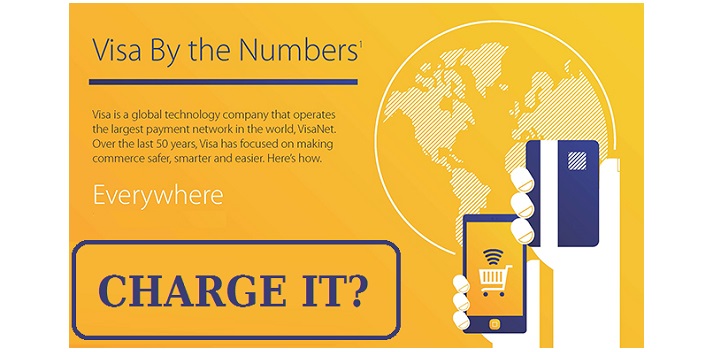
VisaNet Connects Two And A Half Billion Credit Cards

One of the many ways the Internet is driving the global economy is through digital payments, making it easy for consumers to buy just about anything from anywhere. VisaNet is the largest payment processing network in the world, connecting 2.4 billion credit cards at 36 million locations across 200 countries.

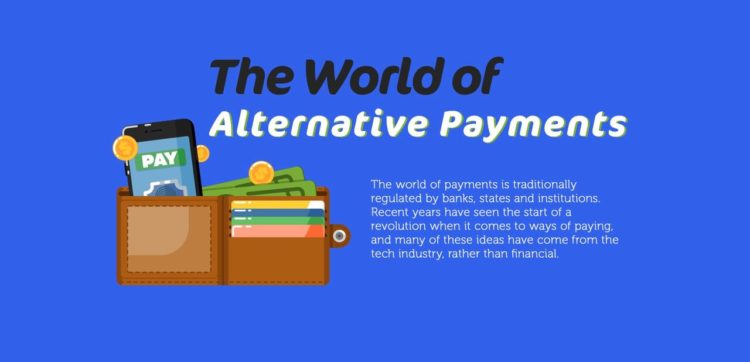
Our Cashless World Of Alternative Payments

The payments world has long been governed by the world’s great financial institutions. Banks and states have dominated the world’s spending habits, regulating transactions and payment methods.

The last decade has seen a shift away from the great institutions having total control over the financial landscape, and it’s been largely down to the digital revolution. Recent years have seen growing partnerships with the technology industry. Tech has sought more innovative ways for the financial industry to operate, and a greater freedom for consumers to spend their money.

Find current trends and what the future has in store for spending in this interesting infographic below from our friends at moneyguru.com.  At the time of posting 1 British Pound = $1.42 US and $1.79 CDN.

Alternative Spending Methods for Cashless World