Tag Archives: abstract art

The Metropolitan Museum To Present Jackson Pollock and Lee Krasner Exhibit

Krasner and Pollock Past Continuous

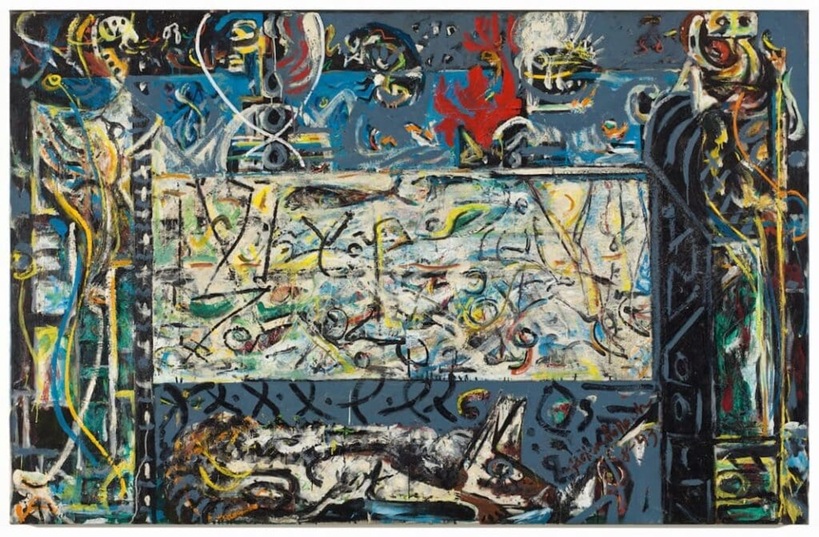
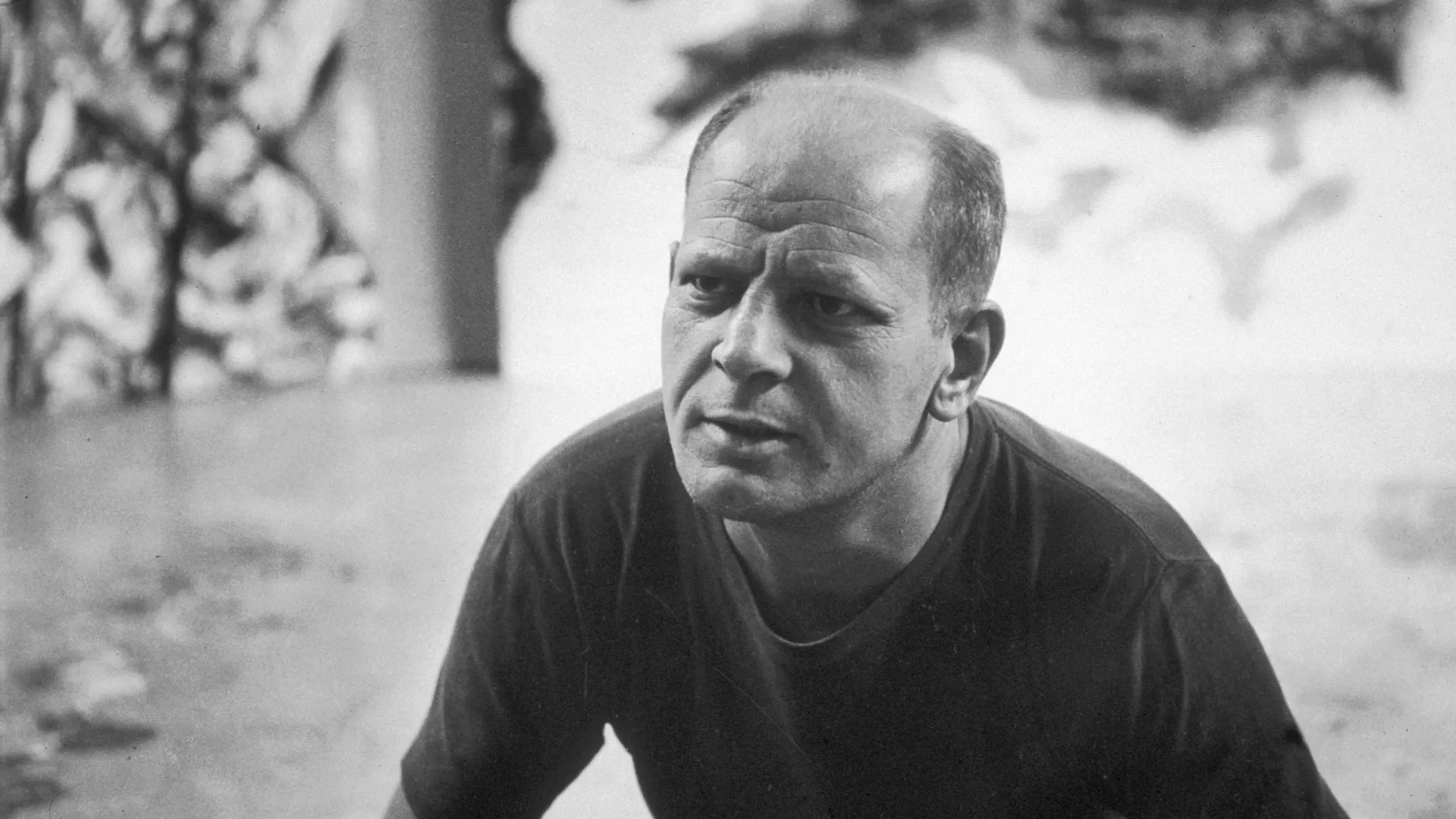
Guardians of the Secret- Jackson Pollock

Major Exhibition Dedicated to the Careers of Lee Krasner and Jackson Pollock
 Featuring over 120 works from more than 80 U.S. and international lenders, this exhibition marks the first major New York presentation of either artist’s work in over two decades—and their first at The Met.
Exhibition Dates: October 4, 2026–January 31, 2027
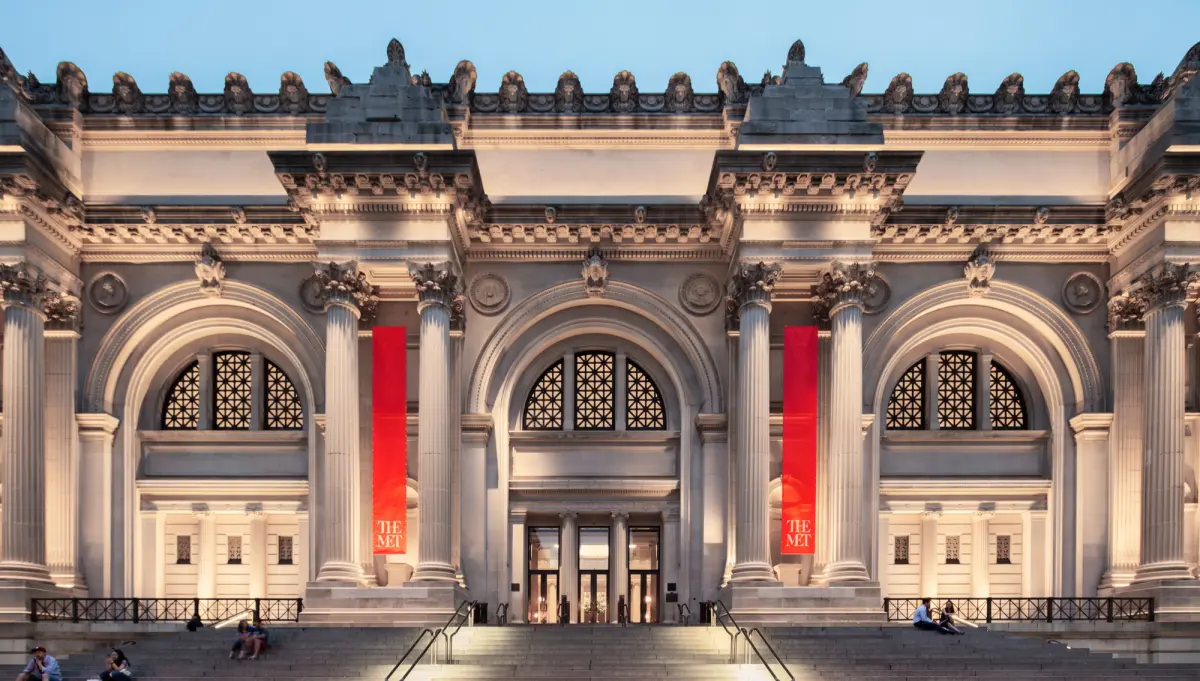
Exhibition Location: The Met Fifth Avenue

(New York, July , 2026)—Krasner and Pollock: Past Continuous at The Metropolitan Museum of Art is a major exhibition that charts the full arc of the careers of Lee Krasner (1908–1984) and Jackson Pollock (1912–1956) in parallel, examining the distinct yet connected practices of these artistic peers and life partners. On view October 4, 2026, through January 31, 2027, it marks the first major New York presentation devoted to either artist in more than 20 years, introducing their work to a new generation while reassessing their enduring impacts on modern and contemporary art.

Krasner and Pollock were emerging artists in New York when they met on the occasion of being included in a 1942 exhibition organized by the artist John Graham. They married in 1945 and moved to Springs, Long Island, where they remained entwined personally, artistically, and professionally until Pollock’s death in 1956. Pollock’s life’s work had secured his legacy, while the nearly three decades that Krasner survived him marked some of the most transformative years of her career. Drawing its subtitle, Past Continuous, from a 1976 painting by Krasner, the exhibition traces parallel lives and practices, first forged by lived experience and then shadowed by memory. It foregrounds the range and art historical significance of Krasner’s work while offering a sustained examination of Pollock’s rich and complex practice.

The exhibition is made possible by Kenneth C. Griffin and Griffin Catalyst, Marina Kellen French, and the Barrie A. and Deedee Wigmore Foundation.

Additional support is provided by Trevor and Alexis Traina, the Aaron I. Fleischman and Lin Lougheed Fund, The Huo Family Foundation, Joyce Kwok, Janice Lee and Joseph Bae, Dina Axelrad Perry, Alice and Tom Tisch, and the Horace W. Goldsmith Foundation.

“With its distinctive premise and scope, Krasner and Pollock: Past Continuous exemplifies The Met’s commitment to reexamining modern art through rigorous scholarship and fresh perspectives,” said Max Hollein, Marina Kellen French Director and Chief Executive Officer of The Metropolitan Museum of Art. “By considering each artist on their own terms while also foregrounding their consequential relationship, the exhibition situates Krasner’s and Pollock’s work within a broader cultural and artistic context—an approach central to the mission of The Met’s Department of Modern and Contemporary Art and to the vision of the forthcoming Oscar L. Tang and H.M. Agnes Hsu-Tang Wing, opening in 2030. This project affirms Krasner and Pollock not only as defining figures of their moment, but as artists whose work continues to shape and inspire future generations.”

Krasner and Pollock: Past Continuous begins with the fundamental premise that these artists are equals, partners in life, giants in the history of art, and revolutionaries who defined what abstraction could be,” said David Breslin, Leonard A. Lauder Curator in Charge, Department of Modern and Contemporary Art, The Met. “Each found a partner who would insist on the primacy of art over life; and they both aspired to an art that was forged out of historical connections but that also promised freedom and radical possibility in a world forever changed by war. The exhibition concerns entwined lives but is also about how different artistic directions come from shared terrain.”

Krasner and Pollock: Past Continuous approaches these artists not as a single story, but as two practices unfolding in proximity over time,” said Brinda Kumar, Associate Curator, Department of Modern and Contemporary Art, The Met. “The exhibition examines how Krasner and Pollock shared a commitment to testing the possibilities of abstraction—through shifts in scale, material, and form—and how those investigations continued to evolve along distinct trajectories.”

Krasner and Pollock: Past Continuous follows each artist’s life and work. The exhibition highlights their differences as much as their interrelation, with some galleries that place the artists together and others where they are presented independently. Krasner and Pollock were shaped by their distinct upbringings and formative trainings. Krasner adopted and negotiated the tenets of the European avant-garde, particularly Pablo Picasso, Henri Matisse, and Piet Mondrian. Her training under Hans Hofmann was key to her development. Pollock’s network of broad influences included Thomas Hart Benton and American Regionalism, Mexican mural traditions, Surrealism, and even his own family of artists. Their early paths unfold as complementary divergences, tracing distinct strands of American modernism that would ultimately converge in the rupture known as Abstract Expressionism. For Pollock, his breakthrough was the “drip” technique, a radical mode of painting that flourished in a condensed but prolific period from 1946 to 1951. Krasner’s varied practice was typified by ceaseless explorations of abstraction, often cued by her abiding interest in the possibilities of nature and color. This manifested in bold collages, gestural canvases and vividly hued hard-edge painting. Historically, Pollock’s reputation has eclipsed Krasner’s. Life Magazine asked in 1949 if Pollock was “the greatest living painter in the United States.” His early death and posthumous media attention further amplified his fame and eclipsed critical appraisal of Krasner’s contributions. Today, both artists’ practices are rightly recognized as key to the innovations of art from the mid-20th century onwards. This exhibition continues and amplifies this reevaluation.

The exhibition draws on The Met collection and rarely loaned works from more than 80 U.S. and international lenders, bringing together over 120 paintings, works on paper, and ephemera to reconsider Krasner’s and Pollock’s careers—both on their own terms and in dynamic relation to each another and their shared artistic context. Major institutional lenders include Peggy Guggenheim Collection, MoMA, the Whitney Museum of American Art, Tate, National Gallery of Art, National Gallery of Victoria, Centre Pompidou, Buffalo AKG Art Museum, Dallas Museum of Art, The Art Institute of Chicago, and SFMoMA. The exhibition will also include several rarely seen works from important private collections.

Organized into 12 chapters that span each artist’s career and are punctuated by defining moments, Krasner and Pollock: Past Continuous unfolds from the 1930s through the postwar years to the end of their respective lives, moving between moments of convergence and difference.

The exhibition’s design, informed in part by historic spaces and installations, enhances moments of exchange—across time and practices—while allowing for discrete encounters with works by each artist, from Krasner’s Little Images and Pollock’s drip paintings of the late 1940s to his monumental canvases in the 1950s and Krasner’s Umber and Earth Green series. The exhibition charts ongoing dialogues—Pollock’s late return to earlier motifs in the mid-1950s and Krasner’s extended engagement through the 1960s and 1970s with artists such as Klee, Picasso, Mondrian, and Matisse. This presentation will reveal two artists in constant negotiation with each other, themselves, and the cultural, political, and aesthetic stakes of their time.

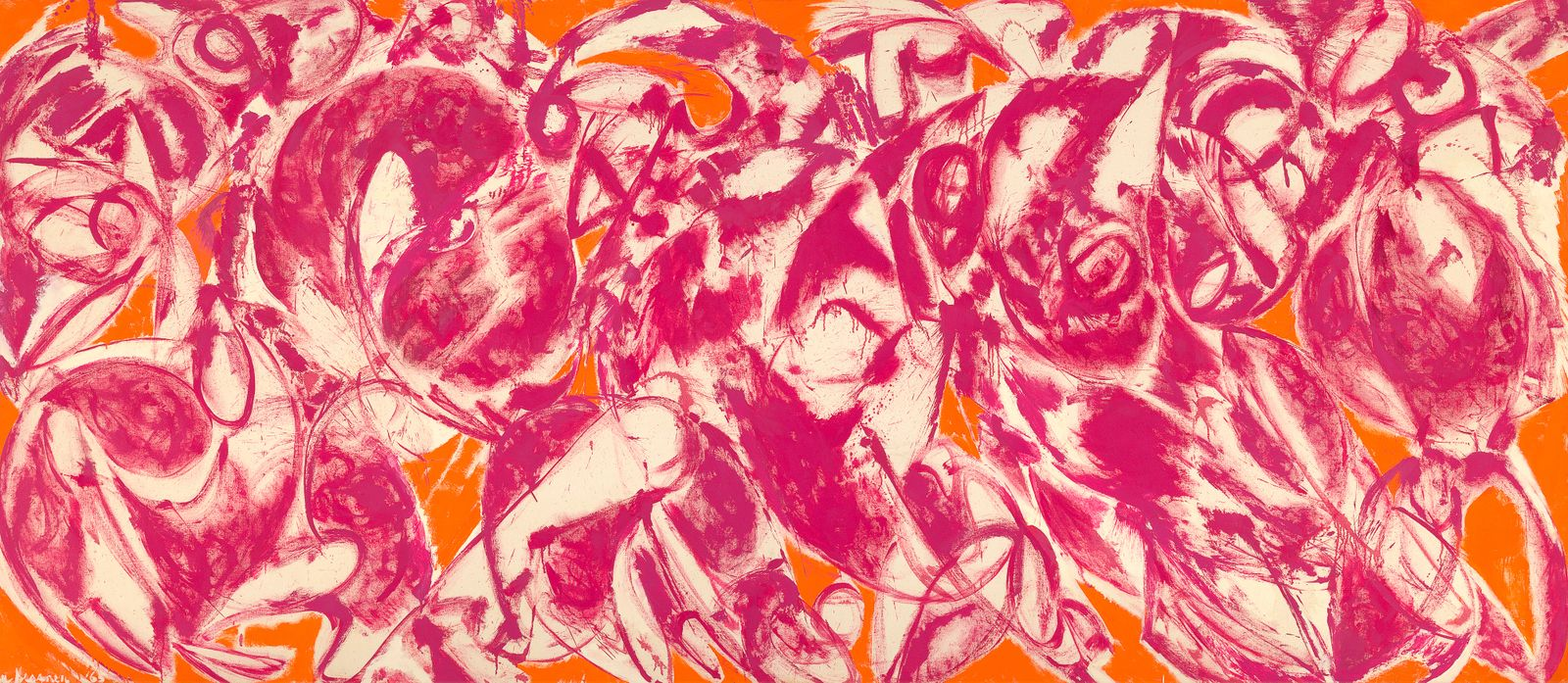
A constellation of landmark works anchor the exhibition’s exploration of both artists’ practices, including Lee Krasner’s Composition (1949), The Seasons (1957), The Eye is the First Circle (1960), and Combat (1965), along with Jackson Pollock’s Stenographic Figure (1942), Guardians of the Secret (1943), Lavender Mist: Number 1, 1950 (1950), and The Deep (1953). Two earlier exhibitions, Krasner/Pollock: A Working Relationship (co-organized by Guild Hall and Grey Art Gallery, 1981) and Lee Krasner-Jackson Pollock: Kunstlerpaare Kunstlerfreunde (Kunstmuseum Bern, 1989–90), concentrated on the approximately 15-year overlap in the artists lives, from 1941, when they met, until Pollock’s death in 1956. Krasner and Pollock: Past Continuous is the first exhibition to consider both artists’ practices, in their full chronological sweep, together.

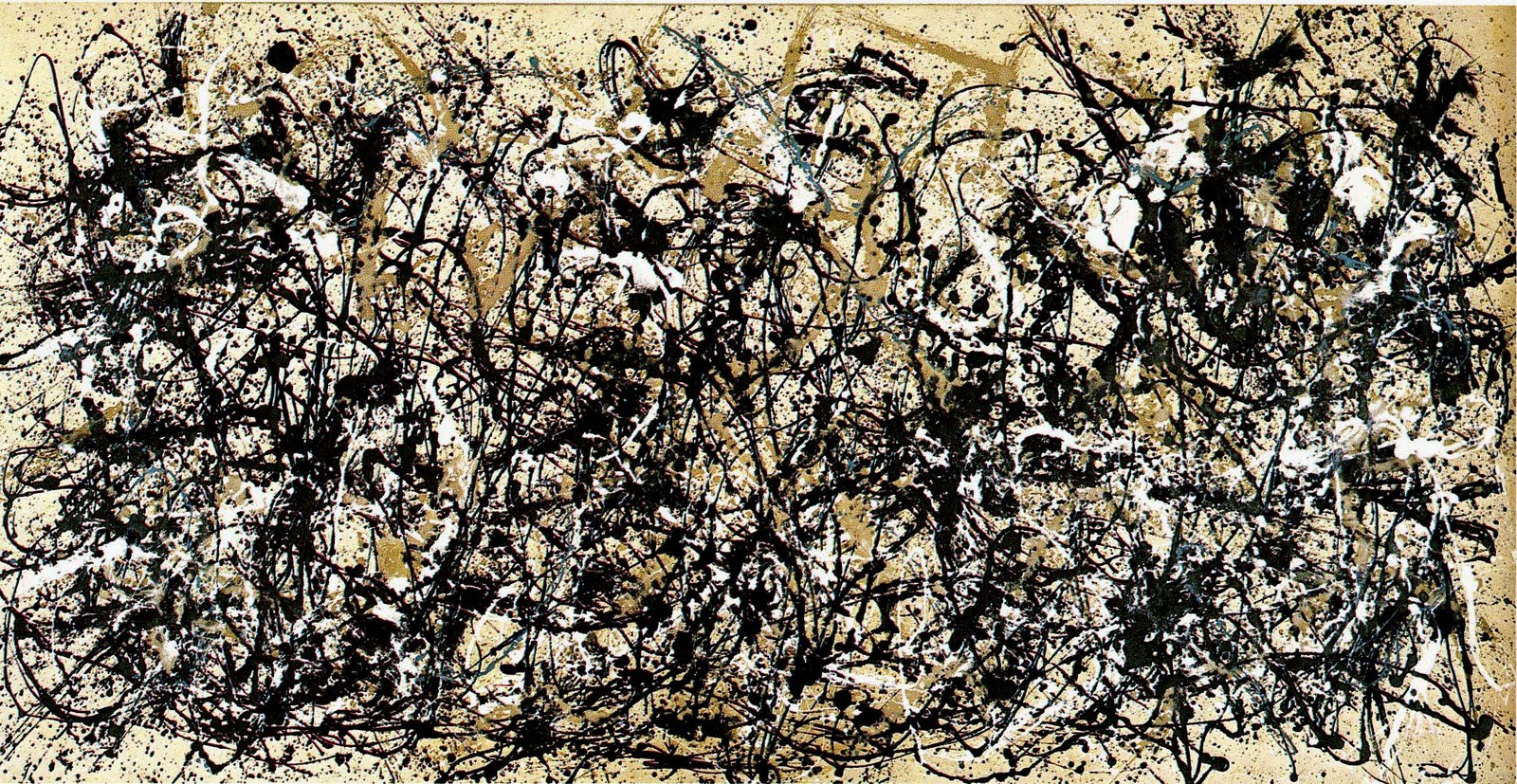
The Met has long been significant for both Krasner and Pollock. Pollock first exhibited a painting at The Met in 1943 in an exhibition in support of World War II. By the end of the decade, he would be among the artists—The Irascibles—who mounted a notable critique of the Museum’s then-prevailing attitude to contemporary art. However, a short while after Pollock’s death, The Met acquired the landmark painting Autumn Rhythm: Number 30, 1950 (1950). The Met’s collection of works by Lee Krasner were complemented by important gifts to the Museum by the artist during her lifetime. The Met was also the venue for Krasner’s memorial service in 1984. Krasner and Pollock: Past Continuous builds on this history, marking the Museum’s first major exhibition devoted to either artist. A focused survey, the exhibition traces the arcs of their artistic developments, offering fresh perspectives on two of the most influential figures of 20th-century art.

The exhibition also reflects The Met’s commitment to showcasing artists whose work continues to shape how art is made and understood today. Krasner’s and Pollock’s contributions to modernism and their serious engagement with the possibilities of painting continues to be significant for the work of contemporary artists. In advance of the opening of the Tang Wing for Modern and Contemporary Art, opening in 2030, Krasner and Pollock: Past Continuous models a curatorial approach that reexamines canonical narratives and connects 20th-century innovations to the concerns of today’s artists and audiences.

Exhibition Catalogue
The exhibition’s accompanying catalogue, Krasner and Pollock: Past Continuous, expands the project’s central themes through newly commissioned texts. Featured essays by the exhibition’s curators as well as Johanna Fateman, Prudence Peiffer, and Matthew Holman consider a range of topics, including Krasner and Pollock’s intertwined creative lives as an artist couple, their strategies of abstraction in the 1950s, and the transatlantic reception of their work, while artist Amy Sillman offers a contemporary painter’s perspective on artistic breakthrough and legacy. The volume also includes an illustrated, interwoven chronology as well as reflections by leading contemporary artists, underscoring the enduring resonance of Krasner’s and Pollock’s work across generations.

The catalogue is made possible by the Pollock-Krasner Foundation.

Additional support is provided by Mattia de Luca, the Aaron I. Fleischman and Lin Lougheed Fund, The Robert David Lion Gardiner Foundation, Karen and Sam Seymour, the Wyeth Foundation for American Art, Suzanne Deal Booth, Ted Stebbins, and Kelly Williams and Andrew Forsyth.

Credits and Related Content
Krasner and Pollock: Past Continuous is curated by David Breslin, Leonard A. Lauder Curator in Charge, and Brinda Kumar, Associate Curator, with the assistance of CJ Salapare, Research Associate, all of the Department of Modern and Contemporary Art, The Met,

The Met will host a variety of exhibition-related programs, to be announced at a later date.

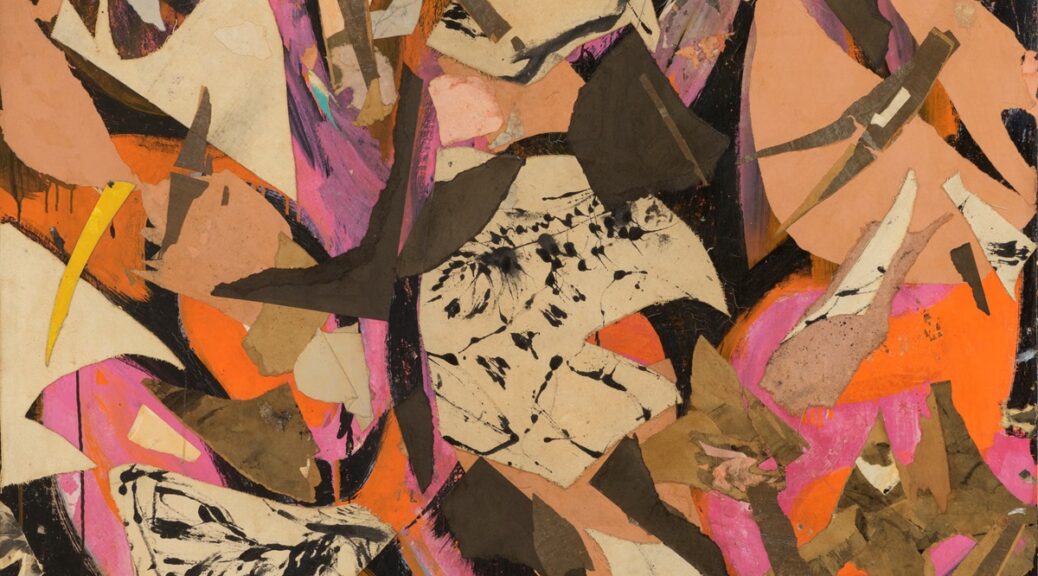
Featured image-Lee Krasner (American, 1908–1984). Bald Eagle (detail), 1955. Oil, paper, and canvas collage on linen, 77 × 51 1/2 in. (195.6 × 130.8 cm). ASOM Collection © 2026 Pollock-Krasner Foundation / Artists Rights Society (ARS), New York The Met Fifth Avenue

Combat- Lee Krasner

Autumn Rhythm (Number 30)- Jackson Pollock

Torkwase Dyson Sculptural Installation With Sound At 61st La Biennale di Venezia

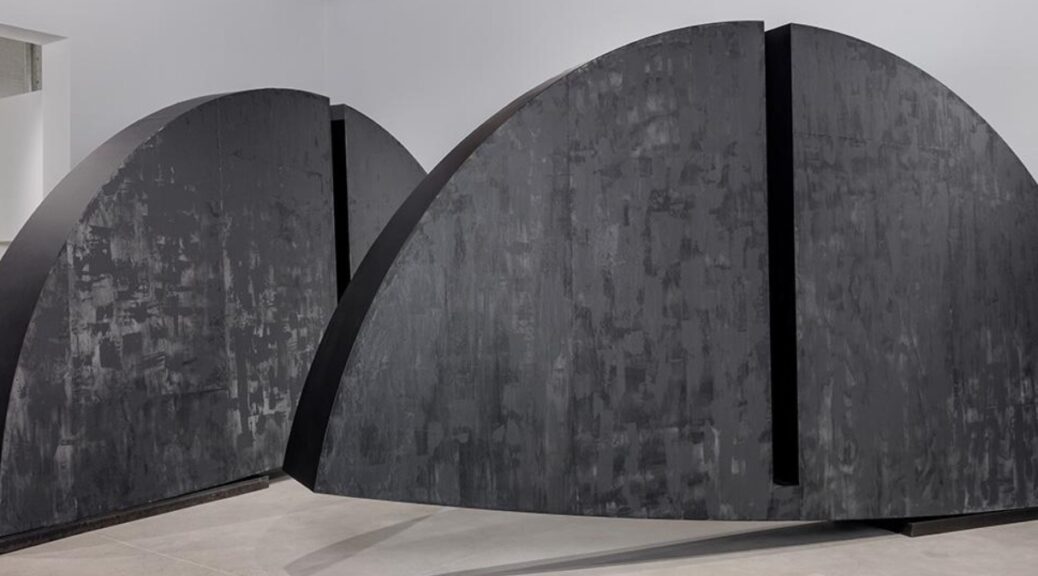
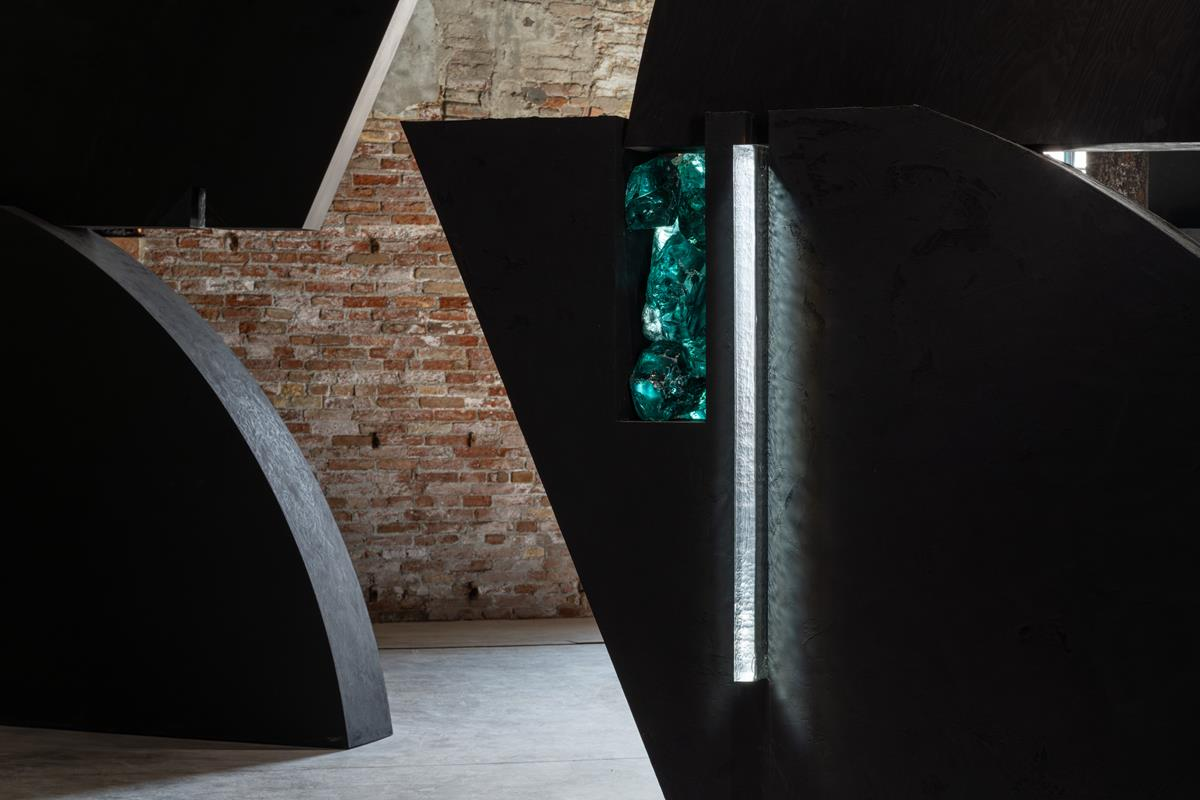
 Installation view of Torkwase Dyson, Tougaloo, 2026. 
 ON VIEW
Torkwase Dyson
61st International Art Exhibition of La Biennale di Venezia
Venice, Italy
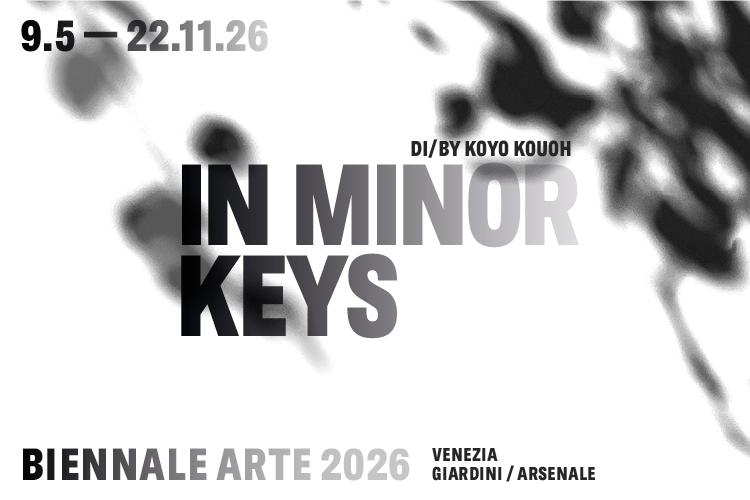
Through Nov 22, 2026 For the 61st International Art Exhibition of La Biennale di Venezia, In Minor Keys, curated by Koyo Kouoh, Torkwase Dyson debuts Tougaloo, an immersive sculptural installation with sound.

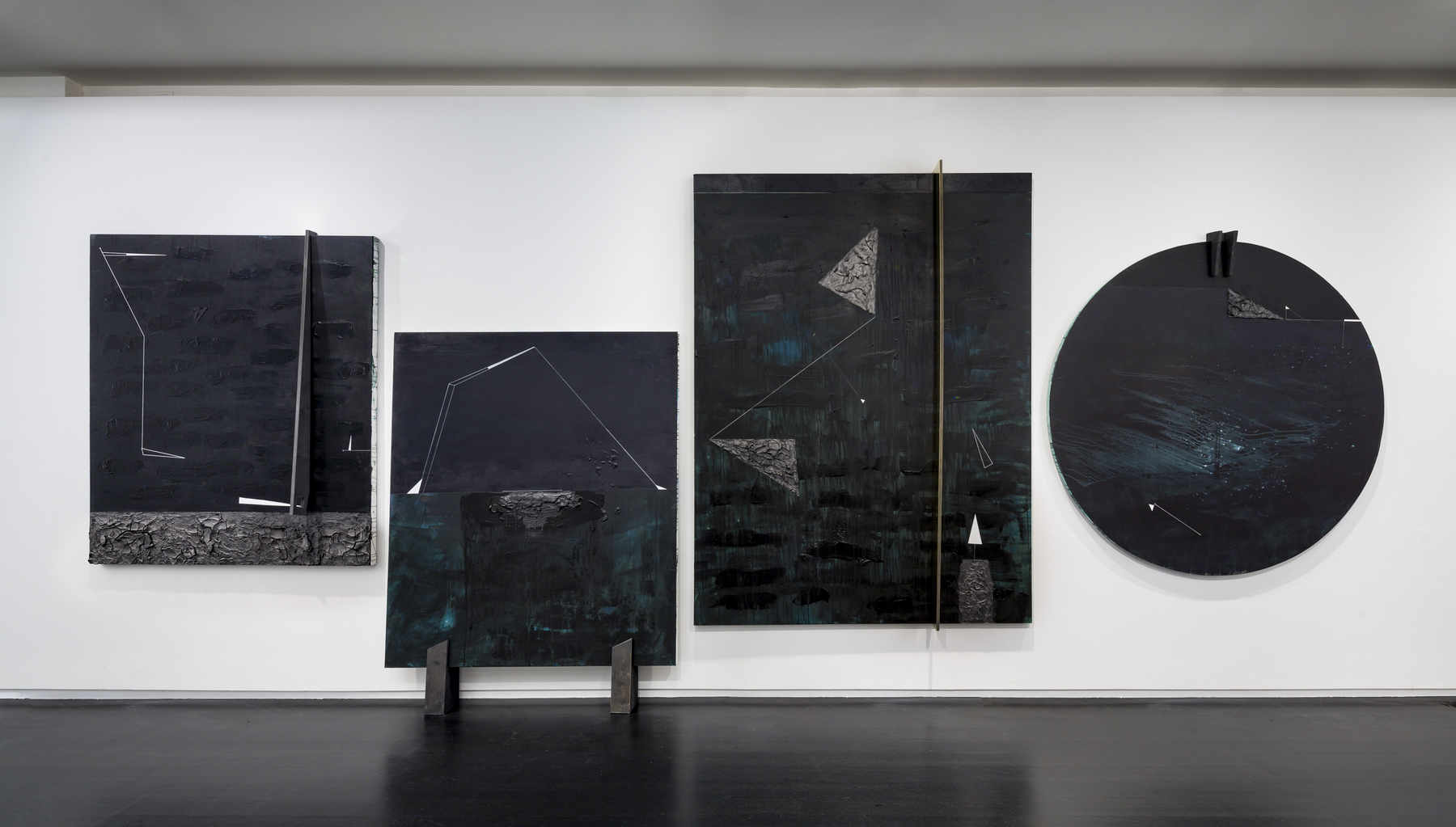
Working within a distinct abstract language, which the artist terms  “Black Compositional Thought,” Dyson employs forms refracted from histories of Black self-emancipation to explore the spatial dimensions of freedom. Presented at the Arsenale, Tougaloo draws on the artist’s experience at Tougaloo College in Mississippi, a campus where nineteenth-century plantation architecture exists alongside Modernist structures.

Christina Sharpe writes “Dyson’s installations and paintings are arc and ribcage, overhang and surface. Cement and graphite conjure water, extraction, hum, breath and its absence. Sonic wavelength becomes another material to extend a line and expand a field. Her works are studies in possibility, where a curve, a line, a wave, a sound/ing are acts of holding and practices toward liberation.”

Torkwase Dyson (b. 1973)
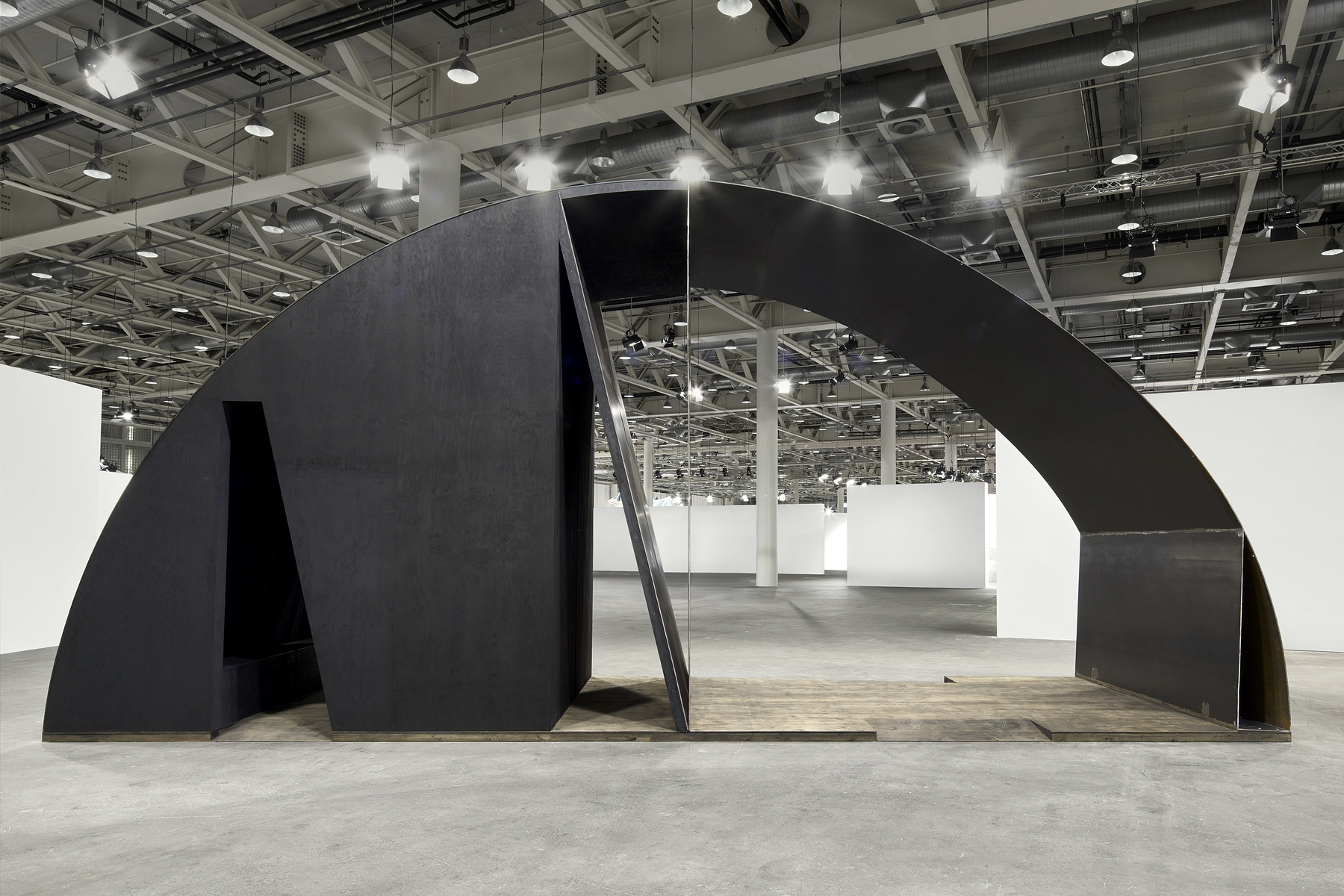
Errantry, 2024
Steel and timber
172 × 340 × 120 inches (436.9 × 863.6 × 304.8 cm)

Installation view of 1919: Black Water, Arthur Ross Architecture Gallery, Columbia University, New York, 2019

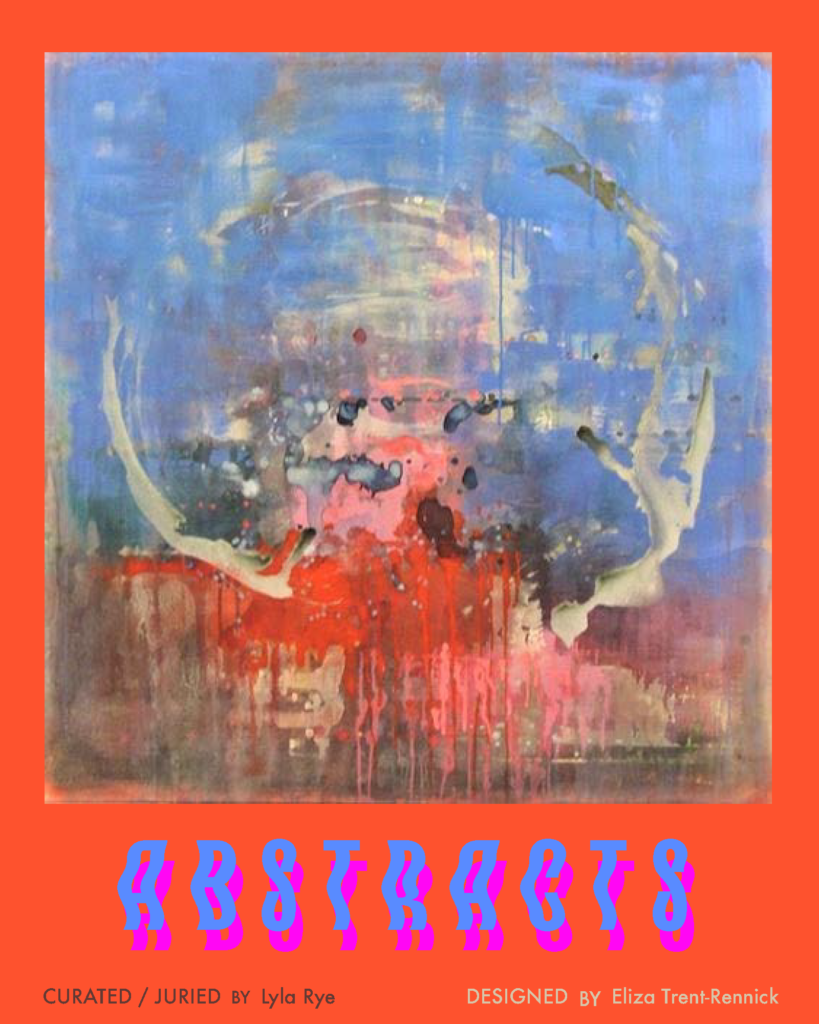
Aird Gallery Toronto- ABSTRACTS 2025 Now Live

ABSTRACTS 2025

ABSTRACTS 2025

Juried Online Exhibition and Catalogue

JUROR: LYLA RYE
DESIGNER: ELIZA TRENT RENNICK
FOREWORD BY ARNIE GUHA

Abstraction is not an absence. It is a decision.

To abstract is to strip away the familiar scaffolding of representation and ask a more difficult question: what remains when narrative recedes? What persists when image is released from obligation to describe?

The works gathered in ABSTRACTS, curated and juried by Lyla Rye, demonstrate that abstraction is not a single language but a constellation of methods. Across painting, digital media, photography, drawing, sculpture, and mixed media, the artists in this exhibition approach abstraction not as retreat, but as inquiry. Form becomes structure. Colour becomes an event. Gesture becomes argument.

Some works carve space. Some map pattern. Some lean into material process; others into digital construction. Some are quiet. Others declare themselves boldly. What binds them is not style, but intention, a commitment to exploring what visual language can do when it is freed from depiction.

In a moment saturated with image and immediacy, abstraction asks us to slow down. It resists instant readability. It rewards attention. It invites the viewer into a more active role: not decoding a message but participating in meaning.

Lyla Rye’s curatorial vision has brought together an expansive and diverse group of artists, each working from a distinct vantage point. The result is not a unified aesthetic, but a dynamic field of approaches; evidence that abstraction remains a vital and evolving force within contemporary practice.

This catalogue, designed with clarity and care by Eliza Trent-Rennick, extends the life of the exhibition beyond the gallery walls. It documents not only the works themselves, but the range of conversations that abstraction continues to generate.

The Aird Gallery exists to provide a platform for artists across Ontario to present rigorous, thoughtful work. ABSTRACTS reflect that mandate fully. It demonstrates that abstraction is not a historical chapter closed in the twentieth century, but an ongoing experiment — one that continues to expand, fracture, and renew itself.

On behalf of the Aird Board and our partner societies, I extend sincere thanks to Lyla Rye for her discernment and generosity in shaping this exhibition, and to all participating artists for the strength and depth of their contributions.

Abstraction endures because it asks us not simply to look, but to engage. Thank you for engaging with the Aird and with our shared commitment to the arts in Ontario.

Arnie Guha
Executive Chair

ABSTRACTS 2025 ARTIST LIST

Doug Adams, Maria-Bida Albulet, Sandra Altwerger, Hadeel Alzoubi, Jarrod Barker, Peter Barron, Peggy Bell, Leslie Bertin, Ioana Bertrand, Ilija Blanusa, Monica Burnside, Mike Callaghan, Jeannie Catchpole, Emily Conlon, Anne-Marie Cosgrove, Damon Couto-Hill, Edward Donald, Holy Dunlop, Agata Dworzak-Subocz, Azar Ebrahimi, Jill Finney, Saremifar Firouzeh, Julie Florio, Elissa Gallander, Monica Gewurz, Kathy Granger Tucker, Arnie Guha, Diana Hamer, Katherine Hartel, Katharine Harvey, Janet Hendershot, Leighton Hern, Ted Karkut, Hyunryoung Kim, Rupen Kungus, Em LeightonHern, Maureen Lowry, Dimitrije Martinovic, Lisa Mason, Claudia McKnight, Carole Milon, Leah Oates, Ovidiu Petca, Ann Piche, Fraser Radford, Leena Raudvee, Dale M Reid, Heather Rigby, Liz Ruest, Colleen Schindler, Pearl Sequeira, Sara Shields, Nancy Simmons Smith, Shawn Skeir, Alayne Spafford, Marisa Swangha, Karen Taylor, Sarah Thompson, Lorraine Thorarinson Bretts, Terry Torra, Margaret Wasiuta, Holly Winters, and Anna Yuschuk.

Download Catalog

BIOGRAPHY

Lyla Rye is a Toronto based artist who began her studies in architecture. She works in installation, sculpture, video and photography to explore our experience of architectural space. Rye studied at the University of Waterloo, York University and the San Francisco Art Institute. For over 30 years her work has been exhibited in galleries and screenings across Canada and internationally including New York, San Francisco, Adelaide, Auckland, Paris, and Berlin. She has exhibited at The Power Plant, The Whitney Museum of American Art, Prefix ICA, Southern Alberta Art Gallery, The Textile Museum of Canada and Olga Korper Gallery among others. She represented Canada at the Karachi Biennale, Pakistan in 2019. She has work in the public collections of the Art Gallery of Nova Scotia, York University, Cadillac Fairview Corporation, The Tom Thomson Art Gallery, The Robert McLaughlin Gallery and as part of Ways of Something at The Whitney Museum of American Art, NY.

Featured image- Liminal Space number 4 by Jarrod Barker.
Mid Century Native American Artist Mary Sully At The Met

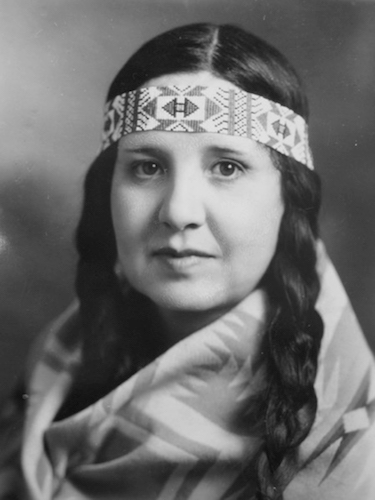
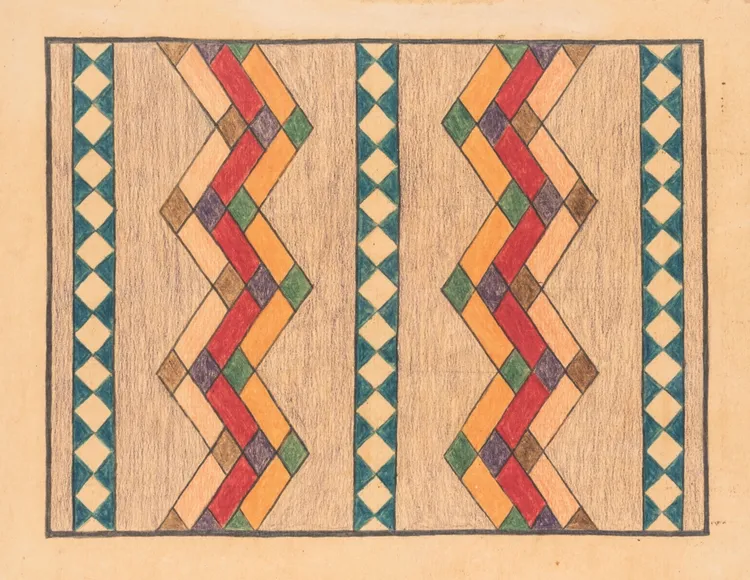
(New York, July, 2024)—This summer, The Metropolitan Museum of Art will present the exhibition Mary Sully: Native Modern, opening July 18, 2024. Born Susan Mabel Deloria on the Standing Rock Reservation in South Dakota, Mary Sully (1896–1963) was a little-known, reclusive Yankton Dakota artist who, between the 1920s and 1940s, produced highly distinctive work informed by her Native American and settler ancestry. The exhibition is part of The American Wing at 100, a series of gallery reinstallations and exhibitions marking the wing’s 2024 centennial.

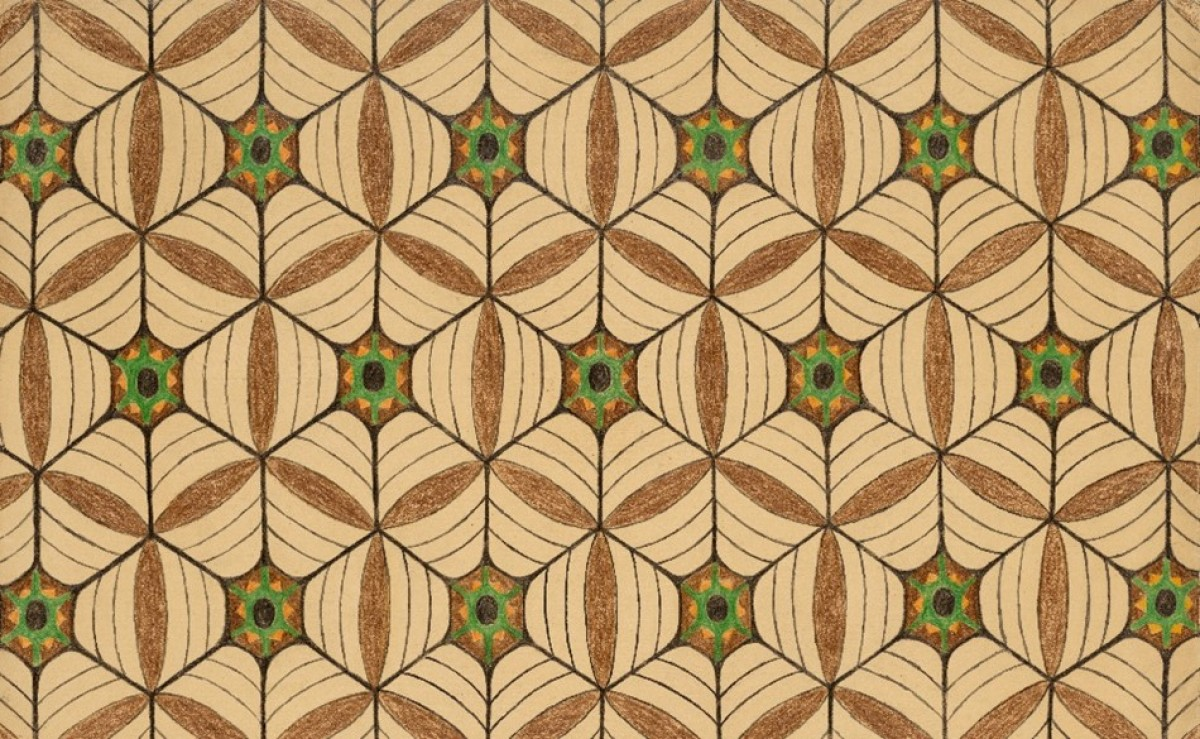
Image: Mary Sully (Dakota, 1896–1963). Alice (detail), ca. 1920s–40s. The Metropolitan Museum of Art, New York, Purchase, Morris K. Jesup Fund and funds from various donors, 2023

The exhibition is made possible by the Barrie A. and Deedee Wigmore Foundation.

“This compelling exhibition celebrates how Mary Sully’s cultural sensibilities influenced her unconventional body of work,” said Max Hollein, The Met’s Marina Kellen French Director and Chief Executive Officer. “Sully translated her life and experiences into a unique graphic language, culminating in an intensely creative perspective from which to consider Indigenous cultures and imagery.”

This first solo exhibition of Sully’s groundbreaking production highlights recent Met acquisitions and loans from the Mary Sully Foundation, works that call into question traditional notions of Native American and modern art.

The Met Fifth Avenue. 82nd Street New York, NY, 10028

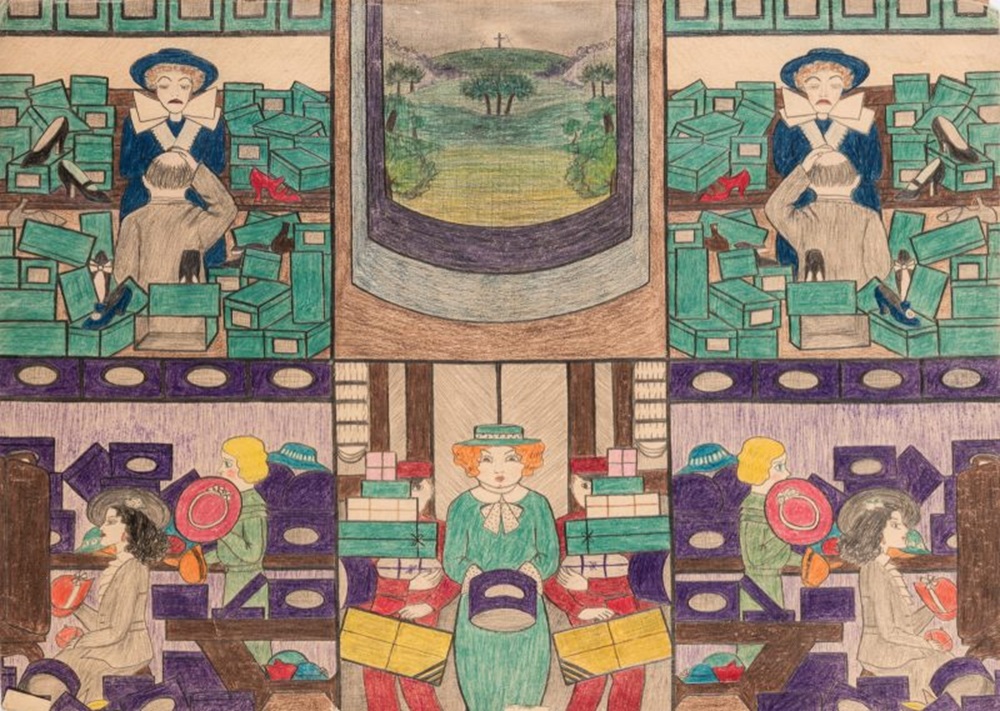
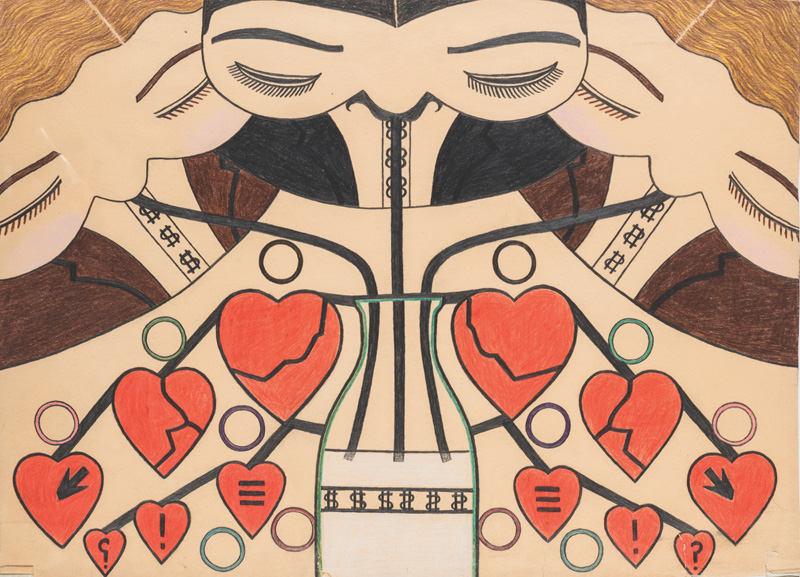
Working without patronage, in near obscurity, and largely self-taught, Sully produced approximately 200 intricately designed and vividly colored drawings in colored pencil, graphite, and ink on paper that captured meaningful aspects of her Dakota community mixed with visual elements observed from other Native nations and the aesthetics of urban life. Euro-American celebrities from popular culture, politics, and religion inspired some of her most striking works, which she called “personality prints”—abstract portraits arranged as vertical triptychs.

Panel from Titled Husbands in the USA by Mary Sully (1896–1963), 1927–1945. Colored pencil on paper, 12 7/8  by 18 inches. None of Sully’s pieces are dated, but it is estimated that they were all created between 1927 and 1945. Except as noted, all objects illustrated are in the collection of Philip J. Deloria. via themagazineantiques.com

Featuring 25 rarely seen Sully compositions—primarily her “personality prints”—as well as archival family material and other Native American items from The Met collection, the exhibition offers a fresh and nuanced lens through which to consider American art and life in the early 20th century. 

Sylvia Yount, Lawrence A. Fleischman Curator in Charge of the American Wing, said: “We’re thrilled to present Mary Sully: Native Modern as a special feature of the department’s 100th anniversary in 2024. Born of particular Native and Euro-American cultural entanglements, Sully’s work is highly relevant and resonant for the American Wing, The Met’s historic department of a broadly defined American art by diverse makers, with a deepening concentration of work by women and artists of color.”

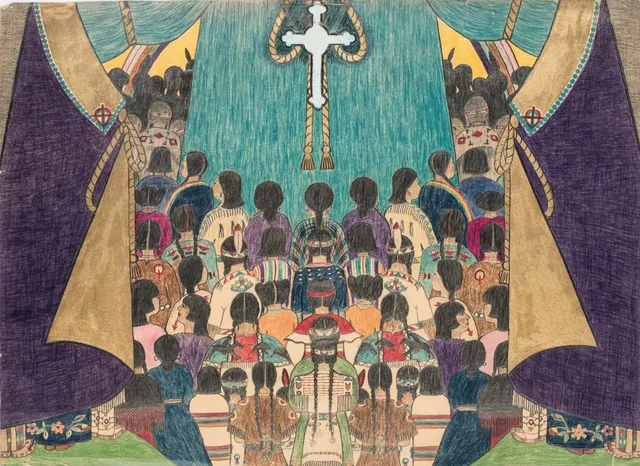
Portion of Mary Sully’s The Indian Church (around 1938-45)Collection of Philip J. Deloria

Bottom of Sully’s The Indian Church (c. 1938-45)© Collection of Philip J. Deloria via theartnewspaper.com

About Mary Sully

As a great-granddaughter of the successful 19th-century portraitist Thomas Sully (1783–1872), Susan Deloria expressly adopted the name of her mother, Mary Sully (1858–1916), daughter of Alfred Sully (1820–1879) and the Dakota woman Susan Pehandutawin (dates unknown), an artist in her own right. Deloria grew up in a distinguished family of Dakota leaders. Her sister Ella Cara Deloria (1889–1971), with whom she primarily lived, was a linguistic ethnographer trained by the esteemed Columbia University anthropologist Franz Boas. Her nephew, Vine Deloria, Jr. (1933–2005), was an author, theologian, historian, and activist for Native American rights. And her great-nephew, historian Philip J. Deloria, is the author of Becoming Mary Sully: Toward an American Indian Abstract (University of Washington Press, 2019), the only scholarly investigation of her art and life.

Related Presentation in Art of Native America Installation

In late June, the American Wing unveiled a new rotation of works by Native American artists focusing on intergenerational knowledge and their critical role as knowledge keepers. These include recent acquisitions by contemporary basket makers Jeremy Frey (Passamaquoddy) and Theresa Secord (Penobscot), in addition to painter Rabbett Strickland (Red Cliff Ojibwe).

Credits and Related Content

Mary Sully: Native Modern is curated by Patricia Marroquin Norby (P’urhépecha), Associate Curator of Native American Art, and Sylvia Yount, Lawrence A. Fleischman Curator in Charge of the American Wing.

The exhibition is conceived in partnership with the Mary Sully Foundation and the Minneapolis Institute of Art.

Featured imageMary Sully, “Good Friday” From Philip J. Deloria, “Becoming Mary Sully; Toward an American Indian abstract” (Seattle, University of Washington Press: 2019) ISBN 978-0-295-74504-6. Courtesy University of Washington Press.

MODERNISM ADORED: 20th Century Art A New Online Exhibition Now Open

“Art cannot be modern. Art is primordially eternal.” Egon Schiele 

New York City, New York, April 2024. Our friends at Helicline Fine Art proudly announces the opening of its new online exhibition, Modernism Adored: 20th Century Art, a celebration of the revolutionary artistic movements that defined the 20th century. The exhibition runs through June 30 and features a curated selection of paintings, drawings and sculptures from important to rediscovered artists, Modernism Adored explores essential movements that shaped the artistic landscape during the 20th century from ashcan, cubism, art deco, Vorticism, WPA, abstraction, abstract expressionism, caricature and outsider art. It brings together a diverse range of artwork that reflects the spirit of innovation and creativity that defined these pivotal periods in art history. As we are a NYC based gallery, the history of New York inspires us to include art that glorifies our great city.

“We are thrilled to present Modernism Adored: 20th Century Art. This is stuff in our hearts and we are honored to share it with collectors and curators throughout America and worldwide,” said Helicline proprietors Keith Sherman and Roy Goldberg. They continued, “This exhibition is our “eye,” it exemplifies the enduring impact of modernism in art and provides a unique opportunity to witness the evolution of artistic expression over the course of the 20th century.” 

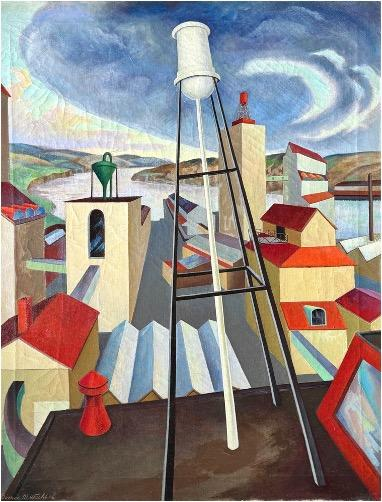
Highlights of Modernism Adored: 20th Century Art include three early Stuart Davis drawings, Vorticist linocuts by Sybil Andrews and Lill TschudiMaurice Guiraud-Riviere’s breathtaking “La Comete” silvered bronze, several works by Al Hirschfeld, abstracts by Florence Henri and O. Louis Guglielmi, a Charles Demuth drawing of bathers, an early Daniel Celentano oil, a precisionist industrial scene by Simon Wachtel, and much more. 

Artists in the exhibition include: Sybil Andrews, Maurice Becker, A. Aubrey Bodine, Jo Cain, Staats Cotsworth, Daniel Celentano, Robert Cronbach, James Daugherty, Stuart Davis, Charles Demuth, Donald Deskey, George Pearse Ennis, William Gropper, O. Louis Guglielmi, Harold Haydon, Florence Henri, Al Hirschfeld, Mervyn Jules, Max Kalish, William Kienbusch, Georgina Klitgaard, Henry Koerner, Leon Kroll, Vladimir Lebedev, Carlos Lopez, James McCracken, Alfred Mira, Irene Rice Periera, Antonio Petruccelli, Arthur Rosenman Ross, Hilla Rebay, Maurice Guiraud-Riviere, Joseph Solman, Lill Tschudi, Gerrit Van Sinclair, Samuel Wachtel, Katherine Wiggins, John Winters and Purvis Young. 
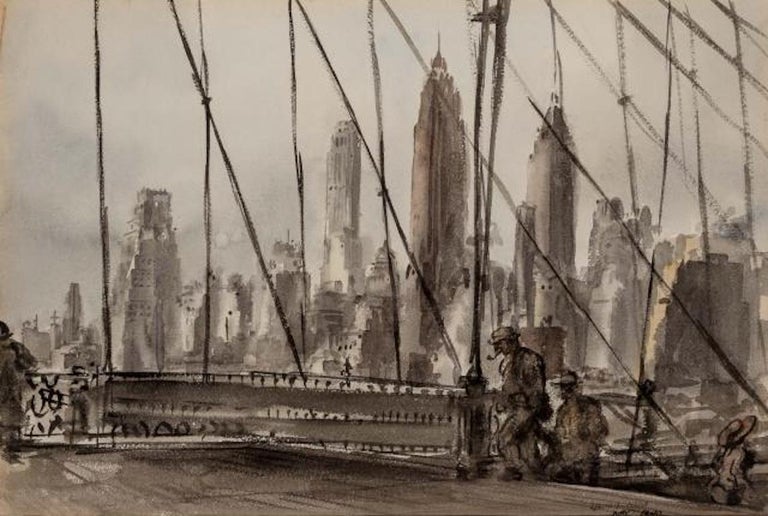
Florence Henri (1893 – 1982)Composition18 ½ x 12 ½ inchesGouache on paper Monogrammed F.H. and dated 1926 lower rightGeorge Pearse Ennis (1884 – 1936)Forging a Gun Tube #146 x 37 inches, 1918 Signed lower right
There is great debate about what modern art is.
Numerous descriptions abound. It is a series of genres from the mid-19th century to the present that challenged the Western standards of fine art and embraced new forms of expression. It is often seen as beginning with realism, which rejected the traditional subjects of art and focused on common people. 

Others say modernism was a movement in the arts in the first half of the 20th Century that rejected traditional values and techniques and emphasized the importance of individual experience. A broader perspective, which we at Helicline embrace, modernism was a break with the past and the concurrent search for new forms of expression. It is in fact, constant reinvention, and it’s significant because it fundamentally asks us to change our perspectives as time passes.  

“The strangeness will wear off and I think we will discover the deeper meaning in modern art.”  Jackson Pollock
Daniel Ralph Celantano (1902-1980)Long Beach8 x 10 inchesOil on artist boardSigned lower leftTitled in pencil, versoHarold Haydon (1909 – 1994)History of the US Postal Service21 x 25 inchesoil on canvas, c. 1938
Why Modern Art Continues To Influence Contemporary Artists

The 20th century distinguished itself from the previous century with a new form of industrial revolution- one tied much more intimately to an advancing technology that propelled society into a state of speed and frenzy. Not just the streamlining of railway trains and automobiles or the advancements in transcontinental travel brought on by first lighter than airships, then seaplanes and jet airliners- the motion of advancement and relocation had a seminal effect on culture and thought. The skyscraper and new vertical constructions created its own influence and metamorphosis: hundreds of families could now be housed in a singular structure adding a homogeneity and imposing bold linear designs and influences. Two world wars and a multitude of others pushed existentialism into the minds of many academics and thus filtered into other areas of discipline such as literature, music and design. The development of the transistor created miniaturization and gadgetry that became an essential component to living spaces and personal effects. Television became a manifestation of any imaginable visual image and transfixed society into another state of readiness- a state ready for instant and dense media served quickly and directly. All of these things (and more) gave rise to new forms of art- most often recognized by the general public in modern abstract paintings. The ‘sense’ of all the above was captured by artists using new ways of communicating through their work: immediacy (action painting) and abstraction were more aligned with the zeitgeist then earlier classical forms of artwork.

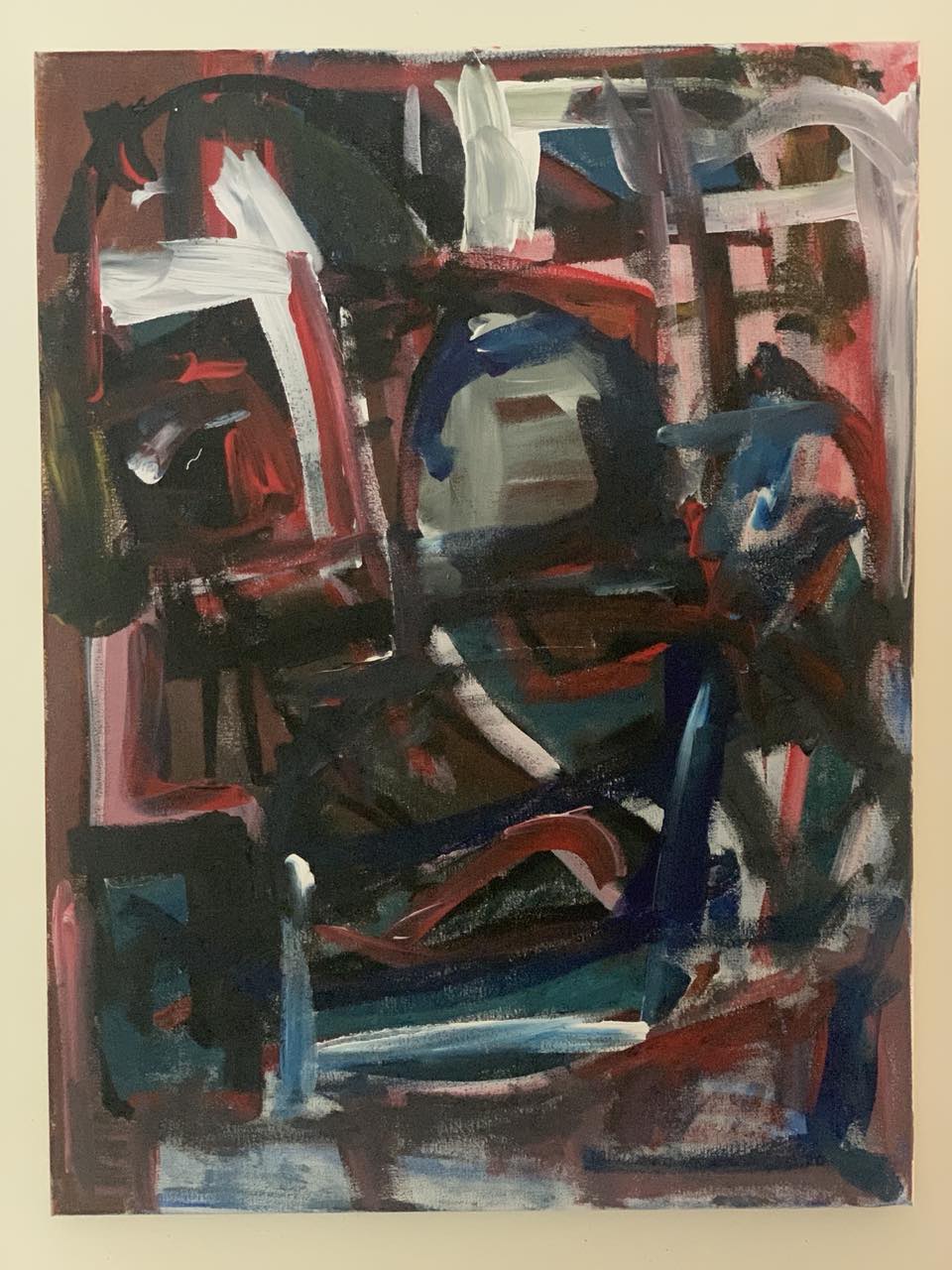
Untitled abstract 11 Jarrod Barker 2024

The 21st century has seen many parallel and analogous developments. Though we are ‘only 24 years’ into this latest age, the concept of quick advancement and speed is in full effect. From the maturation of the digital age (the internet) and digital communication (email) to rapidly advancing personal communication (smartphones) and powerful and inexpensive computers to today’s exhilarating advancements in AI (artificial intelligence) and robotics. These ‘re-mapped’ and repeated driving forces from the last century continue and their effects most readily recognized are still key components of contemporary ‘neo-modern’ artwork.

MORE ABOUT HELICLINE FINE ART:
Helicline Fine Art, founded in 2008 by Roy Goldberg and Keith Sherman, specializes in American and European modernism. The gallery’s core offerings are works from the WPA period. Additionally, Helicline offers American scene, social realism, mural studies, industrial landscapes, regionalism, abstracts, and other artwork. Located in a private space in midtown Manhattan, Helicline is open by appointment. The artworks on the site represent a sampling of available works. Helicline’s offerings are also available on artsy.net and 1stDibs.com.
Caption for image at the top of this article: Simon Wachtel (1900 – 1965)Factory Yards N. 336 x 24 inchesOil on canvas, c.1930s Signed lower right

Online Exhibition Of 1930s American Art Now Running

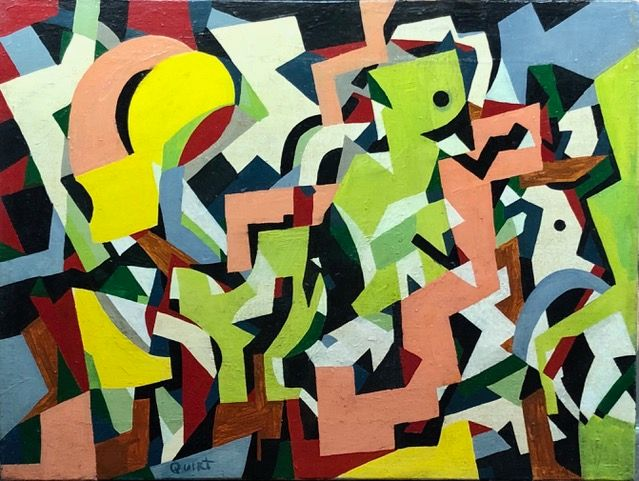
Walter Quirt

“This generation of Americans has a rendezvous with destiny.”           President Franklin Delano Roosevelt, June 27, 1936

A Rendezvous with Destiny: 1930s American Art, the new online exhibition from Helicline Fine Arthas started and runs through November 5, 2023. The exhibition features a variety of artistic styles and subject matters from urban, industrial and rural to abstract, people working and scenes of everyday life. For New York City based artists, the City itself was glorified on canvas, paper and bronze. Several of the artists who thrived during that period are still well known today, but most are obscure.


The exhibition, of predominantly 1930s artworks, features that range. The Metropolitan Museum of Art’s new exhibition, “Art for the Millions: American Culture and Politics in the 1930s” celebrates the American spirit during the depression era and serves as the inspiration for Helicline Fine Art’s new exhibition. 

After the stock market crash of 1929, Americans experienced a time of great transition at every level of society. After a terrible slump, the men and women of the country came together to rebuild the economy, their lives and their spirits. For the first time, our government paid artists to create. To this day, many Federal buildings – post offices, court houses, schools, hospitals, administrative buildings – still have the murals of WPA artists emblazoned on the walls and statues standing in courtyards. The work of these artists reflected that renewal. 

The artists of that generation are being rediscovered in 2023 and for generations into the future, thanks to the Met’s new exhibition, and galleries that keep the modernist art flame burning. Helicline’s proprietors, Keith Sherman and Roy Goldberg, recall discovering the WPA period. “We had just moved into our first apartment, constructed in 1929, on the Upper West Side. In attempting to furnish our home we realized we had no sense of style or taste. We spent time in the Strand Book Store to see what homes looked like in the 20s and 30s,” said Goldberg. “We discovered Art Deco, the Machine Age, the WPA and more.

We spent time in museums, art fairs and something that has disappeared from the cultural landscape, antique shows, where we developed our eye. Today we are collectors turned dealers still collecting. The WPA period is in our hearts,” added Sherman. 

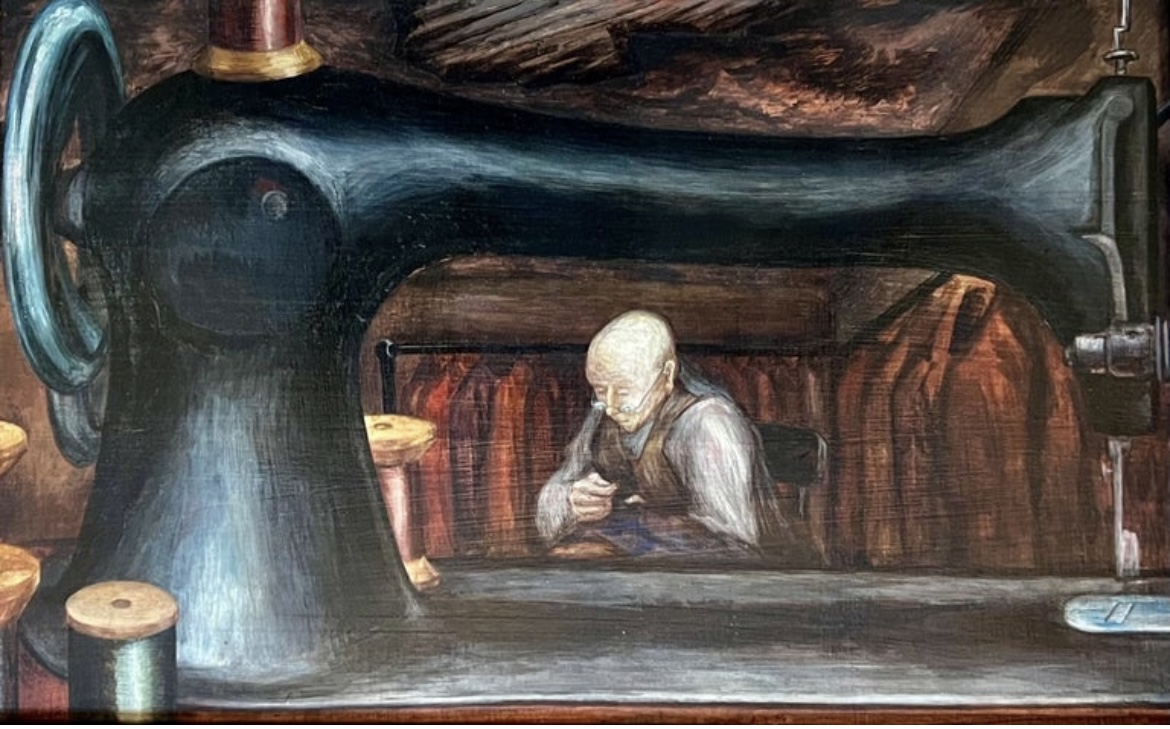
Highlights of A Rendezvous with Destiny: 1930s American Art include a bold Stuart Davis gouache on paper; a “Mercury” bronze by Joseph Freedlander that sat on top of 5th Avenue traffic lights from the 1930s-60s; two works by Daniel Celentano (Thomas Hart Benton’s first and youngest student), many works depicting New York City, including a Cecil Bell of street life under the EL train and a Reginald Marsh depicting the Brooklyn Bridge, mural studies, and a Mervin Jules oil of a tailor with astonishing perspective.
MORE ABOUT HELICLINE FINE ART:MORE ABOUT HELICLINE FINE ART:Helicline Fine Art, founded in 2008 by Roy Goldberg and Keith Sherman, specializes in American and European modernism. The gallery’s core offerings are works from the WPA period. Additionally, Helicline offers American scene, social realism, mural studies, industrial landscapes, regionalism, abstracts, and other artwork. Located in a private space in midtown Manhattan, Helicline is open by appointment. The artworks on the site represent a sampling of available works. Helicline’s offerings are also available on artsy.net and 1stDibs.com.

Featured image- |Reginald Marsh.

Mervin Jules

Art Auction: A Better Way to Collect Art

Have you ever dreamed of owning a piece of fine art but felt that it was out of reach financially? An art auction may be the answer to your dreams! Art auctions are an excellent way to purchase original artworks without breaking the bank. With the right approach, art auctions can be a great way to build a collection of art and save money.

The benefits of an art auction

For those who are looking to add to their art collection or simply just want to try something new, art auctions can be an excellent way to obtain art. Art auctions offer a unique opportunity to purchase artwork from all over the world at competitive prices. With a broad selection of works to choose from, they provide an exciting and engaging experience. 

One of the main advantages of attending an art auction is that buyers have the chance to buy authentic artwork without the risk of buying a counterfeit piece. This can save buyers both money and time since they don’t need to worry about being scammed by an online seller. 

Auctions also provide an opportunity for the buyer to get to know the artist and their work, as well as to discuss any questions with auctioneers or knowledgeable collectors. 

How to participate in an art auction

Attending an art auction is a great way to find unique and valuable pieces of art. But it can be intimidating if you’ve never attended one before. Here are some tips to help make sure your first experience at an art auction is a successful one. Before you attend the auction, take some time to research the artwork that is being offered. Learn about the artist and the piece you are interested in. Knowing what you are bidding on can help you make informed decisions during the auction.

The difference between an art auction and an online sale

Auctions and online sales both offer a great way for art collectors to purchase artwork, but there are some key differences between the two. An art auction is a live event where bidders compete in a competitive environment to purchase pieces of art. Bidding is fast-paced and participants must be willing to pay the highest price in order to secure the artwork they desire. 

Online sales are much different in that they are usually conducted over a longer period of time. Instead of a competitive environment, buyers have the opportunity to browse through the artwork and make their selections at their own pace. This allows buyers to take their time, research the piece, and evaluate whether it’s worth purchasing or not. 

Furthermore, buyers may be able to negotiate a lower price as they may not have to compete with other bidders. Another difference between an art auction and an online sale is that auctions are typically reserved for more expensive pieces of art, while online sales tend to feature more affordable artwork. As a result, those who want to purchase high-end artworks may find it more beneficial to attend an art auction than to purchase from an online store.

Damien Hirst At World’s First Asset-Based Tokenised Contemporary Art Exhibition

LONDON, ENGLAND February, 2020: ‘XXI’, a landmark contemporary art exhibition, will launch at the new, state-of-the-art HOFA Gallery in London’s Mayfair on 20 February 2020.  It is set to be the world’s first ever asset-based tokenised contemporary art exhibition, using cutting-edge blockchain technology and cryptography to facilitate access to coveted blue-chip contemporary art.

Image

RETNA

The highly anticipated highlights of ‘XXI’ will be rare and unseen works by established contemporary artists such as Kaws, RETNA and Damian Hirst.  These include the Blame Game Portfolio, a set of 10 prints by Kaws which has been shrouded in mystery since its shadow début in 2016. With sprightly colours and a suggestive title, these prints have the intrigue of a jigsaw puzzle or a comic detective game. At once stimulating, playful and yet, somewhat ominous, Blame Game is expected to be a crowd favourite and stands as the most valuable artwork set for display at ‘XXI’.

Image

Damien Hirst

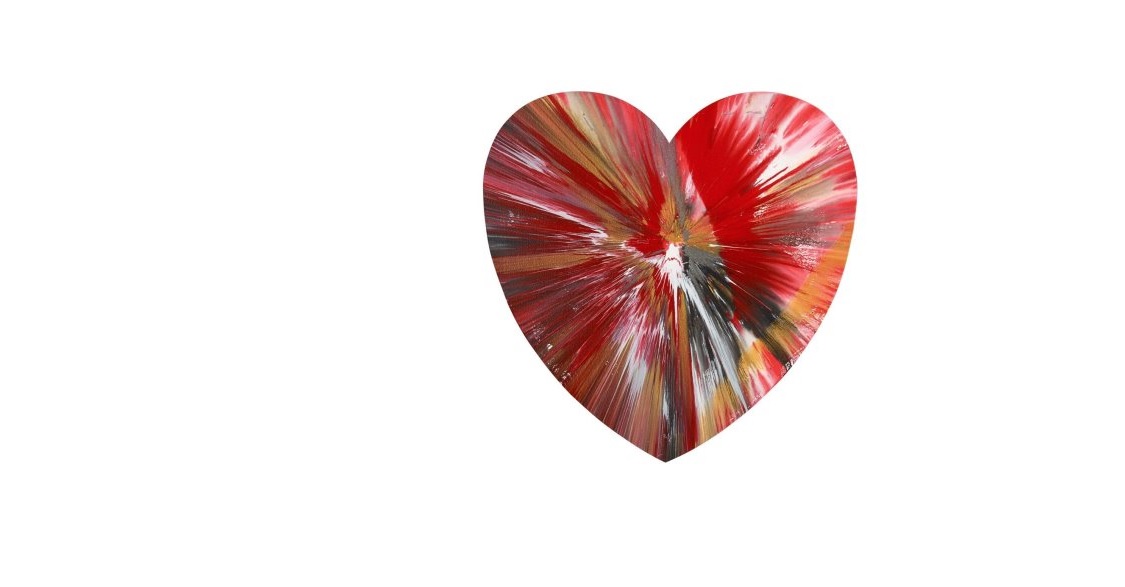
RETNA’s Los Ne El Barrio joins Kaws’ Blame Game on the list of rare features at the upcoming exhibition. This abstract lettered painting, finished with rare blue diamond dust and seemingly laden with hidden meanings, represents a unique style of contemporary abstract art that’s highly sought after by art connoisseurs. Also on the list of exclusive features, is the Heart Spin Painting by Damian Hirst. Hirst’s popular spin paintings achieved international renown when a large reproduction was used to cover the floor of the stadium for the closing ceremony of the London Olympic Games of 2012. Heart Spin Painting is a colourful piece whose piecing and energetic radial symmetry evokes the speaking gaze of a knowing eye.

Image

Kaws

All told, ‘XXI’ will feature a portfolio of carefully sourced artworks collectively worth more than $1M and individually projected to appreciate in value based on current market trends. Other participating artists include Banksy, Jeff Koons, Joseph Klibansky, George Condo, Zhuang Hong Yi and Ilhwa Kim. Indeed, the upcoming ‘XXI’ exhibition is anticipated to a hotspot for investments in high-yield contemporary art. 

Commenting on the upcoming exhibition, HOFA co-founder, Elio D’Anna, said “We are proud to unveil this project which has been over 12 months in the making. It’s going to be an extravaganza of contemporary art. We are bringing the crème of contemporary art together for a ground-breaking show which we know viewers will enjoy.”

HOFA’s new gallery is located at 11 Bruton Street in Mayfair, London. ‘XXI’ will run for 2 week from the 20 February to 5 March 2020.