Tech and cars go together: the Hoonicorn RTR, the famous hybrid race and demo car.
The first tech start-up in a garage wasn’t Hewlett Packard. Back in the day, pre-Silicon Valley, it was the men and women bolting together cars, optimizing engines, lovingly perfecting car technology in their garages and taking it to the streets.
Profiled on RxSpeed’s website in the LAB [link below CP], take a visual tour of this incredible car and wild video and other modified cars.
Like building a spaceship around an astronaut, this million-dollar racecar was built around a driver, the needs of his craft and the exploration of a genre.
For two years the Hoonicorn RTR was kept a secret.
No one outside the very small and tight-knit circle knew about the project; even best friends were left out. Shrouded in secrecy, the six-cylinder 1965 Mustang Notchback 3-speed was cut and sewn back together into the Hoonicorn RTR, a hybrid race and demo car.
Cell phones and computers provide access to such an incredibly fast-paced information network that keeping anything hidden from prying eyes is becoming increasingly rare—and a Ken Block Gymkhana car is on another level of vulnerability. With over a quarter of a billion views on the Gymkhana franchise, the reveal of the next-generation car is on par with anything the automakers can throw out, which is why the Hoonicorn RTR was such a big surprise to the world.
It’s not cheap or quick modifying a stock car. To keep costs down, motorheads can visit RxSpeed to check out where to buy automotive products at the lowest cost. More over-the-top car stories can be found in the LAB
About RxSpeed
www.rxspeed.com is a comparison shopping engine for the automotive aftermarket. It saves consumers time & money during their research and purchase process. Their proprietary software platform catalogs millions of parts from hundreds of brands to help match customers with retailers easier and faster than ever before.
The COVID-19 pandemic caused by the novel coronavirus SARS-CoV-2 has led to over 910,000 deaths worldwide and unprecedented decimation of the global economy. Despite its tremendous impact, the origin of SARS-CoV-2 has remained mysterious and controversial. The natural origin theory, although widely accepted, lacks substantial support.
Censorship Of Alternative Theory
A recent Reddit page
The alternative theory that the virus may have come from a research laboratory is, however, strictly censored on peer-reviewed scientific journals. Nonetheless, SARS-CoV-2 shows biological characteristics that are inconsistent with a naturally occurring, zoonotic virus.
Dr. Li-Meng Yan, one of the key authors of the report has been labeled as a whistle blower by Western media.
In this report, the authors describe the genomic, structural, medical, and literature evidence, which, when considered together, strongly contradicts the natural origin theory. The evidence shows that SARS-CoV2 should be a laboratory product created by using bat coronaviruses ZC45 and/or ZXC21 as a template and/or backbone. Building upon the evidence, we further postulate a synthetic route for SARS-CoV-2, demonstrating that the laboratory-creation of this coronavirus is convenient and can be accomplished in approximately six months.
Our work emphasizes the need for an independent investigation into the relevant research laboratories. It also argues for a critical look into certain recently published data, which, albeit problematic, was used to support and claim a natural origin of SARS-CoV-2.
From a public health perspective, these actions are necessary as knowledge of the origin of SARS-CoV-2 and of how the virus entered the human population are of pivotal importance in the fundamental control of the COVID-19 pandemic as well as in preventing similar, future pandemics.
Introduction
COVID-19 has caused a world-wide pandemic, the scale and severity of which are unprecedented. Despite the tremendous efforts taken by the global community, management and control of this pandemic remains difficult and challenging. As a coronavirus, SARS-CoV-2 differs significantly from other respiratory and/or zoonotic viruses: it attacks multiple organs; it is capable of undergoing a long period of asymptomatic infection; it is highly transmissible and significantly lethal in high-risk populations; it is well-adapted to humans since the very start of its emergence ; it is highly efficient in binding the human ACE2 receptor (hACE2), the affinity of which is greater than that associated with the ACE2 of any other potential host.
The origin of SARS-CoV-2 is still the subject of much debate.
A widely cited Nature Medicine publication has claimed that SARS-CoV-2 most likely came from nature. However, the article and its central conclusion are now being challenged by scientists from all over the world.
Online casinos are a lot of fun. There are thousands of websites
and mobile apps dedicated to online gambling and casino games.
Unfortunately, some of these casinos do not offer a safe place to
play online roulette and other casino games.
Before creating an account and depositing money in an online
casino, you should take a closer look at its features.
The following four factors should help you find a credible online casino. If you are developing your own casino, you can also benefit from ensuring that your platform offers these features.
Security
Security is the most important factor when choosing an online
casino. You should first ensure that the online casino complies with
their local regulations. For example, online casinos in the UK should
be licensed by the UK Gambling Commission.
When you open an account with an online casino, you may need to
provide sensitive information. Besides your name and email address,
you may include bank details or provide access to your PayPal
account.
Reliable online casinos use the latest SSL encryption to ensure
that your personal and financial information remains secure.
Variety
You may get tired of playing the same game for hours at a time. The best online casinos provide users with a variety of games.
For example, casino.netbet.co.uk
offers over a dozen different online roulette games. They also have
slots, blackjack, and other online casino games. With over 1,500
total games and new games added weekly, there is no shortage of games
to keep you entertained.
Rewards
The casino that you choose should offer rewards, bonuses, and
promotions. Many of these websites offer free funds to match your
initial deposit. Depending on the site that you choose, you may start
with a hundred dollars in your account after depositing fifty
dollars.
Besides sign-up bonuses, many sites feature weekly promotions or
special giveaways. Sometimes, they may increase the potential payouts
for popular games.
Mobility
The top online casinos allow players to play from any device.
Instead of just accessing the online casino from a website, you
should have mobile options for playing on your smartphone or tablet.
Online casinos that allow you to play across all devices provide a
convenient way to enjoy your favorite games. You can play while
commuting to work or during a break.
These are the main factors that you should consider when choosing
an online casino. These same details may also benefit those that are
planning to develop their own online casinos.
As technology
makes it easier to reach customers across the globe, you should
ensure that your platform appeals to a wider audience. Remember to
focus on security, variety, rewards, and mobility.
Wyland, marine life artist and environmental activist, is making waves with his latest nationwide campaign for conservation. He’s best known for his series of 100 monumental marine life murals around the globe.
Steve Creech, President of the Wyland Foundation, is one of many behind the work the org is doing to enlist the support of cities and mayors nationwide to urge conservation. Hundreds enlisted this year- see latest participants here. The group works on educating constituents about CO2 emitted from our homes and lifestyles. For the Silo, Virginia Chavez.
About the Wyland Foundation
Founded in 1993 by environmental artist Wyland, the Wyland Foundation, a 501c3 non-profit organization dedicated to promoting, protecting, and preserving the world’s ocean, waterways, and marine life. The foundation encourages environmental awareness through community events, education programs, and public art projects.
“Your task is not to foresee the future, but to enable it.“
Founded on the values of pioneer pilot Antoine de Saint-Exupéry, a new partnership has formed between the leading Quebec AI research institute, Mila, and France’s IRT Saint Exupéry, which established a Montreal branch one year ago.
This partnership confirms the commitment shared by both parties to advance research in the field of intelligent systems, with a focus on embedded intelligence in critical systems, particularly related to travel (i.e., planes and cars) and healthcare (medical devices).
At the heart of the partnership are two key players in scientific and technological research who have joined forces to promote best practices and tackle the scientific challenges of artificial intelligence driven by industry needs and societal impacts.
Recognized worldwide for its numerous breakthroughs in artificial intelligence, Mila distinguishes itself both in calibre and in number of its researchers. Thanks to this partnership, Mila is enriched by an original model of collaboration, in which industry and academia will work together in a common space to solve scientific questions arising from industrial concerns. This collaborative model, tried and tested at IRT Saint Exupéry in France since 2013, has led to the creation of a French-Canadian research program, *DEEL, mobilizing 14 industrial companies and roughly 20 academic researchers in Toulouse, Montreal and Quebec City, including researchers from Mila. IRT Saint Exupéry now has access to a cooperative space on Mila’s premises. The proximity to Mila’s researchers and industrial partners encourages the development of multi-partner French-Canadian research programs.
If the Canadian branch of IRT Saint Exupéry was selected to integrate within Mila’s ecosystem, considered one of the best in the world for AI research and development, it is thanks to the partnership established two years ago with the Quebec Institute for data valorization IVADO, which was founded to foster AI partnership projects with industry. After the DEEL project, initiated jointly and now integrated into the Toulouse Interdisciplinary Institute of Artificial Intelligence “ANITI” of which it is the driving force, IRT Saint Exupéry and its Quebec partners are now developing new expertise in the field of confidence AI and decision support for critical systems, with applications for land, air and space mobility, but also for health and the environment.
YoshuaBengio, Scientific Director – Mila
“Mila‘s mission is to develop the understanding of intelligent systems in order to put them at the service of all humanity in an ethical, inspiring and sustainable way. More than 500 world-class researchers at the Institute focus on deep learning and neural networks that shape today’s intelligent systems. This partnership with IRT Saint Exupéry Canada broadens our horizons and our network.We are proud to make concrete through this partnership the commitments of collaboration between Canada and France in the field of artificial intelligence.“
Geneviève Fioraso, President – IRT Saint Exupéry
“I am convinced that collaborations with the researchers, engineers, laboratory students and partners of the Mila ecosystem in Montreal will be very stimulating for the IRT Saint Exupéry teams in Canada as well as in Toulouse.By working closely with the Mila Institute, we are going to accelerate our work and strengthen our expertise in AI, thus enhancing the reliability, safety and competitiveness of the fields concerned with critical and complex systems: air, space and ground transportation, medical devices and the environment.Ourlongstanding partnership with IVADO and CRIAQ in Quebec allows us today, alongside Mila, to achieve a new level of deep learning and understanding of intelligent systems.This new alliance with the French-speaking centre of excellence in AI, based on shared scientific and ethical values, also illustrates the willingness of the technological research institutes to open up internationally.“
Guillaume Gaudron, CEO – IRT Saint Exupéry Canada
“We are really excited to join Mila.Working in this privileged environment and close to the very best researchers in the field represents an unprecedented opportunity for the institute to showcase its skills and respond to the deep concerns raised by artificial intelligence.We are also pleased to be able to offer a very unique collaboration model, one which brings together different actors to address common, shared and open challenges.We are mobilizing artificial intelligence on future topics such as the quantum computer, the autonomous vehicle, medical applications (diagnosis of rare diseases), satellites, and more. These are all complex and compelling subjects that need to be supported by very high-level scientific research, and require the use of AI algorithms that are robust, reliable, justifiable and, in the future, certifiable.“
About Mila:
Founded in 1993 by Professor Yoshua Bengio of the Université de Montréal, Mila is a research institute in artificial intelligence which rallies 500 researchers specializing in the field of deep learning. Based in Montreal, Mila’s mission is to be a global pole for scientific advances that inspires innovation and the development of AI for the benefit of all. Mila, a non-profit organization, is recognized globally for its significant contributions to the field of deep learning, Mila has distinguished itself in the areas of language modelling, machine translation, object recognition and generative models. For the Silo, Diane Loth.
About IRT Saint Exupéry Canada (CRAN):
IRT Saint Exupéry Canada or CRAN (Centre de Recherche Aéro-Numérique) settled in Montreal in June 2019. With a specialization in areas of artificial intelligence, it brings together academia and industry through a recognized collaboration model to build multi-partner research programs within a French-Canadian framework.
IRT Saint Exupéry Canada was founded by IRT Saint Exupéry, a French research and innovation institute that is very involved in Franco-Quebec collaborations, particularly through the ambitious DEEL* research program with its partners IVADO and CRIAQ.
——————————————————————————————————————–
« L’avenir tu n’as point à le prévoir mais à le permettre » … c’est sous la formule empruntée à Antoine de Saint-Exupéry que s’engage un nouveau partenariat entre le laboratoire d’excellence en intelligence artificielle Mila et l’IRT Saint Exupéry Canada installé à Montréal depuis un an. Ce partenariat confirme la volonté partagée par les deux parties de faire avancer la recherche en matière de systèmes intelligents, avec un focus sur l’intelligence embarquée dans les systèmes critiques, en particulier liés à la mobilité (avions, voitures) ou la santé (dispositifs médicaux).
L’IRT SAINT EXUPERY DANS LA PLATE-FORME MILA A MONTRÉAL : UN FORMIDABLE ACCÉLÉRATEUR POUR LES PROJETS D’IA
Au cœur du partenariat, ce sont deux acteurs de la recherche scientifique et technologique qui s’allient pour échanger des bonnes pratiques et adresser des défis scientifiques de l’intelligence artificielle motivés par des besoins industriels et les impacts sociétaux.
Reconnu mondialement pour ses nombreuses percées en intelligence artificielle, Mila se distingue tout autant par le niveau de ses chercheurs que par leur nombre. Grâce à ce partenariat, il s’enrichit d’un modèle de collaboration original, dans lequel industriels et académiques travaillent ensemble, en un lieu commun, pour résoudre des questions scientifiques issues de préoccupations industrielles. Ce modèle, expérimenté depuis 2013 à l’IRT Saint Exupéry en France, a conduit à la création d’un programme de recherche franco-canadien, DEEL*, mobilisant à Toulouse, Montréal et Québec 14 industriels et une vingtaine de chercheurs académiques parmi lesquels des chercheurs de Mila. L’IRT Saint Exupéry Canada a désormais accès à un espace coopératif dans les locaux de Mila, la proximité avec les chercheurs et les partenaires industriels de Mila favorisant le montage de programmes de recherche franco-canadiens multi partenariaux.
Si l’antenne canadienne de l’IRT Saint Exupéry a été choisie pour intégrer la plate-forme Mila, considérée comme l’une des meilleures au monde pour la recherche et le développement en intelligence artificielle, c’est bien grâce au partenariat noué il y a deux ans avec le centre de recherche québécois IVADO, Institut de la VAlorisation des DOnnées fondé pour développer des projets partenariaux en IA avec l’industrie. Après le projet DEEL, initié en commun et maintenant intégré à l’Institut Interdisciplinaire d’Intelligence Artificielle toulousain « ANITI » dont il est le moteur, l’IRT Saint Exupéry et ses partenaires québécois développent de nouvelles expertises dans le domaine de l’IA de confiance et d’aide à la décision pour les systèmes critiques, avec des applications pour les mobilités terrestres, aériennes et spatiales, mais aussi pour la santé et l’environnement.
Yoshua Bengio, Directeur scientifique – Mila
« Mila a pour vocation de développer la compréhension des systèmes intelligents pour les mettre au service de toute l’humanité de façon éthique, inspirante et durable. Au sein de l’institut, plus de 500 chercheurs d’excellence se concentrent sur l’apprentissage profond et les réseaux de neurones qui façonnent les systèmes intelligents actuels. Ce partenariat avec l’IRT Saint Exupéry Canada élargit notre horizon et notre réseau : nous sommes fiers de concrétiser par ce partenariat les engagements de collaboration entre le Canada et la France en matière d’intelligence artificielle. »
Geneviève Fioraso, Présidente – IRT Saint Exupéry
« Je suis convaincue que l’interaction avec les chercheurs, les ingénieurs, les étudiants des laboratoires et les partenaires de la plate-forme Mila à Montréal sera tout à fait stimulante pour les équipes de l’IRT Saint Exupéry au Canada comme à Toulouse. En nous rapprochant de l’Institut MILA, nous allons accélérer nos travaux et renforcer notre expertise en IA, au service de la fiabilité, la sûreté et la compétitivité des domaines concernés par les systèmes critiques et complexes : transports aériens, spatiaux, terrestres, dispositifs médicaux, environnement. Notre partenariat plus ancien avec IVADO et le CRIAQ au Québec nous permet aujourd’hui, au sein de MILA, de franchir une nouvelle étape dans l’apprentissage profond et la compréhension des systèmes intelligents. Le rapprochement avec ce pôle d’excellence francophone en IA, fondé sur des valeurs scientifiques et éthiques partagées, illustre également la volonté d’ouverture à l’international des Instituts de Recherche Technologique. »
Guillaume Gaudron, Directeur général – IRT Saint Exupéry Canada
« Nous sommes vraiment ravis de rejoindre le Mila. Travailler dans cet environnement privilégié et à proximité de chercheurs d’excellence représente une opportunité inédite pour l’institut d’exprimer ses compétences et de répondre à des préoccupations profondes posées par l’intelligence artificielle. Nous sommes également heureux de pouvoir proposer un modèle de collaboration assez unique, une capacité de réunir des acteurs différents autour de problématiques communes, partagées et ouvertes. Nous mobilisons l’intelligence artificielle sur des thématiques d’avenir comme l’ordinateur quantique, le véhicule autonome, les applications médicales (diagnostic de maladies rares), les satellites, etc. autant de sujets complexes, séduisants, ayant besoin de s’adosser à une recherche scientifique de très haut niveau, et nécessitant de s’appuyer sur des algorithmes d’IA robustes, sûrs de fonctionnement, explicables et, à l’avenir, certifiables.
À propos de Mila :
Fondé par le professeur Yoshua Bengio de l’Université de Montréal, Mila est un institut de recherche en intelligence artificielle qui rassemble aujourd’hui 500 chercheurs spécialisés dans le domaine de l’apprentissage profond et par renforcement. Basé à Montréal, Mila a pour mission d’être un pôle mondial d’avancées scientifiques qui inspire l’innovation et l’essor de l’IA au bénéfice de tous. Mila est un organisme à but non-lucratif reconnu mondialement pour ses importantes contributions au domaine de l’apprentissage profond, particulièrement dans les domaines de la modélisation du langage, de la traduction automatique, de la reconnaissance d’objets et des modèles génératifs.
À propos de l’IRT Saint Exupéry Canada (CRAN) :
L’IRT Saint Exupéry Canada ou CRAN (Centre de Recherche Aéro-Numérique) s’est installé à Montréal en juin 2019. Spécialisé dans les thématiques d’intelligence artificielle, il fédère académiques et industriels grâce à un modèle de collaboration reconnu pour construire avec eux des programmes de recherche multi-partenariale dans un cadre franco-canadien.
L’IRT Saint Exupéry Canada a été fondé par l’IRT Saint Exupéry, institut français de recherche et d’innovation très engagé dans les collaborations franco-québécoises en particulier au travers de l’ambitieux programme de recherche DEEL* avec ses partenaires IVADO et CRIAQ
Aranyani has been impressing Western shoppers, fashionistas and savvy consumers since day one. They are founded on the classic atelier concept which originated not in Europe as many believe, but in India with the Kirana; a small, family run shop that served the community. The Kirana concept was embraced in Europe and inspired some of the fashion houses to create their own ateliers.
Standing By Their Products
Aranyani is one of the first companies in India to not only offer the highest quality artisanal products, but also one of the first to ensure that their products are ethically sourced and manufactured. The Western assumption that products from the East have compromised principles is put to rest: for starters, this company offers international free shipping and returns and are clearly committed to standing behind their products.
Aranyani artisan at work.
Standing By Their Community
Another way they are raising the bar is with the launch of the Aranyani Educational and Vocational Trust. The trust’s purpose is two-fold; to help Aranyani employees educate their children from primary through secondary school, as well as to help other children in the Bangalore neighborhood of the factory, secure funding for their public school education.
Education For Local Children
“Education should be a right not a privilege for every child. There is nothing more important to us than ensuring that the children in our community get a proper education,” says Haresh Mirpuri Founder of the Aranyani Educational and Vocational Trust.
Over the first two years, the Aranyani Education and Vocation Trust‘s funding will be fully funded by Aranyani. From September 2020 onward, 1% of the sales of the company will be contributed to the trust. During this first year, eight children of employees will be receiving funds for their public education. The goal for the second year is to fund the education for 14 of the employees’ children.
The founders are Mr. Haresh Mirpuri, Mrs. Dimple Mirpuri, Mr. Somshekhar Mirpuri, Ms. Pooja Sharma and Mr. Prashant Nair. The trust is founded in accordance with the SAI values that form the foundation of Aranyani. These values recognize service, awareness and inclusivity throughout the community.
Elon Musk is one step closer to connecting a computer to your brain.
Neuralink is building a brain-machine interface as well as a little robot that installs the necessary wiring directly into your skull. Neuralink, the mysterious neuroscience company backed by Elon Musk, revealed more details about its plans to connect computers to human brains recently.
Musk explained that his off-the-radar neuroscience company Neuralink continues to push the boundaries of science with its latest model: the aim being not only for a smaller interface but for a vastly more powerful interlink.
The size of the flexible threads, attached to a fingertip for scale. Image: Neuralink
In 2019, using tiny wired pathways or neural links implanted directly into the head , a discrete behind the ear ‘controller’ received the wired pathway signals wirelessly. Computers running proprietary software are able to track the brain activity in real time. The latest version, just announced is a coin size device that sits on top of your head and is wired to go directly into your brain.
The chip in the last years’behind the ear’ receiver.
Unlike last years behind the ear model, the new model on the right is almost impossible to notice.
Cyber Frankensteins
This technology in a cruder form, has been used already to enable amputee control over prosthetic robotic limbs but the neural link was not hard wired or physically connected to the body.
Musk stressed the wide variety of spinal and neurological conditions — including seizures, paralysis, brain damage, and depression — that Neuralink technology could help treat. “These can all be solved with an implantable neural link,” said Musk. “The neurons are like wiring, and you kind of need an electronic thing to solve an electronic problem.”
Woke Studios designed Surgical Robot that inserts neural threads.
However, this new hard wired development changes things- not only in terms of faster and more accurate tracking of brain impulses but in the implications of what may be possible using hard wire. How about human pilots directly wired into the flight and combat systems of an advanced flying craft? Or a neural link human network where brain impulses can be transmitted and received between linked in people? Or a monkey that can control an advanced computer? Oh wait, that last one actually happened….
In the late 1940s, the Upjohn Pharmaceutical Company was the largest employer in Kalamazoo, Michigan with a company emphasis on family and quality of life. It was a national leader in providing benefits to its employees including group life insurance and shorter work weeks. Also in the 1940s, Frank Lloyd Wright was the most famous architect in the world and was devoting much of his time to his Usonian homes for the middle class. About 60 of the Usonian homes were built between 1936 and his death in 1959.
In 1949, a group of twelve scientists from Upjohn sought out Wright to design a community of homes. With simplicity, form and function in mind, Wright’s Usonian designs met their criteria. They wanted houses that they could build themselves or with limited help and chose a 70-acre parcel of open and wooded land with a three-acre pond in Galesburg, Michigan. They originally named it Galesburg County Homes Acres but later shortened it to The Acres. Each scientist wrote a letter to Wright requesting his help to design the project. The Acres plat outline consisted of 22 homes on one acre each with 50 acres left natural for the enjoyment of the residents.
The Acres’ homes were Wright’s first foray into organic ranch-style architecture. They were affordable but tailor-made to the individual client’s needs – practical, functional and blended in with their surroundings. They were organic in that they appeared to come “out of the ground and into the light” as Wright was fond of saying. Access to nature, both physically from every room in the house and visually from inside the home interiors, played a major role in defining Usonian style. Homes were built with natural materials, walls of glass for winter passive solar collection, radiant-heated floors, flat roof lines with overhangs, carports and built-in furniture.
Although the project had many supporters at Upjohn, it was a bit of a drive from Kalamazoo before Interstate 94 was built and perhaps too unusual for midwestern tastes. Only four Wright homes were ever built at The Acres.
Samuel Eppstein was a research scientist and Dorothy a researcher at the Upjohn labs. They had only been married six months when they commissioned their new home and construction was completed in 1953. The 2,250-square-foot Usonian includes three bedrooms, two baths, two fireplaces, and a general purpose room used as an additional living room. Though the kitchen has been rebuilt by a local craftsman in the Wright style, the home has all of Wright’s built-ins including two tables that were reconstructed to exact specifications. Ten-foot walls of glass are positioned to capture idyllic views of valley and meadows. There is also a swimming pool that was added in later years.
Rare opportunity to own a Wright Usonian in a 70-acre, fully Wright-designed community kept completely intact since its inception. Asking $455,000 usd, it is the lowest priced Wright home currently on the market. The listing agent is Fred Taber of Jaqua Realtors in Kalamazoo, Michigan. For the Silo, Terry Walsh.
COLLEGE PARK, MD: University of Maryland College of Information Studies (UMD iSchool) researchers, led by principal investigator Dr. Susannah Paletz, have been awarded a three-year $616,700 usd grant funded by the Army Research Office (ARO), overseen by ARO Program Manager Dr. Edward Palazzolo. This project examines how teams of intelligence analysts can work together and with artificial intelligence (AI). AI has the potential to support intelligence analysts in reviewing potentially hundreds of thousands of source documents, pulling out key findings, and assembling them into actionable intelligence. AI can also aid in the flow of information and projects among members of the intelligence team, improving the efficiency and accuracy of their work.
“AI-driven technology has sometimes been touted as a replacement for human intelligence,” said Dr. Adam Porter, the project’s co-principal investigator, professor at the UMD Department of Computer Science, and Executive and Scientific Director of the Fraunhofer USA Center for Experimental Software Engineering (CESE). “In practice, however, AI doesn’t always work, or gives limited or biased answers. Human oversight is still required, and it’s therefore critical that we deeply understand how humans and AI can work best together.”
The Human-Agent Teaming on Intelligence Tasks project coordinated through the iSchool will focus on two particular research areas; 1.) how interactive AI agents, such as chatbots, have the ability to mitigate or exacerbate the communication and coordination problems that can occur with shift handovers of intelligence work, such as inaccuracy blindness and overlooking potentially relevant information, and 2.) examining how humans could potentially deal with these blind spots, biases, or inaccuracies.
The research team plans to develop an experimental infrastructure to help test team cognition challenges within the work completed by intelligence analysts consisting of task-relevant input materials, such as mission descriptions and source documents, activity recording tools, experimental monitoring capabilities, and different AI supports for human analysts, such as chatbots offering advice on a particular task.
“We want to develop a task that can raise the problems with asynchronous team cognition in intelligence tasks, but is simple enough to be used by research participants with minimal training,” said Dr. Susannah B.F. Paletz, research professor at the UMD iSchool, and affiliate at the UMD Applied Research Laboratory for Intelligence and Security (ARLIS).
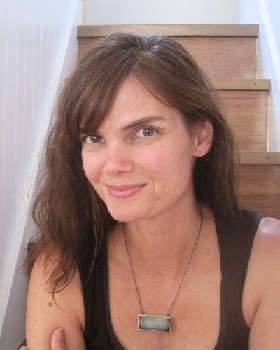
Dr. Susannah B.F. Palletz
This task will substantially increase insight into the strengths and weaknesses of AI technology to support intelligence tasks, help shed light on how and when human analysts can safely place their trust in AI technology, and how they can proactively identify problems in AI-generated input. It will also aid teams of humans, including asynchronous teams, working together in situations that include AI-generated input.
“This basic research is an important step in the early process of learning how humans and agents can collaboratively become a single team with considerably greater capacity and productivity than human only teams,” Palazzolo said. “Moreover, this research has broad implications into the work of many teams focused on knowledge work and information management such as medical teams involved in shift work, collaborative software development teams, and research teams.”
In addition to Porter, the Fraunhofer USA team also includes Dr. Madeline Diep, Senior Scientist, and Jeronimo Cox, Software Developer, at Fraunhofer USA CESE. The Fraunhofer USA team will lead the effort to create configurable AI agents used in the experimental tasks, and a data collection and analysis infrastructure for capturing and understanding participant behaviors.
The UMD iSchool team includes graduate students Tammie Nelson, a fourth year PhD student, Melissa Carraway, incoming first year PhD student, and Sarah Valhkamp, incoming first year PhD, in Information Science.
The grant proposal team includes UMD Office of Research Administration Contract Manager, Stephanie Swann; iSchool Business Manager, Jacqueline Armstrong; and former iSchool Business Manager, Lisa Geraghty.
Outside of UMD, Dr. Aimee Kane, the Harry W. Witt Faculty Fellow and an Associate Professor of Management in the Palumbo-Donahue School of Business at Duquesne University, will be a consultant and an intellectual contributor on this project.
August, 2020 (Beirut, Lebanon) – Two weeks after a devastating blast in Beirut’s port area that killed close to 200 people and injured thousands more, cleanup efforts are still underway. According to locals on the ground working with American NGO, DTCare, they’ve barely scratched the surface of the monumental task of cleanup, and are now facing the looming threat of a COVID-19 shutdown.
The DTCare Lebanon ground team, in coordination with their United States office, was among the first American NGO on the scene following the deadly explosion on August 4th. The organization had been in Lebanon developing an NGO to help Syrian refugees, and because of their close proximity, they were some of the first responders to the scene, able to mobilize and provide aid to the people of Beirut the same night of the blast.
The DTCare team on the ground coordinated with the Municipality before the start of the cleanup mission and were allocated a specific landfill just 8 Kilometers away from the cleaning locations. Over the course of seven days, the DTCare team has cleared 200 tons of debris a day (1,000 tons) from the narrow streets of Beirut, a challenge considering the near-constant traffic paralyzing the mobility and speed necessary for machinery and volunteers.
The blast destroyed a major grain silo, which is critical considering Lebanon imports a majority of their wheat. To help cope with the food scarcity, the DTCare team is distributing 10 rations, daily, to families affected by the blast. Currently, they have been able to distribute 55 food rations, with each ration capable of feeding a family of four for a period of three months. Items included in the DTCare ration box include rice, flour, sugar, salt, tuna, oil, mushrooms, beans, chickpeas, and local grains other than wheat.
For the mission, DTCare partnered with the Contingency Operations Group (COG), which has been set up as a special purpose vehicle for any and all matters with US Corporations represented in Lebanon, helping facilitate all of their business interests in the region. Being the first US organization to jump to the rescue of Lebanon in this time of crisis by sending funds, products and support related to the relief effort, DTCare gained COG’s trust, attention and priority. Their independent status has allowed them to be successful in their efforts, as they remain free of ties to specific religious or political affiliations.
COG team members have served and supported the US troops who were deployed in Afghanistan and Iraq under the Operation Enduring Freedom (OEF) from 2001 and through the extent of Operation Iraqi Freedom (OIF) 2003 to 2010. DTCare’s management team is very well versed in US defense contracting and State Department operations in the region, following all policies, procedures, regulations and, most importantly, transparency and compliance.
Although the operation is a small dent in the overall relief effort, the DTCare team has been incredibly effective and efficient in their mission, and will remain engaged for the duration of the cleanup effort. Currently, the team is racing to do as much as possibly before the rainy season arrives in October. DTCare predicts the cleanup effort to last between 3 to 5 months in total, weather permitting. For the Silo, Lainya Magaña.
A friend of mine from Europe sent me this news story a couple of weeks ago about how the cultural landscape is facing its biggest threat in a generation.
It says the UK government was too slow to provide support for the arts industry, and that without more help, many parts of Britain could become “cultural wastelands”:
https://youtu.be/pPw8na16nuk
This should be a crude wake-up call for artists.
Realistically, governments around the world will NOT make it a priority to save art businesses. Why? Because governments care most about issues that will get them votes.
And, sadly, most of the public simply does not care about the arts the way artists do.
Want proof?
Check out the comments on that BBC video:
Then if you go down the rabbit hole and dig deep into the replies to these comments, you find a lot of artists desperately trying to show these people that the arts, and theatres, and galleries are very much “essential” to artists who rely on them to provide for their families:
The take-home lesson here?
Artists are on our own.
It’s unrealistic – unwise, even – to wait for the government to swoop in and rescue the arts industry.
In times like these individual initiative is more important than ever.
Artists must redouble their efforts to connect with curators, build a list of collectors, find patrons for their studio, maybe even transition to showing (and selling) some work online.
It is difficult, but it is not impossible. For the Silo, Brainard Carey.
Schmidt Futures Grants Lehman Astrophysicist $2.94 Million USD For Study of Quasars, Black Holes
BRONX, N.Y. – (August , 2020) – A Lehman College astrophysicist has been awarded a $2.94 million grant by Schmidt Futures, for a five-year study about the structure and evolution of the universe, black holes, quasars and dark energy.
Schmidt Futures is a philanthropic initiative, founded by Eric and Wendy Schmidt. Eric Schmidt is the former CEO of Google. The grant will award $1.8 million directly to Lehman College and the remainder as a subaward to the University of Montreal.
“This by far is the biggest project we’ve ever attempted,” said Matthew O’Dowd, an associate professor in the Physics and Astronomy Department and writer and host of PBS Space Time. “It’s quite ambitious…and will define the next five years of our scientific lives.”
O’Dowd will lead a team of researchers and students from Lehman, the Borough of Manhattan Community College (BMCC) and the University of Montreal as they study data collected from the Vera C. Rubin Observatory (previously referred to as the Large Synoptic Survey Telescope (LSST), currently under construction on Cerro Pachón in Chile. It is an 8-meter-class telescope coupled to a 3.2-gigapixel camera – the world’s largest digital camera ever fabricated for optical astronomy.
A photograph and rendering mix of the exterior of the Vera C. Rubin Observatory building on Cerro Pachón in Chile. Image credit: LSST/NSF/AURA
The observatory, the first in the U.S. to be named after a woman, will survey the entire sky of the Southern Hemisphere every three days for the next decade, O’Dowd said, and will map the dynamic nature of the universe. Each single snapshot will cover an area 40 times the size of the full moon.
O’Dowd’s team will develop a machine-learning pipeline (also known as artificial intelligence) for the observatory “to analyze the flickerings of thousands of distant quasars whose light in the very distant universe is powered by violent storms of matter falling into gigantic black holes,” he said.
Due to the enormous dataset and the non-linearity of the problem, machine learning methods are the only viable method for integrating these effects into a model and analyzing thousands of quasars in real time.
“I believe I have assembled the only people in the world who can do this before LSST begins operation, including some machine learning leaders who have just taken faculty jobs at the University of Montreal,” he said. “So that’s our plan: to develop new machine-learning techniques and build them into an analysis pipeline for (the observatory).”
“People are fascinated by these things and we hope to extend their curiosity about the wonders of the universe,” O’Dowd said.
Once the team begins work, O’Dowd will invite Lehman graduates, post-doctoral fellows and current Lehman undergraduates to participate in the project.
“This project is exciting and will help us attract excellent grad students and if it also helps influence other students to come to Lehman, then that’s fantastic,” he said.
“This is an excellent project that will push the limits of precision of measurement and very difficult computing to clarify important questions in cosmology and high-energy astrophysics,” said Stuart Feldman, chief scientist of Schmidt Futures. “We are delighted to support this path breaking work.”
“This is an incredibly prestigious award and we are incredibly proud of Matt,” said Dr. Pamela Mills, dean of the College’s School of Natural and Social Sciences. “He is very good at communicating science and is an amazing physicist. He is, and has been tapped, as one our young leaders.”
Hello Siloites (Siloers?) my name is David Bradford and I would like to share my art story with you, one involving augmented reality artwork that I have recently activated on the International Space Station and Mars as part of my Go Love Universally initiative. This is the first fine art activation of its kind in terms of distance (62,368,540 miles, to be exact) is aptly called Future. In case you were wondering, Yes there will be a Guiness World Record attempt based on this achievement.
A look to the stars. My next (virtual) canvas with new augmented reality fine art activation, titled, Go Love Universally.
This art initiative comes at a time in which much of the world is still under travel restrictions due to COVID-19 and was designed to include everyone around the planet and those orbiting, watching from above. Born out of exploring a way to express and distribute fine art to the public while using consumer technology, I started with using bus stops as fiducial markers (QR codes) in Philadelphia, New York City, San Francisco, and London.
When I was asked to initially introduce my augmented art initiative in the Philadelphia Weekly, I said that while I’ve been social distancing, I came up with a way to share positive messages with people using AR and recognizable visual triggers found easily around Philly.
It is a way for a mass amount of people to interact with their surroundings in a safe way that also creates positive feelings through the messages being communicated.
Within two weeks of launching Go Love Universally, I took my art initiative into space, bringing the art from Philadelphia to Mars. For curious consumers of this activation, all pieces can be viewed at select locations using the Artivive app, a free augmented reality fine art app available for iOS and Android.
Steve Morrison, co-host of Philadelphia morning show Preston & Steve (93.3 WMMR), said to me: “Hey, this is pretty cool! What if the aliens in They Live just wanted to spread positive messages? Well, you have a potential answer with this project. Kudos to you, Sir!”
Go Love Universally is an ongoing project, as future collaborations with artists are to be announced.
Beirut / Tehran – The 2,750 metric tons of ammonium nitrate which caused a massive explosion in the port of Beirut originated in Iran before being loaded onto the Russian ship MV Rhosus whose cargo ultimately ended up being unloaded in the port of Beirut.
This revelation comes from an intelligence operative within Tehran’s government who has been secretly working with pro-democracy activists. The information comes from the NGO ‘The New Iran’ which has a track record of successfully smuggling sensitive information out of Iran, including much of the video footage seem in the media of widespread protests within Iran following the Iranian military shooting down Ukraine National Airlines flight PS752.
Intelligence Operative Connected to Pro-Democracy Movement
The intelligence operative communicated the details over a secure messaging technology The New Iran uses for coordinating with their democratic allies within the country.
Lebanese government sources have disclosed that the ammonium nitrate was seized in 2013. This date is perhaps significant the source says because it follows shortly after the opening of an ammonium nitrate factory within Iran.
“Our source is risking his life to bring us this information,” says Dr. Iman Foroutan, Chairman of The New Iran, “because he believes that recent developments within the government are going to make these kinds of disasters more common.”
At the end of June, the government of Iran approved an agreement for a “25-year comprehensive cooperation plan between Iran and China.”
The two countries are calling it a “strategic partnership.”
The agreement is designed to help Iran get around the punishing sanctions of the United States, which more and more is being looked at as a common enemy by both Tehran and Beijing. China will be investing $400 billion USD into Iran with an immediate payment of $320 billion USD – a substantial portion of which is going into strengthening ports and military capability.
“The Iranian regime is the world’s leading sponsor of terrorism,” says Dr. Foroutan who along with other influential Iranians in exile are working to fully expose the danger of Ayatollah Ali Khamenei’s radicalism and eventually free the Iranian people. “Now with the cover of China, one of the world’s rising superpowers, Iran will be able to move more weapons and weapons components throughout the region and the world.”
Hezbollah leader Hassan Nasrallah has already twice threatened to blow up the port of Haifa in Israel. Hezbollah allegedly sought to acquire ammonium nitrate via Syria since 2009 and tried to infiltrate the agriculture ministry in Lebanon to do so, according to leaked diplomatic cables.
In February 16, 2016 Nasrallah also said that ammonia is stored in Haifa and that there are 15,000 tons of gas Haifa and that explosions there might cause the deaths of tens of thousands of people. “the expert added that this is exactly like a nuclear bomb. In other words, Lebanon has a nuclear bomb. This is not an exaggeration.” Nasrallah laughs as he says this in the video.
https://youtu.be/hp_Pdew_sG8
“With the agreement between China and Tehran allowing the regime to ship under the cover of China, potentially deadly materials like ammonia nitrate [may be] circumventing US sanctions,” says Iman Foroutan, “The next explosion may not be an accident.” For the Silo, Lance Laytner.
PORTLAND, OR. August, 2020: Discogs, the world’s record store, today released its list of the Top 10 Most Popular Records released in July 2020.
The following rankings — the 10 most popular albums overall and the 10 most popular albums by genre — are determined by how many people worldwide have added these items to their record collections on Discogs. Discogs’ abundant data is made available from the over 400 million items cataloged in the Collections of its 7.3 million users. On average, the Discogs Community is adding 7 million items to their Collections monthly and has passed 12.8 million releases in its open-source user-driven Database.
Commonwealth collaboration is vital to the recovery of the sport sector which has suffered a crushing blow from essential measures to stem the spread of COVID-19. This was the recurring theme as sports ministers from Africa, Asia, the Caribbean, Europe and the Pacific met at a landmark forum on the impact of the pandemic on their sector.
Countries spoke about the deep health and economic scars left by the closure of community sport, gyms and exercise facilities, the decimation of the local and international sporting calendar, and the loss of revenue from broadcasting and sponsorship deals.
According to a recent Commonwealth study, while the overall economy of the 54 member countries would contract on average by 3.2 per cent in 2020, the contribution of sport sectors to GDP could drop by well over 20 per cent in several states.
Commonwealth Secretary-General Patricia Scotland said: “Our countries are shouldering many very heavy burdens as a result of the pandemic. Among these, necessary restrictions affecting the sport sector make much of its future is uncertain and are preventing it from making its much-needed contributions to physical well-being, mental health and economic activity. So it was really encouraging to see how Sports Ministers in our member countries are responding to the effects of COVID-19 with powerful and imaginative initiatives. Return-to-play tool kits, grants for community clubs and virtual programs to help people of all ages to be physically active were among examples shared at the forum. What also came through loud and clear is that by continuing to work together our chances of success in overcoming the impacts of the pandemic are greater, and our recovery will be swifter and more sustainable. Building on existing cooperation and momentum already achieved, the Commonwealth Secretariat has launched a range of innovative projects and programs, based on careful research and analysis, so that in all our member countries sport can be used more effectively to build communities that are socially and economically more resilient with healthier populations”
Resources such as the new Commonwealth Moves program was shared with ministers to support efforts to get more people active while complying with the rules imposed to suppress the pandemic. The online tool is tailored to tackle the ongoing ‘pandemic’ of immobility, exacerbated by COVID-19 disruptions. It includes activities for all demographics, including young people, the elderly and persons with disabilities. Forum participants expressed strong support for the Secretariat’s initiatives.
This includes its program on measuring sport’s contribution to the sustainable development goals and its recent online course on designing effective policies and programs.
Kenya’s Cabinet Secretary for Sports, Culture and Heritage, Amina Mohamed chaired the forum. She said: “This forum was timely and critical for many governments still working very hard to fight the devastating pandemic that ambushed the globe early this year. The forum confirmed an unmistakable desire among Commonwealth Sport Ministers to collaborate, share solutions and pool their collective knowledge aided by the Commonwealth Secretariat including a newly developed pool of resources, carefully crafted to support countries resuscitate sport sectors choked by COVID-19, and ensure that we re-build healthier, more resilient, inclusive and sustainable economies and populations. “
Ministers at the forum presented how they are responding to the current challenges and planning the safe and staged return-to-sport.
These range from guidelines for cross border competitions and provisions of economic support for grassroots clubs to investment in the e-sport sector and helplines to address abuse in sport. In a statement released after the forum, sports ministers agreed that future policies, programs and competitions should integrate delivery modifications and virus suppression measures, and that the sector should be a focus of recovery and rebuilding efforts. For the Silo,Snober Abbasi.
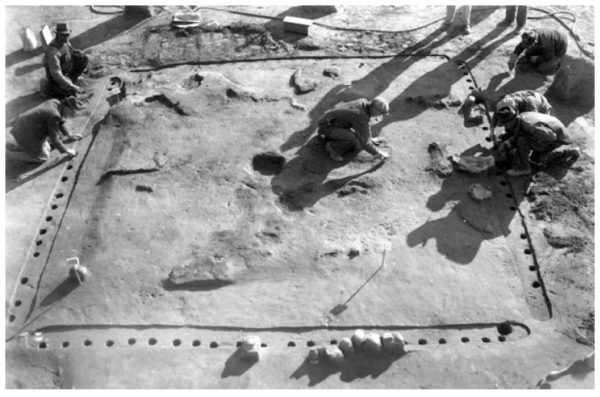
The tradition of archaeology in the Americas (both North and South America) is defined by cross-cultural comparative research that draws heavily on an innovative tradition of regional-scale fieldwork.
Many early archaeo-pioneers worked in multiple culture areas of the Americas, seeking direct connections between the archaeological record and living or historical indigenous peoples, and fostering close ties with the related field of anthropology as a result.
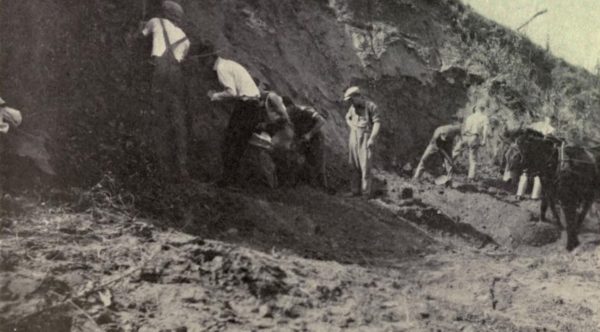
WPA trowel men at work,Thompson Village Site,Tennessee. Image courtesy of the Frank H. McClung Museum, University of Tennessee (62HY5[B]This brief overview covers seminal developments in stratigraphic excavation (the idea that time deposits artifacts in successive layers- the lower the layer, the older the artifact), regional survey, and other field methods within their historical and geographic context.
Such pioneering archaeological efforts across the globe are often lauded for their early attention to stratigraphy and the association of geological or cultural strata with change in human societies over time. In the Americas, as in other parts of the globe, such attention was often the result of non-systematic excavations into mounds of anthropomorphic origin. In other words- ‘grave robbers’. Continue reading by clicking here.For the Silo, David M. Carballo /academia.edu / Department of Archaeology, Boston University/ Jarrod Barker.
Featured image- Archaeological Pioneers Of The Americas Gordon Willey Tula Mexico
Cahokia – Kunnemann Group submitted by durhamnature. Excavation of Kunnemann Mound, one of 6-11, from “Cahokia Mounds” via Archive.org
PORTLAND, OR. July, 2020: Discogs, the world’s record store, recently released its latest Top 30 Most Expensive records list for items sold in the Discogs Marketplace during May. The complete list for May 2020 can be viewed on the Discogs Blog, while the following are the highest priced records sold with all prices in US dollars (multiply by 1.36 for current CAD dollar exchange rate) :
1
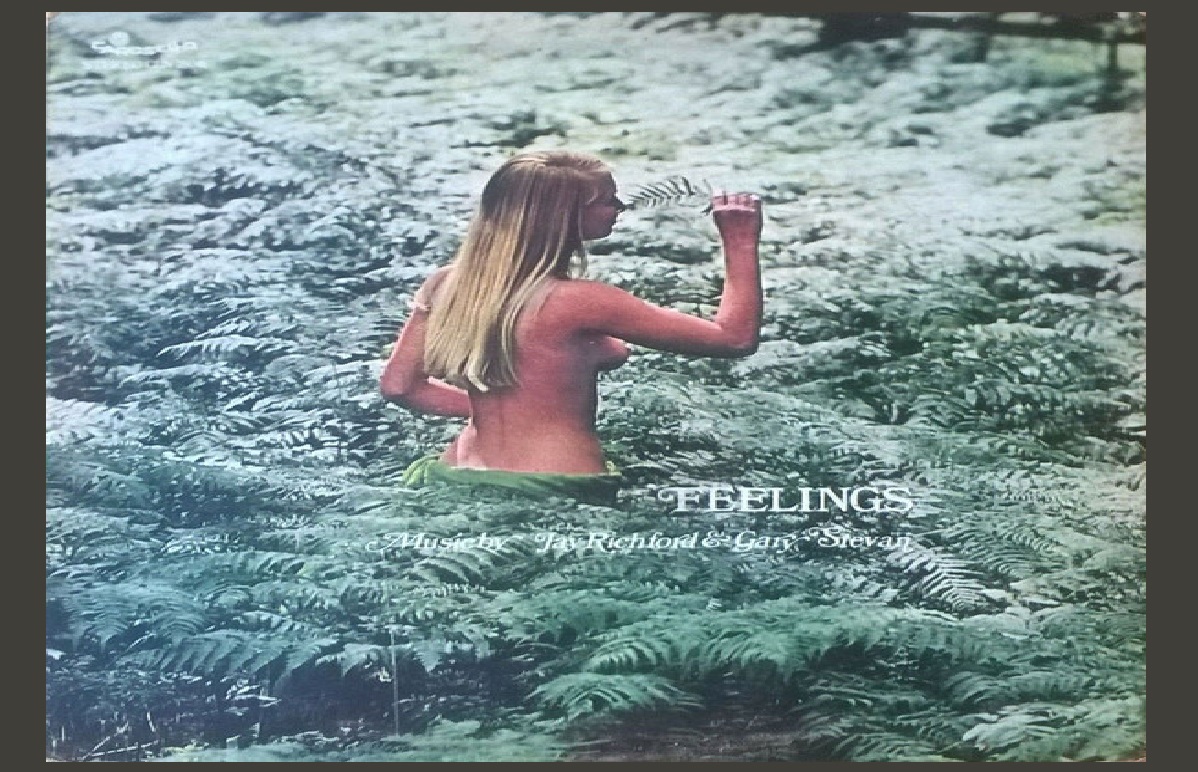
Jay Richford & Gary Stevan – Feelings
Sold for $5,660.00 Label: Carosello Format: LP, Album Country: Italy Released: 1974 Genres: Jazz, Funk / Soul |Styles: Jazz-Funk, Easy Listening, Soul-Jazz, Psychedelic
2
Charlie Parker – Bird Blows The Blues
Sold for $4,999.00 Label: Dial Records Format: LP, Album, Comp Country: US Released: 1949 Genres: Jazz | Styles: Bop
3
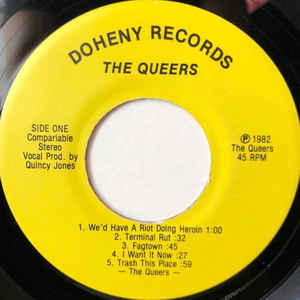
The Queers – Love Me
Sold for $4,000.00 Label: Doheny Records Format: 7″ Country: US Released: 1982 Genres: Rock | Styles: Punk
4
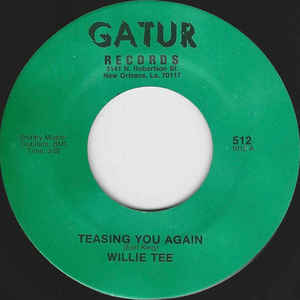
Willie Tee – Teasing You Again / Your Love, My Love Together
Sold for $3,813.00 Label: Gatur Records Format: 7″ Country: US Released: 1972 Genres: Funk / Soul | Styles: Soul
5
Michael Rabin With Leon Pommers – Mosaics
Sold for $3,527.00 Label: Capitol Records, Capitol Records Format: LP, Album Country: UK Released: 1959 Genres: Classical | Styles: N/A
6
Nick Drake – Five Leaves Left
Sold for $3,409.00 Label: Island Records Format: LP, Album, Gat Country: UK Released: 1969 Genres: Rock, Folk, World, & Country | Styles: Folk Rock
7
The “Group”* Featuring Cecil Washington – I Don’t Like To Lose
Sold for $3,236.00 Label: Prophonics Studios Format: 7″ Country: US Released: 1966 Genres: Funk / Soul | Styles: Soul
8
AC/DC – Can I Sit Next To You, Girl
Sold for $3,139.00 Label: Albert Productions Format: 7″, Single, Promo, A-l Country: Australia Released: 1974 Genres: Rock | Styles: Hard Rock
9
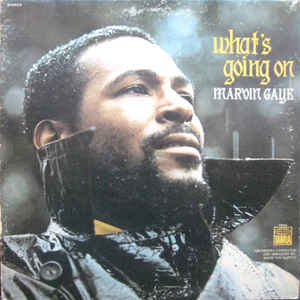
Marvin Gaye – What’s Going On
Sold for $3,000.00 Label: Tamla, Tamla Format: LP, Album, Gat Country: US Released: 1971 Genres: Funk / Soul | Styles: Soul
10
Delaney & Bonnie – The Original Delaney And Bonnie
Sold for $2,752.00 Label: Apple Records Format: Acetate, LP Country: UK Released: 1969 Genres: Rock | Styles: Southern Rock
In case you missed it, on June 30, France and the other Member States of the European Union adopted a recommendation on the reopening of Europe’s external borders from July 1, 2020, to a first list of fourteen countries, including Canada, Japan, South Korea, Australia [this may not be the case considering Covid developments there the past few days] , Thailand, as well as China, subject to reciprocity. This list will be reviewed every two weeks.
In view of the satisfactory epidemiological evolution on European territory, new measures have been adopted following the decisions taken on June 15 with regards to the reopening of European borders (Schengen area) and the opening of borders to international visitors after July 1.
The first countries eligible for this reopening are: Australia, Canada, South Korea, Japan, New Zealand, Rwanda, Thailand, Uruguay, three North African States (Algeria, Morocco, Tunisia), two Eastern European States (Montenegro, Serbia) and Georgia.
The United States, Russia, Israel, Turkey and Saudi Arabia are, at this stage, excluded from this list, as the situation of the Covid-19 pandemic is considered to be more serious there than in Europe. The reopening of borders with China is moreover suspended on the principle of reciprocity (China has not yet reopened its borders to European travellers).
As a reminder, the internal borders of the European Union – Schengen area reopened June 15 (and Spain’s on June 21). All health and security measures are being taken on a case-by-case basis to ensure that the border restrictions are lifted in the best possible conditions.
However, the British government (the United Kingdom being, in the post-Brexit transition period, still considered as an EU Member State) has decided to impose since June 8 a 2-week period quarantine on foreign travellers, therefore France is applying the rule of reciprocity until further notice. However, the 2-week period quarantine measure should evolve in the near-future. For the Silo, Marie-Andree.Boucher.
France was visited by 1.2 million Canadians in 2018.
More information on reopening and sanitary precaution’s in France can be found on France.fr.
As parts of the globe cautiously begin to open up, the focus is on what travel freedom and global mobility will look like in a post–Covid-19 world. Last week the EU released a list of countries whose residents would be allowed entry into the bloc from 1 July based on coronavirus-related health and safety criteria. Included on the welcome list are countries such as Australia, Canada, Japan, and South Korea that traditionally score highly on the Henley Passport Index — the original ranking of all the world’s passports according to the number of destinations their holders can access without a prior visa. However, in a move perceived as a stinging rebuke for its poor handling of the pandemic, the US was notably excluded from the list, as were Brazil and Russia.
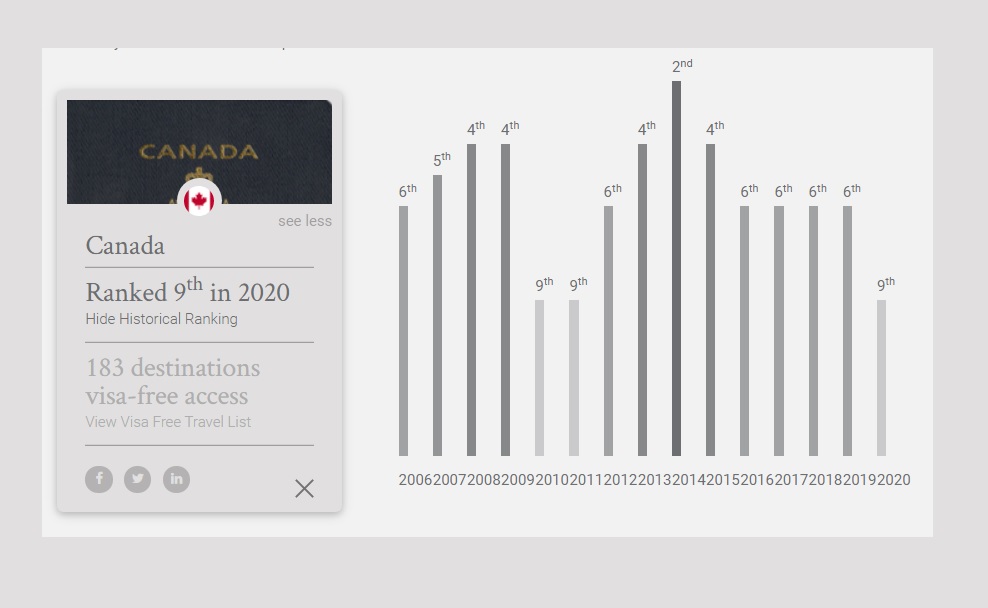
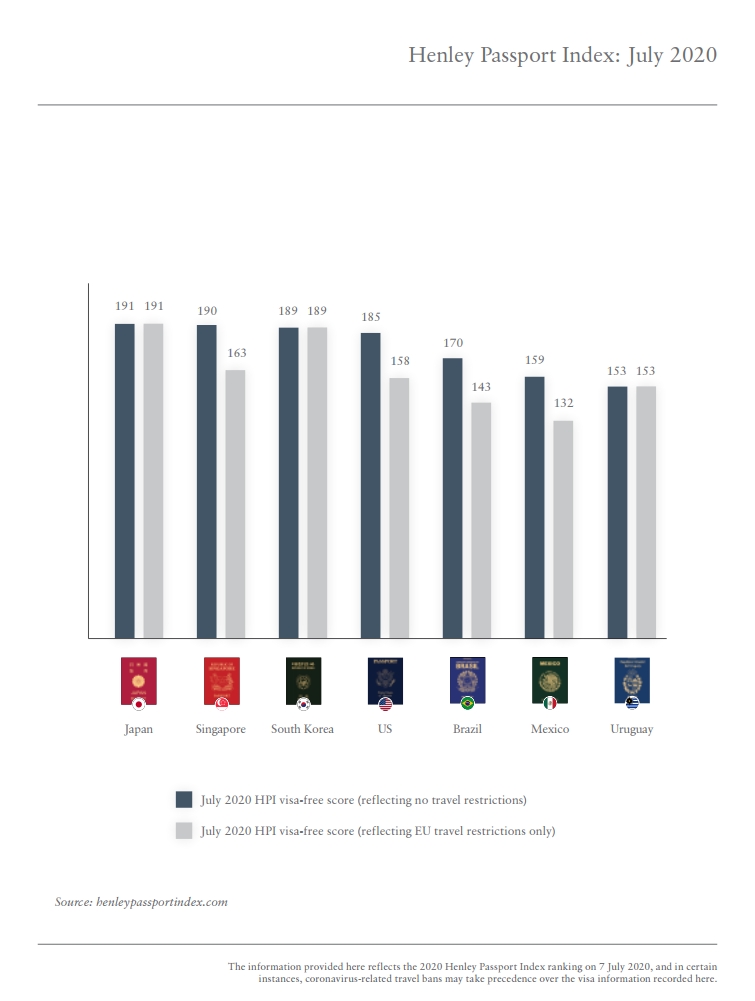
Although not reflected in the latest ranking, which does not take temporary travel bans into account, it is eye-opening to consider what travel freedom currently looks like for the holders of once-prestigious passports. For instance, before Covid-19 the US passport usually ranked within the top 10 on the Henley Passport Index in 6th or 7th place, with its citizens able to access 185 destinations around the world without requiring a visa in advance. However, under the current EU ban, the picture looks starkly different. US nationals now have roughly the same level of travel freedom as citizens of Uruguay (included on the EU’s list of welcome countries), which ranks 28th on the index, with a visa-free/visa-on-arrival score of 153. In another striking inversion, the US’s dramatic decline in passport power means that Americans find themselves with a similar level of travel freedom usually available to citizens of Mexico (25th on the index, with a score of 159), current travel bans notwithstanding, albeit temporarily.
This is one of many extraordinary shifts in passport power caused by the temporary pandemic-related bans. Brazilian passport holders, for example, find their passport strength greatly diminished. The country usually ranks highly on the index ¾ most recently placed 19th, with a visa-free/visa-on-arrival score of 170 ¾ but the loss of access to the EU means Brazilians currently have roughly the same extent of travel freedom as citizens of Paraguay (36th on the index, with a score of 142).
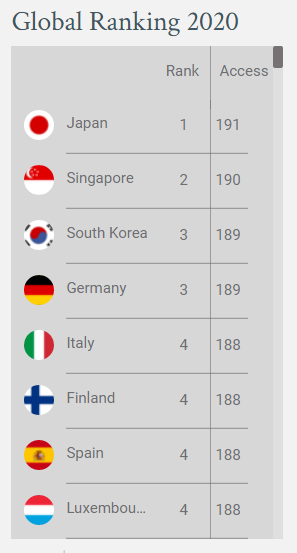
Without taking the various travel bans and restrictions into account, Japan continues to hold the number one spot on the Henley Passport Index with a score of 191. Singapore remains in 2nd place with a score of 190, while Germany and South Korea are in joint-3rd place, each with a score of 189. Both Japan and South Korea have been included on the EU’s list of ‘safe’ countries, while Singapore has been excluded, which means Singaporean passport holders currently have far less travel freedom than their closest competitors on the index, which is based on exclusive data from the International Air Transport Association (IATA).
Dr. Christian H. Kaelin, Chairman of investment migration firm Henley & Partners and the inventor of the passport index concept, says the EU’s recent decision will have far reaching effects. “As we have already seen, the pandemic’s impact on travel freedom has been more drastic and long lasting than initially anticipated. This latest decision by the EU indicates that there is more upheaval to come. Look at the US passport, for example ¾ in 2014, it held the number one spot in the world on our index, but US nationals currently have far less travel freedom than most citizens of other wealthy, industrialized nations and even of some less developed nations, being effectively locked out of Europe. We see an emergence of a new global hierarchy in terms of mobility, with countries that have effectively managed the pandemic taking the lead, and countries that have handled it poorly falling behind.”
Immigration controls in US and UK tighten amid calls for co-operation
While the US looks set to be significantly affected by the EU’s latest decision, it has issued stringent immigration controls of its own over the past few months. Greg Lindsay, Director of Applied Research at NewCities, says that the Trump administration’s temporary suspension of all work visas will have far-reaching effects. “The executive order, signed on the 22 June, will bar as many as 525,000 foreign workers from entering the country for the rest of the year.” As Lindsay points out, this decision is only the latest salvo in White House aide Stephen Miller’s years-long campaign to curtail worker visas, arguing that they harm employment prospects for Americans.
In the UK, the pandemic’s effect on mobility has also been severe. Robert McNeil, Deputy Director of the Migration Observatory at the University of Oxford, says that the almost complete cessation of international arrivals into the country has generated serious challenges for industries that have become dependent on seasonal migrant workers from the EU. McNeil says that despite public attitudes around immigration softening, the Brexit process has not slowed down. “In May, the government pushed through the new Immigration Bill, paving the way for a new ‘points-based’ immigration system. The new restrictions would prevent many people from becoming key workers in the UK in future. Around half of the EU citizens currently in key worker positions in the UK would not meet the new salary and skills thresholds required to move to the country from 2021.”
Changing priorities in a transformed world
As premium passports lose their shine in a post-Covid world, experts suggest that the crisis is likely to make international mobility more restricted and unpredictable in the longer term. “Even as countries open their borders, it is expected that numerous governments will use epidemiological concerns as a justification for imposing new immigration restrictions and nationality-targeted travel bans that will mainly be aimed at citizens of developing countries,” says Prof. Dr. Yossi Harpaz, Assistant Professor of Sociology at Tel Aviv University. Noting the recent decision by the EU with respect to the US and other countries, Harpaz says, “The passports of both developing and developed nations stand to decrease in value, at least temporarily. In such uncertain times, global demand for dual citizenship and investor visas is expected to increase.”
Discussing the impact of the pandemic on global migration trends, Charles Phillips, researcher and consultant for Oxford Business Group, suggests that environmental health concerns could become a priority for those seeking alternative residence or citizenship. “We can expect places that are governed well and better equipped to deal with pandemics to become destinations people will seek to move to. Just as travel choices will likely be more strongly influenced by health considerations, we may see those acquiring alternative residence or citizenship placing a greater emphasis on a country’s health policies when deciding where to reside.”
Dr. Juerg Steffen, CEO of Henley & Partners, says the growing demand for additional residence and citizenship options comes as no surprise. “We have seen extraordinary upheaval over the past few months, with many certainties falling away. For investors and their families, having a second citizenship or an alternative residence is an even more precious asset than ever before, as concerns over access to first-rate healthcare, global mobility, and quality of life take on a new urgency. In turn, investment migration programs provide invaluable economic security to the countries that offer them.
As we enter the worst recession since the Great Depression, a small country like Montenegro, for instance, is better equipped to weather the storm. The recently launched Montenegro Citizenship-by-Investment Program provides permanent access and the right to stay in this beautiful and safe European country. It also provides the country with an immediate liquidity injection of much needed debt-free foreign capital that can be used to buffer the impact of the pandemic and create significant societal value.” For the Silo, Sarah Nicklin.
About the 2020 Henley Passport Index
Boasting cutting-edge expert commentary and historical data spanning 15 years, the Henley Passport Index is the original ranking of all the world’s passports according to the number of destinations their holders can access without a prior visa. The ranking is based on exclusive data from the International Air Transport Association (IATA), which maintains the world’s largest and most accurate database of travel information, and it is enhanced by extensive, ongoing research by the Henley & Partners Research Department. Along with the Kälin – Kochenov Quality of Nationality Index, it is considered a major reference tool for global citizens and the standard reference for governments in this field.
LOS ANGELES: JULY , 2020 – Wood Entertainment is proud to announce the August 18 digital/VOD release of the highly anticipated documentary feature PRETENDING I’M A SUPERMAN – THE TONY HAWK VIDEO GAME STORY. Wood Entertainment acquired Worldwide rights to the film in May at the Mammoth Film Festival in a deal negotiated between CEO Tara Wood and Producer Ralph D’Amato (“Tony Hawk Pro Skater” series, “Gun”) on behalf of D’Amato Productions.
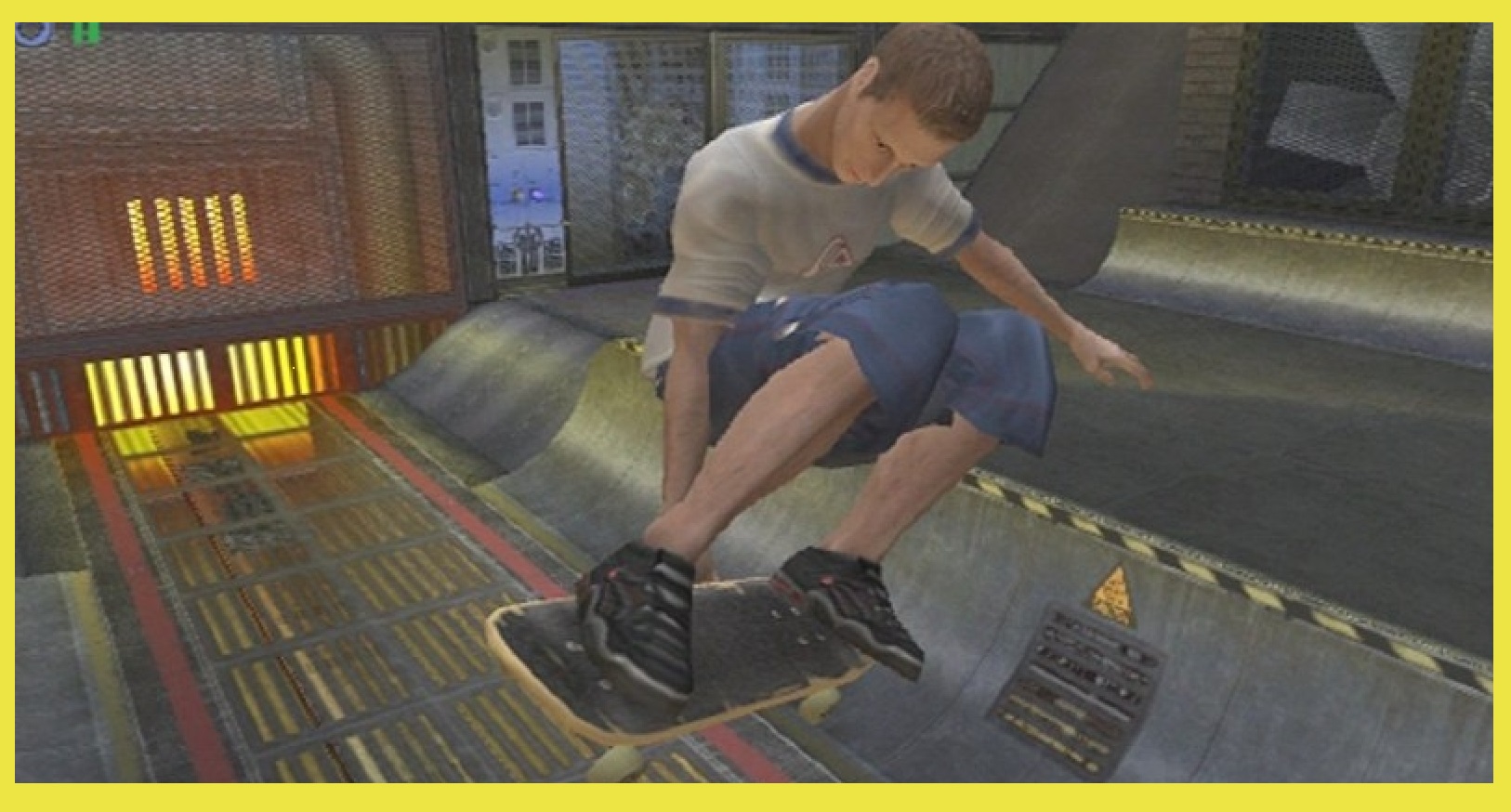
Arriving just ahead of the eagerly-awaited reboot of the $1.4 USD billion Tony Hawk Pro Skater video game series coming this September, this definitive documentary from Director Ludvig Gür tells the story of skater turned video game mogul Tony Hawk, and the near extinction of skateboarding culture before exploding back into the mainstream in the early 2000s.
“PRETENDING I’M A SUPERMAN is a robust, real-life story of our successful videogame series as told by those who created it, and many who were inspired by it” said multi-record-breaking skateboarder and documentary subject Tony Hawk.
“I’m really excited to partner with Wood Entertainment” said director Gür. “It’s been a long journey making the documentary and I’m stoked it will finally be released for skateboarding and Tony Hawk’s Pro Skater fans worldwide. The art form and video game had an enormous impact on Generation Y / Z and the story behind it is even more fascinating.” In 1999, the video game Tony Hawk’s Pro Skater shook the world when it sold 9 million copies upon release and changed the skateboarding scene forever. Pretending I’m a Superman is the story of the skaters and developers who came together to create the best-selling game as well as a look into how skateboarding became a part of the mainstream. Featuring never-before-seen footage and interviews with the legendary skater Tony Hawk as well as industry stars interviews with Steve Caballero, Rodney Mullen, Chad Muska, and Jamie Thomas, Gür takes audiences through an intimate yet extraordinary journey, chronicling the meteoric rise of skate boarding’s most famous name.
“Tony Hawk has one of the most inspiring stories ever told, from groundbreaking skater to gaming mogul” said Wood. “We are thrilled to present it to its worldwide audience.” For the Silo, Scott Motisko.
Dating in your 20’s can be downright tough these days. A lot of times it’s all about “hooking up” or becoming “friends with benefits”, both which replace the notion of dating as a prelude to a long- term relationship or even saying “I do”. On paper, avoiding commitment seems like a good idea – remaining friends can protect you from the things that tear most couples apart – jealousy, cheating, heartbreak…but what happens when your ”hookup” becomes the one person you can’t live without? Set in the damp and drizzly neighborhoods of Portland, Oregon author Rebecca Kelley’s fun and quirky literary debut, Broken Homes and Gardens [Blake Slate Press] reveals what happens when you toe that fine line between friends and “more”.
Not exactly on-again, off-again, Malcolm and Joanna are in-again, out-again: in love, out of each other’s arms, in an awkward co-living arrangement, out of the country. Their unconventional relationship is the only way, Joanna says, to protect herself from the specter of commitment, which inevitably leads to heartbreak. A When Harry Met Sally meets Portlandia for the Millennial generation, Broken Homes and Gardens is an ode to friendship, lust, and the unrelenting pull of love. It will appeal to readers who love romance, quirky humor, and stories that offer a deeper and sometimes darker look into the risks we take for love.
“Throughout literary history, romantic involvements for young women have been treated as a problem with an easy answer: find the right man, marry him,” says Rebecca, “but I believe the period of early adulthood is not focused only on long-term coupling and knot tying. Many women I know – myself included – were involved in one or two long-term relationships in their 20’s. The struggles of dealing with their ending, and the aftermath, had an enormous impact on our development as women, and an even greater impact on future relationships.”
A contemporary tale full of wry humor, convincing dialogue, and emotional twists and tangles, Broken Homes and Gardens touches upon the following themes:
• The often messy, complicated, confusing and passionate twenty-something love, both in literature and life
• A unique look at the melting pot that is Portland, OR, known as the place where “young people go to retire”
• The “Hookup” Culture: the troubles with 21st century dating and love
• An honest look at “friends with benefits” – does it ever really work?
• Broken homes – literally and figuratively
“My heroine in Broken Homes and Gardens undergoes some relationships in her late teens and early twenties that shake her belief in love so firmly that she decides marriage is not the answer to any of her problems,” adds Rebecca. “Joanna’s approach to her relationship with Malcolm isn’t optimistic but it’s rational. It’s understandable. And I think her story speaks to many of us.”
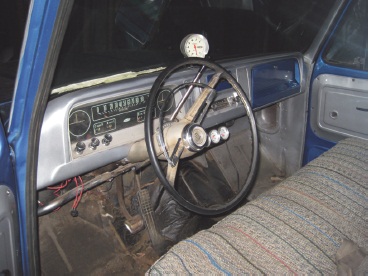
1966 Chevrolet C-20 Custom pick-up. Found in a wrecking yard in the Mojave Desert by the author.
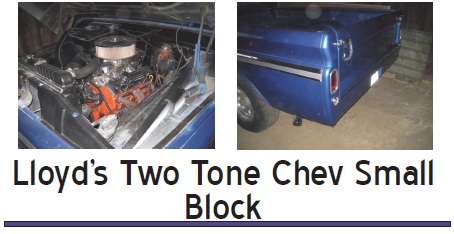
Lloyd’s 66 Chevy C-20 Custom is the epitome of the classic story of finding a sweet ride, a diamond in the rough. Just tucked away somewhere conspicuous collecting dust down south. I found this truck in a wrecking yard in the Mojave Desert being neglected for over 12 years. Imagine the looks on the guys faces that walked by this old truck in the yard if they could see what it turned into now. (funny enough, this is the same yard in which I found my own personal truck of the same body style over 25 years ago.)
I went to California and worked on this truck for 3 weeks to get it running and road worthy before making the epic over 2500 mile trip back to WC Kustoms in Windham Centre. First thing was the engine. I took that dirty, tired, old 350 and swapped it out with a fresh Crane Cams build-up 60 over 350. I gave it a nice shiny new classic Chevy orange paint job and topped it off with everything chrome (edelbrock endurashine carb, high-rise intake, and Mr. Gasket chrome dress-up kit.) To make sure that you really know when it’s passing you, I added some Flo-tec headers and sold him a Magnaflow Stainless dual exhaust kit (the kit was installed by Queensway Garage in Simcoe.)
For outside looks, this sweet 66 got a stock, two-tone custom, color scheme using two 2011 factory Chevrolet colors. A wicked combination of Metallic Blue and Silver to make this truck as colorful as the character that owns it. Inside it also received a blue, back-lit Equus tach and gauge set. In pure Lloyd style one of the first additions was blue street-glow lighting. Deleye’s in Simcoe also installed a chrome custom trim kit, painted grille and front bumper, and a rear roll pan bumper that looks really good. This truck is a vast contrast from the old farm trucks that many would attribute this body style to.
If you’re a retro gamer and Grand Theft Auto (San Adreas) fan, you should consider changing up the default tow-truck with the ’66 Chevy C-20 pickup.
For the Silo, by Robb Price.
WC Kustoms in Windham Centre, Ontario can be reached at 519-410-8308.
Now that Storm Season is underway in Ontario, I felt it was time to write another article on the subject. This one will be a little different compared to the Silo articles I have written in the past. It will be about those golden moments when both the storm chaser and the breathtaking cloud structure will be in the same scene together.
There are a lot of excellent storm chasers in our province who have an absolute love for weather.
I could write a entire paragraph with just the names of those in our province alone. Whether it be photographing, forecasting from home, or reporting the storms, the chasers share the same dedication and passion. They all have different qualities that make them enjoyable to be around and to share the experiences as a group. In this collection, you will see a series of photos showing the storm chasers in action across various parts of the province. I only wish I had more photos of everyone in the storm chasing community.
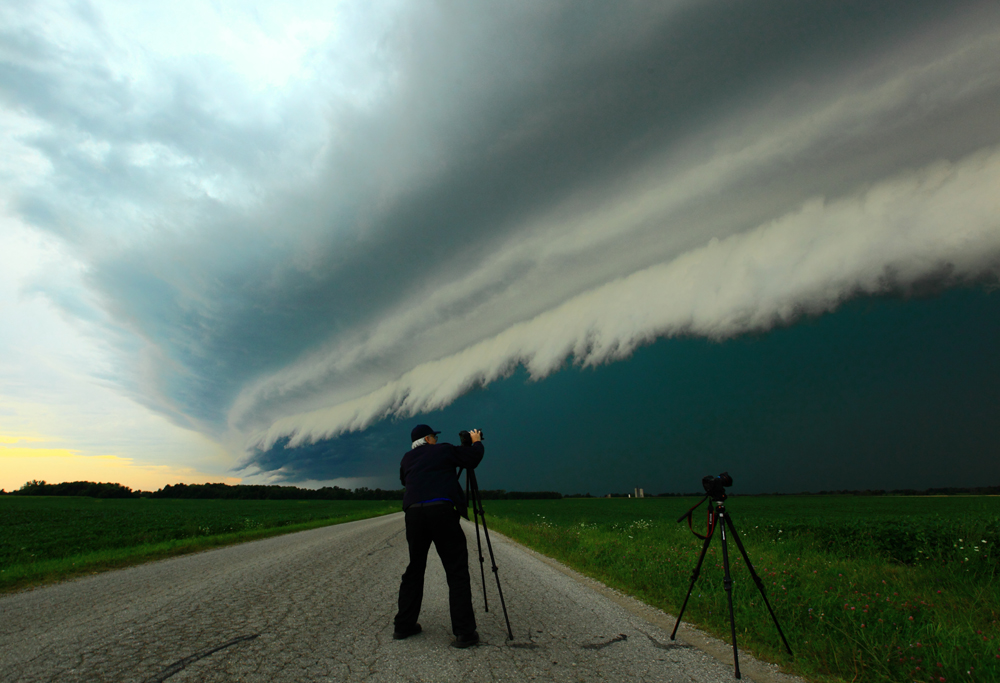
This photo is of a man I have chased with for over 19 years now. He is my dad, Brian Chapman. He and I have worked along side each other for many years, tracking down numerous lightning storms, several tornadoes and epic squall lines like that which is visible in this photograph. This storm was taken on August 2, 2016, south of Goderich, Ontario. You can see the layering of the gust front shelf cloud as it approached our location. The storm also had golf-ball sized hail in it with damaging winds. There were unconfirmed reports of a tornado wrapped in rain and hail with this storm, just north of our location, according to fellow chasers in the area.
Brian and I chased for 9 years without portable radar, using radar at home. I would animate it in my head and figure out where we had to be. Also, while out there, we would use AM radio to gage how intense the storms were as well as their general location based on the intensity of the static on the station. We are both happy to have portable information now, but when that fails every now and then, we are both quite comfortable using only visual cues.
It is hard to believe that Spencer Sills and I used to live 10 kilometres apart when we were kids. We were both crazy about the weather. I even went to church across the road from where he lived, yet we didn’t know each other until connecting on social media years later when our friendship grew into an unbreakable bond. He and I both used to chase on our bicycles when we were younger, before we could drive, if no adult was able to take us out. That definitely led to some quick peddling back home at times.
We both have a background where instinct is a big part of chasing. We feel comfortable not having radar information. Spencer is an amazing forecaster and helped get me started in the world of forecasting. He is one of my all-time favorite photographers whether it is storm related or other various subjects. In this particular photo, you can see the huge shelf cloud coming across Lake Huron, just north of Grand Bend.
It was roughly 10 minutes after this, that we had an experience of a lifetime.
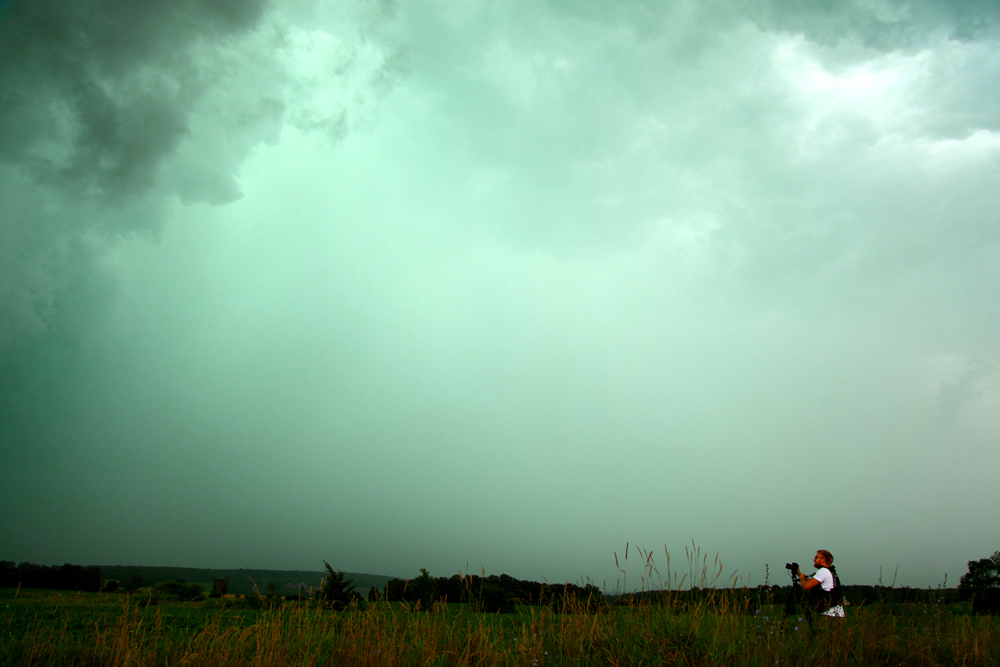
In the photo above, you see that we have a very large and heavy rain/hail core coming at us. Not quite as green as in the previous photo but this storm was dropping hail around quarter-size. It was a long chase day, something Kyle Robertson and I are used to doing.
Both Kyle, my dad and I have something in common in this respect — that is, we will literally chase anywhere in any type of terrain for as long as necessary. We are comfortable no matter how heavy the trees are for blocking visibility because we always believe we will get that opening when we need it most. To give you an idea, we have all chased in the Bancroft area, north of Georgian Bay towards Sudbury and even on the north end of Manitoulin Island.
In this particular chase, we started in the Listowel area after leaving the Niagara region, ending up in the Owen Sound area before getting something to eat in Collingwood. As we were on our way home, a line of storms fired up on Lake Erie, so we headed to Port Maitland and then across to Crystal Beach until 3:00 a.m. in the morning. This is typically how Kyle and I both are. We have a confidence in each other for getting us to the target area and that we will get amazing photos when we arrive. Kyle is one of the most determined, driven people that I know. He has a superb knowledge on the history of tornadoes in Ontario and is an excellent photographer.
I don’t have many photos of myself while storm chasing.
I am often busy running from camera to camera. On June 12, 2014, close to Fonthill and travelling towards St. Catharines, there was a tornado warned storm that went through this area. It put on a tremendous lightning show along with very heavy rain as you can see on this roadway near the town of Rockway. My dad and I tracked this storm around midnight. Fortunately, it did not develop a tornado. Tornadoes are bad at anytime but when they hit at night, it can be a lot worse due to the fact that people are sleeping. It is a good thing that Ontario is not prone to having many tornadoes at night. It is still important to listen to all warnings but generally we have not had any really major tornadoes hit at night in recent years.
The photo above is another look at my dad doing what he loves to do which is videotaping rotating wall-clouds. He used the vehicle in this situation to shield him and the camera from the winds. It helps to eliminate camera shake when hit by gusty winds. This rotating wall cloud, like most of them in the northern hemisphere, was rotating counter-clockwise. It was shortly after this that it tightened up into a nice cylinder shape before dissipating and eventually elevating over Lake Erie.
My brother, Eric Chapman, doesn’t get to storm chase often but when he does, we often get to see some interesting cloud structure like this one.
This was a large outflow boundary that first developed near Grimsby, Ontario, where it was still attached to the storm. We continued to track this storm all the way to Niagara Falls before following it south down the Niagara River to Fort Erie. At this point it had completely detached itself from the core of the storm. This is often when storms form a roll cloud but this one didn’t quite have those characteristics. I call these “rolling shelf clouds” because they have features of both. Generally, you can see the rolling effect in the bottom part of it, and at the same time it has a shelf-like feature above, but with no rain-core or storm attached to it.
A little change of pace in the photo above.
My friend, Mark Robinson, also known as one of the Storm Hunters on The Weather Network, has a passion for extreme weather. He has chased storms like Hurricane Katrina, as well as the largest tornado in recorded history in the El Reno area, on May 31, 2013, that measured as much as 5.2 kilometres in width. That all said, he is very much dedicated to what we get here in Ontario. From storm chasing in the summer and winter, to hunting down the big autumn wind storms, like this one, that seem to hit at least once every November. This particular photo was taken in Crystal Beach, Ontario. A hot spot for big waves and strong winds during the fall and spring.
A fellow storm chaser and friend of mine, Dave Patrick, a.k.a. “Tornado Dave“, is one of my all-time favorite chasers. After growing up in Grey County and chasing with my dad for around 5 years, Dave was the first storm chaser in Ontario that I learned about outside of our own team. It was when I came across his website, that I realized there were other dedicated chasers in our province.
It was really neat to study his site for years and then to finally meet him in March of 2012.
It was in August, 2013, after both he and our team were tracking the same tornado east of Arthur, that our friendship and bond grew. Like many of the chasers I have mentioned, Dave and I could talk for hours about storms, tornadoes and whatever else was in the sky. I have learned a lot from him for which I am truly grateful. He truly has a gift of reading both the sky in the daytime as well as at night. Although I don’t have any photos of him, I chose a photo of lightning because of the force of a person that he is and the dedication he demonstrates when documenting weather.
The main focus for our team this year will be anything that forms a super cell tornado or waterspout.
Kyle, Brian and myself have documented so much in the way of thunderstorm activity now, that we only really need to work on adding to our already good-sized tornado and waterspout collection. It is also our true passion to try to figure out the puzzle of where the next major event could happen and to be there when it does. Waterspouts are easier in that respect, but it still requires a lot of work to make sure you are in the right location at the right time. As for tornadoes, our province averages about 12.5 per year or as I like to call it, 12 tornadoes and a funnel cloud. Many of them are short lived and can be quite sporadic with respect to where they form. So when you start to break it all down, to get the timing just right is more like an art form than anything else.
We never stop working on ways to improve the methods of forecasting and documentation. The waterspout you see in this photograph was taken on Halloween, 2017, on the most eastern part of Lake Erie, south of Fort Erie, looking east towards the city of Buffalo, New York. It was by far one of the best Halloweens I have ever had. I saw 9 waterspouts, 17 funnels and 2 spray rings that day. It was amazing to witness that over a span of only 2 hours.
For the 2020 storm chasing season, I will only be out for supercell tornadoes, waterspouts, sprites, blue jets and local lightning work.
I have every other aspect of thunderstorms that I need ranging from the small to the big to the unusual. I have combined all of my years of data and have created a powerful, educational and entertaining series of programs that I present in person in front of crowds and which are now also available through online virtual presentations. For the Silo, David. T. Chapman.
To learn more about Kyle Robertson, Spencer Stills and some of the storm chasers mentioned in this article, contact David T. Chapman at his link above.
TV content used to be delivered from a long distance transmitter and received by a roof antenna on your house. The antenna had to be manually or automatically positioned whenever you wanted to watch distant channels. Work was involved. Mystery was involved. Finding something to watch was satisfying.
I’m often asked what I think about the original Star Wars series versus the “new stuff”. A debate that continues to rear its ugly head again ever since Episode VII was released back in December 2015 . I think, for me, I’ve determined what the problem is and why those of us who grew up with Darth, Luke, Han and Leia have a hard time with the newer movies when the younger generation just loves them.
The ‘rabbit ears’: two metal rods sticking up from the television set. The rods could be rotated, pulled apart, shortened and lengthened etc. to fine tune a distant channel.
The Empire Strikes Back was released in 1980. I was an impressionable nine year-old. Although I had seen the original Star Wars, it didn’t resonate with me as much as Empire did. When May 21 of that year hit, my life it would seem was changed forever. After seeing the film, it was all I could do to stop thinking about it and what I had seen. The cliffhanger ending was killing me and yet I seemed okay with the fact that I was going to have to wait three more years to find out what happened to Han (no spoilers here in case somehow you have somehow missed Return of the Jedi).
That summer I saw the movie 13 times. The world was a different place. I took the bus by myself downtown to the beautiful Capitol Theatre (now the even more beautiful Sanderson Centre in Brantford). There was no internet (at least, not that mere mortals could access). I got excited by the occasional mention of the Star Wars universe on the television and I wouldn’t even get a VCR for four more years so the idea of being able to watch the movie “on demand” was not even a thought in my young mind. Instead, I had to rely on my mind through my memories and imagination.
For me, getting the action figures from the movies and being able to recreate scenes from the film helped bring me back to my happy place inside the Star Wars universe. We couldn’t afford to get all the playsets and ships, so I built a lot of them out of cardboard. I used my creative side to paint them like I remembered them in the movies and as soon as I could I ordered the photo books from the school book service so that I could go back there. When the movie eventually made it onto television, a VCR-less me compromised by recording the audio of the film onto cassette. I could then listen (and listen I did) to the movie with my eyes closed and pictured it all in my mind.
If I told this story to a nine year-old today, I would get strange looks. “Dude, why wouldn’t you just watch it on Netflix or look it up on your iPad?” It just wasn’t possible. I was so desperate for a connection to the universe I even cut out the black and white mini-movie poster that was printed into the newspaper with the local theatre listings and posted it on my bedroom wall. Yes, that’s honestly how it was.
Today, I feel like the instant access we have to everything “on demand” somehow diminishes our connections to content. I am pretty sure good movies have been made after the 80s, but I would be hard pressed to find one that hasn’t held such a close connection with me. Not only is there instant access to so much of the content we get today that there is, in fact, more content out there than I can possibly keep up with. This got me to thinking, how do others deal with content overload?
In my case the biggest problem I have is video games. With over 15,000 to choose from I am rarely bored. However, I have needed to come up with a system to keep track of everything I want to play. In my vast game collection there are surely a ton of stinkers, but there are also some amazing games from the 80s, 90s, and early 2000s that I have missed. Heck, I’ve missed a lot of the games that made the most critically acclaimed lists in the past few years. So I had to come up with a system.
How easy is it to have access to thousands of movies? Netflix can be streamed anytime to your I-phone.
What I do now is maintain a list on Dropbox.com that I can access anywhere. It’s called “Games I need to play.txt” (notice the “need” and not “want”). It has two sub-sections: “Started and Never Finished” and “Games to Play”. I don’t really like leaving games unfinished and so when I look at this list I am reminded of what I need to finish up (as I am often playing more than one game at a time) and then for my larger list I prioritize it with what should be next “on deck”. The list is dynamic, changing as I remember what I want to play or come across things of influence from my colleagues. I also have to admit sometimes I choose to play shorter games so that I can get through them and feel more “accomplished”. The site www.howlongtobeat.com is an amazing resource for this sort of thing.
When I asked my friends how they deal with content overload I got some interesting feedback. One of them, John, actually has an algorithm for dealing with his backlog of books. John shared it with me and it goes something like this:
1. I always have one serious and one fun book on the go and which I put on top of the night stand along with my reading glasses. Sometime I cheat and have two of each kind on the go.
2. I keep a pile of books I want to read someday in my night stand.
3. If I get bored with a book, I trade it with one in my night stand.
4. When I finish a book, I choose another from inside my night stand.
5. If I get tempted by a new book I buy it. If it will not fit in my night stand, then I discard the book that interests. Same goes for books that I’m given.
6. I do have a book shelf at work and one at home for books that I want to keep for later reference. If they get too full, I discard things of least interest.
7. I discard books by giving them to someone, donation to a charity or yard sale.
That’s pretty organized. It’s a little more efficient than how I deal with movies I have yet to watch. Presently, the ones that are on the shelf (Blu-ray or DVD) get “pulled out” a little bit so I can see them clearly among all of my other movies. Since they are all in alphabetical order I don’t want to just pull them out randomly and create a new pile.
A friend shared with me a good way to deal with television content. Just PVR or DVR all the content and then watch as you can. I tried this, but filled up my hard drive so I had to go out and buy an external drive. That drive is now dangerously full. There was some good advice in there, however. “What I do is record all the episodes of a TV show and then when it’s all done I go on a watching marathon and binge on the content for an entire day or two. If it’s a new series and I find out it has been cancelled before I even watch it, I delete all of the content and that way I’m not investing in a show that will ultimately let me down with no additional content.”
Algorithms, mechanisms, processes and lists all to deal with an over abundant amount of content. It’s a wonder there is any room left in our brains to remember or think about what we consumed last week, let alone last year. Yet I find myself looking forward to more content in an ADHD kind of way, I can’t seem to get enough. This is, ultimately, why there will never be anything better in my life than the original Star Wars and other films of the 80s (Raiders of the Lost Ark, Ghostbusters, Stripes, Uncle Buck, Back to the Future). At the end of the day, I’m okay with it because there is always something good and interesting around the corner, even if I have to implement a system to manage it all. There are definitely worse things in life. For the Silo, Syd Bolton.
HA NOI (June, 2020) – A new study found that animals sampled in the wildlife-trade supply chain bound for human consumption had high proportions of coronaviruses, and that the proportion of positives significantly increases as animals travel from traders, to large markets, to restaurants.
The study, which appears in the pre-print journal bioRxiv, is by a team of scientists from WCS, the Department of Animal Health of the Viet Nam Ministry of Agriculture and Rural Development, Viet Nam National University of Agriculture, EcoHealth Alliance, and One Health Institute of the University of California, Davis.
Wildlife in the trade supply chain are often under stress and confined at high densities with other animals from multiple sources which likely results in increased shedding of coronaviruses. The authors forewarn of the potential risk of viral spillover into people through the wildlife trade.
The authors indicate that stress and poor nutrition likely contribute to decreasing animal immune functions resulting in increased shedding and amplification of coronaviruses along the supply chain. The findings in rodents illuminate the potential for coronavirus shedding in other wildlife supply chains (e.g. civets, pangolins) where similarly large numbers of animals are collected, transported, and confined.
The purpose of the study was to gain a better understanding of coronavirus presence and diversity in wildlife at three wildlife-human interfaces including live wildlife trade chains, wildlife farming, and bat-human interfaces. This work represents an important demonstration of capacity and a significant contribution from Viet Nam to the field, laboratory, and scientific approaches critical to understanding and addressing zoonotic disease threats. The consensus PCR approach for viral detection is a cost-effective tool for detecting both known and novel viruses and co-infections in a variety of taxa, sample types, and interfaces.
Researchers collected samples at 70 sites in Viet Nam, and detected six distinct taxonomic units of known coronaviruses. There is no current evidence to suggest these particular viruses were a human-health threat, but the laboratory techniques used in the study can be utilized to detect important emerging or unknown viruses in humans, wildlife, and livestock in the future.
The team found high proportions of positive samples among field rats destined for human consumption. The proportion of positives significantly increased along the supply chain from traders (21 percent), to large markets (32 percent) to restaurants (56 percent). Coronaviruses were detected on two-thirds of the surveyed wildlife farms, and six percent of rodents raised on the farms were positive. A bat and a bird coronavirus were found in rodent fecal samples collected from wildlife farms suggesting either environmental mixing or viral sharing among species. Coronavirus detection rates in rodent populations sampled in their ‘natural’ habitat are closer to 0-2 percent.
Said Amanda Fine, WCS Health Program Associate Director, Asia, and a co-author of the study: “Wildlife supply chains, and the conditions the animals experience while in the supply chain, appear to greatly amplify the prevalence of coronaviruses. In addition, we documented exposure of rodents on wildlife farms to both bat and bird coronaviruses. These high prevalence rates and diversity of coronaviruses, added to the species mixing we see in the wildlife trade, creates more opportunities for coronavirus recombination events as well as spillover.”
The authors warn that the trade in wildlife facilitates close contact between people and multiple species of wildlife taxa shedding coronaviruses. This provides opportunities for intra- and inter-species transmission and potential recombination of coronaviruses.
The wildlife supply chain from the field to the restaurant provides multiple opportunities for such spillover events to occur. To minimize the public health risks of viral disease emergence from wildlife and to safeguard livestock-based production systems, the authors recommend precautionary measures that restrict the killing, commercial breeding, transport, buying, selling, storage, processing, and consuming of wild animals.
The emergence of SARS-CoV, MERS-CoV, and now SARS-CoV-2 highlight the importance of the coronavirus viral family to affect global public health. The world must increase vigilance through building and improving detection capacity; actively conducting surveillance to detect and characterize coronaviruses in humans, wildlife, and livestock; and to inform human behaviors in order to reduce zoonotic viral transmission to humans.
Hoang Bich Thuy, WCS Viet Nam Country Program Director and co-author explains: “Since the outbreak of COVID-19, the Government of Viet Nam has been taking strong actions to enforce wildlife trade laws and is considering the prohibition of wildlife trade and consumption as directed by the Prime Minister in his Official Letter No. 1744/VPCP-KGVX dated 6 March 2020 of the Government Office. This research provides important baseline information and suggests areas for targeted studies to provide more evidence for the development of new policies and/or revision of the legal framework in Viet Nam to prevent future pandemics by mitigating risks of transmitting pathogens from animals to humans at key nodes along the wildlife supply chain. Successful interventions will be those that support a significant reduction in the volume and diversity of species traded, and the number of people involved in the trade of wildlife.”
This study was made possible USAID’s Emerging Pandemic Threats PREDICT project with cooperation from the government of Viet Nam.
WCS (Wildlife Conservation Society)
MISSION: WCS saves wildlife and wild places worldwide through science, conservation action, education, and inspiring people to value nature. To achieve our mission, WCS, based at the Bronx Zoo, harnesses the power of its Global Conservation Program in nearly 60 nations and in all the world’s oceans and its five wildlife parks in New York City, visited by 4 million people annually. WCS combines its expertise in the field, zoos, and aquarium to achieve its conservation mission. For the Silo, Stephen Sautner, Wildlife Conservation Society, Bronx Zoo, New York.
It’s easy to take words for granted; most of us use them as effortlessly as we breathe. But words hold power that we often overlook at our own peril, says media expert Steve Kayser.
“Language is the code that translates ideas so they can be shared. They give us an advantage in the natural world, which has enabled us to evolve as human beings,” says Kayser, author of “The Greatest Words You’ve Never Heard,” (hyperlink below).
“But in our personal and public lives, we are inundated with empty words; words that are used incorrectly; words that are drained of all meaning; and so fail to accurately convey the intended message; and words that carry unwarranted connotations and stigma.”
Words can change lives, destroy relationships and alter the course of entire civilizations, Kayser notes.
[A must read about the power of word usage via Toltec wisdom: thefouragreements CP]
He shares examples of what to avoid, what to embrace and what to reconsider when trying to make your language more effective.
• Avoid John Kerry’s “crystal clear” nugget. Back in 2016 amid the ongoing foreign policy crises in the Middle East, secretary of state John Kerry, who has a linguistic reputation for long-winded political jargon, seemed to contradict himself in a single breath.
“I want to make this crystal clear,” he said. “The president is desirous of trying to see how we can make our best efforts in order to find a way to facilitate.”
It’s this kind of language that makes people cynical about our elected officials – when a politician’s mouth is moving and producing sounds, but he’s not saying anything. Or, if they are saying something, they use words that are overused and unnecessary. Businesses, too, can be notorious for this using corporate gobbledygook to obfuscate all meaning, Kayser says.
“What people want is authenticity in language, to say what you mean and mean what you say.”
• Emulate Mark Twain, the “straight shooter,” who employed wit, charm and incisive commentary in communications. No, most people cannot pick up where Twain, arguably America’s greatest writer, left off. But language and the way in which it’s used can be highly contagious. If you want to inspire authenticity and engage employees and friends alike with genuine communication, consider styling your speech more along the lines of Twain, rather than a dry business manual:
“Twenty years from now you will be more disappointed by the things that you didn’t do than by the ones you did do,” Twain wrote. “So throw off the bowlines. Sail away from the safe harbor. Catch the trade winds in your sails. Explore. Dream. Discover.”
• If you’re in business, there are advantages to embracing the jargon. “Can we blue sky this synergy later?” “Cascade this to your people and see what the pushback is.” … Business lingo could fill a dictionary, and in many cases, requires one! Unlike political babble, business jargon has its purpose, according to a new study from the University of Southern California’s Marshall School of Business. Business speak is code for “upper management material,” showing that the speaker is in a company’s inner circle and is a “big picture” person, the study reveals.
“Some of the language you come across in the business world can seem absurd to outsiders; some of these phrases, however, may actually reveal ambition in an employee,” Kayser says.
“The beauty of language is that it’s a common tool for everyone to use, yet it can be tailored to an individual. My primary suggestion is to do that in a way that authentically reveals your meaning.”
About Steve Kayser
Steve Kayser is an award-winning writer, editor, publisher, former radio host and founder of Kayser Media. He has had the great fortune to interview and collaborate with some of the best minds in the business world, and his eclectic approach to public relations and marketing has been widely documented. He recently published “The Greatest Words You’ve Never Heard,” (www.stevekayser.com).
What does a sugar molecule and US special op forces in Afghanistan have to do with this post? Read on…..
Most people today know antioxidants to be an effective method of fighting age, but few are aware of the biological process underlying for most skin damage – and what directly addresses the problem, says skin-care expert Ron Cummings.
“The word that has been on the minds of dermatologists and other skin-care researchers for many years is glycation, which is what happens on the cellular level to age our skin,” says Cummings, founder and CEO of AminoGenesis Skin Care, (www.aminogenesis.com .
Glycation – damage to proteins caused by sugar molecules – has long been a focus of study in people with diabetes, because it results in severe complications, such as blindness and nerve damage. People with uncontrolled diabetes have excess blood sugar, so they experience a higher rate of systemic glycation, he says. “Antioxidants fight inflammation caused by free radicals, which are largely created from external, environmental factors such as excessive sunlight or cigarette smoke. Glycation, though, damages from the inside out.”
Using antioxidants and topical moisturizers are a good start to keeping the effects of aging at bay, but they only go so far, Cummings says. Even more important is reversing the damage to skin caused by glycation, which became possible only recently.
Cummings shares three points anyone interested in skin care should know about glycation:
• Glycation is the skin’s No.1 aging factor. Sugar molecules in our body bombard our cells like a ferocious hail storm, bonding with fats and proteins. The proteins then become misshapen and excrete exotoxins that disrupt cellular metabolism. Collagen, which makes skin look smooth and plump, is a protein that’s particularly vulnerable to glycation. The damage manifests as wrinkles, lines, discoloration and edema. Rather than attacking a cell from the outside, like a free radical, glycation occurs from within.
• Anti-glycation topical solutions have been clinically shown to be effective. Old lotions, from your favorite moisturizer to Grandma’s secret facial solution to the new DIY recipe you found online act as a barrier to moisture evaporation. But their effect is temporary, and they don’t prevent or reverse damage. New anti-glycation formulas, however, directly address aging by releasing the sugar molecule’s bond with protein, allowing the cell to return to its natural shape and state.
“Just as antioxidants have revolutionized anti-aging efforts around the world, anti-glycation will be understood to be exponentially more effective,” Cummings says. For the Silo, Ginny Grimsley.
About Ron Cummings
Ron Cummings is the founder and CEO of AminoGenesis Skin Care, which utilizes amino acids as the key ingredients to its age- and damage-reversing products. The formula for the solution features 17 plant-purified amino acids, which are necessary for healthy and radiant skin. The company’s formulas include anti-glycation properties, which are very rare in today’s skin-care products. Cummings donated one of his products, a protective agent, to support military forces in Afghanistan and received a hearty letter of gratitude from the Marines of Special Operations Company Bravo, which described the product’s excellent performance, as well as a flag that was flown “in the face of the enemy, over Forward Operating Base Robinson in Sangin, Afghanistan.”



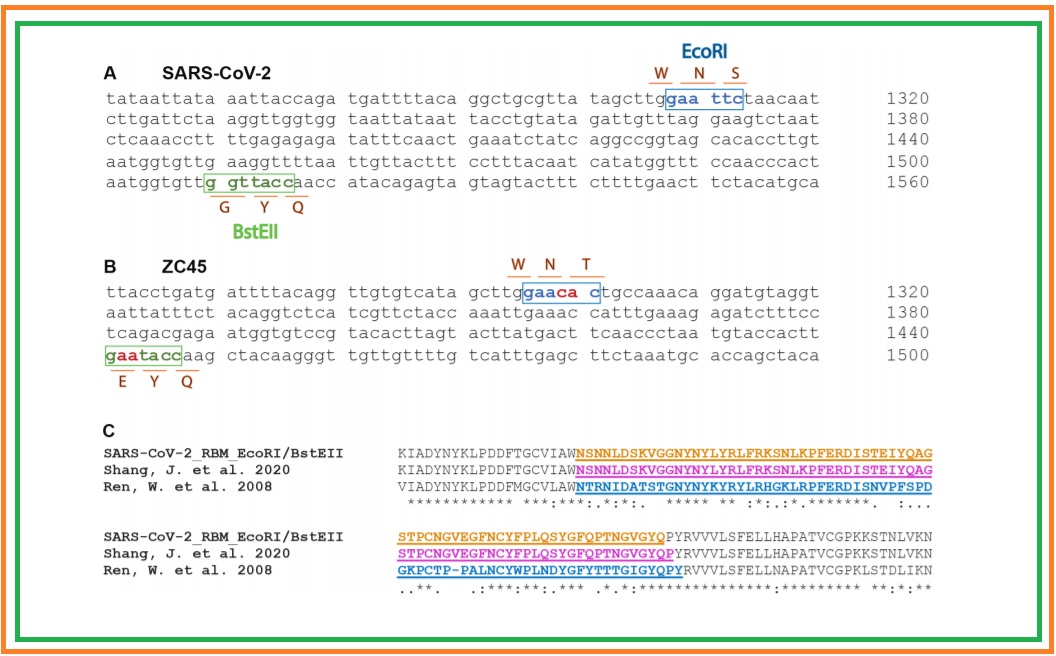
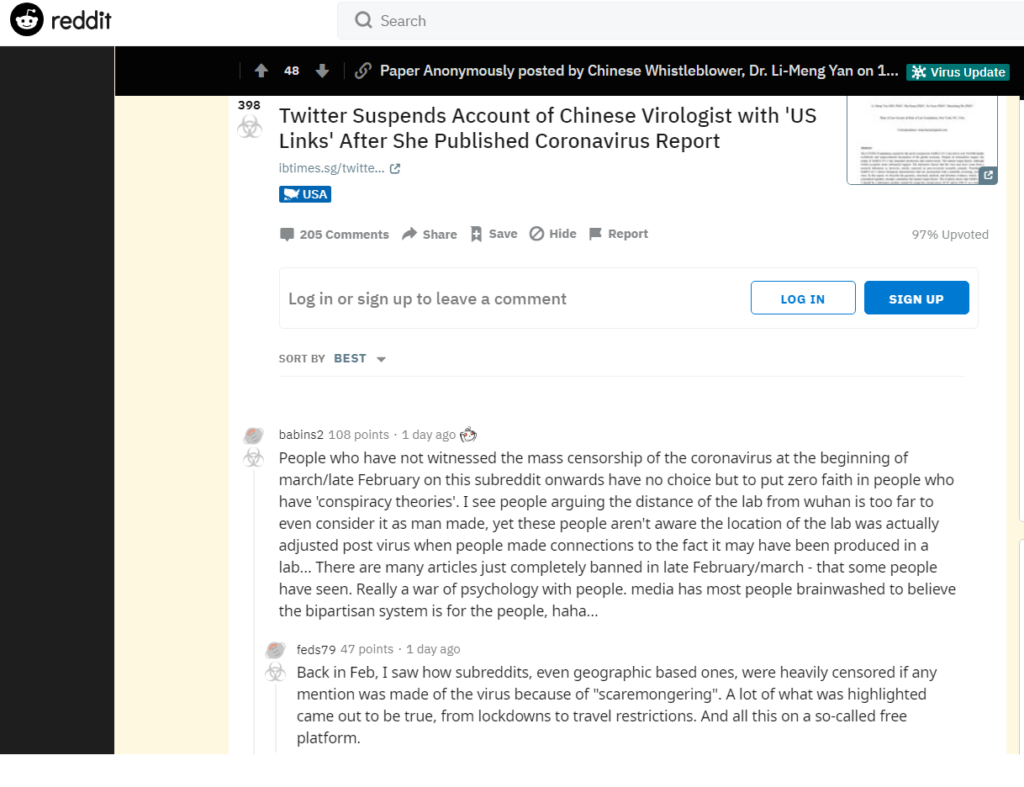
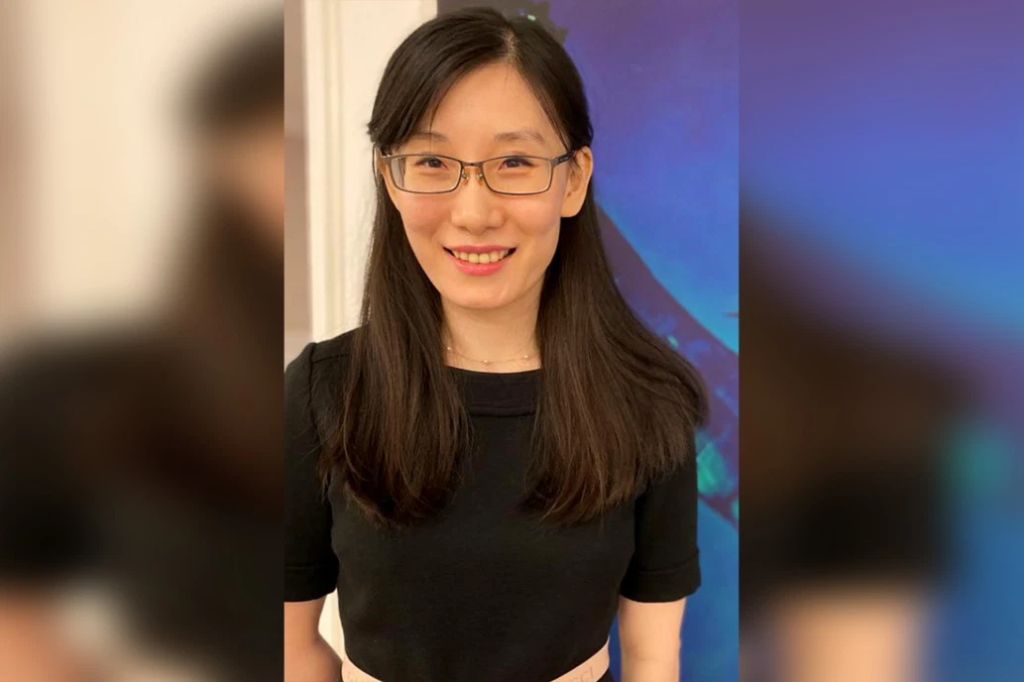
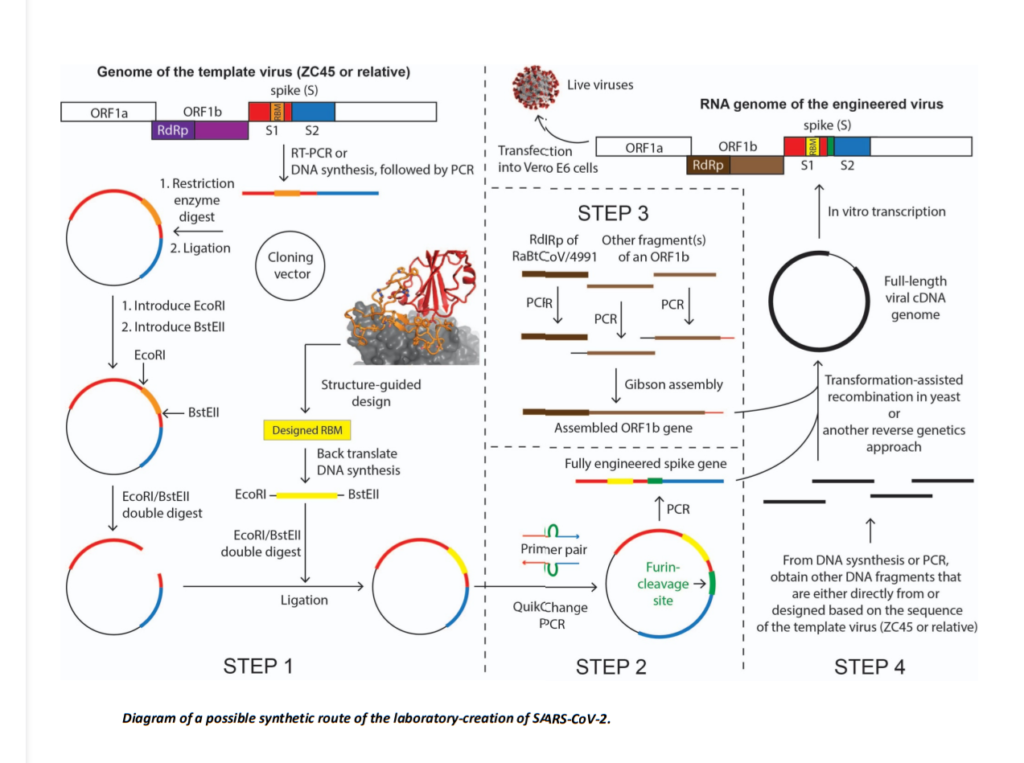







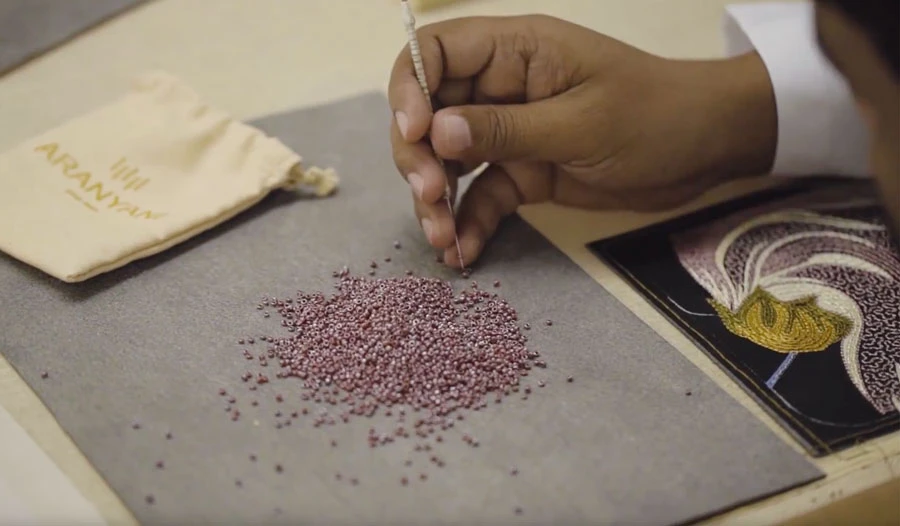



:no_upscale()/cdn.vox-cdn.com/uploads/chorus_asset/file/18315700/Screen_Shot_2019_07_16_at_9.04.22_PM.png)
:no_upscale()/cdn.vox-cdn.com/uploads/chorus_asset/file/18315569/page6image54471648.png)
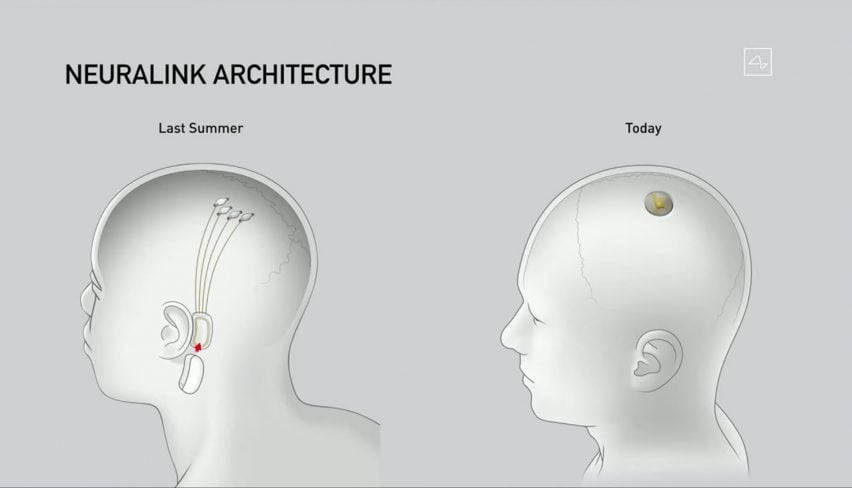

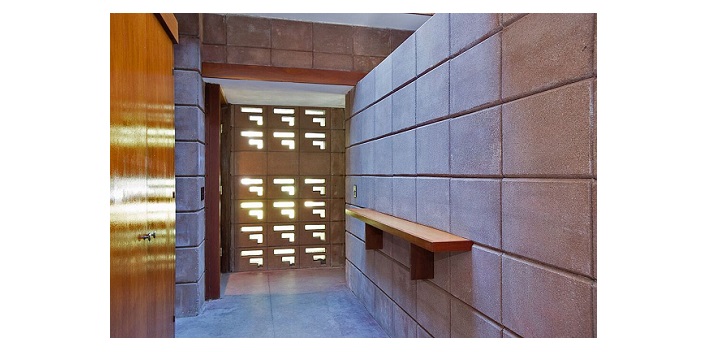
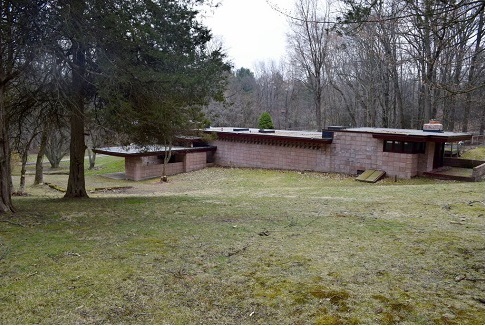
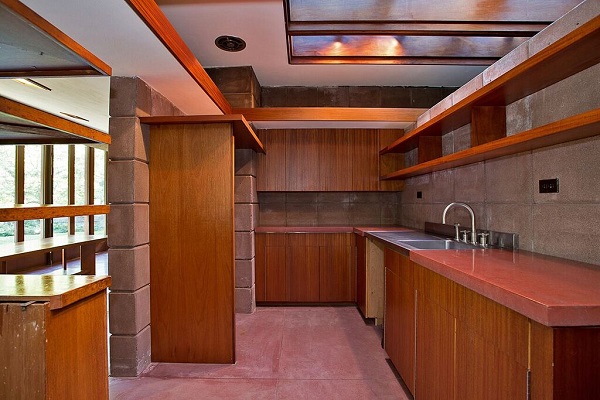
 Samuel Eppstein was a research scientist and Dorothy a researcher at the Upjohn labs. They had only been married six months when they commissioned their new home and construction was completed in 1953. The 2,250-square-foot Usonian includes three bedrooms, two baths, two fireplaces, and a general purpose room used as an additional living room. Though the kitchen has been rebuilt by a local craftsman in the Wright style, the home has all of Wright’s built-ins including two tables that were reconstructed to exact specifications. Ten-foot walls of glass are positioned to capture idyllic views of valley and meadows. There is also a swimming pool that was added in later years.