Category Archives: Culture

Stunning Art Deco Tear Drop Coupe Features In Auction

THE MONTEREY JET CENTER AUCTION

When Anthony Lago went to Suresnes in September 1933 to salvage Automobiles Talbot-Darracq, he took on a company with massive financial problems and a rather ho-hum range of cars.

The mechanical legacy left by his predecessor Owen Clegg and chief engineer Walter Becchia was staid and pedestrian. The nicest thing that could be said about the cars was that they did no one any harm. Sporty, stylish or chic, they definitely were not. In addition, models had been allowed to proliferate needlessly: too many engine sizes were served up in a bewildering number of chassis lengths and body styles, none of which were selling. One could say that while Talbot could produce a car for every occasion, there was unfortunately not an occasion for every car. Something needed to be done, and quickly.

While the many problems had seemed daunting to Lago’s predecessors, he was not going to let them or anything else stand in his way. Full of confidence, he had just completed the careful construction of the absolute deal of his life with Talbot’s British owners. Now at the age of 40, Lago was a dapper Anglo-Italian gentleman with little in the way of money, but of some sophistication: full of energy and vision for the disintegrating French company that now confronted him. In addition, he was an accomplished wheeler-dealer, who had worked very hard to get where he was.

By late 1932, Automobiles Talbot-Darracq S.A. in Suresnes just outside Paris, which was owned by the British Sunbeam-Talbot-Darracq combine (STD), was on the verge of bankruptcy.

Lago presented himself to the STD board as the “man to the rescue” and was sent from England to look Talbot-Darracq over and make a report as to what could be done. Upon examination of the moribund Talbot factory, Lago found a shambles. Chief engineer and fellow Italian Walter Becchia was on the verge of leaving, and the workers were uncaring and demoralized. The few cars being turned out were poorly put together. But beneath the dust and the cobwebs, Lago could see a plum ripe for the picking. So he went back to England, and instead of recommending liquidation, Lago suggested that he be made managing director of Talbot in France for a two-year period with a put option to buy the company and its holdings at any time at the 1933 value. Not knowing how hoodwinked they were, the STD directors accepted.

Lago then returned to France in the early fall of 1933 to rake the coals out of the fire with that doozy of a contract in his back pocket: potentially it would hand everything over to him if he played his cards right—which he did. The coals were raked out so ruthlessly that Antonio Lago, who in England had changed his name to Anthony, ended up owning Automobiles Talbot-Darracq S.A, once again without paying anyone anything.

When Lago finally exercised his option in 1935, he requested as payment that he might assume an old £500,000 debt that STD still owed the bank due to a loan taken in 1924, with the French factory as collateral. As the debt exceeded the book value of the company as well as that of the real estate, once again the STD directors accepted eagerly. Imagine: not only had Lago become a car maker without a centime to his name, but through this carefully laid out deal, he had also just become STD’s biggest creditor. And that was the devious plan. In 1936, Lago then let Talbot go bankrupt in connection with the great strikes in France. STD couldn’t very well call its remaining debt in with the liquidators, as Lago was first creditor in line, and his £500,000 would wipe the estate clean. In the end, Lago obtained Talbot scot-free.

While conducting these scurrilous financial dealings, he had set about transforming the company.

The plethora of available models, engines and chassis was pared down. Walter Becchia was given the job of redesigning the existing 14-CV six-cylinder engine in order to extract some much-needed extra power. The clunky non-synchronized three-speed gearboxes were supplanted by the advanced four-speed Wilson pre-selector for which Lago so conveniently held the patent rights.

And most important of all, in the summer of 1934, Lago paid a visit to his friend Joseph Figoni and talked him into designing a series of new, lithe and beautifully proportioned bodies to be built at the Talbot factory. As a result, the Talbot stand at the October 1934 Paris Salon featured a new, rakish Talbot prototype cabriolet by Figoni mounted on a 295 cm wheelbase chassis, fitted with a 3-liter engine redesigned by Becchia. It was called the T150 Grand Sport, and it was the talk of the Salon. Then, Lago went racing. Suddenly, Talbots were a hot commodity, and it is no exaggeration to say that the rest is history.

The T150 C and T150 C-SS Chassis

The T150 Grand Sport remained in production for roughly 18 months. At the October 1936 Salon, Anthony Lago and Walter Becchia presented the fruits of their continued labors in the form of two new and spectacular chassis. The first was an out-and-out sportscar chassis fitted with Walter Becchia’s new 4.0-liter high-performance development of the 3.0-liter six: the Lago T150 C-SS, placed at the very top of the market and only available as a bare chassis for the trade.

In all, less than 30 were made, yet the Lago C-SS would go down in history as one of the great pre-war chassis, on par with the legendary Bugatti 57S and Alfa Romeo 8C 2300. Wheelbase was 265 centimeters, which was identical to the Talbot T150 C GP cars from which the chassis was developed, and it was wide enough to accommodate two-passenger bodies with side-by-side seating.

The second chassis, named the T150 C, was equally formidable as it was mechanically identical to the C-SS, and fitted with the same great engine, but stretched 30 centimeters to a wheelbase of 295 centimeters. The benefits were two-fold. On the one hand, the extra length meant that two rows of seats could be accommodated if a four-to-five-passenger configuration was desired. But more importantly, the longer wheelbase made it possible for coachbuilders to achieve beautiful and harmoniously flowing lines of great elegance—especially on closed bodies with a single bench seat, such as 90034. The engine, gearbox, electrics and suspension specification would remain unchanged for the entire production run.

The construction and layout, as well as the mechanicals, were conventional and represented classic mid-1930s fast-car thinking. Both chassis were low, as the two rails passed under the rear axle and suspension. The engine, gearbox, firewall and suspension components were bolted directly onto the chassis. The steering was worm and nut, and the front suspension was independent with a transverse leaf spring. The live rear axle was suspended by half-elliptic leaf springs, with the suspension mounts on top of the chassis rails.

There was a short transaxle between the engine and the Wilson gearbox, followed by the driveshaft. The gearbox created a hump in the middle of the floor of the cabin just in front of the seats. For repairs and maintenance, the gearbox could be accessed through the floor in the interior of the car. The chassis had a foot operated one-shot lubrication system with a pedal actuated by the driver. The gas tank was a large 120 liter affair mounted on the chassis rails behind the rear axle. The complete T150 C chassis with all components, Wilson gearbox and ancillaries remained relatively light. It was a genuine 100 mph car.

The T150 C-SS and T150 C Engine and Gearbox

Lago’s first brief for Walther Becchia had been the job of developing the 14-CV Talbot six. This engine was bored and stroked to 78 x 104.5 mm, giving 2,996 cc, or 17 fiscal CV, and mounted in a 295 centimeter Talbot chassis. This chassis had already been fitted with an independent transverse leaf front suspension since 1932, which had been patented by Becchia in 1928. Dubbed La Solution Talbot, this suspension gave the chassis the makings of a sports car. The chassis was also given the Wilson gearbox, and the Talbot T150 Grand Sport was born.

For the T150 engine, Becchia designed a new cylinder head with a pent roof that created a nearly hemispherical combustion chamber, inclined valves operated by a single camshaft in the crank case, pushrods and rocker arms. This T150 3-liter put out a very satisfactory 100 horsepower at 4,200 rpm on a 7.4:1 compression ratio with one carburetor, and 110 horsepower with three. It compared well to the 18-CV Delahaye 3.2-liter engine, which Lago saw as his main competition. Whether it was a reflection of the true build costs or Lago’s chronic need for money, the new model carried a peppery price tag. At 78,000 francs, the T150 was not much cheaper than an eight-cylinder Bugatti T57 and a lot more than a six-cylinder 18-CV Delahaye.

Racing was a major motivation driving the development of the new engine. In mid-1935 however, the Automobile Club de France published their new rules for the 1936 season, which stipulated a blown 2.0-liter and an unblown 4.0-liter class. Therefore, in August of 1935, Lago demanded of Becchia that he design a new T150 C racing car from “scratch” for the 4.0-liter formula. Becchia now increased the bore of the 17 CV to 90 mm, but retained the stroke of 104.5 mm. Capacity was increased to 3,988 cc, which equated 23 fiscal CV. The light alloy hemi head remained, and the crank now ran in seven main bearings. In racing trim with three carburetors, power was a considerable 175 horsepower from this normally aspirated engine, permitting a top speed around 210 km/h on the circuits when the chassis was fitted with a light barquette body.

T150 C racers premiered on the French circuits in spring and summer of 1936, while the long and short wheelbase race-derived road-going versions of the 4.0-liter T150 C and T150 C-SS were shown at the October 1936 Paris Salon. In all cases, the “C” was short for Compétition. In the spring of 1937, the long chassis was renamed Lago-Spécial and the short Lago SS. Both featured Rudge knock-off wire wheels and a slightly detuned version of the 23-CV T150 C engine, now putting out 140 horsepower for road use. Lago had entered the Bugatti, Delage and Delahaye market for bespoke, stylish grand routières and sports cars.

By 1939, the Lago SS engine could be ordered in various stages of tune, delivering as much as 200 horsepower for competition and 165 horsepower for road use, which made a top speed of up to 200 km/h possible. This was an absolutely extraordinary figure for a road car at the time. From 1937 through 1939 and the breakout of hostilities, close to 25 T150 C-SS chassis were built, along with approximately 40 to 50 T150 C. Both types were, and are, very rare cars indeed.

Figoni, the Coachbuilder

Guiseppe Herménegilde Louis Figoni was born on 29 December 1892 in a tiny crossroads named Le Moline di Montereggio, about 45 km southwest of Piacenza in the province of Parma in the Emilia-Romagna region. Life was hard, people were poor, and in 1906, like many from northern Italy, the Figoni family emigrated to France to find work. They ended up in Boulogne-sur-Seine, the “Little Italy” of Paris, a working-class suburb far removed from what has now become posh and trendy Boulogne-Billancourt. After having served in the Great War on the Italian side, Joseph was apprenticed as a panel beater, or tôlier, to the well-known coachbuilder Lavocat et Marsaud. In 1923, he opened a modest carrosserie under his own name in Boulogne-sur-Seine.

Sometime around 1931, Joseph became a personal friend of Luigi Chinetti who ran the small and underfunded Alfa-Romeo operation in Paris. In 1932, Chinetti sent the famous racing driver Raymond Sommer to Figoni to have his Alfa-Romeo 8C 2300 chassis 2111018 rebodied to Le Mans specifications. The car won the 1932 race with Chinetti and Sommer at the wheel. For 1933, Sommer’s body was transferred to 8C 2300 chassis 2211109 that then proceeded to win Le Mans once again, driven by Tazio Nuvolari and Sommer. Suddenly, Figoni was the hottest name in French racing circles. Clients became a who’s who of legendary drivers, and for the next three years, the Figoni works virtually became an extension of the French Alfa-Romeo enterprise.

Joseph’s 1934 collaboration with Anthony Lago was another major breakthrough, not only in terms of securing clients that wanted a custom-built Talbot, but also in making the Figoni name world famous—at least in France at any rate. With all this activity, the small Figoni premises were bursting at the seams. Still, profits were not sufficient to allow for necessary expansion, and financial restrictions made it necessary to find an investor. This investor was Ovidio Falaschi, a fellow Italian who became partner in May of 1935. The company was reorganized as the Établissements Figoni et Falaschi, and several surrounding premises were leased so that bodies could now be manufactured at a rate that was a good deal faster than before. It should be noted that Ovidio Falaschi took a strictly financial interest and was not involved in the designs made by the company.

Design 9222

The star, the Figoni design that eclipses all else, remains the streamlined, two-seater coupé body that has become universally known as the Goutte d’Eau, which means water drop in French, now translated as Teardrop. It is a design of such breathtaking beauty that it has become one of the most iconic automobiles of all time. A maximum of thirteen are believed to have been built on the T150 C-SS chassis, two on the T23 Baby 4.0 Liters chassis, and only one T150 C, namely chassis 90034, the subject of this discussion.

Yet it is a body that more than 85 years after its inception, and despite its age, is instantly recognizable to automotive enthusiasts all over the world. It is one of the very few designs that is aesthetically correct, balanced and in equilibrium from any angle. This absolute harmony of line is a rare achievement indeed, and one that the Goutte d’Eau shares with only a minute number of other automotive design statements that are equally famous and universally revered, such as the “coffin-nosed” Cord 810, the Ferrari 250 GT California Spyder, the Lamborghini Miura or the first series Jaguar E-Type. Exalted company indeed.

Interestingly, it was the media who gave the Goutte d’Eau its name. While no one will dispute that it was fitting, the design was simply called a Faux Cabriolet by Figoni, and this in spite of the fact that the style has no elements that relate to the look of a classic (faux) cabriolet. Two versions existed of Figoni’s basic faux cabriolet design, a fastback and a notchback, which makes definitions even more confusing: the designations Coupé Amérique or Modèle New York were used indiscriminately by Figoni for the fastback, named so because it was first shown at the 1937 New York Auto Show, and Coupé Jeancart for the notchback as an industrialist named Jeancart bought the first body constructed to this style.

There were three Jeancart designs: no. 9220 with enclosed fenders front and rear, 9221 with exposed front wheels and enclosed rear wheels with fender skirts, and 9222 with no fender skirts and all four wheels exposed. On T150 C chassis 90034 the wheels are exposed, and it was therefore bodied to design 9222 and not 9221 as has been stated elsewhere.

Enter Antoine Schumann

In 1925, Luigi Chinetti was working as a mechanic for the Alfa-Romeo racing team. Like Anthony Lago, he was unhappy with the rise of fascism in Italy. After the team had completed its racing efforts in France and was on the cusp of returning to the home country, Chinetti decided to stay. As mentioned above, he then worked out of the premises Alfa-Romeo had established in Paris in the rue Marbeuf, just off the Champs-Élysées, which led him to sell an 8C 2300 to up-and-coming race driver Raymond Sommer. Chinetti had the car rebodied to Le Mans regulations by Figoni, and being the consummate wheeler-dealer that he was, he secured the position as Sommer’s co-driver in the 1932 Le Mans race which they won.
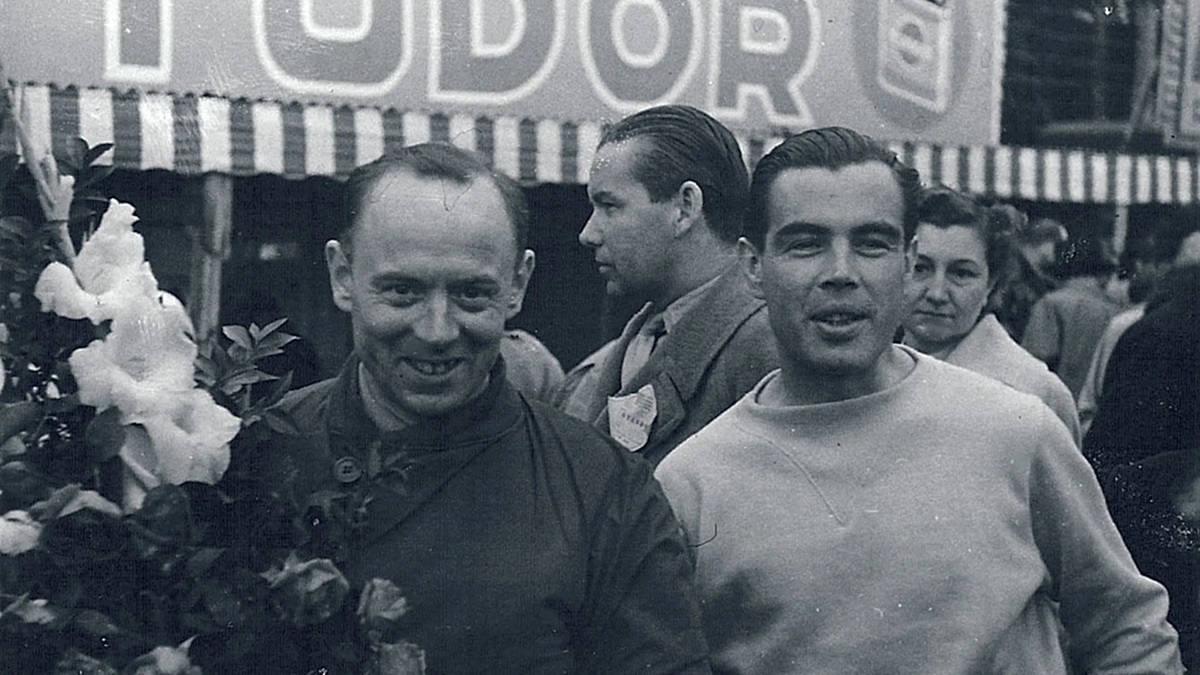
This marked the beginning of a lifelong friendship between Luigi Chinetti and Joseph Figoni. After he left Alfa-Romeo, Chinetti became a sales agent for Talbot-Lago, and Joseph Figoni gave Chinetti the exclusive rights for France to sell Talbot-Lago chassis fitted with teardrop bodies by Figoni et Falaschi. As a result, it was Luigi Chinetti who sold 90034 to wealthy banker and gentleman racer Antoine Schumann for the princely sum of 165,000 francs.

The car was delivered to Schumann in Paris in January 1939. Antoine Marc Philippe Jacques Schumann was born on November 26, 1905, in the home of his parents who lived in an imposing building at no. 5 rue Beaujon in the 8th arrondissement of Paris. It was a family of means. Antoine’s father, Robert Schumann, was a banker, and his mother Alice, née Lehmann, also came out of a banking family. Antoine’s birth certificate was witnessed by Paul Jaillot and Gaston Grainger, both employees of the bank: it was in the cards that baby Antoine would eventually follow in everyone’s footsteps and enter the world of finance.

Antoine married Eliane Louis-Dreyfus on April 13, 1929. It may well have been true love, but the marriage certainly buttressed the coffers of the young couple, as the Louis-Dreyfus family was equally well-to-do. Charles Louis-Dreyfus, Elaine’s father was a shipping merchant, while her grandfather was a banker, a former member of parliament and a recipient of the Croix de Guerre, a military decoration given for valor during World War I.

Important for this discussion, however, is that by this marriage, Antoine Schumann became brother-in-law to Pierre Louis-Dreyfus, as he was Eliane’s younger brother. Pierre was already a repeat customer of the Figoni and making his mark as a gentleman racer. Soon Antoine shared his passion for fast cars.

But before that, Pierre Louis-Dreyfus and Antoine Schumann had become their own racing team, a secretive privateer racing duo that would garner fame in French racing circles. As gentleman racers they desired no publicity surrounding their names. In addition, daredevil antics on the tracks could reflect negatively on their careers in business, and as a result they camouflaged themselves with a number of pseudonyms. However, since these pseudonyms were in the nature of acronyms, it is moot whether many, if any, were actually fooled.

As he was more active over the years than Antoine Schumann, Pierre Louis-Dreyfus had more than one of these assumed names. When racing alone or with other co-drivers, he used the acronym Heldé, which was a transcription of the French pronunciation of the initials of the Louis-Dreyfus surname: LD. But when Pierre and Antoine raced together, the duo facetiously called themselves Ano (Pierre) and Nime (Antoine) for driver and co-driver, a play on Anonime, which means Anonymous in French.

As this daring duo they raced at Le Mans in a Bugatti Type 43 in 1931, an Alfa Romeo 8C 2300 LM in 1932 and a Talbot T150 C in 1939—not with outstanding results unfortunately as they were forced to retire on all three occasions. But that is the nature of gentleman racing. You are up against factory-sponsored teams, and it is the sportsmanship, the participation and the thrill of the race that is the essence of it all. It can therefore come as no surprise that Antoine Schumann was a connoisseur of fast road cars too. This included a massive 5-liter Bugatti Type 50 that was sold by the Bugatti factory to him on February 19, 1932.

Luigi Chinetti sold Talbot-Lago chassis 90034 to Antoine Schumann in September 1938. It was delivered that same month to the Figoni et Falaschi works at no. 14 rue Lemoine in Boulogne-Billancourt. The Carrosserie assigned body order number 738 to the build, and this number can be found stamped on body parts of the car. Perhaps Schumann bought the car for himself as a consolation prize of sorts, as by this time, his marriage to Eliane was on the rocks: they were divorced on 12 November 1938 by order of the civil court. He ended as the second of her four husbands. If this was his motivation for buying 90034, one may say that Antoine Schumann certainly knew how to defuse bad feelings!

For this very special chassis, Schumann selected Figoni et Falaschi design no. 9222, which with its open rear fender style was a good deal more sporting than the enclosed rear fender of design 9221. But while sportsmanlike, 9222 is nevertheless a style which in many ways remains the most elegant and tasteful of all Joseph Figoni’s streamlined efforts in the late 1930s. Features that link the exquisite body on chassis 90034 to the other Teardrops built by Figoni include the split windshield, integrated doorhandles, the smooth execution of the grille and front fender tips, the double row of side louvers on the hood, as well as the judicious use of chromed scallops.

The extra 30 centimeters of wheelbase compared to the T150 C-SS chassis made it possible for Joseph Figoni to create smooth, flowing lines of unparalleled harmony which in their execution were simply captivating to the eye. The length of the hood and the front fenders were much the same as the proportions used on the shorter chassis, but the notchback of the Jeancart greenhouse was subtly refined and the rear deck was transformed into a long delicately sloping tail that was a masterclass in balance and proportion. Longer, lower and wider than its siblings, the sporting stance of the T150 C Jeancart coupé is unparalleled. No one could be in any doubt that 90034 was a fast car.
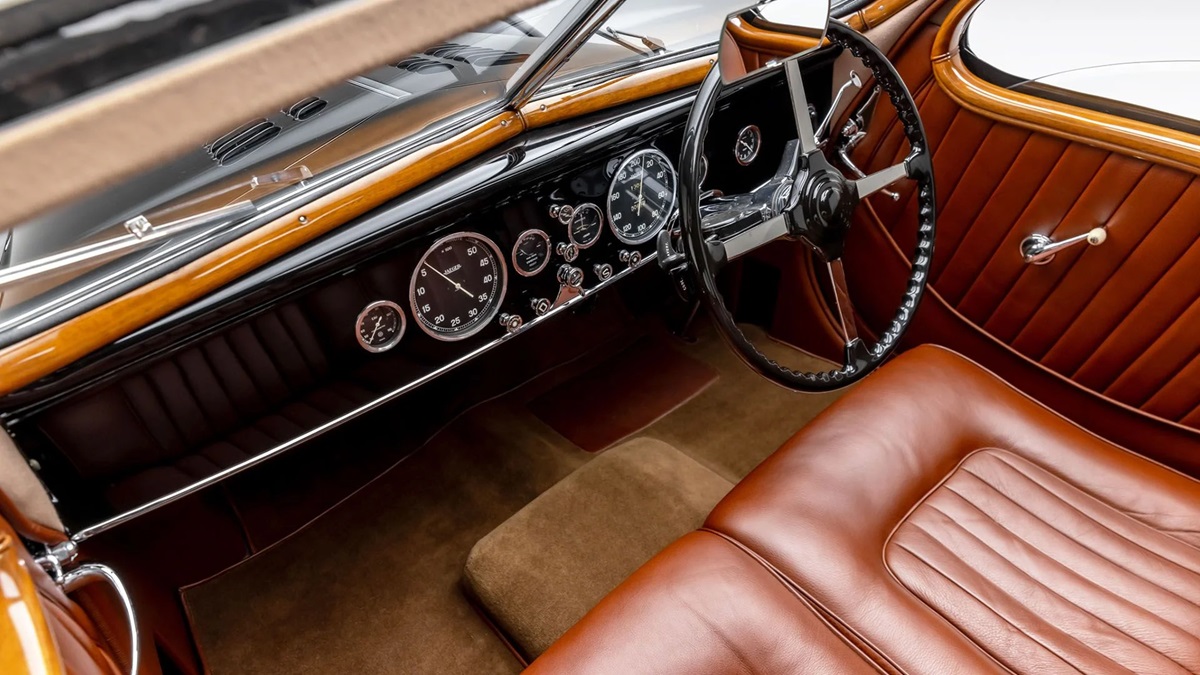
As a true appreciator of fine cars, Schumann had Figoni incorporate a number of bespoke details that were special orders. The livery was specified as bleu “Tango” irisée noire, which was a metallic dark blue with a black tinge, a very expensive selection as metallic paints were rare and costly to make at the time. Traces of this original dark blue may still be found behind the dashboard and inside the glovebox. The three-abreast seat was upholstered in Havana (tobacco) leather with matching wood on the door cappings. The dash was fitted with a full set of Jaeger instruments with black dials and painted in body color, while the carpets and headliner were in a delicate shade of gray. Special curtains in Havana leather were made for the rear window.

Bespoke details to the body included free-standing headlights. The enclosed headlights seen on most Teardrops provided poor light for night driving, and a number were in fact modified by their early owners, simply because they couldn’t see properly in the dark. In addition, the body received a full sliding sunroof, detachable rear fenders, a Lago Spéciale script on the rear deck and opening rear windows to improve airflow in the cabin. Most importantly, however, Schumann specified a graceful, chromed sweep spear on the body side, a unique styling enhancement that was used on a number of Figoni designs in this period but was absent on design 9222. This started as a beltline at the trailing edge of the radiator shell, ran along the edge of the hood and then swept down in a supple curve along the side of the door, only to double back on itself at the sill. Pure aesthetic genius.

Antoine Schumann was able to enjoy his jewel of a car until the Nazi invasion of France which began in May 1940. The Schumann family was Jewish, and Antoine was forced to either leave France or face deportation to German concentration camps. As so many other cars during the Nazi Occupation, the striking Talbot-Lago was squirreled away as it would have been one of the first cars the Occupiers would have expropriated for their own use without compensation. Antoine fled to Egypt, took a pilot’s license and joined the French Resistance.

There, he flew for the Compagnie de l’Air au Moyen-Orient, a squadron operating out of Cairo that fought Nazi Field Marshal Erwin Rommel’s Deutsches Afrika Korps and participated in the Battle of Tobruk. From 1943, Antoine Schuman served under François Dumont in the air force of the Forces Françaises Libres, the Free French Forces. For his bravery during the war, Schumann was made an Officer of the Legion of Honor and awarded the Croix de Guerre. On April 18, 1947, he married Jeanine Constantinovitch, and on June 25, 1948, for reasons unknown, he changed his last name to Saville. At seven in the morning on August 15, 1956, Antoine Schuman died as Antoine Saville in his apartment at no. 16 rue Paul Valéry in the 16th arrondissement of Paris. He was 50 years old.

Frédéric Damman and the 24 Hours of Spa

Paris was liberated on August 19, 1944, but fighting continued in Europe until Germany surrendered unconditionally on May 7, 1945. It is not known when Antoine Schumann returned to France, but it seems that he kept 90034 until sometime in late 1946 or early 1947. Paul Frère, the late racing champion and noted automotive journalist, remembered seeing 90034 in Brussels in 1946 or 1947 where it was for sale with the Garage Masuy, located in the rue de Stassart, close to the Porte de Namur in downtown Brussels. The car was apparently in nigh on perfect condition, which is consistent with the fact that it had been laid up during the War and had not seen much use since its delivery in January of 1939.

Sometime in 1947, chassis 90034 was purchased by Frédéric (a.k.a. Freddy) Damman, owner of the Magasins Butch clothing stores which provided him with the wherewithal to finance his hobbies as amateur pilot and race driver. 90034 received registration 2536, and Damman had the car repainted in gray, after which he prepared it for participation in the 1948 Belgian Grand Prix, Les 24 Heures de Spa, which took place on July 10 and 11. Chassis 90034 was entered in the 4-liter category and given race no. 92. With Damman and co-driver and mechanic Constant Debelder at the wheel, the car placed first and won its class—an impressive result for a nine-year-old car.

Freddy Damman’s daughter has recounted that it was love at first sight when he first spotted 90034 in the Garage Masuy showroom. There is no reason to doubt this, as it turned out to be a very long love affair on Damman’s part: he kept 90034 for 32 years until July 17, 1979, a few months after its 40th “birthday”, when he finally parted with his cherished Talbot-Lago in a private sale. His daughter said that Damman owned many cars over the years, only retaining one or two important cars at a time. This included a number of exotic Ferraris, but it was always 90034 that was the keeper, the car that stayed behind when the time came to buy something new. The Talbot was simply the car he loved the most.

Moving On

The lucky buyer in July 1979 was Gaston Garino who had worked at the Hispano-Suiza factory in Bois-Colombes. In the early 1950s, Garino purchased an old garage in Puteaux where he specialized in keeping Hispanos on the road. By 1979, Garino had partnered with M. Lerouvillois, and the enterprise had become a dealer in high-end classics. 90034 was registered 1551-HN-92 by Garino, using the chassis identity of T150 C-SS chassis no. 90121, a Pourtout-boded car, on the registration document. This subterfuge may have been performed for customs reasons. Chassis number 90121 was an obscure car at the time as it was not finished until October 1944 after the French Liberation and had been exported to the USA in 1953.

On May 14, 1980, and still using the identity of 90121, chassis 90034 was re-registered 543-DAL-75 and sold to film producer and businessman Michel Seydoux, a famous early French collector in Clausonne in the Alpes-Côte d’Azur region. The car was auctioned by Poulain-Le Fur on December 16, 1981, and passed from Seydoux to Yves Rossignol, an avid motoring enthusiast of little means. Once again, 90034 received a new registration, namely 1938-KB-13. Rossignol kept 90034 for 23 years. During that time, the car received a two-tone black and burgundy livery but was subsequently repainted in a single shade of black. Importantly, it remained unmolested and complete, and had never received an actual restoration. In 1998, thanks to the help of the Talbot Club and its President Dominique Dupont, the original identity of 90034 was re-established.

In 2004, Antoine Rafaëlli, the legendary author of Memoirs of a Bugatti Hunter, contacted Toby Ross, another car sleuth, telling him that he had seen a Teardrop in Marseille some years back, and that it belonged to someone called Yves Rossignol. They located Rossignol in a garage in Nice where he was making security bars for windows. A friendship was established, and eventually, Rossignol agreed to sell.

Yves Rossignol described himself as an “Adventurer”. In the past he had been the young boyfriend of Madame Coty of Coty Perfumes. At some point, she bought the Talbot for him at a Paris auction which can only have been the Poulain-Le Fur auction. He later married a lady from Columbia and spent time in South America. At some point, “La Noire” as he called 90034, was shipped to South America, where Rossignol used it. It starred in a long-forgotten film and Rossignol had a photo of the car being rowed across a lake on a wooden raft.

At some point, Rossignol and the car returned to France—he sans wife. She had gotten fed up with him being penniless. By the time Toby Ross was negotiating with Rossignol, La Noire was hiding in plain sight in a car museum close to Geneva airport. Toby Ross went to see it, took some poor-quality photos in the gloomy museum and set about selling it. In July 2004, chassis 90034 sold to Marc Caveng of 135 Route de Chêne, Chêne Bougeries, a collector-dealer based in Geneva, Switzerland, who repaired the engine head, renewing the valves. Yves Rossignol took his payout and went back to live with his wife in Columbia. In 2005, Caveng sent 90034 to auction in Monterey, where it sold to the late John O’Quinn.

90034 was then sent to RM Auto Restorations in Blenheim, Ontario, Canada for a comprehensive restoration. The body was refinished in a deep luminous black, while the original tobacco leather was renewed in the same shade and the original wood trim was kept and refinished. The car was extraordinarily complete, so virtually all body panels remain original. The engine and mechanicals were fastidiously reconditioned. After the passing of John O’Quinn in October 2009, chassis 90034 was sold to its current owner in August 2010 at the Monterey auctions.

For the past fourteen years, this deeply historic automobile with its ground-breaking coachwork of timeless beauty has been part of and curated by an important collection on the West Coast of the United States. This is the singular motorcar that is being offered. Highly original and authentic, in beautifully restored condition, it has a continuous and unbroken history of ownership since its inception in September 1938 when ordered by Antoine Schumann. Many years after the fact, Paul Frère remembered the unique engine and exhaust note he heard when this Talbot-Lago blasted by at the 1948 24 Hours of Spa. This is a car that makes memories, a car that stays with you. One word from Cole Porter’s famous song for the Grace Kelley, Frank Sinatra and Big Crosby film High Society sums up Talbot-Lago Teardrop chassis 90034: Unforgettable. For the Silo, Caroline Cassini.

  • Ordered new by gentleman race driver and banker Antoine Schumann as a replacement for his Bugatti Type 50
  • Sold to Schumann by Luigi Chinetti for the sum of 165,000 francs
  • The only Figoni Teardrop Coupé built on the T150 C Lago Spéciale chassis
  • Special-order body with unique features specified by Schumann
  • Class winner at the 1948 Belgian Grand Prix, the 24 Hours of Spa
  • Known provenance with ownership by prominent French collectors
  • An outstanding design icon of remarkable and enduring beauty

Chassis No. 90034

Chassis No. 90034
Figoni et Falaschi Design No. 9222

1938 Talbot-Lago T150 C Lago Spéciale Teardrop Coupé by Figoni et Falaschi

Auction Sale Estimate: $6,500,000 usd – $8,500,000usd/ $8,900,000cad – $11,600,000cad

Scott McCloud’s Worthy TED Talk On Science In Art: Variantology In Comics

Whether you are a fan of comic books or not, this is an entertaining TED talk and here is why:  it expounds the process of thought and observational connectivity in science and in the arts.  Uh- what does that mean?   In simpler terms, this short TED lecture explains how a scientific mind operates in the arts.

Narrator Scott McCloud is the son of a blind genius.

His Father was a rocket scientist and inventor for the US defense industry and his siblings are all working in the Sciences.  Scott on the other hand, is a comic book artist.

At the start of his TED talk, Scott refers to his Father and explains that the ‘apple’ really doesn’t fall that far from the ‘tree’- it’s tough to fight genetics. He came to realize that working in Comic Books is actually not that different from working in Science and that our contemporary understanding of how we define art and understand media is wrong. It is, he says,  one of interrelated connectivity based on thought and observation.  In other words- Variantology.

Scott McCloud. Comic creator and variantologist.
Scott McCloud. Comic creator and Variantologist.

This is a short lecture weighing in at a little over 17 minutes. Scott does an artful job of breaking down the ‘modus operandi’ of curious minds.  He summarizes insight using a K.I.S.S.  quadrant grid that shows that our processes of thought are indeed interrelated.  Using a four-sectioned pyramid, he helps rearrange and reuse a mathematical formula- illustrating how the Classicist, the Formalist, the Animist and the Iconoclast are all just parts of the same formula of human experience and thought. As in scientific investigation and theorizing, creativity in the arts is powered by human experience and thought.

Things worth remembering.

Scott offers a “quick bake” recipe for meaningful results:  Learn from everyone. Follow no one. Watch for patterns. Work like Hell.  For the Silo, Jarrod Barker

More than what meets the eye and what doesn't meet the eye- the comic panel. Transcending time, transcending linear thought, transcending singularity. The panel has been used throughout the ages- it's a mystic form of communication. CP
Transcending time, transcending linear thought, transcending singularity. The ‘comic strip’ panel has been used throughout the ages- it’s a mystic form of communication.


Retailers Preparing for Imminent Hyper Experiential Renaissance

Retail is on the precipice of a renaissance, which will be characterized by great advancement and economic rebirth.

To get there, businesses need to start by acknowledging that no matter where they operate in the world there is a pressing need to exercise commercial discipline. And a recognition that the metrics of yesterday’s retail will not fuel the growth of tomorrow. However, this non-negotiable commercial pragmatism must be balanced with an appreciation that while exciting technology innovation still dominates C-suite and elevator conversations, the next big evolution is an imminent renaissance of hyper-experiential retail.

The Commerce Department in the US announced that consumer spending rose in February by its biggest margin in a year, while in the UK inflation was at its lowest level in two years as retailers compete for customers, here in Canada RBC reports that “consumer spending data marked a stronger start to Q2 than we expected. But one month does not make a trend. We are cautiously optimistic that consumer activity will improve this year- as adjustment to higher rates hits households less hard in 2024.”. However, whether conditions are favorable or challenging, brands simply must perform, and perform well, in an environment where there are more competitors than ever before. 

Beyond this, consumers can easily be described as fickle

For example, if they are not happy with one experience they’ll move on and there are dozens, hundreds, and if we think globally, thousands of other brands waiting in line to capitalize on their spend. While many consumers are traveling far and wide to experience the best from all around the world, TV and content across platforms is resetting what consumers want, need, and expect from brands by exposing them to new lifestyles and ways of living.

An example of how this brand we all know is re-inventing how customers experience their products…..museum exhibition style!

Retail dominated at CES earlier this year, and almost all conversations revolved around artificial intelligence (AI) technology to drive seamless and frictionless retail, personalization, and much more. Technology is enabling user experience that wouldn’t have been imagined a decade ago. However, rather than being seen as an end, technology should be understood as the means for giving consumers what they want.  

The NRF’s Retail’s Big Show this year showcased the best of technology, yet some key themes to emerge were that customer interaction in-store is as imperative as the transaction and that Generation Alpha, while not yet capable of earning money, has immense influence on their parents who do. While these true digital natives are technologically adept, they value in-store and physical experiences. Do not for a second underestimate their influence on their parents.

Gen Z, the first generation to have had a smartphone their entire lives, are also known to be digitally savvy.

While generalizations across entire generations are never helpful, it is widely agreed that this cohort researches brands and products online but – and here’s a surprise to those focusing only on technology – according to global management consulting firm Kearney, 81% of Gen Z prefers to shop in stores, while more than half of them do so because they say it helps them disconnect from the digital world. 

All the signs are there for retailers willing to see them. Our two youngest generations are telling us what they want. What does this look like in practice? Amazon launched its Just Walk Out technology a mere six years ago, accompanied by hyper-advanced ceiling-mounted cameras, shelf sensors and algorithms. Amazon has announced it is removing the technology because it alienated shoppers who felt that a trip to the grocery store felt like they were stepping into a high-tech vending machine. This speaks directly to what consumers want from an in-store experience.

Retail’s next big opportunity is hyper-experiential retail, and we are at the precipice of this explosion of customer experience driving consumer choice and loyalty because of a confluence of a few big forces at play.  

Shifting of the tectonic plates

The first is technology, which is enabling innovative and effective experiential retail. Another is that as the pandemic fades into memory, people want to be out, they want to spend moments with other people outside of their homes. According to insights from Canvas8 looking into what they call experience hunters, 58% of consumers believe that immersive experiences will influence their next purchase. In other words, six out of ten people place a high value on how retail makes them feel.

Artificial Intelligence will be used to supplement customers shopping experiences.

The third is that there is no longer a clear line between where retail starts and where it ends. Almost everything is a retail experience now, no matter if you’re at an airport, a fuel station, or commuting – retail is everywhere, meaning there are hundreds of different competition points for retailers across millions of different journeys. The last big force is that e-commerce has slipped into a holding pattern. Effective, efficient, and convenient, but boring and predictable. Influencers have taken over product choice even leading the conversations on behalf of brands. But consumers want more fun, they are seeking discovery – the magic of retail past.

This all has very real permutations for brands that have built their market presence on legacy retail experiences. They need to innovate quickly to keep up with pioneers who will keep raising the bar of experiential shopping. In addition to this they will be competing directly with startup brands and businesses that were direct-to-consumer, but are moving into the realm of retail experience without the baggage of the past. This area alone will likely see exponential growth in the next few years. 

From purpose to experience

Defining brand purpose has been front and center for a number of years, which is right because purpose is foundational. However, purpose doesn’t tell you everything about how a customer will experience a brand. In light of this, brands will be challenged to define how their brand is experienced across all dimensions. In other words, not just their voice, not just the words that they’re using or their personality and identity, but how they’re physically coming to life, how they’re meeting customers at the important moments across the retail journey and creating value, intrigue, excitement, attraction, and desire. 

This type of discovery is crucial for brands to drive longer-term loyalty in a hyper-competitive landscape. It starts with dimensionalizing the brand, in other words thinking about how it should look, feel, sound, smell, and taste – this is the cornerstone of an experience vision. Once a brand has done this it needs to be precise in how it chooses the moments where it wants to explode into life for consumers. Much of this precision will come from a deep understanding of consumer insights and experience barriers and how to overcome them, but also from creativity, imagination and innovation – a true path to differentiation.

Agencies and consultants need to help retailers by mapping out a diagnostic journey of consumers. This enables brands to understand a consumer’s entire journey, not just within an experience, but within the moments and choices leading up to an experience. How do they make choices, what drives them, what motivates them, what distracts or pushes them away from brands? When do they make these choices? 

The best technology can aggregate multiple data sources to help diagnose brand issues as well as predict where and why brands are losing consumers along their journeys. It is important for retailers to find answers about where they are not maximizing consumer desire in key moments. However, landing on the right answers requires asking the right questions.

The seeds to these questions were planted at CES earlier this year, when some of the biggest retailers and tech giants in the world made it abundantly clear that their vision of sustainable, long-term growth lay in marrying technology with humanity, signaling a return to appreciating the value of humans and how we feel. We all know what experiential retail is, and the world is awash with various case studies of highly successful campaigns. Expect this to turn up a notch to become hyper-experiential. Especially that according to Canvas8, quoting Unibail-Rodamco-Westfield, 8 in 10 people globally are willing to pay more for elevated shopping experiences. 

Genuine human connection and personal interactions are going to drive retail growth, innovation, and brand loyalty this year and beyond. Brands need a plan to thrive in this renaissance of hyper-experiential retail. The rules of the past aren’t going to work in the new era of modern retailing where consumers are telling us what they want, we just need to listen, see around the corner and bravely walk through the door. For the Silo, Rhonda Hiatt

Rhonda is the global CEO at Clear, part of M&C Saatchi. Featured image: Galleria Vittorio Emanuele in Milan Italy- using historic storefronts and buildings in newly realized enclosed mall retail spaces.

Ancient Energy- Art Of Tai Chi Is Growing Fitness Trend

What will the next fitness trend be? Has it already arrived? 

Master Moy Lin shin


According to Bruce Frantzis, it is Tai Chi. Frantzis, called one of the Westʼs greatest living masters, holds authentic lineages in Taoist energy arts.

He calls Tai Chi an über-exercise because you can do it for health, healing, martial arts and meditation. In China they say, “Tai chi (a Qigong form) can be done by anyone, male and female, young and old, strong and weak, intelligent and slow, healthy or ill.”

An über-exercise for everyone.

Studies show that Tai Chi Qigong reduces stress, heals illnesses, increases mental and physical performance, and is an effective tool for aging well. This is of particular interest to Baby Boomers as they enter their 60s. It enables them to heal or prevent the aching joints, sore muscles, memory lapses, and many other issues that come after middle age.

This evidence is what is powering the surge of interest in the Chi arts. In my own experience, typical aches and pains related to aging disappeared when I resumed my Tai Chi practice after a lapse of years: achy sore knees are almost restored to normal; lower back pain is easily managed; migraines are rarer and deflected in minutes; sleep is deeper; eating properly is easier; and I have more energy. In fact, I have almost no physical complaints at all, and when something minor does arise I am more effective at self-healing.

Shoot-Hawk-with-Bow- the author demonstrating Tai Chi

These things are significant; but, even more important to me is the pure joy I feel from the movement, the rhythm, the flow, as I practice my set. And the fun and satisfaction I get in teaching others.

Many people try Tai Chi, enjoy it, but quit in frustration complaining that it is complex and hard to remember. It is complex. There are many subtle skills to remember and perform all at the same time: slow, relaxed, smooth, continuous, movements performed in a state of mental relaxation with slow, deep breathing; careful attention to the alignment of all joints; proper foot placement and and weight shifting; outer and inner focus.

In traditional teaching the student tries their best to follow along with the teacher, soaking up like a sponge all that the teacher has to offer. The teacherʼs curriculum is more important than students goals and needs. For some people this ‘teacher led’ style works well. But for many it does not.

As Tai Chi enters the mainstream this method is giving way to new learner friendly approaches. Older students respond with enthusiasm to methods which take into account their life experience and individual needs. Trained teachers are developing systematic ways to teach these subtle skills so that students know exactly what they are aiming for and when they achieve it. Students gain competency sooner and nearly every one notices benefits even from their first class. For the Silo, Jackie Davies. 


You Need To Protect Yourself From Germs At The Gym

The gym is a haven for germs.

Members are sweating and breathing hard over the equipment, only wiping it down quickly with a strip of paper towel — if they remember to wipe it down at all. To make sure you stay healthy every time you go for a workout, you should read these tips to protect yourself.

Wash Your Fitness Gear

Before you worry about the treadmills and locker rooms, you need to take a look at your gym bag. You could be harboring bacteria and germs in your athletic gear.

Moisture and bacteria will build up in your gym shoes, especially if you only wear one pair. This situation can lead to powerful foot odor, along with frustrating problems like foot fungus, toe fungus and blisters. Swap your shoes after every use to let them dry out. If you’ve been using the shoes for a while, you should replace the old dirty insoles. Click here to see where you can get custom orthotics in Toronto so that you can get the perfect fit for these supportive accessories.

Don’t re-wear clothes after a workout. Even if you think you didn’t sweat much, you should clean them. When you put those dirty clothes into the washing machine, toss your gym bag in there, too.

Wipe down Gym Equipment

If you think your equipment is dirty, just imagine what lies on the gym’s equipment. People have been touching it and sweating on it day-in and day-out, and you can’t be sure if they’ve been kind enough to clean up after themselves.

If you’re worried about getting sick, the microbiologist Jason Tetro recommends that anyone using gym equipment follows these simple rules to avoid bacteria and viruses:

  • Shower before and after the workout
  • Take 15 seconds to wipe down equipment before and after using it
  • Wash your hands often
  • Don’t touch your mouth or face

Don’t Go Barefoot

You need to wear shower shoes when you go into damp areas like the swimming pool deck, the locker room, the sauna, and, of course, the showers. These floors are covered with germs. The protective footwear will keep you from picking up an embarrassing infection like athlete’s foot or plantar warts.

You can get the same foot conditions from a borrowed yoga mat because people like to practice in their bare feet and they often forget to clean the material when they’re done using it. You should wipe down a borrowed mat before and after your yoga classes and use grippy socks as protective barriers. Better yet, buy your own mat and bring it from home.

Avoid gym mat germs.

These are all ways that you can protect yourself from germs at the gym. Luckily, they’re also ways that you can stop everyone else from catching a virus or bacterial infection. By cleaning up after yourself, you’ve given other members a better chance of staying healthy, too.

You should always avoid the gym when you’re not feeling well. Don’t push yourself to go for a jog or to do a round of sun salutations when you have the sniffles. Your determination to fight your illness and fit in a workout can make other members sick.

Crime In History- The Only Assassination Of A British Prime Minister

Political Assassinations: Behind the Killing of British PM Spencer Perceval

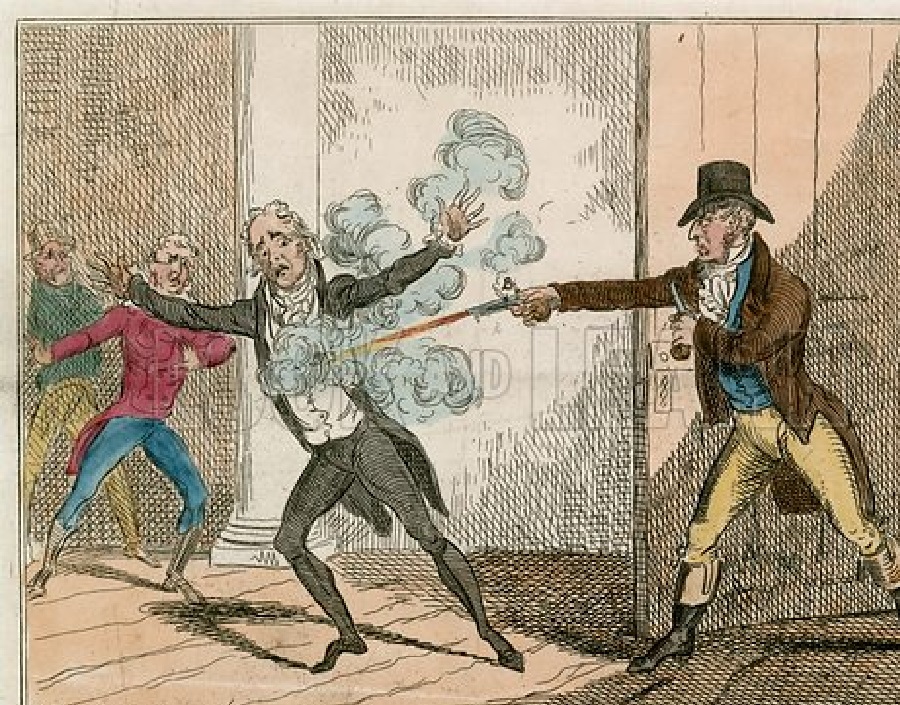
Artist’s impression of the assassination of British Prime Minister Spencer Perceval by bankrupt businessman John Bellingham on May 11, 1812. (Public Domain)

One of the greatest difficulties in maintaining a stable democracy is keeping one’s political leaders from being murdered.

In the more excitable Latin American and Caribbean nations, presidents and would-be reformers are killed with depressing regularity, the most recent being the Haitian president Jovenel Moïse cut down in his own home in 2021. Four Lebanese prime ministers died from 1982 to 2005, three of those the victim of car bombs.

In Asia, attacks on politicians are a fine old tradition. In India, Mahatma Gandhi was assassinated in 1948, Indira Gandhi was murdered by her bodyguards in 1984, and her son Rajiv was killed by a suicide bomber in 1989. The president of Bangladesh was killed by army officers in 1981, while Pakistan lost two prime ministers: Liaquat Ali Khan who was shot to death in 1951 and Benazir Bhutto who was killed in a massive explosion in 2007.

The English-speaking world has a mixed record when it comes to political assassinations.

Generally speaking, the Anglosphere is slower on the assassination trigger but even so, there are distinctions to be made. American politicians have a high mortality rate: presidents Lincoln, Garfield, McKinley, and Kennedy; governors Huey Long, Charles Bent, William Goebel, and Frank Steunenburg; and a host of judges, congressmen, and state officials.

Only two politicians have bit the dust in Canada. Thomas D’Arcy McGee, one of the Fathers of Confederation, was gunned down in 1868, and Quebec cabinet minister Pierre Laporte was murdered during the October Crisis in 1970. Australia also records only two victims (both low-ranking members of legislatures), and New Zealand has no assassinated rulers on its watch. Clearly the difference is the presidential system—if you have a constitutional monarchy with an elected prime minister, you are pretty safe.

With one exception.

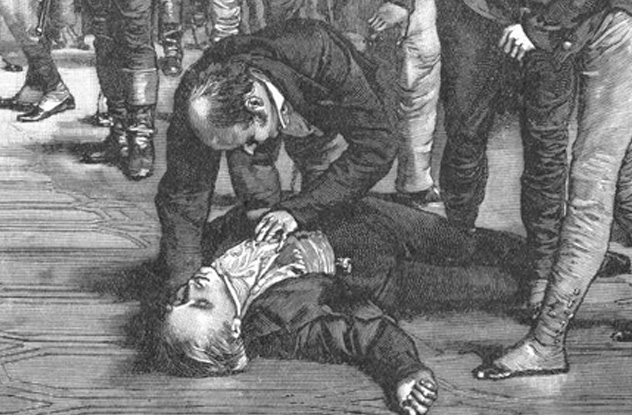
In 1812, the British Prime Minister was Spencer Perceval, a fierce proponent of the battle against Napoleonic France and an opponent of the slave trade. His harsh measures to finance the war had made him very unpopular in the country. On the evening of May 11, as he was entering the lobby of the House of Commons, a man stepped forward and fired a pistol at him, wounding him mortally. He was carried into the Speaker’s office where he soon died.

Perceval’s assassin was John Bellingham, an unsuccessful English businessman who had been imprisoned in Russia over a disputed debt and who for years had sought recompense from the authorities there. Back in England, when numerous British officials, members of the royal family, and politicians failed to answer his calls for support, he conceived a grudge against the prime minister. He bought two .50 caliber pistols and lay in wait for his victim. After the killing, he expressed no remorse, saying that he felt justified for his actions. Crowds in the street hailed the murderer as a friend of the people, but the government feared a conspiracy, called out troops to patrol the city, an ordered an immediate trial.

Bellingham’s only hope for acquittal lay in a plea of insanity—and indeed, his father had been declared mad—but his calm demeanour worked against him and he was allowed no time to summon witnesses who might have testified about a history of mental derangement. He made this statement to the jury:

“Recollect, Gentlemen, what was my situation. Recollect that my family was ruined and myself destroyed, merely because it was Mr. Perceval’s pleasure that justice should not be granted; …. I demand only my right, and not a favour; I demand what is the birthright and privilege of every Englishman.

“Gentlemen, when a minister sets himself above the laws, as Mr Perceval did, he does it as his own personal risk. If this were not so, the mere will of the minister would become the law, and what would then become of your liberties?

“I trust that this serious lesson will operate as a warning to all future ministers, and that they will henceforth do the thing that is right, for if the upper ranks of society are permitted to act wrong with impunity, the inferior ramifications will soon become wholly corrupted.

“Gentlemen, my life is in your hands, I rely confidently in your justice.”

Bellingham’s confidence was sadly misplaced. After a trial that had lasted a mere eight hours and after a scant 15-minute deliberation, the jury found him guilty. The death sentence was pronounced and he was hanged a few days later on May 18, leaving behind a wife and a baby. As was customary with the bodies of executed murderers, Bellingham’s corpse was sent to a hospital to be dissected by medical students.

Thankfully, Perceval is the only British prime minister ever to have been assassinated.

For the Silo, Gerry Bowler. Canadian historian and a senior fellow of the Frontier Centre for Public Policy.

Generation Z Job Advancement Difficulties Continue

Revealing reports are exposing the extent to which Gen Z is grappling with a far tougher job market than ever before, spurring overwhelming financial angst and uncertainty. Below Gen Z authority, attorney and legislative policy pundit Cheyenne Hunt, J.D. — a  TikTok influencer with 93.3K followers and 3.7M likes on the platform — provides front-line perspective on the trending topic. 

“The challenges we Gen Z’ers face in today’s job market are unique and complex as we navigate unprecedented economic shifts and evolving workplace dynamics,” she said. “A better understanding of the systemic hurdles and barriers hindering Gen Z’s professional growth is needed to spark dialogue and help employers, policymakers and career advisors develop strategies to support this highly consequential generation of talent.” 

6 Issues Stifling Gen Z Career Advancement

caucasian-businesswoman-looking-at-road-sign-d.jpgGen Z, of which I am a part, has been dealt a rough hand with regard to this generation’s entrance into the workforce at large. We’ve collectively experienced so many “unprecedented” events throughout our formative years that have caused many to lose their meaning and purpose in their professional and personal life. For executives seeking to understand, and aptly integrate, Gen Z into staff teams, it’s essential to recognize and address the unique challenges and needs of this consequential generation greatly influencing the workforce. While there are a litany of issues undermining Gen Z career prospects, there are a few key set of obstacles that must be overcome to bolster this generation’s advancement opportunities:


1. Economic Inequality
Gen Z enters the job market with significant financial burdens, including high costs of living, especially in urban centers. To attract and retain these young talents, consider implementing comprehensive benefits packages that alleviate these pressures. This could include competitive salaries, housing stipends, or student loan repayment programs. By addressing economic barriers directly, your company can become a more attractive and viable option for Gen Z candidates who are often forced to make career decisions based heavily on financial factors.

2. Job Market Instability
Gen Z values stability as much as flexibility. In response to the economic volatility they’ve witnessed, it’s important to emphasize job security and long-term career prospects within your company. Develop clear career pathways and foster a culture that rewards dedication and innovation. Regularly communicate these pathways and growth opportunities to ensure young employees see a future within your organization.

3. Lack of Internal Opportunities for Upward Mobility
As outside hires for managerial rolls continue to increase in popularity, Gen Z struggles to find a purpose in work that does not present opportunities to be recognized by a promotion in status or salary in conjunction with increased skill and responsibility. In fact, many studies have found that young workers are more likely to achieve career advancement by jumping ship to a new employer every three years or less. 

4. Technological Disruption
Rapid technological advancements lead to job displacement and the need for continuous upskilling, which can be particularly challenging for Gen Z entering the workforce. Automation threatens traditional entry-level roles, requiring Gen Z to adapt and acquire new skills to remain competitive in a job market they may not have even found a place in yet. Consider, leveraging Gen Z’s tech-savviness by involving them in digital transformation initiatives within your company. Offer roles that challenge them and allow them to work with cutting-edge technologies.

5. Lack of Mentorship and Networking Opportunities
Gen Z may lack access to mentors and professional networks that can provide guidance and opportunities for career advancement. Remote work creates fewer opportunities to make advantageous connections intentionally or even in passing. Traditional networking avenues may be inaccessible or less effective for Gen Z, who often rely on digital platforms for networking, which may not offer the same depth of connection.

6. Student Debt Crisis
Student debt is a pervasive concern for Gen Z, shaping their career paths and life choices. As an employer, offering programs such as tuition reimbursement or scholarships for further education can set your company apart. Additionally, support flexible work arrangements that allow for continuing education, enabling employees to pursue degrees or certifications that enhance their career growth while gaining valuable work experience.

Addressing these issues requires systemic changes in education, employment policies and societal attitudes to ensure more equitable opportunities for Gen Z career advancement. Given this generation is poised to soon become the largest sector of the workforce, it’s in everyone’s best interest to better set Gen Z up for success as a matter of public policy, economic stewardship and plain old good business practices. For the Silo, Cheyenne Hunt, J.D.

Cheyenne Hunt, J.D. is a progressive advocate and attorney specializing in progressive activism, legislative advocacy, communications and democracy-focused tech policy.  She currently serves as a Big Tech Accountability Advocate with Public Citizen. Hunt graduated from the University of California Irvine School of Law, has earned Dual Degrees in Political Science and Public Policy from the University of Denver and serves as a board member for The Women of Global Change. 

“Rhythm and Resilience: The Artistry of Sam Middleton” Exhibition

If you are able to travel to Georgia this Spring, the Hammonds House Museum located at 503 Peeples St SW Atlanta, GA continues its 2024 exhibition season with “RHYTHM AND RESILIENCE: THE ARTISTRY OF SAM MIDDLETON”. Curated by Halima Taha.

About the Exhibition

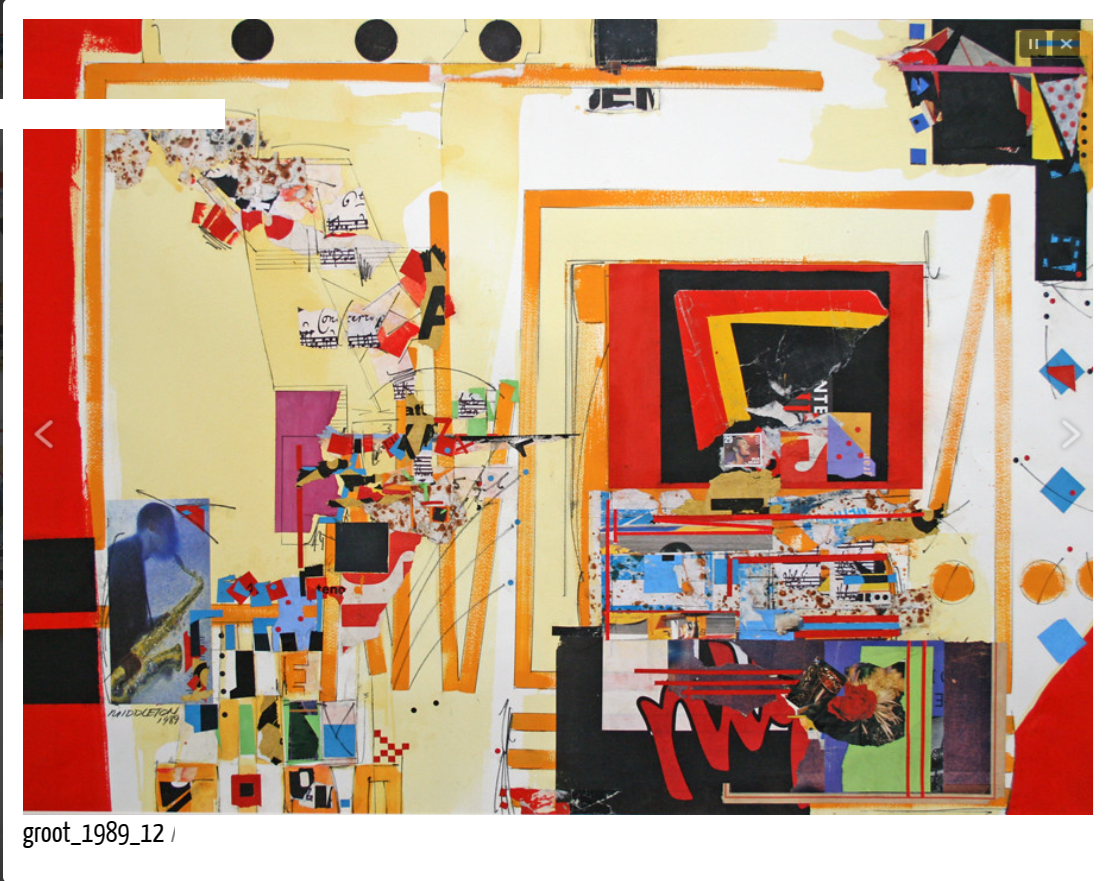
You’re invited to embark on a mesmerizing journey through the life and works of Sam Middleton, a pioneering mixed-media artist whose vibrant creations echoed the rhythms of Harlem jazz and the landscapes of Europe’s Low Countries. Born in New York in 1927, Middleton’s artistic odyssey transcended borders and he left an indelible mark on both sides of the Atlantic. Rhythm of ResilienceThe Artistry of Sam Middleton opens at Hammonds House Museum on May 17 and runs through August 18, 2024.

In Rhythm of Resilience, Middleton’s artistic evolution unfolds, tracing his self-taught beginnings amidst the vibrant culture and pulsating beats of jazz and classical music in Harlem. His encounters with creativity at the Savoy Ballroom ignited a lifelong passion for self-expression.

Venturing beyond his hometown, Middleton’s voyages with the US Merchant Marines provided him with inspiration, infusing his art with a global perspective. From the sun-soaked shores of Mexico to the tranquil landscapes of Sweden, each destination left an imprint on his ever-evolving aesthetic. Moving to the Netherlands in 1961, Middleton, joined a wave of African American artists drawn to its creative environment. Settling in Schagen, amidst the serene North Holland polder landscape, Middleton’s work blossomed, blending the vibrancy of jazz with the tranquility of his surroundings.

A master of collage, Middleton’s compositions pulsate with energy, weaving together musical scores, photographs, and graphic elements in a dance of color and form.

His art is a testament to the enduring influence of jazz, intertwining with the visual influence of his adopted homeland.

Through teaching positions at esteemed institutions Atelier 63 in Harlem and the Royal Academy of Visual Arts in ‘s-Hertogenbosch, Netherlands, Middleton’s legacy extended beyond his own creations, nurturing a new generation of artistic talent.

Featured Image: Newport by Sam Middleton, 1992.

A Historical Look At Robots In Cinema

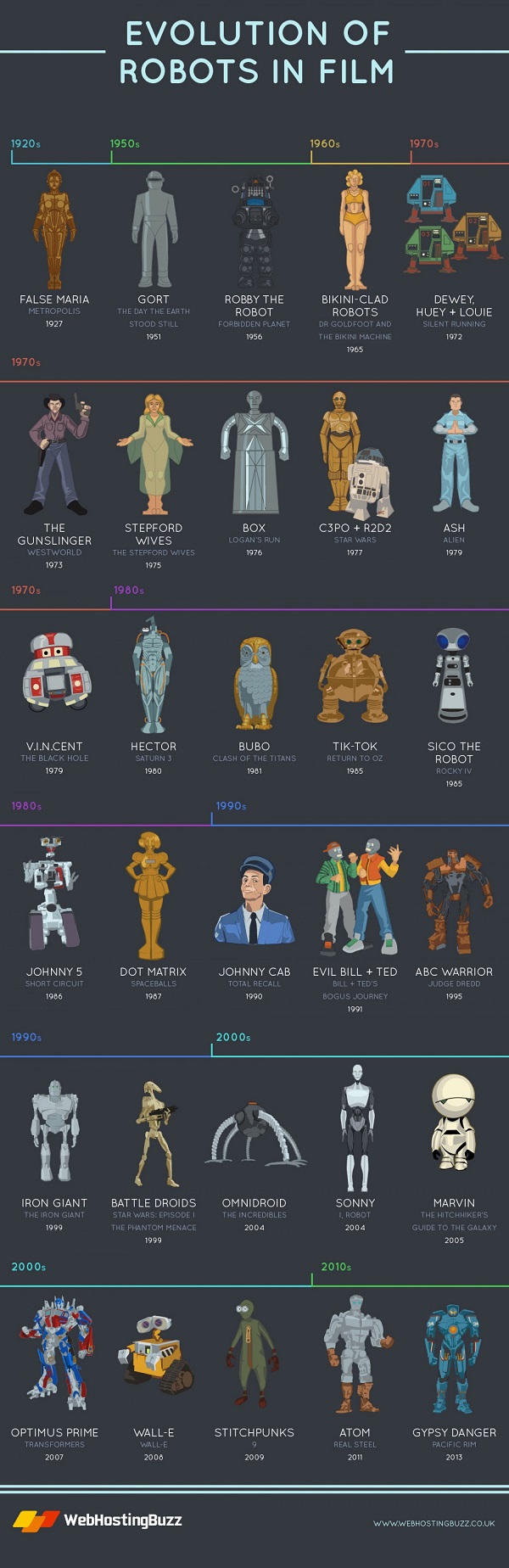
You probably just heard a robot in your head right? And depending on when you grew up there is one particular robot voice that you heard. Perhaps you grew up in the 1960’s and heard “EXTERMINATE!!!” or you grow up instead in the 1970’s and it was Mel Blanc’s “Twikispeak” or maybe you grew up in the 1980’s or the 2000’s (and later!) and heard Anthony Daniel’s charming English butler like C3P0 voice.

Tell us in the comments below if this was the case.

Evolution Of Robots In Film Infographic

Convert your voice or audio to a robot’s voice.

Did we miss any? Which ones are your favorite and why? We’d love to hear from you.

Museum Celebrates Banksy- An Artist Who Hates Museums

(NEW YORK) – The presence of The Banksy Museum in New York City has been confirmed. SoHo is now the home to the world’s largest collection of Banksy’s life-sized murals and artwork. Located at 227 Canal Street (at Broadway), NYC The Banksy Museum is now open, in preview, to the public. The official press opening is Wednesday, May 15. Tickets are now available online at MuseumBanksy.com and on site at the museum. Advance reservations are strongly encouraged.
Displaying over 160 works by the world’s most famous-yet-anonymous street artist, The Banksy Museum recreates the revolutionary and often ephemeral art that Banksy has painted on surfaces in London, Bristol, Paris, Venice, Bethlehem, New York, Los Angeles, and beyond. Visitors to the museum will immerse themselves in an environmental experience, giving viewers access to Banksy creations, much of which has long since been whitewashed or dismantled. Beyond the iconic street art, the exhibition also features some of the artist’s studio work, as well as animated visual and video elements.
The New York Banksy Museum experience, an American premiere, follows successful exhibitions in ParisBarcelona, Kraków and Brussels. The new exhibition, a New York premiere, is expanded to over 160 recreations, making it the largest display of Banksy work ever seen in a single setting.
Is it even possible to create a museum that celebrates the work of an artist who once said “the only thing worth looking at in most museums of art is all the schoolgirls on day trips with the art departments”?  Banksy Museum founder Hazis Vardar initially had his doubts. “Street art belongs in the raw setting of the streets,” said Vardar. “But if people can’t see it, is it even art? Little of Banksy’s works are visible to the public at large. Most have been stolen for resale, inadvertently destroyed, or erased by overzealous city cleaning teams. Most of this transient art could only be viewed on tiny smartphone screens, which is no way to experience the scale or emotion of Banksy’s work. So we knew that we needed to create an exhibition that would bring Banksy’s art back before the public.”
Creators of The Banksy Museum faced the challenge of mounting an exhibition that was as unconventional and transgressive as the art within. “If we only trapped Banksy’s work in guilt frames on a wall, this would antithesize all that Banksy’s art represents,” says Vardar. “So we set out recreate the artworks in a life-size, re-imagined space that reflects the street experience. We employed a team of anonymous street artists, like Banksy, to recreate the work. The outcome was, truly, a magnificent reflection of Banksy’s energy, defiance, and raw talent.”  
Banksy is undoubtedly, the world’s most celebrated and elusive guerrilla street artist. Armed with little more than spray paint and stencils, the man behind the pseudonym Banksy has fostered an alluring identity that doesn’t embrace tradition, but shreds it. There’s still much we don’t know about the mysterious artist since he first made his mark in the ’90s, but what we do know is that Banksy’s striking, satirical work always delves into political and socio-critical discourse. Banksy’s artwork is characterized by striking images, often combined with slogans.  His work often engages political themes, satirically critiquing war, capitalism, hypocrisy, and greed. Common subjects include rats, apes, policemen, members of the royal family, and children. In addition to his two-dimensional work, Banksy is known for his installation artwork. A hero to some, a vandal to others, Banksy’s artwork has been known to sell for record-breaking sums, with landowners rushing to profit from – or whitewash – buildings chosen as his latest canvas.  Banksy maintains an oxymoronic relationship with the art world, demonstrating hostility to capitalism while being one of the most sought-after and collected contemporary artists. Celebrities who’ve collected Banksy art include Brad Pitt, Angelina Jolie, Christina Aguilera, and Lance Armstrong to name a few. 
Banksy was nominated for an Academy Award for his 2010 documentary feature Exit Through the Gift Shop, an examination of the relationship between commercial and street art. 
In Wall and Piece, one of his four books containing photographs of his work complemented with his own thoughts, Banksy says “copyright is for losers” and encourages non-commercial use of his work for activism and the public’s personal enjoyment.
Banksy’s art has been further amplified by worldwide media coverage of his rebellious pranks. Between 2003 – 2005, Banksy made headlines by covertly placing his artwork beside masterpieces at The Tate and The British Museums in London; The Louvre in París; and The Museum of Modern Art (MoMA), The Metropolitan Museum of Art, The Brooklyn Museum and The American Museum of Natural History in New York. In 2018, Banksy shook the art establishment when he orchestrated the self-destruction of his canvas, “Girl with Balloon,“ having it drop through a shredder built into the bottom of its gilt frame just moments after it sold for $1.4 million usd / $1.92 million cad at Sotheby’s. The first artwork in history to have been created live during an auction, the work was renamed “Love Is In The Bin” and resold for $25.4 million usd/ $34.9 million cad just three years later.
The art world has coined the phrase “the Banksy effect” to illustrate the increased interest in other street artists, largely due to Banksy’s overwhelming international success.

Where / When: The Banksy Museum, 277 Canal Street, NYC 10013 (at Broadway) is open daily, 10AM – 8PM.
How to get there by subway: N, R, Q, W, A, C, E and 6 trains to Canal Street.
Family friendly: All ages are welcome to The Banksy Museum. This is an experience that all family members can enjoy.
About the venue: The Banksy Museum is an indoor, air-conditioned venue. The museum is located on the 2nd & 3rd floors.
Accessibility: Located on the second floor, the venue is accessible, with an elevator. Guests requiring assistance throughout this experience are entitled to apply for one free pass for their personal assistant/support worker.
How long does the experience last?: Visitors are welcome to enjoy the exhibition at their own pace. The exhibition, on average, takes an hour to experience.Parking: There is no parking at this venue, but parking is available in the neighborhood.

For the Silo, Brett Oberman.

New Historical Novel-The Boy With The Star Tattoo

From the award-winning Israeli-born author, activist, and acclaimed speaker (formerly worked at Redbook magazine) Talia Carner, comes THE BOY WITH THE STAR TATTOO, her new book which centers around an assistant to an Israeli naval officer stationed in Normandy, tracing orphan roots to the rescued French village from post-WWII.

When she identifies the mother, Sharon is unprepared for the shock of her discovery. Her historical novel THE BOY WITH THE STAR TATTOO was released by HarperCollins in February 2024.

Currently on her book tour, the epic historical novel weaves two yet-untold events set in France.

The first is set in 1946 in the aftermath of the Holocaust when agents from Eretz Israel roamed the European countryside to rescue hidden Jewish orphans (Youth Aliyah). The second is set in 1969, relating to the daring escape of the boats of Cherbourg, in Normandy, which were commissioned and paid for by Israel but whose delivery was blocked by a French arms embargo. Carner wrote the book after seeing a road sign leading to Cherbourg, which reminded her of the 1969 event.

In November 2023, Algemeiner magazine named Talia Carner as one of the Top 100 People Positively Influencing Jewish Life 2023.

Formerly the publisher of Savvy Woman magazine, Carner was a marketing consultant to Fortune 500 companies targeting the top of the pyramid of the women’s market.

Talia says, “The research on the social and political mood in France in that period and later, the Franco-Israel relationship, was exhaustive and included 30 interviews, five trips to France, and the use of drones during the pandemic.”

From worldwide violence against women and questions of contemporary Jewish identity to the plights of children, Talia Carner gives a voice to those without one. Talia says, “Of all the public dramatic events that Israel has executed, the Cherbourg Project is only second to the 1976 Entebbe Raid. The 1969 story of the Boats of Cherbourg has rarely been told—and never in fiction. The second story woven into the novel is that of Youth Aliyah, the rescue of Jewish orphans after WWII who were brought to then-Palestine, the first and only such project in human history. The novel offers a back-to-basic narrative about Israel in its earlier years. It is a poignant reminder of the courageous spirit of those who committed themselves to survival.”

From teaching business to women in Russia to participating in women’s economic forums in Beijing, Talia is engaged in the global realities of denying women their dignity and human rights including clitoridectomy, gendercide, sexual enslavement, and maternal mortality of child brides to the stoning of women, and the use of rape as a tool of war. Alternately, she demonstrates the growth of a society that opens its public arena to women—and how a community thrives when women are educated, participate, and lead.

More about the author 

Talia Carner’s heart-wrenching suspense novels, (published by HarperCollins) THE THIRD DAUGHTER, HOTEL MOSCOW, JERUSALEM MAIDEN, CHINA DOLL, and PUPPET CHILD, have been hailed for exposing society’s ills. She is a committed supporter of global human rights and has spearheaded projects centered on the subjects of female plight. A Toastmasters’ Gold Level speaker, she has participated as a panelist or keynoted over 500 events and 350 Zoom presentations to civic, religious, and cultural organizations. Talia Carner is a board member of HBI, the Jewish women’s research center at Brandeis University, and an honorary board member of several anti-domestic violence, child abuse intervention, and anti-sex-trafficking organizations.

Books:

PUPPET CHILD (2002) launched The Protective Parent Reform Act, which passed or is under consideration in two dozen states—and was the platform for two State Senatorial candidates. CHINA DOLL (2006,) became the platform for her presentation at the U.N. in 2007 about infanticide in China—the first ever in U.N. history.  JERUSALEM MAIDEN (2011,) won Forward National Literature Award in the historical fiction category. HOTEL MOSCOW, (HarperCollins, 2015) won USA Best Book Award in the “multicultural category.”

For The Silo, Kat Fleischman.

Muhammad Ali’s Beautiful LA Mansion

Widely regarded as the greatest heavyweight boxer of all time, Muhammad Ali was named “Sportsman of the Century” by Sports Illustrated in 1999.

Born Cassius Clay in Louisville, Kentucky, he started boxing at the age of twelve. At eighteen, he took home gold in the 1960 Olympics before going pro. In 1964, he upset Sonny Liston to become the heavyweight champion of the world, converted to Islam, and changed his name. Citing his religious beliefs, he refused to be drafted during the Vietnam War, fighting a draft-dodging conviction all the way to the Supreme Court. His stance against the war and his prominence as a black sportsman during the civil rights era made him a hero to African Americans and the counterculture. His fancy footwork and unorthodox movement made him the world heavyweight champion three separate times between 1964 and 1978, while his brash style and poetic trash-talking influenced hip-hop music.

Outside the ring, he was nominated for two Grammys for his spoken word albums. The superstar retired from boxing in 1979 and died in 2016.

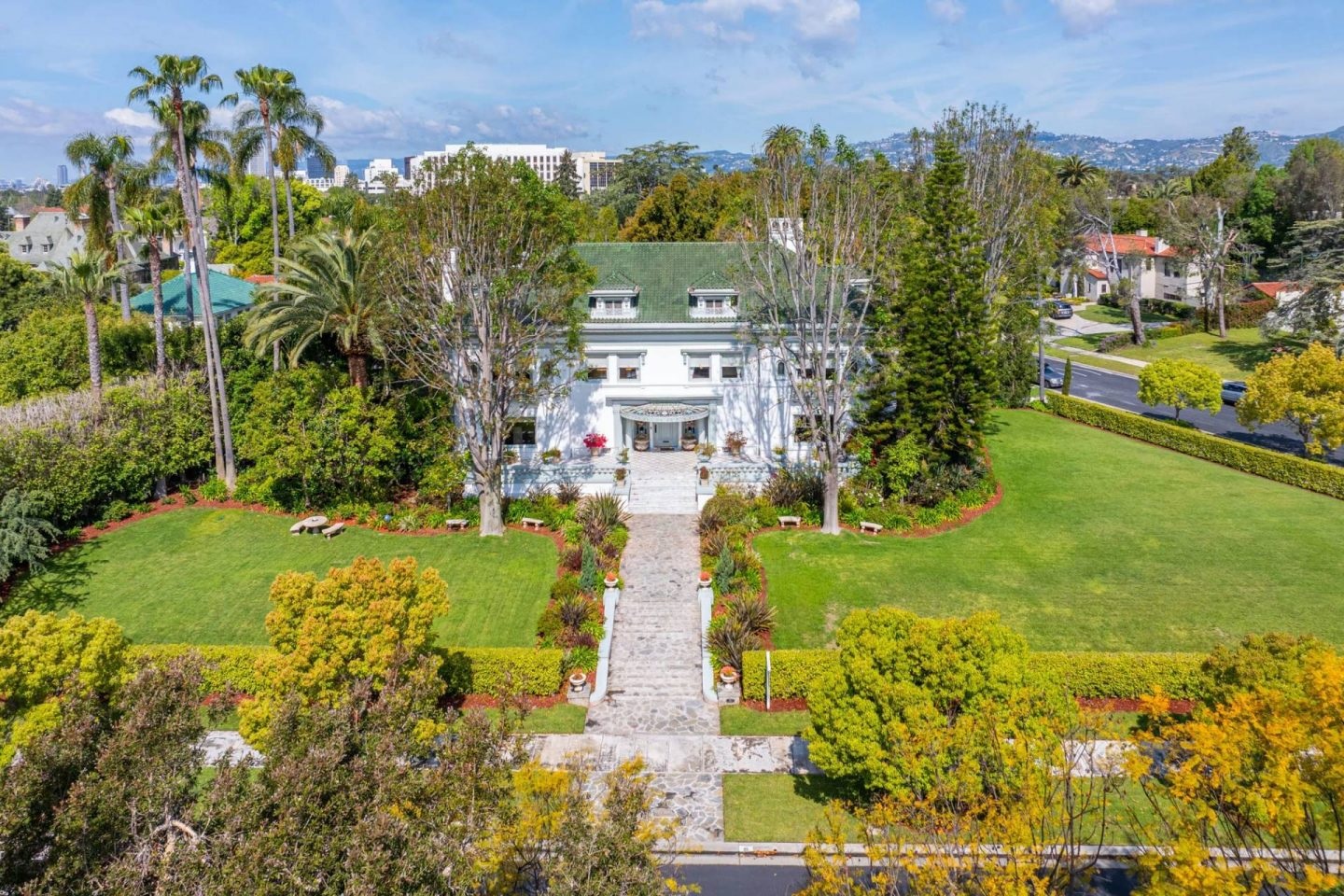
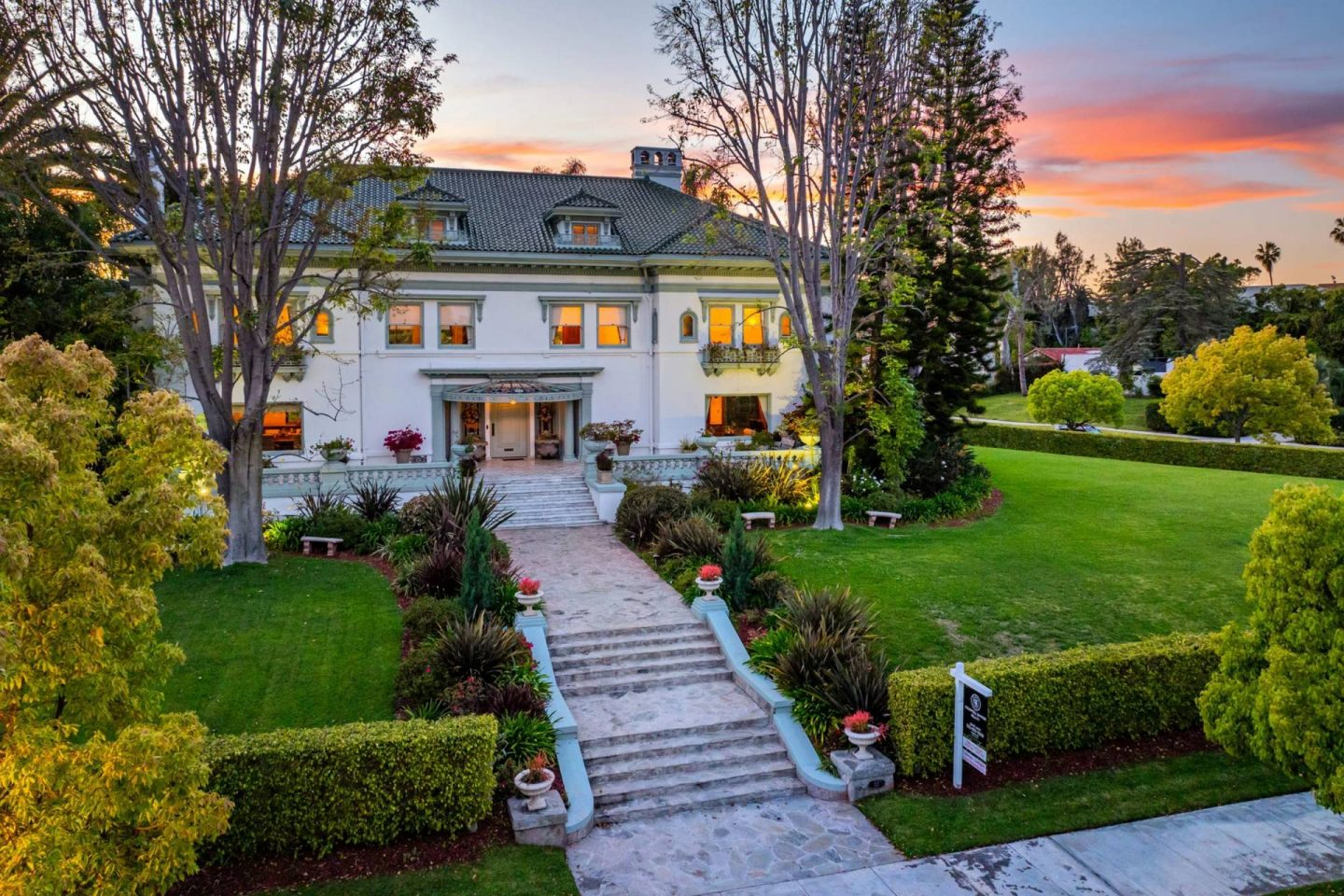
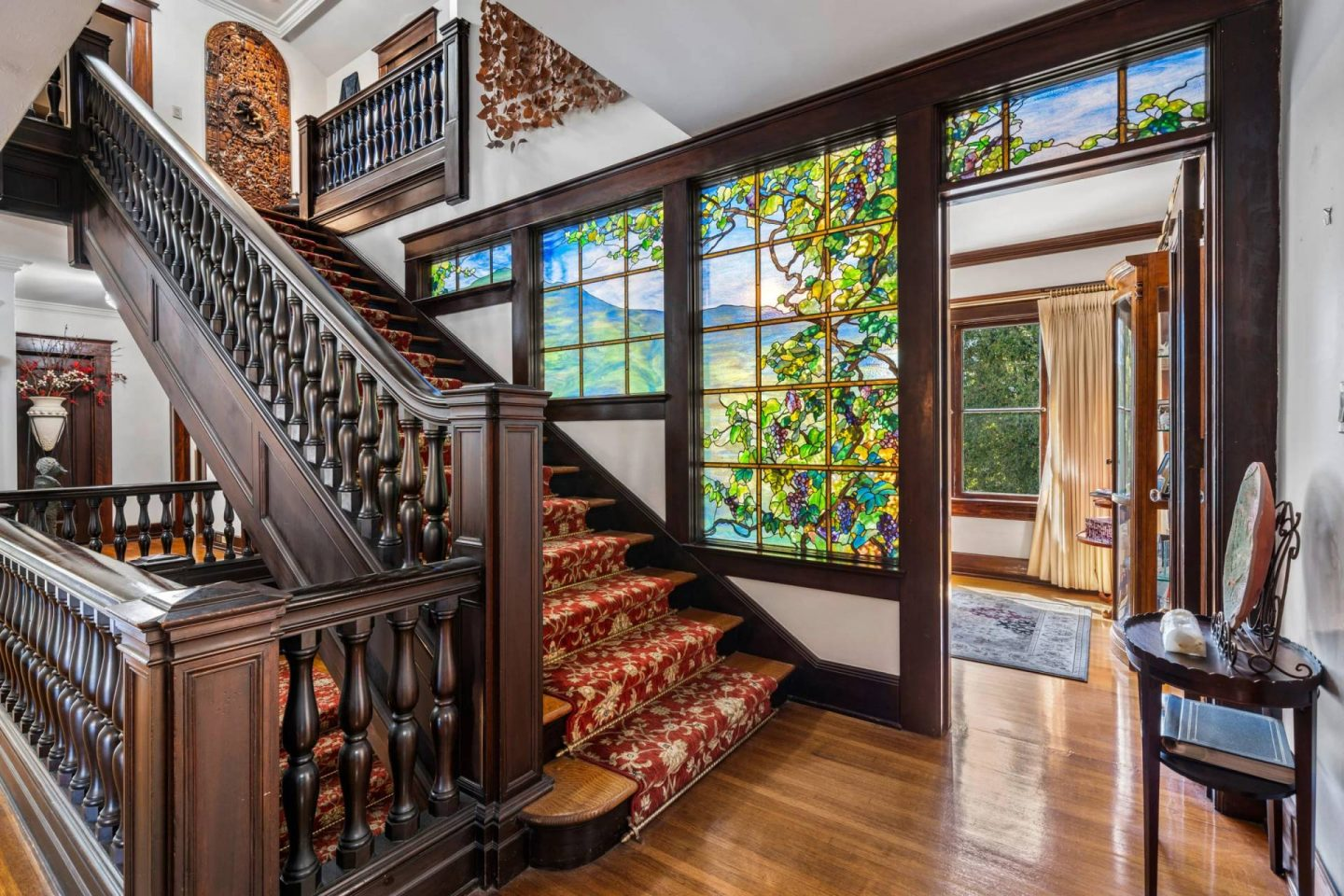
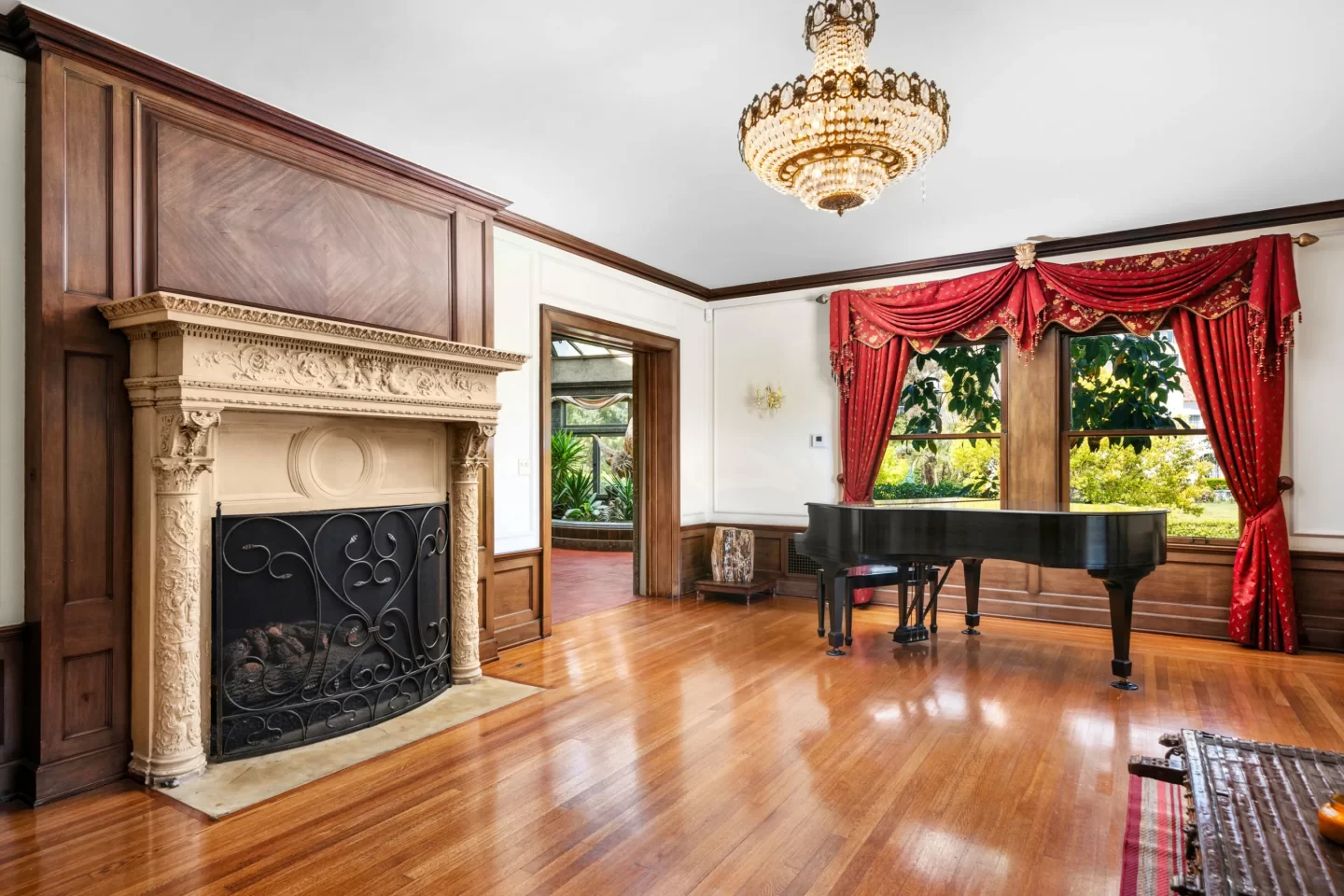
Muhammad Ali’s former mansion, a beautiful Italian Renaissance home in a prime Los Angeles neighborhood, is set to be auctioned by Concierge Auctions. Built in 1916 by John C. Austin, architect of the Griffith Observatory and LA’s City Hall, the estate much like the Champ exudes charm and grandeur. A stained glass personally designed by Louis Comfort Tiffany tops a collection of priceless architectural features, including antique fireplaces, French Empire chandeliers, and imported Italian marble.

Ali owned the home from 1979 to 1984.

Stone steps lead up to a European-style facade. Set up for entertaining in style, the mansion’s lower floor features a grand entry hall, a sun room with a glass roof, a spacious salon, an ornate formal dining room, a living room with oversized bay windows, and a den with a wet bar. The estate has hosted a parade of luminaries, including Sylvester Stallone, Clint Eastwood and President Obama. 

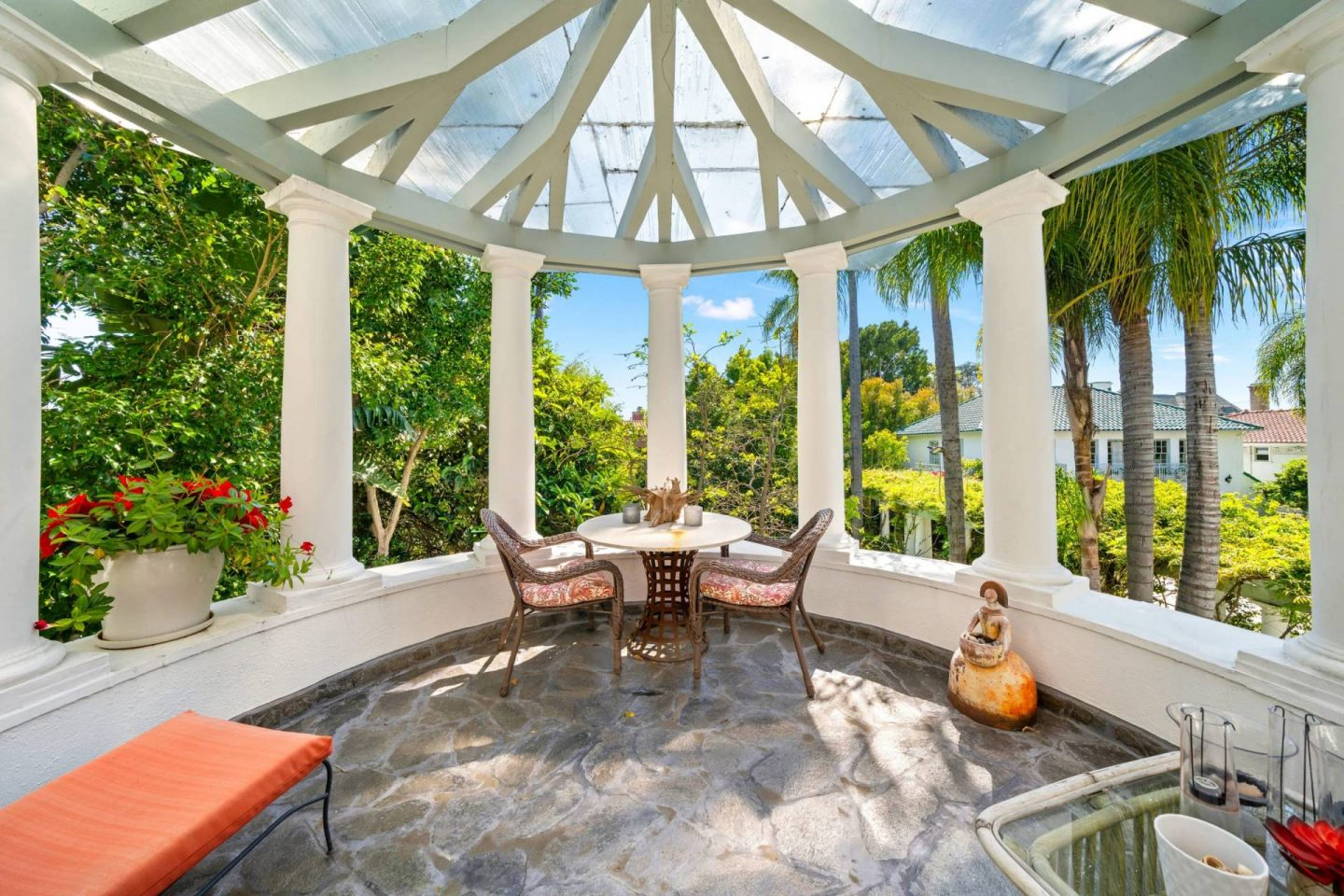
Upstairs, find bedrooms and offices, including a massive primary suite with its own fireplace. The suite opens onto a columned deck that overlooks two beautifully landscaped gardens. The park-like grounds include a swimming pool, lush lawns, a pergola terrace, stone fountains, and patios. Sitting on a 1.5-acre corner lot, the 10,500-square-foot mansion and 1,000-square-foot guesthouse are surrounded by privacy hedges and nestled behind the guarded gates of Fremont Place, an exclusive gated community in Hancock Park.

Hancock Park is an upscale Los Angeles neighborhood known for its architecturally important homes.

A haven for Golden Age celebrities, some of Ali’s neighbors included Mae West, Clark Gable, and Nat King Cole, plus titans of industry A.P. Giannini (founded Bank of America) and King Gillete of Gillete Inc. Contemporary stars who call the region home include Margot Robbie and Fred Savage. Nearby options for entertainment include the Los Angeles County Museum of Art and the Wilshire Country Club. 

Previously listed for $13.5 million usd/ $18.5 million cad, the estate will be auctioned with a reserve. Bidding will close on May 15th. 

Photos: Concierge Auctions. Article courtesy of friends at toptenrealestatedeals.com

The Met Roof Garden Commission-Petrit Halilaj

Abetare Petrit Halilaj (born Kosovo, 1986) is known for immersive installations that express a desire to alter the course of personal and collective histories, creating complex artistic worlds that claim space for freedom, intimacy, and identity. Halilaj was inspired by children’s doodles, drawings, and scribblings found on desks at the school he attended in Runik, Kosovo.

For The Met commission, he expanded his research to other schools in Albania and countries from the former Yugoslavia, which are now undergoing significant cultural and sociopolitical change. Furtive drawings from kids’ desks have been enlarged into three-dimensional metal sculptures, each retaining the trace of the original. Together, they bring to public view the collective memory and imaginative power of generations of students whose lives were marked by traumatic conflicts and territorial divisions.

Kosovo experienced the last of a series of wars in the Balkan region in the 1990s, during which many children were denied access to education on ideological grounds. Abetare borrows its title from the book the artist and his peers used to learn the alphabet at school, each letter linked to a lesson in pictures and text. In Abetare, culturally specific references to different political ideologies, religions, and local heroes coexist with more universal symbols and playful nods to pop culture, art history, and sports.

Spread around The Iris and B. Gerald Cantor Roof Garden, the “drawings in space” merge with the surrounding architecture and landscape to create a multi vocal scenography with an open-ended narrative. A celebration of the shared impulse for personal expression and mark making, Abetare is an opportunity for discovery and an invitation to expand our capacity to imagine transformative futures. For the Silo, Alexandra Kozlakowski.

#CantorRoof #MetPetritHalilaj Exhibition Dates: running now until–October 27,2024 Exhibition Location: The Met Fifth Avenue The Iris and B. Gerald Cantor Roof Garden, Gallery 926

MODERNISM ADORED: 20th Century Art A New Online Exhibition Now Open

“Art cannot be modern. Art is primordially eternal.” Egon Schiele 

New York City, New York, April 2024. Our friends at Helicline Fine Art proudly announces the opening of its new online exhibition, Modernism Adored: 20th Century Art, a celebration of the revolutionary artistic movements that defined the 20th century. The exhibition runs through June 30 and features a curated selection of paintings, drawings and sculptures from important to rediscovered artists, Modernism Adored explores essential movements that shaped the artistic landscape during the 20th century from ashcan, cubism, art deco, Vorticism, WPA, abstraction, abstract expressionism, caricature and outsider art. It brings together a diverse range of artwork that reflects the spirit of innovation and creativity that defined these pivotal periods in art history. As we are a NYC based gallery, the history of New York inspires us to include art that glorifies our great city.

“We are thrilled to present Modernism Adored: 20th Century Art. This is stuff in our hearts and we are honored to share it with collectors and curators throughout America and worldwide,” said Helicline proprietors Keith Sherman and Roy Goldberg. They continued, “This exhibition is our “eye,” it exemplifies the enduring impact of modernism in art and provides a unique opportunity to witness the evolution of artistic expression over the course of the 20th century.” 

Highlights of Modernism Adored: 20th Century Art include three early Stuart Davis drawings, Vorticist linocuts by Sybil Andrews and Lill TschudiMaurice Guiraud-Riviere’s breathtaking “La Comete” silvered bronze, several works by Al Hirschfeld, abstracts by Florence Henri and O. Louis Guglielmi, a Charles Demuth drawing of bathers, an early Daniel Celentano oil, a precisionist industrial scene by Simon Wachtel, and much more. 

Artists in the exhibition include: Sybil Andrews, Maurice Becker, A. Aubrey Bodine, Jo Cain, Staats Cotsworth, Daniel Celentano, Robert Cronbach, James Daugherty, Stuart Davis, Charles Demuth, Donald Deskey, George Pearse Ennis, William Gropper, O. Louis Guglielmi, Harold Haydon, Florence Henri, Al Hirschfeld, Mervyn Jules, Max Kalish, William Kienbusch, Georgina Klitgaard, Henry Koerner, Leon Kroll, Vladimir Lebedev, Carlos Lopez, James McCracken, Alfred Mira, Irene Rice Periera, Antonio Petruccelli, Arthur Rosenman Ross, Hilla Rebay, Maurice Guiraud-Riviere, Joseph Solman, Lill Tschudi, Gerrit Van Sinclair, Samuel Wachtel, Katherine Wiggins, John Winters and Purvis Young. 
Florence Henri (1893 – 1982)Composition18 ½ x 12 ½ inchesGouache on paper Monogrammed F.H. and dated 1926 lower rightGeorge Pearse Ennis (1884 – 1936)Forging a Gun Tube #146 x 37 inches, 1918 Signed lower right
There is great debate about what modern art is.
Numerous descriptions abound. It is a series of genres from the mid-19th century to the present that challenged the Western standards of fine art and embraced new forms of expression. It is often seen as beginning with realism, which rejected the traditional subjects of art and focused on common people. 

Others say modernism was a movement in the arts in the first half of the 20th Century that rejected traditional values and techniques and emphasized the importance of individual experience. A broader perspective, which we at Helicline embrace, modernism was a break with the past and the concurrent search for new forms of expression. It is in fact, constant reinvention, and it’s significant because it fundamentally asks us to change our perspectives as time passes.  

“The strangeness will wear off and I think we will discover the deeper meaning in modern art.”  Jackson Pollock
Daniel Ralph Celantano (1902-1980)Long Beach8 x 10 inchesOil on artist boardSigned lower leftTitled in pencil, versoHarold Haydon (1909 – 1994)History of the US Postal Service21 x 25 inchesoil on canvas, c. 1938


Why Modern Art Continues To Influence Contemporary Artists

The 20th century distinguished itself from the previous century with a new form of industrial revolution- one tied much more intimately to an advancing technology that propelled society into a state of speed and frenzy. Not just the streamlining of railway trains and automobiles or the advancements in transcontinental travel brought on by first lighter than airships, then seaplanes and jet airliners- the motion of advancement and relocation had a seminal effect on culture and thought. The skyscraper and new vertical constructions created its own influence and metamorphosis: hundreds of families could now be housed in a singular structure adding a homogeneity and imposing bold linear designs and influences. Two world wars and a multitude of others pushed existentialism into the minds of many academics and thus filtered into other areas of discipline such as literature, music and design. The development of the transistor created miniaturization and gadgetry that became an essential component to living spaces and personal effects. Television became a manifestation of any imaginable visual image and transfixed society into another state of readiness- a state ready for instant and dense media served quickly and directly. All of these things (and more) gave rise to new forms of art- most often recognized by the general public in modern abstract paintings. The ‘sense’ of all the above was captured by artists using new ways of communicating through their work: immediacy (action painting) and abstraction were more aligned with the zeitgeist then earlier classical forms of artwork.

Untitled abstract 11 Jarrod Barker 2024

The 21st century has seen many parallel and analogous developments. Though we are ‘only 24 years’ into this latest age, the concept of quick advancement and speed is in full effect. From the maturation of the digital age (the internet) and digital communication (email) to rapidly advancing personal communication (smartphones) and powerful and inexpensive computers to today’s exhilarating advancements in AI (artificial intelligence) and robotics. These ‘re-mapped’ and repeated driving forces from the last century continue and their effects most readily recognized are still key components of contemporary ‘neo-modern’ artwork.

MORE ABOUT HELICLINE FINE ART:
Helicline Fine Art, founded in 2008 by Roy Goldberg and Keith Sherman, specializes in American and European modernism. The gallery’s core offerings are works from the WPA period. Additionally, Helicline offers American scene, social realism, mural studies, industrial landscapes, regionalism, abstracts, and other artwork. Located in a private space in midtown Manhattan, Helicline is open by appointment. The artworks on the site represent a sampling of available works. Helicline’s offerings are also available on artsy.net and 1stDibs.com.
Caption for image at the top of this article: Simon Wachtel (1900 – 1965)Factory Yards N. 336 x 24 inchesOil on canvas, c.1930s Signed lower right

Florida Pirate Island Hideaway Now For Sale

This feature via our friends at toptenrealestatedeals.com

Black Sam Bellamy was one of the most notorious and wealthiest pirates of the Golden Age of Piracy in the early nineteenth century. In his short pirate career, he captured fifty-three ships, including the English slave ship Whydah Gally, which he used as his flagship.

The famous pirate’s island hideaway, now a stunning resort property, has been listed for sale at $50 million usd. Black’s Island is a seven-acre gem off the coast of the Florida Panhandle, sporting a four-star resort with twenty-six waterfront bungalows. Accessible only by boat, seaplane or helicopter, the white-sand island is about ten minutes from the mainland, offering a spectacular Caribbean adventure without leaving the United States.

The property can be operated commercially or retained as a family compound.

Born in Devon, England, he sailed with the Royal Navy before joining a crew of treasure hunters who turned to piracy when their mission to find a Spanish shipwreck failed. Bellamy served initially under Captain Benjamin Hornigold and his first mate, Edward Teach, later known as Blackbeard. When the crew became frustrated with Hornigold’s refusal to attack English ships, they mutinied and elected Bellamy as their captain instead.  He was generous with those he raided and loved by his crew, who called themselves “Robin Hood’s Men.” This “Robin Hood of the Sea” or “Prince of Pirates” developed a distinctive style, favoring long black coats and forgoing the then-fashionable powdered wig for a dark ponytail tied with a black satin bow.

His favorite weapons were four dueling pistols carried in his sash.

The pirate prince’s reign ended when a nor’easter storm capsized his ships, drowning the captain and most of his crew. The wreckage of the Whydah Gally was discovered in 1982, yielding over 200,000 artifacts, including a cannon loaded with gold and precious stones. 

1982 discovery of Black Sam’s booty made headlines worldwide. image: Irish Sun

The fully furnished bungalows come in one- and two-story models, 1,225 and 1,425 square feet respectively. Each unit includes two bedrooms, a loft bedroom area, two full bathrooms, a spacious kitchen with an island and top-notch appliances, a living room, a dining area, a laundry room and a balcony, while the two-story bungalows have an additional half bathroom. Boasting a classic look with blonde wood walls and grey stone floors, the bungalows were recently remodeled. A round floorplan offers 360-degree views of the gorgeous island from sunrise to sunset. 

In addition to the bungalows, the resort includes a four-story luxury clubhouse, a cabana with bar, beach volleyball courts, and a forty-by-sixteen-foot swimming pool. The island is in the middle of a marine estuary, offering sparkling clear water and numerous opportunities for bird-watching and duck hunting, plus kayaking, paddle boarding, jet skiing and relaxing on the beach. 

Private islands are all the rage among celebrities and the world’s elite. Beyonce and Jay Z are said to own two private islands in Florida, with Leonardo DiCaprio, Eddie Murphy, David Copperfield, and Mel Gibson just a few of the A-listers with private islands outside the USA. 

The listing is held by Jon Kohler of Jon Kohler & Associates. Photo credit: Jon Kohler & Associates.

An Ultimate 1980s Porsche: Clubsport 928

Lot 106 | The Porsche Auction in partnership with Air|Water | Auction Estimate: $275,000 usd – $375,000 usd/ $378,000 cad- $516,000 cad

INQUIRE

Ahh the 1980s. What a time to have lived through….when the panache of the laid back 1970s transformed into an MTV generation that fueled itself with (briefly) New Coke, parachute pants, Mr. T and Miami Vice. You may already know about “the car”- the one that taught Tom Cruise how to drive a stick and made famous the line “Porsche, there is no substitute”, but as the decade closed and styles began to change so too did the vastly misunderstood yet gorgeous 928.

Enter the 1989 Clubsport

For Sale 1989 Porsche 928 Club Sport

For Sale 1989 Porsche 928 Club Sport

For Sale 1989 Porsche 928 Club Sport

For Sale 1989 Porsche 928 Club Sport

For Sale 1989 Porsche 928 Club Sport

For Sale 1989 Porsche 928 Club Sport

Highlights

  • A matching numbers German-market example initially retained by the Porsche factory per its Porsche Germany build sheet
  • One of just seven lightweight 928s optioned with the “M637” Club Sport package built for 1989, one of Porsche’s rarest creations
  • Special lightweight Club Sport package features include the absence of a sunroof, a lighter exhaust, a lack of undercoating, and lighter magnesium-alloy wheels
  • Special sporting Club Sport package features include manual sport seats, short throw shifter, limited-slip differential, lowering by 20 mm, 150 mm wider track, and special badging
  • Fitted from the factory with special “SP” stamped “M28/41” 5.0-liter V8 engine producing a conservatively factory rated 320 PS
  • The only 928 Club Sport finished in Forest Green Metallic (Tannengrün Metallic) over a Cashmere Beige and Black leather interior
  • Over € 65,000 invested between 2019 and 2021

Description

Chassis No. WP0ZZZ92ZKS840540
Engine No. 81K 00246 SP

There are rare Porsches that many know about — the 997-generation 911 Speedster (356 total) and 2010 911 Sport Classic (250 total) come to mind — yet there are those special cars built in low double-digit quantities that are exceedingly uncommon and far less known. Take this lightweight series of 911s, for example. Just 20 1967 911 Rs were produced, only 21 1984 911 SCRS, and just seven years later Porsche produced 22 Carrera 4 Lightweights. The 911 wasn’t the only model in Porsche’s lineup that received the lightweight treatment in small quantities, and it was the 928 on which Porsche engineers interestingly focused their weight saving efforts.

Their initial efforts focused on four prototypes gifted as company cars to each of the four factory 962 sports racing prototype drivers that season: Jochen Mass, Derek Bell, Hans Stuck, and Bob Wollek. All four loved the changes made to their prototypes intended to comfortably transport them across the continent at high rates of speed to the European races. In fact, Derek Bell enjoyed his so much he kept it as his daily driver for 18 years! With such a positive reception, Porsche made these changes available to the public the next year as “M637” Club Sport option. Those 928s optioned with M637 were approximately 120 kilograms lighter than their S4 stablemates due to the removal of comfort features like the rear wiper, a portion of the wiring harness, and PVC undercoating.

Heavier parts were lightened. The exhaust system, a smaller AC compressor, and magnesium wheels special to the Club Sport were added. In addition, the 928 Club Sport featured stronger acceleration due to a modified final drive ratio, short shifter, a limited-slip diff, a transmission without vibration dampening, and sports seats. The Club Sport also featured lowering by 20 millimeters and a 150 millimeter wider track along with special badging. Finally, the Club Sport was fitted from the factory with a special “SP” stamped 5.0-liter V8 engine likely producing more than the conservatively estimated 320 PS, due to special camshafts, a 1 mm increase in valve lift, a modified engine control unit, and a higher rev limit. Following their tried-and-true path, Porsche, along with their racing drivers, developed a 928 with more power, lighter weight, and better handling — a true Porsche Club Sport!

This matching numbers 928 Club Sport on offer is one of just seven production lightweights built for 1989 and is the only example finished in Forest Green Metallic over a Cashmere Beige and Black leather interior. It was originally retained by Porsche AG as a special “Werkswagen” company car for longtime Porsche employee Bernd Kahnau. Kahnau was no mere employee. After his father’s passing – a longtime Porsche employee himself — in 1979, Kahnau was personally recruited to work for Porsche at the request of Ferry Porsche. The former BMW employee quickly became immersed in all manner of important development projects, most notably as a production planner for the 928, 911 Club Sport, 911 Speedster, and 911 models from the 993 to 991.

Beyond being equipped with the highly desirable Club Sport package, this rare 928 was optioned by Kahnau with air conditioning, a tinted windshield, and a Blaupunkt Bremen radio in addition to the sporting items inherent in ordering a Club Sport. It is said that Kahnau was very attached to his Club Sport, as the green on tan livery matched the colors of his English country house! He owned it for approximately two years before it eventually landed with an individual based in Switzerland, where it was located until at least 2019.

Most recently, under current ownership, this matching numbers Club Sport has been the focus of a lavish amount of attention totaling over €65,000 worth of repairs and servicing between 2019 and 2021. Most importantly, following a 33-point Porsche inspection at 120,800 kilometers in 2019, the car visited Landsharks in 2020 for a new water pump, fresh coolant and engine oil, filters, and an oil pan gasket. At the same time the thermostat was replaced, along with the clutch disk and pressure plate, and engine electrical items including the ignition cable, distributor cap and rotor, spark plugs, and two knock sensors.

Underneath, the Club Sport received new brake discs and pads front and rear, a new brake master cylinder, the replacement of the center catalytic converter with lambda probe, and a fresh battery. This work along with other sundry items and parts totaled €22,736.91. Following an accident to the rear of the car, additional invoices from Landsharks that year show the Club Sport was the recipient of cosmetic attention as well with interior saddlery work, a new windshield, new seals, unibody work to repair the rear accident damage, and fresh paint in its original shade of Forest Green Metallic. In 2021, the air conditioning system was refurbished with a new compressor, dryer and a system clean with new liquids and fluids. Today, this rare, well-preserved 928 Club Sport with its matching number engine and transmission is offered with 122,748 kilometers at cataloging with a copy of its Porsche Germany build sheet, recent service paperwork, and manuals.

For the Silo, Bastian Voigt/Hagerty.

Genius Works Of Calder On Display At Gray Gallery

For each of them Calder establishes a general fated course of movement, then abandons them to it: time, sun, heat and wind will determine each individual dance… Each of its twists and turns is an inspiration of the moment… It is a little hot-jazz tune, unique and ephemeral, like the sky, like the morning.

-Jean-Paul Sartre, 1947

[NEW YORK -April, 2024] — GRAY is pleased to announce Calder, an exhibition of sculptures by Alexander Calder from the 1950s and 60s. The decades at mid-twentieth century were especially significant for the artist, whose objective to create space and movement at ever more immersive scales is expressed by the range of work in the exhibition. From the intimate interplay of color seen at a small scale in Contrepoids jaune, c. 1953 to the monumental statement in black and white of Clouds over Mountains, 1962, one experiences the breadth of Calder’s invention in color, volume, form, gesture, and motion. 

Calder is the twelfth exhibition at GRAY to include works by the artist, whose 1966 solo show at Richard Gray Gallery was installed at the gallery’s very first location in Chicago. The exhibition opens at GRAY New York (1018 Madison Avenue) on April 18 and will be on view through June 21, 2024. 

Clouds over Mountains.

At the center of the exhibition is the large-scale sculpture Clouds over Mountains, which combines a series of angular black silhouettes with four curved white forms that hover above. Celebrated in the year it was made by leading critics such as John Canaday and Donald Judd, Clouds over Mountains is a seminal work, representing a milestone in Calder’s development of expansive standing mobiles.

The exhibition also features two important mobiles: Horizontal Red Moon Gong, 1957 and The Two Yellows, 1962. Both hanging mobiles, the works are key examples of Calder’s ability to find harmonic balance in an orchestra of counterweighted elements created in painted sheet metal, and brass in the case of the former work.

The exhibition takes place in GRAY’s New York gallery on the Upper East Side, the entrance of which is framed by a terrazzo sidewalk designed by Calder in 1970. The sidewalk, a cunning pattern of arcs and rectangles, was commissioned by three galleries then located on the block–including Calder’s long-time gallery Perls Galleries–and stretches from 1014-1018 Madison Avenue.

Calder at GRAY reactivates the physical location of the gallery. From the dynamic sculptures installed within the gallery to the geometric forms fixed in terrazzo outside, Calder’s eye for kinetic potential endures.

ABOUT ALEXANDER CALDER

Alexander Calder (b. 1898, Lawnton, Pennsylvania–d. 1976, New York City), whose illustrious career spanned much of the twentieth century, is the most acclaimed and influential sculptor of our time. Born in a family of celebrated, though more classically trained artists, Calder utilized his innovative genius to profoundly change the course of modern art. He began in the 1920s by developing a new method of sculpting: by bending and twisting wire, he essentially “drew” three-dimensional figures in space. He is renowned for the invention of the mobile, whose suspended, abstract elements move and balance in changing harmony. From the 1950s onward, Calder increasingly devoted himself to making outdoor sculpture on a grand scale from bolted steel plate. Today, these stately titans grace public plazas in cities throughout the world. 

Calder’s 1966 inaugural solo presentation at GRAY was the first of a number of exhibitions to feature the artist across the decades, including Sculpture Works on Paper, 1974; Contemporary Masters, 1987; Forty Years, 2003; Fun House, 2013; GRAY at 60, 2023; and most recently Calder, 2024.

Featured image: Alexander Calder, The Two Yellows, 1962.
© 2024 Calder Foundation, New York / Artists Rights Society (ARS), New Yor

Why Not Laserdiscs In The 2020’s?

In this, our new high tech world, a lot of people may think I’ve gone decidedly crazy.

I’ve always wanted the man cave ‘aka’ cinema room to have a nostalgic feel to it. I started collecting videos at the tender aged of 11. All my friends growing up called me videoboy lol because I was the go-to-guy to get films from on vhs videotape but one format that always intrigued me was laserdisc.

A Little History

LaserDisc (often abbreviated as LD) is a home video format and the first commercial optical disc storage medium, initially licensed, sold and marketed as MCA DiscoVision in North America in 1978.  No one can say for sure if the disco craze at that time was responsible for its early name or if it was simply a play on the word ‘disc’. Whatever the reason, the early DiscoVisions have distinct cover designs which make them quite collectible and they have a certain unique retro-funk all of their own.

Although the format was capable of offering higher-quality video and audio than its consumer rivals- VHS and Betamax videotape, LaserDisc never managed to gain widespread use in North America, largely due to high costs for the players and video titles themselves and the inability to record TV programs. It was not a popular format in Europe and Australia when first released but was popular in the 1990s. By contrast, the format was strongly embraced in Japan and in the more affluent regions of Southeast Asia, such as Hong Kong, Singapore and Malaysia, and was the prevalent rental video medium in Hong Kong during the 1990s. Its superior video and audio quality made it a popular choice among videophiles and film enthusiasts during its lifespan. The technologies and concepts behind LaserDisc were the foundation for later optical disc formats including Compact Disc (CD), DVD and Blu-ray (BD).

A Little Boasting

LaserDisc had a number of advantages over VHS (and Beta) videotape. It featured a sharper picture with a horizontal resolution of 425 TVL lines for NTSC and 440 TVL lines for PAL discs, while VHS featured only 240 TVL lines in NTSC (VHS HQ offered 260). It could handle analog and digital audio where VHS was mostly analog only (VHS did have PCM audio in professional applications but was uncommon), and the NTSC discs could store multiple audio tracks. This allowed for extras such as director’s commentary tracks and other features to be added onto a film, creating “Special Edition” releases that would not have been possible with VHS. Disc access was random and chapter based, like the DVD format, meaning that one could jump to any point on a given disc very quickly. By comparison, VHS would require tedious rewinding and fast-forwarding to get to specific points.



Please be kind! Rewind!

LaserDiscs were initially cheaper than videocassettes to manufacture, because they lacked the moving parts and plastic outer shell that are necessary for VHS tapes to work, and the duplication process was much simpler. A VHS cassette has at least 14 parts including the actual tape while LaserDisc has one part with five or six layers. A disc can be stamped out in a matter of seconds whereas duplicating videotape required a complex bulk tape duplication mechanism and was a time-consuming process. However, by the end of the 1980s, average disc-pressing prices were over $5 USD per two-sided disc, due to the large amount of plastic material and the costly glass-mastering process needed to make the metal stamper mechanisms. Due to the larger volume of demand, videocassettes quickly became much cheaper to duplicate, costing as little as $1 USD by the beginning of the 1990s.

LaserDiscs potentially had a much longer lifespan than videocassettes. Because the discs were read optically instead of magnetically, no physical contact needs to be made between the player and the disc, except for the player’s clamp that holds the disc at its center as it is spun and read. As a result, playback would not wear the information-bearing part of the discs, and properly manufactured LDs would theoretically last beyond one’s lifetime. By contrast, a VHS tape held all of its picture and sound information on the tape in a magnetic coating which is in contact with the spinning heads on the head drum, causing progressive wear with each use (though later in VHS’s lifespan, engineering improvements allowed tapes to be made and played back without contact). Also, the tape was thin and delicate, and it was easy for a player mechanism, especially on a low quality or malfunctioning model, to mishandle the tape and damage it by creasing it, frilling (stretching) its edges, or even breaking it.

My NTSC/PAL hybrid player.

LaserDisc players also had several advantages of VHS and other format playback machines. Some models, such as my Pioneer CLD-1850 are able to playback both NTSC movies and PAL movies. Since I live in the UK- this means that I can buy Laserdiscs from America or Japan (or anywhere in the world that uses NTSC video) and they will play in my machine. Try doing that with VHS or DVD. Another important innovation for Laserdisc was the fact that it was the very first home video format to offer Dolby Digital Surround Sound- often referred to as AC-3 on Laserdisc jackets and hardware. Many fans of Laserdisc are still enjoying this feature because some movies such as the Alien AC-3 LD were released with their original cinema surround mix on the AC-3 Laserdisc and those mixes are unavailable on today’s modern formats such as Blu-ray or UHD Blu-ray. Many early LD players can even be modified to turn them into AC-3 LD players.

The Death And Re-birth Of Laserdisc

By the time of the advent of the DVD, LaserDisc had declined considerably in popularity, so the two formats never directly competed with each other. In fact, combination LD/DVD players were introduced into the marketplace and continue to be quite popular with collectors as these players tend to be flagship models with advanced features such as digital 3D comb filters and digital frame memory and effects. It’s too bad that I couldn’t afford the format at the time , and I really don’t know why I’ve decided to pull the trigger now as Jez would put it lol.

Prices on the used market are still quite high on these combi players but other machines are affordable and the LD’s themselves can usually be found at affordable prices with exceptions for the ultra rare and more obscure releases.  I can’t say exactly

Some of my LD collection.

what has me so excited again about Laserdisc and why I’m back in the hunt but I really like the way the discs are packaged in big vinyl like slips, they look so cool. The artwork has totally sucked me in. I’ve started my journey, but I don’t know where it will end. And of course that journey has to begin with Schwarzenegger LD’S. “Get to da choppa! Hurry!”  

For the Silo, Anneal Butt- member of Laserdiscs & Hardware Enthusiasts on Facebook.

Featured image via highdefdigest.com

The Intelligent Design Of Our Universe

This isn't such a complex principle after all. Essentially, the idea is- if we can see strong similarities in design between say a Planet and between a structure or diagram that represents something else, then the inherent 'sameness' means an intelligence is at work, not some form of randomness. We'd love to hear your thoughts- agree or disagree? Comments are welcome at the bottom of this post CP
This isn’t such a complex principle after all. Essentially, the idea is- if we can see strong similarities in design between say a Planet and between a structure or diagram that represents something else, then the inherent ‘sameness’ means an intelligence is at work, not some form of randomness. We’d love to hear your thoughts- agree or disagree? Comments are welcome at the bottom of this post CP

Nothing exists for nothing, the universe is not itself made, and nothing in it has nothing to do.

The moment Mankind has been waiting for over a millennium has finally arrived. A tangible proof of off-planet life has occurred. The higher powers have at long last shown their hand.

In nineteen ninety nine, a website called ‘The Revelatorium’ was launched. The website revealed many aspects of the higher dimensions not previously known. By the fall of two thousand and thirteen the Revelatorium had morphed into a full revelation of the Intelligent Design by which all of Creation has been blueprinted and expressed.

The verity of the Design has now been proven in real time.

The drawing is Figure 77 in Chapter 8 of the Revelatorium. The figure depicts the cubistic blueprint of the first six dimensions of the Outer Creation according to the formats of the Intelligent design.

This image is of Saturn's North Pole and was taken recently by the Cassini probe.
This image is of Saturn’s North Pole and was taken recently by the Cassini probe.

If you carefully compare the Revelatorium and Cassini pictures you will see that they are structurally identical. The Revelatorium drawing was done in two thousand and two. The Cassini probe was launched in 2009.

Both have a clearly defined center hexagon area representing the first, second, and third dimensions collectively. Particularly confirmed is the red circle area in the middle.

A second greenish coloured hexagon ring with pink splotches around the first hexagon ring matches the ring of six different cubit designs around the center of Figure 77, representing the fourth dimension.

A third, blue colored hexagon shaped ring with uniform pink splotches around the second ring matches the ring of twelve identical cubit designs around the second ring of six cubits of Figure 77, representing the fifth dimension.

And finally a fourth hexagon shaped ring with faint pink splotches and completely different background color around the third ring matches the ring of eighteen identical cubit designs around the ring of twelve cubits of Figure 77, representing the six dimension.

[On higher dimensional physics: http://www.reasons.org/articles/higher-dimensions CP]

A close up of the Cassini image in black and white shows the features more distinctly, in particular the first second and third dimensional hexagon and circle aspects in the middle

 In short, the Saturn hexagon is a concrete lower dimensional proof of a higher dimensional factor.

The striking similarities in the respective pictures are not coincidental. The Saturn hexagon is home of the Solar System government. The hexagon is a magnetic resonance reflection in the third dimension of the domain’s six dimensional configuration. The population lives within its fifth dimensional band of materialization, represented by the thick ring in the hexagon, and ring of twelve similar designs in the same location in Figure 77.

As the cubistic matrix of Figure 77 would imply, the whole Intelligent Design is dirt simple and can be understood by anyone. The basic elements of the Intelligent Design consist solely of a sphere, a cube, and straight lines. The rules by which the elements work together hold the key. There is aught in existence not of the Design.

In figure 77, the red spheres represents Intelligence, the blue straight lines represent Energy, and the yellow cubes represents Substance. The attribute of the Father is Intelligence, the attribute of the Son is Energy, and the attribute of the Holy Ghost is Substance. Intelligence, Energy, and Substance is all there is.

The two most fundamental elements of the whole Design are The 'Cube and Sphere of Alpha and Omega' and the 'Cubit'.
The two most fundamental elements of the whole Design are The ‘Cube and Sphere of Alpha and Omega’ and the ‘Cubit’.

The Cube and Sphere comprises the entirety of the fourteenth dimension and acts as interface between the un-materialized inner form of the Creators in their fifteenth dimension as the Holy Trinity and above, and their materialized outer form in the thirteenth dimension and below as ‘Creation’.

The Cube and Sphere projected one dimension down to the thirteenth dimension comprises the ‘Cubit’, shown below. The ‘Cubit’ is the basic genome of Creation. By principle of the Cubit the whole of Creation has been blueprinted and expressed.

If you look again at Figure 77, you will see that it is composed entirely of variations upon the cubit. The variations reflect specifically different frequencies according to rule. By the rule the differing frequencies comprise the differing aspects of Creation. By this simple principle, the Intelligent Design is capable of blueprinting and depicting all of Creation in all of its aspects. The current Creation is over nine hundred trillion light years across and still within its infancy.

The Cube and Sphere

The Intelligent Design can be found in its totality at website http://www.revelatorium.com/.  For details about every thing going on now inter-dimensionally, also see: http://www.revelatorium.com/For the Silo, Delahnnovahh-Starr Livingstone.

Supplemental- Dr. William Dembski http://www.ideacenter.org/contentmgr/showdetails.php/id/776

Demand For Canada Seniors Care Is Critical

As Canada’s aging population continues to grow, there are concerns about the financial and physical capacity to meet its growing care needs.

Seniors’ need for housing and care is a complex issue involving many government policies and, therefore, government has many avenues for the exertion of control and adjustment over the issue. Much room for improvement is evident in the quality of, capacity for, and financial support for meeting these needs. This analysis provides a summary of the challenges and gaps in the current state of senior support policies and provides insights to inform future policy.

This Commentary examines the household spending patterns of seniors, the availability of different housing and care options, the costs of providing care in different settings, and government policies that subsidize support services in homes, retirement communities, and long-term care. The results show that the availability and costs of different services and types of care vary significantly across the country. In particular, seniors with below-median incomes face affordability challenges related to shelter costs, with these costs becoming a potential barrier to access to retirement homes and other support services if not publicly available. Further, there is unmet need for home care across Canada, which invests less in home and community care than other OECD countries.

To ensure there is adequate capacity to provide care for high-needs seniors, provinces should invest in expanding home and community care and prevention.

Previous research has shown that about 30 percent of entries to long-term care homes (LTC) could be delayed or prevented (CIHI 2017). Investing in expanded home and community support services and providing financial supports for low-income seniors to access the care they need where it is most appropriate, can reduce the demand for more intensive (and expensive) LTC or hospital care. There are waitlists for LTC, and “alternate level care” seniors occupying hospital beds, which contributes to higher costs, lower hospital capacity for other treatment, and lower quality of life and declining health for the affected seniors. In addition, a significant proportion of below-median-income seniors face housing affordability challenges. Ensuring housing needs are appropriately met can improve the quality of life of seniors and prevent premature entry into higher levels of care. Differences in the availability of services and how they are funded across the country can inform strategies to improve accessibility and capacity. Notably, Quebec has more seniors’ care spaces, lower vacancy rates and lower rent charges than other provinces, while providing comparatively more support to senior households through tax credits.

Overall, limited fiscal capacity, growing demand due to demographic aging, and the growing costs and complexity of care needs for aging seniors all present a significant conundrum for policymakers. There is a daunting challenge in determining the appropriate level of support, ensuring it is well targeted, and allowing for seniors to choose what is best for them. Government policies should encourage seniors to remain independent as long as possible, but also ensure they have adequate financial resources and access to support services if they are required.

Levels of Care Needs

There are multiple options for housing accommodations as seniors age, and the choice will depend on their preferences, families, level of need, and the affordability and accessibility of the various options. This section discusses the different care needs that seniors might have as they age. It also illustrates the continuum of care: seniors choosing assisted/supportive living accommodations or receiving home care will have a range of needs, and care must be flexible enough to suit an individual’s needs.

Activities of Daily Living (ADLs) are a set of essential everyday tasks and activities that individuals typically need to perform to live independently and maintain their overall well-being. These activities are often used in healthcare and long-term care settings to assess an individual’s functional abilities and to determine their level of independence. When someone experiences limitations in one or more of these areas, they may require varying degrees of assistance or care, ranging from minimal support to full-time care. Health professionals use ADL assessments to develop care plans and tailor assistance to meet an individual’s specific needs and promote their overall quality of life. The specific ADLs may vary slightly in different contexts, but the core activities are as follows.

  • Personal hygiene and grooming: including bathing/showering, caring for teeth, medication management, etc.
  • Dressing: choosing appropriate clothing and putting it on independently.
  • Eating: feeding oneself and preparing simple meals.
  • Mobility and transferring: being able to walk, get in and out of bed, or independent transferring from one surface to another (such as from a bed to a wheelchair).
  • Toileting and continence: The ability to get on and off the toilet, maintain personal hygiene, and manage incontinence, if necessary.
  • Medication management: the ability to follow medical care plans without the need for assistance or reminders to take necessary medications.
  • Instrumental Activities of Daily Living: activities that are not essential to basic self-care, but are crucial to independent living in a community such as managing finances, planning and preparing meals, doing laundry, going shopping for essential items, etc.

Notably, most of the ADLs have little to do with direct healthcare needs. Instead, they are a set of daily activities that could be provided by different types of support services including meal delivery, housekeeping, laundry services, and social activities. Seniors requiring support with some ADLs could benefit from one or more support services, even if they do not have advanced healthcare needs. Healthcare is an important component of supporting seniors to remain independent, however, many of the activities that are required for independence fall outside the traditional scope of healthcare.

The options for support available to seniors are directly related to their care needs. Those who are able to live independently can choose their accommodations based on lifestyle and preferences. Those requiring occasional or minimal assistance can remain in their homes and receive help from family, other informal caregivers, and possibly publicly funded home and personal care services, or they could choose to privately pay for some services such as regular housekeeping or food delivery services. They might also choose to move to a retirement home or community where meals and other services are provided, as well as ongoing opportunities for socialization. As care needs become more intensive, seniors may require ongoing or live-in support from a combination of public or private home and nursing care services, family, or an informal caregiver at home. In the retirement home setting, there are many options to address increasing care needs. However, as care needs become greater, affordability plays a factor in how long a senior might stay in a retirement home before moving to LTC where care needs are generally fully subsidized by government, and room and board charges are limited by regulations.1

At home, those requiring hands-on or total assistance require significant and ongoing care. At this stage, a caregiver must be available at all hours to assist with many basic ADLs, and the options for care become more limited. Those without an available caregiver in the home will likely be best served by residing in long-term care homes that have health providers on site at all times of day. Depending on their health conditions, hospice and palliative care might also be appropriate for end-of-life care. Increasing numbers of retirement homes are offering heavy care and dementia care services, and publicly funded home care can be accessed to supplement some of the costs. This still, however, presents a significant financial burden to seniors. Often, even though a retirement home can safely and appropriately meet the care needs of a senior, LTC becomes the preferred option. Most often, this is because of the cost differential between what the government will subsidize in a LTC setting versus the limited home-care services available to offset privately paid retirement home care costs.2

Availability and Options for Care Based on Needs

The options for care and assistance with ADLs reflect progressive levels of need. As care needs become more intense, the options become more limited (and/or costly). Those requiring ongoing care can choose to live in a long-term care home, or might be able to remain in a residential setting – home, retirement home, assisted living facility – if they and their families have the resources to supplement publicly provided services, and if the appropriate services are available privately. Of course, those that are independent have a full range of choices for where they might want to live, except those places reserved for people with higher care needs. More than three-quarters (78 percent to 91 percent) of Canadians would prefer to receive care while continuing to live in their homes as they age, but only one-quarter (26 percent) expect that they will be able to do so (Sinha 2020, March of Dimes 2021). The different types of seniors’ accommodations and short-term respite care programs are described in Box 1. It is important to note that there is overlap between many care options and levels of need – two seniors with similar care needs might use different combinations of services. This is particularly the case for people with minimal to moderate needs for support. Similarly, the options will vary in terms of availability and costs depending on the location, the ownership and operation models of the different residences, and the level of public coverage and involvement in different levels of care. The next section provides a summary of the availability and costs of various seniors’ living arrangements across the country, focusing on provinces with larger populations (BC, Alberta, Ontario and Quebec).

Long-term Care

There are 2,076 long-term care homes in Canada. At first glance, LTC in Canada appears to have a comparable amount of beds and financial resources in comparison to international peer countries. Canada has close to the average number of LTC beds relative to the size of the senior population, but still fewer than countries such as New Zealand, Finland, Germany, and Switzerland. It also has a comparable proportion of the senior population receiving LTC care and homecare, relative to international peers (Wyonch 2021). It spends more per capita than the OECD average on funding LTC but spends less than other OECD countries as a proportion of GDP. The GDP proportion of health spending for inpatient LTC is above average (Wyonch 2021).

Despite higher-than-average spending, there are long waitlists for LTC in many Canadian provinces. In Ontario, there were, as of Oct. 2022, almost 40,000 seniors waiting for LTC, and 76,000 receiving care; this means the waitlist currently exceeds 50 percent of care capacity (OLTCA).3

The median wait time was 130 days in 2021/22 (213 days for entrants from the community, and 80 days for hospital entrants) (HQO). In Quebec, the waitlist is much smaller (4,235 as of June 2023). However, seniors might still wait up to two years for a placement (Bonjour Résidences).

The cost of long-term care varies across provinces, but charges payable by the resident to cover room and board are generally standardized by regulation within each province. For example, in Ontario the maximum monthly co-payment for LTC is $1,986.82 – $2,838.49 depending on whether the room is shared or private. In Quebec, room and board charges for public and contracted private long-term care homes (CHSLD or centre d’hébergement et de soins de longue durée) are $1,294.50 – $2,079.90, depending on the type of room. Quebec also has unsubsidized (uncontracted) private CHSLD, where the average monthly costs are between $5,000 and $8,000, depending on resident’s needs (Bonjour Résidences).4More than half of LTC homes (54.4 percent) and the majority of retirement homes are privately owned and operated. There is no consistent ownership pattern across the country: in five provinces, the majority of LTC homes are privately owned and operated, with the other provinces having majority public ownership. All LTC homes in the Territories are publicly owned. Both publicly and privately owned LTC homes provide ongoing care for some of the most vulnerable members of society. At both public and private LTC homes, healthcare is publicly funded and most support services will be included in room and board rents. Seniors must require significant care to qualify for LTC.5

Individuals requiring support who don’t have a caregiver in the home are much more likely to be admitted prematurely to LTC homes. Indeed, about one in nine new entrants could potentially have been cared for at home or in a retirement home setting. These new residents are more likely to have previously lived alone or in a rural area where formal and informal supports are less likely to be available (CIHI 2020b).

Retirement Homes

Retirement homes offer a wide variety of services and programs targeted at different client types. These include those who are fully independent and wish to live in a congregate setting for the lifestyle and social benefits, those with mild to moderate care needs, those with heavier care needs, and those who require specific dementia care programs and supports. In Ontario, for example,15 percent of homes provide dementia care, 34 percent provide assistance with feeding, and the majority provide services to assist with other ADLs (Roblin et al. 2019). Prices of retirement home care vary significantly by location, as well as by amenities and services offered as they are market driven (and are not generally directly government subsidized). Various provinces have senior rental accommodations that provide care needs: in Quebec the services are called “seniors’ residences”; in BC “assisted living”; in Ontario “retirement homes”; and in Alberta, “supportive living.”

Many retirement homes offer more extensive health and personal care services. These additional services increase costs for seniors since they are either charged as additional services or will be incorporated into higher room and board costs. In Ontario, if these additional services are provided by the retirement home, the additional services are not directly publicly subsidized. In some cases, residents in retirement homes might also receive home care or assisted living support that is provided by a separate agency, either publicly or privately. Most retirement homes are privately owned and operated. Their activities and levels of care provision are regulated by provinces, but prices will be determined by market factors and the amenities and services offered in each location.

In Ontario, retirement communities are regulated by the Retirement Homes Act, 2010 (RHA), and are licensed and inspected by the Retirement Homes Regulatory Authority (RHRA).6Each retirement community can offer up to 13 care designated services, for example, assistance with dressing and personal hygiene, medication management, and providing meals. Services might also be publicly provided through home care. About half of seniors currently living in retirement homes have care needs that would qualify them for publicly provided home and community care. Home care services supplement the care services in the retirement home at no cost to the resident and assist with affordability of the retirement living option for seniors with care needs.

In Quebec, private seniors’ residences are rental facilities that are mainly occupied by people over 65, and offer various services such as nursing care, meal services, housekeeping, and recreation. Private seniors’ residences must hold a certificate of compliance from the Government of Quebec ensuring they comply with health and safety rules. Similarly, in Alberta, the provincial government sets accommodation standards for supportive living facilities. Supportive living operators require a licence if they provide accommodation and support services to more than three people, provide meals or housekeeping services, and arrange for safety and security services. Alberta also has Designated Supportive Living where access is determined by an assessment by a health professional, room and board charges are determined by the Alberta government, and accommodations provide 24-hour publicly funded health and personal care services on site.

In British Columbia, retirement homes are divided into categories: independent living, and assisted living.7Assisted living is divided into three classes: i) seniors and persons with disabilities who have chronic or progressive conditions, ii) mental health care, and iii) substance use care. Assisted living residences provide housing, hospitality services and support services, and they may be privately paid, publicly subsidized, or a combination of both. Independent living seniors’ residences are essentially retirement homes targeted to seniors who need minimal assistance and are not generally publicly subsidized. For seniors requiring assistance, assisted living spaces are publicly subsidized based on income: a maximum of 70 percent of after-tax income goes to housing and support services in assisted living. However, there is a minimum fee of $1,093.50 per individual ($1,665.60 per couple) and maximum monthly rate for publicly subsidized assisted living is based on market rates for rent and hospitality services in the same geographic area.

Though individual retirement homes and assisted living facilities might have waitlists, there are fewer concerns about overall capacity. Across provinces, both standard and heavy care spaces are at least 10 percent vacant (Figure 1). 

Alberta has the highest vacancy rate for standard care spaces (26.8 percent) and the lowest vacancy rate (10 percent) for heavy care spaces, suggesting a need to transition some standard spaces to heavy care spaces as the population continues to age and care needs intensify across the senior population. Ontario notably has the fewest seniors’ care spaces relative to the size of the senior population, particularly for heavy care units (3.0 spaces per 1,000 seniors over age 75). A long waitlist for LTC and few spaces for seniors with less intensive – but still significant – care needs suggest a need to expand the number of spaces available for seniors across the care continuum. Notably, British Columbia has the highest vacancy rate for heavy care spaces, despite having relatively few spaces (14.4 per 1,000 seniors over 75). It also has the highest rent among provinces for heavy care spaces ($6,726/month) and the largest increase in rent between standard care and heavy care spaces (Figure 2).

Quebec has more than three times the amount of seniors’ housing spaces in comparison to other provinces, relative to the size of the senior population. It also has the lowest median rent for both standard and heavy care spaces by a large margin. Median rent for a standard care space ($1,873/month) is about half the cost of other provinces, and a heavy care space in Quebec ($3,566/month) costs less than a standard care space in Ontario ($3,845/month).8Quebec having triple the supply but similar vacancy rates to other provinces suggests that lower prices are a result of a significantly higher supply of seniors’ care spaces. 

Demand is also likely to be higher in Quebec due to policies that indirectly support private seniors’ residences and LTC through medical expense and home care tax credits.

Home Care

Home care covers a broad range of services, including personal support for ADLs, homemaking services such as housekeeping, laundry services and meal preparation, and can include professional services such as nursing, occupational therapy, or social work. Across Canada, about 6.1 percent of households receive home care services and 2.8 percent of households have unmet home care needs (Table 1). Unmet need is highest in British Columbia and Ontario, and lowest in Quebec and Atlantic Canada. Notably Quebec and Atlantic Canada also have the highest proportion of households receiving home care.

In Ontario, publicly covered services are generally tailored to an individual’s needs and delivered in their residence (a home in the community or retirement home), following an assessment by a case manager or health professional. Services are delivered by third-party agencies that can operate on a non-profit or for-profit basis. In Quebec, seniors can access discounted home help through the Financial Assistance Program for Domestic Health Services program. After approval, seniors receive a discounted hourly rate for various home care and support services provided by qualifying domestic help and social economy businesses.9 Many services provided by home care agencies and domestic help businesses can also be purchased directly through the private market. This option gives a completely free choice of services, without the need to qualify for government assistance, but must be paid for out-of-pocket. In BC, home support services can be purchased privately, or can be publicly subsidized, based on eligibility. If publicly subsidized, home care recipients are charged a daily rate for services, based on their income.1010 In Alberta, home care is narrowly defined as providing medical support for people so they can live in their homes. After an eligibility assessment, services are provided under Alberta Health Care Insurance meaning that if a service is not insured, it is not publicly funded.

Over half of home care services are paid from government sources (52.2 percent), and 7.3 percent are covered by insurance. More than a quarter (27 percent) are paid for out of pocket (Gilmour 2018). Government sources are more likely to cover health home care services than support services. In 2015/2016, more than half of nursing care services (54.3 percent) and 42 percent of other healthcare services had a monthly cost (Table 2).

In many cases, seniors receiving home care will also receive help from informal caregivers (for example, family members, neighbors, and adult children). Informal care reduces the direct public costs of supporting a senior to maintain their independence in their home, but it can represent economic deadweight loss if informal caregivers reduce their hours of paid work.11In addition to formal in-home services, there are also seniors’ day-programs to provide care throughout the day, and respite care beds for when informal caregivers might need additional support or if the senior needs additional care for a short period of time.

Assisted Living

Depending on the jurisdiction, “assisted living” services overlap somewhat with home care and retirement home services, but generally target those with higher care needs. 

Formal Home Care Received and Unmet Home Care Needs of Canadian Households, 2021

Assisted living programs are defined differently across the country. In Quebec, “Resources intermediaries” provide housing and access to support services for individuals with minor to moderate loss of autonomy. In British Columbia, Assisted Living provides housing, hospitality, and social and recreational services to adults requiring a supportive environment due to physical and functional health challenges. In Ontario, Assisted Living Services provide support for people with special needs who require services at a greater frequency or intensity than home care, but without the medical monitoring or 24/7 nursing supervision that is provided in long-term care. Services are provided by third-party agencies that operate on a not-for-profit basis. In Alberta, Designated Supportive Living is broken down by levels of service, ranging from 24/7 provision of health and personal care services for those living independently, to providing specialized residential dementia care (AGO 2021).

Assisted living services are generally publicly funded, with limited room and board co-payments when housing is included in services. They are targeted to cover gaps in the continuum of care between independent living options and long-term care, and the services provided can overlap with both to ensure appropriate levels of support are provided and seniors are not prematurely admitted to long-term care.

Inappropriate Care Setting: ALC Patients in Hospitals

Alternate Level of Care patients are people occupying an inpatient bed, but whose needs no longer require acute level care. ALC patients occupy 12.7 to 27.5 percent of beds in acute-care centres across the provinces and represent 15.5 percent of all acute-care bed-days in Canada (excluding Quebec) in 2021-2022 (CIHI 2023). ALC patients are most often admitted to acute care as a result of an injury or illness, but subsequently cannot be discharged home as their clinical condition requires new additional support and/or care services such as home care, transfer to a long-term care facility, or another form of specialized care (rehabilitation, psychiatric or complex). In some cases, ALC patients might be admitted for predominantly social reasons: no acute or rapidly accelerating medical condition is present, but certain circumstances force patients and caregivers to turn to emergency departments (for example, real or perceived failing of social services or lack of adequate community supports) (Durante et al. 2023).

ALC patients represent a complex health system challenge with many contributing factors. Lack of access to preventative and primary care services, or to home care and other social services, can result in patients going to emergency rooms when an alternate level of care would be more appropriate. Similarly, a lack of capacity in home care or long-term care can result in ALC patients remaining in hospitals for extended periods of time. Both scenarios represent an inefficient use of limited (and expensive) hospital resources and constrain capacity to provide acute care. From a financial perspective, each ALC patients represent a cost of $730 to $1,200 per day to Canada’s healthcare systems (Whatley 2020).12

While inefficient spending is concerning, preserving limited acute care bed capacity is necessary to prevent bed shortages and ensure accessibility for Canadians. Canada has fewer hospital beds relative to the size of the population than most OECD countries, and high occupancy rates in acute care beds show that the system is strained. While there is no agreed upon “optimal” occupancy rate, 85 percent is often considered the maximum rate to reduce risks of bed shortages. The average across OECD countries was 69.8 percent in 2021. Canada was one of three countries to have a rate over 85 percent and had the fewest beds per capita in the high-occupancy group (OECD 2023).13If Canada reduced the number of ALC patients and the number of days an ALC patient spends in hospital, it could significantly reduce acute care capacity concerns. A 13 percent reduction in ALC days would be sufficient to bring acute care occupancy down to below the 85 percent occupancy threshold to prevent hospital bed shortages, since ALC patients currently occupy 15.5 percent of capacity.

There are opportunities to reduce ALC patient days, both from within the hospital setting and by improving and expanding community and support services. Increasing the number of seniors’ care spaces, increasing the scope and provision of home care, improving primary care access and ensuring that necessary support services are accessible and affordable for seniors would all alleviate the strain on hospitals by preventing admissions and allowing for more rapid discharge of ALC patients to alternate levels of care. Within hospitals, incentives for physicians, families, and the hospital generally encourage longer than optimal stays. Front-line clinical staff (especially physicians) have strong incentives to avoid conflict and risks resulting from acute-care discharges (Chidwick et al. 2017).14Hospitals in some provinces charge a daily fee to recoup the costs resulting from ALC hospitalizations. The fees are generally equivalent to the daily rates for room and board in LTC, not the full cost of an acute care bed. This means that there is little incentive for seniors or their families to prefer one care setting over the other if a patient is destined for long-term care. The hospital, however, cannot charge patients this fee unless they need continuing or chronic care – destined for more or less permanent institutional care.15Hospitals, therefore, have an incentive to designate ALC patients as chronic and in need of long-term care, so that they can recoup costs. In Quebec, hospitals do not charge fees related to ALC. In that case, seniors and their families have an incentive to prefer hospital care over home care, a retirement home or a long-term care home since these options do have financial costs. Provinces should examine their hospital fee policies related to alternate level care to ensure that clinicians, hospitals, and seniors are not incentivized to provide or receive more advanced healthcare services than are necessary to meet the needs of the patient. Hospitals should also evaluate policies and guidance for clinicians and front-line workers on making discharge decisions to reduce referral to long-term care when it can be avoided.

Addressing the unmet care and housing needs of seniors could significantly reduce the number of ALC patients and their lengths of stay in hospitals. Reducing ALC days and admissions would likely be sufficient to reduce the strain on acute care capacity to levels more comparable to international peers and reduce the risk of bed shortages.

Costs of Providing Seniors’ Care in Different Settings

Different settings and types of service provision, with different public programs and levels of subsidization, make comparison across provinces challenging. In this section, I compare public costs of seniors’ healthcare across the country and provide estimates of the public costs of care provision across different settings in Ontario and Quebec.16

Rather unsurprisingly, per capita health expenditure increases with the age of the population, since older and frailer individuals have increasingly intensive healthcare needs. There is some variability between provinces, with New Brunswick and British Columbia having lower spending per capita on care for seniors. Across the country, more than $1 of every $4 of provincial government healthcare spending goes to caring for people over 75 years of age. From 2010-2020, total provincial and territorial government spending on healthcare for the population over 75 increased by 40.5 percent to $52.77 billion, while total government spending on healthcare increased by 56 percent. In some provinces, increases in seniors’ healthcare spending have been driven by growth of the senior population (ON, NS) (Figure 3). Some provinces have contained these increasing costs by reducing per capita spending on seniors’ healthcare (NB, AB, NFL). In others, both increasing senior populations and increased per capita spending contribute to spending growth (QC, PEI, MB, SK and BC). Only in PEI and BC has spending on seniors’ care kept pace with overall increases in healthcare spending.

Meanwhile, seniors are spending more on their own healthcare and living expenses. In 2019, the average senior household (75+) spent $14,440 on housing and $3,260 on healthcare (Table 2). Healthcare costs have stayed relatively constant in real terms from 2010 to 2019, and increased less than total consumption, though private insurance premiums have increased by 117 percent. Food and shelter costs, however, have become more expensive. Seniors who rent their homes are facing challenges in addition to affordability, with more than half of those in unsubsidized rental units having inadequate, unsuitable, or unaffordable housing (Table 3). As needs increase with age, the cost and availability of options will factor into the lifestyle choices seniors make about where they live.

In Ontario, a senior with high care needs would likely qualify for long-term care or assisted living. If those services aren’t readily available, they might require a stay in hospital as they wait for an assisted living or long-term care bed to become available. Regardless of the care setting, the personal costs are similar.17

From a public finance perspective, however, there are different costs associated with different levels of care. A hospital stay for someone over 80 years of age ranges in cost from $4,306 to $11,361 per episode of care. Long-term care costs the province $5,870.70 per month per patient, and the average cost of assisted living is about $1,494 per month per patient.18Previous analysis has shown that the total cost of care is lower in heavy care retirement spaces than in LTC, and that public costs are significantly lower due to residents paying privately for services in retirement homes (Table 3). Public spending is lower if people receive advanced care services at home, or in retirement homes, than in long-term care. Hospitals are the worst option. They have the highest public cost and are also a limited resource. Every hospital bed occupied by an alternate level care patient (ALC) carries an opportunity cost and makes the bed unavailable for acute or critical care, or surgical rehabilitation and monitoring.

The picture for high needs patients in Quebec is similar to that in Ontario, but with notable distinctions. There are no private costs for a hospital stay in Quebec, and room and board charges for public LTC range from $1,294.50 per month to $2,079.90. Quebec has private LTC homes that cost residents $5,000 to $8,000 per month, depending on level of care need.19The public cost of a hospital stay for a patient over 80 years of age is higher in Quebec than in Ontario ($5,627-$14,488), as is the level of subsidization of public LTC ($5,837.73 – 9,379.60 per month per client, depending on type of room). There are similar public costs associated with a hospital stay or a month in LTC in Quebec, but the need to preserve scarce hospital resources remains, meaning that from a public cost perspective, the preference would be for high needs patients to be in LTC homes. If the senior can afford it, a heavy care bed in a private retirement home or private LTC home is most beneficial, from a public finance perspective. Research has shown that the government pays 79.7 percent of residential care costs and 81.7 percent of nursing home costs, or about $53,500 per user of a residential care facility and $82,400 per user of a long-term care facility. Comparatively, home care is estimated to cost $7,140 to $23,634 per client, depending on level of care need (Clavet et al. 2022).20

For mild to moderate needs, seniors can depend on informal caregivers, public or private homecare services, nursing services, or they can choose to live in retirement homes offering the services they need. In many cases, some combination of services is required. Home care services in Quebec can be heavily discounted depending on the level of assistance qualified for under the “Domestic Help” program. In Ontario, those qualifying for public homecare services don’t have out-of-pocket costs.21 In both provinces, homecare services can also be acquired privately, in which case there is no direct public cost.22 In both provinces, retirement homes are generally privately owned and operated and offer a variety of services across a spectrum of care needs. In Ontario, the average rent for a retirement home is $3,845 per month, representing a less affordable option when compared to average household costs.23 In Quebec, retirement homes represent a slight savings compared to the average senior household’s expenses.24Quebec has many more senior living spaces than Ontario, relative to the size of the population. It also has a much lower vacancy rate. As discussed in detail in the next section, different tax credits in each province provide different levels and types of support which likely affect both the accessibility of different types of support services and the distribution of seniors’ receiving care in each setting.

Tax Credits to Support Seniors’ Care

In addition to publicly provided services and subsidies on home and health care services, there are also tax credits that reduce the cost of support services and equipment for seniors. Quebec makes more expansive use of tax credits to support seniors remaining in their homes as they age than Ontario. People over 70 years of age in Quebec can claim up to 38 percent of eligible expenditures through the refundable tax credit for home support services.25 Services eligible for the tax credit include meal preparation or delivery services, nursing care services, home and personal care services (such as housekeepers, landscapers, or aides to assist with bathing, dressing, feeding etc.). For homeowners, only eligible services can be refunded. For tenants, however, a portion of rent can be considered if it includes eligible home support services. Similarly, retirement home residents can claim the portion of their rent that relates to meal preparation and home care services. The total amount that can be refunded takes into account total income, level of dependence, family structure, and the eligible expenses incurred throughout the year. An independent senior could qualify for a maximum of $7,020 in refundable credits based on the maximum service spending of $19,500. Dependent seniors can be eligible for up to $9,180 in refundable credits. The credit is reduced when family income exceeds $69,040.26

In Ontario, residents over 70 years of age can claim up to $1,500, or 25 percent of eligible expenses up to a maximum of $6,000, through the Ontario Seniors Home Care Tax Credit. Eligible expenses fall into several categories including walking aids, hearing devices, wheelchairs, hospital bed for home use, oxygen, vision, dental, or home nursing care. The maximum tax credit is reduced by five percent of family net income over $35,000, meaning about a quarter of households with a member over the age of 75 will qualify for the maximum credit. Claimable expenses are amounts over 3 percent of net income. The Ontario home care tax credit covers both services and equipment but does not allow for rent deductions, while the Quebec credit is for eligible service expenses only. Notably, the level of support provided by the Ontario tax credit is lower than that in Quebec. It covers a smaller proportion of the population and refunds a significantly lower amount. See Boxe 2 for examples of the difference in refundable tax credits for a senior couple in each province.

The federal government and Quebec also offer tax credits for improving home accessibility. The federal home accessibility tax credit is available to people 65 years of age or older, or those with a disability. Eligible recipients can claim up to $10,000 related to renovations or purchasing equipment that improves the accessibility and safety of the home. The renovations must be of an enduring nature and could include wheelchair ramps, walk-in bathing installations, and support bars. Quebec’s tax credit is similar to the federal credit. The Quebec Independent Living tax credit for seniors covers 20 percent of eligible expenses over $250.

There are also tax credits to support informal caregivers. At the federal level and in Ontario and Quebec, immediate family members can claim a tax credit for providing care for a disabled relative. Quebec also offers a refundable tax credit of 30 percent of total expenses for caregivers paying for respite services that provide a short-term replacement for care and supervision of a disabled relative.27

The tax credits available to help seniors stay in their homes are quite expansive, and generally consider age and household income levels. In some cases, the tax credits have restrictive criteria, such as requiring the person receiving care to have a disability, making them more targeted to the population requiring more intensive and ongoing care. In Quebec, the home support tax credits go a step further than in Ontario by including a portion of rent related to services, making retirement home care partially eligible, and by separating tax credits related to devices and services. The tax credits are also available to different age groups: tax credits for home equipment become available at age 65 under federal and Quebec subsidies and are available to those 70 and older in Ontario. Both Ontario and Quebec have reserved tax credit eligibility for home nursing care and other home care services to those age 70 and over. The timing of the availability of tax credits loosely follows the progression of care needs as people age and is targeted at the population in need of assistance – without requiring medical assessments and case managers to determine eligibility.28

However, there is a significant difference in the level of support provided between Ontario and Quebec. As the examples in Boxes 2 and 3 show, the question of whether a senior lives in an owned home or rented accommodations (including retirement homes) significantly changes the level of tax subsidization received in Quebec, but not Ontario. In either case, seniors are likely to qualify for more refundable tax credits to support independent living in Quebec than in Ontario.

Senior Households and Spending Patterns

Developing public policies to support seniors as they age should be informed by seniors’ preferences and levels of need. Some senior households requiring lifestyle or healthcare services have the financial resources to invest in adapting their homes, or to pay for services. 

Many seniors are homeowners and have the ability to downsize or transition to a retirement home or other rented accommodations using the unlocked equity to pay for their accommodations or supplement publicly provided healthcare and lifestyle support services. A significant number of senior households, however, face affordability challenges and are in inadequate or unsuitable housing. This section provides a brief overview of the household spending patterns of seniors and their housing needs, with the aim of informing policies that best provide targeted support to seniors most in need.

The Household Spending Survey from Statistics Canada provides insights into the number, composition, and spending patterns of households across the country. According to the 2019 survey data, there were about 1,991,750 households with at least one person over the age of 75, representing 13.5 percent of the total.29 Nova Scotia has the highest proportion of households with seniors (15.24 percent) and Alberta has the lowest (10.77 percent). The data show that while the majority of households with seniors are living within their means, senior households with below-median incomes, and those who rent, are more likely to face affordability challenges or have difficulty accessing adequate and suitable housing.

Most seniors live alone or as a couple (42 percent and 35 percent, respectively). The distribution of seniors among housing types is similar to the rest of the population; a majority live in single detached houses (54 percent) and about 3 in 10 live in apartments or condos. The majority of senior households own their home without a mortgage, and seniors are more likely to own a second property than the population average. The majority of households with seniors depend on government transfers as their main source of income (52 percent), followed by other forms of income (27 percent) and employment earnings (17 percent).30In general, 75+ households have lower spending and consumption than the average household and spend a lower proportion of their income.31 Senior households spend less than the average in all categories except healthcare and custodial services (though they still spend less on household operations overall). Examining average income and consumption patterns across provinces shows that the average household with at least one person over the age of 75 can meet its needs and still reserve about 30 percent of income as savings, a similar rate to households overall.

Averages, however, can mask more worrisome spending and consumption patterns at the lower end of the income distribution. Households with below-median income have consumption expenditures that exceed their incomes.32 Shelter and food costs represent about 46 percent of consumption expenditures across lower-income households in general, and 53 percent for lower-income households with seniors. Shelter costs exceed the 30 percent affordability threshold for below-median-income households with seniors.33 It is difficult to determine the level of need from these data alone, since many seniors have significant savings to support their consumption. Lower-income seniors who do not have significant savings would be more likely to face affordability challenges. Ontario has the lowest spending on shelter for lower-income households with seniors ($8,862), and those households have significantly lower shelter costs than the average across lower-income households in the province.34 In Quebec and Alberta, shelter costs exceed 35 percent of consumption expenditure for senior households. In British Columbia, seniors who rent spend 46.1 percent of their income on shelter.

The importance of shelter costs to seniors’ expenditures, particularly below-median income households, warrants further investigation. Statistics Canada’s housing indicators provide further details. Households where the primary maintainer is over the age of 85 generally have higher rates of housing inadequacy, unaffordability, and unsuitability than the average across all households (Table 4). Seniors show higher rates of “core need” housing than the general population (see Box 4 for definitions of housing indicators).

In all major provinces, more than a third of renters are in housing that is inadequate, unsuitable, or unaffordable. There are some challenges related to housing indicators for homeowners. Rates of inadequacy, unsuitability, or unaffordability are generally lower for seniors 75+ than for the overall household average. Those who rent are more likely to face difficulties. Notably, more than a third of senior renters in ON, BC and AB cannot afford to move into more suitable housing.35 Quebec, comparatively, has lower rates of core housing need than the other provinces, suggesting that a higher proportion of households could afford to move to adequate or suitable housing. This implies that Quebec has fewer affordability challenges relative to the other provinces, particularly for renters and seniors, despite similar levels of inadequate, unsuitable, or unaffordable housing.

As seniors age, it becomes more likely that they will downsize housing to unlock equity and/or move to more appropriate housing. Similarly, they might choose to transition to renting accommodations in seniors’ care spaces. Between 2016 and 2021, 36 percent of over-75 households sold their homes (CMHC 2023).36This rate has declined over time, showing that more and more seniors are remaining independent for longer and choosing to remain in their homes as they age. Older seniors are more likely to transition to rented accommodations (including private market rental units, retirement homes and LTC) and are also more likely to require supportive services. Declining rental rates and a higher proportion of seniors owning their homes shows a preference for aging-in-place and shows that many seniors can maintain their independence for longer than seniors in previous cohorts. Most seniors would prefer to age in their homes, but many are concerned that they won’t be able to afford to do so. Some seniors are pooling their resources and investing in shared accommodation and care services (Sylvestre-Williams 2024).

There are also “naturally occurring retirement communities” when the majority of inhabitants of a multi-unit dwelling are seniors, or seniors choose to purchase housing in close proximity to each other. These naturally occurring communities could provide opportunities to improve the efficiency of home and community care services. They also reveal the preferences for housing and support services of seniors with adequate financial resources to be strategic and plan for their desired retirement. This could provide insights for new models of seniors’ care that reduce costs by supporting the independence of lower-wealth seniors and encouraging seniors with means to contribute to the costs of their support services.

Overall, the data on household spending and income show that the average household is able to afford its needs, although spending patterns change with age and require higher healthcare expenditures. In general, 75+ households have lower spending and consumption than the average household.37 Seniors that have below-median incomes, however, are facing affordability challenges similar to other households in the category, particularly with regard to shelter. These insights suggest two important factors to consider in developing seniors’ care and support policies. First, many senior households have sufficient resources to fund some lifestyle support and healthcare services, meaning there could be opportunities to develop markets for seniors’ support services to supplement the under-provision of publicly provided home care. Second, some seniors are facing affordability challenges, meaning targeted support policies that holistically consider housing, support, and healthcare needs could reduce the likelihood that these seniors will prematurely enter long-term care or become ALC patients in hospitals. For the Silo, Rosalie Wynoch /C.D. Howe Institute.

Read the full report here.

References


Clavet, Nicholas-James, Réjean Hébert, Pierre-Carl Michaud, and Julien Navaux. 2022. “The Future of Long-Term Care in Quebec: What Are the Cost Savings from a Realistic Shift toward More Home Care?” Canadian Public Policy 48: 35-50.

Canadian Institute for Health Information. 2017. “Seniors in Transition: Exploring Pathways Across the Care Continuum.” Available at https://www.cihi.ca/en/seniors-in-transition-exploring-pathways-across-the-care-continuum

_____________. 2023. Inpatient Hospitalization, Surgery and Newborn Statistics, 2021-2022. Available at https://www.cihi.ca/en/hospital-stays-in-canada-2021-2022

Canadian Mortgage and Housing Corporation. 2023. Housing Market Insights. https://assets.cmhc-schl.gc.ca/sites/cmhc/professional/housing-markets-data-and-research/market-reports/housing-market-insight/2023/housing-market-insight-canada-m11-en.pdf

Chidwick, Paula, Jill Oliver, Daniel Ball, Christopher Parkes, Terri Lynn Hansen, Francesca Fiumara, Kiki Ferrari et. al. 2017. “Six Change Ideas that Significantly Minimize Alternate Level of Care (ALC) Days in Acute Care Hospitals.” Healthcare Quarterly 20(2): 37-43.

Durante, Stephanie, Ken Fyie, Jennifer Zwicker, and Travis Carpenter. 2023. “Confronting the Alternate Level Care (ALC) Crisis with a Multifaceted Policy Lens.” Briefing Paper. University of Calgary School of Public Policy 16(1). Available at https://journalhosting.ucalgary.ca/index.php/sppp/article/view/76748

Nuernberger, Kim, Steve Atkinson, and Georgina MacDonald. 2018. “Seniors in Transition: Exploring Pathways Across the Care Continuum”. Healthcare Quarterly 21(1): 10-12.

Office of the Auditor General of Ontario (AGO). 2021. Value-for-money audit: assisted living services. December. Available at https://www.auditor.on.ca/en/content/annualreports/arreports/en21/AR_AssistedLiving_en21.pdf

Gilmour, Heather. 2018. Formal home care use in Canada. Statistic Canada. September 19. Available at https://www150.statcan.gc.ca/n1/pub/82-003-x/2018009/article/00001-eng.htm#archived

Organisation for Economic Co-operation and Development (OECD). 2023. Hospital Beds and Occupancy. Health at a Glance 2023: OECD indicators. Available at https://oecd-ilibrary.org/sites/bdd23022-en/index.html?itemId=/content/component/bdd23022-en

Roblin, Blair, Raisa Deber, Kerry Kuluski, and Michelle Pannor Silver. 2019. “Ontario’s Retirement Homes and Long-term Care Homes: A Comparison of Care Services and Funding Regimes.” Canadian Journal on Aging / La Revue canadienne du vieillissement 38(2): 155–167.

Statistics Canada. 2022. Home care use and unmet home care needs in Canada, 2021. Available at https://www150.statcan.gc.ca/n1/daily-quotidien/220826/dq220826a-eng.htm

Statistics Canada. 2019. Survey of Household Spending. public use microfile.

Sylvestre-Williams, R. 2024. Don’t want to end up in a nursing or retirement home? Some seniors are finding creative solutions – on their own terms. Toronto Star. March 18. Available at https://www.thestar.com/business/personal-finance/dont-want-to-end-up-in-a-nursing-or-retirement-home-some-seniors-are-finding/article_1253a964-d26f-11ee-964a-c71e7e78215f.html

Whatley, Shawn. 2020. “Patient Hotels: An Established Transitional Solution to Overcrowding.” The Hill Times. February 3. Available at https://www.hilltimes.com/2020/02/03/ patient-hotels-an-established-transitional-solution-to-overcrowding/233033.

Wyonch, Rosalie. 2021. Ounce of Prevention is Worth a Pound of Cure: Seniors Care in Canada After COVID-19. Commentary. C.D. Howe Institute. Available at https://www.cdhowe.org/public-policy-research/ounce-prevention-worth-pound-cure-seniors-care-after-covid-19

Far Reaching Effects Of Visual Culture In Our World Of Appearances

Dusty book stall archeologist and writer Jonathan Guyer oversees the far reaching effects of visual culture in our modern ‘all about appearances’ world.

Jonathan Guyer on CBC -Canada Broadcasting Corporation 

Through frequent excursions to the bookshops of downtown Cairo in Egypt,  Guyer has unearthed a wealth of forgotten political narratives and overlooked illustrative histories. Book-ending his fascination with the alternative story lines of locally appropriated Western comics, Guyer’s faith in the ethical and ideological potential of cartoons and satirical imagery extends to the underground artistic movements of contemporary self-published zine-makers. In his eloquent interview, the prolific and level-headed writer remarks on welcome shifts in the Middle Eastern visual landscape, the necessary and terrifying obligations of artists, and the autonomy of art in an authoritative society.

Bascha Mon Prince Street Rag oil on canvas

Adaptive and indomitable painter Bascha Mon has traced each frame of light between the new and full moons. Bound to spontaneity and guided by intuition, Mon’s practice feels out a logic from the sanctuary and purgatory of a blank canvas. Impelled by the psychic pains of a laboring human family, Mon retrieves the fragments of her commiserating heart from the cold grasp of reality, like pulling her distorted reflection from the surface of the water. Expressed in her stirring and poignant interview, Mon’s necessary attachment to art conceals a deep solidarity with the misplaced souls of the Earth, who struggle to make sense of an existence where whimsy and intense meaning coexist. The sage observer and painter is never dissatisfied by an individual work, as no piece is anything less than perfect if it belongs to a whole.

Shipping Container is a book on Literary Theory by Craig Martin

Reading something interesting?

Tom Allen, is ensnared by the vehement poems of mid 19th century writer Jules Laforgue, the progenitor of free verse in the French tradition and treasure to the great modernist poets. Laforgue fashioned his fervent style of observation from the fiery idealism of the symbolists and the microcosmic subjectivity of impressionism. Another one of our users, Niels Van Tomme, is pleasantly amused by the playful and engaging Shipping Container, Craig Martin’s contribution to the Object Lessons series. Martin’s colorful prose enlivens the itinerant existence of this ubiquitous transport vessel, the unsung hero of our convenient and mobile world.

Urging the flow of time and water is the promise of change made by a fork in the stream.

For the Silo, Brainard Carey.

Marshmello (@cryptocup) NFT Makes History With Lunaprise Launch on SpaceX

Marshmello the artic pup, also known on instagram as @cryptopup, made history last week, as the first pet digital collectible art project selected for the lunar museum (“Lunaprise”) on the moon. The project was conceived by Dallas Santana, a well-known film director, web 3.0 innovator and Founder of Space Blue, the company that oversees curation of the Lunaprise Museum. Santana first introduced Marshmello the artic pup,  to the world as an digital collectable art project in 2018.

Marshmello To The Moon. NFT by Space Blue

The super rare digital collectible art of Marshmello To the Moon, selling for $950K usd / $1.3M cad each, took off from from Cape Canaveral on  a ride on SpaceX Falcon 9 and landed on the moon February 22nd , becoming the first pet dog character to land on the moon since the legendary Snoopy, who traveled with Apollo 11 astronauts to the moon back in 1969. The artwork will be auctioned off with 100% of the proceeds donated towards impactful projects for humanity and animals.

Artwork of the popular adorable pet also made history as the first bitcoin art project to land on the moon and is inscribed as a very popular digital art form called bitcoin ordinals

The Lunaprise Museum on the moon will house  digital inscribed twin etched  nickel and nanofiche system of the earth based digital collectibles, along with 222 other curated art projects which will last over 1 billion years on the moon. Marshmello the artic pup character has also already confirmed her official NASA boarding pass to be included in the NASA Mars missions, and other space programs coming up.

The twin images of Marshmello’s artwork will be engraved on metallic lunar plates and digital archives which will last over 1 billion years on the moon. Marshmello’s story and her mission set many space and art history records, including the first pet art project selected for this NASA-administered project, and became the first pet dog character to land on the moon since the legendary Snoopy, who traveled with Apollo 11 astronauts to the moon back in 1969. Conceived by a well-known film director and NFT Innovator (Dallas Santana), Marshmello was first introduced to the world as an NFT art project in 2018, long before the term NFT gained widespread recognition.

The Real-life Dog

Marshmello, the real-life dog, is known for many collaborations with top celebrities, movie stars, models from “America’s Top Models”, and “Deal or No Deal” models, all who babysat the adorable pet. Marshmello found fame without even trying, went viral “peeing” on an Oscar Event Red Carpet ( getting millions of views), got over 50 million views while dating Logan Paul’s Pomeranian “Kong”, and appeared in the NFT movie The 9th Raider and many music videos.

As this pioneering canine character prepares for its historic lunar landing, fans can soon explore the captivating Marshmello furry universe through an engaging book series, with an animation series also in development- also all sent to the moon for archiving as digital twin artwork preserved on the moon. This lovable pet dog character is on the brink of capturing hearts and minds across the globe as it embarks on its groundbreaking journey to the final frontier in art history. As mentioned above, Marshmello the character has also confirmed her official NASA boarding pass to be included in the NASA Mars missions, and other space programs coming up. For the Silo, Tiffannie Ramos.

How Canada Ranks In World For Thrill Seekers

With over 40% of travellers looking for heart-pounding thrills in 2024, the global adventure tourism market is predicted to grow to a staggering 2,824 billion usd dollars/ 3,840 billion cad dollars at time of publishing by 2030, as more seek adrenaline-fuelled experiences.

So if you are a relentless adventure junkie, which countries should be on your radar this year?

Our friends at BestCasinoSites.net evaluated factors including the number of roller coasters, casinos, rock climbing opportunities, mountain bike routes, hiking trails, and off-road trails in 61 countries, to compile a global index ranking the best countries to visit for thrill-seekers.

Canada among top 15 countries for adventure lovers

From biking the Gulf Islands to ziplining over Niagara Falls, Canada ranks 12th best country to get that adrenaline fix, earning a notable final score of 6.87/10. With 60,300 hiking trails and 5,980 mountain biking routes, Canada boasts a geographically diverse landscape and is home to North America’s second-highest peak, Mount Logan, topping out at 5,959 meters.

Mount Logan is a whopping 6KM in elevation and ranks sixth in the world for most prominent peak.

Adrenaline checklist in Canada: Experience Niagara Falls on a zipline, Rock or ice climb in the Rocky Mountains, Jump over the Cheakamus River with Whistler Bungee.

Whistler Bungee: offering a 160 foot jump over the glacially fed River below.

France reigns as the adventure capital of the world

According to the study, France is the world’s adventure capital, boasting an overall adrenaline score of 8.86/10. Prized for its stunning mountain ranges from the Pyrenees, Alps to Chamonix, the country offers over 720,000 hiking trails. Test your limits by conquering Europe’s highest peak, the Mont Blanc ranges, towering at 4,810 metres, or by jumping on one of France’s 227 thrilling roller coaster rides!

Adrenaline checklist in France: Cliff Jumping from the Calanques, Rock climbing overhanging limestone in Provence, Cycling on a glacier.

Trailing behind in second is Mexico, achieving a final score of 8.56/10. Your journey to this Latin American gem can be incredibly action-packed as you scale Mexico’s iconic snow-capped cone, Pico de Orizaba, with a peak of 5,636 metres above sea level; tackle one of the world’s biggest sport climbing areas at El Potrero Chico; or indulge in the thrill of games at any of the 364 casinos* Mexico boasts.

Adrenaline checklist in Mexico: Extreme urban downhill biking in Taxco; Bungee jumping at Los Cabos, Zip-lining in the Jungles of Yucatan.

The land of paella and sangria ranks as the third must-visit destination for adventurous souls, scoring 8.41/10Spain offers an enticing array of outdoorsy pursuits, boasting the highest number of thrill-seeking trails – from rock climbing (10,600)mountain biking (6,430,000), to hiking (10,300,000) – among all cities studied. Spain’s pristine landscape appears tailor-made for adventure enthusiasts.

Adrenaline checklist in Spain: Rock climbing In Picos De Europa; Canyoning at Junta de los Rios; Andalucía, Walking the El Caminito del Rey.

Argentina takes fourth place, earning an impressive final score of 8.34/10. Home to the third highest peak (6,960 metres) in the study, The Aconcagua attracts over 3,000 mountaineers annually, despite being nicknamed the ‘Mountain of Death’. With a whopping 172 casinos*, including South America’s largest casino complex, the Trilenium, Argentina offers ample opportunities for both seasoned risk-takers and casual players alike.

Adrenaline checklist in Argentina: Mountain biking in Bariloche; Ice trek on top of Perito Moreno Glacier, Paragliding with Condors in Córdoba.

From kayaking down the Grand Canyon to cliff camping in Colorado, the United States rounds off the top five adrenaline hotspots, earning an impressive final score of 8.16/10. With the highest density of casinos in the study totalling 2,937 across the country, and over 900 roller coasters – including the world’s second-fastest roller coaster, Kingda Ka – America is a must-visit if you crave the rush of adrenaline.

Adrenaline checklist in the US: Rafting in the Grand Canyon, Mountain biking the Grand Staircase in Utah, Rock Climbing in Yosemite National Park.

For the Silo, Alasdair Lindsay.

Methodology

  1. The experts at BestCasinoSites.net compiled a global index ranking the best countries for thrill-seekers by considering seven factors, including: (i) Number of casinos (ii) Number of roller coasters (iii) Number of rock climbing trails (iv) Number of mountain bike trails (v) Number of hiking trails (vi) Number of off road trails and (vii) Highest peak height in each country.

Note: Countries with more than two missing values were omitted, resulting in 61 countries in the final dataset.

  1. The experts collected the data from the below sources:

(i) Number of casinos: https://www.casinocity.com/casinos/ 

Note: In countries where gambling is illegal, the average number of casinos of all countries was taken (excluding US because of being a huge outlier) to ensure fairness and avoid penalising any specific country.

(ii) Number of roller coasters: https://rcdb.com/location.htm

(iii) Number of rock climbing trails: https://www.wikiloc.com/trails

(iv) Number of mountain bike trails: https://www.wikiloc.com/trails

(v) Number of hiking trails: https://www.wikiloc.com/trails

(vi) Number of off road trails: https://www.wikiloc.com/trails

(vii) Highest peak height in each country: https://flagpedia.net/lists/highest-point 

Note: The number of rock climbing, mountain bike, hiking and off road trails were sourced from user-posted data

  1. After collecting the numbers, the experts logarithmically normalised the figures in order to reduce skewness between countries with different sizes.
  2. A final adrenaline score out of 10 was calculated for each country to reveal the top 15 adrenaline hotspots across the globe.
  3. All data was collected on 5th February 2024 and is correct as of then.

*It’s crucial to thoroughly review the rules and regulations governing gambling in various countries before engaging in any gambling activities.

Rice University Art Exhibition Focuses On Human Body & Land Connections

Resonant Earth: Contemporary Perspectives on Land and Body features works from Kelly Akashi, Lisa Alvarado, Eddie Rodolfo Aparicio, Andrea Chung, Sky Hopinka, and Anna Mayer On view through August 17, 2024.
Kelly Akashi, Life Forms, 2022. Collection of Barbara and Michael Gamson. Courtesy of the artist. Photo by Paul Salveson.
March, 2024 [Houston, TX]— The Moody Center for the Arts at Rice University announces the exhibition Resonant Earth: Contemporary Perspectives on Land and Body opening May 31 and on view through August 17, 2024. Bringing together new and recent work by six contemporary artists based in the United States, the exhibition explores vital connections between the human body and the land. This focused presentation emphasizes how art and artists can build awareness toward integrated ecosystems in the face of intergenerational trauma, continued exploitation of the Earth’s resources, and climate change. 

Featured artists include Kelly Akashi, Lisa Alvarado, Eddie Rodolfo Aparicio, Andrea Chung, Sky Hopinka, and Anna Mayer. Spanning a variety of media, including sculpture, painting, ceramics, collage, photography, video, and sound, the presentation also features two site-specific interventions commissioned by the Moody. Lisa Alvarado will create a monumental wall mural and Anna Mayer will mount an installation with locally sourced clay consisting of more than fifty new objects. The diverse practices presented in Resonant Earth demonstrate a critical engagement with histories of the land, primarily in the Western and Southern United States. Collectively, the exhibition addresses the local environment while considering the forced migration and displacement of people and plants across geographies.  

Executive Director Alison Weaver notes, “This project foregrounds artworks that speak to our lived experience in the United States, highlighting how personal and social histories shape our natural surroundings and our individual bodies. This summer we look forward to welcoming visitors who bring their own experiences to the galleries.” 
Sky Hopinka, Mnemonics of Shape and Reason,2022. Still. Courtesy of the artist.
About the Exhibition Resonant Earth: Contemporary Perspectives on Land and Body seeks to illuminate the intertwined social and material histories of specific ecologies, ranging from farms along the US-Mexico border, to former Japanese American internment camps in Arizona, to the extraction of land in and around Houston. With geographical references that privilege biological memory and somatically inherited knowledge over a dominant linear history, these artists highlight the intergenerational pain of displacement and the healing power of reconnection to our place on the planet.
The artworks on view echo our fraught engagement with the environment, while implying webs of interdependence in which the natural and the cultural are inseparable. The six selected artists draw on Indigenous and diasporic forms of knowledge, culture, and materials to envision modes of transformation and regeneration in relation to ongoing struggles for environmental and social justice. 
A selection of new and recent work by Kelly Akashi underscores the artist’s interest in temporality and memory as contained in the land and the body. Her sculptural work incorporates a range of material processes and is installed spatially as a constellation of objects that reference her personal and family history as well as the passage of time, the ephemerality of the human body, and the impermanence of the natural world. For example, in Conjoined Tumbleweeds, Akashi cast entangled plants growing at the site of a Japanese American incarceration camp in Poston, AZ. The bronze sculpture refers to her father’s imprisonment there during World War II.
A cast of the artist’s own body, fragmented, appears as a blue crystal hand in Inheritance. Adorned with Akashi’s grandmother’s ring, the fingers wrap around a stone from Poston, invoking the biological memory of the body as well as geological time.  Through double-sided hanging paintings, and a major site-specific wall mural accompanied by a sound installation, artist and musician 

Lisa Alvarado explores social histories of the land, including the Chicana/o Movement and her own family’s experience along the US-Mexico border. Her free-hanging abstract paintings allude to generations of migrant farmers in the region, while referencing textile traditions and muralism of the Americas.

Compositionally anchored at the corner of the gallery space and expanding outward along horizontal and vertical planes, Alvarado’s site-specific mural suggests “being in-between,” both spatially and conceptually. In the monumental painting that encompasses the viewer, Alvarado also considers meridians—both celestial, in relation to one’s position on Earth and the sky, and those used in traditional non-Western medicine to trace the pathways within one’s own body. Cast from the trunks of non-native trees in Los Angeles, large-scale sculptural works from Eddie Rodolfo Aparicio’s Caucho (Rubber) series reference intertwined histories of plants and people. The artist, whose family is from El Salvador, considers experiences of migration, solidarity, and civil war that resonate with some Central American communities in Los Angeles.
Deeply invested in the social histories of materials, Aparicio’s artistic media suggests layers of meaning and the inseparability of the natural and the cultural. For instance, his use of rubber, which is made from the bloodlike sap of trees, recalls its importance as an Indigenous Mesoamerican technology and subsequent exploitation by colonialist extraction and trade. An immersive planetarium installation together with collages by Andrea Chung reflect the interconnected histories of materials, processes, and places of the island nations in the Caribbean Sea and Indian Ocean. In her research-based practice, Chung often subverts tools of European colonialism while considering the multiplicity of the relationships that enslaved people had with the Earth. Inspired by star charts, and seeking to invert colonial maps, The Westerlies: Prevailing the Winds is a dome structure shrouded in cyanotype canvas that invites the viewer to be surrounded by the night sky and ocean as both expanse and enclosure.
In collages featuring late-nineteenth-century ethnographic photographs of African women, Chung adorns the images with intricate beadwork, gold ink, and reproductions of delicate flora atop traditional birthing cloth, exploring the relationship between the people depicted and the land. Videos by filmmaker, photographer, and poet Sky Hopinka portray landscapes traversed by the artist, interweaving personal and collective memory. A member of the Ho-Chunk Nation of Wisconsin and the Pechanga Band of Luiseño Indians, Hopinka explores Indigenous homeland and language through rhythmic and poetic accounts. In the selected videos, the artist layers visual and audio recordings, music, and text, to consider intergenerational connections to a place as well as the ongoing effects of colonialism while prompting the viewer to consider one’s own relationship to landscape and memory. 
Twenty-five pairs of newly created wall-mounted ceramic vessels and sculptures will be part of a site-specific installation by Houston-based artist Anna Mayer, who engages with the land locally. Known for her social and sculptural practice, Mayer’s process involves analog firing techniques while critically engaging pre- and post-petroculture. In her hand-built ceramics, the artist incorporates what she calls “gleaned clay” (available as a by-product of other processes such as flooding, drought, or construction), sourced from the Houston area. 
Described as “implements” by the artist, the shapes of the wall-mounted objects reference drill bits and hammers as well as body parts and geological sediment. The series will be installed over photographic wallpaper depicting damp cement, suggesting water seeping up from the ground into the gallery. Additionally, Mayer is making new large-scale ceramic vessels that will be positioned among existing furniture at the Moody, underscoring their corporeal presence and connection. 
This new body of work examines how tools function as an extension of the body, commonly used to excavate earth, while reflecting a polyvalent approach to the land. Resonant Earth is curated by Molly Everett, Assistant Curator, Moody Center for the Arts. The exhibition is made possible by the City of Houston through Houston Arts Alliance, the Brad and Leslie Bucher Artist Endowment, the Tamara de Kuffner Fund, the Kilgore Endowment Fund, and the Sewall Endowment. 
Eddie Rodolfo Aparicio, Ruta de las flores, 2022. Courtesy of the artist and Commonwealth and Council, Los Angeles
About the Artists Kelly Akashi’s (b. 1983, Los Angeles, CA) major solo exhibition, Kelly Akashi: Formations, originated at the San José Museum of Art (2022–23), and traveled to the Frye Art Museum in Seattle (2023), and the Museum of Contemporary Art San Diego (2023–24). Her work is currently the subject of a solo presentation at the Henry Art Gallery, University of Washington, Seattle, WA (2023–24) and has been included in several group exhibitions internationally. Akashi is based in Los Angeles, CA. 

Lisa Alvarado (b. 1982, San Antonio, TX) has exhibited and performed widely, with recent solo exhibitions at the Wadsworth Atheneum Museum of Art, Hartford, CT (2023) and at REDCAT, Los Angeles, CA (2023). Originally from San Antonio, TX, Alvarado now lives and works in Chicago, IL. 

Eddie Rodolfo Aparicio’s (b. 1990, Los Angeles, CA) work is the subject of a solo exhibition at The Museum of Contemporary Art, Los Angeles, CA, on view until June 16, 2024. His work is featured in the 2024 Whitney Biennial in New York, NY, and Prospect.6 in New Orleans, LA. The artist lives and works in Los Angeles. 

Andrea Chung (b. 1978, Newark, NJ) has received solo presentations at the John Michael Kohler Arts Center, Sheboygan, WI (2023), the Art Gallery of Ontario, Toronto (2022), and the Museum of Contemporary Art San Diego, CA (2017). Her work has been exhibited at the J. Paul Getty Center, Los Angeles, CA (2021), the Pérez Art Museum, Miami, FL (2019), and in Prospect.4, New Orleans, LA (2017). Chung grew up in Sugar Land, TX, and is now based in San Diego, CA. 

Sky Hopinka’s (b. 1984, Ferndale, WA) work has been the subject of several solo exhibitions, including at the Museu de Arte de São Paulo, Brazil (2023), LUMA Arles, France (2022), Speed Art Museum, Louisville, KY (2022), and the Center for Curatorial Studies, Bard College, Annandale-on-Hudson, NY (2020). He is a 2022 MacArthur Fellow. Hopinka recently joined the faculty at Harvard University as an Assistant Professor in the Department of Art, Film, and Visual Studies, and is currently based in Cambridge, MA. 

Anna Mayer’s (b. 1974, Macomb, IL) practice spans Los Angeles and Houston. Her recent solo presentation at the Houston Center for Contemporary Craft (2021) was preceded by exhibitions at Ballroom Marfa, Marfa, TX (2016–17), and the Hammer Museum, Los Angeles, CA (2012). She lives in Houston, TX, and is an Associate Professor of sculpture at the University of Houston. 
Lisa Alvarado, Spinning Echo, 2023. Courtesy the artist and Bridget Donahue, New York.
Special EventsFriday, May 31, 6–8 p.m. Opening Reception for Resonant Earth: Contemporary Perspectives on Land and Body Celebrate the start of the exhibition with the artists.Saturday, June 1, 4–6 p.m. Dimensions Variable: National Information Society Together with her band National Information Society, featured artist Lisa Alvarado will activate the gallery space with a special musical performance.Fridays, June 7, 14, 21, and 28 at 12 p.m.

The Moody Wellness Series Join us on Fridays in June for meditation and yoga in the galleries, offered through a collaboration with the Barbara and David Gibbs Recreation and Wellness Center. Saturdays, June 8, 15, 22, 29, 2–4 p.m.

Moody ArtLab Guests of all ages are invited to create a hands-on craft inspired by artwork featured in the summer exhibition at our self-guided activity station on Saturdays in June. Materials and instructions provided. Saturday, July 20, 12–5 p.m.

Summer Jam Community Day Celebrate summer at this all-day, family-friendly event featuring an indoor farmer’s market, art activities, and local food vendors. 
Featured image: Mnemonics. Sky Hopinka
About the Moody Center for the Arts Inaugurated in February 2017, the Moody Center for the Arts at Rice University is a state-of-the-art, non-collecting institution dedicated to transdisciplinary collaboration among the arts, sciences, and humanities. The 50,000-square-foot facility, designed by acclaimed Los Angeles-based architect Michael Maltzan, serves as an experimental platform for creating and presenting works in all disciplines, a flexible teaching space to encourage new modes of making, and a forum for creative partnerships with visiting national and international artists. The Moody is free and open to the public year-round.

Website: moody.rice.edu

Social Media: @theMoodyArtsPhone: +1 713.348.ARTSAddress: Moody Center for the Arts at Rice University6100 Main Street, MS-480, Houston, TX 77005(University Entrance 8, at University Boulevard and Stockton Street)

Hours & Admission Exhibition spaces are open to the public and free of charge Tuesday through Saturday from 10 a.m. to 5 p.m. and closed on Sundays, Mondays, and holidays. Events and programs are open to the public. For schedule, tickets, and prices as applicable, visit moody.rice.edu.

Directions & Parking The Moody Center for the Arts is located on the campus of Rice University and is best reached by using Campus Entrance 8 at the intersection of University Boulevard and Stockton Street. As you enter campus, the building is on the right, just past the Media Center. There is a dedicated parking lot adjacent to the building. Payment for the Moody Lot is by credit card only.
For campus maps, visit www.rice.edu/maps.

About Rice University Located on a 300-acre forested campus in Houston, Rice University is consistently ranked among the nation’s top 20 universities by U.S. News & World Report. Rice has highly respected schools of Architecture, Business, Continuing Studies, Engineering, Humanities, Music, Natural Sciences and Social Sciences and is home to the Baker Institute for Public Policy. With 3,879 undergraduates and 2,861 graduate students, Rice’s undergraduate student-to-faculty ratio is 6-to-1. Its residential college system builds close-knit communities and lifelong friendships, just one reason why Rice is ranked No. 1 for quality of life and for lots of race/class interaction and No. 2 for happiest students by the Princeton Review. Rice is also rated as the best value among private universities by Kiplinger’s Personal Finance.

Mycotoxin Free Bulletproof Coffee For Bio-Hacking

Bulletproof Founder Dave Asprey was a sickly person who had Lyme Disease and numerous food allergies. Tired of spending each day feeling ill, he went in search of a way to cure his body and live a better, healthier life. He calls this quest “biohacking” and through it he succeeded beyond his wildest imagination. Using what he learned, he created the Bulletproof brand to help others do the same.

Using his plan, he lost 100 pounds with little exercise, upgraded his IQ by more than 20 points, exponentially increased his health and energy, and enjoys a highly effective life with just five hours of sleep a night. The secret is simply being smarter about what you eat.

The plan calls for eating more organic food, including select fruits and vegetables; increasing daily intake of healthy fats by eating grass fed butter, 100% MCT [medium chain triglycerides- see below CP]  oil, brain and octane meats; cutting sugar and processed foods, and drinking mycotoxin-free coffee such as Bulletproof coffee with upgraded coffee beans.

Dave Asprey- super smart guy. CEO of Bulletproof
Dave Asprey- super smart guy. CEO of Bulletproof, Author of The Better Baby Book (Wiley, 2011)

Today, Dave along with hundreds of thousands of others, are tougher, stronger professionals who are sleeping better, performing better (mentally and physically), and have improved their ability to handle stress better or eliminated it completely.

Here are his  top five ways to ‘Biohack’ your life and body:

1- Get sick less by eating more foods with vitamin D3 and magnesium

2- Upgrade your fuel – Eat the Bulletproof Diet (high healthy fat, moderate healthy proteins, and lots of vegetables).

3- Upgrade your hardware – Practice HIIT [High intensity, interval training CP] not endless cardio

4- Drink Bulletproof Coffee for the boost in brain function and energy while ending of food cravings.

5- Upgrade your software – use technology to train your nervous system to behave the way you want. The Bulletproof FoodSense app measures food sensitivities as an example.

By incorporating these five things, people tie in to a better life overall. They sleep better, perform better (mentally and physically), and improve their ability to handle stress, even to gradually eliminate stresses altogether.

All of Dave’s findings, advice, diet details, and research is available on his website free of in hopes of building a healthier, happier world. For more information on Bulletproof, please visit www.BulletproofExec.com

Supplemental- HIIT vs Cardio http://marcmegna.com/2013/06/20/high-intensity-interval-training-vs-steady-state-cardio/

What are mycotoxin-free coffees? http://www.naturalnews.com/034063_mycotoxins_coffee.html

What are MCT’s? http://tinyurl.com/7ypy6hh

Canada’s Ex-Minister of Defence Hellyer Claimed ‘We Shot Down UFOs’

The honorable Paul Hellyer (dec. August 2021), Canada’s former Minister of Defense, Aeronautical Engineer and Pilot appeared on Russian TV about a decade ago with Sophie Shevardnadze to discuss extraterrestrials and UFOs.

“We have a long history of UFOs and of course there has been a lot more activity in the last few decades since we invented the atomic bomb.” he said.

They are very concerned about that and that we might use it again, because the whole cosmos as a unity, and it affects not just us but other people in the cosmos, they are very much afraid that we might be stupid enough to start using atomic weapons again.

Hellyer has stated that “UFOs are as real as the airplanes that fly over your head.”

One-time Minister of Defence for Canada (!)- has Paul Hellyer become a publicity seeking 'kook' or an engaged humanitarian with secret information about the presence of 'aliens'?
Former Minister of Defence for Canada  Paul Hellyer

Shevardnadze asks Hellyer, “Why do you say that UFOs are as real as airplanes flying over our heads?” Hellyer responds, “Because I know that they are. As a matter of fact, they’ve been visiting our planet for thousands of years.”

Hellyer claims that UFOs have been downed by military action, and alien technology has been harnessed by Earthlings.

He stated that, as far as technology is concerned, they are light years ahead of us, and we have learned a lot of things from them. A lot of the things we use today we got from them, you know – led lights and microchips and Kevlar vests and all sorts things that we got from their technology and we could get a lot more too, especially in the fields of medicine and agriculture if we would go about it peacefully.

But, I think, maybe some of our people are more interested in getting the military technology, and I think that’s wrong-headed, and that’s one of the things that we are going to have to change, because we’re going to have to work together, all of us, everywhere on the planet.

Shevardnadze asks Hellyer if shooting down these UFOs is risking an interstellar war, and, if so, “should we be creating a Star Wars force (President Trump created the United States Space Force while in office)  to defend ourselves from possible invasion or something like that?”  Hellyer responds, “I think it’s a possibility, but it’s a possibility especially if we shoot down every UFO that comes into our airspace without asking who they are and what they want. Right from the beginning we started scrambling planes, trying to shoot them down, but their technology was superior enough that we weren’t able to get away with it, certainly not for a long while.

During that period of time they could have taken us over without any trouble if they wanted to, so I think, rather than developing our own Star Wars to protect ourselves against them, we should work with the benign species that are of a vast majority and work together, and rely largely on them, of course, and cooperate, so that we would be contributing something at the same time; I don’t think there’s any point in us developing a galactic force that would tempt us to ride on our own and get into mischief.”

Mr. Hellyer being interviewed on Russian Television.

“We spend too much money on military expenditures and not enough on feeding the poor and looking after the homeless and sick,’ he said.

‘They would like to work with us and teach us better ways but only, I think, with our consent. They don’t think we are good stewards of our planet.

‘We are clear-cutting forests and polluting our rivers and our lakes. We are dumping sewage in the oceans. We are doing all sorts of things which are not what good stewards should be doing and they don’t like that.’

‘Our future as a species, and here I mean all of the species in the world, is potentially at risk if we don’t figure what’s going on and work together to try and make life more amenable for all of us, and to work with our neighbors from other planets as well.’

Aliens are also responsible for some of our modern technology including the microchip, LED light and Kevlar vest, he said.

Hellyer said there has been a lot more activity with aliens in the last few decades since we invented the atomic bomb.

One of the technological advances that humans have aliens to thank for are Kevlar vests. Hellyer described one group as ‘Short Greys’ who have very slim arms and legs and are about five feet high with large heads.

While Hellyer said he has never met an alien, but has seen a UFO near his cabin on Ontario’s Lake Muskoka.

Hellyer described several types of aliens including ‘Tall Whites’ who are working with the U.S. air force in Nevada. ‘They’re able to get away with that; they had a couple of their ladies dressed as nuns go into Las Vegas to shop and they weren’t detected,’ he claimed.

Another group of aliens are called ‘Short Greys’ who have very slim arms and legs and are about five feet high with large heads. A third group are called  ‘Nordic Blondes’ and Hellyer said that if you meet one you’d probably say, ‘I wonder if she’s from Denmark or somewhere.’ For the Silo, George Filer.


Freddie Mercury’s London Home Offered For Sale

One of the greatest rock frontmen of all time, Queen’s Freddie Mercury was famous for his theatrical style and four octave vocal range.

Born Farrokh Bulsara in Zanzibar, he fled to England with his family in the wake of the Zanzibar Revolution, in which many Arabs and South Asians were massacred. Settling near London, he studied graphic art and design (which he would later use to design Queen’s logo) and sold second-hand clothes with future Queen drummer Roger Taylor at the Kensington Market.

Garden Lodge- Trees in bloom

He fronted a series of bands, but his career really took off in 1973, when he joined with Taylor, guitarist Brian May, and bassist John Deacon to produce Queen’s first self-titled album. He would perform over 700 shows with the band, thrilling sold-out stadiums with his unique style and strong connection to his audience. He died of AIDS in 1991, but his music lives on, with Queen’s Greatest Hits the best-selling album of all time in the UK, and two of his songs “We Are The Champions” and “Bohemian Rhapsody” voted best songs of all time in major polls, and his induction into the Grammy Hall of Fame. 

Mercury left his Kensington home to his former partner and longtime friend Mary Austin.

Garden Lodge- Dining Room.

Though he would pursue romantic relationships with men, he considered Mary the love of his life and common-law wife. Garden Lodge is a stunning Neo-Georgian mansion which served as Mercury’s “country house in London”, a sanctuary from his high-intensity life on tour. Meticulously preserved for thirty years by Austin, this time capsule of music history is offered for sale for the first time since Mercury’s purchase in 1980, accepting offers in excess of £30m ($38m usd/ $51.7m cad). 

Freddie’s grand piano which once lived at Garden Lodge sold via Sotheby’s Auction for $2.2m USD/ $2.96m CAD.

Garden Lodge’s centerpiece is a two-story drawing room, which once housed the grand piano on which Mercury composed his signature hit, “Bohemian Rhapsody.” French doors lead from the Japanese sitting room to the beautiful gardens. Every room of the house is infused with Mercury’s vibrant personality, with design choices made personally by the artist, including citrus-toned yellow walls in the intimate dining room, and floor-to-ceiling mirrors in the lavish dressing room that once housed his extensive collection of stage costumes. Surrounded by stone walls, the chance to own this unique cultural landmark is a once-in-a-lifetime opportunity. 

Garden Lodge- A view from the hall looking towards the famous ‘Green Door’.

According to Austin, “This house has been the most glorious memory box, because it has such love and warmth in every room. Ever since Freddie and I stepped through the fabled green door, it has been a place of peace, a true artist’s house, and now is the time to entrust that sense of peace to the next person.”

Freddie- at home in Garden Lodge and in bed eating a meal that needed a peppermill close by.

Kensington is an upscale London neighborhood known for its stately Victorian homes. Nearby options for entertainment include the Natural History Museum, the Design Museum, Kensington Palace, and Kensington Gardens. The chic boutiques on Kensington High Street and star-studded concerts at Royal Albert Hall are both within walking distance. Popular with celebrities, the neighborhood’s notable residents include Eric Clapton, Stella McCartney, Rowan Atkinson, and Dido. For the Silo, Bob Walsh/toptenrealestatedeals

The listing is held by Knight Frank. Photos of Garden Lodge courtesy Knight Frank.